

Bitcoin’s sharp weekend decline revealed a major collision between long-term bullish regulation and short-term market fragility. Even as the CLARITY Act — widely viewed as a cornerstone of U.S. crypto regulation — advanced toward a Senate floor vote, BTC fell roughly $4,100, wiping out nearly $80 billion in market value and triggering about $980 million in liquidations.
At first glance, the move looked irrational. But structurally, this was less about “bad news” and more about excessive leverage finally unwinding. Open Interest remained elevated, while Binance top traders had increasingly tilted long. In other words, the market became overcrowded before the bullish narrative could fully play out.
Macro conditions also added pressure. Expectations for major tariff progress at the China summit disappointed, while rising Treasury yields, dollar strength, and broader risk-off sentiment pushed traders to reduce exposure. This weakness was especially visible in spot Bitcoin ETFs. Last week alone, U.S. spot BTC ETFs reportedly saw around 13,000 BTC in net outflows, including more than 4,000 BTC from Ark-related products.
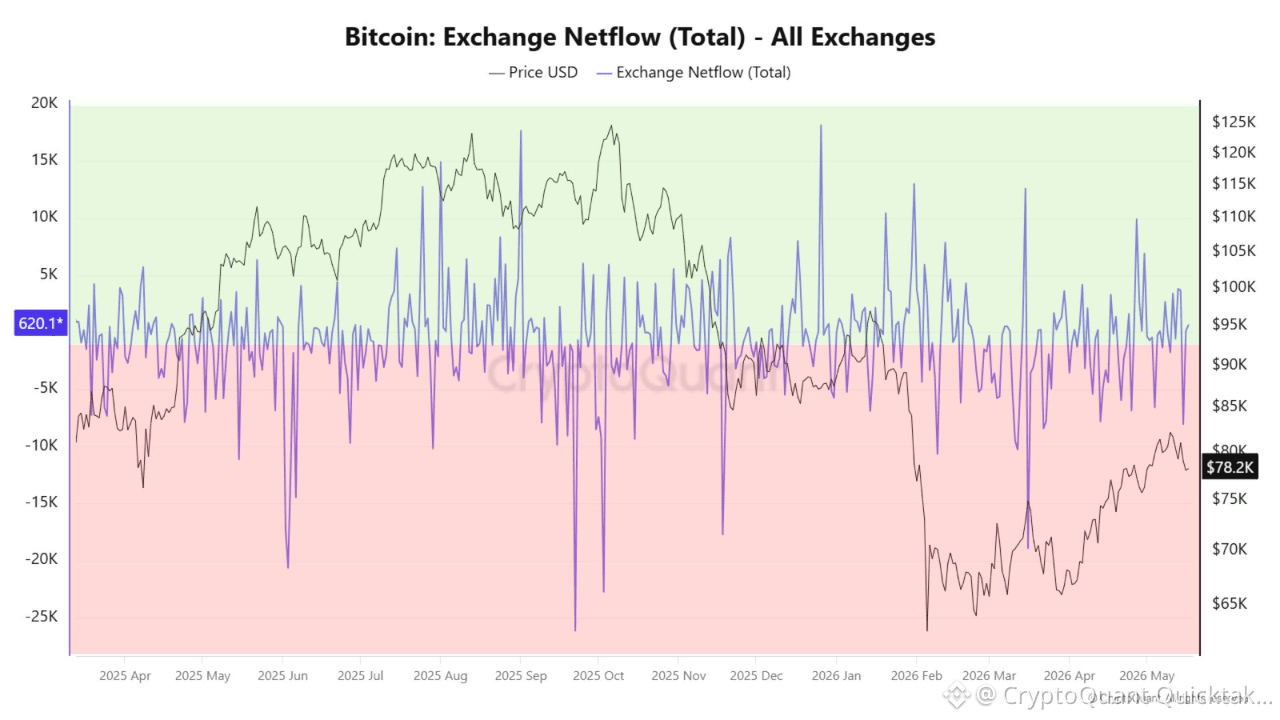
However, on-chain data does not suggest a complete bearish breakdown. CryptoQuant’s “Bitcoin: Exchange Netflow (Total) - All Exchanges” still shows significant exchange outflows earlier this year — a pattern historically associated with whale accumulation and long-term holding behavior. Recent netflow volatility has also started to stabilize, suggesting aggressive sell pressure may be fading.
The current market may therefore be entering a “re-accumulation phase” rather than a structural collapse. Short-term volatility remains high, but beneath the surface, supply contraction and quiet accumulation may still be progressing.
Written by XWIN Japan