

The first thing that bothered me wasn’t a failure.
It was how normal everything looked while my hand hesitated.
The blob was there. The reference resolved. The UI gave me the kind of calm “done” state that usually ends the thought. And still, I paused, because the response arrived in that thin slice of time where your brain starts writing stories: maybe it’s caching, maybe it’s rebuilding, maybe I should click again.
Nothing told me to slow down. Nothing told me to retry.
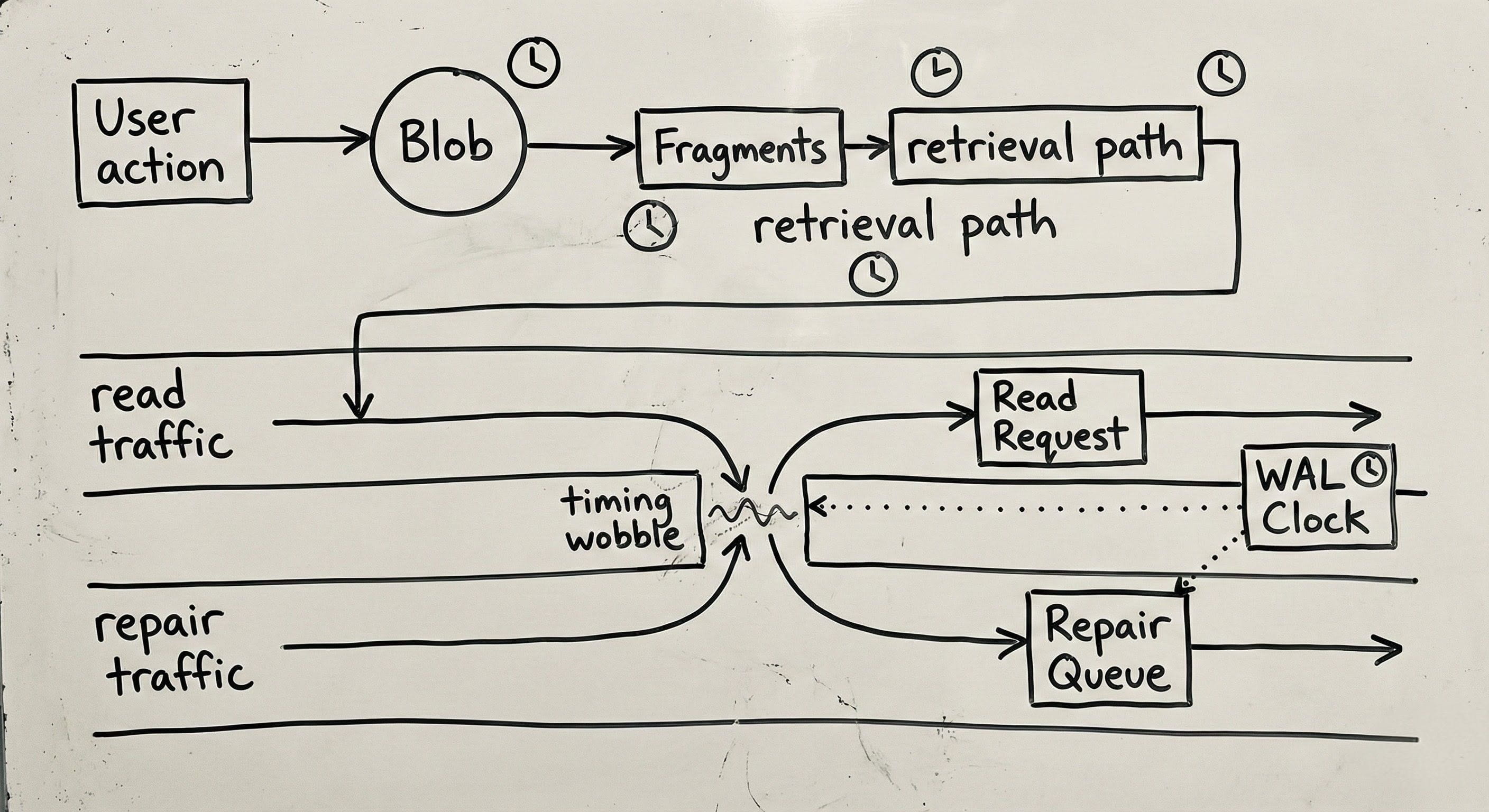
Just a quiet system continuing as if my uncertainty wasn’t part of the workload.
That’s the pressure Walrus creates when it’s behaving correctly. Not drama. Not a red banner. A tiny mismatch between “available” and “ready when I need it.” You can’t blame it on being down, because it isn’t. You also can’t pretend it’s perfect, because you can feel the wobble in your own timing.
Somewhere in that gap, $WAL stops feeling like a token you hold. It starts feeling like a clock that keeps running whether you’re watching or not. The network doesn’t argue. It doesn’t reassure. It just keeps counting the obligations that make the blob stay real instead of “real-ish.”
And what’s weird is how quickly humans reveal themselves here.
When the system is smooth, everyone acts brave.
When it’s slightly uneven, everyone starts double-sending.
I caught myself doing the soft version of panic: refresh once, then again, then “just to confirm” opening a second view like a second view makes truth more true. Nothing changed. That was the point. Walrus didn’t give me a clean moment to feel confident, so I started manufacturing one.
You can feel coordination without being able to point at it. Like a room where nobody speaks, but everyone is listening for the same floorboard creak. Nodes aren’t announcing work. Repair isn’t throwing confetti. The only thing you get is behavior: the system holds, and your confidence flickers anyway.
It made me wonder what people think “privacy” means in practice.
Not secrecy as a feature. Secrecy as a constraint that removes comforting context. You don’t get the extra clues that centralized systems leak by accident. So when timing shifts, you can’t peek behind the curtain and soothe yourself with an explanation. You’re left with the only thing Walrus really offers: either it reconstructs, or it doesn’t—just not always on your schedule.
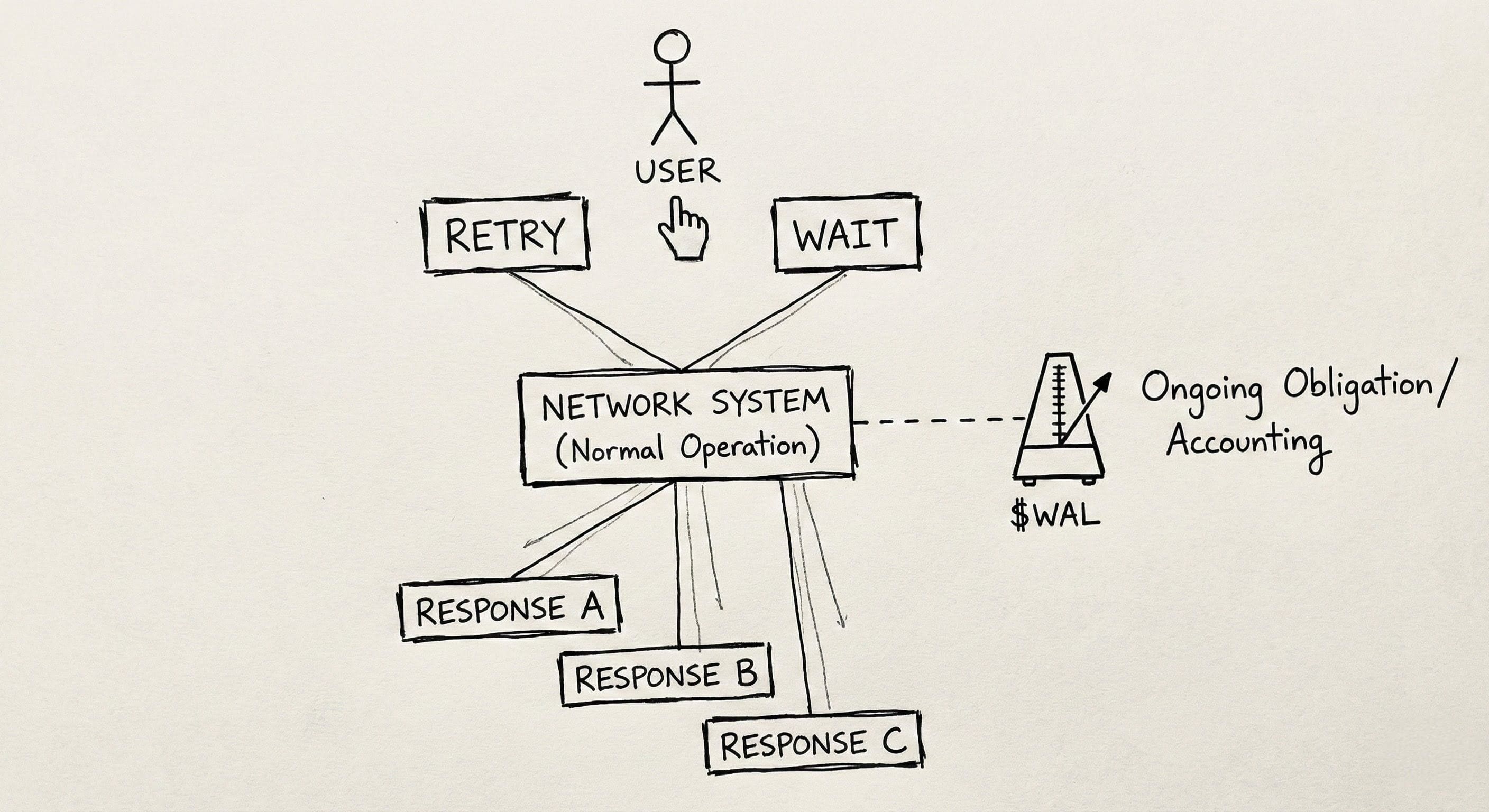
That’s a kind of honesty that feels rude.
And it turns “temporary” into a trap. Because nothing expires loudly. Nothing decays to remind you. The blob will sit there, obedient, until you realize the absence of friction is what lets indecision become policy.
I ended up not clicking again.
Not because I trusted it more, because I didn’t want to be the one who created the mess I’d blame on the system later.