
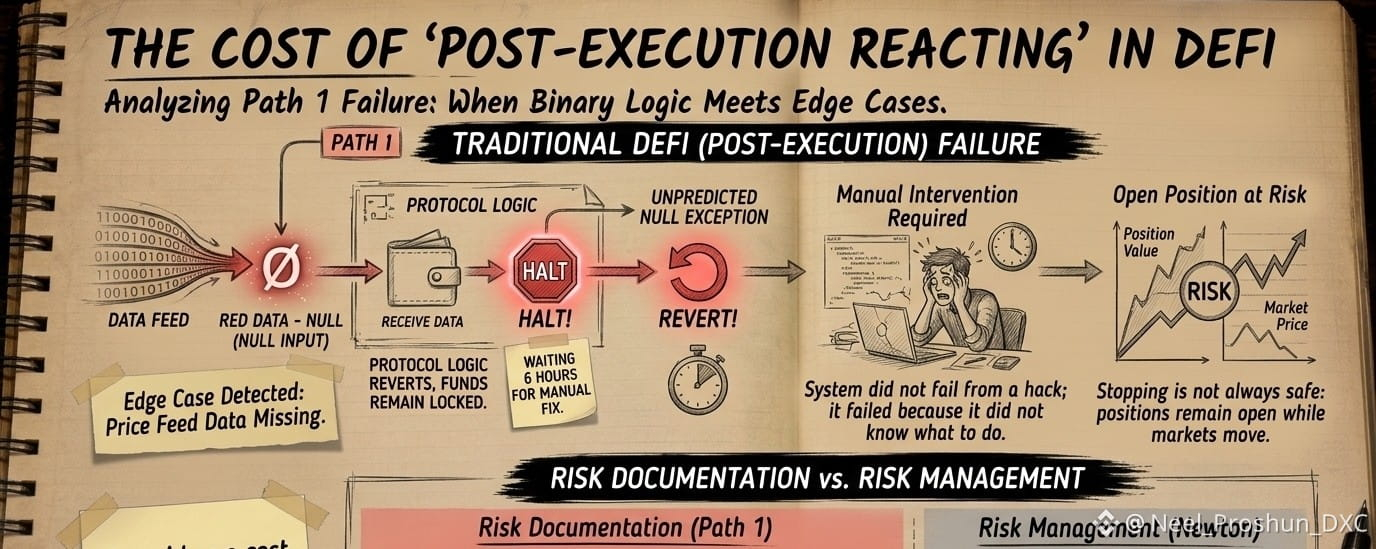
I remember the first time I saw a null value break a live protocol. It was a small position. Manageable loss. But I stayed up most of that night not because of the money — because of how stupid the failure was.
The contract hit an edge case nobody tested for. Data feed returned null. Logic halted. Transaction reverted. Funds sat locked while I waited for a manual fix that took six hours to deploy.
The system didn't fail because it was hacked. It failed because it didn't know what to do when it didn't know something.
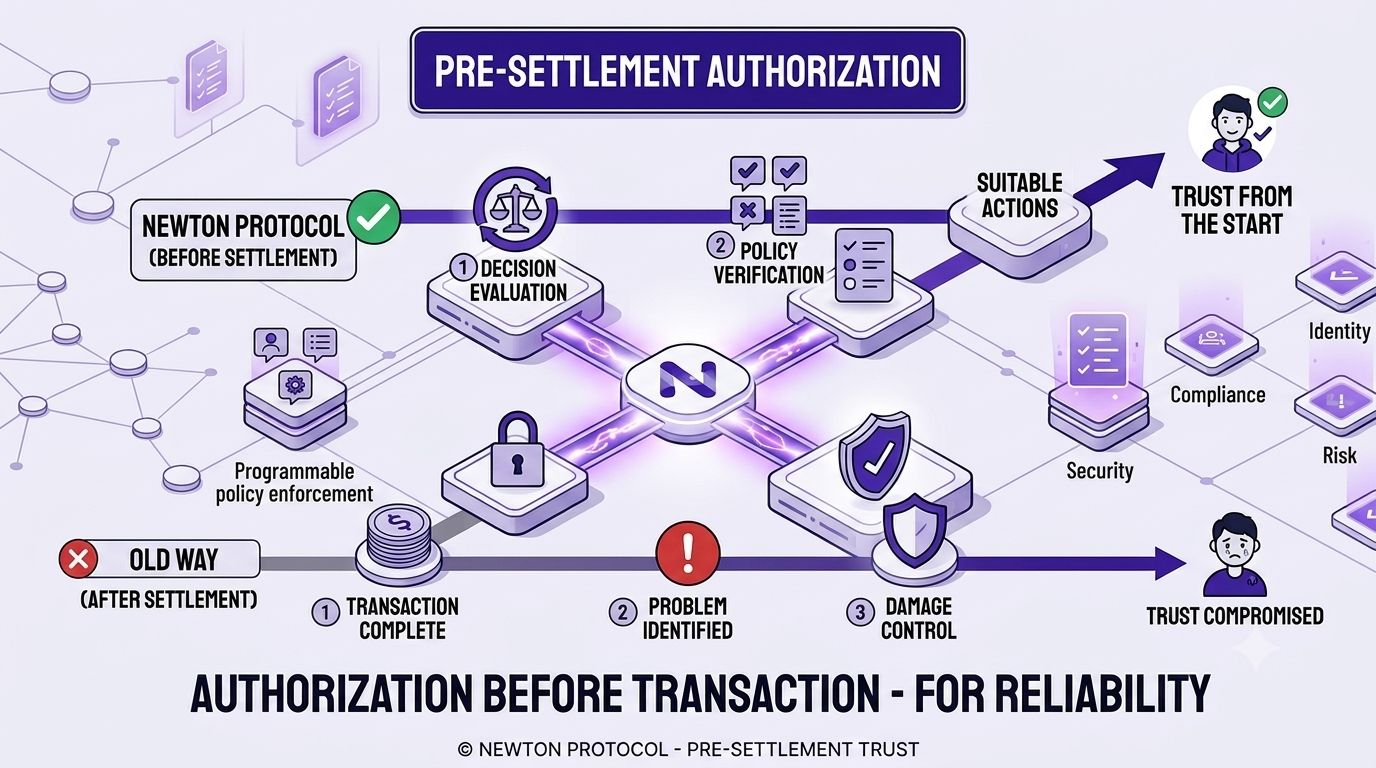
Most DeFi protocols are built this way. Binary logic baked into immutable contracts. If the expected input isn't there, the system stops. Sometimes that's the right call. But stopping isn't always safe either — especially when positions are open, markets are moving and "try again later" means something different than it did five minutes ago.
The deeper problem is that smart contracts were designed to be deterministic. Same input, same output, every time. That's a feature for simple transfers. It's a liability for complex automation running in volatile conditions.
Newton approaches this differently and it's the part I keep sitting with.
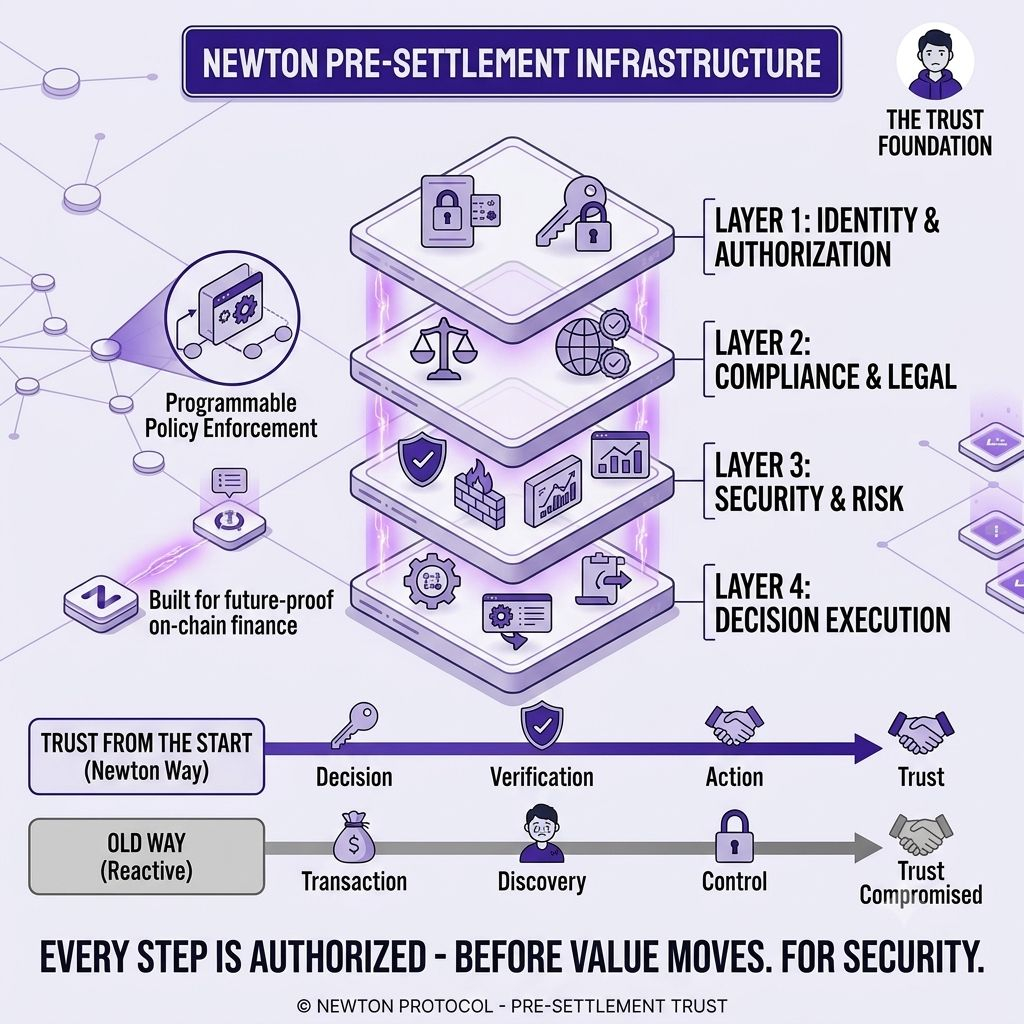
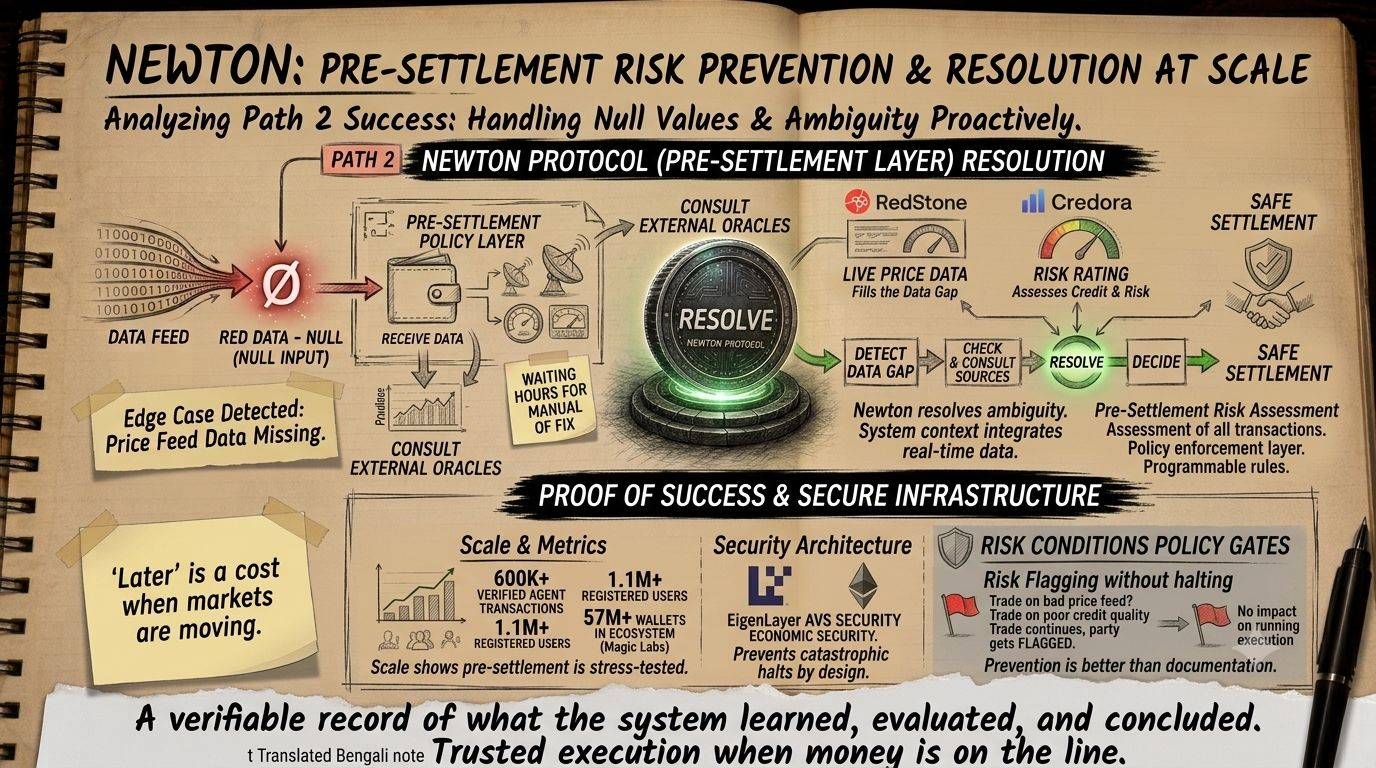
The pre-settlement policy layer doesn't just execute or halt. It resolves. RedStone live price data and Credora risk ratings are integrated into the decision environment before anything settles. When a data gap appears, the system has sources to consult before deciding what to do. Not "shouldn't proceed" structurally "can't proceed without resolution."
Each decision produces a signed attestation. A verifiable record of what the system knew, what it consulted, and what it concluded. That's a different failure mode than a null exception in a contract that nobody can patch until the next deployment.
600K+ verified agent transactions have already run through this layer. 57M+ wallets sit in the Magic Labs ecosystem this plugs into. 1.1M+ registered users. The scale suggests this isn't being stress-tested in ideal conditions only.
But here's what I'm still working through honestly...
Newton runs as an EigenLayer AVS. That means it inherits Ethereum's economic security through restaking — which is genuinely powerful. It also means correlated slashing risk is real. If something goes wrong at the AVS layer, it doesn't stay contained to Newton. And liquidity at $12.6M market cap is thin enough that the July 24 Core Contributors unlock — coming right after the 139M NEWT that hit in June — could create drift that has nothing to do with the protocol's actual performance.
Those aren't dealbreakers. They're the parts that deserve honest attention rather than footnote treatment.
The null value that kept me up years ago was a reminder that edge cases aren't rare — they're inevitable. The question is whether you build systems that halt when confused, or systems that resolve when confused.
Which do you trust more when real money is on the line?