

#ton
ton
18.1M visualizaciones
33,186 participa(n) en el debate
Populares
Novedades

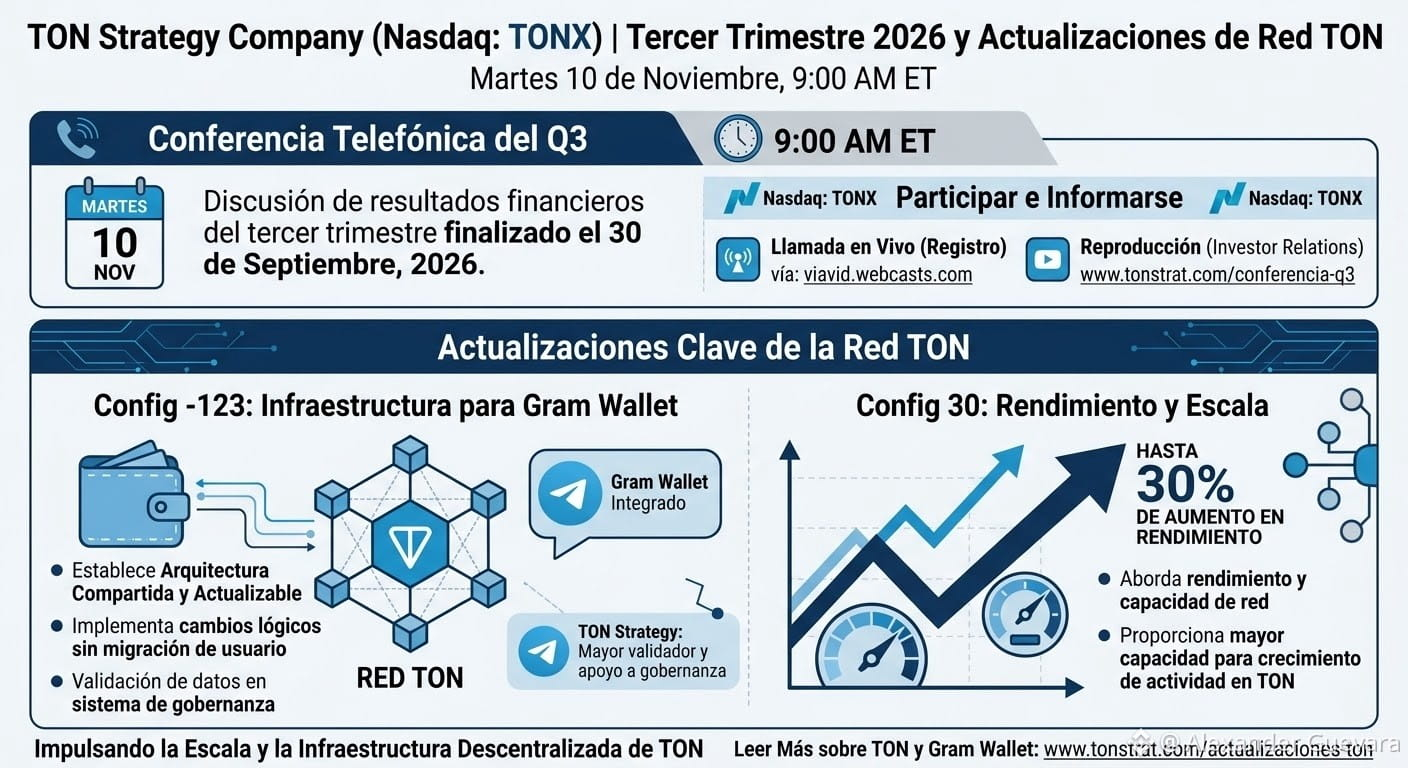
TON está implementando dos actualizaciones de red: Config -123 y Config 30, que abordan dos áreas distintas de la red: la infraestructura en cadena que subyace a Gram Wallet, así como la capacidad total de la red.
Estas actualizaciones se producen en un momento en que Telegram se prepara para incorporar $GRAM Wallet de forma nativa a su experiencia de usuario.
➡️Config -123 establece una arquitectura compartida y actualizable para el monedero a nivel de la red TON, lo que permite implementar cambios futuros en su lógica subyacente dentro del sistema mediante un sistema de validación de los datos, sin necesidad de que cada usuario migre sus monederos.
Como el mayor validador de TON, TON Strategy desempeña un papel directo en el apoyo a la red descentralizada y participa en las decisiones de gobernanza relacionadas con los cambios en su infraestructura subyacente, incluida la infraestructura que respalda #GramWallet .
➡️ La configuración 30 aborda por separado el rendimiento y la escala de la red; se espera que esta actualización aumente el rendimiento hasta en un 30% y proporcione una mayor capacidad a medida que crece la actividad en todo TON.
En conjunto, estas mejoras promueven dos componentes importantes de la escala de red: una arquitectura de monedero en cadena diseñada para evolucionar a través de un sistema de gobernanza descentralizado, y una mayor capacidad para apoyar las actividades en todo el grupo #TON .
Hoy, TON Strategy Company (#NASDAQ : #TONX ) anunció que celebraremos una conferencia telefónica el martes 10 de noviembre a las 9 a. m. ET para discutir los resultados financieros de la empresa para el tercer trimestre finalizado el 30 de septiembre de 2026.
Lea más sobre las últimas actualizaciones de TON y la cartera nativa de #Telegram
{web3_wallet_create}(560xe95ab205e333443d7970336d5fd827ef9ed97608)
TON está implementando dos actualizaciones de red: Config -123 y Config 30, que abordan dos áreas distintas de la red: la infraestructura en cadena que subyace a Gram Wallet, así como la capacidad total de la red.
Estas actualizaciones se producen en un momento en que Telegram se prepara para incorporar $GRAM Wallet de forma nativa a su experiencia de usuario.
➡️Config -123 establece una arquitectura compartida y actualizable para el monedero a nivel de la red TON, lo que permite implementar cambios futuros en su lógica subyacente dentro del sistema mediante un sistema de validación de los datos, sin necesidad de que cada usuario migre sus monederos.
Como el mayor validador de TON, TON Strategy desempeña un papel directo en el apoyo a la red descentralizada y participa en las decisiones de gobernanza relacionadas con los cambios en su infraestructura subyacente, incluida la infraestructura que respalda #GramWallet .
➡️ La configuración 30 aborda por separado el rendimiento y la escala de la red; se espera que esta actualización aumente el rendimiento hasta en un 30% y proporcione una mayor capacidad a medida que crece la actividad en todo TON.
En conjunto, estas mejoras promueven dos componentes importantes de la escala de red: una arquitectura de monedero en cadena diseñada para evolucionar a través de un sistema de gobernanza descentralizado, y una mayor capacidad para apoyar las actividades en todo el grupo #TON .
Hoy, TON Strategy Company (#NASDAQ : #TONX ) anunció que celebraremos una conferencia telefónica el martes 10 de noviembre a las 9 a. m. ET para discutir los resultados financieros de la empresa para el tercer trimestre finalizado el 30 de septiembre de 2026.
Lea más sobre las últimas actualizaciones de TON y la cartera nativa de #Telegram
111
·
--
Ver traducción
The User Experience Behind Decentralized FinanceA strong DeFi ecosystem needs more than smart contracts. It needs infrastructure that helps people understand how their assets move, what each transaction costs, and which risks they are accepting.
This is one of the important conversations surrounding the TON ecosystem and decentralized exchanges like @STON_fi.
Token swapping is a fundamental DeFi activity, but the experience involves several moving parts. Liquidity determines how easily a trade can be executed, slippage can affect the final price, and network conditions may influence transaction costs and confirmation times.
These details matter because a smooth interface does not automatically mean a transaction is risk-free. Users still need to review transaction information, check token addresses, protect their wallet credentials, and understand the permissions they grant to decentralized applications.
Liquidity provision also deserves a closer look. It allows participants to contribute assets to trading pools, but returns are never guaranteed. Market volatility, impermanent loss, and potential smart-contract vulnerabilities are all factors that should be considered before participating.
Beyond these fundamentals, interoperability is another area worth watching. As blockchain ecosystems expand, connecting different networks could create additional opportunities for asset movement and decentralized applications. At the same time, cross-chain infrastructure must address complex security challenges.
For me, meaningful DeFi progress means making these systems more understandable without hiding their limitations. Better education and transparent information can help users make decisions based on knowledge rather than hype.
As TON continues to develop, @STON_fi offers an opportunity to explore how decentralized trading and liquidity fit into the broader ecosystem.
The future of DeFi should be measured not only by activity, but also by how responsibly people can participate.
#STONfi #TON #DeFi
The User Experience Behind Decentralized Finance
A strong DeFi ecosystem needs more than smart contracts. It needs infrastructure that helps people understand how their assets move, what each transaction costs, and which risks they are accepting.
This is one of the important conversations surrounding the TON ecosystem and decentralized exchanges like @STON_fi.
Token swapping is a fundamental DeFi activity, but the experience involves several moving parts. Liquidity determines how easily a trade can be executed, slippage can affect the final price, and network conditions may influence transaction costs and confirmation times.
These details matter because a smooth interface does not automatically mean a transaction is risk-free. Users still need to review transaction information, check token addresses, protect their wallet credentials, and understand the permissions they grant to decentralized applications.
Liquidity provision also deserves a closer look. It allows participants to contribute assets to trading pools, but returns are never guaranteed. Market volatility, impermanent loss, and potential smart-contract vulnerabilities are all factors that should be considered before participating.
Beyond these fundamentals, interoperability is another area worth watching. As blockchain ecosystems expand, connecting different networks could create additional opportunities for asset movement and decentralized applications. At the same time, cross-chain infrastructure must address complex security challenges.
For me, meaningful DeFi progress means making these systems more understandable without hiding their limitations. Better education and transparent information can help users make decisions based on knowledge rather than hype.
As TON continues to develop, @STON_fi offers an opportunity to explore how decentralized trading and liquidity fit into the broader ecosystem.
The future of DeFi should be measured not only by activity, but also by how responsibly people can participate.
#STONfi #TON #DeFi
29

·
--
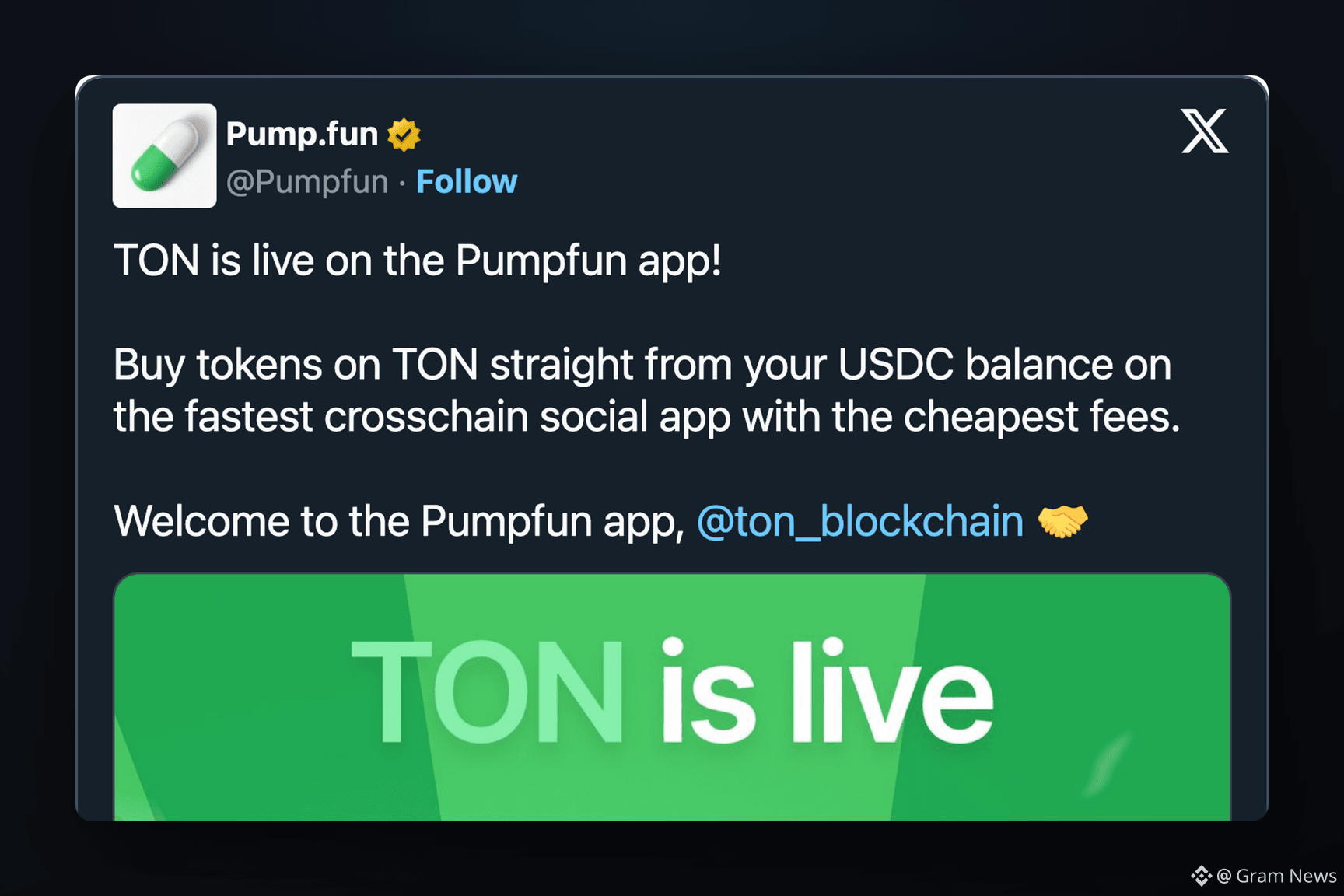
Pump.fun añade la compraventa de tokens TON a su aplicación
Los tokens TON se pueden comprar en Pump.fun con USDC. El volumen de operaciones en los DEX de la red fue de 2,68 millones de dólares el 27 de octubre, frente a los 3,71 millones del 24 de octubre.
$GRAM #Telegram #TON
Pump.fun añade la compraventa de tokens TON a su aplicación
Los tokens TON se pueden comprar en Pump.fun con USDC. El volumen de operaciones en los DEX de la red fue de 2,68 millones de dólares el 27 de octubre, frente a los 3,71 millones del 24 de octubre.
$GRAM #Telegram #TON
Los tokens TON se pueden comprar en Pump.fun con USDC. El volumen de operaciones en los DEX de la red fue de 2,68 millones de dólares el 27 de octubre, frente a los 3,71 millones del 24 de octubre.
$GRAM #Telegram #TON
72
·
--
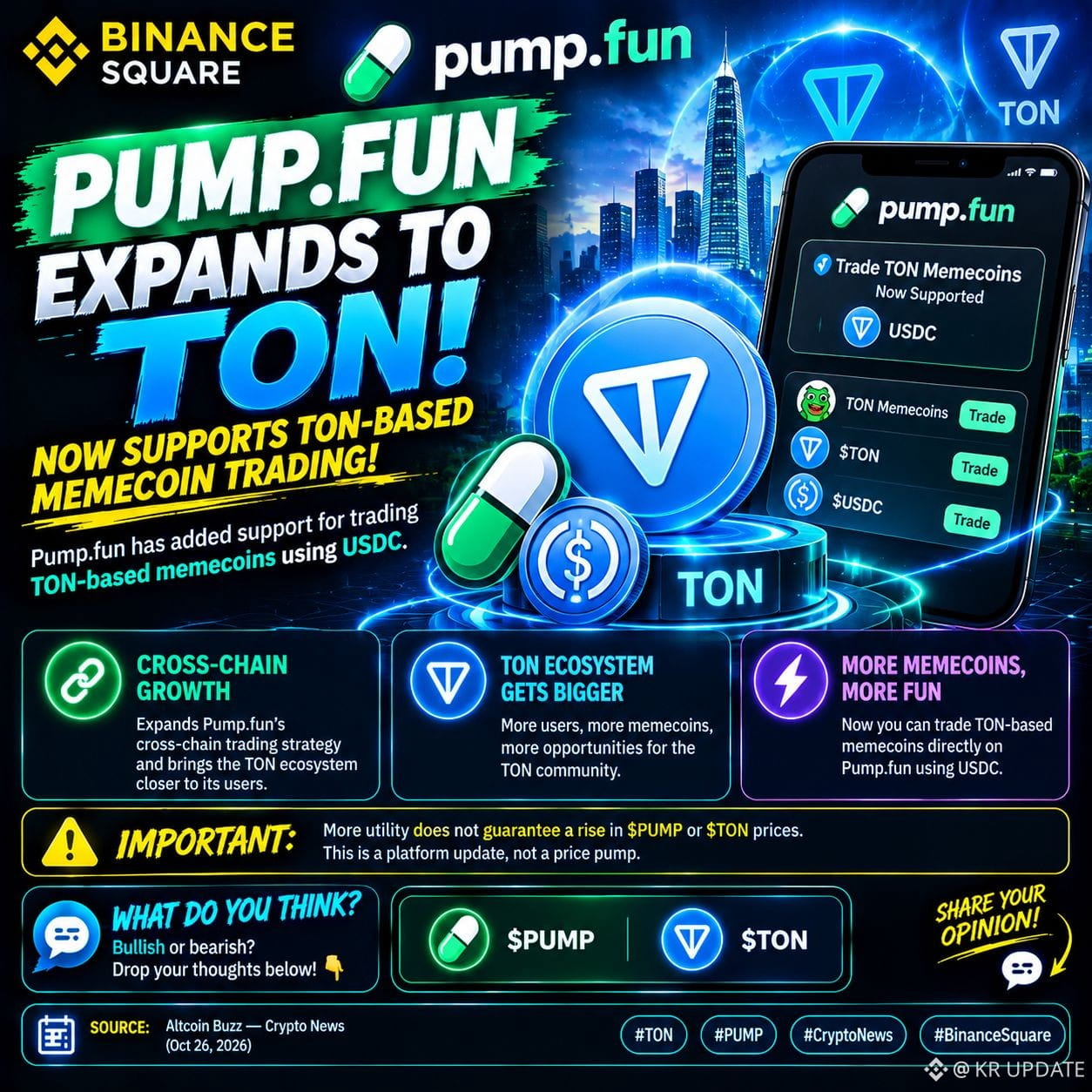
🚨 ¡$PUMP SE EXPANDE HASTA $TON ! 🔥 🌐 Pump.fun añadió compatibilidad para operar memecoins basadas en TON usando USDC. ⚡ Esto amplía su estrategia de trading entre cadenas y conecta el ecosistema TON con los usuarios de Pump.fun. ⚠️ Una mayor utilidad no garantiza una subida de los precios de $PUMP o TON. 💬 ¿Alcista o bajista? #TON #pump #CryptoNews #BinanceSquare
🚨 ¡$PUMP SE EXPANDE HASTA $TON ! 🔥 🌐 Pump.fun añadió compatibilidad para operar memecoins basadas en TON usando USDC. ⚡ Esto amplía su estrategia de trading entre cadenas y conecta el ecosistema TON con los usuarios de Pump.fun. ⚠️ Una mayor utilidad no garantiza una subida de los precios de $PUMP o TON. 💬 ¿Alcista o bajista? #TON #pump #CryptoNews #BinanceSquare
95

·
--
$TON cotiza a $1.6000, dentro de un rango de 24 h entre $1.5800 y $1.6410.
La estructura del mercado muestra soporte cerca de $1.5500 y resistencia en $1.6500. Prioriza protegerte en lugar de perseguir ganancias.
**Consejo de riesgo:** Invierte el capital mediante una estrategia DCA de 3 tramos en lugar de hacerlo de una sola vez y coloca el stop-loss de invalidación estrictamente por debajo del nivel mínimo de $1.5500. Protege primero tu capital; las ganancias llegan con la disciplina. Esto no es asesoramiento financiero.
$TON #BinanceSquare #CryptoTrading #RiskManagement #TON
30

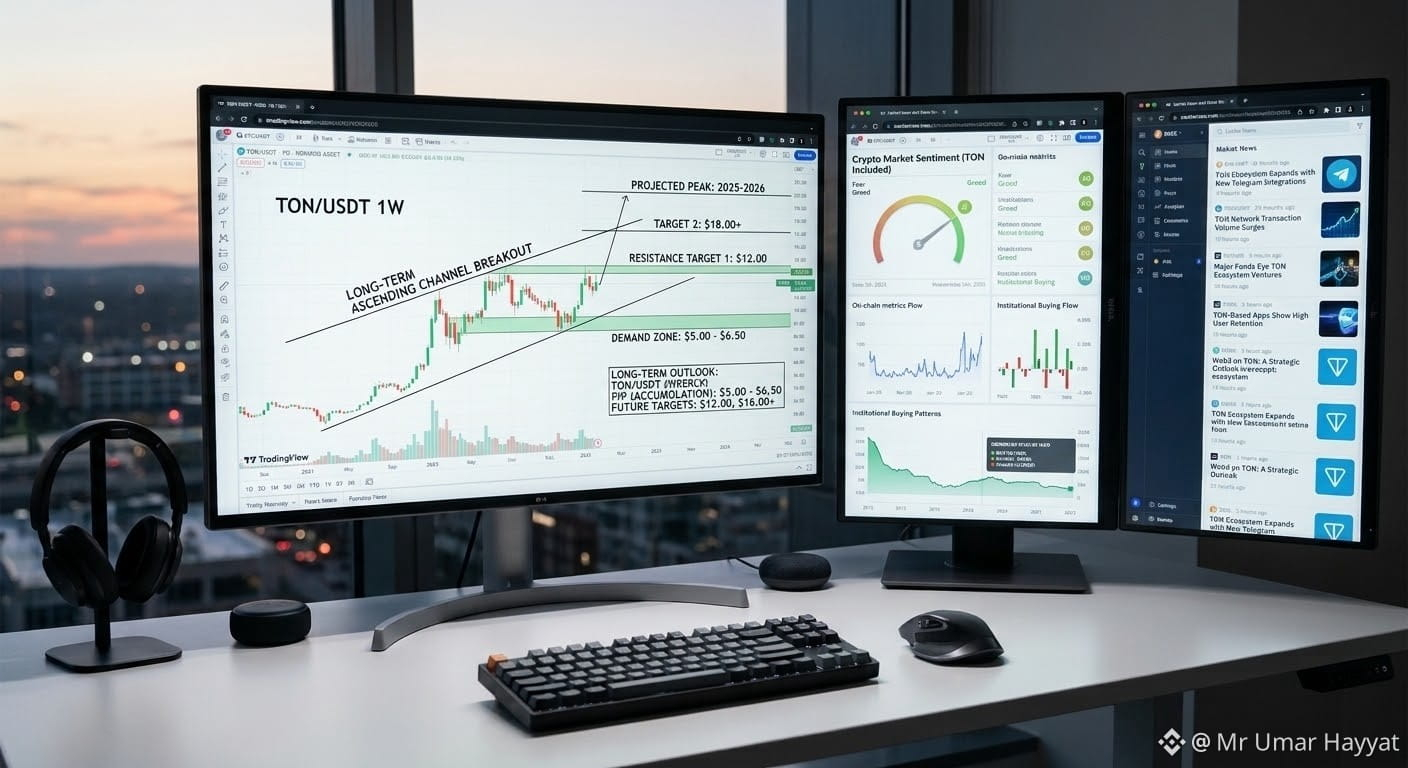
$TON ¡Hola a todos! 🤗 TON está mostrando una notable fortaleza relativa, respaldada por su enorme integración con el ecosistema de Telegram y la creciente adopción de su red. El precio se está consolidando muy bien cerca del soporte, lo que indica una posible continuación hacia objetivos más altos.
{stock_us}(TONX.US)
👇 ¿Qué opinan del crecimiento futuro de Toncoin? ¡Dejen sus objetivos abajo! 👇
#TONCOİN #TON #CryptoTradingInsights #BinanceSquare #Write2Earn
$TON ¡Hola a todos! 🤗 TON está mostrando una notable fortaleza relativa, respaldada por su enorme integración con el ecosistema de Telegram y la creciente adopción de su red. El precio se está consolidando muy bien cerca del soporte, lo que indica una posible continuación hacia objetivos más altos.
👇 ¿Qué opinan del crecimiento futuro de Toncoin? ¡Dejen sus objetivos abajo! 👇
#TONCOİN #TON #CryptoTradingInsights #BinanceSquare #Write2Earn
👇 ¿Qué opinan del crecimiento futuro de Toncoin? ¡Dejen sus objetivos abajo! 👇
#TONCOİN #TON #CryptoTradingInsights #BinanceSquare #Write2Earn
TONXUS+0,00 %
77
·
--
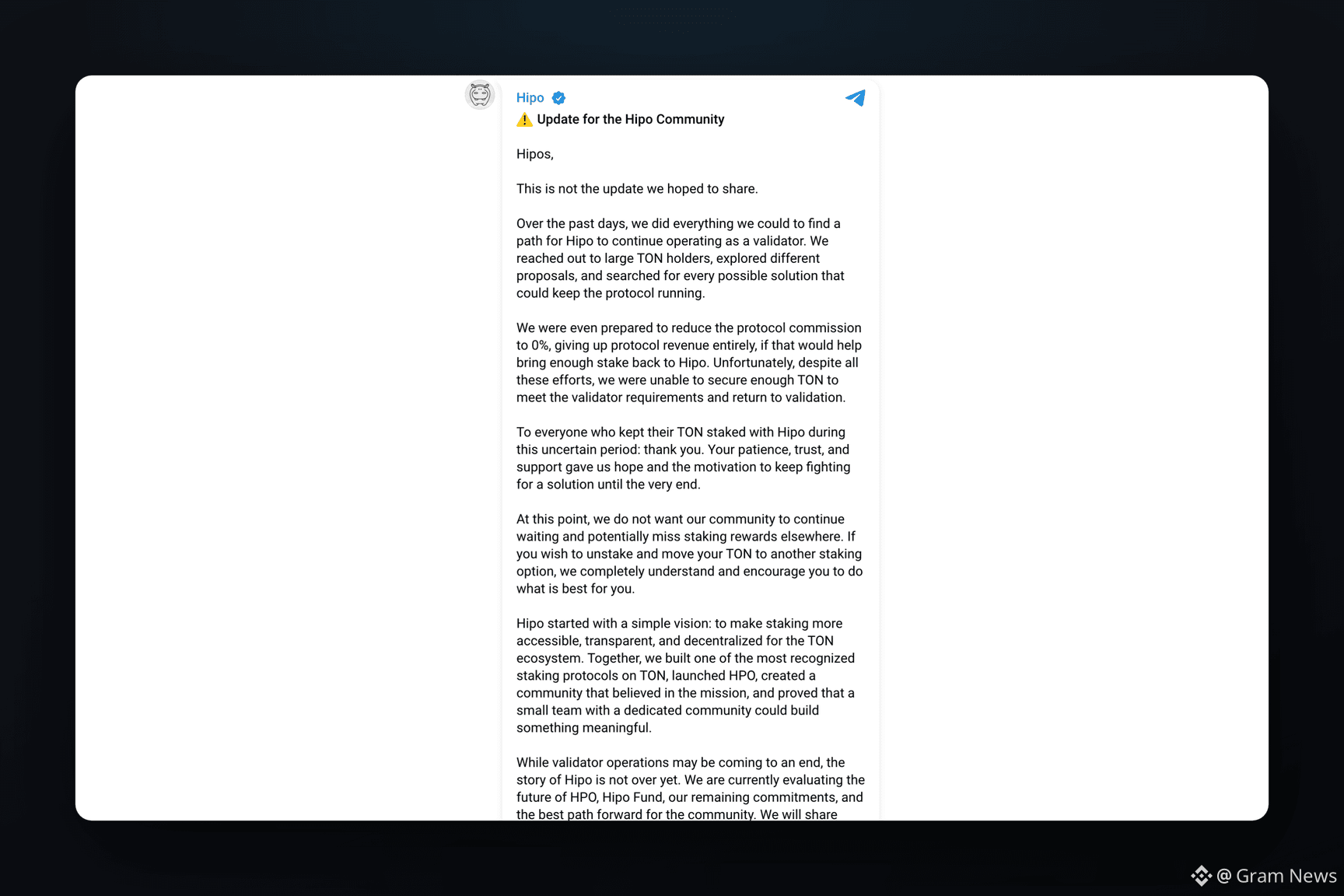
Hipo vuelve a la validación de TON y crece de 571K a 10M GRAM en menos de cinco meses
El 6 de junio, el equipo de Hipo se despidió de los stakers y, menos de ocho horas después, volvió a participar en la validación. Ahora hay 10,3 millones de GRAM en el protocolo.
$GRAM #Telegram #TON
Hipo vuelve a la validación de TON y crece de 571K a 10M GRAM en menos de cinco meses
El 6 de junio, el equipo de Hipo se despidió de los stakers y, menos de ocho horas después, volvió a participar en la validación. Ahora hay 10,3 millones de GRAM en el protocolo.
$GRAM #Telegram #TON
El 6 de junio, el equipo de Hipo se despidió de los stakers y, menos de ocho horas después, volvió a participar en la validación. Ahora hay 10,3 millones de GRAM en el protocolo.
$GRAM #Telegram #TON
460

Pump.fun integra TON y la comunidad de TON está celebrando: «¡Va a llegar el tráfico de Telegram!». Yo lo veo al revés: Pump.fun está metiendo las shitcoins de TON en su propio peaje.
Primero, veamos el producto en sí. Los usuarios pueden comprar directamente monedas de la red TON con su saldo en USDC desde la app de Pump.fun, sin puentes entre cadenas ni tener que preocuparse por el gas. Suena práctico, pero piénsalo: eso significa que no necesitas tener TON. La puerta de entrada, el saldo y las comisiones están del lado de Pump.fun; la cadena TON solo suma otra zona de trading. Quienes gritan «esto beneficia a TON» deberían responder primero: ¿de dónde vendrá la demanda de compra?
Ahora, el momento elegido. Pump.fun dice que su app lleva 8 días seguidos batiendo récords; el día anterior tuvo 72.900 traders activos diarios. Si la plataforma quiere seguir inflando las cifras, lo más fácil es añadir más cadenas y abrir más pools. Alon dice que integraron TON en unos pocos días, según la demanda de los usuarios. Si integran una cadena cada pocos días, ya te imaginarás cuán exhaustiva puede ser la revisión.
Y hay un detalle bastante irónico. En X, alguien desempolvó viejas polémicas y señaló que, a principios de 2025, TON y Telegram hicieron que TON fuera exclusivo en sus miniprogramas, sin dejar entrar a otras cadenas para ofrecer funciones cripto. Ahora le toca a TON ir a buscar tráfico a la app de otro. Está clarísimo: quien controla la distribución, manda.
Lo más absurdo es que, apenas salió la noticia, alguien en Solana lanzó en Pump.fun una moneda llamada TONCOIN para aprovechar el revuelo. Ni siquiera está en la cadena TON, y un bot de seguimiento de monedas la marcó directamente como un proyecto cuyo equipo ya había vendido sus tokens. La noticia es real, la moneda es falsa; el guion es siempre el mismo.
Si vas a lanzarte a las shitcoins de TON, recuerda que te enfrentas a lo de siempre: francotiradores, paquetes coordinados y desarrolladores que venden sus tokens; solo cambia el nombre de la cadena. La plataforma se lleva las comisiones sí o sí; las pérdidas te las quedas tú.
#Pumpfun #TON
6
·
--
DeFi es mucho más que intercambiar tokensAlgo que me parece interesante de las finanzas descentralizadas es la cantidad de trabajo importante que hay detrás de una transacción sencilla.
Un usuario selecciona dos tokens, confirma un intercambio y recibe el resultado. Parece sencillo, pero varios elementos trabajan juntos para hacerlo posible: la liquidez, los contratos inteligentes, los mecanismos de fijación de precios y la infraestructura de la cadena de bloques.
Aquí es donde @ston_fi encaja en el ecosistema TON.
Como exchange descentralizado, STON.fi ayuda a los usuarios a intercambiar tokens compatibles en la cadena. Su función pone de relieve cómo la infraestructura DeFi puede conectar a usuarios individuales con mercados descentralizados sin necesidad de recurrir a un exchange centralizado tradicional para ejecutar cada operación.
DeFi es mucho más que intercambiar tokens
Algo que me parece interesante de las finanzas descentralizadas es la cantidad de trabajo importante que hay detrás de una transacción sencilla.
Un usuario selecciona dos tokens, confirma un intercambio y recibe el resultado. Parece sencillo, pero varios elementos trabajan juntos para hacerlo posible: la liquidez, los contratos inteligentes, los mecanismos de fijación de precios y la infraestructura de la cadena de bloques.
Aquí es donde @ston_fi encaja en el ecosistema TON.
Como exchange descentralizado, STON.fi ayuda a los usuarios a intercambiar tokens compatibles en la cadena. Su función pone de relieve cómo la infraestructura DeFi puede conectar a usuarios individuales con mercados descentralizados sin necesidad de recurrir a un exchange centralizado tradicional para ejecutar cada operación.
82
·
--
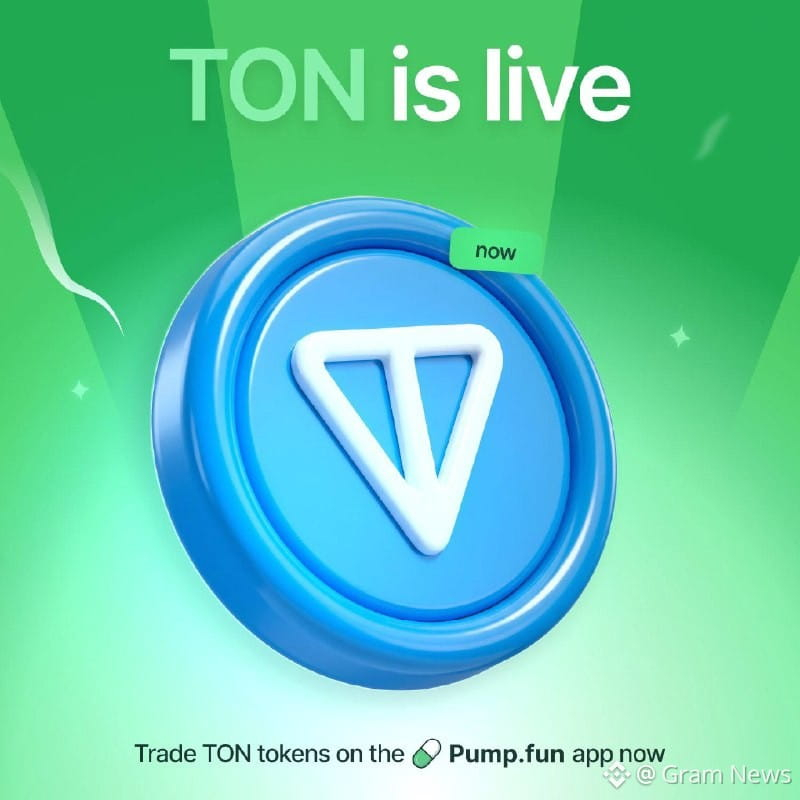
💊 Pump.fun ha publicado un anuncio oficial sobre el lanzamiento del comercio de tokens en la red TON.
Las compras se realizan utilizando el saldo de la cuenta en USDC.
$GRAM #Telegram #TON
💊 Pump.fun ha publicado un anuncio oficial sobre el lanzamiento del comercio de tokens en la red TON.
Las compras se realizan utilizando el saldo de la cuenta en USDC.
$GRAM #Telegram #TON
Las compras se realizan utilizando el saldo de la cuenta en USDC.
$GRAM #Telegram #TON
239
·
--
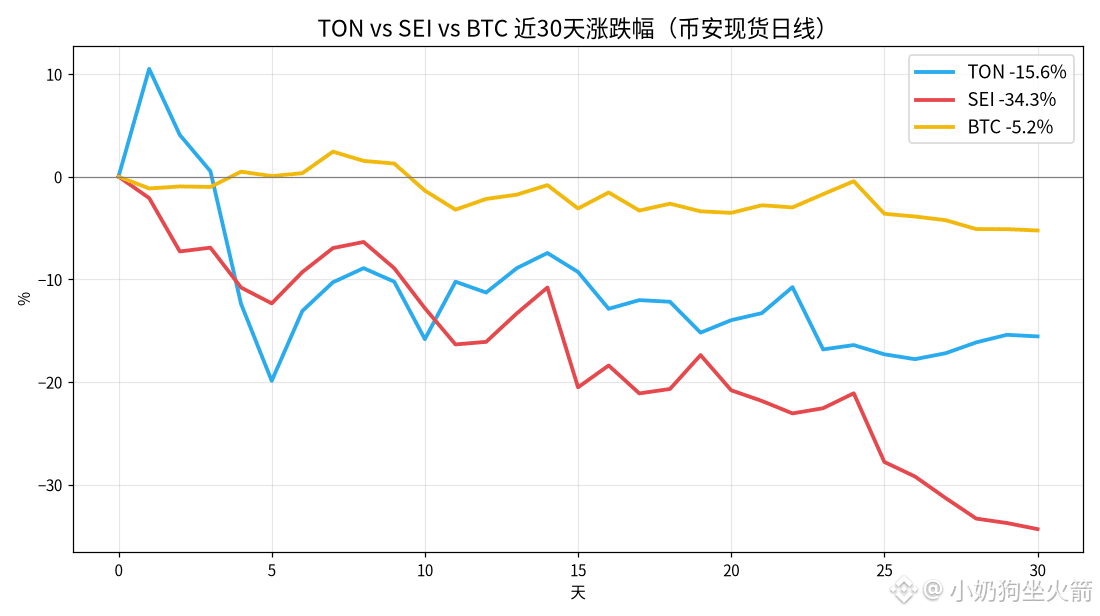
Esta noche estuve repasando las cotizaciones y vi que estas dos «cadenas públicas sociales» han seguido caminos opuestos: TON está a 1,6 y, de hecho, ha subido un 1,5 % esta semana. Este mes llegó a tocar un mínimo de 1,44 y rebotó más de un 10 % desde el suelo. SEI está a 0,052; hace un mes estaba a 0,079. Ha caído un 34 % en un mes y otro 15 % esta semana, y prácticamente está en el mínimo del mes. En el mismo periodo, el bitcoin apenas ha bajado un 5 % y sigue rondando los 80.000. Mi opinión: TON tiene detrás a cientos de millones de usuarios de Telegram, así que cuando cae a 1,44 siempre hay alguien dispuesto a comprar. SEI vende la historia de la velocidad, pero sin una base de usuarios que lo respalde, cuando el dinero se va no queda nadie que lo sostenga. Si ahora te dieran 1.000 U y solo pudieras comprar uno, ¿elegirías TON, que está rebotando, o apostarías por SEI, que ha caído más de un 30 %? #TON $TON $SEI $BTC
Esta noche estuve repasando las cotizaciones y vi que estas dos «cadenas públicas sociales» han seguido caminos opuestos: TON está a 1,6 y, de hecho, ha subido un 1,5 % esta semana. Este mes llegó a tocar un mínimo de 1,44 y rebotó más de un 10 % desde el suelo. SEI está a 0,052; hace un mes estaba a 0,079. Ha caído un 34 % en un mes y otro 15 % esta semana, y prácticamente está en el mínimo del mes. En el mismo periodo, el bitcoin apenas ha bajado un 5 % y sigue rondando los 80.000. Mi opinión: TON tiene detrás a cientos de millones de usuarios de Telegram, así que cuando cae a 1,44 siempre hay alguien dispuesto a comprar. SEI vende la historia de la velocidad, pero sin una base de usuarios que lo respalde, cuando el dinero se va no queda nadie que lo sostenga. Si ahora te dieran 1.000 U y solo pudieras comprar uno, ¿elegirías TON, que está rebotando, o apostarías por SEI, que ha caído más de un 30 %? #TON $TON $SEI $BTC
2
343

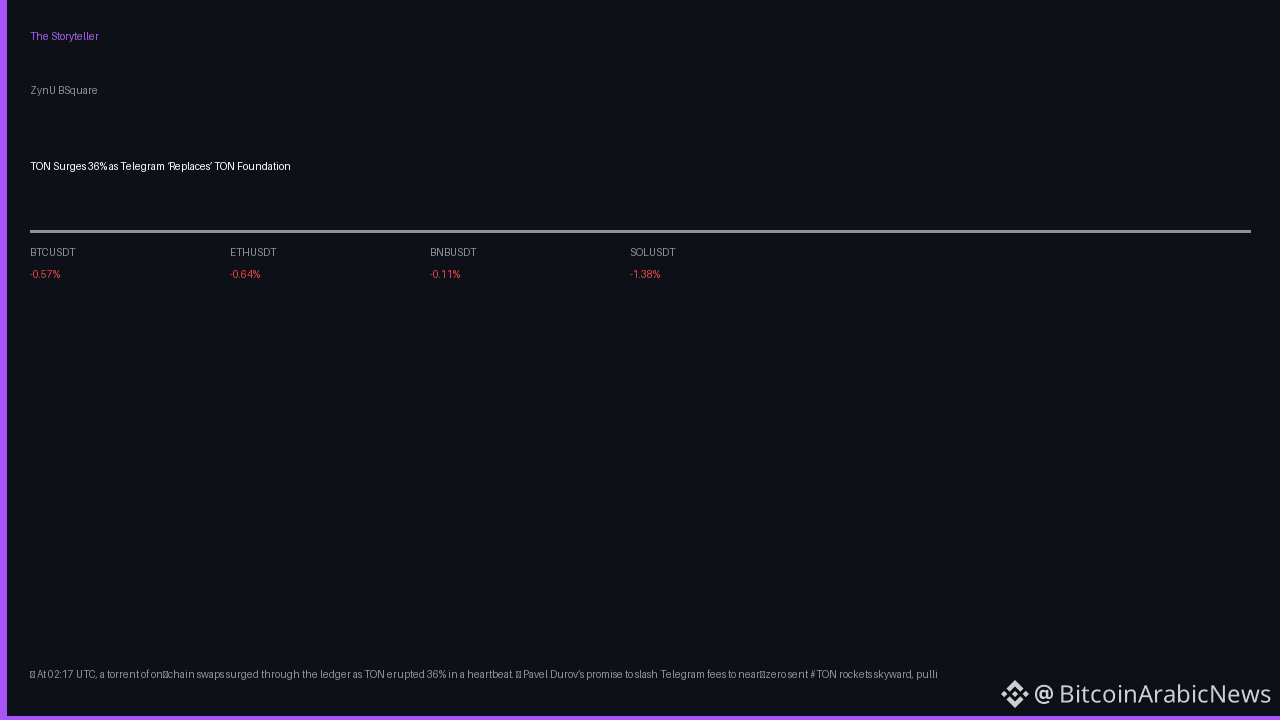
🔥 A las 02:17 UTC, una avalancha de intercambios on-chain recorrió el libro mayor mientras TON se disparaba un 36% en un instante.
📊 La promesa de Pavel Durov de reducir las comisiones de Telegram a casi cero hizo que #TON despegara, impulsando hasta un 150% las memecoins vinculadas a #Telegram y desatando una nueva #Crypto fiebre. Mientras Bitcoin se mantenía en $80,013, con un sentimiento neutral de 48/100 y un cruce alcista del MACD, y ETH caía a $2,317, el repunte de TON eclipsó la tibia deriva del mercado en general.
💡 ¿La sorpresa? El acuerdo para reducir las comisiones deja efectivamente al margen a la Fundación TON, otorga a Telegram el control de facto de la red y convierte a TON en una capa de utilidad para el ecosistema de la aplicación de mensajería.
❓ ¿El modelo de comisiones casi nulas de Telegram coronará a TON como la nueva columna vertebral de internet o los reguladores desconectarán la red antes de que el entusiasmo se materialice por completo?
35
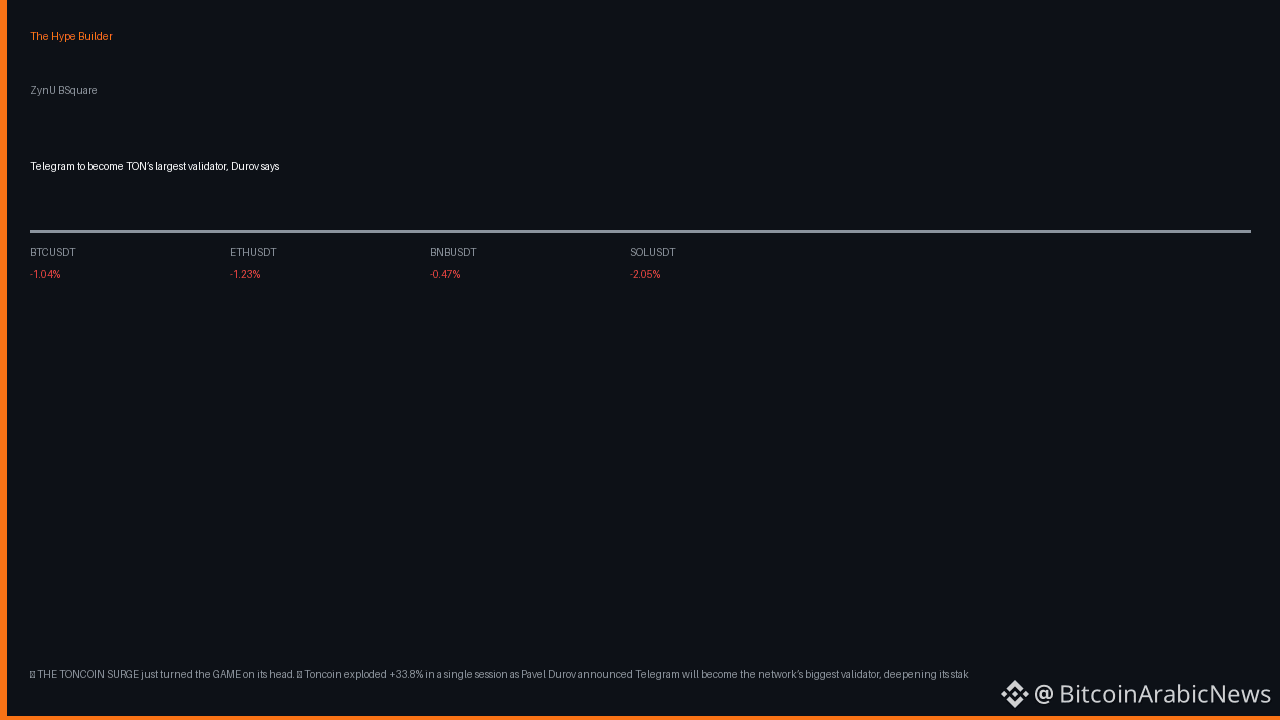
🔥 EL REPUNTE DE TONCOIN acaba de darle la vuelta al JUEGO.
📊 Toncoin se disparó un +33,8 % en una sola sesión después de que Pavel Durov anunciara que Telegram se convertirá en el mayor validador de la red, aumentando su participación en #TON. Mientras #BTC cae un 1,04 % hasta los 79.595 $ y lucha contra un RSI bajista de 36, el #Telegram impulsa un nuevo repunte de las altcoins que nadie vio venir. Las billeteras de grandes inversores en Solana ya están detectando la oportunidad: tres billeteras han comprado activos relacionados con TON en esta última hora.
💥 Esta onda expansiva podría reescribir la narrativa del mercado: un contexto bajista para Bitcoin, altcoins alcistas y datos de futuros de nivel institucional que muestran un sesgo alcista en BTC (L/S 2.40; 70,6 % en posiciones largas) sugieren que el capital busca tokens de mayor rendimiento. Si TON consolida su liderazgo entre los validadores, ya habrá comenzado la avalancha de proyectos vinculados a BSC y la próxima ola de ganancias impulsadas por los memes. #AltSeason #Crypto
❓ Deja un 🔥 si crees que TON es la próxima gran ola. ¿Quién está comprando ahora?
41
·
--
El verdadero desafío de hacer que DeFi sea accesibleLa adopción de la cadena de bloques no consiste solo en atraer nuevas billeteras. Se trata de ofrecer a las personas razones prácticas para usar aplicaciones descentralizadas después de su primera interacción.
Este es un desafío interesante para el ecosistema TON, y @ston_fi es un proyecto que vale la pena seguir en este contexto.
Como exchange descentralizado en TON, STON.fi ofrece infraestructura para intercambiar tokens compatibles en la cadena. Pero detrás de cada intercambio hay un sistema más amplio que incluye liquidez, precios, contratos inteligentes y decisiones de los usuarios.
Imaginemos a alguien que se inicia en DeFi por primera vez. Necesita entender qué token recibirá, qué comisiones podrían aplicarse, cómo funcionan las transacciones y qué riesgos está asumiendo. Si estos detalles le resultan confusos, incluso un protocolo técnicamente potente puede ser difícil de usar.
El verdadero desafío de hacer que DeFi sea accesible
La adopción de la cadena de bloques no consiste solo en atraer nuevas billeteras. Se trata de ofrecer a las personas razones prácticas para usar aplicaciones descentralizadas después de su primera interacción.
Este es un desafío interesante para el ecosistema TON, y @ston_fi es un proyecto que vale la pena seguir en este contexto.
Como exchange descentralizado en TON, STON.fi ofrece infraestructura para intercambiar tokens compatibles en la cadena. Pero detrás de cada intercambio hay un sistema más amplio que incluye liquidez, precios, contratos inteligentes y decisiones de los usuarios.
Imaginemos a alguien que se inicia en DeFi por primera vez. Necesita entender qué token recibirá, qué comisiones podrían aplicarse, cómo funcionan las transacciones y qué riesgos está asumiendo. Si estos detalles le resultan confusos, incluso un protocolo técnicamente potente puede ser difícil de usar.
69
·
--
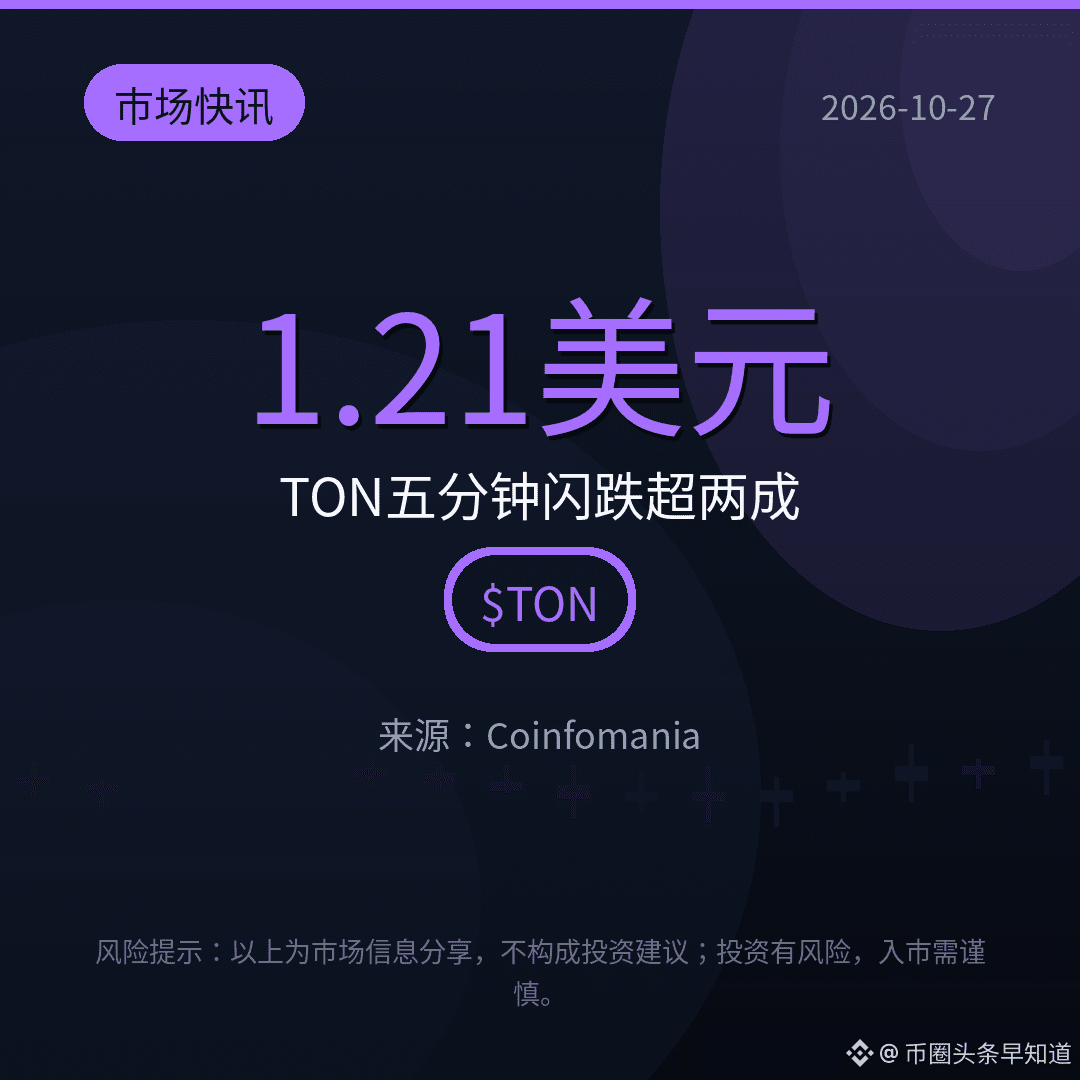
【Última hora del mercado】TON se desploma más de un 20 % en cinco minutos: cae rápidamente de unos 1,6 dólares a unos 1,21 dólares, con una capitalización de mercado de unos 3.400 millones de dólares.
Pero no te dejes asustar por una sola vela: la caída en las últimas 24 horas es de apenas un 1,5 %, lo que parece más una cascada de liquidaciones por falta de liquidez que un cambio de tendencia. La fuente original no menciona ningún factor desencadenante concreto; ahora la clave es ver si logra mantenerse en 1,21 dólares. Si pierde ese nivel, podría volver a probar mínimos.
Ante una caída repentina sin noticias, ¿comprarías en mínimos o esperarías?
$TON $BTC $ETH
#TON #加密货币 #Volatilidad del mercado
(Fuente: Coinfomania)
⚠️Aviso de riesgo: La información anterior se comparte únicamente con fines informativos y no constituye asesoramiento de inversión. Toda inversión conlleva riesgos; actúa con cautela.
7

·
--
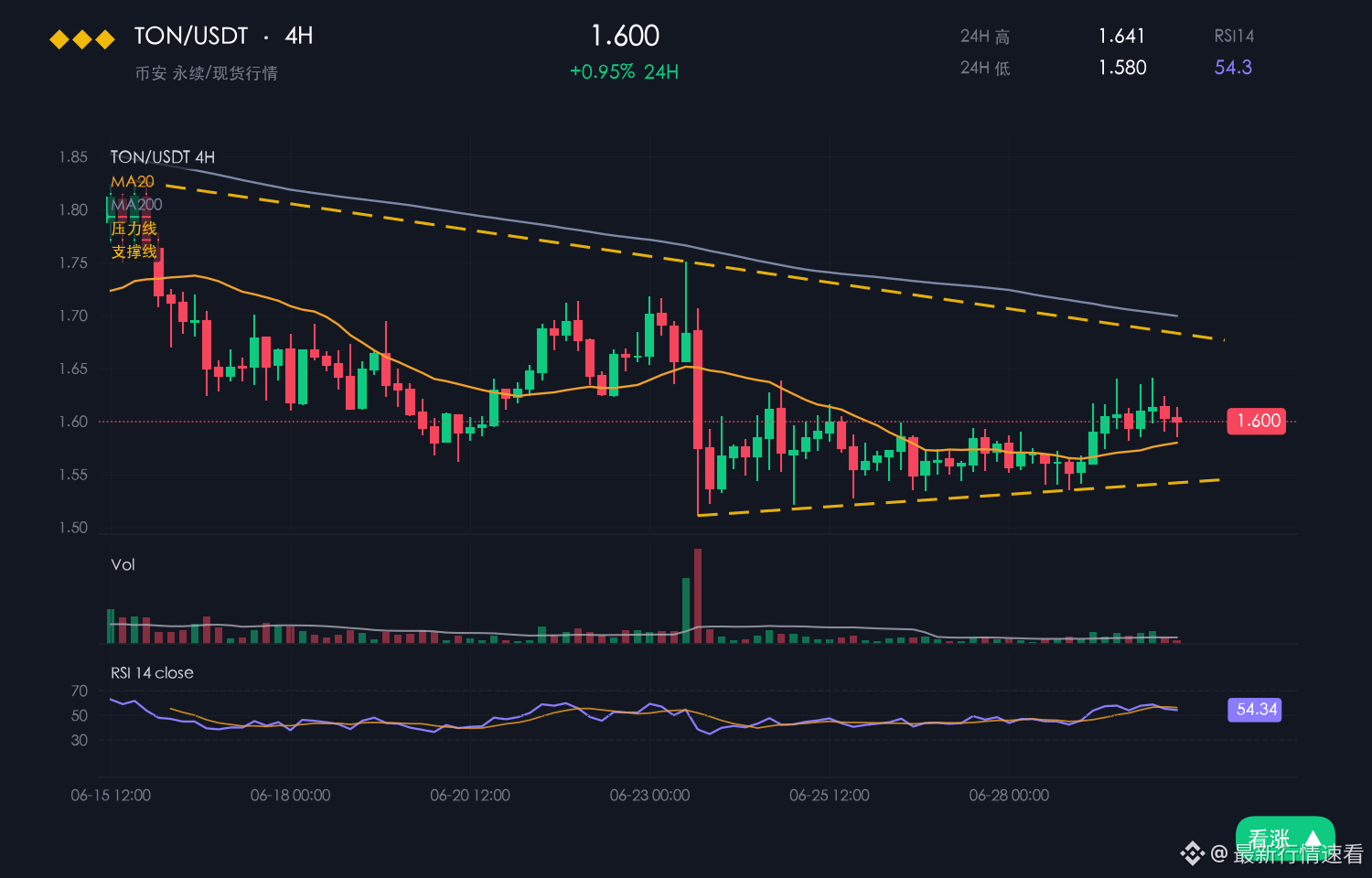
TON cotiza ahora a 1.600, sube un 0,95 % en 24 horas y sigue bajando un 3,44 % en los últimos 7 días. El rango intradía es de 1.580–1.641, con una amplitud del 3,9 %.
【Mercado】
En el nivel de 1.600, la fortaleza es muy clara.
Vigila de cerca el nivel de 1.580; si lo rompe, el siguiente objetivo es 1.641. Si hay una mecha y luego rebota, toca aceptar la pérdida.
TON presenta poca volatilidad y registra una subida moderada, en línea con el mercado general.
Mientras no pierda los 1.580, el ajuste actual puede considerarse una consolidación fuerte.
Frente al -1,19 % de BTC, TON aventaja ligeramente con un 0,95 %. Su fortaleza no destaca demasiado, pero va en la misma dirección.
【Panorama macroeconómico】 Las acciones estadounidenses cayeron durante la noche: Nasdaq -1,88 % y S&P 500 -1,11 % (cierre del 2026-10-14); los ETF de BTC registran salidas netas de unos 45.200 millones de dólares este mes; el IPC interanual de EE. UU. fue del 3,7 %, por encima de lo esperado; y la probabilidad de una subida de tipos en la reunión del 2026-10-27/28 ronda el 47 %.
La perspectiva a corto plazo tiende al alza.
【Argumentos alcistas】
Acabábamos de decir que el panorama podía cambiar, y cambió: en medio día subió un 0,95 %.
La subida del 0,95 % en 24 horas, junto con el rango de 1.580–1.641, indica que por ahora los compradores llevan la iniciativa.
El nivel de 1.641 se ha puesto a prueba repetidamente y, por el momento, los alcistas no parecen dispuestos a ceder.
Vigila de cerca los niveles clave.
El ritmo de subida a corto plazo es algo rápido y no hay que ignorar el riesgo de una mecha. Es más prudente esperar a que el retroceso confirme el nivel antes de actuar.
Si se mantiene por encima de 1.580, el siguiente objetivo es 1.641; una caída por debajo de 1.580 indicaría un deterioro de la estructura.
$TON #TON
257
·
--
Por qué es importante la liquidez para el ecosistema TONCuando se habla de finanzas descentralizadas, la conversación suele centrarse en los precios de los tokens, los nuevos lanzamientos y los movimientos del mercado. Pero, detrás de toda esa actividad, hay algo igual de importante: la liquidez.
Sin suficiente liquidez, intercambiar activos digitales puede resultar más caro y menos eficiente. Por eso, los exchanges descentralizados desempeñan un papel importante para que los ecosistemas de blockchain funcionen.
Un proyecto que vale la pena examinar en este ámbito es @ston_fi, un exchange descentralizado creado en The Open Network (TON).
Por qué es importante la liquidez para el ecosistema TON
Cuando se habla de finanzas descentralizadas, la conversación suele centrarse en los precios de los tokens, los nuevos lanzamientos y los movimientos del mercado. Pero, detrás de toda esa actividad, hay algo igual de importante: la liquidez.
Sin suficiente liquidez, intercambiar activos digitales puede resultar más caro y menos eficiente. Por eso, los exchanges descentralizados desempeñan un papel importante para que los ecosistemas de blockchain funcionen.
Un proyecto que vale la pena examinar en este ámbito es @ston_fi, un exchange descentralizado creado en The Open Network (TON).
47

·
--
$TON sube un 0,9 % hoy y yo paso
El volumen está en 0,9 veces el promedio semanal, lo que significa que a nadie le importa este impulso 📉
Necesito ver un cierre horario por encima de $1.6410 y que se mantenga antes de volver a mirarlo
O un retroceso limpio que se mantenga en $1.5780 y rebote con fuerza
Podría seguir subiendo sin ti, y una mala entrada cuesta más que perderse un movimiento 🛑
¿Perseguir $TON aquí o esperar a $1.5780?
#TON #GestiónDelRiesgo
3

·
--
Lo que aparece en la arena es el comportamiento de este período, no una tendencia garantizada.
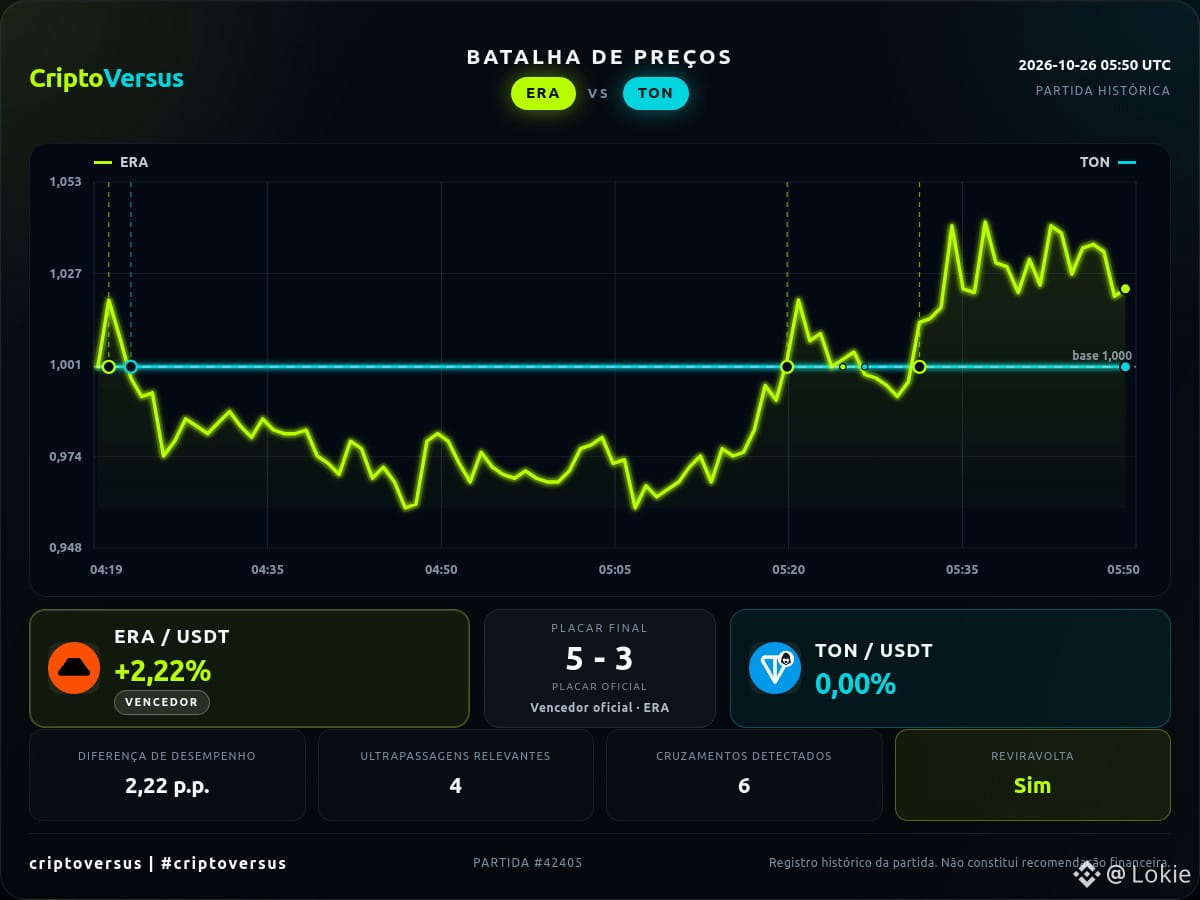
El duelo entre ERA y TON está en el gráfico
Giro en Price Battle: ERA iba por detrás en rendimiento relativo, tomó la delantera y terminó la partida por delante de TON. ERA: +2,2% | TON: +0,0%.
¿Cómo interpretas este período histórico?
#CriptoVersus #PriceBattle #ERA #TON
Contenido histórico e informativo; no es una recomendación financiera.
1
137
🦈 ¡LA LIQUIDEZ NATIVA DE EVM ESTÁ LLEGANDO OFICIALMENTE A $TON SIN TOKENS ENVUELTOS! ⚡
La fricción entre las principales redes EVM y el ecosistema de la plataforma de mensajería acaba de desaparecer por completo. STON.fi ha lanzado intercambios directos entre cadenas que conectan Ethereum, Base y BNB Chain directamente con $TON mediante mecanismos HTLC y subastas de resolutores automatizadas. 📌 Sin riesgos de incidentes de seguridad con tokens envueltos ni tediosos intercambios de varios pasos.
Ahora el capital de EVM puede fluir directamente hacia los protocolos de $TON con una eficiencia de nivel institucional, allanando el camino para una expansión significativa de la liquidez. 📊 El dinero inteligente siempre sigue de cerca las mejoras de infraestructura esenciales antes de que el volumen aparezca en los gráficos, lo que supone un catalizador estructural tanto para $TON como para $STON. 💡 ¿Ya te has posicionado para esta próxima ola de liquidez o estás esperando la confirmación del impulso? 👇
⚠️ Esto no es asesoramiento financiero. Gestiona siempre tus riesgos. 🛡️
🏷️ #TON #STON #DeFi #CrossChain #Crypto
🔥 ⚡
5
Inicia sesión para explorar más contenidos
Únete a usuarios de criptomonedas de todo el mundo en Binance Square
⚡️ Obtén la información más reciente y útil sobre criptomonedas.
💬 Confía en el mayor exchange de criptomonedas del mundo.
👍 Descubre opiniones reales de creadores verificados.
Correo electrónico/número de teléfono
Temas en tendencia
1
#CanMicrosoftDeliverOnAI
199,094 visualizaciones
1,662 participa(n) en el debate
2
#CanGoogleDefindItsCore
106,798 visualizaciones
1,204 participa(n) en el debate
3
#EarningsSeason
5.8M visualizaciones
27,587 participa(n) en el debate
4
#FOMCWatch
9.2M visualizaciones
28,904 participa(n) en el debate
5
#HKPlacesTokenizedFundSecondaryTradingUnderETFLikeFramework
209 visualizaciones
12 participa(n) en el debate
6
#USGovSellsFTXLinkedAnthropicSharesFor$627M
499 visualizaciones
22 participa(n) en el debate
7
#MoodysAssignsRLUSDA2LongTermDepositRating
2,245 visualizaciones
137 participa(n) en el debate
8
#SKHynixUnveils$45BShareholderReturns
880 visualizaciones
23 participa(n) en el debate
9
#OSMOPlansToBurn100MTokensFromCommunityPool
10,710 visualizaciones
324 participa(n) en el debate
10
#EthereumDropsBelow$2300
13,326 visualizaciones
175 participa(n) en el debate