

麒麟送财
2.2k Posts

麒麟送财
Report
Block User
200 Following
2.9K+ Followers
5.5K+ Liked
Posts
All
Quotes
Live
·
--
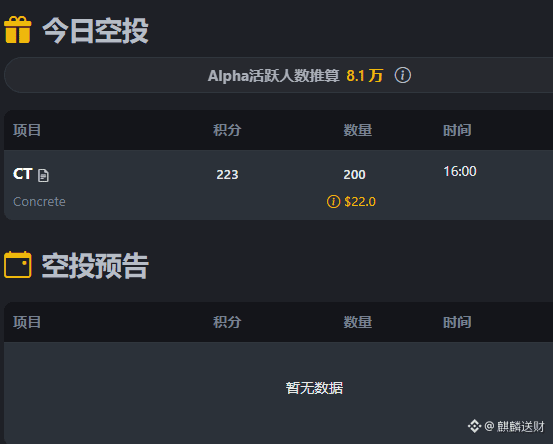
#ALPHA 9月30号, Alpha airdrop announcement! 81,000 participants!
📅 Today’s Airdrop
Good afternoon. Today’s key CT airdrop will open for claiming at 16:00.
The project is called Concrete Token. Simply put, it does the ERC-4626 vault setup: you deposit the funds, and the yield runs automatically, with automatic rebalancing—no need for you to manually keep switching your positions every day.
Data verification:
- Funding: $17 million; backed by Polychain, YZi Labs, and VanEck
- Total supply: 1 billion; fixed supply with no inflation; an ERC-20 on Ethereum
- Vault size: $1.2 billion in ecosystem deposits, cumulative transaction volume over $23 billion, with 54,000 depositors
- Pre-market price around 0.28; assuming full circulation, FDV about $280 million. On-chain liquidity pools are currently cheaper, around 0.11
Approx. 30,000–50,000 spots. The threshold looks to be around 223 points.
Yesterday’s limit-order total traded volume was $1.59 billion, which is 12.29% higher than the day before.
Alpha 24-hour Trading Competition progress:
pPOLY’s competition score is also climbing: yesterday was 46,459, and today it’s already at 64,198—up by more than 17,000 in one day.
But note the official rule: only trades of pPOLY/U made on BSC via Binance Wallet (no private key) are counted. Alpha and third-party dApps do not count.
Suggested actions for today:
DGAI (16 days remaining), 200–500U, multiple small orders.
#ALPHA 9月30号, Alpha airdrop announcement! 81,000 participants!
📅 Today’s Airdrop
Good afternoon. Today’s key CT airdrop will open for claiming at 16:00.
The project is called Concrete Token. Simply put, it does the ERC-4626 vault setup: you deposit the funds, and the yield runs automatically, with automatic rebalancing—no need for you to manually keep switching your positions every day.
Data verification:
- Funding: $17 million; backed by Polychain, YZi Labs, and VanEck
- Total supply: 1 billion; fixed supply with no inflation; an ERC-20 on Ethereum
- Vault size: $1.2 billion in ecosystem deposits, cumulative transaction volume over $23 billion, with 54,000 depositors
- Pre-market price around 0.28; assuming full circulation, FDV about $280 million. On-chain liquidity pools are currently cheaper, around 0.11
Approx. 30,000–50,000 spots. The threshold looks to be around 223 points.
Yesterday’s limit-order total traded volume was $1.59 billion, which is 12.29% higher than the day before.
Alpha 24-hour Trading Competition progress:
pPOLY’s competition score is also climbing: yesterday was 46,459, and today it’s already at 64,198—up by more than 17,000 in one day.
But note the official rule: only trades of pPOLY/U made on BSC via Binance Wallet (no private key) are counted. Alpha and third-party dApps do not count.
Suggested actions for today:
DGAI (16 days remaining), 200–500U, multiple small orders.
📅 Today’s Airdrop
Good afternoon. Today’s key CT airdrop will open for claiming at 16:00.
The project is called Concrete Token. Simply put, it does the ERC-4626 vault setup: you deposit the funds, and the yield runs automatically, with automatic rebalancing—no need for you to manually keep switching your positions every day.
Data verification:
- Funding: $17 million; backed by Polychain, YZi Labs, and VanEck
- Total supply: 1 billion; fixed supply with no inflation; an ERC-20 on Ethereum
- Vault size: $1.2 billion in ecosystem deposits, cumulative transaction volume over $23 billion, with 54,000 depositors
- Pre-market price around 0.28; assuming full circulation, FDV about $280 million. On-chain liquidity pools are currently cheaper, around 0.11
Approx. 30,000–50,000 spots. The threshold looks to be around 223 points.
Yesterday’s limit-order total traded volume was $1.59 billion, which is 12.29% higher than the day before.
Alpha 24-hour Trading Competition progress:
pPOLY’s competition score is also climbing: yesterday was 46,459, and today it’s already at 64,198—up by more than 17,000 in one day.
But note the official rule: only trades of pPOLY/U made on BSC via Binance Wallet (no private key) are counted. Alpha and third-party dApps do not count.
Suggested actions for today:
DGAI (16 days remaining), 200–500U, multiple small orders.
4
8
4.2k
·
--
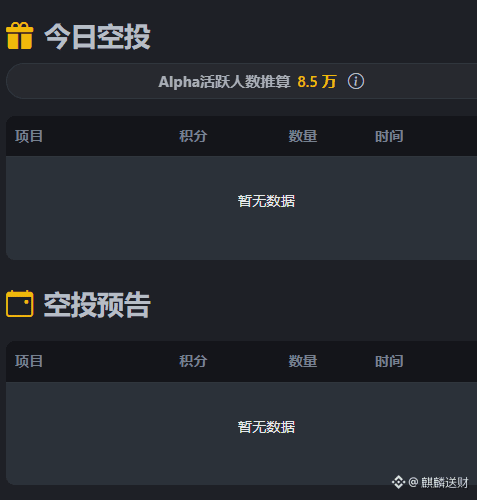
#ALPHA 9月29号,Alpha airdrop preview! 8.5W people!
📅 Today’s airdrop
Good afternoon—there’s no airdrop preview at the moment.
Yesterday, XDP was just too 🐕—the new coin airdrop was sent directly for 60,000 units, and almost nobody called the exact timing in advance. Originally, according to the schedule, many people were supposed to wait for “big time” to cash in. But with no preview and a first-come, first-served setup, being a little slow meant you became “small time,” and your points were still deducted. This sudden opening hurts the most those who already have enough points but haven’t been keeping an eye on the campaign page.
Yesterday’s total limit order成交 volume was 1,416,381,677, which is 10.87% higher than the day before.
Alpha 24-hour Trading Competition progress:
- PIEVERSE: Yesterday 383,676, today 487,887—an increase of 104,211 in one day. Still smashing on this race
- AEON: Yesterday 0, today reached 600—just started
- pPOLY: Yesterday 32,774, today 46,459—up 13,685. Moderate pace
Suggested actions for today:
Keep刷 limit orders on DGAI (17 days remaining), 200–500U, with multiple small orders.
#ALPHA 9月29号,Alpha airdrop preview! 8.5W people!
📅 Today’s airdrop
Good afternoon—there’s no airdrop preview at the moment.
Yesterday, XDP was just too 🐕—the new coin airdrop was sent directly for 60,000 units, and almost nobody called the exact timing in advance. Originally, according to the schedule, many people were supposed to wait for “big time” to cash in. But with no preview and a first-come, first-served setup, being a little slow meant you became “small time,” and your points were still deducted. This sudden opening hurts the most those who already have enough points but haven’t been keeping an eye on the campaign page.
Yesterday’s total limit order成交 volume was 1,416,381,677, which is 10.87% higher than the day before.
Alpha 24-hour Trading Competition progress:
- PIEVERSE: Yesterday 383,676, today 487,887—an increase of 104,211 in one day. Still smashing on this race
- AEON: Yesterday 0, today reached 600—just started
- pPOLY: Yesterday 32,774, today 46,459—up 13,685. Moderate pace
Suggested actions for today:
Keep刷 limit orders on DGAI (17 days remaining), 200–500U, with multiple small orders.
📅 Today’s airdrop
Good afternoon—there’s no airdrop preview at the moment.
Yesterday, XDP was just too 🐕—the new coin airdrop was sent directly for 60,000 units, and almost nobody called the exact timing in advance. Originally, according to the schedule, many people were supposed to wait for “big time” to cash in. But with no preview and a first-come, first-served setup, being a little slow meant you became “small time,” and your points were still deducted. This sudden opening hurts the most those who already have enough points but haven’t been keeping an eye on the campaign page.
Yesterday’s total limit order成交 volume was 1,416,381,677, which is 10.87% higher than the day before.
Alpha 24-hour Trading Competition progress:
- PIEVERSE: Yesterday 383,676, today 487,887—an increase of 104,211 in one day. Still smashing on this race
- AEON: Yesterday 0, today reached 600—just started
- pPOLY: Yesterday 32,774, today 46,459—up 13,685. Moderate pace
Suggested actions for today:
Keep刷 limit orders on DGAI (17 days remaining), 200–500U, with multiple small orders.
5
21
4.3k
·
--
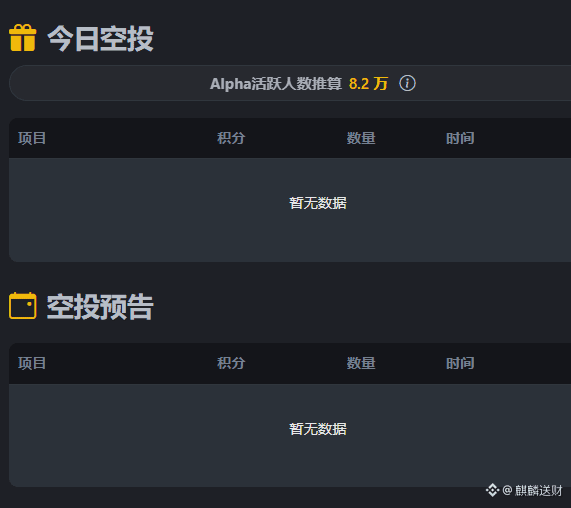
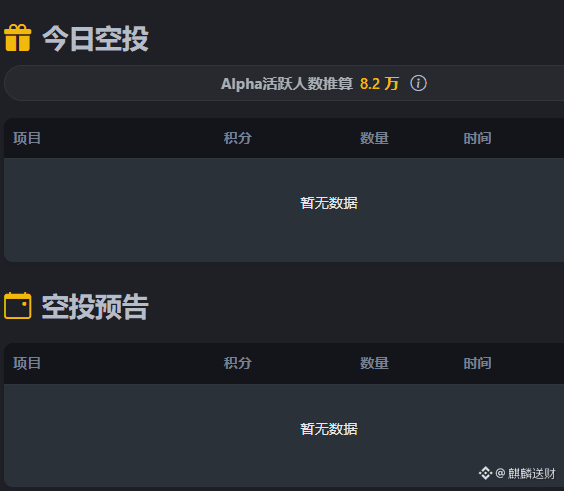
September 28th, #ALPHA Alpha Airdrop Announcement! 8.2W people!
📅 Today’s Airdrop
Good afternoon—there is currently no airdrop announcement.
Yesterday’s limit order total成交 1,277,441,201, which is 7.93% higher than the day before.
Alpha 24-hour Trading Competition data:
PIEVERSE, current price 1.52, 24-hour volume 4.8 million, slight drop of 0.07%. Total volume for the competition is 867 million, with 2 days remaining.
AEON, price 0.0528, 24H volume 1.15 million, down 6.46%. Total volume is 2.93 million, with 2 days remaining as well.
COAI, price 0.297, 24H volume 0.99 million, down 5.8%. Total volume is 0.39 million, with 4 days remaining.
Recommended actions for today:
Recommend DGAI (18 days), 200-500U, multiple small orders.
September 28th, #ALPHA Alpha Airdrop Announcement! 8.2W people!
📅 Today’s Airdrop
Good afternoon—there is currently no airdrop announcement.
Yesterday’s limit order total成交 1,277,441,201, which is 7.93% higher than the day before.
Alpha 24-hour Trading Competition data:
PIEVERSE, current price 1.52, 24-hour volume 4.8 million, slight drop of 0.07%. Total volume for the competition is 867 million, with 2 days remaining.
AEON, price 0.0528, 24H volume 1.15 million, down 6.46%. Total volume is 2.93 million, with 2 days remaining as well.
COAI, price 0.297, 24H volume 0.99 million, down 5.8%. Total volume is 0.39 million, with 4 days remaining.
Recommended actions for today:
Recommend DGAI (18 days), 200-500U, multiple small orders.
📅 Today’s Airdrop
Good afternoon—there is currently no airdrop announcement.
Yesterday’s limit order total成交 1,277,441,201, which is 7.93% higher than the day before.
Alpha 24-hour Trading Competition data:
PIEVERSE, current price 1.52, 24-hour volume 4.8 million, slight drop of 0.07%. Total volume for the competition is 867 million, with 2 days remaining.
AEON, price 0.0528, 24H volume 1.15 million, down 6.46%. Total volume is 2.93 million, with 2 days remaining as well.
COAI, price 0.297, 24H volume 0.99 million, down 5.8%. Total volume is 0.39 million, with 4 days remaining.
Recommended actions for today:
Recommend DGAI (18 days), 200-500U, multiple small orders.
2
9
1.8k
·
--
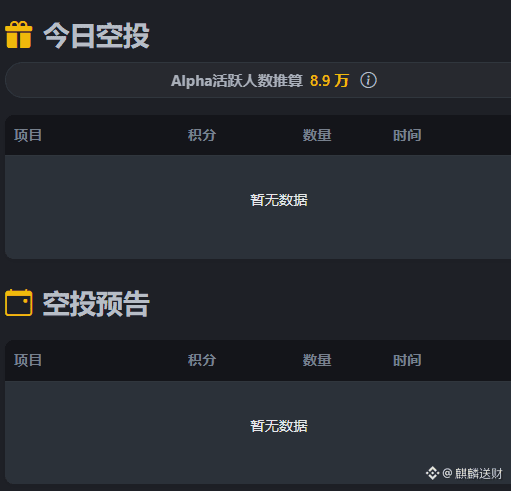
#ALPHA 9月24号,Alpha airdrop teaser! 8.9W participants!
📅 Today’s Airdrop
Good afternoon—no teaser available at the moment.
At 17:00 pPOLY opens. The pre-market price is around 25.45. Based on this price, 10,000 U should be able to get about 616 U.
Yesterday’s capped-price orders totaled 1.614 billion in volume, down 9.54% from the day before yesterday.
Alpha 24-hour trading competition data:
DEBIT: now 2.08, 24-hour volume 3.53 million, down 1.68%. FDV is about 208 million. Total volume 1.122 billion. With 8 hours left, rewards of 29 DEBIT there should be a little over 60 U.
PIEVERSE: 1.67, volume 3.90 million, down 5.34%. FDV 1.67 billion. Total volume 303 million. With 6 days left, rewards of 44 coins are about 73.6 U.
CAP: 0.0497, 24-hour volume 5.5 million, up 4.37%. FDV 497 million. Total volume 203 million. With 8 hours left, reward is 50 U.
KII: volume 12.86 million, price 0.0795, down 1.51%. FDV 143 million. Total volume 611 million. With 2 days left. Reward 625 KII is about 49.7 U.
AEON: 0.0617, volume 4.50 million, down 1.56%. FDV only 61.72 million. Total volume only 1.34 million. With 6 days left. Reward 910 coins is about 56 U.
Today’s trading suggestions:
DGAI: 22 days remaining—small amounts in multiple orders of 200–500 U.
#ALPHA 9月24号,Alpha airdrop teaser! 8.9W participants!
📅 Today’s Airdrop
Good afternoon—no teaser available at the moment.
At 17:00 pPOLY opens. The pre-market price is around 25.45. Based on this price, 10,000 U should be able to get about 616 U.
Yesterday’s capped-price orders totaled 1.614 billion in volume, down 9.54% from the day before yesterday.
Alpha 24-hour trading competition data:
DEBIT: now 2.08, 24-hour volume 3.53 million, down 1.68%. FDV is about 208 million. Total volume 1.122 billion. With 8 hours left, rewards of 29 DEBIT there should be a little over 60 U.
PIEVERSE: 1.67, volume 3.90 million, down 5.34%. FDV 1.67 billion. Total volume 303 million. With 6 days left, rewards of 44 coins are about 73.6 U.
CAP: 0.0497, 24-hour volume 5.5 million, up 4.37%. FDV 497 million. Total volume 203 million. With 8 hours left, reward is 50 U.
KII: volume 12.86 million, price 0.0795, down 1.51%. FDV 143 million. Total volume 611 million. With 2 days left. Reward 625 KII is about 49.7 U.
AEON: 0.0617, volume 4.50 million, down 1.56%. FDV only 61.72 million. Total volume only 1.34 million. With 6 days left. Reward 910 coins is about 56 U.
Today’s trading suggestions:
DGAI: 22 days remaining—small amounts in multiple orders of 200–500 U.
📅 Today’s Airdrop
Good afternoon—no teaser available at the moment.
At 17:00 pPOLY opens. The pre-market price is around 25.45. Based on this price, 10,000 U should be able to get about 616 U.
Yesterday’s capped-price orders totaled 1.614 billion in volume, down 9.54% from the day before yesterday.
Alpha 24-hour trading competition data:
DEBIT: now 2.08, 24-hour volume 3.53 million, down 1.68%. FDV is about 208 million. Total volume 1.122 billion. With 8 hours left, rewards of 29 DEBIT there should be a little over 60 U.
PIEVERSE: 1.67, volume 3.90 million, down 5.34%. FDV 1.67 billion. Total volume 303 million. With 6 days left, rewards of 44 coins are about 73.6 U.
CAP: 0.0497, 24-hour volume 5.5 million, up 4.37%. FDV 497 million. Total volume 203 million. With 8 hours left, reward is 50 U.
KII: volume 12.86 million, price 0.0795, down 1.51%. FDV 143 million. Total volume 611 million. With 2 days left. Reward 625 KII is about 49.7 U.
AEON: 0.0617, volume 4.50 million, down 1.56%. FDV only 61.72 million. Total volume only 1.34 million. With 6 days left. Reward 910 coins is about 56 U.
Today’s trading suggestions:
DGAI: 22 days remaining—small amounts in multiple orders of 200–500 U.
4
4
1.9k
·
--
#ALPHA 9月23号, Alpha Airdrop Announcement! 90K spots!
📅 Today’s Airdrop
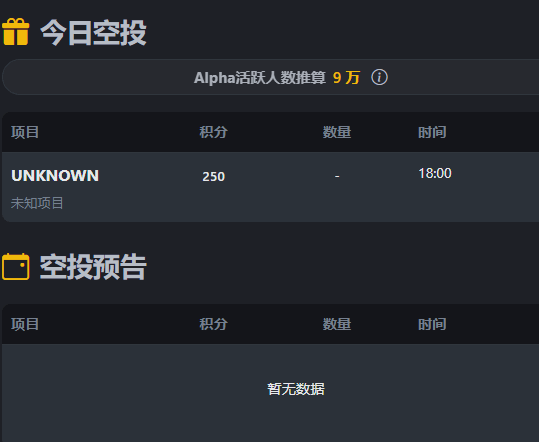
Good afternoon—surprise blind-box airdrop: 250 points, exactly at 18:00!
Yesterday’s limit order total trading volume was 1.784 billion, up 8.58% from the day before.
Alpha 24-hour trading competition stats:
DEBIT is 2.12; 24-hour volume is 2.64 million, down 5.5%, with FDV around 211 million. Total competition volume has already broken 1.045 billion—2 days left. 29 DEBIT is roughly 61U.
PIEVERSE is 1.77; volume is 5.67 million, down 2.5%, and FDV is directly 1.77 billion. Total trading volume is 179 million, 7 days left. 44 coins are roughly 77U.
KII is 0.0807; volume is 3.24 million, barely down 0.15%, FDV 145 million. Total volume 552 million, 3 days left. 625 KII is about a bit over 50U.
AEON is 0.063; volume 6.25 million, up 5.55%, FDV 63 million. Total trading volume is only 520k, 7 days left. 910 coins are roughly 57U.
CAP is 0.0477; volume 1.19 million, up 2.66%, FDV 476 million. Total volume 9.09 million, 2 days left. 50U.
Today’s trading suggestions:
DGAI, 23 days, multiple small orders of 200–500U.
Also, the Alpha +5 points activity is back—this time it’s predicting the market for football. Trading over 50U lets you earn points.
Time: 2024/9/23 08:00 to 2024/9/30 23:59:59.
It’s simple: Wallet → Prediction Market → Football.
Right now, the liquidity looks relatively better for Azerbaijan vs. Tajikistan. Use limit orders; expected slippage is about ~1.5U.
#ALPHA 9月23号, Alpha Airdrop Announcement! 90K spots!
📅 Today’s Airdrop
Good afternoon—surprise blind-box airdrop: 250 points, exactly at 18:00!
Yesterday’s limit order total trading volume was 1.784 billion, up 8.58% from the day before.
Alpha 24-hour trading competition stats:
DEBIT is 2.12; 24-hour volume is 2.64 million, down 5.5%, with FDV around 211 million. Total competition volume has already broken 1.045 billion—2 days left. 29 DEBIT is roughly 61U.
PIEVERSE is 1.77; volume is 5.67 million, down 2.5%, and FDV is directly 1.77 billion. Total trading volume is 179 million, 7 days left. 44 coins are roughly 77U.
KII is 0.0807; volume is 3.24 million, barely down 0.15%, FDV 145 million. Total volume 552 million, 3 days left. 625 KII is about a bit over 50U.
AEON is 0.063; volume 6.25 million, up 5.55%, FDV 63 million. Total trading volume is only 520k, 7 days left. 910 coins are roughly 57U.
CAP is 0.0477; volume 1.19 million, up 2.66%, FDV 476 million. Total volume 9.09 million, 2 days left. 50U.
Today’s trading suggestions:
DGAI, 23 days, multiple small orders of 200–500U.
Also, the Alpha +5 points activity is back—this time it’s predicting the market for football. Trading over 50U lets you earn points.
Time: 2024/9/23 08:00 to 2024/9/30 23:59:59.
It’s simple: Wallet → Prediction Market → Football.
Right now, the liquidity looks relatively better for Azerbaijan vs. Tajikistan. Use limit orders; expected slippage is about ~1.5U.
📅 Today’s Airdrop
Good afternoon—surprise blind-box airdrop: 250 points, exactly at 18:00!
Yesterday’s limit order total trading volume was 1.784 billion, up 8.58% from the day before.
Alpha 24-hour trading competition stats:
DEBIT is 2.12; 24-hour volume is 2.64 million, down 5.5%, with FDV around 211 million. Total competition volume has already broken 1.045 billion—2 days left. 29 DEBIT is roughly 61U.
PIEVERSE is 1.77; volume is 5.67 million, down 2.5%, and FDV is directly 1.77 billion. Total trading volume is 179 million, 7 days left. 44 coins are roughly 77U.
KII is 0.0807; volume is 3.24 million, barely down 0.15%, FDV 145 million. Total volume 552 million, 3 days left. 625 KII is about a bit over 50U.
AEON is 0.063; volume 6.25 million, up 5.55%, FDV 63 million. Total trading volume is only 520k, 7 days left. 910 coins are roughly 57U.
CAP is 0.0477; volume 1.19 million, up 2.66%, FDV 476 million. Total volume 9.09 million, 2 days left. 50U.
Today’s trading suggestions:
DGAI, 23 days, multiple small orders of 200–500U.
Also, the Alpha +5 points activity is back—this time it’s predicting the market for football. Trading over 50U lets you earn points.
Time: 2024/9/23 08:00 to 2024/9/30 23:59:59.
It’s simple: Wallet → Prediction Market → Football.
Right now, the liquidity looks relatively better for Azerbaijan vs. Tajikistan. Use limit orders; expected slippage is about ~1.5U.

1
2
2.3k
·
--
#ALPHA 9月22号,Alpha空投预告!人数9.4W!
📅 Today’s Airdrop
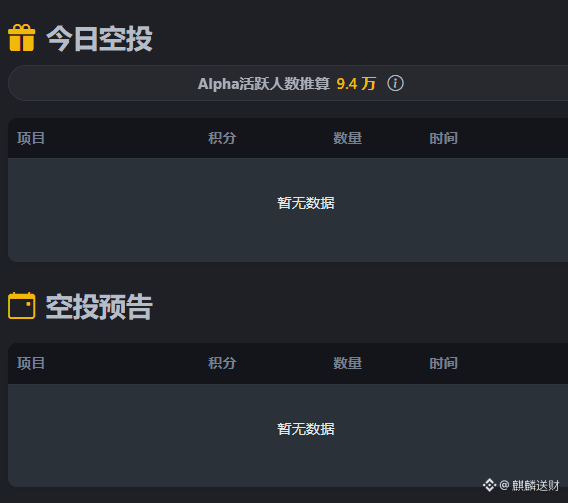
Good afternoon. For now, there are no announcements.
Yesterday’s limit-price orders saw total trades of 1.624 billion (RMB). Compared with the day before, it continued to rise by 9.47%.
Alpha 24-hour trading competition stats:
DEBIT, current price 2.24, 24H trading volume 2.71 million, up slightly by 0.42%, FDV 224 million. Total competition volume 959 million, with 3 days left. Prize pool: 29 DEBIT, roughly 65U.
PIEVERSE, current price 1.81, 24H volume 12.95 million, surged by nearly 9%, FDV 1.81B. Total competition volume 351 million, ends in 8 hours. Rewards: 44 tokens, about 80U. Contract is eligible for participation.
KII, current price 0.0808, 24H volume 37.47 million, up slightly by 0.3%, FDV 145.5 million. Total trades 506 million. The competition starts on the evening of the 18th, with 4 days left. Rewards: 625 KII, worth a bit over 50U, limited to spot participation only.
CAP, current price 0.0464, 24H volume 1.78 million, +3.43%, FDV 464 million. Total competition volume is only 8.71 million. Starts on the 17th, with 3 days remaining. The bonus is fixed at 50 USDC.
CP, current price 0.0141, 24H volume 1.38 million, up 9.86%, FDV 70.73 million. Total trades are a bit over 450,000, ending in 8 hours. Rewards: 2000 CP, about 28U.
Today’s trading suggestions:
DGAI, 24 days remaining—place multiple small orders of 200–500U each.
#ALPHA 9月22号,Alpha空投预告!人数9.4W!
📅 Today’s Airdrop
Good afternoon. For now, there are no announcements.
Yesterday’s limit-price orders saw total trades of 1.624 billion (RMB). Compared with the day before, it continued to rise by 9.47%.
Alpha 24-hour trading competition stats:
DEBIT, current price 2.24, 24H trading volume 2.71 million, up slightly by 0.42%, FDV 224 million. Total competition volume 959 million, with 3 days left. Prize pool: 29 DEBIT, roughly 65U.
PIEVERSE, current price 1.81, 24H volume 12.95 million, surged by nearly 9%, FDV 1.81B. Total competition volume 351 million, ends in 8 hours. Rewards: 44 tokens, about 80U. Contract is eligible for participation.
KII, current price 0.0808, 24H volume 37.47 million, up slightly by 0.3%, FDV 145.5 million. Total trades 506 million. The competition starts on the evening of the 18th, with 4 days left. Rewards: 625 KII, worth a bit over 50U, limited to spot participation only.
CAP, current price 0.0464, 24H volume 1.78 million, +3.43%, FDV 464 million. Total competition volume is only 8.71 million. Starts on the 17th, with 3 days remaining. The bonus is fixed at 50 USDC.
CP, current price 0.0141, 24H volume 1.38 million, up 9.86%, FDV 70.73 million. Total trades are a bit over 450,000, ending in 8 hours. Rewards: 2000 CP, about 28U.
Today’s trading suggestions:
DGAI, 24 days remaining—place multiple small orders of 200–500U each.
📅 Today’s Airdrop
Good afternoon. For now, there are no announcements.
Yesterday’s limit-price orders saw total trades of 1.624 billion (RMB). Compared with the day before, it continued to rise by 9.47%.
Alpha 24-hour trading competition stats:
DEBIT, current price 2.24, 24H trading volume 2.71 million, up slightly by 0.42%, FDV 224 million. Total competition volume 959 million, with 3 days left. Prize pool: 29 DEBIT, roughly 65U.
PIEVERSE, current price 1.81, 24H volume 12.95 million, surged by nearly 9%, FDV 1.81B. Total competition volume 351 million, ends in 8 hours. Rewards: 44 tokens, about 80U. Contract is eligible for participation.
KII, current price 0.0808, 24H volume 37.47 million, up slightly by 0.3%, FDV 145.5 million. Total trades 506 million. The competition starts on the evening of the 18th, with 4 days left. Rewards: 625 KII, worth a bit over 50U, limited to spot participation only.
CAP, current price 0.0464, 24H volume 1.78 million, +3.43%, FDV 464 million. Total competition volume is only 8.71 million. Starts on the 17th, with 3 days remaining. The bonus is fixed at 50 USDC.
CP, current price 0.0141, 24H volume 1.38 million, up 9.86%, FDV 70.73 million. Total trades are a bit over 450,000, ending in 8 hours. Rewards: 2000 CP, about 28U.
Today’s trading suggestions:
DGAI, 24 days remaining—place multiple small orders of 200–500U each.
2
2
22
3.9k
·
--
#ALPHA 9th May 21, Alpha Airdrop Announcement! Participants: 96K!
📅 Today’s Airdrop
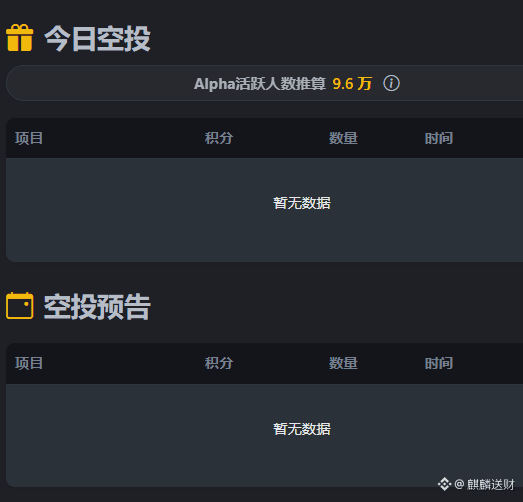
Good afternoon—no announcement yet.
On the 24th: pPoly. Binance’s newly launched Pre-Access IPO subscription model—put simply, the company hasn’t listed yet; instead, it tokenizes shares so you can subscribe. Total supply is 1 billion tokens. The on-chain pool currently has 1.55B, corresponding FDV is already 15.5B. Polymarket’s latest round of funding values it at $21 billion.
Yesterday, limit orders totaled a bit over 14.8B in trades, down about 9 percentage points compared to the day before.
Alpha 24-hour trading competition stats:
DEBIT: current price 2.23, 4.57M+ in 24h volume, a slight drop of 2.71%. FDV is exactly 223M. Cumulative race volume is already 809M, with 4 days left.
KII: 55.71M成交, price 0.0806, a micro drop of 1.33%. FDV 145M. Cumulative volume 439M, with 5 days left.
PIEVERSE: now 1.66, volume 14.64M, down 0.63%, FDV directly at 1.66B. Total volume 41.47M, with 2 days left.
CAP quote: 0.0449, volume 3.71M, down 3 percentage points, FDV 448M. Cumulative 8.29M, with 4 days left.
CP: 0.0129, volume 2.05M, down 4%, FDV only 64.28M. Today’s limit order is 6,000+; yesterday it was 39,000; cumulative trades are 390K, with 2 days left.
Suggested actions for today:
DGAI: 25 days remaining—place multiple small buys of 200–500U per order.
#ALPHA 9th May 21, Alpha Airdrop Announcement! Participants: 96K!
📅 Today’s Airdrop
Good afternoon—no announcement yet.
On the 24th: pPoly. Binance’s newly launched Pre-Access IPO subscription model—put simply, the company hasn’t listed yet; instead, it tokenizes shares so you can subscribe. Total supply is 1 billion tokens. The on-chain pool currently has 1.55B, corresponding FDV is already 15.5B. Polymarket’s latest round of funding values it at $21 billion.
Yesterday, limit orders totaled a bit over 14.8B in trades, down about 9 percentage points compared to the day before.
Alpha 24-hour trading competition stats:
DEBIT: current price 2.23, 4.57M+ in 24h volume, a slight drop of 2.71%. FDV is exactly 223M. Cumulative race volume is already 809M, with 4 days left.
KII: 55.71M成交, price 0.0806, a micro drop of 1.33%. FDV 145M. Cumulative volume 439M, with 5 days left.
PIEVERSE: now 1.66, volume 14.64M, down 0.63%, FDV directly at 1.66B. Total volume 41.47M, with 2 days left.
CAP quote: 0.0449, volume 3.71M, down 3 percentage points, FDV 448M. Cumulative 8.29M, with 4 days left.
CP: 0.0129, volume 2.05M, down 4%, FDV only 64.28M. Today’s limit order is 6,000+; yesterday it was 39,000; cumulative trades are 390K, with 2 days left.
Suggested actions for today:
DGAI: 25 days remaining—place multiple small buys of 200–500U per order.
📅 Today’s Airdrop
Good afternoon—no announcement yet.
On the 24th: pPoly. Binance’s newly launched Pre-Access IPO subscription model—put simply, the company hasn’t listed yet; instead, it tokenizes shares so you can subscribe. Total supply is 1 billion tokens. The on-chain pool currently has 1.55B, corresponding FDV is already 15.5B. Polymarket’s latest round of funding values it at $21 billion.
Yesterday, limit orders totaled a bit over 14.8B in trades, down about 9 percentage points compared to the day before.
Alpha 24-hour trading competition stats:
DEBIT: current price 2.23, 4.57M+ in 24h volume, a slight drop of 2.71%. FDV is exactly 223M. Cumulative race volume is already 809M, with 4 days left.
KII: 55.71M成交, price 0.0806, a micro drop of 1.33%. FDV 145M. Cumulative volume 439M, with 5 days left.
PIEVERSE: now 1.66, volume 14.64M, down 0.63%, FDV directly at 1.66B. Total volume 41.47M, with 2 days left.
CAP quote: 0.0449, volume 3.71M, down 3 percentage points, FDV 448M. Cumulative 8.29M, with 4 days left.
CP: 0.0129, volume 2.05M, down 4%, FDV only 64.28M. Today’s limit order is 6,000+; yesterday it was 39,000; cumulative trades are 390K, with 2 days left.
Suggested actions for today:
DGAI: 25 days remaining—place multiple small buys of 200–500U per order.
3
4
3.3k
·
--
September 19th, #ALPHA 9—Alpha airdrop announcement! 9.9W spots!
📅 Today’s Airdrop
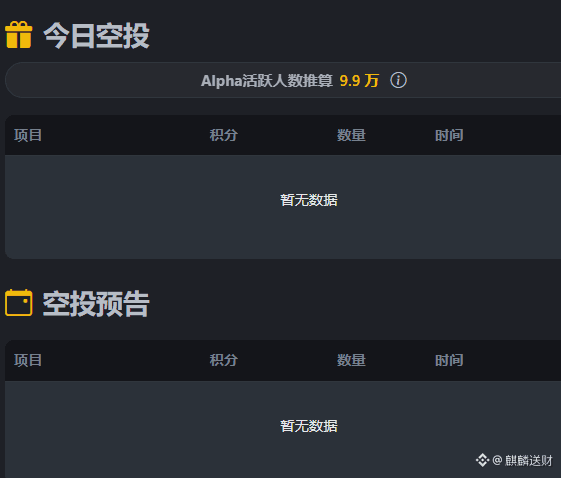
Good afternoon—there are no announcements at the moment.
The total trading volume data for the limit orders is still pretty good. Yesterday was 1.428 billion, up 13.39% compared to the day before.
Alpha 24-hour trading competition stats:
DEBIT: Current price 2.43; 24h trading volume 11.62M; down 6.4%; FDV 243M; cumulative trading volume 451M.
KII: Current price 0.081; 24h trading volume 66.53M; barely down, only -0.37%; FDV 146M. The competition started only the evening of the 18th, with cumulative volume of 43.85M.
PIEVERSE: Current price 1.78; 24h surged 51.5%; trading volume 23.82M; FDV 1.78B.
CAP: Current price 0.0554; slight increase of 1.81%; 24h trading volume 1.43M; FDV 554M. Today’s limit orders are only 41K; yesterday was 215K; cumulative 350K.
CP: Current price 0.0135; up 6.91%; 24h trading volume 4.34M; FDV 67.64M. Today’s limit orders are only 9,125; yesterday was 68K; cumulative 318K.
Today’s trading recommendation:
Recommend DGAI and CNPY. DGAI still has a 4x window of 27 days, while CNPY has 18 days left. Place multiple small orders in the 200–500U range.
September 19th, #ALPHA 9—Alpha airdrop announcement! 9.9W spots!
📅 Today’s Airdrop
Good afternoon—there are no announcements at the moment.
The total trading volume data for the limit orders is still pretty good. Yesterday was 1.428 billion, up 13.39% compared to the day before.
Alpha 24-hour trading competition stats:
DEBIT: Current price 2.43; 24h trading volume 11.62M; down 6.4%; FDV 243M; cumulative trading volume 451M.
KII: Current price 0.081; 24h trading volume 66.53M; barely down, only -0.37%; FDV 146M. The competition started only the evening of the 18th, with cumulative volume of 43.85M.
PIEVERSE: Current price 1.78; 24h surged 51.5%; trading volume 23.82M; FDV 1.78B.
CAP: Current price 0.0554; slight increase of 1.81%; 24h trading volume 1.43M; FDV 554M. Today’s limit orders are only 41K; yesterday was 215K; cumulative 350K.
CP: Current price 0.0135; up 6.91%; 24h trading volume 4.34M; FDV 67.64M. Today’s limit orders are only 9,125; yesterday was 68K; cumulative 318K.
Today’s trading recommendation:
Recommend DGAI and CNPY. DGAI still has a 4x window of 27 days, while CNPY has 18 days left. Place multiple small orders in the 200–500U range.
📅 Today’s Airdrop
Good afternoon—there are no announcements at the moment.
The total trading volume data for the limit orders is still pretty good. Yesterday was 1.428 billion, up 13.39% compared to the day before.
Alpha 24-hour trading competition stats:
DEBIT: Current price 2.43; 24h trading volume 11.62M; down 6.4%; FDV 243M; cumulative trading volume 451M.
KII: Current price 0.081; 24h trading volume 66.53M; barely down, only -0.37%; FDV 146M. The competition started only the evening of the 18th, with cumulative volume of 43.85M.
PIEVERSE: Current price 1.78; 24h surged 51.5%; trading volume 23.82M; FDV 1.78B.
CAP: Current price 0.0554; slight increase of 1.81%; 24h trading volume 1.43M; FDV 554M. Today’s limit orders are only 41K; yesterday was 215K; cumulative 350K.
CP: Current price 0.0135; up 6.91%; 24h trading volume 4.34M; FDV 67.64M. Today’s limit orders are only 9,125; yesterday was 68K; cumulative 318K.
Today’s trading recommendation:
Recommend DGAI and CNPY. DGAI still has a 4x window of 27 days, while CNPY has 18 days left. Place multiple small orders in the 200–500U range.
2
4
1.4k
·
--
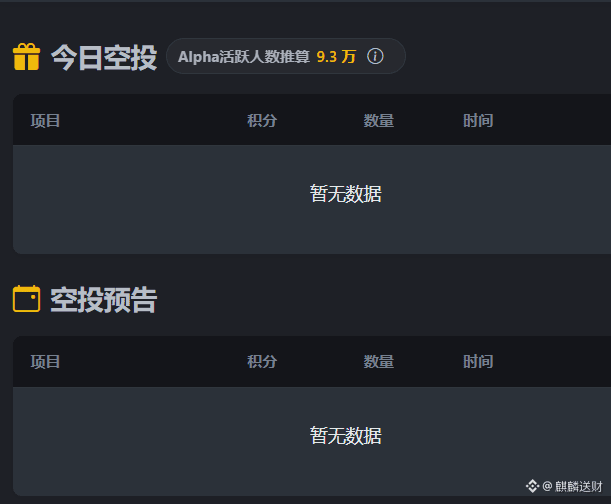
#ALPHA 9 September 18th, Alpha Airdrop Preview! Participants: 93K!
📅 Today’s Airdrop
Good afternoon—no preview today.
Yesterday, the whole network’s limit-price orders totaled 1.259 billion, a drop of 2.6% compared to the day before yesterday.
Alpha 24-hour Trading Competition stats:
DEBIT current price 2.64, 24h trading volume 19.53M, up 10.6%, FDV 263M. Cumulative trading volume 161M, rewards 29 DEBIT, which is roughly 76U. The event has 7 days left.
XPIN current price 0.000855, 24h volume only 259K, up 7.63%, FDV 85.54M. The trading competition’s total volume hit 327M—since the 11th, everyone’s been going all-in. Rewards: 55K XPIN, about 47U. The event ends in 7 hours.
CAP bid 0.0546, 24h volume 1.58M, down 6.52%, FDV 545M. Cumulative trading competition volume is only 140K; rewards: 50 USDC. 7 days remaining.
PIEVERSE current price 1.18, 24h volume 3.9M, slight drop of 0.19%, FDV 1.18B. Cumulative 1.91M, rewards 44 coins, about 52U, with 5 days left.
CP current price 0.0129, 24h volume 25.14M, up 3%, FDV 64.42M. Cumulative 250K, rewards 2,000 CP, about 25U. New project just launched; 16 days remaining.
Today’s operation suggestions:
CNPY: 19 days left—small amounts in multiple batches, 200–500U.
#ALPHA 9 September 18th, Alpha Airdrop Preview! Participants: 93K!
📅 Today’s Airdrop
Good afternoon—no preview today.
Yesterday, the whole network’s limit-price orders totaled 1.259 billion, a drop of 2.6% compared to the day before yesterday.
Alpha 24-hour Trading Competition stats:
DEBIT current price 2.64, 24h trading volume 19.53M, up 10.6%, FDV 263M. Cumulative trading volume 161M, rewards 29 DEBIT, which is roughly 76U. The event has 7 days left.
XPIN current price 0.000855, 24h volume only 259K, up 7.63%, FDV 85.54M. The trading competition’s total volume hit 327M—since the 11th, everyone’s been going all-in. Rewards: 55K XPIN, about 47U. The event ends in 7 hours.
CAP bid 0.0546, 24h volume 1.58M, down 6.52%, FDV 545M. Cumulative trading competition volume is only 140K; rewards: 50 USDC. 7 days remaining.
PIEVERSE current price 1.18, 24h volume 3.9M, slight drop of 0.19%, FDV 1.18B. Cumulative 1.91M, rewards 44 coins, about 52U, with 5 days left.
CP current price 0.0129, 24h volume 25.14M, up 3%, FDV 64.42M. Cumulative 250K, rewards 2,000 CP, about 25U. New project just launched; 16 days remaining.
Today’s operation suggestions:
CNPY: 19 days left—small amounts in multiple batches, 200–500U.
📅 Today’s Airdrop
Good afternoon—no preview today.
Yesterday, the whole network’s limit-price orders totaled 1.259 billion, a drop of 2.6% compared to the day before yesterday.
Alpha 24-hour Trading Competition stats:
DEBIT current price 2.64, 24h trading volume 19.53M, up 10.6%, FDV 263M. Cumulative trading volume 161M, rewards 29 DEBIT, which is roughly 76U. The event has 7 days left.
XPIN current price 0.000855, 24h volume only 259K, up 7.63%, FDV 85.54M. The trading competition’s total volume hit 327M—since the 11th, everyone’s been going all-in. Rewards: 55K XPIN, about 47U. The event ends in 7 hours.
CAP bid 0.0546, 24h volume 1.58M, down 6.52%, FDV 545M. Cumulative trading competition volume is only 140K; rewards: 50 USDC. 7 days remaining.
PIEVERSE current price 1.18, 24h volume 3.9M, slight drop of 0.19%, FDV 1.18B. Cumulative 1.91M, rewards 44 coins, about 52U, with 5 days left.
CP current price 0.0129, 24h volume 25.14M, up 3%, FDV 64.42M. Cumulative 250K, rewards 2,000 CP, about 25U. New project just launched; 16 days remaining.
Today’s operation suggestions:
CNPY: 19 days left—small amounts in multiple batches, 200–500U.
2
14
2.6k
·
--
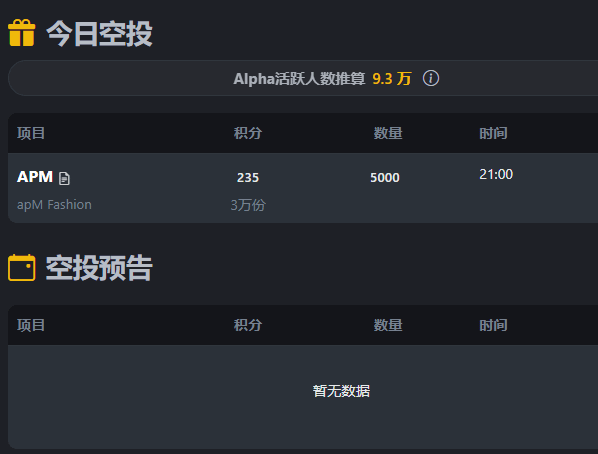
August 17, #ALPHA Alpha Airdrop announcement! Participants: 93K!
📅 Today’s Airdrop
Good afternoon. Tonight at 21:00, the APM airdrop will be opened! Let me share the background: this is a brand-new token after the old APM Coin completes its token migration, and it’s an exclusive benefit airdrop for old token holders!
Overall market data
Yesterday’s limit order total trading volume was 1.293 billion, down slightly by 2.11% compared to the day before. The overall market has cooled a bit, with a small pullback, but the trend hasn’t broken down—things are still steady, no need to panic too much.
Alpha 24-hour Trading Competition data:
DEBIT: Current price 2.42; 24H trading volume $18.76M; slightly up 8.72%; FDV valuation $242M. Current total trading volume has surpassed 2.418B—heat levels are leading the entire field by a wide margin! There are 8 hours left in the competition to wrap up, and the contract period has 8 more days.
PIEVERSE: Current price 1.19; 24H trading volume $5.46M; marginal increase 2.06%; FDV as high as $1.19B. The competition has 6 days remaining.
XPIN: Current price 0.000796; 24H trading volume 316K; slight dip 4.75%; FDV $79.6M. Total trading volume 304M. The competition has 2 days left.
CP: Current price 0.0124; 24H trading volume $4.75M; marginal increase 1.5%; FDV $62.11M. Total trading volume 119K. The competition has 6 days left, and the contract has 17 more days.
Today’s trading suggestions:
Use limit orders to trade CNPY. There are 20 days remaining—place multiple small orders in the 200–500U range.
August 17, #ALPHA Alpha Airdrop announcement! Participants: 93K!
📅 Today’s Airdrop
Good afternoon. Tonight at 21:00, the APM airdrop will be opened! Let me share the background: this is a brand-new token after the old APM Coin completes its token migration, and it’s an exclusive benefit airdrop for old token holders!
Overall market data
Yesterday’s limit order total trading volume was 1.293 billion, down slightly by 2.11% compared to the day before. The overall market has cooled a bit, with a small pullback, but the trend hasn’t broken down—things are still steady, no need to panic too much.
Alpha 24-hour Trading Competition data:
DEBIT: Current price 2.42; 24H trading volume $18.76M; slightly up 8.72%; FDV valuation $242M. Current total trading volume has surpassed 2.418B—heat levels are leading the entire field by a wide margin! There are 8 hours left in the competition to wrap up, and the contract period has 8 more days.
PIEVERSE: Current price 1.19; 24H trading volume $5.46M; marginal increase 2.06%; FDV as high as $1.19B. The competition has 6 days remaining.
XPIN: Current price 0.000796; 24H trading volume 316K; slight dip 4.75%; FDV $79.6M. Total trading volume 304M. The competition has 2 days left.
CP: Current price 0.0124; 24H trading volume $4.75M; marginal increase 1.5%; FDV $62.11M. Total trading volume 119K. The competition has 6 days left, and the contract has 17 more days.
Today’s trading suggestions:
Use limit orders to trade CNPY. There are 20 days remaining—place multiple small orders in the 200–500U range.
📅 Today’s Airdrop
Good afternoon. Tonight at 21:00, the APM airdrop will be opened! Let me share the background: this is a brand-new token after the old APM Coin completes its token migration, and it’s an exclusive benefit airdrop for old token holders!
Overall market data
Yesterday’s limit order total trading volume was 1.293 billion, down slightly by 2.11% compared to the day before. The overall market has cooled a bit, with a small pullback, but the trend hasn’t broken down—things are still steady, no need to panic too much.
Alpha 24-hour Trading Competition data:
DEBIT: Current price 2.42; 24H trading volume $18.76M; slightly up 8.72%; FDV valuation $242M. Current total trading volume has surpassed 2.418B—heat levels are leading the entire field by a wide margin! There are 8 hours left in the competition to wrap up, and the contract period has 8 more days.
PIEVERSE: Current price 1.19; 24H trading volume $5.46M; marginal increase 2.06%; FDV as high as $1.19B. The competition has 6 days remaining.
XPIN: Current price 0.000796; 24H trading volume 316K; slight dip 4.75%; FDV $79.6M. Total trading volume 304M. The competition has 2 days left.
CP: Current price 0.0124; 24H trading volume $4.75M; marginal increase 1.5%; FDV $62.11M. Total trading volume 119K. The competition has 6 days left, and the contract has 17 more days.
Today’s trading suggestions:
Use limit orders to trade CNPY. There are 20 days remaining—place multiple small orders in the 200–500U range.
13
5
31
7.3k
·
--
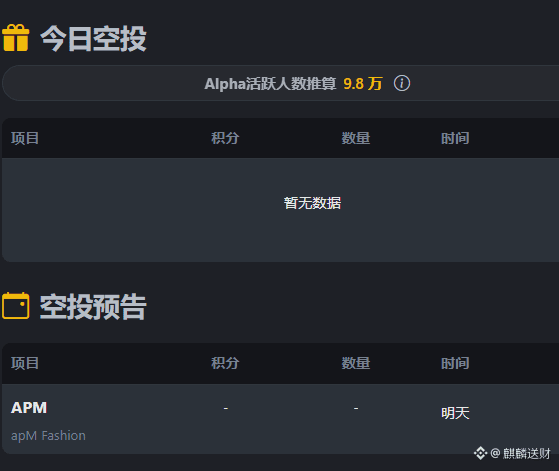
#ALPHA 9月16号,Alpha air drop announcement! Participants: 9.8W!
📅 Today’s airdrop
Good afternoon—there’s no announcement yet.
On September 17 tomorrow, apM Fashion (APM). A new token from the migration of the old apM Coin—this is the kind of airdrop you’d see with older coins. The project itself is for blockchain loyalty rewards and payments for a leading fashion wholesaler mall on the Korea side. It raised $5 million, and the core investors are DWF Labs. Previously, total supply was 1.8 billion and circulating supply 970 million. Now it has a new name and becomes a “new coin,” with total supply cut directly to 1 billion.
Yesterday, the total filled volume of limit orders was just over 1.321 billion, down 2.29% from the day before.
Alpha Trading Competition data:
DEBIT: current price 2.23, 24h volume $20.89M, down 21.88%, FDV about $222M. Today’s limit orders are around $23.0M; yesterday it was $289M. Total competition volume is $2.198B, with 2 days left. Rewards: 29 DEBIT, roughly around 64U.
XPIN: price 0.000834, 24h volume 0.809M, slight drop of 1.49%, FDV $83.38M. Today’s limit orders: 0.2M; yesterday: 1.37M. Total volume: $303M, with 3 days left.
COLLECT: 0.0170, 24h volume 2.73M, down 8.22%, FDV $50.91M. Today’s limit: 110k; yesterday: 335k. Total volume: $56.44M. The trading competition has 8 hours left—about 670 coins can be exchanged for around 11U.
PIEVERSE: 1.16, 24h volume 3.13M. Rarely, it’s up 1.54%, FDV $1.16B. Today’s limit orders are only 60k; yesterday it was 196k. Total volume is just 205k so far. With 7 days left, about 44 coins can be exchanged for roughly 51U.
CP: 0.0122, 24h volume 26.35M, down 5.71%, FDV $61.17M. Today’s limit orders are only 14k; yesterday: 700k. Total volume: 62.7k, with 7 days left. About 2000 coins can be exchanged for roughly 24U.
Today’s operation suggestions:
CNPY: 21 days remaining, 200–500U, small amounts with multiple entries.
#ALPHA 9月16号,Alpha air drop announcement! Participants: 9.8W!
📅 Today’s airdrop
Good afternoon—there’s no announcement yet.
On September 17 tomorrow, apM Fashion (APM). A new token from the migration of the old apM Coin—this is the kind of airdrop you’d see with older coins. The project itself is for blockchain loyalty rewards and payments for a leading fashion wholesaler mall on the Korea side. It raised $5 million, and the core investors are DWF Labs. Previously, total supply was 1.8 billion and circulating supply 970 million. Now it has a new name and becomes a “new coin,” with total supply cut directly to 1 billion.
Yesterday, the total filled volume of limit orders was just over 1.321 billion, down 2.29% from the day before.
Alpha Trading Competition data:
DEBIT: current price 2.23, 24h volume $20.89M, down 21.88%, FDV about $222M. Today’s limit orders are around $23.0M; yesterday it was $289M. Total competition volume is $2.198B, with 2 days left. Rewards: 29 DEBIT, roughly around 64U.
XPIN: price 0.000834, 24h volume 0.809M, slight drop of 1.49%, FDV $83.38M. Today’s limit orders: 0.2M; yesterday: 1.37M. Total volume: $303M, with 3 days left.
COLLECT: 0.0170, 24h volume 2.73M, down 8.22%, FDV $50.91M. Today’s limit: 110k; yesterday: 335k. Total volume: $56.44M. The trading competition has 8 hours left—about 670 coins can be exchanged for around 11U.
PIEVERSE: 1.16, 24h volume 3.13M. Rarely, it’s up 1.54%, FDV $1.16B. Today’s limit orders are only 60k; yesterday it was 196k. Total volume is just 205k so far. With 7 days left, about 44 coins can be exchanged for roughly 51U.
CP: 0.0122, 24h volume 26.35M, down 5.71%, FDV $61.17M. Today’s limit orders are only 14k; yesterday: 700k. Total volume: 62.7k, with 7 days left. About 2000 coins can be exchanged for roughly 24U.
Today’s operation suggestions:
CNPY: 21 days remaining, 200–500U, small amounts with multiple entries.
📅 Today’s airdrop
Good afternoon—there’s no announcement yet.
On September 17 tomorrow, apM Fashion (APM). A new token from the migration of the old apM Coin—this is the kind of airdrop you’d see with older coins. The project itself is for blockchain loyalty rewards and payments for a leading fashion wholesaler mall on the Korea side. It raised $5 million, and the core investors are DWF Labs. Previously, total supply was 1.8 billion and circulating supply 970 million. Now it has a new name and becomes a “new coin,” with total supply cut directly to 1 billion.
Yesterday, the total filled volume of limit orders was just over 1.321 billion, down 2.29% from the day before.
Alpha Trading Competition data:
DEBIT: current price 2.23, 24h volume $20.89M, down 21.88%, FDV about $222M. Today’s limit orders are around $23.0M; yesterday it was $289M. Total competition volume is $2.198B, with 2 days left. Rewards: 29 DEBIT, roughly around 64U.
XPIN: price 0.000834, 24h volume 0.809M, slight drop of 1.49%, FDV $83.38M. Today’s limit orders: 0.2M; yesterday: 1.37M. Total volume: $303M, with 3 days left.
COLLECT: 0.0170, 24h volume 2.73M, down 8.22%, FDV $50.91M. Today’s limit: 110k; yesterday: 335k. Total volume: $56.44M. The trading competition has 8 hours left—about 670 coins can be exchanged for around 11U.
PIEVERSE: 1.16, 24h volume 3.13M. Rarely, it’s up 1.54%, FDV $1.16B. Today’s limit orders are only 60k; yesterday it was 196k. Total volume is just 205k so far. With 7 days left, about 44 coins can be exchanged for roughly 51U.
CP: 0.0122, 24h volume 26.35M, down 5.71%, FDV $61.17M. Today’s limit orders are only 14k; yesterday: 700k. Total volume: 62.7k, with 7 days left. About 2000 coins can be exchanged for roughly 24U.
Today’s operation suggestions:
CNPY: 21 days remaining, 200–500U, small amounts with multiple entries.
1
1
6
3k
·
--
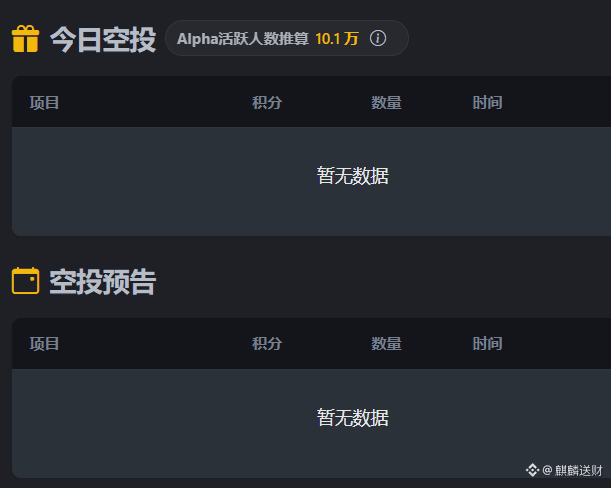
Aug 15, #ALPHA 9 — Alpha Airdrop Announcement! 10.1W spots!
📅 Today’s Airdrop
Good afternoon—no announcement yet.
Yesterday, the total volume of the limit order reached 1.352 billion, up 8 percentage points from yesterday, and the volume is still increasing.
Alpha Trading Competition Data:
DEBIT: Current price 2.85, 24h volume 34.39 million, down more than 9 points, FDV about 285 million. Yesterday’s limit order volume was 52.17 million, cumulative volume 1.938 billion. 3 days left—29 coins in the prize pool, roughly 82U worth.
TMX: 0.0295, 24h volume 1.12 million, slight dip of 1.6%, FDV 29.47 million. Today’s limit orders: 525k, total competition volume 119 million. The trading competition has only 7 hours left—450 rewards, about 13U.
XPIN is the futures/contract pool: Current price 0.000844, 24h volume 2.53 million, today up 8.3%, FDV 84.44 million. Today’s limit order: 338k, cumulative competition volume 302 million. 4 days left—55.5k rewards, roughly 47U.
CP is the quietest: 0.0131, 24h volume 1.32 million, slight uptick of 1%, FDV 65.34 million. Today’s limit order: 25k, total competition volume 575k. 7 hours left—2,000 rewards, about 26U.
COLLECT is also a contract: 0.0185, 24h volume 1.76 million, down 3.75%, FDV 55.51 million. Today’s limit order: 16k, competition volume 56.01 million. 2 days left—670 rewards, about 12U.
Today’s Trading Suggestions:
CNPY: 22 days remaining, 200–500U, split into multiple small orders.
Aug 15, #ALPHA 9 — Alpha Airdrop Announcement! 10.1W spots!
📅 Today’s Airdrop
Good afternoon—no announcement yet.
Yesterday, the total volume of the limit order reached 1.352 billion, up 8 percentage points from yesterday, and the volume is still increasing.
Alpha Trading Competition Data:
DEBIT: Current price 2.85, 24h volume 34.39 million, down more than 9 points, FDV about 285 million. Yesterday’s limit order volume was 52.17 million, cumulative volume 1.938 billion. 3 days left—29 coins in the prize pool, roughly 82U worth.
TMX: 0.0295, 24h volume 1.12 million, slight dip of 1.6%, FDV 29.47 million. Today’s limit orders: 525k, total competition volume 119 million. The trading competition has only 7 hours left—450 rewards, about 13U.
XPIN is the futures/contract pool: Current price 0.000844, 24h volume 2.53 million, today up 8.3%, FDV 84.44 million. Today’s limit order: 338k, cumulative competition volume 302 million. 4 days left—55.5k rewards, roughly 47U.
CP is the quietest: 0.0131, 24h volume 1.32 million, slight uptick of 1%, FDV 65.34 million. Today’s limit order: 25k, total competition volume 575k. 7 hours left—2,000 rewards, about 26U.
COLLECT is also a contract: 0.0185, 24h volume 1.76 million, down 3.75%, FDV 55.51 million. Today’s limit order: 16k, competition volume 56.01 million. 2 days left—670 rewards, about 12U.
Today’s Trading Suggestions:
CNPY: 22 days remaining, 200–500U, split into multiple small orders.
📅 Today’s Airdrop
Good afternoon—no announcement yet.
Yesterday, the total volume of the limit order reached 1.352 billion, up 8 percentage points from yesterday, and the volume is still increasing.
Alpha Trading Competition Data:
DEBIT: Current price 2.85, 24h volume 34.39 million, down more than 9 points, FDV about 285 million. Yesterday’s limit order volume was 52.17 million, cumulative volume 1.938 billion. 3 days left—29 coins in the prize pool, roughly 82U worth.
TMX: 0.0295, 24h volume 1.12 million, slight dip of 1.6%, FDV 29.47 million. Today’s limit orders: 525k, total competition volume 119 million. The trading competition has only 7 hours left—450 rewards, about 13U.
XPIN is the futures/contract pool: Current price 0.000844, 24h volume 2.53 million, today up 8.3%, FDV 84.44 million. Today’s limit order: 338k, cumulative competition volume 302 million. 4 days left—55.5k rewards, roughly 47U.
CP is the quietest: 0.0131, 24h volume 1.32 million, slight uptick of 1%, FDV 65.34 million. Today’s limit order: 25k, total competition volume 575k. 7 hours left—2,000 rewards, about 26U.
COLLECT is also a contract: 0.0185, 24h volume 1.76 million, down 3.75%, FDV 55.51 million. Today’s limit order: 16k, competition volume 56.01 million. 2 days left—670 rewards, about 12U.
Today’s Trading Suggestions:
CNPY: 22 days remaining, 200–500U, split into multiple small orders.
3
1
18
3.8k
·
--
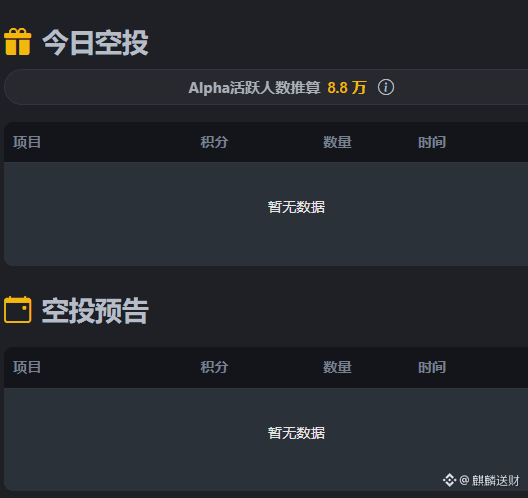
#ALPHA 9月14日, Alpha airdrop preview! Number of people 88K!
📅 Today's airdrop
Good afternoon, no preview!
Yesterday's total limit order turnover was 1.25 billion, down a little over 5 percentage points from the day before.
Alpha trading competition data:
DEBIT, price around 3.05, 24-hour turnover over 60 million, up nearly 47% in one day, FDV 300 million. Today's limit order turnover was 65.86 million, the day before 1 billion, cumulative competition volume 1.384 billion. 4 days left in the trading competition.
XPIN, price 0.000766, 24-hour turnover 1.45 million, down 3.64%, FDV about 76 million. Today's limit order turnover just over 150,000, the day before over 42 million, total competition volume just over 300 million. Contract token, 5 days left in the schedule.
TMX, 0.0297, 24-hour turnover 2.27 million, down more than 10%, FDV under 30 million. Today's limit order turnover 128,000, the day before 10.78 million, total competition volume 105 million. 2 days left in the trading competition.
COLLECT, 0.0193, 24-hour turnover 2.76 million, up slightly less than 2%, FDV 57.8 million. Today's limit order turnover 57,000, the day before just over 180,000, total competition volume 55.87 million. Also a contract token, 3 days left.
CP, 0.0128, 24-hour turnover 1.77 million, down 8.6%, FDV around 64 million. Today's limit order turnover 6,761, the day before 24,000, total competition volume just over 520,000. 2 days left in the trading competition.
Today's operation suggestion:
DEBIT, 11 days left, 200-500U, small amounts in multiple orders.
#ALPHA 9月14日, Alpha airdrop preview! Number of people 88K!
📅 Today's airdrop
Good afternoon, no preview!
Yesterday's total limit order turnover was 1.25 billion, down a little over 5 percentage points from the day before.
Alpha trading competition data:
DEBIT, price around 3.05, 24-hour turnover over 60 million, up nearly 47% in one day, FDV 300 million. Today's limit order turnover was 65.86 million, the day before 1 billion, cumulative competition volume 1.384 billion. 4 days left in the trading competition.
XPIN, price 0.000766, 24-hour turnover 1.45 million, down 3.64%, FDV about 76 million. Today's limit order turnover just over 150,000, the day before over 42 million, total competition volume just over 300 million. Contract token, 5 days left in the schedule.
TMX, 0.0297, 24-hour turnover 2.27 million, down more than 10%, FDV under 30 million. Today's limit order turnover 128,000, the day before 10.78 million, total competition volume 105 million. 2 days left in the trading competition.
COLLECT, 0.0193, 24-hour turnover 2.76 million, up slightly less than 2%, FDV 57.8 million. Today's limit order turnover 57,000, the day before just over 180,000, total competition volume 55.87 million. Also a contract token, 3 days left.
CP, 0.0128, 24-hour turnover 1.77 million, down 8.6%, FDV around 64 million. Today's limit order turnover 6,761, the day before 24,000, total competition volume just over 520,000. 2 days left in the trading competition.
Today's operation suggestion:
DEBIT, 11 days left, 200-500U, small amounts in multiple orders.
📅 Today's airdrop
Good afternoon, no preview!
Yesterday's total limit order turnover was 1.25 billion, down a little over 5 percentage points from the day before.
Alpha trading competition data:
DEBIT, price around 3.05, 24-hour turnover over 60 million, up nearly 47% in one day, FDV 300 million. Today's limit order turnover was 65.86 million, the day before 1 billion, cumulative competition volume 1.384 billion. 4 days left in the trading competition.
XPIN, price 0.000766, 24-hour turnover 1.45 million, down 3.64%, FDV about 76 million. Today's limit order turnover just over 150,000, the day before over 42 million, total competition volume just over 300 million. Contract token, 5 days left in the schedule.
TMX, 0.0297, 24-hour turnover 2.27 million, down more than 10%, FDV under 30 million. Today's limit order turnover 128,000, the day before 10.78 million, total competition volume 105 million. 2 days left in the trading competition.
COLLECT, 0.0193, 24-hour turnover 2.76 million, up slightly less than 2%, FDV 57.8 million. Today's limit order turnover 57,000, the day before just over 180,000, total competition volume 55.87 million. Also a contract token, 3 days left.
CP, 0.0128, 24-hour turnover 1.77 million, down 8.6%, FDV around 64 million. Today's limit order turnover 6,761, the day before 24,000, total competition volume just over 520,000. 2 days left in the trading competition.
Today's operation suggestion:
DEBIT, 11 days left, 200-500U, small amounts in multiple orders.
7
4
37
6.5k
·
--
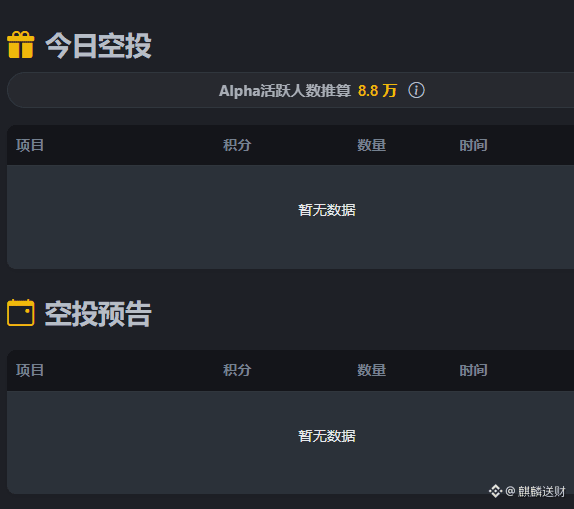
#ALPHA 9月12, Alpha airdrop preview! 88K people!
📅 Today's airdrop
Good afternoon, there is no airdrop preview.
Yesterday's total limit order trading volume was 1.304 billion, up 11.3% from the day before.
Alpha trading contest data:
XPIN had 190 million in limit order trading volume the day before yesterday, and today it's down to only 720,000. The price edged up by 0.16%, with 7 days left in the competition, and the prize pool is 55,000 tokens, worth about 50U.
DEBIT's 24-hour total trading volume held at 100 million, and the price fell by 8.28%. Today's limit orders were 480,000, down from 54 million yesterday. There are 6 days left in the competition, with rewards of 29 tokens, worth about 56U.
COLLECT rose 8.5% against the trend, with today's limit orders at 170,000 and total trading volume at 55 million. There are 5 days left in the competition, with rewards worth a little over 13U.
CP rose +11.39% today, but total trading volume was only 470,000, and today's limit orders were just over 30,000. There are 4 days left in the competition, with rewards of 2,000 tokens, worth about 30U.
TMX had a total trading volume of 94 million, today's limit orders were 30,000, down from 1.33 million yesterday. The price fell by 3.5%, with 4 days remaining in the competition, and the rewards are worth 13U.
Today's trading suggestion:
Keep farming KII, with 1 day left. Place many small orders of 200-500U.
#ALPHA 9月12, Alpha airdrop preview! 88K people!
📅 Today's airdrop
Good afternoon, there is no airdrop preview.
Yesterday's total limit order trading volume was 1.304 billion, up 11.3% from the day before.
Alpha trading contest data:
XPIN had 190 million in limit order trading volume the day before yesterday, and today it's down to only 720,000. The price edged up by 0.16%, with 7 days left in the competition, and the prize pool is 55,000 tokens, worth about 50U.
DEBIT's 24-hour total trading volume held at 100 million, and the price fell by 8.28%. Today's limit orders were 480,000, down from 54 million yesterday. There are 6 days left in the competition, with rewards of 29 tokens, worth about 56U.
COLLECT rose 8.5% against the trend, with today's limit orders at 170,000 and total trading volume at 55 million. There are 5 days left in the competition, with rewards worth a little over 13U.
CP rose +11.39% today, but total trading volume was only 470,000, and today's limit orders were just over 30,000. There are 4 days left in the competition, with rewards of 2,000 tokens, worth about 30U.
TMX had a total trading volume of 94 million, today's limit orders were 30,000, down from 1.33 million yesterday. The price fell by 3.5%, with 4 days remaining in the competition, and the rewards are worth 13U.
Today's trading suggestion:
Keep farming KII, with 1 day left. Place many small orders of 200-500U.
📅 Today's airdrop
Good afternoon, there is no airdrop preview.
Yesterday's total limit order trading volume was 1.304 billion, up 11.3% from the day before.
Alpha trading contest data:
XPIN had 190 million in limit order trading volume the day before yesterday, and today it's down to only 720,000. The price edged up by 0.16%, with 7 days left in the competition, and the prize pool is 55,000 tokens, worth about 50U.
DEBIT's 24-hour total trading volume held at 100 million, and the price fell by 8.28%. Today's limit orders were 480,000, down from 54 million yesterday. There are 6 days left in the competition, with rewards of 29 tokens, worth about 56U.
COLLECT rose 8.5% against the trend, with today's limit orders at 170,000 and total trading volume at 55 million. There are 5 days left in the competition, with rewards worth a little over 13U.
CP rose +11.39% today, but total trading volume was only 470,000, and today's limit orders were just over 30,000. There are 4 days left in the competition, with rewards of 2,000 tokens, worth about 30U.
TMX had a total trading volume of 94 million, today's limit orders were 30,000, down from 1.33 million yesterday. The price fell by 3.5%, with 4 days remaining in the competition, and the rewards are worth 13U.
Today's trading suggestion:
Keep farming KII, with 1 day left. Place many small orders of 200-500U.
1
21
3.9k
·
--
#ALPHA 9月11号, Alpha Airdrop Preview! 8.6W spots!
📅 Today’s Airdrop
Good afternoon—no airdrop preview for now.
Yesterday’s limit order total was 1.171 billion, down 16.65% from the day before, and some people also left.
Alpha 24-hour Trading Competition stats:
DEBIT: price 2.11, 24-hour volume 168 million. But the price dropped 2.82%. Today’s limit orders are 830,000; yesterday’s were 38 million—way too far apart. There are 7 days left in the trading competition, and 14 days left in the project.
XPIN: price 0.00091, 24-hour volume just over 530k, but the total trading competition volume has already reached 428 million, leading by a huge gap. For the contract asset, there are only 8 hours left in the trading competition. Today’s limit orders are 190k; yesterday’s were 21 million.
TMX: down 15.49%, 24-hour volume 2.75 million, trading competition total 92.85 million. 5 days left; project 13 days. Today’s limit orders are 140k; yesterday’s were 30 million.
COLLECT: down 8.88%, volume 2.81 million, trading competition total 54.61 million. For the contract pool, there are 6 days left. Today’s limit orders are 100k; yesterday’s were 770k.
CP: 44.49 million, price down 5.51%, but the trading competition total is only 410k. There are 5 days left; project cycle is 23 days. Today’s limit orders are 11k; yesterday’s were 96k.
Today’s trading recommendations:
Recommended: KII—2 days remaining. Make multiple small buys of 200–500U.
#ALPHA 9月11号, Alpha Airdrop Preview! 8.6W spots!
📅 Today’s Airdrop
Good afternoon—no airdrop preview for now.
Yesterday’s limit order total was 1.171 billion, down 16.65% from the day before, and some people also left.
Alpha 24-hour Trading Competition stats:
DEBIT: price 2.11, 24-hour volume 168 million. But the price dropped 2.82%. Today’s limit orders are 830,000; yesterday’s were 38 million—way too far apart. There are 7 days left in the trading competition, and 14 days left in the project.
XPIN: price 0.00091, 24-hour volume just over 530k, but the total trading competition volume has already reached 428 million, leading by a huge gap. For the contract asset, there are only 8 hours left in the trading competition. Today’s limit orders are 190k; yesterday’s were 21 million.
TMX: down 15.49%, 24-hour volume 2.75 million, trading competition total 92.85 million. 5 days left; project 13 days. Today’s limit orders are 140k; yesterday’s were 30 million.
COLLECT: down 8.88%, volume 2.81 million, trading competition total 54.61 million. For the contract pool, there are 6 days left. Today’s limit orders are 100k; yesterday’s were 770k.
CP: 44.49 million, price down 5.51%, but the trading competition total is only 410k. There are 5 days left; project cycle is 23 days. Today’s limit orders are 11k; yesterday’s were 96k.
Today’s trading recommendations:
Recommended: KII—2 days remaining. Make multiple small buys of 200–500U.
📅 Today’s Airdrop
Good afternoon—no airdrop preview for now.
Yesterday’s limit order total was 1.171 billion, down 16.65% from the day before, and some people also left.
Alpha 24-hour Trading Competition stats:
DEBIT: price 2.11, 24-hour volume 168 million. But the price dropped 2.82%. Today’s limit orders are 830,000; yesterday’s were 38 million—way too far apart. There are 7 days left in the trading competition, and 14 days left in the project.
XPIN: price 0.00091, 24-hour volume just over 530k, but the total trading competition volume has already reached 428 million, leading by a huge gap. For the contract asset, there are only 8 hours left in the trading competition. Today’s limit orders are 190k; yesterday’s were 21 million.
TMX: down 15.49%, 24-hour volume 2.75 million, trading competition total 92.85 million. 5 days left; project 13 days. Today’s limit orders are 140k; yesterday’s were 30 million.
COLLECT: down 8.88%, volume 2.81 million, trading competition total 54.61 million. For the contract pool, there are 6 days left. Today’s limit orders are 100k; yesterday’s were 770k.
CP: 44.49 million, price down 5.51%, but the trading competition total is only 410k. There are 5 days left; project cycle is 23 days. Today’s limit orders are 11k; yesterday’s were 96k.
Today’s trading recommendations:
Recommended: KII—2 days remaining. Make multiple small buys of 200–500U.

1
8
3k
·
--
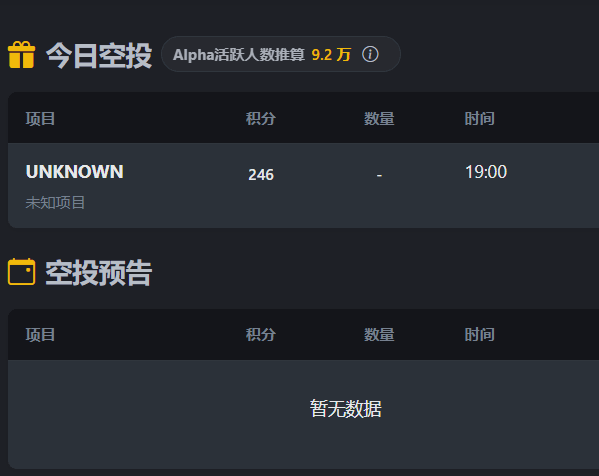
#ALPHA 9月10号, Alpha Airdrop Announcement! 9.2W participants!
📅 Today’s Airdrop
The box (blind box) airdrop is here—at 19:00, 246 minutes. I’m just guessing: old coins, worth around 30U. Do we all have enough spots?
Yesterday’s limit orders total成交 volume was 1,405,806,871, down 2.78% from the day before.
Alpha Trading Competition Data:
TMX: down nearly 26%. 24H成交 is a bit over 6.5M. Today limit orders: 0.57M; yesterday: 38M. Total赛量: 63.24M, with 6 days remaining. Rewards: 450, worth about 16U.
XPIN: down a little less, at 7.8%. Total赛量: 400M. Today limit orders: 0.43M. 2 days remaining; rewards: 55,000, roughly 50U.
COLLECT: down 23%, with nearly 6M成交 in 24H. Total赛量: 53.96M. The second round just started recently (started 09-09 21:00), with 7 days remaining. Rewards: 670, about 12U.
IN: the most ridiculous—total赛量 is already 456M, but today’s limit orders are only a little over 40k. Ends in 7 hours; rewards: 1508, roughly 48U.
CP: highest 24H成交 at 20.75M, but total赛量 is only 320k. Down 12%, with 6 days remaining. Rewards: 2000, about 29U.
Today’s Operation Suggestions:
KII: 3 days left, 200–500U.
#ALPHA 9月10号, Alpha Airdrop Announcement! 9.2W participants!
📅 Today’s Airdrop
The box (blind box) airdrop is here—at 19:00, 246 minutes. I’m just guessing: old coins, worth around 30U. Do we all have enough spots?
Yesterday’s limit orders total成交 volume was 1,405,806,871, down 2.78% from the day before.
Alpha Trading Competition Data:
TMX: down nearly 26%. 24H成交 is a bit over 6.5M. Today limit orders: 0.57M; yesterday: 38M. Total赛量: 63.24M, with 6 days remaining. Rewards: 450, worth about 16U.
XPIN: down a little less, at 7.8%. Total赛量: 400M. Today limit orders: 0.43M. 2 days remaining; rewards: 55,000, roughly 50U.
COLLECT: down 23%, with nearly 6M成交 in 24H. Total赛量: 53.96M. The second round just started recently (started 09-09 21:00), with 7 days remaining. Rewards: 670, about 12U.
IN: the most ridiculous—total赛量 is already 456M, but today’s limit orders are only a little over 40k. Ends in 7 hours; rewards: 1508, roughly 48U.
CP: highest 24H成交 at 20.75M, but total赛量 is only 320k. Down 12%, with 6 days remaining. Rewards: 2000, about 29U.
Today’s Operation Suggestions:
KII: 3 days left, 200–500U.
📅 Today’s Airdrop
The box (blind box) airdrop is here—at 19:00, 246 minutes. I’m just guessing: old coins, worth around 30U. Do we all have enough spots?
Yesterday’s limit orders total成交 volume was 1,405,806,871, down 2.78% from the day before.
Alpha Trading Competition Data:
TMX: down nearly 26%. 24H成交 is a bit over 6.5M. Today limit orders: 0.57M; yesterday: 38M. Total赛量: 63.24M, with 6 days remaining. Rewards: 450, worth about 16U.
XPIN: down a little less, at 7.8%. Total赛量: 400M. Today limit orders: 0.43M. 2 days remaining; rewards: 55,000, roughly 50U.
COLLECT: down 23%, with nearly 6M成交 in 24H. Total赛量: 53.96M. The second round just started recently (started 09-09 21:00), with 7 days remaining. Rewards: 670, about 12U.
IN: the most ridiculous—total赛量 is already 456M, but today’s limit orders are only a little over 40k. Ends in 7 hours; rewards: 1508, roughly 48U.
CP: highest 24H成交 at 20.75M, but total赛量 is only 320k. Down 12%, with 6 days remaining. Rewards: 2000, about 29U.
Today’s Operation Suggestions:
KII: 3 days left, 200–500U.
4
1
13
2.6k
·
--
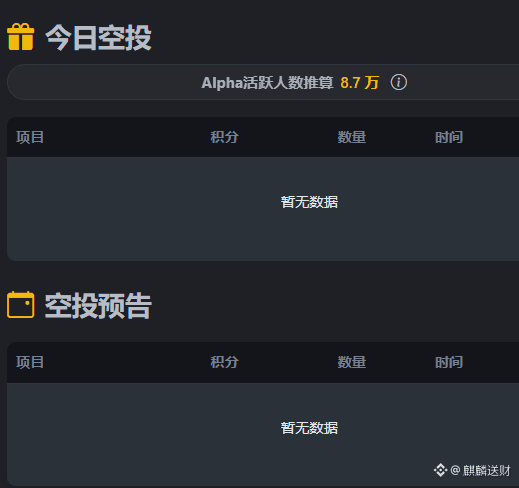
September 9, #ALPHA 9—Alpha Airdrop preview! Participants: 8.7W!
📅 Today’s airdrop
Good afternoon—no preview yet!
Yesterday’s capped-limit order total成交 (trades) was 1.446 billion, down 2.37% from the day before yesterday.
Alpha 24-hour trading competition—latest situation:
AIA: Current price 0.0927, up 3.33% in the last 24 hours. Today’s capped-limit成交 is only a bit over 440,000; yesterday it was 166 million—big drop. With 8 hours left, cumulative is 809 million. The top 2000 participants should receive about 714 tokens, roughly 66 U.
TMX: 24-hour成交 8.26 million. Price 0.0468, down 19%. Today’s capped-limit成交 is 410,000; yesterday it was 30.8 million. 7 days left, cumulative 24.27 million.
COLLECT: Down 24%, 24-hour成交 8.71 million. Today’s capped-limit is 160,000; yesterday it was 900,000. With 8 hours left, cumulative 5.34 million. Per person about 670 tokens, roughly a bit over 16 U.
XPIN: Price 0.000988, 4-hour成交 780,000. Today’s capped-limit is 55,000; yesterday it was 124 million—cliff-like drop. 3 days left, cumulative 385 million. 55,556 tokens roughly equal 55 U.
CP: Down 25.8%,成交 3.88 million. Today’s capped-limit is 50,000; yesterday it was 640,000. 7 days left, cumulative barely over 100,000. For 2000 tokens, about 33 U.
IN: Down 2.25%,成交 530,000. Today’s capped-limit is 45,000; yesterday it was 11.76 million. 2 days left, cumulative 453 million. 1508 tokens roughly equal 51 U.
Today’s operation suggestions:
Recommend KII—4 days left, place small amounts in multiple orders, 200–500 U each.
September 9, #ALPHA 9—Alpha Airdrop preview! Participants: 8.7W!
📅 Today’s airdrop
Good afternoon—no preview yet!
Yesterday’s capped-limit order total成交 (trades) was 1.446 billion, down 2.37% from the day before yesterday.
Alpha 24-hour trading competition—latest situation:
AIA: Current price 0.0927, up 3.33% in the last 24 hours. Today’s capped-limit成交 is only a bit over 440,000; yesterday it was 166 million—big drop. With 8 hours left, cumulative is 809 million. The top 2000 participants should receive about 714 tokens, roughly 66 U.
TMX: 24-hour成交 8.26 million. Price 0.0468, down 19%. Today’s capped-limit成交 is 410,000; yesterday it was 30.8 million. 7 days left, cumulative 24.27 million.
COLLECT: Down 24%, 24-hour成交 8.71 million. Today’s capped-limit is 160,000; yesterday it was 900,000. With 8 hours left, cumulative 5.34 million. Per person about 670 tokens, roughly a bit over 16 U.
XPIN: Price 0.000988, 4-hour成交 780,000. Today’s capped-limit is 55,000; yesterday it was 124 million—cliff-like drop. 3 days left, cumulative 385 million. 55,556 tokens roughly equal 55 U.
CP: Down 25.8%,成交 3.88 million. Today’s capped-limit is 50,000; yesterday it was 640,000. 7 days left, cumulative barely over 100,000. For 2000 tokens, about 33 U.
IN: Down 2.25%,成交 530,000. Today’s capped-limit is 45,000; yesterday it was 11.76 million. 2 days left, cumulative 453 million. 1508 tokens roughly equal 51 U.
Today’s operation suggestions:
Recommend KII—4 days left, place small amounts in multiple orders, 200–500 U each.
📅 Today’s airdrop
Good afternoon—no preview yet!
Yesterday’s capped-limit order total成交 (trades) was 1.446 billion, down 2.37% from the day before yesterday.
Alpha 24-hour trading competition—latest situation:
AIA: Current price 0.0927, up 3.33% in the last 24 hours. Today’s capped-limit成交 is only a bit over 440,000; yesterday it was 166 million—big drop. With 8 hours left, cumulative is 809 million. The top 2000 participants should receive about 714 tokens, roughly 66 U.
TMX: 24-hour成交 8.26 million. Price 0.0468, down 19%. Today’s capped-limit成交 is 410,000; yesterday it was 30.8 million. 7 days left, cumulative 24.27 million.
COLLECT: Down 24%, 24-hour成交 8.71 million. Today’s capped-limit is 160,000; yesterday it was 900,000. With 8 hours left, cumulative 5.34 million. Per person about 670 tokens, roughly a bit over 16 U.
XPIN: Price 0.000988, 4-hour成交 780,000. Today’s capped-limit is 55,000; yesterday it was 124 million—cliff-like drop. 3 days left, cumulative 385 million. 55,556 tokens roughly equal 55 U.
CP: Down 25.8%,成交 3.88 million. Today’s capped-limit is 50,000; yesterday it was 640,000. 7 days left, cumulative barely over 100,000. For 2000 tokens, about 33 U.
IN: Down 2.25%,成交 530,000. Today’s capped-limit is 45,000; yesterday it was 11.76 million. 2 days left, cumulative 453 million. 1508 tokens roughly equal 51 U.
Today’s operation suggestions:
Recommend KII—4 days left, place small amounts in multiple orders, 200–500 U each.
7
2.9k
·
--
#ALPHA 9th August 8th, Alpha Airdrop Preview! 8.2W participants!
📅 Today’s Airdrop
Good afternoon—no airdrop preview today.
Yesterday’s limit orders totalled about 1.481 billion, up slightly by 2.29% compared to the day before.
Alpha 24-hour Trading Race updates:
TMX—today’s volume surged straight to 14 million, topping the list by a wide margin, but the price dropped 22%. Today’s limit orders were a bit over 750,000, whereas yesterday was over 17 million. Total trading volume: 737 million. The race started at Stage 1, and the first batch is nearly finished. 450 TMX is roughly just over 25U.
AIA—around 1.3 million; price rose by 2%. Yesterday’s limit orders成交led 220 million; total is 640 million. 714 AIA roughly equals about 64U.
XPIN—only 480,000 traded in 24 hours; total trading volume 260 million. Rewards are roughly around 55U.
COLLECT—today’s volume: 9.89 million; price down 6%. Total trading volume: 4.5 million; 670 coins are only about 22U.
IN—400,000 traded; price barely moved. Total: 440 million; 1508 IN is about 51U.
Suggested actions for today:
Use limit orders to run DOS; there are 1 day left—place multiple small orders of 200–500U each.
#ALPHA 9th August 8th, Alpha Airdrop Preview! 8.2W participants!
📅 Today’s Airdrop
Good afternoon—no airdrop preview today.
Yesterday’s limit orders totalled about 1.481 billion, up slightly by 2.29% compared to the day before.
Alpha 24-hour Trading Race updates:
TMX—today’s volume surged straight to 14 million, topping the list by a wide margin, but the price dropped 22%. Today’s limit orders were a bit over 750,000, whereas yesterday was over 17 million. Total trading volume: 737 million. The race started at Stage 1, and the first batch is nearly finished. 450 TMX is roughly just over 25U.
AIA—around 1.3 million; price rose by 2%. Yesterday’s limit orders成交led 220 million; total is 640 million. 714 AIA roughly equals about 64U.
XPIN—only 480,000 traded in 24 hours; total trading volume 260 million. Rewards are roughly around 55U.
COLLECT—today’s volume: 9.89 million; price down 6%. Total trading volume: 4.5 million; 670 coins are only about 22U.
IN—400,000 traded; price barely moved. Total: 440 million; 1508 IN is about 51U.
Suggested actions for today:
Use limit orders to run DOS; there are 1 day left—place multiple small orders of 200–500U each.
📅 Today’s Airdrop
Good afternoon—no airdrop preview today.
Yesterday’s limit orders totalled about 1.481 billion, up slightly by 2.29% compared to the day before.
Alpha 24-hour Trading Race updates:
TMX—today’s volume surged straight to 14 million, topping the list by a wide margin, but the price dropped 22%. Today’s limit orders were a bit over 750,000, whereas yesterday was over 17 million. Total trading volume: 737 million. The race started at Stage 1, and the first batch is nearly finished. 450 TMX is roughly just over 25U.
AIA—around 1.3 million; price rose by 2%. Yesterday’s limit orders成交led 220 million; total is 640 million. 714 AIA roughly equals about 64U.
XPIN—only 480,000 traded in 24 hours; total trading volume 260 million. Rewards are roughly around 55U.
COLLECT—today’s volume: 9.89 million; price down 6%. Total trading volume: 4.5 million; 670 coins are only about 22U.
IN—400,000 traded; price barely moved. Total: 440 million; 1508 IN is about 51U.
Suggested actions for today:
Use limit orders to run DOS; there are 1 day left—place multiple small orders of 200–500U each.
2
7
3.2k
·
--
#ALPHA 9 on the 7th, Alpha airdrop preview! 88K participants!
📅 Today's Airdrop
Good afternoon, CNPY claim starts at 8:00 PM tonight, with an estimated score of around 240.
Yesterday's total limit order trading volume was 1.448 billion, up 2.78% from the day before.
Alpha 24-hour trading contest data:
First, looking at prices, among the five, only AIA is still holding up, up 5.48% over 24 hours. The others are a bit rough: TMX dropped straight off a cliff, -20%, COLLECT even worse at -26.5%. IN is basically flat, and XPIN dipped by 3 points.
As for trading volume, COLLECT was the strongest today, doing over 14 million in 24 hours, and TMX also had 9.3 million. AIA, IN, and XPIN were all around 400K to 500K.
But when you look at cumulative volume, the picture is very clear:
- TMX: 720 million, far ahead in first place
- AIA: 422 million, IN: 417 million
- XPIN: 127 million
- COLLECT: only 3.6 million
As for rewards, same old rule: if you make it into the top 2000, the average per person is roughly this:
- AIA: ≈61U
- IN: ≈52U
- XPIN: ≈55U
- TMX: ≈32U
- COLLECT: ≈22U
Today's suggested move:
Limit order DOS, 2 days left, 200-500U.
#ALPHA 9 on the 7th, Alpha airdrop preview! 88K participants!
📅 Today's Airdrop
Good afternoon, CNPY claim starts at 8:00 PM tonight, with an estimated score of around 240.
Yesterday's total limit order trading volume was 1.448 billion, up 2.78% from the day before.
Alpha 24-hour trading contest data:
First, looking at prices, among the five, only AIA is still holding up, up 5.48% over 24 hours. The others are a bit rough: TMX dropped straight off a cliff, -20%, COLLECT even worse at -26.5%. IN is basically flat, and XPIN dipped by 3 points.
As for trading volume, COLLECT was the strongest today, doing over 14 million in 24 hours, and TMX also had 9.3 million. AIA, IN, and XPIN were all around 400K to 500K.
But when you look at cumulative volume, the picture is very clear:
- TMX: 720 million, far ahead in first place
- AIA: 422 million, IN: 417 million
- XPIN: 127 million
- COLLECT: only 3.6 million
As for rewards, same old rule: if you make it into the top 2000, the average per person is roughly this:
- AIA: ≈61U
- IN: ≈52U
- XPIN: ≈55U
- TMX: ≈32U
- COLLECT: ≈22U
Today's suggested move:
Limit order DOS, 2 days left, 200-500U.
📅 Today's Airdrop
Good afternoon, CNPY claim starts at 8:00 PM tonight, with an estimated score of around 240.
Yesterday's total limit order trading volume was 1.448 billion, up 2.78% from the day before.
Alpha 24-hour trading contest data:
First, looking at prices, among the five, only AIA is still holding up, up 5.48% over 24 hours. The others are a bit rough: TMX dropped straight off a cliff, -20%, COLLECT even worse at -26.5%. IN is basically flat, and XPIN dipped by 3 points.
As for trading volume, COLLECT was the strongest today, doing over 14 million in 24 hours, and TMX also had 9.3 million. AIA, IN, and XPIN were all around 400K to 500K.
But when you look at cumulative volume, the picture is very clear:
- TMX: 720 million, far ahead in first place
- AIA: 422 million, IN: 417 million
- XPIN: 127 million
- COLLECT: only 3.6 million
As for rewards, same old rule: if you make it into the top 2000, the average per person is roughly this:
- AIA: ≈61U
- IN: ≈52U
- XPIN: ≈55U
- TMX: ≈32U
- COLLECT: ≈22U
Today's suggested move:
Limit order DOS, 2 days left, 200-500U.
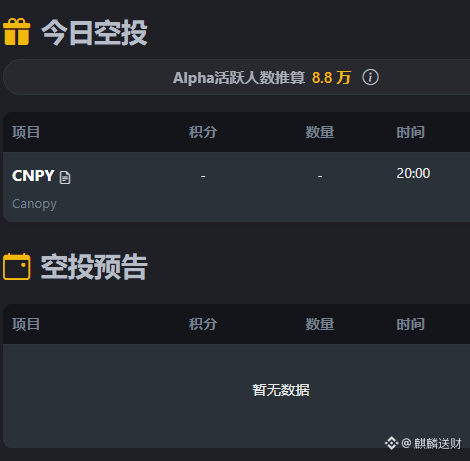
3
5
2.9k
·
--
#ALPHA 9May 5, Alpha airdrop preview! 91k people!
📅 Today's airdrops
Good afternoon, no airdrop preview today. If it’s the weekend, rest when you should.
Yesterday’s total limit-order turnover was just over 14.4 billion, down 15% from the day before yesterday.
Alpha 24-hour trading contest leaderboard:
TMX, with more than 9 million in 24-hour turnover, price down 13%, limit orders shrank from 170 million yesterday to 7.6 million today. 4 days left, the top 2030 will share 450 TMX, which comes out to about forty U.
IN, today's trading volume is just over 1 million, up 4%. 6 days left, rewards of 1,508 IN, about fifty U.
XPIN, with only 680,000 in turnover, price up a little over 2%. Limit orders total 280,000. 7 days left, 55,000 coins to be shared, fifty U.
AIA, volume 700,000, basically flat. Yesterday's limit orders were over 100 million, today they're 60,000. 5 days left, 714 AIA, fifty U.
COLLECT, today’s turnover was 3.27 million, up nearly 4%. Limit orders are a little over 30,000. Total trading volume is around 1.1 million, 5 days left, 670 coins, fifty U.
Today's action suggestion:
Limit order, DOS, 4 days left, small amount 200-500 U.
#ALPHA 9May 5, Alpha airdrop preview! 91k people!
📅 Today's airdrops
Good afternoon, no airdrop preview today. If it’s the weekend, rest when you should.
Yesterday’s total limit-order turnover was just over 14.4 billion, down 15% from the day before yesterday.
Alpha 24-hour trading contest leaderboard:
TMX, with more than 9 million in 24-hour turnover, price down 13%, limit orders shrank from 170 million yesterday to 7.6 million today. 4 days left, the top 2030 will share 450 TMX, which comes out to about forty U.
IN, today's trading volume is just over 1 million, up 4%. 6 days left, rewards of 1,508 IN, about fifty U.
XPIN, with only 680,000 in turnover, price up a little over 2%. Limit orders total 280,000. 7 days left, 55,000 coins to be shared, fifty U.
AIA, volume 700,000, basically flat. Yesterday's limit orders were over 100 million, today they're 60,000. 5 days left, 714 AIA, fifty U.
COLLECT, today’s turnover was 3.27 million, up nearly 4%. Limit orders are a little over 30,000. Total trading volume is around 1.1 million, 5 days left, 670 coins, fifty U.
Today's action suggestion:
Limit order, DOS, 4 days left, small amount 200-500 U.
📅 Today's airdrops
Good afternoon, no airdrop preview today. If it’s the weekend, rest when you should.
Yesterday’s total limit-order turnover was just over 14.4 billion, down 15% from the day before yesterday.
Alpha 24-hour trading contest leaderboard:
TMX, with more than 9 million in 24-hour turnover, price down 13%, limit orders shrank from 170 million yesterday to 7.6 million today. 4 days left, the top 2030 will share 450 TMX, which comes out to about forty U.
IN, today's trading volume is just over 1 million, up 4%. 6 days left, rewards of 1,508 IN, about fifty U.
XPIN, with only 680,000 in turnover, price up a little over 2%. Limit orders total 280,000. 7 days left, 55,000 coins to be shared, fifty U.
AIA, volume 700,000, basically flat. Yesterday's limit orders were over 100 million, today they're 60,000. 5 days left, 714 AIA, fifty U.
COLLECT, today’s turnover was 3.27 million, up nearly 4%. Limit orders are a little over 30,000. Total trading volume is around 1.1 million, 5 days left, 670 coins, fifty U.
Today's action suggestion:
Limit order, DOS, 4 days left, small amount 200-500 U.
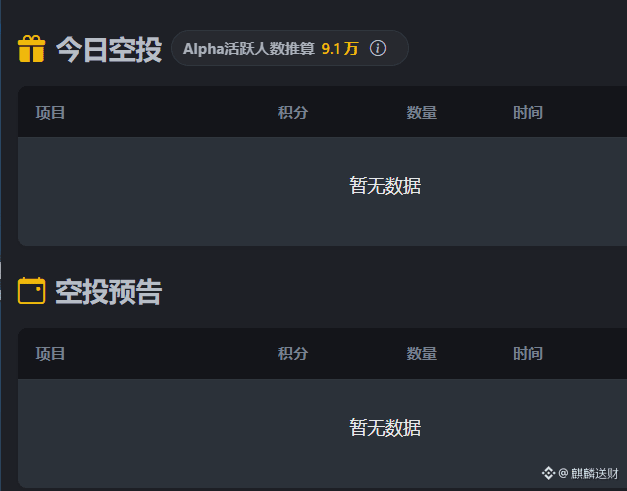
6
1.6k
Log in to explore more content
Join global crypto users on Binance Square
⚡️ Get latest and useful information about crypto.
💬 Trusted by the world’s largest crypto exchange.
👍 Discover real insights from verified creators.
Email / Phone number
Trending Topics
FedOctoberRateHikeOddsFallTo17%
286 views
61 Discussing
The Fed hike odds just collapsed to 17%, and honestly, this is the biggest green light crypto has seen all month.
A week ago, everyone was panicking about higher rates. Then the weak NFP job numbers hit the tape, and wall street completely flipped its thesis. Now, an 83% chance of a rate freeze is priced in.
Here is what happens next.
When interest rate hikes stop, money gets restless in low-yield cash. Capital naturally starts looking for growth, and that liquidity always finds its way into BTC and major altcoins first.
The macro environment is turning aggressively bullish for Q4. Don't let short-term chop shake you out right before the real move starts.
👉 Tap $BTC below to monitor live order book liquidity and position early!
#FedOctoberRateHikeOddsFallTo17% #NvidiaHitsRecordHighUp2.4% #BTC $ETH
Blockstream
·1 Likes
·21 views
NvidiaHitsRecordHighUp2.4%
72 views
49 Discussing
CanaryFilesAmendedS1ForPEPEETF
35 views
40 Discussing