
慢走不宋
5.7k Posts

慢走不宋
Report
Block User
不要关注成本 要关注机会成本。
Frequent Trader
5.8 Years
20 Following
71 Followers
69 Liked
Posts
All
Quotes
·
--
See translation
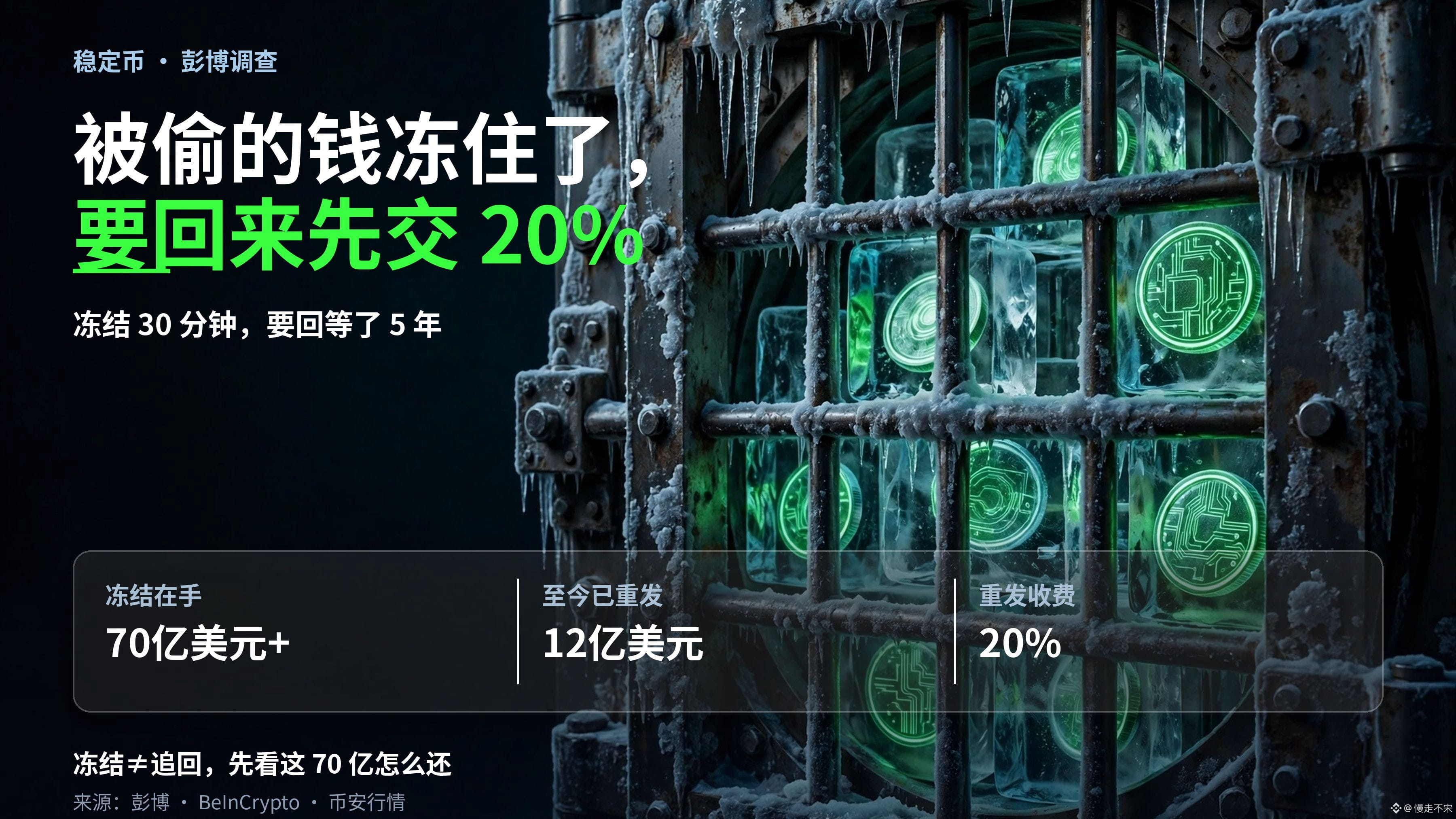
黑客偷走的钱,Tether 30 分钟就冻住了——受害者想拿回来,得先交 20%。
彭博 11 月 25 日的调查:新加坡交易所 Bittok 2020 年 6 月被盗 5,000 万美元,Tether 冻结了部分被盗 USDT。五年多过去了,一分钱没拿回来——Tether 的律师告诉收购 Bittok 的公司,要拿回得交 20% 的「重发费」。
Tether 回应说,收费是覆盖流程和法律成本;CEO Ardoino 说分批返还是怕有人争同一笔钱,「没有法律规定该怎么做」。它手里冻结的 USDT 超过 70 亿美元,至今只重发了 12 亿。公开政策里,误转地址的找回费上限是 10%,黑客案子走另一套、没有明码标价。
背景是 10 月币安被盗 63 亿美元,Tether 30 分钟内就冻结了 15 亿多 USDT。$BTC 现报 60,264 美元,24 小时涨 0.61%,今天在 57,300–60,497 美元之间走。
下一个可看的点:冻结的 70 亿里,到底有多少能回到受害者手里——还是 20% 从此成了行规。
$USDT $BTC
不是投资建议。
·
--
See translation
美国政府手里的比特币,可能要被法律锁死 20 年——一枚都不许卖。
众议院金融服务委员会 11 月 24 日正式上报《美国储备现代化法案》(H.R. 8957),法案进入全院表决排队。核心一条:财政部设立战略比特币储备后,入库的比特币至少锁 20 年,期间不得出售、交换、拍卖或抵押;20 年后每两年最多卖 10%。
法案由阿拉斯加众议员 Nick Begich 5 月 21 日提出,9 月 16 日委员会以 28 票对 21 票通过,现有 23 名联署人。储备目前只靠 2025 年 3 月的行政令存在,立法等于把「政府不卖币」写进法律。
$BTC 现报 60,381 美元,24 小时涨 0.97%,今天在 57,300–60,405 美元之间走,重回 6 万美元上方。
下一个可看的点:法案还要过众议院全院、参议院、总统签字三关——先看全院表决排不排得上。
$BTC
不是投资建议。

·
--
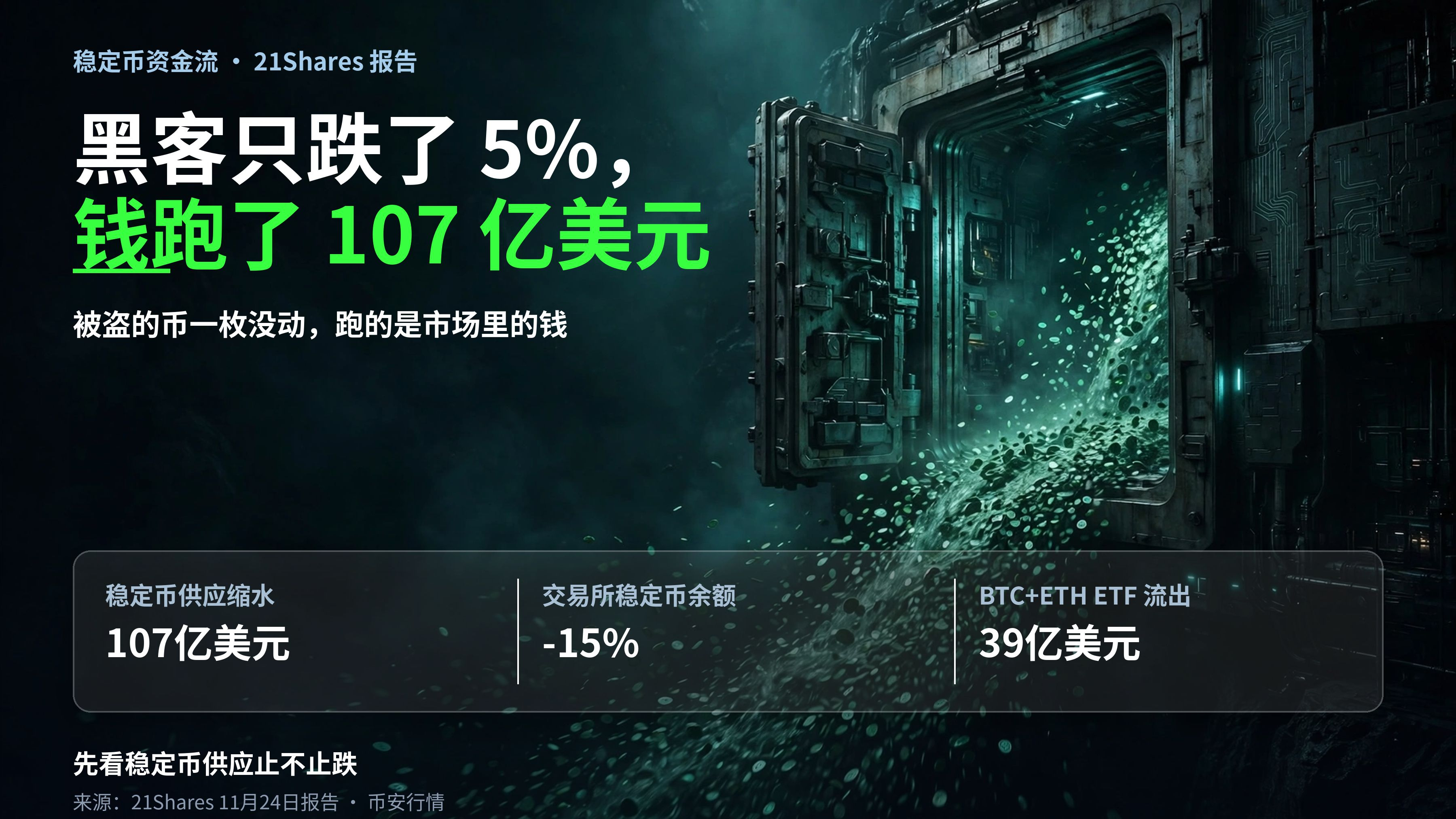
The day hackers stole $6.4 billion, Bitcoin fell just 5%—what really brought it down was the money that quietly left afterward.
A November 24 report from 21Shares breaks down the downturn: in the two days after the October 29 Binance hack, BTC fell just 5.1%, then recovered to $80,488 by November 4. From November 4 to 11, it fell another 8.3% to $73,806.
This sell-off wasn’t caused by hackers selling coins—the 18,270 BTC and 522,000 ETH stolen were still untouched by mid-November. It was demand that fell: stablecoin supply shrank by $10.7 billion over 18 days, its biggest 18-day contraction since the Terra collapse; stablecoin balances on exchanges fell 15%; and U.S. spot BTC and ETH ETFs saw combined outflows of $3.9 billion over the same period.
$BTC is now at $59,966, up 0.41% in 24 hours, trading between $57,300 and $60,405 over that period.
The next levels to watch: 21Shares’ key levels—$53,250 below, the on-chain realized price, and a move back above $73,000–$75,500 to confirm that demand has truly returned. First, watch whether stablecoin supply stops falling. Without money coming back, the price will remain a battle over existing holdings.
$BTC $ETH
Not investment advice.
·
--
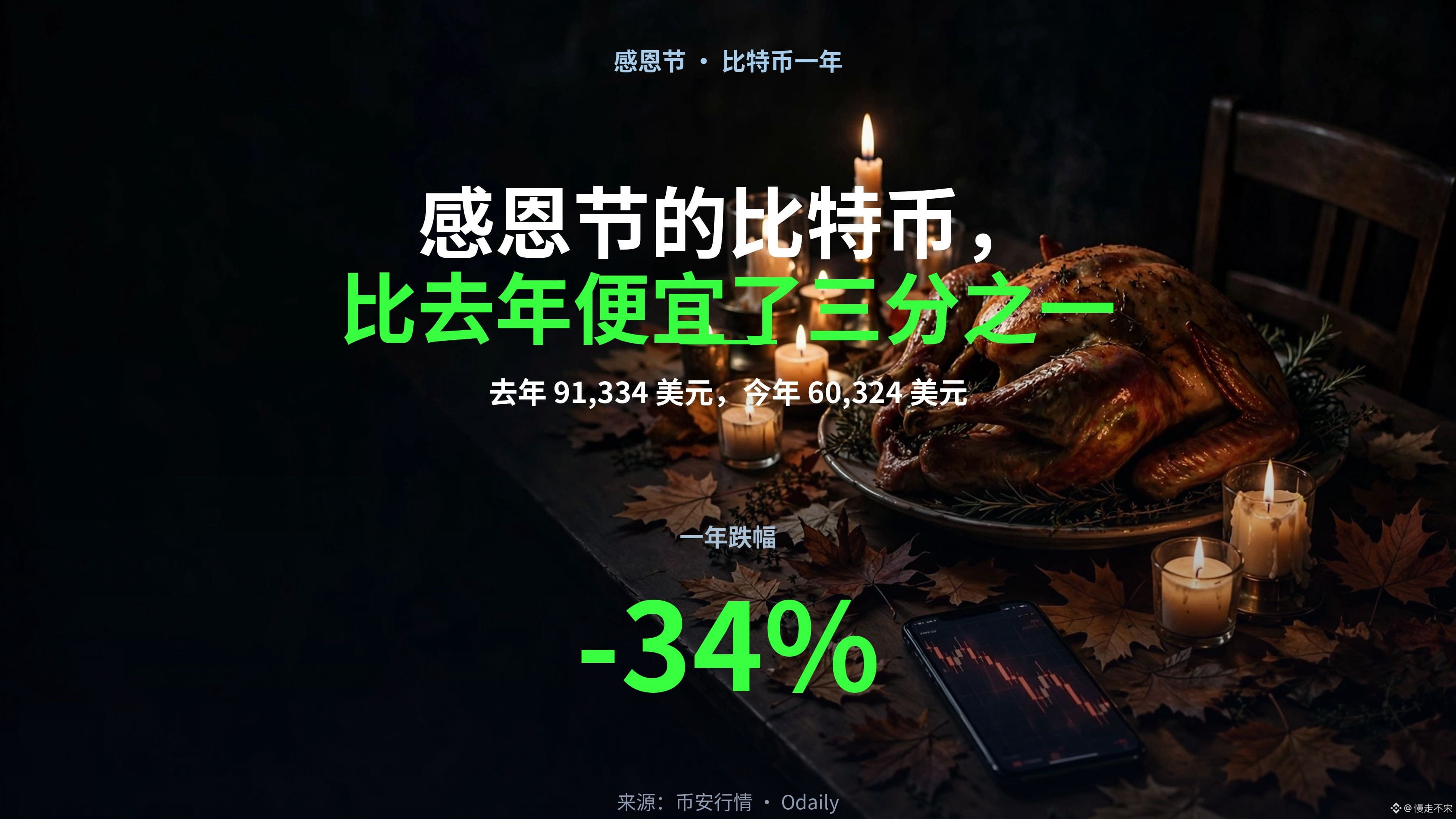
Last Thanksgiving’s turkey hasn’t even finished digesting, and Bitcoin is already a third cheaper.
Today is Thanksgiving. Last Thanksgiving (November 27, 2025), Bitcoin closed at $91,334; today it’s trading at $60,324, down about 34% in a year.
Yesterday, it briefly fell to $57,300. Across the crypto market, $511 million in positions were liquidated in 24 hours, including $423 million in long positions, with 126,000 people liquidated. On the same day, global assets lost more than $4 trillion in value, the Nasdaq fell 3.91%, and gold fell 3.49%.
But things have warmed up a little today: $BTC has climbed back above $60,000, $ETH 1,696 dollars is up 1.01%, and $SOL 70.93 dollars is up 2.28%.
The next thing to watch: historically, Thanksgiving pullbacks of a similar magnitude have often been followed by substantial rebounds. Will it be the same this time? First, let’s see whether $60,000 holds.
$BTC $ETH $SOL
Not investment advice.
30
·
--
See translation
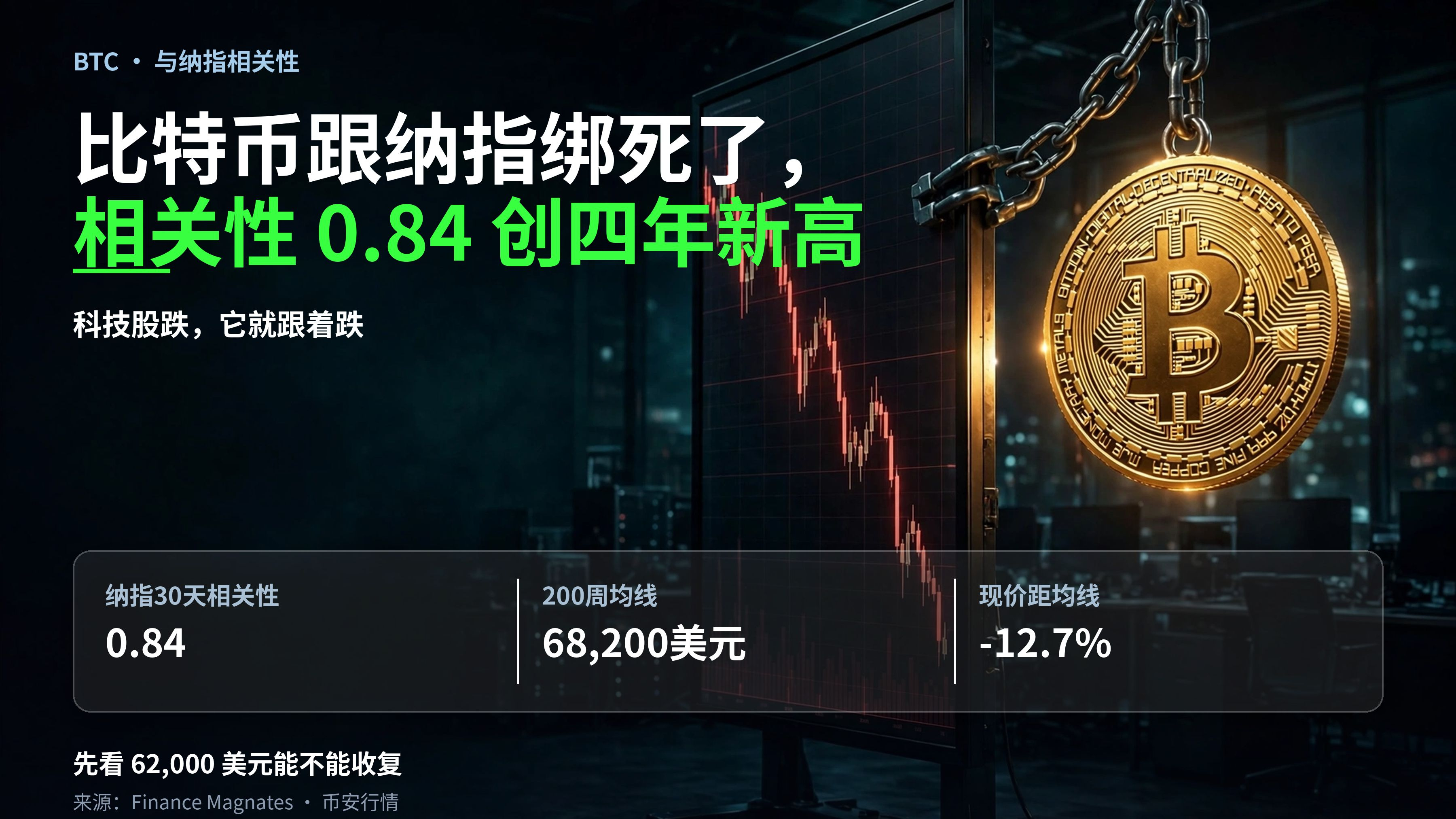
比特币现在跟纳指几乎同进同出——30天相关性冲到0.84,2022年9月以来最高。
$BTC 现报59,540美元,24小时跌0.89%,今天在57,300–60,159美元之间走。更扎眼的是技术位:比特币连续第二个交易日处在200周均线下方,那条线现在约68,200美元——现价离它还有12.7%的距离。
相关性高是双刃剑:科技股一涨,比特币跟着沾光;纳指再跌,比特币也躲不掉。ETF那边11月已经流出约49.4亿美元,17个交易日里15天都在出。
下一个可看的点:先收复62,000美元、再站上65,000美元,才能说短期稳住了;反过来跌破11月21日低点55,250美元,下方就没什么可挡的了。
$BTC
不是投资建议。
$BTC 现报59,540美元,24小时跌0.89%,今天在57,300–60,159美元之间走。更扎眼的是技术位:比特币连续第二个交易日处在200周均线下方,那条线现在约68,200美元——现价离它还有12.7%的距离。
相关性高是双刃剑:科技股一涨,比特币跟着沾光;纳指再跌,比特币也躲不掉。ETF那边11月已经流出约49.4亿美元,17个交易日里15天都在出。
下一个可看的点:先收复62,000美元、再站上65,000美元,才能说短期稳住了;反过来跌破11月21日低点55,250美元,下方就没什么可挡的了。
$BTC
不是投资建议。
2
·
--
See translation
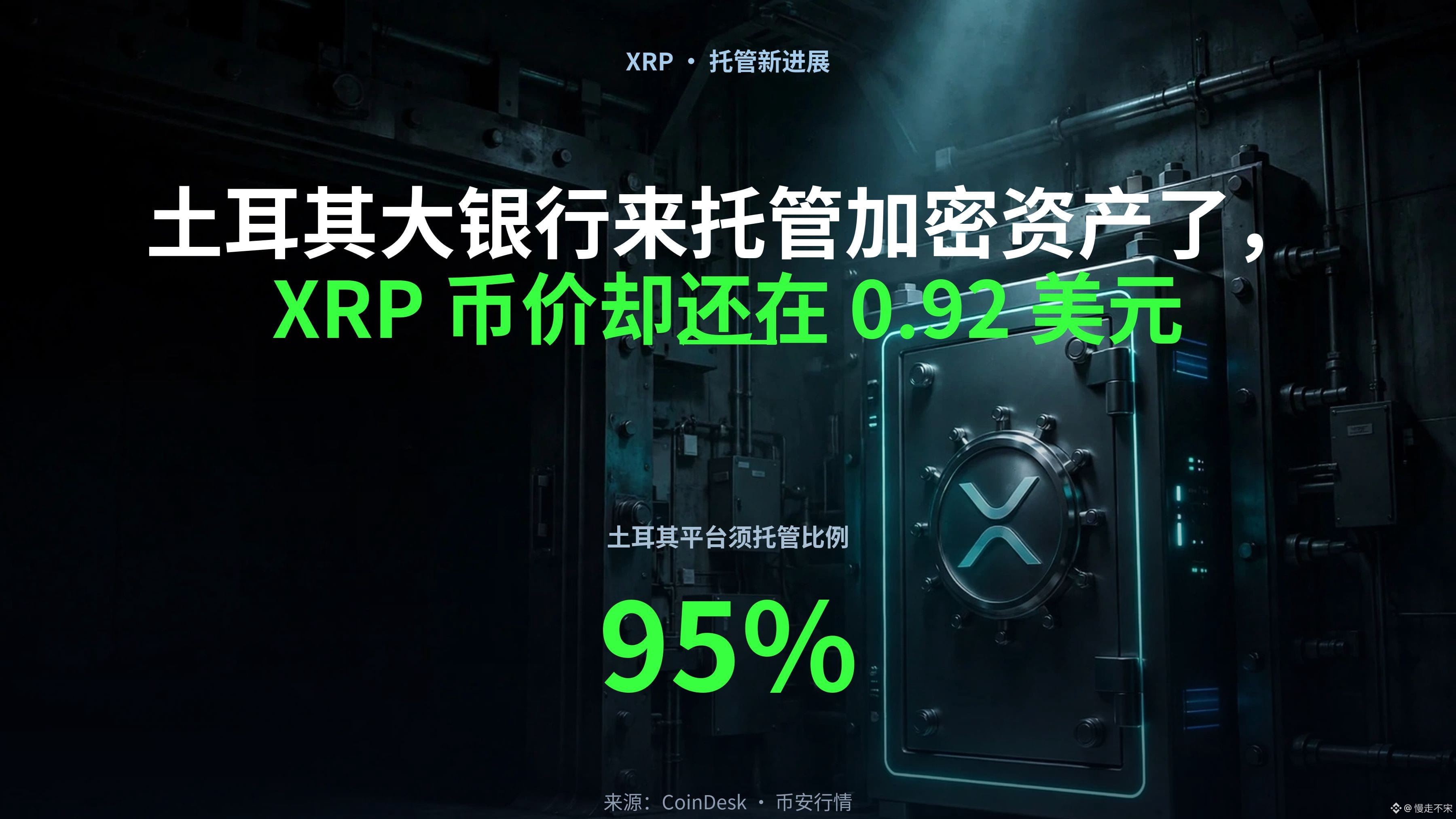
土耳其一家大银行,开始用 Ripple 的技术帮客户托管加密资产了——XRP 的币价却还在 0.92 美元原地不动。
Yapı Kredi 是土耳其最大的私人银行之一,周三宣布接入 Ripple 的托管技术,帮它的交易平台 Yapı Kredi Kripto 的客户保管加密资产。
土耳其 2024 年的规则要求,交易平台至少 95% 的客户加密资产必须放在持牌托管机构手里。Yapı Kredi 今年刚拿到托管牌照,Ripple 说它的技术已覆盖土耳其所有持牌主流银行。
土耳其是全球前十的散户加密市场,XRP 是当地持有最多的币之一。可币价没反应:$XRP 现报 0.9229 美元,24 小时基本持平(+0.01%),今天在 0.8889–0.9283 美元之间走;$BTC 现报 59,641.98 美元,跌 0.57%。
反差在另一边:XRP 的 ETF 已经连着三周净流出,上周又出 1,111 万美元——机构在卖,银行在接。
下一个可看的点:托管牌照铺开了,土耳其的散户资金会不会真的开始进场——还是这又是一次「利好出尽、币价不动」。
$XRP $BTC
不是投资建议。
4
·
--
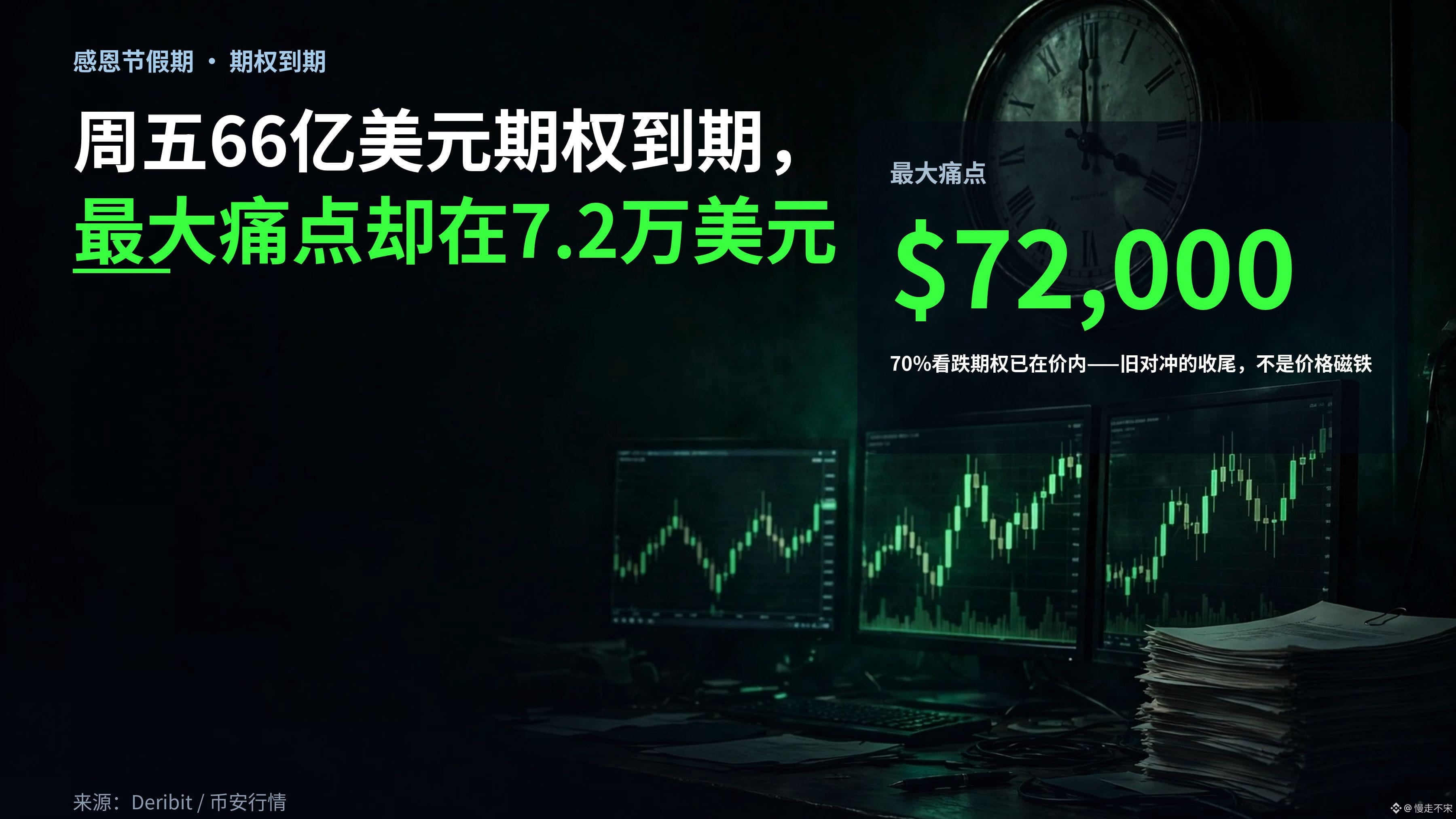
Tomorrow at 16:00, $6.6 billion worth of Bitcoin options expire — but the max pain is at $72,000, while the current price is only $58,600.
At 16:00 Beijing time on Friday, November 27, around 112,000 Bitcoin options on Deribit will expire, with a notional value of about $6.6 billion — roughly a quarter of all open interest.
Put options are already 70% in the money: puts with strike prices of $75,000, $70,000, and $65,000 make up the largest concentrations. Max pain is $72,000, about 23% above the current price. This isn’t a signal that the price will be pulled upward; it looks more like old hedges left over from the bull market three months ago, waiting to expire worthless.
$BTC is currently trading at $58,568, down 1.50% over the past 24 hours. Today it has traded between $57,300 and $60,295.
$ETH is at $1,644.89, down 1.46%.
It’s Thanksgiving today, so U.S. markets are closed and ETFs are on pause, while crypto markets trade around the clock as usual — the monthly mega-expiry happens to fall during the thinnest liquidity.
The next thing to watch: around Friday’s 16:00 settlement, will market-maker rebalancing give the price a push toward $60,000?
$BTC $ETH
Not investment advice.
2
·
--
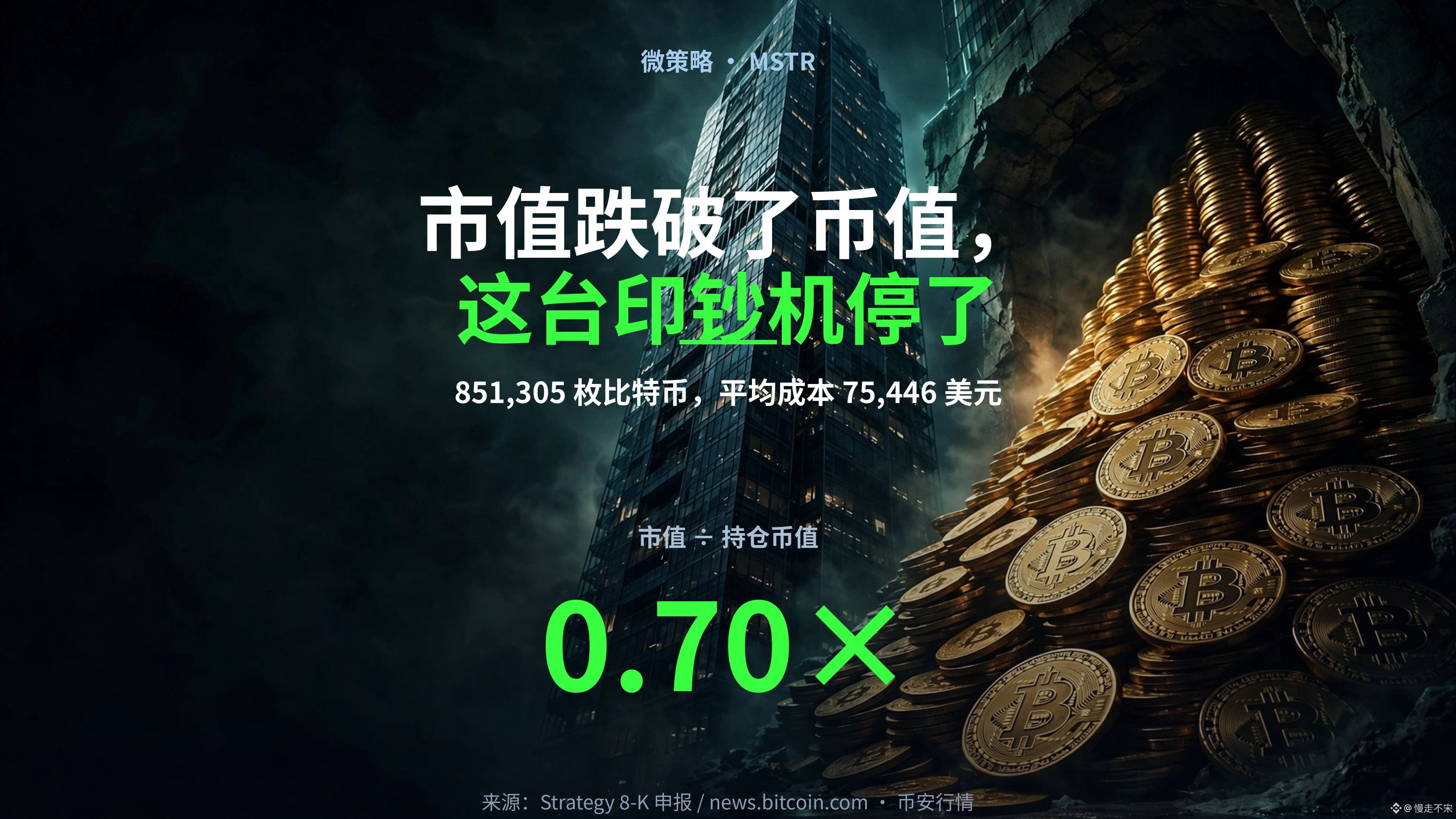
The company that buys Bitcoin is now cheaper than the Bitcoin it holds.
Strategy holds 851,305 Bitcoin, at an average cost of $75,446 per coin and a total book cost of $64.23 billion. Based on November 24 data, its holdings are worth about $51.4 billion, while the company’s market cap has fallen to just about $35.7 billion—investors value each $1 of Bitcoin at only 70 cents, leaving an unrealized loss of about $12.9 billion.
MSTR fell from $121.07 on November 10 to $84.40 on November 23, a 30% drop in two weeks.
More importantly, the strategy has stalled: before, when the stock traded above the value of its Bitcoin, the company issued shares to buy more Bitcoin, creating a self-reinforcing cycle. Now, issuing shares at a discount would dilute shareholders, so the flywheel can’t turn. Last week, the company sold 1.926 million shares, raising $176.7 million. Most of the proceeds went to repurchase preferred stock, and it bought just 457 Bitcoin.
But don’t mistake this for a free lunch: the company still has about $6.7 billion in debt and about $14.1 billion in preferred stock. Factor those in, and its enterprise value is roughly equal to the value of its Bitcoin—so the discount disappears.
The next thing to watch: MSCI’s removal takes effect on November 30. Will Saylor stop issuing new shares? $BTC is currently trading at $58,479, down 2.23% in 24 hours.
$MSTR $BTC
Not investment advice.
6
·
--
See translation
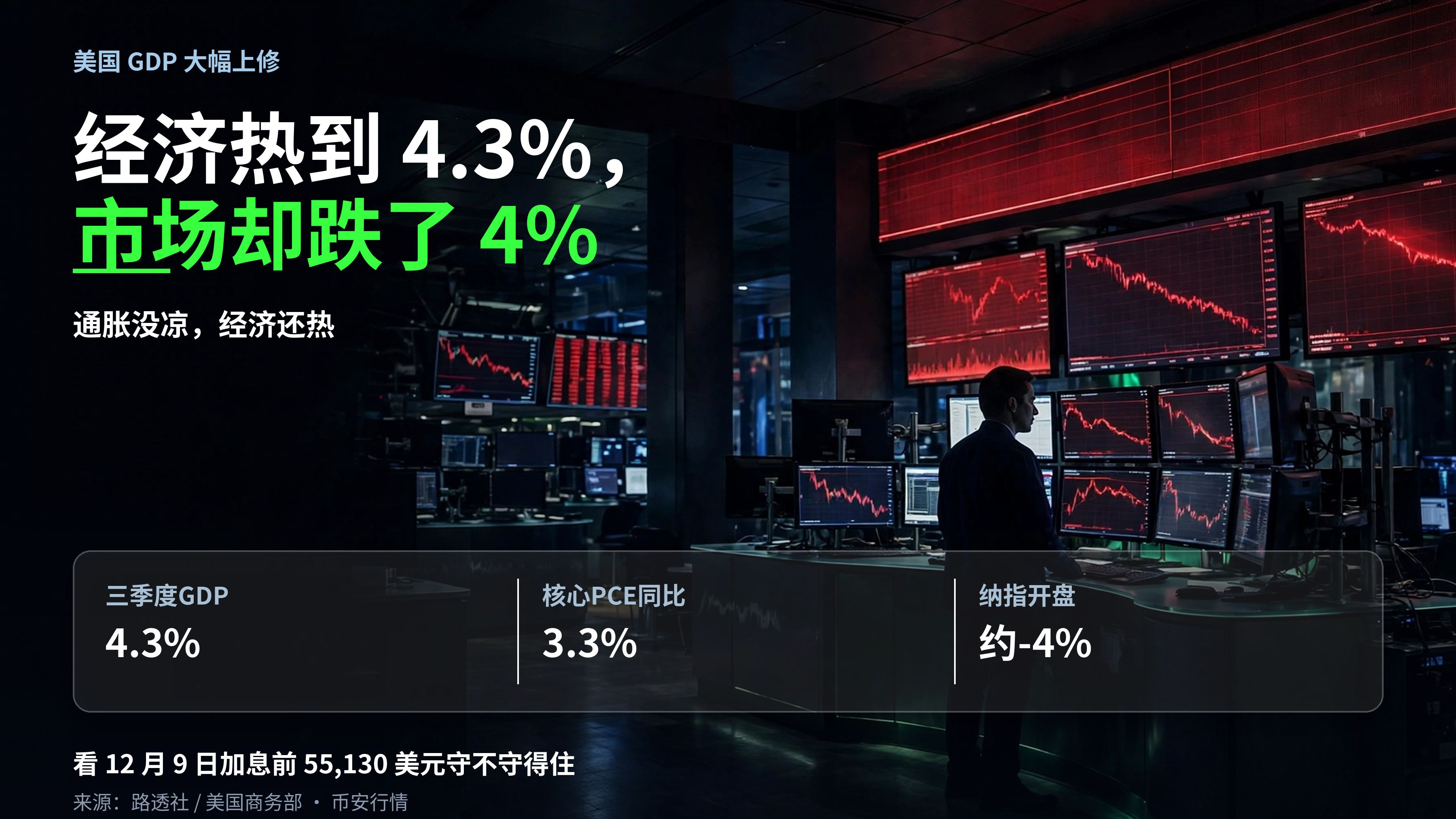
经济热得烫手,市场却冷得发抖——GDP 4.3%,纳指开盘跌 4%。
美国商务部刚把三季度 GDP 二次修正值大幅上修到 4.3%,初值是 3.4%、市场预期 3.5%,三年最快。消费也被上修到 4.2%。
同一天,核心 PCE 同比 3.3%,超预期的 3.2%——通胀没凉、经济还热,12 月 9 日加息 25 个基点基本钉死。
美股开盘直接表态:纳指跌约 4%,标普约 -3%,道指约 -2%。$BTC 现报 57,971 美元,24 小时跌约 3%,日内最低 57,300 美元,离年内低点 55,130 美元只剩约 5%。
下一个可看的点:经济越热、加息越稳——12 月 9 日议息之前,55,130 美元守不守得住。
$BTC $ETH
不是投资建议。
美国商务部刚把三季度 GDP 二次修正值大幅上修到 4.3%,初值是 3.4%、市场预期 3.5%,三年最快。消费也被上修到 4.2%。
同一天,核心 PCE 同比 3.3%,超预期的 3.2%——通胀没凉、经济还热,12 月 9 日加息 25 个基点基本钉死。
美股开盘直接表态:纳指跌约 4%,标普约 -3%,道指约 -2%。$BTC 现报 57,971 美元,24 小时跌约 3%,日内最低 57,300 美元,离年内低点 55,130 美元只剩约 5%。
下一个可看的点:经济越热、加息越稳——12 月 9 日议息之前,55,130 美元守不守得住。
$BTC $ETH
不是投资建议。
1
·
--
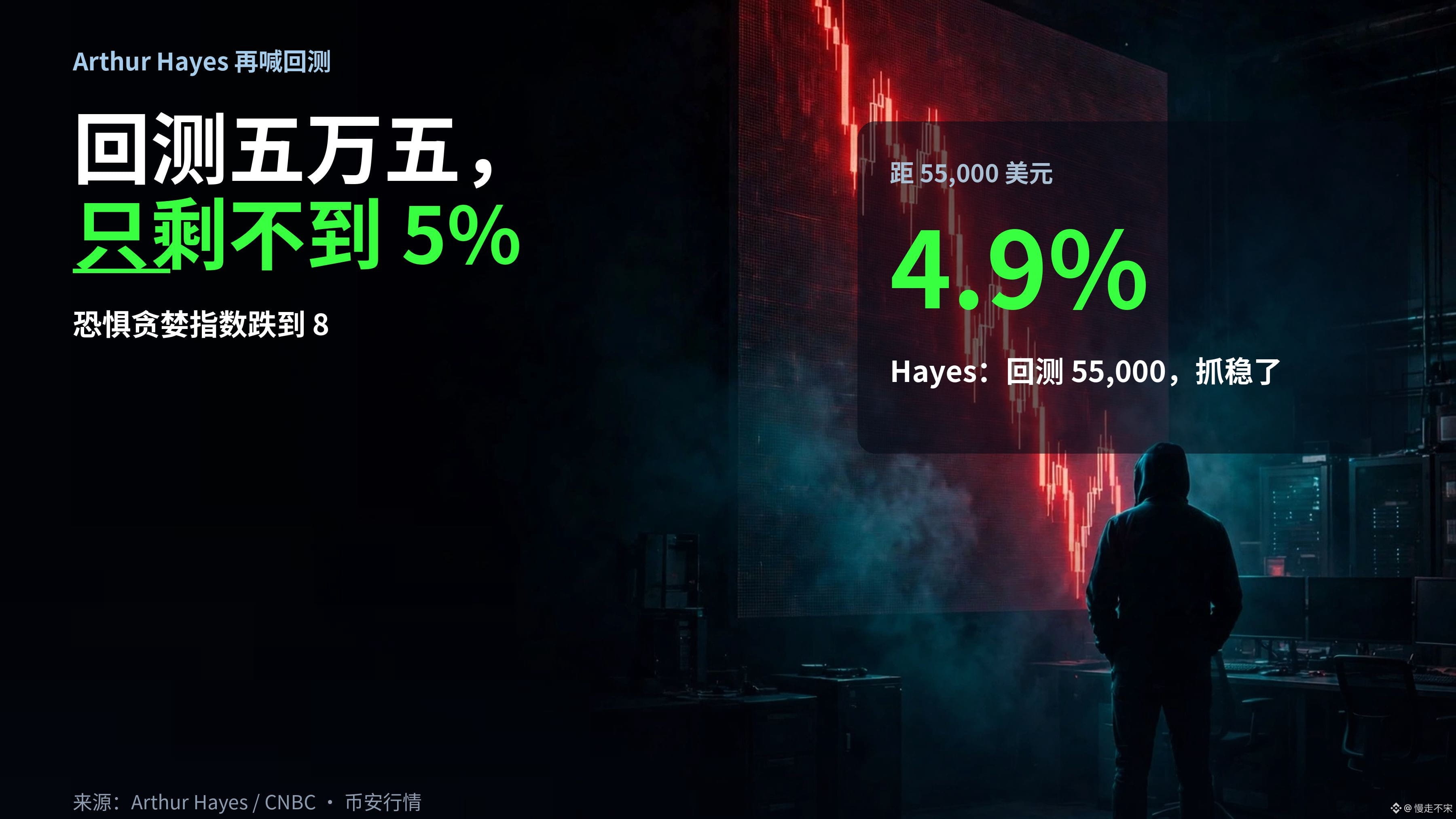
Arthur Hayes sounded the alarm again today: Bitcoin is heading back to test $55,000. “Hold on tight.”
This isn’t the first time he’s said it—he made the call once before when Asian markets opened on Monday, just after Bitcoin bounced from last Saturday’s low of around $55,100 to $61,600. Two days later, the price has fallen back: $BTC is now at $57,833, down 3.92% in 24 hours, with a 24-hour low of $57,733—less than 5% away from $55,000.
Sentiment has hit rock bottom, too: the CoinMarketCap Fear and Greed Index has dropped to 8, down from 9 yesterday and 12 a week ago. In an interview with CNBC, Hayes added that if the Nasdaq keeps falling, Bitcoin could test $50,000. But what he wants to see is Bitcoin hold around $55,000 and decouple from U.S. stocks.
The next level to watch: $55,000. Whether last Saturday’s low holds will determine if this is a retest or a breakdown.
$BTC
Not investment advice.
1
5
·
--
See translation
等了一天的 PCE 出来了——比预期的还热,比特币直接跌破了 58,000 美元。
美国 10 月 PCE 刚公布:核心 PCE 同比 3.3%,预期是 3.2%,9 月是 3.1%——美联储最看重的通胀指标,创 2023 年 11 月以来新高。整体 PCE 同比 3.8%,符合预期;个人收入涨 0.7%,也超预期。
市场基本把 12 月 9 日加息 25 个基点当成定局——通胀没凉,加息就得来。
$BTC 现报 58,257.60 美元,24 小时跌 3.22%,今天最低探到 57,989.73 美元;$ETH 1,631.35 美元,跌 3.81%;$SOL 67.07 美元,跌 4.34%。
下一个可看的点:12 月 9 日议息会议之前,58,000 美元守不守得住——守不住,下一个就是 53,250 美元的平均成本线。
$BTC $ETH $SOL
不是投资建议。

11
·
--
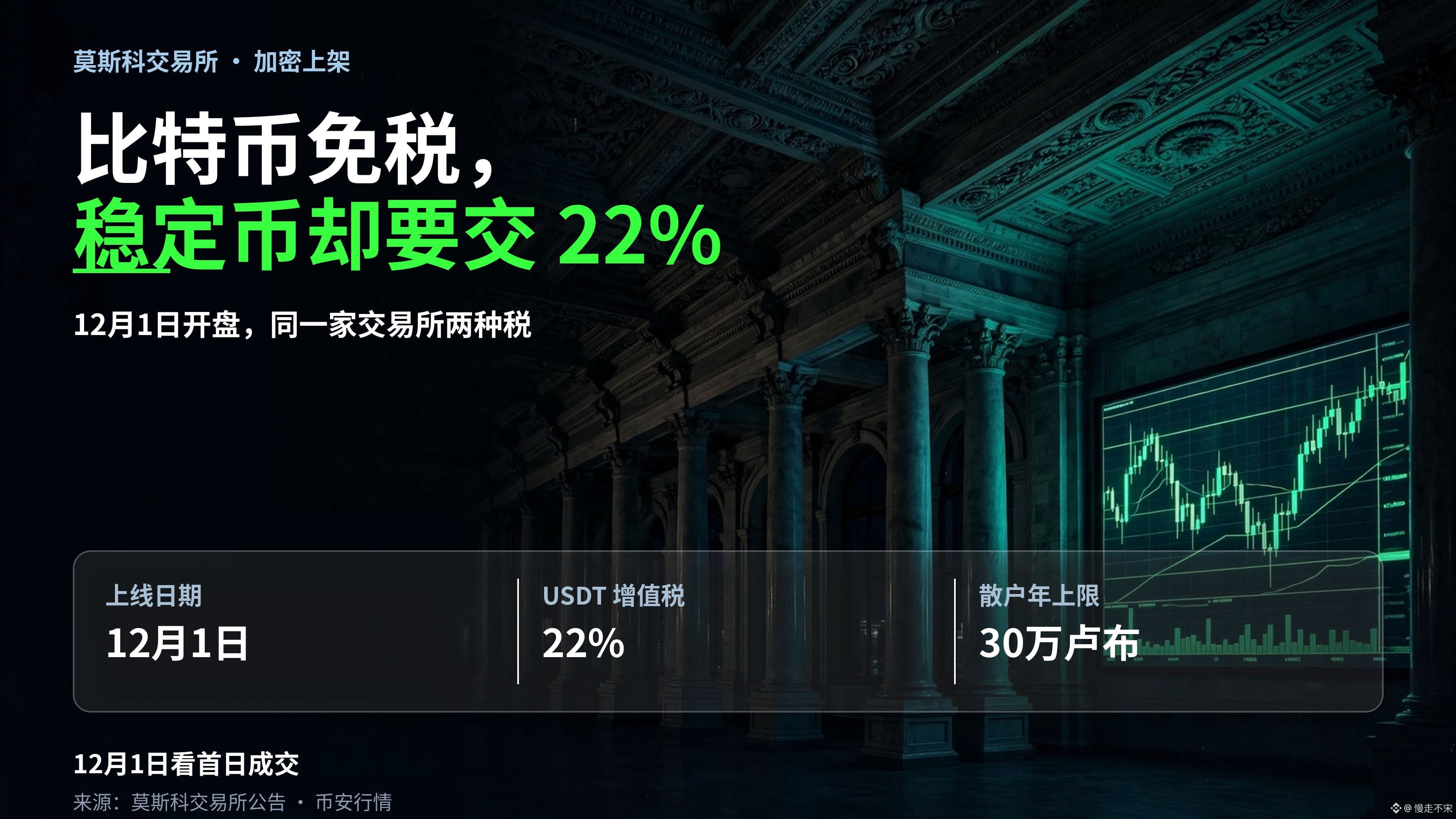
Russia’s largest exchange is about to start offering crypto trading, but stablecoins could face an extra 22% tax.
The Moscow Exchange (MOEX) is set to launch trading in Bitcoin, Ethereum, and USDT on December 1, using its existing stock-trading system. Trading hours will be 6:50–23:50 Moscow time. Orders will be placed through brokerage accounts, while registered custodians will hold the assets.
The tricky part is the tax: under Russian law, Bitcoin and Ethereum count as “digital currency,” so purchases and sales are exempt from VAT. USDT is classified as a “foreign digital instrument,” so buying, selling, or exchanging it in December will incur 22% VAT. Retail investors face another hurdle: each broker will be limited to purchases of 300,000 rubles per year.
Interestingly, the 22% tax announcement was published on November 24 and then taken down a few hours later—the final details of how the tax will be collected haven’t been settled ahead of the launch. This will be the first organized crypto market since Russia’s digital assets law took effect in September.
$BTC is currently at $58,734, down 2.80% in 24 hours, and has traded between $58,456 and $60,688 today; $ETH 1,648 dollars, down 3.20%.
The next thing to watch: on opening day, December 1, will the 22% tax on USDT scare traders away? For the first time, tax-exempt Bitcoin and taxable stablecoins will trade side by side on the same exchange.
$BTC $ETH
Not investment advice.
5
·
--
Tariffs are back, and Asian stocks took the first hit.
The Office of the U.S. Trade Representative is preparing to announce the results of Section 301 investigations into 16 major trading partners, including China and the EU. A new round of tariffs could take effect as soon as this week, replacing those struck down by the Supreme Court in February.
Markets fell first: South Korea’s Kospi dropped 6.16% today, and Samsung fell 9.87%; Taiwan’s Taiex dropped 4.8%, and the Nikkei fell 2.88%. Nasdaq 100 futures fell 2.11%, and S&P 500 futures dropped 1.2%.
Bitcoin wasn’t spared either: $BTC is now at $58,526, down 2.95% in 24 hours; $ETH 1,640 dollars, down 3.51%; $SOL 67.64 dollars, down 4.36%.
The next things to watch: the tariff details (rates for each country and effective dates) and tonight’s U.S. October PCE report at 21:30. If both hit at once, $60,000 will face another test.
$BTC $ETH
Not investment advice.

9
·
--
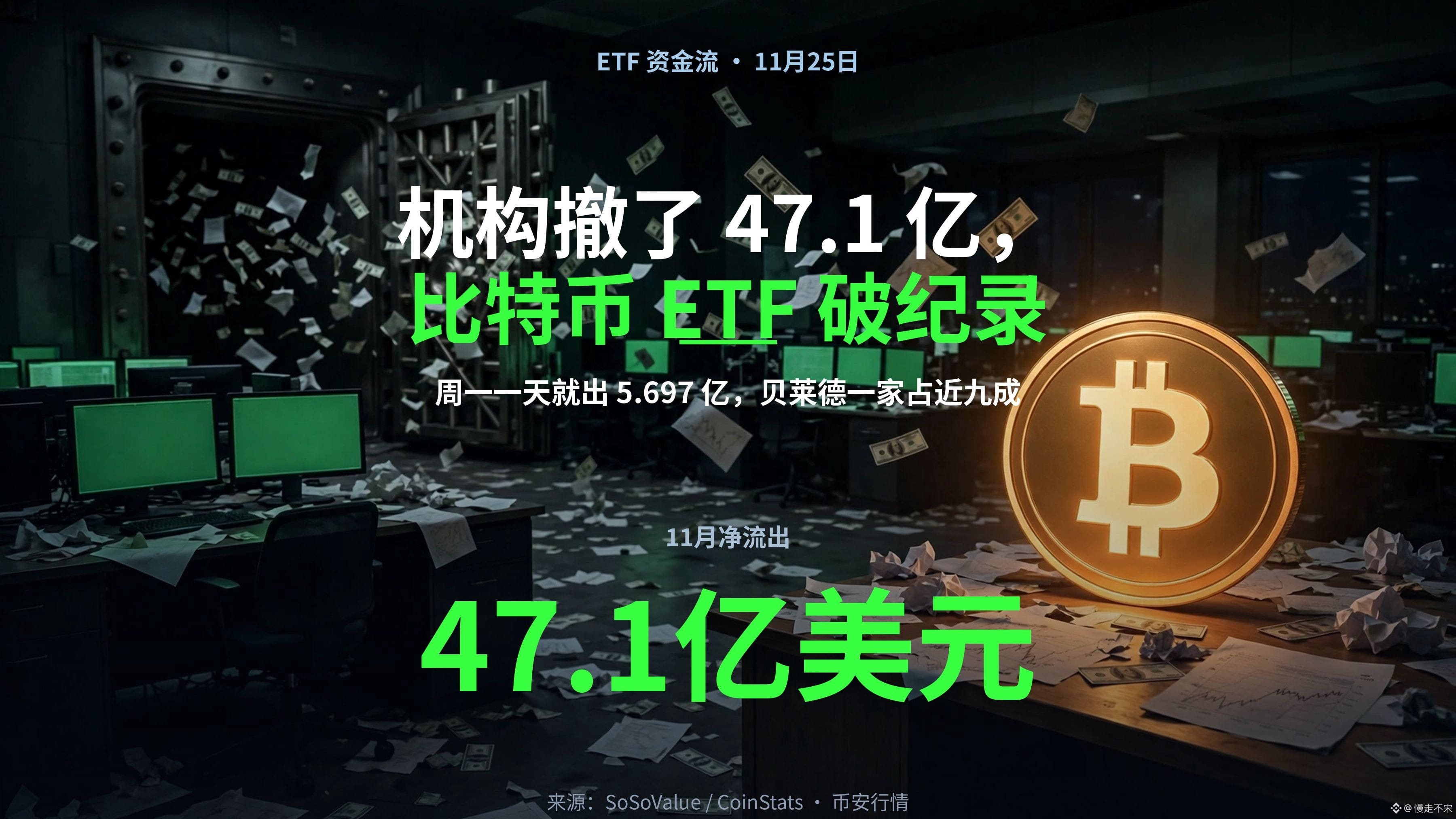
Institutions pulled $4.71 billion out of Bitcoin ETFs this month—a record high.
U.S. spot Bitcoin ETFs saw cumulative net outflows of $4.71 billion in November, surpassing the previous record of $4.51 billion set in June. A single day saw $569.7 million flow out on Monday, followed by another $231.56 million on Tuesday, for a combined two-day total of $801.3 million.
BlackRock’s IBIT led the outflows, with $509.3 million flowing out in a single day on Monday—nearly 90% of that day’s total. 10x Research’s figures are even more striking: ETFs saw total outflows of $4.57 billion over the past 30 days, with money flowing out almost every day since the Fed meeting in October.
$BTC is currently at $58,778, down 1.47% over 24 hours, and has traded between $58,633 and $60,688 today; $ETH 1,646.54, down 2.23%.
The next thing to watch: whether IBIT’s flows can turn around tomorrow. If outflows keep going, even holding $59,000 may only be temporary.
$BTC $ETH
Not investment advice.
6
·
--
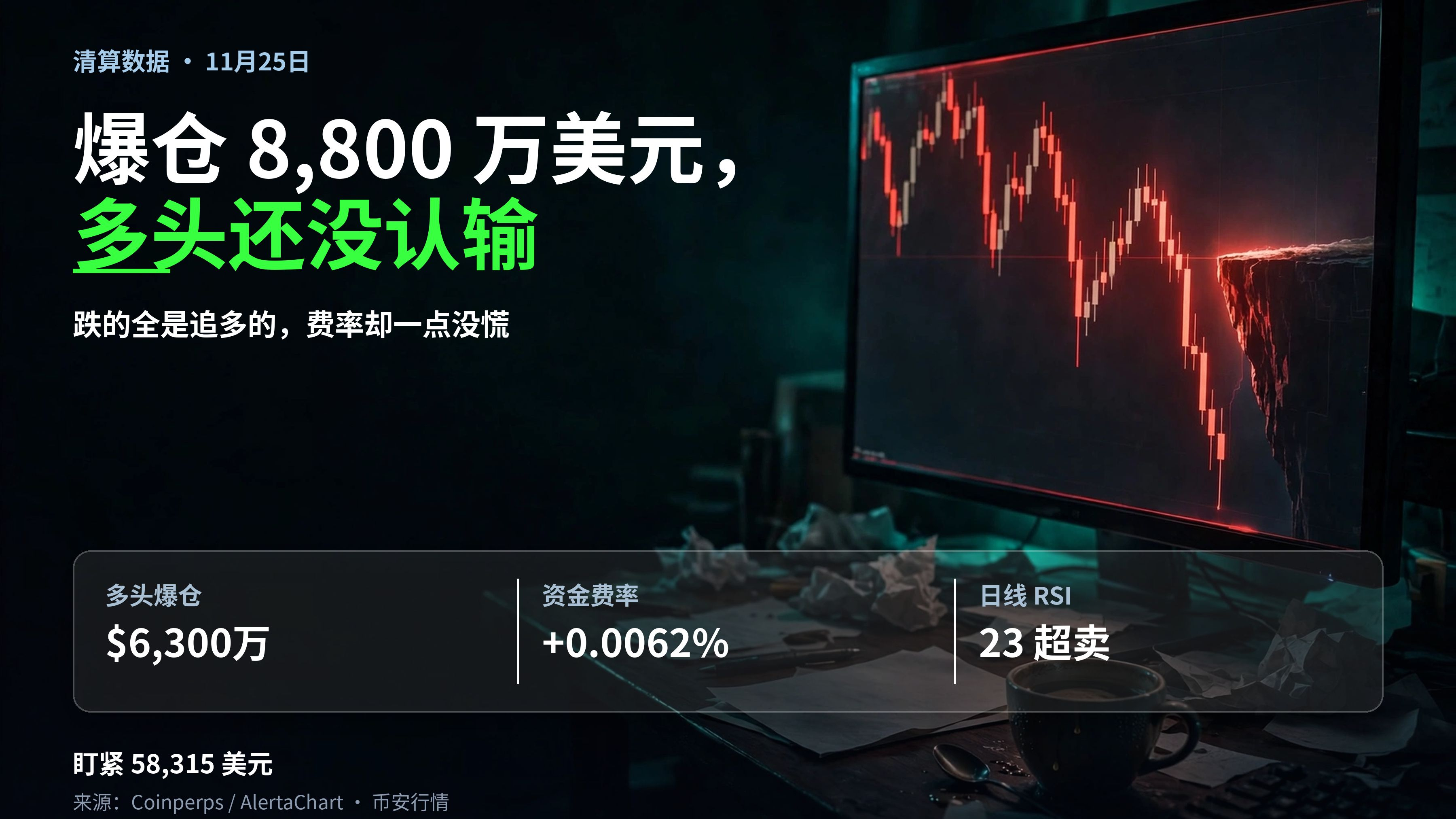
Bitcoin fell to $59,000, with $63 million in longs liquidated in a day—but funding rates aren't fazed at all.
$BTC is currently at $59,024, down 1.36% over 24 hours. Today it traded between $58,633 and $60,688, with a tug-of-war around the $59,000 level.
About $88 million in positions were liquidated across the market over the past 24 hours: $63 million in longs and $25 million in shorts—all the losses came from those betting on a rally. Oddly, funding rates are still at +0.0062%/8h. Longs are still paying, and nobody is giving up; the daily RSI is already down to 23, marking six straight days in oversold territory.
On the liquidation map: around $32 million in long liquidation orders are stacked near $58,315 below, while about $41 million in short orders are stacked near $65,706 above. A move down would liquidate longs first; a move up would liquidate shorts first.
Next level to watch: $58,315. A little more downside, and that pile of long positions could be forcibly closed, potentially accelerating the sell-off.
$BTC
Not investment advice.
7
·
--
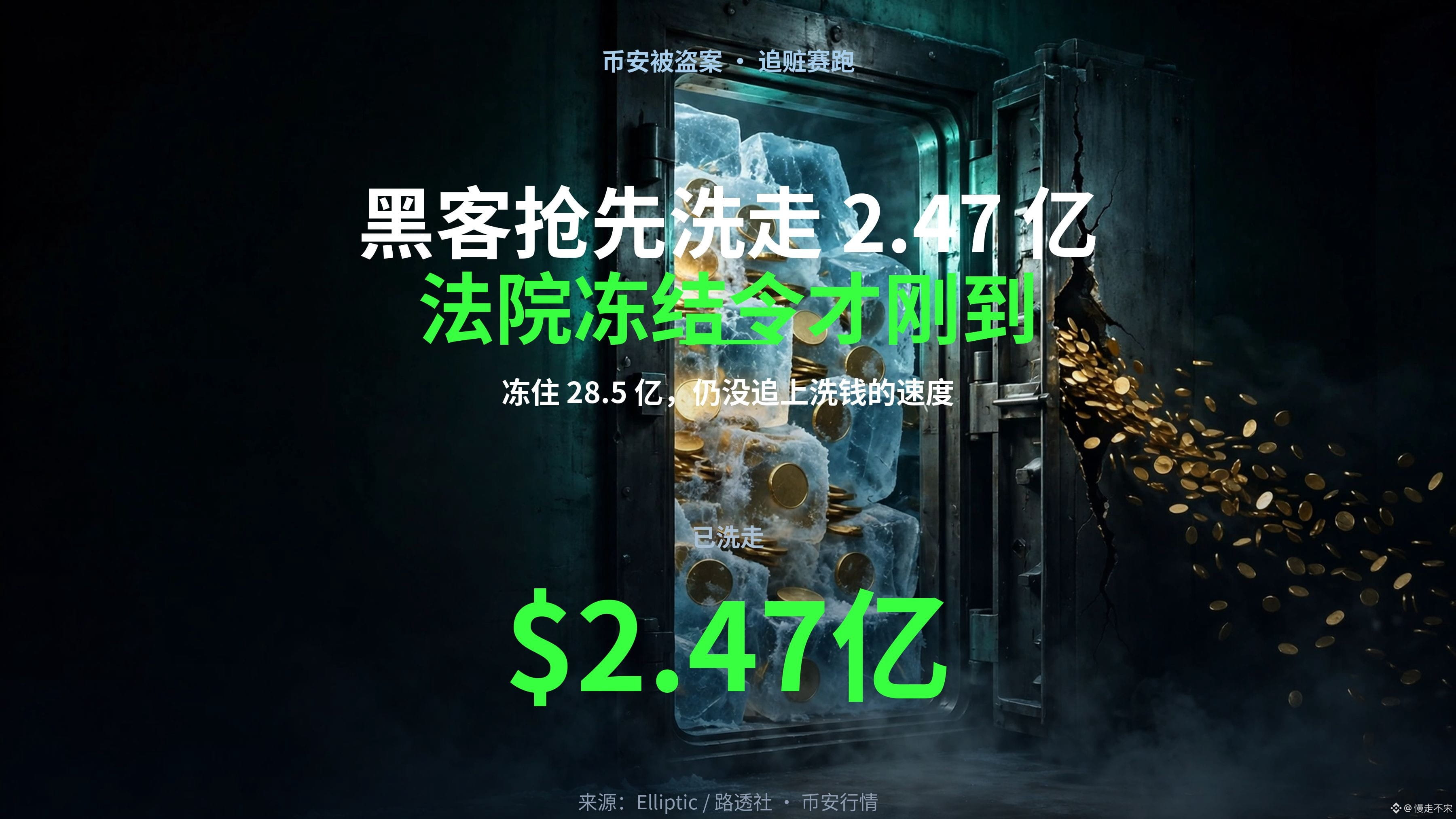
One month after the $6.3 billion theft, the money is split three ways: $247 million has been laundered, $2.85 billion has been frozen, and the rest remains in the hackers’ hands.
Elliptic update, November 23: At least 3,930 Bitcoin (about $247 million) has been pushed through mixing transactions, coordinated by Kruw, which is almost entirely run by one person. The pace picked up noticeably after November 17, with 488,000 ETH moved into new wallets in the same week.
Meanwhile, others are racing against time: On November 18, Binance obtained a $6.5 billion global freeze order from an Abu Dhabi court, requiring 18 companies to continue freezing assets related to the case. On November 23, the U.S. Department of Justice filed a forfeiture lawsuit for about $1.17 billion. The court hearing on December 1 will decide whether the frozen assets should be returned.
$BTC is now at $58,897, down 1.99% over 24 hours, and trading between $58,633 and $60,688 today; $ETH is at $1,638, down 3.02%.
The next thing to watch: how much more the mixer can launder before the December 1 hearing—the race between the $2.85 billion frozen and the $247 million laundered has only just begun.
$BTC $ETH
Not investment advice.
8
·
--
Ethereum’s next major upgrade may be delayed until May next year—not because of a lack of funding, but because it could break 200,000 contracts.
The upgrade is called Glamsterdam and was originally scheduled to go live on mainnet in the fourth quarter of this year. The holdup is two new gas pricing rules, EIP-8037 and EIP-8038: the gas cost of deploying a new contract would rise from 32,000 to 183,600, nearly sixfold. Many older contracts hard-code gas costs, so a change in fees could cause them to stall mid-execution or even be exploited.
In October, auditing firm ChainSecurity was the first to flag the risk. On November 6, the Foundation halted the Hoodi testnet upgrade, which had been scheduled for October 26. No new date has been set so far. Developers met last week: they have contacted at least 50 affected companies, and three high-risk projects are expected to be fixed by mid-December at the latest. A new round of Hoodi testing is tentatively planned for the week of December 14.
Under the current plan, mainnet could launch as early as mid-January 2027; if the specifications are changed, it could be pushed back as far as May.
$ETH is currently trading at $1,654.54, down 2.26% in 24 hours.
The next thing to watch: tomorrow’s developer meeting (November 26)—whether to change the specifications comes down to this vote.
$ETH
Not investment advice.

8
·
--
Up 31.5% on Monday, down 5.9% on Tuesday—the AI frenzy lasted just one day.
Nvidia closed at $155.38 on Tuesday, down 5.86%, giving back about a quarter of Monday’s biggest one-day gain in more than 20 years. The Philadelphia Semiconductor Index fared even worse, falling 7.88% in a day. Anthropic, which went public just days ago, also fell below its IPO price: it closed at $81.91, compared with an IPO price of $83.
U.S. stocks were sharply divided: the Nasdaq fell 1.48% to close at 23,733.54, the S&P 500 fell 0.50% to 7,201.09, while the Dow rose 0.85% to 50,018.70—everything that fell was AI, and everything that rose was not.
Bitcoin wasn’t spared either: $BTC is now at $58,857, down 2.25% in 24 hours. It traded between $58,633 and $60,688 today, and the $59,000 level has also been breached; $ETH is at $1,639.83, down 3.19%.
The next thing to watch: U.S. October PCE data is due tonight at 21:30. If the numbers come in hot, AI stocks and bitcoin could take another hit.
$BTC $ETH
Not investment advice.

16
·
--
See translation
11月还剩5天,比特币这个月已经跌了24%。
11月1日开盘77,582美元,现报59,112美元,月内最高81,196、最低55,130美元——高低差超过2.6万美元。
更难看的是周线:从10月初开始连续8周收阴,比特币从86,530美元一路跌到59,000美元附近,8周跌去近三分之一。比去年10月12.6万美元的历史高点,更是腰斩还多。
$ETH 1,657美元,24小时跌2.36%;$SOL 68.70美元,跌4.16%。
下一个可看的点:11月收官能不能守住59,000美元,12月第一周能不能终结这波8连跌。
$BTC $ETH $SOL
不是投资建议。
11月还剩5天,比特币这个月已经跌了24%。
11月1日开盘77,582美元,现报59,112美元,月内最高81,196、最低55,130美元——高低差超过2.6万美元。
更难看的是周线:从10月初开始连续8周收阴,比特币从86,530美元一路跌到59,000美元附近,8周跌去近三分之一。比去年10月12.6万美元的历史高点,更是腰斩还多。
$ETH 1,657美元,24小时跌2.36%;$SOL 68.70美元,跌4.16%。
下一个可看的点:11月收官能不能守住59,000美元,12月第一周能不能终结这波8连跌。
$BTC $ETH $SOL
不是投资建议。
11月1日开盘77,582美元,现报59,112美元,月内最高81,196、最低55,130美元——高低差超过2.6万美元。
更难看的是周线:从10月初开始连续8周收阴,比特币从86,530美元一路跌到59,000美元附近,8周跌去近三分之一。比去年10月12.6万美元的历史高点,更是腰斩还多。
$ETH 1,657美元,24小时跌2.36%;$SOL 68.70美元,跌4.16%。
下一个可看的点:11月收官能不能守住59,000美元,12月第一周能不能终结这波8连跌。
$BTC $ETH $SOL
不是投资建议。

6
·
--
See translation
币价在跌,新地址却在涨——有人正在悄悄开户。
比特币现报 59,028 美元,24 小时跌 2.44%,今天在 58,937–60,687 美元之间走,6 万美元又没守住。ETF 的钱还在跑:周二又净流出 2.3156 亿美元,连续第六个交易日净流出,周一加周二两天就走了 8.013 亿美元。
但链上另一组数字在往反方向走。Santiment 今天的数据:过去一个月,比特币每天的新增地址数增加了约 5 万个;以太坊上的 Tether 每天也增加了约 2.5 万个新地址。币价一路跌,新地址一路涨。
这不等于马上反弹。分析师 Michaël van de Poppe 今天的判断很直接:V 形反转的概率不到 30%,比特币得先连续收复 21 周、21 日和 200 日均线,才谈得上站稳。
下一个可看的点:新地址涨是真有人进场,还是只是换钱包、拆地址——看这 5 万个新地址能不能留下来。
$BTC $ETH
不是投资建议。

Log in to explore more content
Join global crypto users on Binance Square
⚡️ Get latest and useful information about crypto.
💬 Trusted by the world’s largest crypto exchange.
👍 Discover real insights from verified creators.
Email / Phone number
Trending Topics
CorePCEBeatLiftsFedHikeOdds
87,430 views
883 Discussing
U.S. October PCE Price Index at 0.3% Month Over Month, Versus 0.30% Expected and 0.50% Prior
Binance News
·13 Likes
·27.9k views
BitcoinAndStocksSlipAgainAmidTrump’sTariffPlans
161,021 views
1,780 Discussing
JensenHuangSaysNvidiaDoesn’tNeedASuccessionPlan
79,765 views
1,067 Discussing