

AI 加密事件分析
1.1k Posts

AI 加密事件分析
Report
Block User
每天用 AI 分析加密市场重要新闻,帮你判断:这条消息到底是利好、利空,还是短期噪音。
0 Following
22 Followers
18 Liked
Posts
·
--

Article
On the first day of October, don’t let AI subscription renewal get stuckOn the last night of September, BTC was back around $85,000 again. Market sentiment looks hotter than it did this afternoon: on one side, there are continuous ETF inflows and a rebound in risk assets after the PCE; on the other, news like the dollar, regulatory windows, and AI audits is still adding noise to the market. At times like this, many people are only focused on one thing: whether to adjust their position.
But what truly makes people collapse the next morning usually isn’t the K-line chart.
AI member subscription has expired; the project documentation can’t be opened. The code assistant’s quota has been zeroed out, and temporary delivery gets stuck. The design tool fails to charge fees, and team collaboration breaks for half an hour. I originally planned to buy a 100 USD gift card to handle shopping, procurement, or sending gifts—but the assets are still stuck on-chain, and only when it’s time to actually spend do I start swapping, waiting, and topping up payment methods.
On the first day of October, don’t let AI subscription renewal get stuck
On the last night of September, BTC was back around $85,000 again. Market sentiment looks hotter than it did this afternoon: on one side, there are continuous ETF inflows and a rebound in risk assets after the PCE; on the other, news like the dollar, regulatory windows, and AI audits is still adding noise to the market. At times like this, many people are only focused on one thing: whether to adjust their position.
But what truly makes people collapse the next morning usually isn’t the K-line chart.
AI member subscription has expired; the project documentation can’t be opened. The code assistant’s quota has been zeroed out, and temporary delivery gets stuck. The design tool fails to charge fees, and team collaboration breaks for half an hour. I originally planned to buy a 100 USD gift card to handle shopping, procurement, or sending gifts—but the assets are still stuck on-chain, and only when it’s time to actually spend do I start swapping, waiting, and topping up payment methods.
But what truly makes people collapse the next morning usually isn’t the K-line chart.
AI member subscription has expired; the project documentation can’t be opened. The code assistant’s quota has been zeroed out, and temporary delivery gets stuck. The design tool fails to charge fees, and team collaboration breaks for half an hour. I originally planned to buy a 100 USD gift card to handle shopping, procurement, or sending gifts—but the assets are still stuck on-chain, and only when it’s time to actually spend do I start swapping, waiting, and topping up payment methods.
32
·
--
Tonight, don’t treat spending as “miscellaneous business” after the deal
BTC is still hovering around $84,000, with plenty of dollar, ETF, regulation, and AI-news noise. For many people, the instinct when watching the market at night is: first check the direction, then the position size, and only at the end think, “What else do I have to pay for this month?”
But I’m increasingly convinced that this order is backwards.
What truly disrupts life usually isn’t that a K-line didn’t rise 1%, but that an AI membership you need tomorrow morning can’t be renewed, a $100 gift card you planned to buy can’t be purchased on the spot, or you only discover at checkout that your assets are still stuck on an investment path.
Trading positions can wait for signals, but consumption can’t wait for emotions. For expenses that must happen within 24 hours to 7 days—like AI subscriptions, gift cards, and shopping budgets—the best state isn’t “still can be sold,” but “already can be used directly.”
When assets enter real life, they shouldn’t always rely on a long, complicated withdrawal process to prove their value. Whether they can smoothly pay for a tool, a gift card, or a piece of everyday spending is the most genuine liquidity test for ordinary users.
After the PayAll update, you can view the AI subscription scenarios directly here: https://beta.payall.pro/explore/ai
You can also check gift card and shopping consumption scenarios here: https://beta.payall.pro/explore/gift
#BTC #AI
Tonight, don’t treat spending as “miscellaneous business” after the deal
BTC is still hovering around $84,000, with plenty of dollar, ETF, regulation, and AI-news noise. For many people, the instinct when watching the market at night is: first check the direction, then the position size, and only at the end think, “What else do I have to pay for this month?”
But I’m increasingly convinced that this order is backwards.
What truly disrupts life usually isn’t that a K-line didn’t rise 1%, but that an AI membership you need tomorrow morning can’t be renewed, a $100 gift card you planned to buy can’t be purchased on the spot, or you only discover at checkout that your assets are still stuck on an investment path.
Trading positions can wait for signals, but consumption can’t wait for emotions. For expenses that must happen within 24 hours to 7 days—like AI subscriptions, gift cards, and shopping budgets—the best state isn’t “still can be sold,” but “already can be used directly.”
When assets enter real life, they shouldn’t always rely on a long, complicated withdrawal process to prove their value. Whether they can smoothly pay for a tool, a gift card, or a piece of everyday spending is the most genuine liquidity test for ordinary users.
After the PayAll update, you can view the AI subscription scenarios directly here: https://beta.payall.pro/explore/ai
You can also check gift card and shopping consumption scenarios here: https://beta.payall.pro/explore/gift
#BTC #AI
BTC is still hovering around $84,000, with plenty of dollar, ETF, regulation, and AI-news noise. For many people, the instinct when watching the market at night is: first check the direction, then the position size, and only at the end think, “What else do I have to pay for this month?”
But I’m increasingly convinced that this order is backwards.
What truly disrupts life usually isn’t that a K-line didn’t rise 1%, but that an AI membership you need tomorrow morning can’t be renewed, a $100 gift card you planned to buy can’t be purchased on the spot, or you only discover at checkout that your assets are still stuck on an investment path.
Trading positions can wait for signals, but consumption can’t wait for emotions. For expenses that must happen within 24 hours to 7 days—like AI subscriptions, gift cards, and shopping budgets—the best state isn’t “still can be sold,” but “already can be used directly.”
When assets enter real life, they shouldn’t always rely on a long, complicated withdrawal process to prove their value. Whether they can smoothly pay for a tool, a gift card, or a piece of everyday spending is the most genuine liquidity test for ordinary users.
After the PayAll update, you can view the AI subscription scenarios directly here: https://beta.payall.pro/explore/ai
You can also check gift card and shopping consumption scenarios here: https://beta.payall.pro/explore/gift
#BTC #AI
138
·
--
Article
The orders are still there, but the cost has already changedThe orders are still there, but the cost has already changed
The most deceptive part of the afternoon market isn’t that the price suddenly jumps—it’s that the orders you see are still there, but when it’s actually your turn to get filled, your cost is no longer at that earlier layer.
Today BTC is still hovering around $84,000, back and forth. Many people focus on whether it can push higher again, whether any particular candlestick has broken out, and whether short-term sentiment has returned. But in futures trading, the chart only tells you the direction issue; the order book environment is what determines whether this trade will ultimately feel good or not.
Especially in a market that isn’t a clear one-way trend, but where attention is highly concentrated, changes in the order book can happen earlier than changes on the K line. At first glance, the buy and sell orders are still sitting there. But after looking a few seconds more, you’ll notice the front quote layers have thinned—so when you place an order, you end up getting filled at the later prices. What’s even more troublesome is that some places may look like the spread is still tight, but the available depth isn’t thick. Once the target quantity increases, the execution slippage is immediately magnified.
The orders are still there, but the cost has already changed
The orders are still there, but the cost has already changed
The most deceptive part of the afternoon market isn’t that the price suddenly jumps—it’s that the orders you see are still there, but when it’s actually your turn to get filled, your cost is no longer at that earlier layer.
Today BTC is still hovering around $84,000, back and forth. Many people focus on whether it can push higher again, whether any particular candlestick has broken out, and whether short-term sentiment has returned. But in futures trading, the chart only tells you the direction issue; the order book environment is what determines whether this trade will ultimately feel good or not.
Especially in a market that isn’t a clear one-way trend, but where attention is highly concentrated, changes in the order book can happen earlier than changes on the K line. At first glance, the buy and sell orders are still sitting there. But after looking a few seconds more, you’ll notice the front quote layers have thinned—so when you place an order, you end up getting filled at the later prices. What’s even more troublesome is that some places may look like the spread is still tight, but the available depth isn’t thick. Once the target quantity increases, the execution slippage is immediately magnified.
The most deceptive part of the afternoon market isn’t that the price suddenly jumps—it’s that the orders you see are still there, but when it’s actually your turn to get filled, your cost is no longer at that earlier layer.
Today BTC is still hovering around $84,000, back and forth. Many people focus on whether it can push higher again, whether any particular candlestick has broken out, and whether short-term sentiment has returned. But in futures trading, the chart only tells you the direction issue; the order book environment is what determines whether this trade will ultimately feel good or not.
Especially in a market that isn’t a clear one-way trend, but where attention is highly concentrated, changes in the order book can happen earlier than changes on the K line. At first glance, the buy and sell orders are still sitting there. But after looking a few seconds more, you’ll notice the front quote layers have thinned—so when you place an order, you end up getting filled at the later prices. What’s even more troublesome is that some places may look like the spread is still tight, but the available depth isn’t thick. Once the target quantity increases, the execution slippage is immediately magnified.
203
·
--

Article
On the last day of the month, don’t let the $300 spending budget stay stuck on-chainOn the last day of the month, don’t let the $300 spending budget stay stuck on-chain
Today’s market action is actually a good moment to remind people of something small: BTC has been tugging back and forth repeatedly in the $82K to $85K range, while macro data is stuck waiting for PCE and the Non-Farm Payrolls. Many people’s first instinct is to keep watching support and resistance, ETF inflows, and the next candlestick.
But on the last day of the month, what really annoys people usually isn’t judging the direction wrong—it’s that you already have assets, yet in the afternoon you suddenly need to renew your AI membership, top up a code-tool credit, and buy $100 to $300 gift cards, only to find that this money is still stuck along the transaction path.
On the last day of the month, don’t let the $300 spending budget stay stuck on-chain
On the last day of the month, don’t let the $300 spending budget stay stuck on-chain
Today’s market action is actually a good moment to remind people of something small: BTC has been tugging back and forth repeatedly in the $82K to $85K range, while macro data is stuck waiting for PCE and the Non-Farm Payrolls. Many people’s first instinct is to keep watching support and resistance, ETF inflows, and the next candlestick.
But on the last day of the month, what really annoys people usually isn’t judging the direction wrong—it’s that you already have assets, yet in the afternoon you suddenly need to renew your AI membership, top up a code-tool credit, and buy $100 to $300 gift cards, only to find that this money is still stuck along the transaction path.
Today’s market action is actually a good moment to remind people of something small: BTC has been tugging back and forth repeatedly in the $82K to $85K range, while macro data is stuck waiting for PCE and the Non-Farm Payrolls. Many people’s first instinct is to keep watching support and resistance, ETF inflows, and the next candlestick.
But on the last day of the month, what really annoys people usually isn’t judging the direction wrong—it’s that you already have assets, yet in the afternoon you suddenly need to renew your AI membership, top up a code-tool credit, and buy $100 to $300 gift cards, only to find that this money is still stuck along the transaction path.
4
·
--

Article
A $300 gift card—stop taking the long way to payA $300 gift card—stop taking the long way to pay
Today’s crypto market has two signals that are worth looking at together.
One is that BTC is being pulled around the $84,000 area—market momentum hasn’t completely died down, but buyer demand isn’t as strong as it was yesterday. The other is that discussions about stablecoins and on-chain payments are moving further into real, enforceable rules: Europe has launched new compliant USD stablecoins, and in the U.S., local tax rules are also starting to break down how stablecoins, DeFi, cross-chain activity, and self-custodied transfers should be discussed.
What does that mean?
Crypto assets are shifting from “can they go up?” to “can they be used for real.” But for ordinary users, the most awkward part is right here: on-chain balances increasingly look like money, yet when it comes to actual spending scenarios, they often don’t behave like money.
A $300 gift card—stop taking the long way to pay
A $300 gift card—stop taking the long way to pay
Today’s crypto market has two signals that are worth looking at together.
One is that BTC is being pulled around the $84,000 area—market momentum hasn’t completely died down, but buyer demand isn’t as strong as it was yesterday. The other is that discussions about stablecoins and on-chain payments are moving further into real, enforceable rules: Europe has launched new compliant USD stablecoins, and in the U.S., local tax rules are also starting to break down how stablecoins, DeFi, cross-chain activity, and self-custodied transfers should be discussed.
What does that mean?
Crypto assets are shifting from “can they go up?” to “can they be used for real.” But for ordinary users, the most awkward part is right here: on-chain balances increasingly look like money, yet when it comes to actual spending scenarios, they often don’t behave like money.
Today’s crypto market has two signals that are worth looking at together.
One is that BTC is being pulled around the $84,000 area—market momentum hasn’t completely died down, but buyer demand isn’t as strong as it was yesterday. The other is that discussions about stablecoins and on-chain payments are moving further into real, enforceable rules: Europe has launched new compliant USD stablecoins, and in the U.S., local tax rules are also starting to break down how stablecoins, DeFi, cross-chain activity, and self-custodied transfers should be discussed.
What does that mean?
Crypto assets are shifting from “can they go up?” to “can they be used for real.” But for ordinary users, the most awkward part is right here: on-chain balances increasingly look like money, yet when it comes to actual spending scenarios, they often don’t behave like money.
4
·
--

Article
AI can trade, but you still have to buy the gift card yourselfAI can trade, but you still have to buy the gift cards yourself
The most interesting news today isn’t that some platform added another AI feature—it’s that AI agents are moving toward “executing actions on behalf of users”: monitoring the market, making decisions, trading, and responding around the clock. Financial products are becoming more and more like an assistant that never sleeps.
But when you put this on ordinary encrypted users, there’s a very realistic contrast.
As AI can become smarter and on-chain assets can keep rising and falling, by 3 p.m. you still have to renew a $29.90 AI membership, top up a $100 gift card, and buy temporary tool quotas for your team—so the issue usually isn’t “whether you have assets,” but “whether you can spend this money right now.”
AI can trade, but you still have to buy the gift card yourself
AI can trade, but you still have to buy the gift cards yourself
The most interesting news today isn’t that some platform added another AI feature—it’s that AI agents are moving toward “executing actions on behalf of users”: monitoring the market, making decisions, trading, and responding around the clock. Financial products are becoming more and more like an assistant that never sleeps.
But when you put this on ordinary encrypted users, there’s a very realistic contrast.
As AI can become smarter and on-chain assets can keep rising and falling, by 3 p.m. you still have to renew a $29.90 AI membership, top up a $100 gift card, and buy temporary tool quotas for your team—so the issue usually isn’t “whether you have assets,” but “whether you can spend this money right now.”
The most interesting news today isn’t that some platform added another AI feature—it’s that AI agents are moving toward “executing actions on behalf of users”: monitoring the market, making decisions, trading, and responding around the clock. Financial products are becoming more and more like an assistant that never sleeps.
But when you put this on ordinary encrypted users, there’s a very realistic contrast.
As AI can become smarter and on-chain assets can keep rising and falling, by 3 p.m. you still have to renew a $29.90 AI membership, top up a $100 gift card, and buy temporary tool quotas for your team—so the issue usually isn’t “whether you have assets,” but “whether you can spend this money right now.”
2
·
--
Article
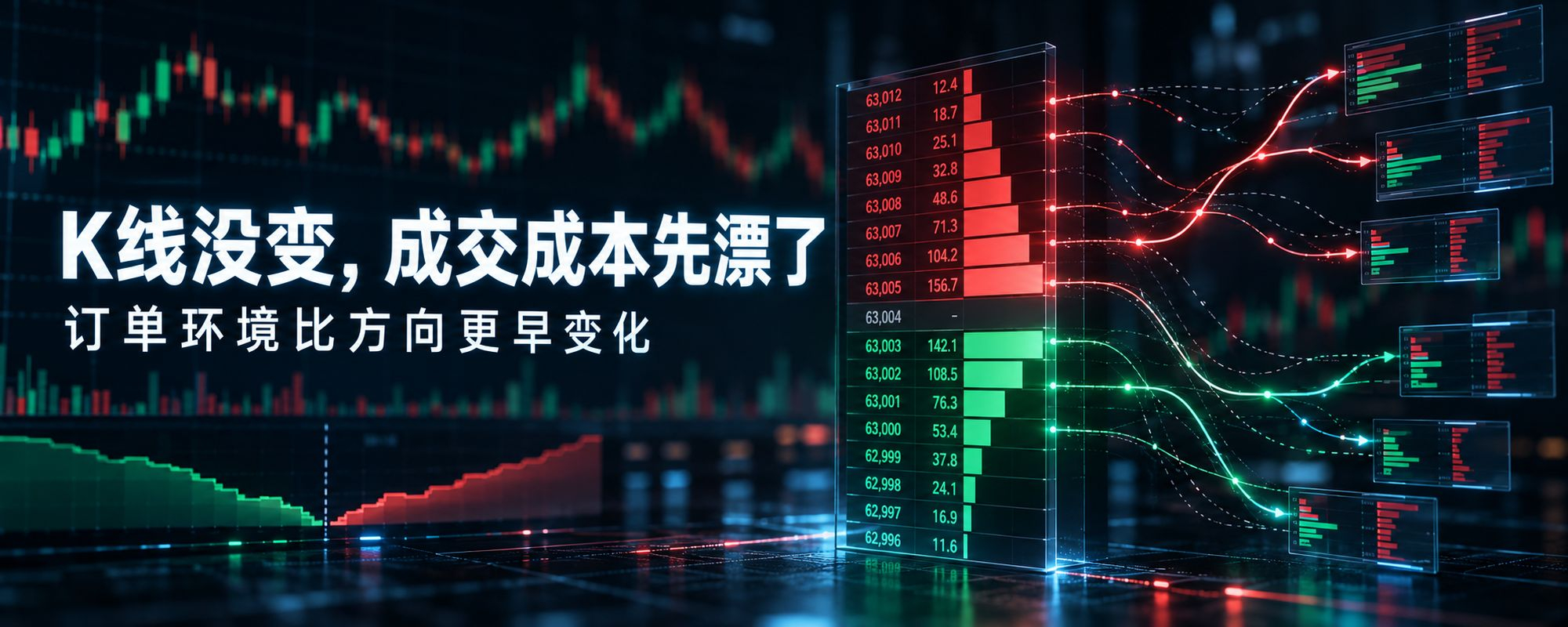
The K-line hasn’t changed—the execution cost has drifted firstThe K-line hasn’t changed—the execution cost has drifted first
Today BTC is still hovering around $83,000, and on the surface the chart doesn’t look too extreme: price moves aren’t big, and trading is still concentrated among major assets. But the more a market looks like it “hasn’t moved much,” the easier it is for short-term traders to misjudge one thing: just because the chart hasn’t changed dramatically doesn’t mean the order environment hasn’t changed.
Many people review a perpetual contract trade, only looking at the entry price and the final profit or loss. The problem is that what truly ruins the experience in between is often not that single K-line, but rather the order book quote levels you face when placing the order: the depth, the bid-ask spread, and the execution slippage.
The K-line hasn’t changed—the execution cost has drifted first
The K-line hasn’t changed—the execution cost has drifted first
Today BTC is still hovering around $83,000, and on the surface the chart doesn’t look too extreme: price moves aren’t big, and trading is still concentrated among major assets. But the more a market looks like it “hasn’t moved much,” the easier it is for short-term traders to misjudge one thing: just because the chart hasn’t changed dramatically doesn’t mean the order environment hasn’t changed.
Many people review a perpetual contract trade, only looking at the entry price and the final profit or loss. The problem is that what truly ruins the experience in between is often not that single K-line, but rather the order book quote levels you face when placing the order: the depth, the bid-ask spread, and the execution slippage.
Today BTC is still hovering around $83,000, and on the surface the chart doesn’t look too extreme: price moves aren’t big, and trading is still concentrated among major assets. But the more a market looks like it “hasn’t moved much,” the easier it is for short-term traders to misjudge one thing: just because the chart hasn’t changed dramatically doesn’t mean the order environment hasn’t changed.
Many people review a perpetual contract trade, only looking at the entry price and the final profit or loss. The problem is that what truly ruins the experience in between is often not that single K-line, but rather the order book quote levels you face when placing the order: the depth, the bid-ask spread, and the execution slippage.
73
·
--
The same single candlestick—why the results from two people can be completely different
Today’s chart is very typical: BTC keeps tugging around the $84,000 range, there’s pressure above $85K, and the market is also discussing more active trading features and derivatives use cases. People looking at the chart may draw the same conclusion, but when it comes to placing orders, the outcome may not be the same at all.
The reason isn’t mysterious: what you see is the price, but what your order actually “eats” is the environment.
Even with the same bullish or bearish view, different people may encounter different execution conditions: some run into a narrow spread, continuous quotes, and sufficiently thick depth in the early levels; others click in only to find that part of the quote layers have already been pulled, so the target quantity has to be filled at prices further down the book—making the slippage/fill deviation much larger. On the chart, it might look like only a small move, but in your account it turns into higher execution costs and a narrower risk buffer.
What I do now is break the pre-order checks into three parts:
First, check whether the spread suddenly widens. If the spread widens, it means this order is carrying extra costs from the very beginning.
Second, see which quote layers your target quantity will consume. Only looking at the best price can easily mislead you; the true determinant of fill quality is the entire depth.
Third, check whether the rule design changes your ability to absorb the outcome afterward. Fees, trigger conditions, margin usage, and how prices are marked—these don’t decide the direction, but they determine whether the final result feels “comfortable” given the same decision.
So when the trading environment gets hot, I actually don’t like only asking, “Is the direction right?” Direction is just a viewpoint; the fill is what turns into the bill. It’s more useful to compare the order execution environment of several possible paths before placing the trade than to explain later why slippage expanded.
That’s also where the value of an execution-focused perspective like PerpEX comes in: it’s not about telling you whether prices will go up or down, but about letting you look at the quote layers, depth, spread, rules, and paths together before you press the button.
#BTC #Contract trading
The same single candlestick—why the results from two people can be completely different
Today’s chart is very typical: BTC keeps tugging around the $84,000 range, there’s pressure above $85K, and the market is also discussing more active trading features and derivatives use cases. People looking at the chart may draw the same conclusion, but when it comes to placing orders, the outcome may not be the same at all.
The reason isn’t mysterious: what you see is the price, but what your order actually “eats” is the environment.
Even with the same bullish or bearish view, different people may encounter different execution conditions: some run into a narrow spread, continuous quotes, and sufficiently thick depth in the early levels; others click in only to find that part of the quote layers have already been pulled, so the target quantity has to be filled at prices further down the book—making the slippage/fill deviation much larger. On the chart, it might look like only a small move, but in your account it turns into higher execution costs and a narrower risk buffer.
What I do now is break the pre-order checks into three parts:
First, check whether the spread suddenly widens. If the spread widens, it means this order is carrying extra costs from the very beginning.
Second, see which quote layers your target quantity will consume. Only looking at the best price can easily mislead you; the true determinant of fill quality is the entire depth.
Third, check whether the rule design changes your ability to absorb the outcome afterward. Fees, trigger conditions, margin usage, and how prices are marked—these don’t decide the direction, but they determine whether the final result feels “comfortable” given the same decision.
So when the trading environment gets hot, I actually don’t like only asking, “Is the direction right?” Direction is just a viewpoint; the fill is what turns into the bill. It’s more useful to compare the order execution environment of several possible paths before placing the trade than to explain later why slippage expanded.
That’s also where the value of an execution-focused perspective like PerpEX comes in: it’s not about telling you whether prices will go up or down, but about letting you look at the quote layers, depth, spread, rules, and paths together before you press the button.
#BTC #Contract trading
Today’s chart is very typical: BTC keeps tugging around the $84,000 range, there’s pressure above $85K, and the market is also discussing more active trading features and derivatives use cases. People looking at the chart may draw the same conclusion, but when it comes to placing orders, the outcome may not be the same at all.
The reason isn’t mysterious: what you see is the price, but what your order actually “eats” is the environment.
Even with the same bullish or bearish view, different people may encounter different execution conditions: some run into a narrow spread, continuous quotes, and sufficiently thick depth in the early levels; others click in only to find that part of the quote layers have already been pulled, so the target quantity has to be filled at prices further down the book—making the slippage/fill deviation much larger. On the chart, it might look like only a small move, but in your account it turns into higher execution costs and a narrower risk buffer.
What I do now is break the pre-order checks into three parts:
First, check whether the spread suddenly widens. If the spread widens, it means this order is carrying extra costs from the very beginning.
Second, see which quote layers your target quantity will consume. Only looking at the best price can easily mislead you; the true determinant of fill quality is the entire depth.
Third, check whether the rule design changes your ability to absorb the outcome afterward. Fees, trigger conditions, margin usage, and how prices are marked—these don’t decide the direction, but they determine whether the final result feels “comfortable” given the same decision.
So when the trading environment gets hot, I actually don’t like only asking, “Is the direction right?” Direction is just a viewpoint; the fill is what turns into the bill. It’s more useful to compare the order execution environment of several possible paths before placing the trade than to explain later why slippage expanded.
That’s also where the value of an execution-focused perspective like PerpEX comes in: it’s not about telling you whether prices will go up or down, but about letting you look at the quote layers, depth, spread, rules, and paths together before you press the button.
#BTC #Contract trading
102
·
--
85K didn’t get through—don’t rush to blame the direction being wrong
Over the past two days, BTC has been repeatedly pulled back and forth around $84,000. Many people are watching to see whether it can break upward again, but what truly affects a trade experience is often something smaller: the price you see versus whether the order book quotes you actually get are in the same world.
In a hot market, it’s easiest to overlook order quality. The first order-book layer looks close, but the second and third layers may already be thin; limit orders may look comfortable, yet once your queue position changes, both your probability of execution and your execution slippage change too; even for the same trading pair, different execution paths—spreads, depth, trigger conditions, and fee structures—can all gradually wear down what looks like a normal trade.
Before I place an order, I ask three questions:
Has the spread suddenly widened at this moment?
How many layers of the quote will my target size actually consume?
If the execution slippage is slightly more than expected, is the risk buffer still enough?
Direction determines whether you want to do it; the order environment determines whether this trade is worth doing right now. The value of execution-focused platforms like PerpEX is exactly here: first choose the asset, then compare the path and order quality, and only then decide which way to take this trade.
#BTC #Perpetual contract
85K didn’t get through—don’t rush to blame the direction being wrong
Over the past two days, BTC has been repeatedly pulled back and forth around $84,000. Many people are watching to see whether it can break upward again, but what truly affects a trade experience is often something smaller: the price you see versus whether the order book quotes you actually get are in the same world.
In a hot market, it’s easiest to overlook order quality. The first order-book layer looks close, but the second and third layers may already be thin; limit orders may look comfortable, yet once your queue position changes, both your probability of execution and your execution slippage change too; even for the same trading pair, different execution paths—spreads, depth, trigger conditions, and fee structures—can all gradually wear down what looks like a normal trade.
Before I place an order, I ask three questions:
Has the spread suddenly widened at this moment?
How many layers of the quote will my target size actually consume?
If the execution slippage is slightly more than expected, is the risk buffer still enough?
Direction determines whether you want to do it; the order environment determines whether this trade is worth doing right now. The value of execution-focused platforms like PerpEX is exactly here: first choose the asset, then compare the path and order quality, and only then decide which way to take this trade.
#BTC #Perpetual contract
Over the past two days, BTC has been repeatedly pulled back and forth around $84,000. Many people are watching to see whether it can break upward again, but what truly affects a trade experience is often something smaller: the price you see versus whether the order book quotes you actually get are in the same world.
In a hot market, it’s easiest to overlook order quality. The first order-book layer looks close, but the second and third layers may already be thin; limit orders may look comfortable, yet once your queue position changes, both your probability of execution and your execution slippage change too; even for the same trading pair, different execution paths—spreads, depth, trigger conditions, and fee structures—can all gradually wear down what looks like a normal trade.
Before I place an order, I ask three questions:
Has the spread suddenly widened at this moment?
How many layers of the quote will my target size actually consume?
If the execution slippage is slightly more than expected, is the risk buffer still enough?
Direction determines whether you want to do it; the order environment determines whether this trade is worth doing right now. The value of execution-focused platforms like PerpEX is exactly here: first choose the asset, then compare the path and order quality, and only then decide which way to take this trade.
#BTC #Perpetual contract
54
·
--
After BTC reaches around 84,000, many people shift all their attention to direction: can it go up further, where will the pullback land, and whether to chase.
But what truly makes me alert is the order environment in that single moment when you place the trade.
In a market like this at the open, the chart may look smooth—while the order book may not be. The price spread you see might look thin, but the moment you actually place the order, the first couple of layers of quotes get eaten, and the depth suddenly turns empty afterward. You think you’re only late by a second, but the real experience feels like you’ve paid an invisible extra cost.
In derivatives contract trading, direction judgment is only the first layer. The second layer is: where exactly does this order execute, whether the quoting layer is sufficient, whether the fill slippage will widen, and whether you have the same depth when you exit—plus whether the trigger conditions and fees will grind away your profit.
I’m increasingly convinced that when the market is hotter, you can’t just compare prices. What you need to compare is the entire execution path.
The value of a perspective like PerpEX isn’t telling you whether to go long or short—it’s reminding you to look once before you press the button: the same Perp, under different execution environments, may mean the order quality is simply not the same trade.
#BTC #ETH
After BTC reaches around 84,000, many people shift all their attention to direction: can it go up further, where will the pullback land, and whether to chase.
But what truly makes me alert is the order environment in that single moment when you place the trade.
In a market like this at the open, the chart may look smooth—while the order book may not be. The price spread you see might look thin, but the moment you actually place the order, the first couple of layers of quotes get eaten, and the depth suddenly turns empty afterward. You think you’re only late by a second, but the real experience feels like you’ve paid an invisible extra cost.
In derivatives contract trading, direction judgment is only the first layer. The second layer is: where exactly does this order execute, whether the quoting layer is sufficient, whether the fill slippage will widen, and whether you have the same depth when you exit—plus whether the trigger conditions and fees will grind away your profit.
I’m increasingly convinced that when the market is hotter, you can’t just compare prices. What you need to compare is the entire execution path.
The value of a perspective like PerpEX isn’t telling you whether to go long or short—it’s reminding you to look once before you press the button: the same Perp, under different execution environments, may mean the order quality is simply not the same trade.
#BTC #ETH
But what truly makes me alert is the order environment in that single moment when you place the trade.
In a market like this at the open, the chart may look smooth—while the order book may not be. The price spread you see might look thin, but the moment you actually place the order, the first couple of layers of quotes get eaten, and the depth suddenly turns empty afterward. You think you’re only late by a second, but the real experience feels like you’ve paid an invisible extra cost.
In derivatives contract trading, direction judgment is only the first layer. The second layer is: where exactly does this order execute, whether the quoting layer is sufficient, whether the fill slippage will widen, and whether you have the same depth when you exit—plus whether the trigger conditions and fees will grind away your profit.
I’m increasingly convinced that when the market is hotter, you can’t just compare prices. What you need to compare is the entire execution path.
The value of a perspective like PerpEX isn’t telling you whether to go long or short—it’s reminding you to look once before you press the button: the same Perp, under different execution environments, may mean the order quality is simply not the same trade.
#BTC #ETH
180
·
--

Article
See translation
半夜AI会员到期,别再临时出金半夜AI会员到期,别再临时出金
BTC 冲回 8.4 万美元附近以后,很多人会有一种很真实的错觉:账户数字变好看了,钱的问题就变少了。
但半夜最容易卡住的,往往不是大额仓位,而是那种看起来很小、却会立刻影响工作和生活的支出:29.9 美元的 AI 会员、代码助手续费、图像工具额度、明早要用的云服务,或者一张 100 到 300 美元的礼品卡。
行情变好时,人最不想动仓位。明明知道这笔订阅费今晚就会扣,还是会想着“再等等”“明早再处理”“先让仓位多跑一会儿”。问题是,消费不会等 K 线确认。
真正麻烦的不是你没有资产,而是资产还停在投资路径里。它可能在链上,可能在某个钱包里,可能还要换成另一种稳定资产,再等确认、补付款方式、处理失败回退。等到 AI 工具提示会员到期,购物车结算页提醒付款失败,这笔小钱就会被临时放大成一套完整的资金工程。
这也是很多人忽略的反常识:加密资产进入真实生活,最先被验证的不是一次性大额变现,而是高频、确定、低耐心的小额消费。
AI 订阅就是典型场景。一个做产品、写代码、投研、剪视频的人,可能同时挂着几个 AI 工具。单笔金额不大,但一旦续费失败,损失的不是 29.9 美元,而是第二天早上的工作节奏。你要临时找支付方式、临时换资产、临时等到账,最后真正贵的是时间和中断成本。
礼品卡也一样。很多购物、订阅、临时采购,本来可以提前把预算处理成可直接消费的形式。结果因为所有资金都留在波动仓里,到了要买东西时才开始想怎么走路径。100 美元、200 美元的小额支出,本不该每次都变成“先出金、再换、再付”的长流程。
我更建议把未来 24 小时到 7 天内确定会花的钱,和继续承担行情波动的钱分开看。交易仓追求弹性,消费预算追求确定性。前者可以等机会,后者应该提前变成可用状态。
尤其在今晚这种盘面里,BTC 反弹、ETF 流入重新被讨论,AI 基建和 AI agent 话题又热,大家自然会更关注资产价格。但越是这样,越要把确定支出先拆出来。别等半夜 AI 会员到期、明早工作要开始、购物订单快过期,才发现自己不是没钱,而是钱暂时不好用。
如果你主要是 AI 会员续费,可以看 PayAll 的 AI 订阅入口:https://beta.payall.pro/explore/ai
如果是礼品卡、购物和日常消费预算,可以看礼品卡入口:https://beta.payall.pro/explore/gift
#BTC #AI
半夜AI会员到期,别再临时出金
半夜AI会员到期,别再临时出金
BTC 冲回 8.4 万美元附近以后,很多人会有一种很真实的错觉:账户数字变好看了,钱的问题就变少了。
但半夜最容易卡住的,往往不是大额仓位,而是那种看起来很小、却会立刻影响工作和生活的支出:29.9 美元的 AI 会员、代码助手续费、图像工具额度、明早要用的云服务,或者一张 100 到 300 美元的礼品卡。
行情变好时,人最不想动仓位。明明知道这笔订阅费今晚就会扣,还是会想着“再等等”“明早再处理”“先让仓位多跑一会儿”。问题是,消费不会等 K 线确认。
真正麻烦的不是你没有资产,而是资产还停在投资路径里。它可能在链上,可能在某个钱包里,可能还要换成另一种稳定资产,再等确认、补付款方式、处理失败回退。等到 AI 工具提示会员到期,购物车结算页提醒付款失败,这笔小钱就会被临时放大成一套完整的资金工程。
这也是很多人忽略的反常识:加密资产进入真实生活,最先被验证的不是一次性大额变现,而是高频、确定、低耐心的小额消费。
AI 订阅就是典型场景。一个做产品、写代码、投研、剪视频的人,可能同时挂着几个 AI 工具。单笔金额不大,但一旦续费失败,损失的不是 29.9 美元,而是第二天早上的工作节奏。你要临时找支付方式、临时换资产、临时等到账,最后真正贵的是时间和中断成本。
礼品卡也一样。很多购物、订阅、临时采购,本来可以提前把预算处理成可直接消费的形式。结果因为所有资金都留在波动仓里,到了要买东西时才开始想怎么走路径。100 美元、200 美元的小额支出,本不该每次都变成“先出金、再换、再付”的长流程。
我更建议把未来 24 小时到 7 天内确定会花的钱,和继续承担行情波动的钱分开看。交易仓追求弹性,消费预算追求确定性。前者可以等机会,后者应该提前变成可用状态。
尤其在今晚这种盘面里,BTC 反弹、ETF 流入重新被讨论,AI 基建和 AI agent 话题又热,大家自然会更关注资产价格。但越是这样,越要把确定支出先拆出来。别等半夜 AI 会员到期、明早工作要开始、购物订单快过期,才发现自己不是没钱,而是钱暂时不好用。
如果你主要是 AI 会员续费,可以看 PayAll 的 AI 订阅入口:https://beta.payall.pro/explore/ai
如果是礼品卡、购物和日常消费预算,可以看礼品卡入口:https://beta.payall.pro/explore/gift
#BTC #AI
BTC 冲回 8.4 万美元附近以后,很多人会有一种很真实的错觉:账户数字变好看了,钱的问题就变少了。
但半夜最容易卡住的,往往不是大额仓位,而是那种看起来很小、却会立刻影响工作和生活的支出:29.9 美元的 AI 会员、代码助手续费、图像工具额度、明早要用的云服务,或者一张 100 到 300 美元的礼品卡。
行情变好时,人最不想动仓位。明明知道这笔订阅费今晚就会扣,还是会想着“再等等”“明早再处理”“先让仓位多跑一会儿”。问题是,消费不会等 K 线确认。
真正麻烦的不是你没有资产,而是资产还停在投资路径里。它可能在链上,可能在某个钱包里,可能还要换成另一种稳定资产,再等确认、补付款方式、处理失败回退。等到 AI 工具提示会员到期,购物车结算页提醒付款失败,这笔小钱就会被临时放大成一套完整的资金工程。
这也是很多人忽略的反常识:加密资产进入真实生活,最先被验证的不是一次性大额变现,而是高频、确定、低耐心的小额消费。
AI 订阅就是典型场景。一个做产品、写代码、投研、剪视频的人,可能同时挂着几个 AI 工具。单笔金额不大,但一旦续费失败,损失的不是 29.9 美元,而是第二天早上的工作节奏。你要临时找支付方式、临时换资产、临时等到账,最后真正贵的是时间和中断成本。
礼品卡也一样。很多购物、订阅、临时采购,本来可以提前把预算处理成可直接消费的形式。结果因为所有资金都留在波动仓里,到了要买东西时才开始想怎么走路径。100 美元、200 美元的小额支出,本不该每次都变成“先出金、再换、再付”的长流程。
我更建议把未来 24 小时到 7 天内确定会花的钱,和继续承担行情波动的钱分开看。交易仓追求弹性,消费预算追求确定性。前者可以等机会,后者应该提前变成可用状态。
尤其在今晚这种盘面里,BTC 反弹、ETF 流入重新被讨论,AI 基建和 AI agent 话题又热,大家自然会更关注资产价格。但越是这样,越要把确定支出先拆出来。别等半夜 AI 会员到期、明早工作要开始、购物订单快过期,才发现自己不是没钱,而是钱暂时不好用。
如果你主要是 AI 会员续费,可以看 PayAll 的 AI 订阅入口:https://beta.payall.pro/explore/ai
如果是礼品卡、购物和日常消费预算,可以看礼品卡入口:https://beta.payall.pro/explore/gift
#BTC #AI
5
·
--
BTC rebounds to around $84,000, and at night the easiest illusion to appear is this: account numbers look prettier, so the spending problems automatically get solved.
But whether your assets go up and whether you can smoothly renew an AI membership tonight, buy gift cards, and pay that $100–300 small order tomorrow are two different things.
My judgment is simple: once crypto assets enter real life, what won’t be the first to break through is the “big cash-out narrative.” Instead, it will be these high-frequency, certain, low-tolerance small purchases.
Your AI subscription won’t wait for you to slowly change paths, and gift-card orders won’t be automatically approved just because your account balance looks a little higher on paper. The truly annoying part isn’t spending this small amount of money—it’s having to keep swapping assets for it, waiting for confirmation, updating payment methods, and failing repeatedly.
So when the market is hotter, you should split out the money you’re definitely going to spend in the next 24 hours to 7 days first. If your positions keep riding the volatility, don’t let your spending budget follow the roller coaster.
In the new PayAll version, you can see the AI subscription at https://beta.payall.pro/explore/ai, and gift cards and shopping spending at https://beta.payall.pro/explore/gift.
#BTC #AI
BTC rebounds to around $84,000, and at night the easiest illusion to appear is this: account numbers look prettier, so the spending problems automatically get solved.
But whether your assets go up and whether you can smoothly renew an AI membership tonight, buy gift cards, and pay that $100–300 small order tomorrow are two different things.
My judgment is simple: once crypto assets enter real life, what won’t be the first to break through is the “big cash-out narrative.” Instead, it will be these high-frequency, certain, low-tolerance small purchases.
Your AI subscription won’t wait for you to slowly change paths, and gift-card orders won’t be automatically approved just because your account balance looks a little higher on paper. The truly annoying part isn’t spending this small amount of money—it’s having to keep swapping assets for it, waiting for confirmation, updating payment methods, and failing repeatedly.
So when the market is hotter, you should split out the money you’re definitely going to spend in the next 24 hours to 7 days first. If your positions keep riding the volatility, don’t let your spending budget follow the roller coaster.
In the new PayAll version, you can see the AI subscription at https://beta.payall.pro/explore/ai, and gift cards and shopping spending at https://beta.payall.pro/explore/gift.
#BTC #AI
But whether your assets go up and whether you can smoothly renew an AI membership tonight, buy gift cards, and pay that $100–300 small order tomorrow are two different things.
My judgment is simple: once crypto assets enter real life, what won’t be the first to break through is the “big cash-out narrative.” Instead, it will be these high-frequency, certain, low-tolerance small purchases.
Your AI subscription won’t wait for you to slowly change paths, and gift-card orders won’t be automatically approved just because your account balance looks a little higher on paper. The truly annoying part isn’t spending this small amount of money—it’s having to keep swapping assets for it, waiting for confirmation, updating payment methods, and failing repeatedly.
So when the market is hotter, you should split out the money you’re definitely going to spend in the next 24 hours to 7 days first. If your positions keep riding the volatility, don’t let your spending budget follow the roller coaster.
In the new PayAll version, you can see the AI subscription at https://beta.payall.pro/explore/ai, and gift cards and shopping spending at https://beta.payall.pro/explore/gift.
#BTC #AI
89
·
--
The thing you should place an order for tonight may not be the chart—it’s the money you’re definitely going to spend tomorrow.
Today the market has stabilized, and many people’s first reaction is to keep watching their positions: wait a bit longer—maybe tomorrow will look even better. But I increasingly feel that truly mature money management isn’t about leaving every last cent trapped in market fluctuations; it’s about separating certain, intended spending from the volatility upfront.
For example: your AI membership expires tonight, code tools will be needed tomorrow morning, a $100–$300 gift card was always meant to be bought, and shopping orders just need a checkout step. This money shouldn’t be wagered alongside price action in the game of heartbeat decisions.
The most counterintuitive part is this: once crypto assets enter real life, they don’t necessarily start with large-scale cashing out. More often, they begin with these small expenses that require little patience. They don’t require you to judge the top, and they don’t require macro predictions—only that you don’t get stuck when it’s time to use them.
So the action that’s truly worth doing tonight is to move the money that you’re certain to spend in the next 24 hours to 7 days onto a spendable path first. You can see the AI subscription at https://beta.payall.pro/explore/ai. You can see gift cards and shopping spend at https://beta.payall.pro/explore/gift。
#BTC #AI
The thing you should place an order for tonight may not be the chart—it’s the money you’re definitely going to spend tomorrow.
Today the market has stabilized, and many people’s first reaction is to keep watching their positions: wait a bit longer—maybe tomorrow will look even better. But I increasingly feel that truly mature money management isn’t about leaving every last cent trapped in market fluctuations; it’s about separating certain, intended spending from the volatility upfront.
For example: your AI membership expires tonight, code tools will be needed tomorrow morning, a $100–$300 gift card was always meant to be bought, and shopping orders just need a checkout step. This money shouldn’t be wagered alongside price action in the game of heartbeat decisions.
The most counterintuitive part is this: once crypto assets enter real life, they don’t necessarily start with large-scale cashing out. More often, they begin with these small expenses that require little patience. They don’t require you to judge the top, and they don’t require macro predictions—only that you don’t get stuck when it’s time to use them.
So the action that’s truly worth doing tonight is to move the money that you’re certain to spend in the next 24 hours to 7 days onto a spendable path first. You can see the AI subscription at https://beta.payall.pro/explore/ai. You can see gift cards and shopping spend at https://beta.payall.pro/explore/gift。
#BTC #AI
Today the market has stabilized, and many people’s first reaction is to keep watching their positions: wait a bit longer—maybe tomorrow will look even better. But I increasingly feel that truly mature money management isn’t about leaving every last cent trapped in market fluctuations; it’s about separating certain, intended spending from the volatility upfront.
For example: your AI membership expires tonight, code tools will be needed tomorrow morning, a $100–$300 gift card was always meant to be bought, and shopping orders just need a checkout step. This money shouldn’t be wagered alongside price action in the game of heartbeat decisions.
The most counterintuitive part is this: once crypto assets enter real life, they don’t necessarily start with large-scale cashing out. More often, they begin with these small expenses that require little patience. They don’t require you to judge the top, and they don’t require macro predictions—only that you don’t get stuck when it’s time to use them.
So the action that’s truly worth doing tonight is to move the money that you’re certain to spend in the next 24 hours to 7 days onto a spendable path first. You can see the AI subscription at https://beta.payall.pro/explore/ai. You can see gift cards and shopping spend at https://beta.payall.pro/explore/gift。
#BTC #AI
5
·
--

Article
BTC’s Unusual September Rally: Don’t Let Your AI Membership and Gift Cards Get Stuck in Your Position TonightThis September, BTC is a bit abnormal. The market has started discussing whether it could break the old impression from the past decade that “September is hard to gain.” The price action is holding around $83,000, sentiment is hotter than a few days ago, and many people’s first reaction is: don’t move your position yet—wait and see what happens in Q4.
The problem is that what really annoys people at night is often not direction, but the status of the money.
You may not want to sell your position now, nor go through a complicated flow of funds just to temporarily deal with a $29.90 AI membership, a $100 gift card, or a $300 USDT shopping budget. Subscriptions won’t wait for a K-line confirmation after they expire, the cart won’t wait for you to slowly move assets from the investment path to the consumption path, and the AI tools your team needs at night won’t automatically renew just because you’re bullish on Q4.
BTC’s Unusual September Rally: Don’t Let Your AI Membership and Gift Cards Get Stuck in Your Position Tonight
This September, BTC is a bit abnormal. The market has started discussing whether it could break the old impression from the past decade that “September is hard to gain.” The price action is holding around $83,000, sentiment is hotter than a few days ago, and many people’s first reaction is: don’t move your position yet—wait and see what happens in Q4.
The problem is that what really annoys people at night is often not direction, but the status of the money.
You may not want to sell your position now, nor go through a complicated flow of funds just to temporarily deal with a $29.90 AI membership, a $100 gift card, or a $300 USDT shopping budget. Subscriptions won’t wait for a K-line confirmation after they expire, the cart won’t wait for you to slowly move assets from the investment path to the consumption path, and the AI tools your team needs at night won’t automatically renew just because you’re bullish on Q4.
The problem is that what really annoys people at night is often not direction, but the status of the money.
You may not want to sell your position now, nor go through a complicated flow of funds just to temporarily deal with a $29.90 AI membership, a $100 gift card, or a $300 USDT shopping budget. Subscriptions won’t wait for a K-line confirmation after they expire, the cart won’t wait for you to slowly move assets from the investment path to the consumption path, and the AI tools your team needs at night won’t automatically renew just because you’re bullish on Q4.
62
·
--
Article
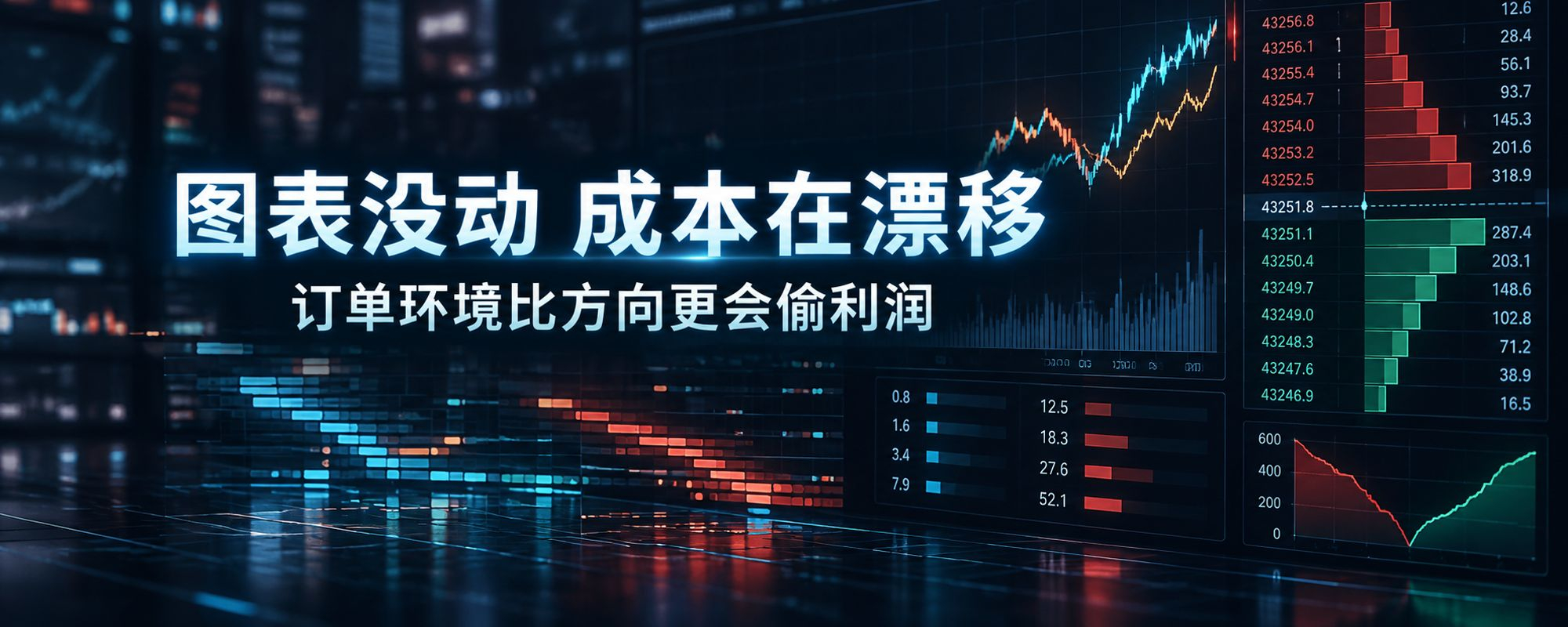
The chart hasn’t moved, but costs have started to driftIn the afternoon, the market tape warms up again. Many people’s first reaction is to keep focusing on direction: Can BTC hold its ground? Will ETH catch up? Should you chase the next candlestick?
But what often truly worsens trading results isn’t that you missed one more candle—it’s that you assume, “the current execution environment is the same as just before.”
The chart may look like it hasn’t moved much, yet your costs may already be drifting.
This kind of drift doesn’t necessarily come from outrageously big fluctuations. It might simply be that a few layers of quotes in the order book have thinned out, cancellations happen faster for limit orders, the spread jumps from one tick to two, or the depth near a certain price suddenly disappears for a stretch. What you see on the chart is the same price range, but when your order actually passes through, the liquidity you consume may no longer be the same layer.
The chart hasn’t moved, but costs have started to drift
In the afternoon, the market tape warms up again. Many people’s first reaction is to keep focusing on direction: Can BTC hold its ground? Will ETH catch up? Should you chase the next candlestick?
But what often truly worsens trading results isn’t that you missed one more candle—it’s that you assume, “the current execution environment is the same as just before.”
The chart may look like it hasn’t moved much, yet your costs may already be drifting.
This kind of drift doesn’t necessarily come from outrageously big fluctuations. It might simply be that a few layers of quotes in the order book have thinned out, cancellations happen faster for limit orders, the spread jumps from one tick to two, or the depth near a certain price suddenly disappears for a stretch. What you see on the chart is the same price range, but when your order actually passes through, the liquidity you consume may no longer be the same layer.
But what often truly worsens trading results isn’t that you missed one more candle—it’s that you assume, “the current execution environment is the same as just before.”
The chart may look like it hasn’t moved much, yet your costs may already be drifting.
This kind of drift doesn’t necessarily come from outrageously big fluctuations. It might simply be that a few layers of quotes in the order book have thinned out, cancellations happen faster for limit orders, the spread jumps from one tick to two, or the depth near a certain price suddenly disappears for a stretch. What you see on the chart is the same price range, but when your order actually passes through, the liquidity you consume may no longer be the same layer.
192
·
--

Article
Holding crypto doesn’t mean you can pay: don’t let AI memberships and gift cards get stuck on withdrawalThe most ironic thing today isn’t that BTC is still grinding around $83,000—it’s that in the news, AI agents have started discussing automatic fund transfers, yet many people’s $29.90 AI membership, $100 gift card, and digital services they plan to buy this afternoon are still stuck on the old problem of “I have crypto, but I can’t pay right now.”
This isn’t a question of how large the balance is—it’s a question of the money’s status.
Money in a trading account is, by default, waiting for an opportunity; money in a consumption scenario is, by default, waiting for confirmation. They both look like “assets,” but once you reach the checkout page, they’re completely different things. You might watch your position fluctuate for hours and feel like you have enough budget; but only when an AI membership suddenly expires, when your code tool’s quota runs out, when you temporarily need to buy a gift card for team procurement, or when you have to top up an online shopping order—then you realize the most frustrating part isn’t price volatility, but that the path is too long.
Holding crypto doesn’t mean you can pay: don’t let AI memberships and gift cards get stuck on withdrawal
The most ironic thing today isn’t that BTC is still grinding around $83,000—it’s that in the news, AI agents have started discussing automatic fund transfers, yet many people’s $29.90 AI membership, $100 gift card, and digital services they plan to buy this afternoon are still stuck on the old problem of “I have crypto, but I can’t pay right now.”
This isn’t a question of how large the balance is—it’s a question of the money’s status.
Money in a trading account is, by default, waiting for an opportunity; money in a consumption scenario is, by default, waiting for confirmation. They both look like “assets,” but once you reach the checkout page, they’re completely different things. You might watch your position fluctuate for hours and feel like you have enough budget; but only when an AI membership suddenly expires, when your code tool’s quota runs out, when you temporarily need to buy a gift card for team procurement, or when you have to top up an online shopping order—then you realize the most frustrating part isn’t price volatility, but that the path is too long.
This isn’t a question of how large the balance is—it’s a question of the money’s status.
Money in a trading account is, by default, waiting for an opportunity; money in a consumption scenario is, by default, waiting for confirmation. They both look like “assets,” but once you reach the checkout page, they’re completely different things. You might watch your position fluctuate for hours and feel like you have enough budget; but only when an AI membership suddenly expires, when your code tool’s quota runs out, when you temporarily need to buy a gift card for team procurement, or when you have to top up an online shopping order—then you realize the most frustrating part isn’t price volatility, but that the path is too long.
73
·
--
Article
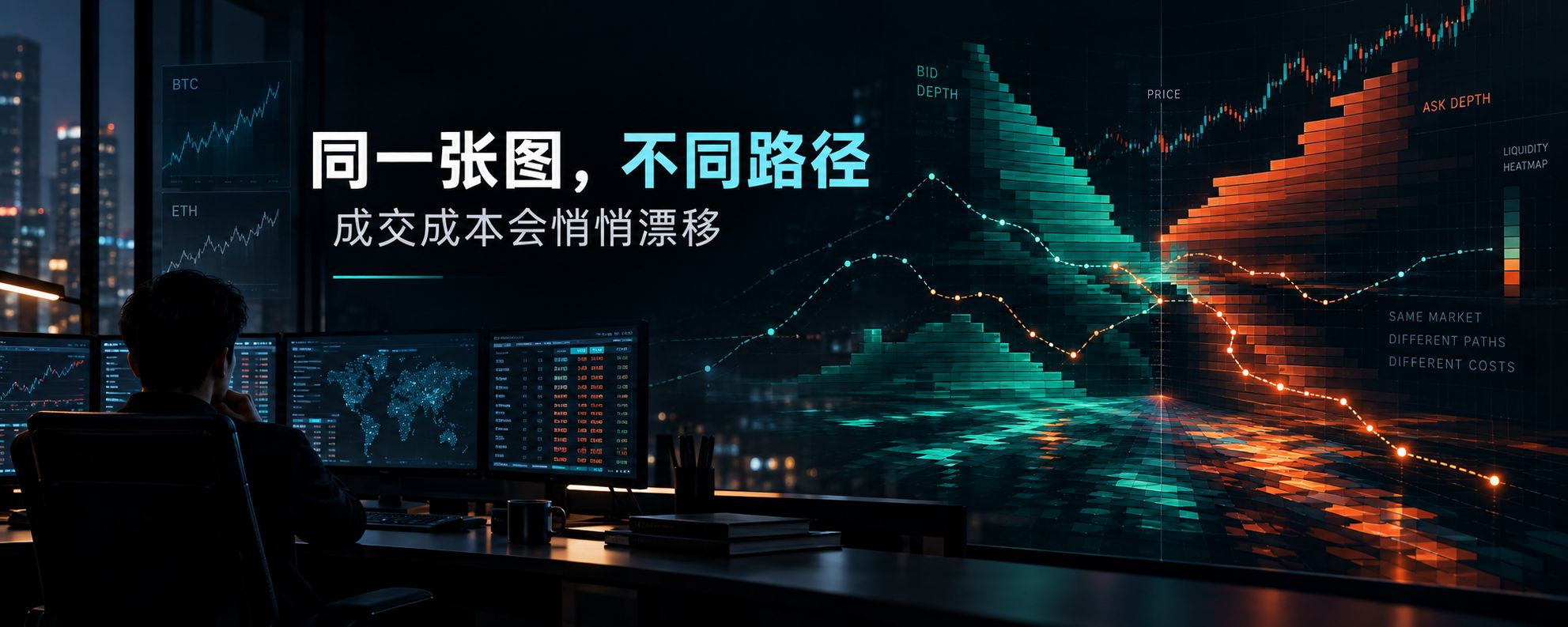
Same chart, different paths—execution cost can quietly driftThis afternoon’s market action is a bit confusing: BTC is still hovering around $83,000, ETH is slightly stronger, and SOL is still weaker. Price doesn’t seem to be offering a major new story, but the order environment is already changing.
Many traders make a misjudgment at times like this: if the candlesticks haven’t moved much, they assume the order cost also hasn’t moved much.
Actually not.
With the same chart, the same trading pair, and the same directional judgment, the final execution quality can be very different. The difference doesn’t necessarily come from you misreading the direction—it may come from the fact that before you hit confirm, you didn’t compare which path this order should follow.
Same chart, different paths—execution cost can quietly drift
This afternoon’s market action is a bit confusing: BTC is still hovering around $83,000, ETH is slightly stronger, and SOL is still weaker. Price doesn’t seem to be offering a major new story, but the order environment is already changing.
Many traders make a misjudgment at times like this: if the candlesticks haven’t moved much, they assume the order cost also hasn’t moved much.
Actually not.
With the same chart, the same trading pair, and the same directional judgment, the final execution quality can be very different. The difference doesn’t necessarily come from you misreading the direction—it may come from the fact that before you hit confirm, you didn’t compare which path this order should follow.
Many traders make a misjudgment at times like this: if the candlesticks haven’t moved much, they assume the order cost also hasn’t moved much.
Actually not.
With the same chart, the same trading pair, and the same directional judgment, the final execution quality can be very different. The difference doesn’t necessarily come from you misreading the direction—it may come from the fact that before you hit confirm, you didn’t compare which path this order should follow.
10
·
--
In the same candlestick, why are your trade results worse than others by a noticeable margin?
Today’s market makes it easy to create a false impression: BTC is still hovering around the $83k area, and ETH hasn’t given a particularly clear direction either—so it feels like if you read the chart right, the result should be about the same.
But what’s most easily underestimated in contracts is exactly this: “the order environment behind the same chart isn’t the same.”
In some places, the first layer of the order book looks close, but just two or three layers deeper, the depth suddenly disappears; in others, the spread doesn’t seem much, but when you actually get filled, rules, fees, trigger conditions, and matching cadence together raise your effective cost; and in still other cases, there appears to be enough liquidity on the surface—until you actually place the order, and the quote layers have already rotated.
So I’ve come to believe that before trading, you shouldn’t only ask three questions: bullish or bearish, where the price will go, and how big your position is.
You should ask one more: if you place this order now, which execution path will have the smaller deviation in the fill?
This isn’t about telling people to tinker constantly—it’s admitting a reality: liquidity is distributed, the quote layers will change, and the rule design will affect the final outcome. The same BTC or ETH, the same judgment—under different order environments, the trading experience you ultimately get may not be the same.
Personally, I’d rather treat PerpEX / Perpex as an execution-comparison perspective: first look at the asset, then compare depth, spread, costs, and rules across different execution environments, and only then decide which way to route this order.
Your directional judgment determines whether you want to do the trade; the order environment determines how comfortable the fill feels for this specific trade.
#BTC #ETH
In the same candlestick, why are your trade results worse than others by a noticeable margin?
Today’s market makes it easy to create a false impression: BTC is still hovering around the $83k area, and ETH hasn’t given a particularly clear direction either—so it feels like if you read the chart right, the result should be about the same.
But what’s most easily underestimated in contracts is exactly this: “the order environment behind the same chart isn’t the same.”
In some places, the first layer of the order book looks close, but just two or three layers deeper, the depth suddenly disappears; in others, the spread doesn’t seem much, but when you actually get filled, rules, fees, trigger conditions, and matching cadence together raise your effective cost; and in still other cases, there appears to be enough liquidity on the surface—until you actually place the order, and the quote layers have already rotated.
So I’ve come to believe that before trading, you shouldn’t only ask three questions: bullish or bearish, where the price will go, and how big your position is.
You should ask one more: if you place this order now, which execution path will have the smaller deviation in the fill?
This isn’t about telling people to tinker constantly—it’s admitting a reality: liquidity is distributed, the quote layers will change, and the rule design will affect the final outcome. The same BTC or ETH, the same judgment—under different order environments, the trading experience you ultimately get may not be the same.
Personally, I’d rather treat PerpEX / Perpex as an execution-comparison perspective: first look at the asset, then compare depth, spread, costs, and rules across different execution environments, and only then decide which way to route this order.
Your directional judgment determines whether you want to do the trade; the order environment determines how comfortable the fill feels for this specific trade.
#BTC #ETH
Today’s market makes it easy to create a false impression: BTC is still hovering around the $83k area, and ETH hasn’t given a particularly clear direction either—so it feels like if you read the chart right, the result should be about the same.
But what’s most easily underestimated in contracts is exactly this: “the order environment behind the same chart isn’t the same.”
In some places, the first layer of the order book looks close, but just two or three layers deeper, the depth suddenly disappears; in others, the spread doesn’t seem much, but when you actually get filled, rules, fees, trigger conditions, and matching cadence together raise your effective cost; and in still other cases, there appears to be enough liquidity on the surface—until you actually place the order, and the quote layers have already rotated.
So I’ve come to believe that before trading, you shouldn’t only ask three questions: bullish or bearish, where the price will go, and how big your position is.
You should ask one more: if you place this order now, which execution path will have the smaller deviation in the fill?
This isn’t about telling people to tinker constantly—it’s admitting a reality: liquidity is distributed, the quote layers will change, and the rule design will affect the final outcome. The same BTC or ETH, the same judgment—under different order environments, the trading experience you ultimately get may not be the same.
Personally, I’d rather treat PerpEX / Perpex as an execution-comparison perspective: first look at the asset, then compare depth, spread, costs, and rules across different execution environments, and only then decide which way to route this order.
Your directional judgment determines whether you want to do the trade; the order environment determines how comfortable the fill feels for this specific trade.
#BTC #ETH
167
·
--
Limit orders aren’t necessarily cheaper, and getting in line can still get you “harvested” by the order book
Today, BTC is still hovering around $82.9k, ETH is even more range-bound, and SOL remains relatively weak. The market like this is most likely to cause a common misjudgment: traders think they don’t need to rush—just place a good price and wait slowly. If it fills, they believe they’ve saved on slippage.
But I’m more wary of the “queue execution quality.”
Limit orders look more restrained than just taking liquidity, but if this order only gets filled when price suddenly sweeps through, or if it only fills at the thinnest liquidity segment, the tiny spread you thought you saved may already be wiped out by fill deviation, partial fills, cancel speed, and the need to re-submit an order afterward.
Before placing an order, I’ll check four things:
First, beyond the best bid/ask, whether the second and third levels of quotes are truly continuous.
Second, whether the most recent trades were initiated by aggressive buying, or driven by passive selling pressure.
Third, whether the depth and fee differences across different routes for this trading pair have already grown large enough to meaningfully affect how the position feels.
Fourth, if only half fills, whether the remaining half should go through another route.
Many people think they’re comparing prices, but what they should really compare is the order environment. Price is just a screenshot—the fill quality is the result.
So when I look at execution from perspectives like PerpEX / Perpex, the value isn’t in giving people one more button. It’s in reminding traders: first choose the asset, then look at the quote layers, depth, fees, and fill deviation, and only then decide where this order should go.
#BTC #ETH
Limit orders aren’t necessarily cheaper, and getting in line can still get you “harvested” by the order book
Today, BTC is still hovering around $82.9k, ETH is even more range-bound, and SOL remains relatively weak. The market like this is most likely to cause a common misjudgment: traders think they don’t need to rush—just place a good price and wait slowly. If it fills, they believe they’ve saved on slippage.
But I’m more wary of the “queue execution quality.”
Limit orders look more restrained than just taking liquidity, but if this order only gets filled when price suddenly sweeps through, or if it only fills at the thinnest liquidity segment, the tiny spread you thought you saved may already be wiped out by fill deviation, partial fills, cancel speed, and the need to re-submit an order afterward.
Before placing an order, I’ll check four things:
First, beyond the best bid/ask, whether the second and third levels of quotes are truly continuous.
Second, whether the most recent trades were initiated by aggressive buying, or driven by passive selling pressure.
Third, whether the depth and fee differences across different routes for this trading pair have already grown large enough to meaningfully affect how the position feels.
Fourth, if only half fills, whether the remaining half should go through another route.
Many people think they’re comparing prices, but what they should really compare is the order environment. Price is just a screenshot—the fill quality is the result.
So when I look at execution from perspectives like PerpEX / Perpex, the value isn’t in giving people one more button. It’s in reminding traders: first choose the asset, then look at the quote layers, depth, fees, and fill deviation, and only then decide where this order should go.
#BTC #ETH
Today, BTC is still hovering around $82.9k, ETH is even more range-bound, and SOL remains relatively weak. The market like this is most likely to cause a common misjudgment: traders think they don’t need to rush—just place a good price and wait slowly. If it fills, they believe they’ve saved on slippage.
But I’m more wary of the “queue execution quality.”
Limit orders look more restrained than just taking liquidity, but if this order only gets filled when price suddenly sweeps through, or if it only fills at the thinnest liquidity segment, the tiny spread you thought you saved may already be wiped out by fill deviation, partial fills, cancel speed, and the need to re-submit an order afterward.
Before placing an order, I’ll check four things:
First, beyond the best bid/ask, whether the second and third levels of quotes are truly continuous.
Second, whether the most recent trades were initiated by aggressive buying, or driven by passive selling pressure.
Third, whether the depth and fee differences across different routes for this trading pair have already grown large enough to meaningfully affect how the position feels.
Fourth, if only half fills, whether the remaining half should go through another route.
Many people think they’re comparing prices, but what they should really compare is the order environment. Price is just a screenshot—the fill quality is the result.
So when I look at execution from perspectives like PerpEX / Perpex, the value isn’t in giving people one more button. It’s in reminding traders: first choose the asset, then look at the quote layers, depth, fees, and fill deviation, and only then decide where this order should go.
#BTC #ETH
185
·
--
$82.9k cold dishes; what I fear most isn’t having no direction—it’s thinking the order book is still the same
BTC is back around $82.9k, ETH is basically moving sideways, and SOL is still a bit weak. The market looks not very exciting, but at times like this I care more about order quality: when price movement is limited, the order book may be thin; prices haven’t moved much, yet the quote layers have already rotated.
When people review trades, they often only ask whether “my judgment was right,” and rarely review what “price this order actually got filled at.” Especially when morning liquidity hasn’t fully returned, the same trading pair, under different execution conditions, can have very different outcomes—bid-ask spreads, depth, order placement stability, fees, and trigger conditions can all turn what seems like a normal trade into something completely different.
What’s truly troublesome is cost drift. You see one price, but when you get filled you’re taking a different quote layer. You think it’s just a small pullback, but in reality the risk buffer has already been shaved down by slippage and fees. Even if the direction is right, a poor execution position can still leave you with an awkward trade.
So I’m increasingly not a fan of the habit of “always placing orders from the same spot.” First assess the asset, then compare the order environment: has the spread widened, is the depth sufficient, are the quote layers continuous, and will the trigger rules cause risk to morph earlier. With PerpEX-style Perp execution perspectives, the value isn’t in deciding direction for you—it’s in reminding you before you press the button: where this order is likely to go from, and how much it may affect results more than you expect.
#BTC #ETH
$82.9k cold dishes; what I fear most isn’t having no direction—it’s thinking the order book is still the same
BTC is back around $82.9k, ETH is basically moving sideways, and SOL is still a bit weak. The market looks not very exciting, but at times like this I care more about order quality: when price movement is limited, the order book may be thin; prices haven’t moved much, yet the quote layers have already rotated.
When people review trades, they often only ask whether “my judgment was right,” and rarely review what “price this order actually got filled at.” Especially when morning liquidity hasn’t fully returned, the same trading pair, under different execution conditions, can have very different outcomes—bid-ask spreads, depth, order placement stability, fees, and trigger conditions can all turn what seems like a normal trade into something completely different.
What’s truly troublesome is cost drift. You see one price, but when you get filled you’re taking a different quote layer. You think it’s just a small pullback, but in reality the risk buffer has already been shaved down by slippage and fees. Even if the direction is right, a poor execution position can still leave you with an awkward trade.
So I’m increasingly not a fan of the habit of “always placing orders from the same spot.” First assess the asset, then compare the order environment: has the spread widened, is the depth sufficient, are the quote layers continuous, and will the trigger rules cause risk to morph earlier. With PerpEX-style Perp execution perspectives, the value isn’t in deciding direction for you—it’s in reminding you before you press the button: where this order is likely to go from, and how much it may affect results more than you expect.
#BTC #ETH
BTC is back around $82.9k, ETH is basically moving sideways, and SOL is still a bit weak. The market looks not very exciting, but at times like this I care more about order quality: when price movement is limited, the order book may be thin; prices haven’t moved much, yet the quote layers have already rotated.
When people review trades, they often only ask whether “my judgment was right,” and rarely review what “price this order actually got filled at.” Especially when morning liquidity hasn’t fully returned, the same trading pair, under different execution conditions, can have very different outcomes—bid-ask spreads, depth, order placement stability, fees, and trigger conditions can all turn what seems like a normal trade into something completely different.
What’s truly troublesome is cost drift. You see one price, but when you get filled you’re taking a different quote layer. You think it’s just a small pullback, but in reality the risk buffer has already been shaved down by slippage and fees. Even if the direction is right, a poor execution position can still leave you with an awkward trade.
So I’m increasingly not a fan of the habit of “always placing orders from the same spot.” First assess the asset, then compare the order environment: has the spread widened, is the depth sufficient, are the quote layers continuous, and will the trigger rules cause risk to morph earlier. With PerpEX-style Perp execution perspectives, the value isn’t in deciding direction for you—it’s in reminding you before you press the button: where this order is likely to go from, and how much it may affect results more than you expect.
#BTC #ETH
167
Log in to explore more content
Join global crypto users on Binance Square
⚡️ Get latest and useful information about crypto.
💬 Trusted by the world’s largest crypto exchange.
👍 Discover real insights from verified creators.
Email / Phone number
Trending Topics
BitcoinClears$85200
14,009 views
225 Discussing
We got the move, and $BTC is standing exactly where we were before the data. That’s what actual patience for a trade looks like.
The data came in mixed but with some important numbers. ADP Non-Farm Employment Change came at 90K vs 73K forecast, while Core PCE came in at 0.2% vs 0.3% expected. Final GDP was also stronger at 2.2% vs 1.5% forecast, while Personal Spending came in at 0.9% vs 0.8% expected. At the same time, Personal Income missed at 0.2% vs 0.5% forecast.
BTC initially surged to $85,600 and is now back where it needs to be. I’m still looking toward the lower ranges at $82,759 and the $80,000 liquidity, because the overhead liquidity is done and dusted.
We had a live session during the data, and during that session we saw the market at $83,800, then $85,600, and then back toward $83,000 and we still didn’t enter a trade.
That’s what patience is.
We can’t force an entry when the market has no clear direction. The same range is still in focus, and we’ll wait for the market to give us the setup.
Let me know, guys, how was the session? And should we have more regular sessions with our respected members so we can have proper discussions regarding the market?
#BitcoinClears$85200 #AltcoinSeasonIndexHoldsAbove60For5Days #USADPAdds90000JobsInSeptember #BitcoinSlipsBelow$84000 #SECToClarifyOnChainFundraisingRules
Crypto_LUX
·26 Likes
·20.9k views
AltcoinSeasonIndexHoldsAbove60For5Days
69,472 views
1,232 Discussing
USADPAdds90000JobsInSeptember
31,869 views
689 Discussing