

TANVIR-ANALYSIS-1
Open Trade
Frequent Trader
4.9 Months
65 Following
1.1K+ Followers
95 Liked
Posts
Portfolio
All
Quotes
Live
PINNED


BTC-HABIB
·
--
How Is Blockchain Used in Healthcare Records? Real-World Systems Explained
When you visit a new doctor, transfer to a specialist, or arrive at an emergency room, medical providers often lack immediate access to your full medical history.
Hospitals and clinics maintain independent Electronic Health Record (EHR) systems. Because these systems use proprietary formats and isolated servers, sharing patient records securely between different health networks remains slow, fragmented, and vulnerable to clerical errors.
Blockchain technology provides a framework to connect these isolated systems. Rather than serving as an open public bulletin board or replacing existing hospital software, blockchain functions as a secure, decentralized master index and access gatekeeper.
The Core Problem with Modern Medical Records
The healthcare sector does not suffer from a lack of digital records; it suffers from fragmentation and restricted data exchange:
Data Silos: A patient's medical history is scattered across primary care doctors, diagnostic imaging centers, outpatient clinics, and dental offices. Each provider stores records on separate servers.Incompatible EHR Systems: Different hospital networks run specialized software platforms that rarely communicate smoothly without custom, expensive technical bridges.Vulnerability to Unauthorized Modification: Centralized databases give administrative accounts the power to edit, overwrite, or delete entries, complicating efforts to maintain an unalterable audit trail.Administrative Delays: Transferring records between health systems often relies on manual requests, patient authorization forms sent via fax, and slow verification calls, delaying treatment decisions.
The Hybrid Model: On-Chain Verification vs. Off-Chain Storage
A common misconception is that entire medical files—such as high-resolution MRI scans, surgical video feeds, and lengthy doctor progress notes—are written directly onto the blockchain. Storing large, sensitive files directly on a distributed ledger is inefficient and conflicts with healthcare privacy standards.
Instead, enterprise healthcare blockchains rely on an on-chain and off-chain hybrid model:
What Stays Off-Chain?
The actual medical files: imaging results, laboratory reports, genomic data, prescriptions, and physician notes.Personal identifiable information (PII) and protected health information (PHI).These records remain stored in secure, encrypted, HIPAA-compliant databases, local hospital servers, or decentralized encrypted storage networks.
What Goes On-Chain?
Cryptographic Hashes: A cryptographic hash is a unique digital fingerprint generated from a medical document. If a record is altered by even a single character, its hash changes completely. The blockchain stores only this hash, not the readable text or image.Access Rules & Permissions: Smart contracts define which doctors, clinics, or insurers have permission to view specific records.Audit Logs: Immutable timestamps recording when a file was accessed, who viewed it, and what authorizations were granted.
When a specialist requests a patient's chart, the hospital retrieves the encrypted file off-chain, calculates its hash, and matches it against the hash stored on the blockchain. If the hashes match, the specialist knows the record is genuine and has not been altered since the original physician signed it.
Practical Applications in Healthcare Records
Enterprise healthcare platforms use private, permissioned networks (like Hyperledger Fabric) to deliver targeted improvements across clinical workflows:
1. Patient-Controlled Consent Management
Patients rarely have direct control over how their medical records are shared among providers.
How It Works: Smart contracts serve as automated patient consent managers. Through a secure health portal or mobile identity wallet, a patient grants a specific clinic permission to access their blood panel results for a set period (e.g., 48 hours). Once that period ends, access automatically expires.
2. Cross-Institutional Interoperability
Creating a unified health record across independent hospital networks normally requires copying full databases, raising severe privacy concerns.
How It Works: The blockchain acts as a decentralized index. Instead of storing clinical notes in one massive central warehouse, the ledger lists pointers to where those records reside across different hospital nodes. Authorized healthcare providers query the network to retrieve records directly from the source.
3. Tamper-Evident Audit Trails for Compliance
Healthcare regulations require medical facilities to maintain strict access logs showing every staff member who opens a patient's file.
How It Works: Every time an electronic health record is viewed, updated, or transferred, a cryptographic transaction is logged on the private ledger. Because the ledger is append-only, an employee cannot view a chart and later delete the access history to cover their tracks.
4. Integrity Verification for Clinical Trials
Clinical trial data must remain free from retroactive alterations to ensure experimental treatments are evaluated honestly.
How It Works: Research institutions anchor trial results, dosage logs, and adverse event reports onto a permissioned blockchain. Regulators, such as the U.S. Food and Drug Administration (FDA), verify that trial protocols and outcomes were not modified after the study began.
Side-by-Side Comparison: Traditional EHR Systems vs. Blockchain-Integrated Systems
Regulatory and Privacy Standards: HIPAA and GDPR
Deploying distributed ledger technology in healthcare requires strict compliance with legal frameworks, including the Health Insurance Portability and Accountability Act (HIPAA) in the United States and the General Data Protection Regulation (GDPR) in Europe.
The Immutability Conflict: Public blockchains like Bitcoin and Ethereum are permanent and unchangeable. This design conflicts directly with GDPR’s "Right to be Forgotten," which gives individuals the legal right to request the deletion of their personal information.Why Private Blockchains Are Mandatory: Healthcare systems deploy private, permissioned consortium blockchains. By storing actual medical notes in off-chain databases, hospitals can delete or redact personal data to comply with regulations, while the ledger retains only non-identifying cryptographic proofs and access metadata.Emergency Access ("Break-Glass" Protocols): In critical emergency situations—such as an unconscious patient entering an emergency room—smart contracts can include audited override rules. An emergency physician can access necessary allergy and medication records immediately, while the system automatically generates an irreversible alert on the ledger for administrative review.
Frequently Asked Questions
Is a patient's personal health information visible to everyone on a blockchain?
No. Healthcare blockchain networks are private and invite-only. Identifiable health data is never posted to open public chains. Access to records requires cryptographic keys, and only authorized medical personnel approved by the patient or established protocols can decrypt the information.
Does blockchain replace hospital software like Epic or Cerner?
No. Blockchain does not replace core EHR platforms. Instead, it operates as an underlying verification and communication layer between existing systems, allowing different software suites to verify record authenticity and share access permissions securely.
What happens if an off-chain medical file is edited or corrupted?
If a file is changed—whether intentionally or through a technical error—its digital fingerprint changes. When the system compares the newly generated hash against the original hash stored on the blockchain, the mismatch triggers an immediate error flag, warning medical staff that the document has been altered.

BTC-HABIB
·
--
Bitcoin Halving Explained for Beginners: What It Is and Why It Matters
Every four years, the supply of new Bitcoin suddenly drops by half. This programmed event is known as the Bitcoin Halving. Unlike government-issued currencies that central banks can print in unlimited quantities, Bitcoin operates under a strict, unchangeable monetary policy. It has a hard ceiling of 21 million coins that will ever exist.
To make sure all 21 million coins were not released at once, Bitcoin's creator wrote a rule directly into the code: the rate of new Bitcoin entering circulation is permanently cut by 50% every 210,000 blocks—or roughly every four years.
Understanding the halving is essential for anyone entering crypto, as it defines Bitcoin’s economic design, controls its inflation rate, and shapes its historical market cycles.
What Is the Bitcoin Halving?
To understand the halving, you first need to understand how new Bitcoins are born.
Bitcoin does not use a central bank or a government agency to issue money. Instead, transactions are verified and bundled into "blocks" by specialized computers called miners.
Miners compete using heavy computational power to solve cryptographic math problems (a process called Proof of Work). When a miner successfully solves the puzzle and confirms a new batch of transactions, the network rewards them with brand-new, freshly minted Bitcoin. This payment is called the block reward (or block subsidy).
The halving is the mathematical mechanism that reduces this payout:
Every 210,000 blocks added to the ledger, the block reward automatically drops by 50%.Since the network is programmed to find one new block roughly every 10 minutes, 210,000 blocks take approximately four years to complete.
The halving does not alter your existing wallet balance, cut your holdings in half, or change how transfers work. It only reduces how much new Bitcoin miners receive for securing the network going forward.
Why Was the Halving Built Into Bitcoin?
Satoshi Nakamoto designed Bitcoin following the 2008 global financial crisis as a digital alternative to fiat currencies.
Fiat currencies (such as the US Dollar, Euro, or Yen) are inflationary by design. Central banks can expand the money supply at will. When more money chases the same pool of goods and services, individual purchasing power decreases over time.
Bitcoin handles money creation through three hard-coded rules:
A Fixed Hard Cap: There will only ever be 21 million Bitcoins. Not a single coin more can ever be created.Programmed Scarcity: Instead of releasing all 21 million coins on day one, coins are released gradually on a transparent, public schedule.Decaying Inflation: By halving the reward every four years, the annual inflation rate drops toward zero, making Bitcoin progressively scarcer over time, similar to the declining yield of a gold mine.
The Complete Bitcoin Halving Schedule
Bitcoin started in 2009 with a generous block reward to encourage early adopters and miners to secure the network. Over the years, that reward has been cut down step by step:
By the time the fourth halving occurred in 2024, more than 93% of all Bitcoins had already been mined. The remaining supply will be issued slowly over the next century until the final fraction of a coin is minted around the year 2140.
How Does Halving Affect Miners and the Network?
When a halving takes place, a miner's primary revenue stream is cut in half overnight. If Bitcoin's market price does not rise to offset that drop, less efficient mining operators running older hardware or paying high electricity rates can become unprofitable.
The network maintains stability through two critical self-correcting mechanisms:
1. Difficulty Adjustments
Every 2,016 blocks (roughly every two weeks), the Bitcoin network measures how quickly blocks were solved. If unprofitable miners unplug their machines and the total computing power (hash rate) drops, the network automatically lowers the difficulty of the cryptographic puzzle. This makes it easier and cheaper for remaining miners to produce blocks, keeping the average block time steady at 10 minutes.
2. The Shift to Transaction Fees
Miners do not just earn block rewards; they also collect transaction fees paid by users sending funds across the network. As the block reward approaches zero over the coming decades, transaction fees will gradually become the primary incentive for miners to continue verifying transactions and securing the blockchain.
Does the Halving Guarantee a Price Increase?
Historically, each halving has been followed by a major bull run in the months that followed. However, a price increase is never guaranteed.
From a purely economic standpoint, the halving is a supply shock:
The Supply Side: The daily influx of new coins hitting the market drops by 50%.The Demand Side: If consumer, institutional, and ETF demand remains steady or increases while the incoming supply shrinks, basic supply-and-demand mechanics exert upward pressure on price.
However, price is not determined by the code alone. Global macroeconomic conditions, Federal Reserve interest rates, geopolitical stability, regulatory decisions, and overall investor sentiment play substantial roles in determining where the market heads. Past cycle performance should never be treated as a promise of future returns.
Frequently Asked Questions
Do I need to do anything with my Bitcoin during a halving?
No. Your existing Bitcoin holdings, wallet keys, and transaction history are completely unaffected. You do not need to upgrade your wallet, move funds, or buy new tokens. Anyone claiming you need to "upgrade" your Bitcoin around a halving is likely running a phishing scam.
Can the 21 million supply limit ever be increased?
Technically, Bitcoin's software code is open-source, but changing the 21 million limit requires consensus across the global network of independent node operators and miners. Because increasing the supply would dilute the value of everyone's existing holdings, the community has an overwhelming economic incentive to reject any rule change that alters the 21 million cap.
What happens when all 21 million Bitcoins are mined in 2140?
The network will not shut down. Once all block subsidies reach zero, miners will be compensated entirely through transaction fees included in each block. As long as users send transactions across the network, miners will have financial incentives to secure the ledger.
Key Takeaway for Beginners
The Bitcoin halving is not a surprise event or a marketing campaign; it is a predictable, mathematical event that enforces digital scarcity. By cutting the creation rate of new supply in half every four years, the network ensures that Bitcoin remains scarce, predictable, and fundamentally resistant to inflation.

BTC-HABIB
·
--
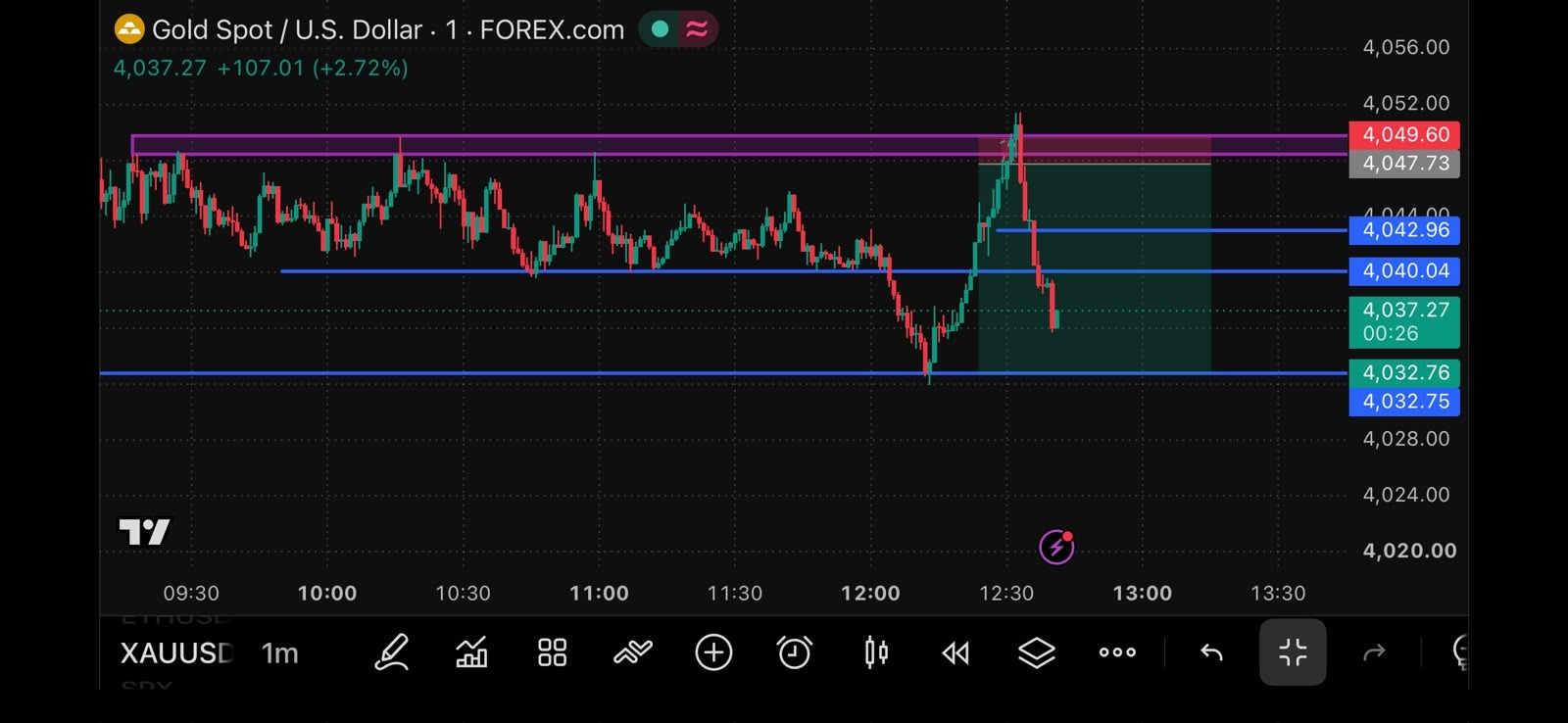
BearishToday sl hit than come my direction what about say this guys #XAUUSD $XAUT
BTC-HABIB
·
--
CZ Warns That AI-Powered Cyberattacks Pose Growing Risks to Banks and Crypto Platforms
Binance founder Changpeng Zhao (CZ) has warned that traditional financial institutions, including banks, are facing increasing risks from cyberattacks.
According to CZ, artificial intelligence (AI) is making hackers more capable and sophisticated. As a result, both cryptocurrency platforms and traditional financial institutions must rethink and strengthen their cybersecurity strategies.
However, CZ did not provide comparative data confirming whether banks or cryptocurrency platforms face more cyberattacks.
Source: Yahoo Finance interview with CZ, November 3, 2026.
#Binance #CZ #CryptoNews

BTC-HABIB
·
--
Centralized vs. Decentralized Exchange: Pros, Cons, and Key Differences
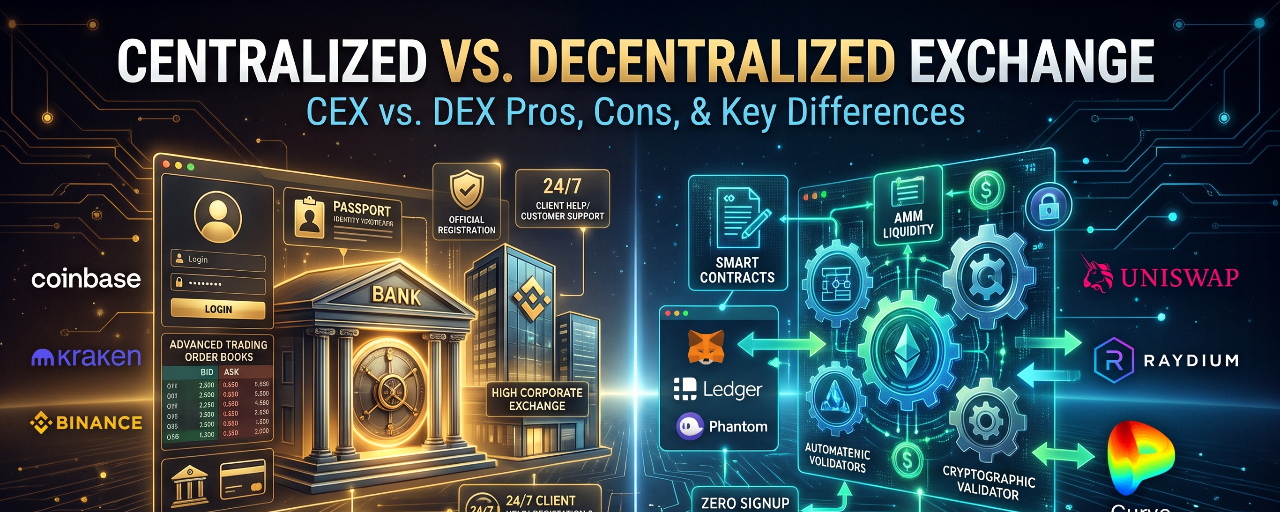
When you buy, sell, or trade cryptocurrencies, you need an exchange. The crypto industry offers two main options: Centralized Exchanges (CEXs) like Coinbase, Kraken, or Binance, and Decentralized Exchanges (DEXs) like Uniswap, Raydium, or Curve.
Both platforms let you swap one digital asset for another, but they operate under completely different rules. A centralized exchange works much like a traditional brokerage bank, holding your funds and handling customer requests. A decentralized exchange operates purely through blockchain smart contracts, allowing you to trade directly from your own personal wallet without an intermediary.
Choosing the right platform comes down to what you value most: convenience and easy fiat banking, or total personal ownership and privacy.
What Is a Centralized Exchange (CEX)?
A Centralized Exchange (CEX) is an online trading platform operated and managed by a private corporation.
When you use a CEX:
You open an account with an email address and complete identity verification (Know Your Customer, or KYC) by submitting government ID.You deposit cash using standard banking methods, such as an ACH bank transfer, wire, or debit card.When you trade, transactions take place inside the company’s internal off-chain order book rather than directly on a public blockchain. This allows trades to execute instantly without paying blockchain network gas fees.
Because the company manages the platform, it acts as a custodian. The exchange controls the private keys to the wallets holding your assets. You log in with a username and password, much like online banking.
What Is a Decentralized Exchange (DEX)?
A Decentralized Exchange (DEX) is an open-source application that runs directly on a public blockchain network (such as Ethereum, Solana, or Arbitrum).
When you use a DEX:
You do not create an account, register an email, or submit identity documents.You connect your self-custody Web3 wallet (such as MetaMask, Phantom, or a hardware wallet).Most modern DEXs use Automated Market Makers (AMMs) instead of traditional order books. Trades execute against decentralized liquidity pools—crowdsourced reservoirs of tokens locked into smart contracts.
Because transactions run on-chain, you maintain 100% custody of your private keys throughout the entire process. No central company can freeze your account, block your transfer, or access your funds.
Pros and Cons of Centralized Exchanges (CEX)
Advantages of a CEX
Easy Cash On-Ramps and Off-Ramps: A CEX is the most straightforward way to convert traditional fiat currency (like US dollars) into crypto and cash back out to your bank account.Account Recovery and Support: If you forget your password, you can reset it via email. If something goes wrong, you can contact customer service.Advanced Trading Tools: CEX platforms provide deep liquidity, fast execution, stop-loss orders, limit orders, and margin/futures trading.No Network Gas Fees for Internal Trades: Buying and selling on the exchange’s order book does not trigger blockchain transaction fees. You only pay standard trading fees.
Disadvantages of a CEX
Custodial Risk ("Not Your Keys, Not Your Coins"): If the exchange becomes insolvent, halts withdrawals, or suffers an internal security breach, your funds could be frozen or lost.Strict Privacy Requirements: Setting up an account requires uploading sensitive personal data, including your photo ID, Social Security number, and address.Account Restrictions: Centralized platforms can restrict trading, freeze specific accounts during regulatory reviews, or limit daily withdrawal amounts.
Pros and Cons of Decentralized Exchanges (DEX)
Advantages of a DEX
Full Asset Ownership: You never surrender control of your private keys. Your tokens remain in your personal wallet until the exact second a trade executes.Permissionless and Private: Anyone with an internet connection and a crypto wallet can trade immediately. There are no geographic restrictions or identity verification steps.Wider Token Selection: Anyone can create a liquidity pool for a new project. As a result, newly launched tokens and niche decentralized finance (DeFi) assets almost always appear on DEXs long before they earn a listing on a major centralized exchange.Zero Counterparty Insolvency Risk: A DEX cannot "go bankrupt" and lose customer deposits, because it never holds custody of user assets in the first place.
Disadvantages of a DEX
No Direct Bank Integration: Pure decentralized exchanges do not accept cash deposits from checking accounts. You must already hold cryptocurrency in a personal wallet to trade.Total Personal Responsibility: If you lose your wallet’s recovery seed phrase, send tokens to the wrong network, or approve a malicious smart contract, there is no customer service department to restore your balance. Transactions are irreversible.Blockchain Gas Fees: Every swap, token approval, and liquidity action requires paying a blockchain network gas fee. While gas fees on Layer 2 networks and alternative Layer 1 chains are tiny, trading on Ethereum Layer 1 during high network traffic can become expensive.Slippage and Liquidity Limits: Smaller or newer token pools may have shallow liquidity, leading to price slippage where large orders move the market price unfavorably during execution.
Side-by-Side Comparison: CEX vs. DEX
The Hybrid Approach: How Experienced Traders Use Both
Most experienced crypto users do not limit themselves to just one exchange model. Instead, they combine the strengths of both:
Use a CEX as the Gateway: Deposit US dollars from a traditional bank into a reputable centralized exchange to purchase core foundational assets like Bitcoin, Ethereum, or stablecoins (USDC).Move to Self-Custody: Withdraw those assets from the centralized platform into a secure non-custodial software or hardware wallet.Use a DEX for DeFi: Connect that personal wallet to decentralized exchanges to access new tokens, swap pairs unavailable on centralized platforms, or participate in staking and lending protocols without giving up custody.
Frequently Asked Questions
Can I buy cryptocurrency with a debit card directly on a DEX?
A pure decentralized exchange smart contract only processes crypto-to-crypto swaps. However, many DEX front-ends now embed third-party payment processors (such as MoonPay or Transak) that let users purchase crypto with a card, though these third-party processors will still require standard identity verification.
Is a DEX safer than a CEX?
A DEX eliminates the risk of an exchange locking your account or mismanaging corporate funds. However, safety shifts entirely to personal responsibility: you must protect your private seed phrases from phishing attacks and watch out for unvetted smart contract risks.
Do decentralized exchanges report to tax authorities?
While decentralized exchanges do not collect your personal name or tax information, public blockchain ledgers are completely transparent and traceable. Tax agencies use blockchain analytics to match public wallet addresses with centralized exchange cash-out points, meaning capital gains taxes still apply to DEX trading activity.
BTC-HABIB
·
--
The Biggest Cryptocurrency Theft in History: How a Hacked Employee Laptop Led to a $6.3 Billion Loss
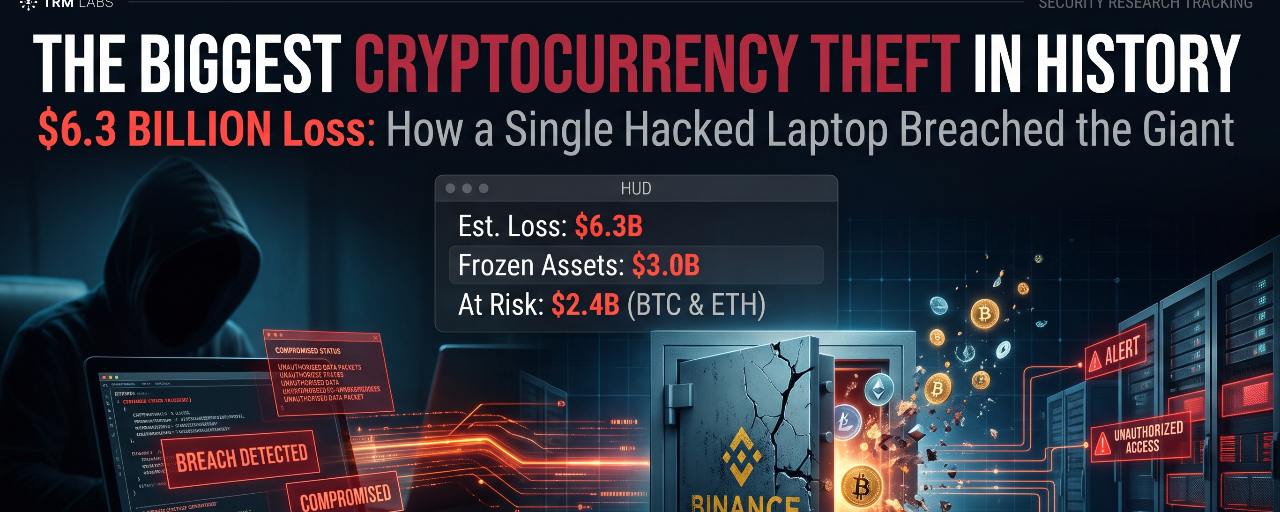
Binance has reportedly suffered what is being described as the largest cryptocurrency theft in history, with estimated losses of approximately $6.3 billion.
The previous record was the $1.5 billion Bybit hack in 2025. This latest incident would be more than four times larger.
How Did the Hackers Get In?
According to Binance preliminary investigation, the incident began when a DevOps engineer's laptop was compromised.
Using the hacked laptop, the attackers gained access to a service container within Binance infrastructure. From there, they allegedly began issuing unauthorized withdrawal transactions.
In other words, the hackers did not necessarily break directly into the wallets. Instead, they exploited Binance's internal systems and used their access to initiate unauthorized transactions.
Binance stated that there is currently no evidence that wallet private keys were exposed. However, the investigation is still in its early stages, and a full technical report is expected to be released later.
Who Is Behind the Attack?
Security research firms TRM Labs and Pangolin Intelligence reportedly believe the attack may be linked to North Korea's TraderTraitor hacking group, which has previously been associated with major cryptocurrency thefts.
The head of global policy at TRM Labs reportedly described the incident as the largest bank robbery in human history.
How Much Money Has Been Frozen, and How Much Is Still With the Hackers?
According to the reported figures:
Total estimated loss: Approximately $6.3 billion.Funds frozen: Approximately $3 billion.Funds still in hackers' wallets: Approximately $2.4 billion in Bitcoin and Ethereum.
Binance founder Changpeng Zhao initially reported that Tether had frozen approximately $971 million and Circle had frozen approximately $823 million.
Binance later reported that approximately $3 billion had been frozen, although a complete breakdown of the frozen assets has not yet been provided.
On-chain data initially showed more than $2.3 billion worth of tokens in an Ethereum address.
Of that amount, 28,005 ETH reportedly came from a wallet labeled as belonging to Binance. Subsequently, approximately 195,460 ETH, worth around $440 million, was transferred to another address.
Why Could Stablecoins Be Frozen, but Bitcoin Could Not?
This is one of the most important and concerning lessons from the incident.
Tether and Circle have the ability to freeze certain tokens by blacklisting the wallet addresses associated with suspicious activity.
Once an address is blacklisted, the affected stablecoins can no longer be transferred, exchanged, or moved through mixers using normal token transactions.
Essentially, the funds become locked inside the wallet.
However, Bitcoin and Ethereum operate differently.
Neither Bitcoin nor Ethereum has a central company that can simply freeze someone's assets at the network level.
As a result, approximately $2.4 billion worth of Bitcoin and Ethereum reportedly remains under the hackers' control.
Recovering these funds may depend on identifying the hackers and preventing them from cashing out through exchanges that cooperate with law enforcement.
This process could take months or even years.
The key distinction is that the frozen funds were assets issued by companies with centralized control mechanisms, while Bitcoin and Ethereum are decentralized networks without a central authority capable of freezing individual balances.
Impact on the Cryptocurrency Market and Users
The incident reportedly had several consequences for the broader cryptocurrency market:
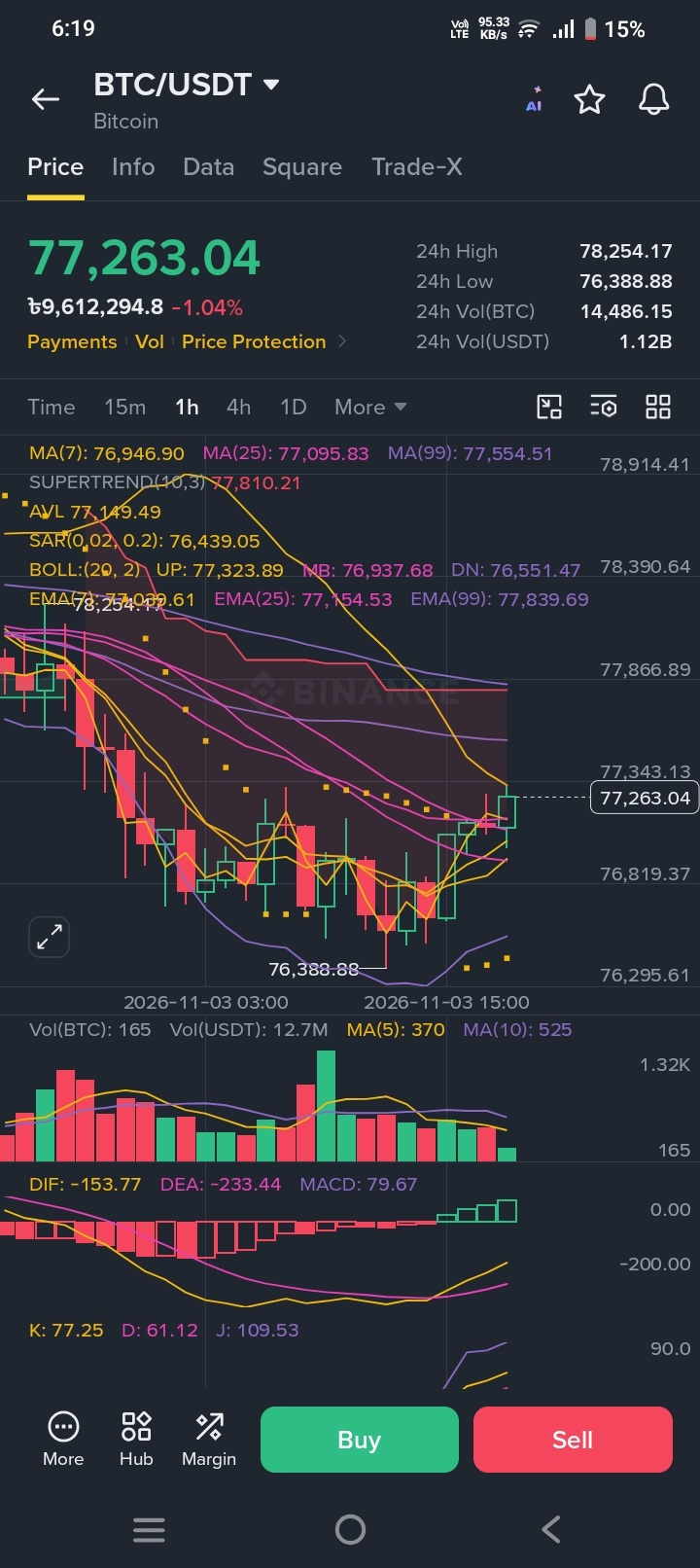
Bitcoin: Fell by more than 4%, dropping below $78,000.USDT: Briefly traded slightly below $1 on some exchanges, although no major depeg was reported.Binance: Temporarily suspended deposits and withdrawals while conducting security checks.Affected systems: Binance reportedly revoked the compromised authorization mechanisms.Binance US: Stated that its operations were not affected by the incident.
Binance has repeatedly stated that users' funds are safe and that the company will cover the losses.
The reported recovery plan involves using its Secure Asset Fund for Users (SAFU) and the company's own financial resources.
The SAFU fund has reportedly held approximately $1.2 billion in reserves.
Binance founder Changpeng Zhao reportedly stated that the incident was painful but emphasized that the company would survive.
Why Is This Such a Major Blow to the Cryptocurrency Industry?
Cryptocurrency exchanges operate differently from traditional stock exchanges.
A stock exchange primarily provides a marketplace where buyers and sellers can trade securities. Customer assets are generally held through brokers, custodians, and other financial institutions.
Cryptocurrency exchanges, on the other hand, often hold large amounts of customers' digital assets in wallets controlled by the exchange.
This creates a significant security risk.
If attackers gain access to an exchange's internal infrastructure, authorization systems, or withdrawal mechanisms, they may potentially steal enormous amounts of cryptocurrency.
This incident raises serious questions about the security of centralized cryptocurrency exchanges.
If compromising just one employee's laptop can potentially open the door to billions of dollars in losses, how secure are the internal systems protecting users' funds?
The attack also challenges the cryptocurrency industry's long-standing claims about its advanced security infrastructure.
Binance has stated that it is working with law enforcement agencies and blockchain intelligence partners to track the stolen funds and recover as much as possible.
Once the recovery process is completed, the company is also expected to publish an updated Proof of Reserves report.
Final Thoughts
This incident highlights an important reality of the cryptocurrency industry:
Blockchain technology may be decentralized, but the companies and infrastructure built around it are not always secure.
A single compromised employee device, a weak internal security system, or an authorization vulnerability can potentially put billions of dollars at risk.
For cryptocurrency investors and users, this is a reminder that exchange security, transparency, asset custody, and risk management are just as important as the technology itself.
BTC-HABIB
·
--
Proof of Work vs. Proof of Stake: Environmental Impact Compared
Every public blockchain relies on a consensus mechanism to validate transactions, prevent double-spending, and protect the network from attacks. The two most common designs are Proof of Work (PoW) and Proof of Stake (PoS).
While both systems secure billions of dollars in value, their real-world resource footprints look completely different. Proof of Work relies on physical computation, specialized machinery, and large amounts of electricity. Proof of Stake replaces physical machinery with financial collateral locked inside software, requiring only standard computing hardware to run.
Understanding how these systems work explains why their environmental impacts diverge so sharply.
How Consensus Mechanisms Drive Energy Consumption
To understand the environmental impact, you have to look at what each mechanism asks its participants to do.
Proof of Work: Physical Computation
Proof of Work is the consensus engine behind Bitcoin. In a PoW system, thousands of specialized computers—called Application-Specific Integrated Circuits (ASICs)—compete in a continuous mathematical guessing race.
The first machine to guess a winning value gets the right to bundle the latest transactions into a block and collect the block reward.As more miners join, the network's automated difficulty adjustment increases the challenge, ensuring new blocks appear on schedule.This competitive dynamic means miners continuously deploy faster, more power-hungry hardware to maintain their competitive edge, tying network security directly to raw electricity consumption.
Proof of Stake: Capital Allocation
Proof of Stake takes a software-first approach. Instead of running high-powered processors to compete for blocks, participants lock up (stake) the network’s native cryptocurrency as collateral.
The network pseudo-randomly selects a validator to propose the next block based on the size of their stake and other protocol rules.Other validators verify the proposed block. If a validator attempts to cheat, approve fraudulent transactions, or goes offline for long periods, the protocol cuts (slashes) a portion of their deposited funds.Because security comes from financial risk rather than computational competition, node operators can run a validator on a standard mini PC or small cloud server without specialized power infrastructure.
Comparing the Environmental Metrics
Evaluating the environmental footprint requires looking at three factors: electricity demand, carbon emissions, and hardware turnover.
1. Electricity Consumption
Proof of Work: Bitcoin mining operations use utility-scale electricity comparable to mid-sized countries. Mining rigs run continuously at maximum capacity, drawing substantial power 24 hours a day.Proof of Stake: Networks like Ethereum, Solana, and Cardano draw minimal energy. Running an entire global network of PoS validator nodes requires a fraction of the electricity needed by a single large-scale PoW mining farm.
2. Carbon Footprint and Energy Sources
Electricity use translates into carbon emissions depending on where the power comes from:
Grid and Fossil Fuel Dependency: PoW operations connected to standard regional power grids inherit that grid's fossil fuel mix (coal, natural gas).Renewable and Stranded Energy: Some PoW miners locate facilities near hydroelectric dams, geothermal plants, or wind farms with excess curtailment, or capture stranded methane gas at oil fields that would otherwise be flared. However, despite improvements in renewable sourcing, the aggregate carbon emissions of large PoW networks remain substantial.PoS Footprint: Because PoS energy needs are so low, its overall carbon emissions remain negligible regardless of the underlying energy source used by individual node operators.
3. Electronic Waste (E-Waste)
E-waste is one of the most overlooked differences between the two architectures:
PoW Hardware Obsolescence: ASIC miners have only one function: solving specific cryptographic hashing algorithms. They cannot be repurposed for gaming, data centers, or general computing. When newer, more efficient ASICs release, older models become unprofitable and are discarded, generating thousands of tons of hazardous electronic scrap annually.PoS Hardware Longevity: PoS validator clients run on standard consumer-grade computers, laptops, or generic server racks. These machines have multi-year operational lifespans and can be easily repurposed for general computing tasks when retired.
The Ethereum Merge: Real-World Evidence
For years, debates around blockchain energy consumption were largely theoretical. That changed in September 2022 when Ethereum executed "The Merge," switching its live consensus mechanism from Proof of Work to Proof of Stake.
Independent researchers and industry trackers documented an immediate drop of over 99.9% in the Ethereum network's energy demand overnight. The transition proved that switching from physical computation to capital-at-stake removes almost all of a blockchain's operational energy requirement while preserving decentralized transaction settlement.
Side-by-Side Comparison
The Broader Debate: Security vs. Efficiency
While Proof of Stake provides an undeniable environmental advantage, advocates for Proof of Work argue that physical energy consumption provides unique security benefits:
The Physical Anchor: PoW ties digital money to real-world energy laws. Attacking Bitcoin requires acquiring physical power plants and massive hardware manufacturing capacity, which is difficult to hide.Capital Concentration Concerns: Critics of PoS point out that it awards more influence and yield to those who already hold the most capital, potentially leading to financial centralization over long periods.
Ultimately, the market currently uses both: Bitcoin retains Proof of Work as a censorship-resistant digital store of value, while smart contract platforms have overwhelmingly embraced Proof of Stake to achieve high throughput and low ecological impact.
Frequently Asked Questions
Why does Proof of Work require so much electricity?
Proof of Work networks require continuous computational work to make attacking the network economically irrational. Rewriting transaction history requires controlling more than 50% of the network's total computing power, which demands vast amounts of energy and capital.
Is Proof of Stake completely zero-emission?
No technology that runs on computers is entirely zero-emission. Proof of Stake validators still consume electricity to keep servers running and connected to the internet. However, their total consumption is comparable to standard web applications rather than heavy industrial infrastructure.
Can Proof of Work mining help the energy grid?
In some regions, flexible mining facilities act as "controllable loads." Miners buy excess power during sunny or windy periods when electricity prices turn negative, and shut off instantly during heatwaves or winter freezes when the civilian grid needs the power. While this helps grid operators balance demand, it does not fully solve the broader issues of hardware e-waste and overall carbon emissions.

Log in to explore more content