

唐华斑竹
14k Posts

唐华斑竹
 Square Verified+
Report
Block User
币乎大V(推特X:@uniswap12),2025全球区块链百强创作者,独立研究员。在微博、推特、币乎、力场、币快报、向北社区、币车、财路、链书、八宝饭、链节点、巴比特、陀螺财经等币圈媒体拥有数十万粉丝。

Top traders by profit in 30D

2025 Blockchain 100 — Independent Researcher

Creator Awards 2024
2.4K+ Following
94.4K+ Followers
119.4K+ Liked
5 Badges
Posts
All
Quotes
Videos
Live
PINNED
·
--
Bearish
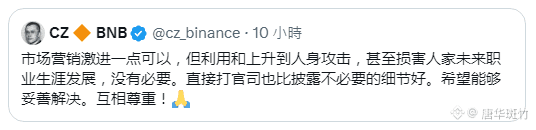
CZ spoke up—maybe it’s time to calm down a bit. Over the past two days, domestic media has completely gone wild: headlines, Douyin, and Xiaohongshu are all covered by the egg incident! Even the elderly couple downstairs are joyfully chatting about the gossip between Jing Tian and Sun Yuchen. What everyone cares about most is that it turns out trading coins is so profitable—Sun Ge is so young and yet has hundreds of billions! Some people say it’s a few trillion, or even tens of trillions! It’s all gone viral! I have no choice but to slip out on the edge, afraid that someone will stop me and ask, “Your coin-trading time seems even longer than Sun Yuchen’s. How much did you make? Why do you still look so poor?” $SOL
{spot}(SOLUSDT)
CZ spoke up—maybe it’s time to calm down a bit. Over the past two days, domestic media has completely gone wild: headlines, Douyin, and Xiaohongshu are all covered by the egg incident! Even the elderly couple downstairs are joyfully chatting about the gossip between Jing Tian and Sun Yuchen. What everyone cares about most is that it turns out trading coins is so profitable—Sun Ge is so young and yet has hundreds of billions! Some people say it’s a few trillion, or even tens of trillions! It’s all gone viral! I have no choice but to slip out on the edge, afraid that someone will stop me and ask, “Your coin-trading time seems even longer than Sun Yuchen’s. How much did you make? Why do you still look so poor?” $SOL
118
3
281
187k
·
--
Bearish
Verified
Analysis: Binance expands cooperation with Circle; USDC may further challenge USDT
Binance and Circle have signed a new five-year commercial agreement and invested $100 million to purchase Circle shares, which will further expand USDC’s coverage in emerging markets and global trading, and exert greater pressure on Tether’s long-standing dominance in USDT.
Data show that when the two first partnered in December 2024, Binance provided 140 USDC-denominated spot trading markets; this has since increased to 329. Binance’s monthly USDC trading volume also rose from about $20 billion–$30 billion before the partnership to $40 billion–$80 billion, and has continued to exceed $80 billion.
Kaiko research director Anastasia Melachrinos said that since 2026, Binance has continued to account for the largest share of USDC spot trading activity, with daily trading volume of $5 billion to $10 billion—about 10 to 20 times that of most other exchanges. Analysts also noted that USDT’s current market cap is about $140 billion, still clearly higher than USDC’s roughly $74 billion. The trading pairs, local liquidity, and user habits that USDT has accumulated over many years in global trading and payments will be difficult to change in the short term. $BNB
{spot}(BNBUSDT)
Analysis: Binance expands cooperation with Circle; USDC may further challenge USDT
Binance and Circle have signed a new five-year commercial agreement and invested $100 million to purchase Circle shares, which will further expand USDC’s coverage in emerging markets and global trading, and exert greater pressure on Tether’s long-standing dominance in USDT.
Data show that when the two first partnered in December 2024, Binance provided 140 USDC-denominated spot trading markets; this has since increased to 329. Binance’s monthly USDC trading volume also rose from about $20 billion–$30 billion before the partnership to $40 billion–$80 billion, and has continued to exceed $80 billion.
Kaiko research director Anastasia Melachrinos said that since 2026, Binance has continued to account for the largest share of USDC spot trading activity, with daily trading volume of $5 billion to $10 billion—about 10 to 20 times that of most other exchanges. Analysts also noted that USDT’s current market cap is about $140 billion, still clearly higher than USDC’s roughly $74 billion. The trading pairs, local liquidity, and user habits that USDT has accumulated over many years in global trading and payments will be difficult to change in the short term. $BNB
Binance and Circle have signed a new five-year commercial agreement and invested $100 million to purchase Circle shares, which will further expand USDC’s coverage in emerging markets and global trading, and exert greater pressure on Tether’s long-standing dominance in USDT.
Data show that when the two first partnered in December 2024, Binance provided 140 USDC-denominated spot trading markets; this has since increased to 329. Binance’s monthly USDC trading volume also rose from about $20 billion–$30 billion before the partnership to $40 billion–$80 billion, and has continued to exceed $80 billion.
Kaiko research director Anastasia Melachrinos said that since 2026, Binance has continued to account for the largest share of USDC spot trading activity, with daily trading volume of $5 billion to $10 billion—about 10 to 20 times that of most other exchanges. Analysts also noted that USDT’s current market cap is about $140 billion, still clearly higher than USDC’s roughly $74 billion. The trading pairs, local liquidity, and user habits that USDT has accumulated over many years in global trading and payments will be difficult to change in the short term. $BNB
1
1.7k
·
--
Bearish
CZ: Does not oppose Hyperliquid; welcomes more DEXs to join the competition
CZ said that he does not oppose Hyperliquid, and welcomes more centralized and decentralized trading platforms to participate in innovation, believing that the crypto industry is still in its early stage.
CZ said that it is normal competition for some members of the Hyperliquid community to criticize centralized exchanges and the community that Binance has built; assets such as HYPE, BNB, and Bitcoin may also benefit from the industry’s overall growth. He also said that the first mover is not necessarily the long-term biggest winner. $BNB
{spot}(BNBUSDT)
CZ: Does not oppose Hyperliquid; welcomes more DEXs to join the competition
CZ said that he does not oppose Hyperliquid, and welcomes more centralized and decentralized trading platforms to participate in innovation, believing that the crypto industry is still in its early stage.
CZ said that it is normal competition for some members of the Hyperliquid community to criticize centralized exchanges and the community that Binance has built; assets such as HYPE, BNB, and Bitcoin may also benefit from the industry’s overall growth. He also said that the first mover is not necessarily the long-term biggest winner. $BNB
CZ said that he does not oppose Hyperliquid, and welcomes more centralized and decentralized trading platforms to participate in innovation, believing that the crypto industry is still in its early stage.
CZ said that it is normal competition for some members of the Hyperliquid community to criticize centralized exchanges and the community that Binance has built; assets such as HYPE, BNB, and Bitcoin may also benefit from the industry’s overall growth. He also said that the first mover is not necessarily the long-term biggest winner. $BNB
1
1.3k
·
--
Bearish
Getting close to $100 million is tough—Ripple says it can’t freeze the $83 million worth of XRP stolen from Bitget after a hacker attack
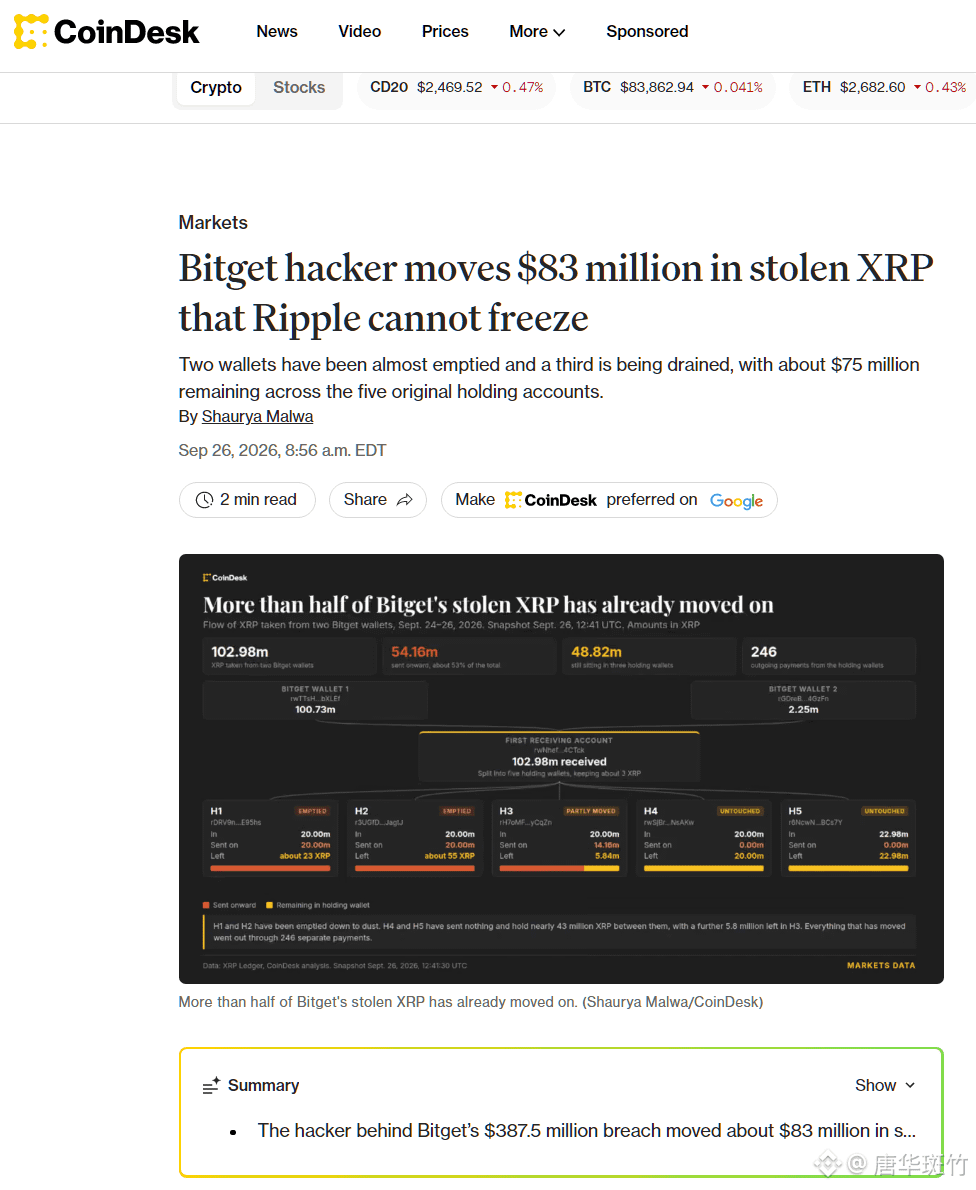
Planet Daily News: Crypto exchange Bitget was severely attacked by hackers recently, resulting in the theft of XRP valued at up to $83 million. On-chain data analysis shows that after the incident, the hackers quickly acted and completed the cross-address transfer of large amounts of funds. Bitget has now confirmed the major security incident and is cooperating with the police to conduct an investigation.
Regarding the issue of recovering the assets, Ripple said in response that, due to the decentralized design of the underlying XRP chain, the company has no technical means to force-freeze a specific external account. Even if law enforcement agencies intervene, it cannot be operated. This means the effort to track down the stolen funds will fall entirely on Bitget and its contracted security team. (CoinDesk) $XRP
{spot}(XRPUSDT)
Getting close to $100 million is tough—Ripple says it can’t freeze the $83 million worth of XRP stolen from Bitget after a hacker attack
Planet Daily News: Crypto exchange Bitget was severely attacked by hackers recently, resulting in the theft of XRP valued at up to $83 million. On-chain data analysis shows that after the incident, the hackers quickly acted and completed the cross-address transfer of large amounts of funds. Bitget has now confirmed the major security incident and is cooperating with the police to conduct an investigation.
Regarding the issue of recovering the assets, Ripple said in response that, due to the decentralized design of the underlying XRP chain, the company has no technical means to force-freeze a specific external account. Even if law enforcement agencies intervene, it cannot be operated. This means the effort to track down the stolen funds will fall entirely on Bitget and its contracted security team. (CoinDesk) $XRP
Planet Daily News: Crypto exchange Bitget was severely attacked by hackers recently, resulting in the theft of XRP valued at up to $83 million. On-chain data analysis shows that after the incident, the hackers quickly acted and completed the cross-address transfer of large amounts of funds. Bitget has now confirmed the major security incident and is cooperating with the police to conduct an investigation.
Regarding the issue of recovering the assets, Ripple said in response that, due to the decentralized design of the underlying XRP chain, the company has no technical means to force-freeze a specific external account. Even if law enforcement agencies intervene, it cannot be operated. This means the effort to track down the stolen funds will fall entirely on Bitget and its contracted security team. (CoinDesk) $XRP
2
1
4.9k
·
--
Bearish
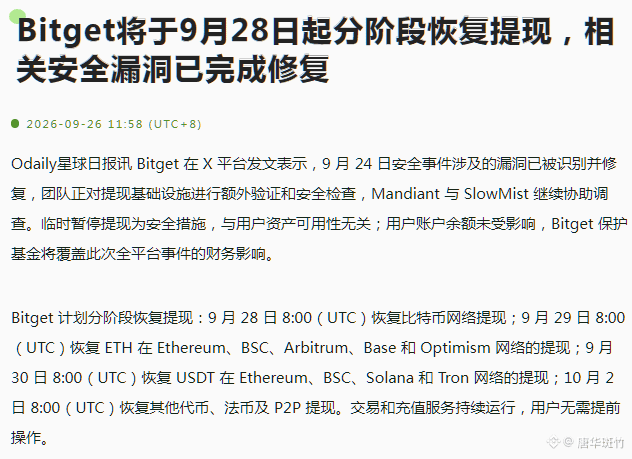
Bitget announced that it will gradually resume withdrawals starting from September 28, and said that the related security vulnerabilities have been fully fixed. There’s nothing we can do—if everyone is anxious, it won’t help. Just wait until the day after tomorrow, September 28, 4:00 PM Beijing time. On that day, only BTC network withdrawals will be available; other chains will be opened up one by one gradually. Most tokens, fiat, and P2P will have to wait until the evening of October 2. It feels like we’re crossing a river by feeling the stones—careful and uneasy—like we still don’t have full confidence.
Comparing #Bitget’s hacked incident with the Bybit hacked incident, the two are clearly very different. The biggest difference is that Bybit decisively withstood the pressure and clearly refused to suspend withdrawals—there wasn’t even a one-second pause. Its CEO, @benbybit, showed astonishing boldness and confidence, quickly stabilizing the situation. Even better, the disaster turned into a blessing, turning the hacked incident into a big advertisement showcasing Bybit’s strong capabilities and its reputation and responsibility. Meanwhile, after Bitget was hacked, it chose to immediately shut down withdrawals. The difference between the two is like heaven and earth.
Another difference is that Bybit only had an ETH single-chain issue. After the incident, @Bybit_ZH almost immediately traced and identified the cause and published it, and the vulnerability was patched right away—withdrawals continued as normal throughout the period. For Bitget, almost all chains’ tokens were all-in at once. After the incident, Bitget seemed a bit stunned. To this day, it hasn’t announced a clear, explicit cause. It only says the vulnerability has been fixed, but the resumption of withdrawals is still cautious and staggered. So it still leaves people a bit worried—worried whether all security vulnerabilities truly have been eliminated. What if, after withdrawals are reopened, the hackers break in again and the situation spirals out of control, leading to another sudden stop of withdrawals? That would be a real headache. $BB
{spot}(BBUSDT)
Bitget announced that it will gradually resume withdrawals starting from September 28, and said that the related security vulnerabilities have been fully fixed. There’s nothing we can do—if everyone is anxious, it won’t help. Just wait until the day after tomorrow, September 28, 4:00 PM Beijing time. On that day, only BTC network withdrawals will be available; other chains will be opened up one by one gradually. Most tokens, fiat, and P2P will have to wait until the evening of October 2. It feels like we’re crossing a river by feeling the stones—careful and uneasy—like we still don’t have full confidence.
Comparing #Bitget’s hacked incident with the Bybit hacked incident, the two are clearly very different. The biggest difference is that Bybit decisively withstood the pressure and clearly refused to suspend withdrawals—there wasn’t even a one-second pause. Its CEO, @benbybit, showed astonishing boldness and confidence, quickly stabilizing the situation. Even better, the disaster turned into a blessing, turning the hacked incident into a big advertisement showcasing Bybit’s strong capabilities and its reputation and responsibility. Meanwhile, after Bitget was hacked, it chose to immediately shut down withdrawals. The difference between the two is like heaven and earth.
Another difference is that Bybit only had an ETH single-chain issue. After the incident, @Bybit_ZH almost immediately traced and identified the cause and published it, and the vulnerability was patched right away—withdrawals continued as normal throughout the period. For Bitget, almost all chains’ tokens were all-in at once. After the incident, Bitget seemed a bit stunned. To this day, it hasn’t announced a clear, explicit cause. It only says the vulnerability has been fixed, but the resumption of withdrawals is still cautious and staggered. So it still leaves people a bit worried—worried whether all security vulnerabilities truly have been eliminated. What if, after withdrawals are reopened, the hackers break in again and the situation spirals out of control, leading to another sudden stop of withdrawals? That would be a real headache. $BB
Comparing #Bitget’s hacked incident with the Bybit hacked incident, the two are clearly very different. The biggest difference is that Bybit decisively withstood the pressure and clearly refused to suspend withdrawals—there wasn’t even a one-second pause. Its CEO, @benbybit, showed astonishing boldness and confidence, quickly stabilizing the situation. Even better, the disaster turned into a blessing, turning the hacked incident into a big advertisement showcasing Bybit’s strong capabilities and its reputation and responsibility. Meanwhile, after Bitget was hacked, it chose to immediately shut down withdrawals. The difference between the two is like heaven and earth.
Another difference is that Bybit only had an ETH single-chain issue. After the incident, @Bybit_ZH almost immediately traced and identified the cause and published it, and the vulnerability was patched right away—withdrawals continued as normal throughout the period. For Bitget, almost all chains’ tokens were all-in at once. After the incident, Bitget seemed a bit stunned. To this day, it hasn’t announced a clear, explicit cause. It only says the vulnerability has been fixed, but the resumption of withdrawals is still cautious and staggered. So it still leaves people a bit worried—worried whether all security vulnerabilities truly have been eliminated. What if, after withdrawals are reopened, the hackers break in again and the situation spirals out of control, leading to another sudden stop of withdrawals? That would be a real headache. $BB
6
10
76
38.7k
·
--
Bullish
The entire industry is currently watching closely for security progress related to quantum computing. The three major European financial regulators—EBA, EIOPA, and ESMA—have just, in their latest technology risk update, specifically identified quantum computing as a key emerging risk factor that affects the crypto space.
Many cryptocurrencies now rely on elliptic curve cryptography to secure transactions and wallets. In theory, a sufficiently powerful quantum computer could use Shor’s algorithm to break this protection scheme. Google researchers have even estimated that the scale of resources required for such an attack is about 20 times lower than earlier projections.
At present, quantum hardware capable of reaching the attack threshold has not been practically deployed. However, many blockchain developers are already exploring post-quantum cryptography in advance, building security safeguards before the related technology matures. This is also the most valuable long-term direction for the entire track.
GOAT Network (@GOATNetwork)’s core goal is to build the most secure decentralized network currently in existence. Its development path starts with a dedicated machine focused on top-tier cryptographic proofs, and iterates step by step into today’s most advanced trust-minimized Bitcoin cross-chain bridge. This mechanism can transform a Bitcoin mainnet that has been proven through long-term real-world combat into a global settlement layer. The team’s exploration is still extending further into leading post-quantum security research areas.
Many industry participants also assume that quantum threats are decades away. #GOAT Network, however, has already put end-to-end security planning into practice—from the underlying cryptographic infrastructure, to cross-chain transfer across the Bitcoin ecosystem, and finally to a future-ready anti-quantum security system. Every step is aligned with the industry’s core long-term needs.
On the regulatory side, regulators are also gradually recognizing the importance of this kind of groundwork. The security direction that GOAT Network is anchored to happens to precisely match the industry’s core, enduring demand. Its Bitcoin cross-chain bridge and post-quantum research results have genuinely supported its security positioning. The project’s growth path is clear: each phase of technical implementation continues to strengthen its core barriers, and its subsequent growth potential and investment value are highly promising.
#LFGoat #GOATNetwork #BTC #L2 $GOATED
{alpha}(560x5d7909f951436d4e6974d841316057df3a622962)
The entire industry is currently watching closely for security progress related to quantum computing. The three major European financial regulators—EBA, EIOPA, and ESMA—have just, in their latest technology risk update, specifically identified quantum computing as a key emerging risk factor that affects the crypto space.
Many cryptocurrencies now rely on elliptic curve cryptography to secure transactions and wallets. In theory, a sufficiently powerful quantum computer could use Shor’s algorithm to break this protection scheme. Google researchers have even estimated that the scale of resources required for such an attack is about 20 times lower than earlier projections.
At present, quantum hardware capable of reaching the attack threshold has not been practically deployed. However, many blockchain developers are already exploring post-quantum cryptography in advance, building security safeguards before the related technology matures. This is also the most valuable long-term direction for the entire track.
GOAT Network (@GOATNetwork)’s core goal is to build the most secure decentralized network currently in existence. Its development path starts with a dedicated machine focused on top-tier cryptographic proofs, and iterates step by step into today’s most advanced trust-minimized Bitcoin cross-chain bridge. This mechanism can transform a Bitcoin mainnet that has been proven through long-term real-world combat into a global settlement layer. The team’s exploration is still extending further into leading post-quantum security research areas.
Many industry participants also assume that quantum threats are decades away. #GOAT Network, however, has already put end-to-end security planning into practice—from the underlying cryptographic infrastructure, to cross-chain transfer across the Bitcoin ecosystem, and finally to a future-ready anti-quantum security system. Every step is aligned with the industry’s core long-term needs.
On the regulatory side, regulators are also gradually recognizing the importance of this kind of groundwork. The security direction that GOAT Network is anchored to happens to precisely match the industry’s core, enduring demand. Its Bitcoin cross-chain bridge and post-quantum research results have genuinely supported its security positioning. The project’s growth path is clear: each phase of technical implementation continues to strengthen its core barriers, and its subsequent growth potential and investment value are highly promising.
#LFGoat #GOATNetwork #BTC #L2 $GOATED
Many cryptocurrencies now rely on elliptic curve cryptography to secure transactions and wallets. In theory, a sufficiently powerful quantum computer could use Shor’s algorithm to break this protection scheme. Google researchers have even estimated that the scale of resources required for such an attack is about 20 times lower than earlier projections.
At present, quantum hardware capable of reaching the attack threshold has not been practically deployed. However, many blockchain developers are already exploring post-quantum cryptography in advance, building security safeguards before the related technology matures. This is also the most valuable long-term direction for the entire track.
GOAT Network (@GOATNetwork)’s core goal is to build the most secure decentralized network currently in existence. Its development path starts with a dedicated machine focused on top-tier cryptographic proofs, and iterates step by step into today’s most advanced trust-minimized Bitcoin cross-chain bridge. This mechanism can transform a Bitcoin mainnet that has been proven through long-term real-world combat into a global settlement layer. The team’s exploration is still extending further into leading post-quantum security research areas.
Many industry participants also assume that quantum threats are decades away. #GOAT Network, however, has already put end-to-end security planning into practice—from the underlying cryptographic infrastructure, to cross-chain transfer across the Bitcoin ecosystem, and finally to a future-ready anti-quantum security system. Every step is aligned with the industry’s core long-term needs.
On the regulatory side, regulators are also gradually recognizing the importance of this kind of groundwork. The security direction that GOAT Network is anchored to happens to precisely match the industry’s core, enduring demand. Its Bitcoin cross-chain bridge and post-quantum research results have genuinely supported its security positioning. The project’s growth path is clear: each phase of technical implementation continues to strengthen its core barriers, and its subsequent growth potential and investment value are highly promising.
#LFGoat #GOATNetwork #BTC #L2 $GOATED
1
2k
·
--
Bearish
Still, we need to be cautious. If a definite reason for the theft has not been identified, once withdrawals are reopened, it’s likely that before users even begin withdrawing, the hackers will strike first again—then the situation will be completely out of control. And if we are forced to shut down withdrawals again, the reputational damage will be even greater!
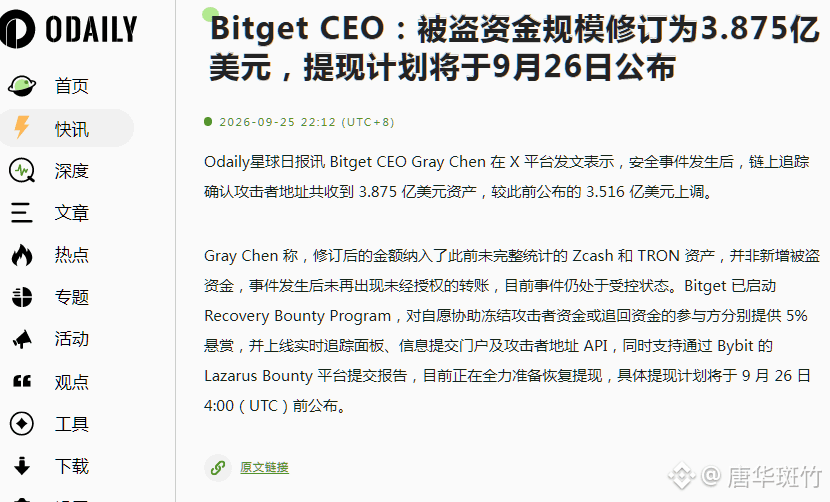
According to the August 2026 Protection Fund report published by Bitget on September 14, the fund’s highest estimated value for that month was $441 million, the lowest was $345 million, and the average was $382 million. And just now, the Bitget CEO posted that the amount of stolen funds has been revised to $387.5 million! So the situation is serious—don’t take it lightly $SOL
{spot}(SOLUSDT)
Still, we need to be cautious. If a definite reason for the theft has not been identified, once withdrawals are reopened, it’s likely that before users even begin withdrawing, the hackers will strike first again—then the situation will be completely out of control. And if we are forced to shut down withdrawals again, the reputational damage will be even greater!
According to the August 2026 Protection Fund report published by Bitget on September 14, the fund’s highest estimated value for that month was $441 million, the lowest was $345 million, and the average was $382 million. And just now, the Bitget CEO posted that the amount of stolen funds has been revised to $387.5 million! So the situation is serious—don’t take it lightly $SOL
According to the August 2026 Protection Fund report published by Bitget on September 14, the fund’s highest estimated value for that month was $441 million, the lowest was $345 million, and the average was $382 million. And just now, the Bitget CEO posted that the amount of stolen funds has been revised to $387.5 million! So the situation is serious—don’t take it lightly $SOL
1
5
12.6k
·
--
Bearish
CZ posts strong support for Bitget: Binance and the BNB Chain ecosystem will do their best to help
In a post on X, CZ said: “For Bitget, this is a difficult day. I anticipate—and I know—that the Binance, BNB Chain ecosystem and the community will do our utmost to provide help. Stay SAFU.” $BNB
{spot}(BNBUSDT)
CZ posts strong support for Bitget: Binance and the BNB Chain ecosystem will do their best to help
In a post on X, CZ said: “For Bitget, this is a difficult day. I anticipate—and I know—that the Binance, BNB Chain ecosystem and the community will do our utmost to provide help. Stay SAFU.” $BNB
In a post on X, CZ said: “For Bitget, this is a difficult day. I anticipate—and I know—that the Binance, BNB Chain ecosystem and the community will do our utmost to provide help. Stay SAFU.” $BNB
1
2.4k
·
--
Bearish
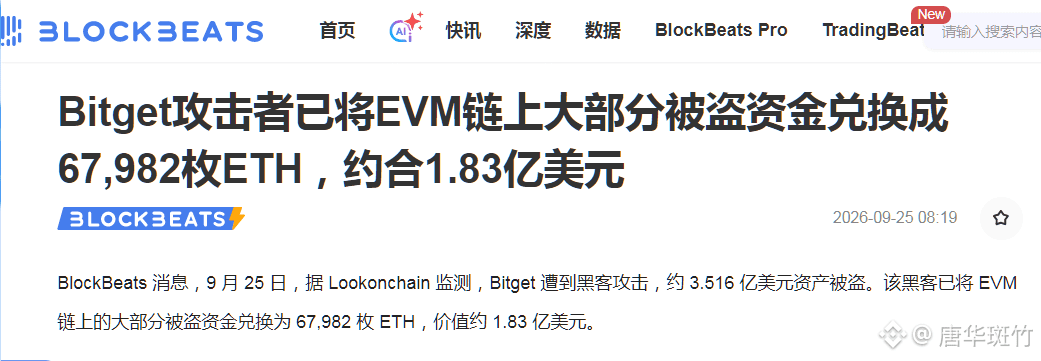
Bitget Hacked! The attacker has converted most of the stolen funds on the EVM chain into 67,982 ETH, worth approximately $183 million
On September 25, according to Lookonchain monitoring, Bitget was hit by a hacker attack in which about $351.6 million in assets were stolen. The hacker converted most of the stolen funds on the EVM chain into 67,982 ETH, valued at about $183 million.
On-chain monitoring shows that assets worth about $180 million to $183 million were transferred out from multiple Bitget-tagged addresses, involving assets such as ETH, BNB, AVAX, USDT0, USDC, USDT, and XAUT. After the funds were consolidated into a main address, they were then distributed across at least 6 addresses. One newly created address used 19.67 million USDT0 from Bitget’s hot wallet, and within about 6 minutes, bought 7,111 ETH via UniswapX and 1inch Fusion, with some execution prices about 5% higher than the spot market.
Bitget CEO Gracy Chen held a public livestream regarding the incident, but as of now, the official has not yet released a written version of any updated investigation conclusions. $BNB
{future}(BNBUSDT)
Bitget Hacked! The attacker has converted most of the stolen funds on the EVM chain into 67,982 ETH, worth approximately $183 million
On September 25, according to Lookonchain monitoring, Bitget was hit by a hacker attack in which about $351.6 million in assets were stolen. The hacker converted most of the stolen funds on the EVM chain into 67,982 ETH, valued at about $183 million.
On-chain monitoring shows that assets worth about $180 million to $183 million were transferred out from multiple Bitget-tagged addresses, involving assets such as ETH, BNB, AVAX, USDT0, USDC, USDT, and XAUT. After the funds were consolidated into a main address, they were then distributed across at least 6 addresses. One newly created address used 19.67 million USDT0 from Bitget’s hot wallet, and within about 6 minutes, bought 7,111 ETH via UniswapX and 1inch Fusion, with some execution prices about 5% higher than the spot market.
Bitget CEO Gracy Chen held a public livestream regarding the incident, but as of now, the official has not yet released a written version of any updated investigation conclusions. $BNB
On September 25, according to Lookonchain monitoring, Bitget was hit by a hacker attack in which about $351.6 million in assets were stolen. The hacker converted most of the stolen funds on the EVM chain into 67,982 ETH, valued at about $183 million.
On-chain monitoring shows that assets worth about $180 million to $183 million were transferred out from multiple Bitget-tagged addresses, involving assets such as ETH, BNB, AVAX, USDT0, USDC, USDT, and XAUT. After the funds were consolidated into a main address, they were then distributed across at least 6 addresses. One newly created address used 19.67 million USDT0 from Bitget’s hot wallet, and within about 6 minutes, bought 7,111 ETH via UniswapX and 1inch Fusion, with some execution prices about 5% higher than the spot market.
Bitget CEO Gracy Chen held a public livestream regarding the incident, but as of now, the official has not yet released a written version of any updated investigation conclusions. $BNB
3
11.2k
·
--
After watching this video, I only then realized how high the difficulty of the New Concept Essay Contest really is! Tens of thousands of people take part, but only 2 make it! Back then, Sun Yuzhen won first place in the 9th National New Concept Essay Contest, earning a Beijing University independent admissions offer with a 20-point reduction. His total college entrance exam score back then was 650. Honestly, even without those 20 points, his score was already far beyond what most people could only hope for. Without going to Peking University, any other top 985 university is easy to choose too #TRONEcoStar $TRX
After watching this video, I only then realized how high the difficulty of the New Concept Essay Contest really is! Tens of thousands of people take part, but only 2 make it! Back then, Sun Yuzhen won first place in the 9th National New Concept Essay Contest, earning a Beijing University independent admissions offer with a 20-point reduction. His total college entrance exam score back then was 650. Honestly, even without those 20 points, his score was already far beyond what most people could only hope for. Without going to Peking University, any other top 985 university is easy to choose too #TRONEcoStar $TRX
13
1
24
50.6k
·
--
Bullish
Verified
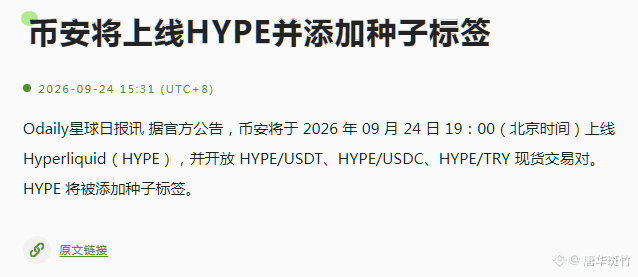
Damn, looks like HYPE is about to rise again. Binance will list HYPE and add a seed tag! $HYPE
{future}(HYPEUSDT)
Damn, looks like HYPE is about to rise again. Binance will list HYPE and add a seed tag! $HYPE
1
3.1k
·
--

Article
Employee loan-to-equity, the boss’s bet blowing up, this business tragedy at Xi Bei—who is the real victim?Xi Bei was once seen by many as a benchmark in the dining industry. Waiting in line for two hours for a meal, “ordering everything with your eyes closed and every dish is delicious”—these labels accompanied it for many years.
At the time, hardly anyone could have imagined that this restaurant company—once with 400 directly operated outlets and a valuation as high as 10 billion yuan—would one day find itself in a predicament marked by cash-flow pressure, a failed IPO, a shrinking valuation, and harm to employees’ interests.
Many people attribute today’s issues at Xi Bei to a public challenge by Luo Yonghao. Others believe that Luo Yonghao has only brought forward a long-standing problem that already existed. If you look at the entire incident from beginning to end, you’ll find that the situation is far more complex than a mere online dispute. Luo Yonghao may have been the one who ignited public opinion, but what truly brought Xi Bei to where it is today is the result of a series of business decisions stacked up over the past few years.
Employee loan-to-equity, the boss’s bet blowing up, this business tragedy at Xi Bei—who is the real victim?
Xi Bei was once seen by many as a benchmark in the dining industry. Waiting in line for two hours for a meal, “ordering everything with your eyes closed and every dish is delicious”—these labels accompanied it for many years.
At the time, hardly anyone could have imagined that this restaurant company—once with 400 directly operated outlets and a valuation as high as 10 billion yuan—would one day find itself in a predicament marked by cash-flow pressure, a failed IPO, a shrinking valuation, and harm to employees’ interests.
Many people attribute today’s issues at Xi Bei to a public challenge by Luo Yonghao. Others believe that Luo Yonghao has only brought forward a long-standing problem that already existed. If you look at the entire incident from beginning to end, you’ll find that the situation is far more complex than a mere online dispute. Luo Yonghao may have been the one who ignited public opinion, but what truly brought Xi Bei to where it is today is the result of a series of business decisions stacked up over the past few years.
At the time, hardly anyone could have imagined that this restaurant company—once with 400 directly operated outlets and a valuation as high as 10 billion yuan—would one day find itself in a predicament marked by cash-flow pressure, a failed IPO, a shrinking valuation, and harm to employees’ interests.
Many people attribute today’s issues at Xi Bei to a public challenge by Luo Yonghao. Others believe that Luo Yonghao has only brought forward a long-standing problem that already existed. If you look at the entire incident from beginning to end, you’ll find that the situation is far more complex than a mere online dispute. Luo Yonghao may have been the one who ignited public opinion, but what truly brought Xi Bei to where it is today is the result of a series of business decisions stacked up over the past few years.
3.3k
·
--

Article
Wall Street Finally Bows Its Head: After 17 Years, It Loses to BitcoinIn 2017, Jamie Dimon, CEO of JPMorgan Chase, who publicly proclaimed to the whole world that “Bitcoin is a scam, even dumber than the tulip bubble.” Nine years later, with his team of analysts, he spoke out openly: if investors close out their defensive positions against Bitcoin ETFs, Bitcoin could receive more upside support than gold.
This is not just one person changing their tune; it’s the entire Wall Street collectively bowing their heads to Bitcoin.
If you look through how major institutions’ stances have changed over the years, each one can be described as a large-scale backfiring event:
In 2017, Jamie Dimon said he would fire all employees who traded Bitcoin. In 2024, JPMorgan Chase directly launched its own spot Bitcoin ETF, MSBT, and on its first day alone it siphoned off hundreds of millions to billions of dollars. In September 2026, he publicly said that Bitcoin might outperform gold.
Wall Street Finally Bows Its Head: After 17 Years, It Loses to Bitcoin
In 2017, Jamie Dimon, CEO of JPMorgan Chase, who publicly proclaimed to the whole world that “Bitcoin is a scam, even dumber than the tulip bubble.” Nine years later, with his team of analysts, he spoke out openly: if investors close out their defensive positions against Bitcoin ETFs, Bitcoin could receive more upside support than gold.
This is not just one person changing their tune; it’s the entire Wall Street collectively bowing their heads to Bitcoin.
If you look through how major institutions’ stances have changed over the years, each one can be described as a large-scale backfiring event:
In 2017, Jamie Dimon said he would fire all employees who traded Bitcoin. In 2024, JPMorgan Chase directly launched its own spot Bitcoin ETF, MSBT, and on its first day alone it siphoned off hundreds of millions to billions of dollars. In September 2026, he publicly said that Bitcoin might outperform gold.
This is not just one person changing their tune; it’s the entire Wall Street collectively bowing their heads to Bitcoin.
If you look through how major institutions’ stances have changed over the years, each one can be described as a large-scale backfiring event:
In 2017, Jamie Dimon said he would fire all employees who traded Bitcoin. In 2024, JPMorgan Chase directly launched its own spot Bitcoin ETF, MSBT, and on its first day alone it siphoned off hundreds of millions to billions of dollars. In September 2026, he publicly said that Bitcoin might outperform gold.
1
2
6
5.3k
·
--
Bullish
Verified
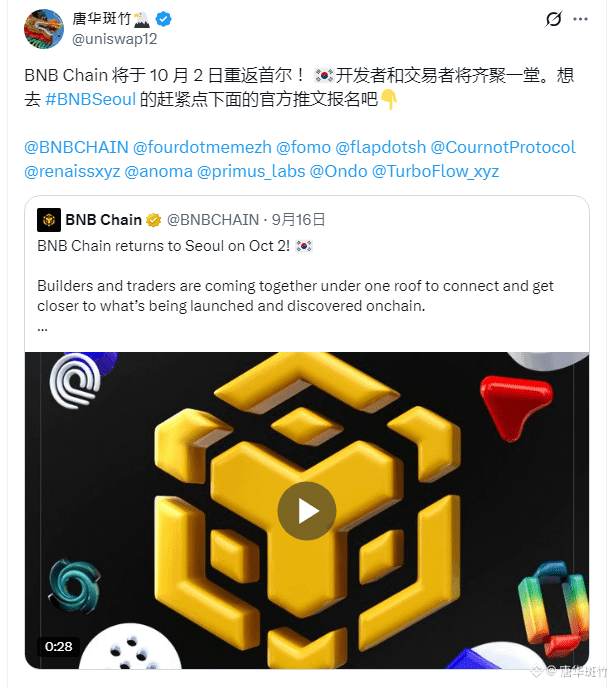
BNB Chain will return to Seoul on October 2! 🇰🇷 Developers and traders will gather together. Want to go to #BNBSeoul ? Hurry up and sign up via the @BNBCHAIN official X account👇 $BNB
{spot}(BNBUSDT)
BNB Chain will return to Seoul on October 2! 🇰🇷 Developers and traders will gather together. Want to go to #BNBSeoul ? Hurry up and sign up via the @BNBCHAIN official X account👇 $BNB
6
5.3k
·
--
Bearish
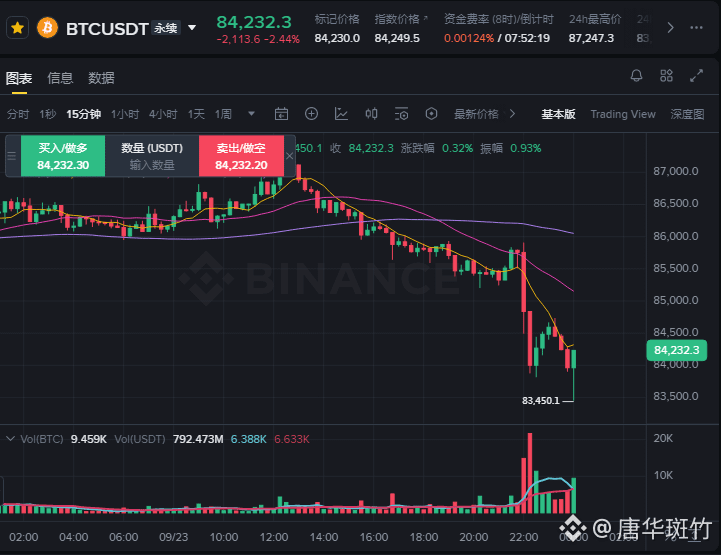
Will every meeting lead to a dip? As Token2049 is about to kick off, the “big pancake” suddenly loses strength and slides back down, breaking briefly below 84,000. The intraday drop is about 3,000 USDT—nothing too big, but not small either. Other major memecoins and mainstream alts immediately can’t hold up and start getting smashed chaotically. Some people want to catch the bottom—my advice is: don’t rush into bottom-fishing. After all,高手(experts) die from bottom-fishing; it’s no joke.
Looks like when it rallies, you still need to take profits in moderation. Otherwise, if you keep yanking the drawer back and forth, you might end up having to wait another year. Time is also a cost—because for most people, there aren’t that many good years in a lifetime. Can’t afford to waste them $BTC
{spot}(BTCUSDT)
Will every meeting lead to a dip? As Token2049 is about to kick off, the “big pancake” suddenly loses strength and slides back down, breaking briefly below 84,000. The intraday drop is about 3,000 USDT—nothing too big, but not small either. Other major memecoins and mainstream alts immediately can’t hold up and start getting smashed chaotically. Some people want to catch the bottom—my advice is: don’t rush into bottom-fishing. After all,高手(experts) die from bottom-fishing; it’s no joke.
Looks like when it rallies, you still need to take profits in moderation. Otherwise, if you keep yanking the drawer back and forth, you might end up having to wait another year. Time is also a cost—because for most people, there aren’t that many good years in a lifetime. Can’t afford to waste them $BTC
Looks like when it rallies, you still need to take profits in moderation. Otherwise, if you keep yanking the drawer back and forth, you might end up having to wait another year. Time is also a cost—because for most people, there aren’t that many good years in a lifetime. Can’t afford to waste them $BTC
1
6.2k
·
--
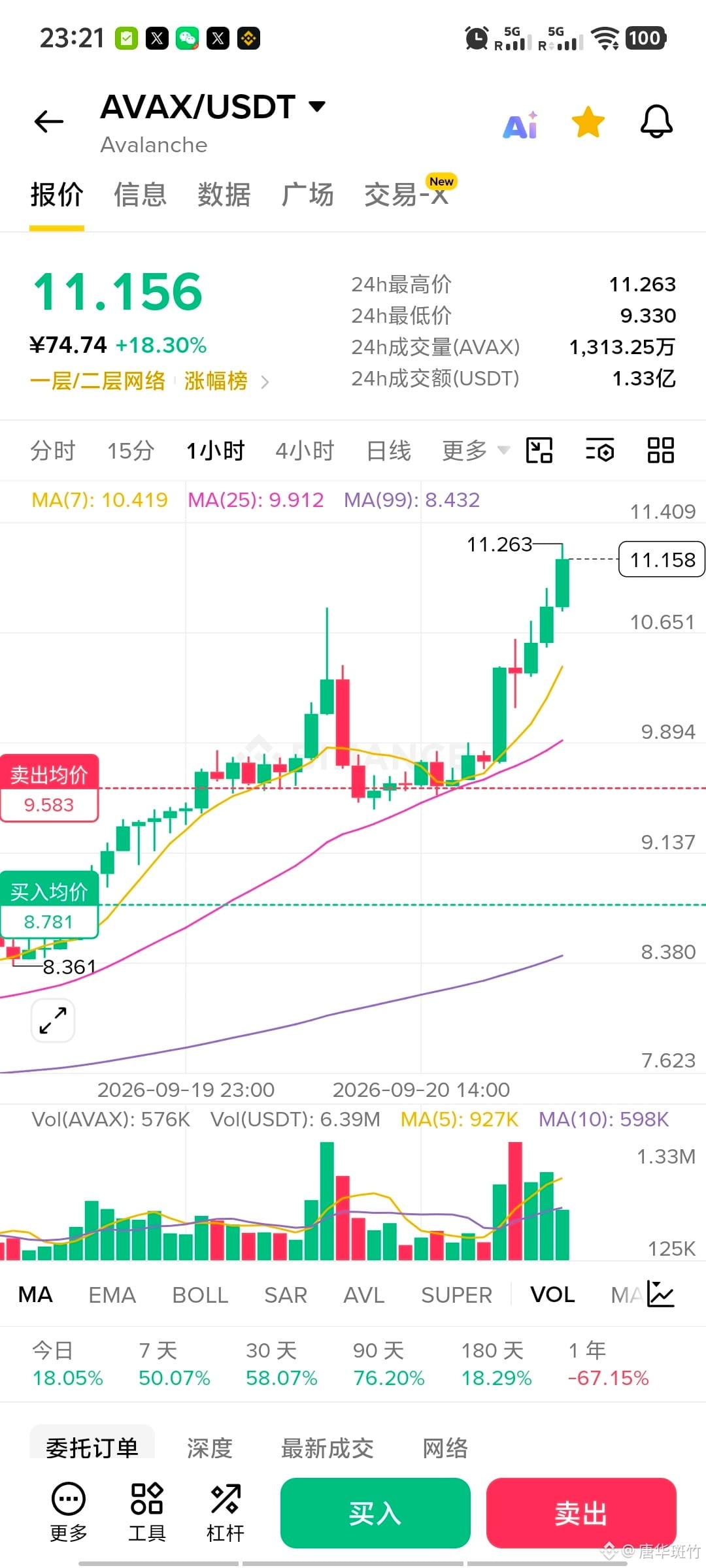
Holy cow! An avalanche is happening—this is going to be insane! I sell a round and you go up a round—I'm firmly not buying on a pullback; give me a chance to catch the swing. Are we about to fly with this move? $AVAX
{spot}(AVAXUSDT)
Holy cow! An avalanche is happening—this is going to be insane! I sell a round and you go up a round—I'm firmly not buying on a pullback; give me a chance to catch the swing. Are we about to fly with this move? $AVAX
1
5.3k
·
--
Bullish
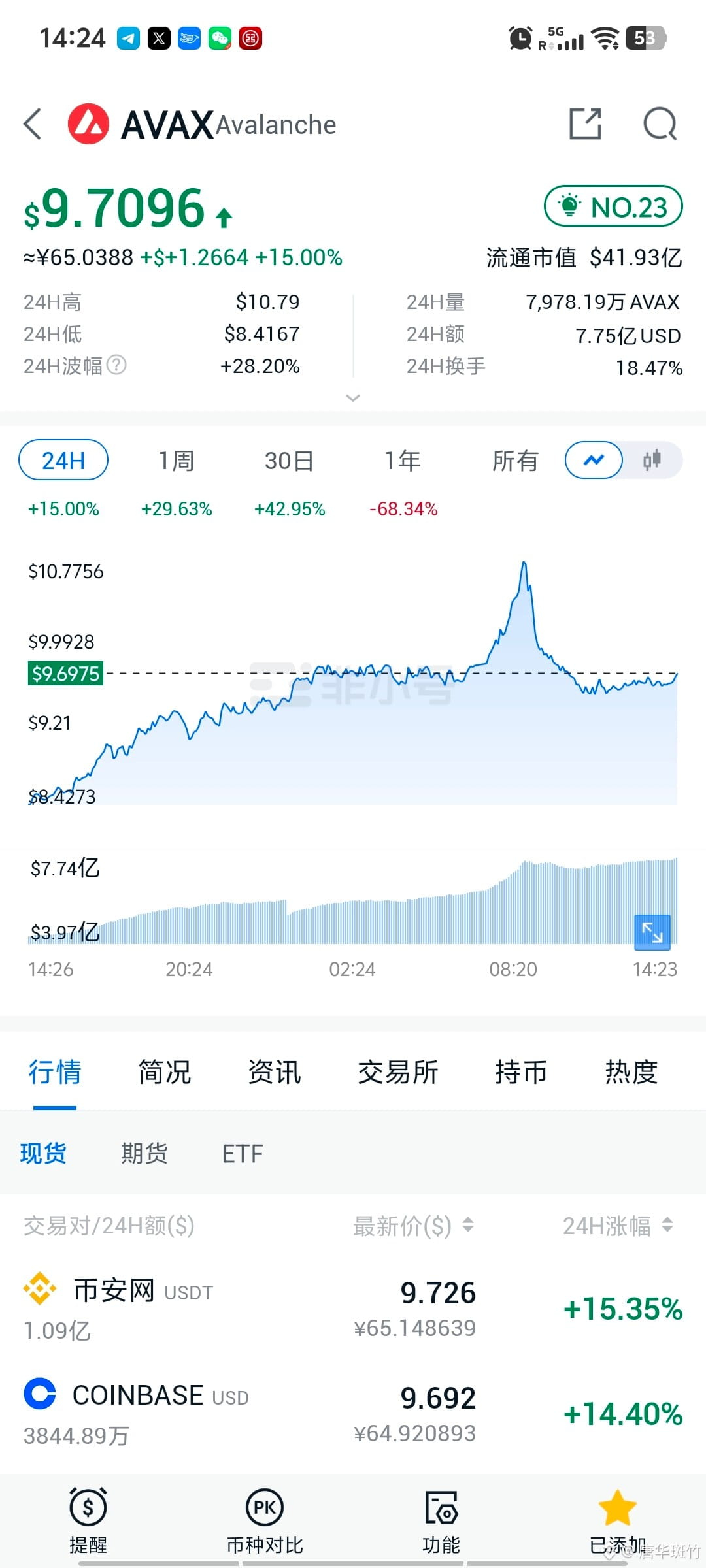
These past two days have been a bit intense—the rise made me feel slightly dizzy. What surprised me most is that the old, long-dormant snow avalanche Avax actually led the rally too; it surged over 20+ centimeters in a single day. Even the position I entered about two months ago with a little over 8u still let me close for a small profit and exit. I’m content for now—I'll take a breather. I’ll wait for a deeper pullback, then make my move again $AVAX
{spot}(AVAXUSDT)
These past two days have been a bit intense—the rise made me feel slightly dizzy. What surprised me most is that the old, long-dormant snow avalanche Avax actually led the rally too; it surged over 20+ centimeters in a single day. Even the position I entered about two months ago with a little over 8u still let me close for a small profit and exit. I’m content for now—I'll take a breather. I’ll wait for a deeper pullback, then make my move again $AVAX
3
3.5k
·
--
Bearish
Verified
CZ forwards on the X platform the solicitation of comments regarding the company renaming proposals submitted by BNB Treasury Company, BNB Network Company (BNC), and comments: “What does the name mean?”
Previously, BNC launched a community vote on the future name of BNC and invited users to suggest other names. BNC emphasized that the vote is for consultation only and not a shareholder vote; the final name still needs to be approved by the board of directors and pass relevant legal reviews.$BNB
{spot}(BNBUSDT)
CZ forwards on the X platform the solicitation of comments regarding the company renaming proposals submitted by BNB Treasury Company, BNB Network Company (BNC), and comments: “What does the name mean?”
Previously, BNC launched a community vote on the future name of BNC and invited users to suggest other names. BNC emphasized that the vote is for consultation only and not a shareholder vote; the final name still needs to be approved by the board of directors and pass relevant legal reviews.$BNB
Previously, BNC launched a community vote on the future name of BNC and invited users to suggest other names. BNC emphasized that the vote is for consultation only and not a shareholder vote; the final name still needs to be approved by the board of directors and pass relevant legal reviews.$BNB
1
3.1k
·
--
What does a desktop AI assistant you can imagine look like? Is it like this? $BNB
What does a desktop AI assistant you can imagine look like? Is it like this? $BNB
1
2
41
23.6k
·
--
Bearish
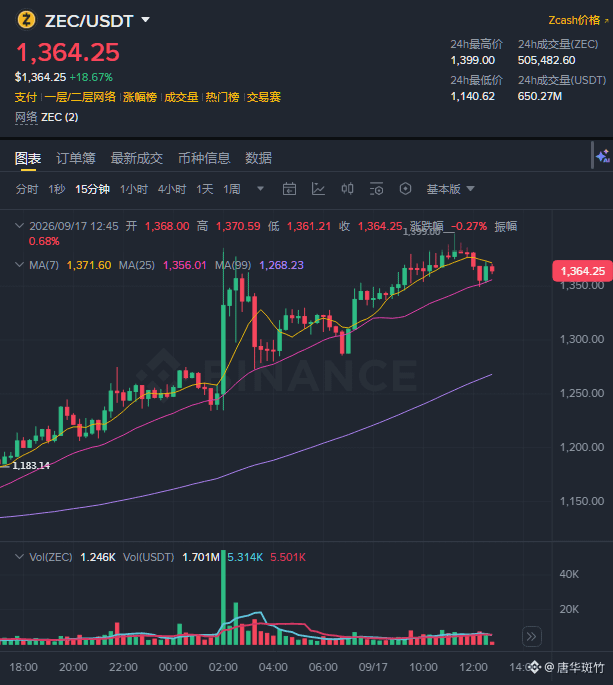
Brothers, don’t sleep—get up and chase the upside! Everything we guessed yesterday was right. Turns out it’s all good news after bad news: the Fed is born rebellious—it just won’t listen to the president. They still hiked rates, but they didn’t go too far; they only added 25 basis points. It was in line with market expectations. The crypto market didn’t drop—instead it rallied. Last night, I guess it blasted the shorts and liquidated a bunch of opportunists who were trying to get in for a quick short. The biggest bearish news in the near term—rate hike coming through—is actually a good thing. It lets everyone catch their breath a bit. By the way, this $ZEC is seriously powerful. It feels like it’s the real Bitcoin right now—such a huge coin is pulling 20 centimeters in one go. Just think: when it dipped with a wick to over 200 the other day, why didn’t I bottom-fish? Sigh… $ZEC
{spot}(ZECUSDT)
Brothers, don’t sleep—get up and chase the upside! Everything we guessed yesterday was right. Turns out it’s all good news after bad news: the Fed is born rebellious—it just won’t listen to the president. They still hiked rates, but they didn’t go too far; they only added 25 basis points. It was in line with market expectations. The crypto market didn’t drop—instead it rallied. Last night, I guess it blasted the shorts and liquidated a bunch of opportunists who were trying to get in for a quick short. The biggest bearish news in the near term—rate hike coming through—is actually a good thing. It lets everyone catch their breath a bit. By the way, this $ZEC is seriously powerful. It feels like it’s the real Bitcoin right now—such a huge coin is pulling 20 centimeters in one go. Just think: when it dipped with a wick to over 200 the other day, why didn’t I bottom-fish? Sigh… $ZEC
1
2
2.2k
Log in to explore more content
Join global crypto users on Binance Square
⚡️ Get latest and useful information about crypto.
💬 Trusted by the world’s largest crypto exchange.
👍 Discover real insights from verified creators.
Email / Phone number
Trending Topics
MetaMaskExitsLidoValidatorsAfterSecurityIncident
18,653 views
460 Discussing
🚨 METAMASK JUST STARTED EXITING ETH VALIDATORS AFTER A SECURITY INCIDENT.
MetaMask says an ongoing security incident hit part of its infrastructure, forcing it to proactively exit affected validators from its non-custodial staking operations. The company says it has found no immediate threat to MetaMask wallets so far.
The key detail?
These validators are tied to Lido staking, and the exit process may temporarily remove ETH from staking while the investigation continues. Lido-related reports say the full exit, withdrawal and re-entry cycle could take up to roughly 45 days.
That means the market should separate two things:
Wallet users are not currently being told they’re at immediate risk.
But validator infrastructure clearly was serious enough to trigger an emergency exit.
And when one of Ethereum’s biggest wallet brands starts pulling validators as a precaution, traders pay attention.
Security incidents don’t need stolen funds to become market-moving.
Sometimes the reaction itself is the signal. 👀
$ETH $LDO
#metamaskexitslidovalidatorsaftersecurityincident
KimHotbae
·0 Likes
·2.5k views
MicronBeatsEarningsLiftsGuidance
16,510 views
409 Discussing
CFTCSubmitsTwoEventContractRulesToWhiteHouse
14,047 views
369 Discussing