

慢即是快i
256 Posts

慢即是快i
Report
Block User
45 Following
1.0K+ Followers
413 Liked
Posts
All
Quotes
Live
·
--
I used to think that once I joined a community group with lots of members, very official names, and a properly set-up profile picture, it was basically entering a safe zone. Until that time with the “admin direct message,” which made me realize that the place with the most people is exactly the kind of fishing ground scammers love.
For a while, I was paying attention to a new project and wanted to join its official community. On a certain social app, I searched for it and several groups with the same name popped up. One of them had over ten thousand members, and the group announcement was written quite professionally. I thought, “With so many people, it must be official,” so I clicked in.
Not even a few minutes later, someone with an “admin” title privately messaged me: “Congratulations—you’ve been selected for the project’s airdrop allocation. Please click the link to complete wallet verification. If you miss the deadline, it will be void.” They also attached an “official” link.
I almost clicked it. But then I remembered the lesson I’d learned before: “The more it looks like it’s official, the more you need to be careful.” So I went back to the project’s official website first, then found the entry point to the official community from the website announcements—only to discover that the “tens-of-thousands” group I joined wasn’t created by the project at all. It was a high-impersonation phishing group.
The “admins,” “customer support,” and “old users” in the group were all scammer accounts. They coordinated their roles to lure people like me—those who get hooked by the idea that “it has a lot of people.” The so-called “airdrop verification” link was exactly the entry point for stealing wallet authorizations.
I immediately left the group and blocked that “admin.” I was relieved I’d verified one extra step. This incident completely changed my habit of “trusting the person, not the path”: First, for any project’s official community, I only enter through the links provided on the official website and official announcements—never “choose a group by feel” from the search box. Second, the admins of the official group will never privately message you to send a link and tell you to “verify your wallet” or “claim an airdrop.” If it’s a private message offering “official benefits,” it’s scammers. Third, when you join a group, check the announcements and pinned posts first—look for official security warnings. Don’t be fooled just by “large member counts” and popularity.
In Web3, being lively doesn’t mean being trustworthy, and scale can’t replace verification. The place scammers like to hide is right inside communities that look “official.” That “ten-thousand-member phishing group” is a lesson I’ll remember to this day: stick to the official entry points, trust only the addresses in the announcements, and no matter how heated it looks, it has nothing to do with you.
#BinanceSecurityThursday
I used to think that once I joined a community group with lots of members, very official names, and a properly set-up profile picture, it was basically entering a safe zone. Until that time with the “admin direct message,” which made me realize that the place with the most people is exactly the kind of fishing ground scammers love.
For a while, I was paying attention to a new project and wanted to join its official community. On a certain social app, I searched for it and several groups with the same name popped up. One of them had over ten thousand members, and the group announcement was written quite professionally. I thought, “With so many people, it must be official,” so I clicked in.
Not even a few minutes later, someone with an “admin” title privately messaged me: “Congratulations—you’ve been selected for the project’s airdrop allocation. Please click the link to complete wallet verification. If you miss the deadline, it will be void.” They also attached an “official” link.
I almost clicked it. But then I remembered the lesson I’d learned before: “The more it looks like it’s official, the more you need to be careful.” So I went back to the project’s official website first, then found the entry point to the official community from the website announcements—only to discover that the “tens-of-thousands” group I joined wasn’t created by the project at all. It was a high-impersonation phishing group.
The “admins,” “customer support,” and “old users” in the group were all scammer accounts. They coordinated their roles to lure people like me—those who get hooked by the idea that “it has a lot of people.” The so-called “airdrop verification” link was exactly the entry point for stealing wallet authorizations.
I immediately left the group and blocked that “admin.” I was relieved I’d verified one extra step. This incident completely changed my habit of “trusting the person, not the path”: First, for any project’s official community, I only enter through the links provided on the official website and official announcements—never “choose a group by feel” from the search box. Second, the admins of the official group will never privately message you to send a link and tell you to “verify your wallet” or “claim an airdrop.” If it’s a private message offering “official benefits,” it’s scammers. Third, when you join a group, check the announcements and pinned posts first—look for official security warnings. Don’t be fooled just by “large member counts” and popularity.
In Web3, being lively doesn’t mean being trustworthy, and scale can’t replace verification. The place scammers like to hide is right inside communities that look “official.” That “ten-thousand-member phishing group” is a lesson I’ll remember to this day: stick to the official entry points, trust only the addresses in the announcements, and no matter how heated it looks, it has nothing to do with you.
#BinanceSecurityThursday
For a while, I was paying attention to a new project and wanted to join its official community. On a certain social app, I searched for it and several groups with the same name popped up. One of them had over ten thousand members, and the group announcement was written quite professionally. I thought, “With so many people, it must be official,” so I clicked in.
Not even a few minutes later, someone with an “admin” title privately messaged me: “Congratulations—you’ve been selected for the project’s airdrop allocation. Please click the link to complete wallet verification. If you miss the deadline, it will be void.” They also attached an “official” link.
I almost clicked it. But then I remembered the lesson I’d learned before: “The more it looks like it’s official, the more you need to be careful.” So I went back to the project’s official website first, then found the entry point to the official community from the website announcements—only to discover that the “tens-of-thousands” group I joined wasn’t created by the project at all. It was a high-impersonation phishing group.
The “admins,” “customer support,” and “old users” in the group were all scammer accounts. They coordinated their roles to lure people like me—those who get hooked by the idea that “it has a lot of people.” The so-called “airdrop verification” link was exactly the entry point for stealing wallet authorizations.
I immediately left the group and blocked that “admin.” I was relieved I’d verified one extra step. This incident completely changed my habit of “trusting the person, not the path”: First, for any project’s official community, I only enter through the links provided on the official website and official announcements—never “choose a group by feel” from the search box. Second, the admins of the official group will never privately message you to send a link and tell you to “verify your wallet” or “claim an airdrop.” If it’s a private message offering “official benefits,” it’s scammers. Third, when you join a group, check the announcements and pinned posts first—look for official security warnings. Don’t be fooled just by “large member counts” and popularity.
In Web3, being lively doesn’t mean being trustworthy, and scale can’t replace verification. The place scammers like to hide is right inside communities that look “official.” That “ten-thousand-member phishing group” is a lesson I’ll remember to this day: stick to the official entry points, trust only the addresses in the announcements, and no matter how heated it looks, it has nothing to do with you.
#BinanceSecurityThursday


币安Binance华语
·
--
Teachers' Day #币安安全星期四 Special Plan 「Web3 Mandatory Course」
🧑🏫 The real danger and failure are the best teachers on the road to growth
In Web3, what time did you narrowly avoid a scam—or fail—giving you the most unforgettable lesson?
Repost and share your story and experience. 10 outstanding sharers will each receive 100U 🏆
And we also wish every teacher who helped us grow a Happy Teachers' Day 💛
🧑🏫 The real danger and failure are the best teachers on the road to growth
In Web3, what time did you narrowly avoid a scam—or fail—giving you the most unforgettable lesson?
Repost and share your story and experience. 10 outstanding sharers will each receive 100U 🏆
And we also wish every teacher who helped us grow a Happy Teachers' Day 💛

75
·
--
Do bStocks’ collateralization ratios differ for "blue-chip stocks" and "high-risk stocks"? For example, for highly liquid stocks like Apple and Microsoft versus small-cap stocks with high volatility and crypto-related stocks, are the collateralization ratios different? Does the platform have limits on concentration for a single stock or a single user to prevent a scenario where, if one stock is heavily pledged and then falls sharply, it triggers cascading liquidations?
Do bStocks’ collateralization ratios differ for "blue-chip stocks" and "high-risk stocks"? For example, for highly liquid stocks like Apple and Microsoft versus small-cap stocks with high volatility and crypto-related stocks, are the collateralization ratios different? Does the platform have limits on concentration for a single stock or a single user to prevent a scenario where, if one stock is heavily pledged and then falls sharply, it triggers cascading liquidations?
币安Binance华语
·
--
【Binance Space】Tonight at 8 PM, let’s talk about bStocks 🙋 Leave your questions and share the post to enter a draw for 3 people to receive a 50U reward!
🔥 Full opening of bStocks collateral: put your holdings to work & risk management
🎙️ Host: @Miya- VIP Manager
🧑🏫 Invited: Binance product operations manager and guest
During the discussion, there will also be 1000U red envelopes 🧧, 点击预约直播
🔥 Full opening of bStocks collateral: put your holdings to work & risk management
🎙️ Host: @Miya- VIP Manager
🧑🏫 Invited: Binance product operations manager and guest
During the discussion, there will also be 1000U red envelopes 🧧, 点击预约直播
66
·
--
Tokenized stocks are the on-chain version of real stocks, with a 1:1 mapping to real stocks, ensuring the authenticity of the assets. #币安夏令营
Tokenized stocks are the on-chain version of real stocks, with a 1:1 mapping to real stocks, ensuring the authenticity of the assets. #币安夏令营
90

·
--
A. Gold pulled back significantly this week, and safe-haven assets have started to loosen.
Reason: Gold has long been a "safe haven" in times of crisis, and this week's notable pullback shows that market risk appetite is quietly shifting. A loosening in safe-haven assets is often not an isolated signal; it reflects a repricing of capital—either because risk events are easing temporarily, or because expectations for liquidity are changing. Watching this turning point can help us catch the pace of market sentiment shifts in advance, and it also provides a rare reference window for judging the direction of subsequent asset allocation. Its informational value should not be underestimated.#安友周一观察团
A. Gold pulled back significantly this week, and safe-haven assets have started to loosen.
Reason: Gold has long been a "safe haven" in times of crisis, and this week's notable pullback shows that market risk appetite is quietly shifting. A loosening in safe-haven assets is often not an isolated signal; it reflects a repricing of capital—either because risk events are easing temporarily, or because expectations for liquidity are changing. Watching this turning point can help us catch the pace of market sentiment shifts in advance, and it also provides a rare reference window for judging the direction of subsequent asset allocation. Its informational value should not be underestimated.#安友周一观察团
Reason: Gold has long been a "safe haven" in times of crisis, and this week's notable pullback shows that market risk appetite is quietly shifting. A loosening in safe-haven assets is often not an isolated signal; it reflects a repricing of capital—either because risk events are easing temporarily, or because expectations for liquidity are changing. Watching this turning point can help us catch the pace of market sentiment shifts in advance, and it also provides a rare reference window for judging the direction of subsequent asset allocation. Its informational value should not be underestimated.#安友周一观察团
币安Binance华语
·
--
📡#安友周一观察团 is in position—collect this week’s trending topics with one click!
Things have been happening non-stop over the past week—what are you most interested in? 👀
🗳️ Participate in the poll and comment your reasons. RT or share other highlights for a chance to win—five people will each receive 30U!
A. Gold sees a clear pullback this week as safe-haven assets loosen
B. Binance launches Agent OS, ushering AI trading into a new phase
C. Vietnam pilots the crypto market, further advancing Asian regulation
D. Tensions in the Strait of Hormuz escalate, pushing oil prices back into global focus
Things have been happening non-stop over the past week—what are you most interested in? 👀
🗳️ Participate in the poll and comment your reasons. RT or share other highlights for a chance to win—five people will each receive 30U!
A. Gold sees a clear pullback this week as safe-haven assets loosen
B. Binance launches Agent OS, ushering AI trading into a new phase
C. Vietnam pilots the crypto market, further advancing Asian regulation
D. Tensions in the Strait of Hormuz escalate, pushing oil prices back into global focus




98
·
--
Come play
Come play
币安Binance华语
·
--
“Don’t laugh—you won’t find the 4th one either 😨”
🪤 They say this is the hardest #币安安全星期四 challenge in history: in the shortest time, can you find all the traps?
👉 点击参与实景陷阱追踪挑战, compete for a spot on the leaderboard 🏆
The top 10 on the leaderboard each get a 100U detective reward, and the top 3 also receive a themed gift box!
Share it and post your clear-through screenshot in the comments, and then 15 people will be selected to receive 44U 🧧
🪤 They say this is the hardest #币安安全星期四 challenge in history: in the shortest time, can you find all the traps?
👉 点击参与实景陷阱追踪挑战, compete for a spot on the leaderboard 🏆
The top 10 on the leaderboard each get a 100U detective reward, and the top 3 also receive a themed gift box!
Share it and post your clear-through screenshot in the comments, and then 15 people will be selected to receive 44U 🧧

44
·
--
Choose C. Micron invests $10 billion in R&D, stepping up AI chip development
Reason: This $10 billion-scale investment targets a critical moment just before the AI compute boom. Memory chips are an indispensable "granary" for AI servers. By expanding capacity and iterating its technology ahead of the curve, Micron effectively locks in capacity advantages before demand takes off. The long-term growth logic is clear, making it a relatively high-certainty investment direction within the industry chain. #安友周一观察团
Choose C. Micron invests $10 billion in R&D, stepping up AI chip development
Reason: This $10 billion-scale investment targets a critical moment just before the AI compute boom. Memory chips are an indispensable "granary" for AI servers. By expanding capacity and iterating its technology ahead of the curve, Micron effectively locks in capacity advantages before demand takes off. The long-term growth logic is clear, making it a relatively high-certainty investment direction within the industry chain. #安友周一观察团
Reason: This $10 billion-scale investment targets a critical moment just before the AI compute boom. Memory chips are an indispensable "granary" for AI servers. By expanding capacity and iterating its technology ahead of the curve, Micron effectively locks in capacity advantages before demand takes off. The long-term growth logic is clear, making it a relatively high-certainty investment direction within the industry chain. #安友周一观察团
币安Binance华语
·
--
🔥 #安友周一观察团 – Assemble on time. This week’s hot topics are here!
This week is packed with information—what’s the most worth hitting the follow button for? 🧐
💬 Vote and share your reasons in the comments. RT or share other hot topics you’re paying attention to—five lucky winners will receive 30U!
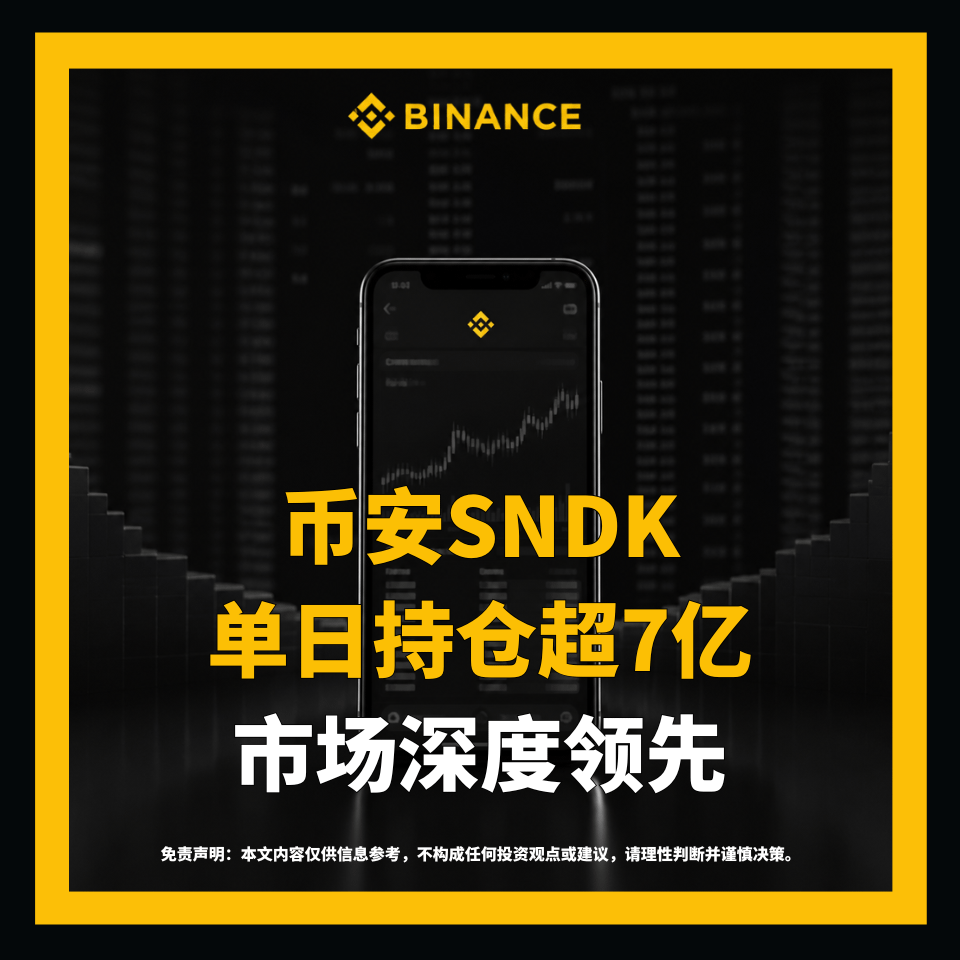
A. Binance SNDK: daily holdings exceed 700 million, leading in market depth
B. BTC returns to $700,000, and market sentiment is warming up
C. Micron invests $10 billion in R&D to ramp up AI chips
D. Japan’s government bond yields hit a new high, pressuring global bond markets
This week is packed with information—what’s the most worth hitting the follow button for? 🧐
💬 Vote and share your reasons in the comments. RT or share other hot topics you’re paying attention to—five lucky winners will receive 30U!
A. Binance SNDK: daily holdings exceed 700 million, leading in market depth
B. BTC returns to $700,000, and market sentiment is warming up
C. Micron invests $10 billion in R&D to ramp up AI chips
D. Japan’s government bond yields hit a new high, pressuring global bond markets



82
·
--
Select C
First, treat this 500U as an impulse that could be stopped if you consider it a cost. The more “perfect” the story sounds, the more it resembles a script: scarce spots, founders personally inviting you, identities that can be verified—everything is a step ladder meant to lure you in. The only rule for private placements is this: an official contract through official channels. If it doesn’t match, it’s worthless. Verify everything before transferring—better to miss out than to send it to the wrong place.
#币安安全星期四
Select C
First, treat this 500U as an impulse that could be stopped if you consider it a cost. The more “perfect” the story sounds, the more it resembles a script: scarce spots, founders personally inviting you, identities that can be verified—everything is a step ladder meant to lure you in. The only rule for private placements is this: an official contract through official channels. If it doesn’t match, it’s worthless. Verify everything before transferring—better to miss out than to send it to the wrong place.
#币安安全星期四
First, treat this 500U as an impulse that could be stopped if you consider it a cost. The more “perfect” the story sounds, the more it resembles a script: scarce spots, founders personally inviting you, identities that can be verified—everything is a step ladder meant to lure you in. The only rule for private placements is this: an official contract through official channels. If it doesn’t match, it’s worthless. Verify everything before transferring—better to miss out than to send it to the wrong place.
#币安安全星期四
币安Binance华语
·
--
😈“I’m the founder of the platform. The last spot for the new coin private sale—500 USDT, hop on!”
What would you do❓
A. Finally, the fortune of wealth is my turn—I rush in 🤑
B. Everything matches in my circle of friends—the identity package is real 😎
C. I’d rather not take this luck. Don’t transfer money—go verify with the official first 🔍
⬇️ RT and leave your choice and reasons. We’ll randomly pick 3 people, each gets 40U #币安安全星期四
What would you do❓
A. Finally, the fortune of wealth is my turn—I rush in 🤑
B. Everything matches in my circle of friends—the identity package is real 😎
C. I’d rather not take this luck. Don’t transfer money—go verify with the official first 🔍
⬇️ RT and leave your choice and reasons. We’ll randomly pick 3 people, each gets 40U #币安安全星期四

88
·
--
🎙️ Day 12 of DCA into BTC with Superman 100U, is DUSK bullish or bearish?

End
02 h 23 m 12 s
7.5k
17
15
·
--
🎙️ Stay calm when it’s rising, and look back at the road you’ve traveled before. bnb

End
02 h 24 m 20 s
8k
18
20

·
--
🎙️ Build the Binance Square, DCA BNB|On Wednesday, BTC still couldn't hold steady at 80,000. Where do you think the market will go next? Let's talk~

End
05 h 21 m 38 s
9.4k
41
38
·
--
D. CLARITY Encryption Bill Postponed, Regulatory Process Further Slowed ⏳
The bill keeps being delayed, indicating that the alignment between regulators and the industry is taking more time than expected. In the short term, with no clear rulebook for the encrypted market, capital will likely become more cautious and price volatility is inevitable. However, from another perspective, the delay may not be entirely bad. It gives the industry an extra buffer period to conduct self-checks and make adjustments, so that the framework will better fit real-world conditions once it is actually implemented. For those planning long-term, this period feels more like a window for observation. When the rules become clear, the market will reprice, and opportunities will naturally emerge. #安友周一观察团
D. CLARITY Encryption Bill Postponed, Regulatory Process Further Slowed ⏳
The bill keeps being delayed, indicating that the alignment between regulators and the industry is taking more time than expected. In the short term, with no clear rulebook for the encrypted market, capital will likely become more cautious and price volatility is inevitable. However, from another perspective, the delay may not be entirely bad. It gives the industry an extra buffer period to conduct self-checks and make adjustments, so that the framework will better fit real-world conditions once it is actually implemented. For those planning long-term, this period feels more like a window for observation. When the rules become clear, the market will reprice, and opportunities will naturally emerge. #安友周一观察团
The bill keeps being delayed, indicating that the alignment between regulators and the industry is taking more time than expected. In the short term, with no clear rulebook for the encrypted market, capital will likely become more cautious and price volatility is inevitable. However, from another perspective, the delay may not be entirely bad. It gives the industry an extra buffer period to conduct self-checks and make adjustments, so that the framework will better fit real-world conditions once it is actually implemented. For those planning long-term, this period feels more like a window for observation. When the rules become clear, the market will reprice, and opportunities will naturally emerge. #安友周一观察团
币安Binance华语
·
--
🔥#安友周一观察团 Big Event Roundup 📡
There have been plenty of major happenings lately—what caught your attention the most? 👀
✅ Vote and leave your reason in the comments. RT or share other trending topics—5 winners will get 30U.
A. bStocks expands its asset entry point, making 1:1 conversion more flexible
B. CPI data continues to decline, and market confidence is recovering
C. The S&P 500 sets another new high, and tech stocks keep strengthening
D. The CLARITY crypto bill is delayed, slowing the regulatory process again
There have been plenty of major happenings lately—what caught your attention the most? 👀
✅ Vote and leave your reason in the comments. RT or share other trending topics—5 winners will get 30U.
A. bStocks expands its asset entry point, making 1:1 conversion more flexible
B. CPI data continues to decline, and market confidence is recovering
C. The S&P 500 sets another new high, and tech stocks keep strengthening
D. The CLARITY crypto bill is delayed, slowing the regulatory process again




136
·
--
The death spiral of traditional liquidation is something everyone is familiar with: collateral falls, the agreement rushes to sell, prices get crushed, more positions trigger liquidation, and it keeps selling—stampedes happen during the liquidation step. @termmax Smartly sidesteps this with physical settlement: instead of rushing to find a counterparty, the collateral assets are directly delivered to the lender. Token holders receive the collateral and underlying assets according to the rules, without having to bet on market matching. The brilliance of this design is that it admits one thing: in extreme markets, the act of “selling” itself may be the wrong move.
But if you stop and think one layer deeper, the stampede hasn’t disappeared—it’s just been moved elsewhere. Previously, stampedes occurred inside the liquidation pool: the agreement had to liquidate assets within the window, and everyone crowded into selling. Now, the potential site of the stampede becomes after settlement: a group of lenders simultaneously receives the same class of collateral assets. If the market continues to deteriorate and this group all wants to exit, they become the new wave of forced sellers—except they have no market-making obligations and no incentive to take positions; they are simply holders who don’t want to hold. Settlement only transfers the forced selling from the agreement to the lenders; the selling pressure hasn’t been absorbed—it’s merely changed the party holding the assets. $ONG
There’s also a more subtle risk: in traditional liquidation, the agreement at least has unified decision-making—how to sell and when to sell—so it’s a centralized action. Physical settlement breaks disposal into individual decisions by one person at a time, effectively handing the cadence of collective stampede to hundreds of holders who don’t communicate with each other. Everyone wants to leave quickly, and at that moment, the efficiency of the stampede could be even higher than with single-point sales by the agreement. The mechanism shifts liquidation from institutional panic to retail-style panic. Panic hasn’t changed; only the organizational structure has.
So my take on physical settlement is: it truly avoids the hardest pain point of “selling that can’t happen” in extreme conditions, preventing illiquid assets (especially RWA) from being sold at a discount. But the cost is that it delays the timing of the stampede to after settlement and disperses it among holders. A beautiful mechanism doesn’t necessarily mean a beautiful stress test—next time, what we should really observe isn’t how smooth settlement is, but whether that group of holders after settlement will all want to run at the same time. #termmax
The death spiral of traditional liquidation is something everyone is familiar with: collateral falls, the agreement rushes to sell, prices get crushed, more positions trigger liquidation, and it keeps selling—stampedes happen during the liquidation step. @TermMax Smartly sidesteps this with physical settlement: instead of rushing to find a counterparty, the collateral assets are directly delivered to the lender. Token holders receive the collateral and underlying assets according to the rules, without having to bet on market matching. The brilliance of this design is that it admits one thing: in extreme markets, the act of “selling” itself may be the wrong move.
But if you stop and think one layer deeper, the stampede hasn’t disappeared—it’s just been moved elsewhere. Previously, stampedes occurred inside the liquidation pool: the agreement had to liquidate assets within the window, and everyone crowded into selling. Now, the potential site of the stampede becomes after settlement: a group of lenders simultaneously receives the same class of collateral assets. If the market continues to deteriorate and this group all wants to exit, they become the new wave of forced sellers—except they have no market-making obligations and no incentive to take positions; they are simply holders who don’t want to hold. Settlement only transfers the forced selling from the agreement to the lenders; the selling pressure hasn’t been absorbed—it’s merely changed the party holding the assets. $ONG
There’s also a more subtle risk: in traditional liquidation, the agreement at least has unified decision-making—how to sell and when to sell—so it’s a centralized action. Physical settlement breaks disposal into individual decisions by one person at a time, effectively handing the cadence of collective stampede to hundreds of holders who don’t communicate with each other. Everyone wants to leave quickly, and at that moment, the efficiency of the stampede could be even higher than with single-point sales by the agreement. The mechanism shifts liquidation from institutional panic to retail-style panic. Panic hasn’t changed; only the organizational structure has.
So my take on physical settlement is: it truly avoids the hardest pain point of “selling that can’t happen” in extreme conditions, preventing illiquid assets (especially RWA) from being sold at a discount. But the cost is that it delays the timing of the stampede to after settlement and disperses it among holders. A beautiful mechanism doesn’t necessarily mean a beautiful stress test—next time, what we should really observe isn’t how smooth settlement is, but whether that group of holders after settlement will all want to run at the same time. #termmax
But if you stop and think one layer deeper, the stampede hasn’t disappeared—it’s just been moved elsewhere. Previously, stampedes occurred inside the liquidation pool: the agreement had to liquidate assets within the window, and everyone crowded into selling. Now, the potential site of the stampede becomes after settlement: a group of lenders simultaneously receives the same class of collateral assets. If the market continues to deteriorate and this group all wants to exit, they become the new wave of forced sellers—except they have no market-making obligations and no incentive to take positions; they are simply holders who don’t want to hold. Settlement only transfers the forced selling from the agreement to the lenders; the selling pressure hasn’t been absorbed—it’s merely changed the party holding the assets. $ONG
There’s also a more subtle risk: in traditional liquidation, the agreement at least has unified decision-making—how to sell and when to sell—so it’s a centralized action. Physical settlement breaks disposal into individual decisions by one person at a time, effectively handing the cadence of collective stampede to hundreds of holders who don’t communicate with each other. Everyone wants to leave quickly, and at that moment, the efficiency of the stampede could be even higher than with single-point sales by the agreement. The mechanism shifts liquidation from institutional panic to retail-style panic. Panic hasn’t changed; only the organizational structure has.
So my take on physical settlement is: it truly avoids the hardest pain point of “selling that can’t happen” in extreme conditions, preventing illiquid assets (especially RWA) from being sold at a discount. But the cost is that it delays the timing of the stampede to after settlement and disperses it among holders. A beautiful mechanism doesn’t necessarily mean a beautiful stress test—next time, what we should really observe isn’t how smooth settlement is, but whether that group of holders after settlement will all want to run at the same time. #termmax
238
·
--
When I read the whitepaper about minting @termmax , I jotted down this line about the GT part: “One single trade mints leverage positions, significantly reducing gas. Looking at it alone, there’s nothing wrong—but only after you’ve truly run through an entire GT cycle—opening, holding, closing, and settling—do you know which minting step that saves gas, and which steps it never mentions.”
Minting itself really is straightforward: one trade, one gas, and you’ve got the leverage position. But once you carry the full cycle through, that “single trade mints leverage” is only the first step in the whole leverage journey. Opening can be one step, but closing definitely can’t. To unwind the leverage in GT, you first need to sell the collateral, repay the debt, and then redeem the position—each link is its own independent on-chain operation. The gas you saved on that minting step, when placed into the on-chain costs across the full cycle, is really not worth much.$RE
What’s even more puzzling is liquidation tolerance. The whitepaper’s explanation of GT focuses on encapsulation and costs, with very little ink spent on how well leveraged positions buffer health under extreme market conditions. In my own practice, I monitor health very closely; when volatility spikes, the position skates right along the liquidation line, and the window to manually top up is narrow. The protocol’s risk controls are steady, but as someone using leverage, the room for error is truly limited.$SKYAI
And when it comes to the closing step, there’s also the depth issue. Exiting a leveraged position depends on selling the collateral and buying back the debt—both of which run through the maturity market. The short-end market is fine; but once you stretch out to the long-end, order books are thin, the bid-ask spread is wide, and the closing cost visibly rises. The whitepaper describes GT as if it’s packing leverage into a box. Only in practice do you realize the “box” still contains the market and its depth.
Putting this whole round of practice together: GT’s mechanism design is genuinely slick—minting is hassle-free and accounting is transparent. But the whitepaper uses “one trade mints” to summarize GT’s value, and that’s a bit too easy on the ears—what’s saved is the first step, while what’s expensive is every step after that. If you want to touch GT leverage, don’t just look at how convenient that minting moment is. First, figure out the full-cycle on-chain costs, the liquidation buffer, and the closing depth, then decide how much leverage to take. My current stance is to take it slow in the watchlist—when it comes to leverage, only consider it once both the tolerance and depth are thick enough.
#termmax
When I read the whitepaper about minting @TermMax , I jotted down this line about the GT part: “One single trade mints leverage positions, significantly reducing gas. Looking at it alone, there’s nothing wrong—but only after you’ve truly run through an entire GT cycle—opening, holding, closing, and settling—do you know which minting step that saves gas, and which steps it never mentions.”
Minting itself really is straightforward: one trade, one gas, and you’ve got the leverage position. But once you carry the full cycle through, that “single trade mints leverage” is only the first step in the whole leverage journey. Opening can be one step, but closing definitely can’t. To unwind the leverage in GT, you first need to sell the collateral, repay the debt, and then redeem the position—each link is its own independent on-chain operation. The gas you saved on that minting step, when placed into the on-chain costs across the full cycle, is really not worth much.$RE
What’s even more puzzling is liquidation tolerance. The whitepaper’s explanation of GT focuses on encapsulation and costs, with very little ink spent on how well leveraged positions buffer health under extreme market conditions. In my own practice, I monitor health very closely; when volatility spikes, the position skates right along the liquidation line, and the window to manually top up is narrow. The protocol’s risk controls are steady, but as someone using leverage, the room for error is truly limited.$SKYAI
And when it comes to the closing step, there’s also the depth issue. Exiting a leveraged position depends on selling the collateral and buying back the debt—both of which run through the maturity market. The short-end market is fine; but once you stretch out to the long-end, order books are thin, the bid-ask spread is wide, and the closing cost visibly rises. The whitepaper describes GT as if it’s packing leverage into a box. Only in practice do you realize the “box” still contains the market and its depth.
Putting this whole round of practice together: GT’s mechanism design is genuinely slick—minting is hassle-free and accounting is transparent. But the whitepaper uses “one trade mints” to summarize GT’s value, and that’s a bit too easy on the ears—what’s saved is the first step, while what’s expensive is every step after that. If you want to touch GT leverage, don’t just look at how convenient that minting moment is. First, figure out the full-cycle on-chain costs, the liquidation buffer, and the closing depth, then decide how much leverage to take. My current stance is to take it slow in the watchlist—when it comes to leverage, only consider it once both the tolerance and depth are thick enough.
#termmax
Minting itself really is straightforward: one trade, one gas, and you’ve got the leverage position. But once you carry the full cycle through, that “single trade mints leverage” is only the first step in the whole leverage journey. Opening can be one step, but closing definitely can’t. To unwind the leverage in GT, you first need to sell the collateral, repay the debt, and then redeem the position—each link is its own independent on-chain operation. The gas you saved on that minting step, when placed into the on-chain costs across the full cycle, is really not worth much.$RE
What’s even more puzzling is liquidation tolerance. The whitepaper’s explanation of GT focuses on encapsulation and costs, with very little ink spent on how well leveraged positions buffer health under extreme market conditions. In my own practice, I monitor health very closely; when volatility spikes, the position skates right along the liquidation line, and the window to manually top up is narrow. The protocol’s risk controls are steady, but as someone using leverage, the room for error is truly limited.$SKYAI
And when it comes to the closing step, there’s also the depth issue. Exiting a leveraged position depends on selling the collateral and buying back the debt—both of which run through the maturity market. The short-end market is fine; but once you stretch out to the long-end, order books are thin, the bid-ask spread is wide, and the closing cost visibly rises. The whitepaper describes GT as if it’s packing leverage into a box. Only in practice do you realize the “box” still contains the market and its depth.
Putting this whole round of practice together: GT’s mechanism design is genuinely slick—minting is hassle-free and accounting is transparent. But the whitepaper uses “one trade mints” to summarize GT’s value, and that’s a bit too easy on the ears—what’s saved is the first step, while what’s expensive is every step after that. If you want to touch GT leverage, don’t just look at how convenient that minting moment is. First, figure out the full-cycle on-chain costs, the liquidation buffer, and the closing depth, then decide how much leverage to take. My current stance is to take it slow in the watchlist—when it comes to leverage, only consider it once both the tolerance and depth are thick enough.
#termmax
2
175
·
--
In the auction of @termmax , the most counterintuitive advice is: don’t scheme—just state the real bottom line in your heart.
I didn’t believe it at first. Every market teaches people to “leave plenty of room” and “see what others bid first,” so you naturally should be cautious with auctions too. The result: I suffered a loss the very first time. Wanting to earn a bit more, I raised my bid above my psychological price. After one cycle, the funds never actually got matched—because the interest rate I wanted was too high, and the market couldn’t provide it. Having money sit idle is essentially a loss. $ACE
Once you understand the mechanism, it makes sense. TermMax is an auction with a unified clearing price. The final transaction price doesn’t follow your bid directly; it’s determined by the intersection point of all bids. The higher you bid, the more the clearing price won’t get pushed higher—if your bid is too far from the intersection point, you simply get eliminated. And the reverse is also true: if you set your bottom line too low, then when the clearing price lands between your bid and your bottom line, you’ll end up getting filled at an interest rate you never intended to accept. $BTW
So in this design, your real bottom line is the only correct bid. If you get filled, you receive the clearing price—no loss. If you don’t get filled, it means the market can’t offer the number you want, so you can save your capital to use elsewhere. Meanwhile, those little moves like “greed a bit more” and “squeeze a bit more” are exactly what most easily cause your funds to remain idle, or force you into a passive fill at the wrong interest rate.
Before bidding, what you truly should think about isn’t how to construct your bid—it’s three things: where the market’s most recent clearing price is, how long your capital can tolerate being idle, and what your true bottom line is. If you figure these three out, the number you bid won’t be a game—it will be an answer. This mechanism removes the “haggling” from lending. In ordinary markets, prices are pulled and tugged into place; here, everyone tells the truth at the same time. The line between whether you can get a good interest rate is simply whether you dare to speak honestly. #termmax
In the auction of @TermMax , the most counterintuitive advice is: don’t scheme—just state the real bottom line in your heart.
I didn’t believe it at first. Every market teaches people to “leave plenty of room” and “see what others bid first,” so you naturally should be cautious with auctions too. The result: I suffered a loss the very first time. Wanting to earn a bit more, I raised my bid above my psychological price. After one cycle, the funds never actually got matched—because the interest rate I wanted was too high, and the market couldn’t provide it. Having money sit idle is essentially a loss. $ACE
Once you understand the mechanism, it makes sense. TermMax is an auction with a unified clearing price. The final transaction price doesn’t follow your bid directly; it’s determined by the intersection point of all bids. The higher you bid, the more the clearing price won’t get pushed higher—if your bid is too far from the intersection point, you simply get eliminated. And the reverse is also true: if you set your bottom line too low, then when the clearing price lands between your bid and your bottom line, you’ll end up getting filled at an interest rate you never intended to accept. $BTW
So in this design, your real bottom line is the only correct bid. If you get filled, you receive the clearing price—no loss. If you don’t get filled, it means the market can’t offer the number you want, so you can save your capital to use elsewhere. Meanwhile, those little moves like “greed a bit more” and “squeeze a bit more” are exactly what most easily cause your funds to remain idle, or force you into a passive fill at the wrong interest rate.
Before bidding, what you truly should think about isn’t how to construct your bid—it’s three things: where the market’s most recent clearing price is, how long your capital can tolerate being idle, and what your true bottom line is. If you figure these three out, the number you bid won’t be a game—it will be an answer. This mechanism removes the “haggling” from lending. In ordinary markets, prices are pulled and tugged into place; here, everyone tells the truth at the same time. The line between whether you can get a good interest rate is simply whether you dare to speak honestly. #termmax
I didn’t believe it at first. Every market teaches people to “leave plenty of room” and “see what others bid first,” so you naturally should be cautious with auctions too. The result: I suffered a loss the very first time. Wanting to earn a bit more, I raised my bid above my psychological price. After one cycle, the funds never actually got matched—because the interest rate I wanted was too high, and the market couldn’t provide it. Having money sit idle is essentially a loss. $ACE
Once you understand the mechanism, it makes sense. TermMax is an auction with a unified clearing price. The final transaction price doesn’t follow your bid directly; it’s determined by the intersection point of all bids. The higher you bid, the more the clearing price won’t get pushed higher—if your bid is too far from the intersection point, you simply get eliminated. And the reverse is also true: if you set your bottom line too low, then when the clearing price lands between your bid and your bottom line, you’ll end up getting filled at an interest rate you never intended to accept. $BTW
So in this design, your real bottom line is the only correct bid. If you get filled, you receive the clearing price—no loss. If you don’t get filled, it means the market can’t offer the number you want, so you can save your capital to use elsewhere. Meanwhile, those little moves like “greed a bit more” and “squeeze a bit more” are exactly what most easily cause your funds to remain idle, or force you into a passive fill at the wrong interest rate.
Before bidding, what you truly should think about isn’t how to construct your bid—it’s three things: where the market’s most recent clearing price is, how long your capital can tolerate being idle, and what your true bottom line is. If you figure these three out, the number you bid won’t be a game—it will be an answer. This mechanism removes the “haggling” from lending. In ordinary markets, prices are pulled and tugged into place; here, everyone tells the truth at the same time. The line between whether you can get a good interest rate is simply whether you dare to speak honestly. #termmax
7
353
·
--
On-chain lending appears to be a "diversified" business—different protocols, different collateral types, different markets, each playing its own game. But if you look at the risks together, it may be the most concentrated business in DeFi: all funds are staked on the same kind of collateral, sharing the same liquidation mechanisms, and also sharing the same most vulnerable moment. Once the market turns, everyone goes down on the same day, for the same reason.$1000RATS
Conventional finance addresses this kind of "concentration" with time. Institutions don’t put all their money into the same maturity bucket—some allocate for three months, some for a year, others for ten years. Assets with different maturity dates naturally stagger the timing of trouble. This risk-spreading approach using time is almost a blank space on-chain: people only have interest rates for "now," with no plan for "some day in the future."$CLO
@termmax What made me rethink this is its maturity structure. A fixed-income asset with a different maturity date is, by itself, a "risk time-staggering" mechanism—you can have money maturing in three months, and someone else’s maturing in a year; they won’t all bunch up on the same day for redemption and liquidation. Even if the overall market is bad, as long as maturities are staggered, it won’t be the case that everyone misses the risk at the same time.
Once I understood that, I realized how scarce the "maturity" dimension is on-chain. It’s not only what makes rates more predictable; it also adds to on-chain assets something traditional finance has long had: using time to spread out risk, rather than letting all risk pile up at a single point.
Of course, maturity diversification isn’t free. The more maturities there are, the more fragmented the market becomes, and the liquidity depth for any single maturity date gets thinner. And the closer you get to maturity, the more intense the period of concentrated redemptions and concentrated settlement becomes—on that day, the funding pressure is amplified instead. Staggering is a good thing, but the moment you stagger is also the new test.
So I’ll focus on three things: whether assets with different maturities truly avoid the same trouble under extreme market conditions; whether maturity dates are overly concentrated on just a few days; and whether the redemption pressure near maturity can be absorbed smoothly by the market. Only after seeing these clearly will I feel that TermMax’s maturity structure doesn’t just lock in interest rates—it genuinely spreads risk out.
#termmax
On-chain lending appears to be a "diversified" business—different protocols, different collateral types, different markets, each playing its own game. But if you look at the risks together, it may be the most concentrated business in DeFi: all funds are staked on the same kind of collateral, sharing the same liquidation mechanisms, and also sharing the same most vulnerable moment. Once the market turns, everyone goes down on the same day, for the same reason.$1000RATS
Conventional finance addresses this kind of "concentration" with time. Institutions don’t put all their money into the same maturity bucket—some allocate for three months, some for a year, others for ten years. Assets with different maturity dates naturally stagger the timing of trouble. This risk-spreading approach using time is almost a blank space on-chain: people only have interest rates for "now," with no plan for "some day in the future."$CLO
@TermMax What made me rethink this is its maturity structure. A fixed-income asset with a different maturity date is, by itself, a "risk time-staggering" mechanism—you can have money maturing in three months, and someone else’s maturing in a year; they won’t all bunch up on the same day for redemption and liquidation. Even if the overall market is bad, as long as maturities are staggered, it won’t be the case that everyone misses the risk at the same time.
Once I understood that, I realized how scarce the "maturity" dimension is on-chain. It’s not only what makes rates more predictable; it also adds to on-chain assets something traditional finance has long had: using time to spread out risk, rather than letting all risk pile up at a single point.
Of course, maturity diversification isn’t free. The more maturities there are, the more fragmented the market becomes, and the liquidity depth for any single maturity date gets thinner. And the closer you get to maturity, the more intense the period of concentrated redemptions and concentrated settlement becomes—on that day, the funding pressure is amplified instead. Staggering is a good thing, but the moment you stagger is also the new test.
So I’ll focus on three things: whether assets with different maturities truly avoid the same trouble under extreme market conditions; whether maturity dates are overly concentrated on just a few days; and whether the redemption pressure near maturity can be absorbed smoothly by the market. Only after seeing these clearly will I feel that TermMax’s maturity structure doesn’t just lock in interest rates—it genuinely spreads risk out.
#termmax
Conventional finance addresses this kind of "concentration" with time. Institutions don’t put all their money into the same maturity bucket—some allocate for three months, some for a year, others for ten years. Assets with different maturity dates naturally stagger the timing of trouble. This risk-spreading approach using time is almost a blank space on-chain: people only have interest rates for "now," with no plan for "some day in the future."$CLO
@TermMax What made me rethink this is its maturity structure. A fixed-income asset with a different maturity date is, by itself, a "risk time-staggering" mechanism—you can have money maturing in three months, and someone else’s maturing in a year; they won’t all bunch up on the same day for redemption and liquidation. Even if the overall market is bad, as long as maturities are staggered, it won’t be the case that everyone misses the risk at the same time.
Once I understood that, I realized how scarce the "maturity" dimension is on-chain. It’s not only what makes rates more predictable; it also adds to on-chain assets something traditional finance has long had: using time to spread out risk, rather than letting all risk pile up at a single point.
Of course, maturity diversification isn’t free. The more maturities there are, the more fragmented the market becomes, and the liquidity depth for any single maturity date gets thinner. And the closer you get to maturity, the more intense the period of concentrated redemptions and concentrated settlement becomes—on that day, the funding pressure is amplified instead. Staggering is a good thing, but the moment you stagger is also the new test.
So I’ll focus on three things: whether assets with different maturities truly avoid the same trouble under extreme market conditions; whether maturity dates are overly concentrated on just a few days; and whether the redemption pressure near maturity can be absorbed smoothly by the market. Only after seeing these clearly will I feel that TermMax’s maturity structure doesn’t just lock in interest rates—it genuinely spreads risk out.
#termmax
6
245
·
--
Verified
In the real world, most financing is at fixed interest rates. Mortgages are locked in, and corporate bonds are locked in as well—because for anyone who needs to do budgeting, “predictability” is often more important than “cheapness.”
On-chain, it’s the opposite. In protocols like Aave and Compound, interest rates move up and down with the utilization rate of the liquidity pool—5% today, 8% tomorrow, and back to 3% the day after. Borrowers don’t know the cost; lenders don’t know the return. There’s simply no way to plan cash flows.
$GPS
@termmax fills this gap. What it does isn’t complicated: it turns “a fixed interest rate for a future period of time” into something you can lock in—so borrowers know their cost, lenders know their return, and it stays unchanged all the way until the maturity date.$ACE
This value layer is often overshadowed by the question of “how high the yield is.” The true selling point of fixed rates has never been higher—it's certainty. Certainty means you can budget, do maturity matching, and turn one-off speculative decisions into repeatable operational actions. Taking a floating rate is betting on direction; locking a fixed rate is managing cash flow—these are actually two entirely different kinds of people.
But that doesn’t mean fixed rates are inherently “better.” It just means you’re putting a price on “uncertainty.” What you pay for certainty is that spread between fixed and floating rates. When rates go down, people who locked in higher interest feel they’re losing; when rates go up, people who didn’t lock will regret it. The cost of certainty itself depends on whether you’re holding “idle funds” or “money you need to repay.”
So when I judge whether a fixed-rate protocol works, I don’t look at how high the advertised annualized rate is. I look at whether it can reliably and consistently offer lock-in choices across different terms. Only when, at any point in time, someone can always find “the term I want” does fixed-rate truly take hold—not as just another yield entry that tempts people into impulsive orders.#termmax
In the real world, most financing is at fixed interest rates. Mortgages are locked in, and corporate bonds are locked in as well—because for anyone who needs to do budgeting, “predictability” is often more important than “cheapness.”
On-chain, it’s the opposite. In protocols like Aave and Compound, interest rates move up and down with the utilization rate of the liquidity pool—5% today, 8% tomorrow, and back to 3% the day after. Borrowers don’t know the cost; lenders don’t know the return. There’s simply no way to plan cash flows.
$GPS
@TermMax fills this gap. What it does isn’t complicated: it turns “a fixed interest rate for a future period of time” into something you can lock in—so borrowers know their cost, lenders know their return, and it stays unchanged all the way until the maturity date.$ACE
This value layer is often overshadowed by the question of “how high the yield is.” The true selling point of fixed rates has never been higher—it's certainty. Certainty means you can budget, do maturity matching, and turn one-off speculative decisions into repeatable operational actions. Taking a floating rate is betting on direction; locking a fixed rate is managing cash flow—these are actually two entirely different kinds of people.
But that doesn’t mean fixed rates are inherently “better.” It just means you’re putting a price on “uncertainty.” What you pay for certainty is that spread between fixed and floating rates. When rates go down, people who locked in higher interest feel they’re losing; when rates go up, people who didn’t lock will regret it. The cost of certainty itself depends on whether you’re holding “idle funds” or “money you need to repay.”
So when I judge whether a fixed-rate protocol works, I don’t look at how high the advertised annualized rate is. I look at whether it can reliably and consistently offer lock-in choices across different terms. Only when, at any point in time, someone can always find “the term I want” does fixed-rate truly take hold—not as just another yield entry that tempts people into impulsive orders.#termmax
On-chain, it’s the opposite. In protocols like Aave and Compound, interest rates move up and down with the utilization rate of the liquidity pool—5% today, 8% tomorrow, and back to 3% the day after. Borrowers don’t know the cost; lenders don’t know the return. There’s simply no way to plan cash flows.
$GPS
@TermMax fills this gap. What it does isn’t complicated: it turns “a fixed interest rate for a future period of time” into something you can lock in—so borrowers know their cost, lenders know their return, and it stays unchanged all the way until the maturity date.$ACE
This value layer is often overshadowed by the question of “how high the yield is.” The true selling point of fixed rates has never been higher—it's certainty. Certainty means you can budget, do maturity matching, and turn one-off speculative decisions into repeatable operational actions. Taking a floating rate is betting on direction; locking a fixed rate is managing cash flow—these are actually two entirely different kinds of people.
But that doesn’t mean fixed rates are inherently “better.” It just means you’re putting a price on “uncertainty.” What you pay for certainty is that spread between fixed and floating rates. When rates go down, people who locked in higher interest feel they’re losing; when rates go up, people who didn’t lock will regret it. The cost of certainty itself depends on whether you’re holding “idle funds” or “money you need to repay.”
So when I judge whether a fixed-rate protocol works, I don’t look at how high the advertised annualized rate is. I look at whether it can reliably and consistently offer lock-in choices across different terms. Only when, at any point in time, someone can always find “the term I want” does fixed-rate truly take hold—not as just another yield entry that tempts people into impulsive orders.#termmax
8
785

·
--
🎙️ US stocks are going crazy again—predict what the market will do at the open?

End
02 h 35 m 59 s
10.8k
20
27
Log in to explore more content
Join global crypto users on Binance Square
⚡️ Get latest and useful information about crypto.
💬 Trusted by the world’s largest crypto exchange.
👍 Discover real insights from verified creators.
Email / Phone number
Trending Topics
BNBSurpasses$790
8,548 views
71 Discussing
$BNB strategic long plan -> FOCUS NOW
BNB has created 2 strong lows after taking out internal liquidity
I'm expecting a move towards swing high $815-$830 and looking for a long on a retest of the green box
#BNBSurpasses$790 #bnb
Ghost Writer
·4 Likes
·3.7k views
ZamaRises15.99%ToIntradayHigh$0.09
2,462 views
63 Discussing
BitcoinSpotETFsDraw$6.34BInflowsInQ3
3,128 views
52 Discussing