

Bitcareful
32 Posts

Bitcareful
Report
Block User
Open Trade
Occasional Trader
2.3 Years
5 Following
18 Followers
16 Liked
Posts
Portfolio
All
Quotes
·
--
9/25 Crypto Daily Report
The Fed is very consistent today.
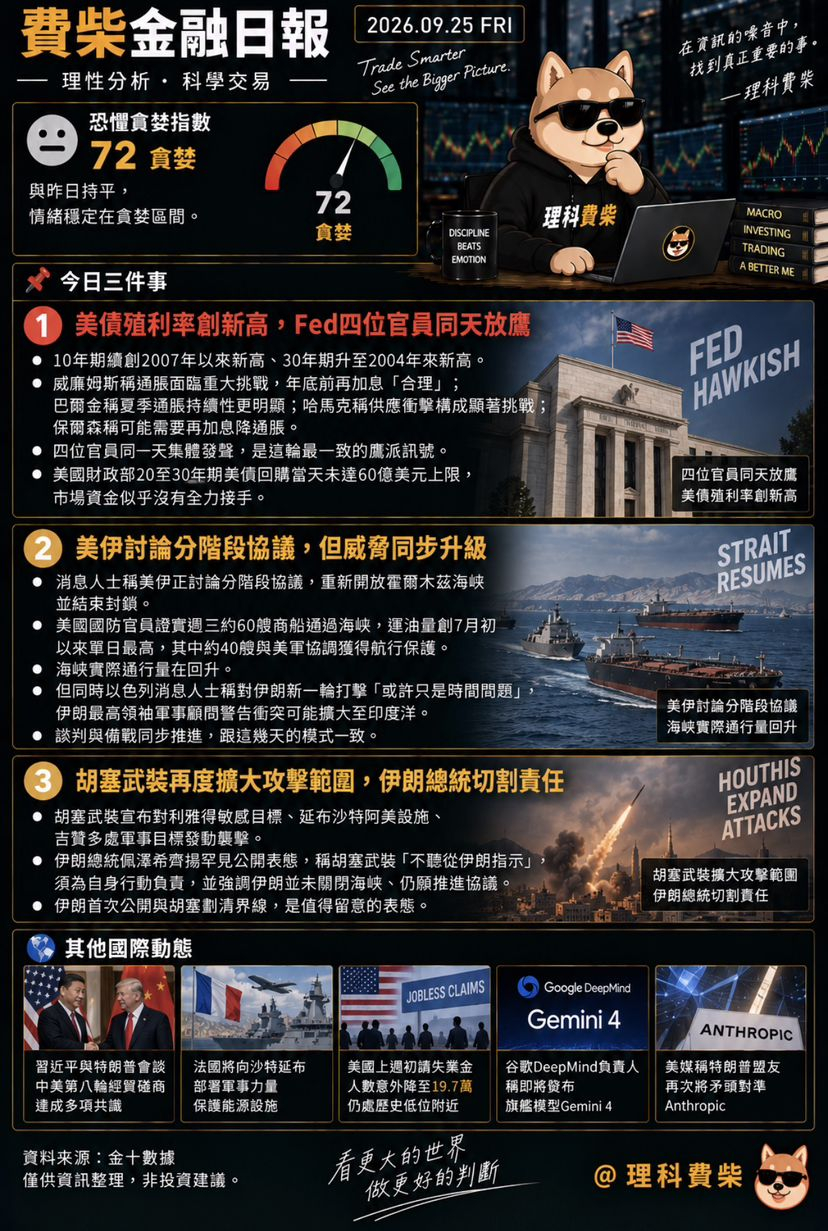
Williams, Bostic, Hameck, and Paulson—four officials all came out with hawkish remarks on the same day. They’re all talking about the same thing: inflation, supply shocks, and rate hikes before year-end. In line with that, the yield on 10-year U.S. Treasuries hit a new high since 2007, while the 30-year yield also climbed to the 2004 record. But this time, the Treasury’s buyback didn’t even fill the full $6 billion cap, and the market doesn’t seem to be buying it as much.
As for the Middle East, it’s still a mix of both sides. The good news is that the U.S. and Iran are reportedly discussing a phased agreement, aiming to reopen the Strait and end the blockade. By Wednesday, the number of cargo ships that actually passed through the Strait jumped to 60, with oil shipments reaching the highest single-day level since July. Of those 40 ships, some are escorted by the U.S. military. But at the same time, Israel has said its next round of strikes against Iran “may only be a matter of time,” and Iranian military advisers have also warned that the conflict could expand to the Indian Ocean.
More unexpectedly, Iran’s president today openly and unusually distanced the country from the Houthi armed group, saying they don’t take orders and should be responsible themselves. He also specifically emphasized that Iran itself hasn’t closed the Strait. Such public statements are uncommon.
What needs to be negotiated is being negotiated, and what needs to be guarded is not being left unguarded.
#FederalReserve #U.S.-IranSituation #HormuzStrait
9/25 Crypto Daily Report
The Fed is very consistent today.
Williams, Bostic, Hameck, and Paulson—four officials all came out with hawkish remarks on the same day. They’re all talking about the same thing: inflation, supply shocks, and rate hikes before year-end. In line with that, the yield on 10-year U.S. Treasuries hit a new high since 2007, while the 30-year yield also climbed to the 2004 record. But this time, the Treasury’s buyback didn’t even fill the full $6 billion cap, and the market doesn’t seem to be buying it as much.
As for the Middle East, it’s still a mix of both sides. The good news is that the U.S. and Iran are reportedly discussing a phased agreement, aiming to reopen the Strait and end the blockade. By Wednesday, the number of cargo ships that actually passed through the Strait jumped to 60, with oil shipments reaching the highest single-day level since July. Of those 40 ships, some are escorted by the U.S. military. But at the same time, Israel has said its next round of strikes against Iran “may only be a matter of time,” and Iranian military advisers have also warned that the conflict could expand to the Indian Ocean.
More unexpectedly, Iran’s president today openly and unusually distanced the country from the Houthi armed group, saying they don’t take orders and should be responsible themselves. He also specifically emphasized that Iran itself hasn’t closed the Strait. Such public statements are uncommon.
What needs to be negotiated is being negotiated, and what needs to be guarded is not being left unguarded.
#FederalReserve #U.S.-IranSituation #HormuzStrait
The Fed is very consistent today.
Williams, Bostic, Hameck, and Paulson—four officials all came out with hawkish remarks on the same day. They’re all talking about the same thing: inflation, supply shocks, and rate hikes before year-end. In line with that, the yield on 10-year U.S. Treasuries hit a new high since 2007, while the 30-year yield also climbed to the 2004 record. But this time, the Treasury’s buyback didn’t even fill the full $6 billion cap, and the market doesn’t seem to be buying it as much.
As for the Middle East, it’s still a mix of both sides. The good news is that the U.S. and Iran are reportedly discussing a phased agreement, aiming to reopen the Strait and end the blockade. By Wednesday, the number of cargo ships that actually passed through the Strait jumped to 60, with oil shipments reaching the highest single-day level since July. Of those 40 ships, some are escorted by the U.S. military. But at the same time, Israel has said its next round of strikes against Iran “may only be a matter of time,” and Iranian military advisers have also warned that the conflict could expand to the Indian Ocean.
More unexpectedly, Iran’s president today openly and unusually distanced the country from the Houthi armed group, saying they don’t take orders and should be responsible themselves. He also specifically emphasized that Iran itself hasn’t closed the Strait. Such public statements are uncommon.
What needs to be negotiated is being negotiated, and what needs to be guarded is not being left unguarded.
#FederalReserve #U.S.-IranSituation #HormuzStrait
178
·
--
$BTC Yesterday noon I surged to around 87245 and couldn’t hold on, and the previous high at 87374 stalled there and didn’t break through.
In the evening I directly followed through lower; the low was cut to 83440, and it’s currently consolidating around 84250.
From what I see, the 82000–87000 range should still continue to fluctuate for a while. After this move, it’s likely to keep ranging/going sideways. The support area below is also getting close, but you just need patience and wait.
The above is based on personal observation, not investment advice. Please evaluate the risks yourself.
$BTC Yesterday noon I surged to around 87245 and couldn’t hold on, and the previous high at 87374 stalled there and didn’t break through.
In the evening I directly followed through lower; the low was cut to 83440, and it’s currently consolidating around 84250.
From what I see, the 82000–87000 range should still continue to fluctuate for a while. After this move, it’s likely to keep ranging/going sideways. The support area below is also getting close, but you just need patience and wait.
The above is based on personal observation, not investment advice. Please evaluate the risks yourself.
In the evening I directly followed through lower; the low was cut to 83440, and it’s currently consolidating around 84250.
From what I see, the 82000–87000 range should still continue to fluctuate for a while. After this move, it’s likely to keep ranging/going sideways. The support area below is also getting close, but you just need patience and wait.
The above is based on personal observation, not investment advice. Please evaluate the risks yourself.
1
171
·
--
Partly True
9/24 crypto daily report
Iran effectively hit itself in the face first.
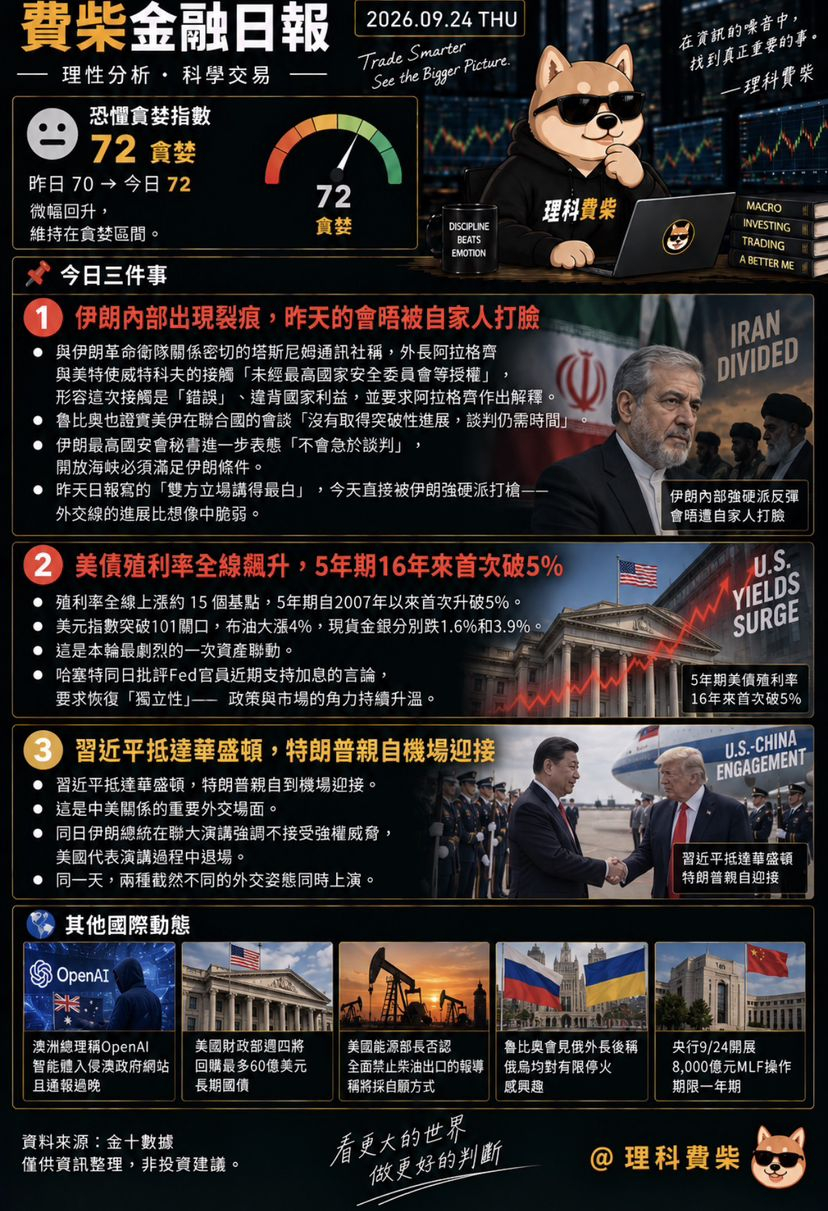
The “productive” three-hour meeting between the US and Iran yesterday has today been singled out by the Tasnim news agency, which is closely linked to the Revolutionary Guards—saying that Foreign Minister Hossein Amir-Abdollahian’s contacts with US envoys were not approved by the Supreme National Security Council at all, and that his framing was basically “incorrect,” violating national interests, while also demanding he come out to explain himself. Rubio also conceded that the UN talks yesterday in fact made little to no breakthrough.
What we thought was progress yesterday now looks more like a tug-of-war inside Iran between moderates and hardliners—not a real loosening in diplomacy.
Even more intense than that is US Treasuries. The 5-year yield for the first time in 16 years has climbed above 5%. Yields across the curve jumped by 15 basis points across the board. The US dollar index also broke through 101. WTI and Brent both surged, with Brent up 4% at the same time. Gold and silver, however, fell—down 1.6% and 3.9% respectively. The scale of this kind of broad asset co-movement is arguably the biggest this cycle.
At a time like this, Haskett stepped in to call out Fed officials for making too hawkish statements, urging “restoring independence,” and the rhetoric is quite heated.
Today’s news is even more lively than the market.
#US-Iran situation #US Treasury yields #Federal Reserve
9/24 crypto daily report
Iran effectively hit itself in the face first.
The “productive” three-hour meeting between the US and Iran yesterday has today been singled out by the Tasnim news agency, which is closely linked to the Revolutionary Guards—saying that Foreign Minister Hossein Amir-Abdollahian’s contacts with US envoys were not approved by the Supreme National Security Council at all, and that his framing was basically “incorrect,” violating national interests, while also demanding he come out to explain himself. Rubio also conceded that the UN talks yesterday in fact made little to no breakthrough.
What we thought was progress yesterday now looks more like a tug-of-war inside Iran between moderates and hardliners—not a real loosening in diplomacy.
Even more intense than that is US Treasuries. The 5-year yield for the first time in 16 years has climbed above 5%. Yields across the curve jumped by 15 basis points across the board. The US dollar index also broke through 101. WTI and Brent both surged, with Brent up 4% at the same time. Gold and silver, however, fell—down 1.6% and 3.9% respectively. The scale of this kind of broad asset co-movement is arguably the biggest this cycle.
At a time like this, Haskett stepped in to call out Fed officials for making too hawkish statements, urging “restoring independence,” and the rhetoric is quite heated.
Today’s news is even more lively than the market.
#US-Iran situation #US Treasury yields #Federal Reserve
Iran effectively hit itself in the face first.
The “productive” three-hour meeting between the US and Iran yesterday has today been singled out by the Tasnim news agency, which is closely linked to the Revolutionary Guards—saying that Foreign Minister Hossein Amir-Abdollahian’s contacts with US envoys were not approved by the Supreme National Security Council at all, and that his framing was basically “incorrect,” violating national interests, while also demanding he come out to explain himself. Rubio also conceded that the UN talks yesterday in fact made little to no breakthrough.
What we thought was progress yesterday now looks more like a tug-of-war inside Iran between moderates and hardliners—not a real loosening in diplomacy.
Even more intense than that is US Treasuries. The 5-year yield for the first time in 16 years has climbed above 5%. Yields across the curve jumped by 15 basis points across the board. The US dollar index also broke through 101. WTI and Brent both surged, with Brent up 4% at the same time. Gold and silver, however, fell—down 1.6% and 3.9% respectively. The scale of this kind of broad asset co-movement is arguably the biggest this cycle.
At a time like this, Haskett stepped in to call out Fed officials for making too hawkish statements, urging “restoring independence,” and the rhetoric is quite heated.
Today’s news is even more lively than the market.
#US-Iran situation #US Treasury yields #Federal Reserve
4
1
2.3k
·
--
9/23 crypto daily report
Today, the US and Iran have talked out something.
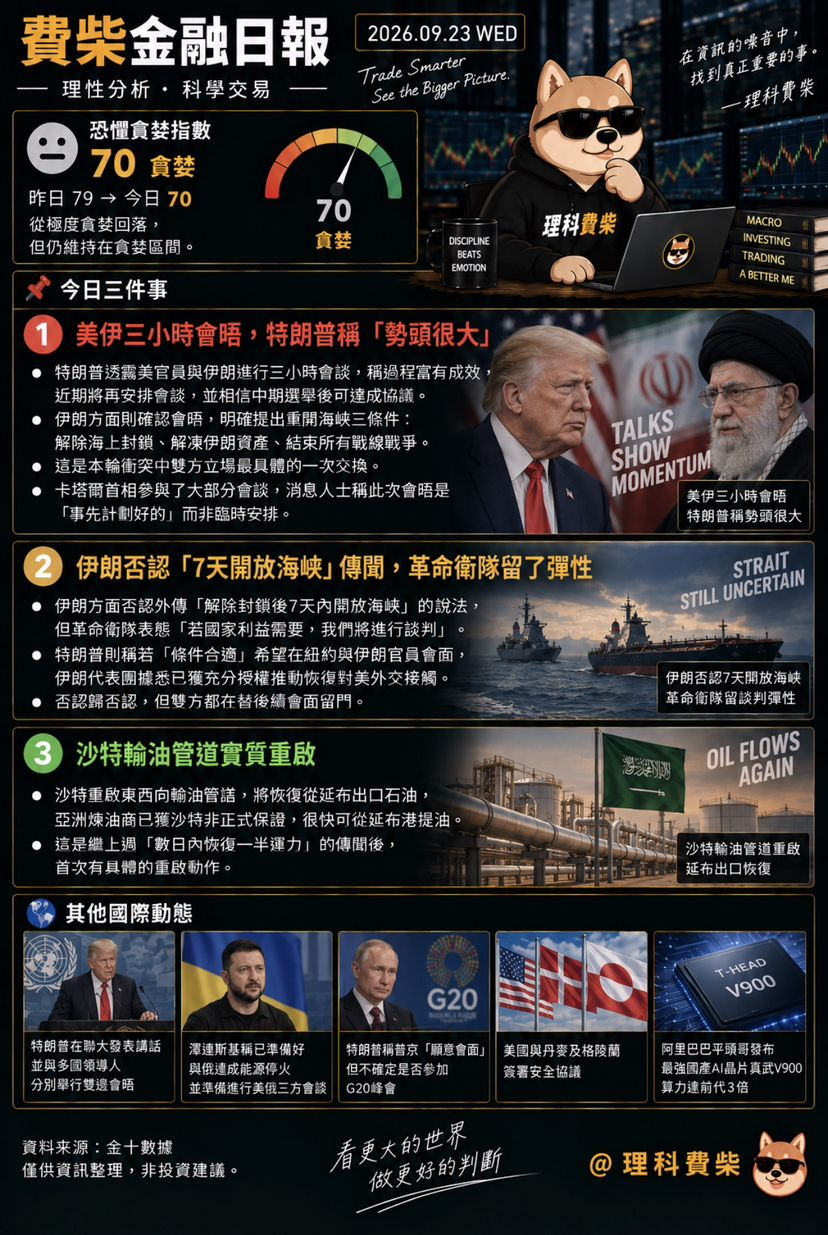
Trump said U.S. officials held a three-hour meeting with Iran, describing the process as “productive,” and added that there may be an opportunity to reach an agreement after the midterm elections. Iran also confirmed that a meeting will take place, and laid out the conditions directly: lifting the maritime blockade, unfreezing assets, and ending the wars on all fronts. This is the clearest statement of both sides’ positions since this round of conflict.
Qatar’s prime minister sat in alongside, and sources say this meeting wasn’t thrown together on the spur of the moment—it was arranged in advance. Iran denied reports of an alleged “7-day opening of the straits,” but the Revolutionary Guard also softened its stance: “If national interests require it, we’ll talk.” Trump, meanwhile, said he’s willing to meet in New York if the conditions are suitable.
Both sides are leaving room for maneuver in their wording. Compared with earlier rounds of threatening remarks, this is far more pragmatic.
On the other side, Saudi Arabia’s moves are more practical—an east-west pipeline has truly been restarted. Yanbu Port has resumed exports, and Asian refiners have already received informal assurances. Rumors are turning into reality, and this track is worth watching more than Middle East political rhetoric.
#中東局勢 #美伊 #oil
9/23 crypto daily report
Today, the US and Iran have talked out something.
Trump said U.S. officials held a three-hour meeting with Iran, describing the process as “productive,” and added that there may be an opportunity to reach an agreement after the midterm elections. Iran also confirmed that a meeting will take place, and laid out the conditions directly: lifting the maritime blockade, unfreezing assets, and ending the wars on all fronts. This is the clearest statement of both sides’ positions since this round of conflict.
Qatar’s prime minister sat in alongside, and sources say this meeting wasn’t thrown together on the spur of the moment—it was arranged in advance. Iran denied reports of an alleged “7-day opening of the straits,” but the Revolutionary Guard also softened its stance: “If national interests require it, we’ll talk.” Trump, meanwhile, said he’s willing to meet in New York if the conditions are suitable.
Both sides are leaving room for maneuver in their wording. Compared with earlier rounds of threatening remarks, this is far more pragmatic.
On the other side, Saudi Arabia’s moves are more practical—an east-west pipeline has truly been restarted. Yanbu Port has resumed exports, and Asian refiners have already received informal assurances. Rumors are turning into reality, and this track is worth watching more than Middle East political rhetoric.
#中東局勢 #美伊 #oil
Today, the US and Iran have talked out something.
Trump said U.S. officials held a three-hour meeting with Iran, describing the process as “productive,” and added that there may be an opportunity to reach an agreement after the midterm elections. Iran also confirmed that a meeting will take place, and laid out the conditions directly: lifting the maritime blockade, unfreezing assets, and ending the wars on all fronts. This is the clearest statement of both sides’ positions since this round of conflict.
Qatar’s prime minister sat in alongside, and sources say this meeting wasn’t thrown together on the spur of the moment—it was arranged in advance. Iran denied reports of an alleged “7-day opening of the straits,” but the Revolutionary Guard also softened its stance: “If national interests require it, we’ll talk.” Trump, meanwhile, said he’s willing to meet in New York if the conditions are suitable.
Both sides are leaving room for maneuver in their wording. Compared with earlier rounds of threatening remarks, this is far more pragmatic.
On the other side, Saudi Arabia’s moves are more practical—an east-west pipeline has truly been restarted. Yanbu Port has resumed exports, and Asian refiners have already received informal assurances. Rumors are turning into reality, and this track is worth watching more than Middle East political rhetoric.
#中東局勢 #美伊 #oil
1
121

·
--
$BTC That's outrageous. Bitcoin actually surged past 85,000.
Take a look—could it be a fake breakout?
If you didn’t get on the train, don’t rush to chase it hard.
There will be plenty of opportunities.
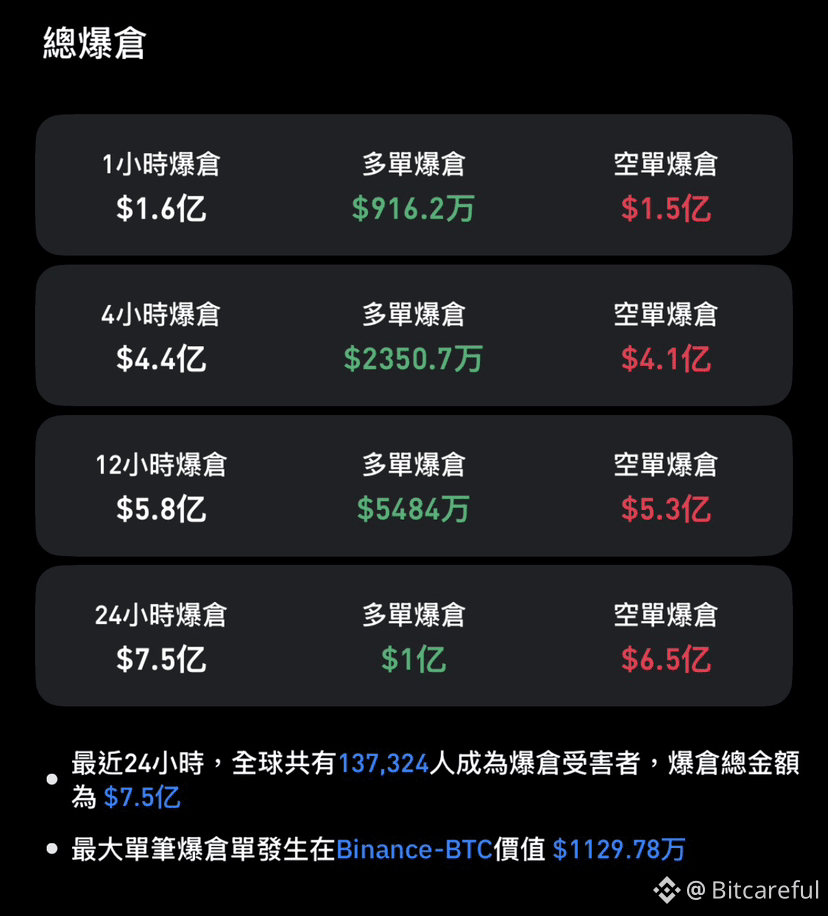
The bears today got liquidated—6.5 hundred million USD straight
$BTC That's outrageous. Bitcoin actually surged past 85,000.
Take a look—could it be a fake breakout?
If you didn’t get on the train, don’t rush to chase it hard.
There will be plenty of opportunities.
The bears today got liquidated—6.5 hundred million USD straight
Take a look—could it be a fake breakout?
If you didn’t get on the train, don’t rush to chase it hard.
There will be plenty of opportunities.
The bears today got liquidated—6.5 hundred million USD straight
68
·
--
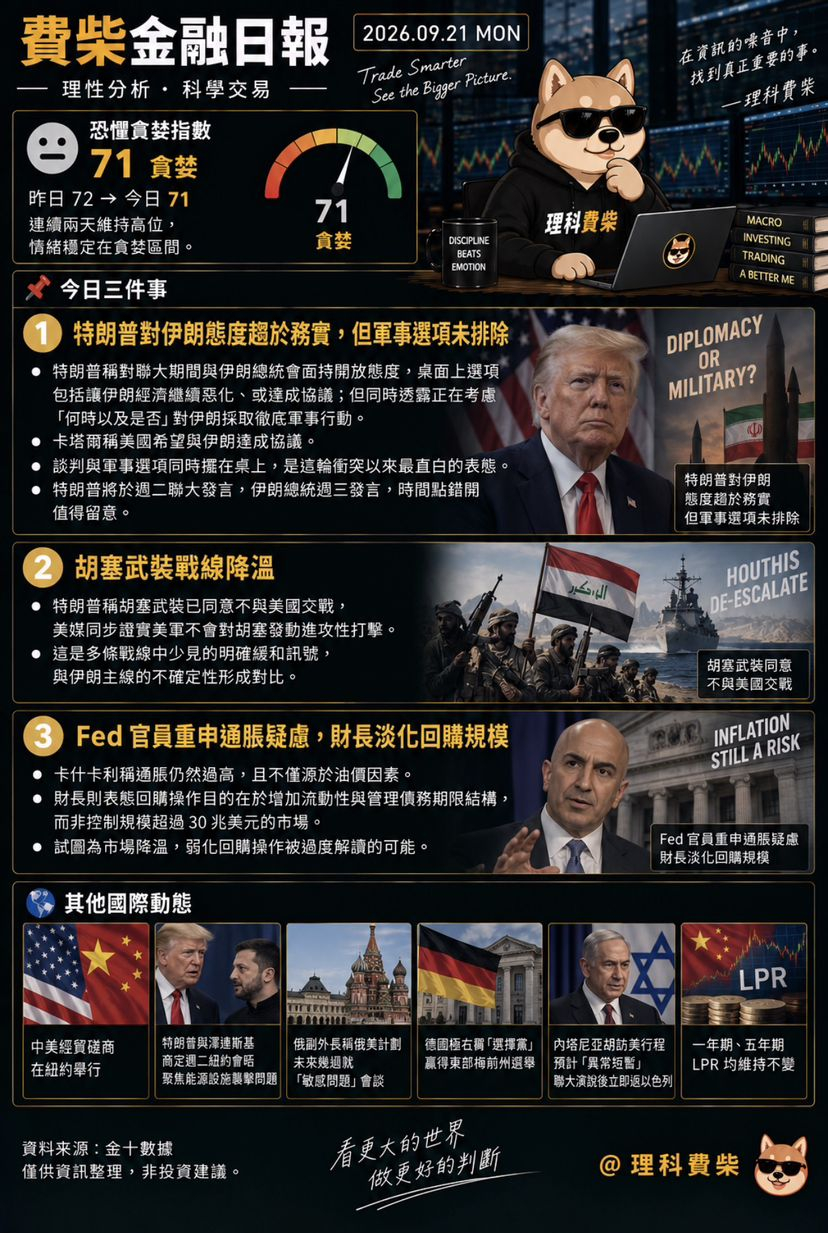
9/21 crypto daily report
Today, Trump spoke very plainly
During the UN General Assembly, they were willing to have Iran’s president
But they’re also considering a military action
“Whether to act, and when”
Both options remain on the table
Negotiation and war—
This is the first time he’s been so direct
On the Houthis’ side, things have cooled down a bit
Trump said the Houthis agreed not to fight the U.S.
And media outlets have also confirmed they will not launch an attack proactively
Across multiple fronts,
This is an unusually clear de-escalation
On the other side,
Trump and Zelensky
are scheduled to meet in New York on Tuesday
They’re discussing the issue of attacks on energy facilities
This week at the UN General Assembly—there’s a lot of drama
#MiddleEastSituation #UNGeneralAssembly #USIranRelations
9/21 crypto daily report
Today, Trump spoke very plainly
During the UN General Assembly, they were willing to have Iran’s president
But they’re also considering a military action
“Whether to act, and when”
Both options remain on the table
Negotiation and war—
This is the first time he’s been so direct
On the Houthis’ side, things have cooled down a bit
Trump said the Houthis agreed not to fight the U.S.
And media outlets have also confirmed they will not launch an attack proactively
Across multiple fronts,
This is an unusually clear de-escalation
On the other side,
Trump and Zelensky
are scheduled to meet in New York on Tuesday
They’re discussing the issue of attacks on energy facilities
This week at the UN General Assembly—there’s a lot of drama
#MiddleEastSituation #UNGeneralAssembly #USIranRelations
Today, Trump spoke very plainly
During the UN General Assembly, they were willing to have Iran’s president
But they’re also considering a military action
“Whether to act, and when”
Both options remain on the table
Negotiation and war—
This is the first time he’s been so direct
On the Houthis’ side, things have cooled down a bit
Trump said the Houthis agreed not to fight the U.S.
And media outlets have also confirmed they will not launch an attack proactively
Across multiple fronts,
This is an unusually clear de-escalation
On the other side,
Trump and Zelensky
are scheduled to meet in New York on Tuesday
They’re discussing the issue of attacks on energy facilities
This week at the UN General Assembly—there’s a lot of drama
#MiddleEastSituation #UNGeneralAssembly #USIranRelations
398
·
--
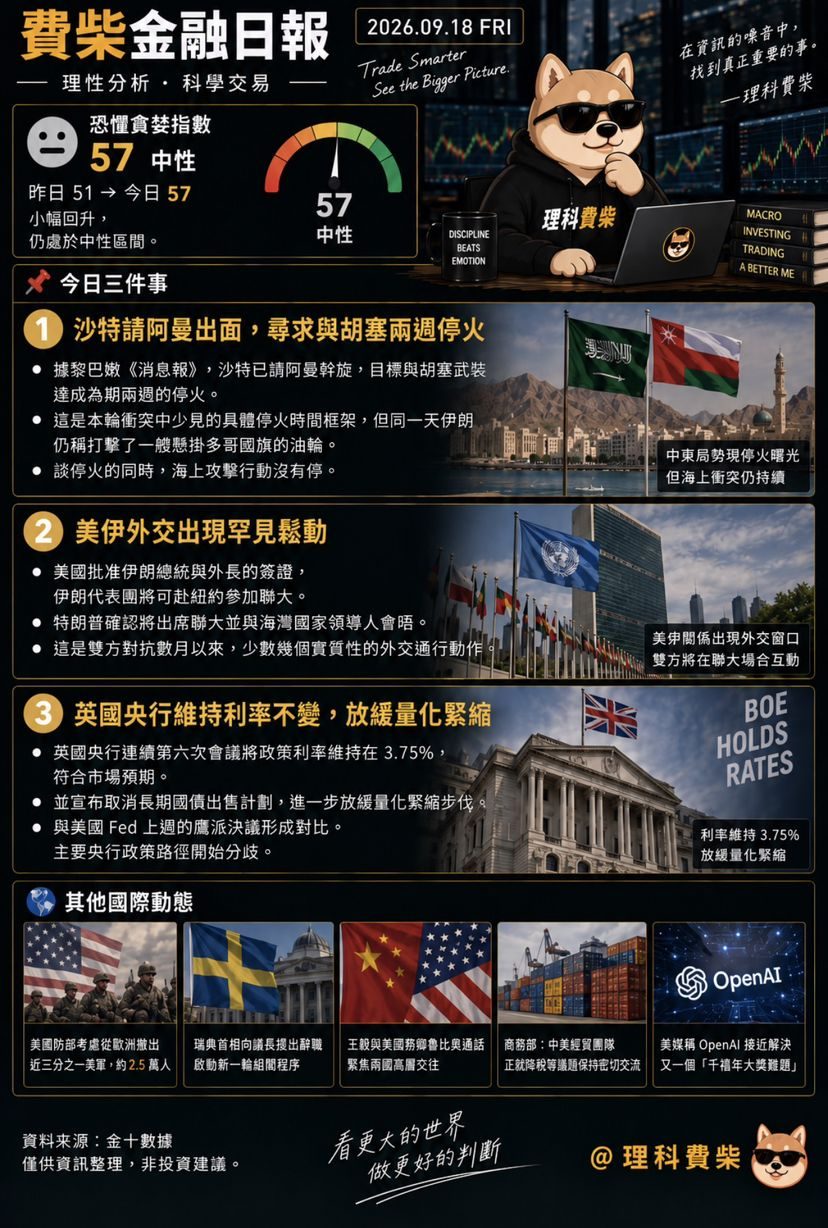
9/18 crypto daily report
Saudi action is quite clear this time.
Please have Oman step in to mediate. The goal is to secure a two-week ceasefire with the Houthis.
This is the first time I’ve seen a specific ceasefire timeframe.
But on the same day, Iran said it struck an oil tanker flying the flag of Togo.
Talking about a ceasefire, yet fighting continues at sea.
There has, however, been progress on the U.S.-Iran front.
The U.S. has approved visas for Iran’s president and foreign minister, allowing the delegation to go to New York to attend the UN General Assembly.
Trump also confirmed he will attend and will meet with leaders of Gulf countries.
After fighting for half a year, this is one of the few concrete diplomatic moves.
#MiddleEastSituation #U.S.-IranRelations #Oil
9/18 crypto daily report
Saudi action is quite clear this time.
Please have Oman step in to mediate. The goal is to secure a two-week ceasefire with the Houthis.
This is the first time I’ve seen a specific ceasefire timeframe.
But on the same day, Iran said it struck an oil tanker flying the flag of Togo.
Talking about a ceasefire, yet fighting continues at sea.
There has, however, been progress on the U.S.-Iran front.
The U.S. has approved visas for Iran’s president and foreign minister, allowing the delegation to go to New York to attend the UN General Assembly.
Trump also confirmed he will attend and will meet with leaders of Gulf countries.
After fighting for half a year, this is one of the few concrete diplomatic moves.
#MiddleEastSituation #U.S.-IranRelations #Oil
Saudi action is quite clear this time.
Please have Oman step in to mediate. The goal is to secure a two-week ceasefire with the Houthis.
This is the first time I’ve seen a specific ceasefire timeframe.
But on the same day, Iran said it struck an oil tanker flying the flag of Togo.
Talking about a ceasefire, yet fighting continues at sea.
There has, however, been progress on the U.S.-Iran front.
The U.S. has approved visas for Iran’s president and foreign minister, allowing the delegation to go to New York to attend the UN General Assembly.
Trump also confirmed he will attend and will meet with leaders of Gulf countries.
After fighting for half a year, this is one of the few concrete diplomatic moves.
#MiddleEastSituation #U.S.-IranRelations #Oil
192
·
--
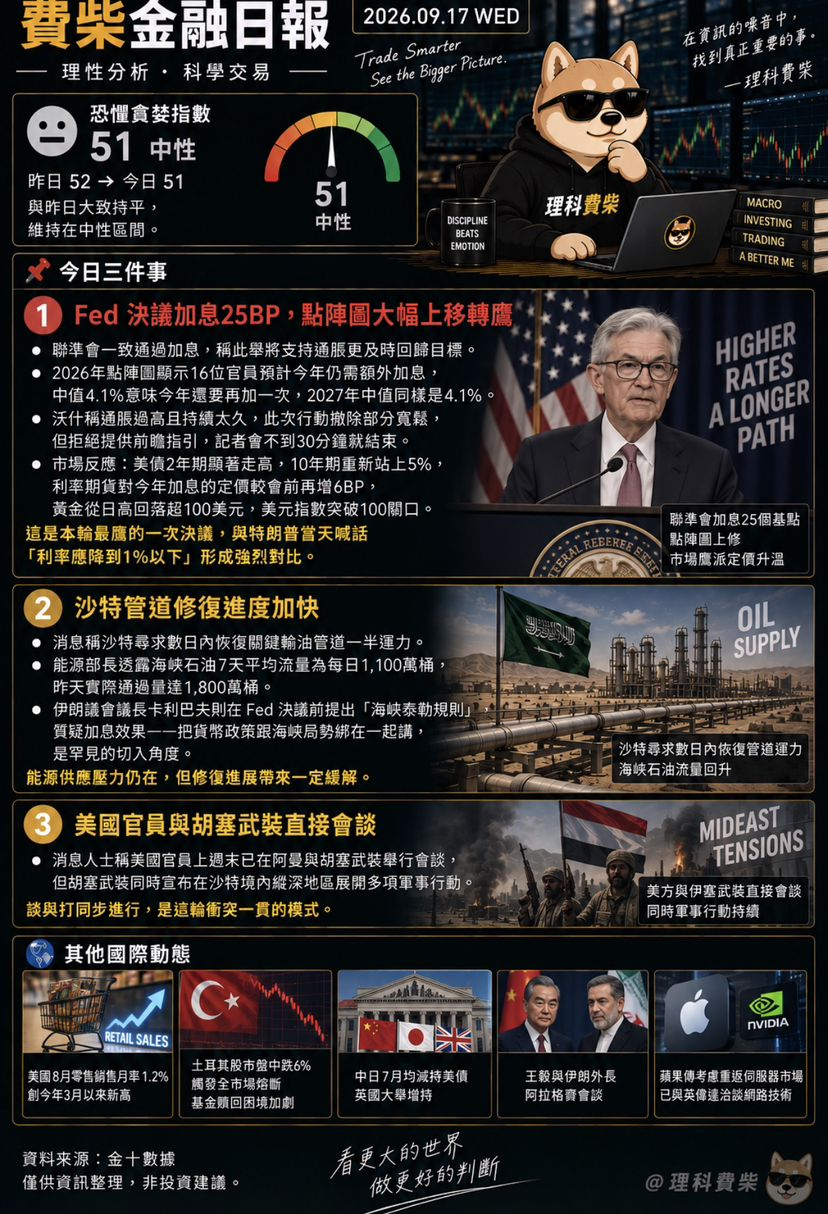
9/17 Crypto Daily Report
Today’s Fed decision—extremely hawkish
A 25BP rate hike was unanimously approved
The dot plot was moved directly up
16 officials said
Another hike is still expected this year
By the time Powell finished speaking in under 30 minutes,
the press conference was already over
The market’s reaction was very straightforward
The 10-year US Treasury yield re-crossed above 5%
Gold fell by more than $100 that day
On the same day
Trump said:
“Interest rates should be lowered to below 1%”
One side wants to raise rates, the other wants to push them to rock bottom
This contrast really is unmatched
#FederalReserve #RateHike #Gold
9/17 Crypto Daily Report
Today’s Fed decision—extremely hawkish
A 25BP rate hike was unanimously approved
The dot plot was moved directly up
16 officials said
Another hike is still expected this year
By the time Powell finished speaking in under 30 minutes,
the press conference was already over
The market’s reaction was very straightforward
The 10-year US Treasury yield re-crossed above 5%
Gold fell by more than $100 that day
On the same day
Trump said:
“Interest rates should be lowered to below 1%”
One side wants to raise rates, the other wants to push them to rock bottom
This contrast really is unmatched
#FederalReserve #RateHike #Gold
Today’s Fed decision—extremely hawkish
A 25BP rate hike was unanimously approved
The dot plot was moved directly up
16 officials said
Another hike is still expected this year
By the time Powell finished speaking in under 30 minutes,
the press conference was already over
The market’s reaction was very straightforward
The 10-year US Treasury yield re-crossed above 5%
Gold fell by more than $100 that day
On the same day
Trump said:
“Interest rates should be lowered to below 1%”
One side wants to raise rates, the other wants to push them to rock bottom
This contrast really is unmatched
#FederalReserve #RateHike #Gold
414
·
--
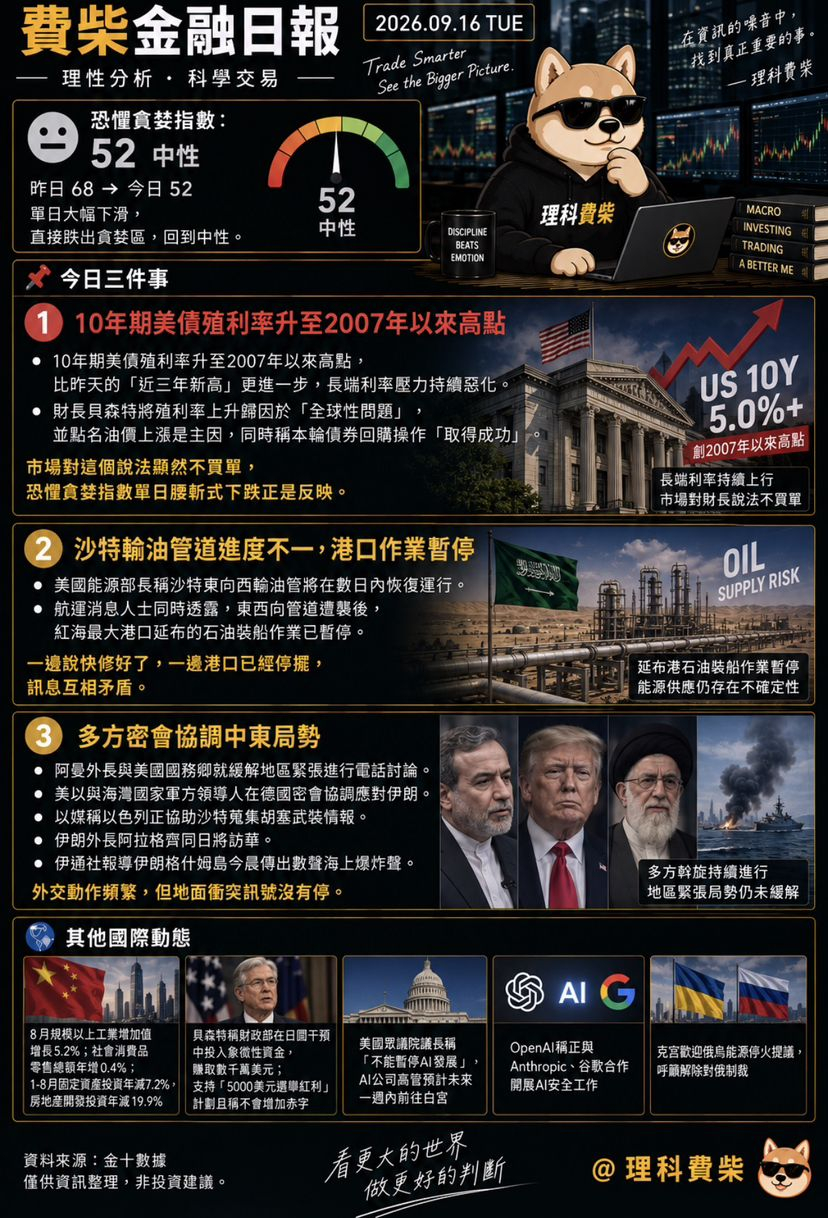
10-year US Treasury yield
Today it rose to its highest point since 2007
Compared with yesterday’s “a new 3-year high,”
this moves up another big step
Treasury Secretary Bessent said it’s a
“global issue,”
blaming the oil price
The market obviously isn’t buying it.
The Fear & Greed Index has plunged—
cutting roughly in half in one go
Things are also contradictory here in the Middle East
The U.S. Energy Secretary said
that the Saudi pipeline will be repaired within days
But shipping news says
the largest port in the Red Sea
has already stopped loading ships
One side says it’ll be fixed soon,
while the other says operations have already stalled
When the information doesn’t line up,
be even more careful
#US-Treasury-Yields #Middle-East-Tension #Oil
10-year US Treasury yield
Today it rose to its highest point since 2007
Compared with yesterday’s “a new 3-year high,”
this moves up another big step
Treasury Secretary Bessent said it’s a
“global issue,”
blaming the oil price
The market obviously isn’t buying it.
The Fear & Greed Index has plunged—
cutting roughly in half in one go
Things are also contradictory here in the Middle East
The U.S. Energy Secretary said
that the Saudi pipeline will be repaired within days
But shipping news says
the largest port in the Red Sea
has already stopped loading ships
One side says it’ll be fixed soon,
while the other says operations have already stalled
When the information doesn’t line up,
be even more careful
#US-Treasury-Yields #Middle-East-Tension #Oil
Today it rose to its highest point since 2007
Compared with yesterday’s “a new 3-year high,”
this moves up another big step
Treasury Secretary Bessent said it’s a
“global issue,”
blaming the oil price
The market obviously isn’t buying it.
The Fear & Greed Index has plunged—
cutting roughly in half in one go
Things are also contradictory here in the Middle East
The U.S. Energy Secretary said
that the Saudi pipeline will be repaired within days
But shipping news says
the largest port in the Red Sea
has already stopped loading ships
One side says it’ll be fixed soon,
while the other says operations have already stalled
When the information doesn’t line up,
be even more careful
#US-Treasury-Yields #Middle-East-Tension #Oil
134
·
--
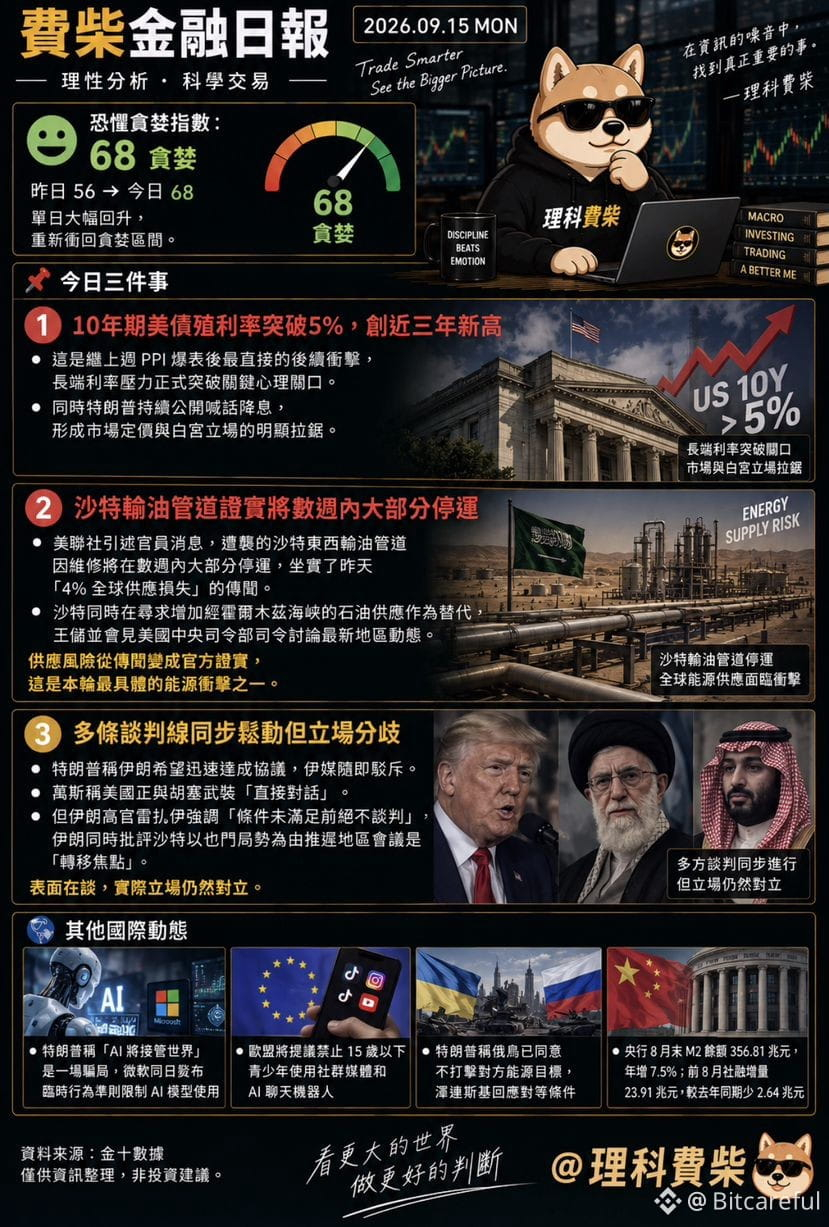
9/15 crypto daily report
Just yesterday we said the Saudi pipeline
could potentially lose 4% of supply
Today it was confirmed directly
AP says officials confirmed
that within weeks most of the pipeline will be shut down
Rumor turned into fact
The logic behind oil prices is now more solid
On the same day
U.S. 10-year Treasury yields
broke above 5% directly—the first time in three years
Interest-rate pressure finally pierced through that layer of paper
The Middle East negotiation track is also highly divided
Trump said Iran wants to reach a deal faster
The Iranian media immediately came out to refute
The U.S. says it is having “direct talks” with the Houthis
But an Iranian official says the conditions are not met and no talks are possible
On the surface, everyone is loosening their stance
But not a single step has been conceded
#U.S._Treasury_yields #Middle_East_tensions #Oil
9/15 crypto daily report
Just yesterday we said the Saudi pipeline
could potentially lose 4% of supply
Today it was confirmed directly
AP says officials confirmed
that within weeks most of the pipeline will be shut down
Rumor turned into fact
The logic behind oil prices is now more solid
On the same day
U.S. 10-year Treasury yields
broke above 5% directly—the first time in three years
Interest-rate pressure finally pierced through that layer of paper
The Middle East negotiation track is also highly divided
Trump said Iran wants to reach a deal faster
The Iranian media immediately came out to refute
The U.S. says it is having “direct talks” with the Houthis
But an Iranian official says the conditions are not met and no talks are possible
On the surface, everyone is loosening their stance
But not a single step has been conceded
#U.S._Treasury_yields #Middle_East_tensions #Oil
Just yesterday we said the Saudi pipeline
could potentially lose 4% of supply
Today it was confirmed directly
AP says officials confirmed
that within weeks most of the pipeline will be shut down
Rumor turned into fact
The logic behind oil prices is now more solid
On the same day
U.S. 10-year Treasury yields
broke above 5% directly—the first time in three years
Interest-rate pressure finally pierced through that layer of paper
The Middle East negotiation track is also highly divided
Trump said Iran wants to reach a deal faster
The Iranian media immediately came out to refute
The U.S. says it is having “direct talks” with the Houthis
But an Iranian official says the conditions are not met and no talks are possible
On the surface, everyone is loosening their stance
But not a single step has been conceded
#U.S._Treasury_yields #Middle_East_tensions #Oil
118
·
--
Hey, the salary is way too low. For $500 a month, you’re supposed to help infiltrate U.S. companies—this value-for-money is terrible.
North Korea is recruiting remote IT workers from third countries like Iran and Lebanon. They search for candidates on LinkedIn and have them take on part-time roles as “interview assistants,” paid $500 in cryptocurrency. Once these foreign workers pass the interviews and secure positions, the actual work is then handed over to North Korea.
In July this year, the U.S. government, along with multiple other agencies, issued a warning: in addition to sending salaries back to the parent organization, North Korean IT personnel also pose internal threats, including data theft, cryptocurrency theft, and the leakage of sensitive information.
The data is even more alarming—cryptocurrency losses caused by North Korea-linked hackers in 2025 exceeded **$2 billion**, a 51% year-over-year increase.
A $500 part-time job buys you a security breach across the entire supply chain. 🫡
Hey, the salary is way too low. For $500 a month, you’re supposed to help infiltrate U.S. companies—this value-for-money is terrible.
North Korea is recruiting remote IT workers from third countries like Iran and Lebanon. They search for candidates on LinkedIn and have them take on part-time roles as “interview assistants,” paid $500 in cryptocurrency. Once these foreign workers pass the interviews and secure positions, the actual work is then handed over to North Korea.
In July this year, the U.S. government, along with multiple other agencies, issued a warning: in addition to sending salaries back to the parent organization, North Korean IT personnel also pose internal threats, including data theft, cryptocurrency theft, and the leakage of sensitive information.
The data is even more alarming—cryptocurrency losses caused by North Korea-linked hackers in 2025 exceeded **$2 billion**, a 51% year-over-year increase.
A $500 part-time job buys you a security breach across the entire supply chain. 🫡
North Korea is recruiting remote IT workers from third countries like Iran and Lebanon. They search for candidates on LinkedIn and have them take on part-time roles as “interview assistants,” paid $500 in cryptocurrency. Once these foreign workers pass the interviews and secure positions, the actual work is then handed over to North Korea.
In July this year, the U.S. government, along with multiple other agencies, issued a warning: in addition to sending salaries back to the parent organization, North Korean IT personnel also pose internal threats, including data theft, cryptocurrency theft, and the leakage of sensitive information.
The data is even more alarming—cryptocurrency losses caused by North Korea-linked hackers in 2025 exceeded **$2 billion**, a 51% year-over-year increase.
A $500 part-time job buys you a security breach across the entire supply chain. 🫡

83
·
--
Verified
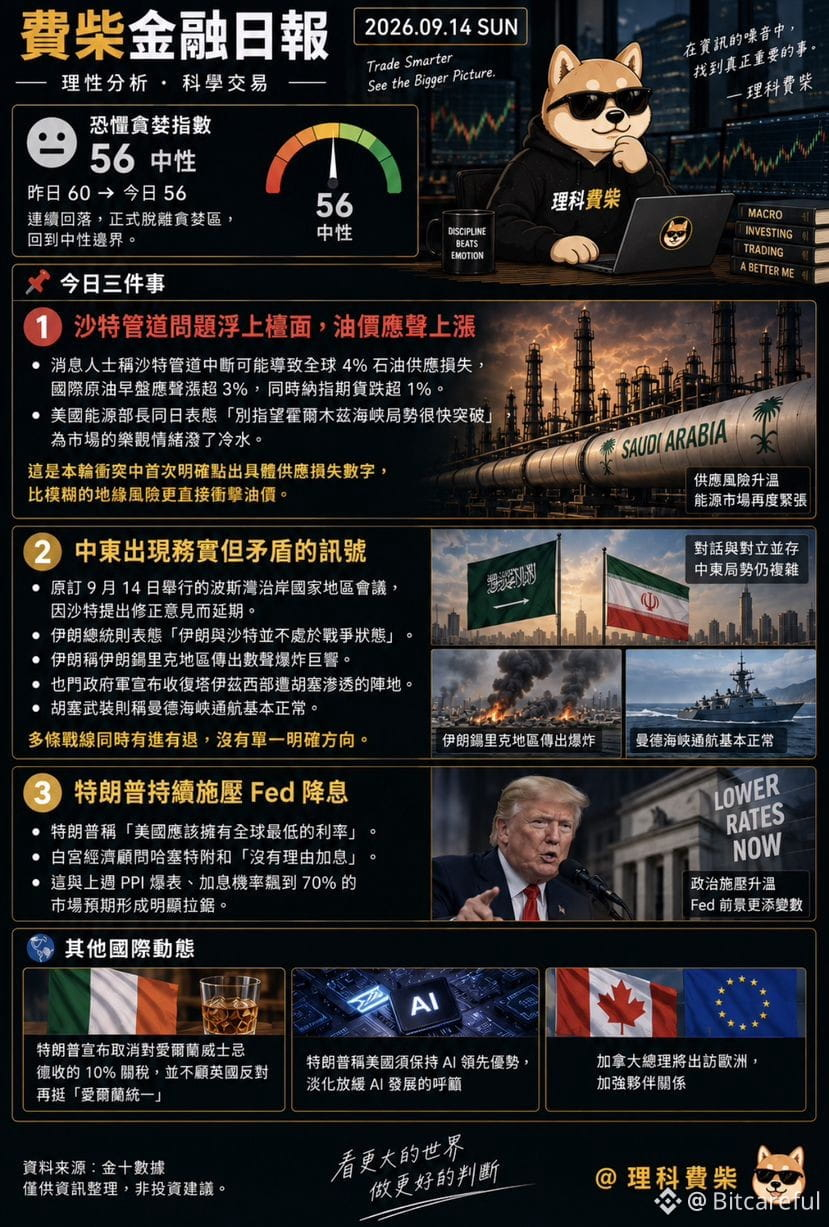
9/14 Daily Report Oil Surges 3%!!!
A Saudi pipeline incident happened
Reports say it could lead to
a global loss of 4% of oil supply
This is the most specific
supply-loss figure so far
Crude oil jumped immediately by over 3%
Nasdaq futures fell by more than 1%
U.S. Energy Secretary also poured cold water:
Don’t expect a breakthrough in the Strait issue anytime soon
On the other side
Trump keeps pushing calls for rate cuts
“America should have the lowest interest rates in the world”
Last week the PPI announcement already scared everyone
This week the talk of rate cuts is back again
Signals from both bulls and bears appear at the same time
This is when judgment is most tested
#Oil #MiddleEastSituation #Fed
9/14 Daily Report Oil Surges 3%!!!
A Saudi pipeline incident happened
Reports say it could lead to
a global loss of 4% of oil supply
This is the most specific
supply-loss figure so far
Crude oil jumped immediately by over 3%
Nasdaq futures fell by more than 1%
U.S. Energy Secretary also poured cold water:
Don’t expect a breakthrough in the Strait issue anytime soon
On the other side
Trump keeps pushing calls for rate cuts
“America should have the lowest interest rates in the world”
Last week the PPI announcement already scared everyone
This week the talk of rate cuts is back again
Signals from both bulls and bears appear at the same time
This is when judgment is most tested
#Oil #MiddleEastSituation #Fed
A Saudi pipeline incident happened
Reports say it could lead to
a global loss of 4% of oil supply
This is the most specific
supply-loss figure so far
Crude oil jumped immediately by over 3%
Nasdaq futures fell by more than 1%
U.S. Energy Secretary also poured cold water:
Don’t expect a breakthrough in the Strait issue anytime soon
On the other side
Trump keeps pushing calls for rate cuts
“America should have the lowest interest rates in the world”
Last week the PPI announcement already scared everyone
This week the talk of rate cuts is back again
Signals from both bulls and bears appear at the same time
This is when judgment is most tested
#Oil #MiddleEastSituation #Fed
1
613
·
--
You can take a look at the coin on this 4stock chain—I personally bought a little
This does not constitute investment advice
You can take a look at the coin on this 4stock chain—I personally bought a little
This does not constitute investment advice
This does not constitute investment advice
734
·
--
9/10 Coin Circle Daily Report
Today, Trump said something very straightforward.
“After the midterm elections are over,
the war will end.”
In translation:
The tempo of this battle is moving along with the election.
On the same day,
Iran’s Sileik also came under shelling again.
Iran’s response was just as tough:
it would carry out “escalatory strikes,”
but it also listed ceasefire conditions.
Fight, but the conditions have already begun to be negotiated.
Oil prices are even more dramatic.
Brent crude directly surged past $100.
Natural gas also hit a new high since 2023.
What the war is affecting
isn’t just geopolitics—it’s global inflation.
#US-IranConflict #OilPrices #Geopolitics
9/10 Coin Circle Daily Report
Today, Trump said something very straightforward.
“After the midterm elections are over,
the war will end.”
In translation:
The tempo of this battle is moving along with the election.
On the same day,
Iran’s Sileik also came under shelling again.
Iran’s response was just as tough:
it would carry out “escalatory strikes,”
but it also listed ceasefire conditions.
Fight, but the conditions have already begun to be negotiated.
Oil prices are even more dramatic.
Brent crude directly surged past $100.
Natural gas also hit a new high since 2023.
What the war is affecting
isn’t just geopolitics—it’s global inflation.
#US-IranConflict #OilPrices #Geopolitics
Today, Trump said something very straightforward.
“After the midterm elections are over,
the war will end.”
In translation:
The tempo of this battle is moving along with the election.
On the same day,
Iran’s Sileik also came under shelling again.
Iran’s response was just as tough:
it would carry out “escalatory strikes,”
but it also listed ceasefire conditions.
Fight, but the conditions have already begun to be negotiated.
Oil prices are even more dramatic.
Brent crude directly surged past $100.
Natural gas also hit a new high since 2023.
What the war is affecting
isn’t just geopolitics—it’s global inflation.
#US-IranConflict #OilPrices #Geopolitics

132
·
--
Apple announces iPhone 18 Pro series pricing:
Prices start at $1,199
Apple releases iPhone 18 Pro series pricing:
iPhone 18 Pro: from $1,199 (about NT$37,000)
iPhone 18 Pro Max: from $1,299 (about NT$40,000)
Compared with the previous generation:
iPhone 17 Pro starts at $1,099 / RMB 8,999
iPhone 17 Pro Max starts at $1,199 / RMB 9,999.
Apple announces iPhone 18 Pro series pricing:
Prices start at $1,199
Apple releases iPhone 18 Pro series pricing:
iPhone 18 Pro: from $1,199 (about NT$37,000)
iPhone 18 Pro Max: from $1,299 (about NT$40,000)
Compared with the previous generation:
iPhone 17 Pro starts at $1,099 / RMB 8,999
iPhone 17 Pro Max starts at $1,199 / RMB 9,999.
Prices start at $1,199
Apple releases iPhone 18 Pro series pricing:
iPhone 18 Pro: from $1,199 (about NT$37,000)
iPhone 18 Pro Max: from $1,299 (about NT$40,000)
Compared with the previous generation:
iPhone 17 Pro starts at $1,099 / RMB 8,999
iPhone 17 Pro Max starts at $1,199 / RMB 9,999.
93
·
--
September 9th Crypto Daily Report
The U.S. and Iran have finally faced off again after a long time
U.S. forces attacked targets in Iran
Destroying five Iranian oil transport ships
Iran retaliated against U.S. forces within Jordan’s territory
U.S. media also revealed more details
Iran struck U.S. Navy vessels last weekend
And again this past Wednesday
Both times they didn’t hit their targets
But it already amounts to a direct exchange of fire
Iranian officials then issued further warnings:
Oil tanker crew members from Kuwait and Bahrain should prepare to evacuate
The front line is widening further and further
But at the same time, Saudi media said
Iran and the U.S. are still talking through mediators
They’re fighting, but the door isn’t completely shut
#U.S.-Iran Conflict #MiddleEastSituation #Geopolitics
September 9th Crypto Daily Report
The U.S. and Iran have finally faced off again after a long time
U.S. forces attacked targets in Iran
Destroying five Iranian oil transport ships
Iran retaliated against U.S. forces within Jordan’s territory
U.S. media also revealed more details
Iran struck U.S. Navy vessels last weekend
And again this past Wednesday
Both times they didn’t hit their targets
But it already amounts to a direct exchange of fire
Iranian officials then issued further warnings:
Oil tanker crew members from Kuwait and Bahrain should prepare to evacuate
The front line is widening further and further
But at the same time, Saudi media said
Iran and the U.S. are still talking through mediators
They’re fighting, but the door isn’t completely shut
#U.S.-Iran Conflict #MiddleEastSituation #Geopolitics
The U.S. and Iran have finally faced off again after a long time
U.S. forces attacked targets in Iran
Destroying five Iranian oil transport ships
Iran retaliated against U.S. forces within Jordan’s territory
U.S. media also revealed more details
Iran struck U.S. Navy vessels last weekend
And again this past Wednesday
Both times they didn’t hit their targets
But it already amounts to a direct exchange of fire
Iranian officials then issued further warnings:
Oil tanker crew members from Kuwait and Bahrain should prepare to evacuate
The front line is widening further and further
But at the same time, Saudi media said
Iran and the U.S. are still talking through mediators
They’re fighting, but the door isn’t completely shut
#U.S.-Iran Conflict #MiddleEastSituation #Geopolitics

1
141
·
--
Bullish
$BTC Layout thinking
At the moment, my estimate is to prepare to go long around the 77,000 level.
There’s no need to enter right now. Let the price move into this zone on its own first, then decide the next step based on how it responds once it arrives there.
The reason is simple—at the same support level, different market sentiment can produce completely different price action. If it drops to 77,000 via panic-driven, sharp selling, it usually shows up as a high-volume selloff with long lower wicks or even a direct spike/needle. That’s actually a good signal. But if it grinds down slowly and steadily into that level with bearish candles, it means the selling pressure hasn’t been fully released yet. In that case, the risk of going long is much higher.
So my plan is to take it in two steps:
Step 1: When the price gets near 77,000, first observe whether there are signs of a bottoming out—whether volume expands, whether long lower wicks appear, and whether the market can quickly reclaim lost ground.
Step 2: Only if the reaction looks healthy do I consider entering. If it’s just weak sideways movement or it keeps breaking down, then I’ll continue waiting lower instead of forcing a buy.
77,000 is just the first key level I currently see. After the market reaches it, how it responds matters more than the number itself.
⚠️ The above is my personal trading thought process and not investment advice. Please assess risks on your own and make sure to plan your stop-loss accordingly.
$BTC Layout thinking
At the moment, my estimate is to prepare to go long around the 77,000 level.
There’s no need to enter right now. Let the price move into this zone on its own first, then decide the next step based on how it responds once it arrives there.
The reason is simple—at the same support level, different market sentiment can produce completely different price action. If it drops to 77,000 via panic-driven, sharp selling, it usually shows up as a high-volume selloff with long lower wicks or even a direct spike/needle. That’s actually a good signal. But if it grinds down slowly and steadily into that level with bearish candles, it means the selling pressure hasn’t been fully released yet. In that case, the risk of going long is much higher.
So my plan is to take it in two steps:
Step 1: When the price gets near 77,000, first observe whether there are signs of a bottoming out—whether volume expands, whether long lower wicks appear, and whether the market can quickly reclaim lost ground.
Step 2: Only if the reaction looks healthy do I consider entering. If it’s just weak sideways movement or it keeps breaking down, then I’ll continue waiting lower instead of forcing a buy.
77,000 is just the first key level I currently see. After the market reaches it, how it responds matters more than the number itself.
⚠️ The above is my personal trading thought process and not investment advice. Please assess risks on your own and make sure to plan your stop-loss accordingly.
At the moment, my estimate is to prepare to go long around the 77,000 level.
There’s no need to enter right now. Let the price move into this zone on its own first, then decide the next step based on how it responds once it arrives there.
The reason is simple—at the same support level, different market sentiment can produce completely different price action. If it drops to 77,000 via panic-driven, sharp selling, it usually shows up as a high-volume selloff with long lower wicks or even a direct spike/needle. That’s actually a good signal. But if it grinds down slowly and steadily into that level with bearish candles, it means the selling pressure hasn’t been fully released yet. In that case, the risk of going long is much higher.
So my plan is to take it in two steps:
Step 1: When the price gets near 77,000, first observe whether there are signs of a bottoming out—whether volume expands, whether long lower wicks appear, and whether the market can quickly reclaim lost ground.
Step 2: Only if the reaction looks healthy do I consider entering. If it’s just weak sideways movement or it keeps breaking down, then I’ll continue waiting lower instead of forcing a buy.
77,000 is just the first key level I currently see. After the market reaches it, how it responds matters more than the number itself.
⚠️ The above is my personal trading thought process and not investment advice. Please assess risks on your own and make sure to plan your stop-loss accordingly.
90
·
--
CZ may have revealed something big
A large fund has received SEC approval, allowing it to tokenize the fund—meaning the fund itself can trade tokenized shares, and even the assets within its investment portfolio can be traded.
If this is true, it suggests the IPO might be moving to the blockchain. Once there is a precedent, all funds will likely rush to issue their own native equity tokens.
Not many people understand this, but the impact will be huge.🫡
CZ may have revealed something big
A large fund has received SEC approval, allowing it to tokenize the fund—meaning the fund itself can trade tokenized shares, and even the assets within its investment portfolio can be traded.
If this is true, it suggests the IPO might be moving to the blockchain. Once there is a precedent, all funds will likely rush to issue their own native equity tokens.
Not many people understand this, but the impact will be huge.🫡
A large fund has received SEC approval, allowing it to tokenize the fund—meaning the fund itself can trade tokenized shares, and even the assets within its investment portfolio can be traded.
If this is true, it suggests the IPO might be moving to the blockchain. Once there is a precedent, all funds will likely rush to issue their own native equity tokens.
Not many people understand this, but the impact will be huge.🫡

1
3
2.7k
·
--
$MU Will Micron Taiwan go on strike? Don't rush to call it bad news
Micron Taiwan's union has nearly 10,000 members. Within August, an internal survey found that 80% support a strike. Their demand is a bonus equivalent to 83 months of pay, following the profit-sharing system used by Samsung and Hynix.
The trigger is simple: Micron made a huge profit this year from AI memory, and its stock price has tripled, but employees' profit-sharing amounts to only 2.6 months—far too low compared with competitors.
Is this really bad news? I think it's not that simple.
If there is a strike in the short term, it could actually make the already tight memory supply even tighter. Prices might not fall but instead rise, which may not necessarily be bad for revenue. The real risk is dragging it out—delaying HBM shipments and undermining trust with AI customers.
Also, the script looks familiar—Samsung was almost going on strike in May this year too. In the end, a profit-sharing deal was reached, and things calmed down. Micron will most likely follow the same path and negotiate rather than truly stop production.
As of now, talks are still ongoing, so don't jump to conclusions yet.
⚠️ Personal observations only, not investment advice.
$MU Will Micron Taiwan go on strike? Don't rush to call it bad news
Micron Taiwan's union has nearly 10,000 members. Within August, an internal survey found that 80% support a strike. Their demand is a bonus equivalent to 83 months of pay, following the profit-sharing system used by Samsung and Hynix.
The trigger is simple: Micron made a huge profit this year from AI memory, and its stock price has tripled, but employees' profit-sharing amounts to only 2.6 months—far too low compared with competitors.
Is this really bad news? I think it's not that simple.
If there is a strike in the short term, it could actually make the already tight memory supply even tighter. Prices might not fall but instead rise, which may not necessarily be bad for revenue. The real risk is dragging it out—delaying HBM shipments and undermining trust with AI customers.
Also, the script looks familiar—Samsung was almost going on strike in May this year too. In the end, a profit-sharing deal was reached, and things calmed down. Micron will most likely follow the same path and negotiate rather than truly stop production.
As of now, talks are still ongoing, so don't jump to conclusions yet.
⚠️ Personal observations only, not investment advice.
Micron Taiwan's union has nearly 10,000 members. Within August, an internal survey found that 80% support a strike. Their demand is a bonus equivalent to 83 months of pay, following the profit-sharing system used by Samsung and Hynix.
The trigger is simple: Micron made a huge profit this year from AI memory, and its stock price has tripled, but employees' profit-sharing amounts to only 2.6 months—far too low compared with competitors.
Is this really bad news? I think it's not that simple.
If there is a strike in the short term, it could actually make the already tight memory supply even tighter. Prices might not fall but instead rise, which may not necessarily be bad for revenue. The real risk is dragging it out—delaying HBM shipments and undermining trust with AI customers.
Also, the script looks familiar—Samsung was almost going on strike in May this year too. In the end, a profit-sharing deal was reached, and things calmed down. Micron will most likely follow the same path and negotiate rather than truly stop production.
As of now, talks are still ongoing, so don't jump to conclusions yet.
⚠️ Personal observations only, not investment advice.

382
Log in to explore more content
Join global crypto users on Binance Square
⚡️ Get latest and useful information about crypto.
💬 Trusted by the world’s largest crypto exchange.
👍 Discover real insights from verified creators.
Email / Phone number
Trending Topics
EthereumBreaksAbove$2700
0 views
22 Discussing
$BTC Is Back Above $85k 🚀🥂
$85k → $86k → $90k
$ETH Reclaim $2700 again 🚀💥
$2700 → $2800 → $3000
Market Is Extremely Hype 🔥🔥🔥
Liora Vane
·0 Likes
·37 views
GrayscaleZcashETFHits$1BNetAssets
240 views
24 Discussing
BitcoinSpotETFsNetInflow$191M
3,670 views
141 Discussing