
皮卡-
44 Posts

皮卡-
Report
Block User
入圈一年,从爆仓到复盘,希望可以找到一条属于自己的路。
Open Trade
Frequent Trader
7.9 Months
7 Following
5 Followers
50 Liked
Posts
Portfolio
·
--
Article
Day 41 | Season 2, Day 05: How to Keep an Emotion JournalHow do you feel before opening a position, and how do you feel after closing it?
It’s Day 5 of Season 2. Today, let’s talk about emotion journaling.
I used to think trading was a technical matter. Later, I realized that emotions are the magnifying glass. Now, before opening a position, I write one sentence: Am I feeling impatient, greedy, afraid, or calm right now? After closing it, I write another: Did I stick to my plan this time, or did my emotions take over?
The notes don’t need to be long—three lines are enough: how you feel before opening a position, what changes during the trade, and how you feel after closing it. After keeping this up for a while, I can tell when I’m most likely to lose control. Journaling won’t make emotions disappear, but it can help me stop before things get out of hand.
Day 41 | Season 2, Day 05: How to Keep an Emotion Journal
How do you feel before opening a position, and how do you feel after closing it?
It’s Day 5 of Season 2. Today, let’s talk about emotion journaling.
I used to think trading was a technical matter. Later, I realized that emotions are the magnifying glass. Now, before opening a position, I write one sentence: Am I feeling impatient, greedy, afraid, or calm right now? After closing it, I write another: Did I stick to my plan this time, or did my emotions take over?
The notes don’t need to be long—three lines are enough: how you feel before opening a position, what changes during the trade, and how you feel after closing it. After keeping this up for a while, I can tell when I’m most likely to lose control. Journaling won’t make emotions disappear, but it can help me stop before things get out of hand.
2
928
·
--
Article
Day 40 | Regular Feature 01: My Position and Stop-Loss LogWithout records, rules are just slogans.
This is the first installment of my regular “Tools Checklist” feature. Today I’m sharing the position and stop-loss log I use. It’s simple, with just a few columns:
Date, asset, direction, reason for entry, position size, maximum tolerable loss, stop-loss condition, reason for exit, emotions at the time, whether I followed the plan, and one thing to change next week.
I don’t keep records to make them look good; I keep them to spot recurring patterns. For example, I’ve noticed that I’m most likely to increase my position when I’m in a hurry, and to chase prices when I’m afraid of missing out. The log doesn’t make decisions for me, but it helps me see how I mess up my positions.
Day 40 | Regular Feature 01: My Position and Stop-Loss Log
Without records, rules are just slogans.
This is the first installment of my regular “Tools Checklist” feature. Today I’m sharing the position and stop-loss log I use. It’s simple, with just a few columns:
Date, asset, direction, reason for entry, position size, maximum tolerable loss, stop-loss condition, reason for exit, emotions at the time, whether I followed the plan, and one thing to change next week.
I don’t keep records to make them look good; I keep them to spot recurring patterns. For example, I’ve noticed that I’m most likely to increase my position when I’m in a hurry, and to chase prices when I’m afraid of missing out. The log doesn’t make decisions for me, but it helps me see how I mess up my positions.
1
321
·
--
Article
Day 39 | Season 2, Day 4: A checklist isn’t just a formality—it should stop impulsive decisionsHow to use a checklist so it doesn’t become a box-ticking exercise
This is Day 4 of Season 2. We’ve already talked about pre-trade checklists, so today I won’t list the items again—I’ll just talk about how to use one.
I used to make my checklists very thorough, but never look at them during a trade—which made writing them pointless. Later, I changed my approach to three steps:
First, read it through before opening a position, and write down one sentence: “Which item am I most tempted to skip right now?”
Second, if the item you’re most tempted to skip is about position size or a stop-loss, stop right there. Don’t open the position.
Third, after opening the position, record whether the checklist actually stopped you.
A checklist isn’t valuable because it covers everything; it’s valuable because it stops you at the most dangerous moment. The item you’re most tempted to skip is often the one you most need to stick to.
Day 39 | Season 2, Day 4: A checklist isn’t just a formality—it should stop impulsive decisions
How to use a checklist so it doesn’t become a box-ticking exercise
This is Day 4 of Season 2. We’ve already talked about pre-trade checklists, so today I won’t list the items again—I’ll just talk about how to use one.
I used to make my checklists very thorough, but never look at them during a trade—which made writing them pointless. Later, I changed my approach to three steps:
First, read it through before opening a position, and write down one sentence: “Which item am I most tempted to skip right now?”
Second, if the item you’re most tempted to skip is about position size or a stop-loss, stop right there. Don’t open the position.
Third, after opening the position, record whether the checklist actually stopped you.
A checklist isn’t valuable because it covers everything; it’s valuable because it stops you at the most dangerous moment. The item you’re most tempted to skip is often the one you most need to stick to.
1
395
·
--
Article
Day 38 | Season 2, Day 03: How to Set a Stop-Loss You Can Actually Stick ToDon’t just write down a price—spell out the exit conditions.
This is Day 3 of Season 2. Today, let’s talk about how to set a stop-loss.
I used to write down just one price for my stop-loss, then change it whenever the market moved. Eventually, I realized that when I couldn’t stick to my stop-loss, the problem usually wasn’t the price—it was that the rules were too vague. Now I make four things clear: First, what conditions trigger an exit; second, whether to exit all at once or in stages; third, when adjustments are allowed and when they’re absolutely not; and fourth, whether I can accept the loss if this stop-loss is hit.
Once it’s written clearly, just follow it during market hours—no debating. A stop-loss isn’t admitting defeat; it’s buying insurance. Insurance doesn’t guarantee nothing will go wrong. It means knowing your limits when something does.
Day 38 | Season 2, Day 03: How to Set a Stop-Loss You Can Actually Stick To
Don’t just write down a price—spell out the exit conditions.
This is Day 3 of Season 2. Today, let’s talk about how to set a stop-loss.
I used to write down just one price for my stop-loss, then change it whenever the market moved. Eventually, I realized that when I couldn’t stick to my stop-loss, the problem usually wasn’t the price—it was that the rules were too vague. Now I make four things clear: First, what conditions trigger an exit; second, whether to exit all at once or in stages; third, when adjustments are allowed and when they’re absolutely not; and fourth, whether I can accept the loss if this stop-loss is hit.
Once it’s written clearly, just follow it during market hours—no debating. A stop-loss isn’t admitting defeat; it’s buying insurance. Insurance doesn’t guarantee nothing will go wrong. It means knowing your limits when something does.
1
755
·
--
Article
Day 37 | Reader Case Study: An Anonymous LiquidationOversized position, no stop-loss, adding to a losing position
This is the first installment of Reader Case Studies. A reader submitted this anonymously: They opened a large long position without setting a stop-loss. After the price fell, they added to the position once. It kept falling, and they were eventually liquidated. They asked me, “Was it just bad luck?”
My analysis: It wasn’t bad luck; it was three actions chained together. First, an oversized position turned normal market fluctuations into pressure. Second, having no stop-loss handed the decision to exit over to the market. Third, adding to a losing position increased the risk and made them more anxious. None of these actions is fatal on its own, but together they become an accelerator toward liquidation.
Day 37 | Reader Case Study: An Anonymous Liquidation
Oversized position, no stop-loss, adding to a losing position
This is the first installment of Reader Case Studies. A reader submitted this anonymously: They opened a large long position without setting a stop-loss. After the price fell, they added to the position once. It kept falling, and they were eventually liquidated. They asked me, “Was it just bad luck?”
My analysis: It wasn’t bad luck; it was three actions chained together. First, an oversized position turned normal market fluctuations into pressure. Second, having no stop-loss handed the decision to exit over to the market. Third, adding to a losing position increased the risk and made them more anxious. None of these actions is fatal on its own, but together they become an accelerator toward liquidation.
1
354
·
--
Article
Day 36 | Regular Segment: Weekly Review—The One Thing I’ll ChangeIf I don’t review my trades, then blowing up my account was for nothing.
This is my regular segment, “Weekly Review.” This week, I’m asking myself just five questions:
First, which trade got the most out of control this week?
Second, why did I enter, and why did I exit?
Third, did I stick to the plan?
Fourth, what was I feeling at the time?
Fifth, what’s the one thing I’ll change next week?
I’m not going to fix ten bad habits at once—just the most damaging one. My problem this week was that I overthought before entering trades and wrote down too little. Next week, I’ll change just one thing: before entering every trade, I must write down one exit condition. If I can’t, I won’t enter.
Day 36 | Regular Segment: Weekly Review—The One Thing I’ll Change
If I don’t review my trades, then blowing up my account was for nothing.
This is my regular segment, “Weekly Review.” This week, I’m asking myself just five questions:
First, which trade got the most out of control this week?
Second, why did I enter, and why did I exit?
Third, did I stick to the plan?
Fourth, what was I feeling at the time?
Fifth, what’s the one thing I’ll change next week?
I’m not going to fix ten bad habits at once—just the most damaging one. My problem this week was that I overthought before entering trades and wrote down too little. Next week, I’ll change just one thing: before entering every trade, I must write down one exit condition. If I can’t, I won’t enter.
494
·
--
Article
Day 35 | Season 2, Day 02: My Position-Sizing RulesCalculate how much you could lose before calculating how much you could make
This is Day 2 of Season 2. Today I’m sharing my position-sizing framework.
First, the maximum loss on any single trade should be manageable—losing it shouldn’t affect your life or your next trade.
Second, leave room in your overall position. Don’t put all your funds behind a single judgment.
Third, don’t borrow money or use money you need for living expenses.
Fourth, before using leverage, ask whether you can handle the move going against you. Then decide whether to use it.
Fifth, actively reduce your position after consecutive losses. Don’t rush to win it all back.
The numbers differ for everyone, but the logic is the same: a bigger position doesn’t make you braver—it makes it easier to lose control. I used to focus only on how much I could make. Now I look at the worst-case scenario first. Survive first; only then can you think about growth.
Day 35 | Season 2, Day 02: My Position-Sizing Rules
Calculate how much you could lose before calculating how much you could make
This is Day 2 of Season 2. Today I’m sharing my position-sizing framework.
First, the maximum loss on any single trade should be manageable—losing it shouldn’t affect your life or your next trade.
Second, leave room in your overall position. Don’t put all your funds behind a single judgment.
Third, don’t borrow money or use money you need for living expenses.
Fourth, before using leverage, ask whether you can handle the move going against you. Then decide whether to use it.
Fifth, actively reduce your position after consecutive losses. Don’t rush to win it all back.
The numbers differ for everyone, but the logic is the same: a bigger position doesn’t make you braver—it makes it easier to lose control. I used to focus only on how much I could make. Now I look at the worst-case scenario first. Survive first; only then can you think about growth.
1
515
·
--
Article
Day 34 | Season 2, Day 1: Why I No Longer Open Positions Without a Stop-LossTrading System Rebuild · Day 1
This is Day 1 of Season 2. Today, I'll talk about why I no longer open positions without a stop-loss.
I used to trade without stop-losses, and I had plenty of reasons: I was afraid of getting stopped out, wanted to wait for a rebound, and thought that if I could just hold on a little longer, the price would come back. But every time I blew up, it didn't happen suddenly. The risk built up little by little, until one candlestick wiped me out. Opening a position without a stop-loss means handing the decision to exit over to the market.
Now my rules are simple:
First, write down your exit conditions before opening a position. If you can't, don't open one.
Second, exit when your trigger hits. Don't bargain with the market.
Third, once you've set a stop-loss, don't move it farther away.
Day 34 | Season 2, Day 1: Why I No Longer Open Positions Without a Stop-Loss
Trading System Rebuild · Day 1
This is Day 1 of Season 2. Today, I'll talk about why I no longer open positions without a stop-loss.
I used to trade without stop-losses, and I had plenty of reasons: I was afraid of getting stopped out, wanted to wait for a rebound, and thought that if I could just hold on a little longer, the price would come back. But every time I blew up, it didn't happen suddenly. The risk built up little by little, until one candlestick wiped me out. Opening a position without a stop-loss means handing the decision to exit over to the market.
Now my rules are simple:
First, write down your exit conditions before opening a position. If you can't, don't open one.
Second, exit when your trigger hits. Don't bargain with the market.
Third, once you've set a stop-loss, don't move it farther away.
1
956
·
--
Article
Day 33 | A Preview of Next Season: I’m Rebuilding My Trading System Over the Next 30 DaysFrom “How I blew up” to “How I’m changing”
This is Day 33. In the first 30-day season, I talked about “how I blew up.” Over the next 30 days, in Season 2, I’ll talk about “how I’m changing.”
Season 2 is called: From Liquidation to Rules—Rebuilding My Trading System in 30 Days.
I don’t give trading signals or recommend coins. I only share my rules, checklists, review templates, and simulated trading records.
Here’s what I’ll talk about:
How I set my position-sizing rules; how I write and follow stop-losses; my pre-trade checklist; my weekly review template; how I keep an emotion log; my rules for stepping away after consecutive losses; experiments with AI-assisted reviews; anonymous reader case studies; and, on Day 30, a public review of which rules worked and which ones changed along the way.
Day 33 | A Preview of Next Season: I’m Rebuilding My Trading System Over the Next 30 Days
From “How I blew up” to “How I’m changing”
This is Day 33. In the first 30-day season, I talked about “how I blew up.” Over the next 30 days, in Season 2, I’ll talk about “how I’m changing.”
Season 2 is called: From Liquidation to Rules—Rebuilding My Trading System in 30 Days.
I don’t give trading signals or recommend coins. I only share my rules, checklists, review templates, and simulated trading records.
Here’s what I’ll talk about:
How I set my position-sizing rules; how I write and follow stop-losses; my pre-trade checklist; my weekly review template; how I keep an emotion log; my rules for stepping away after consecutive losses; experiments with AI-assisted reviews; anonymous reader case studies; and, on Day 30, a public review of which rules worked and which ones changed along the way.
1
1.3k
·
--
Article
Day 32 | Reader Q&A: The 5 Questions You Ask Most OftenBlown accounts, adding to positions, stop-losses, AI, old habits
This is day 32. Today, I’m answering the five questions that come up most often in the comments.
Question 1: How should I adjust after blowing up my account for the first time?
My approach is to take a 24-hour break first, without rushing to place any trades. I just record the facts: Why did I enter? Why did I hold on? Why didn’t I cut my losses? Losing money is the outcome; losing control is the bigger risk.
Question 2: Can adding to a position really bring down the average cost?
I now treat adding to a position as opening a new one. If I can’t explain why I’m doing it, what my exit conditions are, and what the worst-case scenario is, I don’t add to it. When you’re losing, adding to a position is often just a way of refusing to accept the loss.
Day 32 | Reader Q&A: The 5 Questions You Ask Most Often
Blown accounts, adding to positions, stop-losses, AI, old habits
This is day 32. Today, I’m answering the five questions that come up most often in the comments.
Question 1: How should I adjust after blowing up my account for the first time?
My approach is to take a 24-hour break first, without rushing to place any trades. I just record the facts: Why did I enter? Why did I hold on? Why didn’t I cut my losses? Losing money is the outcome; losing control is the bigger risk.
Question 2: Can adding to a position really bring down the average cost?
I now treat adding to a position as opening a new one. If I can’t explain why I’m doing it, what my exit conditions are, and what the worst-case scenario is, I don’t add to it. When you’re losing, adding to a position is often just a way of refusing to accept the loss.
1
1.1k
·
--
Article
Day 31 | 30-Day Highlights: 10 Rules I’ve Summed Up for SurvivalThe best takeaways from 30 days of reviews—newcomers, start here
This is day 31 of the “One Year of Getting Liquidated” series. After writing for 30 days, I pulled out the 10 lessons that hit closest to home and turned them into a survival checklist.
First, calculate your maximum potential loss before estimating how much you could make.
Second, if there’s no exit plan, don’t open a position.
Third, before adding to a position, ask yourself: If I had no position right now, would I still open this one?
Fourth, once you’ve set a stop-loss, don’t move it farther away. Moving a stop-loss often turns a small mistake into a big one.
Fifth, leverage amplifies profits, but it also amplifies wishful thinking and anxiety.
Sixth, after getting liquidated, stop trading for a while. Don’t trade to get revenge.
Day 31 | 30-Day Highlights: 10 Rules I’ve Summed Up for Survival
The best takeaways from 30 days of reviews—newcomers, start here
This is day 31 of the “One Year of Getting Liquidated” series. After writing for 30 days, I pulled out the 10 lessons that hit closest to home and turned them into a survival checklist.
First, calculate your maximum potential loss before estimating how much you could make.
Second, if there’s no exit plan, don’t open a position.
Third, before adding to a position, ask yourself: If I had no position right now, would I still open this one?
Fourth, once you’ve set a stop-loss, don’t move it farther away. Moving a stop-loss often turns a small mistake into a big one.
Fifth, leverage amplifies profits, but it also amplifies wishful thinking and anxiety.
Sixth, after getting liquidated, stop trading for a while. Don’t trade to get revenge.
1
727
·
--
Article
Day 30|Series Wrap-Up: What’s Outdated in the Old Approach, and What Still Holds UpDiscipline still matters; beware of holding oversized positions through losses
This is Day 30, and it’s also the series wrap-up. My conclusion is that the fundamentals of the old-school trading approach—discipline, position sizing, stop-losses, and reviewing your trades—still hold true. But relying on information gaps, holding oversized positions through losses, blindly averaging down, and putting your faith in authorities are now riskier, in an era when AI is everywhere, information spreads extremely fast, and liquidity is uneven. AI is a tool, not a god; old methods are a reference, not a sacred decree. What really suits the times is a framework that helps you survive and review your decisions consistently. Thanks to everyone who’s followed along this far. I’ll continue sharing honest trade reviews in the future.
Day 30|Series Wrap-Up: What’s Outdated in the Old Approach, and What Still Holds Up
Discipline still matters; beware of holding oversized positions through losses
This is Day 30, and it’s also the series wrap-up. My conclusion is that the fundamentals of the old-school trading approach—discipline, position sizing, stop-losses, and reviewing your trades—still hold true. But relying on information gaps, holding oversized positions through losses, blindly averaging down, and putting your faith in authorities are now riskier, in an era when AI is everywhere, information spreads extremely fast, and liquidity is uneven. AI is a tool, not a god; old methods are a reference, not a sacred decree. What really suits the times is a framework that helps you survive and review your decisions consistently. Thanks to everyone who’s followed along this far. I’ll continue sharing honest trade reviews in the future.
1
1.2k
·
--
Article
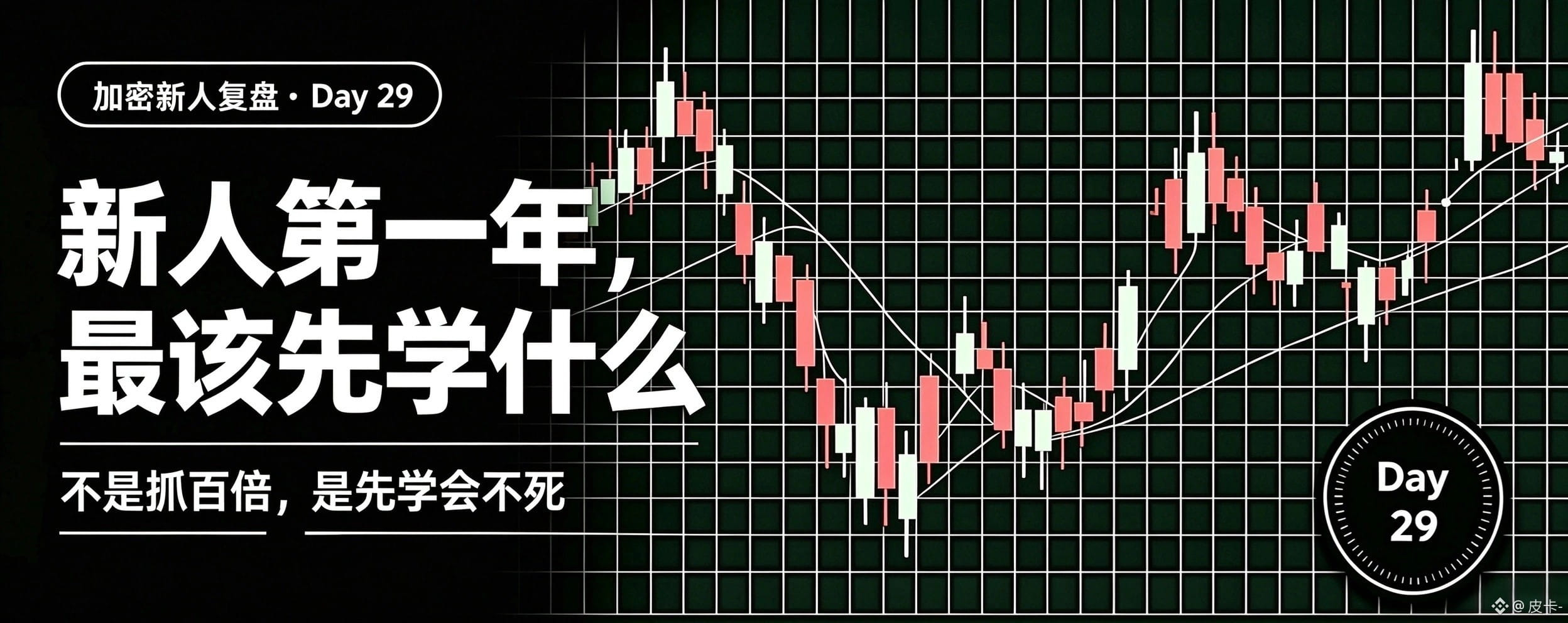
Day 29 | What should newcomers learn first in their first year?It’s not about finding 100x coins—it’s about learning how to survive first.
This is Day 29. Today, let’s talk about what newcomers should focus on learning in their first year. My answer: risk management, keeping records, reviewing your decisions, spotting scams, and using less leverage. Don’t start by trying to find 100x coins or looking for the next big-shot investor. The most important thing in your first year is to establish your own boundaries: what money you shouldn’t risk, what positions you shouldn’t open, and when you need to stop because of your emotions. Learn how to survive first, and then you’ll have a chance to grow.
Let’s chat: If you could go back to your first day in crypto, what would you want to learn first?
You can follow me, or leave a comment and like the post so we can chat together.$BTC
Day 29 | What should newcomers learn first in their first year?
It’s not about finding 100x coins—it’s about learning how to survive first.
This is Day 29. Today, let’s talk about what newcomers should focus on learning in their first year. My answer: risk management, keeping records, reviewing your decisions, spotting scams, and using less leverage. Don’t start by trying to find 100x coins or looking for the next big-shot investor. The most important thing in your first year is to establish your own boundaries: what money you shouldn’t risk, what positions you shouldn’t open, and when you need to stop because of your emotions. Learn how to survive first, and then you’ll have a chance to grow.
Let’s chat: If you could go back to your first day in crypto, what would you want to learn first?
You can follow me, or leave a comment and like the post so we can chat together.$BTC
1
741
·
--
Article
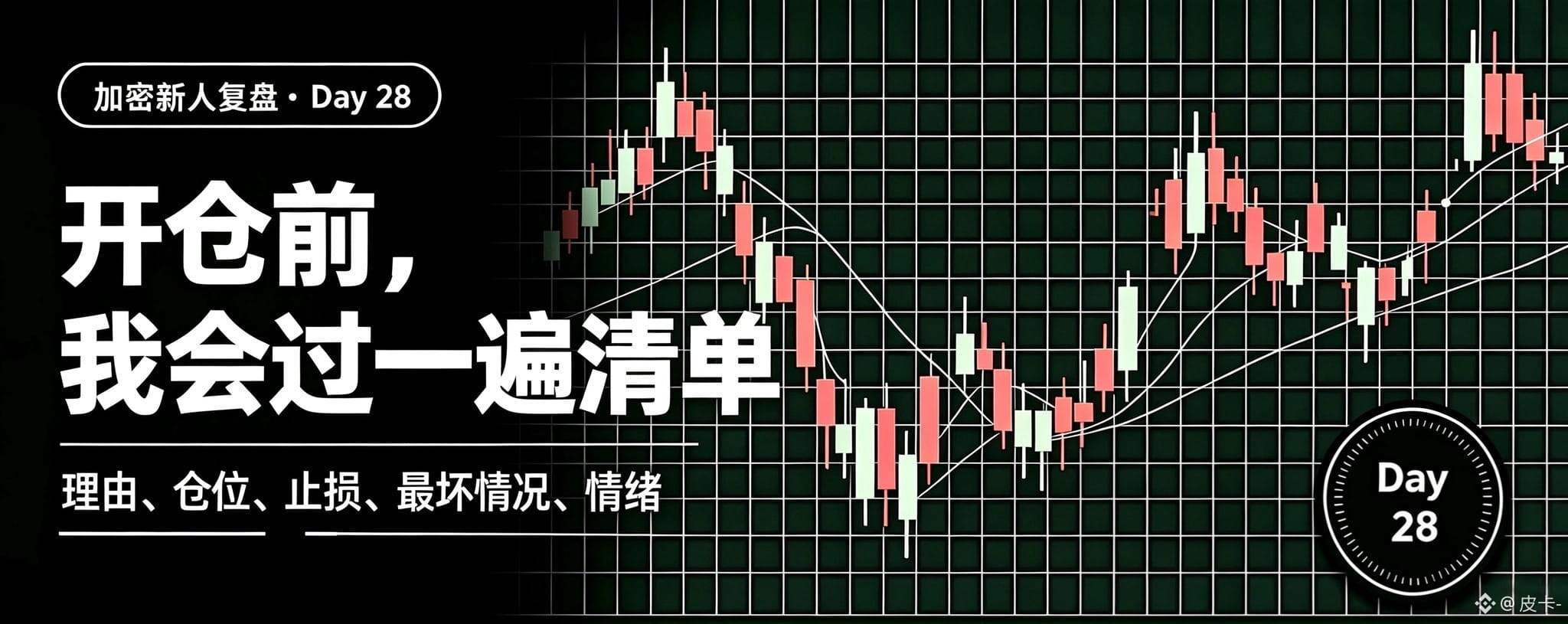
Day 28|My Trading ChecklistRationale, position size, stop loss, worst-case scenario, emotions
This is Day 28. Today I’m sharing my pre-trade checklist: First, what’s my reason for entering? Second, can I afford to lose my entire position? Third, have I written down my exit conditions? Fourth, what’s the worst-case scenario? Fifth, am I emotionally steady right now? Sixth, are my information sources reliable? A checklist can’t guarantee profits, but it can help me avoid impulsive decisions. For beginners, making fewer mistakes matters more than finding more opportunities.
Your turn: What’s the most important item on your pre-trade checklist?
You can follow me, or leave a comment and like the post. Let’s chat together.
Day 28|My Trading Checklist
Rationale, position size, stop loss, worst-case scenario, emotions
This is Day 28. Today I’m sharing my pre-trade checklist: First, what’s my reason for entering? Second, can I afford to lose my entire position? Third, have I written down my exit conditions? Fourth, what’s the worst-case scenario? Fifth, am I emotionally steady right now? Sixth, are my information sources reliable? A checklist can’t guarantee profits, but it can help me avoid impulsive decisions. For beginners, making fewer mistakes matters more than finding more opportunities.
Your turn: What’s the most important item on your pre-trade checklist?
You can follow me, or leave a comment and like the post. Let’s chat together.
1
109
·
--
Article
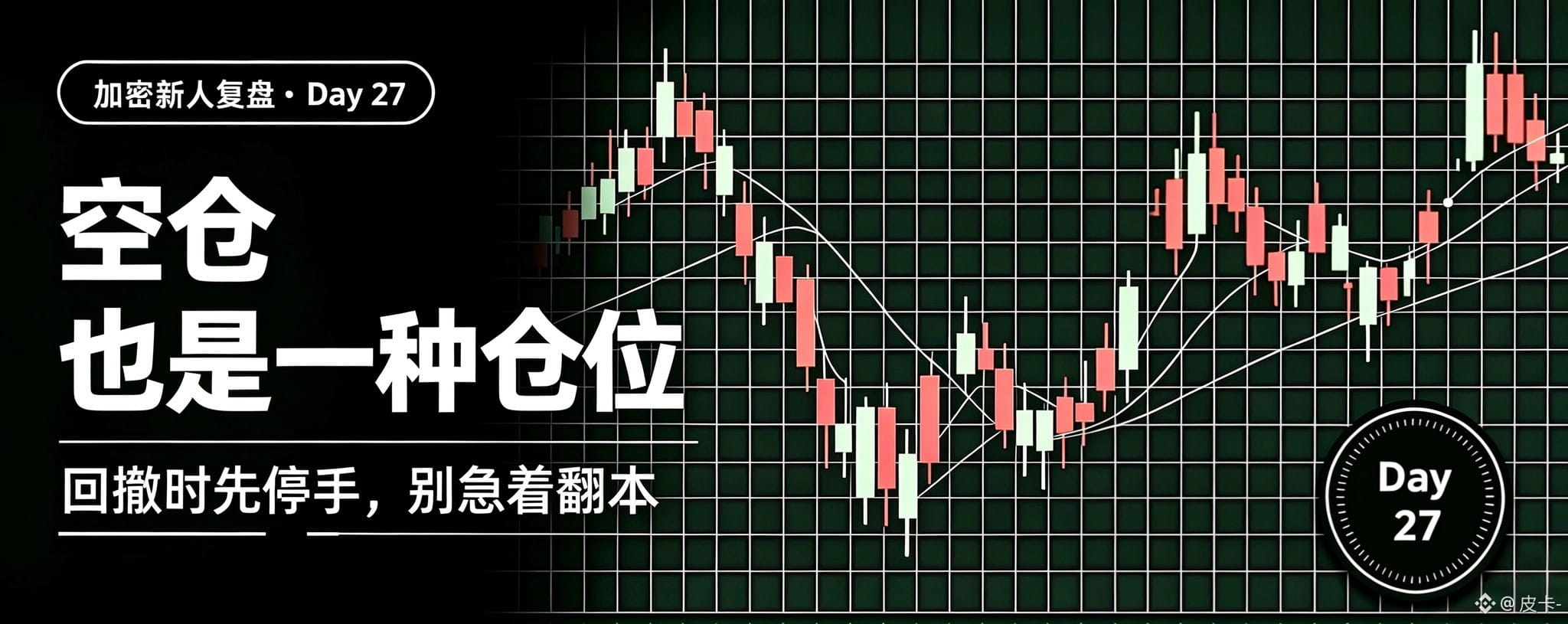
Day 27 | Drawdowns and Rest: Being Out of the Market Is a Position TooWhen you're in a drawdown, stop trading first. Don't rush to win it back.
This is Day 27. Today, let's talk about drawdowns and taking a break. I used to rush to make back my losses whenever I hit a drawdown, but the more I traded, the more I lost. Eventually, I set a rule for myself: if I lose control repeatedly or my emotions are clearly off, I step away from the market. Being out of the market isn't missing out—it's giving myself time to regain my judgment. The market will be there every day, but my capital and peace of mind don't recover every day.
Let's talk: When you're in a drawdown, do you stop trading or increase your position to win it back?
You can follow me, or leave a comment and like the post so we can chat together.$BTC
$ETH
Day 27 | Drawdowns and Rest: Being Out of the Market Is a Position Too
When you're in a drawdown, stop trading first. Don't rush to win it back.
This is Day 27. Today, let's talk about drawdowns and taking a break. I used to rush to make back my losses whenever I hit a drawdown, but the more I traded, the more I lost. Eventually, I set a rule for myself: if I lose control repeatedly or my emotions are clearly off, I step away from the market. Being out of the market isn't missing out—it's giving myself time to regain my judgment. The market will be there every day, but my capital and peace of mind don't recover every day.
Let's talk: When you're in a drawdown, do you stop trading or increase your position to win it back?
You can follow me, or leave a comment and like the post so we can chat together.$BTC
$ETH
1
1.2k
·
--
Article
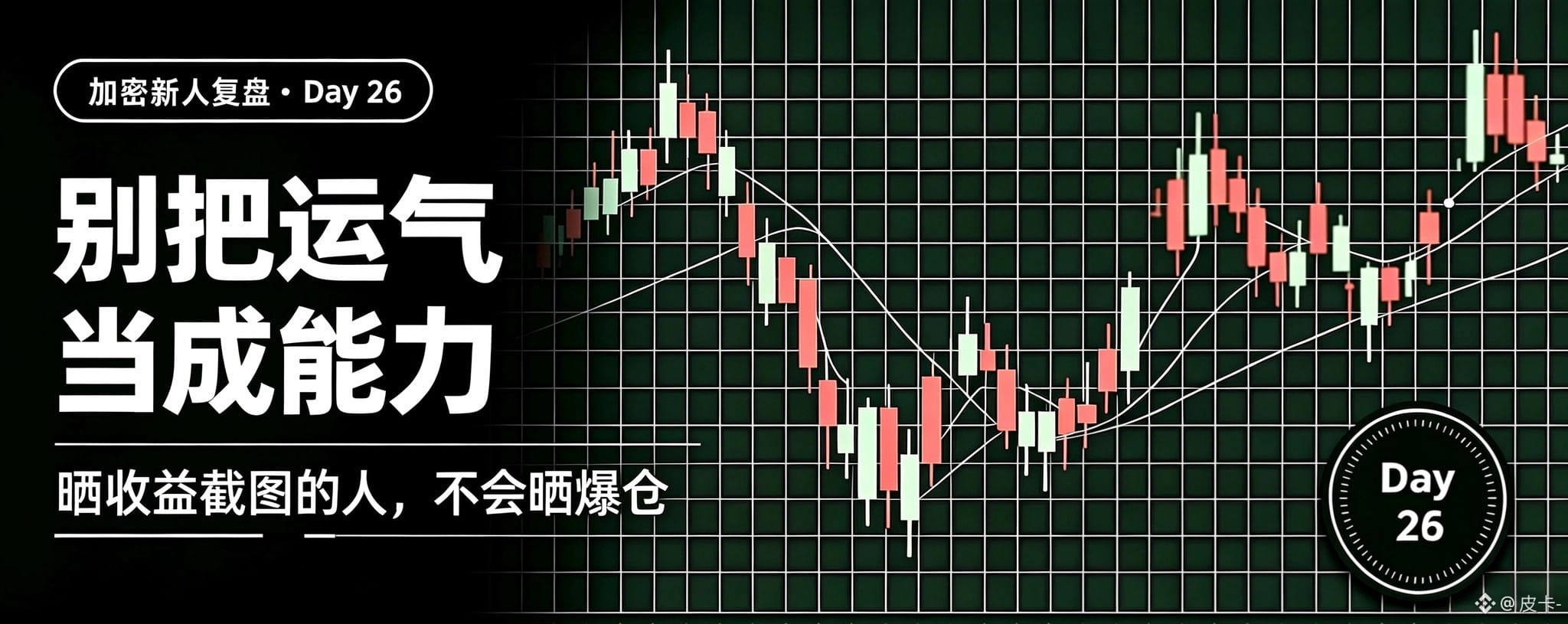
Day 26 | Scams and Survivorship Bias: Don’t Mistake Luck for SkillPeople who post screenshots of their profits don’t post screenshots of their liquidations.
This is Day 26. Today, let’s talk about scams and survivorship bias. What you see posted in the market is often screenshots of profits; liquidations and losses are rarely shown. See enough of them, and you may start to think everyone else is making money while you’re the only one losing. Then there are all kinds of trade signals, calls to buy or sell, and promises that your principal is guaranteed. The more certain they sound, the more cautious you should be. In your first year as a beginner, learning to spot scams and protect your principal matters more than learning some magical indicator.
Let’s talk: What’s the most convincing scam you’ve ever come across?
You can follow me, or leave a comment and like the post—let’s chat together.
Day 26 | Scams and Survivorship Bias: Don’t Mistake Luck for Skill
People who post screenshots of their profits don’t post screenshots of their liquidations.
This is Day 26. Today, let’s talk about scams and survivorship bias. What you see posted in the market is often screenshots of profits; liquidations and losses are rarely shown. See enough of them, and you may start to think everyone else is making money while you’re the only one losing. Then there are all kinds of trade signals, calls to buy or sell, and promises that your principal is guaranteed. The more certain they sound, the more cautious you should be. In your first year as a beginner, learning to spot scams and protect your principal matters more than learning some magical indicator.
Let’s talk: What’s the most convincing scam you’ve ever come across?
You can follow me, or leave a comment and like the post—let’s chat together.
1
310
·
--
Article
Day 25 | Quant Trading and Market Making: The Opponents Retail Traders Can’t SeeQuant trading and market making have changed the short-term market structure
This is Day 25. Today, let’s talk about quant trading and market making. Retail traders watch candlestick charts, but behind short-term price action, quant strategies, market makers, and algorithms may also be providing liquidity and capturing spreads. That doesn’t mean retail traders have no opportunities; it means you shouldn’t try to beat someone else’s system with your own reflexes. These days, I chase high-frequency trades less often and focus more on understanding my own strengths: patience, discipline, and reviewing my trades—not trying to be the fastest to click.
Question: What do you think is retail traders’ biggest disadvantage in today’s short-term trading?
Feel free to follow me, or leave a comment or like so we can chat together.$BTC
Day 25 | Quant Trading and Market Making: The Opponents Retail Traders Can’t See
Quant trading and market making have changed the short-term market structure
This is Day 25. Today, let’s talk about quant trading and market making. Retail traders watch candlestick charts, but behind short-term price action, quant strategies, market makers, and algorithms may also be providing liquidity and capturing spreads. That doesn’t mean retail traders have no opportunities; it means you shouldn’t try to beat someone else’s system with your own reflexes. These days, I chase high-frequency trades less often and focus more on understanding my own strengths: patience, discipline, and reviewing my trades—not trying to be the fastest to click.
Question: What do you think is retail traders’ biggest disadvantage in today’s short-term trading?
Feel free to follow me, or leave a comment or like so we can chat together.$BTC
1
344
·
--
Article
Day 24 | Funding Rates and Futures Market Sentiment: Don’t Just Look at PriceThe funding rate is one of the gauges of market sentiment.
This is Day 24. Today, let’s talk about funding rates and sentiment in the futures market. I used to focus only on price, but later realized that sentiment in the futures market can also affect volatility. Funding rates, open interest, and how crowded long and short positions are can all offer useful insights. But no single indicator should determine a trade, and indicators can be misleading. The way I see it: treat them as a thermometer, not a steering wheel. Looking at price, liquidity, and sentiment together makes it less likely that one number will lead you astray.
Question: Do you watch funding rates? Have they ever helped you avoid risk?
Follow me, or leave a comment and like the post so we can chat together.$BTC
Day 24 | Funding Rates and Futures Market Sentiment: Don’t Just Look at Price
The funding rate is one of the gauges of market sentiment.
This is Day 24. Today, let’s talk about funding rates and sentiment in the futures market. I used to focus only on price, but later realized that sentiment in the futures market can also affect volatility. Funding rates, open interest, and how crowded long and short positions are can all offer useful insights. But no single indicator should determine a trade, and indicators can be misleading. The way I see it: treat them as a thermometer, not a steering wheel. Looking at price, liquidity, and sentiment together makes it less likely that one number will lead you astray.
Question: Do you watch funding rates? Have they ever helped you avoid risk?
Follow me, or leave a comment and like the post so we can chat together.$BTC
1
763
·
--
Article
Day 23|On-chain Data: Not a Universal AnswerBe careful with address labels, delays, and misinterpretations
This is Day 23. Today, let’s talk about on-chain data. On-chain activity is transparent, but transparency doesn’t mean it’s easy to understand. It’s easy to misread who an address belongs to, why funds are moving, or whether there’s a delay in the data. I used to get nervous whenever I saw a large transfer, but later realized many were just internal reorganizations. On-chain data is one piece of evidence, not the answer itself. When looking at data, you also need to consider liquidity, sentiment, and price structure.
Discussion: When you look at on-chain data, what are you most likely to be misled by?
You can follow me, or leave a comment and like the post so we can chat together.$BTC
Day 23|On-chain Data: Not a Universal Answer
Be careful with address labels, delays, and misinterpretations
This is Day 23. Today, let’s talk about on-chain data. On-chain activity is transparent, but transparency doesn’t mean it’s easy to understand. It’s easy to misread who an address belongs to, why funds are moving, or whether there’s a delay in the data. I used to get nervous whenever I saw a large transfer, but later realized many were just internal reorganizations. On-chain data is one piece of evidence, not the answer itself. When looking at data, you also need to consider liquidity, sentiment, and price structure.
Discussion: When you look at on-chain data, what are you most likely to be misled by?
You can follow me, or leave a comment and like the post so we can chat together.$BTC
1
576
·
--
Article
Day 22|Memes and Attention: Slow Risks in a Fast-Moving NarrativeAttention comes quickly, but exiting can take a long time
This is Day 22. Today, let’s talk about memes and attention. Memes spread quickly and stir up strong emotions, making it easy to feel FOMO. But I later realized that getting in quickly doesn’t mean you can get out quickly. When attention fades, liquidity may disappear first. Now, when I look at a meme, I first ask myself: Can I accept losing all the money I put in? Am I getting in just because I’m afraid of missing out? In a fast-moving narrative, slow-moving risks are often hidden in the exit.
Let’s chat: Have you ever chased a meme? Did you get out in time, or were you left holding the bag?
You can follow me, or leave a comment and like the post so we can chat together.$BTC
Day 22|Memes and Attention: Slow Risks in a Fast-Moving Narrative
Attention comes quickly, but exiting can take a long time
This is Day 22. Today, let’s talk about memes and attention. Memes spread quickly and stir up strong emotions, making it easy to feel FOMO. But I later realized that getting in quickly doesn’t mean you can get out quickly. When attention fades, liquidity may disappear first. Now, when I look at a meme, I first ask myself: Can I accept losing all the money I put in? Am I getting in just because I’m afraid of missing out? In a fast-moving narrative, slow-moving risks are often hidden in the exit.
Let’s chat: Have you ever chased a meme? Did you get out in time, or were you left holding the bag?
You can follow me, or leave a comment and like the post so we can chat together.$BTC
1
1k
Log in to explore more content
Join global crypto users on Binance Square
⚡️ Get latest and useful information about crypto.
💬 Trusted by the world’s largest crypto exchange.
👍 Discover real insights from verified creators.
Email / Phone number
Trending Topics
EvolveAtBinanceBlockchainWeek
3M views
22,877 Discussing
Binance Blockchain Week is officially underway! 🌍
On November 28–29, whether you’re in Bangkok or joining from afar, tune in to the livestreams and join the conversation on Binance Square!
Here’s what’s in store 👇
📺 Watch the main stage live
Tune in throughout both days as industry speakers share their perspectives on this year’s theme, “Evolve” From technological innovation to real-world applications, explore what’s next for crypto.
⚔️ Watch two trading competitions
The Aster Open Qualifier and the Binance Trading Master Tournament will both be streamed live. Tune in to follow the traders in action.
🏆 Watch The Blockchain 100 Awards Ceremony
The Blockchain 100 list was selected by the community. Join us in celebrating the creators and the ideas they share!
💬 Join the community conversation
Use #EvolveAtBinanceBlockchainWeek in a post with a photo to share what you’re looking forward to, your views on the industry, or your favorite moments from the event.
The event page is now live! Subscribe to all livestreams with one click so you don’t miss a moment 👏
Binance Blockchain Week
·657 Likes
·1M views
SunReportedlyOffered4BToRescueFTX
39,983 views
382 Discussing
XRPLAmendmentsEnterActivationWindow
37,088 views
336 Discussing