
层楼bnb
514 Posts

层楼bnb
Report
Block User
专研RWA、主流加密,
内容皆原创,
感谢支持,欢迎交流。
我的币安推荐码:CENGLOU
Open Trade

BNB Holder
High-Frequency Trader
2.8 Years
15 Following
171 Followers
429 Liked
Posts
Portfolio
All
Quotes
Videos
·
--
Whale Liquidation Wave
Whales have been getting wiped out in droves this week. On the 9th, a whale with $253 million in long positions was liquidated, losing $140 million and taking a $61.41 million loss. On the 11th, another trader opened $65 million in longs on Hyperliquid, with liquidation prices of 71,966 and 1,979. Today's lows were 62,006 and 1,711, breaking below both levels. Across the market today, $2.058 billion in positions were liquidated over 24 hours, wiping out 330,000 traders; 93% were longs. The largest single liquidation was a $16.17 million Binance ETH long. But CryptoQuant counted the other side: during this 24% downturn, wallets holding over 1,000 BTC actually accumulated about 47,000 more. Leverage got flushed out; spot wallets were buying.
Related codes: $BTC
{future}(BTCUSDT)
#加密市场大幅回调,多名巨鲸遭遇清算
Whale Liquidation Wave
Whales have been getting wiped out in droves this week. On the 9th, a whale with $253 million in long positions was liquidated, losing $140 million and taking a $61.41 million loss. On the 11th, another trader opened $65 million in longs on Hyperliquid, with liquidation prices of 71,966 and 1,979. Today's lows were 62,006 and 1,711, breaking below both levels. Across the market today, $2.058 billion in positions were liquidated over 24 hours, wiping out 330,000 traders; 93% were longs. The largest single liquidation was a $16.17 million Binance ETH long. But CryptoQuant counted the other side: during this 24% downturn, wallets holding over 1,000 BTC actually accumulated about 47,000 more. Leverage got flushed out; spot wallets were buying.
Related codes: $BTC
#加密市场大幅回调,多名巨鲸遭遇清算

1
1.9k
·
--
Comparing Crypto Assets: 5 Major Coins—Which Is the Best Investment Right Now?Data retrieved at 2026-11-15 11:19 Beijing time. Prices and 24-hour changes are from Binance’s spot API and are calculated on a rolling 24-hour basis, not by calendar day. Crypto assets trade around the clock, so the figures can change within a few hours.
BTC is relatively the most suitable, with a score of 7.0. None of the six scored 8 or higher.
Today, the market-wide Fear & Greed Index reads 10. Liquidations exceeded $1.9 billion over the past 24 hours, with more than 90% coming from long positions, and spot Bitcoin ETFs have seen net outflows for seven consecutive trading days. In this environment, the relatively most stable option and what you can buy right now are two different things.
Comparing Crypto Assets: 5 Major Coins—Which Is the Best Investment Right Now?
Data retrieved at 2026-11-15 11:19 Beijing time. Prices and 24-hour changes are from Binance’s spot API and are calculated on a rolling 24-hour basis, not by calendar day. Crypto assets trade around the clock, so the figures can change within a few hours.
BTC is relatively the most suitable, with a score of 7.0. None of the six scored 8 or higher.
Today, the market-wide Fear & Greed Index reads 10. Liquidations exceeded $1.9 billion over the past 24 hours, with more than 90% coming from long positions, and spot Bitcoin ETFs have seen net outflows for seven consecutive trading days. In this environment, the relatively most stable option and what you can buy right now are two different things.
362
·
--
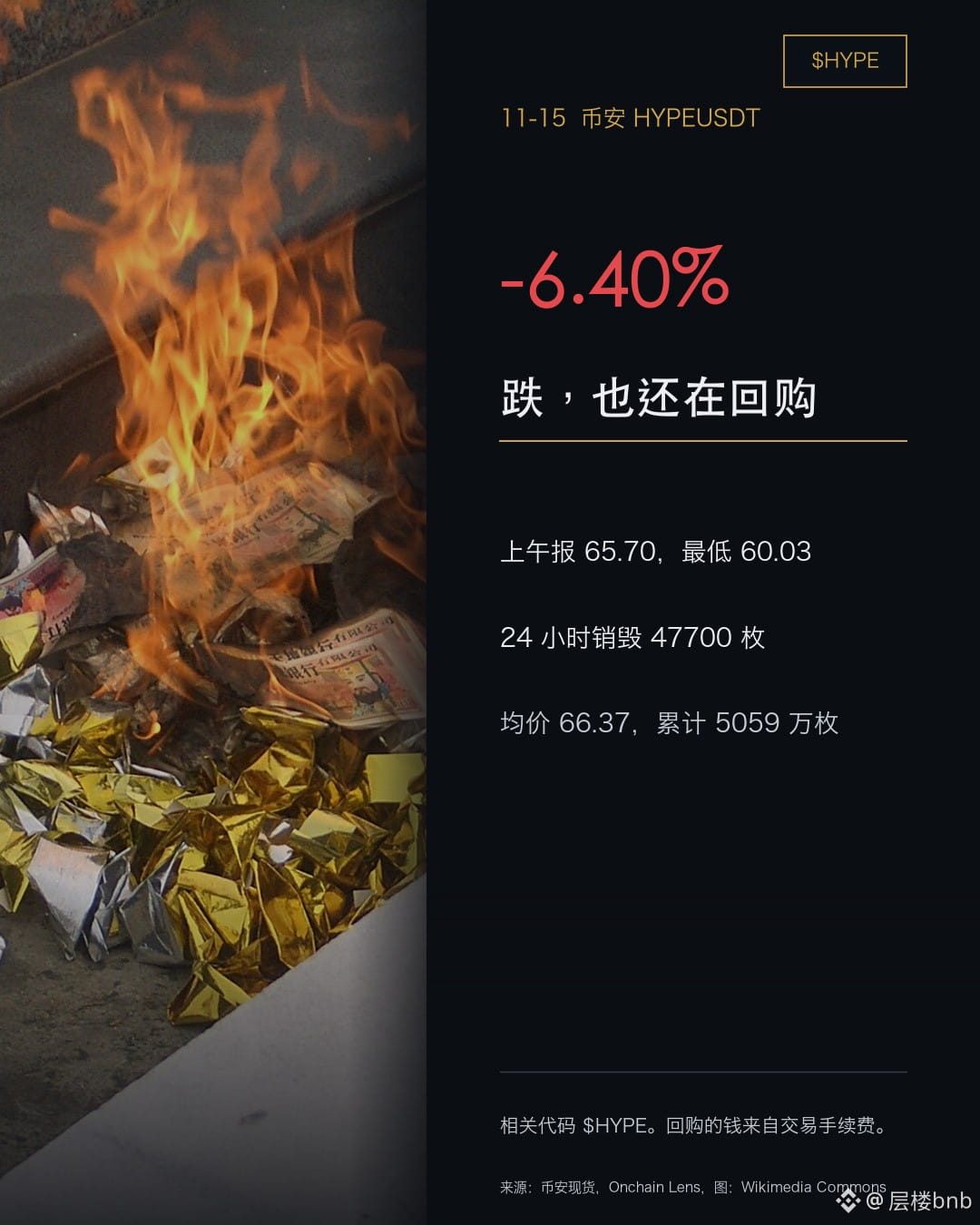
HYPE falls, but buybacks continue
HYPE is down, but buybacks haven’t stopped. Binance’s HYPEUSDT was quoted at $65.70 at 10:20 a.m. today, down 6.40% over 24 hours, with a low of $60.03 and a high of $70.72.
Onchain Lens says Hyperliquid bought back and burned 47,700 HYPE over the past 24 hours at an average price of $66.37, worth $3.17 million. The cumulative amount burned has reached 50.59 million tokens, or 5.06% of the maximum supply, worth approximately $3.12 billion at current prices. The platform’s cumulative revenue is $1.42 billion.
The buybacks are funded by trading fees, and this approach has been in place since last year.
Related token: $HYPE
96
·
--
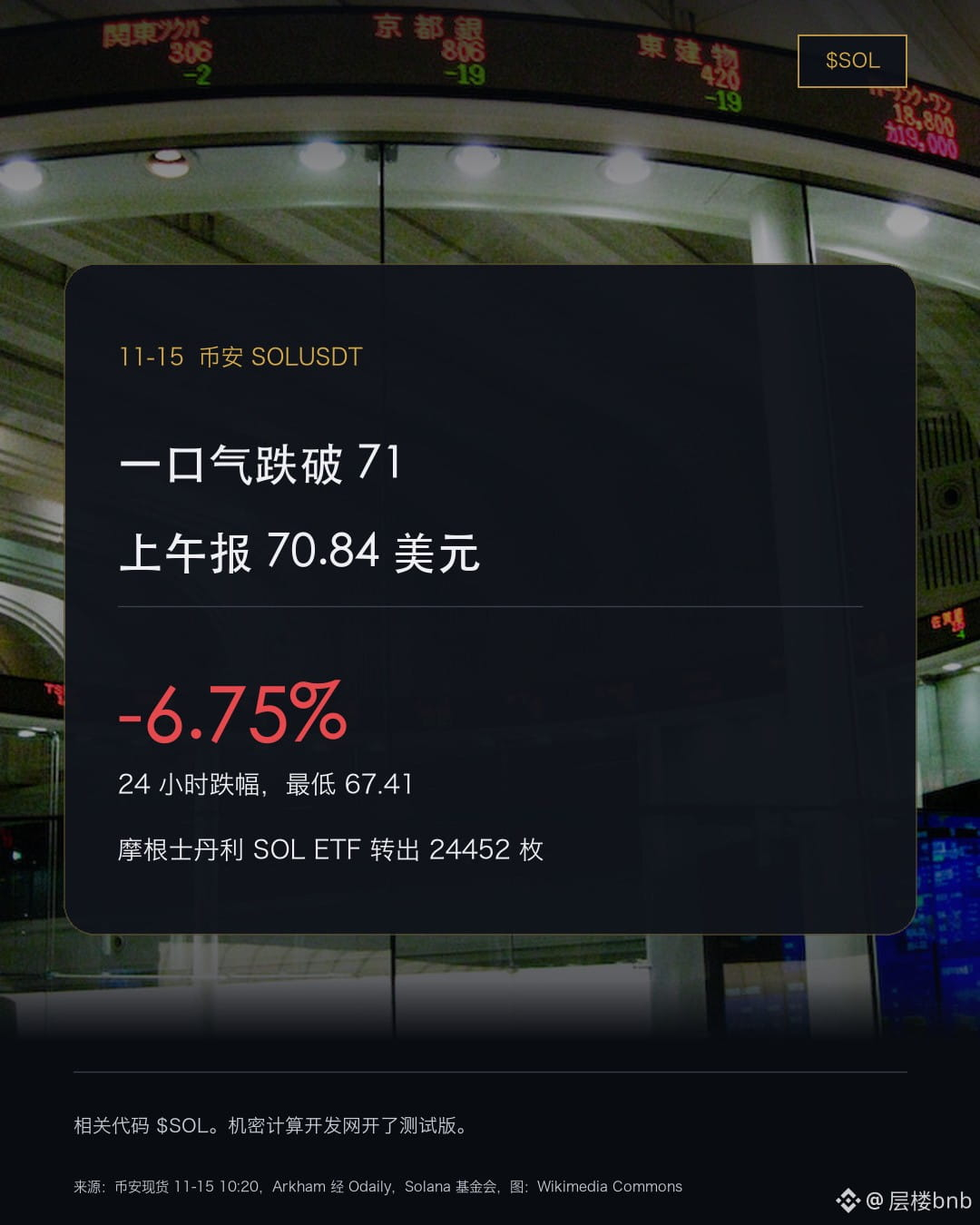
SOL drops below $71
SOL plunged below $71 today. Binance SOLUSDT was trading at $70.84 at 10:20 a.m., down 6.75% over 24 hours, with a low of $67.41 and a high of $76.34.
On the morning of November 14, Morgan Stanley's spot Solana ETF transferred 24,452 SOL to a Coinbase address. Arkham detected the transfer, and the monitoring service said the tokens may be sold.
The Solana Foundation said on the same day that confidential computing had entered beta on the devnet, including an SDK and on-chain verifiers. The tools have not yet been audited, and no mainnet launch date has been set.
Related codes: $SOL
{future}(SOLUSDT)
SOL drops below $71
SOL plunged below $71 today. Binance SOLUSDT was trading at $70.84 at 10:20 a.m., down 6.75% over 24 hours, with a low of $67.41 and a high of $76.34.
On the morning of November 14, Morgan Stanley's spot Solana ETF transferred 24,452 SOL to a Coinbase address. Arkham detected the transfer, and the monitoring service said the tokens may be sold.
The Solana Foundation said on the same day that confidential computing had entered beta on the devnet, including an SDK and on-chain verifiers. The tools have not yet been audited, and no mainnet launch date has been set.
Related codes: $SOL
229
·
--
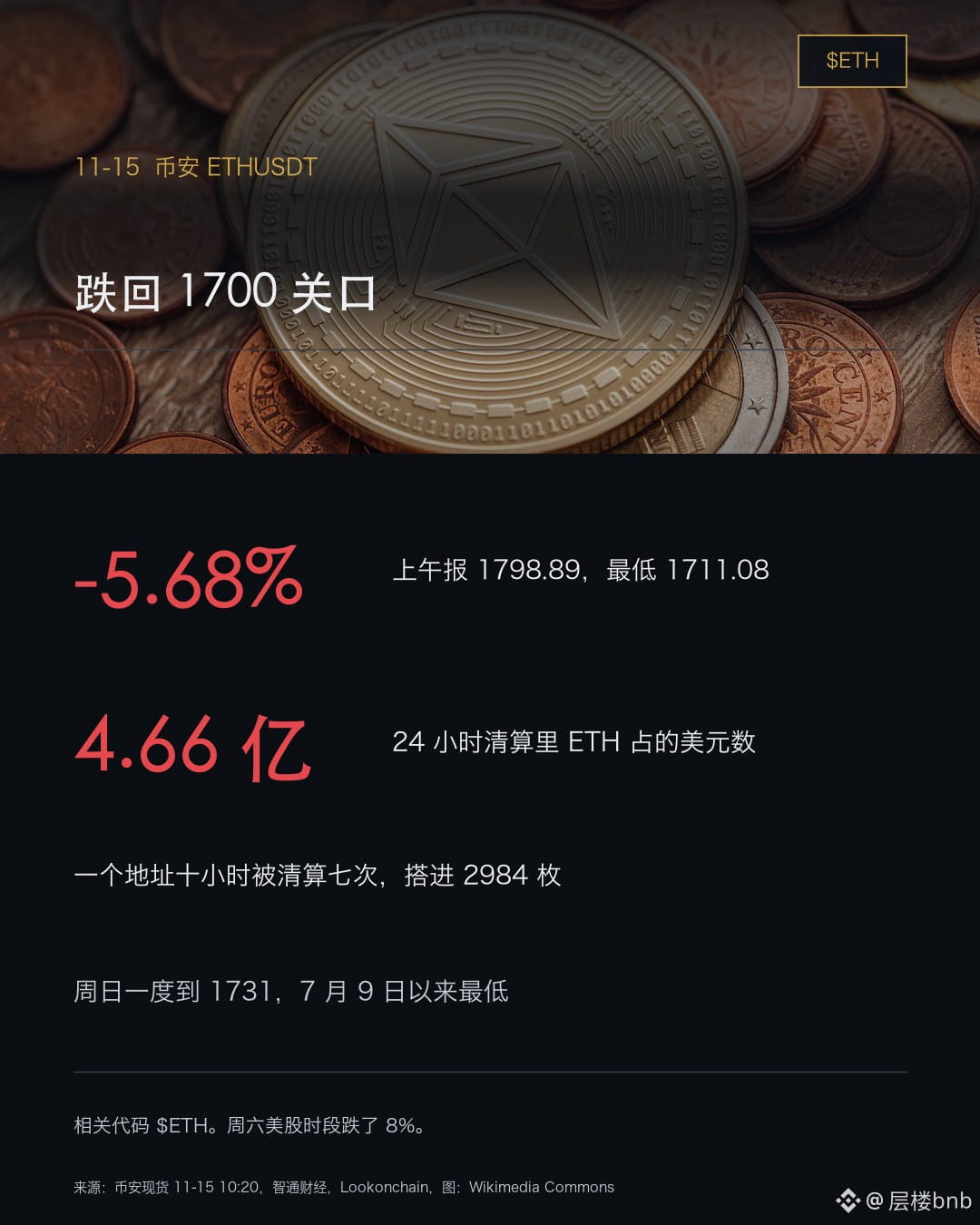
ETH falls back below 1,700
Ethereum kept falling after breaking below 1,900 last night. Binance ETHUSDT was trading at $1,798.89 at 10:20 a.m. today, down 5.68% in 24 hours, with a low of 1,711.08 and a high of 1,919.76.
It briefly fell to 1,731 during Sunday's Asian trading session, its lowest level since July 9. It had already dropped 8% during Saturday's U.S. trading session. Ethereum accounted for $466 million of liquidations over the 24 hours up to 7 a.m. Sunday Singapore time.
One on-chain address was liquidated seven times in 10 hours, losing 2,984 ETH alone, according to Lookonchain.
Related codes: $ETH
{future}(ETHUSDT)
#新人宝典:从零了解tradfi
ETH falls back below 1,700
Ethereum kept falling after breaking below 1,900 last night. Binance ETHUSDT was trading at $1,798.89 at 10:20 a.m. today, down 5.68% in 24 hours, with a low of 1,711.08 and a high of 1,919.76.
It briefly fell to 1,731 during Sunday's Asian trading session, its lowest level since July 9. It had already dropped 8% during Saturday's U.S. trading session. Ethereum accounted for $466 million of liquidations over the 24 hours up to 7 a.m. Sunday Singapore time.
One on-chain address was liquidated seven times in 10 hours, losing 2,984 ETH alone, according to Lookonchain.
Related codes: $ETH
#新人宝典:从零了解tradfi
383
·
--
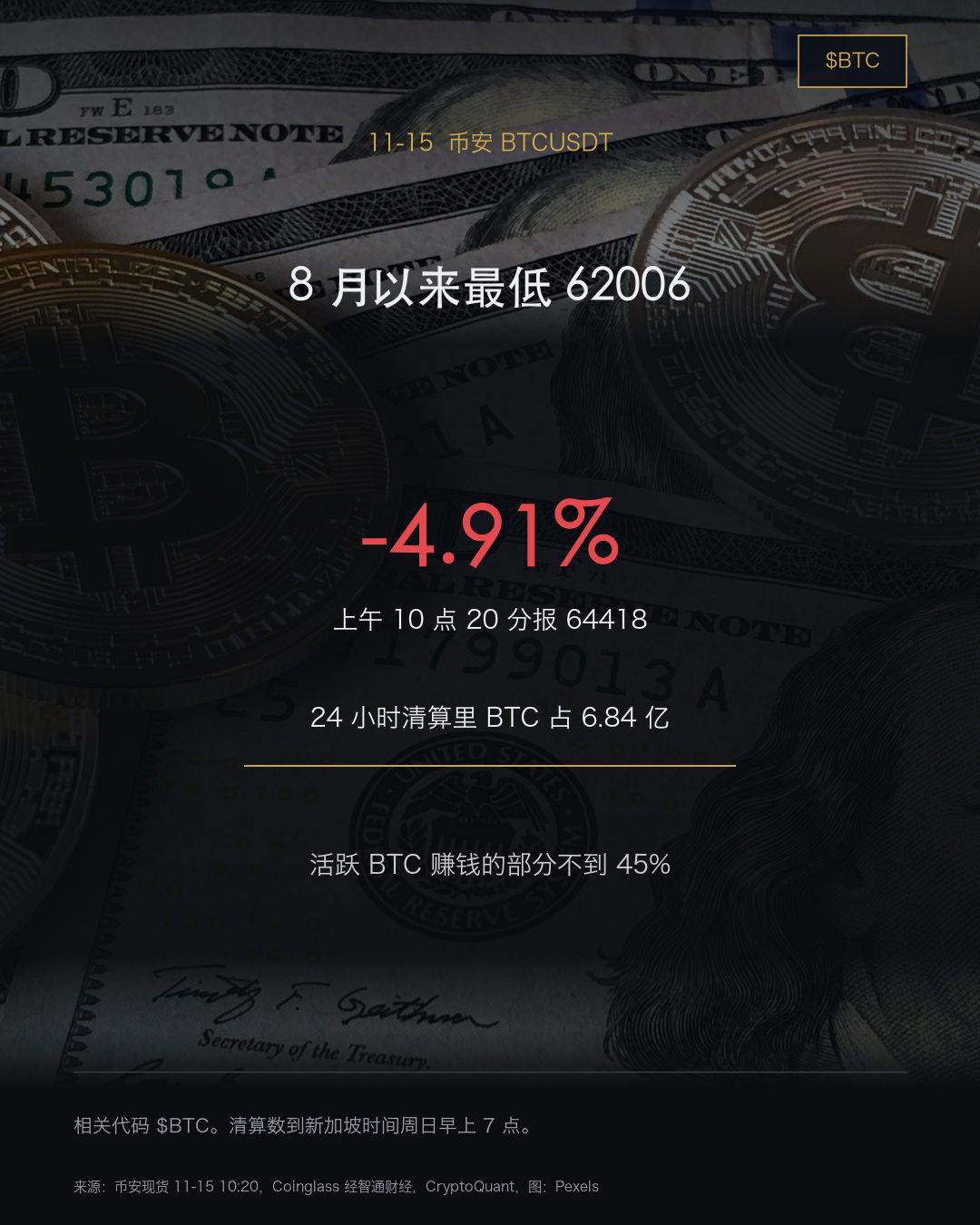
BTC falls below 62,000
In today’s sell-off, Bitcoin pushed its low since August even lower. Binance BTCUSDT was at $64,418 at 10:20 a.m., down 4.91% in 24 hours, after hitting a low of $62,006.
According to Coinglass figures, about $1.9 billion in positions were liquidated on exchanges in the 24 hours to 7 a.m. Sunday Singapore time. Bitcoin accounted for $684 million, with the vast majority being long positions. The low during Sunday’s Asian session was $63,311, the weakest level since August 17.
CryptoQuant’s on-chain estimates show that less than 45% of the active supply is in profit, meaning most actively traded BTC is now below its purchase price.
Related codes: $BTC
{future}(BTCUSDT)
#比特币活跃供应盈利占比跌破45%
BTC falls below 62,000
In today’s sell-off, Bitcoin pushed its low since August even lower. Binance BTCUSDT was at $64,418 at 10:20 a.m., down 4.91% in 24 hours, after hitting a low of $62,006.
According to Coinglass figures, about $1.9 billion in positions were liquidated on exchanges in the 24 hours to 7 a.m. Sunday Singapore time. Bitcoin accounted for $684 million, with the vast majority being long positions. The low during Sunday’s Asian session was $63,311, the weakest level since August 17.
CryptoQuant’s on-chain estimates show that less than 45% of the active supply is in profit, meaning most actively traded BTC is now below its purchase price.
Related codes: $BTC
#比特币活跃供应盈利占比跌破45%
6
1
15
23.2k
·
--
Verified
After BNB fell below 570
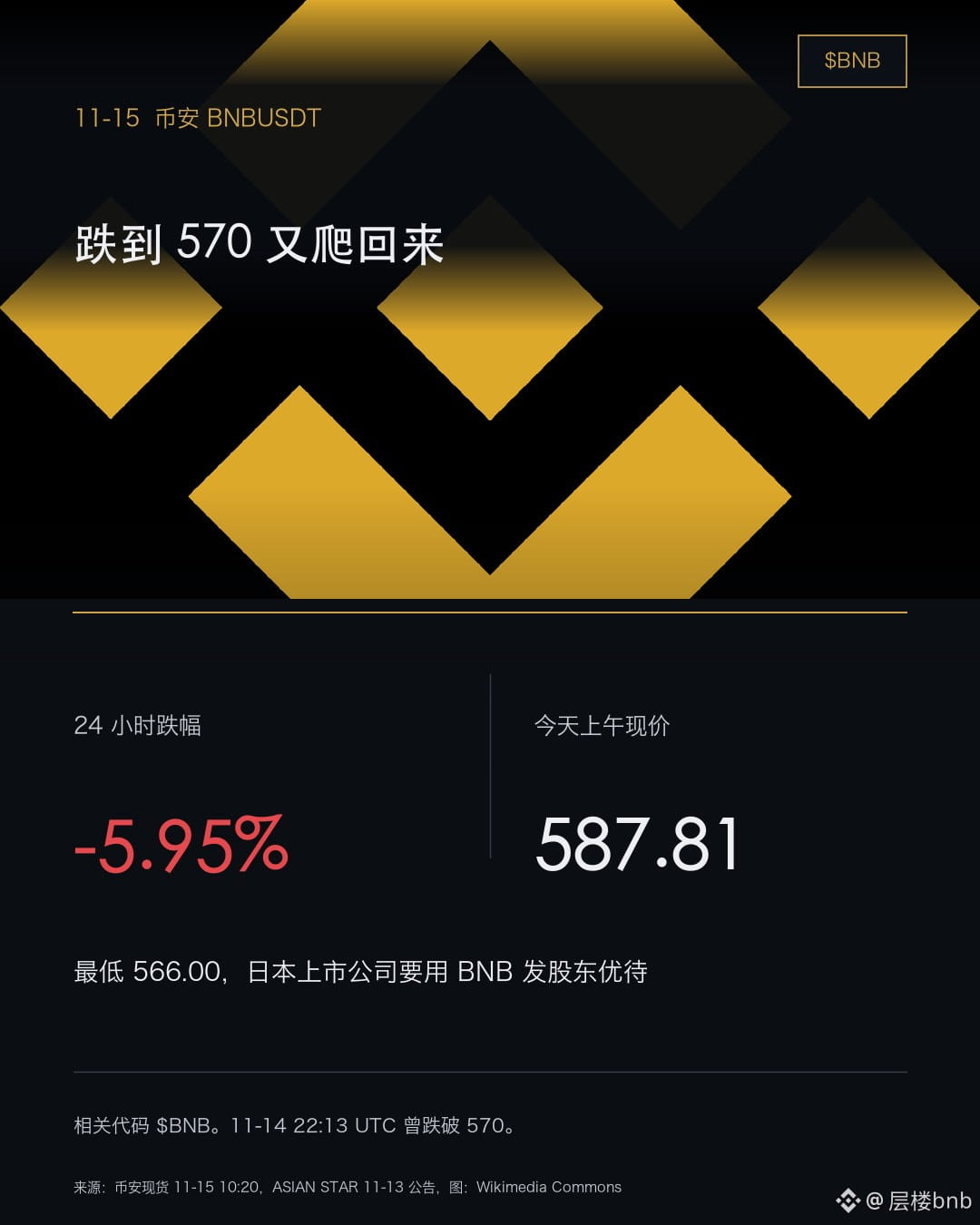
BNB fell harder last night than it has today. At 22:13 UTC on November 14, Binance market data showed it had fallen below 570, trading at $569.25, down 9.68% over 24 hours.
By 10:20 this morning, it had rebounded to $587.81, down 5.95% over 24 hours, with a low of $566.00.
Meanwhile, Japanese-listed company ASIAN STAR announced on November 13 that it would distribute shareholder benefits in BNB, totaling 8 million yen. Shareholders holding at least 100 shares as of December 31 will receive benefits based on their holdings. The company also plans to tokenize Japanese real estate on BNB Chain.
Related codes: $BNB
{future}(BNBUSDT)
#加密美股齐跌,下轮反弹的驱动力在哪?
After BNB fell below 570
BNB fell harder last night than it has today. At 22:13 UTC on November 14, Binance market data showed it had fallen below 570, trading at $569.25, down 9.68% over 24 hours.
By 10:20 this morning, it had rebounded to $587.81, down 5.95% over 24 hours, with a low of $566.00.
Meanwhile, Japanese-listed company ASIAN STAR announced on November 13 that it would distribute shareholder benefits in BNB, totaling 8 million yen. Shareholders holding at least 100 shares as of December 31 will receive benefits based on their holdings. The company also plans to tokenize Japanese real estate on BNB Chain.
Related codes: $BNB
#加密美股齐跌,下轮反弹的驱动力在哪?
567
·
--
Kava Cross-Chain Incident
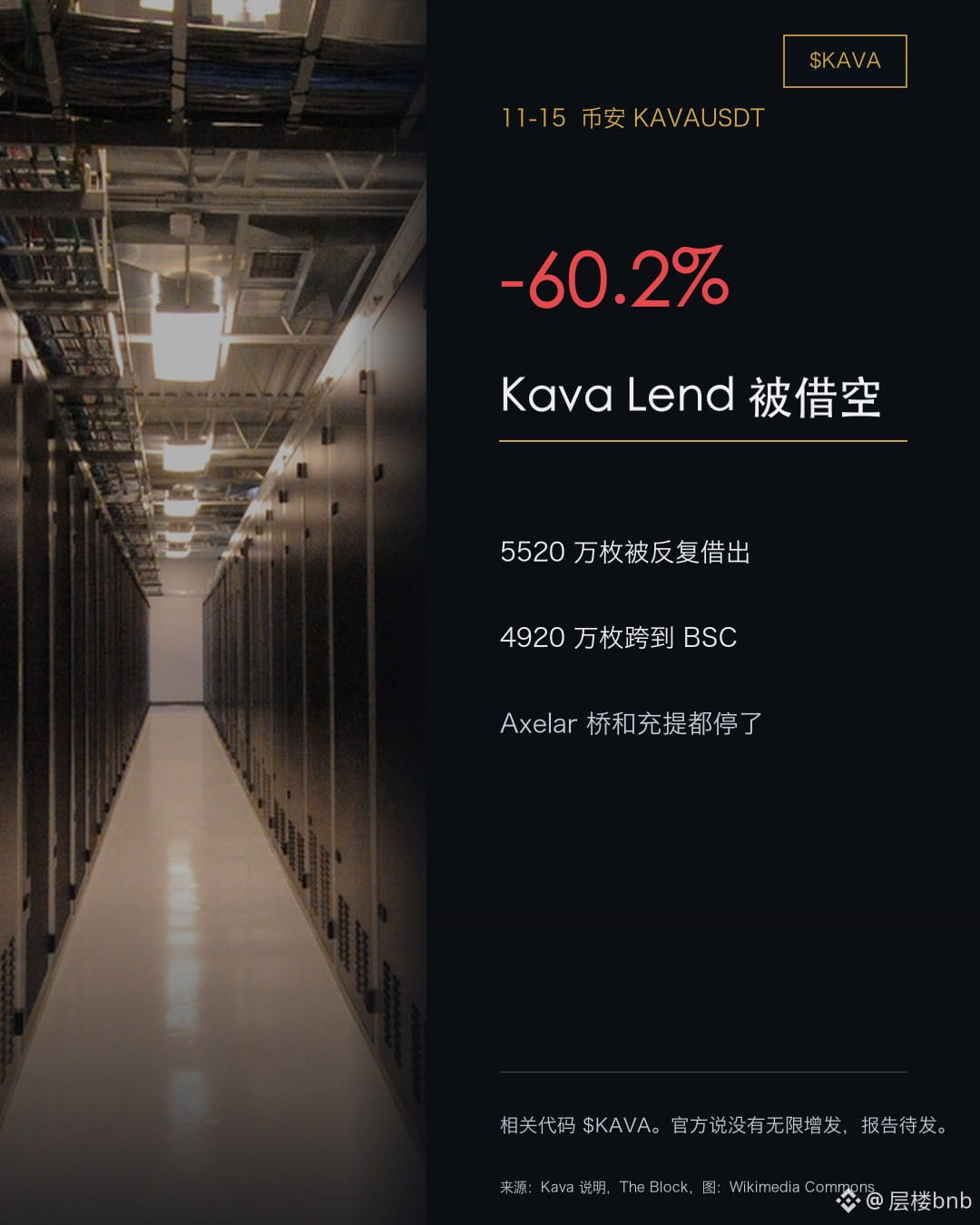
Yesterday’s incident involving Kava isn’t over yet. At 10:20 a.m. on November 15, Binance’s KAVAUSDT was trading at $0.02703, down 60.17% in 24 hours.
Kava said the anomalous activity had been contained and was limited to Kava Lend, with no unlimited minting. On-chain data shows that the attacker exploited a deactivated BUSD market to inflate the value of deposits by about 243,000 times, repeatedly borrowing about 55.2 million tokens. About 49.2 million of those were transferred to BNB Chain via LayerZero and sold.
The Axelar bridge and deposits and withdrawals on the platform have all been suspended. Bitquery found that on November 14, only 0.19 tokens remained in the pool, while lenders were owed 55.2 million tokens. A full report has not yet been released.
Related codes: $KAVA
{future}(KAVAUSDT)
#kava称异常跨链活动仅限kavalend
Kava Cross-Chain Incident
Yesterday’s incident involving Kava isn’t over yet. At 10:20 a.m. on November 15, Binance’s KAVAUSDT was trading at $0.02703, down 60.17% in 24 hours.
Kava said the anomalous activity had been contained and was limited to Kava Lend, with no unlimited minting. On-chain data shows that the attacker exploited a deactivated BUSD market to inflate the value of deposits by about 243,000 times, repeatedly borrowing about 55.2 million tokens. About 49.2 million of those were transferred to BNB Chain via LayerZero and sold.
The Axelar bridge and deposits and withdrawals on the platform have all been suspended. Bitquery found that on November 14, only 0.19 tokens remained in the pool, while lenders were owed 55.2 million tokens. A full report has not yet been released.
Related codes: $KAVA
#kava称异常跨链活动仅限kavalend
4
1
6.3k
·
--
Thailand launches WORPT, allowing tourists to exchange cryptocurrency for baht and pay by scanning QR codes
On November 13, the WORPT app officially launched under Thailand’s Tourist DigiPay regulatory sandbox. Operated by an entity under Waanx, the app has been approved by Thailand’s Securities and Exchange Commission (SEC) to participate in the pilot. International tourists can exchange supported cryptocurrencies, including USDT and USDC, for Thai baht, then scan Thailand’s QR PromptPay codes to pay for goods and services. The platform is also preparing a Visa prepaid card service to make it easier for tourists to use their funds abroad. Her Majesty Queen Sirikit The Queen Mother
It is important to note that the pilot does not support direct payments with digital assets. Tourists must first open a digital asset business account regulated by the SEC and an electronic payment account regulated by the central bank. After completing the exchange in their wallet, they can settle payments in Thai baht. The sandbox testing period will last 18 months and include risk-control measures such as transaction limits. It is designed for small purchases by inbound tourists, not as a cryptocurrency payment channel for local residents.
This is a controlled attempt by a Southeast Asian tourism economy to bring stablecoins into in-person retail payments. Key developments to watch include the volume of exchanges during the sandbox period, merchant coverage, and whether the Visa prepaid card, once launched, can extend the use of crypto assets beyond Thailand.
#Thailand #StablecoinPayments #TouristSpending $SEI
{future}(SEIUSDT)
#泰国推出worpt支持游客加密货币兑泰铢消费
Thailand launches WORPT, allowing tourists to exchange cryptocurrency for baht and pay by scanning QR codes
On November 13, the WORPT app officially launched under Thailand’s Tourist DigiPay regulatory sandbox. Operated by an entity under Waanx, the app has been approved by Thailand’s Securities and Exchange Commission (SEC) to participate in the pilot. International tourists can exchange supported cryptocurrencies, including USDT and USDC, for Thai baht, then scan Thailand’s QR PromptPay codes to pay for goods and services. The platform is also preparing a Visa prepaid card service to make it easier for tourists to use their funds abroad. Her Majesty Queen Sirikit The Queen Mother
It is important to note that the pilot does not support direct payments with digital assets. Tourists must first open a digital asset business account regulated by the SEC and an electronic payment account regulated by the central bank. After completing the exchange in their wallet, they can settle payments in Thai baht. The sandbox testing period will last 18 months and include risk-control measures such as transaction limits. It is designed for small purchases by inbound tourists, not as a cryptocurrency payment channel for local residents.
This is a controlled attempt by a Southeast Asian tourism economy to bring stablecoins into in-person retail payments. Key developments to watch include the volume of exchanges during the sandbox period, merchant coverage, and whether the Visa prepaid card, once launched, can extend the use of crypto assets beyond Thailand.
#Thailand #StablecoinPayments #TouristSpending $SEI
#泰国推出worpt支持游客加密货币兑泰铢消费

1
2
8.2k
·
--
Verified
U.S. spot XRP ETFs see $19.13 million in weekly outflows, highest in 8 months
For the week ended November 13, U.S. spot XRP exchange-traded funds recorded net outflows of $19.13 million, their largest weekly outflow in 8 months and the second consecutive week of net outflows. By day, net outflows were about $10.42 million on November 9, followed by another roughly $7.62 million on November 10. Total fund assets stood at about $1.42 billion. SoSoValueBeInCrypto
The outflows coincided with weakening prices: XRP fell below the $1 mark that week and has declined about 20% since the start of November. XRP funds had previously recorded 13 consecutive weeks of net inflows. After turning to modest outflows in mid-October, selling pressure intensified in November. Weaker spot demand has left prices without institutional buying support.
Historically, when XRP weakens in November, it rarely rebounds in December on seasonal factors alone. Whether the outflows can be stemmed will depend on when ETF flows turn positive again and whether new catalysts emerge on the regulatory or legal fronts. For holders, short-term fund flows remain the key factor weighing on prices.
#XRP #ETFFlows #Ripple $XRP
{future}(XRPUSDT)
#美国现货xrpetf周流出创8个月新高
U.S. spot XRP ETFs see $19.13 million in weekly outflows, highest in 8 months
For the week ended November 13, U.S. spot XRP exchange-traded funds recorded net outflows of $19.13 million, their largest weekly outflow in 8 months and the second consecutive week of net outflows. By day, net outflows were about $10.42 million on November 9, followed by another roughly $7.62 million on November 10. Total fund assets stood at about $1.42 billion. SoSoValueBeInCrypto
The outflows coincided with weakening prices: XRP fell below the $1 mark that week and has declined about 20% since the start of November. XRP funds had previously recorded 13 consecutive weeks of net inflows. After turning to modest outflows in mid-October, selling pressure intensified in November. Weaker spot demand has left prices without institutional buying support.
Historically, when XRP weakens in November, it rarely rebounds in December on seasonal factors alone. Whether the outflows can be stemmed will depend on when ETF flows turn positive again and whether new catalysts emerge on the regulatory or legal fronts. For holders, short-term fund flows remain the key factor weighing on prices.
#XRP #ETFFlows #Ripple $XRP
#美国现货xrpetf周流出创8个月新高

1
3.4k
·
--
BTC active supply in profit falls below 45%, short-term holders’ unrealized gains narrow sharply
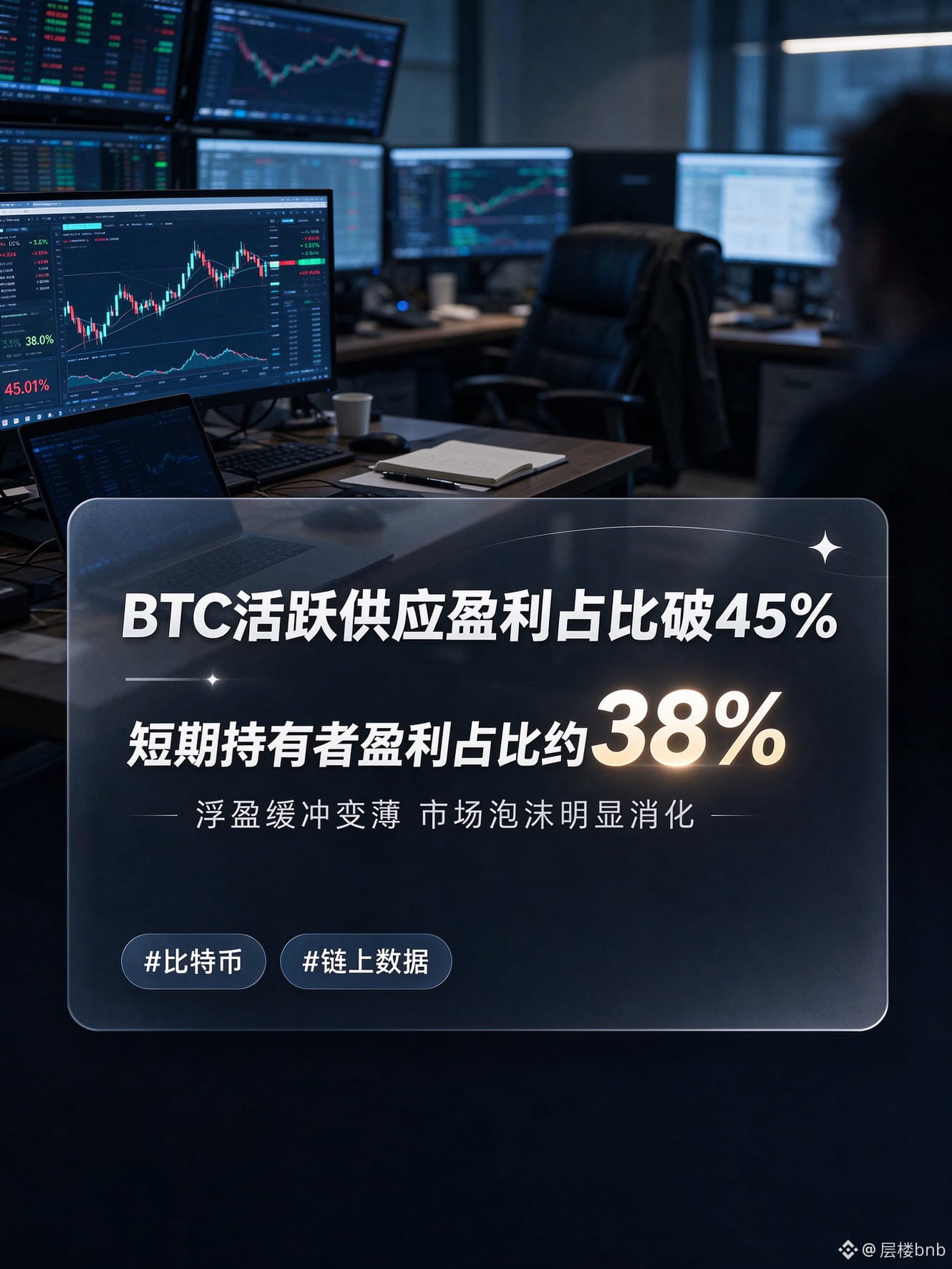
On-chain data shows that as Bitcoin weakened around the $69,000 level, the share of active supply currently in profit fell below 45%. According to Glassnode, the percentage of short-term holder supply bought within the past 155 days that is in profit dropped from nearly all supply in profit in early October to around 38%, a marked retreat from September’s high. The net unrealized profit/loss ratio contracted from 7.3% to 4.0% in one week, thinning the unrealized gain cushion for recent buyers. research.glassnode.comresearch.glassnode.com
These indicators point to a neutral-to-bearish outlook: on the one hand, market valuations are far less stretched than at September’s peak, earlier excesses have been absorbed, and no extreme structural stress has emerged. On the other hand, more than half of the on-chain supply is close to being underwater, and if prices continue to fall, selling pressure and stop-losses among holders at a loss could be more easily triggered.
Historically, when the share of supply at a loss rises steadily and the cost bases of short- and long-term holders converge, it often coincides with an area near a cycle bottom. However, the timing is difficult to determine based on the profit ratio alone. Going forward, key areas to watch include whether lower-price addresses continue to accumulate, whether short-term holders capitulate and exit, and whether ETF inflows recover.
#Bitcoin #OnChainData #SupplyProfitLoss $BTC
{future}(BTCUSDT)
#比特币活跃供应盈利占比跌破45%
BTC active supply in profit falls below 45%, short-term holders’ unrealized gains narrow sharply
On-chain data shows that as Bitcoin weakened around the $69,000 level, the share of active supply currently in profit fell below 45%. According to Glassnode, the percentage of short-term holder supply bought within the past 155 days that is in profit dropped from nearly all supply in profit in early October to around 38%, a marked retreat from September’s high. The net unrealized profit/loss ratio contracted from 7.3% to 4.0% in one week, thinning the unrealized gain cushion for recent buyers. research.glassnode.comresearch.glassnode.com
These indicators point to a neutral-to-bearish outlook: on the one hand, market valuations are far less stretched than at September’s peak, earlier excesses have been absorbed, and no extreme structural stress has emerged. On the other hand, more than half of the on-chain supply is close to being underwater, and if prices continue to fall, selling pressure and stop-losses among holders at a loss could be more easily triggered.
Historically, when the share of supply at a loss rises steadily and the cost bases of short- and long-term holders converge, it often coincides with an area near a cycle bottom. However, the timing is difficult to determine based on the profit ratio alone. Going forward, key areas to watch include whether lower-price addresses continue to accumulate, whether short-term holders capitulate and exit, and whether ETF inflows recover.
#Bitcoin #OnChainData #SupplyProfitLoss $BTC
#比特币活跃供应盈利占比跌破45%
1
2.5k
·
--
Crypto and U.S. stocks both fall: what to watch for the next rebound
U.S. stocks and crypto fell together on Friday. Chip stocks took the hardest hit: AMD dropped 8.75% in a single day, and the Philadelphia Semiconductor Index fell more than 6% at one point during the session.
Bitcoin hit an intraday low of $66,456, nearly half its peak of $126,000 last December.
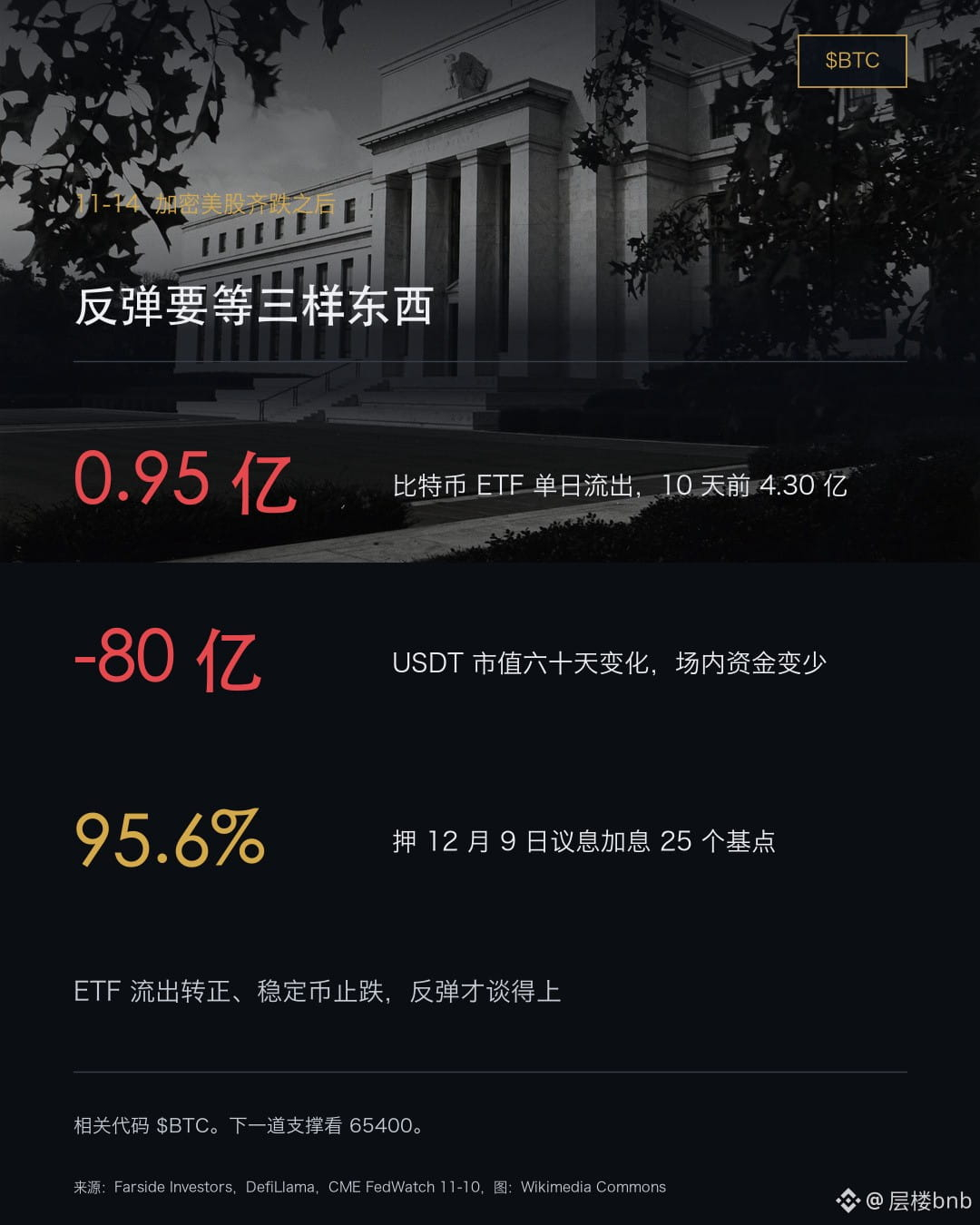
A rebound depends on three things. First, money: ETFs are still seeing outflows, which have narrowed to $95 million in a single day but have yet to turn positive. Second, liquidity: USDT's market cap has shrunk by about $8 billion over the past 60 days.
Third, interest rates. At the December 9 rate decision, markets are pricing in a 95.6% probability of a rate hike. Without a shift in rates, risk assets will struggle to recover.
Mark two dates on your calendar: November 18, for the Fed minutes, and December 9, for the rate decision.
Related codes: $BTC
{future}(BTCUSDT)
#加密美股齐跌,下轮反弹的驱动力在哪?
Crypto and U.S. stocks both fall: what to watch for the next rebound
U.S. stocks and crypto fell together on Friday. Chip stocks took the hardest hit: AMD dropped 8.75% in a single day, and the Philadelphia Semiconductor Index fell more than 6% at one point during the session.
Bitcoin hit an intraday low of $66,456, nearly half its peak of $126,000 last December.
A rebound depends on three things. First, money: ETFs are still seeing outflows, which have narrowed to $95 million in a single day but have yet to turn positive. Second, liquidity: USDT's market cap has shrunk by about $8 billion over the past 60 days.
Third, interest rates. At the December 9 rate decision, markets are pricing in a 95.6% probability of a rate hike. Without a shift in rates, risk assets will struggle to recover.
Mark two dates on your calendar: November 18, for the Fed minutes, and December 9, for the rate decision.
Related codes: $BTC
#加密美股齐跌,下轮反弹的驱动力在哪?
2
1
6.7k
·
--
Verified
According to the official dYdX blog, the dYdX Chain v9.9 software upgrade will introduce canonical USDC, migrating on-chain USDC collateral from Noble USDC to Injective-issued USDC.inj. After the upgrade, USDC.inj will become the only eligible trading collateral on dYdX Chain. Existing account balances, open positions, and trading functionality will remain unchanged. The team will announce the migration timing and detailed instructions before users need to take action. dYdXInjective
The broader context is that cross-chain stablecoin standards are converging: Injective USDC has become the common standard across the Cosmos and dYdX ecosystems, and the Cosmos Hub treasury has completed its migration. More than $80 million in USDC is currently awaiting migration on-chain, and the dYdX community has voted to migrate approximately $68 million of it.
This change essentially switches the collateral issuer from Noble to Injective, reducing cross-bridge and liquidity fragmentation issues caused by multiple versions of USDC coexisting across chains. Traders should mainly watch for prompts about withdrawals, placing orders, and replacing collateral during the upgrade window. Going forward, they can monitor USDC.inj liquidity depth across the dYdX and Cosmos ecosystems.
{future}(INJUSDT)
{future}(DYDXUSDT)
#dYdX #Injective #USDC $DYDX $INJ #dydx拟通过v9.9升级将usdc转向injective
According to the official dYdX blog, the dYdX Chain v9.9 software upgrade will introduce canonical USDC, migrating on-chain USDC collateral from Noble USDC to Injective-issued USDC.inj. After the upgrade, USDC.inj will become the only eligible trading collateral on dYdX Chain. Existing account balances, open positions, and trading functionality will remain unchanged. The team will announce the migration timing and detailed instructions before users need to take action. dYdXInjective
The broader context is that cross-chain stablecoin standards are converging: Injective USDC has become the common standard across the Cosmos and dYdX ecosystems, and the Cosmos Hub treasury has completed its migration. More than $80 million in USDC is currently awaiting migration on-chain, and the dYdX community has voted to migrate approximately $68 million of it.
This change essentially switches the collateral issuer from Noble to Injective, reducing cross-bridge and liquidity fragmentation issues caused by multiple versions of USDC coexisting across chains. Traders should mainly watch for prompts about withdrawals, placing orders, and replacing collateral during the upgrade window. Going forward, they can monitor USDC.inj liquidity depth across the dYdX and Cosmos ecosystems.
#dYdX #Injective #USDC $DYDX $INJ #dydx拟通过v9.9升级将usdc转向injective

5.2k
·
--
Verified
TON Strategy reports a Q3 net loss of $23.97 million, mainly due to unrealized losses on GRAM
According to SEC filings, GRAM treasury company TON Strategy (NASDAQ: $TONX) announced its Q3 2026 results: quarterly revenue was $13.1 million, down approximately 13% from the previous quarter, mainly due to a decline in the price of GRAM; gross profit was $12.4 million, with a gross margin of approximately 95%; operating expenses were $8.4 million, down 39% quarter over quarter, with reductions in advisory fees, personnel costs, and professional services fees. NasdaqOdaily
The company reported a net loss of $23.97 million for the quarter, mainly due to an unrealized fair-value loss of $27.2 million on its GRAM holdings. This was a non-cash item and did not represent an actual cash outlay. As of September 30, the company held approximately 235.1 million GRAM, of which approximately 232.9 million, or 99%, had been staked; 119.1 million of its holdings were restricted, while 116 million were unrestricted. During the quarter, the company also repurchased approximately 1.8 million common shares for $5.7 million.
For treasury companies of this kind, reported profits fluctuate as the market value of their token holdings is remeasured: when token prices rise, unrealized gains are included in profit; when prices fall, unrealized losses magnify losses. Key points to watch are whether staking rewards from GRAM can cover costs and whether the token price can stabilize.
#TONStrategy $GRAM
{future}(GRAMUSDT)
#代币财库 $TONX.US
{stock_us}(TONX.US)
#tonstrategy第三季度净亏损2397万美元
TON Strategy reports a Q3 net loss of $23.97 million, mainly due to unrealized losses on GRAM
According to SEC filings, GRAM treasury company TON Strategy (NASDAQ: $TONX) announced its Q3 2026 results: quarterly revenue was $13.1 million, down approximately 13% from the previous quarter, mainly due to a decline in the price of GRAM; gross profit was $12.4 million, with a gross margin of approximately 95%; operating expenses were $8.4 million, down 39% quarter over quarter, with reductions in advisory fees, personnel costs, and professional services fees. NasdaqOdaily
The company reported a net loss of $23.97 million for the quarter, mainly due to an unrealized fair-value loss of $27.2 million on its GRAM holdings. This was a non-cash item and did not represent an actual cash outlay. As of September 30, the company held approximately 235.1 million GRAM, of which approximately 232.9 million, or 99%, had been staked; 119.1 million of its holdings were restricted, while 116 million were unrestricted. During the quarter, the company also repurchased approximately 1.8 million common shares for $5.7 million.
For treasury companies of this kind, reported profits fluctuate as the market value of their token holdings is remeasured: when token prices rise, unrealized gains are included in profit; when prices fall, unrealized losses magnify losses. Key points to watch are whether staking rewards from GRAM can cover costs and whether the token price can stabilize.
#TONStrategy $GRAM
#代币财库 $TONX.US
#tonstrategy第三季度净亏损2397万美元

TONXUS-11.78%
GRAM-3.06%
1
3.8k
·
--
Verified
Polkadot community passes new strategy with 97.3% of votes: focusing on everyday users and advancing a DOT-backed stablecoin
On November 11, Polkadot referendum No. 1954 (DOT DAO Strategy Mandate) completed its on-chain vote and was confirmed as passed: approximately 9.65 million weighted votes in favor and 270,000 against, for an approval rate of about 97.3%. The proposal was submitted by the Polkadot Community Foundation, representing community consensus on the direction of the next stage of development. CoinStats
The new strategy has two main priorities: first, shifting the product focus toward applications for everyday users rather than concentrating solely on developers and infrastructure; second, advancing dotUSD, a native stablecoin backed by DOT, to combine the value of staked tokens with on-chain payment use cases. An earlier proposal for the native dotUSD stablecoin passed in a separate referendum with approximately 98.5% approval.
Related adjustments include reducing the number of validators to 400 on November 18, with a nomination threshold of approximately 1.68 million DOT, recalibrating the network’s balance between throughput and validator quality. The high approval rate in governance indicates little disagreement in the community over the direction. The things to watch next are the pace of user-facing product launches and dotUSD’s collateralization and issuance mechanisms.
#Polkadot #DOT #On-chainGovernance $DOT
{future}(DOTUSDT)
#波卡社区以97%票数通过新战略
Polkadot community passes new strategy with 97.3% of votes: focusing on everyday users and advancing a DOT-backed stablecoin
On November 11, Polkadot referendum No. 1954 (DOT DAO Strategy Mandate) completed its on-chain vote and was confirmed as passed: approximately 9.65 million weighted votes in favor and 270,000 against, for an approval rate of about 97.3%. The proposal was submitted by the Polkadot Community Foundation, representing community consensus on the direction of the next stage of development. CoinStats
The new strategy has two main priorities: first, shifting the product focus toward applications for everyday users rather than concentrating solely on developers and infrastructure; second, advancing dotUSD, a native stablecoin backed by DOT, to combine the value of staked tokens with on-chain payment use cases. An earlier proposal for the native dotUSD stablecoin passed in a separate referendum with approximately 98.5% approval.
Related adjustments include reducing the number of validators to 400 on November 18, with a nomination threshold of approximately 1.68 million DOT, recalibrating the network’s balance between throughput and validator quality. The high approval rate in governance indicates little disagreement in the community over the direction. The things to watch next are the pace of user-facing product launches and dotUSD’s collateralization and issuance mechanisms.
#Polkadot #DOT #On-chainGovernance $DOT
#波卡社区以97%票数通过新战略

1
1.7k
·
--
Starship Flight 15
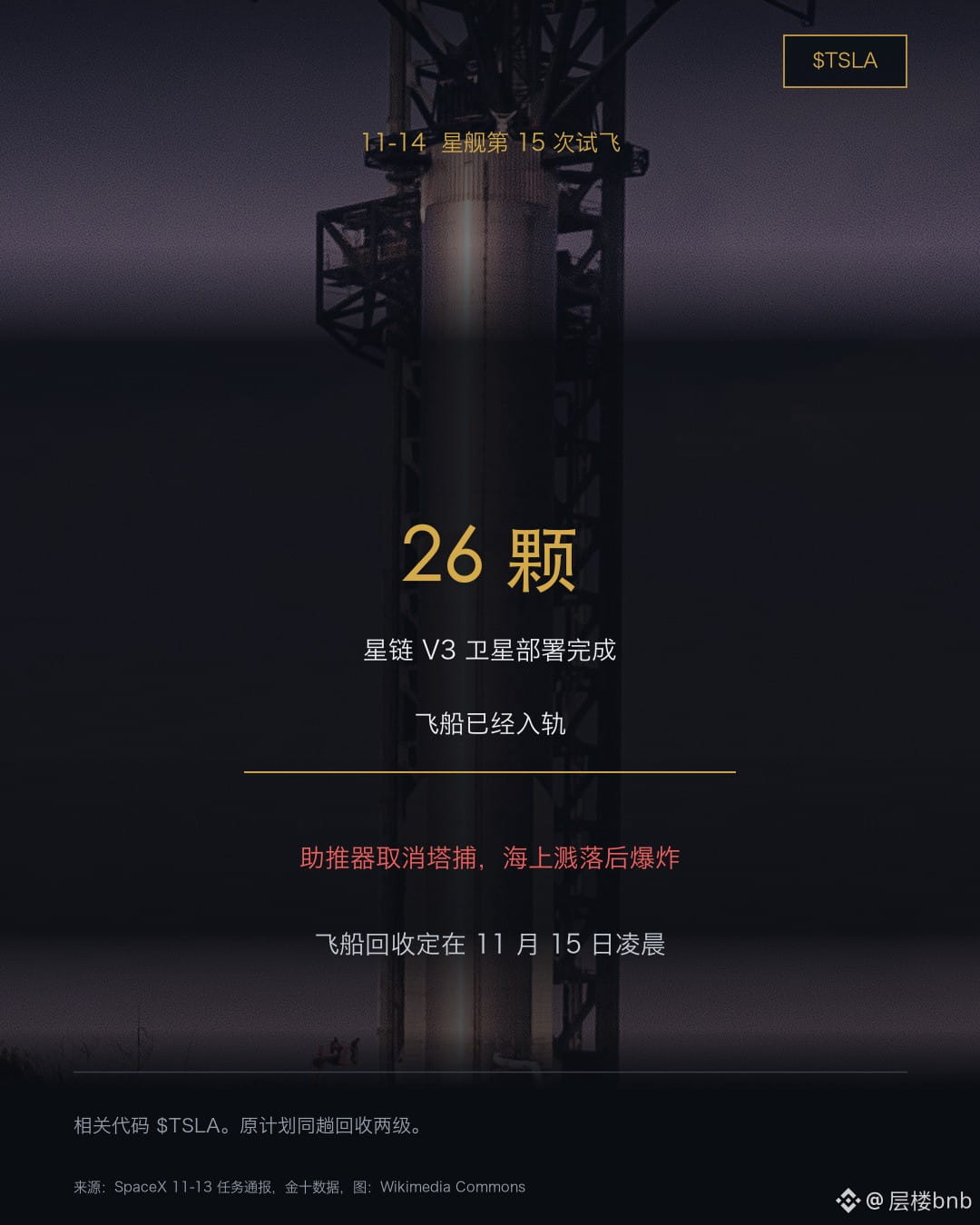
At 6:48 a.m. Beijing time on November 14, SpaceX launched Starship on its 15th test flight from Boca Chica, Texas, using Booster B22 and Ship S42. The mission was originally planned to be the first to bring both the booster and the ship back to the launch tower.
Liftoff and stage separation went smoothly, and after reaching orbit, the ship deployed 26 Starlink V3 satellites. The booster experienced engine problems on its return, so SpaceX called off the tower catch and redirected it to a splashdown in the Gulf of Mexico, where it exploded after hitting the water.
The company has not disclosed details of the failure. The ship is still in orbit at an altitude of 275 kilometers and will attempt to be caught by the tower about 22 hours later. The outcome will not be known until the early hours of November 15.
Related codes: $TSLA $SPCX
{future}(SPCXUSDT)
{future}(TSLAUSDT)
#spacex与特斯拉合并谈判涉30220枚比特币
Starship Flight 15
At 6:48 a.m. Beijing time on November 14, SpaceX launched Starship on its 15th test flight from Boca Chica, Texas, using Booster B22 and Ship S42. The mission was originally planned to be the first to bring both the booster and the ship back to the launch tower.
Liftoff and stage separation went smoothly, and after reaching orbit, the ship deployed 26 Starlink V3 satellites. The booster experienced engine problems on its return, so SpaceX called off the tower catch and redirected it to a splashdown in the Gulf of Mexico, where it exploded after hitting the water.
The company has not disclosed details of the failure. The ship is still in orbit at an altitude of 275 kilometers and will attempt to be caught by the tower about 22 hours later. The outcome will not be known until the early hours of November 15.
Related codes: $TSLA $SPCX
#spacex与特斯拉合并谈判涉30220枚比特币
119
·
--
Bitcoin ETFs Turn to Net Outflows for the Year
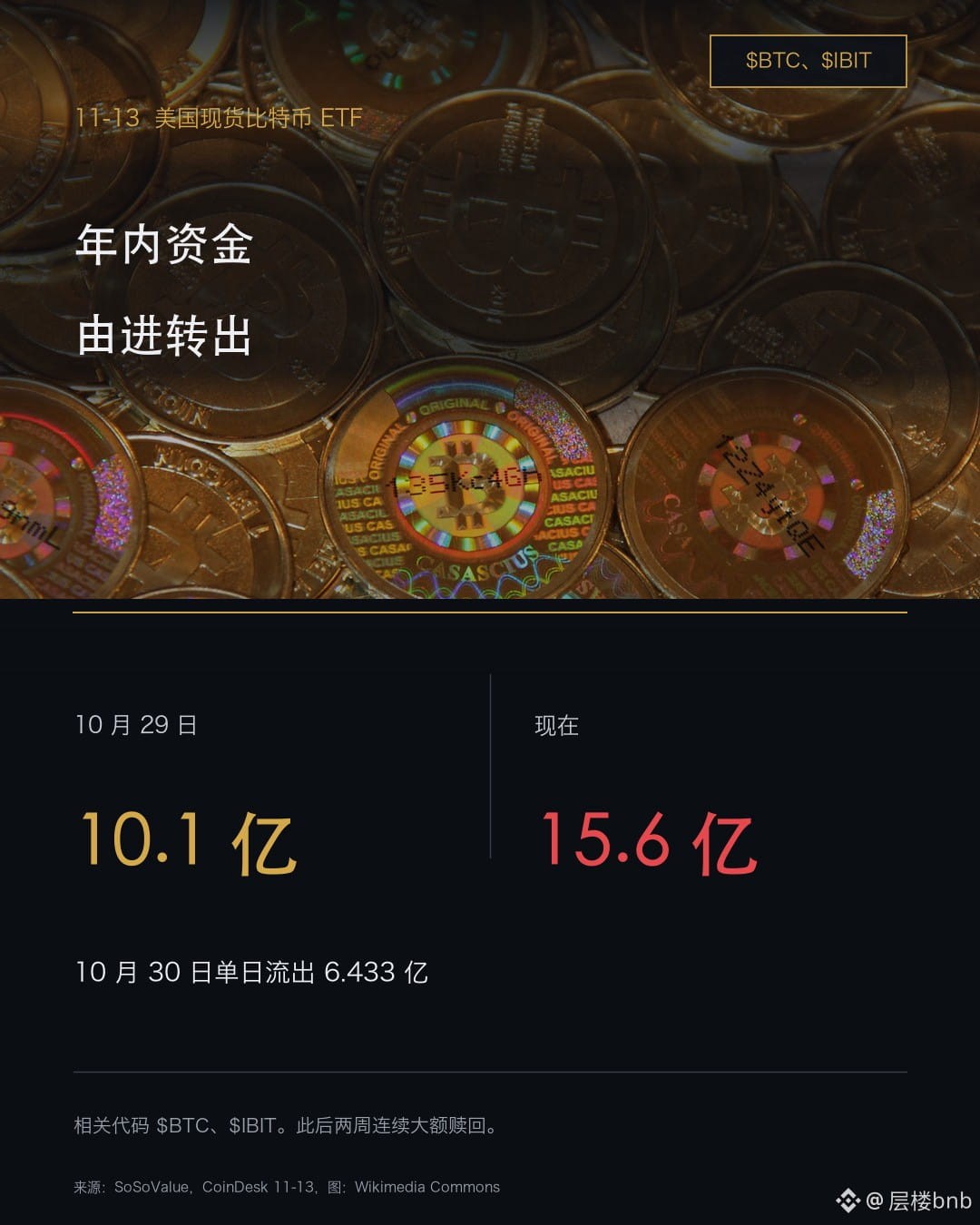
On November 13, the year-to-date fund flows for U.S. spot Bitcoin ETFs turned negative. As of October 29, these funds had still seen net inflows of about $1.01 billion for the year. On October 30, they recorded a single-day outflow of $643.3 million, reducing the cumulative figure to $368 million.
After two consecutive weeks of large redemptions, the year-to-date total turned into net outflows of $1.56 billion.
BTC was quoted at $67,078 on Binance at noon today, down 2.29% over 24 hours.
More than $1.3 billion in crypto futures positions were liquidated over 24 hours, including $677 million in Bitcoin positions.
The figures only go through November 13; daily creations and redemptions will continue to change from then on.
Related codes: $BTC
{future}(BTCUSDT)
, $IBIT.ETF
{etf_us}(IBIT.ETF)
#比特币跌破200周均线
Bitcoin ETFs Turn to Net Outflows for the Year
On November 13, the year-to-date fund flows for U.S. spot Bitcoin ETFs turned negative. As of October 29, these funds had still seen net inflows of about $1.01 billion for the year. On October 30, they recorded a single-day outflow of $643.3 million, reducing the cumulative figure to $368 million.
After two consecutive weeks of large redemptions, the year-to-date total turned into net outflows of $1.56 billion.
BTC was quoted at $67,078 on Binance at noon today, down 2.29% over 24 hours.
More than $1.3 billion in crypto futures positions were liquidated over 24 hours, including $677 million in Bitcoin positions.
The figures only go through November 13; daily creations and redemptions will continue to change from then on.
Related codes: $BTC
, $IBIT.ETF
#比特币跌破200周均线
BTC-4.54%
IBITETF-4.42%
42
·
--
Verified
Nvidia director sells shares
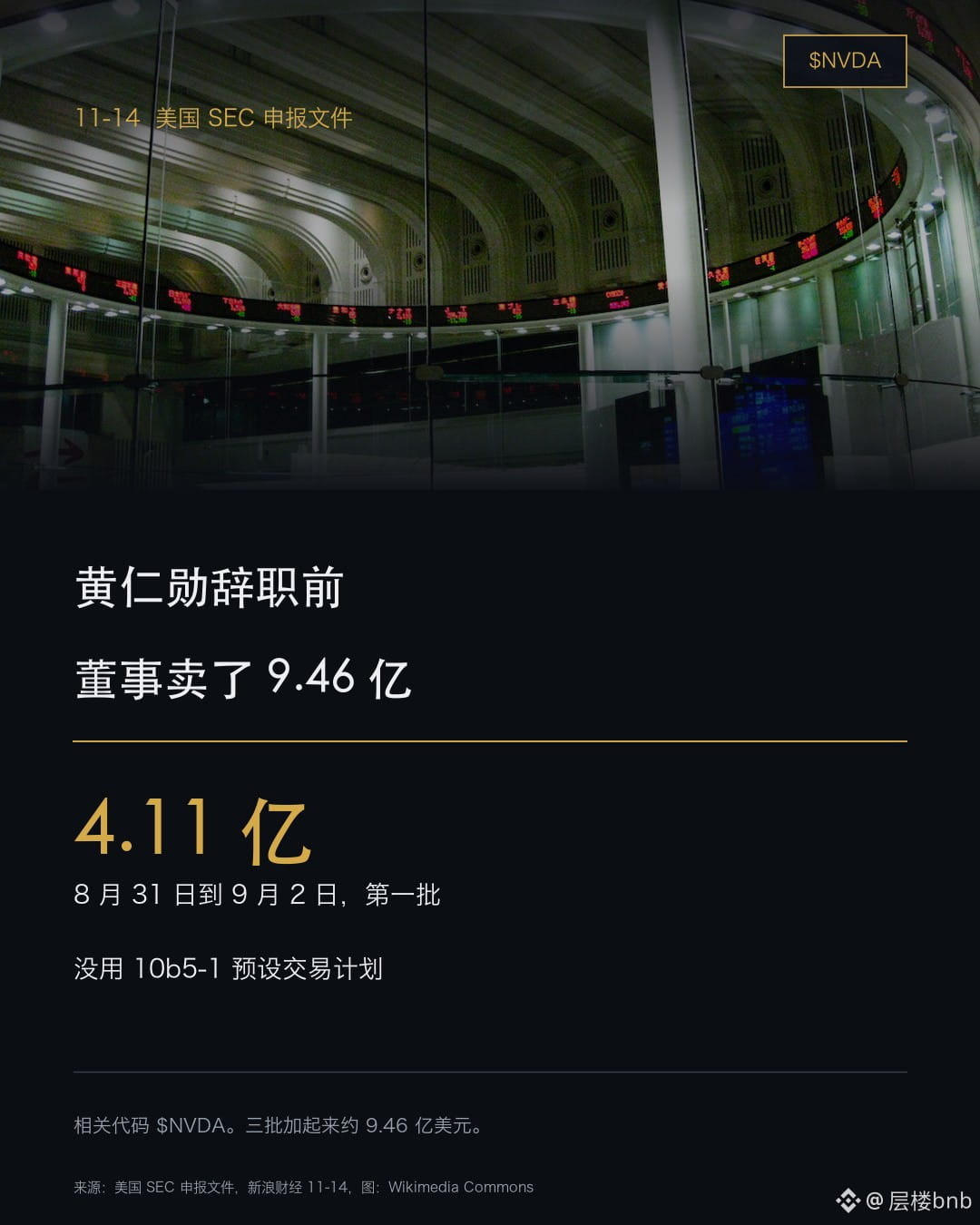
On November 14, filings with the U.S. Securities and Exchange Commission showed that Stevens, an Nvidia director and its second-largest shareholder, sold about $946 million worth of company stock in three tranches in the months before Jensen Huang resigned on November 12.
The first tranche was sold from August 31 to September 2, at prices of $220 to $226 per share, raising about $411 million. The second tranche was sold from September 3 to 4, raising about $236 million. The third tranche was sold on September 18, raising about $300 million.
The filings did not report a 10b5-1 prearranged trading plan, meaning the sales were not made automatically on dates or at prices set in advance. Stevens still holds a large amount of Nvidia stock.
Nvidia closed at $162.85 on November 13, down 2.01%.
Related codes: $NVDA
{future}(NVDAUSDT)
#英伟达正物色新ceo,谁会接替黄仁勋?
Nvidia director sells shares
On November 14, filings with the U.S. Securities and Exchange Commission showed that Stevens, an Nvidia director and its second-largest shareholder, sold about $946 million worth of company stock in three tranches in the months before Jensen Huang resigned on November 12.
The first tranche was sold from August 31 to September 2, at prices of $220 to $226 per share, raising about $411 million. The second tranche was sold from September 3 to 4, raising about $236 million. The third tranche was sold on September 18, raising about $300 million.
The filings did not report a 10b5-1 prearranged trading plan, meaning the sales were not made automatically on dates or at prices set in advance. Stevens still holds a large amount of Nvidia stock.
Nvidia closed at $162.85 on November 13, down 2.01%.
Related codes: $NVDA
#英伟达正物色新ceo,谁会接替黄仁勋?
602
·
--
FAA grounds flights nationwide
At 3:54 p.m. Eastern Time on November 13, the Federal Aviation Administration issued a nationwide ground stop at U.S. airports. Planes already in the air were allowed to land as usual, but no flights on the ground were allowed to take off.
Transportation Secretary Duffy said the communications failure affected all air route traffic control centers. According to flight-tracking website FlightAware, as of 5:40 p.m. Eastern Time that day, more than 1,100 flights had been canceled and nearly 10,000 delayed. The European aviation safety organization also suspended takeoffs that evening for flights from member countries to the United States.
The ground stop was lifted that evening after communications were restored. The FBI said there was no indication of a cyberattack, and a software update was one line of inquiry. U.S. stock markets are closed on Saturday, so airline stocks will have to wait until Monday.
Related codes: $AAL.US
{stock_us}(AAL.US)
FAA grounds flights nationwide
At 3:54 p.m. Eastern Time on November 13, the Federal Aviation Administration issued a nationwide ground stop at U.S. airports. Planes already in the air were allowed to land as usual, but no flights on the ground were allowed to take off.
Transportation Secretary Duffy said the communications failure affected all air route traffic control centers. According to flight-tracking website FlightAware, as of 5:40 p.m. Eastern Time that day, more than 1,100 flights had been canceled and nearly 10,000 delayed. The European aviation safety organization also suspended takeoffs that evening for flights from member countries to the United States.
The ground stop was lifted that evening after communications were restored. The FBI said there was no indication of a cyberattack, and a software update was one line of inquiry. U.S. stock markets are closed on Saturday, so airline stocks will have to wait until Monday.
Related codes: $AAL.US

AALUS-2.87%
264
·
--
MANTRA pauses unstaking for 7 days
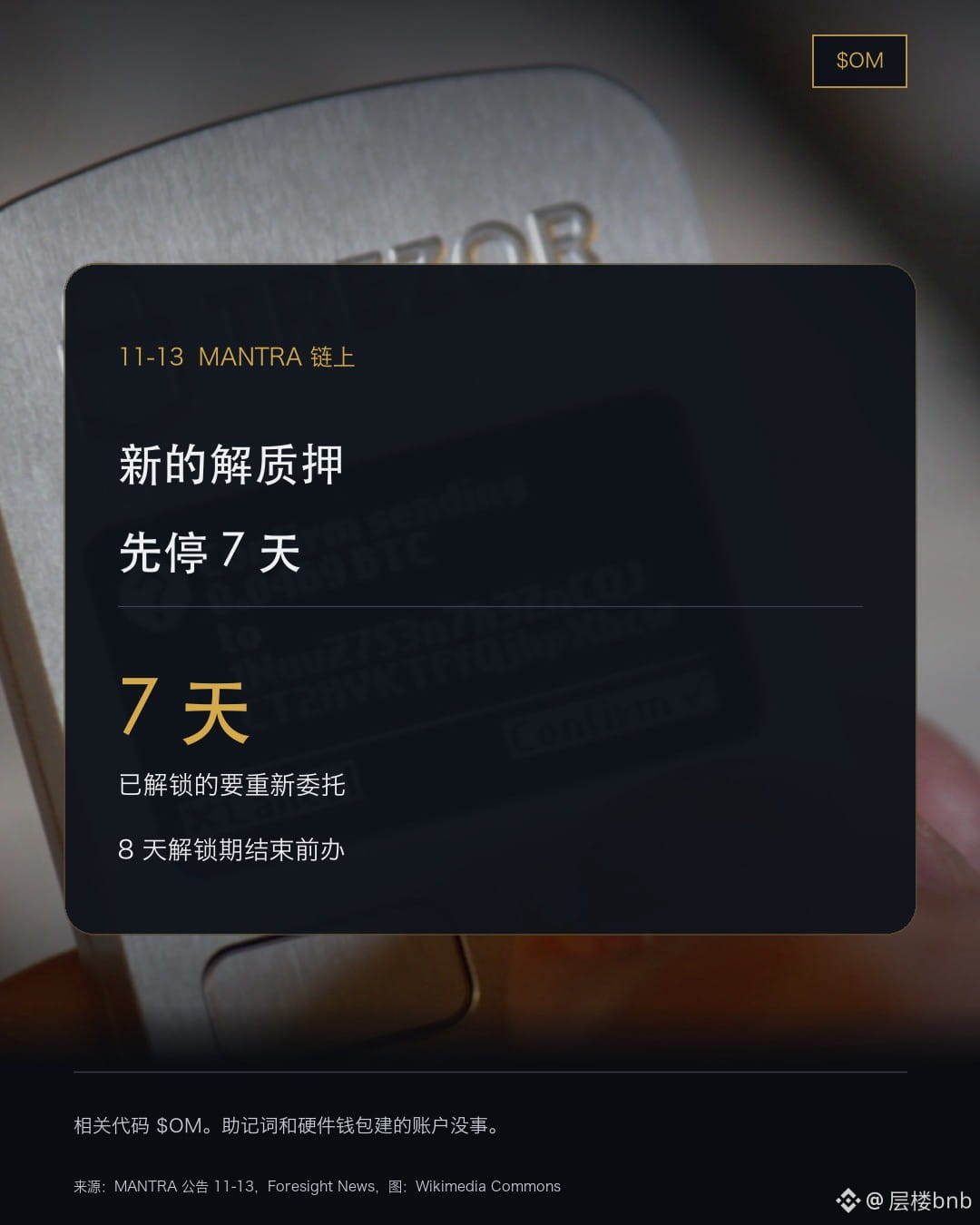
On November 13, MANTRA announced a 7-day pause on new unstaking transactions. A problem with the private keys for Web3Auth and Keplr wallets allowed an attacker to use leaked keys to transfer liquid tokens and initiate unstaking on behalf of accounts.
Accounts already in the 8-day unbonding period are unaffected, but they must be redelegated before the period ends, or the hacker will be able to claim the tokens. MANTRA has also frozen several attacker addresses.
The issue affected Keplr wallets logged into with Google or Apple accounts. Accounts created with a recovery phrase or hardware wallet were unaffected. The vulnerability was discovered on November 7, and Web3Auth transferred about $5.6 million in assets to a recovery address.
At noon today, OM was trading at $0.0669, down 5.11% over 24 hours.
Related codes: $OM
#mantra因keplr安全事件暂停解除质押7天
2
2.7k
Log in to explore more content
Join global crypto users on Binance Square
⚡️ Get latest and useful information about crypto.
💬 Trusted by the world’s largest crypto exchange.
👍 Discover real insights from verified creators.
Email / Phone number
Trending Topics
CryptoSelloffTriggersMultipleWhaleLiquidations
5,597 views
166 Discussing
Crypto Liquidations Top $2B in 24 Hours as 329,000 Traders Are Wiped Out
Binance News
·12 Likes
·4.2k views
USSpotXRPETFsSeeLargestWeeklyOutflowIn8Months
47,505 views
571 Discussing
WillFOMCMinutesReinforceRateHikeExpectations?
1,711 views
56 Discussing