

John safi
49 Posts

John safi
Report
Block User
Crypto Trader 📊 | Daily News & Market Updates | NFA"
Open Trade
Occasional Trader
3.8 Years
37 Following
66 Followers
32 Liked
Posts
Portfolio
All
Videos
·
--
Article
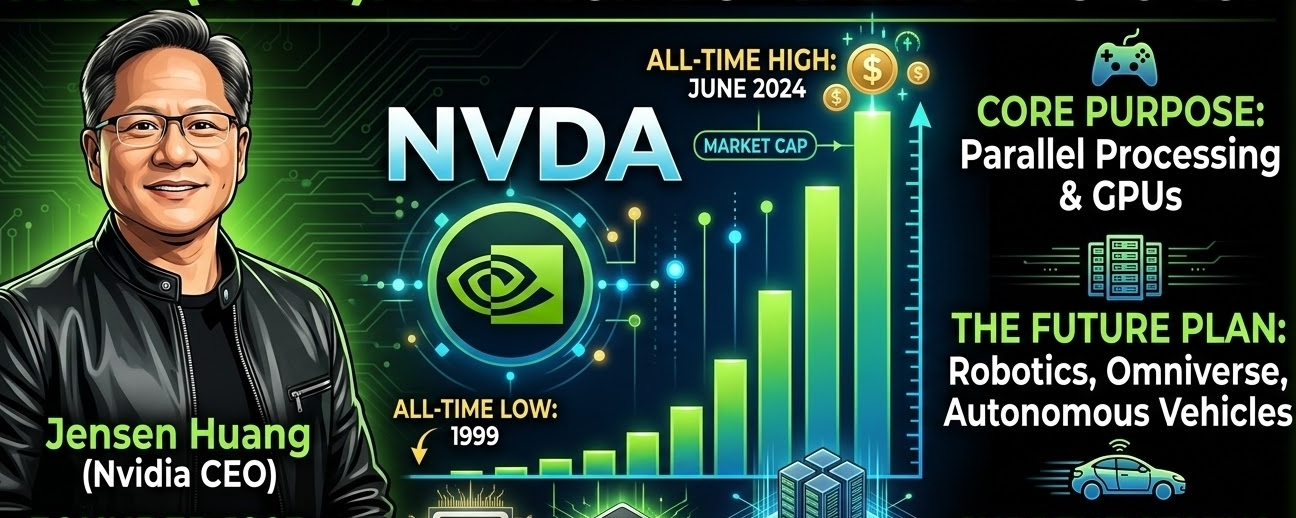
Nvidia (NVDA): History, Present Status, and Future Roadmap$NVDAB ia Corporation stands as one of the most valuable and influential technology companies in the world today. What began as a venture focused purely on 3D computer graphics has evolved into the primary engine driving the global Artificial Intelligence (AI) revolution.
History and Foundation
Nvidia was founded in 1993 by Jensen Huang, Chris Malachowsky, and Curtis Priem. The founders recognized that the future of computing would require specialized hardware to render complex 3D graphics for PC gaming—a task traditional CPUs could not handle efficiently.
Early Struggles & Breakthroughs: Their first product, the NV1, was a commercial failure. However, in 1997, the release of the RIVA 128 graphics processor saved the company from near-bankruptcy.
Inventing the GPU (1999): In 1999, Nvidia introduced the GeForce 256, marketing it as the world’s first official Graphics Processing Unit (GPU). This innovation reshaped the gaming industry forever.
The CUDA Paradigm Shift (2006): Nvidia launched CUDA, a parallel computing platform and programming model. CUDA enabled developers to use GPUs for general-purpose scientific computing and complex data processing, laying the essential technical foundation for modern AI deep learning.
Core Purpose and Mission
$NVDAB was built to solve the limits of sequential computing through Parallel Processing:
Initial Objective: Accelerate real-time 3D graphics rendering for PC gaming, digital art, and visual effects.
Expanded Mission: Build an end-to-end accelerated computing ecosystem—spanning hardware, networking, and software—that powers Supercomputing, Artificial Intelligence, Data Centers, and Autonomous Systems.
All-Time High (ATH) and Key Drivers
All-Time High: Nvidia reached an all-time high valuation in mid-2024, surpassing $140+ per share (adjusted for its 10-for-1 stock split), which pushed its total market capitalization past $3.3 Trillion and briefly made it the most valuable public company in the world.
Why It Happened:
Generative AI Boom: The global rush to build LLMs (like OpenAI's ChatGPT, Google Gemini, and Anthropic Claude) created unprecedented demand for Nvidia’s H100, A100, and Blackwell AI GPUs.
Near-Monopoly Position: Nvidia captured an estimated 80% to 90% share of the AI training chip market.
Unprecedented Financial Growth: Massive quarterly revenue and net income surges driven by data center hardware sales.
All-Time Low (ATL) and Key Drivers
All-Time Low: Nvidia went public (IPO) in January 1999 at $12.00 per share. On a split-adjusted basis across its entire corporate history, its all-time low sits at approximately $0.03 to $0.04 per share.
Why It Happened:
Early Market Volatility (1999–2002): As a young company, Nvidia faced intense competition from established graphics vendors like 3dfx and ATI.
Dot-Com Crash: The broader technology sector collapse in the early 2000s dragged down valuations across all semiconductor and hardware stocks.
Present Status
Today, Nvidia is no longer just a chip manufacturer; it is a Full-Stack Accelerated Computing and AI Infrastructure Company:
Data Center Dominance: Data center hardware and networking (via its Mellanox acquisition) form the majority of its massive revenue stream.
Software Lock-in: Its proprietary software stack (CUDA, TensorRT, NeMo) makes it difficult for enterprise customers to migrate to competitor chips.
Backbone of Big Tech: Major cloud providers (Microsoft Azure, AWS, Google Cloud, Meta) rely heavily on Nvidia clusters to run their AI workloads.
Future Roadmap and Strategy
Nvidia's strategic focus extends beyond raw hardware sales to controlling the entire AI and digital simulation pipeline:
Next-Generation Architectures: Scaling advanced GPU architectures (such as Blackwell and its successors) to deliver higher AI throughput while dramatically reducing energy consumption per compute unit.
Omniverse & Industrial Digital Twins: Expanding Nvidia Omniverse—a platform for real-time 3D simulation and design—allowing manufacturing, automotive, and logistics companies to simulate entire factories and complex systems digitally before building them physically.
Physical AI & Robotics: Developing dedicated platforms (such as Nvidia Isaac and DRIVE) to power humanoid robotics, automated factory equipment, and autonomous vehicles.
AI-as-a-Service (DGX Cloud): Offering cloud-based AI infrastructure and enterprise software subscriptions, enabling businesses to access high-performance AI compute without building physical data centers.
#NVDA #NVDAUS #artificialintelligence #StockTrading #MarketAnalysis
Nvidia (NVDA): History, Present Status, and Future Roadmap
$NVDAB ia Corporation stands as one of the most valuable and influential technology companies in the world today. What began as a venture focused purely on 3D computer graphics has evolved into the primary engine driving the global Artificial Intelligence (AI) revolution.
History and Foundation
Nvidia was founded in 1993 by Jensen Huang, Chris Malachowsky, and Curtis Priem. The founders recognized that the future of computing would require specialized hardware to render complex 3D graphics for PC gaming—a task traditional CPUs could not handle efficiently.
Early Struggles & Breakthroughs: Their first product, the NV1, was a commercial failure. However, in 1997, the release of the RIVA 128 graphics processor saved the company from near-bankruptcy.
Inventing the GPU (1999): In 1999, Nvidia introduced the GeForce 256, marketing it as the world’s first official Graphics Processing Unit (GPU). This innovation reshaped the gaming industry forever.
The CUDA Paradigm Shift (2006): Nvidia launched CUDA, a parallel computing platform and programming model. CUDA enabled developers to use GPUs for general-purpose scientific computing and complex data processing, laying the essential technical foundation for modern AI deep learning.
Core Purpose and Mission
$NVDAB was built to solve the limits of sequential computing through Parallel Processing:
Initial Objective: Accelerate real-time 3D graphics rendering for PC gaming, digital art, and visual effects.
Expanded Mission: Build an end-to-end accelerated computing ecosystem—spanning hardware, networking, and software—that powers Supercomputing, Artificial Intelligence, Data Centers, and Autonomous Systems.
All-Time High (ATH) and Key Drivers
All-Time High: Nvidia reached an all-time high valuation in mid-2024, surpassing $140+ per share (adjusted for its 10-for-1 stock split), which pushed its total market capitalization past $3.3 Trillion and briefly made it the most valuable public company in the world.
Why It Happened:
Generative AI Boom: The global rush to build LLMs (like OpenAI's ChatGPT, Google Gemini, and Anthropic Claude) created unprecedented demand for Nvidia’s H100, A100, and Blackwell AI GPUs.
Near-Monopoly Position: Nvidia captured an estimated 80% to 90% share of the AI training chip market.
Unprecedented Financial Growth: Massive quarterly revenue and net income surges driven by data center hardware sales.
All-Time Low (ATL) and Key Drivers
All-Time Low: Nvidia went public (IPO) in January 1999 at $12.00 per share. On a split-adjusted basis across its entire corporate history, its all-time low sits at approximately $0.03 to $0.04 per share.
Why It Happened:
Early Market Volatility (1999–2002): As a young company, Nvidia faced intense competition from established graphics vendors like 3dfx and ATI.
Dot-Com Crash: The broader technology sector collapse in the early 2000s dragged down valuations across all semiconductor and hardware stocks.
Present Status
Today, Nvidia is no longer just a chip manufacturer; it is a Full-Stack Accelerated Computing and AI Infrastructure Company:
Data Center Dominance: Data center hardware and networking (via its Mellanox acquisition) form the majority of its massive revenue stream.
Software Lock-in: Its proprietary software stack (CUDA, TensorRT, NeMo) makes it difficult for enterprise customers to migrate to competitor chips.
Backbone of Big Tech: Major cloud providers (Microsoft Azure, AWS, Google Cloud, Meta) rely heavily on Nvidia clusters to run their AI workloads.
Future Roadmap and Strategy
Nvidia's strategic focus extends beyond raw hardware sales to controlling the entire AI and digital simulation pipeline:
Next-Generation Architectures: Scaling advanced GPU architectures (such as Blackwell and its successors) to deliver higher AI throughput while dramatically reducing energy consumption per compute unit.
Omniverse & Industrial Digital Twins: Expanding Nvidia Omniverse—a platform for real-time 3D simulation and design—allowing manufacturing, automotive, and logistics companies to simulate entire factories and complex systems digitally before building them physically.
Physical AI & Robotics: Developing dedicated platforms (such as Nvidia Isaac and DRIVE) to power humanoid robotics, automated factory equipment, and autonomous vehicles.
AI-as-a-Service (DGX Cloud): Offering cloud-based AI infrastructure and enterprise software subscriptions, enabling businesses to access high-performance AI compute without building physical data centers.
#NVDA #NVDAUS #artificialintelligence #StockTrading #MarketAnalysis
History and Foundation
Nvidia was founded in 1993 by Jensen Huang, Chris Malachowsky, and Curtis Priem. The founders recognized that the future of computing would require specialized hardware to render complex 3D graphics for PC gaming—a task traditional CPUs could not handle efficiently.
Early Struggles & Breakthroughs: Their first product, the NV1, was a commercial failure. However, in 1997, the release of the RIVA 128 graphics processor saved the company from near-bankruptcy.
Inventing the GPU (1999): In 1999, Nvidia introduced the GeForce 256, marketing it as the world’s first official Graphics Processing Unit (GPU). This innovation reshaped the gaming industry forever.
The CUDA Paradigm Shift (2006): Nvidia launched CUDA, a parallel computing platform and programming model. CUDA enabled developers to use GPUs for general-purpose scientific computing and complex data processing, laying the essential technical foundation for modern AI deep learning.
Core Purpose and Mission
$NVDAB was built to solve the limits of sequential computing through Parallel Processing:
Initial Objective: Accelerate real-time 3D graphics rendering for PC gaming, digital art, and visual effects.
Expanded Mission: Build an end-to-end accelerated computing ecosystem—spanning hardware, networking, and software—that powers Supercomputing, Artificial Intelligence, Data Centers, and Autonomous Systems.
All-Time High (ATH) and Key Drivers
All-Time High: Nvidia reached an all-time high valuation in mid-2024, surpassing $140+ per share (adjusted for its 10-for-1 stock split), which pushed its total market capitalization past $3.3 Trillion and briefly made it the most valuable public company in the world.
Why It Happened:
Generative AI Boom: The global rush to build LLMs (like OpenAI's ChatGPT, Google Gemini, and Anthropic Claude) created unprecedented demand for Nvidia’s H100, A100, and Blackwell AI GPUs.
Near-Monopoly Position: Nvidia captured an estimated 80% to 90% share of the AI training chip market.
Unprecedented Financial Growth: Massive quarterly revenue and net income surges driven by data center hardware sales.
All-Time Low (ATL) and Key Drivers
All-Time Low: Nvidia went public (IPO) in January 1999 at $12.00 per share. On a split-adjusted basis across its entire corporate history, its all-time low sits at approximately $0.03 to $0.04 per share.
Why It Happened:
Early Market Volatility (1999–2002): As a young company, Nvidia faced intense competition from established graphics vendors like 3dfx and ATI.
Dot-Com Crash: The broader technology sector collapse in the early 2000s dragged down valuations across all semiconductor and hardware stocks.
Present Status
Today, Nvidia is no longer just a chip manufacturer; it is a Full-Stack Accelerated Computing and AI Infrastructure Company:
Data Center Dominance: Data center hardware and networking (via its Mellanox acquisition) form the majority of its massive revenue stream.
Software Lock-in: Its proprietary software stack (CUDA, TensorRT, NeMo) makes it difficult for enterprise customers to migrate to competitor chips.
Backbone of Big Tech: Major cloud providers (Microsoft Azure, AWS, Google Cloud, Meta) rely heavily on Nvidia clusters to run their AI workloads.
Future Roadmap and Strategy
Nvidia's strategic focus extends beyond raw hardware sales to controlling the entire AI and digital simulation pipeline:
Next-Generation Architectures: Scaling advanced GPU architectures (such as Blackwell and its successors) to deliver higher AI throughput while dramatically reducing energy consumption per compute unit.
Omniverse & Industrial Digital Twins: Expanding Nvidia Omniverse—a platform for real-time 3D simulation and design—allowing manufacturing, automotive, and logistics companies to simulate entire factories and complex systems digitally before building them physically.
Physical AI & Robotics: Developing dedicated platforms (such as Nvidia Isaac and DRIVE) to power humanoid robotics, automated factory equipment, and autonomous vehicles.
AI-as-a-Service (DGX Cloud): Offering cloud-based AI infrastructure and enterprise software subscriptions, enabling businesses to access high-performance AI compute without building physical data centers.
#NVDA #NVDAUS #artificialintelligence #StockTrading #MarketAnalysis
1
66
·
--
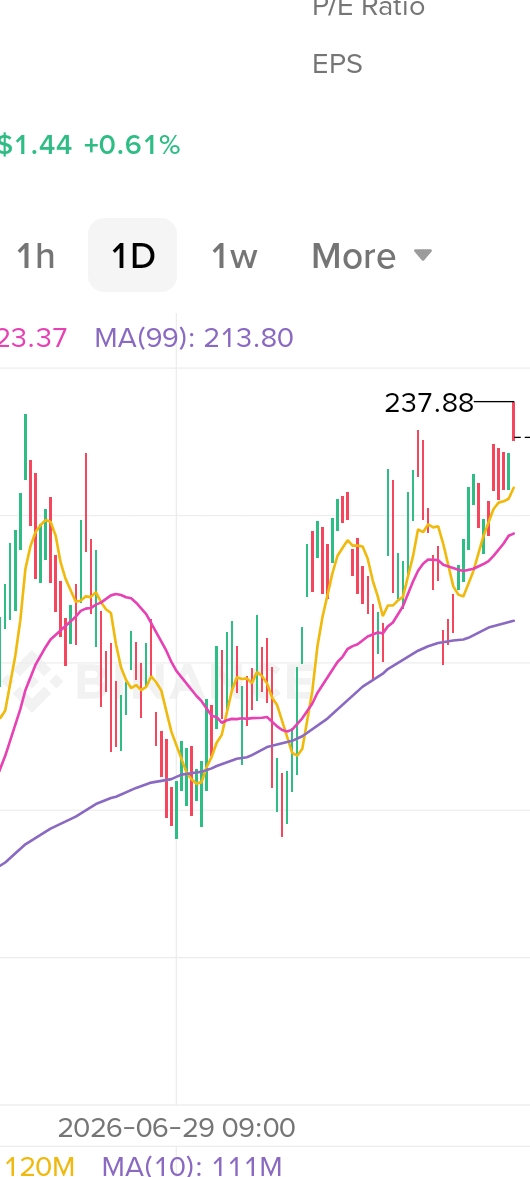
$NVDA.US Nvidia is showing robust bullish price action on the daily timeframe, currently trading around $240.03
#NVDA
#BinanceLaunchesBinanceIntelligence
$NVDA.US Nvidia is showing robust bullish price action on the daily timeframe, currently trading around $240.03
#NVDA
#BinanceLaunchesBinanceIntelligence
#NVDA
#BinanceLaunchesBinanceIntelligence
NVDAUS+1.12%
90
·
--
Nvda is currently trading at $235, which is where it was 5 months ago. However, from that level, Nvda pulled back and traded down to $190, touching this support level three times. Now, Nvda is once again trading between $235 and $237.
There is a possibility that Nvidia might pull back again from here.
$NVDA.US
$NVDA.US
Nvda is currently trading at $235, which is where it was 5 months ago. However, from that level, Nvda pulled back and traded down to $190, touching this support level three times. Now, Nvda is once again trading between $235 and $237.
There is a possibility that Nvidia might pull back again from here.
$NVDA.US
$NVDA.US
There is a possibility that Nvidia might pull back again from here.
$NVDA.US
$NVDA.US
NVDAUS+1.12%
145
·
--
#ZcashETFPostsFirstWeeklyOutflow$93.6M
Grayscale’s Zcash Spot ETF (Ticker: ZCSH) launch کے baad pehli baar bada weekly net outflow ($93.6 Million) dekha gaya hai.
#ZcashETFPostsFirstWeeklyOutflow$93.6M
Grayscale’s Zcash Spot ETF (Ticker: ZCSH) launch کے baad pehli baar bada weekly net outflow ($93.6 Million) dekha gaya hai.
Grayscale’s Zcash Spot ETF (Ticker: ZCSH) launch کے baad pehli baar bada weekly net outflow ($93.6 Million) dekha gaya hai.
51
·
--
ZEC, DASH, and LIT lead losses among crypto majors...
The native tokens of @Lighter_xyz, @Zcash and @Dashpay have suffered significant price decline over the past week.
LIT [-25%]
ZEC [-20%]
DASH [-17%]
They lead weekly losses among crypto majors and are closely followed by KAS and @Plasma's XPL.
ZEC, DASH, and LIT lead losses among crypto majors...
The native tokens of @Lighter_xyz, @Zcash and @Dashpay have suffered significant price decline over the past week.
LIT [-25%]
ZEC [-20%]
DASH [-17%]
They lead weekly losses among crypto majors and are closely followed by KAS and @Plasma's XPL.
The native tokens of @Lighter_xyz, @Zcash and @Dashpay have suffered significant price decline over the past week.
LIT [-25%]
ZEC [-20%]
DASH [-17%]
They lead weekly losses among crypto majors and are closely followed by KAS and @Plasma's XPL.
794
·
--
$NVDAB Nvidia's total market capitalization has reached $5.57 trillion, making it the world's largest and most valuable public company.
$NVDAB Nvidia's total market capitalization has reached $5.57 trillion, making it the world's largest and most valuable public company.
51
·
--
Excited to share that I’ve completed the "On-Chain Analysis for Beginners[On-chain Analysis for Beginners](https://www.binance.com/en/academy/track/on-chain-analysis-for-beginners?utm_medium=app_share_link) " course on Binance Academy!
On-chain analysis allows us to look beyond price action and analyze actual blockchain data—such as whale activity, exchange flows, and active wallets—to gauge market sentiment accurately.
Excited to share that I’ve completed the "On-Chain Analysis for BeginnersOn-chain Analysis for Beginners " course on Binance Academy!
On-chain analysis allows us to look beyond price action and analyze actual blockchain data—such as whale activity, exchange flows, and active wallets—to gauge market sentiment accurately.
On-chain analysis allows us to look beyond price action and analyze actual blockchain data—such as whale activity, exchange flows, and active wallets—to gauge market sentiment accurately.

60
·
--
Investment means deploying your money into assets or financial channels with the expectation that its value will grow over time, generate passive income, and strengthen your financial security.
Earning money alone is not enough; growing that money is equally essential. Wealthy people do not just work for money—they make their money work for them.
#InvestmentScams #InvestSmart #financial #FinancialInsights
Investment means deploying your money into assets or financial channels with the expectation that its value will grow over time, generate passive income, and strengthen your financial security.
Earning money alone is not enough; growing that money is equally essential. Wealthy people do not just work for money—they make their money work for them.
#InvestmentScams #InvestSmart #financial #FinancialInsights
Earning money alone is not enough; growing that money is equally essential. Wealthy people do not just work for money—they make their money work for them.
#InvestmentScams #InvestSmart #financial #FinancialInsights
54
·
--
THE BIGGEST CRASH IS ABOUT
TO HAPPEN SOON 🚨
IT'S NOT BITCOIN, $ETH OR ANY
ALT, ITS A CRASH OF BITCOIN
DOMINANCE.
ALTSEASON 3.0 IS COMING 🚀
THE BIGGEST CRASH IS ABOUT
TO HAPPEN SOON 🚨
IT'S NOT BITCOIN, $ETH OR ANY
ALT, ITS A CRASH OF BITCOIN
DOMINANCE.
ALTSEASON 3.0 IS COMING 🚀
TO HAPPEN SOON 🚨
IT'S NOT BITCOIN, $ETH OR ANY
ALT, ITS A CRASH OF BITCOIN
DOMINANCE.
ALTSEASON 3.0 IS COMING 🚀
253
·
--
Article
Comprehensive Overview of XRP (Ripple)Introduction
In the world of cryptocurrencies, $XRP stands out as one of the most established and widely discussed digital assets. Developed by the founders of Ripple Labs, Inc. in 2012, XRP was designed with a specific utility in mind: to revolutionize the traditional cross-border payment infrastructure. While Bitcoin was created to act as a decentralized peer-to-peer electronic cash system, $XRP was specifically built to serve as a fast, cost-effective bridge currency for financial institutions and cross-border settlements.
What is XRP?
XRP is the native cryptocurrency of the XRP Ledger (#XRPL), an open-source, public blockchain designed for speed and efficiency. Unlike traditional fiat currencies or mined cryptocurrencies like Bitcoin, all 100 billion XRP tokens were created at the network's inception.
Ripple Labs—the company behind the technology—holds a significant portion of XRP in escrow to release predictably into the market, using the asset to enable liquidity solutions for banks, payment providers, and market makers around the globe.
How Does XRP Work?
Understanding how XRP operates requires looking at its underlying architecture, which differs significantly from typical blockchain models.
XRP Ledger Consensus Protocol: Unlike Bitcoin, which relies on energy-intensive Proof-of-Work (PoW), or networks using Proof-of-Stake (PoS), the XRP Ledger uses a unique consensus mechanism. A network of independent validation nodes agrees on the order and outcome of transactions every 3 to 5 seconds.Bridge Currency Utility: In traditional banking, sending money internationally involves correspondent banks, high fees, and multi-day delays (often via systems like SWIFT). XRP functions as a bridge asset, allowing financial entities to convert local currency into XRP, send it across the globe in seconds, and convert it back into the destination currency at minimal cost.Liquidity Management: Products built around the XRP Ledger, such as Ripple's On-Demand Liquidity (ODL), allow institutions to free up capital previously trapped in pre-funded foreign accounts.
Key Advantages of XRP
XRP offers several technological and economic advantages over conventional financial networks and earlier blockchain projects:
Unmatched Transaction Speed: Transactions on the XRP Ledger settle in roughly 3 to 5 seconds, compared to minutes or hours on other networks.Extremely Low Fees: The average transaction fee on the XRP network is a fraction of a cent, making micro-transactions and frequent cross-border transfers economically viable.High Scalability: The XRPL can comfortably process upwards of 1,500 transactions per second (TPS) without network congestion.Energy Efficiency: Because it does not rely on computational mining, the XRP Ledger is significantly more eco-friendly and energy-efficient than PoW blockchains.
Challenges and Controversies
Despite its technological capabilities, XRP has faced notable hurdles over the years:
Centralization Concerns: Critics often point out that Ripple Labs holds a substantial portion of the total supply in escrow and maintains influence over the ecosystem, leading to ongoing debates about the asset's true level of decentralization.Regulatory Scrutiny: XRP has been at the center of high-profile legal battles, notably with the U.S. Securities and Exchange Commission (SEC), which created prolonged market uncertainty around its regulatory status as a security versus a digital commodity.Institutional Competition: XRP competes directly with established financial messaging networks like SWIFT, as well as central bank digital currencies (CBDCs) and competing payment-focused blockchains like Stellar (XLM).
Future Outlook
The long-term success of $XRP relies heavily on continued global regulatory clarity, institutional adoption of blockchain-based liquidity tools, and the expansion of decentralized finance (DeFi) and smart contract functionality on the XRP Ledger ecosystem. As legacy financial systems continue to modernize, bridge assets like XRP remain a central point of discussion in the evolution of global finance.
Comprehensive Overview of XRP (Ripple)
Introduction
In the world of cryptocurrencies, $XRP stands out as one of the most established and widely discussed digital assets. Developed by the founders of Ripple Labs, Inc. in 2012, XRP was designed with a specific utility in mind: to revolutionize the traditional cross-border payment infrastructure. While Bitcoin was created to act as a decentralized peer-to-peer electronic cash system, $XRP was specifically built to serve as a fast, cost-effective bridge currency for financial institutions and cross-border settlements.
What is XRP?
XRP is the native cryptocurrency of the XRP Ledger (#XRPL), an open-source, public blockchain designed for speed and efficiency. Unlike traditional fiat currencies or mined cryptocurrencies like Bitcoin, all 100 billion XRP tokens were created at the network's inception.
Ripple Labs—the company behind the technology—holds a significant portion of XRP in escrow to release predictably into the market, using the asset to enable liquidity solutions for banks, payment providers, and market makers around the globe.
How Does XRP Work?
Understanding how XRP operates requires looking at its underlying architecture, which differs significantly from typical blockchain models.
XRP Ledger Consensus Protocol: Unlike Bitcoin, which relies on energy-intensive Proof-of-Work (PoW), or networks using Proof-of-Stake (PoS), the XRP Ledger uses a unique consensus mechanism. A network of independent validation nodes agrees on the order and outcome of transactions every 3 to 5 seconds.Bridge Currency Utility: In traditional banking, sending money internationally involves correspondent banks, high fees, and multi-day delays (often via systems like SWIFT). XRP functions as a bridge asset, allowing financial entities to convert local currency into XRP, send it across the globe in seconds, and convert it back into the destination currency at minimal cost.Liquidity Management: Products built around the XRP Ledger, such as Ripple's On-Demand Liquidity (ODL), allow institutions to free up capital previously trapped in pre-funded foreign accounts.
Key Advantages of XRP
XRP offers several technological and economic advantages over conventional financial networks and earlier blockchain projects:
Unmatched Transaction Speed: Transactions on the XRP Ledger settle in roughly 3 to 5 seconds, compared to minutes or hours on other networks.Extremely Low Fees: The average transaction fee on the XRP network is a fraction of a cent, making micro-transactions and frequent cross-border transfers economically viable.High Scalability: The XRPL can comfortably process upwards of 1,500 transactions per second (TPS) without network congestion.Energy Efficiency: Because it does not rely on computational mining, the XRP Ledger is significantly more eco-friendly and energy-efficient than PoW blockchains.
Challenges and Controversies
Despite its technological capabilities, XRP has faced notable hurdles over the years:
Centralization Concerns: Critics often point out that Ripple Labs holds a substantial portion of the total supply in escrow and maintains influence over the ecosystem, leading to ongoing debates about the asset's true level of decentralization.Regulatory Scrutiny: XRP has been at the center of high-profile legal battles, notably with the U.S. Securities and Exchange Commission (SEC), which created prolonged market uncertainty around its regulatory status as a security versus a digital commodity.Institutional Competition: XRP competes directly with established financial messaging networks like SWIFT, as well as central bank digital currencies (CBDCs) and competing payment-focused blockchains like Stellar (XLM).
Future Outlook
The long-term success of $XRP relies heavily on continued global regulatory clarity, institutional adoption of blockchain-based liquidity tools, and the expansion of decentralized finance (DeFi) and smart contract functionality on the XRP Ledger ecosystem. As legacy financial systems continue to modernize, bridge assets like XRP remain a central point of discussion in the evolution of global finance.
In the world of cryptocurrencies, $XRP stands out as one of the most established and widely discussed digital assets. Developed by the founders of Ripple Labs, Inc. in 2012, XRP was designed with a specific utility in mind: to revolutionize the traditional cross-border payment infrastructure. While Bitcoin was created to act as a decentralized peer-to-peer electronic cash system, $XRP was specifically built to serve as a fast, cost-effective bridge currency for financial institutions and cross-border settlements.
What is XRP?
XRP is the native cryptocurrency of the XRP Ledger (#XRPL), an open-source, public blockchain designed for speed and efficiency. Unlike traditional fiat currencies or mined cryptocurrencies like Bitcoin, all 100 billion XRP tokens were created at the network's inception.
Ripple Labs—the company behind the technology—holds a significant portion of XRP in escrow to release predictably into the market, using the asset to enable liquidity solutions for banks, payment providers, and market makers around the globe.
How Does XRP Work?
Understanding how XRP operates requires looking at its underlying architecture, which differs significantly from typical blockchain models.
XRP Ledger Consensus Protocol: Unlike Bitcoin, which relies on energy-intensive Proof-of-Work (PoW), or networks using Proof-of-Stake (PoS), the XRP Ledger uses a unique consensus mechanism. A network of independent validation nodes agrees on the order and outcome of transactions every 3 to 5 seconds.Bridge Currency Utility: In traditional banking, sending money internationally involves correspondent banks, high fees, and multi-day delays (often via systems like SWIFT). XRP functions as a bridge asset, allowing financial entities to convert local currency into XRP, send it across the globe in seconds, and convert it back into the destination currency at minimal cost.Liquidity Management: Products built around the XRP Ledger, such as Ripple's On-Demand Liquidity (ODL), allow institutions to free up capital previously trapped in pre-funded foreign accounts.
Key Advantages of XRP
XRP offers several technological and economic advantages over conventional financial networks and earlier blockchain projects:
Unmatched Transaction Speed: Transactions on the XRP Ledger settle in roughly 3 to 5 seconds, compared to minutes or hours on other networks.Extremely Low Fees: The average transaction fee on the XRP network is a fraction of a cent, making micro-transactions and frequent cross-border transfers economically viable.High Scalability: The XRPL can comfortably process upwards of 1,500 transactions per second (TPS) without network congestion.Energy Efficiency: Because it does not rely on computational mining, the XRP Ledger is significantly more eco-friendly and energy-efficient than PoW blockchains.
Challenges and Controversies
Despite its technological capabilities, XRP has faced notable hurdles over the years:
Centralization Concerns: Critics often point out that Ripple Labs holds a substantial portion of the total supply in escrow and maintains influence over the ecosystem, leading to ongoing debates about the asset's true level of decentralization.Regulatory Scrutiny: XRP has been at the center of high-profile legal battles, notably with the U.S. Securities and Exchange Commission (SEC), which created prolonged market uncertainty around its regulatory status as a security versus a digital commodity.Institutional Competition: XRP competes directly with established financial messaging networks like SWIFT, as well as central bank digital currencies (CBDCs) and competing payment-focused blockchains like Stellar (XLM).
Future Outlook
The long-term success of $XRP relies heavily on continued global regulatory clarity, institutional adoption of blockchain-based liquidity tools, and the expansion of decentralized finance (DeFi) and smart contract functionality on the XRP Ledger ecosystem. As legacy financial systems continue to modernize, bridge assets like XRP remain a central point of discussion in the evolution of global finance.
159
·
--
Altcoin holders, you're not ready for what's coming.
Altcoin dominance just did exactly what it did in 2020.
Breakout. Retest. Then +217%.
Prepare yourself. We're going to Valhalla.
Altcoin holders, you're not ready for what's coming.
Altcoin dominance just did exactly what it did in 2020.
Breakout. Retest. Then +217%.
Prepare yourself. We're going to Valhalla.
Altcoin dominance just did exactly what it did in 2020.
Breakout. Retest. Then +217%.
Prepare yourself. We're going to Valhalla.
52
·
--
$ZEC isn’t even looking like a normal chart anymore.
It’s starting to look like a staircase. 📈
Same structure.
New range.
Breakout.
Another pump.
Then the process repeats.
At this point, the chart is basically asking:
How many more steps are left?
$ZEC isn’t even looking like a normal chart anymore.
It’s starting to look like a staircase. 📈
Same structure.
New range.
Breakout.
Another pump.
Then the process repeats.
At this point, the chart is basically asking:
How many more steps are left?
It’s starting to look like a staircase. 📈
Same structure.
New range.
Breakout.
Another pump.
Then the process repeats.
At this point, the chart is basically asking:
How many more steps are left?
5
691
·
--
Bullish
Everyone waiting for $BTC 50K 😂
But They missed the bottom opportunity.
Everyone waiting for $BTC 50K 😂
But They missed the bottom opportunity.
But They missed the bottom opportunity.

30
·
--
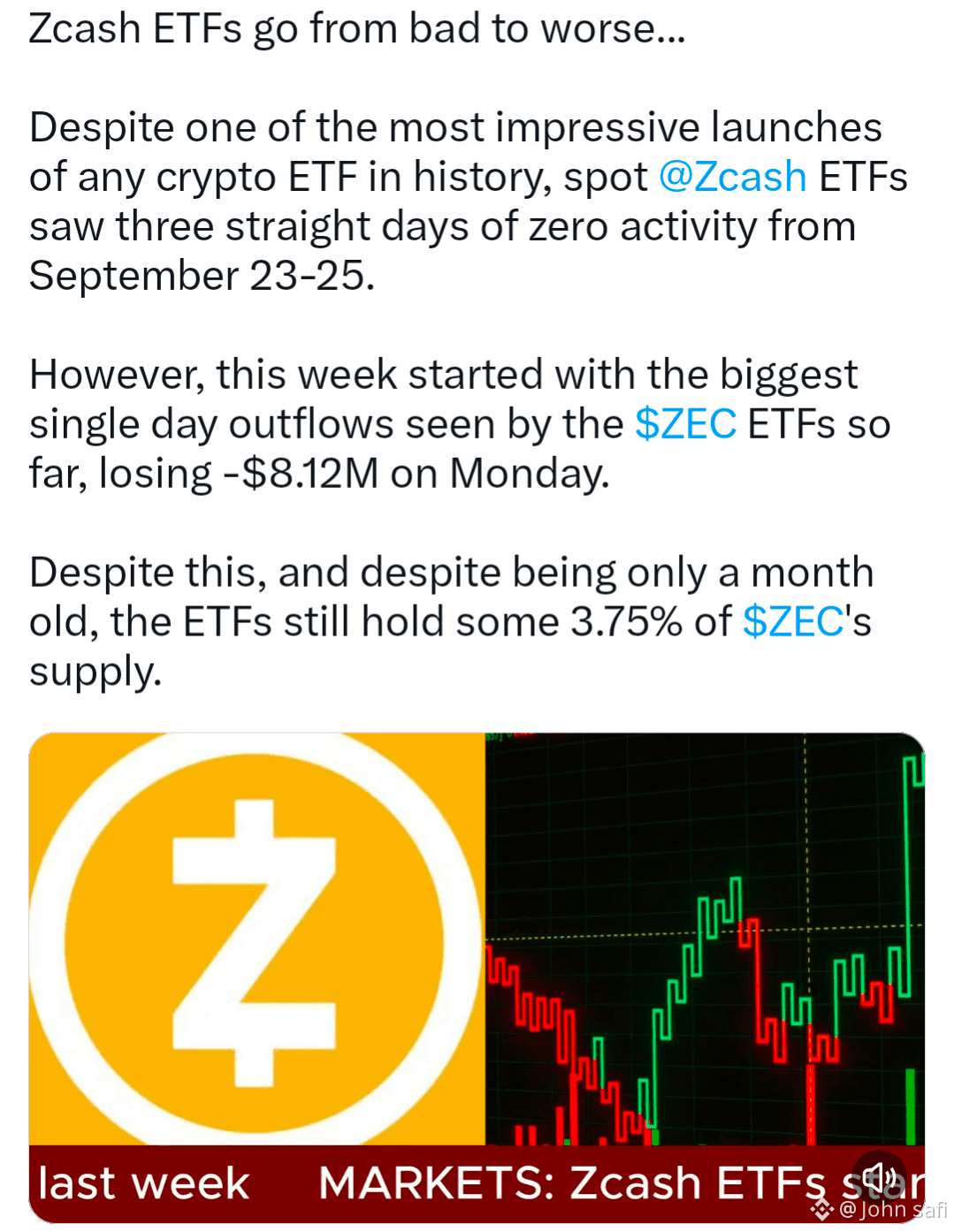
$ZEC ETFs go from bad to worse...
Despite one of the most impressive launches of any crypto ETF in history, spot Zcash ETFs saw three straight days of zero activity from September 23-25.
However, this week started with the biggest single day outflows seen by the $ZEC ETFs so far, losing -$8.12M on Monday.
Despite this, and despite being only a month old, the ETFs still hold some 3.75% of $ZEC C's supply.
$ZEC ETFs go from bad to worse...
Despite one of the most impressive launches of any crypto ETF in history, spot Zcash ETFs saw three straight days of zero activity from September 23-25.
However, this week started with the biggest single day outflows seen by the $ZEC ETFs so far, losing -$8.12M on Monday.
Despite this, and despite being only a month old, the ETFs still hold some 3.75% of $ZEC C's supply.
Despite one of the most impressive launches of any crypto ETF in history, spot Zcash ETFs saw three straight days of zero activity from September 23-25.
However, this week started with the biggest single day outflows seen by the $ZEC ETFs so far, losing -$8.12M on Monday.
Despite this, and despite being only a month old, the ETFs still hold some 3.75% of $ZEC C's supply.
154
·
--
$ETH Everyone can see the move. The professional question is whether there is still a clean entry.
WATCH $ETH
$ETH Everyone can see the move. The professional question is whether there is still a clean entry.
WATCH $ETH
WATCH $ETH
52
·
--
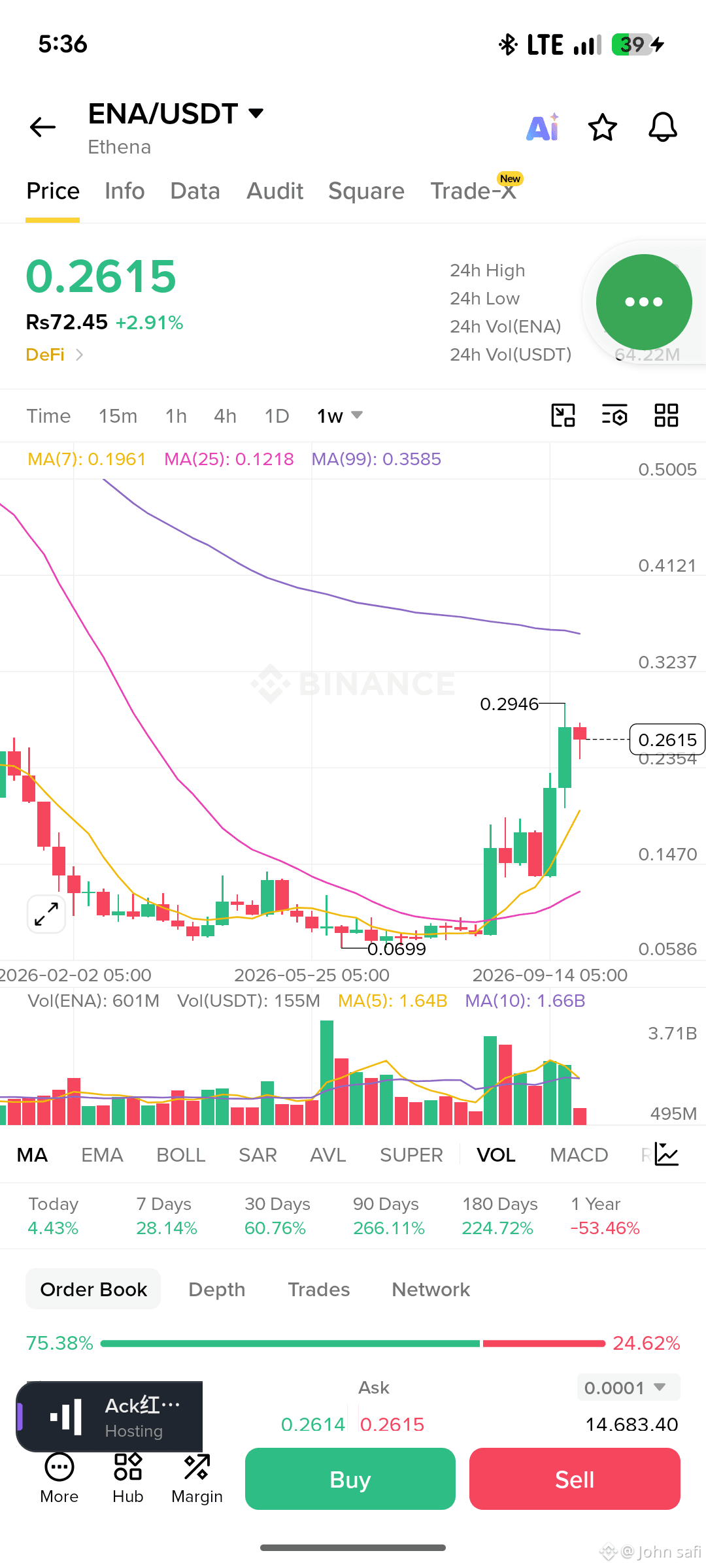
$ENA RECOVERY MOVE IS STARTING ... BUYERS ARE STEPPING IN
ENA has bounced from the $0.245 area and reclaimed $0.25 on the 4H chart. Holding above $0.256 could keep the recovery moving higher.
Entry: $0.2570–$0.2600
TP1: $0.2660
TP2: $0.2740
TP3: $0.2820
SL: $0.2490
$ENA RECOVERY MOVE IS STARTING ... BUYERS ARE STEPPING IN
ENA has bounced from the $0.245 area and reclaimed $0.25 on the 4H chart. Holding above $0.256 could keep the recovery moving higher.
Entry: $0.2570–$0.2600
TP1: $0.2660
TP2: $0.2740
TP3: $0.2820
SL: $0.2490
ENA has bounced from the $0.245 area and reclaimed $0.25 on the 4H chart. Holding above $0.256 could keep the recovery moving higher.
Entry: $0.2570–$0.2600
TP1: $0.2660
TP2: $0.2740
TP3: $0.2820
SL: $0.2490
69
·
--

Article
Money Is Made by Sitting, Not Trading: The Power of Patience and Long-Term InvestingIn the world of financial markets—whether stocks, crypto, or real estate—there is a common misconception that the person constantly buying and selling behind a screen will make the most money. However, reality proves the exact opposite. Wall Street history and the world's most successful investors demonstrate that true wealth is built not through frequent trading, but through holding (sitting) and patient waiting.
This famous principle was highlighted by Jesse Livermore in his classic book Reminiscences of a Stock Operator:
"It was never my thinking that made the big money for me. It always was my sitting. Got it? My sitting tight!"
1. Daily Trading vs. Long-Term Investing
Day trading is driven heavily by emotion, fear, and greed. At the slightest market fluctuation, traders often panic and sell at a loss or make impulsive, wrong decisions.
In contrast, long-term investors ignore short-term market noise and focus on the fundamental value of an asset. They identify a solid asset, invest, and patiently let time do its work.
2. The Power of Compounding
Albert Einstein famously called compound interest the eighth wonder of the world. However, compounding only works its magic when you give your investments enough time.
When you buy a solid asset and hold it for years, your profits generate further profits. Frequent buying and selling leads to:
Higher capital gains taxes and brokerage commissions.Disruption of the compounding cycle.Missing out on the natural, long-term growth of the market.
3. Market Timing Is Nearly Impossible (Time in the Market vs. Timing the Market)
Many traders constantly try to time the market—buying at the absolute bottom and selling at the peak. Yet, no financial expert can consistently predict short-term market movements with certainty.
As the old financial adage goes:
Time in the market beats timing the market.
By staying "seated" in the market, you ensure you catch the market’s best-performing days, which account for the vast majority of overall portfolio growth.
4. Psychological Peace and Discipline
Excessive trading leads to mental fatigue, stress, and burnout. Fear and greed compromise rational decision-making. When markets dip, a day trader sells out of fear, while a disciplined investor views it as an opportunity to buy quality assets at a discount.
"Sitting tight" requires immense self-discipline. It does not mean being passive or lazy; it means having done thorough research and possessing full confidence in your original thesis.
5. How to "Sit Tight" Correctly
Sitting tight does not mean holding onto a failing or poor-quality asset indefinitely. Proper long-term strategy involves:
Thorough Research: Evaluate a company's financial health, management, and future prospects before investing.Quality Selection: Choose fundamentally strong companies or index funds.Filter Out Noise: Avoid checking daily market news and short-term price fluctuations.Long Horizon: Approach your investments with a 5-to-10-year outlook.
Conclusion
If your goal is to build substantial, lasting wealth in financial markets, shift your mindset from a short-term trader to a long-term investor. Markets reward patience and consistency over speed and cleverness.
Investments behave like trees—you plant a seed and let it grow. If you dig up the seed every day to check its growth, it will never become a tree. Choose wisely, sit back, and let time work in your favor.
#MoneyIsMadeBySitting #SittingNotTrading #JesseLivermore #WarrenBuffett #InvestingWisdom #WealthCreation #SitTight
Money Is Made by Sitting, Not Trading: The Power of Patience and Long-Term Investing
In the world of financial markets—whether stocks, crypto, or real estate—there is a common misconception that the person constantly buying and selling behind a screen will make the most money. However, reality proves the exact opposite. Wall Street history and the world's most successful investors demonstrate that true wealth is built not through frequent trading, but through holding (sitting) and patient waiting.
This famous principle was highlighted by Jesse Livermore in his classic book Reminiscences of a Stock Operator:
"It was never my thinking that made the big money for me. It always was my sitting. Got it? My sitting tight!"
1. Daily Trading vs. Long-Term Investing
Day trading is driven heavily by emotion, fear, and greed. At the slightest market fluctuation, traders often panic and sell at a loss or make impulsive, wrong decisions.
In contrast, long-term investors ignore short-term market noise and focus on the fundamental value of an asset. They identify a solid asset, invest, and patiently let time do its work.
2. The Power of Compounding
Albert Einstein famously called compound interest the eighth wonder of the world. However, compounding only works its magic when you give your investments enough time.
When you buy a solid asset and hold it for years, your profits generate further profits. Frequent buying and selling leads to:
Higher capital gains taxes and brokerage commissions.Disruption of the compounding cycle.Missing out on the natural, long-term growth of the market.
3. Market Timing Is Nearly Impossible (Time in the Market vs. Timing the Market)
Many traders constantly try to time the market—buying at the absolute bottom and selling at the peak. Yet, no financial expert can consistently predict short-term market movements with certainty.
As the old financial adage goes:
Time in the market beats timing the market.
By staying "seated" in the market, you ensure you catch the market’s best-performing days, which account for the vast majority of overall portfolio growth.
4. Psychological Peace and Discipline
Excessive trading leads to mental fatigue, stress, and burnout. Fear and greed compromise rational decision-making. When markets dip, a day trader sells out of fear, while a disciplined investor views it as an opportunity to buy quality assets at a discount.
"Sitting tight" requires immense self-discipline. It does not mean being passive or lazy; it means having done thorough research and possessing full confidence in your original thesis.
5. How to "Sit Tight" Correctly
Sitting tight does not mean holding onto a failing or poor-quality asset indefinitely. Proper long-term strategy involves:
Thorough Research: Evaluate a company's financial health, management, and future prospects before investing.Quality Selection: Choose fundamentally strong companies or index funds.Filter Out Noise: Avoid checking daily market news and short-term price fluctuations.Long Horizon: Approach your investments with a 5-to-10-year outlook.
Conclusion
If your goal is to build substantial, lasting wealth in financial markets, shift your mindset from a short-term trader to a long-term investor. Markets reward patience and consistency over speed and cleverness.
Investments behave like trees—you plant a seed and let it grow. If you dig up the seed every day to check its growth, it will never become a tree. Choose wisely, sit back, and let time work in your favor.
#MoneyIsMadeBySitting #SittingNotTrading #JesseLivermore #WarrenBuffett #InvestingWisdom #WealthCreation #SitTight
This famous principle was highlighted by Jesse Livermore in his classic book Reminiscences of a Stock Operator:
"It was never my thinking that made the big money for me. It always was my sitting. Got it? My sitting tight!"
1. Daily Trading vs. Long-Term Investing
Day trading is driven heavily by emotion, fear, and greed. At the slightest market fluctuation, traders often panic and sell at a loss or make impulsive, wrong decisions.
In contrast, long-term investors ignore short-term market noise and focus on the fundamental value of an asset. They identify a solid asset, invest, and patiently let time do its work.
2. The Power of Compounding
Albert Einstein famously called compound interest the eighth wonder of the world. However, compounding only works its magic when you give your investments enough time.
When you buy a solid asset and hold it for years, your profits generate further profits. Frequent buying and selling leads to:
Higher capital gains taxes and brokerage commissions.Disruption of the compounding cycle.Missing out on the natural, long-term growth of the market.
3. Market Timing Is Nearly Impossible (Time in the Market vs. Timing the Market)
Many traders constantly try to time the market—buying at the absolute bottom and selling at the peak. Yet, no financial expert can consistently predict short-term market movements with certainty.
As the old financial adage goes:
Time in the market beats timing the market.
By staying "seated" in the market, you ensure you catch the market’s best-performing days, which account for the vast majority of overall portfolio growth.
4. Psychological Peace and Discipline
Excessive trading leads to mental fatigue, stress, and burnout. Fear and greed compromise rational decision-making. When markets dip, a day trader sells out of fear, while a disciplined investor views it as an opportunity to buy quality assets at a discount.
"Sitting tight" requires immense self-discipline. It does not mean being passive or lazy; it means having done thorough research and possessing full confidence in your original thesis.
5. How to "Sit Tight" Correctly
Sitting tight does not mean holding onto a failing or poor-quality asset indefinitely. Proper long-term strategy involves:
Thorough Research: Evaluate a company's financial health, management, and future prospects before investing.Quality Selection: Choose fundamentally strong companies or index funds.Filter Out Noise: Avoid checking daily market news and short-term price fluctuations.Long Horizon: Approach your investments with a 5-to-10-year outlook.
Conclusion
If your goal is to build substantial, lasting wealth in financial markets, shift your mindset from a short-term trader to a long-term investor. Markets reward patience and consistency over speed and cleverness.
Investments behave like trees—you plant a seed and let it grow. If you dig up the seed every day to check its growth, it will never become a tree. Choose wisely, sit back, and let time work in your favor.
#MoneyIsMadeBySitting #SittingNotTrading #JesseLivermore #WarrenBuffett #InvestingWisdom #WealthCreation #SitTight
79
Log in to explore more content
Join global crypto users on Binance Square
⚡️ Get latest and useful information about crypto.
💬 Trusted by the world’s largest crypto exchange.
👍 Discover real insights from verified creators.
Email / Phone number