

ReformedWave
638 Posts

ReformedWave
Report
Block User
Multi-decade veteran trading stocks and macro the reformed way — disciplined, patient, structurally bullish on crypto.
0 Following
422 Followers
798 Liked
Posts
·
--
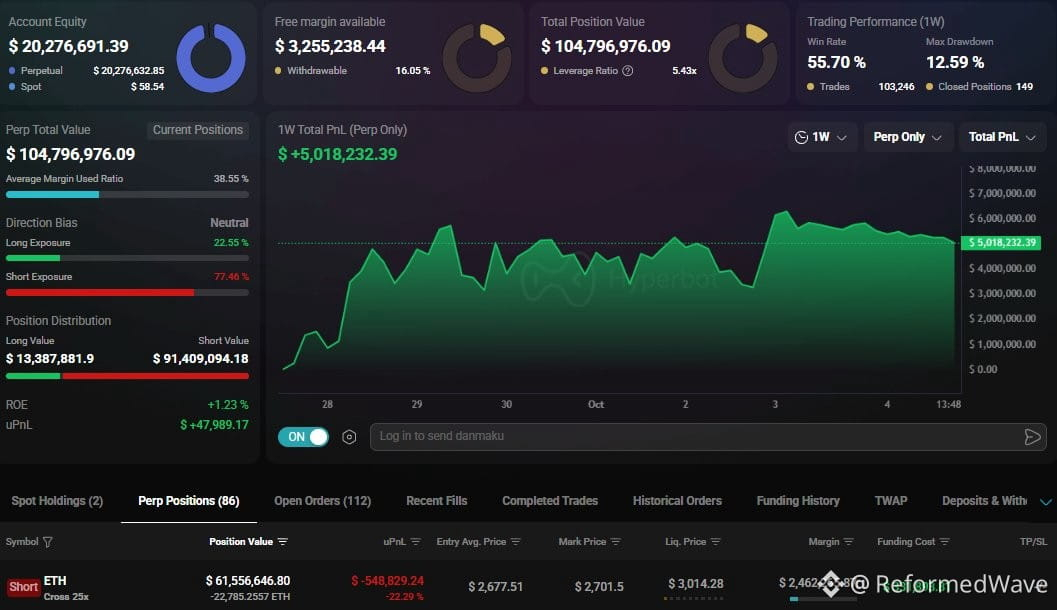
Big money just made a move. A whale who's been banking $5M+ weekly just opened a massive $61 million short on $ETH.
Liquidation sits at $3,014. That's the line in the sand.
This isn't some degen YOLO. This is someone who's been consistently profitable taking a bearish stance with serious size. Could be a hedge, could be conviction, but either way it's worth watching.
If $ETH pushes above $3,014, that position gets wiped. If it rolls over, this whale rides it down. The structure matters here — are we still in a corrective wave or is this the start of something bigger?
Stay disciplined. Watch the levels. Don't chase without a plan.
Big money just made a move. A whale who's been banking $5M+ weekly just opened a massive $61 million short on $ETH.
Liquidation sits at $3,014. That's the line in the sand.
This isn't some degen YOLO. This is someone who's been consistently profitable taking a bearish stance with serious size. Could be a hedge, could be conviction, but either way it's worth watching.
If $ETH pushes above $3,014, that position gets wiped. If it rolls over, this whale rides it down. The structure matters here — are we still in a corrective wave or is this the start of something bigger?
Stay disciplined. Watch the levels. Don't chase without a plan.
Liquidation sits at $3,014. That's the line in the sand.
This isn't some degen YOLO. This is someone who's been consistently profitable taking a bearish stance with serious size. Could be a hedge, could be conviction, but either way it's worth watching.
If $ETH pushes above $3,014, that position gets wiped. If it rolls over, this whale rides it down. The structure matters here — are we still in a corrective wave or is this the start of something bigger?
Stay disciplined. Watch the levels. Don't chase without a plan.
427
·
--
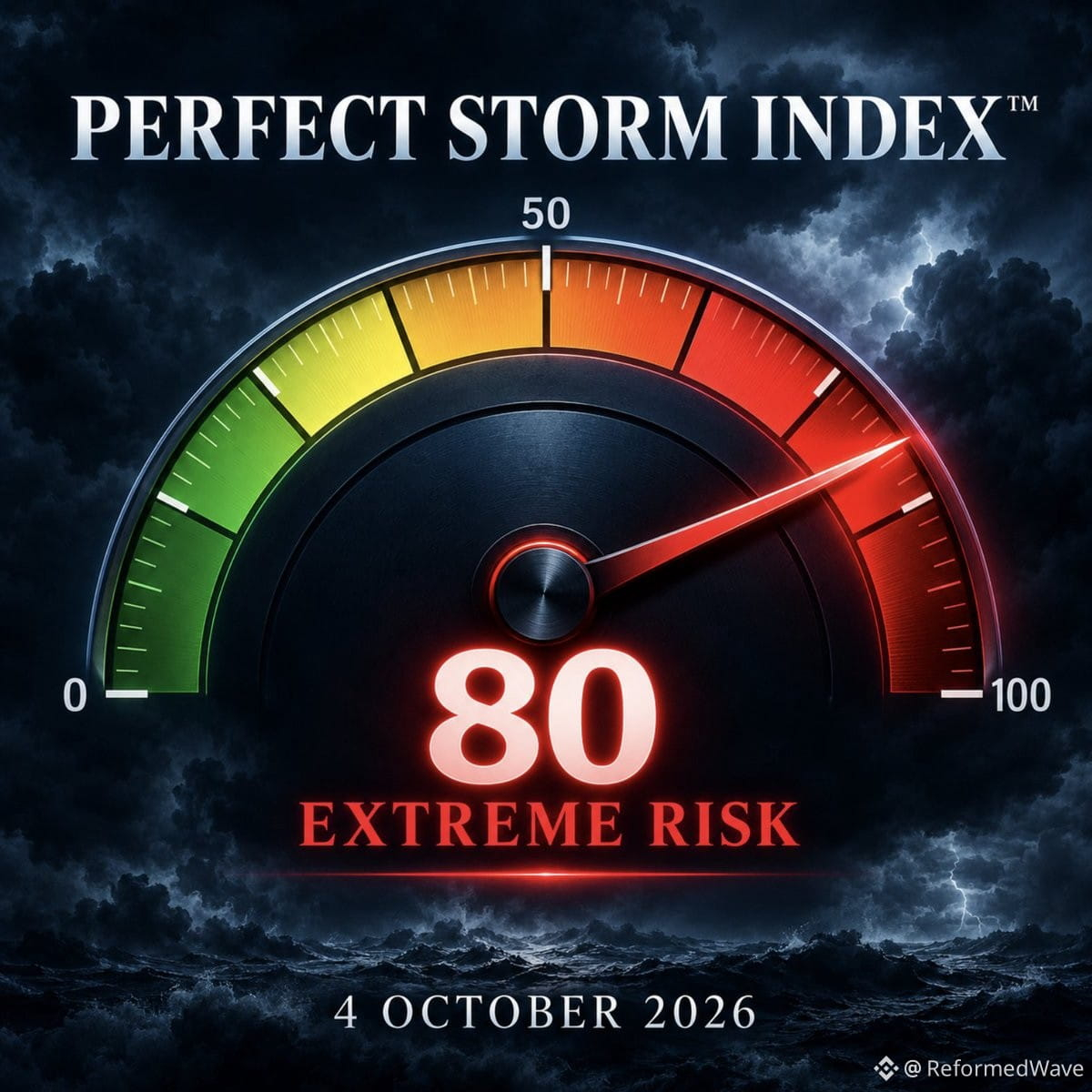
Perfect Storm Index at 80/100 — extreme risk territory. Bond yields still elevated, credit stress mounting, geopolitical energy threats persist. Friday's equity bounce and lower vol help, but don't shift the macro setup.
Capital preservation mode. This is where you protect what you've got, not chase what you might get. I've seen these readings before — they don't always mean immediate collapse, but they mean respect the risk.
For $BTC and crypto, that means tighter stops, lighter size, and no hero trades. If you're long, know your invalidation. If you're waiting, stay patient. The structure can hold, but the backdrop demands discipline.
Risk-off doesn't kill the bull case — it just tests it. Stay sharp.
Perfect Storm Index at 80/100 — extreme risk territory. Bond yields still elevated, credit stress mounting, geopolitical energy threats persist. Friday's equity bounce and lower vol help, but don't shift the macro setup.
Capital preservation mode. This is where you protect what you've got, not chase what you might get. I've seen these readings before — they don't always mean immediate collapse, but they mean respect the risk.
For $BTC and crypto, that means tighter stops, lighter size, and no hero trades. If you're long, know your invalidation. If you're waiting, stay patient. The structure can hold, but the backdrop demands discipline.
Risk-off doesn't kill the bull case — it just tests it. Stay sharp.
Capital preservation mode. This is where you protect what you've got, not chase what you might get. I've seen these readings before — they don't always mean immediate collapse, but they mean respect the risk.
For $BTC and crypto, that means tighter stops, lighter size, and no hero trades. If you're long, know your invalidation. If you're waiting, stay patient. The structure can hold, but the backdrop demands discipline.
Risk-off doesn't kill the bull case — it just tests it. Stay sharp.
135
·
--
No 74K dip coming — at least not the way some are calling it.
$USDT dominance chart looks a lot like 2023 right now. Consolidating just above a key box, retesting old support as resistance before it breaks down through that range and drops lower. If this plays out the same way, $BTC likely retests 80–79K, breaks through that box, and pushes into the 90Ks.
From there, expect a range to form over the next couple months before price eventually grinds toward 100K later in 2027. That range is where you want to be patient and hunt for clean swing longs.
This isn't a crash setup. It's structure doing what it does — shaking out weak hands before the next leg. Stay disciplined, wait for the range, and let the levels come to you. The macro trend hasn't changed.
No 74K dip coming — at least not the way some are calling it.
$USDT dominance chart looks a lot like 2023 right now. Consolidating just above a key box, retesting old support as resistance before it breaks down through that range and drops lower. If this plays out the same way, $BTC likely retests 80–79K, breaks through that box, and pushes into the 90Ks.
From there, expect a range to form over the next couple months before price eventually grinds toward 100K later in 2027. That range is where you want to be patient and hunt for clean swing longs.
This isn't a crash setup. It's structure doing what it does — shaking out weak hands before the next leg. Stay disciplined, wait for the range, and let the levels come to you. The macro trend hasn't changed.
$USDT dominance chart looks a lot like 2023 right now. Consolidating just above a key box, retesting old support as resistance before it breaks down through that range and drops lower. If this plays out the same way, $BTC likely retests 80–79K, breaks through that box, and pushes into the 90Ks.
From there, expect a range to form over the next couple months before price eventually grinds toward 100K later in 2027. That range is where you want to be patient and hunt for clean swing longs.
This isn't a crash setup. It's structure doing what it does — shaking out weak hands before the next leg. Stay disciplined, wait for the range, and let the levels come to you. The macro trend hasn't changed.
94
·
--
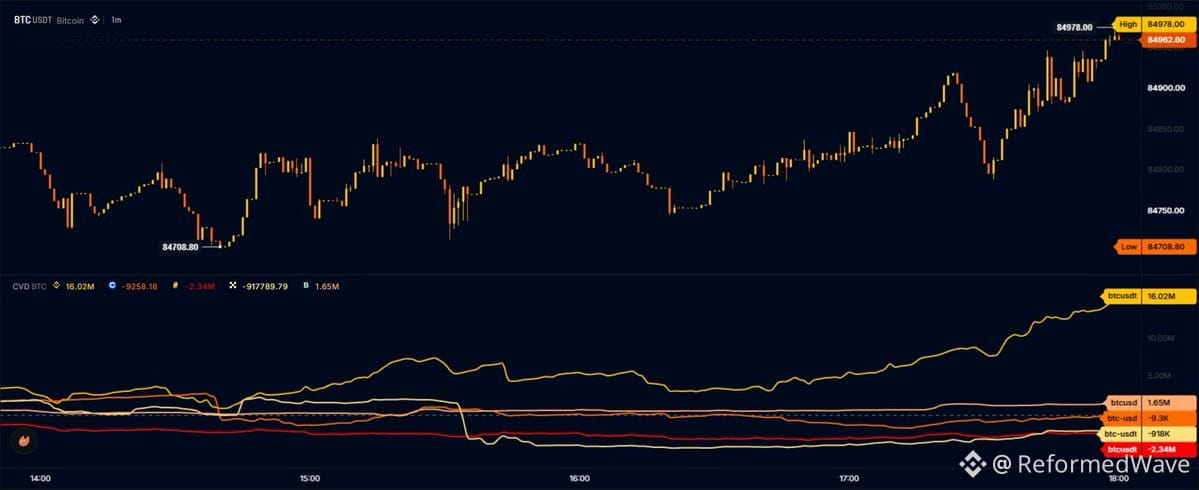
Binance accumulating $BTC through the weekend. Classic setup we've seen before — exchange buying pressure ahead of a potential move.
Next week could bring the follow-through. Watch for volume confirmation and whether spot flows continue. If this is real accumulation and not just balance sheet shuffling, we're setting up for a leg higher.
Stay patient. Let the structure confirm. Don't front-run the move — wait for the break and then ride it. Risk management first, always.
Binance accumulating $BTC through the weekend. Classic setup we've seen before — exchange buying pressure ahead of a potential move.
Next week could bring the follow-through. Watch for volume confirmation and whether spot flows continue. If this is real accumulation and not just balance sheet shuffling, we're setting up for a leg higher.
Stay patient. Let the structure confirm. Don't front-run the move — wait for the break and then ride it. Risk management first, always.
Next week could bring the follow-through. Watch for volume confirmation and whether spot flows continue. If this is real accumulation and not just balance sheet shuffling, we're setting up for a leg higher.
Stay patient. Let the structure confirm. Don't front-run the move — wait for the break and then ride it. Risk management first, always.
47
·
--
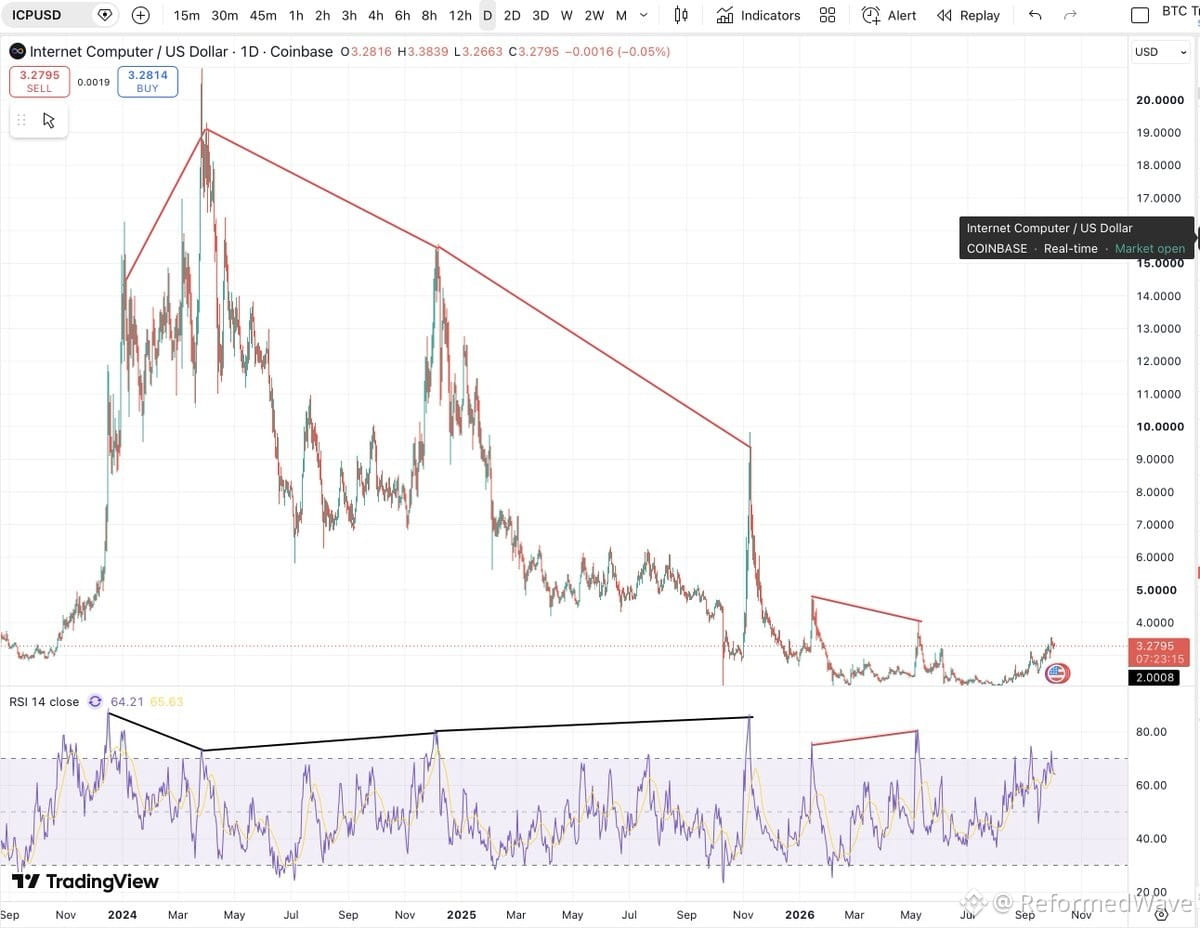
The chart on $ICP isn't looking great right now. We keep printing lower highs — that's the structure telling you something. Add in multiple bearish RSI divergences and momentum creeping toward overbought, and the weight of evidence leans bearish.
Until we get a clean break above that descending resistance, the bias stays negative. Structure matters. Watch for the reclaim, but respect what's in front of you until it changes.
The chart on $ICP isn't looking great right now. We keep printing lower highs — that's the structure telling you something. Add in multiple bearish RSI divergences and momentum creeping toward overbought, and the weight of evidence leans bearish.
Until we get a clean break above that descending resistance, the bias stays negative. Structure matters. Watch for the reclaim, but respect what's in front of you until it changes.
Until we get a clean break above that descending resistance, the bias stays negative. Structure matters. Watch for the reclaim, but respect what's in front of you until it changes.
174
·
--
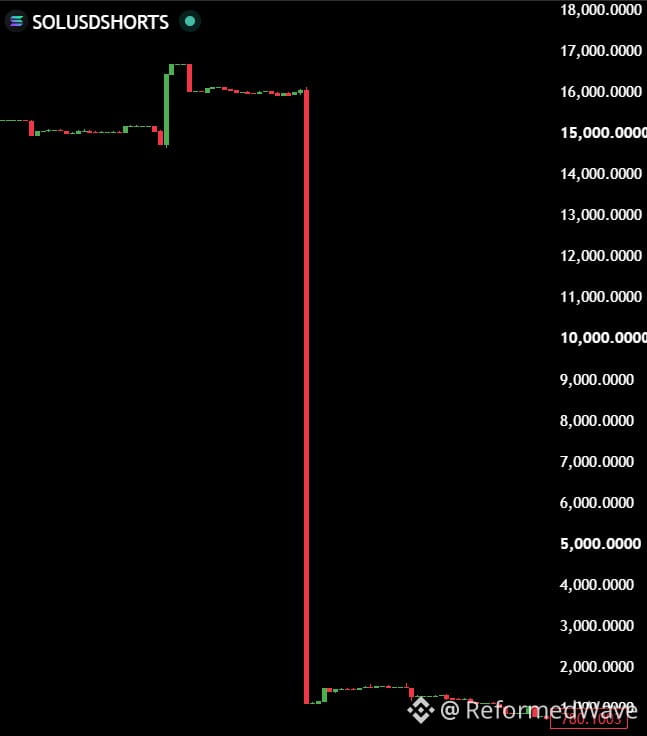
Bitfinex whales closing $SOL shorts — that's positioning, not guessing. When the big money flips from short to flat (or long), they're reading something in the structure we might not see yet. Could be order flow, could be accumulation patterns, could be they just don't want to get caught wrong-footed.
Either way, when whales cover, it removes sell pressure and sets up for a squeeze if buyers step in. Watch for follow-through — if $SOL starts climbing on volume with shorts covering, that's fuel. If it stalls, they might just be taking profit and sitting out.
Stay disciplined. Don't chase the headline. Wait for confirmation, then ride the structure.
Bitfinex whales closing $SOL shorts — that's positioning, not guessing. When the big money flips from short to flat (or long), they're reading something in the structure we might not see yet. Could be order flow, could be accumulation patterns, could be they just don't want to get caught wrong-footed.
Either way, when whales cover, it removes sell pressure and sets up for a squeeze if buyers step in. Watch for follow-through — if $SOL starts climbing on volume with shorts covering, that's fuel. If it stalls, they might just be taking profit and sitting out.
Stay disciplined. Don't chase the headline. Wait for confirmation, then ride the structure.
Either way, when whales cover, it removes sell pressure and sets up for a squeeze if buyers step in. Watch for follow-through — if $SOL starts climbing on volume with shorts covering, that's fuel. If it stalls, they might just be taking profit and sitting out.
Stay disciplined. Don't chase the headline. Wait for confirmation, then ride the structure.
1
284
·
--
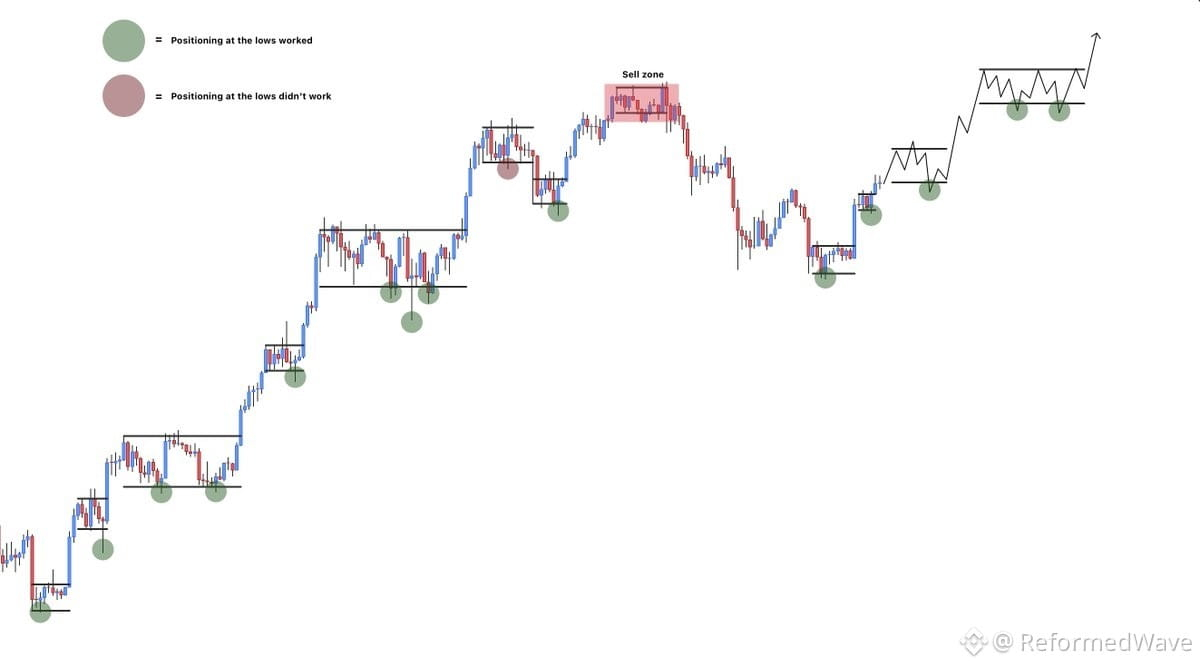
In bull markets, one of the cleanest setups is buying the dip below range lows — the classic deviation play. Let the range form, wait for price to wick below support, then enter your swing long while everyone else is scared.
If you missed the last one, don't chase. Wait for the next range to develop and do it again. That's where fear peaks and most traders freeze up instead of buying.
$BTC loves to shake out weak hands right before the next leg up. Stay patient, stay disciplined, and trust the structure.
In bull markets, one of the cleanest setups is buying the dip below range lows — the classic deviation play. Let the range form, wait for price to wick below support, then enter your swing long while everyone else is scared.
If you missed the last one, don't chase. Wait for the next range to develop and do it again. That's where fear peaks and most traders freeze up instead of buying.
$BTC loves to shake out weak hands right before the next leg up. Stay patient, stay disciplined, and trust the structure.
If you missed the last one, don't chase. Wait for the next range to develop and do it again. That's where fear peaks and most traders freeze up instead of buying.
$BTC loves to shake out weak hands right before the next leg up. Stay patient, stay disciplined, and trust the structure.
1
118
·
--
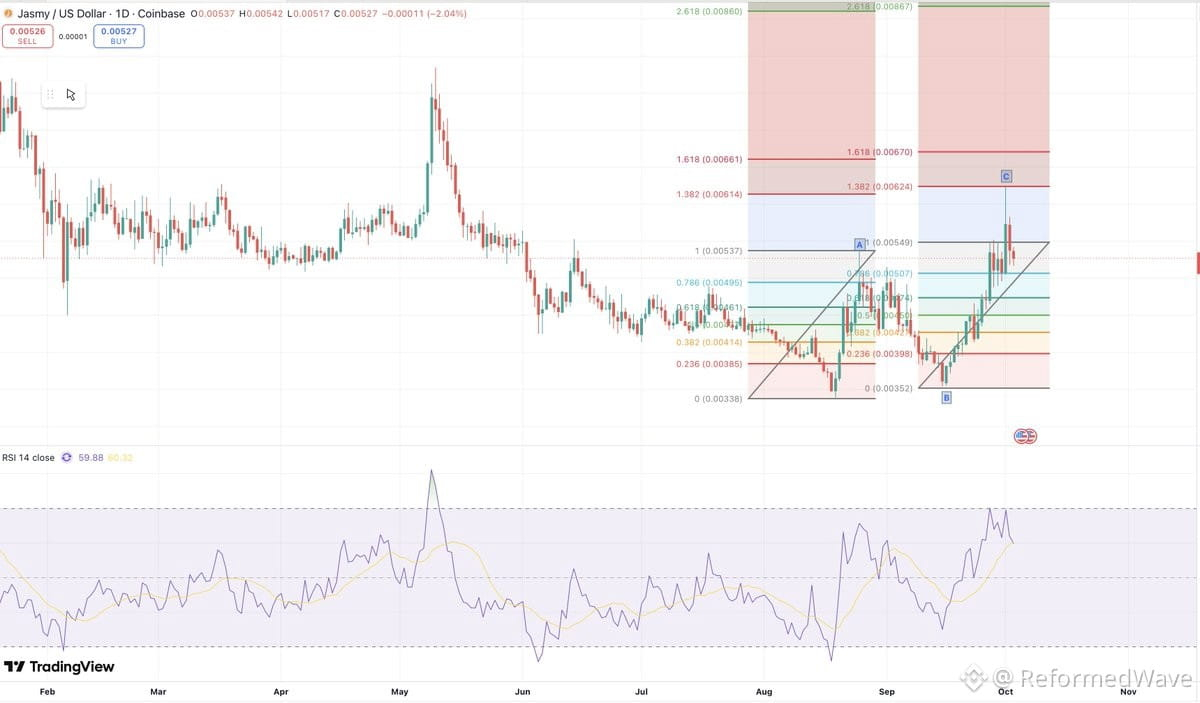
Watching $JASMY closely here — the C wave only tagged the 1.382 extension of wave A, which is modest by Elliott standards. When you see that kind of shallow extension and then price rolls back below the wave A high, it's a red flag that the whole move up might've been corrective, not the start of a fresh impulse.
I've seen this pattern play out before. If $JASMY doesn't reclaim that breakout zone fast, we're looking at increased risk of a deeper pullback — potentially even new lows. The structure matters. Stay disciplined, respect your stops, and don't force a bullish read if the wave count isn't cooperating. Sometimes the market tells you to step aside.
Watching $JASMY closely here — the C wave only tagged the 1.382 extension of wave A, which is modest by Elliott standards. When you see that kind of shallow extension and then price rolls back below the wave A high, it's a red flag that the whole move up might've been corrective, not the start of a fresh impulse.
I've seen this pattern play out before. If $JASMY doesn't reclaim that breakout zone fast, we're looking at increased risk of a deeper pullback — potentially even new lows. The structure matters. Stay disciplined, respect your stops, and don't force a bullish read if the wave count isn't cooperating. Sometimes the market tells you to step aside.
I've seen this pattern play out before. If $JASMY doesn't reclaim that breakout zone fast, we're looking at increased risk of a deeper pullback — potentially even new lows. The structure matters. Stay disciplined, respect your stops, and don't force a bullish read if the wave count isn't cooperating. Sometimes the market tells you to step aside.
108
·
--
Partly True
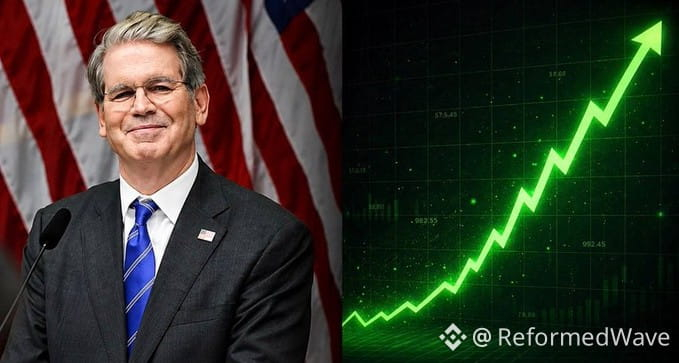
Treasury buying back $6B of its own debt next week. Classic liquidity injection move — more cash flowing into the system when bonds get retired. Not massive scale but directionally bullish for risk assets. When Uncle Sam's hoovering up debt, it usually greases the wheels for $BTC and crypto to catch a bid. Watch how this plays into broader macro liquidity — these buybacks tend to show up in risk-on moves a few weeks later. Staying long bias.
Treasury buying back $6B of its own debt next week. Classic liquidity injection move — more cash flowing into the system when bonds get retired. Not massive scale but directionally bullish for risk assets. When Uncle Sam's hoovering up debt, it usually greases the wheels for $BTC and crypto to catch a bid. Watch how this plays into broader macro liquidity — these buybacks tend to show up in risk-on moves a few weeks later. Staying long bias.
1
140
·
--
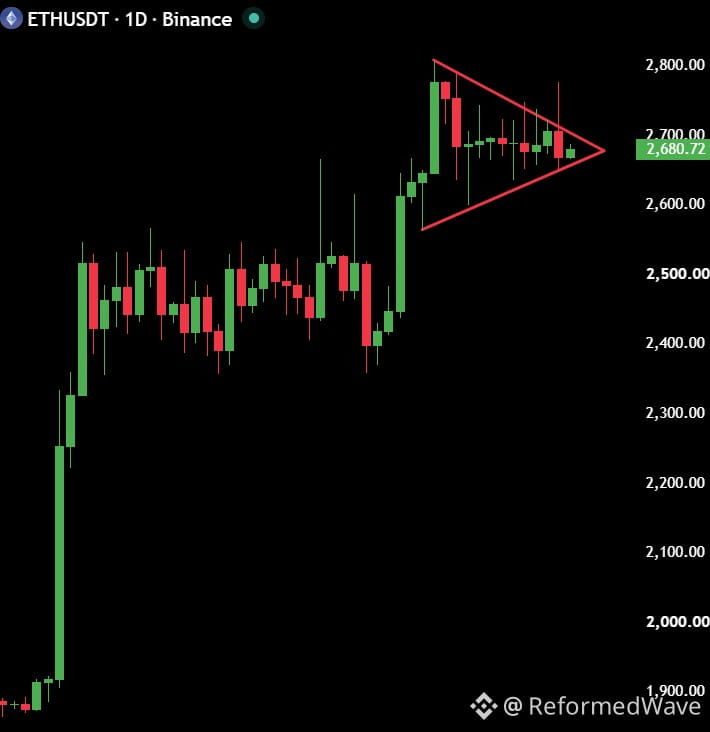
$ETH sitting right under resistance. Daily close above $2,700 opens the door to $3K — clean breakout setup if we get conviction. Structure's been building, just needs the push. Watch that level.
$ETH sitting right under resistance. Daily close above $2,700 opens the door to $3K — clean breakout setup if we get conviction. Structure's been building, just needs the push. Watch that level.
205
·
--
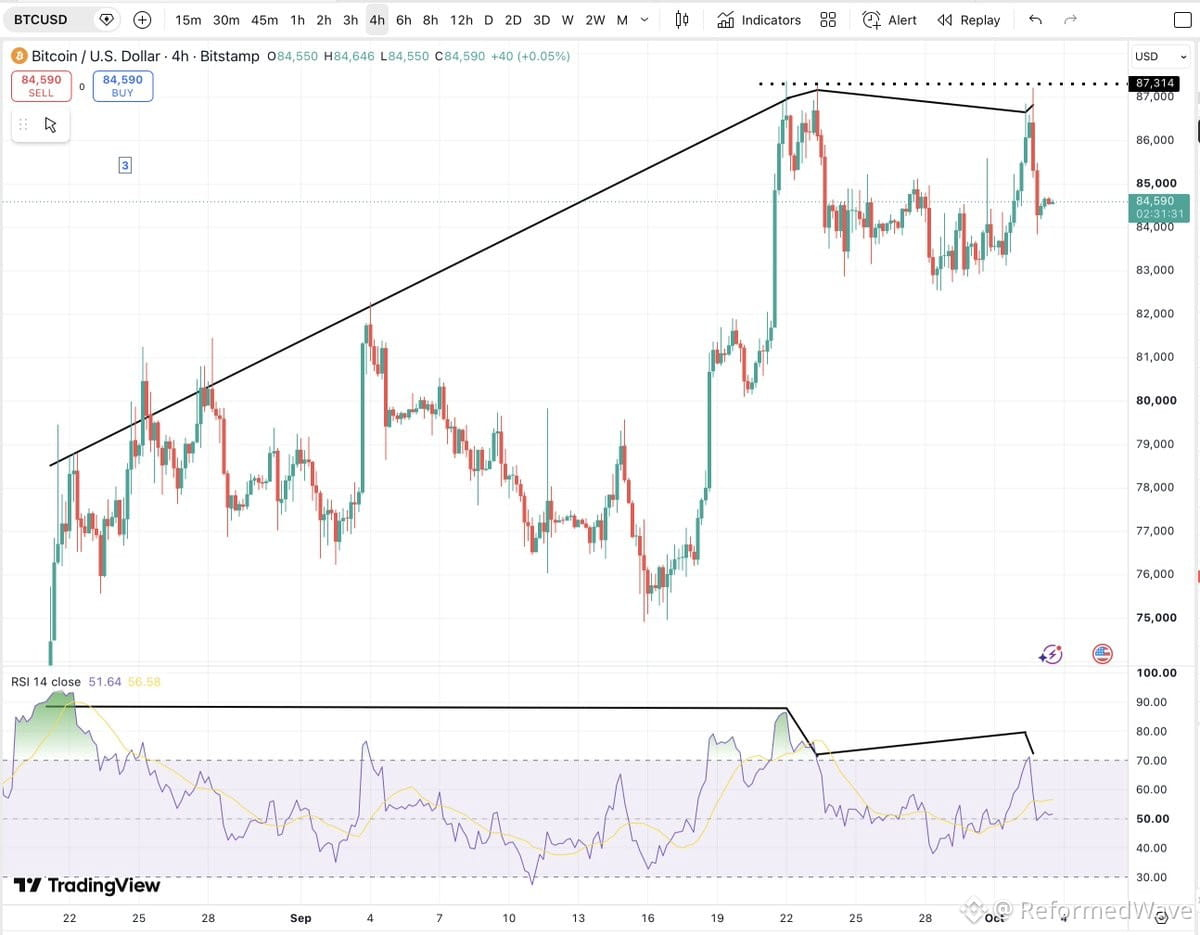
4hr chart looks mildly bearish right now.
$BTC retested the prior high near $87,300 and got sharply rejected. Price made a comparable high while 4hr RSI printed a lower high — classic bearish divergence.
The bounce has stalled around $84,600, keeping $BTC below the immediate recovery zone at $85,000–$85,500.
That said, recent liquidation data shows roughly $15.4M in BTC longs wiped versus only $6.6M in shorts over the last 20 hours. Some of the excessive long leverage has already been flushed, which slightly lowers the odds of an immediate cascading drop.
Stay disciplined. Watch those levels.
4hr chart looks mildly bearish right now.
$BTC retested the prior high near $87,300 and got sharply rejected. Price made a comparable high while 4hr RSI printed a lower high — classic bearish divergence.
The bounce has stalled around $84,600, keeping $BTC below the immediate recovery zone at $85,000–$85,500.
That said, recent liquidation data shows roughly $15.4M in BTC longs wiped versus only $6.6M in shorts over the last 20 hours. Some of the excessive long leverage has already been flushed, which slightly lowers the odds of an immediate cascading drop.
Stay disciplined. Watch those levels.
$BTC retested the prior high near $87,300 and got sharply rejected. Price made a comparable high while 4hr RSI printed a lower high — classic bearish divergence.
The bounce has stalled around $84,600, keeping $BTC below the immediate recovery zone at $85,000–$85,500.
That said, recent liquidation data shows roughly $15.4M in BTC longs wiped versus only $6.6M in shorts over the last 20 hours. Some of the excessive long leverage has already been flushed, which slightly lowers the odds of an immediate cascading drop.
Stay disciplined. Watch those levels.
88
·
--
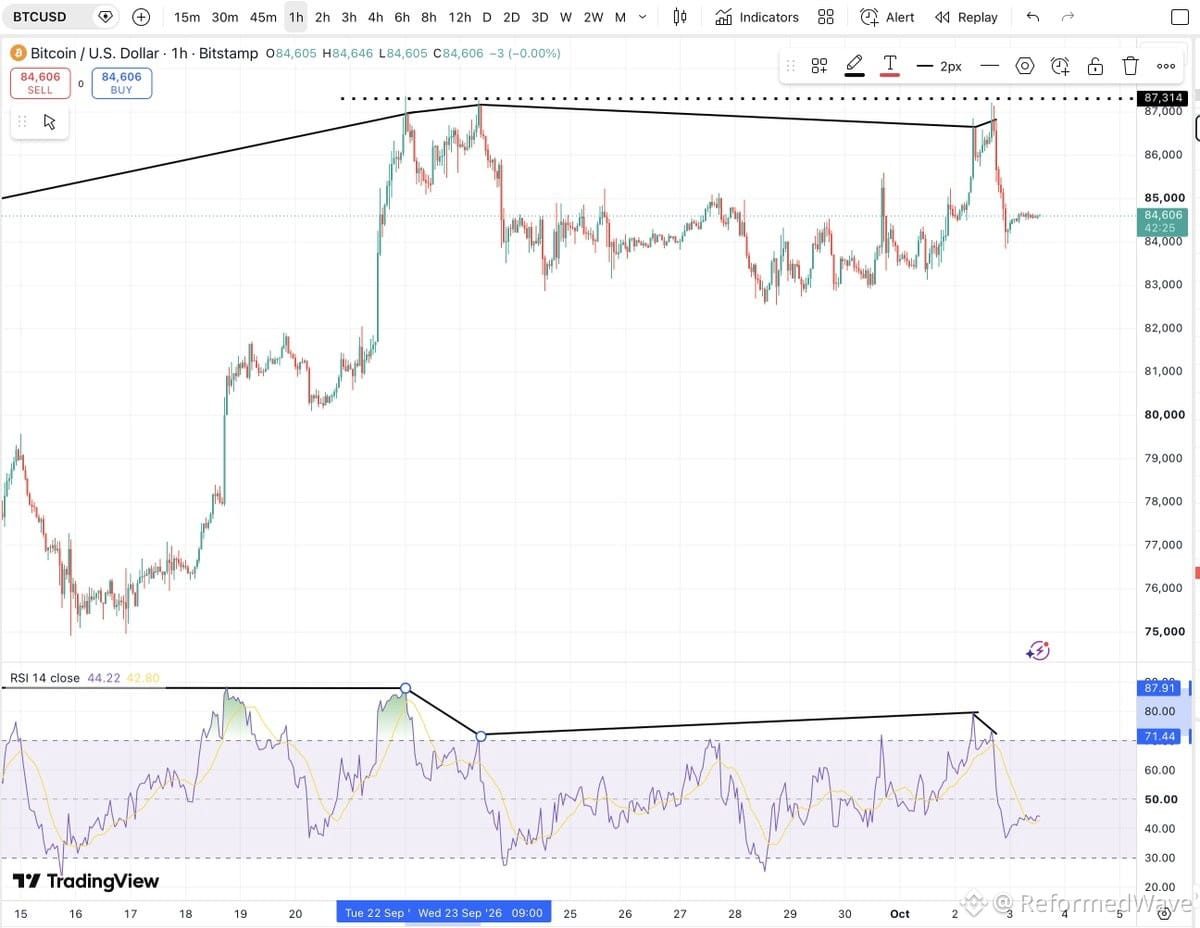
Multiple bearish RSI divergences showed up at successive $BTC peaks on the 1-hour chart.
No fresh divergence right now — the latest signal already triggered and price is still below the prior high.
Unless $BTC reclaims the $87,300 zone, short-term momentum stays cautious.
This is classic textbook divergence behavior: momentum rolling over before price does. I've seen this pattern dozens of times. It doesn't mean the bull is dead, just means we need to respect the structure and wait for a clean reclaim or a reset.
Stay disciplined. Watch $87,300. If it breaks back above, the divergence gets negated and we're back in business. If not, let it cool off and look for the next clean setup. Don't chase weakness.
Multiple bearish RSI divergences showed up at successive $BTC peaks on the 1-hour chart.
No fresh divergence right now — the latest signal already triggered and price is still below the prior high.
Unless $BTC reclaims the $87,300 zone, short-term momentum stays cautious.
This is classic textbook divergence behavior: momentum rolling over before price does. I've seen this pattern dozens of times. It doesn't mean the bull is dead, just means we need to respect the structure and wait for a clean reclaim or a reset.
Stay disciplined. Watch $87,300. If it breaks back above, the divergence gets negated and we're back in business. If not, let it cool off and look for the next clean setup. Don't chase weakness.
No fresh divergence right now — the latest signal already triggered and price is still below the prior high.
Unless $BTC reclaims the $87,300 zone, short-term momentum stays cautious.
This is classic textbook divergence behavior: momentum rolling over before price does. I've seen this pattern dozens of times. It doesn't mean the bull is dead, just means we need to respect the structure and wait for a clean reclaim or a reset.
Stay disciplined. Watch $87,300. If it breaks back above, the divergence gets negated and we're back in business. If not, let it cool off and look for the next clean setup. Don't chase weakness.
128
·
--
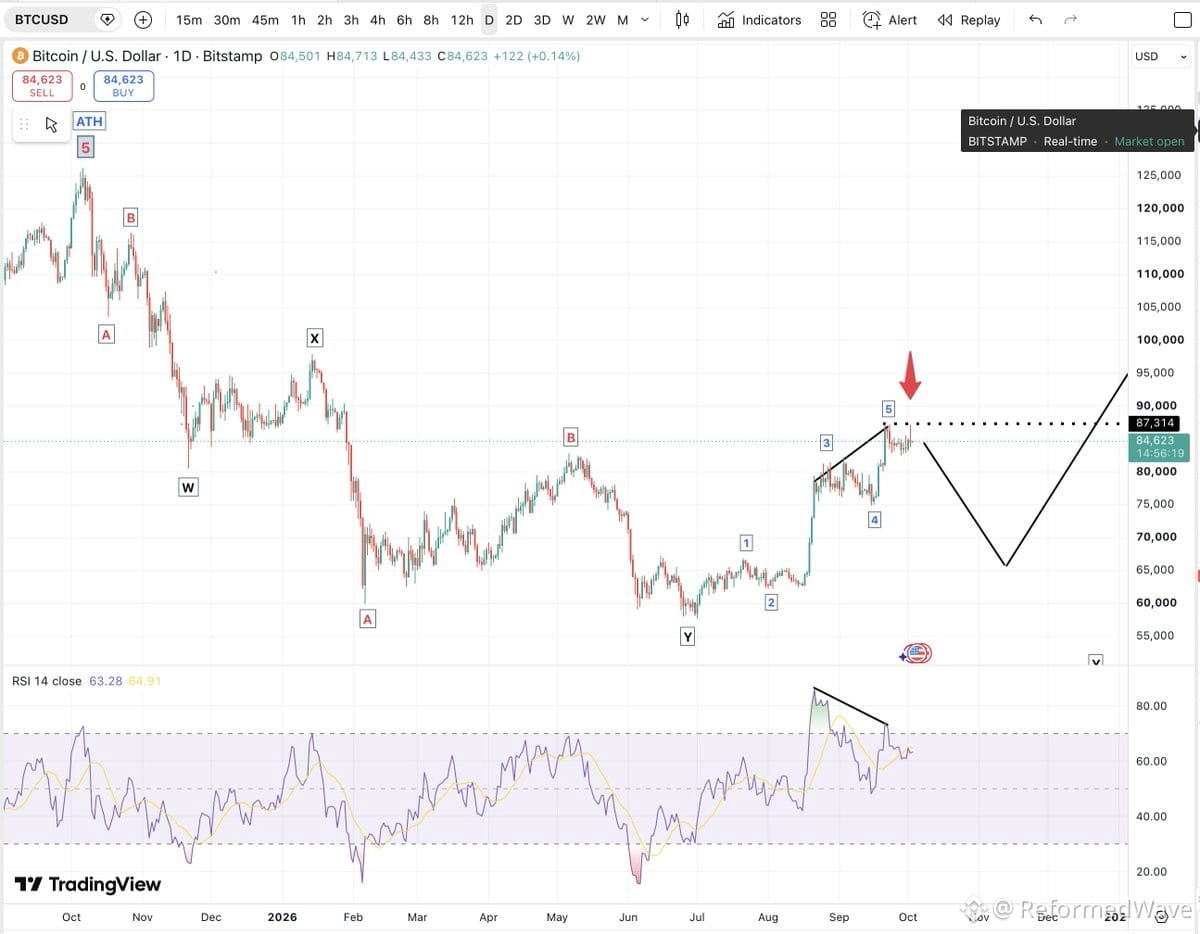
Medium-term I'm bullish on $BTC, but short-term I'm watching for a pullback.
The rally off the low looks like five waves done — clean impulse. That means we're due for a correction now. How deep it goes will tell us if that move was wave A (correction) or wave 1 (new impulse leg). Can't call it yet.
Let the structure show itself. Trade what you see, not what you want. Discipline first, forecast second. If it holds shallow, we're probably in wave 1 territory and the bull leg continues. If it cuts deeper, it's wave A and we're still inside a larger correction.
Either way, respect the pullback. Don't chase. Wait for the setup.
Medium-term I'm bullish on $BTC, but short-term I'm watching for a pullback.
The rally off the low looks like five waves done — clean impulse. That means we're due for a correction now. How deep it goes will tell us if that move was wave A (correction) or wave 1 (new impulse leg). Can't call it yet.
Let the structure show itself. Trade what you see, not what you want. Discipline first, forecast second. If it holds shallow, we're probably in wave 1 territory and the bull leg continues. If it cuts deeper, it's wave A and we're still inside a larger correction.
Either way, respect the pullback. Don't chase. Wait for the setup.
The rally off the low looks like five waves done — clean impulse. That means we're due for a correction now. How deep it goes will tell us if that move was wave A (correction) or wave 1 (new impulse leg). Can't call it yet.
Let the structure show itself. Trade what you see, not what you want. Discipline first, forecast second. If it holds shallow, we're probably in wave 1 territory and the bull leg continues. If it cuts deeper, it's wave A and we're still inside a larger correction.
Either way, respect the pullback. Don't chase. Wait for the setup.
318
·
--
Multiple Elliott Wave counts are in play right now, but they all point to the same near-term read: $BTC is probably headed lower, possibly as soon as next week.
The exact wave labels don't matter as much as the directional message they're giving us. We trade what the structure shows, and we'll reassess if price breaks the setup.
Stay disciplined. Let the market prove or disprove the thesis.
Multiple Elliott Wave counts are in play right now, but they all point to the same near-term read: $BTC is probably headed lower, possibly as soon as next week.
The exact wave labels don't matter as much as the directional message they're giving us. We trade what the structure shows, and we'll reassess if price breaks the setup.
Stay disciplined. Let the market prove or disprove the thesis.
The exact wave labels don't matter as much as the directional message they're giving us. We trade what the structure shows, and we'll reassess if price breaks the setup.
Stay disciplined. Let the market prove or disprove the thesis.
137
·
--
PERFECT STORM INDEX™ 78/100
Risk still VERY HIGH even after soft payrolls eased October hike bets.
Key pressures:
• US 10Y yield holding above 5.2%
• Brent crude stuck near $100
• High-yield spreads widening
• Geopolitical & European fiscal risks elevated
• $BTC slipping toward $84,500
Offsets: VIX near 15, Friday equity bounce.
Capital preservation first. Stay disciplined—this isn't the setup to force trades.
PERFECT STORM INDEX™ 78/100
Risk still VERY HIGH even after soft payrolls eased October hike bets.
Key pressures:
• US 10Y yield holding above 5.2%
• Brent crude stuck near $100
• High-yield spreads widening
• Geopolitical & European fiscal risks elevated
• $BTC slipping toward $84,500
Offsets: VIX near 15, Friday equity bounce.
Capital preservation first. Stay disciplined—this isn't the setup to force trades.
Risk still VERY HIGH even after soft payrolls eased October hike bets.
Key pressures:
• US 10Y yield holding above 5.2%
• Brent crude stuck near $100
• High-yield spreads widening
• Geopolitical & European fiscal risks elevated
• $BTC slipping toward $84,500
Offsets: VIX near 15, Friday equity bounce.
Capital preservation first. Stay disciplined—this isn't the setup to force trades.
146
·
--
Institutions loading $95K $BTC calls for this month. Heavy positioning.
They're not guessing. When the smart money clusters at a level like that, they've done the work. Could be macro flows, could be supply dynamics, could be clearing the path before a bigger move. Either way, that's not retail behavior.
Watch how price respects that zone. If we get there and hold, it's confirmation. If we reject hard, they're early or wrong—but I've seen this setup before. When institutions telegraph a level this clearly, you pay attention.
Stay disciplined. Don't chase. Let the structure develop.
Institutions loading $95K $BTC calls for this month. Heavy positioning.
They're not guessing. When the smart money clusters at a level like that, they've done the work. Could be macro flows, could be supply dynamics, could be clearing the path before a bigger move. Either way, that's not retail behavior.
Watch how price respects that zone. If we get there and hold, it's confirmation. If we reject hard, they're early or wrong—but I've seen this setup before. When institutions telegraph a level this clearly, you pay attention.
Stay disciplined. Don't chase. Let the structure develop.
They're not guessing. When the smart money clusters at a level like that, they've done the work. Could be macro flows, could be supply dynamics, could be clearing the path before a bigger move. Either way, that's not retail behavior.
Watch how price respects that zone. If we get there and hold, it's confirmation. If we reject hard, they're early or wrong—but I've seen this setup before. When institutions telegraph a level this clearly, you pay attention.
Stay disciplined. Don't chase. Let the structure develop.
134
·
--
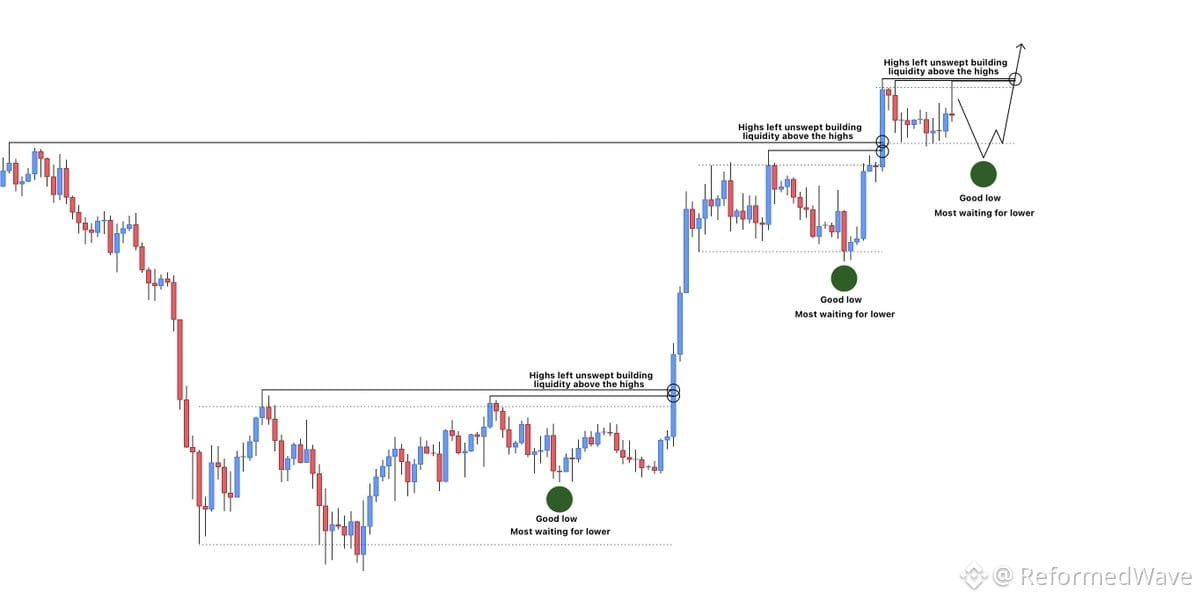
Classic setup unfolding on $BTC.
The highs remain untouched — liquidity stacking above while everyone loads shorts feeling comfortable. That's the tell. Market loves to punish consensus.
Could see one more sweep of the lows first. Wouldn't be shocked if we wick below the range, grab the stops from late shorts hunting deeper dips, then rip.
But make no mistake — we're headed higher. Sooner, not later. Don't get cute chasing the downside when the structure's this obvious.
Classic setup unfolding on $BTC.
The highs remain untouched — liquidity stacking above while everyone loads shorts feeling comfortable. That's the tell. Market loves to punish consensus.
Could see one more sweep of the lows first. Wouldn't be shocked if we wick below the range, grab the stops from late shorts hunting deeper dips, then rip.
But make no mistake — we're headed higher. Sooner, not later. Don't get cute chasing the downside when the structure's this obvious.
The highs remain untouched — liquidity stacking above while everyone loads shorts feeling comfortable. That's the tell. Market loves to punish consensus.
Could see one more sweep of the lows first. Wouldn't be shocked if we wick below the range, grab the stops from late shorts hunting deeper dips, then rip.
But make no mistake — we're headed higher. Sooner, not later. Don't get cute chasing the downside when the structure's this obvious.
485
·
--
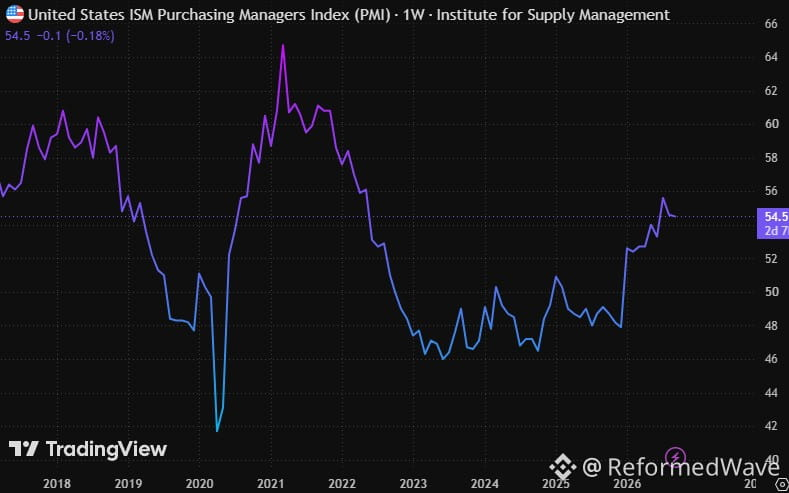
Crypto's starting to look like 2021 all over again.
ISM Manufacturing has held above 54 for three straight months. The last two times ISM moved into this range, the gains were insane.
2017: ISM climbed above 54 and eventually peaked at 60.8.
$BTC: +1,800%
$ETH: +17,000%
$XRP: +48,000%
2020-21: ISM moved back above 54 and reached 64.7—its highest level since 1983.
$BTC: +480%
$ETH: +1,100%
$SOL: +14,000%
$DOGE: +21,000%
2025: ISM has now printed 55.6, 54.6, and 54.5 over the past three months.
The macro backdrop is finally starting to look like the one altcoins have been waiting for. I've seen this pattern before. When manufacturing strength holds like this, risk assets—especially crypto—tend to run. Stay disciplined, but the structure is lining up. Trust the cycle.
Crypto's starting to look like 2021 all over again.
ISM Manufacturing has held above 54 for three straight months. The last two times ISM moved into this range, the gains were insane.
2017: ISM climbed above 54 and eventually peaked at 60.8.
$BTC: +1,800%
$ETH: +17,000%
$XRP: +48,000%
2020-21: ISM moved back above 54 and reached 64.7—its highest level since 1983.
$BTC: +480%
$ETH: +1,100%
$SOL: +14,000%
$DOGE: +21,000%
2025: ISM has now printed 55.6, 54.6, and 54.5 over the past three months.
The macro backdrop is finally starting to look like the one altcoins have been waiting for. I've seen this pattern before. When manufacturing strength holds like this, risk assets—especially crypto—tend to run. Stay disciplined, but the structure is lining up. Trust the cycle.
ISM Manufacturing has held above 54 for three straight months. The last two times ISM moved into this range, the gains were insane.
2017: ISM climbed above 54 and eventually peaked at 60.8.
$BTC: +1,800%
$ETH: +17,000%
$XRP: +48,000%
2020-21: ISM moved back above 54 and reached 64.7—its highest level since 1983.
$BTC: +480%
$ETH: +1,100%
$SOL: +14,000%
$DOGE: +21,000%
2025: ISM has now printed 55.6, 54.6, and 54.5 over the past three months.
The macro backdrop is finally starting to look like the one altcoins have been waiting for. I've seen this pattern before. When manufacturing strength holds like this, risk assets—especially crypto—tend to run. Stay disciplined, but the structure is lining up. Trust the cycle.
291
·
--
15 years back, the death certificate was already written for Bitcoin.
$BTC has done a 33,800x since that obituary.
Every cycle, the doubters show up. Every cycle, the structure proves them wrong. This isn't luck — it's conviction meeting reality over a long enough timeline.
Stay patient. The macro trend hasn't changed.
15 years back, the death certificate was already written for Bitcoin.
$BTC has done a 33,800x since that obituary.
Every cycle, the doubters show up. Every cycle, the structure proves them wrong. This isn't luck — it's conviction meeting reality over a long enough timeline.
Stay patient. The macro trend hasn't changed.
$BTC has done a 33,800x since that obituary.
Every cycle, the doubters show up. Every cycle, the structure proves them wrong. This isn't luck — it's conviction meeting reality over a long enough timeline.
Stay patient. The macro trend hasn't changed.
90
·
--
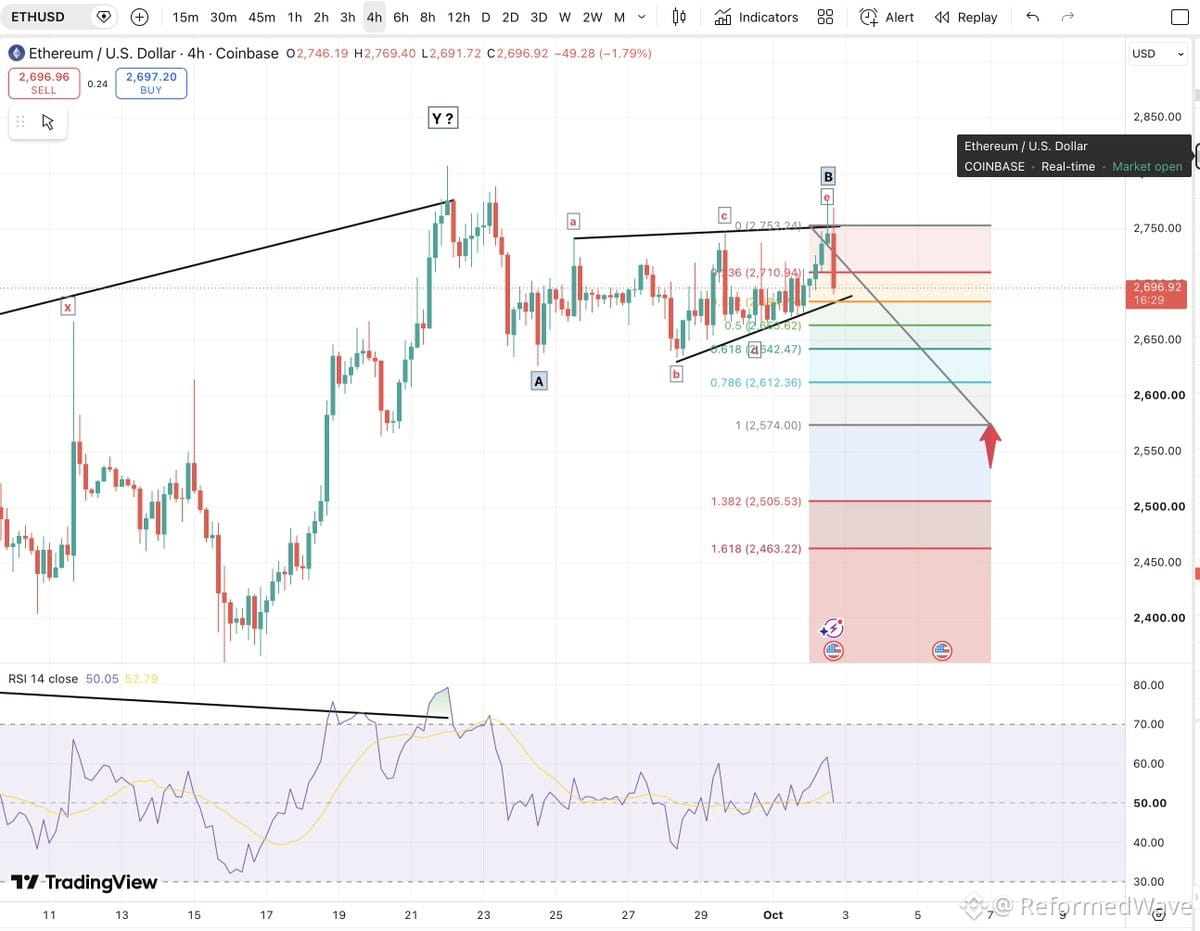
Most traders chase the next price call. I'm teaching real trading: map alternative scenarios, define invalidation levels, manage risk/reward. Anything else is just gambling.
For $ETH, two credible paths:
1/ B-wave triangle complete. Once this smaller C-wave finishes, $ETH could rally hard.
2/ The rally was a WXY correction (wave 2), meaning a much deeper drop may follow.
You don't need certainty. You need to know what confirms or kills each count, then manage risk accordingly.
Risk management is everything. Full stop.
Most traders chase the next price call. I'm teaching real trading: map alternative scenarios, define invalidation levels, manage risk/reward. Anything else is just gambling.
For $ETH, two credible paths:
1/ B-wave triangle complete. Once this smaller C-wave finishes, $ETH could rally hard.
2/ The rally was a WXY correction (wave 2), meaning a much deeper drop may follow.
You don't need certainty. You need to know what confirms or kills each count, then manage risk accordingly.
Risk management is everything. Full stop.
For $ETH, two credible paths:
1/ B-wave triangle complete. Once this smaller C-wave finishes, $ETH could rally hard.
2/ The rally was a WXY correction (wave 2), meaning a much deeper drop may follow.
You don't need certainty. You need to know what confirms or kills each count, then manage risk accordingly.
Risk management is everything. Full stop.
1
1
138
Log in to explore more content
Join global crypto users on Binance Square
⚡️ Get latest and useful information about crypto.
💬 Trusted by the world’s largest crypto exchange.
👍 Discover real insights from verified creators.
Email / Phone number
Trending Topics
SECHaltsCryptoETFReviewsAmidFundingLapse
46,747 views
554 Discussing
🔥 CRYPTO INVESTORS: PUT THIS ON YOUR WATCHLIST
The SEC has reportedly paused reviews of new crypto ETF applications during the funding lapse.
That means upcoming decisions could be delayed — but the underlying ETF pipeline hasn't disappeared.
📌 Watch:
• SEC funding developments
• ETF deadlines
• $BTC and $ETH reaction
• New altcoin ETF filings
The next regulatory update could matter. 👀
$BTC $ETH $SOL $XRP $ADA
#sechaltscryptoetfreviewsamidfundinglapse
CryptoMahibaloch
·6 Likes
·9.9k views
ZcashETFPostsFirstWeeklyOutflow$93.6M
63,559 views
198 Discussing
GreekPoliceBustCryptoScamRingArrest17
207,982 views
1,459 Discussing