
交易员-柒歌
2.3k Posts

交易员-柒歌
Report
Block User
公众号:翻仓实战营 推特 X:QS112233 稳健类型博主,金色财经认证博主,专注于现货合约,以现货为主,合约为辅的有趣博主。
0 Following
1.4K+ Followers
1.1K+ Liked
Posts
All
Quotes
Videos
PINNED
·
--
👇👇👇Add friends, get the free strategy layout.
Qi Shen usually focuses on mainstream coin futures contracts and popular altcoin contracts, with spot short-term trading as the main approach. They’re good at spotting potential “dog” opportunities, uncovering 100x coins. It’s better for everyone to enjoy than just one person—if you reach out first, I’ll pull you to shore.
👇👇👇Add friends, get the free strategy layout.
Qi Shen usually focuses on mainstream coin futures contracts and popular altcoin contracts, with spot short-term trading as the main approach. They’re good at spotting potential “dog” opportunities, uncovering 100x coins. It’s better for everyone to enjoy than just one person—if you reach out first, I’ll pull you to shore.
Qi Shen usually focuses on mainstream coin futures contracts and popular altcoin contracts, with spot short-term trading as the main approach. They’re good at spotting potential “dog” opportunities, uncovering 100x coins. It’s better for everyone to enjoy than just one person—if you reach out first, I’ll pull you to shore.


10
12
15
20k
PINNED
·
--
The turnaround battle in the crypto world👇
As the saying goes, if you dare to act, the chips will be in your own hands; if you hesitate and hold back, what you want will always slip away!
The opportunity has been given to you. Ask yourself—can I seize it?
The turnaround battle in the crypto world👇
As the saying goes, if you dare to act, the chips will be in your own hands; if you hesitate and hold back, what you want will always slip away!
The opportunity has been given to you. Ask yourself—can I seize it?
As the saying goes, if you dare to act, the chips will be in your own hands; if you hesitate and hold back, what you want will always slip away!
The opportunity has been given to you. Ask yourself—can I seize it?



46
26
61
38.7k
·
--
“After experiencing a major drawdown once, I finally understood these little facts.”#纳指创历史新高
Some truths sound meaningless when you first hear them. Only after you’ve truly lost money do you realize that every sentence behind it is tuition.¥$SNDK
Buying more lowers your average cost, but what it actually increases is your risk. If you invest 10U for 10,000U, and the price drops to 5U and you add another 10,000U, your average price can indeed drop to about 6.67U. But your position size doubles—from 10,000U to 20,000U. As the price keeps falling, your losses accelerate too. Many people don’t make the first mistake in a single trade; instead, they keep averaging down, turning small losses into an unbearable big one.
1% daily compounding looks terrifying on paper. If you start with 100,000U, after 250 days you could grow it to 1.2 million U. But that’s only a mathematical model. In real life, the hardest part isn’t earning 1%, it’s executing the plan correctly for many consecutive times.
A slightly lower win rate doesn’t mean you can’t make money. If the win rate is 60% and your risk and reward control is good, you can still achieve positive returns over the long run. You don’t need to be right every time. The key is to lose less when you’re wrong, and be able to hold when you’re right.
The higher the leverage, the less reaction time you have. With a 10,000U principal—even if you only test with 2% to 5%—high leverage is enough to amplify volatility noticeably. One unexpected event is often enough to throw your rhythm off.
In the end, trading comes down to whether you can control your position size and keep your emotions in check. You can be wrong about the market and adjust your methods, but don’t so easily hand over your principal.
“After experiencing a major drawdown once, I finally understood these little facts.”#纳指创历史新高
Some truths sound meaningless when you first hear them. Only after you’ve truly lost money do you realize that every sentence behind it is tuition.¥$SNDK
Buying more lowers your average cost, but what it actually increases is your risk. If you invest 10U for 10,000U, and the price drops to 5U and you add another 10,000U, your average price can indeed drop to about 6.67U. But your position size doubles—from 10,000U to 20,000U. As the price keeps falling, your losses accelerate too. Many people don’t make the first mistake in a single trade; instead, they keep averaging down, turning small losses into an unbearable big one.
1% daily compounding looks terrifying on paper. If you start with 100,000U, after 250 days you could grow it to 1.2 million U. But that’s only a mathematical model. In real life, the hardest part isn’t earning 1%, it’s executing the plan correctly for many consecutive times.
A slightly lower win rate doesn’t mean you can’t make money. If the win rate is 60% and your risk and reward control is good, you can still achieve positive returns over the long run. You don’t need to be right every time. The key is to lose less when you’re wrong, and be able to hold when you’re right.
The higher the leverage, the less reaction time you have. With a 10,000U principal—even if you only test with 2% to 5%—high leverage is enough to amplify volatility noticeably. One unexpected event is often enough to throw your rhythm off.
In the end, trading comes down to whether you can control your position size and keep your emotions in check. You can be wrong about the market and adjust your methods, but don’t so easily hand over your principal.
Some truths sound meaningless when you first hear them. Only after you’ve truly lost money do you realize that every sentence behind it is tuition.¥$SNDK
Buying more lowers your average cost, but what it actually increases is your risk. If you invest 10U for 10,000U, and the price drops to 5U and you add another 10,000U, your average price can indeed drop to about 6.67U. But your position size doubles—from 10,000U to 20,000U. As the price keeps falling, your losses accelerate too. Many people don’t make the first mistake in a single trade; instead, they keep averaging down, turning small losses into an unbearable big one.
1% daily compounding looks terrifying on paper. If you start with 100,000U, after 250 days you could grow it to 1.2 million U. But that’s only a mathematical model. In real life, the hardest part isn’t earning 1%, it’s executing the plan correctly for many consecutive times.
A slightly lower win rate doesn’t mean you can’t make money. If the win rate is 60% and your risk and reward control is good, you can still achieve positive returns over the long run. You don’t need to be right every time. The key is to lose less when you’re wrong, and be able to hold when you’re right.
The higher the leverage, the less reaction time you have. With a 10,000U principal—even if you only test with 2% to 5%—high leverage is enough to amplify volatility noticeably. One unexpected event is often enough to throw your rhythm off.
In the end, trading comes down to whether you can control your position size and keep your emotions in check. You can be wrong about the market and adjust your methods, but don’t so easily hand over your principal.
174
·
--
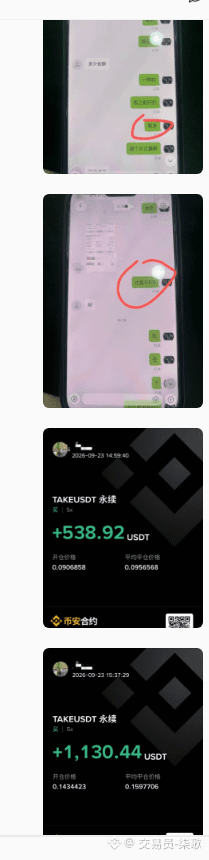
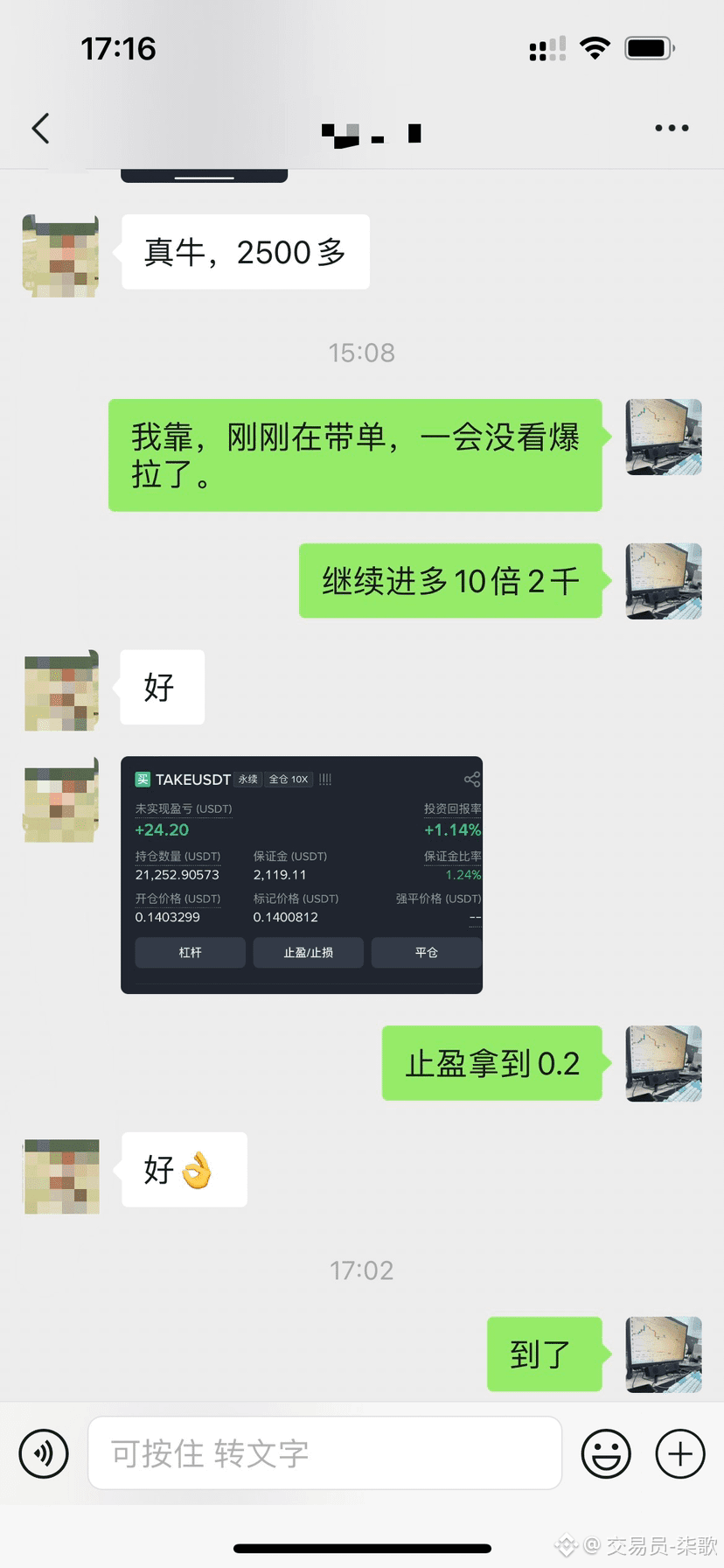
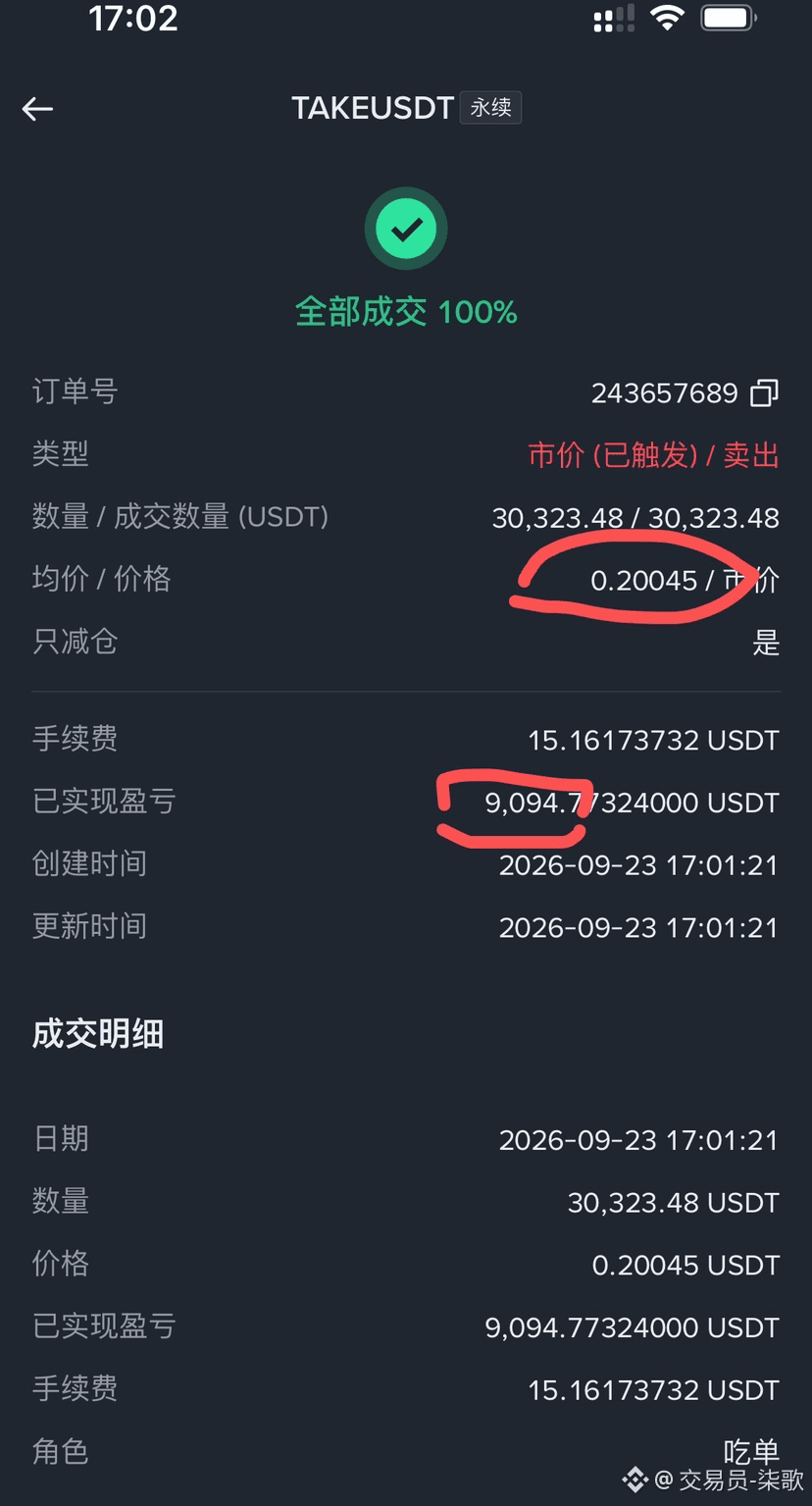
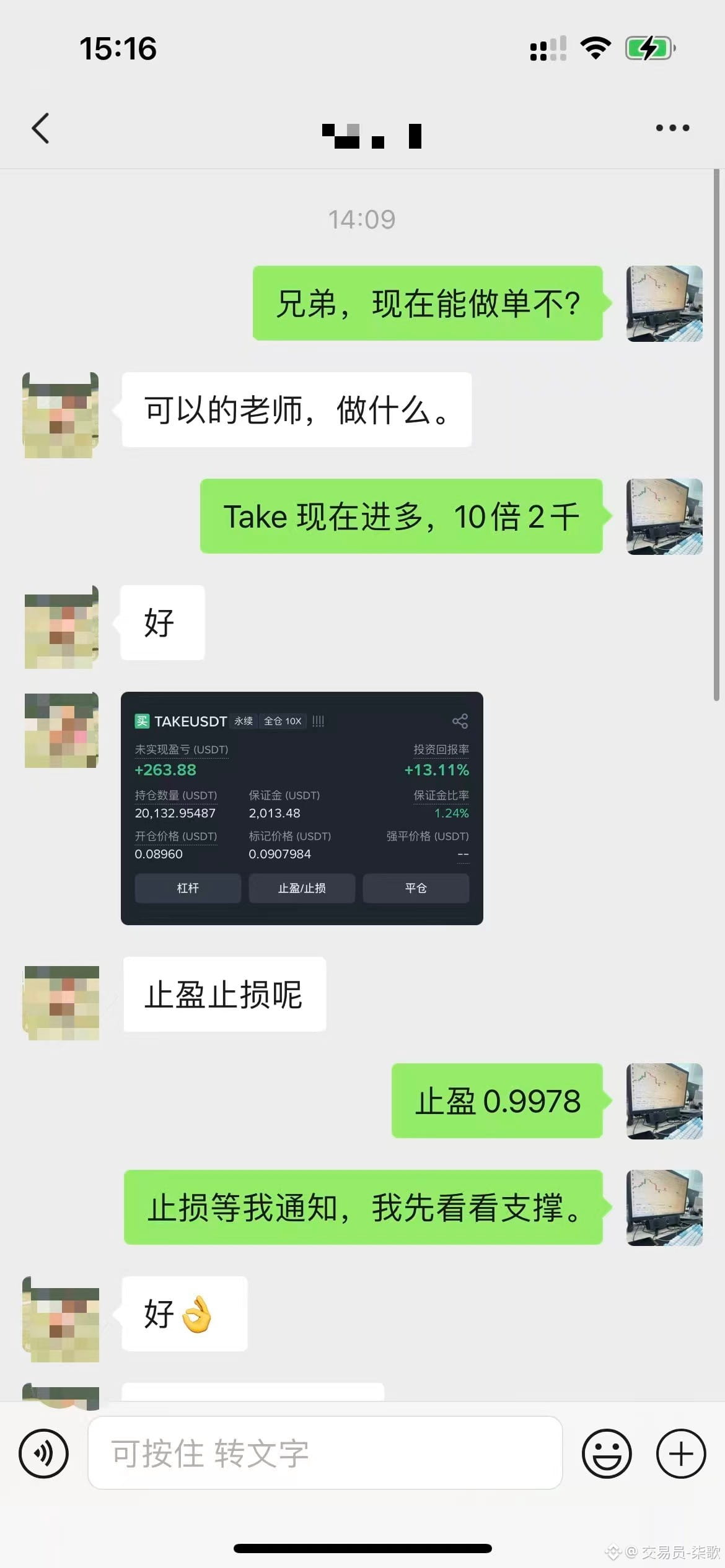
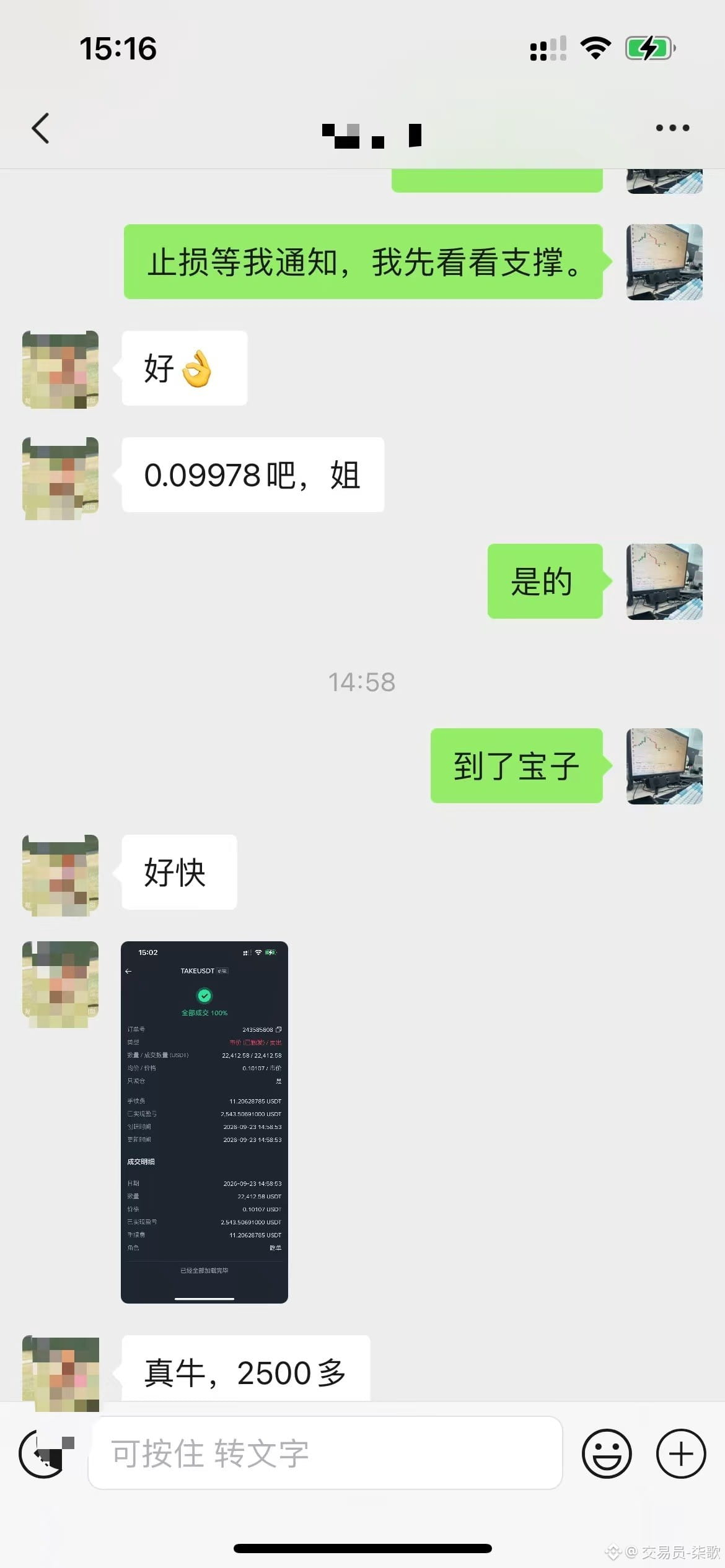
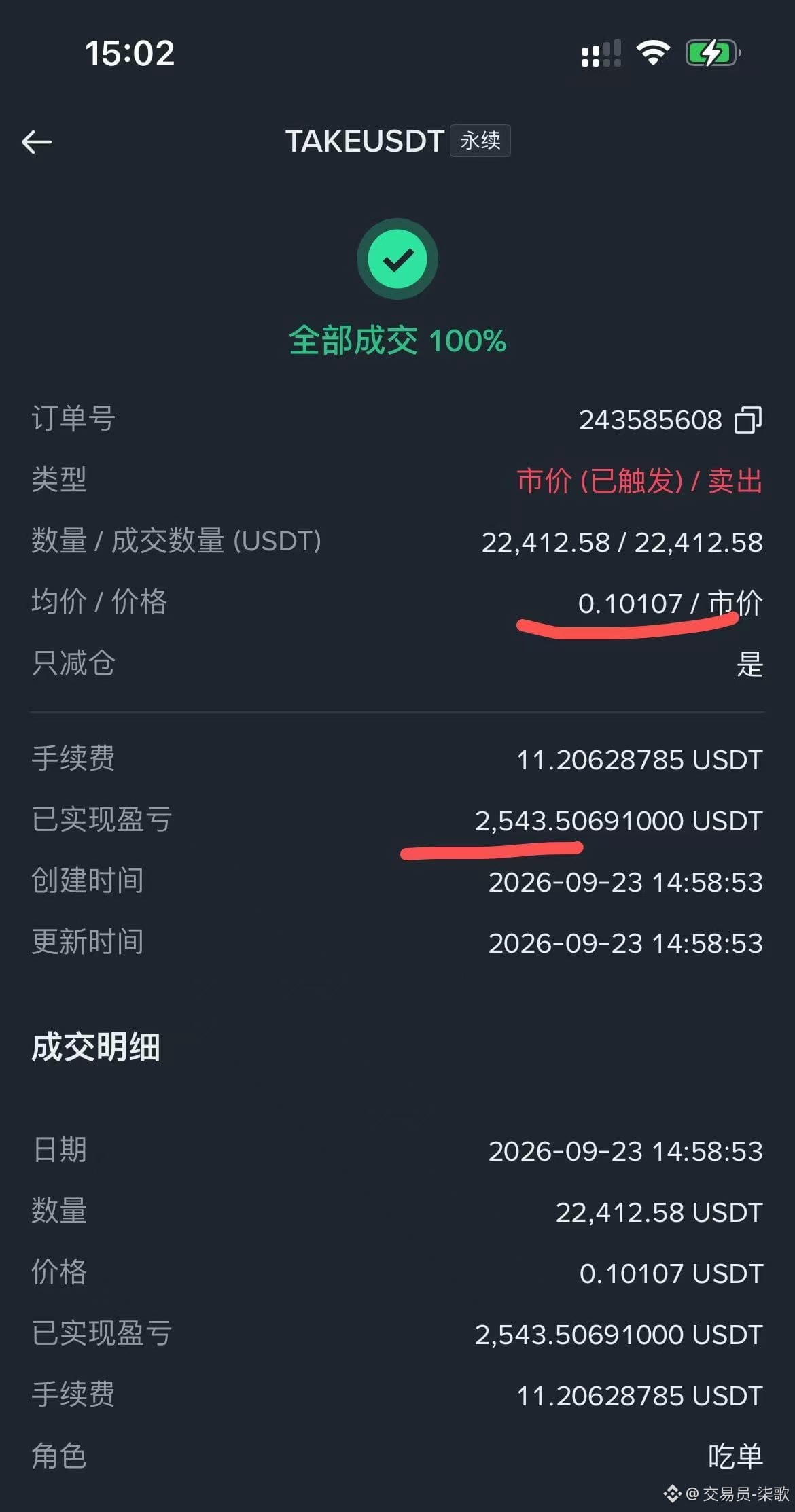
$TAKE Another wave of taking profit of 9000 dollars. Fans with strong execution got it, while the suckers ran away early.
$TAKE Another wave of taking profit of 9000 dollars. Fans with strong execution got it, while the suckers ran away early.

1
307
·
--
“When you’ve lost the first trade, you’re actually closest to getting liquidated.”$SNDK #ZEC突破1600美元创新高
The most dangerous moment in futures trading is never right before liquidation—it’s the moment you’ve just lost your first trade.
I know a coin buddy. On his first futures trade, he lost 80 USDT. He told me, “It’s fine. I’ll make it back on the next one.” The second trade he lost 120 USDT, saying, “I misjudged it. The next one will be steadier.”
On the third trade, he directly increased his position size. By nighttime, the losses had already become a big chunk. Later he said: “I actually knew I shouldn’t add to the position, but I couldn’t stand it.”
That’s the real state right before liquidation. It’s not that he can’t read the K-line or doesn’t understand stop-losses. It’s that after the loss, something new shows up in your mind—“I need to get that money back.” From that moment on, trading changes flavor.
A trade that was originally allowed to lose 50 USDT now becomes one that “must” make money; the stop-loss level that was originally planned starts getting moved further and further; the market keeps turning worse, but your hand keeps adding to the position.
So I have a habit now: if I’ve made a few wrong trades in a row, I don’t look for opportunities—I leave the screen first. Back then, what I should’ve controlled wasn’t the market, but my own hands. You can trade futures, but don’t treat it like a “make up losses” button.
Before entering the market, know your maximum loss; size your position so small that volatility won’t keep you up at night. When you’re wrong, admit it; when you’re right, take partial profits. Don’t let a single trade turn into a grudge match with the market.
Someone asked: “Doesn’t this mean you make money very slowly?” Slow is still faster than having to recharge again. The market won’t remember how much you lost on your previous trade, and it certainly won’t give you special treatment just because you’re desperate to get back to break-even. What truly makes the account grow is taking action when you should—and being able to stop when you shouldn’t.
“When you’ve lost the first trade, you’re actually closest to getting liquidated.”$SNDK #ZEC突破1600美元创新高
The most dangerous moment in futures trading is never right before liquidation—it’s the moment you’ve just lost your first trade.
I know a coin buddy. On his first futures trade, he lost 80 USDT. He told me, “It’s fine. I’ll make it back on the next one.” The second trade he lost 120 USDT, saying, “I misjudged it. The next one will be steadier.”
On the third trade, he directly increased his position size. By nighttime, the losses had already become a big chunk. Later he said: “I actually knew I shouldn’t add to the position, but I couldn’t stand it.”
That’s the real state right before liquidation. It’s not that he can’t read the K-line or doesn’t understand stop-losses. It’s that after the loss, something new shows up in your mind—“I need to get that money back.” From that moment on, trading changes flavor.
A trade that was originally allowed to lose 50 USDT now becomes one that “must” make money; the stop-loss level that was originally planned starts getting moved further and further; the market keeps turning worse, but your hand keeps adding to the position.
So I have a habit now: if I’ve made a few wrong trades in a row, I don’t look for opportunities—I leave the screen first. Back then, what I should’ve controlled wasn’t the market, but my own hands. You can trade futures, but don’t treat it like a “make up losses” button.
Before entering the market, know your maximum loss; size your position so small that volatility won’t keep you up at night. When you’re wrong, admit it; when you’re right, take partial profits. Don’t let a single trade turn into a grudge match with the market.
Someone asked: “Doesn’t this mean you make money very slowly?” Slow is still faster than having to recharge again. The market won’t remember how much you lost on your previous trade, and it certainly won’t give you special treatment just because you’re desperate to get back to break-even. What truly makes the account grow is taking action when you should—and being able to stop when you shouldn’t.
The most dangerous moment in futures trading is never right before liquidation—it’s the moment you’ve just lost your first trade.
I know a coin buddy. On his first futures trade, he lost 80 USDT. He told me, “It’s fine. I’ll make it back on the next one.” The second trade he lost 120 USDT, saying, “I misjudged it. The next one will be steadier.”
On the third trade, he directly increased his position size. By nighttime, the losses had already become a big chunk. Later he said: “I actually knew I shouldn’t add to the position, but I couldn’t stand it.”
That’s the real state right before liquidation. It’s not that he can’t read the K-line or doesn’t understand stop-losses. It’s that after the loss, something new shows up in your mind—“I need to get that money back.” From that moment on, trading changes flavor.
A trade that was originally allowed to lose 50 USDT now becomes one that “must” make money; the stop-loss level that was originally planned starts getting moved further and further; the market keeps turning worse, but your hand keeps adding to the position.
So I have a habit now: if I’ve made a few wrong trades in a row, I don’t look for opportunities—I leave the screen first. Back then, what I should’ve controlled wasn’t the market, but my own hands. You can trade futures, but don’t treat it like a “make up losses” button.
Before entering the market, know your maximum loss; size your position so small that volatility won’t keep you up at night. When you’re wrong, admit it; when you’re right, take partial profits. Don’t let a single trade turn into a grudge match with the market.
Someone asked: “Doesn’t this mean you make money very slowly?” Slow is still faster than having to recharge again. The market won’t remember how much you lost on your previous trade, and it certainly won’t give you special treatment just because you’re desperate to get back to break-even. What truly makes the account grow is taking action when you should—and being able to stop when you shouldn’t.
406
·
--
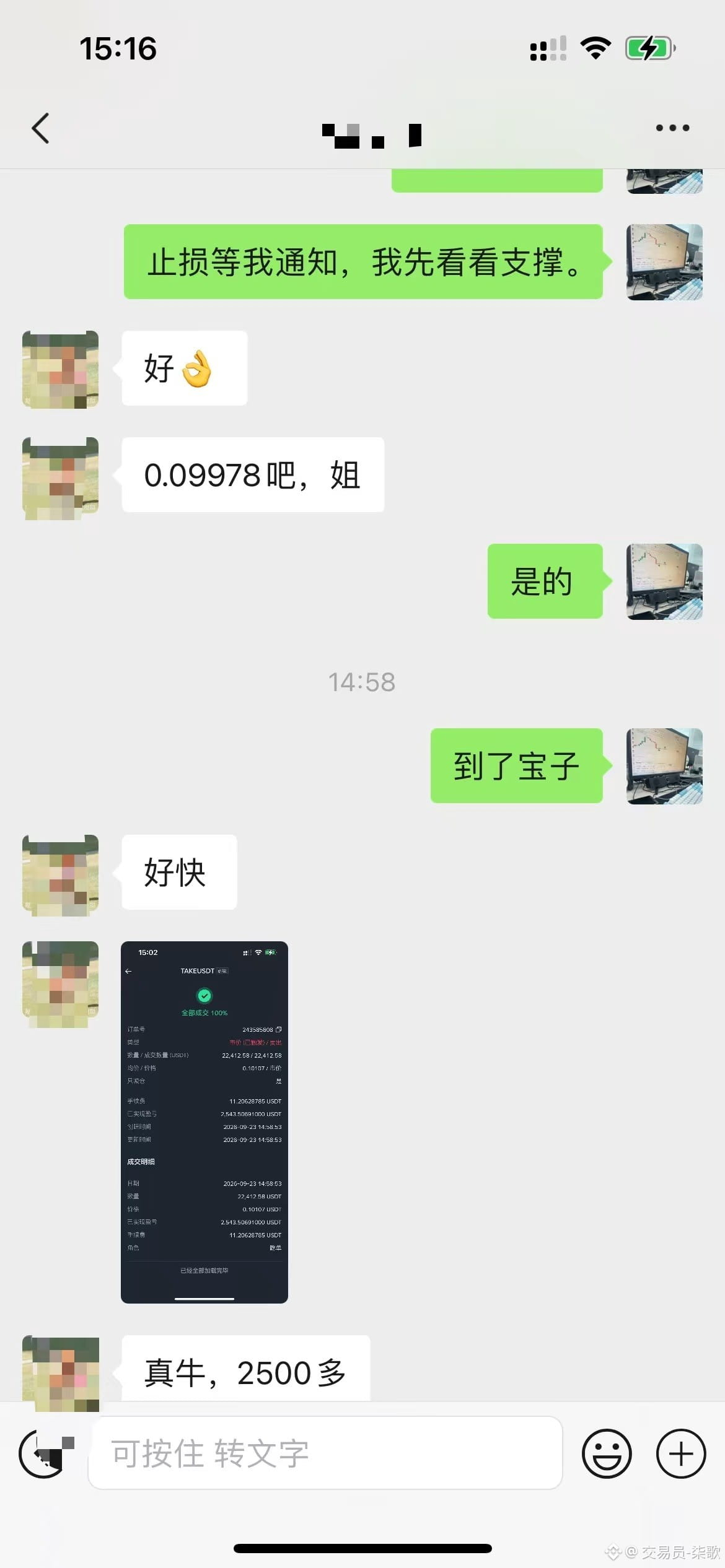
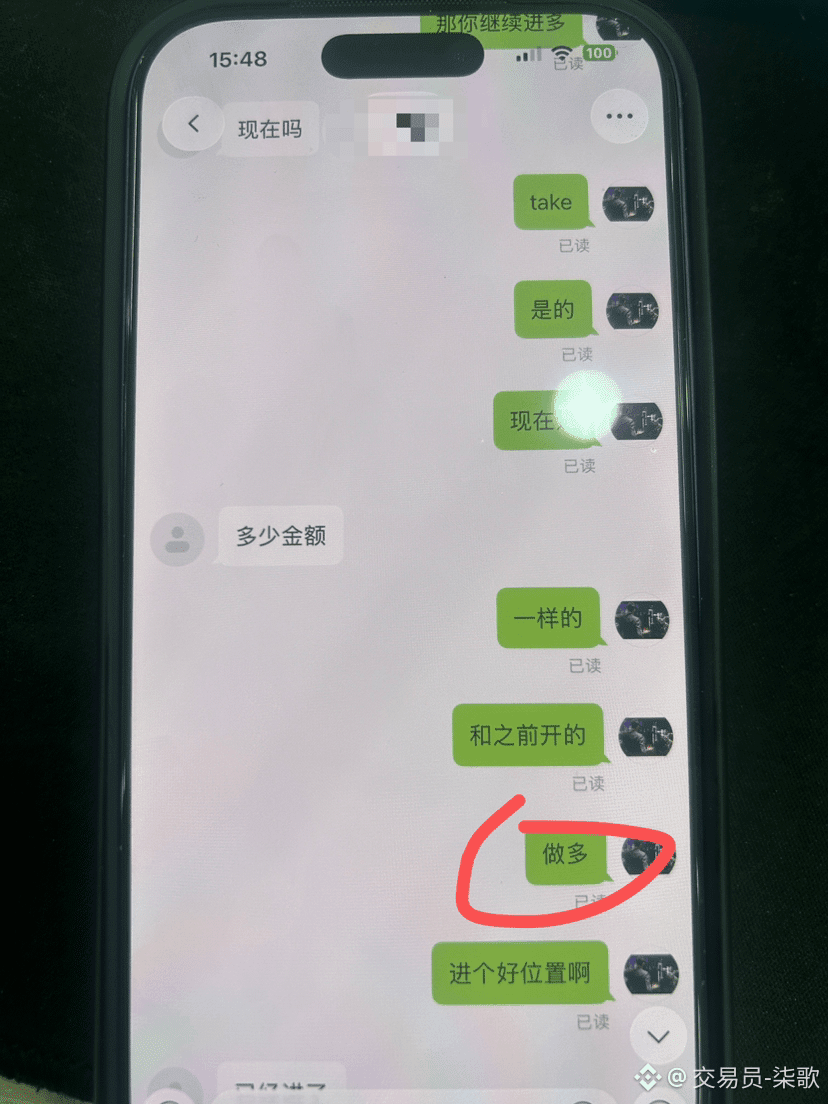
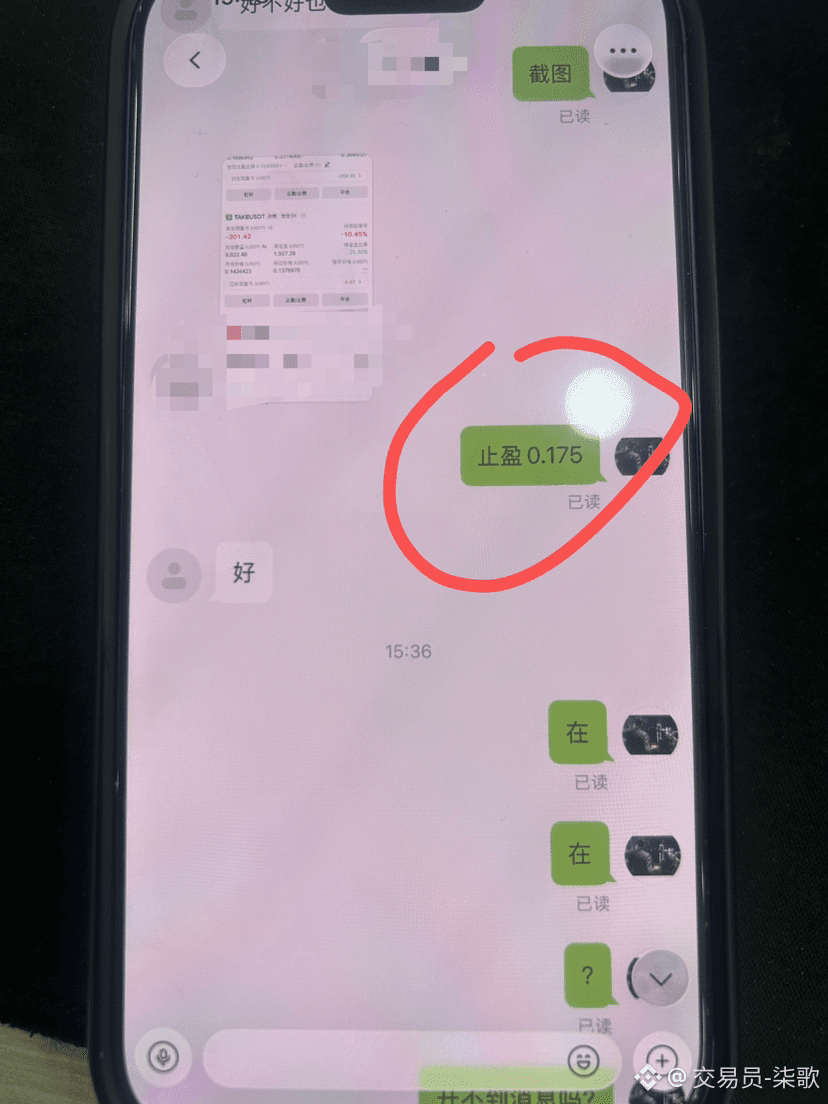
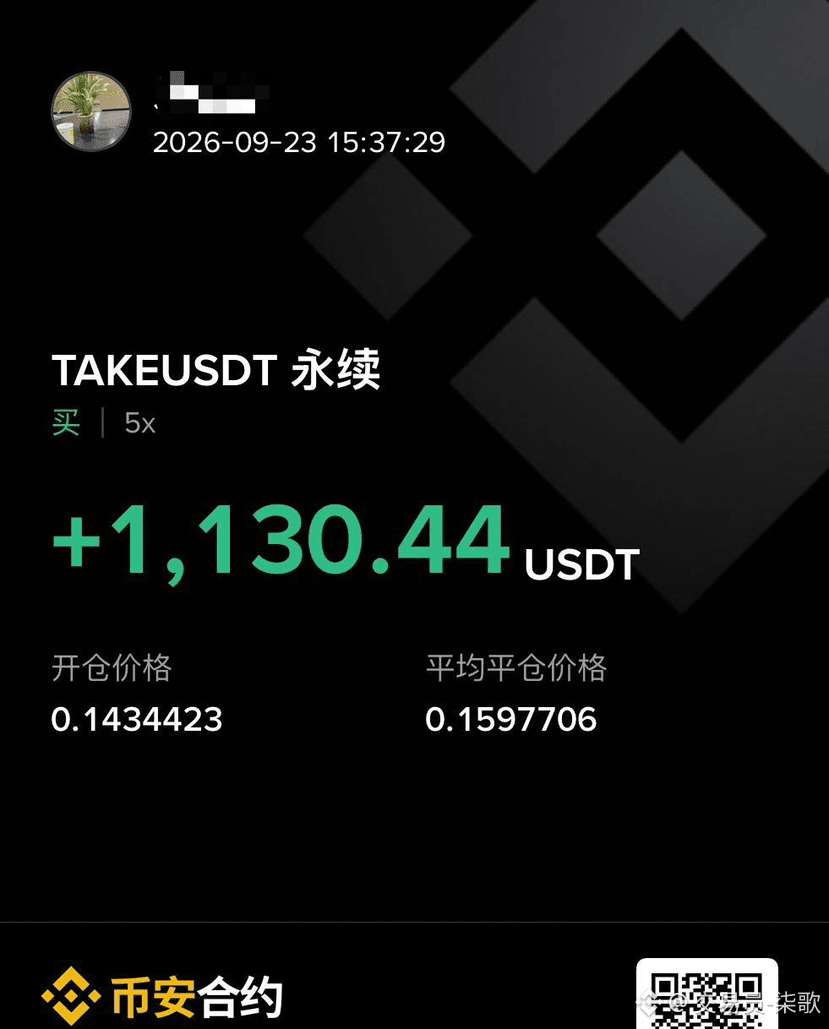
$TAKE I heard that the dog dealer just now didn’t allow going long? Luckily I ate two waves.
It’s just that the dog dealer is really disgusting—there was half the slippage. I originally had a trade that could make 1000, but now I only made 500.
#纳指创历史新高
$TAKE I heard that the dog dealer just now didn’t allow going long? Luckily I ate two waves.
It’s just that the dog dealer is really disgusting—there was half the slippage. I originally had a trade that could make 1000, but now I only made 500.
#纳指创历史新高
It’s just that the dog dealer is really disgusting—there was half the slippage. I originally had a trade that could make 1000, but now I only made 500.
#纳指创历史新高

220
·
--
“The highest returns are just screenshots. The money you take out is the report card.” $SNDK #纳指创历史新高
In a group chat, there was a crypto buddy who, a few years ago, turned 5,000U into over 80,000. Every day he kept talking about waiting for 100,000. I advised him to take some profit first. He smiled and said, “Let’s wait a bit longer.” Then the market corrected. When his 80,000 dropped to 60,000, he was miserable: “I just feel like I’ve lost 20,000.”
At that moment, I understood. He wasn’t losing from 5,000U down to 60,000—he was losing 20,000 from his psychological account of 80,000. When the account rises to a new high, people start treating unrealized gains as their own money. After a 10% rise, they think, “It can still go higher.” Another 20% rise, and they reset their target again. Then, when a pullback comes, they realize those numbers never actually made it into their pocket.
I’ve stepped into this trap too. Later, I stopped setting goals like “sell at the peak.” Instead, I decided in advance: at a certain level, I will take out at least a certain amount. If it rises to that point, I execute. The rest I can keep playing. My mindset became much lighter. If it keeps going up, I don’t feel like I missed out; if it drops, I’m not just watching my profits disappear.
After I started trading, I realized that the market’s favorite thing is to first make you feel like you’ve gotten rich, and then gradually take that number back. Don’t keep fixating on how high your account has ever reached.
“The highest returns are just screenshots. The money you take out is the report card.” $SNDK #纳指创历史新高
In a group chat, there was a crypto buddy who, a few years ago, turned 5,000U into over 80,000. Every day he kept talking about waiting for 100,000. I advised him to take some profit first. He smiled and said, “Let’s wait a bit longer.” Then the market corrected. When his 80,000 dropped to 60,000, he was miserable: “I just feel like I’ve lost 20,000.”
At that moment, I understood. He wasn’t losing from 5,000U down to 60,000—he was losing 20,000 from his psychological account of 80,000. When the account rises to a new high, people start treating unrealized gains as their own money. After a 10% rise, they think, “It can still go higher.” Another 20% rise, and they reset their target again. Then, when a pullback comes, they realize those numbers never actually made it into their pocket.
I’ve stepped into this trap too. Later, I stopped setting goals like “sell at the peak.” Instead, I decided in advance: at a certain level, I will take out at least a certain amount. If it rises to that point, I execute. The rest I can keep playing. My mindset became much lighter. If it keeps going up, I don’t feel like I missed out; if it drops, I’m not just watching my profits disappear.
After I started trading, I realized that the market’s favorite thing is to first make you feel like you’ve gotten rich, and then gradually take that number back. Don’t keep fixating on how high your account has ever reached.
In a group chat, there was a crypto buddy who, a few years ago, turned 5,000U into over 80,000. Every day he kept talking about waiting for 100,000. I advised him to take some profit first. He smiled and said, “Let’s wait a bit longer.” Then the market corrected. When his 80,000 dropped to 60,000, he was miserable: “I just feel like I’ve lost 20,000.”
At that moment, I understood. He wasn’t losing from 5,000U down to 60,000—he was losing 20,000 from his psychological account of 80,000. When the account rises to a new high, people start treating unrealized gains as their own money. After a 10% rise, they think, “It can still go higher.” Another 20% rise, and they reset their target again. Then, when a pullback comes, they realize those numbers never actually made it into their pocket.
I’ve stepped into this trap too. Later, I stopped setting goals like “sell at the peak.” Instead, I decided in advance: at a certain level, I will take out at least a certain amount. If it rises to that point, I execute. The rest I can keep playing. My mindset became much lighter. If it keeps going up, I don’t feel like I missed out; if it drops, I’m not just watching my profits disappear.
After I started trading, I realized that the market’s favorite thing is to first make you feel like you’ve gotten rich, and then gradually take that number back. Don’t keep fixating on how high your account has ever reached.
214
·
--
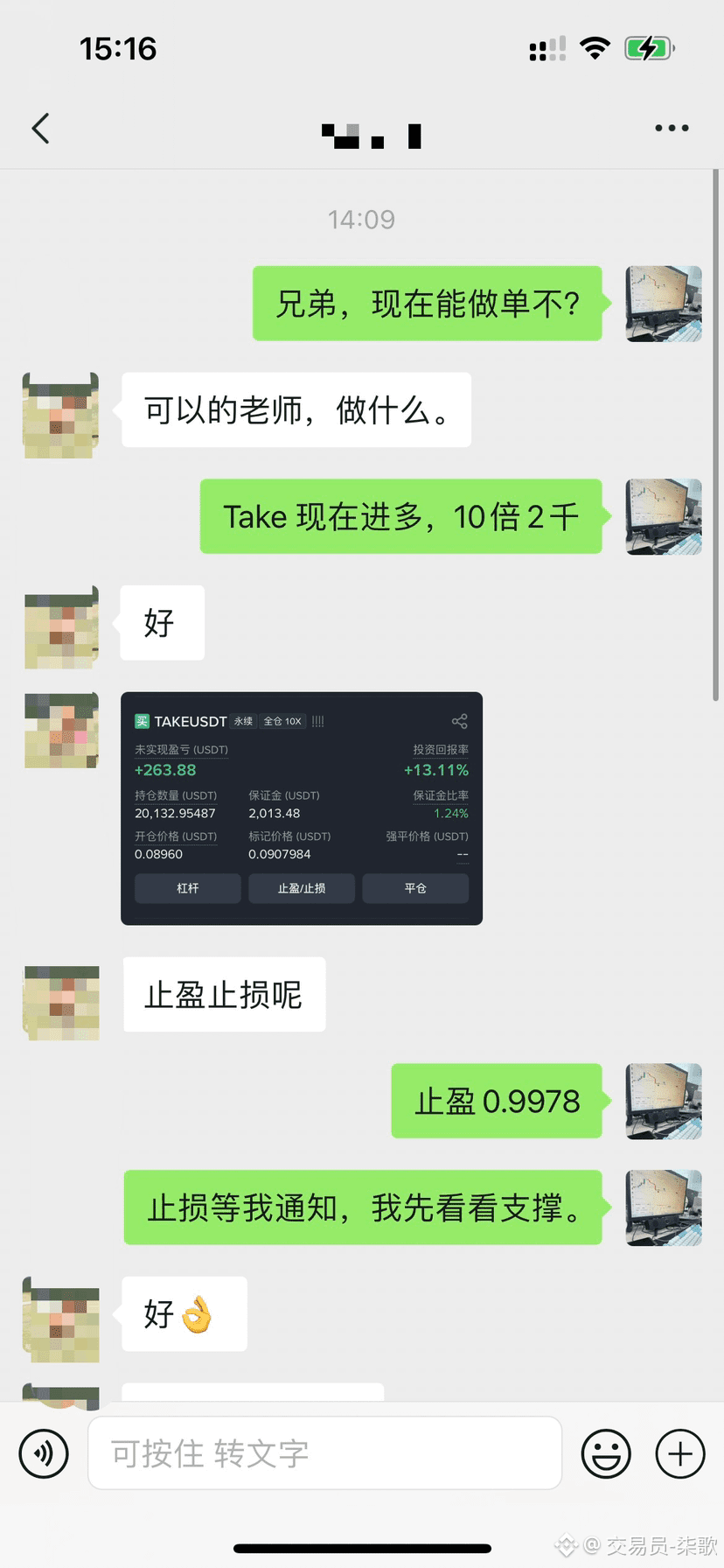
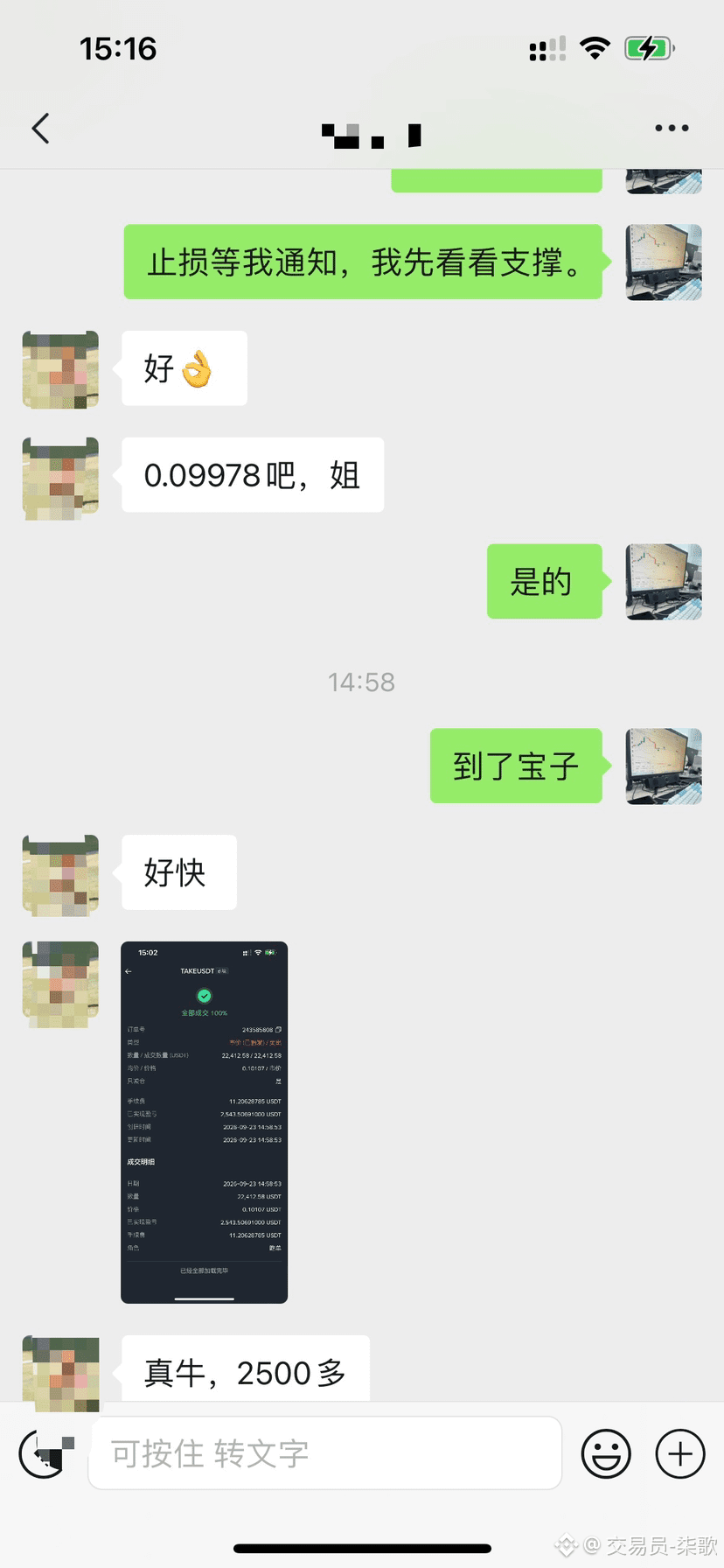
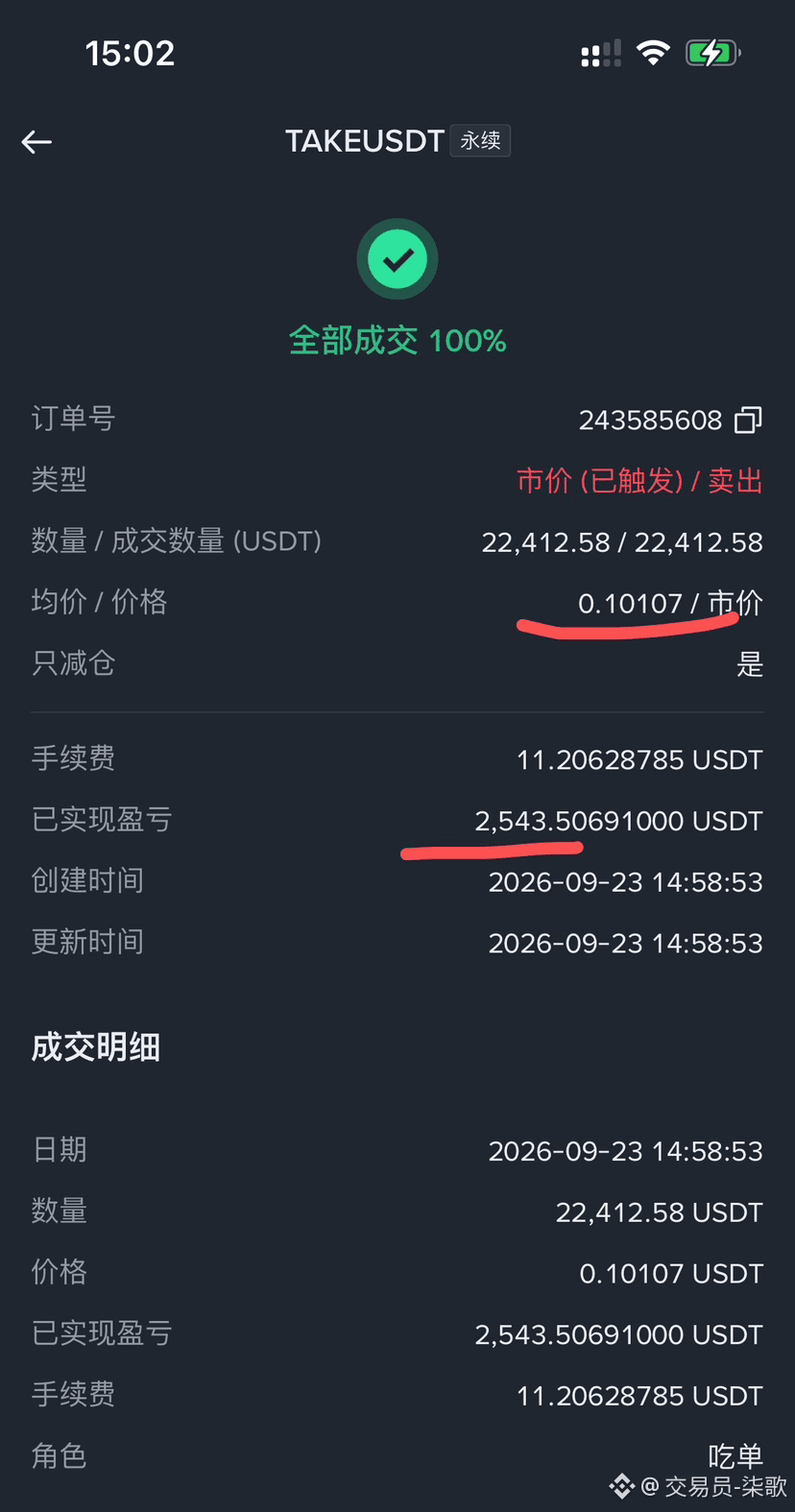
$TAKE skyrocketed; caught a wave—there’s another one on the way.
$TAKE skyrocketed; caught a wave—there’s another one on the way.
34
·
--
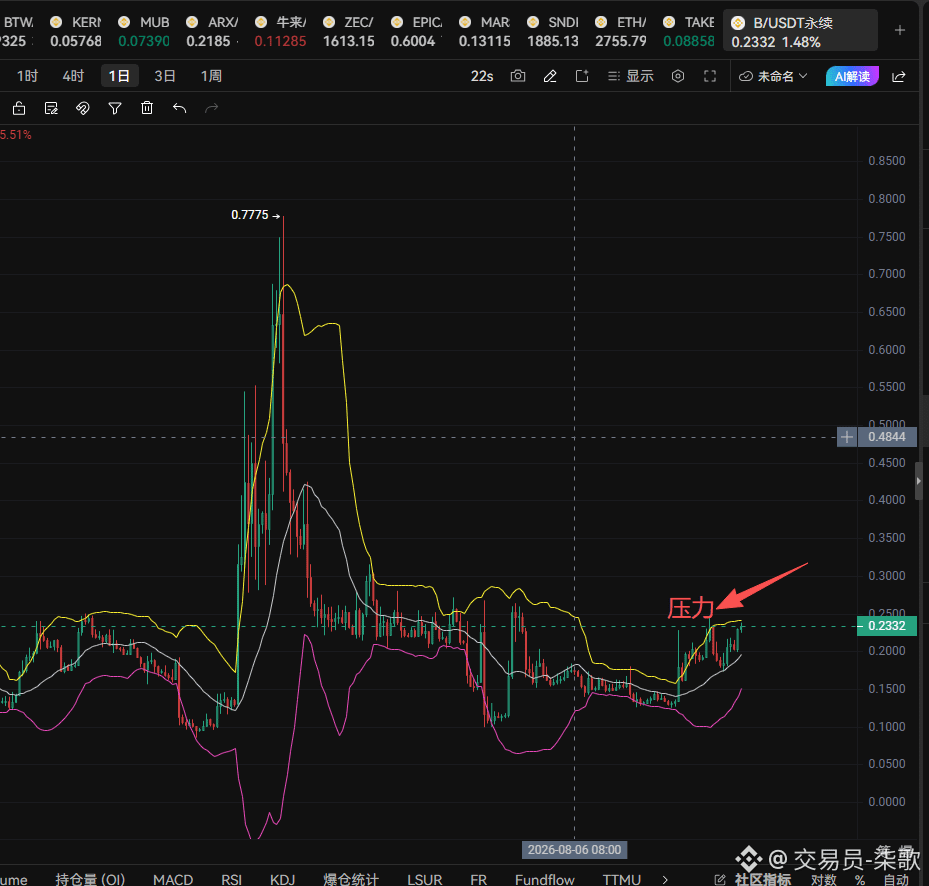
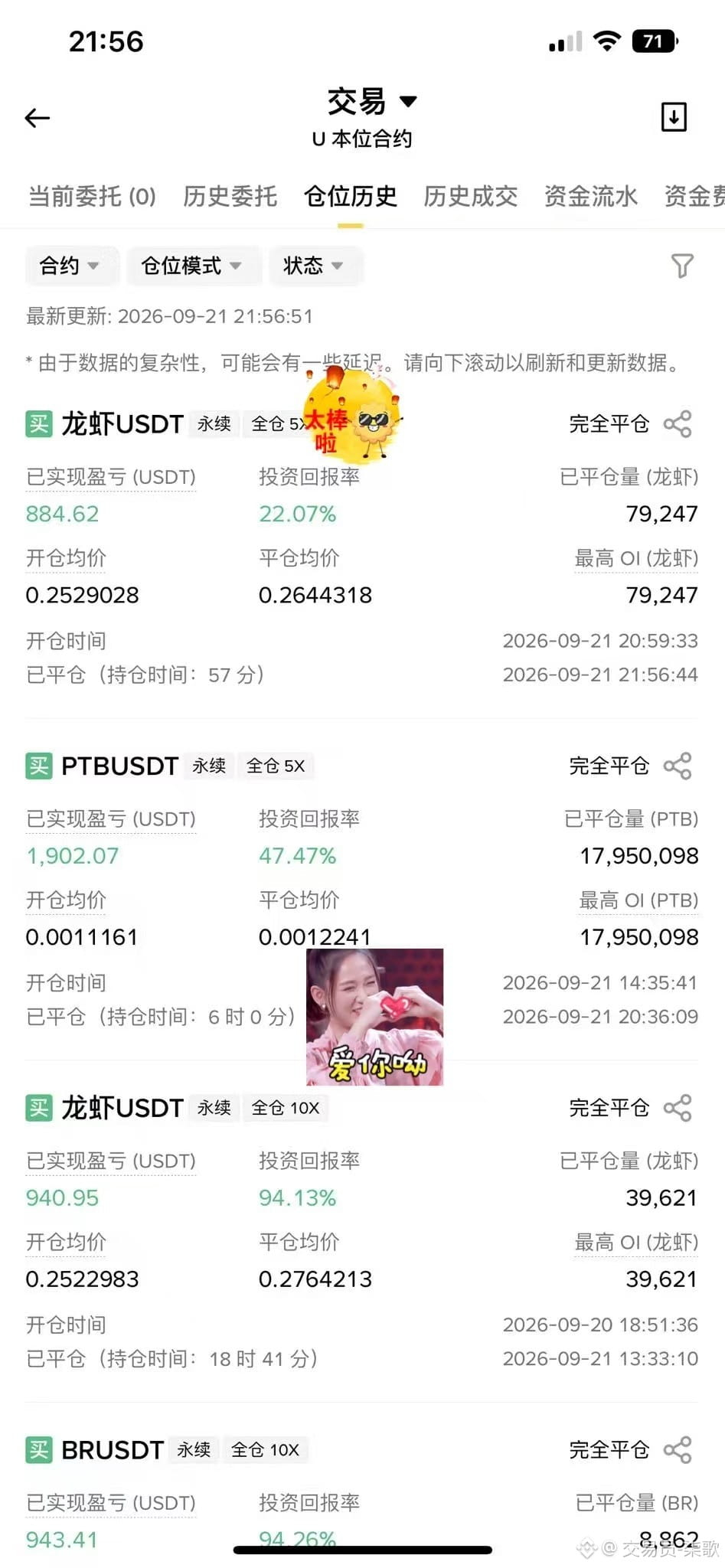
Brothers, that trend of $B is just like the ups and downs of life. #纳指创历史新高
From the glory of 0.77 falling to the bottom at 0.06—how many people couldn’t hold on and ended up cutting losses and exiting? But just when everyone was despairing, it quietly kept grinding at the bottom, building energy.
Now the daily chart is holding above 0.23, and the 15-minute timeframe has also formed a beautiful rising channel—the trend support is getting stronger and steadier. The resistance level is around the previous high at 0.247; once it breaks through, that’s new room ahead.
This isn’t calling trades. It’s the real feeling of having been alongside this for half a year—the market never rewards impatient people, but it does reward those who patiently wait and stay true.
Don’t chase. Wait for a pullback to confirm support before entering. Set your stop-loss below the previous low. Trading is like cultivation: keep your mindset steady, and you’ll be able to wait for your own wave.
Brothers, that trend of $B is just like the ups and downs of life. #纳指创历史新高
From the glory of 0.77 falling to the bottom at 0.06—how many people couldn’t hold on and ended up cutting losses and exiting? But just when everyone was despairing, it quietly kept grinding at the bottom, building energy.
Now the daily chart is holding above 0.23, and the 15-minute timeframe has also formed a beautiful rising channel—the trend support is getting stronger and steadier. The resistance level is around the previous high at 0.247; once it breaks through, that’s new room ahead.
This isn’t calling trades. It’s the real feeling of having been alongside this for half a year—the market never rewards impatient people, but it does reward those who patiently wait and stay true.
Don’t chase. Wait for a pullback to confirm support before entering. Set your stop-loss below the previous low. Trading is like cultivation: keep your mindset steady, and you’ll be able to wait for your own wave.
From the glory of 0.77 falling to the bottom at 0.06—how many people couldn’t hold on and ended up cutting losses and exiting? But just when everyone was despairing, it quietly kept grinding at the bottom, building energy.
Now the daily chart is holding above 0.23, and the 15-minute timeframe has also formed a beautiful rising channel—the trend support is getting stronger and steadier. The resistance level is around the previous high at 0.247; once it breaks through, that’s new room ahead.
This isn’t calling trades. It’s the real feeling of having been alongside this for half a year—the market never rewards impatient people, but it does reward those who patiently wait and stay true.
Don’t chase. Wait for a pullback to confirm support before entering. Set your stop-loss below the previous low. Trading is like cultivation: keep your mindset steady, and you’ll be able to wait for your own wave.
80
·
--
Does this count as a successful bargain buy, babes? #ZEC突破1600美元创新高
Does this count as a successful bargain buy, babes? #ZEC突破1600美元创新高
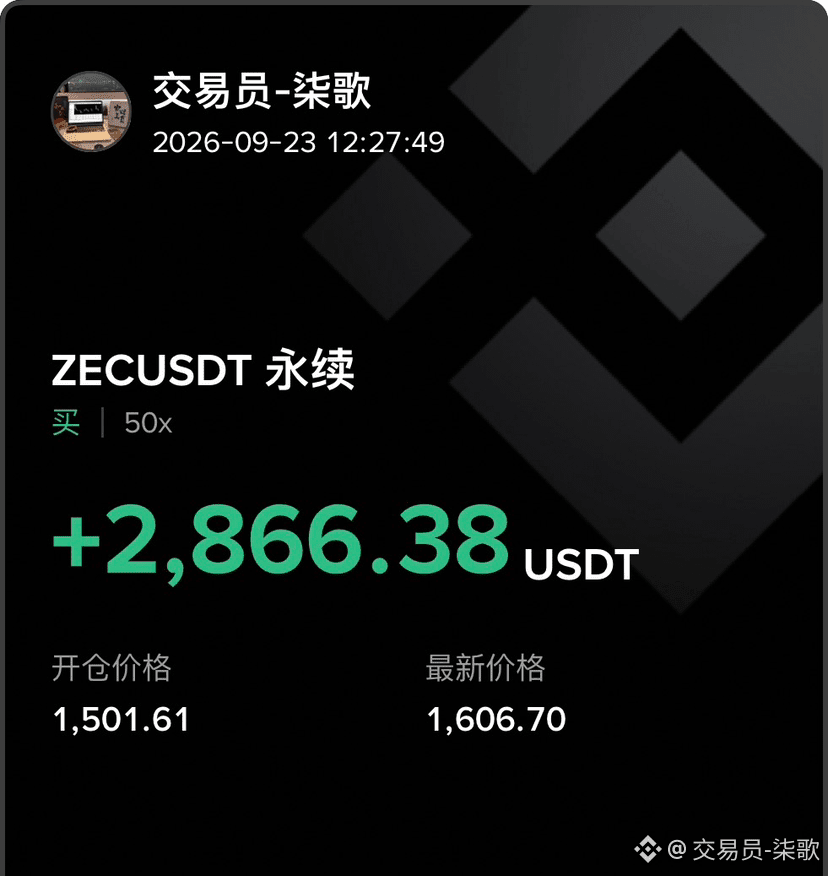
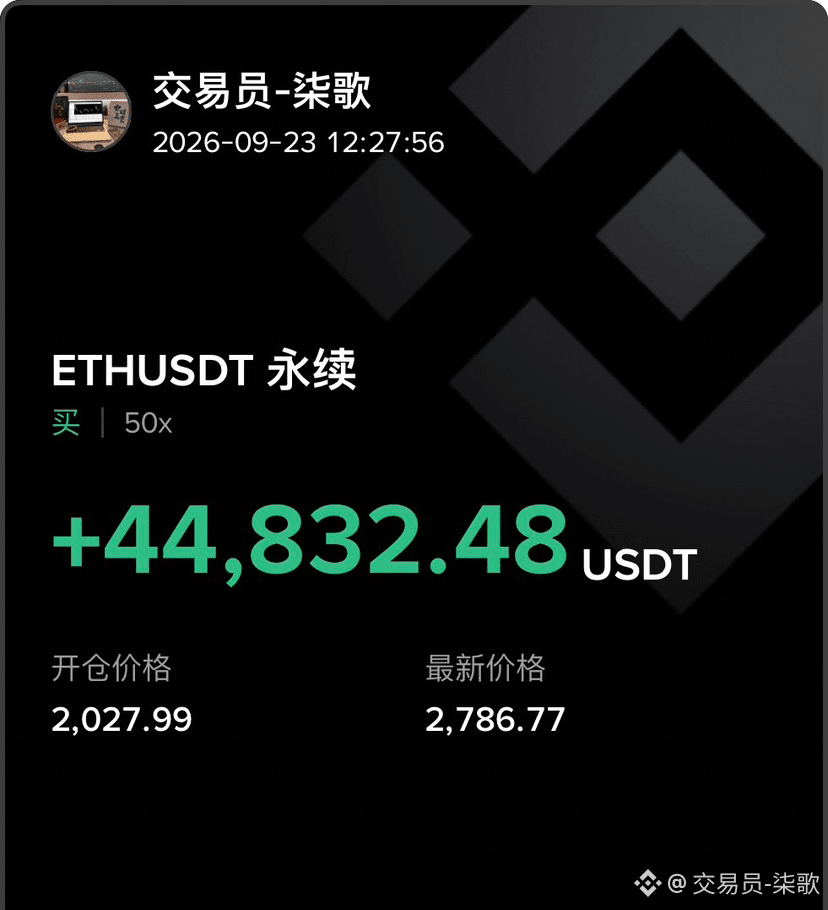
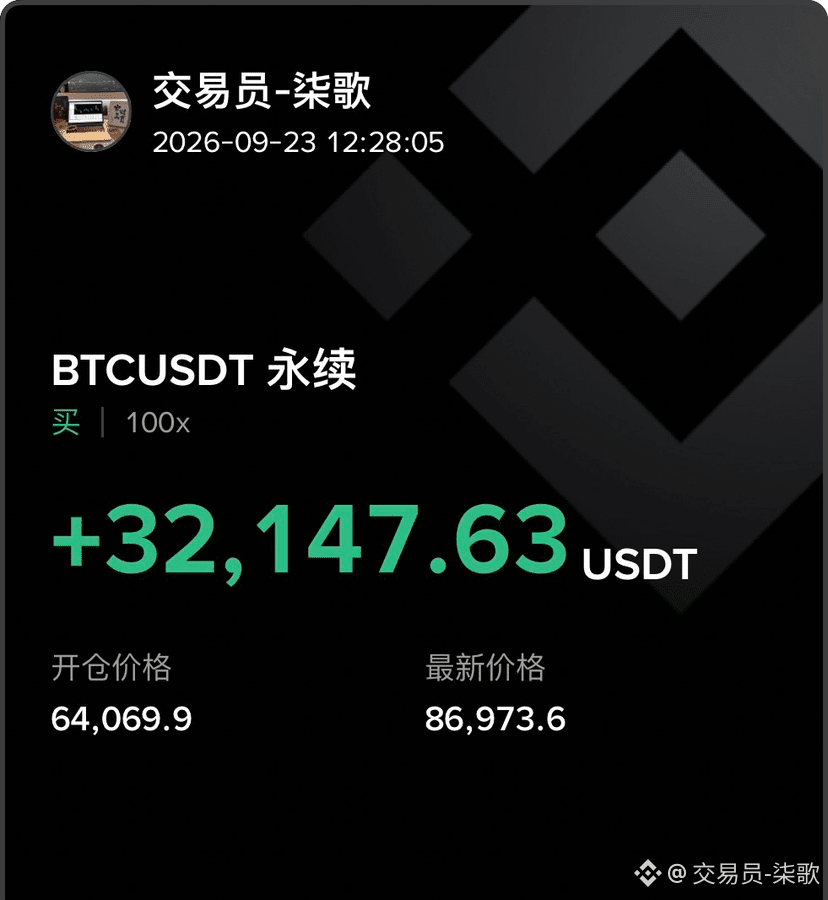
605
·
--
I just took a look at the chart of $AKE . To be honest, that needle’s drop is spine-chilling.
Lots of people ask me if they can bottom-fish at 0.046? I didn’t answer directly—I just threw the 1-hour K-line chart at them.
👉 The typical “downtrend after a spike trap” period: Look at that long upper wick that pierced up to 0.164—that’s the classic “main force probing + distributing” done in one go. From 0.164 down to now 0.046, the price has basically been cut to one-third. What does that mean? It means anyone who chased after that spike is now deeply trapped, and the overhead trapped positions are heavy as mountains. Now the rebound is just the main force slowly offloading the remaining shares.
👉 The downtrend hasn’t changed: 0.046 may look like a bottom, but it’s actually precarious. The moving average system is still in a bearish alignment. As long as it can’t strongly hold above 0.06, all rebounds are just traps to lure people in.
This is the typical “A-shaped killing”—the most lethal kind of market.
My strategy is conservative:
❌ Don’t blindly bottom-fish: 0.046 right now is catching a falling knife. Don’t think you’re smarter than the main force.
✅ Key levels:
Support (observe): 0.040–0.042. This is the top of the platform before the breakout. If it can’t be held, below it is a bottomless abyss.
Resistance (escape): 0.058–0.062. If the rebound hits here and gets rejected, leave immediately—don’t be greedy.
Stop loss: a drop below 0.038. If the trend is broken, don’t fantasize—run!
Straight talk: “After an extreme volume comes an extreme price; after an extreme price comes hell.” When everyone thinks the sell-off is finally over and they want to bottom-fish, there’s often still a basement. Better to miss the so-called rebound than to be that unlucky person buried at the foot of the mountain.
I just took a look at the chart of $AKE . To be honest, that needle’s drop is spine-chilling.
Lots of people ask me if they can bottom-fish at 0.046? I didn’t answer directly—I just threw the 1-hour K-line chart at them.
👉 The typical “downtrend after a spike trap” period: Look at that long upper wick that pierced up to 0.164—that’s the classic “main force probing + distributing” done in one go. From 0.164 down to now 0.046, the price has basically been cut to one-third. What does that mean? It means anyone who chased after that spike is now deeply trapped, and the overhead trapped positions are heavy as mountains. Now the rebound is just the main force slowly offloading the remaining shares.
👉 The downtrend hasn’t changed: 0.046 may look like a bottom, but it’s actually precarious. The moving average system is still in a bearish alignment. As long as it can’t strongly hold above 0.06, all rebounds are just traps to lure people in.
This is the typical “A-shaped killing”—the most lethal kind of market.
My strategy is conservative:
❌ Don’t blindly bottom-fish: 0.046 right now is catching a falling knife. Don’t think you’re smarter than the main force.
✅ Key levels:
Support (observe): 0.040–0.042. This is the top of the platform before the breakout. If it can’t be held, below it is a bottomless abyss.
Resistance (escape): 0.058–0.062. If the rebound hits here and gets rejected, leave immediately—don’t be greedy.
Stop loss: a drop below 0.038. If the trend is broken, don’t fantasize—run!
Straight talk: “After an extreme volume comes an extreme price; after an extreme price comes hell.” When everyone thinks the sell-off is finally over and they want to bottom-fish, there’s often still a basement. Better to miss the so-called rebound than to be that unlucky person buried at the foot of the mountain.
Lots of people ask me if they can bottom-fish at 0.046? I didn’t answer directly—I just threw the 1-hour K-line chart at them.
👉 The typical “downtrend after a spike trap” period: Look at that long upper wick that pierced up to 0.164—that’s the classic “main force probing + distributing” done in one go. From 0.164 down to now 0.046, the price has basically been cut to one-third. What does that mean? It means anyone who chased after that spike is now deeply trapped, and the overhead trapped positions are heavy as mountains. Now the rebound is just the main force slowly offloading the remaining shares.
👉 The downtrend hasn’t changed: 0.046 may look like a bottom, but it’s actually precarious. The moving average system is still in a bearish alignment. As long as it can’t strongly hold above 0.06, all rebounds are just traps to lure people in.
This is the typical “A-shaped killing”—the most lethal kind of market.
My strategy is conservative:
❌ Don’t blindly bottom-fish: 0.046 right now is catching a falling knife. Don’t think you’re smarter than the main force.
✅ Key levels:
Support (observe): 0.040–0.042. This is the top of the platform before the breakout. If it can’t be held, below it is a bottomless abyss.
Resistance (escape): 0.058–0.062. If the rebound hits here and gets rejected, leave immediately—don’t be greedy.
Stop loss: a drop below 0.038. If the trend is broken, don’t fantasize—run!
Straight talk: “After an extreme volume comes an extreme price; after an extreme price comes hell.” When everyone thinks the sell-off is finally over and they want to bottom-fish, there’s often still a basement. Better to miss the so-called rebound than to be that unlucky person buried at the foot of the mountain.

319
·
--
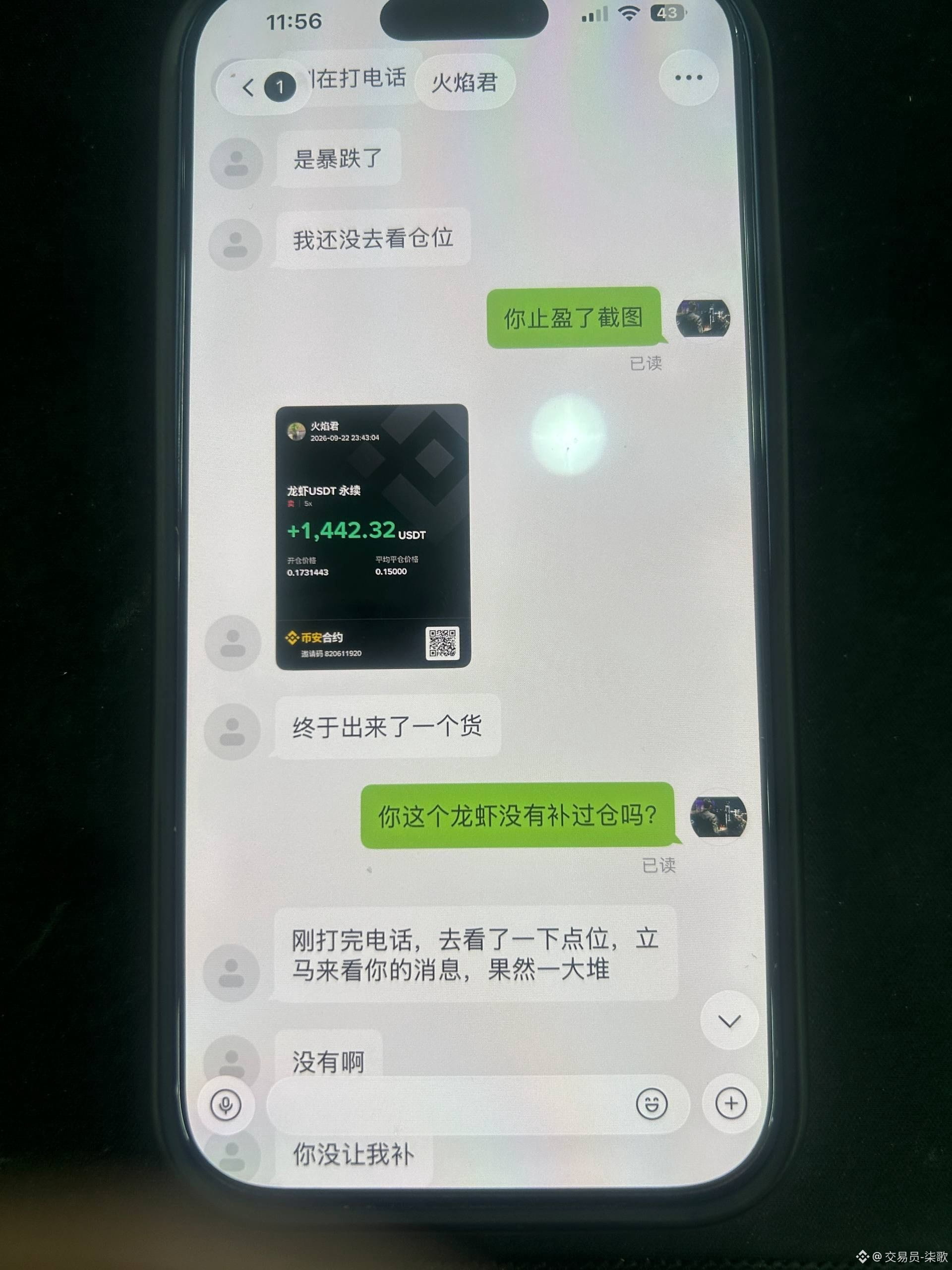
I just glanced at the chart for $龙虾 . Honestly, the trend looks like it might be “building a base,” but my palms are still a bit sweaty.
Many people ask me whether 0.15 is a good spot to bottom-fish? I didn’t answer directly—I just threw them this 15-minute candlestick chart.
👉 The typical “repair period after an A-shaped kill”: it fell from the high of 0.314 all the way down to 0.15, and the price was basically cut in half. Look at the past few days—the selloff has slowed, but the rebounds are extremely weak. Every time there’s a slightly red candle, it gets smashed down again. What does that mean? It means the trapped-seller supply above is as heavy as a mountain. The main players don’t want to spend money to free the people stuck up there; instead, they’re slowly grinding it down here, grinding away retail investors’ patience.
👉 The downtrend hasn’t changed: at 0.15, it seems like a bottom, but it’s actually precarious. The moving average system is still arranged bearishly. As long as it can’t strongly hold above 0.18, every rebound is just a bull trap.
This is the typical “grinding downward with no end”—the most lethal kind of market.
My strategy is very conservative:
❌ Don’t blindly bottom-fish: right now at 0.15 you’re catching a falling knife. Don’t think you’re smarter than the main players.
✅ Key levels:
Support (watch): 0.135-0.140. These are the low points of the earlier needle-like dips. If this level can’t be held, below it is an abyss.
Resistance (escape): 0.175-0.180. If the rebound hits this area and gets rejected, be decisive—get out. Don’t be greedy.
Stop loss: a breakdown below 0.130. If the trend turns bad, don’t fantasize—run!
Bottom line: “If the trend is wrong, your efforts are wasted.” When everyone thinks it’s already sunk enough and wants to bottom-fish, there’s often still a basement. Better to miss the so-called “rebound” than to be that unfortunate person buried at the foot of the mountain.
I just glanced at the chart for $龙虾 . Honestly, the trend looks like it might be “building a base,” but my palms are still a bit sweaty.
Many people ask me whether 0.15 is a good spot to bottom-fish? I didn’t answer directly—I just threw them this 15-minute candlestick chart.
👉 The typical “repair period after an A-shaped kill”: it fell from the high of 0.314 all the way down to 0.15, and the price was basically cut in half. Look at the past few days—the selloff has slowed, but the rebounds are extremely weak. Every time there’s a slightly red candle, it gets smashed down again. What does that mean? It means the trapped-seller supply above is as heavy as a mountain. The main players don’t want to spend money to free the people stuck up there; instead, they’re slowly grinding it down here, grinding away retail investors’ patience.
👉 The downtrend hasn’t changed: at 0.15, it seems like a bottom, but it’s actually precarious. The moving average system is still arranged bearishly. As long as it can’t strongly hold above 0.18, every rebound is just a bull trap.
This is the typical “grinding downward with no end”—the most lethal kind of market.
My strategy is very conservative:
❌ Don’t blindly bottom-fish: right now at 0.15 you’re catching a falling knife. Don’t think you’re smarter than the main players.
✅ Key levels:
Support (watch): 0.135-0.140. These are the low points of the earlier needle-like dips. If this level can’t be held, below it is an abyss.
Resistance (escape): 0.175-0.180. If the rebound hits this area and gets rejected, be decisive—get out. Don’t be greedy.
Stop loss: a breakdown below 0.130. If the trend turns bad, don’t fantasize—run!
Bottom line: “If the trend is wrong, your efforts are wasted.” When everyone thinks it’s already sunk enough and wants to bottom-fish, there’s often still a basement. Better to miss the so-called “rebound” than to be that unfortunate person buried at the foot of the mountain.
Many people ask me whether 0.15 is a good spot to bottom-fish? I didn’t answer directly—I just threw them this 15-minute candlestick chart.
👉 The typical “repair period after an A-shaped kill”: it fell from the high of 0.314 all the way down to 0.15, and the price was basically cut in half. Look at the past few days—the selloff has slowed, but the rebounds are extremely weak. Every time there’s a slightly red candle, it gets smashed down again. What does that mean? It means the trapped-seller supply above is as heavy as a mountain. The main players don’t want to spend money to free the people stuck up there; instead, they’re slowly grinding it down here, grinding away retail investors’ patience.
👉 The downtrend hasn’t changed: at 0.15, it seems like a bottom, but it’s actually precarious. The moving average system is still arranged bearishly. As long as it can’t strongly hold above 0.18, every rebound is just a bull trap.
This is the typical “grinding downward with no end”—the most lethal kind of market.
My strategy is very conservative:
❌ Don’t blindly bottom-fish: right now at 0.15 you’re catching a falling knife. Don’t think you’re smarter than the main players.
✅ Key levels:
Support (watch): 0.135-0.140. These are the low points of the earlier needle-like dips. If this level can’t be held, below it is an abyss.
Resistance (escape): 0.175-0.180. If the rebound hits this area and gets rejected, be decisive—get out. Don’t be greedy.
Stop loss: a breakdown below 0.130. If the trend turns bad, don’t fantasize—run!
Bottom line: “If the trend is wrong, your efforts are wasted.” When everyone thinks it’s already sunk enough and wants to bottom-fish, there’s often still a basement. Better to miss the so-called “rebound” than to be that unfortunate person buried at the foot of the mountain.

302
·
--
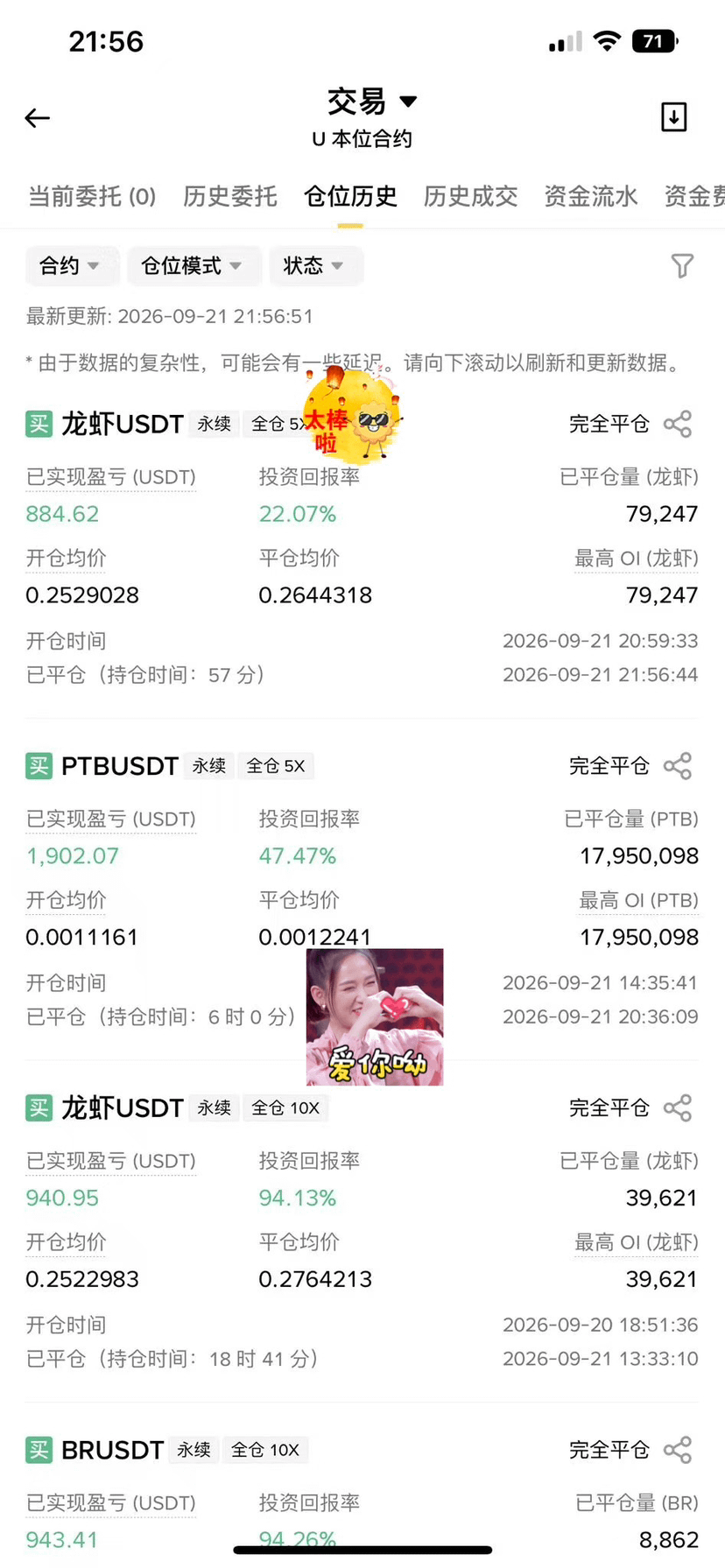
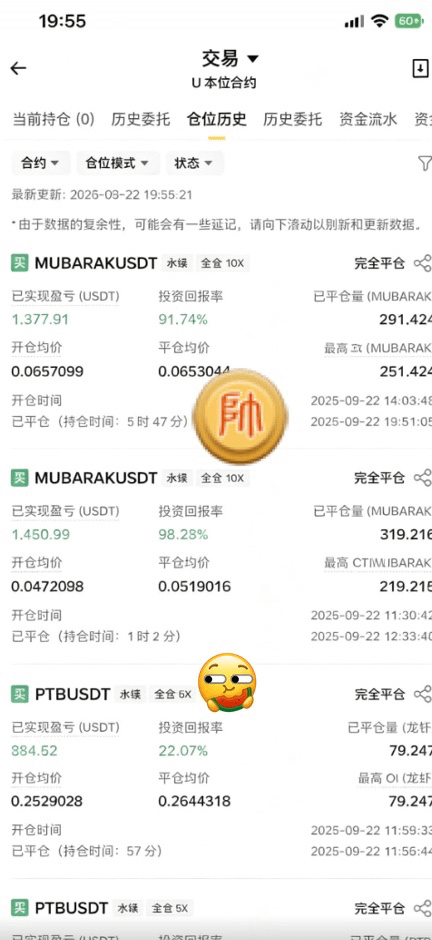
8 consecutive wins, from 4k to 10k in a flash—our area is really awesome; the image won’t fit. $MARSCOIN $BTC
In the crypto world, don’t smear others. If you want to avoid traps and earn steadily, take a look.
8 consecutive wins, from 4k to 10k in a flash—our area is really awesome; the image won’t fit. $MARSCOIN $BTC
In the crypto world, don’t smear others. If you want to avoid traps and earn steadily, take a look.
In the crypto world, don’t smear others. If you want to avoid traps and earn steadily, take a look.


332
·
--
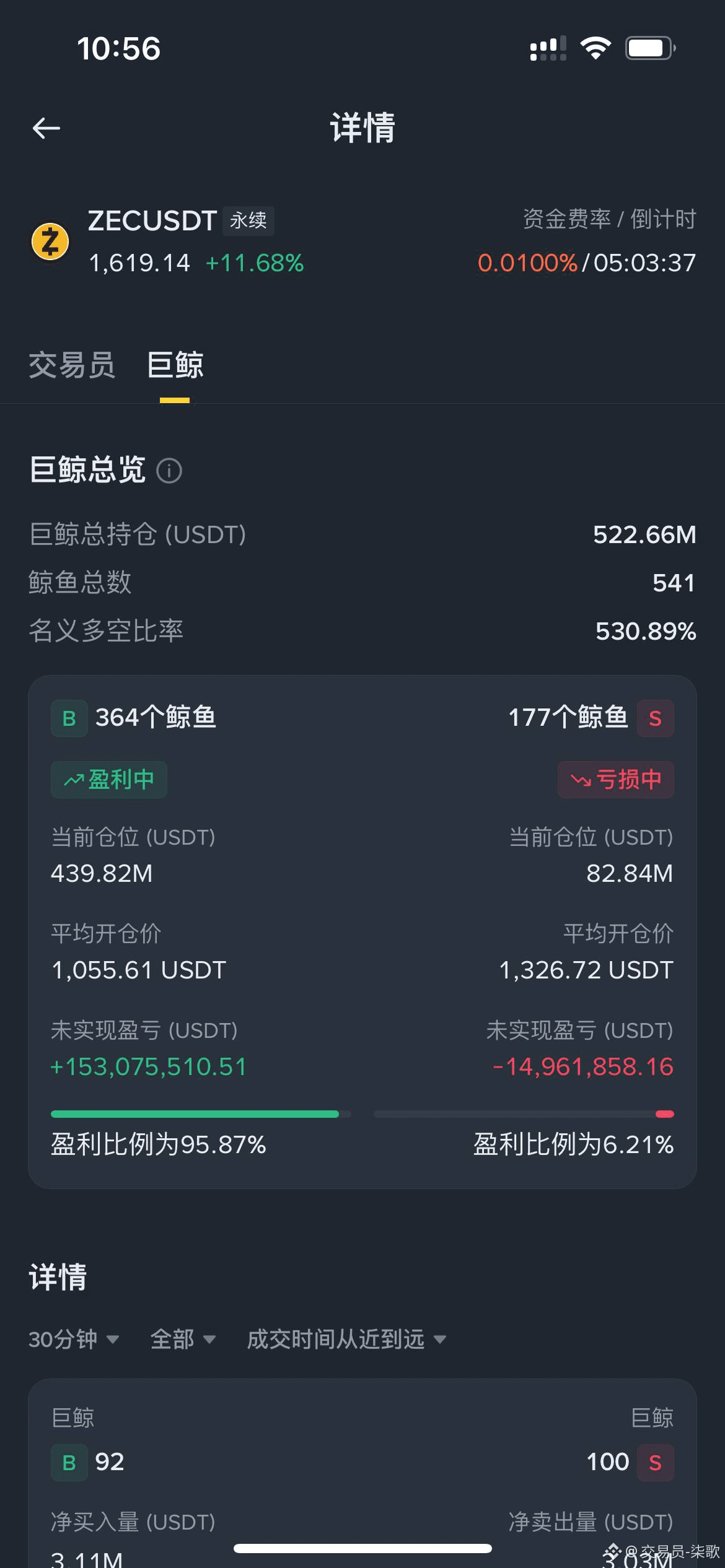
Brothers, ZEC whale is going long—dare you chase it? I just finished digging out the $ZEC whale position data, and watching it makes my spine feel cold. Many people ask whether 1619 can be directly chased for longs. Just lay out the order-book data and take a look.
👉Notional long-to-short ratio is 530.89%. The number of longs overwhelms the shorts, and the market’s balance is severely tilted toward the bulls.
👉95.87% of the whales’ longs are in profit. The main players’ average entry is only 1055.61, with huge unrealized gains. There is always the risk that profits get realized and the position is dumped, causing a sell-off at any time.
👉The shorts’ profit ratio is only 6.21%. Shorts have basically been flushed out. Chasing longs at the current price is essentially stepping in to catch the main players’ sell orders. This is a typical stage of longs taking profit—high-level risk continues to accumulate.
Response strategy: ❌ Don’t chase highs at the current price. The 1619 cost is far higher than the main players’ bottom positions, so the value-for-money is extremely low.
✅ Key levels: Support (for going long): 1490-1510. Consider a light long only after a pullback stabilizes.
Resistance (reduce position): 1650-1680. If it spikes but doesn’t break through, take profit and exit decisively. Stop loss: If it breaks below 1440, the trend weakens—don’t hold on. Exit directly.
A word from me: When the market is loud with people talking, that’s when risk quietly arrives. After a surge, the tail-end of the move is the easiest time to get into trouble. It’s better to miss earning a bit than to be the last high-level bag-holder.
In the crypto game, if you can see the whale’s coin holdings clearly, you can better avoid traps. If you want to catch safer opportunities, follow Sister Xi’s pace.
Brothers, ZEC whale is going long—dare you chase it? I just finished digging out the $ZEC whale position data, and watching it makes my spine feel cold. Many people ask whether 1619 can be directly chased for longs. Just lay out the order-book data and take a look.
👉Notional long-to-short ratio is 530.89%. The number of longs overwhelms the shorts, and the market’s balance is severely tilted toward the bulls.
👉95.87% of the whales’ longs are in profit. The main players’ average entry is only 1055.61, with huge unrealized gains. There is always the risk that profits get realized and the position is dumped, causing a sell-off at any time.
👉The shorts’ profit ratio is only 6.21%. Shorts have basically been flushed out. Chasing longs at the current price is essentially stepping in to catch the main players’ sell orders. This is a typical stage of longs taking profit—high-level risk continues to accumulate.
Response strategy: ❌ Don’t chase highs at the current price. The 1619 cost is far higher than the main players’ bottom positions, so the value-for-money is extremely low.
✅ Key levels: Support (for going long): 1490-1510. Consider a light long only after a pullback stabilizes.
Resistance (reduce position): 1650-1680. If it spikes but doesn’t break through, take profit and exit decisively. Stop loss: If it breaks below 1440, the trend weakens—don’t hold on. Exit directly.
A word from me: When the market is loud with people talking, that’s when risk quietly arrives. After a surge, the tail-end of the move is the easiest time to get into trouble. It’s better to miss earning a bit than to be the last high-level bag-holder.
In the crypto game, if you can see the whale’s coin holdings clearly, you can better avoid traps. If you want to catch safer opportunities, follow Sister Xi’s pace.
👉Notional long-to-short ratio is 530.89%. The number of longs overwhelms the shorts, and the market’s balance is severely tilted toward the bulls.
👉95.87% of the whales’ longs are in profit. The main players’ average entry is only 1055.61, with huge unrealized gains. There is always the risk that profits get realized and the position is dumped, causing a sell-off at any time.
👉The shorts’ profit ratio is only 6.21%. Shorts have basically been flushed out. Chasing longs at the current price is essentially stepping in to catch the main players’ sell orders. This is a typical stage of longs taking profit—high-level risk continues to accumulate.
Response strategy: ❌ Don’t chase highs at the current price. The 1619 cost is far higher than the main players’ bottom positions, so the value-for-money is extremely low.
✅ Key levels: Support (for going long): 1490-1510. Consider a light long only after a pullback stabilizes.
Resistance (reduce position): 1650-1680. If it spikes but doesn’t break through, take profit and exit decisively. Stop loss: If it breaks below 1440, the trend weakens—don’t hold on. Exit directly.
A word from me: When the market is loud with people talking, that’s when risk quietly arrives. After a surge, the tail-end of the move is the easiest time to get into trouble. It’s better to miss earning a bit than to be the last high-level bag-holder.
In the crypto game, if you can see the whale’s coin holdings clearly, you can better avoid traps. If you want to catch safer opportunities, follow Sister Xi’s pace.
372
·
--
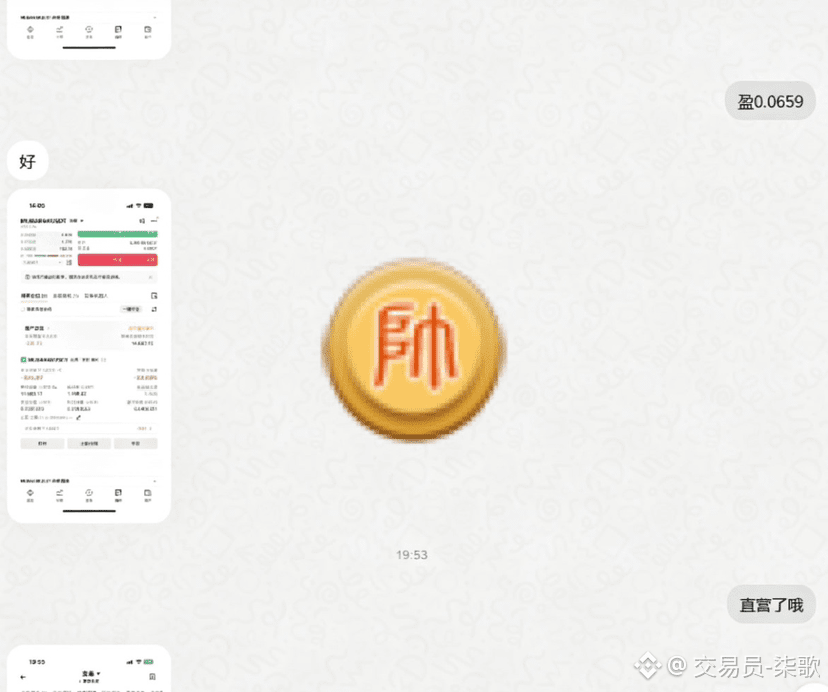
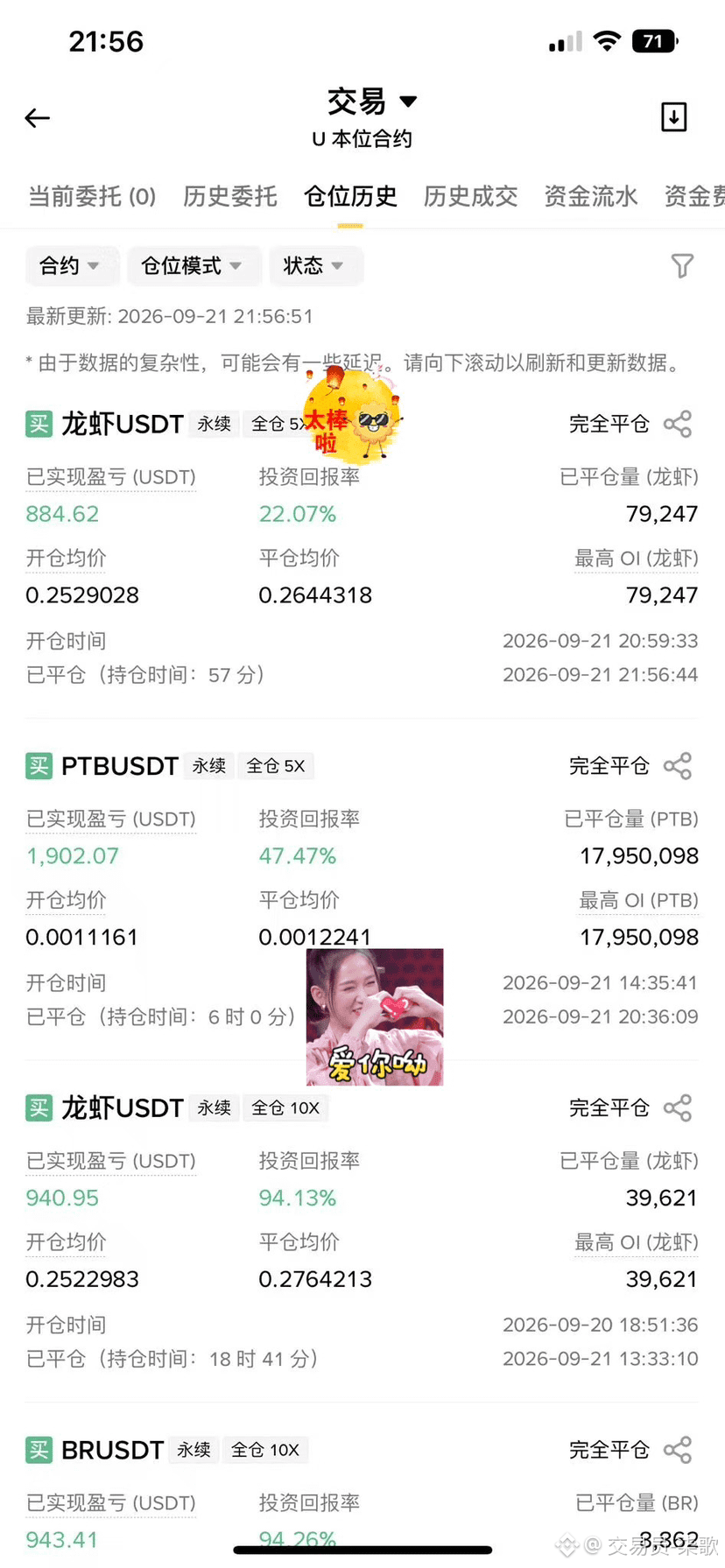
Our district’s orders are great—winning 7 streaks. Today, $MUBARAK made several rounds of profit relying on this coin. Keep it up. You can take a good rest for the National Day holiday.
#140亿美元比特币期权周五到期
Our district’s orders are great—winning 7 streaks. Today, $MUBARAK made several rounds of profit relying on this coin. Keep it up. You can take a good rest for the National Day holiday.
#140亿美元比特币期权周五到期
#140亿美元比特币期权周五到期


322
·
--
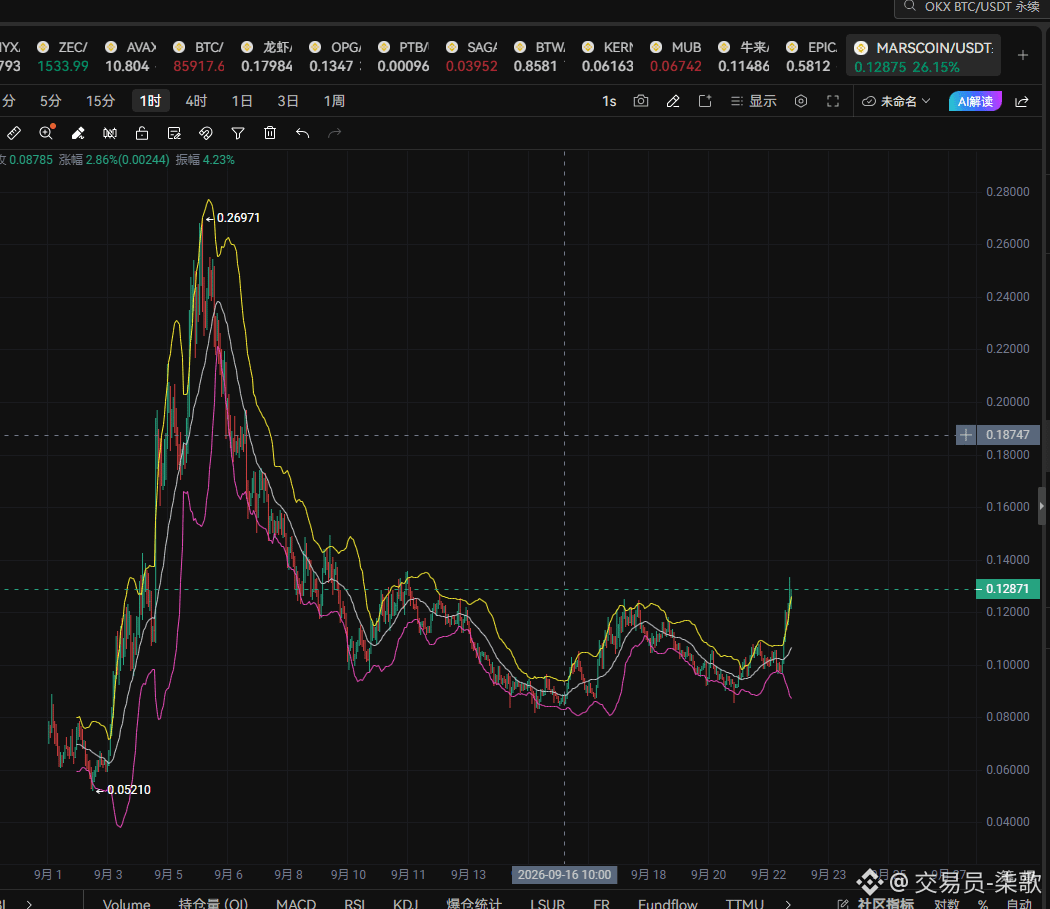
Just took a look at the chart of $MARSCOIN (Mars Coin). To be honest, the trend looks pretty fierce, but my palms are a bit sweaty.
Many people ask me whether 0.128 is worth chasing. I didn’t answer directly—I just threw these two candlestick charts at them.
👉 A typical “oversold rebound meets resistance”: Looking at the 4-hour chart, it has been drifting down from the high at 0.269 all the way—cut in half, then cut in half again—now it has rebounded to 0.128. What does this mean? It means 0.128 is exactly the bottom of the platform during the previous leg down. And the current price is right up against the “ceiling.” There’s a huge amount of trapped positions accumulated here. If the main force wants to break through, they’ll have to spend real money to liberate the people above. Do you think they’ll be so kind as to just pull straight through? Most likely, it’s a bull trap.
👉 Short-term sentiment is overheated: The 1-hour chart shows that after a sudden spike upward, the upper wicks have started to get longer. This indicates the sell pressure overhead is extremely heavy, and the bulls’ momentum is already fading. At 0.128, it looks like a reversal, but in reality it’s a risk zone for a “double top” or a continuation of the downtrend.
This is exactly the kind of “tail-end/last-temptation” market—or a bull-trap scenario. Little meat, lots of thorns.
My strategy is very conservative:
❌ Don’t chase: At 0.128, it’s basically the phase of “fooling others into buying.” Don’t be the one to catch the last baton.
✅ Key levels:
Support (watch): 0.110–0.115. If the pullback can hold steady here, it suggests there may still be a chance—consider a small position to gamble on a rebound.
Resistance (escape): 0.140–0.150. If it can’t break through the dense prior trading area, then decisively get out—don’t get greedy.
Stop-loss: A break below 0.105. If the trend is ruined, don’t daydream—run!
👉 One sentence: the aggressive folks go long right away… while the cautious ones wait for a pullback….
Just took a look at the chart of $MARSCOIN (Mars Coin). To be honest, the trend looks pretty fierce, but my palms are a bit sweaty.
Many people ask me whether 0.128 is worth chasing. I didn’t answer directly—I just threw these two candlestick charts at them.
👉 A typical “oversold rebound meets resistance”: Looking at the 4-hour chart, it has been drifting down from the high at 0.269 all the way—cut in half, then cut in half again—now it has rebounded to 0.128. What does this mean? It means 0.128 is exactly the bottom of the platform during the previous leg down. And the current price is right up against the “ceiling.” There’s a huge amount of trapped positions accumulated here. If the main force wants to break through, they’ll have to spend real money to liberate the people above. Do you think they’ll be so kind as to just pull straight through? Most likely, it’s a bull trap.
👉 Short-term sentiment is overheated: The 1-hour chart shows that after a sudden spike upward, the upper wicks have started to get longer. This indicates the sell pressure overhead is extremely heavy, and the bulls’ momentum is already fading. At 0.128, it looks like a reversal, but in reality it’s a risk zone for a “double top” or a continuation of the downtrend.
This is exactly the kind of “tail-end/last-temptation” market—or a bull-trap scenario. Little meat, lots of thorns.
My strategy is very conservative:
❌ Don’t chase: At 0.128, it’s basically the phase of “fooling others into buying.” Don’t be the one to catch the last baton.
✅ Key levels:
Support (watch): 0.110–0.115. If the pullback can hold steady here, it suggests there may still be a chance—consider a small position to gamble on a rebound.
Resistance (escape): 0.140–0.150. If it can’t break through the dense prior trading area, then decisively get out—don’t get greedy.
Stop-loss: A break below 0.105. If the trend is ruined, don’t daydream—run!
👉 One sentence: the aggressive folks go long right away… while the cautious ones wait for a pullback….
Many people ask me whether 0.128 is worth chasing. I didn’t answer directly—I just threw these two candlestick charts at them.
👉 A typical “oversold rebound meets resistance”: Looking at the 4-hour chart, it has been drifting down from the high at 0.269 all the way—cut in half, then cut in half again—now it has rebounded to 0.128. What does this mean? It means 0.128 is exactly the bottom of the platform during the previous leg down. And the current price is right up against the “ceiling.” There’s a huge amount of trapped positions accumulated here. If the main force wants to break through, they’ll have to spend real money to liberate the people above. Do you think they’ll be so kind as to just pull straight through? Most likely, it’s a bull trap.
👉 Short-term sentiment is overheated: The 1-hour chart shows that after a sudden spike upward, the upper wicks have started to get longer. This indicates the sell pressure overhead is extremely heavy, and the bulls’ momentum is already fading. At 0.128, it looks like a reversal, but in reality it’s a risk zone for a “double top” or a continuation of the downtrend.
This is exactly the kind of “tail-end/last-temptation” market—or a bull-trap scenario. Little meat, lots of thorns.
My strategy is very conservative:
❌ Don’t chase: At 0.128, it’s basically the phase of “fooling others into buying.” Don’t be the one to catch the last baton.
✅ Key levels:
Support (watch): 0.110–0.115. If the pullback can hold steady here, it suggests there may still be a chance—consider a small position to gamble on a rebound.
Resistance (escape): 0.140–0.150. If it can’t break through the dense prior trading area, then decisively get out—don’t get greedy.
Stop-loss: A break below 0.105. If the trend is ruined, don’t daydream—run!
👉 One sentence: the aggressive folks go long right away… while the cautious ones wait for a pullback….
1
255
·
--
900U for five months to roll into 38,000U; it wasn’t about catching the daily limit-up. It was about holding back your hand. $ETH
I’ve seen my brother’s trading record in the circle. It looks pretty ordinary, but the results are astonishing. After 900U arrived, he didn’t rush to find coins. He split it into three parts: one for short-term trades, doing only one trade per day—if he misses the morning, he never buys the afternoon as a ticket;
one for swing trading. If it isn’t at the right level, he waits. He can go ten days or even half a month without trading;
and the last 300U as备用资金 (reserve fund). For five months, it barely moved. He said this money may look like it isn’t earning much, but when problems come, you won’t panic.
His profit doesn’t come from catching explosive breakouts. He doesn’t touch consolidation. When there’s no clear direction, he shuts the software. What a small account fears isn’t missing out (FOMO)—it’s trading back and forth every day. Fees, slippage, and a few wrong judgments gradually wear down the principal.
One more detail: before placing each order, he writes down the stop-loss level first. When it hits, he cuts. When he makes a run of profit, he takes back part of it and never suddenly adds to the position just because the unrealized gain looks good.
This isn’t a guaranteed-money-making method, but the most worth learning is that he didn’t treat every market move as an opportunity. For small capital, the difficult part isn’t finding explosive coins—it’s making sure that once the account grows, you don’t hand-deliver it back with your own hands. #比特币现货ETF净流入9.99亿美元
900U for five months to roll into 38,000U; it wasn’t about catching the daily limit-up. It was about holding back your hand. $ETH
I’ve seen my brother’s trading record in the circle. It looks pretty ordinary, but the results are astonishing. After 900U arrived, he didn’t rush to find coins. He split it into three parts: one for short-term trades, doing only one trade per day—if he misses the morning, he never buys the afternoon as a ticket;
one for swing trading. If it isn’t at the right level, he waits. He can go ten days or even half a month without trading;
and the last 300U as备用资金 (reserve fund). For five months, it barely moved. He said this money may look like it isn’t earning much, but when problems come, you won’t panic.
His profit doesn’t come from catching explosive breakouts. He doesn’t touch consolidation. When there’s no clear direction, he shuts the software. What a small account fears isn’t missing out (FOMO)—it’s trading back and forth every day. Fees, slippage, and a few wrong judgments gradually wear down the principal.
One more detail: before placing each order, he writes down the stop-loss level first. When it hits, he cuts. When he makes a run of profit, he takes back part of it and never suddenly adds to the position just because the unrealized gain looks good.
This isn’t a guaranteed-money-making method, but the most worth learning is that he didn’t treat every market move as an opportunity. For small capital, the difficult part isn’t finding explosive coins—it’s making sure that once the account grows, you don’t hand-deliver it back with your own hands. #比特币现货ETF净流入9.99亿美元
I’ve seen my brother’s trading record in the circle. It looks pretty ordinary, but the results are astonishing. After 900U arrived, he didn’t rush to find coins. He split it into three parts: one for short-term trades, doing only one trade per day—if he misses the morning, he never buys the afternoon as a ticket;
one for swing trading. If it isn’t at the right level, he waits. He can go ten days or even half a month without trading;
and the last 300U as备用资金 (reserve fund). For five months, it barely moved. He said this money may look like it isn’t earning much, but when problems come, you won’t panic.
His profit doesn’t come from catching explosive breakouts. He doesn’t touch consolidation. When there’s no clear direction, he shuts the software. What a small account fears isn’t missing out (FOMO)—it’s trading back and forth every day. Fees, slippage, and a few wrong judgments gradually wear down the principal.
One more detail: before placing each order, he writes down the stop-loss level first. When it hits, he cuts. When he makes a run of profit, he takes back part of it and never suddenly adds to the position just because the unrealized gain looks good.
This isn’t a guaranteed-money-making method, but the most worth learning is that he didn’t treat every market move as an opportunity. For small capital, the difficult part isn’t finding explosive coins—it’s making sure that once the account grows, you don’t hand-deliver it back with your own hands. #比特币现货ETF净流入9.99亿美元

218
·
--
The day I understood the meaning of a margin call liquidation and wiping out everything, I realized the money I made was never earned by real skill. $SNDK
Eight years ago when I first entered the market, I had only a few tens of thousands in capital. A great行情 (market opportunity) came along—everything I bought went up. After making a few profitable trades, I got overconfident and thought I had figured out the pattern.
Until one time a margin call wiped my account to zero, and I finally learned that my previous “experience” couldn’t survive an actual stress test.
When I started over, I didn’t have many chips left. The first thing I did was quit going all-in. With small capital, I only touch the situations I truly understand. If I can’t afford to stay flat for a day, that’s fine—I just secure part of the profit when I reach my target, and I don’t greedily squeeze out that last bit. When major news drops, during long holidays, or if trading volume suddenly spikes in the middle of the night, I proactively reduce my position. If good news starts to weaken, I cash out and leave—no holding on to a losing position forever.
For the medium- to long-term, I’m afraid that too heavy a position won’t be able to withstand the oscillations. For the short-term, I wait for the right level and the right signal, then execute when it’s at the point. #AMD市值首破1万亿美元
Over the years, these habits formed: after a sharp rise followed by weakness, don’t chase. After a sharp drop followed by an ineffective rebound, don’t try to guess the bottom. If I’m wrong, I admit it—cutting losses is just keeping the mistake contained within that single trade.
Later I understood this too: the most expensive tuition in trading isn’t how much you lose—it’s losing everything and still not knowing why you lost. Technical analysis can help you find opportunities, but what determines how long your account can last is whether, at the moments you feel like doing something reckless, you can pull your hands back in time.
The day I understood the meaning of a margin call liquidation and wiping out everything, I realized the money I made was never earned by real skill. $SNDK
Eight years ago when I first entered the market, I had only a few tens of thousands in capital. A great行情 (market opportunity) came along—everything I bought went up. After making a few profitable trades, I got overconfident and thought I had figured out the pattern.
Until one time a margin call wiped my account to zero, and I finally learned that my previous “experience” couldn’t survive an actual stress test.
When I started over, I didn’t have many chips left. The first thing I did was quit going all-in. With small capital, I only touch the situations I truly understand. If I can’t afford to stay flat for a day, that’s fine—I just secure part of the profit when I reach my target, and I don’t greedily squeeze out that last bit. When major news drops, during long holidays, or if trading volume suddenly spikes in the middle of the night, I proactively reduce my position. If good news starts to weaken, I cash out and leave—no holding on to a losing position forever.
For the medium- to long-term, I’m afraid that too heavy a position won’t be able to withstand the oscillations. For the short-term, I wait for the right level and the right signal, then execute when it’s at the point. #AMD市值首破1万亿美元
Over the years, these habits formed: after a sharp rise followed by weakness, don’t chase. After a sharp drop followed by an ineffective rebound, don’t try to guess the bottom. If I’m wrong, I admit it—cutting losses is just keeping the mistake contained within that single trade.
Later I understood this too: the most expensive tuition in trading isn’t how much you lose—it’s losing everything and still not knowing why you lost. Technical analysis can help you find opportunities, but what determines how long your account can last is whether, at the moments you feel like doing something reckless, you can pull your hands back in time.
Eight years ago when I first entered the market, I had only a few tens of thousands in capital. A great行情 (market opportunity) came along—everything I bought went up. After making a few profitable trades, I got overconfident and thought I had figured out the pattern.
Until one time a margin call wiped my account to zero, and I finally learned that my previous “experience” couldn’t survive an actual stress test.
When I started over, I didn’t have many chips left. The first thing I did was quit going all-in. With small capital, I only touch the situations I truly understand. If I can’t afford to stay flat for a day, that’s fine—I just secure part of the profit when I reach my target, and I don’t greedily squeeze out that last bit. When major news drops, during long holidays, or if trading volume suddenly spikes in the middle of the night, I proactively reduce my position. If good news starts to weaken, I cash out and leave—no holding on to a losing position forever.
For the medium- to long-term, I’m afraid that too heavy a position won’t be able to withstand the oscillations. For the short-term, I wait for the right level and the right signal, then execute when it’s at the point. #AMD市值首破1万亿美元
Over the years, these habits formed: after a sharp rise followed by weakness, don’t chase. After a sharp drop followed by an ineffective rebound, don’t try to guess the bottom. If I’m wrong, I admit it—cutting losses is just keeping the mistake contained within that single trade.
Later I understood this too: the most expensive tuition in trading isn’t how much you lose—it’s losing everything and still not knowing why you lost. Technical analysis can help you find opportunities, but what determines how long your account can last is whether, at the moments you feel like doing something reckless, you can pull your hands back in time.

305
·
--
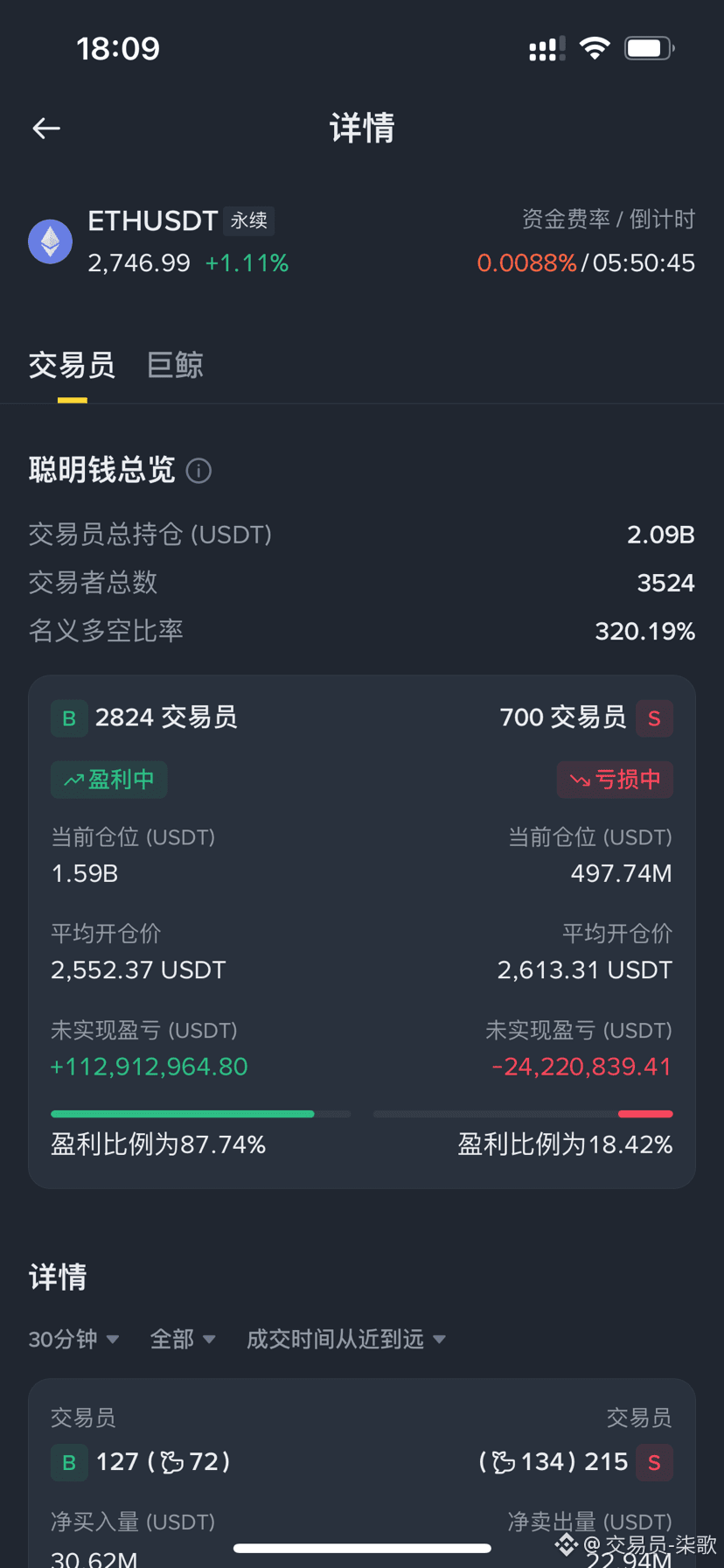
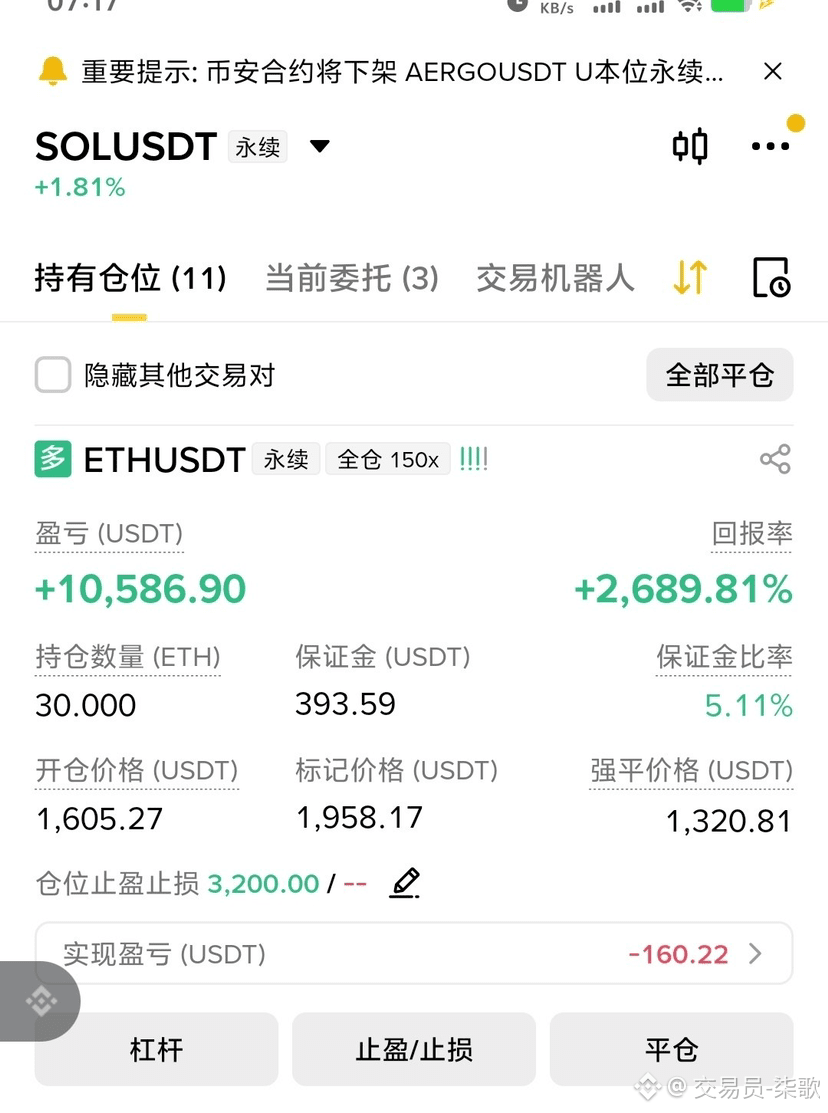
Ethereum is consolidating at a high level—are we about to break through 3000, or pull back to 2500?
$ETH is currently stuck around 2750, and this area is really grinding. From the 4-hour chart, the price is moving sideways along the upper Bollinger Band (2794). The MACD red histogram is shrinking, indicating that upward momentum is weakening and the bulls are a bit strained.
Looking at the smart money data, although the nominal long/short ratio is as high as 320%, which looks extremely bullish, you should be careful—this is often a contrarian indicator. When everyone squeezes onto the long side, the main players find it easiest to use the opportunity to shake out positions. Currently, the long profit-taking pool with an average price of 2552 is plentiful, and there’s always the urge to take profits and exit.
Key levels:
- Resistance levels: 2807 (previous high) and the 2850 integer mark. If it can’t break through with strong volume, it will be difficult to directly push to 3000.
- Support levels: 2668 (Bollinger middle band) is the first line of defense; strong support is around 2613 (the average short-entry price).
Trading idea:
Don’t rush to chase here. If there’s a pullback and the 2660–2680 zone holds, that could be a good opportunity to go long. Conversely, if it breaks below 2650 on heavy volume, be alert for a deeper correction to test the 2550–2600 support zone. At this point, it’s better to miss than to make a wrong move.
Guys, do you want me to help you watch the 2660 support level?
Ethereum is consolidating at a high level—are we about to break through 3000, or pull back to 2500?
$ETH is currently stuck around 2750, and this area is really grinding. From the 4-hour chart, the price is moving sideways along the upper Bollinger Band (2794). The MACD red histogram is shrinking, indicating that upward momentum is weakening and the bulls are a bit strained.
Looking at the smart money data, although the nominal long/short ratio is as high as 320%, which looks extremely bullish, you should be careful—this is often a contrarian indicator. When everyone squeezes onto the long side, the main players find it easiest to use the opportunity to shake out positions. Currently, the long profit-taking pool with an average price of 2552 is plentiful, and there’s always the urge to take profits and exit.
Key levels:
- Resistance levels: 2807 (previous high) and the 2850 integer mark. If it can’t break through with strong volume, it will be difficult to directly push to 3000.
- Support levels: 2668 (Bollinger middle band) is the first line of defense; strong support is around 2613 (the average short-entry price).
Trading idea:
Don’t rush to chase here. If there’s a pullback and the 2660–2680 zone holds, that could be a good opportunity to go long. Conversely, if it breaks below 2650 on heavy volume, be alert for a deeper correction to test the 2550–2600 support zone. At this point, it’s better to miss than to make a wrong move.
Guys, do you want me to help you watch the 2660 support level?
$ETH is currently stuck around 2750, and this area is really grinding. From the 4-hour chart, the price is moving sideways along the upper Bollinger Band (2794). The MACD red histogram is shrinking, indicating that upward momentum is weakening and the bulls are a bit strained.
Looking at the smart money data, although the nominal long/short ratio is as high as 320%, which looks extremely bullish, you should be careful—this is often a contrarian indicator. When everyone squeezes onto the long side, the main players find it easiest to use the opportunity to shake out positions. Currently, the long profit-taking pool with an average price of 2552 is plentiful, and there’s always the urge to take profits and exit.
Key levels:
- Resistance levels: 2807 (previous high) and the 2850 integer mark. If it can’t break through with strong volume, it will be difficult to directly push to 3000.
- Support levels: 2668 (Bollinger middle band) is the first line of defense; strong support is around 2613 (the average short-entry price).
Trading idea:
Don’t rush to chase here. If there’s a pullback and the 2660–2680 zone holds, that could be a good opportunity to go long. Conversely, if it breaks below 2650 on heavy volume, be alert for a deeper correction to test the 2550–2600 support zone. At this point, it’s better to miss than to make a wrong move.
Guys, do you want me to help you watch the 2660 support level?
208
·
--
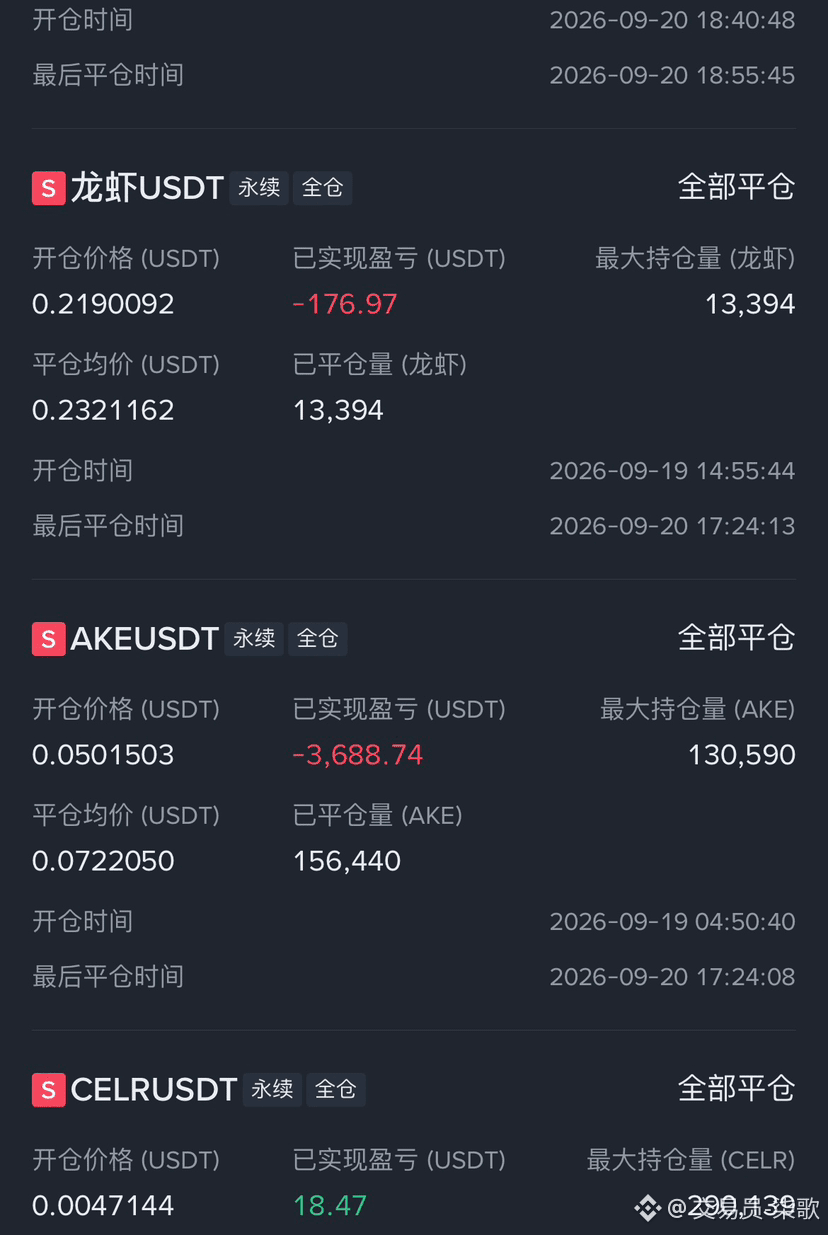
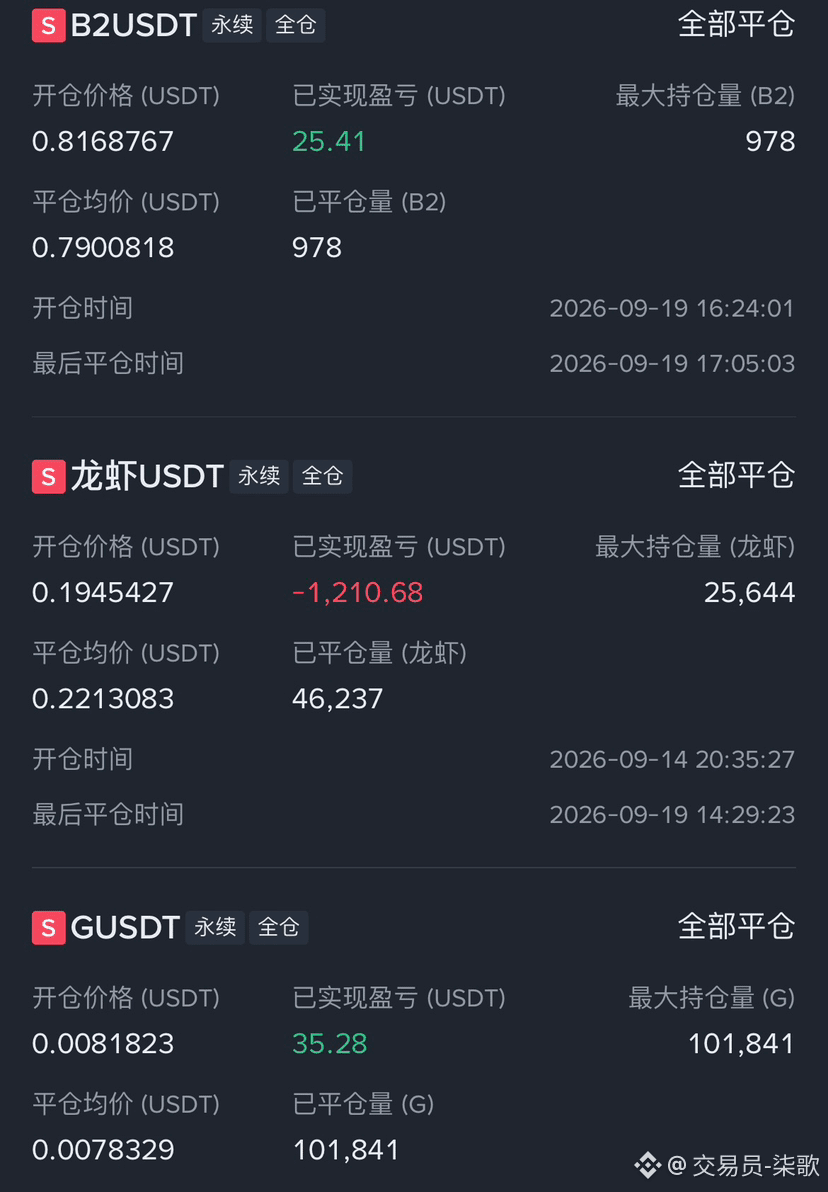
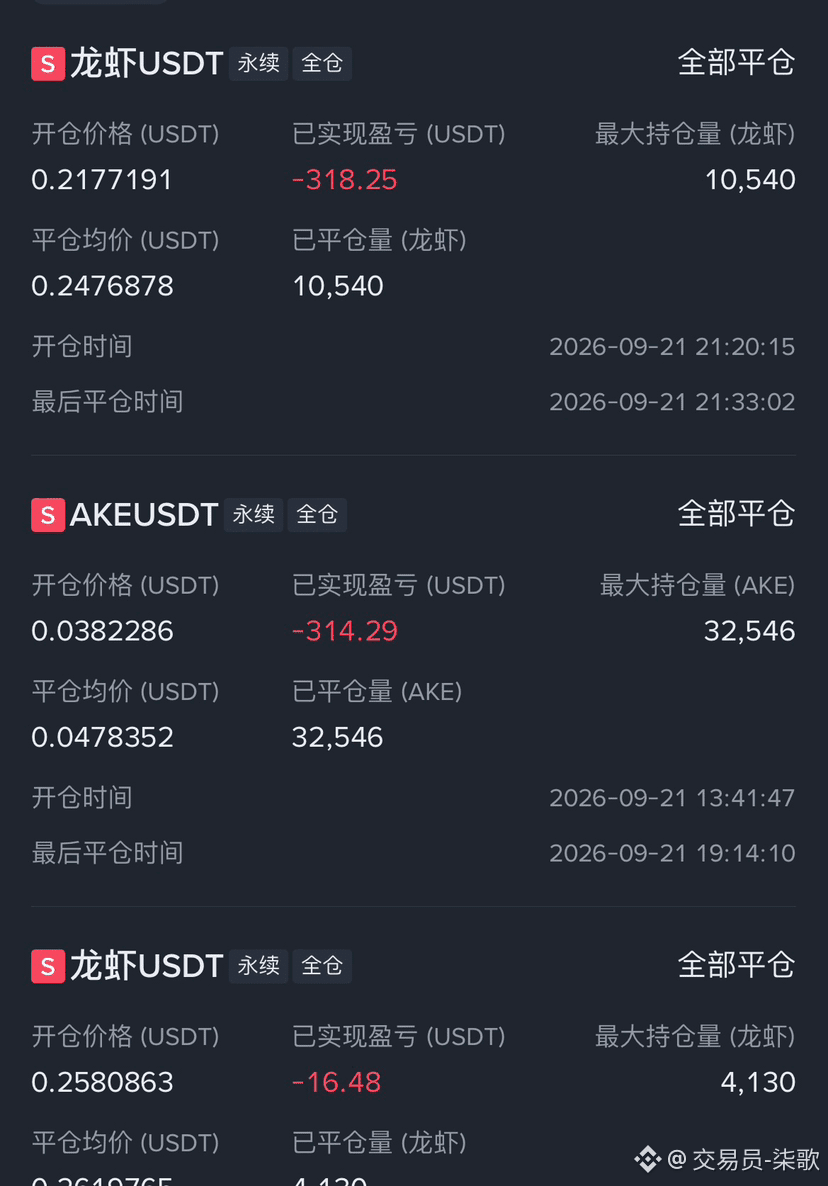
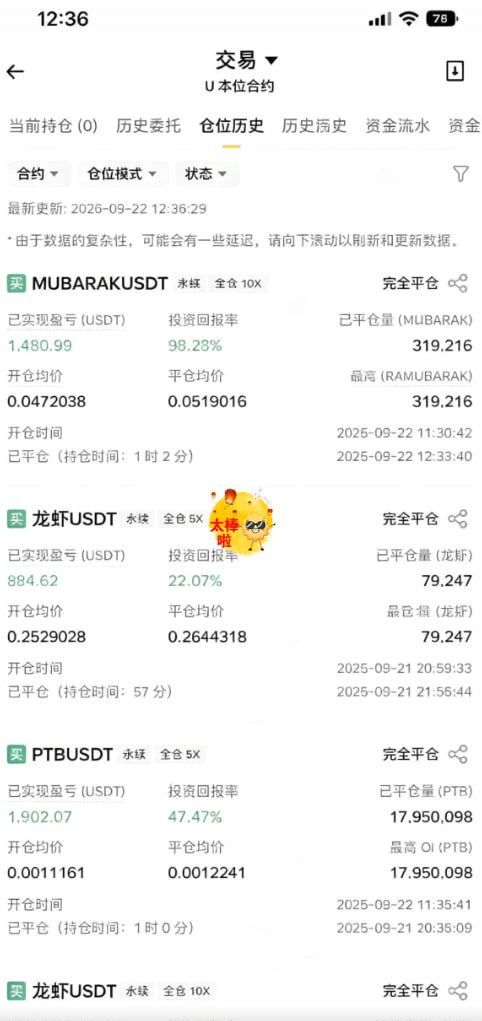
Look, if you don’t listen to advice, you lose more and more. When they came to find me, they only lost 2000.$龙虾
Now they’re losing more and more just by playing on their own—they’ve already lost 6000.
He came to find me to get out of a bind carrying a lobster. Out of kindness, I taught him, but he didn’t listen after he saw it. A white-eyed wolf,
The other day, there was a follower who was nice and listened to advice. He linked up with me and won 6 trades in a row.
Look, if you don’t listen to advice, you lose more and more. When they came to find me, they only lost 2000.$龙虾
Now they’re losing more and more just by playing on their own—they’ve already lost 6000.
He came to find me to get out of a bind carrying a lobster. Out of kindness, I taught him, but he didn’t listen after he saw it. A white-eyed wolf,
The other day, there was a follower who was nice and listened to advice. He linked up with me and won 6 trades in a row.
Now they’re losing more and more just by playing on their own—they’ve already lost 6000.
He came to find me to get out of a bind carrying a lobster. Out of kindness, I taught him, but he didn’t listen after he saw it. A white-eyed wolf,
The other day, there was a follower who was nice and listened to advice. He linked up with me and won 6 trades in a row.
387
Log in to explore more content
Join global crypto users on Binance Square
⚡️ Get latest and useful information about crypto.
💬 Trusted by the world’s largest crypto exchange.
👍 Discover real insights from verified creators.
Email / Phone number
Trending Topics
AIStocksWhatNext
721,801 views
5,400 Discussing
Share & Win Traffic Reward in our Trending Hashtag Campaign
✨Topic: What Other Investment Opportunities Remain as AI Stocks Keep Rising?
👉How to Join:
Publish a short post or article with hashtag #AIStocksWhatNext
Share whether you’re bullish or bearish, and post your AI stock holdings or trade — using the trade widget may improve your eligibility.
You can also strengthen your post by sharing data or charts, and avoiding AI-generated images.
✍️Create content based on the below angles:
- Nvidia says chip sales will double next year, and top AI companies keep hitting record revenue, the compute spend behind it is just as staggering. Is AI demand really taking off? And how long can it last? AI stocks are up across the board. Is this a real breakout, or just a short-term bounce?
- Industry leaders are calling to slow down AI development, while Trump plans to build an “AI Force”, claiming AI could account for 25% of U.S. GDP in the future. Whose side are you on? Will state-level backing be a long-term win for AI stocks?
- Are you buying AI stocks? Share your AI-related trade/holdings with our trade sharing widget.
⏰Campaign Period:
- 2026-09-22 7:00 - 2026-09-24 4:00 UTC
🎁Reward:
- Qualified posts that comply with the above guidelines and contain more than 100 words will be reviewed and may receive a random traffic boost of 500 to 3,000 views. You will receive a notification from your feed secretary if your post is selected.
- Get a chance to have your article featured on Binance Square Official
Need ideas for your post? Visit the topic page #AIStocksWhatNext or the Square Guide on How to Post for Better Reach.
Binance Square Official
·534 Likes
·1.4M views
21SharesLaunchesEuropesFirstZcashETP
21,141 views
703 Discussing
CardanoJoinsX402PaymentStandard
14,721 views
536 Discussing