

OnlyPositiveNews
3.1k Posts

OnlyPositiveNews
Report
Block User
10 Following
472 Followers
4.7K+ Liked
Posts
All
Quotes
Videos
China has opened the largest railway station in the world. The new Chongqing East, by area, is nearly twice the size of the Vatican and about 15 times larger than Europe’s biggest station. Construction was completed in just 38 months, setting a world record for a project of this scale.
$gua $skhynx
China has opened the largest railway station in the world. The new Chongqing East, by area, is nearly twice the size of the Vatican and about 15 times larger than Europe’s biggest station. Construction was completed in just 38 months, setting a world record for a project of this scale.
$gua $skhynx
$gua $skhynx



220
😇 Japanese lender CRYL has launched a bitcoin-backed lending program (up to $6.2 million), allowing individuals and companies to take out loans in fiat currency secured by $BTC without selling their crypto.
😇 Japanese lender CRYL has launched a bitcoin-backed lending program (up to $6.2 million), allowing individuals and companies to take out loans in fiat currency secured by $BTC without selling their crypto.

155
⚽️ Someone placed $2300 on the exact score of the match “Argentina — Egypt” — 3:2 — with a probability of 2% yesterday.
As a result, they received a payout of $106,880 on Polymarket.
$SPELL $KSTR $GWEI
⚽️ Someone placed $2300 on the exact score of the match “Argentina — Egypt” — 3:2 — with a probability of 2% yesterday.
As a result, they received a payout of $106,880 on Polymarket.
$SPELL $KSTR $GWEI
As a result, they received a payout of $106,880 on Polymarket.
$SPELL $KSTR $GWEI

461
🔥⚠️🇮🇷#иран #геополитика #ормуз
The US Armed Forces have begun launching a series of powerful strikes on Iran in response to attacks on commercial vessels — CENTCOM
CENTCOM: Iran’s demonstrated hostility was unjustified, dangerous, and represented a clear violation of the ceasefire regime
$PUMP $HYPER $ASTER
🔥⚠️🇮🇷#иран #геополитика #ормуз
The US Armed Forces have begun launching a series of powerful strikes on Iran in response to attacks on commercial vessels — CENTCOM
CENTCOM: Iran’s demonstrated hostility was unjustified, dangerous, and represented a clear violation of the ceasefire regime
$PUMP $HYPER $ASTER
The US Armed Forces have begun launching a series of powerful strikes on Iran in response to attacks on commercial vessels — CENTCOM
CENTCOM: Iran’s demonstrated hostility was unjustified, dangerous, and represented a clear violation of the ceasefire regime
$PUMP $HYPER $ASTER

1
190

Microsoft fired 1,600 people in the Xbox division and plans to cut another 4,800 jobs within the year.
At the same time, 3,200 employees are being laid off in the sales department. This is already the third wave of restructuring at the company since 2025.
$BB $2Z $BIO
Microsoft fired 1,600 people in the Xbox division and plans to cut another 4,800 jobs within the year.
At the same time, 3,200 employees are being laid off in the sales department. This is already the third wave of restructuring at the company since 2025.
$BB $2Z $BIO
At the same time, 3,200 employees are being laid off in the sales department. This is already the third wave of restructuring at the company since 2025.
$BB $2Z $BIO

470
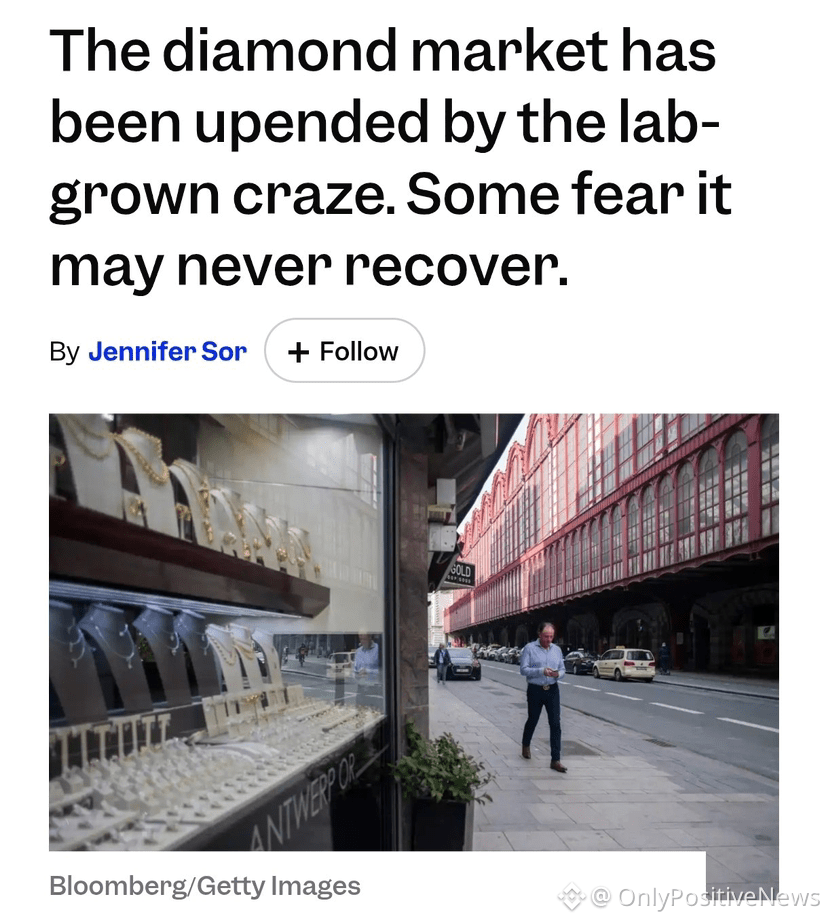
Diamonds are rapidly losing value. The natural diamond market is going through one of the biggest crises in its history due to lab-grown stones that are almost indistinguishable from natural ones, but cost several times less.
More and more buyers are choosing artificial diamonds, while natural ones are gradually turning into a commodity for affluent collectors. Good sales are mainly for large and rare specimens, while demand for ordinary stones continues to fall.
It seems the phrase “diamonds are forever” is rapidly becoming outdated.
$VANRY $SKR $AIXBT
Diamonds are rapidly losing value. The natural diamond market is going through one of the biggest crises in its history due to lab-grown stones that are almost indistinguishable from natural ones, but cost several times less.
More and more buyers are choosing artificial diamonds, while natural ones are gradually turning into a commodity for affluent collectors. Good sales are mainly for large and rare specimens, while demand for ordinary stones continues to fall.
It seems the phrase “diamonds are forever” is rapidly becoming outdated.
$VANRY $SKR $AIXBT
More and more buyers are choosing artificial diamonds, while natural ones are gradually turning into a commodity for affluent collectors. Good sales are mainly for large and rare specimens, while demand for ordinary stones continues to fall.
It seems the phrase “diamonds are forever” is rapidly becoming outdated.
$VANRY $SKR $AIXBT
173
Louis Vuitton unveiled a bicycle for €40,000.
The fashion house presented an exclusive version of the professional road bike Dogma F.
What makes it special:
▪️ultra-light carbon-fiber frame;
▪️electronic gear shifting;
▪️the saddle and handlebars are fully wrapped in Louis Vuitton signature leather;
▪️exclusive carbon wheels and a branded design with the brand’s logos.
No “junk” (or scrap). 🤫
$LAB $EPIC $HYPE
Louis Vuitton unveiled a bicycle for €40,000.
The fashion house presented an exclusive version of the professional road bike Dogma F.
What makes it special:
▪️ultra-light carbon-fiber frame;
▪️electronic gear shifting;
▪️the saddle and handlebars are fully wrapped in Louis Vuitton signature leather;
▪️exclusive carbon wheels and a branded design with the brand’s logos.
No “junk” (or scrap). 🤫
$LAB $EPIC $HYPE
The fashion house presented an exclusive version of the professional road bike Dogma F.
What makes it special:
▪️ultra-light carbon-fiber frame;
▪️electronic gear shifting;
▪️the saddle and handlebars are fully wrapped in Louis Vuitton signature leather;
▪️exclusive carbon wheels and a branded design with the brand’s logos.
No “junk” (or scrap). 🤫
$LAB $EPIC $HYPE


1
93
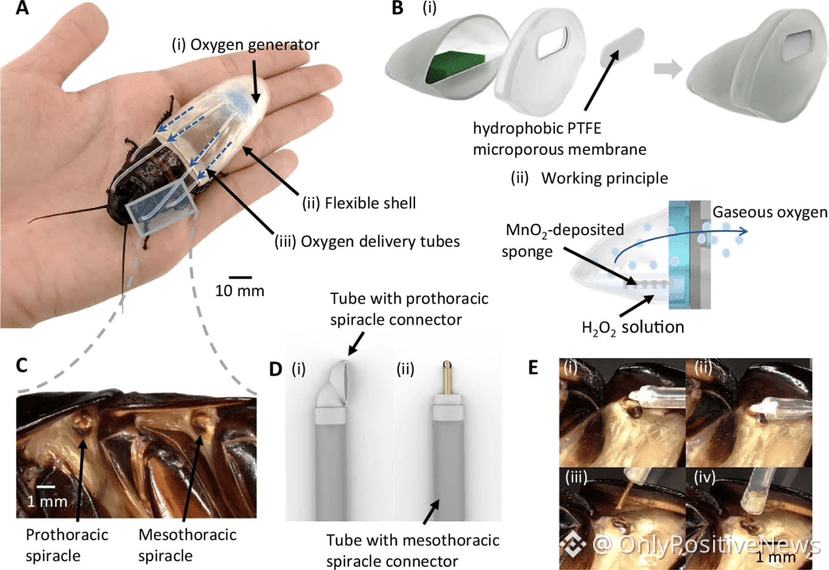
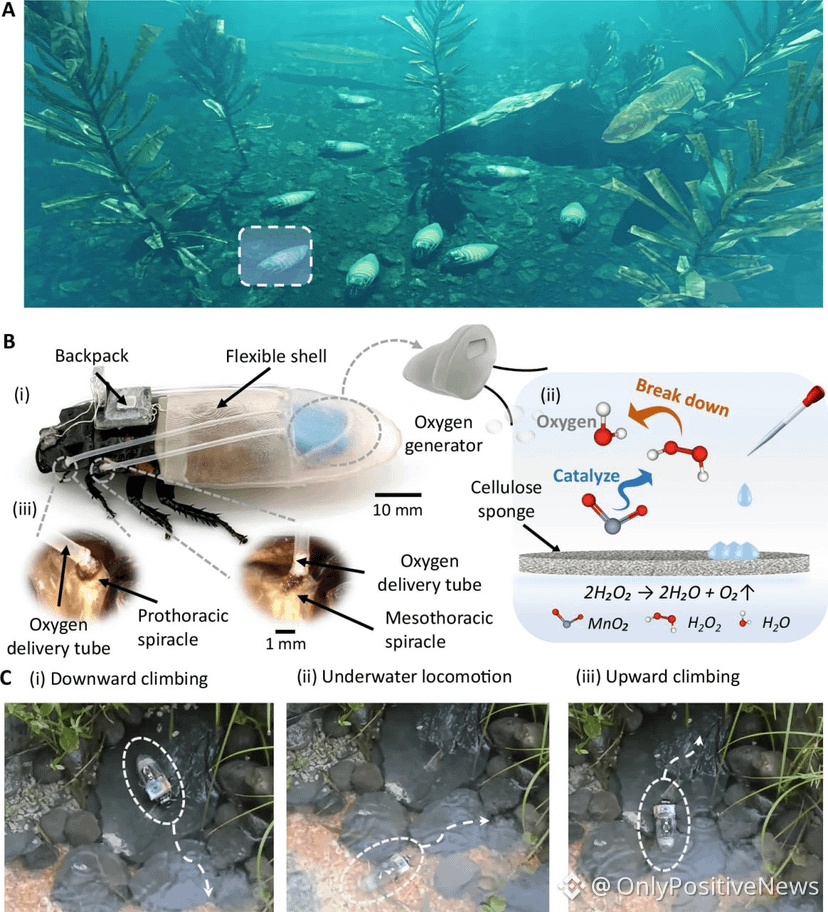
Scientists turned Madagascar cockroaches into remotely controlled cyborgs.
The insects even had miniature scuba tanks printed on a 3D printer, which allow them to stay underwater for up to three hours.
The developers plan to use these “cyber-cockroaches” to search for people under rubble and in future Mars missions.
$ME $HOT $ID
Scientists turned Madagascar cockroaches into remotely controlled cyborgs.
The insects even had miniature scuba tanks printed on a 3D printer, which allow them to stay underwater for up to three hours.
The developers plan to use these “cyber-cockroaches” to search for people under rubble and in future Mars missions.
$ME $HOT $ID
The insects even had miniature scuba tanks printed on a 3D printer, which allow them to stay underwater for up to three hours.
The developers plan to use these “cyber-cockroaches” to search for people under rubble and in future Mars missions.
$ME $HOT $ID
2
105
Even “the healthiest person in the world” couldn’t fool nature. A biohacker, Bryan Johnson, who spends about $2 million a year to extend his life, has been found to have autoimmune gastritis.
For years, the millionaire tested all kinds of ways to stay young, including transfusing his son’s blood.
Damn it for the guy.
$BEL $PAYP $RPL
Even “the healthiest person in the world” couldn’t fool nature. A biohacker, Bryan Johnson, who spends about $2 million a year to extend his life, has been found to have autoimmune gastritis.
For years, the millionaire tested all kinds of ways to stay young, including transfusing his son’s blood.
Damn it for the guy.
$BEL $PAYP $RPL
For years, the millionaire tested all kinds of ways to stay young, including transfusing his son’s blood.
Damn it for the guy.
$BEL $PAYP $RPL

213

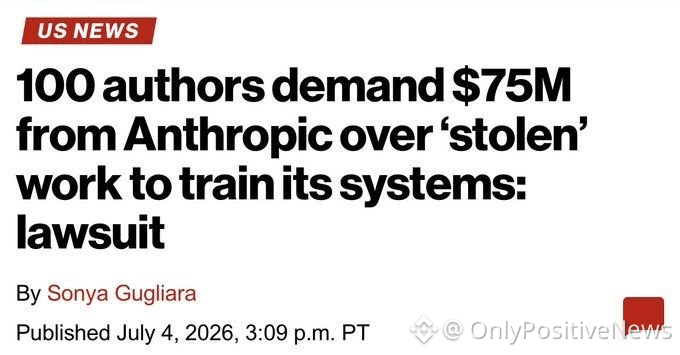
More than 100 outraged authors are demanding more than $75 million from Anthropic, a company that develops artificial intelligence. They claim the company stole their books to train its systems.
In the lawsuit, Anthropic is accused of brazenly using more than 500 pirated books, including books by Oprah Winfrey, the bestseller “Get a Financial Life” by Tiffany Aliche, and the bestseller “Like Water for Chocolate” by the Mexican writer Laura Esquivel. The books were used to train artificial intelligence.
The lawsuit alleges that Anthropic used a file-sharing program, BitTorrent, to access illegal sites such as Library Genesis and Pirate Library Mirror to download millions of unauthorized copies of books.
$TLM $CAP $H
More than 100 outraged authors are demanding more than $75 million from Anthropic, a company that develops artificial intelligence. They claim the company stole their books to train its systems.
In the lawsuit, Anthropic is accused of brazenly using more than 500 pirated books, including books by Oprah Winfrey, the bestseller “Get a Financial Life” by Tiffany Aliche, and the bestseller “Like Water for Chocolate” by the Mexican writer Laura Esquivel. The books were used to train artificial intelligence.
The lawsuit alleges that Anthropic used a file-sharing program, BitTorrent, to access illegal sites such as Library Genesis and Pirate Library Mirror to download millions of unauthorized copies of books.
$TLM $CAP $H
In the lawsuit, Anthropic is accused of brazenly using more than 500 pirated books, including books by Oprah Winfrey, the bestseller “Get a Financial Life” by Tiffany Aliche, and the bestseller “Like Water for Chocolate” by the Mexican writer Laura Esquivel. The books were used to train artificial intelligence.
The lawsuit alleges that Anthropic used a file-sharing program, BitTorrent, to access illegal sites such as Library Genesis and Pirate Library Mirror to download millions of unauthorized copies of books.
$TLM $CAP $H
524
Bosses started firing for using neural networks: executives admitted employees got too lazy and no one even reads AI answers
Employees don't even try to understand what they've been sent: the letter is immediately sent to ChatGPT with a request to draft a reply. Especially brazen ones don't even remove the standard opening greeting and the introduction that all neural networks include.
And it turns out that all departments in the company send each other neural drivel in a circle—no one reads or analyzes the text. Overall, corporations approve using neural networks, but in moderation.
What they fought for is what they ran into.
$ONG $RPL $DATAIP
Bosses started firing for using neural networks: executives admitted employees got too lazy and no one even reads AI answers
Employees don't even try to understand what they've been sent: the letter is immediately sent to ChatGPT with a request to draft a reply. Especially brazen ones don't even remove the standard opening greeting and the introduction that all neural networks include.
And it turns out that all departments in the company send each other neural drivel in a circle—no one reads or analyzes the text. Overall, corporations approve using neural networks, but in moderation.
What they fought for is what they ran into.
$ONG $RPL $DATAIP
Employees don't even try to understand what they've been sent: the letter is immediately sent to ChatGPT with a request to draft a reply. Especially brazen ones don't even remove the standard opening greeting and the introduction that all neural networks include.
And it turns out that all departments in the company send each other neural drivel in a circle—no one reads or analyzes the text. Overall, corporations approve using neural networks, but in moderation.
What they fought for is what they ran into.
$ONG $RPL $DATAIP

187
Mercedes is preparing a new electric SUV from AMG, which is already being dubbed a killer of the Urus and Cayenne.
The first renderings of the model with a coupe-like body have leaked online.
🟡According to preliminary data, the crossover will get an all-electric powertrain and output up to 1,153 hp. Development is being carried out on the AMG.EA platform; the car is currently undergoing road testing.
The premiere is expected in early 2027.
What do you think about the new Mercedes? 👍/👎
$HOT $MIRA $BEL
Mercedes is preparing a new electric SUV from AMG, which is already being dubbed a killer of the Urus and Cayenne.
The first renderings of the model with a coupe-like body have leaked online.
🟡According to preliminary data, the crossover will get an all-electric powertrain and output up to 1,153 hp. Development is being carried out on the AMG.EA platform; the car is currently undergoing road testing.
The premiere is expected in early 2027.
What do you think about the new Mercedes? 👍/👎
$HOT $MIRA $BEL
The first renderings of the model with a coupe-like body have leaked online.
🟡According to preliminary data, the crossover will get an all-electric powertrain and output up to 1,153 hp. Development is being carried out on the AMG.EA platform; the car is currently undergoing road testing.
The premiere is expected in early 2027.
What do you think about the new Mercedes? 👍/👎
$HOT $MIRA $BEL



1
375
The old good dollar is over. Donald Trump wants to change its design by adding a small but significant detail—his signature. The U.S. president hinted at this on social media.
$TRUMP $HYPE $PUMP
The old good dollar is over. Donald Trump wants to change its design by adding a small but significant detail—his signature. The U.S. president hinted at this on social media.
$TRUMP $HYPE $PUMP
$TRUMP $HYPE $PUMP

227

🚫🛢🇴🇲#ормуз #оман
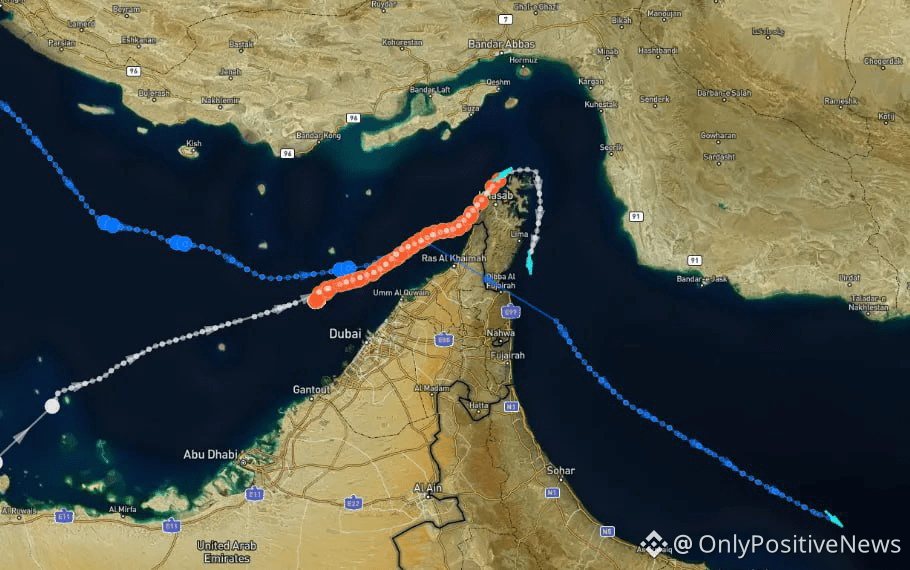
The number of ships transiting the Strait of Hormuz along the coast of Oman has fallen to a minimum after several vessels turned back in the area over the weekend. — BBG
——————————————
The door through the Omani corridor is closing. If Oman cooperates with America, it will not get any role in managing Hormuz, Iranian media report
$MAGMA $GLMR $LAB
🚫🛢🇴🇲#ормуз #оман
The number of ships transiting the Strait of Hormuz along the coast of Oman has fallen to a minimum after several vessels turned back in the area over the weekend. — BBG
——————————————
The door through the Omani corridor is closing. If Oman cooperates with America, it will not get any role in managing Hormuz, Iranian media report
$MAGMA $GLMR $LAB
The number of ships transiting the Strait of Hormuz along the coast of Oman has fallen to a minimum after several vessels turned back in the area over the weekend. — BBG
——————————————
The door through the Omani corridor is closing. If Oman cooperates with America, it will not get any role in managing Hormuz, Iranian media report
$MAGMA $GLMR $LAB
200
⬇️🛢#нефть
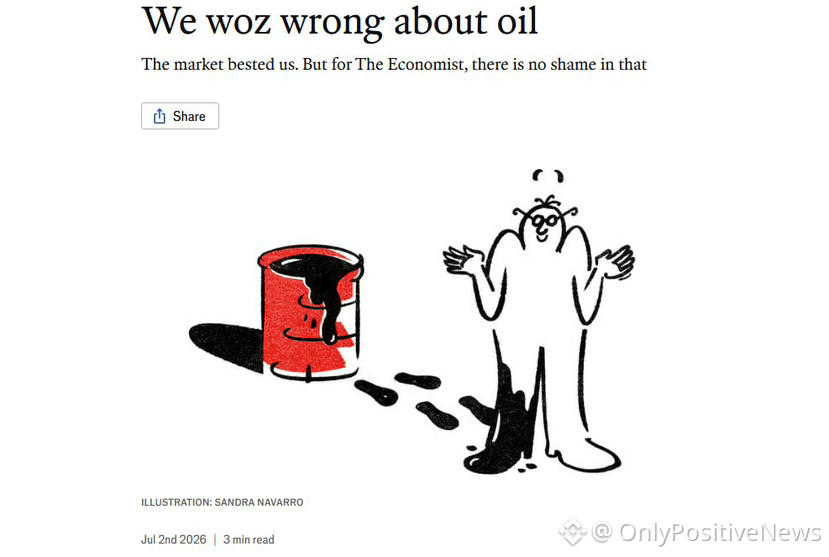
The Economist admitted its mistake regarding forecasts of strong oil price growth due to the war with Iran. Oil fell more than expected.
According to the editorial team, the error was twofold. The magazine underestimated both the likelihood of a deal between the U.S. and Iran for the Strait of Hormuz and how quickly China could cut crude oil imports. As a result, the market did not follow the scenario analysts had outlined: supplies through the Gulf stabilized, while Chinese demand fell more sharply than expected.
$LAB $HYPER $ASTER
⬇️🛢#нефть
The Economist admitted its mistake regarding forecasts of strong oil price growth due to the war with Iran. Oil fell more than expected.
According to the editorial team, the error was twofold. The magazine underestimated both the likelihood of a deal between the U.S. and Iran for the Strait of Hormuz and how quickly China could cut crude oil imports. As a result, the market did not follow the scenario analysts had outlined: supplies through the Gulf stabilized, while Chinese demand fell more sharply than expected.
$LAB $HYPER $ASTER
The Economist admitted its mistake regarding forecasts of strong oil price growth due to the war with Iran. Oil fell more than expected.
According to the editorial team, the error was twofold. The magazine underestimated both the likelihood of a deal between the U.S. and Iran for the Strait of Hormuz and how quickly China could cut crude oil imports. As a result, the market did not follow the scenario analysts had outlined: supplies through the Gulf stabilized, while Chinese demand fell more sharply than expected.
$LAB $HYPER $ASTER
227
🇪🇺#европа #today
Trump said that Europe is lucky, he will save it
" Europe is starting to understand that by accepting criminals from third world countries, it is turning itself into a third world country. This happens quickly, in the blink of an eye. I was chosen just in time!!!"
$VANRY $EPIC $AIXBT
🇪🇺#европа #today
Trump said that Europe is lucky, he will save it
" Europe is starting to understand that by accepting criminals from third world countries, it is turning itself into a third world country. This happens quickly, in the blink of an eye. I was chosen just in time!!!"
$VANRY $EPIC $AIXBT
Trump said that Europe is lucky, he will save it
" Europe is starting to understand that by accepting criminals from third world countries, it is turning itself into a third world country. This happens quickly, in the blink of an eye. I was chosen just in time!!!"
$VANRY $EPIC $AIXBT

998
⚠️🇹🇷🇮🇱#турция #израиль #геополитика
Erdogan said that the Israeli government has become dependent on wars
——————————
Earlier, former Israeli Prime Minister Naftali Bennett called Turkey the next target after Iran
The last chance to rest in Turkey "all inclusive" — analysts
$GWEI $OGN $VANRY
⚠️🇹🇷🇮🇱#турция #израиль #геополитика
Erdogan said that the Israeli government has become dependent on wars
——————————
Earlier, former Israeli Prime Minister Naftali Bennett called Turkey the next target after Iran
The last chance to rest in Turkey "all inclusive" — analysts
$GWEI $OGN $VANRY
Erdogan said that the Israeli government has become dependent on wars
——————————
Earlier, former Israeli Prime Minister Naftali Bennett called Turkey the next target after Iran
The last chance to rest in Turkey "all inclusive" — analysts
$GWEI $OGN $VANRY

261
Log in to explore more content
Join global crypto users on Binance Square
⚡️ Get latest and useful information about crypto.
💬 Trusted by the world’s largest crypto exchange.
👍 Discover real insights from verified creators.
Email / Phone number
Trending Topics
QNTRises39%
42,939 views
1,123 Discussing
🚨 QNT IS SURGING! 📈
$QNT is making a huge move today, climbing nearly 40% as buying pressure accelerates.
The rally has put Quant firmly back in the spotlight, with traders watching to see whether this momentum can continue or if a pullback comes next.
🔥 Key things to watch:
• Strong trading volume
• Momentum above recent highs
• The $100 psychological level
• Whether buyers can maintain control
Big moves bring big volatility. Stay alert and manage risk.
Are you watching $QNT? 👀
#QNT #altcoins #CryptoNews
#qntrises39% $QNT
The07
·4 Likes
·4k views
EthereumBreaksAbove$2700
3,884 views
111 Discussing
BitgetBreachForgedRequestsNotStolenKeys
41,569 views
894 Discussing