
omilu
499 Posts

omilu
Report
Block User
BP-8DA84296138C
34 Following
59 Followers
23 Liked
Posts
All
Quotes
·
--
I usually don’t adjust my position based on a single message unless the price confirms it too.
Saw another one today: Tom Lee: The AI investment boom is far from over; a shortage of computing power could push prices higher again. It may attract some attention from the sidelines. Whether that attention turns into trades is the next thing to watch.
$BTC I’ll keep it on the watchlist for now.
Saw another one today: Tom Lee: The AI investment boom is far from over; a shortage of computing power could push prices higher again. It may attract some attention from the sidelines. Whether that attention turns into trades is the next thing to watch.
$BTC I’ll keep it on the watchlist for now.
30
·
--
Vitalik in three sentences:
Vitalik has long published essays on scaling, cryptography, and governance on his personal blog.
The biggest difference between Ethereum and Bitcoin is that Ethereum has a general-purpose virtual machine, allowing developers to deploy smart contracts and applications on the blockchain.
To understand Ethereum’s technical approach, reading the original source is more accurate than relying on secondhand interpretations.
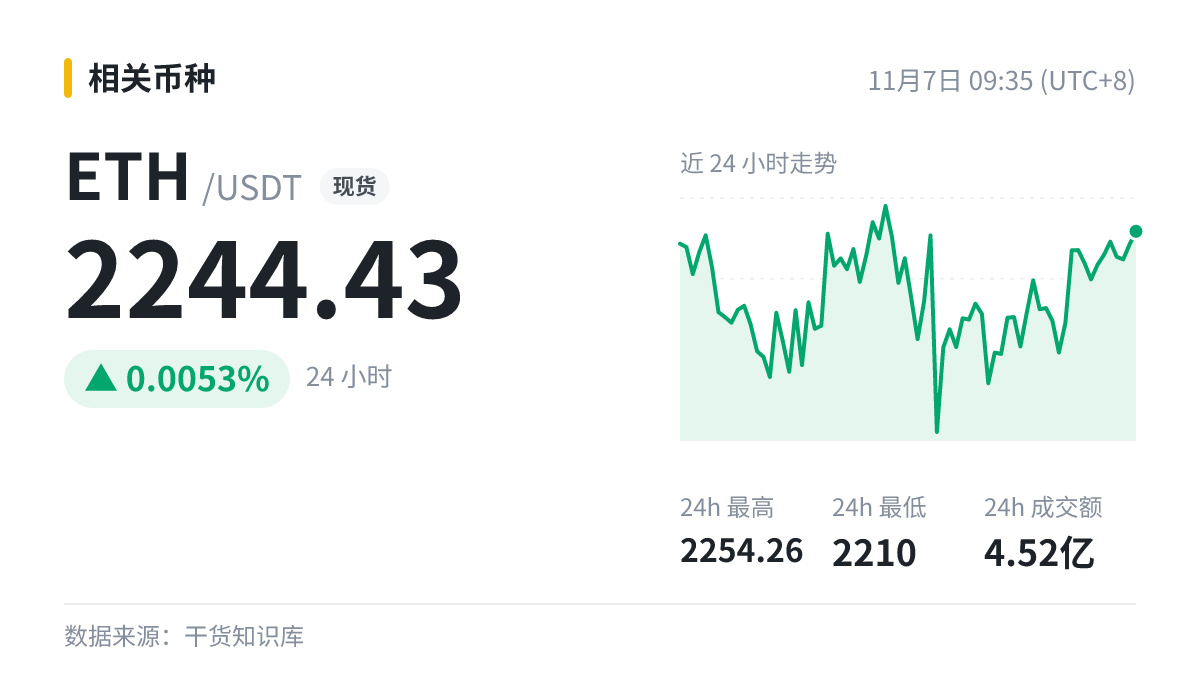
$ETH 2244.43(+0.0053%)
54
·
--
To be honest, when I first got into this space, I used to get carried away as soon as I saw this kind of trend. Now I wait a bit first.
$AKE 5 minutes up 4.38%, now 0.00398.
#AKE
To be honest, when I first got into this space, I used to get carried away as soon as I saw this kind of trend. Now I wait a bit first.
$AKE 5 minutes up 4.38%, now 0.00398.
#AKE
$AKE 5 minutes up 4.38%, now 0.00398.
#AKE
52
·
--
Let’s talk about what just happened with $AKE : down 19.76% in 1 hour.
When long positions get shaken out, the sell-off is often sudden and brutal. But after the shakeout, there’s often a rebound. I have a little habit: when I see an unusual move like this, I take a screenshot, then check back a few hours later to see how it played out.
When long positions get shaken out, the sell-off is often sudden and brutal. But after the shakeout, there’s often a rebound. I have a little habit: when I see an unusual move like this, I take a screenshot, then check back a few hours later to see how it played out.
1
·
--
👁️ HORUS AI · FREE MINT is live
2,000 Genesis NFTs · Exclusive to Binance Agentic .ai
• Free mint (gas fees only)
• Up to 2 per wallet
• Burn 1 NFT → 10,000 $HOAI
• BNB Chain · Soulbound
If you have an Agent ID, you can claim one while you’re at it.
https://x.com/HorusAIBNB/status/2118713178284822829
@HorusAIBNB
#BNBChain #AgenticWallet #NFT
·
--
It's crashing, guys 😱
$AKE 5 minutes -13.13%!
A plunge of this magnitude has left the market completely silent…
Who’s buying the dip? Raise your hand—but think about your exit plan first.
When it rebounds to near where the decline began, there’s usually resistance.
It's crashing, guys 😱
$AKE 5 minutes -13.13%!
A plunge of this magnitude has left the market completely silent…
Who’s buying the dip? Raise your hand—but think about your exit plan first.
When it rebounds to near where the decline began, there’s usually resistance.
$AKE 5 minutes -13.13%!
A plunge of this magnitude has left the market completely silent…
Who’s buying the dip? Raise your hand—but think about your exit plan first.
When it rebounds to near where the decline began, there’s usually resistance.
5
·
--
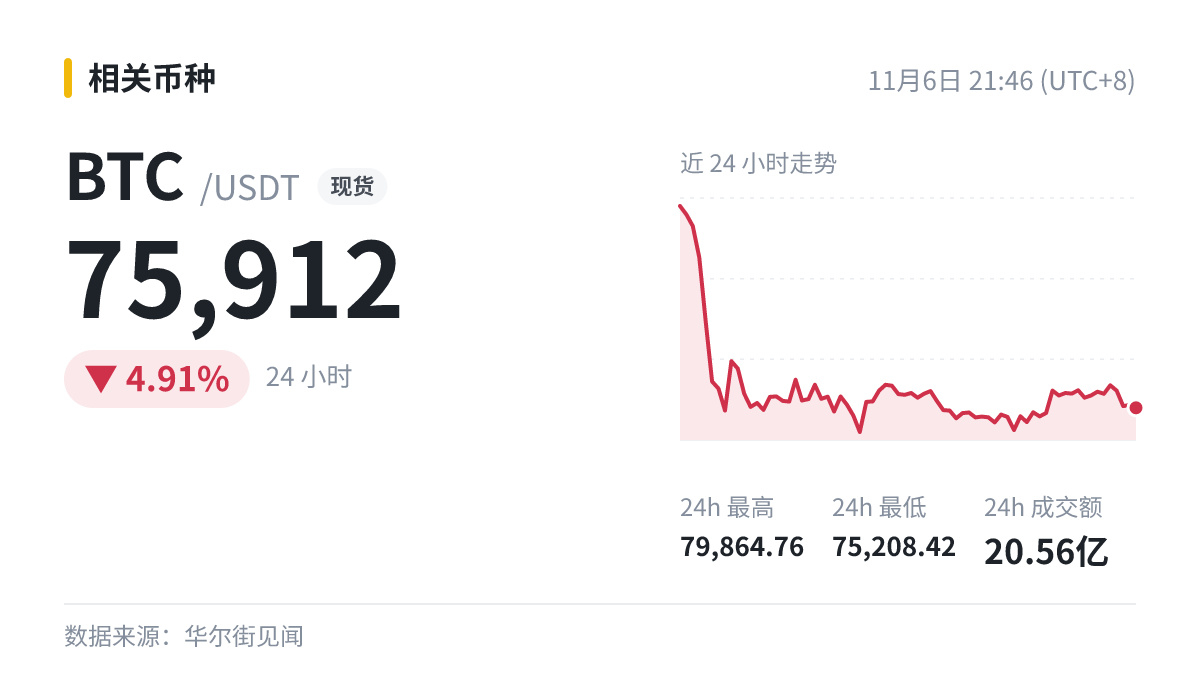
Just rambling a bit: I came across “the ‘new Fed news agency,’ Nick Timiraos: The U.S. unemployment rate edged down 0.03 percentage points in October to 4.14%,” and it reminded me of when I first got into the markets.
Back then, I’d see news and rush to trade. More than once, I ended up chasing the market at its emotional peak or selling near the bottom.
These days, my routine is to read the full article first, wait to see how the market reacts, and only then decide whether to make a move. I’ll do the same this time: $BTC .
In the end, what I fear most isn’t getting the direction wrong, but letting a single piece of news dictate my position.
Have you had similar experiences?
#BTC
5
·
--
$AIN | Lost the 0.1 level
Before looking at fund flows, first understand round-number levels.
There are often many stop-loss orders placed around these levels. If the price crosses one, those stops can be triggered all at once, causing volatility to spike.
It’s common for the price to break through a level and then fall back, so many people wait for confirmation at the candle close rather than chasing the price the moment it crosses.
The same reading can mean very different things in different market conditions, so don’t apply any single rule mechanically.
#AIN
·
--
Volatility update 📡$LYN has fallen below the 0.021 level.
False breakouts are not uncommon either; I usually wait for the candle to close before considering it confirmed.
#LYN
Volatility update 📡$LYN has fallen below the 0.021 level.
False breakouts are not uncommon either; I usually wait for the candle to close before considering it confirmed.
#LYN
False breakouts are not uncommon either; I usually wait for the candle to close before considering it confirmed.
#LYN
·
--
The current crypto Fear & Greed Index is 27, indicating fear.
$BTC 75764.01 (24h -6.06%)
The official follow-up response is worth watching; more details may be added.
The current crypto Fear & Greed Index is 27, indicating fear.
$BTC 75764.01 (24h -6.06%)
The official follow-up response is worth watching; more details may be added.
$BTC 75764.01 (24h -6.06%)
The official follow-up response is worth watching; more details may be added.
27
·
--
I came across it around noon—it jumped 3.28% in $AIN 15 minutes, and the current price is 0.1362.
My first reaction wasn’t to get carried away, but to check the trading volume ( $301 million over 24h): was this move driven by real money, or just sentiment?
Let’s see if it holds on a pullback before drawing conclusions. Feel free to share what you’re seeing.
#AIN
My first reaction wasn’t to get carried away, but to check the trading volume ( $301 million over 24h): was this move driven by real money, or just sentiment?
Let’s see if it holds on a pullback before drawing conclusions. Feel free to share what you’re seeing.
#AIN
26
·
--
Market Notes|$JCT
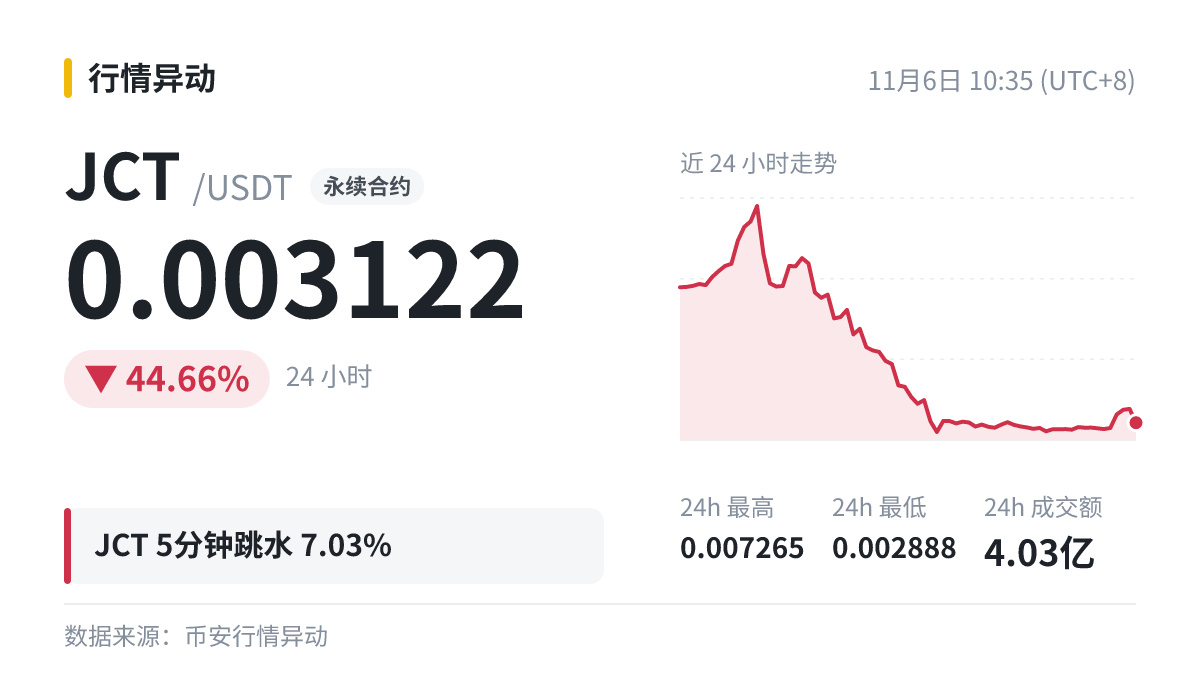
5 min -7.03%, 4h +4.84%, 24h -44.66%
The more urgent it feels, the more important it is to stick to the plan.
Do you think this is a genuine breakout, or just a temporary fluctuation?
Market Notes|$JCT
5 min -7.03%, 4h +4.84%, 24h -44.66%
The more urgent it feels, the more important it is to stick to the plan.
Do you think this is a genuine breakout, or just a temporary fluctuation?
5 min -7.03%, 4h +4.84%, 24h -44.66%
The more urgent it feels, the more important it is to stick to the plan.
Do you think this is a genuine breakout, or just a temporary fluctuation?
34
·
--
Good grief, $AIN , what is this supposed to be?
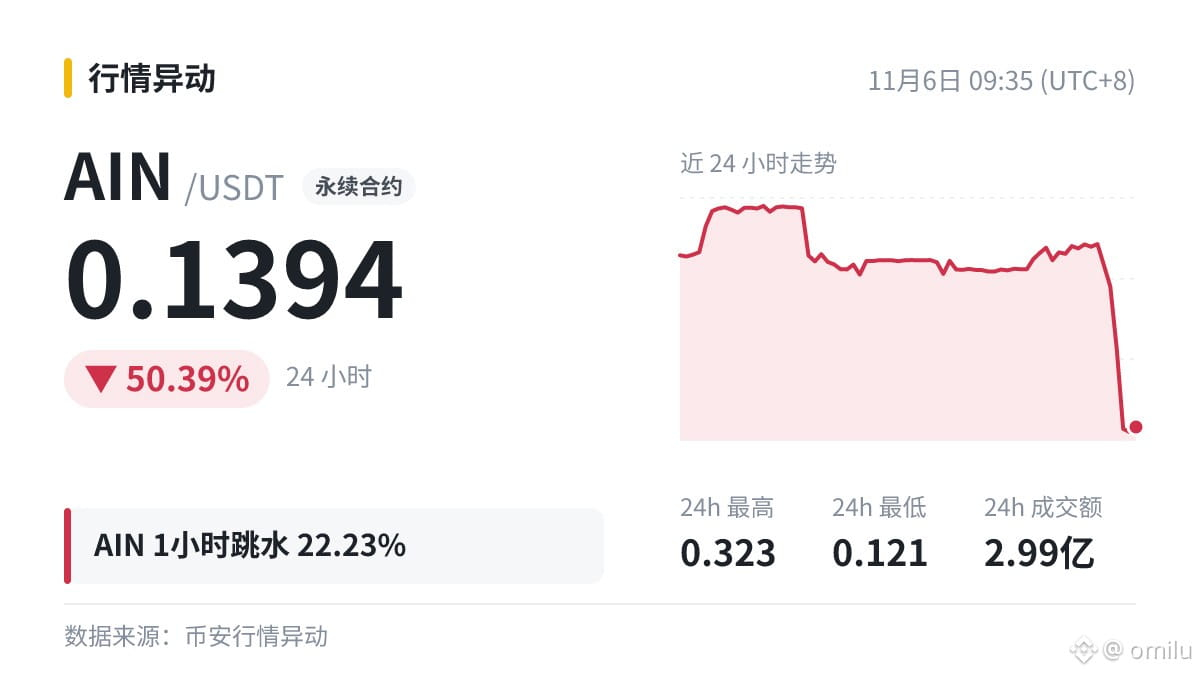
A sudden 22.23% drop in 1 hour; current price 0.1394, 1h -26.13%.
Panic selling is starting to pour in. Don’t rush to cut your losses; leave some room in your position…
Don’t add to your position to average down on a bad call.
#AIN
Good grief, $AIN , what is this supposed to be?
A sudden 22.23% drop in 1 hour; current price 0.1394, 1h -26.13%.
Panic selling is starting to pour in. Don’t rush to cut your losses; leave some room in your position…
Don’t add to your position to average down on a bad call.
#AIN
A sudden 22.23% drop in 1 hour; current price 0.1394, 1h -26.13%.
Panic selling is starting to pour in. Don’t rush to cut your losses; leave some room in your position…
Don’t add to your position to average down on a bad call.
#AIN
56
·
--
🐋 From a capital-flow perspective: A certain exchange’s daily options report: BTC open interest nominal value $26.755 billion (down 1.5%), DVOL 40.9, ETH open interest nominal…
It’s not uncommon for prices to surge and then pull back on the day good news is priced in, so don’t get carried away just by what you read. Take a look at USDT flows—it’s the clearest indicator of whether off-exchange capital is coming in.
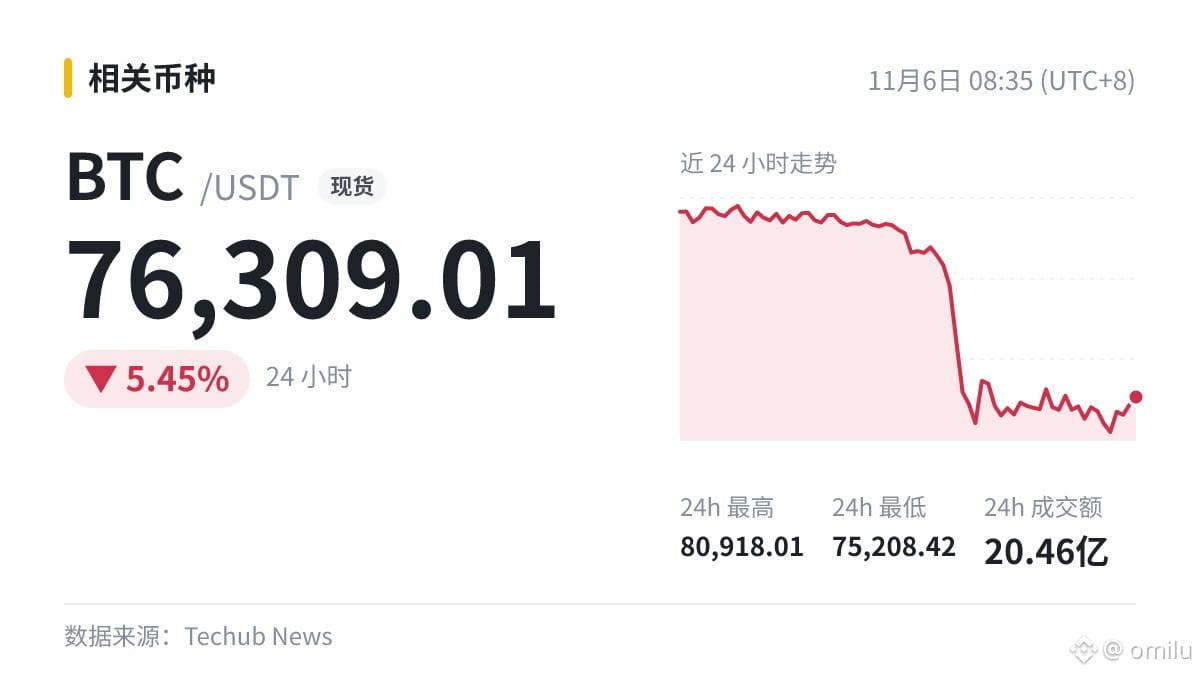
$BTC intraday -5.45%.
#BTC
It’s not uncommon for prices to surge and then pull back on the day good news is priced in, so don’t get carried away just by what you read. Take a look at USDT flows—it’s the clearest indicator of whether off-exchange capital is coming in.
$BTC intraday -5.45%.
#BTC
75
·
--
This looks a bit concerning, but even bad news eventually gets absorbed. Don't panic yet!
Vitalik: The top priority for crypto exchanges over the next two years is survival, not competition.
Bad news like this is especially prone to being amplified by emotions, so it's best to stay calm and take a measured view.
$ETH , stay steady for now and keep your position size in check!
#ETH
Vitalik: The top priority for crypto exchanges over the next two years is survival, not competition.
Bad news like this is especially prone to being amplified by emotions, so it's best to stay calm and take a measured view.
$ETH , stay steady for now and keep your position size in check!
#ETH
4
·
--
$EVAA 1 hours -9.63%, current price 1.4157, 24h -14.01%.
A smaller position makes for a much steadier mindset.
$EVAA 1 hours -9.63%, current price 1.4157, 24h -14.01%.
A smaller position makes for a much steadier mindset.
A smaller position makes for a much steadier mindset.
·
--
I understand all this: pilots go through a checklist before takeoff, and trading can be the same.
But my fingers have ideas of their own, so today I’ll write this sentence down first.
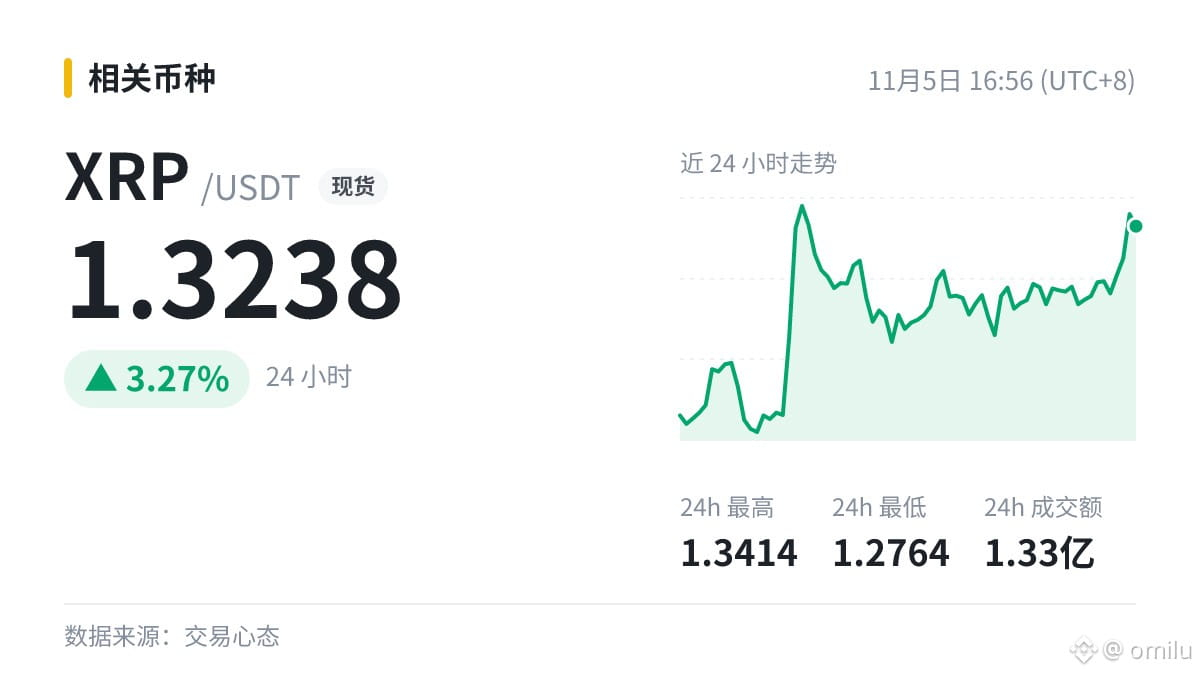
Currently $XRP , price 1.3238 (24h +3.27%).
I understand all this: pilots go through a checklist before takeoff, and trading can be the same.
But my fingers have ideas of their own, so today I’ll write this sentence down first.
Currently $XRP , price 1.3238 (24h +3.27%).
But my fingers have ideas of their own, so today I’ll write this sentence down first.
Currently $XRP , price 1.3238 (24h +3.27%).
·
--
【Long/Short Ratio】$SOL |Accounts across all platforms
2.80 (Long 73.7% / Short 26.3%) (2.81 one hour ago)
Current price 96.04, 24h +2.83%
Readings that consistently move in the same direction are more informative than a single day's figure. I'll keep watching.
【Long/Short Ratio】$SOL |Accounts across all platforms
2.80 (Long 73.7% / Short 26.3%) (2.81 one hour ago)
Current price 96.04, 24h +2.83%
Readings that consistently move in the same direction are more informative than a single day's figure. I'll keep watching.
2.80 (Long 73.7% / Short 26.3%) (2.81 one hour ago)
Current price 96.04, 24h +2.83%
Readings that consistently move in the same direction are more informative than a single day's figure. I'll keep watching.
·
--
$IDOL broke below 0.019.
Before it broke below: “This should be the bottom.” After it broke below: “I always thought it wouldn’t hold.” That’s me talking with the benefit of hindsight.
Leave a comment and share: who’s been watching the charts the longest?
$IDOL broke below 0.019.
Before it broke below: “This should be the bottom.” After it broke below: “I always thought it wouldn’t hold.” That’s me talking with the benefit of hindsight.
Leave a comment and share: who’s been watching the charts the longest?
Before it broke below: “This should be the bottom.” After it broke below: “I always thought it wouldn’t hold.” That’s me talking with the benefit of hindsight.
Leave a comment and share: who’s been watching the charts the longest?
3
·
--
Why do transfers need to wait for several confirmations?
Exchanges generally set the number of confirmations required for deposits on each network. Funds are credited to your account only after that requirement is met; until then, they’re usually marked as pending confirmation.
The more blocks added after a transaction, the more blocks would need to be recalculated to reverse it, making reversal less likely.
Back to the market: $BTC is currently at 80558.01, up 3.37% over 24 hours.
Every return comes with corresponding risks. Think carefully about how much you could lose in the worst-case scenario.
Log in to explore more content
Join global crypto users on Binance Square
⚡️ Get latest and useful information about crypto.
💬 Trusted by the world’s largest crypto exchange.
👍 Discover real insights from verified creators.
Email / Phone number
Trending Topics
BitcoinRebounds$75KAsChipsLead
9,992 views
143 Discussing
Market Watch | Bitcoin Rebounds to $75,600 After Dip Below $75,000 as Chip Stocks Lead Rally on Jobs Beat
Binance News
·17 Likes
·5.1k views
JobsReportRaisesHikeOdds
129,004 views
1,126 Discussing
US Data Center Rules May Constrain AI Expansion
19,083 views
109 Discussing