

Mr_Abdul _
1.2k Posts

Mr_Abdul _
Report
Block User
Me Mr Abdul || Crypto trader And analyst || Passionate about market trends Let's navigate the crypto world together! X: mrabdul3111 || T......M: MrAbdulOfficial
High-Frequency Trader
2.1 Years
278 Following
23.5K+ Followers
6.3K+ Liked
Posts
All
Quotes
Videos
Live
PINNED
·
--
Verified
One thing I keep coming back to while studying $OPG is that most people think about AI privacy the wrong way.
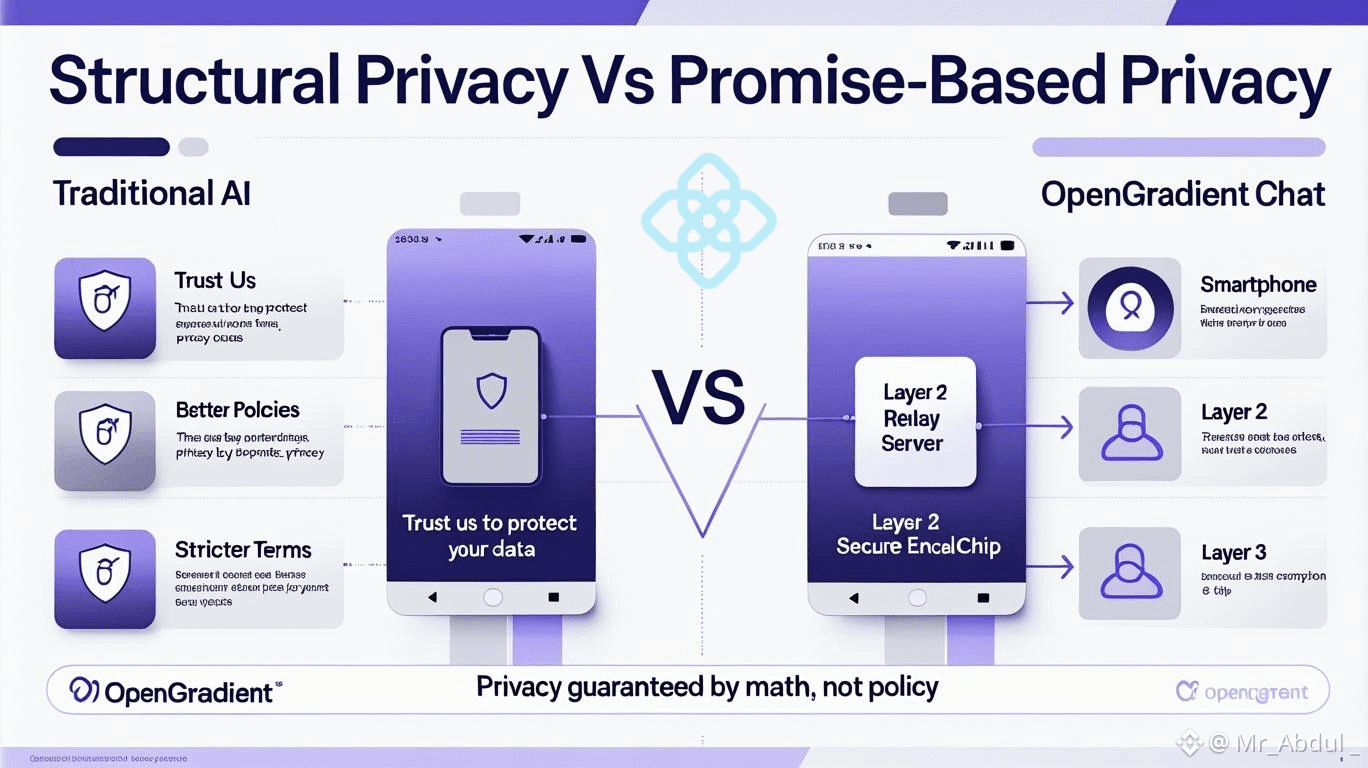
They imagine a company with good intentions reading their data less often. A stricter policy. A better terms of service. That is not privacy. That is a softer version of the same problem.
Real privacy means the architecture itself makes it impossible for anyone to connect who you are with what you asked. Not difficult. Not unlikely. Impossible.
That is what @OpenGradient built with OpenGradient Chat.
Your message is encrypted on your device before it leaves. It routes through a relay that sees your IP but reads only ciphertext. It decrypts inside a secure enclave where even the people running the servers cannot see the content.
Three separate layers. No single point where identity and query can ever meet.
I've started thinking of this as Structural Privacy. Not a promise backed by policy. A guarantee backed by math.
Most AI apps are asking you to trust them more carefully. OpenGradient Chat is asking you to stop trusting anyone at all and start verifying instead.
That is a fundamentally different product.
#opg $OPG
One thing I keep coming back to while studying $OPG is that most people think about AI privacy the wrong way.
They imagine a company with good intentions reading their data less often. A stricter policy. A better terms of service. That is not privacy. That is a softer version of the same problem.
Real privacy means the architecture itself makes it impossible for anyone to connect who you are with what you asked. Not difficult. Not unlikely. Impossible.
That is what @OpenGradient built with OpenGradient Chat.
Your message is encrypted on your device before it leaves. It routes through a relay that sees your IP but reads only ciphertext. It decrypts inside a secure enclave where even the people running the servers cannot see the content.
Three separate layers. No single point where identity and query can ever meet.
I've started thinking of this as Structural Privacy. Not a promise backed by policy. A guarantee backed by math.
Most AI apps are asking you to trust them more carefully. OpenGradient Chat is asking you to stop trusting anyone at all and start verifying instead.
That is a fundamentally different product.
#opg $OPG
They imagine a company with good intentions reading their data less often. A stricter policy. A better terms of service. That is not privacy. That is a softer version of the same problem.
Real privacy means the architecture itself makes it impossible for anyone to connect who you are with what you asked. Not difficult. Not unlikely. Impossible.
That is what @OpenGradient built with OpenGradient Chat.
Your message is encrypted on your device before it leaves. It routes through a relay that sees your IP but reads only ciphertext. It decrypts inside a secure enclave where even the people running the servers cannot see the content.
Three separate layers. No single point where identity and query can ever meet.
I've started thinking of this as Structural Privacy. Not a promise backed by policy. A guarantee backed by math.
Most AI apps are asking you to trust them more carefully. OpenGradient Chat is asking you to stop trusting anyone at all and start verifying instead.
That is a fundamentally different product.
#opg $OPG
42
6
506
·
--
🎙️ Crypto market trend exchange; newcomers’ questions answered ✅ Keep building the community 🦅 Spread the idea of freedom! Maintain ecological balance!
End
03 h 08 m 45 s
14.7k
27
91
·
--
🎙️ Crypto market updates and discussion; Q&A for newcomers ✅,坚持 community building 🦅 spread the ideals of freedom! maintain ecological balance!
End
03 h 18 m 42 s
15.8k
24
97
·
--
🎙️ Weekend market volatility is not big for now—BTC and ETH are holding steady for the time being, so it’s still too early to bottom-fish.
End
04 h 00 m 27 s
26.1k
22
23
·
--
🎙️ Welcome to the Tangbao Live Room—come chat with us and unlock the Web3 wealth password
End
04 h 11 m 50 s
6.4k
81
127
·
--
Nice Analysis 👍
Nice Analysis 👍

Mudassar Rajpoot XAU
·
--
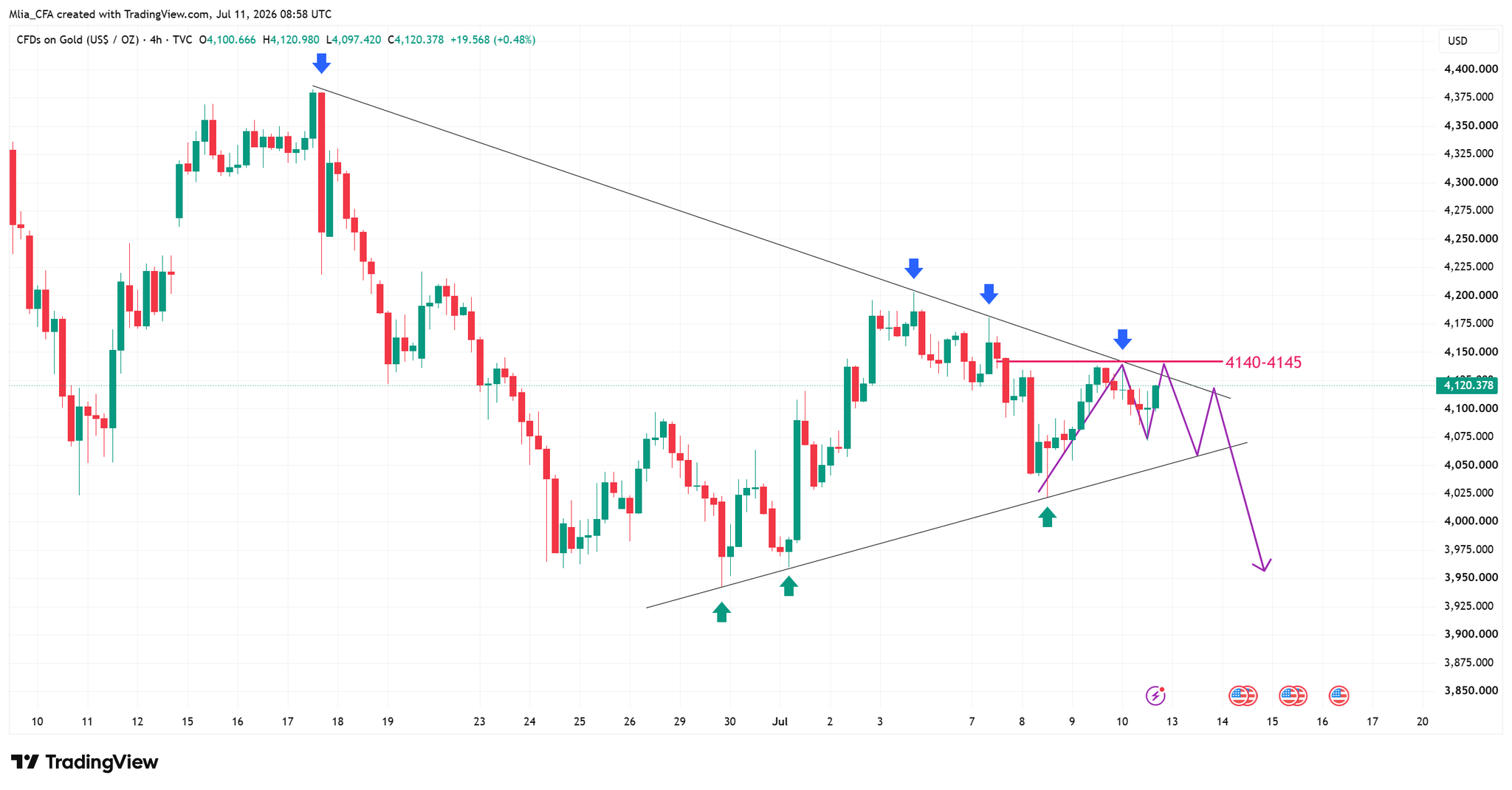
The 4-hour chart indicates resistance levels at $4,123 (100-period moving average), $4,133 (20-period moving average), and the strong resistance zone of $4,180–$4,200;
Key support levels to watch include $4,080, $4,050, and the $4,000 mark.
Overall, the recommended trading strategy for Monday is to prioritize selling on rallies while considering buying on dips as a secondary approach. Key zones to monitor are the $4,140–$4,150 resistance range and the $4,070–$4,050 support range. Please stay tuned for further updates.
Key support levels to watch include $4,080, $4,050, and the $4,000 mark.
Overall, the recommended trading strategy for Monday is to prioritize selling on rallies while considering buying on dips as a secondary approach. Key zones to monitor are the $4,140–$4,150 resistance range and the $4,070–$4,050 support range. Please stay tuned for further updates.
84
·
--
🎙️ Crypto market updates exchange; Q&A for newcomers ✅ Keep building the community 🦅 Spread the concept of freedom! Maintain ecological balance!
End
03 h 16 m 38 s
15.2k
27
77
·
--

Article
Why Newton Mainnet Beta Could Transform DeFi SecurityThe launch of the Newton Mainnet Beta represents a significant milestone for the future of decentralized finance.
What makes @NewtonProtocol unique is its ability to verify every transaction against predefined policies before settlement bringing a new level of trust and accountability to onchain activity.
Instead of reacting after funds have already moved Newton enables real time authorization covering compliance, identity, security and risk management. This approach can help protect DeFi users while also giving institutions greater confidence to participate in blockchain finance.
As the ecosystem grows, Newton's technology has the potential to support curated vaults tokenized real world assets, stablecoins and AI powered financial agents through a unified onchain policy layer. With strong infrastructure partnerships and a clear vision for scalable onchain enforcement, the Newton Mainnet Beta is introducing an important building block for the next generation of Web3. I'm excited to see how the ecosystem evolves and how $NEWT powers this growing network.
$NEWT #Newt
Why Newton Mainnet Beta Could Transform DeFi Security
The launch of the Newton Mainnet Beta represents a significant milestone for the future of decentralized finance.
What makes @NewtonProtocol unique is its ability to verify every transaction against predefined policies before settlement bringing a new level of trust and accountability to onchain activity.
Instead of reacting after funds have already moved Newton enables real time authorization covering compliance, identity, security and risk management. This approach can help protect DeFi users while also giving institutions greater confidence to participate in blockchain finance.
As the ecosystem grows, Newton's technology has the potential to support curated vaults tokenized real world assets, stablecoins and AI powered financial agents through a unified onchain policy layer. With strong infrastructure partnerships and a clear vision for scalable onchain enforcement, the Newton Mainnet Beta is introducing an important building block for the next generation of Web3. I'm excited to see how the ecosystem evolves and how $NEWT powers this growing network.
$NEWT #Newt
What makes @NewtonProtocol unique is its ability to verify every transaction against predefined policies before settlement bringing a new level of trust and accountability to onchain activity.
Instead of reacting after funds have already moved Newton enables real time authorization covering compliance, identity, security and risk management. This approach can help protect DeFi users while also giving institutions greater confidence to participate in blockchain finance.
As the ecosystem grows, Newton's technology has the potential to support curated vaults tokenized real world assets, stablecoins and AI powered financial agents through a unified onchain policy layer. With strong infrastructure partnerships and a clear vision for scalable onchain enforcement, the Newton Mainnet Beta is introducing an important building block for the next generation of Web3. I'm excited to see how the ecosystem evolves and how $NEWT powers this growing network.
$NEWT #Newt
1
1
88
·
--
The launch of the Newton Mainnet Beta marks an important milestone for DeFi infrastructure.
Instead of checking transactions after they happen, @NewtonProtocol introduces an authorization layer that evaluates every transaction against active policies before settlement and records the decision onchain.
This approach can strengthen compliance improve security and help institutional capital interact with DeFi more confidently. As onchain finance continues to evolve infrastructure that enforces rules before assets move could become a key building block for the next generation of decentralized applications.
Looking forward to seeing how the Newton ecosystem expands from vaults to RWAs stablecoins and AI agents.
$NEWT #Newt
The launch of the Newton Mainnet Beta marks an important milestone for DeFi infrastructure.
Instead of checking transactions after they happen, @NewtonProtocol introduces an authorization layer that evaluates every transaction against active policies before settlement and records the decision onchain.
This approach can strengthen compliance improve security and help institutional capital interact with DeFi more confidently. As onchain finance continues to evolve infrastructure that enforces rules before assets move could become a key building block for the next generation of decentralized applications.
Looking forward to seeing how the Newton ecosystem expands from vaults to RWAs stablecoins and AI agents.
$NEWT #Newt
Instead of checking transactions after they happen, @NewtonProtocol introduces an authorization layer that evaluates every transaction against active policies before settlement and records the decision onchain.
This approach can strengthen compliance improve security and help institutional capital interact with DeFi more confidently. As onchain finance continues to evolve infrastructure that enforces rules before assets move could become a key building block for the next generation of decentralized applications.
Looking forward to seeing how the Newton ecosystem expands from vaults to RWAs stablecoins and AI agents.
$NEWT #Newt

11
4
301
·
--
As a result of my work with $OPG one thing keeps coming back to me AI memory is typically pitched as a convenience feature.
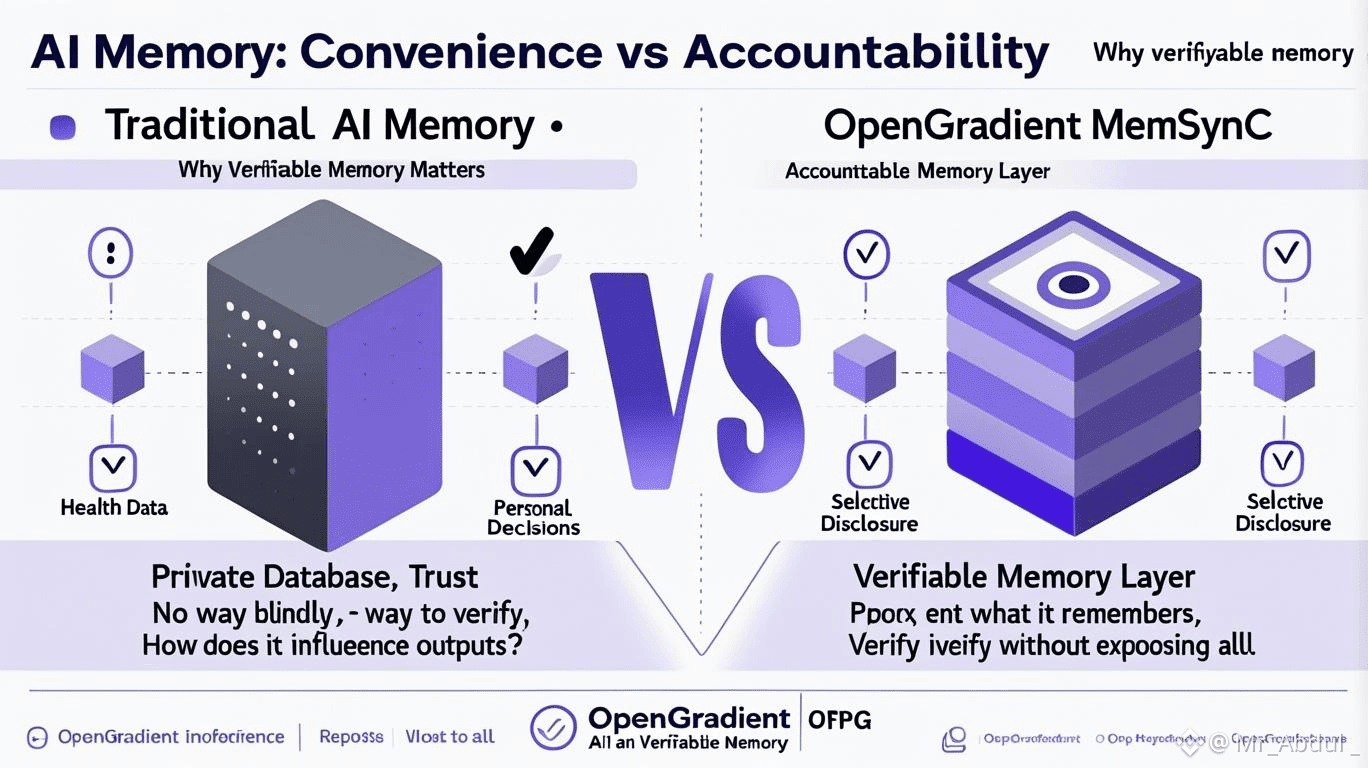
The app knows your settings. The app knows the conversation history. It leverages that knowledge for more intelligent response. It does sound convenient, but once memory plays a role in influencing decisions to come, mere convenience ceases to be the sole factor at play.
Look at the data that the AI is remembering. The health background of the user. Their financial situation. Decisions made through weeks long discussions. That data cannot remain passive it will affect the output of the AI and there is no way to know how.
@OpenGradient is working on MemSync, a verifiable memory layer. Rather than remaining a private database which the user must take on faith as correct, the memory becomes verifiable state. Creation, classification, retrieval and use of that memory become auditable.
I find myself viewing this process through the lens of the difference between the black box that remembers and a mechanism which is capable of proving what was remembered and why.
That is easy part the challenge is making the memory auditable while not giving away its
#OPG
As a result of my work with $OPG one thing keeps coming back to me AI memory is typically pitched as a convenience feature.
The app knows your settings. The app knows the conversation history. It leverages that knowledge for more intelligent response. It does sound convenient, but once memory plays a role in influencing decisions to come, mere convenience ceases to be the sole factor at play.
Look at the data that the AI is remembering. The health background of the user. Their financial situation. Decisions made through weeks long discussions. That data cannot remain passive it will affect the output of the AI and there is no way to know how.
@OpenGradient is working on MemSync, a verifiable memory layer. Rather than remaining a private database which the user must take on faith as correct, the memory becomes verifiable state. Creation, classification, retrieval and use of that memory become auditable.
I find myself viewing this process through the lens of the difference between the black box that remembers and a mechanism which is capable of proving what was remembered and why.
That is easy part the challenge is making the memory auditable while not giving away its
#OPG
The app knows your settings. The app knows the conversation history. It leverages that knowledge for more intelligent response. It does sound convenient, but once memory plays a role in influencing decisions to come, mere convenience ceases to be the sole factor at play.
Look at the data that the AI is remembering. The health background of the user. Their financial situation. Decisions made through weeks long discussions. That data cannot remain passive it will affect the output of the AI and there is no way to know how.
@OpenGradient is working on MemSync, a verifiable memory layer. Rather than remaining a private database which the user must take on faith as correct, the memory becomes verifiable state. Creation, classification, retrieval and use of that memory become auditable.
I find myself viewing this process through the lens of the difference between the black box that remembers and a mechanism which is capable of proving what was remembered and why.
That is easy part the challenge is making the memory auditable while not giving away its
#OPG
9
1
185
·
--
Something else I have been pondering in relation to $OPG is the fact that the majority of people are asking the wrong question regarding AI on chain technology.
The question that everyone is asking is whether or not AI outputs can be verified. This is important. However, there is another question which is being overlooked and nobody is talking about it.
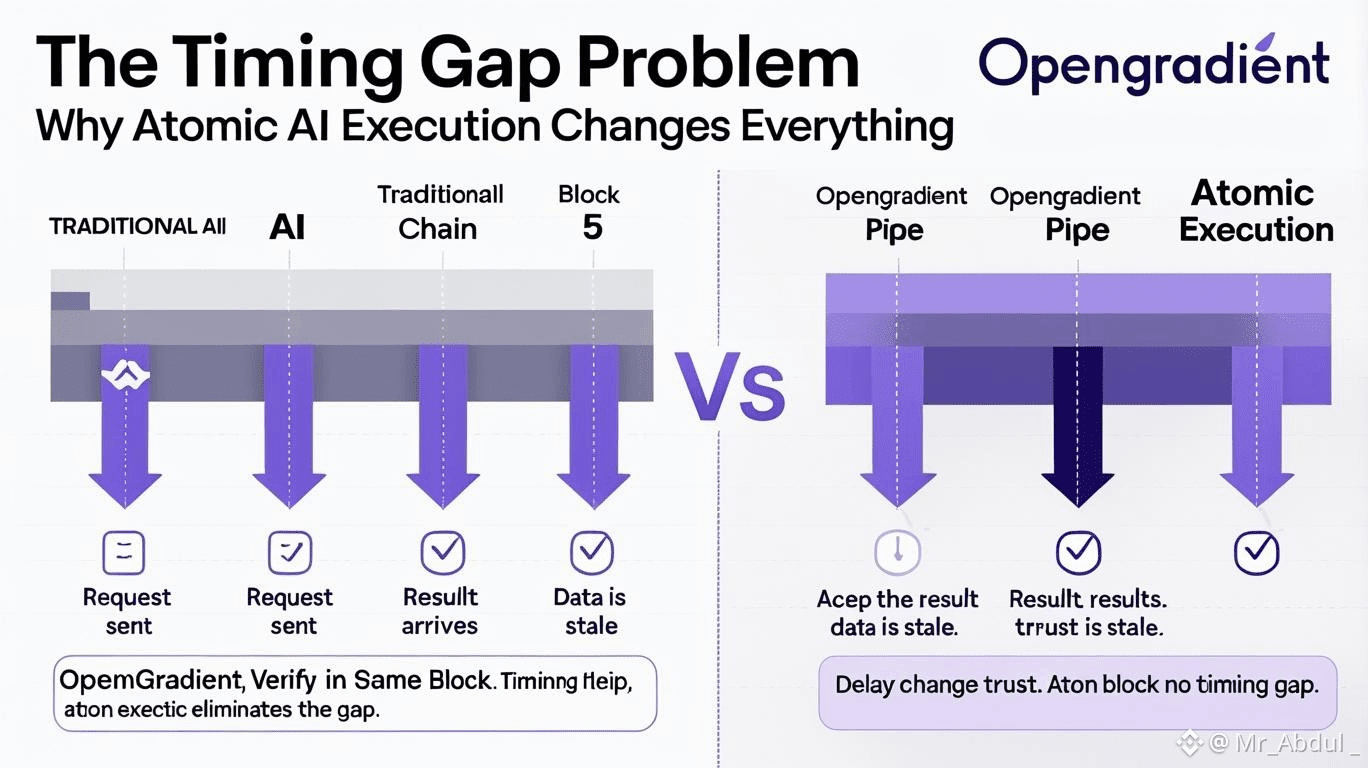
Whenever the output from an AI model is required by a smart contract, there always has to be some kind of delay. It has to run off-chain. Then, once it is ready, it arrives as a result. Once it reaches its destination, it has already become outdated. This is the moment where trust is lost.
This problem is solved by @OpenGradient through something they refer to as PIPE. Instead of receiving a delayed output that works as an oracle, users receive it as a pre executed input which can then be used inside of one single transaction.
From now on, I will think of it as Atomic AI Execution. No delays, no timing gap, no way for stale data or manipulation to occur.
The point is important enough to be noticed. Delay makes all the difference because an AI result timing.
#OPG
Something else I have been pondering in relation to $OPG is the fact that the majority of people are asking the wrong question regarding AI on chain technology.
The question that everyone is asking is whether or not AI outputs can be verified. This is important. However, there is another question which is being overlooked and nobody is talking about it.
Whenever the output from an AI model is required by a smart contract, there always has to be some kind of delay. It has to run off-chain. Then, once it is ready, it arrives as a result. Once it reaches its destination, it has already become outdated. This is the moment where trust is lost.
This problem is solved by @OpenGradient through something they refer to as PIPE. Instead of receiving a delayed output that works as an oracle, users receive it as a pre executed input which can then be used inside of one single transaction.
From now on, I will think of it as Atomic AI Execution. No delays, no timing gap, no way for stale data or manipulation to occur.
The point is important enough to be noticed. Delay makes all the difference because an AI result timing.
#OPG
The question that everyone is asking is whether or not AI outputs can be verified. This is important. However, there is another question which is being overlooked and nobody is talking about it.
Whenever the output from an AI model is required by a smart contract, there always has to be some kind of delay. It has to run off-chain. Then, once it is ready, it arrives as a result. Once it reaches its destination, it has already become outdated. This is the moment where trust is lost.
This problem is solved by @OpenGradient through something they refer to as PIPE. Instead of receiving a delayed output that works as an oracle, users receive it as a pre executed input which can then be used inside of one single transaction.
From now on, I will think of it as Atomic AI Execution. No delays, no timing gap, no way for stale data or manipulation to occur.
The point is important enough to be noticed. Delay makes all the difference because an AI result timing.
#OPG
23
4
309
·
--
BILLIONAIRE GRANT CARDONE SAYS HE BOUGHT 2,000 BITCOIN AT $92,000 AND REFUSES TO SELL
"I'M UNDERWATER, AND IT DOESN'T BOTHER ME AT ALL"
"IT'S TIED TO A LONG-TERM ASSET"
"IF I BELIEVED IT WAS GOING TO ZERO, I WOULDN'T HAVE DONE THIS"
LEGEND
BILLIONAIRE GRANT CARDONE SAYS HE BOUGHT 2,000 BITCOIN AT $92,000 AND REFUSES TO SELL
"I'M UNDERWATER, AND IT DOESN'T BOTHER ME AT ALL"
"IT'S TIED TO A LONG-TERM ASSET"
"IF I BELIEVED IT WAS GOING TO ZERO, I WOULDN'T HAVE DONE THIS"
LEGEND
"I'M UNDERWATER, AND IT DOESN'T BOTHER ME AT ALL"
"IT'S TIED TO A LONG-TERM ASSET"
"IF I BELIEVED IT WAS GOING TO ZERO, I WOULDN'T HAVE DONE THIS"
LEGEND
461
·
--
When disaster strikes, blockchain can deliver realworld impact.
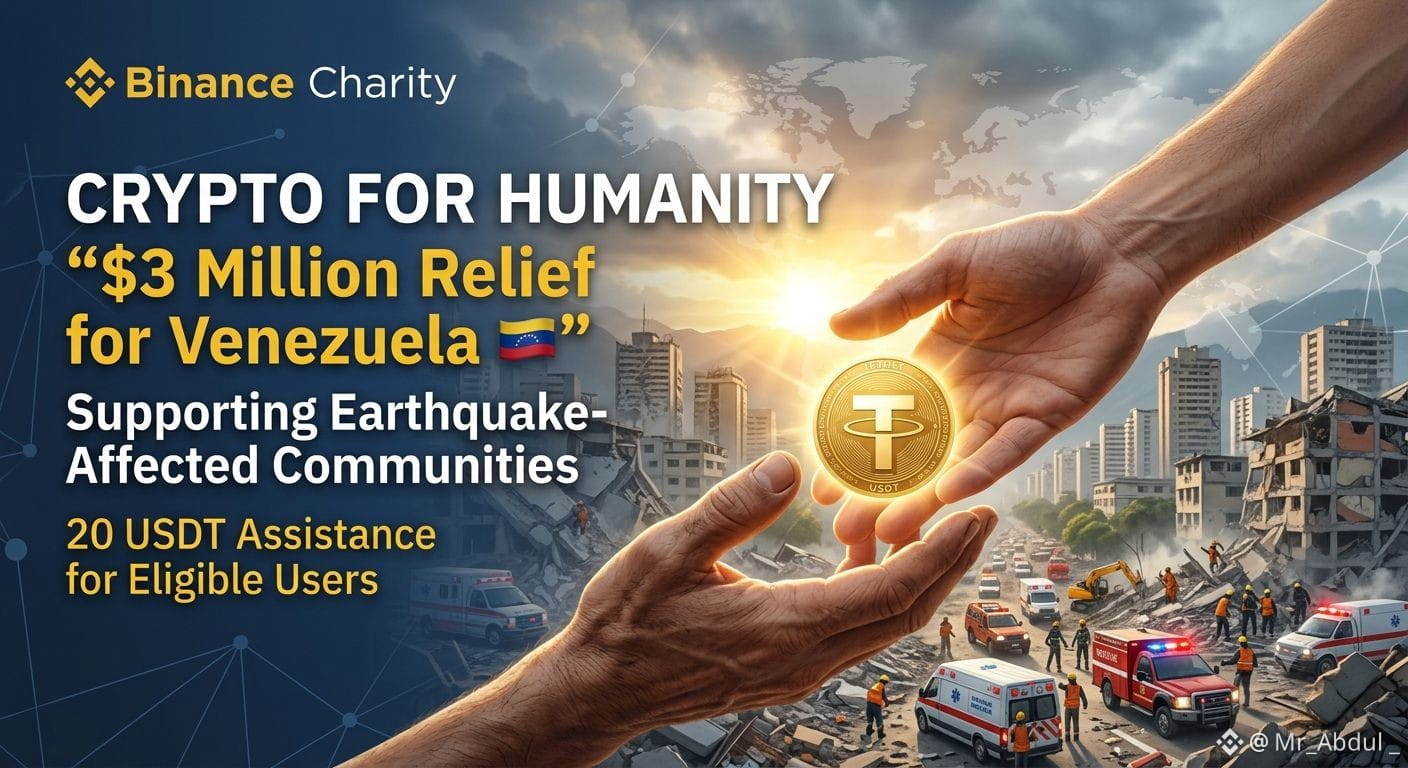
Following the devastating earthquakes in Venezuela, Binance Charity has announced a $3 million relief initiative to support affected users. Eligible users in the hardest hit regions will receive 20 USDT vouchers, while Binance is also waiving P2P trading fees and Binance Pay merchant fees in Venezuela for seven days to make financial access easier during recovery. This highlights how crypto is evolving beyond trading, offering practical humanitarian support when it matters most. Initiatives like these demonstrate the growing role of blockchain technology in providing fast, transparent and borderless aid to communities in need. 💛
What do you think about crypto being used for disaster relief and humanitarian assistance?
{future}(BNBUSDT)
$BNB #Binance
When disaster strikes, blockchain can deliver realworld impact.
Following the devastating earthquakes in Venezuela, Binance Charity has announced a $3 million relief initiative to support affected users. Eligible users in the hardest hit regions will receive 20 USDT vouchers, while Binance is also waiving P2P trading fees and Binance Pay merchant fees in Venezuela for seven days to make financial access easier during recovery. This highlights how crypto is evolving beyond trading, offering practical humanitarian support when it matters most. Initiatives like these demonstrate the growing role of blockchain technology in providing fast, transparent and borderless aid to communities in need. 💛
What do you think about crypto being used for disaster relief and humanitarian assistance?
$BNB #Binance
Following the devastating earthquakes in Venezuela, Binance Charity has announced a $3 million relief initiative to support affected users. Eligible users in the hardest hit regions will receive 20 USDT vouchers, while Binance is also waiving P2P trading fees and Binance Pay merchant fees in Venezuela for seven days to make financial access easier during recovery. This highlights how crypto is evolving beyond trading, offering practical humanitarian support when it matters most. Initiatives like these demonstrate the growing role of blockchain technology in providing fast, transparent and borderless aid to communities in need. 💛
What do you think about crypto being used for disaster relief and humanitarian assistance?
$BNB #Binance
181
·
--
What excites you the most about @OpenGradient ?
What excites you the most about @OpenGradient ?
Verifiable AI Responses
0%
PrivacyFirst OpenGradient Chat
50%
Decentralize AI Infrastructure
50%
2 votes • Voting closed
148
·
--
🚀 INSANE REVERSAL.
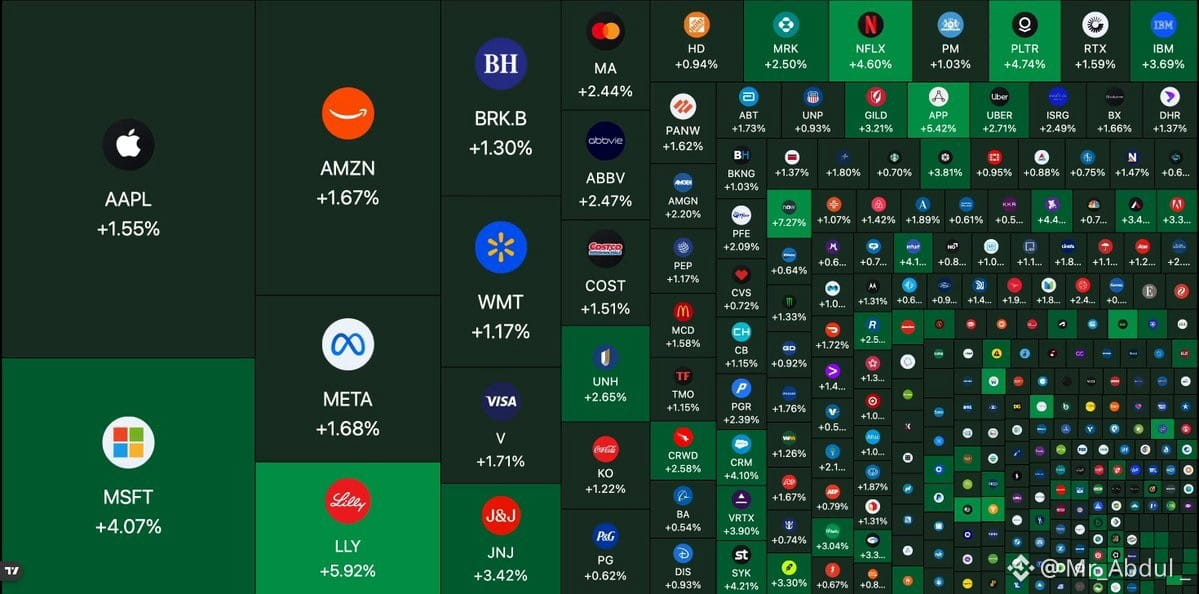
$700,000,000,000 has been added to the US stock market in the last 60 minutes.
🚀 INSANE REVERSAL.
$700,000,000,000 has been added to the US stock market in the last 60 minutes.
$700,000,000,000 has been added to the US stock market in the last 60 minutes.
1
150
·
--
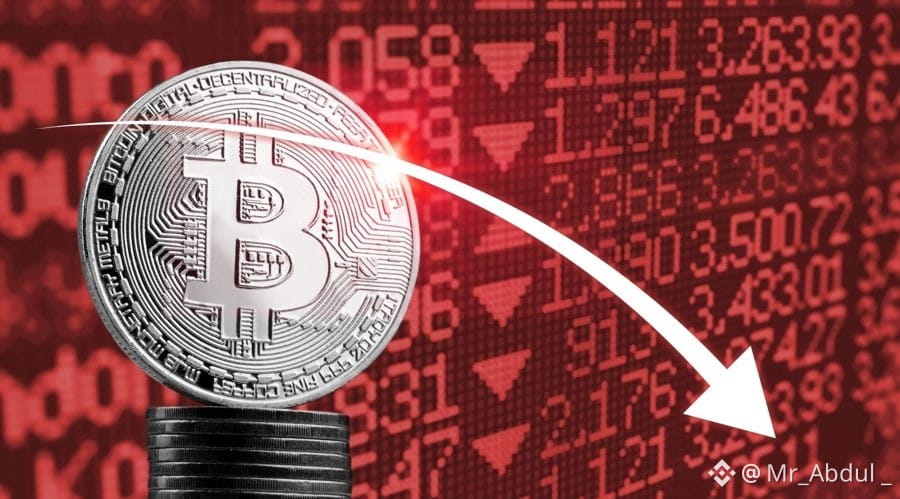
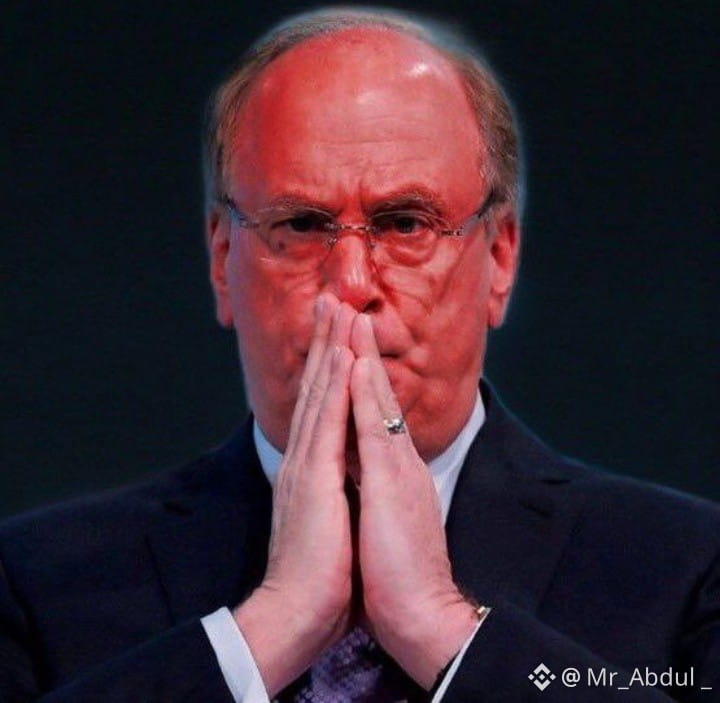
BlackRock sold $859M worth of Bitcoin this week.
Damn... 🩸
{spot}(BTCUSDT)
$BTC
BlackRock sold $859M worth of Bitcoin this week.
Damn... 🩸
$BTC
Damn... 🩸
$BTC
1
141
·
--
Verified
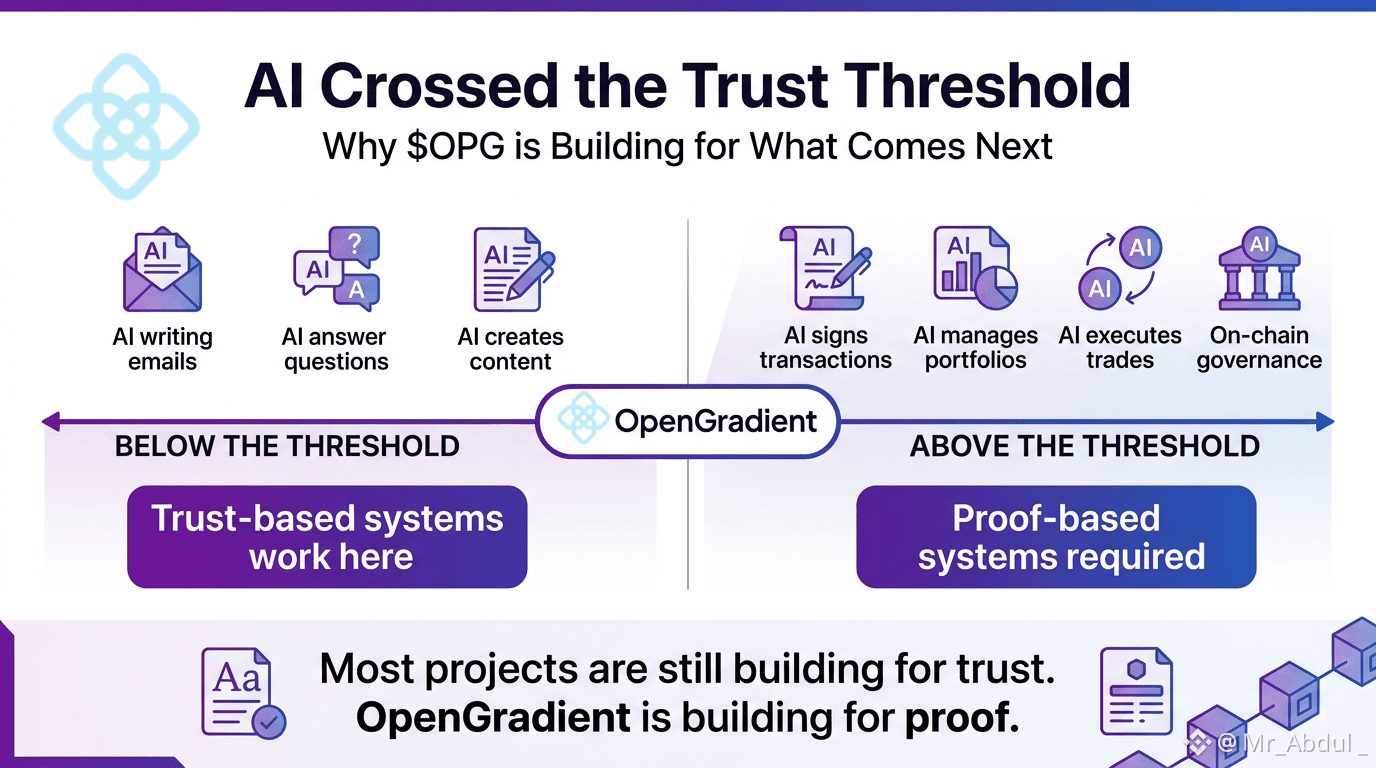
One thing I keep thinking about while researching $OPG is that we are approaching an inflection point nobody is naming clearly.
AI is no longer just answering questions. It is signing transactions. Managing portfolios. Executing trades. Making governance decisions on chain.
And yet the infrastructure underneath all of that still runs on the same assumption it always did. That you trust the provider.
That assumption made sense when AI was writing emails. It does not make sense when AI is moving real money.
Open gradient is the only project I have come across that is directly solving this. They call it verifiable inference. Every prompt, every model, every output gets a cryptographic proof attached before anything touches the chain. Not logged. Not summarized. Proven.
I've started thinking of this as the Trust Threshold problem. Below a certain stakes level, trust is fine. Above it, you need proof. And AI crossed that threshold the moment it started touching on chain assets.
The interesting thing is that most of the space is still building for below the threshold. @OpenGradient is building for what comes after.
That gap does not stay open forever.
#OPG
{future}(OPGUSDT)
One thing I keep thinking about while researching $OPG is that we are approaching an inflection point nobody is naming clearly.
AI is no longer just answering questions. It is signing transactions. Managing portfolios. Executing trades. Making governance decisions on chain.
And yet the infrastructure underneath all of that still runs on the same assumption it always did. That you trust the provider.
That assumption made sense when AI was writing emails. It does not make sense when AI is moving real money.
Open gradient is the only project I have come across that is directly solving this. They call it verifiable inference. Every prompt, every model, every output gets a cryptographic proof attached before anything touches the chain. Not logged. Not summarized. Proven.
I've started thinking of this as the Trust Threshold problem. Below a certain stakes level, trust is fine. Above it, you need proof. And AI crossed that threshold the moment it started touching on chain assets.
The interesting thing is that most of the space is still building for below the threshold. @OpenGradient is building for what comes after.
That gap does not stay open forever.
#OPG
AI is no longer just answering questions. It is signing transactions. Managing portfolios. Executing trades. Making governance decisions on chain.
And yet the infrastructure underneath all of that still runs on the same assumption it always did. That you trust the provider.
That assumption made sense when AI was writing emails. It does not make sense when AI is moving real money.
Open gradient is the only project I have come across that is directly solving this. They call it verifiable inference. Every prompt, every model, every output gets a cryptographic proof attached before anything touches the chain. Not logged. Not summarized. Proven.
I've started thinking of this as the Trust Threshold problem. Below a certain stakes level, trust is fine. Above it, you need proof. And AI crossed that threshold the moment it started touching on chain assets.
The interesting thing is that most of the space is still building for below the threshold. @OpenGradient is building for what comes after.
That gap does not stay open forever.
#OPG
19
5
312
Log in to explore more content
Join global crypto users on Binance Square
⚡️ Get latest and useful information about crypto.
💬 Trusted by the world’s largest crypto exchange.
👍 Discover real insights from verified creators.
Email / Phone number
Trending Topics
KoreaProposesTokenizingStocksAndBonds
11,643 views
251 Discussing
#koreaproposestokenizingstocksandbonds 🇰🇷 South Korea Proposes Roadmap to Tokenize Stocks and Bonds by 2027
Traditional finance is meeting blockchain at a national level. South Korea has unveiled a comprehensive regulatory framework to bring traditional securities on-chain.
📌 Core News:
• The FSC announced a 3-phase plan to expand tokenized securities to include stocks, bonds, and investment funds.
• The legal framework is officially set to take effect on February 4, 2027.
• Phase 1 focuses on private funds, corporate bonds, and unlisted equities before expanding to public markets.
• For investor protection, retail participants face an annual net purchase limit of 100 million KRW (~$74K) per OTC platform.
📊 Market Impact:
• RWA Validation: This provides regulatory clarity for the Real-World Asset (RWA) narrative, proving institutional appetite for efficient on-chain settlement.
• Infrastructure Growth: Expect accelerated development in compliant blockchain infrastructure, digital custody, and identity verification solutions.
• Stablecoin Utility: Phase 3 explicitly mentions integrating on-chain payment systems, which could significantly boost the real-world utility of regulated stablecoins.
💬 Join the Discussion:
Do you think tokenized traditional securities will be the main catalyst for the next wave of institutional crypto adoption? Let’s discuss below! 👇
#RWA #Tokenization #SouthKorea #CryptoRegulation #Blockchain This is for educational purposes only. Not Financial Advice (NFA). Always Do Your Own Research (DYOR).
$NOM $MOVR $NIGHT
珍妮丝 kgf
·1 Likes
·3.7k views
MetaMaskExitsLidoValidatorsAfterSecurityIncident
77,431 views
979 Discussing
MicronBeatsEarningsLiftsGuidance
46,377 views
758 Discussing