

Stellar jane
3.8k Posts

Stellar jane
Report
Block User
Don't lie about your profits or copy others honesty builds trust.
Open Trade
Occasional Trader
2.4 Years
230 Following
9.2K+ Followers
9.4K+ Liked
Posts
Portfolio
All
Quotes
Live
·
--
Article
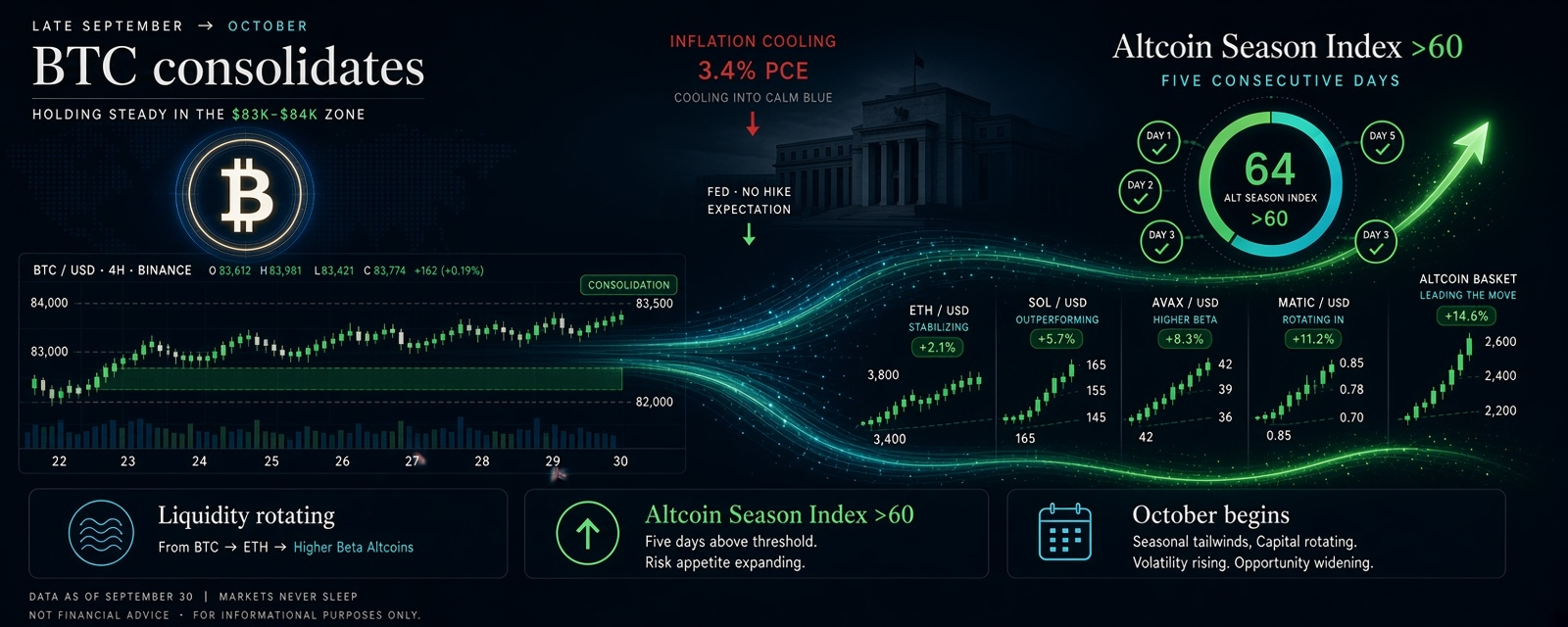
THIS COULD BE THE SETUP NOBODY IS WATCHING CLOSELY ENOUGHSeptember is ending with a very interesting shift in the macro picture.
US PCE inflation came in at 3.4% YoY vs 3.7% expected.
That immediately cooled expectations for an October Fed rate hike.
And $BTC?
Still holding around the $83K–$84K zone despite all the macro noise.
But here’s the part I’m watching 👇
The Altcoin Season Index has stayed above 60 for five consecutive days.
That matters.
Because when $BTC starts consolidating instead of aggressively selling off, liquidity can slowly rotate into higher-beta assets.
We’ve seen this movie before:
$BTC consolidates
→ dominance starts shifting
→ ETH stabilizes
→ altcoins begin outperforming
→ momentum spreads across the market
I’m not saying “altseason confirmed.”
I’m saying the breadth is getting interesting.
For $BTC, I want to see the market reclaim the recent highs before getting too aggressive.
For alts, I’m watching strength on pullbacks rather than chasing green candles.
The next move could be much bigger than the current chop suggests.
Trade the reaction, not the headline.
October is about to begin. 👀
DYOR. Manage risk.
$BTC
{spot}(BTCUSDT)
#crypto #BTC走势分析 #bitcoin
THIS COULD BE THE SETUP NOBODY IS WATCHING CLOSELY ENOUGH
September is ending with a very interesting shift in the macro picture.
US PCE inflation came in at 3.4% YoY vs 3.7% expected.
That immediately cooled expectations for an October Fed rate hike.
And $BTC ?
Still holding around the $83K–$84K zone despite all the macro noise.
But here’s the part I’m watching 👇
The Altcoin Season Index has stayed above 60 for five consecutive days.
That matters.
Because when $BTC starts consolidating instead of aggressively selling off, liquidity can slowly rotate into higher-beta assets.
We’ve seen this movie before:
$BTC consolidates
→ dominance starts shifting
→ ETH stabilizes
→ altcoins begin outperforming
→ momentum spreads across the market
I’m not saying “altseason confirmed.”
I’m saying the breadth is getting interesting.
For $BTC , I want to see the market reclaim the recent highs before getting too aggressive.
For alts, I’m watching strength on pullbacks rather than chasing green candles.
The next move could be much bigger than the current chop suggests.
Trade the reaction, not the headline.
October is about to begin. 👀
DYOR. Manage risk.
$BTC
#crypto #BTC走势分析 #bitcoin
US PCE inflation came in at 3.4% YoY vs 3.7% expected.
That immediately cooled expectations for an October Fed rate hike.
And $BTC ?
Still holding around the $83K–$84K zone despite all the macro noise.
But here’s the part I’m watching 👇
The Altcoin Season Index has stayed above 60 for five consecutive days.
That matters.
Because when $BTC starts consolidating instead of aggressively selling off, liquidity can slowly rotate into higher-beta assets.
We’ve seen this movie before:
$BTC consolidates
→ dominance starts shifting
→ ETH stabilizes
→ altcoins begin outperforming
→ momentum spreads across the market
I’m not saying “altseason confirmed.”
I’m saying the breadth is getting interesting.
For $BTC , I want to see the market reclaim the recent highs before getting too aggressive.
For alts, I’m watching strength on pullbacks rather than chasing green candles.
The next move could be much bigger than the current chop suggests.
Trade the reaction, not the headline.
October is about to begin. 👀
DYOR. Manage risk.
$BTC
#crypto #BTC走势分析 #bitcoin
113
·
--
$BTC is holding around the $83K–$84K area, but the interesting part is happening underneath.
Altcoin spot volume has surged to nearly 4x Bitcoin’s volume, while major crypto ETFs still recorded net inflows on September 28.
That tells me one thing:
Capital is still active.
But I’m not chasing every green candle.
BTC needs to reclaim and hold higher levels before I get aggressive.
For alts, I’m watching volume + structure + liquidity.
No FOMO.
Trade the reaction. 📊
$BTC $ETH $SOL
DYOR.
$BTC is holding around the $83K–$84K area, but the interesting part is happening underneath.
Altcoin spot volume has surged to nearly 4x Bitcoin’s volume, while major crypto ETFs still recorded net inflows on September 28.
That tells me one thing:
Capital is still active.
But I’m not chasing every green candle.
BTC needs to reclaim and hold higher levels before I get aggressive.
For alts, I’m watching volume + structure + liquidity.
No FOMO.
Trade the reaction. 📊
$BTC $ETH $SOL
DYOR.
Altcoin spot volume has surged to nearly 4x Bitcoin’s volume, while major crypto ETFs still recorded net inflows on September 28.
That tells me one thing:
Capital is still active.
But I’m not chasing every green candle.
BTC needs to reclaim and hold higher levels before I get aggressive.
For alts, I’m watching volume + structure + liquidity.
No FOMO.
Trade the reaction. 📊
$BTC $ETH $SOL
DYOR.
81
·
--

Article
Irans Supreme Leader Issues New Statement on Nasrallah AnniversaryIrans Supreme Leader Mojtaba Khamenei has issued a statement marking Iran’s Defense Week and the second anniversary of former Hezbollah leader Hassan Nasrallah’s death.
According to Jin10, he praised the Iranian public for supporting the country over the past seven months, saying their actions had strengthened military morale.
He also reaffirmed that Iran would firmly defend the Strait of Hormuz.
Addressing Nasrallah’s legacy, Khamenei said his resistance continues to inspire Lebanon and that Hezbollah would maintain its resistance.
The statement further expressed confidence that Iran and its regional allies would ultimately achieve victory.
$NVDA.US $ETH
#iran #Fed #Binance $BTC
Irans Supreme Leader Issues New Statement on Nasrallah Anniversary
Irans Supreme Leader Mojtaba Khamenei has issued a statement marking Iran’s Defense Week and the second anniversary of former Hezbollah leader Hassan Nasrallah’s death.
According to Jin10, he praised the Iranian public for supporting the country over the past seven months, saying their actions had strengthened military morale.
He also reaffirmed that Iran would firmly defend the Strait of Hormuz.
Addressing Nasrallah’s legacy, Khamenei said his resistance continues to inspire Lebanon and that Hezbollah would maintain its resistance.
The statement further expressed confidence that Iran and its regional allies would ultimately achieve victory.
$NVDA.US $ETH
#iran #Fed #Binance $BTC
According to Jin10, he praised the Iranian public for supporting the country over the past seven months, saying their actions had strengthened military morale.
He also reaffirmed that Iran would firmly defend the Strait of Hormuz.
Addressing Nasrallah’s legacy, Khamenei said his resistance continues to inspire Lebanon and that Hezbollah would maintain its resistance.
The statement further expressed confidence that Iran and its regional allies would ultimately achieve victory.
$NVDA.US $ETH
#iran #Fed #Binance $BTC
34
·
--
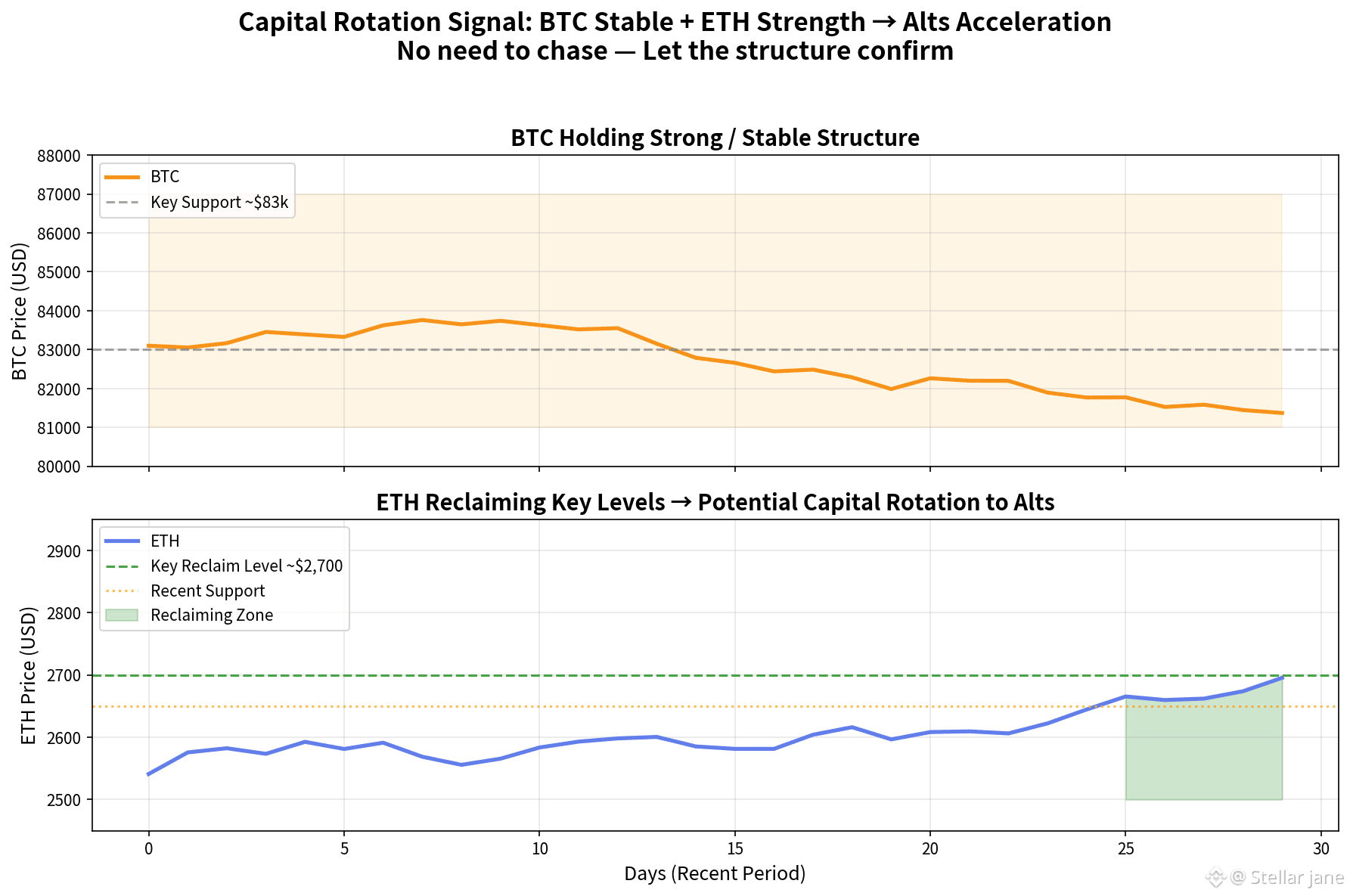
$ETH is starting to look interesting again 👀
BTC has been holding strong, but the bigger signal could be what happens next with ETH and the rest of the alt market.
If $ETH keeps reclaiming key levels while BTC stays stable, capital rotation into alts could accelerate.
No need to chase.
Let the structure confirm the move.
$ETH
{spot}(ETHUSDT)
$ETH is starting to look interesting again 👀
BTC has been holding strong, but the bigger signal could be what happens next with ETH and the rest of the alt market.
If $ETH keeps reclaiming key levels while BTC stays stable, capital rotation into alts could accelerate.
No need to chase.
Let the structure confirm the move.
$ETH
BTC has been holding strong, but the bigger signal could be what happens next with ETH and the rest of the alt market.
If $ETH keeps reclaiming key levels while BTC stays stable, capital rotation into alts could accelerate.
No need to chase.
Let the structure confirm the move.
$ETH
61
·
--
BTC is holding around $84K while institutional demand keeps showing upU.S. spot Bitcoin ETFs pulled in roughly $2.4B last week, their strongest weekly inflow in nearly a year.
Price is consolidating.
Capital is still flowing.
That divergence is worth watching closely. 👀
The key now:
Can BTC turn this consolidation into another clean breakout?
Trade the reaction, not the prediction.
$BTC $ETH
#BTC #cryptouniverseofficial #Binance $SOL
BTC is holding around $84K while institutional demand keeps showing up
U.S. spot Bitcoin ETFs pulled in roughly $2.4B last week, their strongest weekly inflow in nearly a year.
Price is consolidating.
Capital is still flowing.
That divergence is worth watching closely. 👀
The key now:
Can BTC turn this consolidation into another clean breakout?
Trade the reaction, not the prediction.
$BTC $ETH
#BTC #cryptouniverseofficial #Binance $SOL
Price is consolidating.
Capital is still flowing.
That divergence is worth watching closely. 👀
The key now:
Can BTC turn this consolidation into another clean breakout?
Trade the reaction, not the prediction.
$BTC $ETH
#BTC #cryptouniverseofficial #Binance $SOL
56
·
--
Article
SOLANA'S NEXT BIG TEST ISN'T JUST PRICESOL has another reason to stay on the radar today.
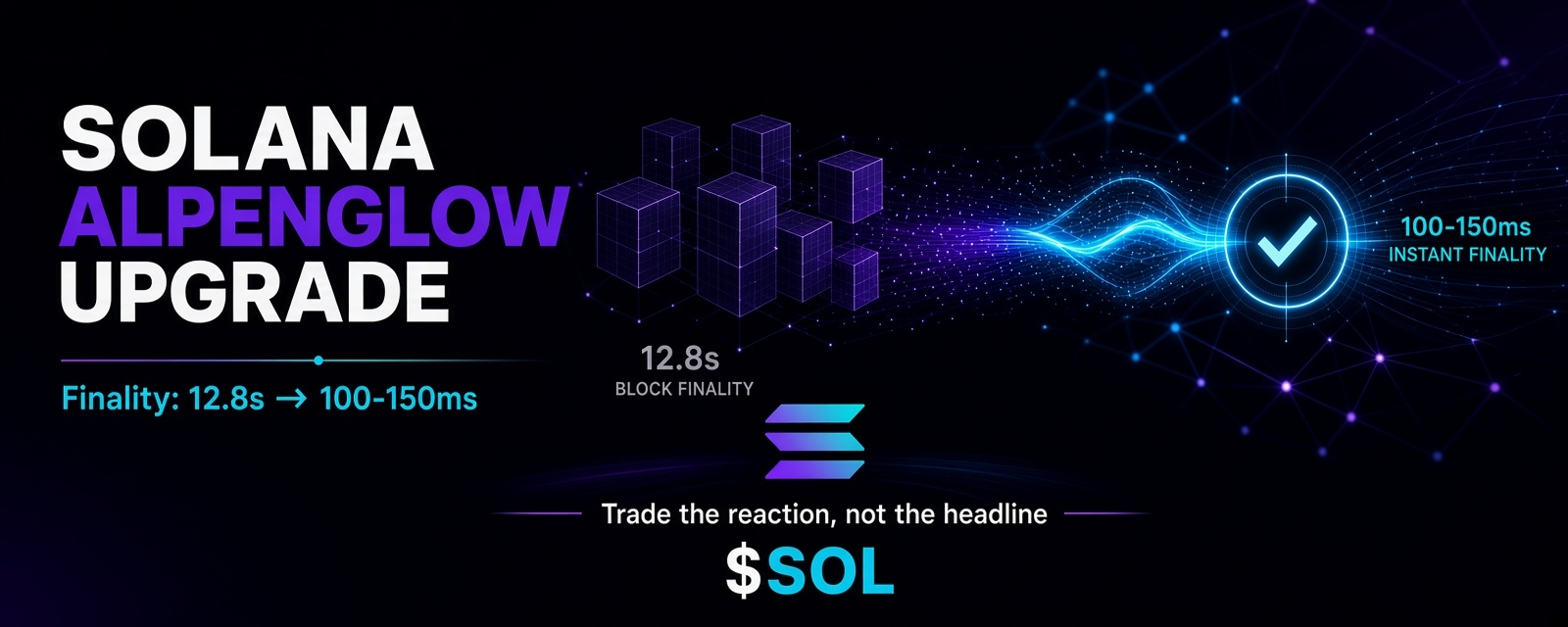
Solana's Alpenglow upgrade is scheduled to activate on September 28, bringing a major consensus-level change to the network.
The headline feature?
Much faster transaction finality.
The upgrade is designed to move finality from roughly 12.8 seconds toward around 100–150 milliseconds.
That's not just a number for traders.
Faster finality matters if Solana wants to handle applications where users expect near-instant confirmation — payments, trading, tokenized assets and other high-frequency activity.
But here's the part I'm watching:
A major upgrade doesn't automatically mean price goes higher.
The market still has to decide whether the improvement translates into more real usage, liquidity and developer activity.
That's why I wouldn't trade the headline alone.
Watch the reaction.
If $SOL holds strength while the upgrade goes live, that tells us the market is actually absorbing the catalyst.
If it becomes a classic "buy the rumor, sell the news" event, price will tell us that too.
Technology creates the opportunity.
Adoption has to validate it.
Trade the reaction, not the headline. 📊
#sol #solana #crypto #Binance
$SOL
{spot}(SOLUSDT)
SOLANA'S NEXT BIG TEST ISN'T JUST PRICE
SOL has another reason to stay on the radar today.
Solana's Alpenglow upgrade is scheduled to activate on September 28, bringing a major consensus-level change to the network.
The headline feature?
Much faster transaction finality.
The upgrade is designed to move finality from roughly 12.8 seconds toward around 100–150 milliseconds.
That's not just a number for traders.
Faster finality matters if Solana wants to handle applications where users expect near-instant confirmation — payments, trading, tokenized assets and other high-frequency activity.
But here's the part I'm watching:
A major upgrade doesn't automatically mean price goes higher.
The market still has to decide whether the improvement translates into more real usage, liquidity and developer activity.
That's why I wouldn't trade the headline alone.
Watch the reaction.
If $SOL holds strength while the upgrade goes live, that tells us the market is actually absorbing the catalyst.
If it becomes a classic "buy the rumor, sell the news" event, price will tell us that too.
Technology creates the opportunity.
Adoption has to validate it.
Trade the reaction, not the headline. 📊
#sol #solana #crypto #Binance
$SOL
Solana's Alpenglow upgrade is scheduled to activate on September 28, bringing a major consensus-level change to the network.
The headline feature?
Much faster transaction finality.
The upgrade is designed to move finality from roughly 12.8 seconds toward around 100–150 milliseconds.
That's not just a number for traders.
Faster finality matters if Solana wants to handle applications where users expect near-instant confirmation — payments, trading, tokenized assets and other high-frequency activity.
But here's the part I'm watching:
A major upgrade doesn't automatically mean price goes higher.
The market still has to decide whether the improvement translates into more real usage, liquidity and developer activity.
That's why I wouldn't trade the headline alone.
Watch the reaction.
If $SOL holds strength while the upgrade goes live, that tells us the market is actually absorbing the catalyst.
If it becomes a classic "buy the rumor, sell the news" event, price will tell us that too.
Technology creates the opportunity.
Adoption has to validate it.
Trade the reaction, not the headline. 📊
#sol #solana #crypto #Binance
$SOL
134
·
--
GM CT ☀️
$BTC is sitting around the $84K–$85K zone, but the more interesting signal isn’t the price.
It’s the money flowing behind it.
U.S. spot Bitcoin ETFs pulled in roughly $2.4B last week — their strongest weekly inflow since October 2025.
That changes the conversation.
BTC is no longer just fighting resistance on the chart. Institutional demand is showing up at the same time.
Now I’m watching one thing:
Can $BTC hold the $84K area and turn the recent push into a higher base?
No need to chase.
Let the price confirm.
Trade the reaction, not the excitement. 📊
#bitcoin #BTC #crypto #Binance
{future}(BTCUSDT)
GM CT ☀️
$BTC is sitting around the $84K–$85K zone, but the more interesting signal isn’t the price.
It’s the money flowing behind it.
U.S. spot Bitcoin ETFs pulled in roughly $2.4B last week — their strongest weekly inflow since October 2025.
That changes the conversation.
BTC is no longer just fighting resistance on the chart. Institutional demand is showing up at the same time.
Now I’m watching one thing:
Can $BTC hold the $84K area and turn the recent push into a higher base?
No need to chase.
Let the price confirm.
Trade the reaction, not the excitement. 📊
#bitcoin #BTC #crypto #Binance
$BTC is sitting around the $84K–$85K zone, but the more interesting signal isn’t the price.
It’s the money flowing behind it.
U.S. spot Bitcoin ETFs pulled in roughly $2.4B last week — their strongest weekly inflow since October 2025.
That changes the conversation.
BTC is no longer just fighting resistance on the chart. Institutional demand is showing up at the same time.
Now I’m watching one thing:
Can $BTC hold the $84K area and turn the recent push into a higher base?
No need to chase.
Let the price confirm.
Trade the reaction, not the excitement. 📊
#bitcoin #BTC #crypto #Binance
96
·
--
Article
🚨 $NEAR is pushing deeper into the quantum resistance raceThe network already rolled out NIST-standard quantum-safe signatures on mainnet in July, allowing users to upgrade their keys without creating a new account or moving their funds.
Now the bigger challenge is validator consensus.
The team is targeting quantum-safe consensus around late 2027, although that remains a directional goal rather than a fixed deadline.
And there’s another major hurdle: making MPC and threshold signatures quantum-safe for Chain Signatures across 30+ networks.
Wallet infrastructure, including Ledger support, will also need to adapt to the larger cryptographic keys.
$ETH XRP Ledger, and $SOL are working on similar long-term defenses.
🚨 $NEAR is pushing deeper into the quantum resistance race
The network already rolled out NIST-standard quantum-safe signatures on mainnet in July, allowing users to upgrade their keys without creating a new account or moving their funds.
Now the bigger challenge is validator consensus.
The team is targeting quantum-safe consensus around late 2027, although that remains a directional goal rather than a fixed deadline.
And there’s another major hurdle: making MPC and threshold signatures quantum-safe for Chain Signatures across 30+ networks.
Wallet infrastructure, including Ledger support, will also need to adapt to the larger cryptographic keys.
$ETH XRP Ledger, and $SOL are working on similar long-term defenses.
Now the bigger challenge is validator consensus.
The team is targeting quantum-safe consensus around late 2027, although that remains a directional goal rather than a fixed deadline.
And there’s another major hurdle: making MPC and threshold signatures quantum-safe for Chain Signatures across 30+ networks.
Wallet infrastructure, including Ledger support, will also need to adapt to the larger cryptographic keys.
$ETH XRP Ledger, and $SOL are working on similar long-term defenses.
57
·
--
$FIL is moving, but the bigger question isn’t the price.
It’s whether AI demand can actually translate into real decentralized storage usage.
Enterprise SSD prices are rising fast, and AI workloads are only increasing the pressure on storage infrastructure.
That creates an interesting setup for existing decentralized storage networks.
But narrative alone isn’t enough.
If $FIL is going to become part of the AI storage story, the key metric to watch is simple:
Actual paid storage demand.
Price can move ahead of fundamentals.
Real usage has to catch up.
That’s where the $FIL thesis gets interesting.
{future}(FILUSDT)
$FIL is moving, but the bigger question isn’t the price.
It’s whether AI demand can actually translate into real decentralized storage usage.
Enterprise SSD prices are rising fast, and AI workloads are only increasing the pressure on storage infrastructure.
That creates an interesting setup for existing decentralized storage networks.
But narrative alone isn’t enough.
If $FIL is going to become part of the AI storage story, the key metric to watch is simple:
Actual paid storage demand.
Price can move ahead of fundamentals.
Real usage has to catch up.
That’s where the $FIL thesis gets interesting.
It’s whether AI demand can actually translate into real decentralized storage usage.
Enterprise SSD prices are rising fast, and AI workloads are only increasing the pressure on storage infrastructure.
That creates an interesting setup for existing decentralized storage networks.
But narrative alone isn’t enough.
If $FIL is going to become part of the AI storage story, the key metric to watch is simple:
Actual paid storage demand.
Price can move ahead of fundamentals.
Real usage has to catch up.
That’s where the $FIL thesis gets interesting.
476
·
--
If you are plugged into the Web3 scene in Singapore, this one’s worth putting on your list.
Web3 Devs Underground is running its Singapore edition The Builders Room$ at The Fullerton Hotel during Token2049 week. It’s put together by people who actually ship, with support from Masterkey.vc and others who get the builder side of things.
What stands out is the format. It’s not another day of surface-level panels. It’s longer technical talks, code on screen, demos, and actual room for the people building to talk to each other (and a few investors) without the usual pitch-fest noise. Feels more like a proper working session than a conference side event.
Singapore has become one of the clearest hubs for Web3 right now, so these kinds of rooms are useful if you want to see what’s being built and meet the people doing the work before the main Token2049 crowds take over.
If you’re around for the week, this is one of the cleaner ways to spend a day.
$ACU
If you are plugged into the Web3 scene in Singapore, this one’s worth putting on your list.
Web3 Devs Underground is running its Singapore edition The Builders Room$ at The Fullerton Hotel during Token2049 week. It’s put together by people who actually ship, with support from Masterkey.vc and others who get the builder side of things.
What stands out is the format. It’s not another day of surface-level panels. It’s longer technical talks, code on screen, demos, and actual room for the people building to talk to each other (and a few investors) without the usual pitch-fest noise. Feels more like a proper working session than a conference side event.
Singapore has become one of the clearest hubs for Web3 right now, so these kinds of rooms are useful if you want to see what’s being built and meet the people doing the work before the main Token2049 crowds take over.
If you’re around for the week, this is one of the cleaner ways to spend a day.
$ACU
Web3 Devs Underground is running its Singapore edition The Builders Room$ at The Fullerton Hotel during Token2049 week. It’s put together by people who actually ship, with support from Masterkey.vc and others who get the builder side of things.
What stands out is the format. It’s not another day of surface-level panels. It’s longer technical talks, code on screen, demos, and actual room for the people building to talk to each other (and a few investors) without the usual pitch-fest noise. Feels more like a proper working session than a conference side event.
Singapore has become one of the clearest hubs for Web3 right now, so these kinds of rooms are useful if you want to see what’s being built and meet the people doing the work before the main Token2049 crowds take over.
If you’re around for the week, this is one of the cleaner ways to spend a day.
$ACU

264
·
--
Bullish
$ORDI is starting to recover, but the real test is whether this move can attract sustained demand.
With the full 21M supply already circulating, future dilution isn’t the main concern.
What matters now is adoption.
If BRC-20 and Ordinals activity keeps growing, the key question is whether that growth translates into actual demand for $ORDI itself.
Price recovery is one thing.
Sustained utility driven demand is another.
$ORDI
{spot}(ORDIUSDT)
$ORDI is starting to recover, but the real test is whether this move can attract sustained demand.
With the full 21M supply already circulating, future dilution isn’t the main concern.
What matters now is adoption.
If BRC-20 and Ordinals activity keeps growing, the key question is whether that growth translates into actual demand for $ORDI itself.
Price recovery is one thing.
Sustained utility driven demand is another.
$ORDI
With the full 21M supply already circulating, future dilution isn’t the main concern.
What matters now is adoption.
If BRC-20 and Ordinals activity keeps growing, the key question is whether that growth translates into actual demand for $ORDI itself.
Price recovery is one thing.
Sustained utility driven demand is another.
$ORDI
1
113
·
--
Article
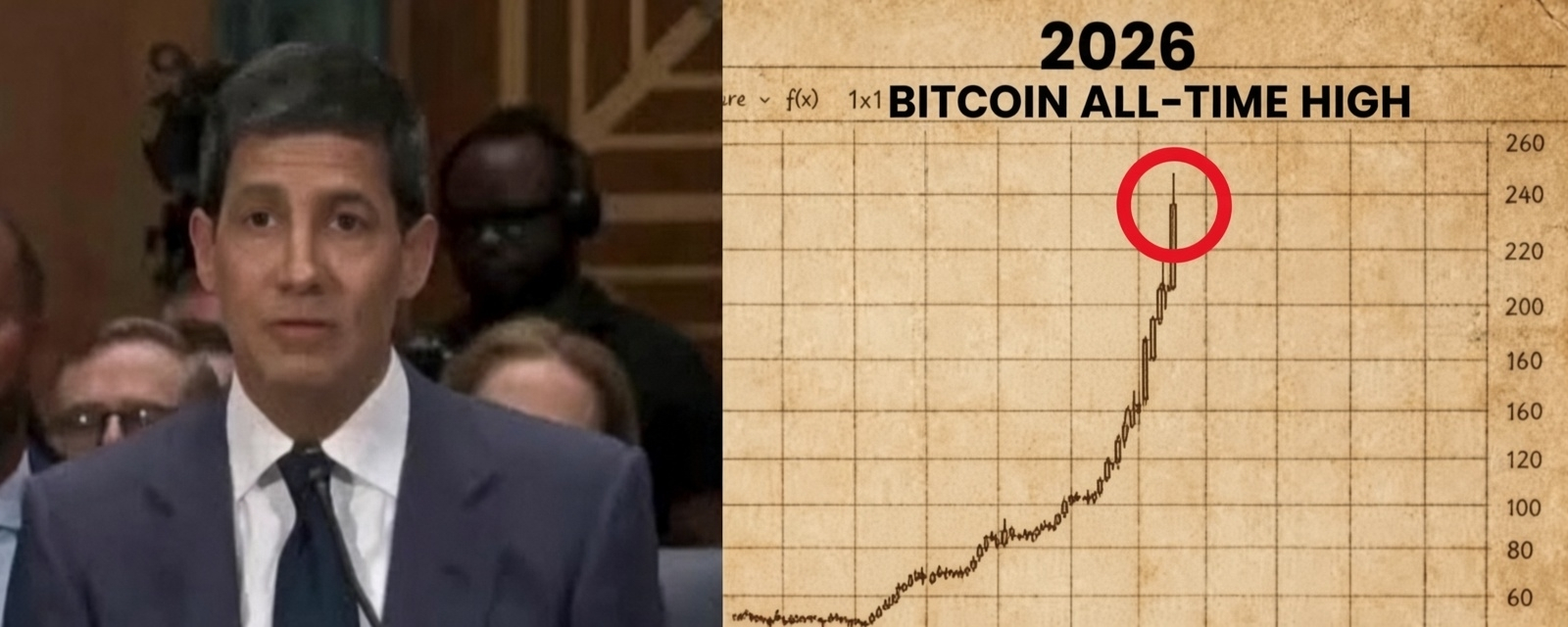
🚨 Bitcoin Survived the Fed Hike. What Comes Next?The Fed just delivered its first rate hike since 2023.
25 bps higher. Policy rate now at 3.75%–4.00%.
Yet $BTC didn't collapse.
That tells us something important:
The market was already prepared for this move.
The bigger risk may not be the hike itself.
It may be what happens next.
📌 Inflation stays sticky
📌 The Fed sees at least one more hike in 2026
📌 Treasury yields remain elevated
📌 The dollar and liquidity conditions can tighten
📌 A fresh energy or geopolitical shock could add more inflation pressure
Reuters reported that 16 of 18 Fed policymakers expect at least one more hike this year, while the Fed's latest projections put 2026 PCE inflation at 3.7%.
So the key question for $BTC isn't simply:
"Will the Fed hike again?"
It's:
Will the next move be more hawkish than the market expects?
That's where things could get interesting.
If inflation cools and yields stabilize, Bitcoin may continue absorbing restrictive policy.
But if inflation reaccelerates, yields surge and markets suddenly price a longer period of tight policy, risk assets could face a much tougher environment.
And this is the signal I'm watching most:
How does $BTC react to bad macro news?
If bad news keeps getting absorbed without a major breakdown, that's information.
If every negative macro headline starts producing deeper selloffs, that's information too.
The reaction matters more than the headline.
No need to chase. Watch liquidity, yields, the dollar and $BTC structure.
$BTC
{future}(BTCUSDT)
#Fed #TrumpNFT #StellarActivatesProtocol28At211TPS
🚨 Bitcoin Survived the Fed Hike. What Comes Next?
The Fed just delivered its first rate hike since 2023.
25 bps higher. Policy rate now at 3.75%–4.00%.
Yet $BTC didn't collapse.
That tells us something important:
The market was already prepared for this move.
The bigger risk may not be the hike itself.
It may be what happens next.
📌 Inflation stays sticky
📌 The Fed sees at least one more hike in 2026
📌 Treasury yields remain elevated
📌 The dollar and liquidity conditions can tighten
📌 A fresh energy or geopolitical shock could add more inflation pressure
Reuters reported that 16 of 18 Fed policymakers expect at least one more hike this year, while the Fed's latest projections put 2026 PCE inflation at 3.7%.
So the key question for $BTC isn't simply:
"Will the Fed hike again?"
It's:
Will the next move be more hawkish than the market expects?
That's where things could get interesting.
If inflation cools and yields stabilize, Bitcoin may continue absorbing restrictive policy.
But if inflation reaccelerates, yields surge and markets suddenly price a longer period of tight policy, risk assets could face a much tougher environment.
And this is the signal I'm watching most:
How does $BTC react to bad macro news?
If bad news keeps getting absorbed without a major breakdown, that's information.
If every negative macro headline starts producing deeper selloffs, that's information too.
The reaction matters more than the headline.
No need to chase. Watch liquidity, yields, the dollar and $BTC structure.
$BTC
#Fed #TrumpNFT #StellarActivatesProtocol28At211TPS
25 bps higher. Policy rate now at 3.75%–4.00%.
Yet $BTC didn't collapse.
That tells us something important:
The market was already prepared for this move.
The bigger risk may not be the hike itself.
It may be what happens next.
📌 Inflation stays sticky
📌 The Fed sees at least one more hike in 2026
📌 Treasury yields remain elevated
📌 The dollar and liquidity conditions can tighten
📌 A fresh energy or geopolitical shock could add more inflation pressure
Reuters reported that 16 of 18 Fed policymakers expect at least one more hike this year, while the Fed's latest projections put 2026 PCE inflation at 3.7%.
So the key question for $BTC isn't simply:
"Will the Fed hike again?"
It's:
Will the next move be more hawkish than the market expects?
That's where things could get interesting.
If inflation cools and yields stabilize, Bitcoin may continue absorbing restrictive policy.
But if inflation reaccelerates, yields surge and markets suddenly price a longer period of tight policy, risk assets could face a much tougher environment.
And this is the signal I'm watching most:
How does $BTC react to bad macro news?
If bad news keeps getting absorbed without a major breakdown, that's information.
If every negative macro headline starts producing deeper selloffs, that's information too.
The reaction matters more than the headline.
No need to chase. Watch liquidity, yields, the dollar and $BTC structure.
$BTC
#Fed #TrumpNFT #StellarActivatesProtocol28At211TPS
1
665
·
--
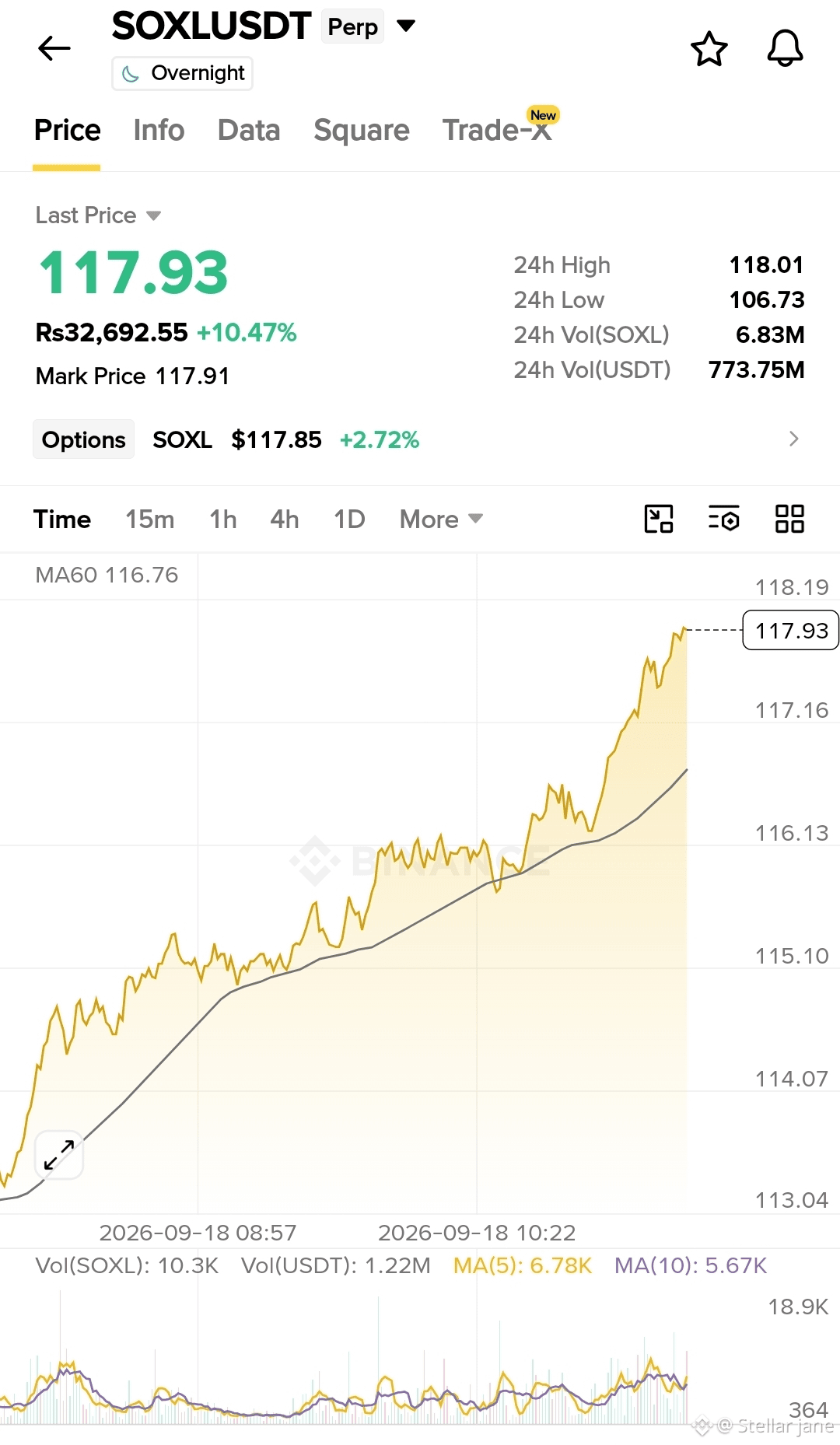
$SOXL is starting to look interesting again.
Price has pushed back above $117 after holding the $105–$112 support zone, while the short-term structure continues to make higher highs and higher lows.
Now I’m watching the $118 area closely.
A strong breakout and hold above this zone could put $128–$138 back in focus. If momentum continues after that, $145–$155 becomes the bigger upside zone.
Key level to protect: $105–$112
Invalidation: below $95
For me, the important part here isn’t chasing the pump — it’s seeing whether buyers can keep defending the higher levels.
Watching $SOXL closely.
#ChainlinkPowersBottomlinePaymentPlatform
#ParadigmDisclosesZECHolding
$SOXL is starting to look interesting again.
Price has pushed back above $117 after holding the $105–$112 support zone, while the short-term structure continues to make higher highs and higher lows.
Now I’m watching the $118 area closely.
A strong breakout and hold above this zone could put $128–$138 back in focus. If momentum continues after that, $145–$155 becomes the bigger upside zone.
Key level to protect: $105–$112
Invalidation: below $95
For me, the important part here isn’t chasing the pump — it’s seeing whether buyers can keep defending the higher levels.
Watching $SOXL closely.
#ChainlinkPowersBottomlinePaymentPlatform
#ParadigmDisclosesZECHolding
Price has pushed back above $117 after holding the $105–$112 support zone, while the short-term structure continues to make higher highs and higher lows.
Now I’m watching the $118 area closely.
A strong breakout and hold above this zone could put $128–$138 back in focus. If momentum continues after that, $145–$155 becomes the bigger upside zone.
Key level to protect: $105–$112
Invalidation: below $95
For me, the important part here isn’t chasing the pump — it’s seeing whether buyers can keep defending the higher levels.
Watching $SOXL closely.
#ChainlinkPowersBottomlinePaymentPlatform
#ParadigmDisclosesZECHolding
214
·
--
Article
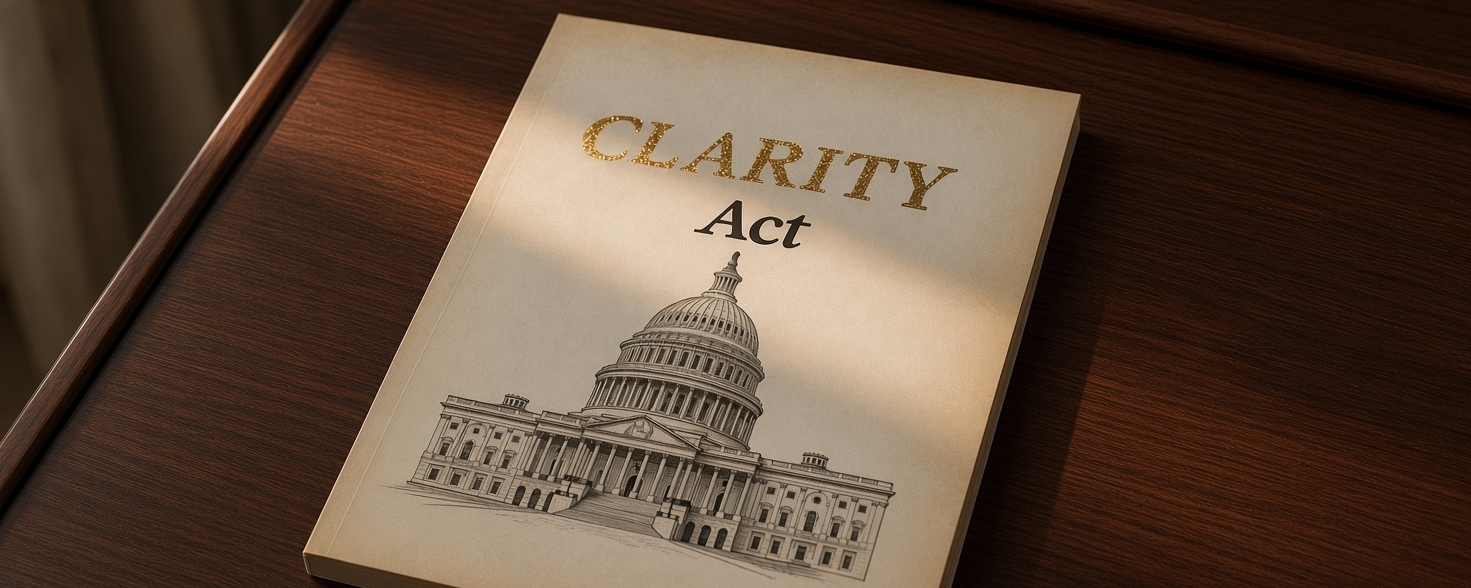
🚨 CLARITY Act UpdateThe U.S. Senate has blocked the next step for the CLARITY Act after a procedural vote ended 49–50, falling short of the 60 votes required to advance the crypto market-structure bill.
But the bill is not necessarily finished.
Sen. Thom Tillis voted against the motion in a move that preserves the possibility of reconsideration and another vote during the current session.
Seven Senate Democrats — including Kirsten Gillibrand, Cory Booker, Ruben Gallego and Mark Warner — also said they remain committed to passing crypto market-structure legislation.
The biggest sticking point remains ethics provisions for elected officials, alongside disagreements over parts of the crypto regulatory framework.
With the Senate expected to recess in early October, lawmakers have a narrowing window to find a compromise before the 2026 session moves further into the election calendar.
For crypto, the key question now is simple:
Can both sides reach a new deal before time runs out?
$GOOGL.US
{stock_us}(GOOGL.US)
$SOL
{spot}(SOLUSDT)
$NVDAB
{spot}(NVDABUSDT)
#USGovernment #StellarActivatesProtocol28At211TPS
🚨 CLARITY Act Update
The U.S. Senate has blocked the next step for the CLARITY Act after a procedural vote ended 49–50, falling short of the 60 votes required to advance the crypto market-structure bill.
But the bill is not necessarily finished.
Sen. Thom Tillis voted against the motion in a move that preserves the possibility of reconsideration and another vote during the current session.
Seven Senate Democrats — including Kirsten Gillibrand, Cory Booker, Ruben Gallego and Mark Warner — also said they remain committed to passing crypto market-structure legislation.
The biggest sticking point remains ethics provisions for elected officials, alongside disagreements over parts of the crypto regulatory framework.
With the Senate expected to recess in early October, lawmakers have a narrowing window to find a compromise before the 2026 session moves further into the election calendar.
For crypto, the key question now is simple:
Can both sides reach a new deal before time runs out?
$GOOGL.US
$SOL
$NVDAB
#USGovernment #StellarActivatesProtocol28At211TPS
But the bill is not necessarily finished.
Sen. Thom Tillis voted against the motion in a move that preserves the possibility of reconsideration and another vote during the current session.
Seven Senate Democrats — including Kirsten Gillibrand, Cory Booker, Ruben Gallego and Mark Warner — also said they remain committed to passing crypto market-structure legislation.
The biggest sticking point remains ethics provisions for elected officials, alongside disagreements over parts of the crypto regulatory framework.
With the Senate expected to recess in early October, lawmakers have a narrowing window to find a compromise before the 2026 session moves further into the election calendar.
For crypto, the key question now is simple:
Can both sides reach a new deal before time runs out?
$GOOGL.US
$SOL
$NVDAB
#USGovernment #StellarActivatesProtocol28At211TPS
579
·
--
Article
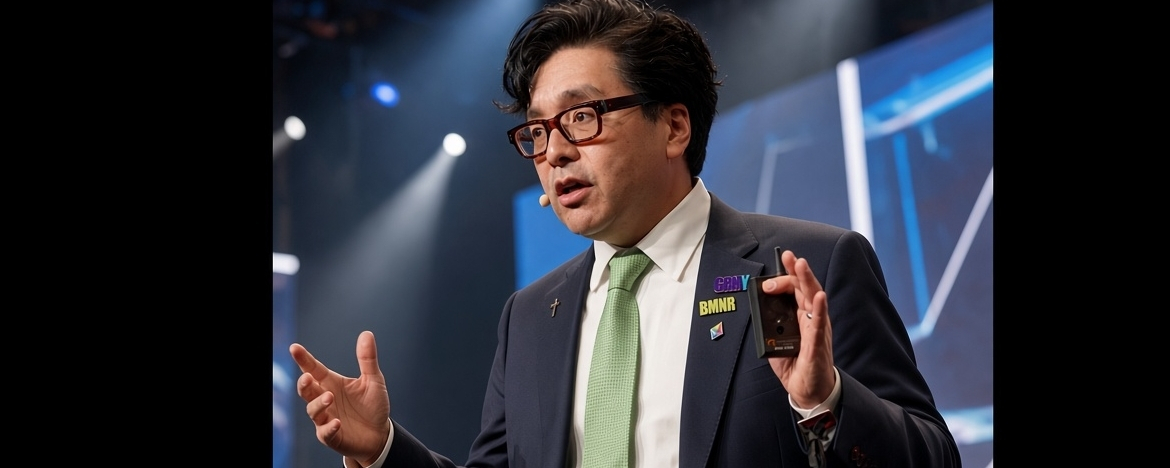
🚨 Tom Lee sees a potential setup the market might be underestimatingThe Fed just delivered a 25 bps hike, but Lee’s take is interesting.
This could represent “max hawkishness.”
If upcoming economic data starts cooling and the Fed’s tone shifts even slightly dovish, the same move that initially pressured risk assets could eventually set the stage for an equity rebound.
That’s the part I’m watching.
Not blindly bullish.
Just watching the data, Fed signals and market reaction closely.
Because sometimes the biggest moves start when expectations begin to shift.
$BTC
$AAPLB
{spot}(AAPLBUSDT)
$NVDA.US
{stock_us}(NVDA.US)
#Fed #BitcoinETFsShed$450M
🚨 Tom Lee sees a potential setup the market might be underestimating
The Fed just delivered a 25 bps hike, but Lee’s take is interesting.
This could represent “max hawkishness.”
If upcoming economic data starts cooling and the Fed’s tone shifts even slightly dovish, the same move that initially pressured risk assets could eventually set the stage for an equity rebound.
That’s the part I’m watching.
Not blindly bullish.
Just watching the data, Fed signals and market reaction closely.
Because sometimes the biggest moves start when expectations begin to shift.
$BTC
$AAPLB
$NVDA.US
#Fed #BitcoinETFsShed$450M
This could represent “max hawkishness.”
If upcoming economic data starts cooling and the Fed’s tone shifts even slightly dovish, the same move that initially pressured risk assets could eventually set the stage for an equity rebound.
That’s the part I’m watching.
Not blindly bullish.
Just watching the data, Fed signals and market reaction closely.
Because sometimes the biggest moves start when expectations begin to shift.
$BTC
$AAPLB
$NVDA.US
#Fed #BitcoinETFsShed$450M
130
·
--
What Will the Fed Do Next?Everyone is focused on whether the Fed hikes this week.
I’m more focused on what traders do after the hike.
With August core CPI at 0.3% MoM and the probability of a 25bp move reportedly close to 90%, a hike shouldn’t be a huge surprise anymore.
The real volatility could come from the guidance.
A hawkish Fed could mean more pressure on $BTC and tech stocks, while gold may also react as traders adjust their expectations for future rates.
But markets don’t always move in the obvious direction.
Sometimes the expected news gets priced in before the announcement, then the opposite move happens once the decision lands.
So my plan is simple:
No FOMO. No guessing. Wait for the reaction. Watch $BTC structure and liquidity. Then look for confirmation.
There will always be another setup.
#FedRateWatch
$BTC
{spot}(BTCUSDT)
What Will the Fed Do Next?
Everyone is focused on whether the Fed hikes this week.
I’m more focused on what traders do after the hike.
With August core CPI at 0.3% MoM and the probability of a 25bp move reportedly close to 90%, a hike shouldn’t be a huge surprise anymore.
The real volatility could come from the guidance.
A hawkish Fed could mean more pressure on $BTC and tech stocks, while gold may also react as traders adjust their expectations for future rates.
But markets don’t always move in the obvious direction.
Sometimes the expected news gets priced in before the announcement, then the opposite move happens once the decision lands.
So my plan is simple:
No FOMO. No guessing. Wait for the reaction. Watch $BTC structure and liquidity. Then look for confirmation.
There will always be another setup.
#FedRateWatch
$BTC
I’m more focused on what traders do after the hike.
With August core CPI at 0.3% MoM and the probability of a 25bp move reportedly close to 90%, a hike shouldn’t be a huge surprise anymore.
The real volatility could come from the guidance.
A hawkish Fed could mean more pressure on $BTC and tech stocks, while gold may also react as traders adjust their expectations for future rates.
But markets don’t always move in the obvious direction.
Sometimes the expected news gets priced in before the announcement, then the opposite move happens once the decision lands.
So my plan is simple:
No FOMO. No guessing. Wait for the reaction. Watch $BTC structure and liquidity. Then look for confirmation.
There will always be another setup.
#FedRateWatch
$BTC
133
·
--
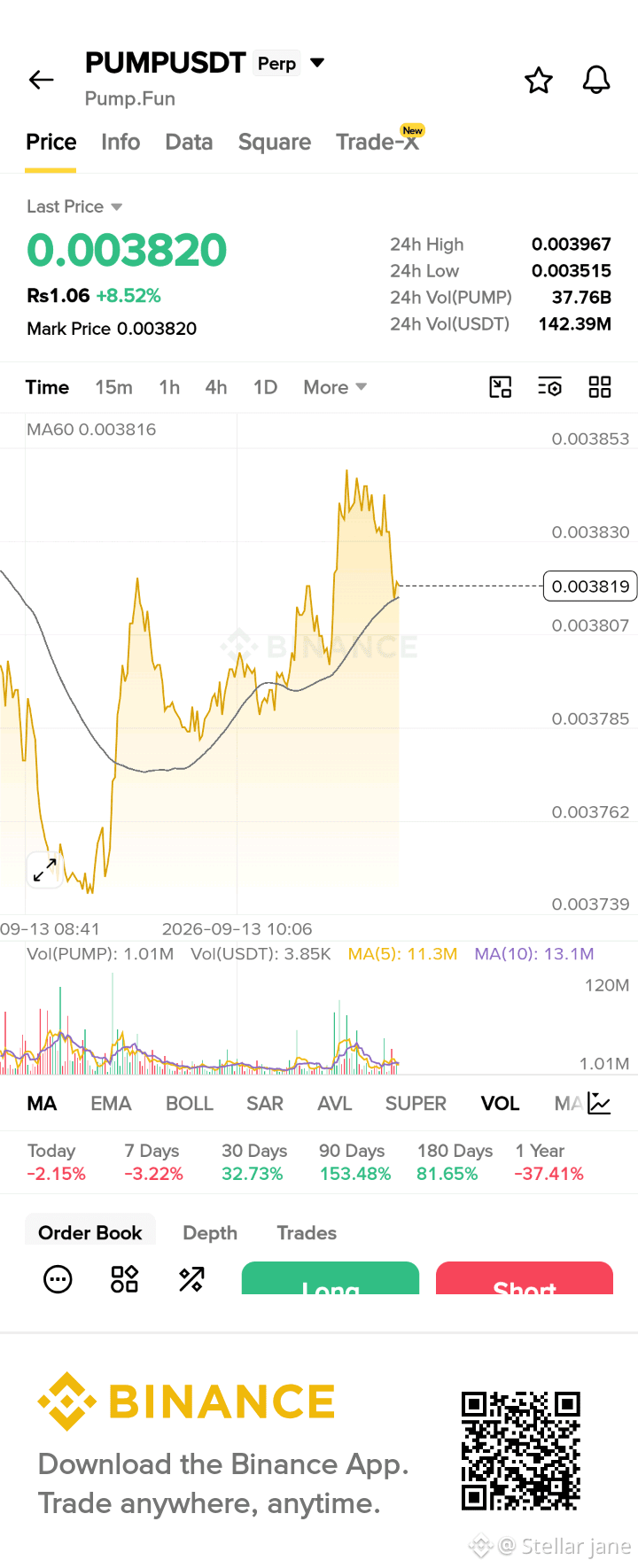
$PUMP is showing some decent strength after bouncing from the $0.00350–$0.00360 support zone.
Price is now around $0.00384, and I’m watching how buyers react around the $0.00390–$0.00400 resistance area.
If $PUMP can break and hold above $0.00400, I think the move could have room to continue higher.
My levels:
Entry: $0.00380–$0.00385
TP1: $0.00392
TP2: $0.00400
TP3: $0.00408
SL: $0.00370
For me, the key is confirmation above $0.00400 rather than chasing the move.
NFA. DYOR.
$NVDA.US
$PUMP is showing some decent strength after bouncing from the $0.00350–$0.00360 support zone.
Price is now around $0.00384, and I’m watching how buyers react around the $0.00390–$0.00400 resistance area.
If $PUMP can break and hold above $0.00400, I think the move could have room to continue higher.
My levels:
Entry: $0.00380–$0.00385
TP1: $0.00392
TP2: $0.00400
TP3: $0.00408
SL: $0.00370
For me, the key is confirmation above $0.00400 rather than chasing the move.
NFA. DYOR.
$NVDA.US
Price is now around $0.00384, and I’m watching how buyers react around the $0.00390–$0.00400 resistance area.
If $PUMP can break and hold above $0.00400, I think the move could have room to continue higher.
My levels:
Entry: $0.00380–$0.00385
TP1: $0.00392
TP2: $0.00400
TP3: $0.00408
SL: $0.00370
For me, the key is confirmation above $0.00400 rather than chasing the move.
NFA. DYOR.
$NVDA.US
PUMP+1.02%
NVDAUS+1.97%
1
261
·
--
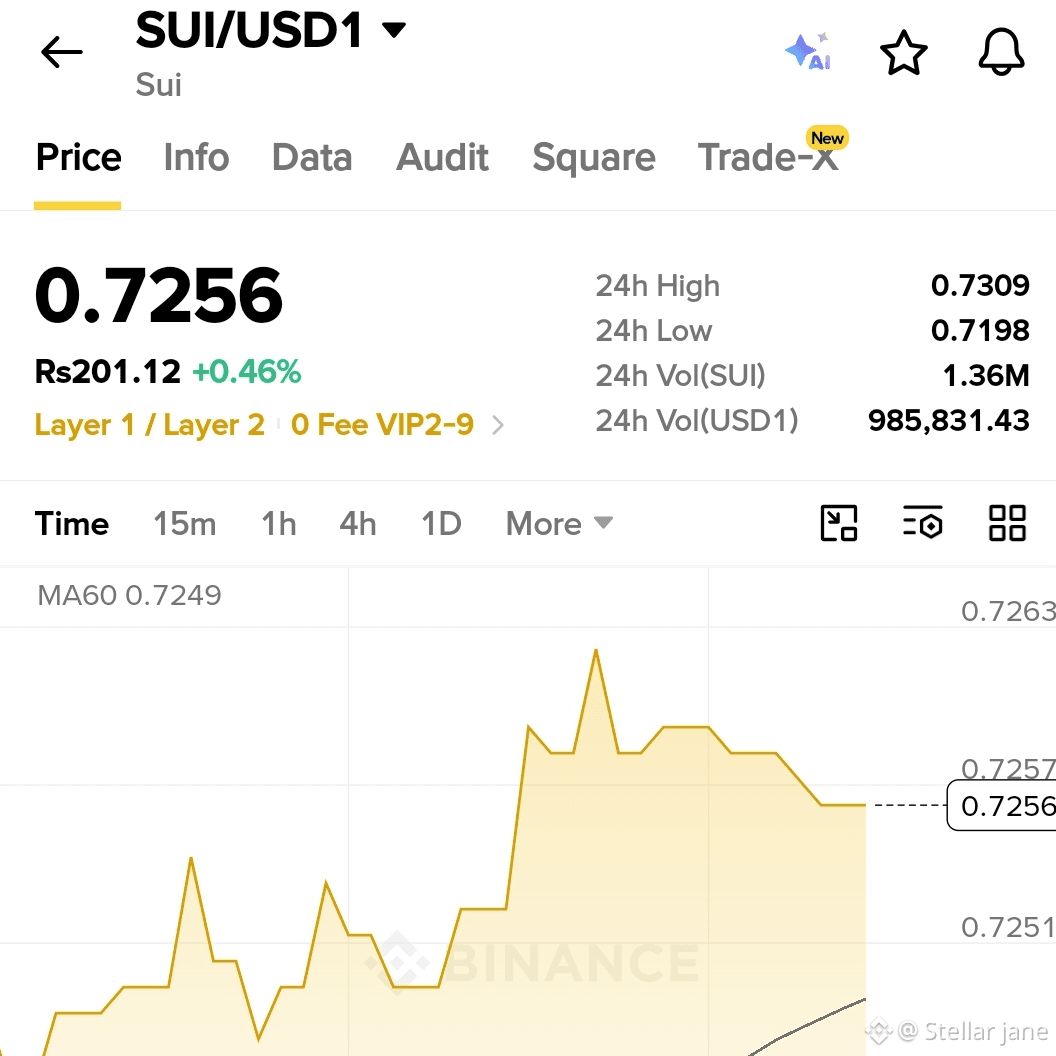
$SUI is holding around the $0.72 area after spending time moving sideways.
This zone is becoming interesting because buyers are still trying to defend the recent base. If $SUI can reclaim and hold above $0.73, I’d be watching for a push toward the next resistance levels.
Trade Setup
Long Entry: $0.7200–$0.7260
SL: $0.7000
TP1: $0.7500
TP2: $0.7800
TP3: $0.8000
The key for me is confirmation, not chasing the first move.
NFA. DYOR.SUI is holding around the $0.72 area after spending time moving sideways.
This zone is becoming interesting because buyers are still trying to defend the recent base. If $SUI can reclaim and hold above $0.73, I’d be watching for a push toward the next resistance levels.
Trade Setup
Long Entry: $0.7200–$0.7260
SL: $0.7000
TP1: $0.7500
TP2: $0.7800
TP3: $0.8000
The key for me is confirmation, not chasing the first move.
NFA. DYOR.
$SUI is holding around the $0.72 area after spending time moving sideways.
This zone is becoming interesting because buyers are still trying to defend the recent base. If $SUI can reclaim and hold above $0.73, I’d be watching for a push toward the next resistance levels.
Trade Setup
Long Entry: $0.7200–$0.7260
SL: $0.7000
TP1: $0.7500
TP2: $0.7800
TP3: $0.8000
The key for me is confirmation, not chasing the first move.
NFA. DYOR.SUI is holding around the $0.72 area after spending time moving sideways.
This zone is becoming interesting because buyers are still trying to defend the recent base. If $SUI can reclaim and hold above $0.73, I’d be watching for a push toward the next resistance levels.
Trade Setup
Long Entry: $0.7200–$0.7260
SL: $0.7000
TP1: $0.7500
TP2: $0.7800
TP3: $0.8000
The key for me is confirmation, not chasing the first move.
NFA. DYOR.
This zone is becoming interesting because buyers are still trying to defend the recent base. If $SUI can reclaim and hold above $0.73, I’d be watching for a push toward the next resistance levels.
Trade Setup
Long Entry: $0.7200–$0.7260
SL: $0.7000
TP1: $0.7500
TP2: $0.7800
TP3: $0.8000
The key for me is confirmation, not chasing the first move.
NFA. DYOR.SUI is holding around the $0.72 area after spending time moving sideways.
This zone is becoming interesting because buyers are still trying to defend the recent base. If $SUI can reclaim and hold above $0.73, I’d be watching for a push toward the next resistance levels.
Trade Setup
Long Entry: $0.7200–$0.7260
SL: $0.7000
TP1: $0.7500
TP2: $0.7800
TP3: $0.8000
The key for me is confirmation, not chasing the first move.
NFA. DYOR.
279
·
--
Converted some of my coins into $ADA on Binance and added to my position.
Keeping it simple and playing the long-term game. Lets see what $ADA does next.
Converted some of my coins into $ADA on Binance and added to my position.
Keeping it simple and playing the long-term game. Lets see what $ADA does next.
Keeping it simple and playing the long-term game. Lets see what $ADA does next.
243
·
--
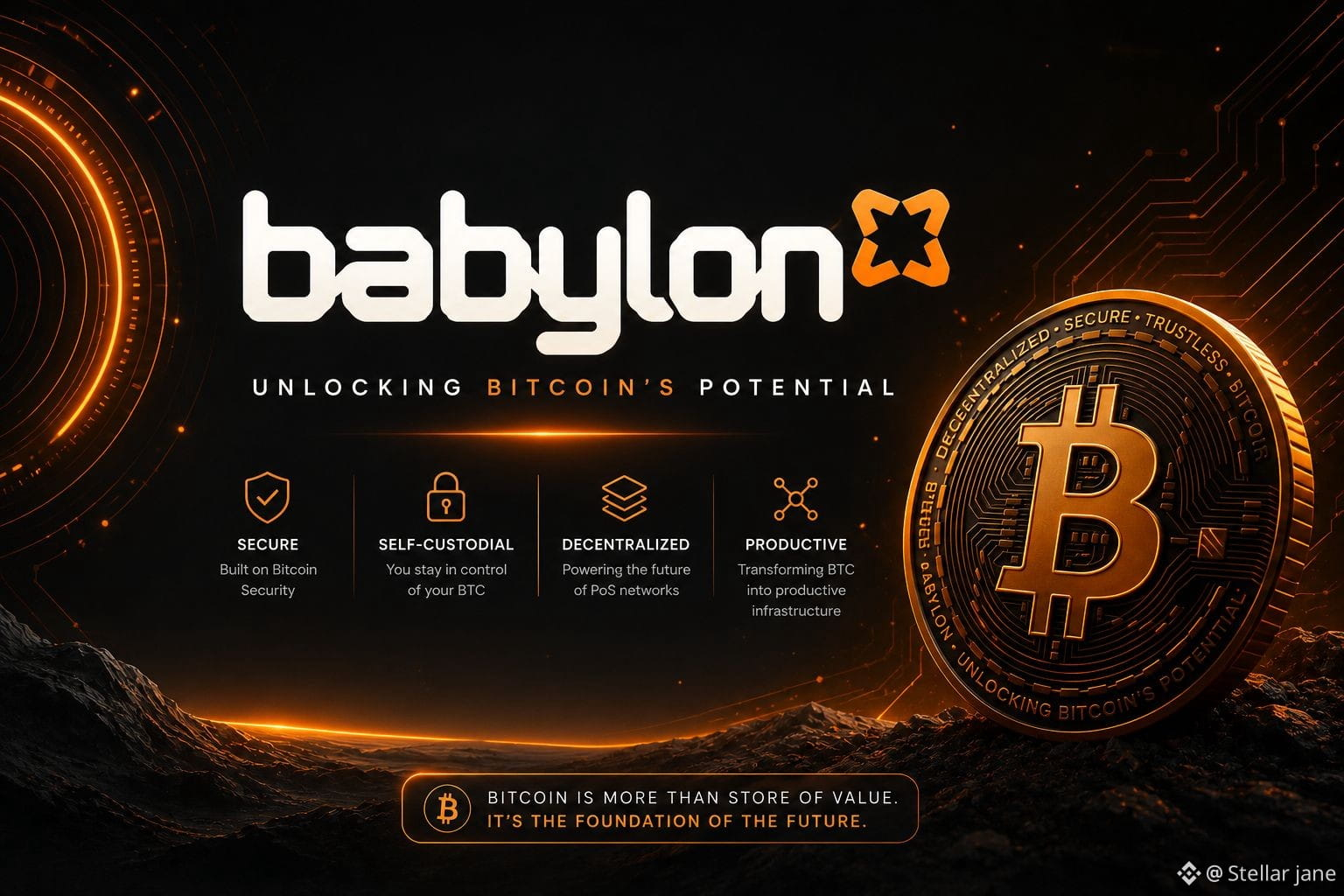
I used to think the best crypto projects were the ones everyone was talking about.
Now I pay more attention to the ones quietly building.
Hype can bring people in, but it doesn't keep them around. What really matters is whether a project is solving a real problem or just following the latest trend.
Whenever I come across a new project, I don't ask, "Can this token pump?"
I ask, "Would people still use this if the market wasn't pumping?"
That one question changes how you look at crypto.
There will always be new narratives, new memes, and new opportunities. But projects that focus on building something useful usually have a much better chance of lasting.
Price gets the attention.
Utility earns the trust.
@babylonlabs_io $BABY #baby
I used to think the best crypto projects were the ones everyone was talking about.
Now I pay more attention to the ones quietly building.
Hype can bring people in, but it doesn't keep them around. What really matters is whether a project is solving a real problem or just following the latest trend.
Whenever I come across a new project, I don't ask, "Can this token pump?"
I ask, "Would people still use this if the market wasn't pumping?"
That one question changes how you look at crypto.
There will always be new narratives, new memes, and new opportunities. But projects that focus on building something useful usually have a much better chance of lasting.
Price gets the attention.
Utility earns the trust.
@BabylonLabs_io $BABY #baby
Now I pay more attention to the ones quietly building.
Hype can bring people in, but it doesn't keep them around. What really matters is whether a project is solving a real problem or just following the latest trend.
Whenever I come across a new project, I don't ask, "Can this token pump?"
I ask, "Would people still use this if the market wasn't pumping?"
That one question changes how you look at crypto.
There will always be new narratives, new memes, and new opportunities. But projects that focus on building something useful usually have a much better chance of lasting.
Price gets the attention.
Utility earns the trust.
@BabylonLabs_io $BABY #baby
150
Log in to explore more content
Join global crypto users on Binance Square
⚡️ Get latest and useful information about crypto.
💬 Trusted by the world’s largest crypto exchange.
👍 Discover real insights from verified creators.
Email / Phone number