

MPrince
611 Posts

MPrince
Report
Block User
Creating content, testing strategies, learning every day DM open. Let's connect Trading, memes &a dream to hold 1 BTC 💼💰🔥

#BinanceTurns7
Open Trade
Occasional Trader
4.3 Years
2.6K+ Following
981 Followers
981 Liked
1 Badges
Posts
Portfolio
All
Quotes
Videos
Live
·
--
Verified
🚨 FED DAY
The Federal Reserve’s September meeting is underway, with markets heavily expecting a 25 basis-point rate hike. If it happens, it would be the Fed’s first rate increase since 2023.
But the bigger story may not be the rate hike itself. Markets will be paying close attention to the Fed’s dot plot and the comments from Fed officials for clues about where interest rates could be heading over the next few years.
The dot plot is basically a snapshot of where Fed policymakers expect interest rates to go. A more hawkish outlook could put pressure on risk assets like Bitcoin and other cryptocurrencies, while a softer outlook could support market liquidity and risk appetite.
This is why the Fed matters. Interest rates influence liquidity, the dollar, borrowing costs and ultimately how much risk investors are willing to take.
today, don't just watch the headline “Fed hikes 25 bps.” Watch the details behind the decision. Sometimes the market reaction comes less from what the Fed does today and more from what it signals about tomorrow.
Stay informed before you trade and Always DYOR
#FedRateWatch $BTC
#macroeconomic
🚨 FED DAY
The Federal Reserve’s September meeting is underway, with markets heavily expecting a 25 basis-point rate hike. If it happens, it would be the Fed’s first rate increase since 2023.
But the bigger story may not be the rate hike itself. Markets will be paying close attention to the Fed’s dot plot and the comments from Fed officials for clues about where interest rates could be heading over the next few years.
The dot plot is basically a snapshot of where Fed policymakers expect interest rates to go. A more hawkish outlook could put pressure on risk assets like Bitcoin and other cryptocurrencies, while a softer outlook could support market liquidity and risk appetite.
This is why the Fed matters. Interest rates influence liquidity, the dollar, borrowing costs and ultimately how much risk investors are willing to take.
today, don't just watch the headline “Fed hikes 25 bps.” Watch the details behind the decision. Sometimes the market reaction comes less from what the Fed does today and more from what it signals about tomorrow.
Stay informed before you trade and Always DYOR
#FedRateWatch $BTC
#macroeconomic
The Federal Reserve’s September meeting is underway, with markets heavily expecting a 25 basis-point rate hike. If it happens, it would be the Fed’s first rate increase since 2023.
But the bigger story may not be the rate hike itself. Markets will be paying close attention to the Fed’s dot plot and the comments from Fed officials for clues about where interest rates could be heading over the next few years.
The dot plot is basically a snapshot of where Fed policymakers expect interest rates to go. A more hawkish outlook could put pressure on risk assets like Bitcoin and other cryptocurrencies, while a softer outlook could support market liquidity and risk appetite.
This is why the Fed matters. Interest rates influence liquidity, the dollar, borrowing costs and ultimately how much risk investors are willing to take.
today, don't just watch the headline “Fed hikes 25 bps.” Watch the details behind the decision. Sometimes the market reaction comes less from what the Fed does today and more from what it signals about tomorrow.
Stay informed before you trade and Always DYOR
#FedRateWatch $BTC
#macroeconomic

1
158
·
--
Nasdaq Composite and S&P 500 moved higher on Monday as pressure on technology stocks started to ease. The Nasdaq gained about 1%, while the S&P 500 rose 0.6%. The Dow Jones Industrial Average also stayed stable after a strong holiday-shortened week, showing continued confidence in the broader market.
Technology stocks played a big role in the recovery. Investors are slowly regaining confidence in the AI sector after recent weakness in chip stocks. Positive news from Foxconn, a key supplier to Nvidia, showed strong sales growth. This suggests that demand for AI hardware is still strong despite recent concerns.
Attention is now turning to Samsung Electronics, which is expected to report very strong earnings. Analysts predict a major jump in profit compared to last year, driven by high demand for memory chips used in AI systems. This could further support confidence in the tech sector if results meet expectations.
Outside of tech, energy markets also helped improve sentiment. Oil prices remained stable after the OPEC+ group decided to increase production. At the same time, the reopening of the Strait of Hormuz reduced supply concerns, easing fears about rising inflation.
The market is showing signs of stability and cautious optimism. Strong AI demand, better supply conditions, and stable economic data are helping stocks recover. However, investors are still watching key events like Federal Reserve updates and economic reports, which could influence the market direction in the coming days.#USTechStockFuturesRise $NVDA
Nasdaq Composite and S&P 500 moved higher on Monday as pressure on technology stocks started to ease. The Nasdaq gained about 1%, while the S&P 500 rose 0.6%. The Dow Jones Industrial Average also stayed stable after a strong holiday-shortened week, showing continued confidence in the broader market.
Technology stocks played a big role in the recovery. Investors are slowly regaining confidence in the AI sector after recent weakness in chip stocks. Positive news from Foxconn, a key supplier to Nvidia, showed strong sales growth. This suggests that demand for AI hardware is still strong despite recent concerns.
Attention is now turning to Samsung Electronics, which is expected to report very strong earnings. Analysts predict a major jump in profit compared to last year, driven by high demand for memory chips used in AI systems. This could further support confidence in the tech sector if results meet expectations.
Outside of tech, energy markets also helped improve sentiment. Oil prices remained stable after the OPEC+ group decided to increase production. At the same time, the reopening of the Strait of Hormuz reduced supply concerns, easing fears about rising inflation.
The market is showing signs of stability and cautious optimism. Strong AI demand, better supply conditions, and stable economic data are helping stocks recover. However, investors are still watching key events like Federal Reserve updates and economic reports, which could influence the market direction in the coming days.#USTechStockFuturesRise $NVDA
Technology stocks played a big role in the recovery. Investors are slowly regaining confidence in the AI sector after recent weakness in chip stocks. Positive news from Foxconn, a key supplier to Nvidia, showed strong sales growth. This suggests that demand for AI hardware is still strong despite recent concerns.
Attention is now turning to Samsung Electronics, which is expected to report very strong earnings. Analysts predict a major jump in profit compared to last year, driven by high demand for memory chips used in AI systems. This could further support confidence in the tech sector if results meet expectations.
Outside of tech, energy markets also helped improve sentiment. Oil prices remained stable after the OPEC+ group decided to increase production. At the same time, the reopening of the Strait of Hormuz reduced supply concerns, easing fears about rising inflation.
The market is showing signs of stability and cautious optimism. Strong AI demand, better supply conditions, and stable economic data are helping stocks recover. However, investors are still watching key events like Federal Reserve updates and economic reports, which could influence the market direction in the coming days.#USTechStockFuturesRise $NVDA
2
2
138
·
--
Nvidia is facing new pressure after reports that its next-generation AI server system may be delayed by more than a year. This news has created uncertainty across the Asian tech market, especially among companies that supply parts for Nvidia’s advanced systems. Even a small delay is enough to shake confidence after the strong rally in AI stocks.
The impact was immediate across the supply chain. Companies like Ibiden, Kingboard Laminates Holdings, Elite Material, and Samsung Electro-Mechanics all saw sharp declines. These firms play key roles in producing printed circuit boards and materials used in AI hardware, so any slowdown from Nvidia directly affects them.
The main issue comes from reported manufacturing challenges, especially in building complex circuit boards for Nvidia’s new system. This raises concerns about delays in its AI expansion roadmap. If these systems take longer to launch, competitors may get more time to catch up, increasing competition in the fast-growing AI space.
However, not all experts believe this is a major long-term problem. Some analysts say the delay does not mean that spending on AI will drop. Instead, it may simply show that building advanced technology takes time. After such huge gains this year, many investors are also taking profits, which adds to the current market decline.
the recent drop in tech stocks is driven by a mix of uncertainty, profit-taking, and market rotation. The AI trend is still strong, but the market is becoming more sensitive to any negative news. This means prices may stay volatile in the short term, even if the long-term outlook remains positive.#AsianPCBStocksSlideOnNvidiaAIServerDelay #NVIDIA $NVDA
Nvidia is facing new pressure after reports that its next-generation AI server system may be delayed by more than a year. This news has created uncertainty across the Asian tech market, especially among companies that supply parts for Nvidia’s advanced systems. Even a small delay is enough to shake confidence after the strong rally in AI stocks.
The impact was immediate across the supply chain. Companies like Ibiden, Kingboard Laminates Holdings, Elite Material, and Samsung Electro-Mechanics all saw sharp declines. These firms play key roles in producing printed circuit boards and materials used in AI hardware, so any slowdown from Nvidia directly affects them.
The main issue comes from reported manufacturing challenges, especially in building complex circuit boards for Nvidia’s new system. This raises concerns about delays in its AI expansion roadmap. If these systems take longer to launch, competitors may get more time to catch up, increasing competition in the fast-growing AI space.
However, not all experts believe this is a major long-term problem. Some analysts say the delay does not mean that spending on AI will drop. Instead, it may simply show that building advanced technology takes time. After such huge gains this year, many investors are also taking profits, which adds to the current market decline.
the recent drop in tech stocks is driven by a mix of uncertainty, profit-taking, and market rotation. The AI trend is still strong, but the market is becoming more sensitive to any negative news. This means prices may stay volatile in the short term, even if the long-term outlook remains positive.#AsianPCBStocksSlideOnNvidiaAIServerDelay #NVIDIA $NVDA
The impact was immediate across the supply chain. Companies like Ibiden, Kingboard Laminates Holdings, Elite Material, and Samsung Electro-Mechanics all saw sharp declines. These firms play key roles in producing printed circuit boards and materials used in AI hardware, so any slowdown from Nvidia directly affects them.
The main issue comes from reported manufacturing challenges, especially in building complex circuit boards for Nvidia’s new system. This raises concerns about delays in its AI expansion roadmap. If these systems take longer to launch, competitors may get more time to catch up, increasing competition in the fast-growing AI space.
However, not all experts believe this is a major long-term problem. Some analysts say the delay does not mean that spending on AI will drop. Instead, it may simply show that building advanced technology takes time. After such huge gains this year, many investors are also taking profits, which adds to the current market decline.
the recent drop in tech stocks is driven by a mix of uncertainty, profit-taking, and market rotation. The AI trend is still strong, but the market is becoming more sensitive to any negative news. This means prices may stay volatile in the short term, even if the long-term outlook remains positive.#AsianPCBStocksSlideOnNvidiaAIServerDelay #NVIDIA $NVDA

171
·
--
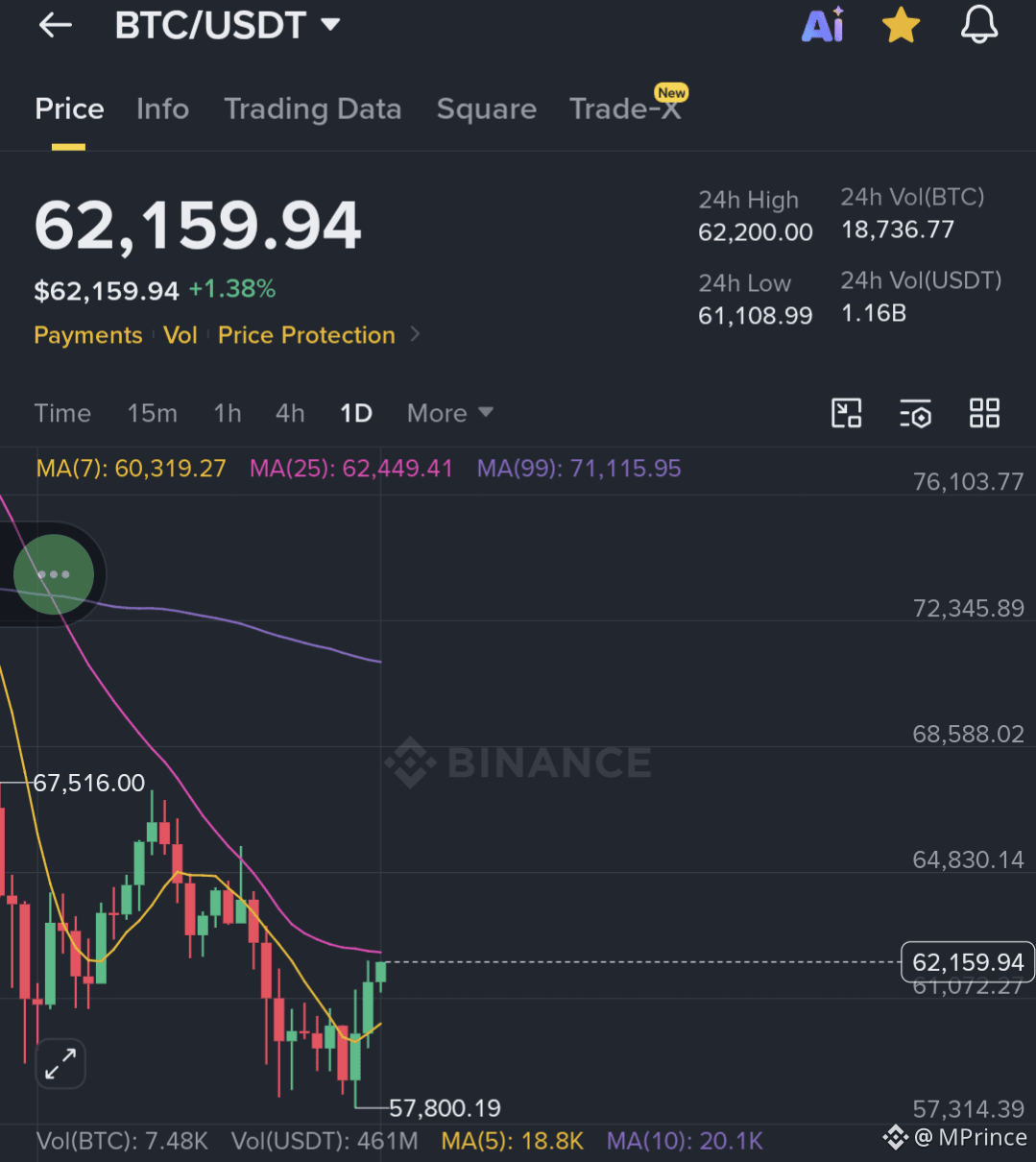
Bitcoin may be starting to show early signs of recovery as market pressure begins to ease. After a difficult period with strong ETF outflows and weak price action, recent data suggests that conditions could improve in July. Macro factors like falling oil prices and softer inflation concerns are helping reduce pressure on risk assets like crypto.
One important change is the shift in the broader economy. Lower oil prices and a more relaxed stance from the Federal Reserve are reducing fears of aggressive rate hikes. When interest rate pressure goes down, assets like Bitcoin often become more attractive again. This shift could help reverse the heavy outflows seen in Bitcoin ETFs over the past month.
At the same time, crypto market behavior is improving. Long-term holders are buying again, and large investors (often called whales) are increasing their positions during price dips. Historically, these experienced investors tend to enter the market at better times. Bitcoin is also trading below key levels like its 200-day average, which some see as a good entry zone for long-term investors.
Another interesting trend is capital rotation. Money that was previously flowing into semiconductor and AI-related stocks is now slowing down. Funds like the VanEck Semiconductor ETF and Roundhill Memory ETF have recently dropped, while Bitcoin has started to stabilize and recover slightly. This suggests that some investors may be moving funds back into crypto.
There are also upcoming events that could impact the market. A key discussion around the CLARITY Act in the United States may bring clearer rules for crypto. Positive news from this could act as a catalyst for renewed confidence. In simple terms, while the market is still uncertain, the combination of improving macro conditions, investor behavior, and shifting capital flows gives Bitcoin a chance for a steady recovery in the coming weeks.
BitcoinReboundsAbove$61K#BitcoinFalls44%FromJanuaryPeak $BTC
{spot}(BTCUSDT)
Bitcoin may be starting to show early signs of recovery as market pressure begins to ease. After a difficult period with strong ETF outflows and weak price action, recent data suggests that conditions could improve in July. Macro factors like falling oil prices and softer inflation concerns are helping reduce pressure on risk assets like crypto.
One important change is the shift in the broader economy. Lower oil prices and a more relaxed stance from the Federal Reserve are reducing fears of aggressive rate hikes. When interest rate pressure goes down, assets like Bitcoin often become more attractive again. This shift could help reverse the heavy outflows seen in Bitcoin ETFs over the past month.
At the same time, crypto market behavior is improving. Long-term holders are buying again, and large investors (often called whales) are increasing their positions during price dips. Historically, these experienced investors tend to enter the market at better times. Bitcoin is also trading below key levels like its 200-day average, which some see as a good entry zone for long-term investors.
Another interesting trend is capital rotation. Money that was previously flowing into semiconductor and AI-related stocks is now slowing down. Funds like the VanEck Semiconductor ETF and Roundhill Memory ETF have recently dropped, while Bitcoin has started to stabilize and recover slightly. This suggests that some investors may be moving funds back into crypto.
There are also upcoming events that could impact the market. A key discussion around the CLARITY Act in the United States may bring clearer rules for crypto. Positive news from this could act as a catalyst for renewed confidence. In simple terms, while the market is still uncertain, the combination of improving macro conditions, investor behavior, and shifting capital flows gives Bitcoin a chance for a steady recovery in the coming weeks.
BitcoinReboundsAbove$61K#BitcoinFalls44%FromJanuaryPeak $BTC
One important change is the shift in the broader economy. Lower oil prices and a more relaxed stance from the Federal Reserve are reducing fears of aggressive rate hikes. When interest rate pressure goes down, assets like Bitcoin often become more attractive again. This shift could help reverse the heavy outflows seen in Bitcoin ETFs over the past month.
At the same time, crypto market behavior is improving. Long-term holders are buying again, and large investors (often called whales) are increasing their positions during price dips. Historically, these experienced investors tend to enter the market at better times. Bitcoin is also trading below key levels like its 200-day average, which some see as a good entry zone for long-term investors.
Another interesting trend is capital rotation. Money that was previously flowing into semiconductor and AI-related stocks is now slowing down. Funds like the VanEck Semiconductor ETF and Roundhill Memory ETF have recently dropped, while Bitcoin has started to stabilize and recover slightly. This suggests that some investors may be moving funds back into crypto.
There are also upcoming events that could impact the market. A key discussion around the CLARITY Act in the United States may bring clearer rules for crypto. Positive news from this could act as a catalyst for renewed confidence. In simple terms, while the market is still uncertain, the combination of improving macro conditions, investor behavior, and shifting capital flows gives Bitcoin a chance for a steady recovery in the coming weeks.
BitcoinReboundsAbove$61K#BitcoinFalls44%FromJanuaryPeak $BTC
117
·
--
SanDisk, Seagate, and Micron Technology have all dropped sharply in recent days as investors grow worried about a possible oversupply in memory chips. In just 24 hours, their stocks fell by double digits, and over the past five days, they have lost a large part of their strong gains from earlier in 2026.
The main concern is a memory supply glut, which means too many chips may soon be available in the market. Experts believe that new production from companies like Samsung Electronics and SK Hynix could increase supply faster than demand. At the same time, spending on AI infrastructure may start to slow down, which could reduce the need for these chips.
Another important factor is the move by Meta Platforms. The company plans to build a cloud service to sell its extra AI computing power. Investors see this as a sign that large tech companies may not need to keep increasing spending at the same pace. This idea has created fear that demand for chips and storage could reach a peak soon.
There are also legal concerns adding pressure. Reports of an antitrust case involving Samsung, SK Hynix, and Micron have raised questions about pricing practices in the DRAM market. This has made investors more cautious and added to the recent sell-off in the sector.
However, not everyone is negative. Some analysts still believe in the long-term growth of the memory market. Strong earnings from Micron and positive ratings from major banks show that confidence has not disappeared. In simple terms, the market is now divided — some see a slowdown coming, while others believe this is just a short-term pullback before the next growth phase.
#SanDiskSeagateMicronSlide $SAMSUNG $DRAM
SanDisk, Seagate, and Micron Technology have all dropped sharply in recent days as investors grow worried about a possible oversupply in memory chips. In just 24 hours, their stocks fell by double digits, and over the past five days, they have lost a large part of their strong gains from earlier in 2026.
The main concern is a memory supply glut, which means too many chips may soon be available in the market. Experts believe that new production from companies like Samsung Electronics and SK Hynix could increase supply faster than demand. At the same time, spending on AI infrastructure may start to slow down, which could reduce the need for these chips.
Another important factor is the move by Meta Platforms. The company plans to build a cloud service to sell its extra AI computing power. Investors see this as a sign that large tech companies may not need to keep increasing spending at the same pace. This idea has created fear that demand for chips and storage could reach a peak soon.
There are also legal concerns adding pressure. Reports of an antitrust case involving Samsung, SK Hynix, and Micron have raised questions about pricing practices in the DRAM market. This has made investors more cautious and added to the recent sell-off in the sector.
However, not everyone is negative. Some analysts still believe in the long-term growth of the memory market. Strong earnings from Micron and positive ratings from major banks show that confidence has not disappeared. In simple terms, the market is now divided — some see a slowdown coming, while others believe this is just a short-term pullback before the next growth phase.
#SanDiskSeagateMicronSlide $SAMSUNG $DRAM
The main concern is a memory supply glut, which means too many chips may soon be available in the market. Experts believe that new production from companies like Samsung Electronics and SK Hynix could increase supply faster than demand. At the same time, spending on AI infrastructure may start to slow down, which could reduce the need for these chips.
Another important factor is the move by Meta Platforms. The company plans to build a cloud service to sell its extra AI computing power. Investors see this as a sign that large tech companies may not need to keep increasing spending at the same pace. This idea has created fear that demand for chips and storage could reach a peak soon.
There are also legal concerns adding pressure. Reports of an antitrust case involving Samsung, SK Hynix, and Micron have raised questions about pricing practices in the DRAM market. This has made investors more cautious and added to the recent sell-off in the sector.
However, not everyone is negative. Some analysts still believe in the long-term growth of the memory market. Strong earnings from Micron and positive ratings from major banks show that confidence has not disappeared. In simple terms, the market is now divided — some see a slowdown coming, while others believe this is just a short-term pullback before the next growth phase.
#SanDiskSeagateMicronSlide $SAMSUNG $DRAM

1
2
272
·
--
SK Hynix is now at the center of a fast-growing financial trend that is starting to affect not only Korea’s stock market but also global tech sentiment. A 2x leveraged ETF linked to this company has grown very quickly in a short time, reaching about $13 billion in assets. This shows strong investor interest, but it also brings new risks to the market.
A leveraged ETF works by trying to double the daily return of a stock. To do this, the fund must adjust its positions every day. This process is called daily rebalancing. When the stock price moves a lot, the ETF must buy or sell large amounts of shares at the end of the day. As this fund grows bigger, these trades are becoming large enough to move the market itself, not just follow it.
The impact is becoming more serious because SK Hynix is a very important company in Korea’s main index, the KOSPI. Together with Samsung Electronics, it makes up a large part of the index. This means that big price changes in Hynix can quickly affect the whole market and even influence global tech stocks.
Another key issue is rising costs. Banks that support these ETFs use complex tools like swaps and derivatives to manage risk. As the fund grows, these costs have increased a lot, from about 3% to over 10% this year. Because of this, the ETF is not performing as well as expected. Even though returns are high, they are still below the “perfect” 2x return due to these hidden costs.
Traders are also watching the rebalancing effect closely. Many now try to predict what the ETF will do at the end of the day and trade around it. This behavior can increase short-term volatility. If the stock starts falling, the ETF may be forced to keep selling, which can make the drop even stronger. This is called a feedback loop, and it can lead to sharp market moves.
Regulators in South Korea are becoming concerned. Most investors in these products are retail investors, meaning everyday people, not professionals. If the market turns down quickly, many of them may face
#SKHynix2xLongETFFallsOver30%
SK Hynix is now at the center of a fast-growing financial trend that is starting to affect not only Korea’s stock market but also global tech sentiment. A 2x leveraged ETF linked to this company has grown very quickly in a short time, reaching about $13 billion in assets. This shows strong investor interest, but it also brings new risks to the market.
A leveraged ETF works by trying to double the daily return of a stock. To do this, the fund must adjust its positions every day. This process is called daily rebalancing. When the stock price moves a lot, the ETF must buy or sell large amounts of shares at the end of the day. As this fund grows bigger, these trades are becoming large enough to move the market itself, not just follow it.
The impact is becoming more serious because SK Hynix is a very important company in Korea’s main index, the KOSPI. Together with Samsung Electronics, it makes up a large part of the index. This means that big price changes in Hynix can quickly affect the whole market and even influence global tech stocks.
Another key issue is rising costs. Banks that support these ETFs use complex tools like swaps and derivatives to manage risk. As the fund grows, these costs have increased a lot, from about 3% to over 10% this year. Because of this, the ETF is not performing as well as expected. Even though returns are high, they are still below the “perfect” 2x return due to these hidden costs.
Traders are also watching the rebalancing effect closely. Many now try to predict what the ETF will do at the end of the day and trade around it. This behavior can increase short-term volatility. If the stock starts falling, the ETF may be forced to keep selling, which can make the drop even stronger. This is called a feedback loop, and it can lead to sharp market moves.
Regulators in South Korea are becoming concerned. Most investors in these products are retail investors, meaning everyday people, not professionals. If the market turns down quickly, many of them may face
#SKHynix2xLongETFFallsOver30%
A leveraged ETF works by trying to double the daily return of a stock. To do this, the fund must adjust its positions every day. This process is called daily rebalancing. When the stock price moves a lot, the ETF must buy or sell large amounts of shares at the end of the day. As this fund grows bigger, these trades are becoming large enough to move the market itself, not just follow it.
The impact is becoming more serious because SK Hynix is a very important company in Korea’s main index, the KOSPI. Together with Samsung Electronics, it makes up a large part of the index. This means that big price changes in Hynix can quickly affect the whole market and even influence global tech stocks.
Another key issue is rising costs. Banks that support these ETFs use complex tools like swaps and derivatives to manage risk. As the fund grows, these costs have increased a lot, from about 3% to over 10% this year. Because of this, the ETF is not performing as well as expected. Even though returns are high, they are still below the “perfect” 2x return due to these hidden costs.
Traders are also watching the rebalancing effect closely. Many now try to predict what the ETF will do at the end of the day and trade around it. This behavior can increase short-term volatility. If the stock starts falling, the ETF may be forced to keep selling, which can make the drop even stronger. This is called a feedback loop, and it can lead to sharp market moves.
Regulators in South Korea are becoming concerned. Most investors in these products are retail investors, meaning everyday people, not professionals. If the market turns down quickly, many of them may face
#SKHynix2xLongETFFallsOver30%

1
519
·
--
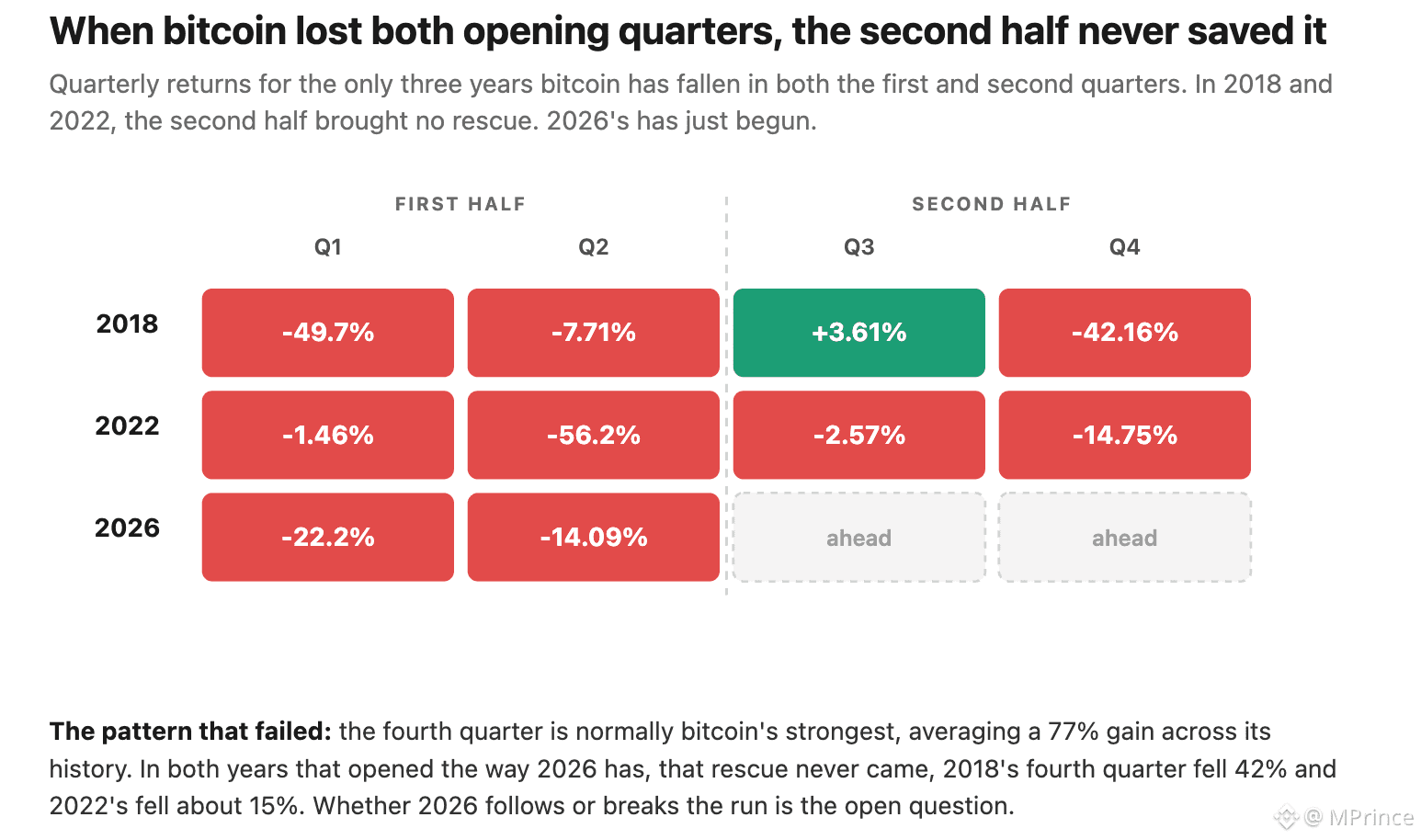
Bitcoin has entered the third quarter of 2026 in a weak position after recording two consecutive losing quarters, something that has only happened twice before in its history in 2018 and 2022.
In the first half of the year, Bitcoin dropped sharply, falling 22.2% in Q1 and another 14.09% in Q2. As Q3 begins, the price is hovering around $59,000–$60,000, showing only a small recovery. This kind of start is rare and often seen during deeper bear markets rather than short-term corrections.
Looking at history, the only other times Bitcoin had such a weak start were during major downturns. In both 2018 and 2022, the second half of the year did not bring a strong recovery. Instead, prices remained under pressure, with the final quarter — usually the strongest period — turning negative due to larger market problems at the time.
Normally, Bitcoin follows a different seasonal pattern. The third quarter is often slow or flat, while the fourth quarter tends to be the strongest, sometimes delivering large gains. However, in past weak years, this pattern failed because broader market issues outweighed seasonal trends.
In 2026, the situation appears less like a sudden crash and more like a gradual slowdown. Several factors are putting pressure on the market. There have been strong outflows from Bitcoin ETFs, meaning investors are pulling money out. At the same time, activity on the blockchain remains low, showing reduced participation. Another key factor is that investors are shifting money into other areas, especially AI-related stocks, which have recently performed much better than crypto.
The strong U.S. dollar is also adding pressure, making risk assets like Bitcoin less attractive globally. Currency movements, especially the weakness in the Japanese yen, have further supported the dollar and indirectly weighed on crypto prices.
Bitcoin is trying to stabilize, but the overall trend remains fragile. Analysts are watching key support levels closely, with some suggesting that $40,000 could be the next major support. $BTC #BTC
#BitcoinWorstFirstHalfSince2022
Bitcoin has entered the third quarter of 2026 in a weak position after recording two consecutive losing quarters, something that has only happened twice before in its history in 2018 and 2022.
In the first half of the year, Bitcoin dropped sharply, falling 22.2% in Q1 and another 14.09% in Q2. As Q3 begins, the price is hovering around $59,000–$60,000, showing only a small recovery. This kind of start is rare and often seen during deeper bear markets rather than short-term corrections.
Looking at history, the only other times Bitcoin had such a weak start were during major downturns. In both 2018 and 2022, the second half of the year did not bring a strong recovery. Instead, prices remained under pressure, with the final quarter — usually the strongest period — turning negative due to larger market problems at the time.
Normally, Bitcoin follows a different seasonal pattern. The third quarter is often slow or flat, while the fourth quarter tends to be the strongest, sometimes delivering large gains. However, in past weak years, this pattern failed because broader market issues outweighed seasonal trends.
In 2026, the situation appears less like a sudden crash and more like a gradual slowdown. Several factors are putting pressure on the market. There have been strong outflows from Bitcoin ETFs, meaning investors are pulling money out. At the same time, activity on the blockchain remains low, showing reduced participation. Another key factor is that investors are shifting money into other areas, especially AI-related stocks, which have recently performed much better than crypto.
The strong U.S. dollar is also adding pressure, making risk assets like Bitcoin less attractive globally. Currency movements, especially the weakness in the Japanese yen, have further supported the dollar and indirectly weighed on crypto prices.
Bitcoin is trying to stabilize, but the overall trend remains fragile. Analysts are watching key support levels closely, with some suggesting that $40,000 could be the next major support. $BTC #BTC
#BitcoinWorstFirstHalfSince2022
In the first half of the year, Bitcoin dropped sharply, falling 22.2% in Q1 and another 14.09% in Q2. As Q3 begins, the price is hovering around $59,000–$60,000, showing only a small recovery. This kind of start is rare and often seen during deeper bear markets rather than short-term corrections.
Looking at history, the only other times Bitcoin had such a weak start were during major downturns. In both 2018 and 2022, the second half of the year did not bring a strong recovery. Instead, prices remained under pressure, with the final quarter — usually the strongest period — turning negative due to larger market problems at the time.
Normally, Bitcoin follows a different seasonal pattern. The third quarter is often slow or flat, while the fourth quarter tends to be the strongest, sometimes delivering large gains. However, in past weak years, this pattern failed because broader market issues outweighed seasonal trends.
In 2026, the situation appears less like a sudden crash and more like a gradual slowdown. Several factors are putting pressure on the market. There have been strong outflows from Bitcoin ETFs, meaning investors are pulling money out. At the same time, activity on the blockchain remains low, showing reduced participation. Another key factor is that investors are shifting money into other areas, especially AI-related stocks, which have recently performed much better than crypto.
The strong U.S. dollar is also adding pressure, making risk assets like Bitcoin less attractive globally. Currency movements, especially the weakness in the Japanese yen, have further supported the dollar and indirectly weighed on crypto prices.
Bitcoin is trying to stabilize, but the overall trend remains fragile. Analysts are watching key support levels closely, with some suggesting that $40,000 could be the next major support. $BTC #BTC
#BitcoinWorstFirstHalfSince2022
1
199
·
--
Private payroll company ADP reported that employers added 98,000 jobs in June, down from 122,000 in May. This suggests that hiring is cooling compared to earlier months. Most of the job growth came from education and healthcare, which added the largest number of positions. Other sectors like trade, transportation, and financial services also saw gains, while natural resources and mining lost jobs.
One important point is that small businesses are leading hiring right now, adding the most jobs compared to large companies. At the same time, wages are still rising at about 4.4% per year, which shows workers are still seeing income growth even as hiring slows.
From a broader view, the labor market is not weak, but it is no longer as strong as before. After the COVID-19 recovery, job growth was very fast. Now, things are becoming more balanced. People are taking longer to find jobs, and some industries are facing worker shortages, while others are slowing down hiring.
Different reports are also giving mixed signals. For example, data from Vanguard suggests almost no job growth in June, especially among younger workers. This could mean companies are becoming more cautious about hiring. On the other hand, another firm (Revelio Labs) reported a much stronger increase, showing how uncertain the current situation is.
All eyes are now on the official government report, which is expected to show around 110,000–118,000 new jobs. If the number comes in close to expectations, it would confirm that the labor market is stable but slowing.
For markets, this matters a lot. A slower job market could reduce pressure on inflation, which might influence the Federal Reserve and its decisions on interest rates. Right now, the Fed is still focused on controlling inflation, but weaker job growth could change its approach in the future.
➡️ Jobs are still growing
➡️ But hiring is slowing down
➡️ The economy is moving into a more stable, less aggressive phase #USADP98KMiss #ADP
Private payroll company ADP reported that employers added 98,000 jobs in June, down from 122,000 in May. This suggests that hiring is cooling compared to earlier months. Most of the job growth came from education and healthcare, which added the largest number of positions. Other sectors like trade, transportation, and financial services also saw gains, while natural resources and mining lost jobs.
One important point is that small businesses are leading hiring right now, adding the most jobs compared to large companies. At the same time, wages are still rising at about 4.4% per year, which shows workers are still seeing income growth even as hiring slows.
From a broader view, the labor market is not weak, but it is no longer as strong as before. After the COVID-19 recovery, job growth was very fast. Now, things are becoming more balanced. People are taking longer to find jobs, and some industries are facing worker shortages, while others are slowing down hiring.
Different reports are also giving mixed signals. For example, data from Vanguard suggests almost no job growth in June, especially among younger workers. This could mean companies are becoming more cautious about hiring. On the other hand, another firm (Revelio Labs) reported a much stronger increase, showing how uncertain the current situation is.
All eyes are now on the official government report, which is expected to show around 110,000–118,000 new jobs. If the number comes in close to expectations, it would confirm that the labor market is stable but slowing.
For markets, this matters a lot. A slower job market could reduce pressure on inflation, which might influence the Federal Reserve and its decisions on interest rates. Right now, the Fed is still focused on controlling inflation, but weaker job growth could change its approach in the future.
➡️ Jobs are still growing
➡️ But hiring is slowing down
➡️ The economy is moving into a more stable, less aggressive phase #USADP98KMiss #ADP
One important point is that small businesses are leading hiring right now, adding the most jobs compared to large companies. At the same time, wages are still rising at about 4.4% per year, which shows workers are still seeing income growth even as hiring slows.
From a broader view, the labor market is not weak, but it is no longer as strong as before. After the COVID-19 recovery, job growth was very fast. Now, things are becoming more balanced. People are taking longer to find jobs, and some industries are facing worker shortages, while others are slowing down hiring.
Different reports are also giving mixed signals. For example, data from Vanguard suggests almost no job growth in June, especially among younger workers. This could mean companies are becoming more cautious about hiring. On the other hand, another firm (Revelio Labs) reported a much stronger increase, showing how uncertain the current situation is.
All eyes are now on the official government report, which is expected to show around 110,000–118,000 new jobs. If the number comes in close to expectations, it would confirm that the labor market is stable but slowing.
For markets, this matters a lot. A slower job market could reduce pressure on inflation, which might influence the Federal Reserve and its decisions on interest rates. Right now, the Fed is still focused on controlling inflation, but weaker job growth could change its approach in the future.
➡️ Jobs are still growing
➡️ But hiring is slowing down
➡️ The economy is moving into a more stable, less aggressive phase #USADP98KMiss #ADP


ADPUS+0.00%
2
101
·
--
Markets go up and down every day, but one thing that should stay steady is your discipline.
I’ve learned this the hard way. In the beginning, I used to chase every move — buying when prices were already high and selling in fear when markets dropped. It felt like I was always one step behind. Over time, I realized that success in trading or investing is not about catching every move, but about staying consistent with a plan.
Right now, if you look at the market, even strong assets like Bitcoin, Ethereum, and XRP are not in a perfect uptrend. They are struggling around key support and resistance levels. This is normal. Markets move in cycles — trend, correction, consolidation, and then trend again.
From a technical point of view, this is a phase where patience matters the most. Prices are below major moving averages, momentum is weak, and the market is trying to find direction. In simple terms, this is not the time to be emotional — it’s the time to observe, plan, and wait for confirmation.
Discipline means:
Not entering trades just because of hype
Respecting support and resistance levels
Managing risk even when you feel confident
Accepting losses without panic
One important lesson from experience: capital preservation is more important than quick profits. If you protect your money during uncertain times, you will be ready when clear opportunities come.
In the long run, it’s not the smartest trader who wins…it’s the one who can stay consistent when things get difficult.
#discussion #Discipline #BTC
Markets go up and down every day, but one thing that should stay steady is your discipline.
I’ve learned this the hard way. In the beginning, I used to chase every move — buying when prices were already high and selling in fear when markets dropped. It felt like I was always one step behind. Over time, I realized that success in trading or investing is not about catching every move, but about staying consistent with a plan.
Right now, if you look at the market, even strong assets like Bitcoin, Ethereum, and XRP are not in a perfect uptrend. They are struggling around key support and resistance levels. This is normal. Markets move in cycles — trend, correction, consolidation, and then trend again.
From a technical point of view, this is a phase where patience matters the most. Prices are below major moving averages, momentum is weak, and the market is trying to find direction. In simple terms, this is not the time to be emotional — it’s the time to observe, plan, and wait for confirmation.
Discipline means:
Not entering trades just because of hype
Respecting support and resistance levels
Managing risk even when you feel confident
Accepting losses without panic
One important lesson from experience: capital preservation is more important than quick profits. If you protect your money during uncertain times, you will be ready when clear opportunities come.
In the long run, it’s not the smartest trader who wins…it’s the one who can stay consistent when things get difficult.
#discussion #Discipline #BTC
I’ve learned this the hard way. In the beginning, I used to chase every move — buying when prices were already high and selling in fear when markets dropped. It felt like I was always one step behind. Over time, I realized that success in trading or investing is not about catching every move, but about staying consistent with a plan.
Right now, if you look at the market, even strong assets like Bitcoin, Ethereum, and XRP are not in a perfect uptrend. They are struggling around key support and resistance levels. This is normal. Markets move in cycles — trend, correction, consolidation, and then trend again.
From a technical point of view, this is a phase where patience matters the most. Prices are below major moving averages, momentum is weak, and the market is trying to find direction. In simple terms, this is not the time to be emotional — it’s the time to observe, plan, and wait for confirmation.
Discipline means:
Not entering trades just because of hype
Respecting support and resistance levels
Managing risk even when you feel confident
Accepting losses without panic
One important lesson from experience: capital preservation is more important than quick profits. If you protect your money during uncertain times, you will be ready when clear opportunities come.
In the long run, it’s not the smartest trader who wins…it’s the one who can stay consistent when things get difficult.
#discussion #Discipline #BTC

2
96
·
--
The cryptocurrency market is showing early signs of stabilization after a recent sharp decline, with Bitcoin, Ethereum, and XRP all attempting to hold key levels.
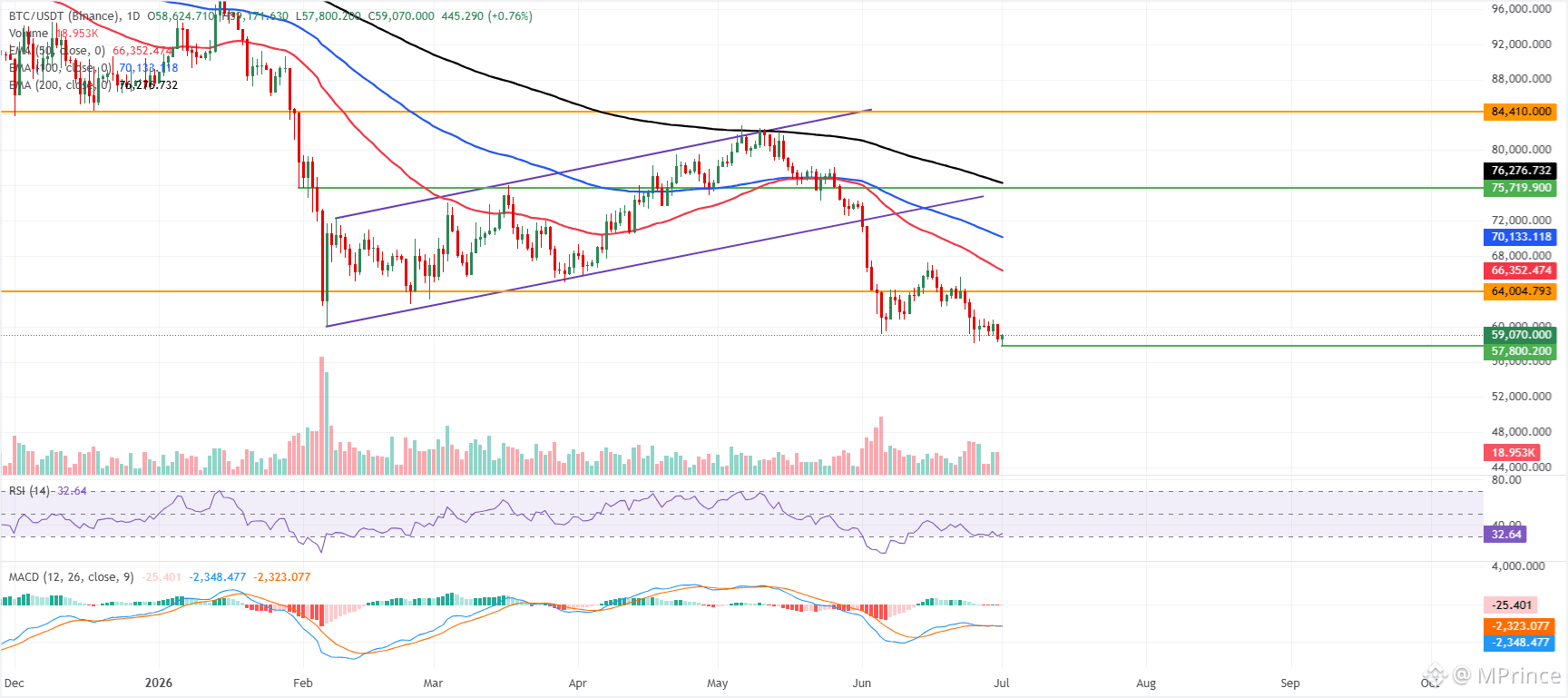
Bitcoin dropped to a new yearly low of $57,800 before recovering slightly toward the $59,000 level. Despite this bounce, the overall trend remains bearish as the price continues to trade well below major moving averages. Momentum indicators also suggest weakness, meaning the recovery could struggle to gain strength. For Bitcoin to shift toward a more positive outlook, it would need to break above the $64,000 resistance level. Otherwise, the risk remains for another decline toward the $55,000 psychological support zone.
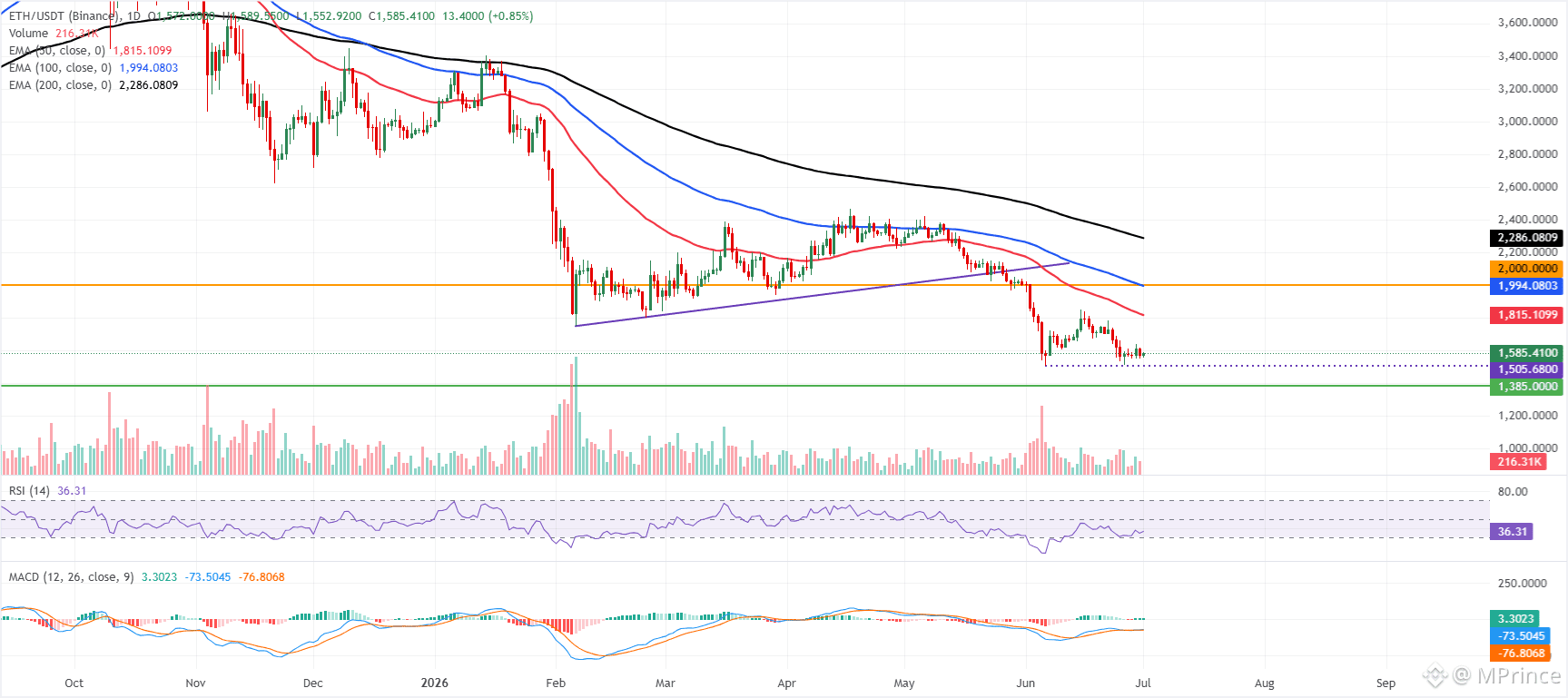
Ethereum is currently holding above the important $1,500 support level, trading around $1,586. This level is acting as a key line for buyers trying to prevent further losses. However, like Bitcoin, Ethereum is still under pressure as it remains below its major trend indicators. While selling momentum appears to be slowing slightly, there is no strong sign of a reversal yet. If Ethereum fails to hold $1,500, the next downside target could be around $1,385. On the upside, a move above $1,800 would be needed to signal stronger recovery potential.
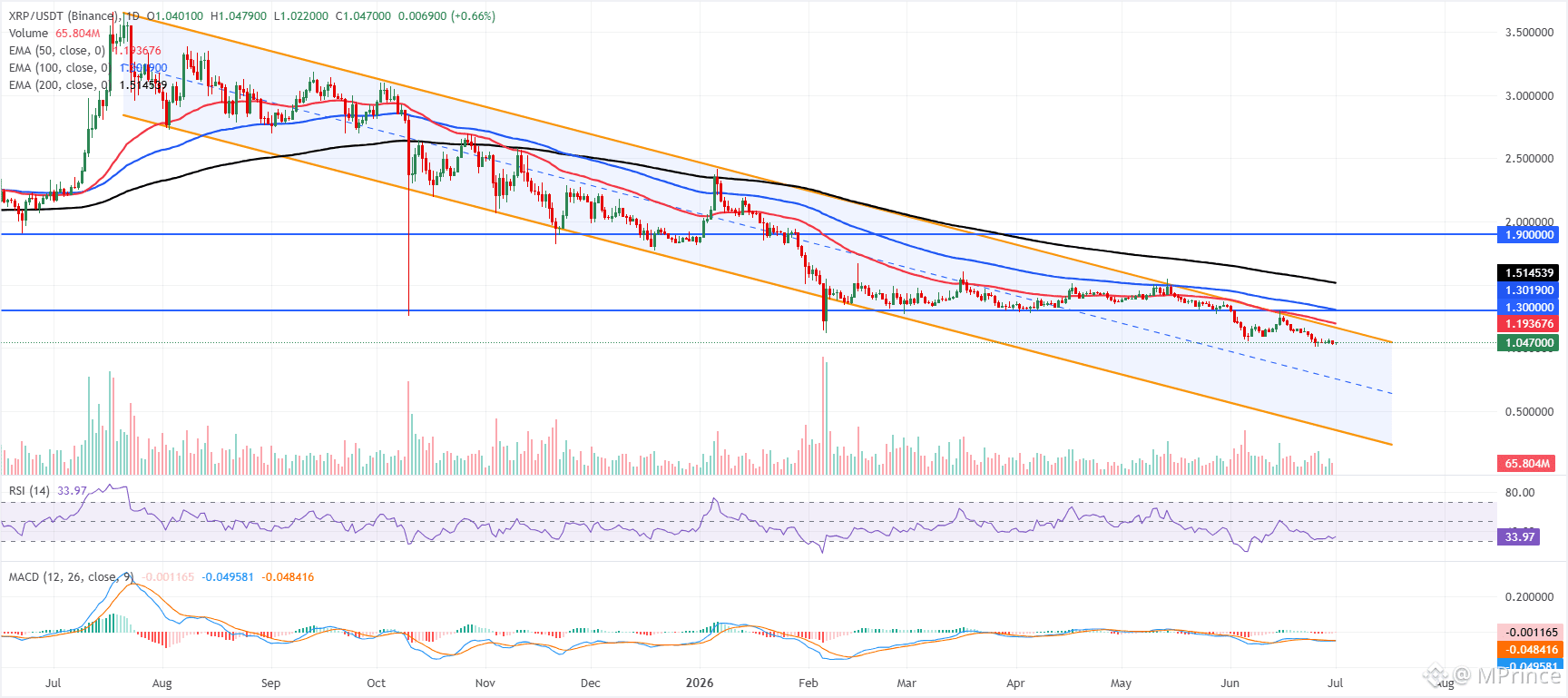
XRP is stabilizing near the $1.00 psychological level, trading just above it. The price structure remains weak in the short term, as it continues to trade below key resistance levels and within a downward trend channel. Indicators suggest that selling pressure is easing but not fully reversed. For XRP to improve its outlook, it would need to move back above the $1.16–$1.19 range. If it fails to do so, the market could see further downside movement.
The three major cryptocurrencies are showing signs of consolidation rather than a clear recovery. While buyers are attempting to defend key support levels, the broader trend remains cautious. A stronger rebound will depend on breaking above resistance zones, while failure to do so could lead to continued downside pressure in the near term.#BTC #ETH $XRP #xrp $BTC $ETH
The cryptocurrency market is showing early signs of stabilization after a recent sharp decline, with Bitcoin, Ethereum, and XRP all attempting to hold key levels.
Bitcoin dropped to a new yearly low of $57,800 before recovering slightly toward the $59,000 level. Despite this bounce, the overall trend remains bearish as the price continues to trade well below major moving averages. Momentum indicators also suggest weakness, meaning the recovery could struggle to gain strength. For Bitcoin to shift toward a more positive outlook, it would need to break above the $64,000 resistance level. Otherwise, the risk remains for another decline toward the $55,000 psychological support zone.
Ethereum is currently holding above the important $1,500 support level, trading around $1,586. This level is acting as a key line for buyers trying to prevent further losses. However, like Bitcoin, Ethereum is still under pressure as it remains below its major trend indicators. While selling momentum appears to be slowing slightly, there is no strong sign of a reversal yet. If Ethereum fails to hold $1,500, the next downside target could be around $1,385. On the upside, a move above $1,800 would be needed to signal stronger recovery potential.
XRP is stabilizing near the $1.00 psychological level, trading just above it. The price structure remains weak in the short term, as it continues to trade below key resistance levels and within a downward trend channel. Indicators suggest that selling pressure is easing but not fully reversed. For XRP to improve its outlook, it would need to move back above the $1.16–$1.19 range. If it fails to do so, the market could see further downside movement.
The three major cryptocurrencies are showing signs of consolidation rather than a clear recovery. While buyers are attempting to defend key support levels, the broader trend remains cautious. A stronger rebound will depend on breaking above resistance zones, while failure to do so could lead to continued downside pressure in the near term.#BTC #ETH $XRP #xrp $BTC $ETH
Bitcoin dropped to a new yearly low of $57,800 before recovering slightly toward the $59,000 level. Despite this bounce, the overall trend remains bearish as the price continues to trade well below major moving averages. Momentum indicators also suggest weakness, meaning the recovery could struggle to gain strength. For Bitcoin to shift toward a more positive outlook, it would need to break above the $64,000 resistance level. Otherwise, the risk remains for another decline toward the $55,000 psychological support zone.
Ethereum is currently holding above the important $1,500 support level, trading around $1,586. This level is acting as a key line for buyers trying to prevent further losses. However, like Bitcoin, Ethereum is still under pressure as it remains below its major trend indicators. While selling momentum appears to be slowing slightly, there is no strong sign of a reversal yet. If Ethereum fails to hold $1,500, the next downside target could be around $1,385. On the upside, a move above $1,800 would be needed to signal stronger recovery potential.
XRP is stabilizing near the $1.00 psychological level, trading just above it. The price structure remains weak in the short term, as it continues to trade below key resistance levels and within a downward trend channel. Indicators suggest that selling pressure is easing but not fully reversed. For XRP to improve its outlook, it would need to move back above the $1.16–$1.19 range. If it fails to do so, the market could see further downside movement.
The three major cryptocurrencies are showing signs of consolidation rather than a clear recovery. While buyers are attempting to defend key support levels, the broader trend remains cautious. A stronger rebound will depend on breaking above resistance zones, while failure to do so could lead to continued downside pressure in the near term.#BTC #ETH $XRP #xrp $BTC $ETH
1
113
·
--
Oil prices were mostly steady on June 30, but the market is heading toward its largest monthly and quarterly losses since 2020, reflecting growing concerns about oversupply and uncertain demand. Brent crude settled near $73 per barrel, while WTI closed below $70, with both benchmarks showing only small daily changes despite ongoing geopolitical developments.
The main pressure on oil prices comes from rising supply and fading risk premiums. As shipping activity in the Gulf increases and previously disrupted oil flows return to the market, more supply is becoming available. Analysts say this has created a temporary surplus, reducing the upward pressure that had supported prices earlier during the conflict.
Geopolitical developments remain a key focus, especially talks involving the United States and Iran in Doha. However, expectations for a breakthrough have weakened after officials confirmed that no high-level meeting will take place for now, with discussions limited to technical talks. While these talks could later progress, the current situation suggests that a quick resolution to the conflict—and its impact on oil supply—is unlikely.
At the same time, oil markets are facing longer-term oversupply concerns. Some forecasts suggest that global oil supply could significantly exceed demand in the coming years. Adding to this, U.S. oil production has reached a record high, as producers increased output in response to earlier price spikes.
Despite weak prices, there are some supportive factors. Analysts expect U.S. crude inventories to have dropped by around 4.5 million barrels last week. If confirmed, this would mark a long streak of inventory declines, which typically signals steady demand. However, this has not been enough to offset broader concerns about supply growth and slowing global consumption.
The oil market is currently balancing geopolitical uncertainty, rising production, and demand concerns.
#OilPriceFalls #oil $CL
Oil prices were mostly steady on June 30, but the market is heading toward its largest monthly and quarterly losses since 2020, reflecting growing concerns about oversupply and uncertain demand. Brent crude settled near $73 per barrel, while WTI closed below $70, with both benchmarks showing only small daily changes despite ongoing geopolitical developments.
The main pressure on oil prices comes from rising supply and fading risk premiums. As shipping activity in the Gulf increases and previously disrupted oil flows return to the market, more supply is becoming available. Analysts say this has created a temporary surplus, reducing the upward pressure that had supported prices earlier during the conflict.
Geopolitical developments remain a key focus, especially talks involving the United States and Iran in Doha. However, expectations for a breakthrough have weakened after officials confirmed that no high-level meeting will take place for now, with discussions limited to technical talks. While these talks could later progress, the current situation suggests that a quick resolution to the conflict—and its impact on oil supply—is unlikely.
At the same time, oil markets are facing longer-term oversupply concerns. Some forecasts suggest that global oil supply could significantly exceed demand in the coming years. Adding to this, U.S. oil production has reached a record high, as producers increased output in response to earlier price spikes.
Despite weak prices, there are some supportive factors. Analysts expect U.S. crude inventories to have dropped by around 4.5 million barrels last week. If confirmed, this would mark a long streak of inventory declines, which typically signals steady demand. However, this has not been enough to offset broader concerns about supply growth and slowing global consumption.
The oil market is currently balancing geopolitical uncertainty, rising production, and demand concerns.
#OilPriceFalls #oil $CL
The main pressure on oil prices comes from rising supply and fading risk premiums. As shipping activity in the Gulf increases and previously disrupted oil flows return to the market, more supply is becoming available. Analysts say this has created a temporary surplus, reducing the upward pressure that had supported prices earlier during the conflict.
Geopolitical developments remain a key focus, especially talks involving the United States and Iran in Doha. However, expectations for a breakthrough have weakened after officials confirmed that no high-level meeting will take place for now, with discussions limited to technical talks. While these talks could later progress, the current situation suggests that a quick resolution to the conflict—and its impact on oil supply—is unlikely.
At the same time, oil markets are facing longer-term oversupply concerns. Some forecasts suggest that global oil supply could significantly exceed demand in the coming years. Adding to this, U.S. oil production has reached a record high, as producers increased output in response to earlier price spikes.
Despite weak prices, there are some supportive factors. Analysts expect U.S. crude inventories to have dropped by around 4.5 million barrels last week. If confirmed, this would mark a long streak of inventory declines, which typically signals steady demand. However, this has not been enough to offset broader concerns about supply growth and slowing global consumption.
The oil market is currently balancing geopolitical uncertainty, rising production, and demand concerns.
#OilPriceFalls #oil $CL
1
236
·
--
U.S. markets delivered a strong comeback on June 29, with all major indexes closing higher after a volatile session. The Dow Jones Industrial Average surged to a record closing high, gaining over 300 points, while the Nasdaq jumped more than 2% and the S&P 500 rose over 1%. The rebound followed recent losses, as investor confidence improved on signs of easing geopolitical risks and renewed buying in key sectors.
Technology stocks led the rally, especially semiconductor companies, which bounced back sharply after early declines. Major chipmakers posted strong gains, helping lift the broader tech sector. Big-cap stocks also supported the move higher, with Tesla, Alphabet, and Amazon advancing, although some names like Microsoft and Apple ended slightly lower.
Global sentiment improved as tensions in the Middle East appeared to ease, reducing immediate market fears. However, energy markets remained active, with oil prices rising after Iran signaled no immediate plans for talks with the United States. At the same time, gold and silver prices declined as investors reacted to inflation concerns and the possibility of higher interest rates.
Other market signals showed mixed trends. The U.S. dollar stayed near a 13-month high, while Treasury yields edged higher as attention turned to upcoming economic data, especially labor market reports. Meanwhile, Chinese-related stocks listed in the U.S. also gained, reflecting broader optimism in global equities.
the market rebound highlights a shift in sentiment, with investors balancing geopolitical developments, economic data expectations, and interest rate outlooks. While momentum has returned in the short term, uncertainty remains, and upcoming data releases and global events will likely play a key role in shaping the next market move.
#DowHitsRecordClose
U.S. markets delivered a strong comeback on June 29, with all major indexes closing higher after a volatile session. The Dow Jones Industrial Average surged to a record closing high, gaining over 300 points, while the Nasdaq jumped more than 2% and the S&P 500 rose over 1%. The rebound followed recent losses, as investor confidence improved on signs of easing geopolitical risks and renewed buying in key sectors.
Technology stocks led the rally, especially semiconductor companies, which bounced back sharply after early declines. Major chipmakers posted strong gains, helping lift the broader tech sector. Big-cap stocks also supported the move higher, with Tesla, Alphabet, and Amazon advancing, although some names like Microsoft and Apple ended slightly lower.
Global sentiment improved as tensions in the Middle East appeared to ease, reducing immediate market fears. However, energy markets remained active, with oil prices rising after Iran signaled no immediate plans for talks with the United States. At the same time, gold and silver prices declined as investors reacted to inflation concerns and the possibility of higher interest rates.
Other market signals showed mixed trends. The U.S. dollar stayed near a 13-month high, while Treasury yields edged higher as attention turned to upcoming economic data, especially labor market reports. Meanwhile, Chinese-related stocks listed in the U.S. also gained, reflecting broader optimism in global equities.
the market rebound highlights a shift in sentiment, with investors balancing geopolitical developments, economic data expectations, and interest rate outlooks. While momentum has returned in the short term, uncertainty remains, and upcoming data releases and global events will likely play a key role in shaping the next market move.
#DowHitsRecordClose
Technology stocks led the rally, especially semiconductor companies, which bounced back sharply after early declines. Major chipmakers posted strong gains, helping lift the broader tech sector. Big-cap stocks also supported the move higher, with Tesla, Alphabet, and Amazon advancing, although some names like Microsoft and Apple ended slightly lower.
Global sentiment improved as tensions in the Middle East appeared to ease, reducing immediate market fears. However, energy markets remained active, with oil prices rising after Iran signaled no immediate plans for talks with the United States. At the same time, gold and silver prices declined as investors reacted to inflation concerns and the possibility of higher interest rates.
Other market signals showed mixed trends. The U.S. dollar stayed near a 13-month high, while Treasury yields edged higher as attention turned to upcoming economic data, especially labor market reports. Meanwhile, Chinese-related stocks listed in the U.S. also gained, reflecting broader optimism in global equities.
the market rebound highlights a shift in sentiment, with investors balancing geopolitical developments, economic data expectations, and interest rate outlooks. While momentum has returned in the short term, uncertainty remains, and upcoming data releases and global events will likely play a key role in shaping the next market move.
#DowHitsRecordClose

73
·
--

Article
Supreme Court Blocks Trump. Defends Fed Independence in Key RulingThe U.S. Supreme Court has issued an important ruling that limits presidential authority over the central bank, allowing Lisa Cook to remain in her position at the Federal Reserve for now. In a narrow 5–4 decision, the court rejected an attempt by Donald Trump to immediately remove her from office.
The justices explained that the decision was based on a procedural issue rather than the substance of the allegations against Cook. They said the president did not provide her with the legal protections required by law before firing her. As a result, Cook was not given a fair opportunity to challenge the accusations, which included claims of mortgage fraud that she has denied. Because proper legal steps were not followed, the court ruled she must be allowed to continue serving while the case moves forward.
This case is especially significant because it reinforces the independence of the Federal Reserve. Cook, who was appointed by Joe Biden, is serving a long-term position that is designed to be insulated from political pressure. Her term is scheduled to run until 2038, and her role is part of a broader system meant to ensure that economic decisions are made based on data and stability rather than political influence. She also holds historical importance as the first Black woman to serve on the Fed’s board.
The ruling stands in contrast to other recent decisions by the court, where Trump was allowed to remove officials from different government bodies. For example, the court supported the dismissal of Rebecca Slaughter from the Federal Trade Commission and also allowed changes at the National Labor Relations Board. These cases show that while presidential power has been broadly supported in other areas, the court is treating the Federal Reserve differently due to its unique role.
The decision comes after a long period of friction between Trump and the Fed over interest rate policy. Trump has repeatedly argued that rates are too high and are slowing economic growth. Much of his criticism has focused on Jerome Powell, who continued serving as a governor even after his term as chair ended. Powell’s decision to stay was widely seen as an effort to help protect the institution’s independence during a politically sensitive time.
In May, Kevin Warsh took over as the new chair and is expected to be more supportive of lowering interest rates. This leadership change could influence the direction of monetary policy, especially as inflation concerns and global tensions continue to affect the economy.
The Federal Reserve plays a central role in shaping economic conditions because it sets interest rates, which affect borrowing, spending, and investment across the country. For this reason, economists generally agree that the Fed must remain independent from political pressure. The court’s ruling reinforces that principle by making it clear that even the president cannot bypass legal procedures to remove its officials.
For now, Lisa Cook will stay in her role while the legal process continues. The outcome of the broader case remains uncertain, but this decision sends a strong signal that the independence of the Federal Reserve remains a key priority in the U.S. economic system.
#SupremeCourtBlocksTrumpFromRemovingFedCook
Supreme Court Blocks Trump. Defends Fed Independence in Key Ruling
The U.S. Supreme Court has issued an important ruling that limits presidential authority over the central bank, allowing Lisa Cook to remain in her position at the Federal Reserve for now. In a narrow 5–4 decision, the court rejected an attempt by Donald Trump to immediately remove her from office.
The justices explained that the decision was based on a procedural issue rather than the substance of the allegations against Cook. They said the president did not provide her with the legal protections required by law before firing her. As a result, Cook was not given a fair opportunity to challenge the accusations, which included claims of mortgage fraud that she has denied. Because proper legal steps were not followed, the court ruled she must be allowed to continue serving while the case moves forward.
This case is especially significant because it reinforces the independence of the Federal Reserve. Cook, who was appointed by Joe Biden, is serving a long-term position that is designed to be insulated from political pressure. Her term is scheduled to run until 2038, and her role is part of a broader system meant to ensure that economic decisions are made based on data and stability rather than political influence. She also holds historical importance as the first Black woman to serve on the Fed’s board.
The ruling stands in contrast to other recent decisions by the court, where Trump was allowed to remove officials from different government bodies. For example, the court supported the dismissal of Rebecca Slaughter from the Federal Trade Commission and also allowed changes at the National Labor Relations Board. These cases show that while presidential power has been broadly supported in other areas, the court is treating the Federal Reserve differently due to its unique role.
The decision comes after a long period of friction between Trump and the Fed over interest rate policy. Trump has repeatedly argued that rates are too high and are slowing economic growth. Much of his criticism has focused on Jerome Powell, who continued serving as a governor even after his term as chair ended. Powell’s decision to stay was widely seen as an effort to help protect the institution’s independence during a politically sensitive time.
In May, Kevin Warsh took over as the new chair and is expected to be more supportive of lowering interest rates. This leadership change could influence the direction of monetary policy, especially as inflation concerns and global tensions continue to affect the economy.
The Federal Reserve plays a central role in shaping economic conditions because it sets interest rates, which affect borrowing, spending, and investment across the country. For this reason, economists generally agree that the Fed must remain independent from political pressure. The court’s ruling reinforces that principle by making it clear that even the president cannot bypass legal procedures to remove its officials.
For now, Lisa Cook will stay in her role while the legal process continues. The outcome of the broader case remains uncertain, but this decision sends a strong signal that the independence of the Federal Reserve remains a key priority in the U.S. economic system.
#SupremeCourtBlocksTrumpFromRemovingFedCook
The justices explained that the decision was based on a procedural issue rather than the substance of the allegations against Cook. They said the president did not provide her with the legal protections required by law before firing her. As a result, Cook was not given a fair opportunity to challenge the accusations, which included claims of mortgage fraud that she has denied. Because proper legal steps were not followed, the court ruled she must be allowed to continue serving while the case moves forward.
This case is especially significant because it reinforces the independence of the Federal Reserve. Cook, who was appointed by Joe Biden, is serving a long-term position that is designed to be insulated from political pressure. Her term is scheduled to run until 2038, and her role is part of a broader system meant to ensure that economic decisions are made based on data and stability rather than political influence. She also holds historical importance as the first Black woman to serve on the Fed’s board.
The ruling stands in contrast to other recent decisions by the court, where Trump was allowed to remove officials from different government bodies. For example, the court supported the dismissal of Rebecca Slaughter from the Federal Trade Commission and also allowed changes at the National Labor Relations Board. These cases show that while presidential power has been broadly supported in other areas, the court is treating the Federal Reserve differently due to its unique role.
The decision comes after a long period of friction between Trump and the Fed over interest rate policy. Trump has repeatedly argued that rates are too high and are slowing economic growth. Much of his criticism has focused on Jerome Powell, who continued serving as a governor even after his term as chair ended. Powell’s decision to stay was widely seen as an effort to help protect the institution’s independence during a politically sensitive time.
In May, Kevin Warsh took over as the new chair and is expected to be more supportive of lowering interest rates. This leadership change could influence the direction of monetary policy, especially as inflation concerns and global tensions continue to affect the economy.
The Federal Reserve plays a central role in shaping economic conditions because it sets interest rates, which affect borrowing, spending, and investment across the country. For this reason, economists generally agree that the Fed must remain independent from political pressure. The court’s ruling reinforces that principle by making it clear that even the president cannot bypass legal procedures to remove its officials.
For now, Lisa Cook will stay in her role while the legal process continues. The outcome of the broader case remains uncertain, but this decision sends a strong signal that the independence of the Federal Reserve remains a key priority in the U.S. economic system.
#SupremeCourtBlocksTrumpFromRemovingFedCook
1
129
·
--
China’s central bank, the People’s Bank of China (PBOC), has introduced a new tool to manage money in the financial system. This tool is called the overnight reverse repo, and it helps banks get short-term cash. On June 29, the PBOC injected 300 billion yuan, which is about 44 billion US dollars, into the market. This is the first time the bank has used this specific tool in its daily operations. The move shows that the PBOC wants better control over short-term interest rates. It also brings China’s system closer to how other major economies manage money.
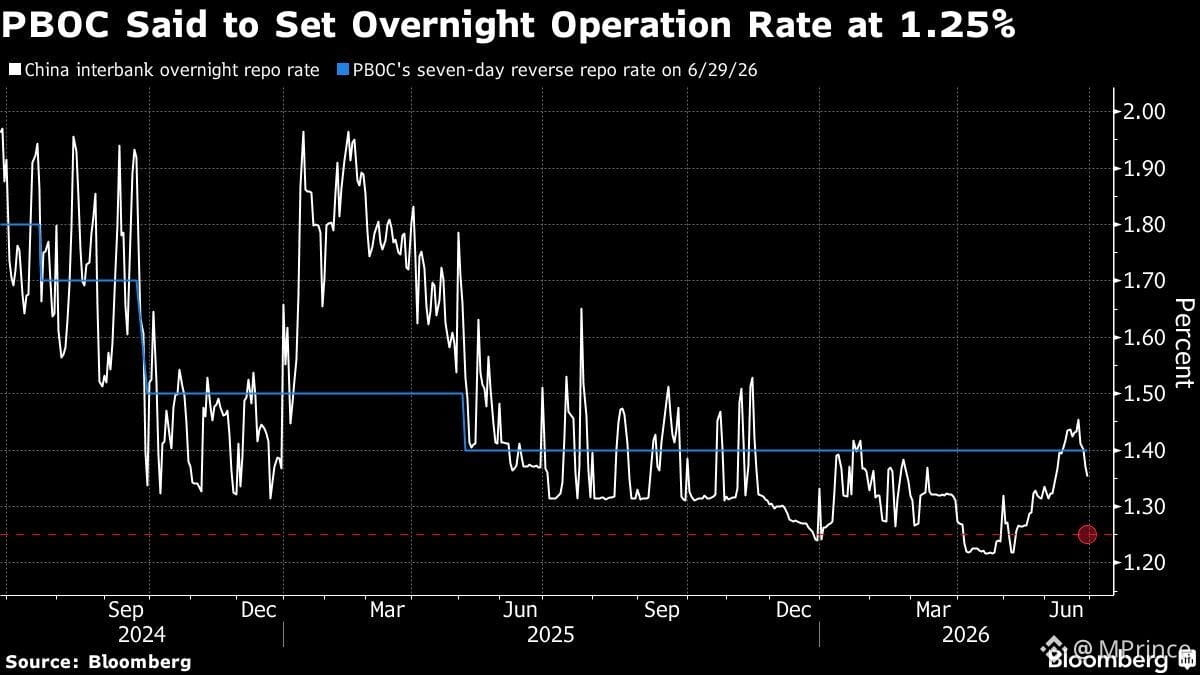
The interest rate for this new overnight tool is reported to be around 1.25 percent. This is lower than the 1.4 percent rate used for the seven-day reverse repo, which is China’s main policy rate. By setting a lower rate, the central bank may be trying to reduce borrowing costs in the market. Lower borrowing costs can help businesses and banks get cheaper loans. This can support economic growth, especially when the economy is slowing down. Some experts believe this move acts like a small rate cut, even if it is not officially called one.
At the same time, the PBOC did not change its main seven-day reverse repo rate. It added 157.5 billion yuan through this tool to keep liquidity stable. Liquidity means how much money is available in the system for lending and borrowing. The central bank wants to avoid sudden shortages or large swings in interest rates. This is especially important at the end of months or quarters when demand for cash usually rises. By using both overnight and seven-day tools, the PBOC can manage both short-term and slightly longer-term needs.
Another reason for this move is the changing structure of China’s money market. Overnight borrowing has become the most common type of transaction between banks. Because of this, controlling the overnight rate can have a stronger impact on the whole financial system. Many global central banks, like the Federal Reserve, already focus on overnight rates.#PBOCSetsOvernightLiquidityRateBelowForecasts
China’s central bank, the People’s Bank of China (PBOC), has introduced a new tool to manage money in the financial system. This tool is called the overnight reverse repo, and it helps banks get short-term cash. On June 29, the PBOC injected 300 billion yuan, which is about 44 billion US dollars, into the market. This is the first time the bank has used this specific tool in its daily operations. The move shows that the PBOC wants better control over short-term interest rates. It also brings China’s system closer to how other major economies manage money.
The interest rate for this new overnight tool is reported to be around 1.25 percent. This is lower than the 1.4 percent rate used for the seven-day reverse repo, which is China’s main policy rate. By setting a lower rate, the central bank may be trying to reduce borrowing costs in the market. Lower borrowing costs can help businesses and banks get cheaper loans. This can support economic growth, especially when the economy is slowing down. Some experts believe this move acts like a small rate cut, even if it is not officially called one.
At the same time, the PBOC did not change its main seven-day reverse repo rate. It added 157.5 billion yuan through this tool to keep liquidity stable. Liquidity means how much money is available in the system for lending and borrowing. The central bank wants to avoid sudden shortages or large swings in interest rates. This is especially important at the end of months or quarters when demand for cash usually rises. By using both overnight and seven-day tools, the PBOC can manage both short-term and slightly longer-term needs.
Another reason for this move is the changing structure of China’s money market. Overnight borrowing has become the most common type of transaction between banks. Because of this, controlling the overnight rate can have a stronger impact on the whole financial system. Many global central banks, like the Federal Reserve, already focus on overnight rates.#PBOCSetsOvernightLiquidityRateBelowForecasts
The interest rate for this new overnight tool is reported to be around 1.25 percent. This is lower than the 1.4 percent rate used for the seven-day reverse repo, which is China’s main policy rate. By setting a lower rate, the central bank may be trying to reduce borrowing costs in the market. Lower borrowing costs can help businesses and banks get cheaper loans. This can support economic growth, especially when the economy is slowing down. Some experts believe this move acts like a small rate cut, even if it is not officially called one.
At the same time, the PBOC did not change its main seven-day reverse repo rate. It added 157.5 billion yuan through this tool to keep liquidity stable. Liquidity means how much money is available in the system for lending and borrowing. The central bank wants to avoid sudden shortages or large swings in interest rates. This is especially important at the end of months or quarters when demand for cash usually rises. By using both overnight and seven-day tools, the PBOC can manage both short-term and slightly longer-term needs.
Another reason for this move is the changing structure of China’s money market. Overnight borrowing has become the most common type of transaction between banks. Because of this, controlling the overnight rate can have a stronger impact on the whole financial system. Many global central banks, like the Federal Reserve, already focus on overnight rates.#PBOCSetsOvernightLiquidityRateBelowForecasts
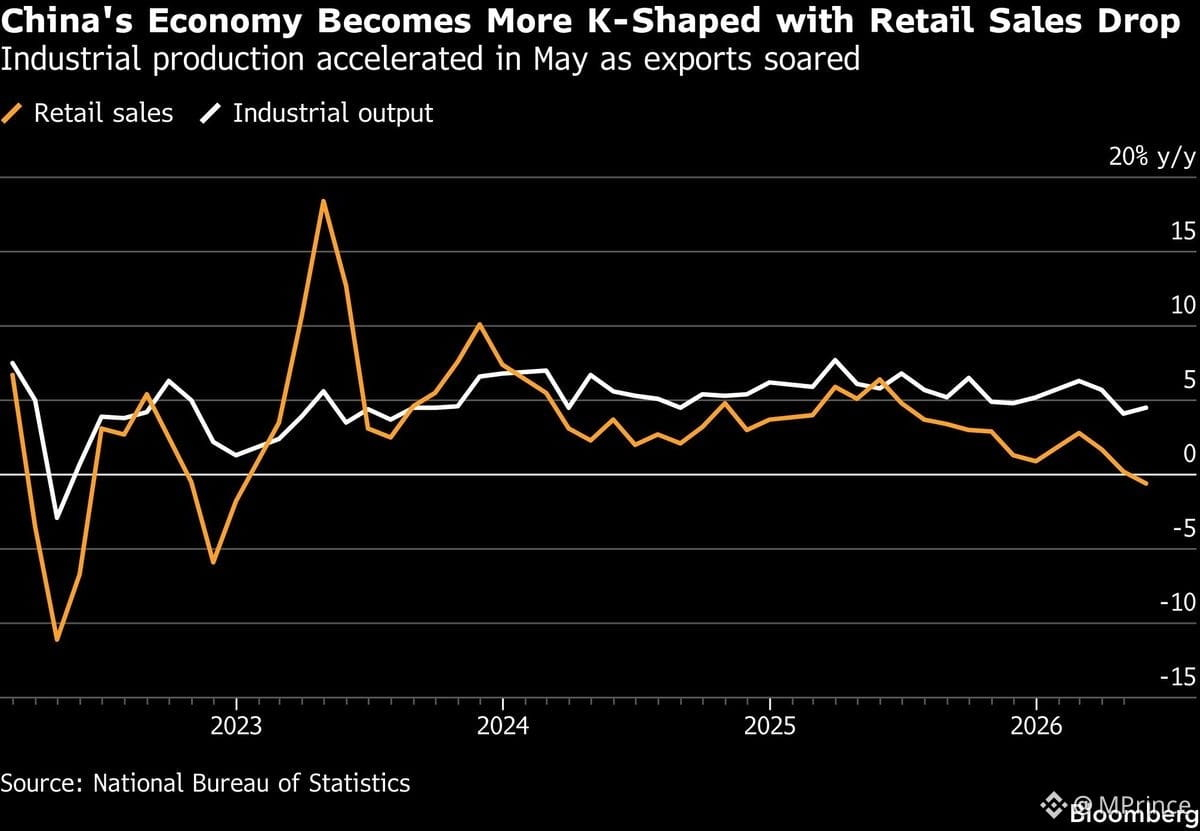
1
93
·
--
Oil markets started the week with a small recovery as prices moved back above $70 per barrel. After falling sharply last week, traders returned to buy at lower levels. However, the overall market remains under pressure. A stronger U.S. dollar and stable global supply are limiting further gains. This means the price rise may not last long. Investors are still cautious about the next move.
One key reason for last week’s drop was improving relations between the United States and Iran. Talks between the two sides reduced fears of supply disruption in the Strait of Hormuz. This area is very important because a large share of the world’s oil passes through it. When risks fall, oil prices usually drop as well. However, the situation is still fragile, and new issues could quickly push prices higher again. Ongoing talks in Doha will be important to watch.
Another major factor is the strong U.S. dollar. The Federal Reserve signaled that interest rates may stay high for longer. This has made the dollar stronger. Since oil is priced in dollars, a stronger dollar makes oil more expensive for other countries. This can reduce demand and slow price growth. Higher interest rates can also slow economic activity, which lowers fuel use. These factors are keeping pressure on oil prices.
China is also playing a big role in the market. China currently has large oil reserves, so it does not need to import much in the short term. During recent price increases, China reduced its oil purchases and relied on stored supply. This means global demand is not as strong as expected. Even if supply improves, weak demand can limit price increases. China’s buying behavior will be important in the coming months.
Oil prices will depend on several key factors. These include global demand, U.S. economic data, and geopolitical developments. If demand stays weak and supply remains stable, prices may struggle to rise further.
#OilReclaims$70 #oil $CL
Oil markets started the week with a small recovery as prices moved back above $70 per barrel. After falling sharply last week, traders returned to buy at lower levels. However, the overall market remains under pressure. A stronger U.S. dollar and stable global supply are limiting further gains. This means the price rise may not last long. Investors are still cautious about the next move.
One key reason for last week’s drop was improving relations between the United States and Iran. Talks between the two sides reduced fears of supply disruption in the Strait of Hormuz. This area is very important because a large share of the world’s oil passes through it. When risks fall, oil prices usually drop as well. However, the situation is still fragile, and new issues could quickly push prices higher again. Ongoing talks in Doha will be important to watch.
Another major factor is the strong U.S. dollar. The Federal Reserve signaled that interest rates may stay high for longer. This has made the dollar stronger. Since oil is priced in dollars, a stronger dollar makes oil more expensive for other countries. This can reduce demand and slow price growth. Higher interest rates can also slow economic activity, which lowers fuel use. These factors are keeping pressure on oil prices.
China is also playing a big role in the market. China currently has large oil reserves, so it does not need to import much in the short term. During recent price increases, China reduced its oil purchases and relied on stored supply. This means global demand is not as strong as expected. Even if supply improves, weak demand can limit price increases. China’s buying behavior will be important in the coming months.
Oil prices will depend on several key factors. These include global demand, U.S. economic data, and geopolitical developments. If demand stays weak and supply remains stable, prices may struggle to rise further.
#OilReclaims$70 #oil $CL
One key reason for last week’s drop was improving relations between the United States and Iran. Talks between the two sides reduced fears of supply disruption in the Strait of Hormuz. This area is very important because a large share of the world’s oil passes through it. When risks fall, oil prices usually drop as well. However, the situation is still fragile, and new issues could quickly push prices higher again. Ongoing talks in Doha will be important to watch.
Another major factor is the strong U.S. dollar. The Federal Reserve signaled that interest rates may stay high for longer. This has made the dollar stronger. Since oil is priced in dollars, a stronger dollar makes oil more expensive for other countries. This can reduce demand and slow price growth. Higher interest rates can also slow economic activity, which lowers fuel use. These factors are keeping pressure on oil prices.
China is also playing a big role in the market. China currently has large oil reserves, so it does not need to import much in the short term. During recent price increases, China reduced its oil purchases and relied on stored supply. This means global demand is not as strong as expected. Even if supply improves, weak demand can limit price increases. China’s buying behavior will be important in the coming months.
Oil prices will depend on several key factors. These include global demand, U.S. economic data, and geopolitical developments. If demand stays weak and supply remains stable, prices may struggle to rise further.
#OilReclaims$70 #oil $CL

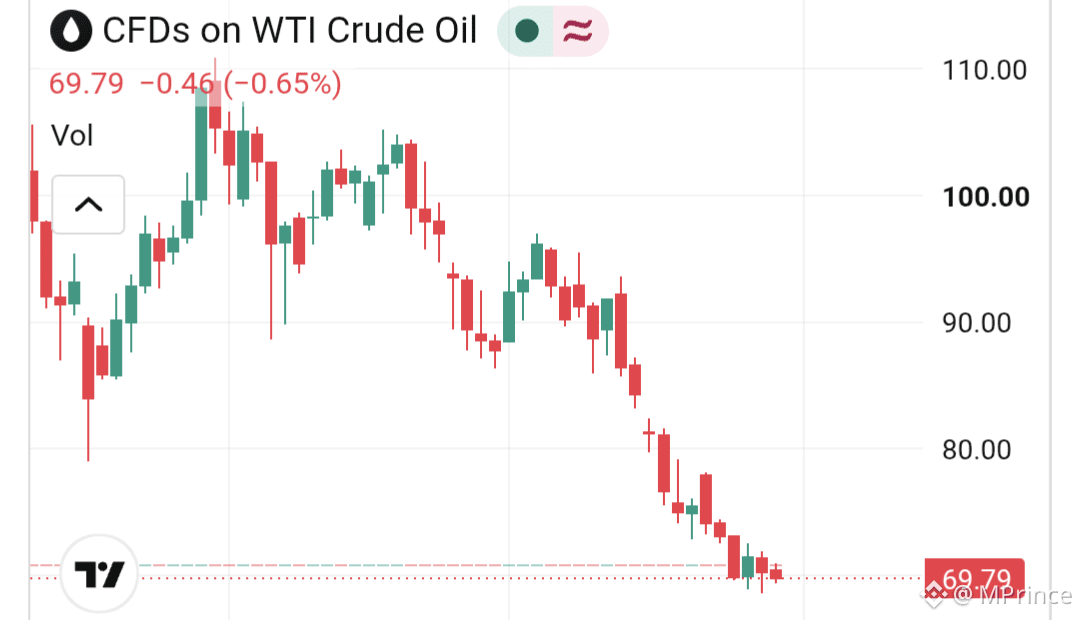
CLUS+0.04%
1
84
·
--
Relations between China and Japan have become more strained after China added 20 Japanese organizations to its export control list. This means Chinese companies are no longer allowed to sell certain sensitive goods to these groups. These goods are called “dual-use” items because they can be used for both civilian and military purposes. One of the main groups affected is the National Institute for Defense Studies. China says the move is needed to protect its national security. This action shows growing concern over military-related technology.
This decision follows similar steps taken by China against the United States just one week earlier. China had already placed 10 U.S. companies, including rare earth firms, under the same restrictions. These actions are part of an ongoing back-and-forth between major global powers. Each side is responding to the other’s trade and technology limits. This has increased pressure in global trade and security. The situation is becoming more complex as more countries get involved.
China says the restrictions are also meant to follow international rules on limiting the spread of military technology. By blocking exports, China wants to stop its technology from being used to strengthen other countries’ military systems. The rules apply not only to Chinese companies but also to foreign companies selling Chinese-made goods. This makes the policy wider and more strict. It shows how serious China is about controlling sensitive technology. These actions are part of a larger global trend.
Many experts believe the impact on some companies may be limited. This is because several of the listed firms already have little business with China. Still, the move sends a strong political message. It shows China is ready to respond to pressure from other countries. It also signals that trade rules are now closely linked to national security. Even if the economic impact is small, the political meaning is important. This could affect future cooperation between countries. #ChinaBlacklists40MoreJapanEntities #china #Japan
Relations between China and Japan have become more strained after China added 20 Japanese organizations to its export control list. This means Chinese companies are no longer allowed to sell certain sensitive goods to these groups. These goods are called “dual-use” items because they can be used for both civilian and military purposes. One of the main groups affected is the National Institute for Defense Studies. China says the move is needed to protect its national security. This action shows growing concern over military-related technology.
This decision follows similar steps taken by China against the United States just one week earlier. China had already placed 10 U.S. companies, including rare earth firms, under the same restrictions. These actions are part of an ongoing back-and-forth between major global powers. Each side is responding to the other’s trade and technology limits. This has increased pressure in global trade and security. The situation is becoming more complex as more countries get involved.
China says the restrictions are also meant to follow international rules on limiting the spread of military technology. By blocking exports, China wants to stop its technology from being used to strengthen other countries’ military systems. The rules apply not only to Chinese companies but also to foreign companies selling Chinese-made goods. This makes the policy wider and more strict. It shows how serious China is about controlling sensitive technology. These actions are part of a larger global trend.
Many experts believe the impact on some companies may be limited. This is because several of the listed firms already have little business with China. Still, the move sends a strong political message. It shows China is ready to respond to pressure from other countries. It also signals that trade rules are now closely linked to national security. Even if the economic impact is small, the political meaning is important. This could affect future cooperation between countries. #ChinaBlacklists40MoreJapanEntities #china #Japan
This decision follows similar steps taken by China against the United States just one week earlier. China had already placed 10 U.S. companies, including rare earth firms, under the same restrictions. These actions are part of an ongoing back-and-forth between major global powers. Each side is responding to the other’s trade and technology limits. This has increased pressure in global trade and security. The situation is becoming more complex as more countries get involved.
China says the restrictions are also meant to follow international rules on limiting the spread of military technology. By blocking exports, China wants to stop its technology from being used to strengthen other countries’ military systems. The rules apply not only to Chinese companies but also to foreign companies selling Chinese-made goods. This makes the policy wider and more strict. It shows how serious China is about controlling sensitive technology. These actions are part of a larger global trend.
Many experts believe the impact on some companies may be limited. This is because several of the listed firms already have little business with China. Still, the move sends a strong political message. It shows China is ready to respond to pressure from other countries. It also signals that trade rules are now closely linked to national security. Even if the economic impact is small, the political meaning is important. This could affect future cooperation between countries. #ChinaBlacklists40MoreJapanEntities #china #Japan

1
414
·
--
Tensions in the Gulf have increased after Iran launched missiles and drones at U.S. military bases in Kuwait and Bahrain. These attacks targeted an airbase in Kuwait and a naval base in Bahrain. Iran said this was a response to earlier U.S. strikes on its territory. This has put a fragile ceasefire at risk. Many countries are now worried about a wider conflict. The situation is becoming more serious day by day.
The United States had attacked Iranian military sites near the Strait of Hormuz before this. These strikes were in response to a drone attack on an oil tanker carrying over two million barrels of oil. The tanker was damaged, but no crew members were hurt. The Strait of Hormuz is very important because a large part of the world’s oil passes through it. Any conflict in this area can affect global oil prices. This makes the situation important not just for the region, but for the whole world. Both sides are now showing strong military actions.
Many countries in the region have spoken out against the attacks. Qatar asked for calm and warned against more violence. United Arab Emirates said the attacks threaten safety and stability. Jordan called it a serious escalation. Oman asked all sides to choose dialogue instead of conflict. These reactions show that many countries want to avoid a bigger war. There is strong support for peace talks.
The Strait of Hormuz remains the key point in this crisis. Around 20% of the world’s oil supply moves through this narrow waterway. In the past, Iran has blocked this route during conflicts, which caused global energy problems. Iran has warned ships to follow its rules when passing through the area. Some shipping plans have already been stopped because of safety risks. If the strait is blocked again, oil prices could rise quickly. This would affect many countries and economies.
Experts say neither side may want a full war, but the risk is still high. A mistake or a strong attack could quickly make things worse. If soldiers or civilians are killed, the conflict could grow fast.
#IRGCSaysItStruckKuwaitAndBahrain
Tensions in the Gulf have increased after Iran launched missiles and drones at U.S. military bases in Kuwait and Bahrain. These attacks targeted an airbase in Kuwait and a naval base in Bahrain. Iran said this was a response to earlier U.S. strikes on its territory. This has put a fragile ceasefire at risk. Many countries are now worried about a wider conflict. The situation is becoming more serious day by day.
The United States had attacked Iranian military sites near the Strait of Hormuz before this. These strikes were in response to a drone attack on an oil tanker carrying over two million barrels of oil. The tanker was damaged, but no crew members were hurt. The Strait of Hormuz is very important because a large part of the world’s oil passes through it. Any conflict in this area can affect global oil prices. This makes the situation important not just for the region, but for the whole world. Both sides are now showing strong military actions.
Many countries in the region have spoken out against the attacks. Qatar asked for calm and warned against more violence. United Arab Emirates said the attacks threaten safety and stability. Jordan called it a serious escalation. Oman asked all sides to choose dialogue instead of conflict. These reactions show that many countries want to avoid a bigger war. There is strong support for peace talks.
The Strait of Hormuz remains the key point in this crisis. Around 20% of the world’s oil supply moves through this narrow waterway. In the past, Iran has blocked this route during conflicts, which caused global energy problems. Iran has warned ships to follow its rules when passing through the area. Some shipping plans have already been stopped because of safety risks. If the strait is blocked again, oil prices could rise quickly. This would affect many countries and economies.
Experts say neither side may want a full war, but the risk is still high. A mistake or a strong attack could quickly make things worse. If soldiers or civilians are killed, the conflict could grow fast.
#IRGCSaysItStruckKuwaitAndBahrain
The United States had attacked Iranian military sites near the Strait of Hormuz before this. These strikes were in response to a drone attack on an oil tanker carrying over two million barrels of oil. The tanker was damaged, but no crew members were hurt. The Strait of Hormuz is very important because a large part of the world’s oil passes through it. Any conflict in this area can affect global oil prices. This makes the situation important not just for the region, but for the whole world. Both sides are now showing strong military actions.
Many countries in the region have spoken out against the attacks. Qatar asked for calm and warned against more violence. United Arab Emirates said the attacks threaten safety and stability. Jordan called it a serious escalation. Oman asked all sides to choose dialogue instead of conflict. These reactions show that many countries want to avoid a bigger war. There is strong support for peace talks.
The Strait of Hormuz remains the key point in this crisis. Around 20% of the world’s oil supply moves through this narrow waterway. In the past, Iran has blocked this route during conflicts, which caused global energy problems. Iran has warned ships to follow its rules when passing through the area. Some shipping plans have already been stopped because of safety risks. If the strait is blocked again, oil prices could rise quickly. This would affect many countries and economies.
Experts say neither side may want a full war, but the risk is still high. A mistake or a strong attack could quickly make things worse. If soldiers or civilians are killed, the conflict could grow fast.
#IRGCSaysItStruckKuwaitAndBahrain

CLUS+0.04%
BZUS-0.91%
88
·
--
Verified

Article
Conflict Escalates. Where Smart Money Is Going Now?The latest conflict between the United States and Iran is raising serious concerns for global markets. The U.S. launched new strikes on Iranian military targets after a drone attack hit a commercial oil tanker in the Strait of Hormuz. In response, Iran fired missiles and drones at U.S. military locations in Kuwait and Bahrain. This sudden escalation has increased uncertainty across financial markets.
The most important factor is the Strait of Hormuz. This narrow waterway is one of the most critical and gas shipping routes in the world. Any disruption here can quickly push oil prices higher. Even small attacks or threats can create fear in the market, leading to price spikes and volatility.
Although there are no reports of major damage or casualties yet, the risk level has clearly increased. Both sides are accusing each other of breaking a ceasefire agreement. This raises the chance of further retaliation, which could lead to a bigger conflict. Markets usually react negatively to uncertainty, especially when it involves global energy supply.
Oil prices are the first thing traders should watch. If tensions continue, oil could rise sharply. Higher oil prices often lead to inflation, which can affect interest rate decisions and stock market performance. Energy stocks may benefit in the short term, while sectors like airlines and transportation could face pressure.
Another key impact is on global risk sentiment. When geopolitical tensions rise, investors often move money into safer assets like gold, the U.S. dollar, or government bonds. Riskier assets like cryptocurrencies and growth stocks may face selling pressure during these periods.
Shipping and trade are also at risk. If Iran tightens control over the Strait of Hormuz or restricts passage, it could disrupt global supply chains. This would not only affect oil but also other important goods, increasing costs worldwide and slowing economic growth.
For short-term traders, this situation may create volatility opportunities. Sharp moves in oil, gold, and major indices are likely. However, these moves can be unpredictable, so risk management is very important. Avoid overleveraging and be cautious of sudden market reversals.
Long-term investors should stay focused and avoid emotional decisions. While geopolitical events can cause short-term panic, markets often stabilize over time unless the conflict escalates significantly. Diversification remains the best protection during uncertain periods.
Simple Takeaway:
- Watch oil prices closely — they are the biggest signal
- Expect volatility in stocks and crypto
- Safe-haven assets may rise
- Stay cautious, but don’t panic
This situation is still developing, and markets will react quickly to any new updates. Staying informed and disciplined is key in times like this.
#USIranCeasefireBreaksDown #USStrikes10IranianMilitaryTargets $CL
{future}(CLUSDT)
Conflict Escalates. Where Smart Money Is Going Now?
The latest conflict between the United States and Iran is raising serious concerns for global markets. The U.S. launched new strikes on Iranian military targets after a drone attack hit a commercial oil tanker in the Strait of Hormuz. In response, Iran fired missiles and drones at U.S. military locations in Kuwait and Bahrain. This sudden escalation has increased uncertainty across financial markets.
The most important factor is the Strait of Hormuz. This narrow waterway is one of the most critical and gas shipping routes in the world. Any disruption here can quickly push oil prices higher. Even small attacks or threats can create fear in the market, leading to price spikes and volatility.
Although there are no reports of major damage or casualties yet, the risk level has clearly increased. Both sides are accusing each other of breaking a ceasefire agreement. This raises the chance of further retaliation, which could lead to a bigger conflict. Markets usually react negatively to uncertainty, especially when it involves global energy supply.
Oil prices are the first thing traders should watch. If tensions continue, oil could rise sharply. Higher oil prices often lead to inflation, which can affect interest rate decisions and stock market performance. Energy stocks may benefit in the short term, while sectors like airlines and transportation could face pressure.
Another key impact is on global risk sentiment. When geopolitical tensions rise, investors often move money into safer assets like gold, the U.S. dollar, or government bonds. Riskier assets like cryptocurrencies and growth stocks may face selling pressure during these periods.
Shipping and trade are also at risk. If Iran tightens control over the Strait of Hormuz or restricts passage, it could disrupt global supply chains. This would not only affect oil but also other important goods, increasing costs worldwide and slowing economic growth.
For short-term traders, this situation may create volatility opportunities. Sharp moves in oil, gold, and major indices are likely. However, these moves can be unpredictable, so risk management is very important. Avoid overleveraging and be cautious of sudden market reversals.
Long-term investors should stay focused and avoid emotional decisions. While geopolitical events can cause short-term panic, markets often stabilize over time unless the conflict escalates significantly. Diversification remains the best protection during uncertain periods.
Simple Takeaway:
- Watch oil prices closely — they are the biggest signal
- Expect volatility in stocks and crypto
- Safe-haven assets may rise
- Stay cautious, but don’t panic
This situation is still developing, and markets will react quickly to any new updates. Staying informed and disciplined is key in times like this.
#USIranCeasefireBreaksDown #USStrikes10IranianMilitaryTargets $CL
The most important factor is the Strait of Hormuz. This narrow waterway is one of the most critical and gas shipping routes in the world. Any disruption here can quickly push oil prices higher. Even small attacks or threats can create fear in the market, leading to price spikes and volatility.
Although there are no reports of major damage or casualties yet, the risk level has clearly increased. Both sides are accusing each other of breaking a ceasefire agreement. This raises the chance of further retaliation, which could lead to a bigger conflict. Markets usually react negatively to uncertainty, especially when it involves global energy supply.
Oil prices are the first thing traders should watch. If tensions continue, oil could rise sharply. Higher oil prices often lead to inflation, which can affect interest rate decisions and stock market performance. Energy stocks may benefit in the short term, while sectors like airlines and transportation could face pressure.
Another key impact is on global risk sentiment. When geopolitical tensions rise, investors often move money into safer assets like gold, the U.S. dollar, or government bonds. Riskier assets like cryptocurrencies and growth stocks may face selling pressure during these periods.
Shipping and trade are also at risk. If Iran tightens control over the Strait of Hormuz or restricts passage, it could disrupt global supply chains. This would not only affect oil but also other important goods, increasing costs worldwide and slowing economic growth.
For short-term traders, this situation may create volatility opportunities. Sharp moves in oil, gold, and major indices are likely. However, these moves can be unpredictable, so risk management is very important. Avoid overleveraging and be cautious of sudden market reversals.
Long-term investors should stay focused and avoid emotional decisions. While geopolitical events can cause short-term panic, markets often stabilize over time unless the conflict escalates significantly. Diversification remains the best protection during uncertain periods.
Simple Takeaway:
- Watch oil prices closely — they are the biggest signal
- Expect volatility in stocks and crypto
- Safe-haven assets may rise
- Stay cautious, but don’t panic
This situation is still developing, and markets will react quickly to any new updates. Staying informed and disciplined is key in times like this.
#USIranCeasefireBreaksDown #USStrikes10IranianMilitaryTargets $CL
XAU+0.96%
CLUS+0.04%
1
221
·
--
SpaceX Joins Nasdaq-100.
A major shift is coming to the market. Nasdaq announced that SpaceX will officially join the Nasdaq-100 index starting July 7, 2026. This index tracks 100 of the largest non-financial companies, so inclusion is a big deal.
For investors, this signals strong confidence in SpaceX’s growth and market importance. Companies added to the Nasdaq-100 often attract more institutional money because many funds automatically invest in index components. This can increase demand for the stock over time.
*Key Insight -1 Passive Money Flow Once a company joins a major index, ETFs and index funds must buy it. This creates steady buying pressure, which can support the price even during market dips.
* Key Insight -2 Momentum Opportunity Traders often look for short-term momentum before and after index inclusion. Stocks sometimes rise leading into the inclusion date due to anticipation and increased attention.
* Key Insight -3“Buy the Rumor, Sell the News” Risk While prices may rise before July 7, there can also be profit-taking after the event. Smart traders watch volume and sentiment closely during this period.
This move shows how tech and innovation companies continue to dominate major indexes. It also highlights how capital is flowing toward high-growth sectors like space, AI, and advanced technology.
Expect increased attention, liquidity, and price movement.
#SpaceX #NASDAQ #dyor $SPCX
SpaceX Joins Nasdaq-100.
A major shift is coming to the market. Nasdaq announced that SpaceX will officially join the Nasdaq-100 index starting July 7, 2026. This index tracks 100 of the largest non-financial companies, so inclusion is a big deal.
For investors, this signals strong confidence in SpaceX’s growth and market importance. Companies added to the Nasdaq-100 often attract more institutional money because many funds automatically invest in index components. This can increase demand for the stock over time.
*Key Insight -1 Passive Money Flow Once a company joins a major index, ETFs and index funds must buy it. This creates steady buying pressure, which can support the price even during market dips.
* Key Insight -2 Momentum Opportunity Traders often look for short-term momentum before and after index inclusion. Stocks sometimes rise leading into the inclusion date due to anticipation and increased attention.
* Key Insight -3“Buy the Rumor, Sell the News” Risk While prices may rise before July 7, there can also be profit-taking after the event. Smart traders watch volume and sentiment closely during this period.
This move shows how tech and innovation companies continue to dominate major indexes. It also highlights how capital is flowing toward high-growth sectors like space, AI, and advanced technology.
Expect increased attention, liquidity, and price movement.
#SpaceX #NASDAQ #dyor $SPCX
A major shift is coming to the market. Nasdaq announced that SpaceX will officially join the Nasdaq-100 index starting July 7, 2026. This index tracks 100 of the largest non-financial companies, so inclusion is a big deal.
For investors, this signals strong confidence in SpaceX’s growth and market importance. Companies added to the Nasdaq-100 often attract more institutional money because many funds automatically invest in index components. This can increase demand for the stock over time.
*Key Insight -1 Passive Money Flow Once a company joins a major index, ETFs and index funds must buy it. This creates steady buying pressure, which can support the price even during market dips.
* Key Insight -2 Momentum Opportunity Traders often look for short-term momentum before and after index inclusion. Stocks sometimes rise leading into the inclusion date due to anticipation and increased attention.
* Key Insight -3“Buy the Rumor, Sell the News” Risk While prices may rise before July 7, there can also be profit-taking after the event. Smart traders watch volume and sentiment closely during this period.
This move shows how tech and innovation companies continue to dominate major indexes. It also highlights how capital is flowing toward high-growth sectors like space, AI, and advanced technology.
Expect increased attention, liquidity, and price movement.
#SpaceX #NASDAQ #dyor $SPCX
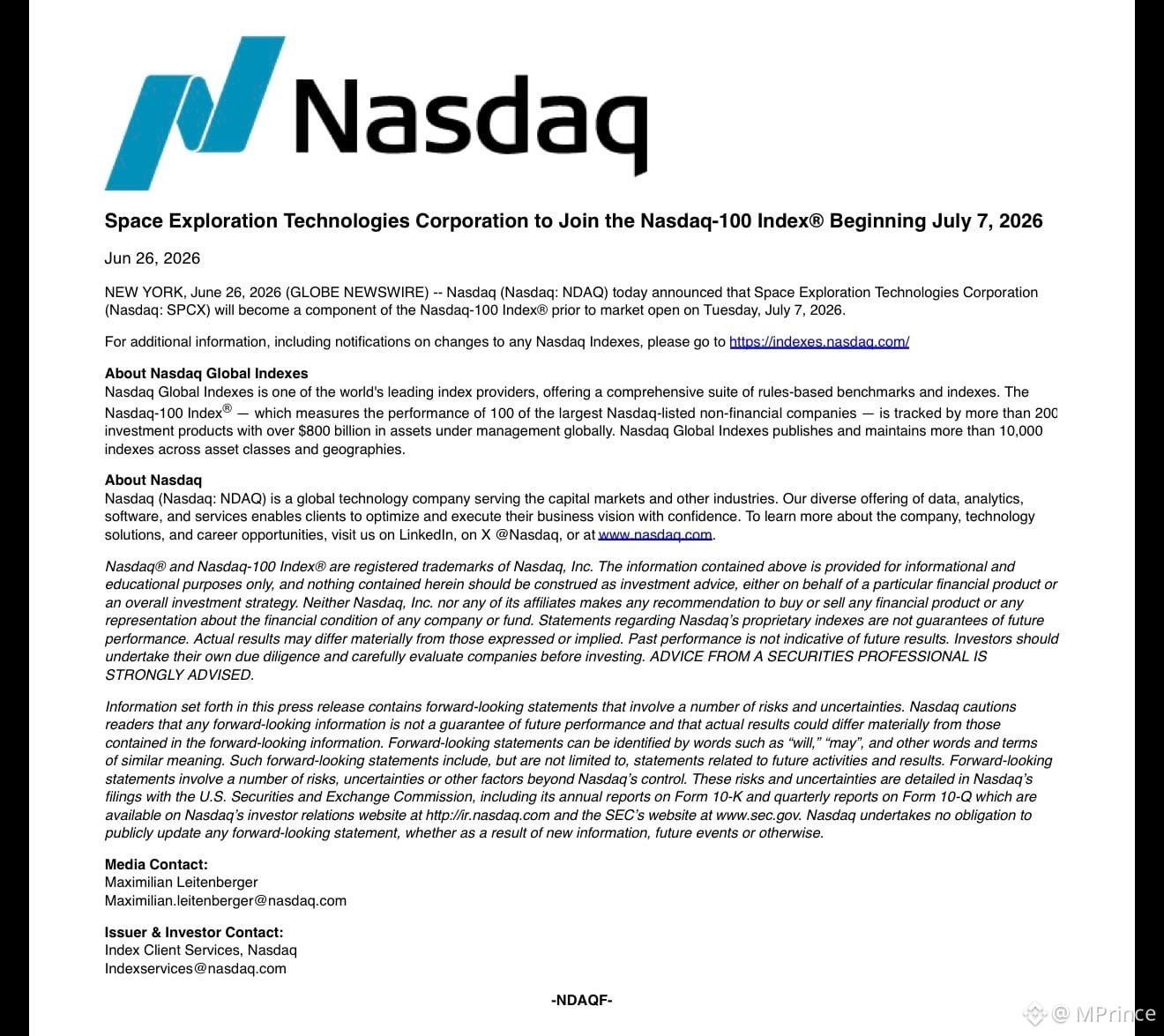
SPCXUS+0.00%
1
1
278
·
--
Article
🚨 Crypto Is Bleeding While AI Stocks BoomThe crypto market had a rough week, with major coins falling as investors moved their money into AI-related stocks. Popular tokens like Dogecoin and Hyperliquid’s HYPE led the losses, dropping close to 10% over the past seven days. Other big names like Ethereum and XRP also saw sharp declines, showing that the weakness was spread across the entire market.
Dogecoin fell nearly 9.6%, while HYPE dropped about 9.9%, making them the worst performers among major cryptocurrencies. Ethereum declined more than 8%, and XRP lost almost 8% as well. Meanwhile, Solana and Tron managed to stay relatively stable, showing that not all tokens were hit equally during the sell-off.
Bitcoin, the largest cryptocurrency, showed more strength compared to others but still dropped around 5%. It briefly fell below $59,000 before recovering back above $60,000. Analysts noted that strong buying activity appeared whenever prices dipped, suggesting that some investors are still confident in Bitcoin at lower levels.
One big reason for the decline is the shift in investor focus toward AI stocks. The stock market has been doing well, especially companies tied to artificial intelligence. As a result, money is flowing out of crypto and into stocks, where investors currently see better opportunities and more stable returns.
At the same time, the broader stock market is changing. Investors are moving away from chipmakers, which had been leading gains, and putting money into a wider range of companies. This shift has helped push parts of the stock market to record highs, while crypto has not benefited from this trend at all.
There are also crypto-specific pressures adding to the decline. Outflows from Bitcoin ETFs, a strong U.S. dollar, and expectations of higher interest rates are all weighing on the market. These factors make crypto less attractive compared to traditional investments, especially during uncertain times.
Another concern is investor sentiment. Large institutional investors are becoming more cautious and can quickly pull money out of crypto to protect their portfolios. This creates sudden drops in prices, especially when leveraged traders are forced to sell during market swings.
In simple terms, risk appetite still exists in the market — but it is selective. Right now, investors prefer AI stocks over cryptocurrencies. Until that changes, crypto may continue to face pressure, with occasional sharp drops followed by short recoveries
Looking ahead, the key question is whether crypto can regain investor interest. If market conditions improve or new catalysts emerge, prices could stabilize. But for now, the trend is clear: money is moving where confidence is strongest — and currently, that’s not crypto.
#Dogecoin #AI #HYPER $DOGE #hype $HYPE
{future}(HYPEUSDT)
🚨 Crypto Is Bleeding While AI Stocks Boom
The crypto market had a rough week, with major coins falling as investors moved their money into AI-related stocks. Popular tokens like Dogecoin and Hyperliquid’s HYPE led the losses, dropping close to 10% over the past seven days. Other big names like Ethereum and XRP also saw sharp declines, showing that the weakness was spread across the entire market.
Dogecoin fell nearly 9.6%, while HYPE dropped about 9.9%, making them the worst performers among major cryptocurrencies. Ethereum declined more than 8%, and XRP lost almost 8% as well. Meanwhile, Solana and Tron managed to stay relatively stable, showing that not all tokens were hit equally during the sell-off.
Bitcoin, the largest cryptocurrency, showed more strength compared to others but still dropped around 5%. It briefly fell below $59,000 before recovering back above $60,000. Analysts noted that strong buying activity appeared whenever prices dipped, suggesting that some investors are still confident in Bitcoin at lower levels.
One big reason for the decline is the shift in investor focus toward AI stocks. The stock market has been doing well, especially companies tied to artificial intelligence. As a result, money is flowing out of crypto and into stocks, where investors currently see better opportunities and more stable returns.
At the same time, the broader stock market is changing. Investors are moving away from chipmakers, which had been leading gains, and putting money into a wider range of companies. This shift has helped push parts of the stock market to record highs, while crypto has not benefited from this trend at all.
There are also crypto-specific pressures adding to the decline. Outflows from Bitcoin ETFs, a strong U.S. dollar, and expectations of higher interest rates are all weighing on the market. These factors make crypto less attractive compared to traditional investments, especially during uncertain times.
Another concern is investor sentiment. Large institutional investors are becoming more cautious and can quickly pull money out of crypto to protect their portfolios. This creates sudden drops in prices, especially when leveraged traders are forced to sell during market swings.
In simple terms, risk appetite still exists in the market — but it is selective. Right now, investors prefer AI stocks over cryptocurrencies. Until that changes, crypto may continue to face pressure, with occasional sharp drops followed by short recoveries
Looking ahead, the key question is whether crypto can regain investor interest. If market conditions improve or new catalysts emerge, prices could stabilize. But for now, the trend is clear: money is moving where confidence is strongest — and currently, that’s not crypto.
#Dogecoin #AI #HYPER $DOGE #hype $HYPE
Dogecoin fell nearly 9.6%, while HYPE dropped about 9.9%, making them the worst performers among major cryptocurrencies. Ethereum declined more than 8%, and XRP lost almost 8% as well. Meanwhile, Solana and Tron managed to stay relatively stable, showing that not all tokens were hit equally during the sell-off.
Bitcoin, the largest cryptocurrency, showed more strength compared to others but still dropped around 5%. It briefly fell below $59,000 before recovering back above $60,000. Analysts noted that strong buying activity appeared whenever prices dipped, suggesting that some investors are still confident in Bitcoin at lower levels.
One big reason for the decline is the shift in investor focus toward AI stocks. The stock market has been doing well, especially companies tied to artificial intelligence. As a result, money is flowing out of crypto and into stocks, where investors currently see better opportunities and more stable returns.
At the same time, the broader stock market is changing. Investors are moving away from chipmakers, which had been leading gains, and putting money into a wider range of companies. This shift has helped push parts of the stock market to record highs, while crypto has not benefited from this trend at all.
There are also crypto-specific pressures adding to the decline. Outflows from Bitcoin ETFs, a strong U.S. dollar, and expectations of higher interest rates are all weighing on the market. These factors make crypto less attractive compared to traditional investments, especially during uncertain times.
Another concern is investor sentiment. Large institutional investors are becoming more cautious and can quickly pull money out of crypto to protect their portfolios. This creates sudden drops in prices, especially when leveraged traders are forced to sell during market swings.
In simple terms, risk appetite still exists in the market — but it is selective. Right now, investors prefer AI stocks over cryptocurrencies. Until that changes, crypto may continue to face pressure, with occasional sharp drops followed by short recoveries
Looking ahead, the key question is whether crypto can regain investor interest. If market conditions improve or new catalysts emerge, prices could stabilize. But for now, the trend is clear: money is moving where confidence is strongest — and currently, that’s not crypto.
#Dogecoin #AI #HYPER $DOGE #hype $HYPE
1
205
Log in to explore more content
Join global crypto users on Binance Square
⚡️ Get latest and useful information about crypto.
💬 Trusted by the world’s largest crypto exchange.
👍 Discover real insights from verified creators.
Email / Phone number
Trending Topics
OpenAIUnveilsAlwaysOnAgentDots
518 views
50 Discussing
#OpenAIUnveilsAlwaysOnAgentDots
🤖 OpenAI’s Always-On Dots: AI That Keeps Working
OpenAI has unveiled Dots, a new type of always-on AI agent designed to take responsibility for ongoing tasks instead of waiting for every individual prompt. Dots can work with connected apps, use their own cloud computer, and continue making progress between conversations.
The bigger shift is from “AI that answers” to “AI that acts.” A Dot can research, organize projects, monitor information, prepare work, and return results for the user to review. OpenAI also says users can control permissions and decide which actions require approval.
This could change how people interact with AI—but reliability, privacy, permissions, and human oversight remain important as agents become more autonomous.
Always-on AI is becoming a new computing model. The real question is: how much responsibility should we give an AI agent? 👀
#OpenAI #AgentDots #AI #AIAgents #ChatGPT #Tech
PALASH5
·0 Likes
·115 views
ChainlinkLaunchesBankSWIFTLedgerFramework
1,615 views
60 Discussing
EarningsSeason
424,848 views
3,219 Discussing