

MoRan陌然
276 Posts

MoRan陌然
Report
Block User
加密货币爱好者 || BNB长期持有者 || 推特:Oldcamilaxvx
Open Trade
Frequent Trader
2.3 Years
563 Following
24.3K+ Followers
10.6K+ Liked
Posts
Portfolio
All
Quotes
·
--
Over the past couple of days, I looked into some PayFi-related materials. The more I read, the more I think this space might really be more interesting than we imagined.
Because right now, Crypto doesn’t lack products that answer the question of “how to make money earn more.” There are tons of things like trading, lending, staking, and all kinds of yield strategies.
But there’s one most basic question that still hasn’t really been addressed seriously:
How can on-chain money enter real life more naturally?
That’s also what I’ve been quite interested in about @Square-Creator-cf6856467 .
It doesn’t come in and tell you some super mysterious story right away. Instead, it breaks down the whole topic of payments and works through it step by step. Identity, funds, spending, cross-border transfers, salaries—down to things like Card and eSIM, and even future AI Agent payments. You can see fairly concrete landing points.
I think this approach is actually pretty great.
Because for real large-scale adoption, it may not be about getting ordinary people to open their wallets every day to study Gas, networks, and smart contracts.
The ideal state would be: you swipe your card and it just works; when you travel abroad, you can use it; when you get paid, you get paid; and cross-border money transfers don’t require fiddling for half a day.
As for whether it’s blockchain or whether it’s PayFi later on, users might not even care that much 😂
If PolyFlow can really get these scenarios working one by one, then what it builds won’t be just another payment product—it’ll be like gradually connecting the line between “on-chain money” and “real-world money.”
Honestly, I’m pretty excited about a project like this.
Not because the story is grand or dramatic, but because it makes me start to think seriously: if one day crypto payments become as natural as swiping a bank card, could that be the real moment when Web3 truly goes mainstream?
At least from where things stand in this direction, PolyFlow is one I think is worth keeping an eye on continuously.
#polyflow
Over the past couple of days, I looked into some PayFi-related materials. The more I read, the more I think this space might really be more interesting than we imagined.
Because right now, Crypto doesn’t lack products that answer the question of “how to make money earn more.” There are tons of things like trading, lending, staking, and all kinds of yield strategies.
But there’s one most basic question that still hasn’t really been addressed seriously:
How can on-chain money enter real life more naturally?
That’s also what I’ve been quite interested in about @polyflow_PayFi .
It doesn’t come in and tell you some super mysterious story right away. Instead, it breaks down the whole topic of payments and works through it step by step. Identity, funds, spending, cross-border transfers, salaries—down to things like Card and eSIM, and even future AI Agent payments. You can see fairly concrete landing points.
I think this approach is actually pretty great.
Because for real large-scale adoption, it may not be about getting ordinary people to open their wallets every day to study Gas, networks, and smart contracts.
The ideal state would be: you swipe your card and it just works; when you travel abroad, you can use it; when you get paid, you get paid; and cross-border money transfers don’t require fiddling for half a day.
As for whether it’s blockchain or whether it’s PayFi later on, users might not even care that much 😂
If PolyFlow can really get these scenarios working one by one, then what it builds won’t be just another payment product—it’ll be like gradually connecting the line between “on-chain money” and “real-world money.”
Honestly, I’m pretty excited about a project like this.
Not because the story is grand or dramatic, but because it makes me start to think seriously: if one day crypto payments become as natural as swiping a bank card, could that be the real moment when Web3 truly goes mainstream?
At least from where things stand in this direction, PolyFlow is one I think is worth keeping an eye on continuously.
#polyflow
Because right now, Crypto doesn’t lack products that answer the question of “how to make money earn more.” There are tons of things like trading, lending, staking, and all kinds of yield strategies.
But there’s one most basic question that still hasn’t really been addressed seriously:
How can on-chain money enter real life more naturally?
That’s also what I’ve been quite interested in about @polyflow_PayFi .
It doesn’t come in and tell you some super mysterious story right away. Instead, it breaks down the whole topic of payments and works through it step by step. Identity, funds, spending, cross-border transfers, salaries—down to things like Card and eSIM, and even future AI Agent payments. You can see fairly concrete landing points.
I think this approach is actually pretty great.
Because for real large-scale adoption, it may not be about getting ordinary people to open their wallets every day to study Gas, networks, and smart contracts.
The ideal state would be: you swipe your card and it just works; when you travel abroad, you can use it; when you get paid, you get paid; and cross-border money transfers don’t require fiddling for half a day.
As for whether it’s blockchain or whether it’s PayFi later on, users might not even care that much 😂
If PolyFlow can really get these scenarios working one by one, then what it builds won’t be just another payment product—it’ll be like gradually connecting the line between “on-chain money” and “real-world money.”
Honestly, I’m pretty excited about a project like this.
Not because the story is grand or dramatic, but because it makes me start to think seriously: if one day crypto payments become as natural as swiping a bank card, could that be the real moment when Web3 truly goes mainstream?
At least from where things stand in this direction, PolyFlow is one I think is worth keeping an eye on continuously.
#polyflow

29
1
4
229
·
--
I have been reborn. In this life, I will reclaim everything that belongs to me.
I have been reborn. In this life, I will reclaim everything that belongs to me.

35
4
113
·
--
Long-termism isn’t about enduring time—it’s about choosing the right direction and sticking with it.
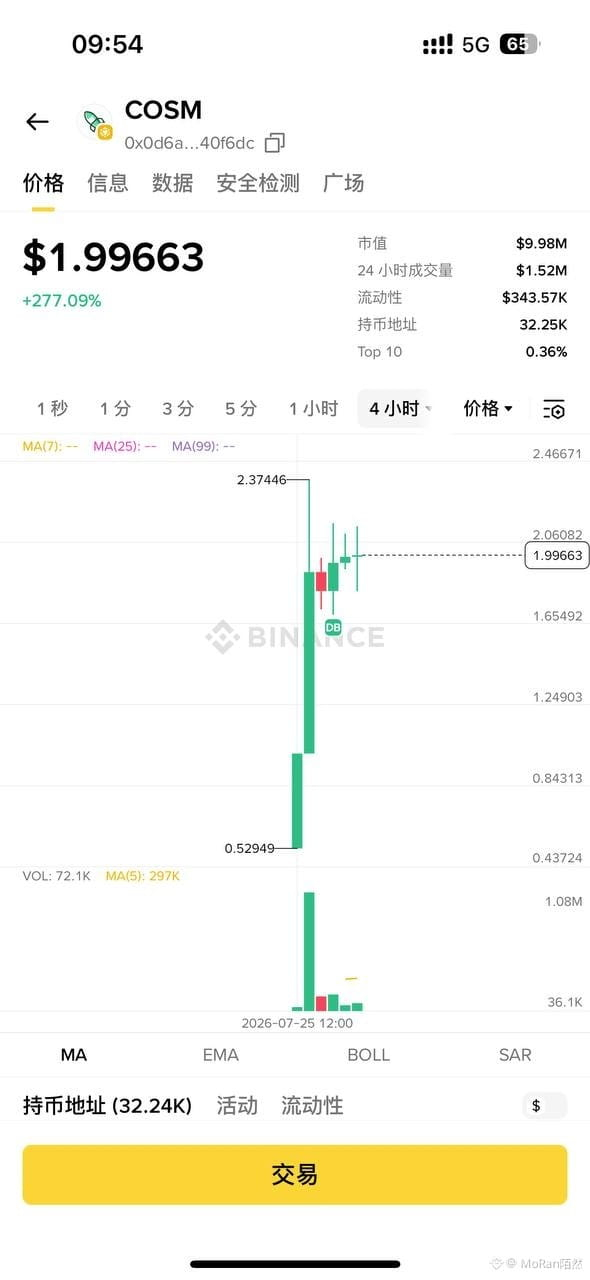
From the very beginning, COSM was designed for long-term operation:
· Institutional funds aren’t short-term borrowings; they’re long-term investment
· The on-the-ground outreach network isn’t a temporary setup; it’s continuous operations
· The profit mechanism isn’t a promotional tactic; it’s fixed rules
· Benefit/bonus activities aren’t just once or twice; they’re part of a recurring schedule
Short-term hype will fade, but long-term value will accumulate.
Time is a friend to good projects, and the enemy of poor ones.
Whether COSM is worth long-term attention—you already know in your heart.
#COSM #BTC走势分析
Long-termism isn’t about enduring time—it’s about choosing the right direction and sticking with it.
From the very beginning, COSM was designed for long-term operation:
· Institutional funds aren’t short-term borrowings; they’re long-term investment
· The on-the-ground outreach network isn’t a temporary setup; it’s continuous operations
· The profit mechanism isn’t a promotional tactic; it’s fixed rules
· Benefit/bonus activities aren’t just once or twice; they’re part of a recurring schedule
Short-term hype will fade, but long-term value will accumulate.
Time is a friend to good projects, and the enemy of poor ones.
Whether COSM is worth long-term attention—you already know in your heart.
#COSM #BTC走势分析
From the very beginning, COSM was designed for long-term operation:
· Institutional funds aren’t short-term borrowings; they’re long-term investment
· The on-the-ground outreach network isn’t a temporary setup; it’s continuous operations
· The profit mechanism isn’t a promotional tactic; it’s fixed rules
· Benefit/bonus activities aren’t just once or twice; they’re part of a recurring schedule
Short-term hype will fade, but long-term value will accumulate.
Time is a friend to good projects, and the enemy of poor ones.
Whether COSM is worth long-term attention—you already know in your heart.
#COSM #BTC走势分析
3.2k
7
182
3.2k
·
--
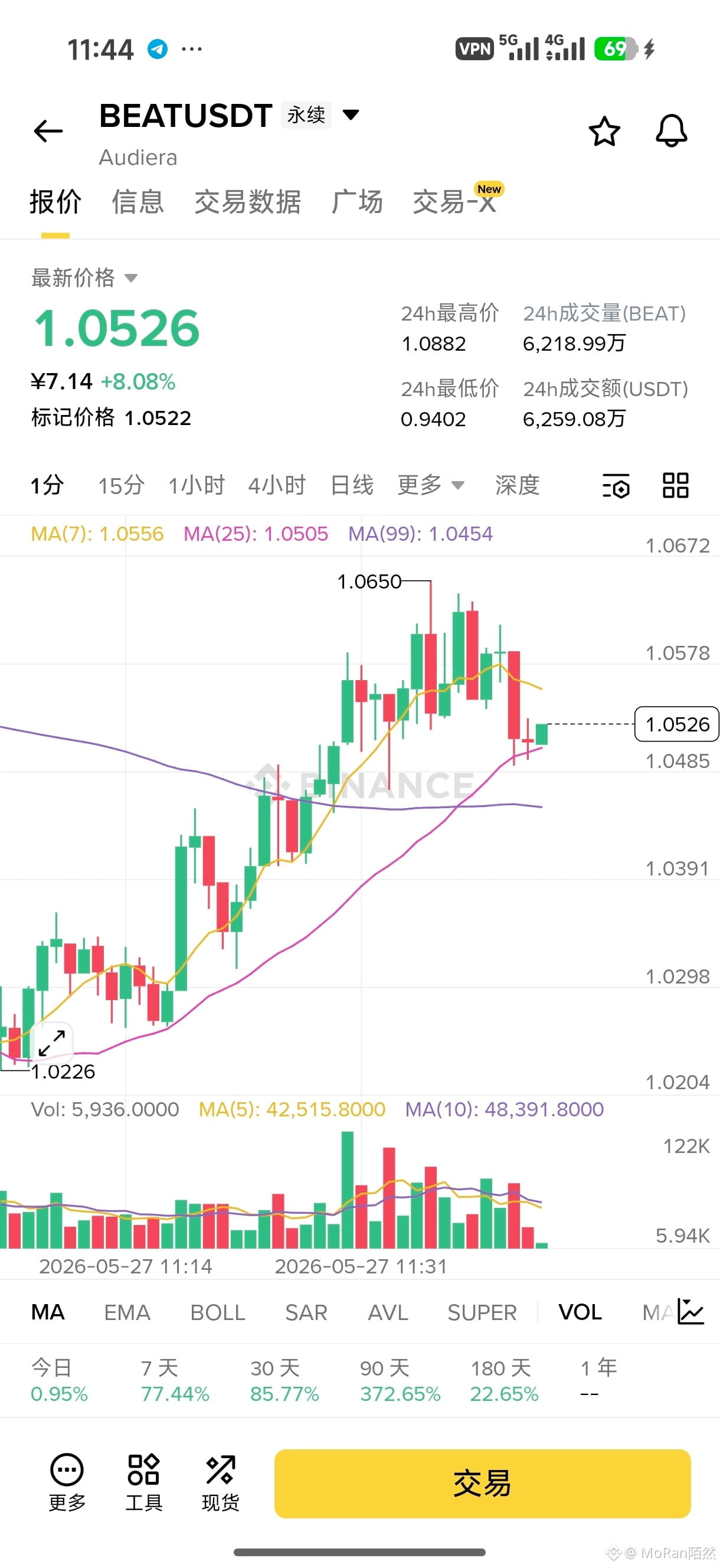
This round $BEAT , I feel like a lot of folks still don't really get it.
It's not just about the simple 'pump and dump' anymore; the on-chain data is starting to resemble a real ecosystem with actual users and liquidity.
If you check the data, you'll notice:
The 24H Perp market volume is pretty stable in the $4-5 billion range, and the FDV has climbed to $1.5 billion.
But what's even more interesting isn't just these numbers.
In the past 30 days, although there's been some whale activity, it's actually been continuous retail buy pressure that's been gradually pushing the price up.
To put it simply, retail investors are consistently buying in, and it's not just a one-off hit and run.
There's volume,
there's retention,
there are real users participating,
and there's a burn model backing it up.
The 74.39% buyer retention rate tells me a lot.
Many coins can pump, but they can't keep the users.
And $BEAT has surged from $0.26 all the way to $1.44, over 450% gains, yet the market is still valuing it.
This isn't just a sentimental play anymore.
It increasingly looks like:
Capital is willing to come back repeatedly,
Users are keen to keep participating,
And the market is beginning to assume it 'can still tell a story'.
This kind of structure is actually the most dangerous and also the easiest place to keep pushing upwards in this round.👀
This round $BEAT , I feel like a lot of folks still don't really get it.
It's not just about the simple 'pump and dump' anymore; the on-chain data is starting to resemble a real ecosystem with actual users and liquidity.
If you check the data, you'll notice:
The 24H Perp market volume is pretty stable in the $4-5 billion range, and the FDV has climbed to $1.5 billion.
But what's even more interesting isn't just these numbers.
In the past 30 days, although there's been some whale activity, it's actually been continuous retail buy pressure that's been gradually pushing the price up.
To put it simply, retail investors are consistently buying in, and it's not just a one-off hit and run.
There's volume,
there's retention,
there are real users participating,
and there's a burn model backing it up.
The 74.39% buyer retention rate tells me a lot.
Many coins can pump, but they can't keep the users.
And $BEAT has surged from $0.26 all the way to $1.44, over 450% gains, yet the market is still valuing it.
This isn't just a sentimental play anymore.
It increasingly looks like:
Capital is willing to come back repeatedly,
Users are keen to keep participating,
And the market is beginning to assume it 'can still tell a story'.
This kind of structure is actually the most dangerous and also the easiest place to keep pushing upwards in this round.👀
It's not just about the simple 'pump and dump' anymore; the on-chain data is starting to resemble a real ecosystem with actual users and liquidity.
If you check the data, you'll notice:
The 24H Perp market volume is pretty stable in the $4-5 billion range, and the FDV has climbed to $1.5 billion.
But what's even more interesting isn't just these numbers.
In the past 30 days, although there's been some whale activity, it's actually been continuous retail buy pressure that's been gradually pushing the price up.
To put it simply, retail investors are consistently buying in, and it's not just a one-off hit and run.
There's volume,
there's retention,
there are real users participating,
and there's a burn model backing it up.
The 74.39% buyer retention rate tells me a lot.
Many coins can pump, but they can't keep the users.
And $BEAT has surged from $0.26 all the way to $1.44, over 450% gains, yet the market is still valuing it.
This isn't just a sentimental play anymore.
It increasingly looks like:
Capital is willing to come back repeatedly,
Users are keen to keep participating,
And the market is beginning to assume it 'can still tell a story'.
This kind of structure is actually the most dangerous and also the easiest place to keep pushing upwards in this round.👀
1.8k
4
106
1.8k
·
--
Article
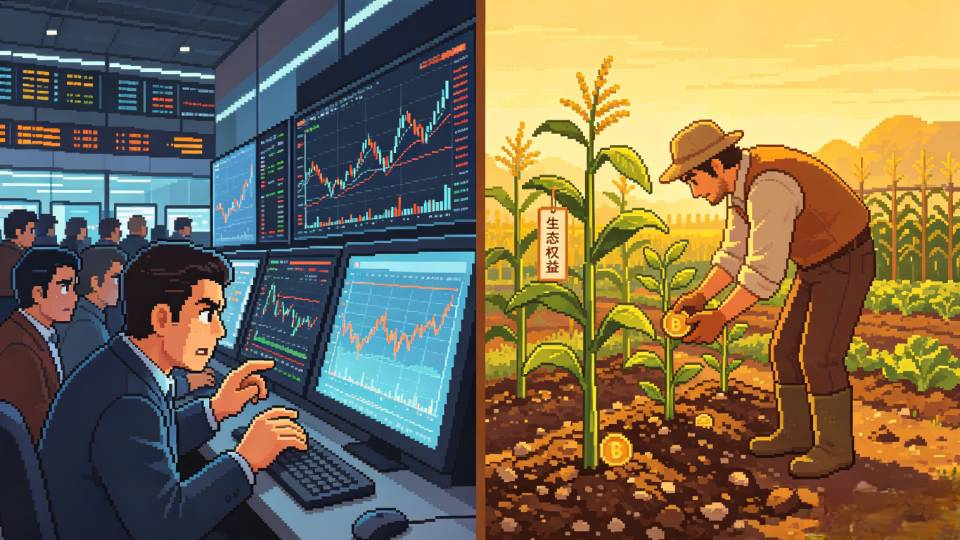
Stop just staring at the candlesticks; the $PIXEL staking game has some real potential.To be honest, these past couple of days while trading, I've suddenly felt a bit of "fatigue". It's not that the market is bad; it's just that many projects seem pretty similar—big narratives, fast-paced, but they can't hold onto users. In this state, I've actually started to revisit some "slower" things, like the Pixels set.
When I first got into @pixels I honestly didn’t take it seriously, just thought it was a game-oriented project. But recently, as I revisited its staking logic, the more I looked, the more interesting it seemed. Especially the current staking ecosystem of $PIXEL , which isn't just about locking tokens for yield but is slowly moving towards a sense of "participation."
Stop just staring at the candlesticks; the $PIXEL staking game has some real potential.
To be honest, these past couple of days while trading, I've suddenly felt a bit of "fatigue". It's not that the market is bad; it's just that many projects seem pretty similar—big narratives, fast-paced, but they can't hold onto users. In this state, I've actually started to revisit some "slower" things, like the Pixels set.
When I first got into @Pixels I honestly didn’t take it seriously, just thought it was a game-oriented project. But recently, as I revisited its staking logic, the more I looked, the more interesting it seemed. Especially the current staking ecosystem of $PIXEL , which isn't just about locking tokens for yield but is slowly moving towards a sense of "participation."
When I first got into @Pixels I honestly didn’t take it seriously, just thought it was a game-oriented project. But recently, as I revisited its staking logic, the more I looked, the more interesting it seemed. Especially the current staking ecosystem of $PIXEL , which isn't just about locking tokens for yield but is slowly moving towards a sense of "participation."
1
310
·
--
Here's something interesting: a lot of folks dive into the crypto scene thinking about "quick bucks," but the ones who stick around are usually those willing to "farm" over time.
I've been revisiting the gameplay of @pixels , and to be honest, I initially thought it was just a typical GameFi setup. But the more I play, the more it feels like a system where "time equals value." Especially with the staking aspect—it's not just about locking up assets and waiting for a pump; you truly feel engaged in the ecosystem, almost like managing a long-term project.
I'm personally optimistic about the staking mechanism of $PIXEL . One point is that it closely ties "player behavior" to "rewards." It’s not merely a financial play; it has ecosystem support. You invest time and resources, gradually building up rather than relying on luck for a quick win. This kind of model is actually more suited for a long-term approach.
Plus, many people overlook that Pixels is continually expanding its ecosystem—it's not just about the game itself, but also the value system surrounding assets, items, and land. When you stake, you're not just locking a token; you're betting on the growth of the entire ecosystem.
Of course, this kind of model might have a slower pace and isn't for those just looking to get rich quick. But if you're the type who enjoys earning while playing and gradually building up, these projects can be way more interesting.
Right now, I feel like Pixels isn't a project that screams "moon" at first glance, but it's definitely the kind where the more you engage, the more rewarding it feels.
#pixel
Here's something interesting: a lot of folks dive into the crypto scene thinking about "quick bucks," but the ones who stick around are usually those willing to "farm" over time.
I've been revisiting the gameplay of @Pixels , and to be honest, I initially thought it was just a typical GameFi setup. But the more I play, the more it feels like a system where "time equals value." Especially with the staking aspect—it's not just about locking up assets and waiting for a pump; you truly feel engaged in the ecosystem, almost like managing a long-term project.
I'm personally optimistic about the staking mechanism of $PIXEL . One point is that it closely ties "player behavior" to "rewards." It’s not merely a financial play; it has ecosystem support. You invest time and resources, gradually building up rather than relying on luck for a quick win. This kind of model is actually more suited for a long-term approach.
Plus, many people overlook that Pixels is continually expanding its ecosystem—it's not just about the game itself, but also the value system surrounding assets, items, and land. When you stake, you're not just locking a token; you're betting on the growth of the entire ecosystem.
Of course, this kind of model might have a slower pace and isn't for those just looking to get rich quick. But if you're the type who enjoys earning while playing and gradually building up, these projects can be way more interesting.
Right now, I feel like Pixels isn't a project that screams "moon" at first glance, but it's definitely the kind where the more you engage, the more rewarding it feels.
#pixel
I've been revisiting the gameplay of @Pixels , and to be honest, I initially thought it was just a typical GameFi setup. But the more I play, the more it feels like a system where "time equals value." Especially with the staking aspect—it's not just about locking up assets and waiting for a pump; you truly feel engaged in the ecosystem, almost like managing a long-term project.
I'm personally optimistic about the staking mechanism of $PIXEL . One point is that it closely ties "player behavior" to "rewards." It’s not merely a financial play; it has ecosystem support. You invest time and resources, gradually building up rather than relying on luck for a quick win. This kind of model is actually more suited for a long-term approach.
Plus, many people overlook that Pixels is continually expanding its ecosystem—it's not just about the game itself, but also the value system surrounding assets, items, and land. When you stake, you're not just locking a token; you're betting on the growth of the entire ecosystem.
Of course, this kind of model might have a slower pace and isn't for those just looking to get rich quick. But if you're the type who enjoys earning while playing and gradually building up, these projects can be way more interesting.
Right now, I feel like Pixels isn't a project that screams "moon" at first glance, but it's definitely the kind where the more you engage, the more rewarding it feels.
#pixel

225
·
--

Article
You think you’re playing a game, but you’re actually engaging in a complete economic system—Pixels is something elseI've been pondering something quite interesting lately: why do some people in the crypto space manage to 'chill and collect results', while others who stare at the charts daily become more and more anxious? I slowly started to realize that the difference isn't about who works harder, but rather about whether you've chosen the right 'participation strategy'.
To put it bluntly, relying solely on trading is honestly one of the most exhausting ways to play the game. You've got to read the emotions, the rhythm, and the capital flow, plus you need to be quick on your feet. But if you allocate a portion of your position into a project with a sustainable ecosystem and internal circulation, that feeling is completely different—it's not about chasing pumps and dumps every day, but rather participating in its growth.
You think you’re playing a game, but you’re actually engaging in a complete economic system—Pixels is something else
I've been pondering something quite interesting lately: why do some people in the crypto space manage to 'chill and collect results', while others who stare at the charts daily become more and more anxious? I slowly started to realize that the difference isn't about who works harder, but rather about whether you've chosen the right 'participation strategy'.
To put it bluntly, relying solely on trading is honestly one of the most exhausting ways to play the game. You've got to read the emotions, the rhythm, and the capital flow, plus you need to be quick on your feet. But if you allocate a portion of your position into a project with a sustainable ecosystem and internal circulation, that feeling is completely different—it's not about chasing pumps and dumps every day, but rather participating in its growth.
To put it bluntly, relying solely on trading is honestly one of the most exhausting ways to play the game. You've got to read the emotions, the rhythm, and the capital flow, plus you need to be quick on your feet. But if you allocate a portion of your position into a project with a sustainable ecosystem and internal circulation, that feeling is completely different—it's not about chasing pumps and dumps every day, but rather participating in its growth.
186
·
--
Sometimes I think the crypto space nowadays is a bit like the old internet café days—you might not know all the rules right off the bat, but if you just sit down and get involved, you'll gradually find your rhythm.
Lately, I've seen a lot of chatter about the intersection of gaming and blockchain. To be honest, I initially approached it with a "just browsing" mindset. But I slowly realized that some projects are genuinely committed to fostering a sense of "participation" rather than just spinning a good yarn.
Take the project with the ID @pixels , for example. To put it plainly, it’s not the kind of project that screams instant riches, but it's more like a gradual integration into your daily ecosystem. Especially its staking mechanism, which I find quite intriguing—not the cold, hard lock-up kind, but more like you’re "claiming a spot" in this world.
When you put in $PIXEL , it’s not just about the yield; it feels more like you’re engaging in the operation of this game world. Honestly, that kind of vibe is pretty rare in today’s projects. Most just want you to "throw in your cash and wait for the outcome," but Pixels feels more like you're invited to "stick around and play."
And you’ll notice that over time, this staking brings not just returns, but also a familiarity with the ecosystem. You’ll start keeping an eye on updates, seeing how others play, and even feel a bit of an urge to jump into community discussions.
I think that’s the key—not the short-term ups and downs, but whether you’re willing to stay here for the long haul.
Of course, the crypto space changes rapidly, but what keeps people around is never just a momentary hype; it’s that feeling of being able to "stick it out."
#pixel
Sometimes I think the crypto space nowadays is a bit like the old internet café days—you might not know all the rules right off the bat, but if you just sit down and get involved, you'll gradually find your rhythm.
Lately, I've seen a lot of chatter about the intersection of gaming and blockchain. To be honest, I initially approached it with a "just browsing" mindset. But I slowly realized that some projects are genuinely committed to fostering a sense of "participation" rather than just spinning a good yarn.
Take the project with the ID @Pixels , for example. To put it plainly, it’s not the kind of project that screams instant riches, but it's more like a gradual integration into your daily ecosystem. Especially its staking mechanism, which I find quite intriguing—not the cold, hard lock-up kind, but more like you’re "claiming a spot" in this world.
When you put in $PIXEL , it’s not just about the yield; it feels more like you’re engaging in the operation of this game world. Honestly, that kind of vibe is pretty rare in today’s projects. Most just want you to "throw in your cash and wait for the outcome," but Pixels feels more like you're invited to "stick around and play."
And you’ll notice that over time, this staking brings not just returns, but also a familiarity with the ecosystem. You’ll start keeping an eye on updates, seeing how others play, and even feel a bit of an urge to jump into community discussions.
I think that’s the key—not the short-term ups and downs, but whether you’re willing to stay here for the long haul.
Of course, the crypto space changes rapidly, but what keeps people around is never just a momentary hype; it’s that feeling of being able to "stick it out."
#pixel
Lately, I've seen a lot of chatter about the intersection of gaming and blockchain. To be honest, I initially approached it with a "just browsing" mindset. But I slowly realized that some projects are genuinely committed to fostering a sense of "participation" rather than just spinning a good yarn.
Take the project with the ID @Pixels , for example. To put it plainly, it’s not the kind of project that screams instant riches, but it's more like a gradual integration into your daily ecosystem. Especially its staking mechanism, which I find quite intriguing—not the cold, hard lock-up kind, but more like you’re "claiming a spot" in this world.
When you put in $PIXEL , it’s not just about the yield; it feels more like you’re engaging in the operation of this game world. Honestly, that kind of vibe is pretty rare in today’s projects. Most just want you to "throw in your cash and wait for the outcome," but Pixels feels more like you're invited to "stick around and play."
And you’ll notice that over time, this staking brings not just returns, but also a familiarity with the ecosystem. You’ll start keeping an eye on updates, seeing how others play, and even feel a bit of an urge to jump into community discussions.
I think that’s the key—not the short-term ups and downs, but whether you’re willing to stay here for the long haul.
Of course, the crypto space changes rapidly, but what keeps people around is never just a momentary hype; it’s that feeling of being able to "stick it out."
#pixel

222
·
--
Tonight at 8 PM @PGProtocol x Noname LIVE100 🎙️
What's the next stop for the BTC ecosystem? You might find the answer after this session.
Join the live stream below
#PGProtocol #BTC
Tonight at 8 PM @PGProtocol x Noname LIVE100 🎙️
What's the next stop for the BTC ecosystem? You might find the answer after this session.
Join the live stream below
#PGProtocol #BTC
What's the next stop for the BTC ecosystem? You might find the answer after this session.
Join the live stream below
#PGProtocol #BTC

69
8
304
·
--

Article
From FOMO to being willing to hold long-term, @Pixels has changed my perspective a bitLast night while I was checking the charts, I suddenly had a very real feeling: in this market, when things are pumping, everyone talks about narratives, but when it starts to dump, that's when people ask, 'Does this thing even have value?' A lot of projects get stuck at this point; they spin great stories, but once we hit a consolidation phase, they can't keep people engaged.
But recently, while revisiting @pixels , I’ve had a bit of a different vibe. It’s not that instant wealth rush, but more of a 'are you willing to hold for a bit longer' kind of project.
To put it bluntly, in today's blockchain gaming or GameFi scene, we’ve seen too many flash-in-the-pan models. They launch with sky-high expectations, but then nobody plays, no one picks up the tokens, and it all ends in a mess. But Pixels is interesting because it gradually ties 'engagement' and 'profit logic' together, rather than just relying on token distribution to hype things up.
From FOMO to being willing to hold long-term, @Pixels has changed my perspective a bit
Last night while I was checking the charts, I suddenly had a very real feeling: in this market, when things are pumping, everyone talks about narratives, but when it starts to dump, that's when people ask, 'Does this thing even have value?' A lot of projects get stuck at this point; they spin great stories, but once we hit a consolidation phase, they can't keep people engaged.
But recently, while revisiting @Pixels , I’ve had a bit of a different vibe. It’s not that instant wealth rush, but more of a 'are you willing to hold for a bit longer' kind of project.
To put it bluntly, in today's blockchain gaming or GameFi scene, we’ve seen too many flash-in-the-pan models. They launch with sky-high expectations, but then nobody plays, no one picks up the tokens, and it all ends in a mess. But Pixels is interesting because it gradually ties 'engagement' and 'profit logic' together, rather than just relying on token distribution to hype things up.
But recently, while revisiting @Pixels , I’ve had a bit of a different vibe. It’s not that instant wealth rush, but more of a 'are you willing to hold for a bit longer' kind of project.
To put it bluntly, in today's blockchain gaming or GameFi scene, we’ve seen too many flash-in-the-pan models. They launch with sky-high expectations, but then nobody plays, no one picks up the tokens, and it all ends in a mess. But Pixels is interesting because it gradually ties 'engagement' and 'profit logic' together, rather than just relying on token distribution to hype things up.
1
406
·
--
I've recently noticed a pretty interesting phenomenon, not sure if you guys feel the same: a lot of people shout about 'long-termism' while glued to their candlesticks, itching to make ten decisions a minute. To put it bluntly, most folks aren't struggling to make money; they just can't hold on.
During this time, I've intentionally started looking at some 'slower' things, like staking ecosystems. Take @pixels for example, I initially didn't pay much attention, thinking it was just another regular chain game + token, but the more I looked, the more I found its design quite intriguing. Especially the staking mechanism of $PIXEL , it’s not as simple as just locking up assets; it’s more about binding players, funds, and the ecosystem together.
You’ll notice that once you stake $PIXEL , your mindset shifts—you stop obsessing over daily price fluctuations and start focusing on whether this ecosystem has consistent production, new gameplay, and user growth. It feels a bit like transitioning from a 'speculator' to a 'participant'.
Plus, one thing I really appreciate about Pixels: it’s not just spinning stories, but genuinely creating a loop. You stake → participate in the ecosystem → earn returns → reinvest. Once this cycle is running, it’s actually more engaging than just flipping coins and makes it easier for people to stick with it.
At the end of the day, in this market, it’s not just about information asymmetry anymore; it’s about who has more patience and who can better understand what the project is 'slowly' doing.
Personally, I plan to keep an eye on @Pixels' staking ecosystem to see if it can carve out a unique path during this cycle. At least for now, $PIXEL feels like it’s not just a flash in the pan.
#pixel
I've recently noticed a pretty interesting phenomenon, not sure if you guys feel the same: a lot of people shout about 'long-termism' while glued to their candlesticks, itching to make ten decisions a minute. To put it bluntly, most folks aren't struggling to make money; they just can't hold on.
During this time, I've intentionally started looking at some 'slower' things, like staking ecosystems. Take @Pixels for example, I initially didn't pay much attention, thinking it was just another regular chain game + token, but the more I looked, the more I found its design quite intriguing. Especially the staking mechanism of $PIXEL , it’s not as simple as just locking up assets; it’s more about binding players, funds, and the ecosystem together.
You’ll notice that once you stake $PIXEL , your mindset shifts—you stop obsessing over daily price fluctuations and start focusing on whether this ecosystem has consistent production, new gameplay, and user growth. It feels a bit like transitioning from a 'speculator' to a 'participant'.
Plus, one thing I really appreciate about Pixels: it’s not just spinning stories, but genuinely creating a loop. You stake → participate in the ecosystem → earn returns → reinvest. Once this cycle is running, it’s actually more engaging than just flipping coins and makes it easier for people to stick with it.
At the end of the day, in this market, it’s not just about information asymmetry anymore; it’s about who has more patience and who can better understand what the project is 'slowly' doing.
Personally, I plan to keep an eye on @Pixels' staking ecosystem to see if it can carve out a unique path during this cycle. At least for now, $PIXEL feels like it’s not just a flash in the pan.
#pixel
During this time, I've intentionally started looking at some 'slower' things, like staking ecosystems. Take @Pixels for example, I initially didn't pay much attention, thinking it was just another regular chain game + token, but the more I looked, the more I found its design quite intriguing. Especially the staking mechanism of $PIXEL , it’s not as simple as just locking up assets; it’s more about binding players, funds, and the ecosystem together.
You’ll notice that once you stake $PIXEL , your mindset shifts—you stop obsessing over daily price fluctuations and start focusing on whether this ecosystem has consistent production, new gameplay, and user growth. It feels a bit like transitioning from a 'speculator' to a 'participant'.
Plus, one thing I really appreciate about Pixels: it’s not just spinning stories, but genuinely creating a loop. You stake → participate in the ecosystem → earn returns → reinvest. Once this cycle is running, it’s actually more engaging than just flipping coins and makes it easier for people to stick with it.
At the end of the day, in this market, it’s not just about information asymmetry anymore; it’s about who has more patience and who can better understand what the project is 'slowly' doing.
Personally, I plan to keep an eye on @Pixels' staking ecosystem to see if it can carve out a unique path during this cycle. At least for now, $PIXEL feels like it’s not just a flash in the pan.
#pixel

309
·
--
Article
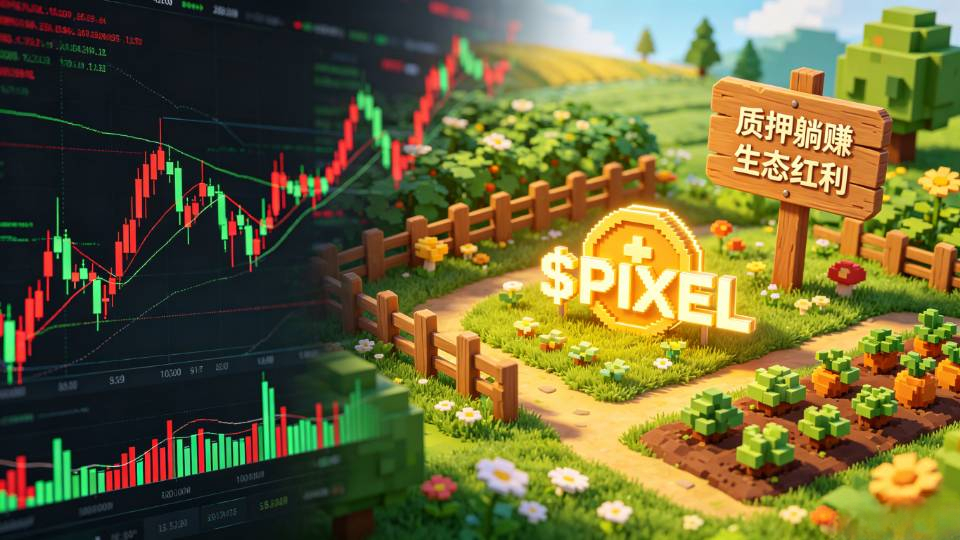
Don't just focus on trading coins! Pixels staking is the real deal—passive income + ecosystem benefitsRecently, the crypto space has been getting a bit restless again; people either chase the latest trends with sketchy coins or stare at candlesticks guessing price movements. Many have forgotten that what truly holds value in Web3 are projects with real users, real scenarios, and a real economic closed loop.
Today, I want to seriously discuss a project that many people underestimate but is becoming more appealing the more you dig into it—@pixels —especially its newly launched staking ecosystem, which is really worth our time to understand and get involved with.
Let me tell you why I suddenly want to chat about this.
A lot of my friends roll their eyes when they hear about Web3 games: pay-to-win, grind, and sketchy projects. But Pixels is totally different; it’s free to play, has real daily active users, a complete economic model, and it’s a legit project listed on Binance. It’s not vaporware or just a concept; there are actually hundreds of thousands of people farming, collecting resources, socializing, and building every day.
Don't just focus on trading coins! Pixels staking is the real deal—passive income + ecosystem benefits
Recently, the crypto space has been getting a bit restless again; people either chase the latest trends with sketchy coins or stare at candlesticks guessing price movements. Many have forgotten that what truly holds value in Web3 are projects with real users, real scenarios, and a real economic closed loop.
Today, I want to seriously discuss a project that many people underestimate but is becoming more appealing the more you dig into it—@Pixels —especially its newly launched staking ecosystem, which is really worth our time to understand and get involved with.
Let me tell you why I suddenly want to chat about this.
A lot of my friends roll their eyes when they hear about Web3 games: pay-to-win, grind, and sketchy projects. But Pixels is totally different; it’s free to play, has real daily active users, a complete economic model, and it’s a legit project listed on Binance. It’s not vaporware or just a concept; there are actually hundreds of thousands of people farming, collecting resources, socializing, and building every day.
Today, I want to seriously discuss a project that many people underestimate but is becoming more appealing the more you dig into it—@Pixels —especially its newly launched staking ecosystem, which is really worth our time to understand and get involved with.
Let me tell you why I suddenly want to chat about this.
A lot of my friends roll their eyes when they hear about Web3 games: pay-to-win, grind, and sketchy projects. But Pixels is totally different; it’s free to play, has real daily active users, a complete economic model, and it’s a legit project listed on Binance. It’s not vaporware or just a concept; there are actually hundreds of thousands of people farming, collecting resources, socializing, and building every day.
193
·
--
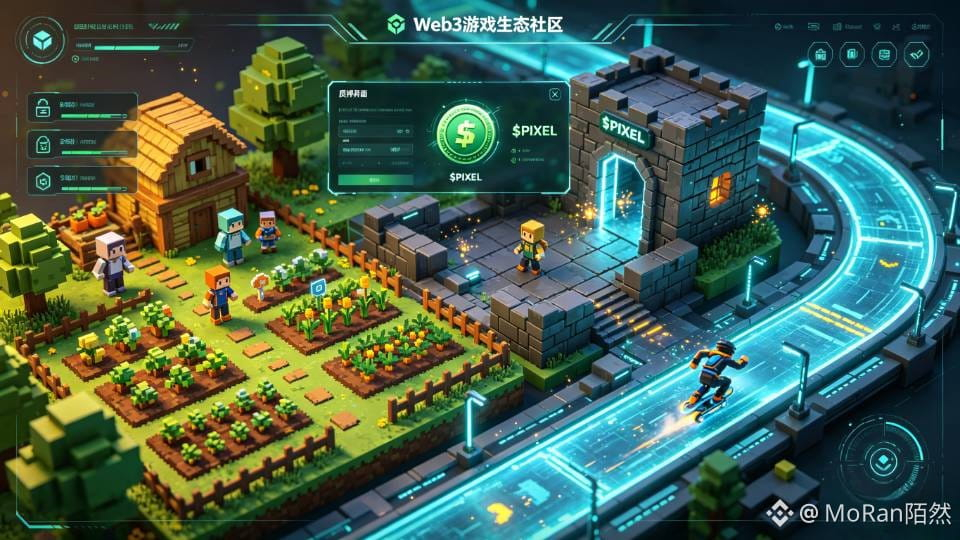
Recently, a lot of folks have been asking me: which Web3 game can you actually play long-term instead of just making a quick buck and then bailing? After checking things out, I genuinely believe that **@Pixels** has a unique ecosystem that’s not just a bunch of empty promises.
Many think that staking $PIXEL is just locking up your coins for interest, but that’s totally off! The staking is actually what supports the whole game ecosystem—when you stake, you're not only earning rewards but also voting for the game you believe in. Resources will follow the community, and players are truly tied to the project; it’s not just a game of cutting each other.
Whether it’s Core Pixels, Pixel Dungeons, or Forgotten Runiverse, the staking volume has long been in the tens of millions—data doesn’t lie, it shows that people genuinely recognize this logic, not just a quick pump and dump.
What I personally find most enjoyable is that Pixels offers the fun of farming and exploring while also having a clear economic loop with $PIXEL staking and vPIXEL reinvestment. It’s not exhausting to play, and you can feel the ecosystem growing slowly but surely.
It’s particularly friendly for long-term players, encouraging you to keep your rewards within the ecosystem to snowball your gains. The more you play, the more connected you feel—this is exactly how Web3 games should be.
I sincerely recommend friends who are still on the fence to give it a try. Don’t just focus on the price; pay attention to the ecosystem, staking, and player retention—these real aspects matter. @Pixels is genuinely building a sustainable Web3 game ecosystem.
#pixel $PIXEL
Recently, a lot of folks have been asking me: which Web3 game can you actually play long-term instead of just making a quick buck and then bailing? After checking things out, I genuinely believe that **@Pixels** has a unique ecosystem that’s not just a bunch of empty promises.
Many think that staking $PIXEL is just locking up your coins for interest, but that’s totally off! The staking is actually what supports the whole game ecosystem—when you stake, you're not only earning rewards but also voting for the game you believe in. Resources will follow the community, and players are truly tied to the project; it’s not just a game of cutting each other.
Whether it’s Core Pixels, Pixel Dungeons, or Forgotten Runiverse, the staking volume has long been in the tens of millions—data doesn’t lie, it shows that people genuinely recognize this logic, not just a quick pump and dump.
What I personally find most enjoyable is that Pixels offers the fun of farming and exploring while also having a clear economic loop with $PIXEL staking and vPIXEL reinvestment. It’s not exhausting to play, and you can feel the ecosystem growing slowly but surely.
It’s particularly friendly for long-term players, encouraging you to keep your rewards within the ecosystem to snowball your gains. The more you play, the more connected you feel—this is exactly how Web3 games should be.
I sincerely recommend friends who are still on the fence to give it a try. Don’t just focus on the price; pay attention to the ecosystem, staking, and player retention—these real aspects matter. @Pixels is genuinely building a sustainable Web3 game ecosystem.
#pixel $PIXEL
Many think that staking $PIXEL is just locking up your coins for interest, but that’s totally off! The staking is actually what supports the whole game ecosystem—when you stake, you're not only earning rewards but also voting for the game you believe in. Resources will follow the community, and players are truly tied to the project; it’s not just a game of cutting each other.
Whether it’s Core Pixels, Pixel Dungeons, or Forgotten Runiverse, the staking volume has long been in the tens of millions—data doesn’t lie, it shows that people genuinely recognize this logic, not just a quick pump and dump.
What I personally find most enjoyable is that Pixels offers the fun of farming and exploring while also having a clear economic loop with $PIXEL staking and vPIXEL reinvestment. It’s not exhausting to play, and you can feel the ecosystem growing slowly but surely.
It’s particularly friendly for long-term players, encouraging you to keep your rewards within the ecosystem to snowball your gains. The more you play, the more connected you feel—this is exactly how Web3 games should be.
I sincerely recommend friends who are still on the fence to give it a try. Don’t just focus on the price; pay attention to the ecosystem, staking, and player retention—these real aspects matter. @Pixels is genuinely building a sustainable Web3 game ecosystem.
#pixel $PIXEL
1
287
·
--

Article
Don't just focus on short-term gains; Pixels staking is the real 'set it and forget it' strategy.Recently, many friends have been asking me: What projects in the crypto space can you play and consistently profit from without getting wrecked too easily? I’ve gone over everything multiple times and I genuinely believe that Pixels’ staking ecosystem is getting more intriguing the more I think about it.
Let’s not get into other stuff for now. A lot of folks jump into play-to-earn games just to make a quick buck and then bounce. But Pixels is not that kind of project. It ties together gaming, tokens, staking, and community into a closed loop. The longer you stay in, the more comfortable and profitable it becomes.
Today, I want to share my real experience with you all, no hype, no FUD, just straight talk.
Don't just focus on short-term gains; Pixels staking is the real 'set it and forget it' strategy.
Recently, many friends have been asking me: What projects in the crypto space can you play and consistently profit from without getting wrecked too easily? I’ve gone over everything multiple times and I genuinely believe that Pixels’ staking ecosystem is getting more intriguing the more I think about it.
Let’s not get into other stuff for now. A lot of folks jump into play-to-earn games just to make a quick buck and then bounce. But Pixels is not that kind of project. It ties together gaming, tokens, staking, and community into a closed loop. The longer you stay in, the more comfortable and profitable it becomes.
Today, I want to share my real experience with you all, no hype, no FUD, just straight talk.
Let’s not get into other stuff for now. A lot of folks jump into play-to-earn games just to make a quick buck and then bounce. But Pixels is not that kind of project. It ties together gaming, tokens, staking, and community into a closed loop. The longer you stay in, the more comfortable and profitable it becomes.
Today, I want to share my real experience with you all, no hype, no FUD, just straight talk.
1
197
·
--
Recently, a lot of people have been asking me: Are there still projects in the crypto space where you can play and earn, that are stable and not too much hassle?
I really only recommend one—Pixels. It's not a shitcoin, not vaporware; it genuinely has games, a real ecosystem, and a solid staking loop.
For friends who have played farming, mining, or nurturing games, getting into Pixels is pretty much a no-brainer. But the real gem isn’t just the 'playing' part; it’s the staking ecosystem, which is the core for holding long-term.
@pixels This time, the staking is particularly practical:
When you stake $PIXEL, it’s not just about locking up funds for interest; you’re directly participating in ecosystem distribution. The game you support will have a larger reward pool, benefiting players, developers, and stakers alike—it's not a zero-sum game.
Plus, owning land NFTs can boost your staking power, making yields even more comfortable, so there’s no panic with long-term holding.
Many blockchain games crash right after launch, but Pixels is different. As soon as staking was introduced, the community locked up several million $PIXEL, resulting in low sell pressure and a stable ecosystem. This is how web3 should operate.
Whether you’re a casual gamer, a coin hoarder, or a long-term investor, you can find your place here.
Stop chasing those trends that drop to zero in a few days. Only projects with real use cases, a staking economy, and community consensus are worth holding for peace of mind and long-term gains.
I now check the Pixels ecosystem updates daily and truly believe this is the direction blockchain gaming should go.
Still bullish on @pixels , and I’m bullish on $PIXEL ’s staking ecosystem—holding long-term without any fuss. ~
#pixel
Recently, a lot of people have been asking me: Are there still projects in the crypto space where you can play and earn, that are stable and not too much hassle?
I really only recommend one—Pixels. It's not a shitcoin, not vaporware; it genuinely has games, a real ecosystem, and a solid staking loop.
For friends who have played farming, mining, or nurturing games, getting into Pixels is pretty much a no-brainer. But the real gem isn’t just the 'playing' part; it’s the staking ecosystem, which is the core for holding long-term.
@Pixels This time, the staking is particularly practical:
When you stake $PIXEL , it’s not just about locking up funds for interest; you’re directly participating in ecosystem distribution. The game you support will have a larger reward pool, benefiting players, developers, and stakers alike—it's not a zero-sum game.
Plus, owning land NFTs can boost your staking power, making yields even more comfortable, so there’s no panic with long-term holding.
Many blockchain games crash right after launch, but Pixels is different. As soon as staking was introduced, the community locked up several million $PIXEL , resulting in low sell pressure and a stable ecosystem. This is how web3 should operate.
Whether you’re a casual gamer, a coin hoarder, or a long-term investor, you can find your place here.
Stop chasing those trends that drop to zero in a few days. Only projects with real use cases, a staking economy, and community consensus are worth holding for peace of mind and long-term gains.
I now check the Pixels ecosystem updates daily and truly believe this is the direction blockchain gaming should go.
Still bullish on @Pixels , and I’m bullish on $PIXEL ’s staking ecosystem—holding long-term without any fuss. ~
#pixel
I really only recommend one—Pixels. It's not a shitcoin, not vaporware; it genuinely has games, a real ecosystem, and a solid staking loop.
For friends who have played farming, mining, or nurturing games, getting into Pixels is pretty much a no-brainer. But the real gem isn’t just the 'playing' part; it’s the staking ecosystem, which is the core for holding long-term.
@Pixels This time, the staking is particularly practical:
When you stake $PIXEL , it’s not just about locking up funds for interest; you’re directly participating in ecosystem distribution. The game you support will have a larger reward pool, benefiting players, developers, and stakers alike—it's not a zero-sum game.
Plus, owning land NFTs can boost your staking power, making yields even more comfortable, so there’s no panic with long-term holding.
Many blockchain games crash right after launch, but Pixels is different. As soon as staking was introduced, the community locked up several million $PIXEL , resulting in low sell pressure and a stable ecosystem. This is how web3 should operate.
Whether you’re a casual gamer, a coin hoarder, or a long-term investor, you can find your place here.
Stop chasing those trends that drop to zero in a few days. Only projects with real use cases, a staking economy, and community consensus are worth holding for peace of mind and long-term gains.
I now check the Pixels ecosystem updates daily and truly believe this is the direction blockchain gaming should go.
Still bullish on @Pixels , and I’m bullish on $PIXEL ’s staking ecosystem—holding long-term without any fuss. ~
#pixel
227
·
--
Who gets it! Web3 games are really getting intense; it's not just about a quick pump and dump, but genuinely building a long-term ecosystem. Recently, I've been feeling that the staking mechanism of @pixels really binds players, projects, and games together, making the experience more immersive!
Back in the day when I played chain games, tokens were either hoarded for price appreciation or dumped for a quick exit, leaving no sense of belonging. But $PIXEL is different; when you stake, you're not just earning rewards, you're casting real votes with your hard-earned cash to support the games you love, helping them access more ecosystem resources—it's like co-building this pixelated world.
I recently saw data showing that the staked $PIXEL across three games has already surpassed several million tokens; the community hype is not just talk. Plus, Pixels' staking is iteratively phased—from selected games to opening up more games, and eventually supporting more tokens; the roadmap is crystal clear, not just wishful thinking.
I now check my staking yields daily while keeping an eye on new developments in the ecosystem. It’s so much more satisfying to play and earn while witnessing the project's growth than just speculating on coins. I genuinely recommend friends who haven't dived deep yet to give it a shot; long-term holding plus staking participation is the right way to engage with $PIXEL . #pixel
Who gets it! Web3 games are really getting intense; it's not just about a quick pump and dump, but genuinely building a long-term ecosystem. Recently, I've been feeling that the staking mechanism of @Pixels really binds players, projects, and games together, making the experience more immersive!
Back in the day when I played chain games, tokens were either hoarded for price appreciation or dumped for a quick exit, leaving no sense of belonging. But $PIXEL is different; when you stake, you're not just earning rewards, you're casting real votes with your hard-earned cash to support the games you love, helping them access more ecosystem resources—it's like co-building this pixelated world.
I recently saw data showing that the staked $PIXEL across three games has already surpassed several million tokens; the community hype is not just talk. Plus, Pixels' staking is iteratively phased—from selected games to opening up more games, and eventually supporting more tokens; the roadmap is crystal clear, not just wishful thinking.
I now check my staking yields daily while keeping an eye on new developments in the ecosystem. It’s so much more satisfying to play and earn while witnessing the project's growth than just speculating on coins. I genuinely recommend friends who haven't dived deep yet to give it a shot; long-term holding plus staking participation is the right way to engage with $PIXEL . #pixel
Back in the day when I played chain games, tokens were either hoarded for price appreciation or dumped for a quick exit, leaving no sense of belonging. But $PIXEL is different; when you stake, you're not just earning rewards, you're casting real votes with your hard-earned cash to support the games you love, helping them access more ecosystem resources—it's like co-building this pixelated world.
I recently saw data showing that the staked $PIXEL across three games has already surpassed several million tokens; the community hype is not just talk. Plus, Pixels' staking is iteratively phased—from selected games to opening up more games, and eventually supporting more tokens; the roadmap is crystal clear, not just wishful thinking.
I now check my staking yields daily while keeping an eye on new developments in the ecosystem. It’s so much more satisfying to play and earn while witnessing the project's growth than just speculating on coins. I genuinely recommend friends who haven't dived deep yet to give it a shot; long-term holding plus staking participation is the right way to engage with $PIXEL . #pixel

182
·
--
Article
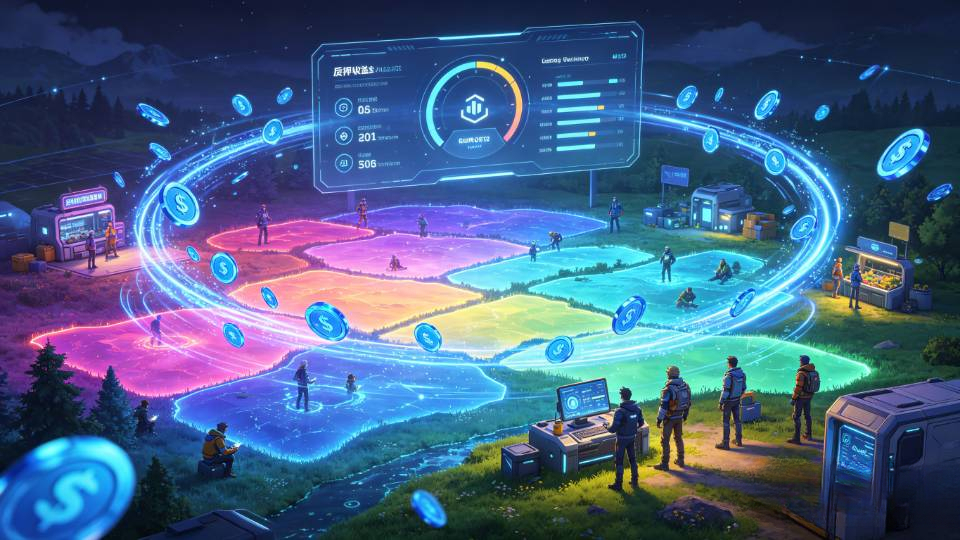
While everyone is chasing short-term riches, I'm just 'farming' slowly in Pixels.I recently came across an interesting perspective that the current crypto scene is a bit like the early mobile gaming era—what really sticks around isn't the projects that go viral overnight, but those ecosystems that make people 'want to keep playing.' The more I think about it, the more it resonates, because many projects aren't lacking traffic; they're just missing 'retention.'
Speaking of this, I have to mention @pixels . When I first got into it, I just thought of it as another ordinary chain game, but I slowly realized its core isn't about 'quick profits'; it's about tying players and tokens together through a whole system of staking and resource recycling.
While everyone is chasing short-term riches, I'm just 'farming' slowly in Pixels.
I recently came across an interesting perspective that the current crypto scene is a bit like the early mobile gaming era—what really sticks around isn't the projects that go viral overnight, but those ecosystems that make people 'want to keep playing.' The more I think about it, the more it resonates, because many projects aren't lacking traffic; they're just missing 'retention.'
Speaking of this, I have to mention @Pixels . When I first got into it, I just thought of it as another ordinary chain game, but I slowly realized its core isn't about 'quick profits'; it's about tying players and tokens together through a whole system of staking and resource recycling.
Speaking of this, I have to mention @Pixels . When I first got into it, I just thought of it as another ordinary chain game, but I slowly realized its core isn't about 'quick profits'; it's about tying players and tokens together through a whole system of staking and resource recycling.
209
·
--
Here's an interesting phenomenon — a lot of folks dive into crypto for the 'quick gains', but in the end, it's the ones who are willing to slow down that stick around.
I've been reflecting on this lately. I used to be all about finding the next pump, chasing trends, and jumping on memes at a breakneck pace, but as you can guess, it led to burnout and unstable returns. Gradually, I started focusing on projects with 'sustainable plays', like @pixels . You’ll notice it’s not just a one-hit wonder; it gradually 'sticks' users.
Take $PIXEL , for example. Its staking ecosystem is quite intriguing; it’s not just locking up coins for passive income but offers a sense of 'participation'. After staking, you become more invested in the changes within the game, the ecosystem's growth, and even find yourself researching its economic model. It feels less like you’re just 'investing in a coin' and more like you’re 'participating in a world'.
Plus, many people overlook this point: staking is essentially a way to filter users. Those willing to stake are typically more long-term oriented, which is a plus for the whole ecosystem. @Pixels is doing a decent job here; it doesn’t rely on short-term incentives but gradually retains users through its mechanisms.
Sometimes I even feel that this model is closer to what Web3 should be — not pure speculation, but 'playing, participating, and earning rewards'.
Of course, it’s not without risks; any staking is essentially a choice of trading time for space. But if you ask me what kind of strategy I lean towards at this stage, I’d say: projects like $PIXEL , which have ecosystem support, interaction, and depth, are definitely worth a closer look.
The crypto space is full of opportunities; what it lacks are places that can keep you around.
#pixel
Here's an interesting phenomenon — a lot of folks dive into crypto for the 'quick gains', but in the end, it's the ones who are willing to slow down that stick around.
I've been reflecting on this lately. I used to be all about finding the next pump, chasing trends, and jumping on memes at a breakneck pace, but as you can guess, it led to burnout and unstable returns. Gradually, I started focusing on projects with 'sustainable plays', like @Pixels . You’ll notice it’s not just a one-hit wonder; it gradually 'sticks' users.
Take $PIXEL , for example. Its staking ecosystem is quite intriguing; it’s not just locking up coins for passive income but offers a sense of 'participation'. After staking, you become more invested in the changes within the game, the ecosystem's growth, and even find yourself researching its economic model. It feels less like you’re just 'investing in a coin' and more like you’re 'participating in a world'.
Plus, many people overlook this point: staking is essentially a way to filter users. Those willing to stake are typically more long-term oriented, which is a plus for the whole ecosystem. @Pixels is doing a decent job here; it doesn’t rely on short-term incentives but gradually retains users through its mechanisms.
Sometimes I even feel that this model is closer to what Web3 should be — not pure speculation, but 'playing, participating, and earning rewards'.
Of course, it’s not without risks; any staking is essentially a choice of trading time for space. But if you ask me what kind of strategy I lean towards at this stage, I’d say: projects like $PIXEL , which have ecosystem support, interaction, and depth, are definitely worth a closer look.
The crypto space is full of opportunities; what it lacks are places that can keep you around.
#pixel
I've been reflecting on this lately. I used to be all about finding the next pump, chasing trends, and jumping on memes at a breakneck pace, but as you can guess, it led to burnout and unstable returns. Gradually, I started focusing on projects with 'sustainable plays', like @Pixels . You’ll notice it’s not just a one-hit wonder; it gradually 'sticks' users.
Take $PIXEL , for example. Its staking ecosystem is quite intriguing; it’s not just locking up coins for passive income but offers a sense of 'participation'. After staking, you become more invested in the changes within the game, the ecosystem's growth, and even find yourself researching its economic model. It feels less like you’re just 'investing in a coin' and more like you’re 'participating in a world'.
Plus, many people overlook this point: staking is essentially a way to filter users. Those willing to stake are typically more long-term oriented, which is a plus for the whole ecosystem. @Pixels is doing a decent job here; it doesn’t rely on short-term incentives but gradually retains users through its mechanisms.
Sometimes I even feel that this model is closer to what Web3 should be — not pure speculation, but 'playing, participating, and earning rewards'.
Of course, it’s not without risks; any staking is essentially a choice of trading time for space. But if you ask me what kind of strategy I lean towards at this stage, I’d say: projects like $PIXEL , which have ecosystem support, interaction, and depth, are definitely worth a closer look.
The crypto space is full of opportunities; what it lacks are places that can keep you around.
#pixel

343
·
--
Article
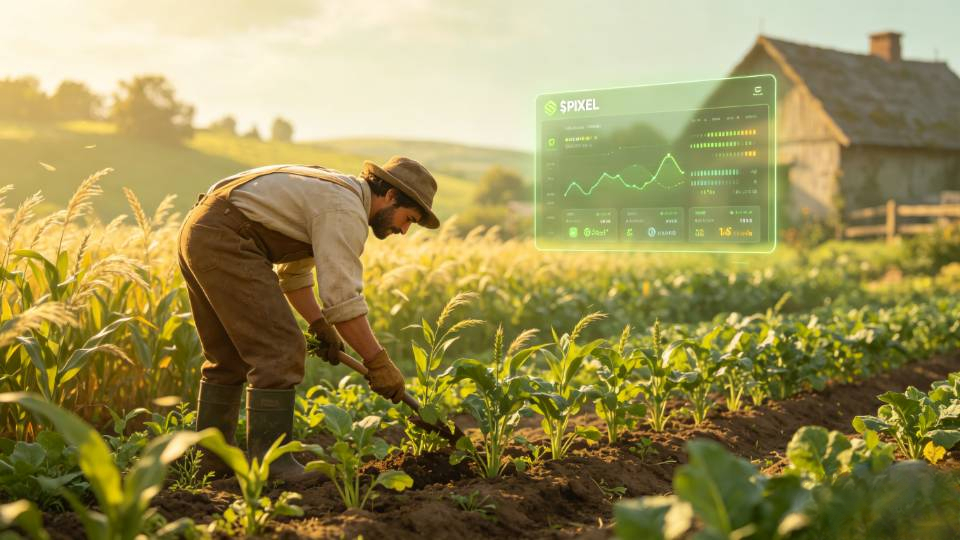
From 'Fast Money Illusion' to 'Slow Money Certainty', why I started to seriously look at the staking ecosystem of $PIXELRecently, while chatting with a friend, he suddenly asked me: Have you noticed that the way to make money is becoming increasingly 'slow'?
It's not that opportunities have decreased, but rather that those overnight wealth stories seem more and more like jokes. In the past, everyone rushed for meme coins and followed trends, relying more on speed and luck, but now more people are starting to realize that the real lasting gains often come from 'patience' and 'a sense of participation'.
In this state, I began to rethink certain projects, such as @pixels .
At first, many people had the impression that Pixels was just a chain game, yes, like farming, nurturing, and socializing. But if you look a little deeper, its core has long been more than just 'playing'; it is about building a complete economic cycle, especially the staking mechanism of $PIXEL , which is quite interesting.
From 'Fast Money Illusion' to 'Slow Money Certainty', why I started to seriously look at the staking ecosystem of $PIXEL
Recently, while chatting with a friend, he suddenly asked me: Have you noticed that the way to make money is becoming increasingly 'slow'?
It's not that opportunities have decreased, but rather that those overnight wealth stories seem more and more like jokes. In the past, everyone rushed for meme coins and followed trends, relying more on speed and luck, but now more people are starting to realize that the real lasting gains often come from 'patience' and 'a sense of participation'.
In this state, I began to rethink certain projects, such as @Pixels .
At first, many people had the impression that Pixels was just a chain game, yes, like farming, nurturing, and socializing. But if you look a little deeper, its core has long been more than just 'playing'; it is about building a complete economic cycle, especially the staking mechanism of $PIXEL , which is quite interesting.
It's not that opportunities have decreased, but rather that those overnight wealth stories seem more and more like jokes. In the past, everyone rushed for meme coins and followed trends, relying more on speed and luck, but now more people are starting to realize that the real lasting gains often come from 'patience' and 'a sense of participation'.
In this state, I began to rethink certain projects, such as @Pixels .
At first, many people had the impression that Pixels was just a chain game, yes, like farming, nurturing, and socializing. But if you look a little deeper, its core has long been more than just 'playing'; it is about building a complete economic cycle, especially the staking mechanism of $PIXEL , which is quite interesting.
155
·
--
Recently, I discovered an interesting phenomenon—many people in the crypto space talk about long-termism, but their fingers are frantically clicking 'sell'. When the market fluctuates, faith directly turns into a shadow of the candlestick chart, swaying back and forth.
However, I have started to slow down during this period, especially after encountering the Pixels gameplay, which gives me a somewhat different feeling. It's not the kind of project that purely relies on emotional hype; rather, it leans more towards 'participation + time value'.
For instance, @pixels is actually quite interesting; it doesn’t simply let you hold $PIXEL and daydream, but pulls you into the entire ecosystem through staking. You will start to pay attention to where the yield comes from, how resources flow, and how player behavior impacts the economy. This feeling is like playing a slowly unfolding strategy game, rather than just focusing on price fluctuations.
The biggest change I experienced personally is—my mindset has stabilized. Because when you stake $PIXEL , your focus shifts from 'did it go up today' to 'is this ecosystem growing'. Once this perspective changes, it actually becomes easier to hold on.
Moreover, the rhythm of Pixels is quite clever; it’s not the kind that gives you exaggerated returns right away, but releases them slowly, making you willing to stay long-term. To be honest, this kind of design aligns well with a current market trend: people are starting to value 'sustainability' more, rather than just a quick spike.
So if I had to sum it up in one sentence, it would be: $PIXEL is more about cultivating a habit rather than creating a wave of emotions.
Sometimes in the crypto space, being able to slow down is itself quite rare.
#pixel
Recently, I discovered an interesting phenomenon—many people in the crypto space talk about long-termism, but their fingers are frantically clicking 'sell'. When the market fluctuates, faith directly turns into a shadow of the candlestick chart, swaying back and forth.
However, I have started to slow down during this period, especially after encountering the Pixels gameplay, which gives me a somewhat different feeling. It's not the kind of project that purely relies on emotional hype; rather, it leans more towards 'participation + time value'.
For instance, @Pixels is actually quite interesting; it doesn’t simply let you hold $PIXEL and daydream, but pulls you into the entire ecosystem through staking. You will start to pay attention to where the yield comes from, how resources flow, and how player behavior impacts the economy. This feeling is like playing a slowly unfolding strategy game, rather than just focusing on price fluctuations.
The biggest change I experienced personally is—my mindset has stabilized. Because when you stake $PIXEL , your focus shifts from 'did it go up today' to 'is this ecosystem growing'. Once this perspective changes, it actually becomes easier to hold on.
Moreover, the rhythm of Pixels is quite clever; it’s not the kind that gives you exaggerated returns right away, but releases them slowly, making you willing to stay long-term. To be honest, this kind of design aligns well with a current market trend: people are starting to value 'sustainability' more, rather than just a quick spike.
So if I had to sum it up in one sentence, it would be: $PIXEL is more about cultivating a habit rather than creating a wave of emotions.
Sometimes in the crypto space, being able to slow down is itself quite rare.
#pixel
However, I have started to slow down during this period, especially after encountering the Pixels gameplay, which gives me a somewhat different feeling. It's not the kind of project that purely relies on emotional hype; rather, it leans more towards 'participation + time value'.
For instance, @Pixels is actually quite interesting; it doesn’t simply let you hold $PIXEL and daydream, but pulls you into the entire ecosystem through staking. You will start to pay attention to where the yield comes from, how resources flow, and how player behavior impacts the economy. This feeling is like playing a slowly unfolding strategy game, rather than just focusing on price fluctuations.
The biggest change I experienced personally is—my mindset has stabilized. Because when you stake $PIXEL , your focus shifts from 'did it go up today' to 'is this ecosystem growing'. Once this perspective changes, it actually becomes easier to hold on.
Moreover, the rhythm of Pixels is quite clever; it’s not the kind that gives you exaggerated returns right away, but releases them slowly, making you willing to stay long-term. To be honest, this kind of design aligns well with a current market trend: people are starting to value 'sustainability' more, rather than just a quick spike.
So if I had to sum it up in one sentence, it would be: $PIXEL is more about cultivating a habit rather than creating a wave of emotions.
Sometimes in the crypto space, being able to slow down is itself quite rare.
#pixel

267
Log in to explore more content
Join global crypto users on Binance Square
⚡️ Get latest and useful information about crypto.
💬 Trusted by the world’s largest crypto exchange.
👍 Discover real insights from verified creators.
Email / Phone number