

MK守约
2k Posts

MK守约
 Square Verified+
Report
Block User
💎币安2023榜一交易员。2024全球百大博主。不定期币安直播!币安好友mk777888,推特MuKing777,公众号MK守约。永久现货&合约8折手续费注册码:MKMKMK

Creator Awards 2024
40 Following
39.3K+ Followers
63.5K+ Liked
1 Badges
Posts
All
Quotes
Videos
Live
PINNED
·
--

Article
Summary of the series of articles on 'The Philosophy of Trading', continuously updated~This article will summarize a series of articles written on the trading sector.
The directory is as follows ⬇️ for fans to quickly jump ⏭️
💎Rebate link🔗: https://www.binance.com/zh-CN/join?ref=MKMKMK
Rebate invitation code: MKMKMK 🎈 with a 20% + 25% BNB discount
If you have questions, you can join [👗守约粉丝群👗](https://app.binance.com/uni-qr/group-chat-landing?channelToken=s77AJRveu7--aZAZ-OzCIQ&type=1&entrySource=sharing_link) to leave a message & find the assistant @MKMKMK-JZ
🥇Irregular live broadcasts, any questions 🙋 will be answered in the live AMA
#站在守约的肩膀上悟自己的交易之道
56。[《 为什么你总是在错误的位置加仓 》](https://app.binance.com/uni-qr/cart/310863079557745?l=zh-CN&r=BY553BN2&uc=web_square_share_link&uco=PB2p1hdRNqAtuff13NYtfQ&us=copylink)
55。[《 扛单的本质,是不承认自己错了 》](https://app.binance.com/uni-qr/cart/307729818438561?l=zh-CN&r=BY553BN2&uc=web_square_share_link&uco=PB2p1hdRNqAtuff13NYtfQ&us=copylink)
Summary of the series of articles on 'The Philosophy of Trading', continuously updated~
This article will summarize a series of articles written on the trading sector.
The directory is as follows ⬇️ for fans to quickly jump ⏭️
💎Rebate link🔗: https://www.binance.com/zh-CN/join?ref=MKMKMK
Rebate invitation code: MKMKMK 🎈 with a 20% + 25% BNB discount
If you have questions, you can join 👗守约粉丝群👗 to leave a message & find the assistant @MK守约-启航
🥇Irregular live broadcasts, any questions 🙋 will be answered in the live AMA
#站在守约的肩膀上悟自己的交易之道
56。《 为什么你总是在错误的位置加仓 》
55。《 扛单的本质,是不承认自己错了 》
The directory is as follows ⬇️ for fans to quickly jump ⏭️
💎Rebate link🔗: https://www.binance.com/zh-CN/join?ref=MKMKMK
Rebate invitation code: MKMKMK 🎈 with a 20% + 25% BNB discount
If you have questions, you can join 👗守约粉丝群👗 to leave a message & find the assistant @MK守约-启航
🥇Irregular live broadcasts, any questions 🙋 will be answered in the live AMA
#站在守约的肩膀上悟自己的交易之道
56。《 为什么你总是在错误的位置加仓 》
55。《 扛单的本质,是不承认自己错了 》
5
14
32
1.5k
PINNED
·
--
Just saw it! It's over 10,000!
I'm going to show off!
It seems that except for Binance's official live broadcast.
No individual anchor has exceeded 10,000!
Am I the first one?
Hahaha!
Just saw it! It's over 10,000!
I'm going to show off!
It seems that except for Binance's official live broadcast.
No individual anchor has exceeded 10,000!
Am I the first one?
Hahaha!
I'm going to show off!
It seems that except for Binance's official live broadcast.
No individual anchor has exceeded 10,000!
Am I the first one?
Hahaha!
14
7
39
1.9k
·
--

Article
$2 Trillion in the U.S., 500 Billion Yuan in China: AI’s Two Biggest Deals—Which Is More Expensive?The first major event in October is two bid sheets.
Anthropic in the U.S. plans to list at a valuation of $2 trillion, and the roadshow schedule points to the week of November 9.
China's DeepSeek's target valuation for its second-round financing is 500 billion yuan, and at the same time, Citic Securities should prepare for the STAR Market.
Meanwhile, the average premium paid by Wall Street when buying new shares has fallen from 24% at the end of June to less than 1%.
So they have to sell within the same cooling window.
This is not a coincidence; the two sets of accounts are grabbing the same batch of money.
First, let's talk about the one in the United States; the ledger is also longer.
Anthropic plans to hold its pre-listing investors’ day on October 14, aiming to get listed before Thanksgiving.
$2 Trillion in the U.S., 500 Billion Yuan in China: AI’s Two Biggest Deals—Which Is More Expensive?
The first major event in October is two bid sheets.
Anthropic in the U.S. plans to list at a valuation of $2 trillion, and the roadshow schedule points to the week of November 9.
China's DeepSeek's target valuation for its second-round financing is 500 billion yuan, and at the same time, Citic Securities should prepare for the STAR Market.
Meanwhile, the average premium paid by Wall Street when buying new shares has fallen from 24% at the end of June to less than 1%.
So they have to sell within the same cooling window.
This is not a coincidence; the two sets of accounts are grabbing the same batch of money.
First, let's talk about the one in the United States; the ledger is also longer.
Anthropic plans to hold its pre-listing investors’ day on October 14, aiming to get listed before Thanksgiving.
Anthropic in the U.S. plans to list at a valuation of $2 trillion, and the roadshow schedule points to the week of November 9.
China's DeepSeek's target valuation for its second-round financing is 500 billion yuan, and at the same time, Citic Securities should prepare for the STAR Market.
Meanwhile, the average premium paid by Wall Street when buying new shares has fallen from 24% at the end of June to less than 1%.
So they have to sell within the same cooling window.
This is not a coincidence; the two sets of accounts are grabbing the same batch of money.
First, let's talk about the one in the United States; the ledger is also longer.
Anthropic plans to hold its pre-listing investors’ day on October 14, aiming to get listed before Thanksgiving.
1.2k
·
--
Verified

Article
Hong Kong Stocks Lose 24,000 Points, Turnover Reaches 145.8 Billion; A-Shares Still on Holiday: What Missing Entry Needs to Be Made on October 8On October 2, Hong Kong stocks fell by 640.98 points.
The Hang Seng Index closed at 23,972.29 points, down 2.60%.
This is the first time the Hang Seng Index has closed below 24,000 points in more than two and a half months.
At one point during the session, it fell by nearly 750 points at most, and the low reached 23,865 points.
If you line up the calendar, you’ll understand the weight of this matter.
A-shares were closed from October 1 to October 7, and only reopened on October 8.
That is to say, throughout the entire holiday, the only place where Chinese assets are priced is Hong Kong stocks.
And the answer it gave was down 2.6%.
1. What fell that day, and what rose
Hong Kong Stocks Lose 24,000 Points, Turnover Reaches 145.8 Billion; A-Shares Still on Holiday: What Missing Entry Needs to Be Made on October 8
On October 2, Hong Kong stocks fell by 640.98 points.
The Hang Seng Index closed at 23,972.29 points, down 2.60%.
This is the first time the Hang Seng Index has closed below 24,000 points in more than two and a half months.
At one point during the session, it fell by nearly 750 points at most, and the low reached 23,865 points.
If you line up the calendar, you’ll understand the weight of this matter.
A-shares were closed from October 1 to October 7, and only reopened on October 8.
That is to say, throughout the entire holiday, the only place where Chinese assets are priced is Hong Kong stocks.
And the answer it gave was down 2.6%.
1. What fell that day, and what rose
The Hang Seng Index closed at 23,972.29 points, down 2.60%.
This is the first time the Hang Seng Index has closed below 24,000 points in more than two and a half months.
At one point during the session, it fell by nearly 750 points at most, and the low reached 23,865 points.
If you line up the calendar, you’ll understand the weight of this matter.
A-shares were closed from October 1 to October 7, and only reopened on October 8.
That is to say, throughout the entire holiday, the only place where Chinese assets are priced is Hong Kong stocks.
And the answer it gave was down 2.6%.
1. What fell that day, and what rose
1
1k
·
--
Verified

Article
Nonfarm Payrolls Only 29,000; the Fed Says No Need to Rush, Yet the 10-Year Ends at a 24-Year HighAt 8:30 p.m. on Friday, three things happened at the same time.
U.S. September nonfarm payrolls increased by only 29,000.
The market’s original expectation was an increase of 90,000 people.
That same day, the Fed’s No. 2 and No. 3 officials both weighed in, saying there’s no need to rush.
By all reasonable accounts, this should be bond investors’ night of celebration.
With jobs falling apart and rate hikes gone, yields should be heading lower.
As a result, the 10-year Treasury yield closed at 5.28%.
It even briefly touched 5.342%, the highest level since the beginning of 2002.
The thirty-year also didn’t lag behind.
On September 29, during the day it briefly touched 5.62%, the highest level since June 2002.
Nonfarm Payrolls Only 29,000; the Fed Says No Need to Rush, Yet the 10-Year Ends at a 24-Year High
At 8:30 p.m. on Friday, three things happened at the same time.
U.S. September nonfarm payrolls increased by only 29,000.
The market’s original expectation was an increase of 90,000 people.
That same day, the Fed’s No. 2 and No. 3 officials both weighed in, saying there’s no need to rush.
By all reasonable accounts, this should be bond investors’ night of celebration.
With jobs falling apart and rate hikes gone, yields should be heading lower.
As a result, the 10-year Treasury yield closed at 5.28%.
It even briefly touched 5.342%, the highest level since the beginning of 2002.
The thirty-year also didn’t lag behind.
On September 29, during the day it briefly touched 5.62%, the highest level since June 2002.
U.S. September nonfarm payrolls increased by only 29,000.
The market’s original expectation was an increase of 90,000 people.
That same day, the Fed’s No. 2 and No. 3 officials both weighed in, saying there’s no need to rush.
By all reasonable accounts, this should be bond investors’ night of celebration.
With jobs falling apart and rate hikes gone, yields should be heading lower.
As a result, the 10-year Treasury yield closed at 5.28%.
It even briefly touched 5.342%, the highest level since the beginning of 2002.
The thirty-year also didn’t lag behind.
On September 29, during the day it briefly touched 5.62%, the highest level since June 2002.
2.3k
·
--
🎙️ 10-03 Yesterday ate 87K empty buns. Can I eat more xx today?

End
02 h 18 m 15 s
496
1
0
·
--
Join the fan group [Binance粉丝群-MK守约](https://app.binance.com/uni-qr/8V6TBj8d) for free
Join the fan group Binance粉丝群-MK守约 for free

MK守约-启航
·
--
Testing the Launch of the Guard Commitment Quantitative Strategy Center
There are many trading viewpoints, but few fully formed trading plans.
Recently, we launched the “Guard Commitment Strategy Center”.
The reason for building this product is actually quite simple.
Every day, we study macro conditions, capital flows, and market structure, and we continuously publish trading strategies for gold, crypto, US stocks, and indices. But these materials are scattered across articles, group messages, and strategy charts. When readers are truly ready to trade, they often need to search again from scratch.
After finding it, a few more questions arise:
Is this an intraday strategy or a trend strategy?
The price has already moved for a while—does it still apply now?
Recently, we launched the “Guard Commitment Strategy Center”.
The reason for building this product is actually quite simple.
Every day, we study macro conditions, capital flows, and market structure, and we continuously publish trading strategies for gold, crypto, US stocks, and indices. But these materials are scattered across articles, group messages, and strategy charts. When readers are truly ready to trade, they often need to search again from scratch.
After finding it, a few more questions arise:
Is this an intraday strategy or a trend strategy?
The price has already moved for a while—does it still apply now?

1
1k
·
--

Article
Diesel hits a record high—so why is gold down instead?Let’s look at a number first.
For the diesel cracking spread at the U.S. Port of New York, on September 29 it was $113.80 per barrel.
In September, it set a historical record of $122.63.
This is the 99th percentile in a 20-year record.
Under normal circumstances, this price spread ranges between $15 and $30 per barrel.
If it’s over $40 or $50, it means something is seriously wrong with the refining market.
Now it’s 113.
There’s another metric we need to look at together.
The diesel cracking spread compiled by LSEG hit a historical record of $112.17 in early September.
The two figures are slightly different because the benchmark crude and the quote sources differ.
Diesel hits a record high—so why is gold down instead?
Let’s look at a number first.
For the diesel cracking spread at the U.S. Port of New York, on September 29 it was $113.80 per barrel.
In September, it set a historical record of $122.63.
This is the 99th percentile in a 20-year record.
Under normal circumstances, this price spread ranges between $15 and $30 per barrel.
If it’s over $40 or $50, it means something is seriously wrong with the refining market.
Now it’s 113.
There’s another metric we need to look at together.
The diesel cracking spread compiled by LSEG hit a historical record of $112.17 in early September.
The two figures are slightly different because the benchmark crude and the quote sources differ.
For the diesel cracking spread at the U.S. Port of New York, on September 29 it was $113.80 per barrel.
In September, it set a historical record of $122.63.
This is the 99th percentile in a 20-year record.
Under normal circumstances, this price spread ranges between $15 and $30 per barrel.
If it’s over $40 or $50, it means something is seriously wrong with the refining market.
Now it’s 113.
There’s another metric we need to look at together.
The diesel cracking spread compiled by LSEG hit a historical record of $112.17 in early September.
The two figures are slightly different because the benchmark crude and the quote sources differ.
2k

·
--

Article
Three aircraft carriers move in—military pressure or financial war?First the answer: this is a financial war.
And it has an official name: "economic isolation."
Aircraft carriers are not the main character; they are a means of execution.
1. First, look at how the official documents put it
On August 24, the U.S. Treasury expanded its sanctions on Iran into five areas.
These five areas are aviation, digital assets, gold, shipping, and technology.
Also added to the list on the same day were about sixty entities, individuals, and ships.
They involve nuclear and missile technology, cyber operations, and oil trade.
The Treasury Secretary, Bessent, wrote an article in the UK’s (Financial Times).
Three aircraft carriers move in—military pressure or financial war?
First the answer: this is a financial war.
And it has an official name: "economic isolation."
Aircraft carriers are not the main character; they are a means of execution.
1. First, look at how the official documents put it
On August 24, the U.S. Treasury expanded its sanctions on Iran into five areas.
These five areas are aviation, digital assets, gold, shipping, and technology.
Also added to the list on the same day were about sixty entities, individuals, and ships.
They involve nuclear and missile technology, cyber operations, and oil trade.
The Treasury Secretary, Bessent, wrote an article in the UK’s (Financial Times).
And it has an official name: "economic isolation."
Aircraft carriers are not the main character; they are a means of execution.
1. First, look at how the official documents put it
On August 24, the U.S. Treasury expanded its sanctions on Iran into five areas.
These five areas are aviation, digital assets, gold, shipping, and technology.
Also added to the list on the same day were about sixty entities, individuals, and ships.
They involve nuclear and missile technology, cyber operations, and oil trade.
The Treasury Secretary, Bessent, wrote an article in the UK’s (Financial Times).
2
2
1.5k
·
--
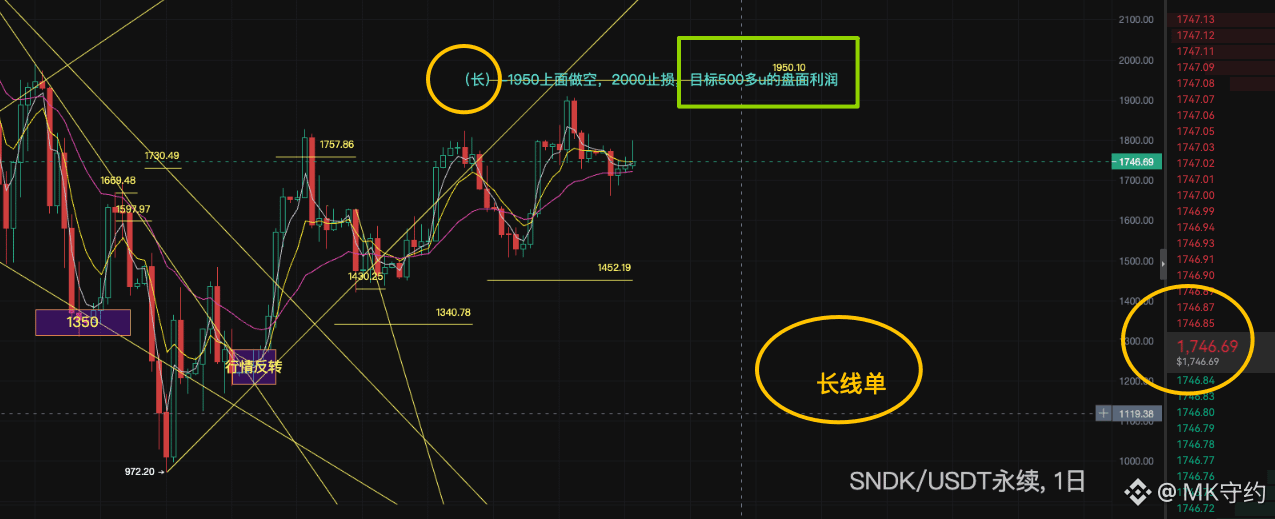
$SNDK give a long-term strategy. Pick up the picture yourself
{future}(SNDKUSDT)
$SNDK give a long-term strategy. Pick up the picture yourself
5
2.7k

·
--

Article
Warsh’s New Deal, New Data, and the Market Isn’t Buying ItAt 8:30 p.m. last night, two things were in place at the same time.
Warsh’s new policy framework as Fed chair, along with clearly softer inflation data.
As it turned out, the market delivered a third answer.
The 30-year Treasury yield closed at 5.64%, the highest since 2002.
The Dow Jones index fell 443.87 points that day.
First, explain these two things, and then explain why the market isn’t buying it.
1. What exactly is Warsh’s “new deal”
Kevin Warsh took over as chairman of the Federal Reserve on May 22.
The first thing he did after taking office was to dismantle the Horizon guidance toolset.
Warsh’s New Deal, New Data, and the Market Isn’t Buying It
At 8:30 p.m. last night, two things were in place at the same time.
Warsh’s new policy framework as Fed chair, along with clearly softer inflation data.
As it turned out, the market delivered a third answer.
The 30-year Treasury yield closed at 5.64%, the highest since 2002.
The Dow Jones index fell 443.87 points that day.
First, explain these two things, and then explain why the market isn’t buying it.
1. What exactly is Warsh’s “new deal”
Kevin Warsh took over as chairman of the Federal Reserve on May 22.
The first thing he did after taking office was to dismantle the Horizon guidance toolset.
Warsh’s new policy framework as Fed chair, along with clearly softer inflation data.
As it turned out, the market delivered a third answer.
The 30-year Treasury yield closed at 5.64%, the highest since 2002.
The Dow Jones index fell 443.87 points that day.
First, explain these two things, and then explain why the market isn’t buying it.
1. What exactly is Warsh’s “new deal”
Kevin Warsh took over as chairman of the Federal Reserve on May 22.
The first thing he did after taking office was to dismantle the Horizon guidance toolset.
1
4
1.1k
·
--
Just finished streaming and 85300 started going down. I can only say: it’s falling, and it still needs to fall.
$BTC
{future}(BTCUSDT)
Just finished streaming and 85300 started going down. I can only say: it’s falling, and it still needs to fall.
$BTC
$BTC

4
2
5k

·
--
I just talked to Lao Huang a while back, saying that the AI would destroy the world—now he’s letting go again.
Old Te’s words really are like throwing in a fart.
Since taking office, the trading in the global capital markets has been getting harder day by day. No matter how professional the technology, team, company, or institution is, none of them is as fast as drawing K-lines by yourself.
I really hope he’ll step down soon and let someone else take over.
$BTC
{future}(BTCUSDT)
I just talked to Lao Huang a while back, saying that the AI would destroy the world—now he’s letting go again.
Old Te’s words really are like throwing in a fart.
Since taking office, the trading in the global capital markets has been getting harder day by day. No matter how professional the technology, team, company, or institution is, none of them is as fast as drawing K-lines by yourself.
I really hope he’ll step down soon and let someone else take over.
$BTC
Old Te’s words really are like throwing in a fart.
Since taking office, the trading in the global capital markets has been getting harder day by day. No matter how professional the technology, team, company, or institution is, none of them is as fast as drawing K-lines by yourself.
I really hope he’ll step down soon and let someone else take over.
$BTC

3
2.6k
·
--
Partly True

Article
Gold plunges—are they picking you up or digging a pit?First, the answer: neither of them is true.
This time, it’s not about someone coming to pick you up, nor is it about someone digging a pit waiting for you to jump.
It’s a reasonable price for gold, and someone recalculated it again.
I. Why “picking someone up” doesn’t hold
“Picking someone up” has a prerequisite.
It assumes the valuation hasn’t changed—just that prices temporarily step aside so that those who missed the move can come up.
This time, the valuation has changed.
The U.S. 10-year Treasury’s real yield—i.e., the return investors truly get after subtracting inflation—stands at 2.90%.
This is the highest since November 2008.
Gold doesn’t generate interest.
If you hold gold, the only thing you give up is this risk-free real return.
Gold plunges—are they picking you up or digging a pit?
First, the answer: neither of them is true.
This time, it’s not about someone coming to pick you up, nor is it about someone digging a pit waiting for you to jump.
It’s a reasonable price for gold, and someone recalculated it again.
I. Why “picking someone up” doesn’t hold
“Picking someone up” has a prerequisite.
It assumes the valuation hasn’t changed—just that prices temporarily step aside so that those who missed the move can come up.
This time, the valuation has changed.
The U.S. 10-year Treasury’s real yield—i.e., the return investors truly get after subtracting inflation—stands at 2.90%.
This is the highest since November 2008.
Gold doesn’t generate interest.
If you hold gold, the only thing you give up is this risk-free real return.
This time, it’s not about someone coming to pick you up, nor is it about someone digging a pit waiting for you to jump.
It’s a reasonable price for gold, and someone recalculated it again.
I. Why “picking someone up” doesn’t hold
“Picking someone up” has a prerequisite.
It assumes the valuation hasn’t changed—just that prices temporarily step aside so that those who missed the move can come up.
This time, the valuation has changed.
The U.S. 10-year Treasury’s real yield—i.e., the return investors truly get after subtracting inflation—stands at 2.90%.
This is the highest since November 2008.
Gold doesn’t generate interest.
If you hold gold, the only thing you give up is this risk-free real return.
4
7
5.2k
·
--
Partly True
Article
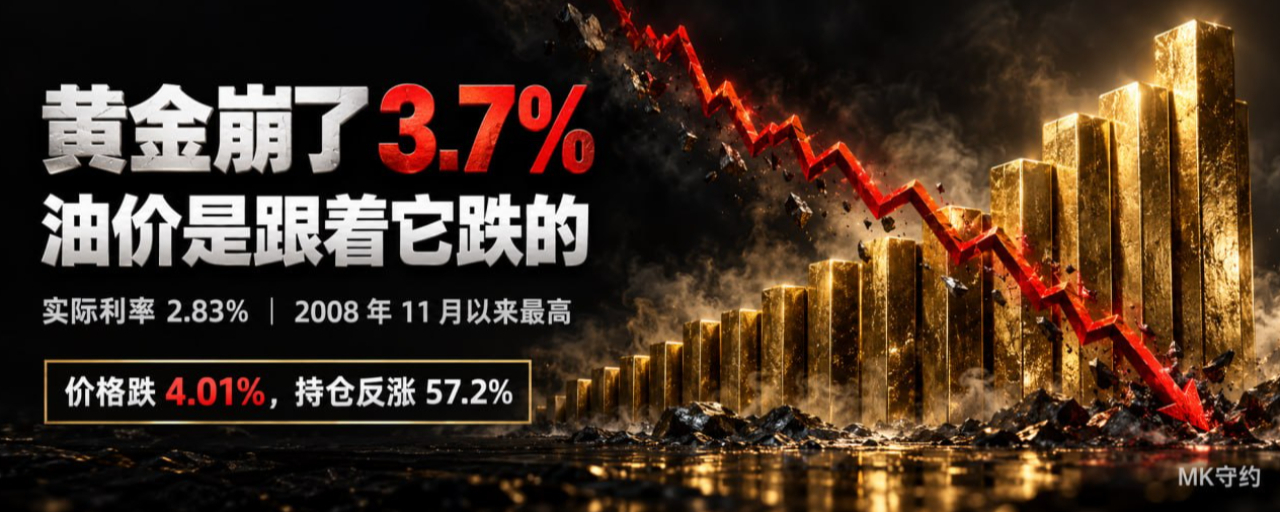
Gold Collapsed TodayGold collapsed today.
At Beijing time 0:00, it was still at 4,283.95.
It hit a low of 4,116.60.
Starting from the intraday high of 4,288.39, it fell as much as 4.01%.
This is the lowest point since August 5.
Now when you look up “why gold is falling,” the answer is basically the same.
The rise in oil prices lifted inflation concerns, and the Fed still needs to raise rates, so gold was dragged down.
That explanation sounds especially smooth.
But it has a problem with the sequence of events.
I put today’s oil price and gold price side by side hour by hour.
Oil didn’t fall along with gold—it fell because of gold.
Gold Collapsed Today
Gold collapsed today.
At Beijing time 0:00, it was still at 4,283.95.
It hit a low of 4,116.60.
Starting from the intraday high of 4,288.39, it fell as much as 4.01%.
This is the lowest point since August 5.
Now when you look up “why gold is falling,” the answer is basically the same.
The rise in oil prices lifted inflation concerns, and the Fed still needs to raise rates, so gold was dragged down.
That explanation sounds especially smooth.
But it has a problem with the sequence of events.
I put today’s oil price and gold price side by side hour by hour.
Oil didn’t fall along with gold—it fell because of gold.
At Beijing time 0:00, it was still at 4,283.95.
It hit a low of 4,116.60.
Starting from the intraday high of 4,288.39, it fell as much as 4.01%.
This is the lowest point since August 5.
Now when you look up “why gold is falling,” the answer is basically the same.
The rise in oil prices lifted inflation concerns, and the Fed still needs to raise rates, so gold was dragged down.
That explanation sounds especially smooth.
But it has a problem with the sequence of events.
I put today’s oil price and gold price side by side hour by hour.
Oil didn’t fall along with gold—it fell because of gold.
5
2.6k
·
--
Partly True

Article
Gold drops 7.5% and you’re still waiting for inflation: the real force weighing it down is 94 basis points—has nothing to do with inflationGold falls to 4,177.
This is the real-time price of the Binance XAU/USDT perpetual contract,
It’s also the lowest in the past 30 trading days.
What’s the status of your position right now?
I guess that’s how it is: you’re down, but you didn’t exit.
Because you believe it will come back.
——
First, see how much it dropped.
Starting from September 3 at 4,514,
In less than a month, it dropped 7.5%.
You’ll go search for the reason.
The answer I found is: inflation expectations are cooling,
Gold’s safe-haven function has stopped working.
This explanation is wrong.
——
Look at two numbers.
Real interest rate: January 29 at 1.89%,
It’s now 2.83%, which is 94 basis points higher.
Gold drops 7.5% and you’re still waiting for inflation: the real force weighing it down is 94 basis points—has nothing to do with inflation
Gold falls to 4,177.
This is the real-time price of the Binance XAU/USDT perpetual contract,
It’s also the lowest in the past 30 trading days.
What’s the status of your position right now?
I guess that’s how it is: you’re down, but you didn’t exit.
Because you believe it will come back.
——
First, see how much it dropped.
Starting from September 3 at 4,514,
In less than a month, it dropped 7.5%.
You’ll go search for the reason.
The answer I found is: inflation expectations are cooling,
Gold’s safe-haven function has stopped working.
This explanation is wrong.
——
Look at two numbers.
Real interest rate: January 29 at 1.89%,
It’s now 2.83%, which is 94 basis points higher.
This is the real-time price of the Binance XAU/USDT perpetual contract,
It’s also the lowest in the past 30 trading days.
What’s the status of your position right now?
I guess that’s how it is: you’re down, but you didn’t exit.
Because you believe it will come back.
——
First, see how much it dropped.
Starting from September 3 at 4,514,
In less than a month, it dropped 7.5%.
You’ll go search for the reason.
The answer I found is: inflation expectations are cooling,
Gold’s safe-haven function has stopped working.
This explanation is wrong.
——
Look at two numbers.
Real interest rate: January 29 at 1.89%,
It’s now 2.83%, which is 94 basis points higher.
4
2k
Log in to explore more content
Join global crypto users on Binance Square
⚡️ Get latest and useful information about crypto.
💬 Trusted by the world’s largest crypto exchange.
👍 Discover real insights from verified creators.
Email / Phone number
Trending Topics
DriftHackVictimsBeginClaims
44,987 views
585 Discussing
Drift hack victims can now start claiming DFX recovery tokens for their losses from the April 2026 exploit.
Around $295.4M in losses were verified.
The recovery pool initially had only about $3.11M.
So, at launch, 1 DFX represented $1 of loss, but the first redemption was worth only about $0.0104 — roughly 1 cent for every $1 lost.
Victims can redeem, sell, or hold their DFX.
The big catch: redeeming burns the DFX, so you give up that token’s potential share of future recovery funds.
👉 The key question: If Drift adds much more money to the recovery pool, could DFX eventually help victims recover a much larger percentage of what they lost
#DriftHackVictimsBeginClaims
$NVDAB
Irfanba
·0 Likes
·13 views
SolanaTokenizedStockVolumeTops$4.4BInSeptember
6,273 views
67 Discussing
BitcoinSpotETFsDraw$6.34BInflowsInQ3
20,363 views
180 Discussing