

MISTERROBOT
1.9k Posts

MISTERROBOT
Report
Block User
Influencer / Trader / Digital Content Creator / Crypto & related content / t: @the_darkcrypto / x: @the_mrrobot / I’d appreciate your subscription.
High-Frequency Trader
5.6 Years
41 Following
1.4K+ Followers
9.7K+ Liked
Posts
All
Quotes
Videos
PINNED
·
--

Article
Analysis of yesterday's events in the market: why did many traders end up without funds? 🧐Let's leave out the influence of Trump and his tariffs. It's clear to a fool that such news alone could not create the most significant decline in the history of crypto. The reasons for the sell-off run much deeper and are hidden from most eyes…
1. The well-known market maker Wintermute, which has previously been involved in the SCAM of several coins 😈, transferred assets worth about $700 million to the Binance exchange in just a few hours, including approximately 2000 BTC.
Analysis of yesterday's events in the market: why did many traders end up without funds? 🧐
Let's leave out the influence of Trump and his tariffs. It's clear to a fool that such news alone could not create the most significant decline in the history of crypto. The reasons for the sell-off run much deeper and are hidden from most eyes…
1. The well-known market maker Wintermute, which has previously been involved in the SCAM of several coins 😈, transferred assets worth about $700 million to the Binance exchange in just a few hours, including approximately 2000 BTC.
1. The well-known market maker Wintermute, which has previously been involved in the SCAM of several coins 😈, transferred assets worth about $700 million to the Binance exchange in just a few hours, including approximately 2000 BTC.
49
11
31
32.2k
PINNED
·
--

Article
⚠️ Buterin sounds the alarm: quantum computers could hack crypto by 2028Vitalik Buterin officially warned: the crypto market has less than four years to protect itself from a quantum breakthrough.
And yes, this is not a fantasy — he stated this at Devconnect.
😐 What did Buterin say?
According to him, quantum computers could crack current cryptography even before the 2028 US presidential elections.
⚠️ Buterin sounds the alarm: quantum computers could hack crypto by 2028
Vitalik Buterin officially warned: the crypto market has less than four years to protect itself from a quantum breakthrough.
And yes, this is not a fantasy — he stated this at Devconnect.
😐 What did Buterin say?
According to him, quantum computers could crack current cryptography even before the 2028 US presidential elections.
And yes, this is not a fantasy — he stated this at Devconnect.
😐 What did Buterin say?
According to him, quantum computers could crack current cryptography even before the 2028 US presidential elections.
40
16
31
64.1k
·
--
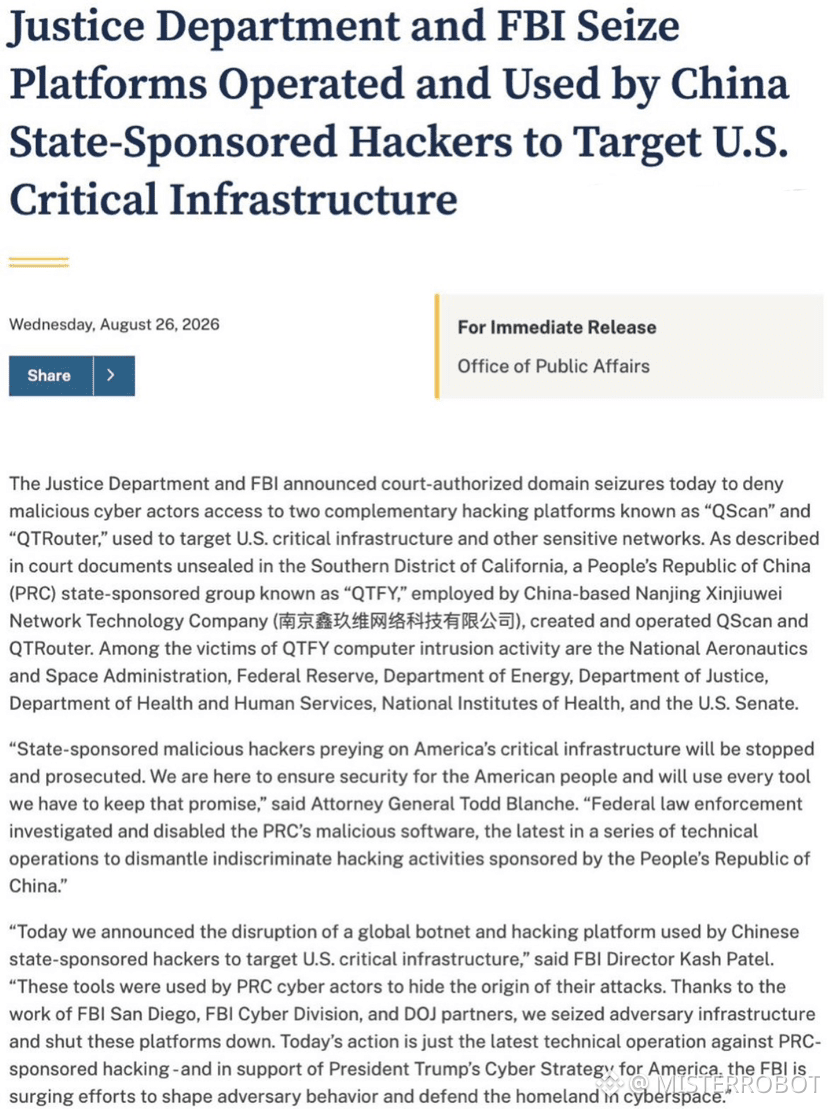
🤯 CHINESE HACKERS BREACHED THE US FEDERAL RESERVE, NASA, AND THE US SENATE — SINCE 2018
The US Department of Justice, the FBI, and other agencies accused a China-linked group called QTFY, which operated through the company Nanjing Xinjiuwei. The hackers had been active at least since 2018; among the victims were the Federal Reserve, NASA, the Senate, the DOJ, the US Department of Energy, and the US Department of Health.
The tool — the QScan platform — automatically searched for vulnerable devices worldwide. On one day in 2024, the system carried out more than 2 million scanning and exploitation operations. The hackers infected thousands of routers, cameras, and IoT devices, and used them as proxies to conceal the origin of the attacks.
Among the incidents: in 2019, an attempted breach of NASA was stopped. In May 2024, via a vulnerability in Check Point equipment, they gained access to data from more than 300 organizations. In September 2024, they attacked three national laboratories of the Department of Energy. Among the clients of Nanjing Xinjiuwei are China’s Ministry of State Security and the Chinese military.
The US seized QTFY infrastructure domains and disrupted the platforms being used.
#Hack #security #usa #china
Subscribe — I track the biggest cyber incidents 🔔
🤯 CHINESE HACKERS BREACHED THE US FEDERAL RESERVE, NASA, AND THE US SENATE — SINCE 2018
The US Department of Justice, the FBI, and other agencies accused a China-linked group called QTFY, which operated through the company Nanjing Xinjiuwei. The hackers had been active at least since 2018; among the victims were the Federal Reserve, NASA, the Senate, the DOJ, the US Department of Energy, and the US Department of Health.
The tool — the QScan platform — automatically searched for vulnerable devices worldwide. On one day in 2024, the system carried out more than 2 million scanning and exploitation operations. The hackers infected thousands of routers, cameras, and IoT devices, and used them as proxies to conceal the origin of the attacks.
Among the incidents: in 2019, an attempted breach of NASA was stopped. In May 2024, via a vulnerability in Check Point equipment, they gained access to data from more than 300 organizations. In September 2024, they attacked three national laboratories of the Department of Energy. Among the clients of Nanjing Xinjiuwei are China’s Ministry of State Security and the Chinese military.
The US seized QTFY infrastructure domains and disrupted the platforms being used.
#Hack #security #usa #china
Subscribe — I track the biggest cyber incidents 🔔
The US Department of Justice, the FBI, and other agencies accused a China-linked group called QTFY, which operated through the company Nanjing Xinjiuwei. The hackers had been active at least since 2018; among the victims were the Federal Reserve, NASA, the Senate, the DOJ, the US Department of Energy, and the US Department of Health.
The tool — the QScan platform — automatically searched for vulnerable devices worldwide. On one day in 2024, the system carried out more than 2 million scanning and exploitation operations. The hackers infected thousands of routers, cameras, and IoT devices, and used them as proxies to conceal the origin of the attacks.
Among the incidents: in 2019, an attempted breach of NASA was stopped. In May 2024, via a vulnerability in Check Point equipment, they gained access to data from more than 300 organizations. In September 2024, they attacked three national laboratories of the Department of Energy. Among the clients of Nanjing Xinjiuwei are China’s Ministry of State Security and the Chinese military.
The US seized QTFY infrastructure domains and disrupted the platforms being used.
#Hack #security #usa #china
Subscribe — I track the biggest cyber incidents 🔔
406
·
--
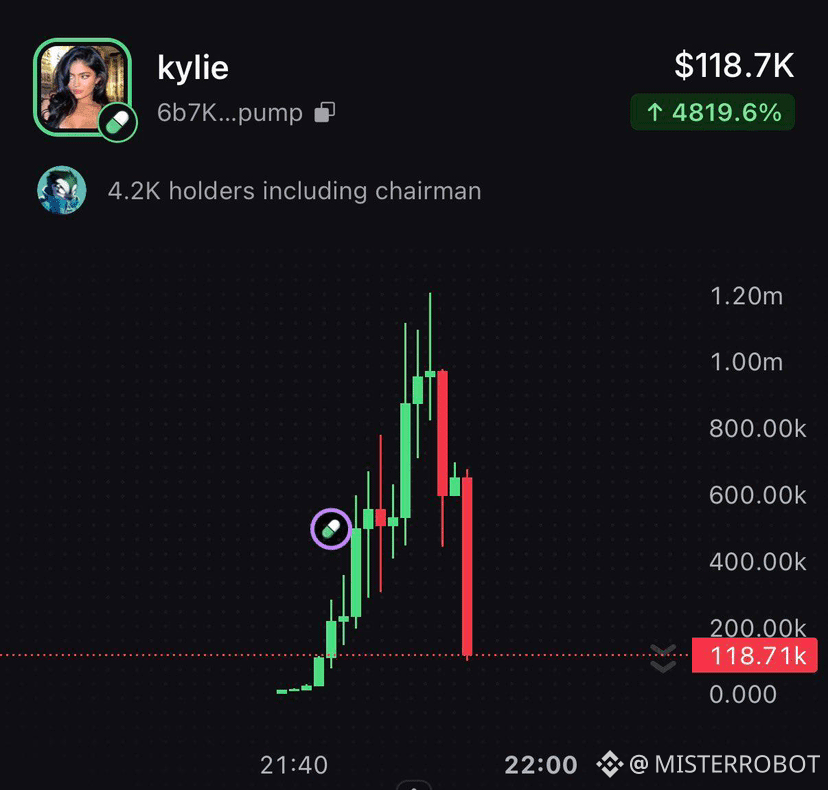
🫡 WE HACKED KYLIE JENNER — PUMPED $1.2M AND KEPT QUIET
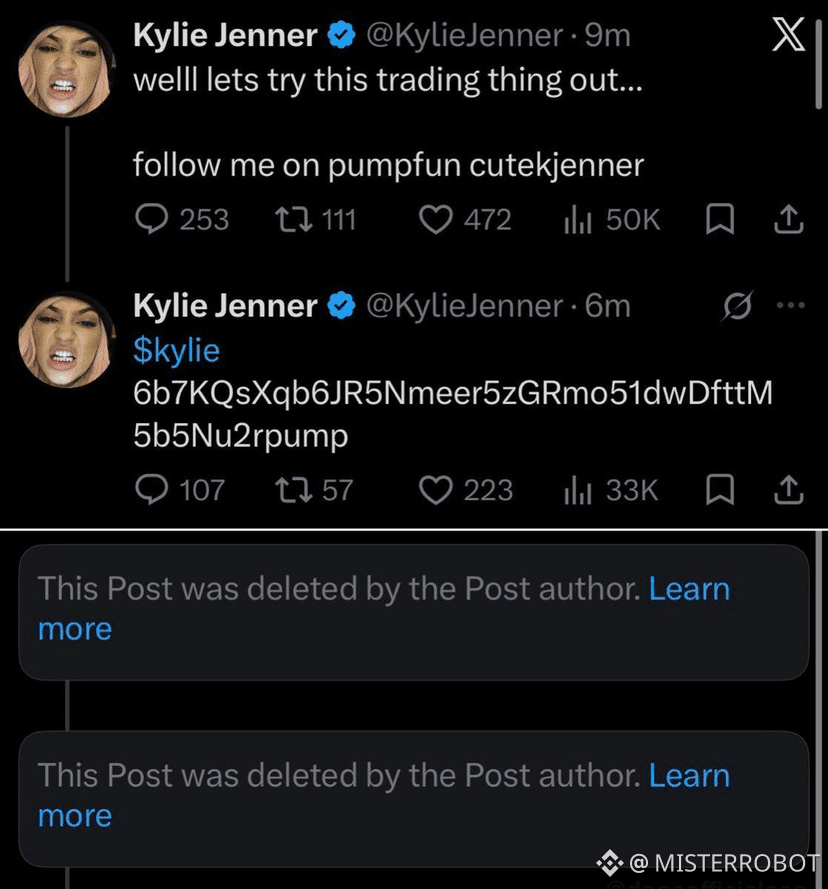
Hackers broke into Kylie Jenner’s X account (39.5M followers) and, as usual, launched a pump-and-dump on the $kylie memecoin via Pump.fun. The cap surged to $1.21M at the peak—then the posts were taken down and the usual run began.
Most interesting part: no apologies or explanations from her or her team. The posts were just quietly deleted and that was it. Like nothing ever happened.
The scheme lives forever because it works forever. A big name plus Pump.fun plus a crowd that jumps in without thinking—the formula hasn’t changed in years. Only the celebrities whose accounts get hacked change.
#memecoin #crypto #Hack #pumpfun
Follow along—I’m tracking pump-and-dumps while they’re still hot 🔔
🫡 WE HACKED KYLIE JENNER — PUMPED $1.2M AND KEPT QUIET
Hackers broke into Kylie Jenner’s X account (39.5M followers) and, as usual, launched a pump-and-dump on the $kylie memecoin via Pump.fun. The cap surged to $1.21M at the peak—then the posts were taken down and the usual run began.
Most interesting part: no apologies or explanations from her or her team. The posts were just quietly deleted and that was it. Like nothing ever happened.
The scheme lives forever because it works forever. A big name plus Pump.fun plus a crowd that jumps in without thinking—the formula hasn’t changed in years. Only the celebrities whose accounts get hacked change.
#memecoin #crypto #Hack #pumpfun
Follow along—I’m tracking pump-and-dumps while they’re still hot 🔔
Hackers broke into Kylie Jenner’s X account (39.5M followers) and, as usual, launched a pump-and-dump on the $kylie memecoin via Pump.fun. The cap surged to $1.21M at the peak—then the posts were taken down and the usual run began.
Most interesting part: no apologies or explanations from her or her team. The posts were just quietly deleted and that was it. Like nothing ever happened.
The scheme lives forever because it works forever. A big name plus Pump.fun plus a crowd that jumps in without thinking—the formula hasn’t changed in years. Only the celebrities whose accounts get hacked change.
#memecoin #crypto #Hack #pumpfun
Follow along—I’m tracking pump-and-dumps while they’re still hot 🔔
1
6.2k
·
--
🚓 A CRYPTO-PYRAMID CREATOR FACES 280 YEARS — FOR CLASSIC PONZI WITH AN AI SHIM
In the US, charges were filed against the creator of Profit Connect. The scheme involved $24 million, with up to 280 years in prison.
Investors were promised up to 30% annual returns on “AI, mining, and supercomputers.” In reality — a classic Ponzi: money from new clients went to old ones. No AI, no mining.
Notably, the word “AI” in the pitch worked like a magnet even before it became mainstream. The scheme is as old as the world — only the wrapper is new. If a project promises fixed high returns and attributes them to trendy technologies that no one can verify — that’s all you need to know.
280 years, of course, won’t be handed out, but the precedent is telling.
#crypto #scam #usa #security
Subscribe — here I break down schemes so you don’t end up in the next batch of statistics 🔔
🚓 A CRYPTO-PYRAMID CREATOR FACES 280 YEARS — FOR CLASSIC PONZI WITH AN AI SHIM
In the US, charges were filed against the creator of Profit Connect. The scheme involved $24 million, with up to 280 years in prison.
Investors were promised up to 30% annual returns on “AI, mining, and supercomputers.” In reality — a classic Ponzi: money from new clients went to old ones. No AI, no mining.
Notably, the word “AI” in the pitch worked like a magnet even before it became mainstream. The scheme is as old as the world — only the wrapper is new. If a project promises fixed high returns and attributes them to trendy technologies that no one can verify — that’s all you need to know.
280 years, of course, won’t be handed out, but the precedent is telling.
#crypto #scam #usa #security
Subscribe — here I break down schemes so you don’t end up in the next batch of statistics 🔔
In the US, charges were filed against the creator of Profit Connect. The scheme involved $24 million, with up to 280 years in prison.
Investors were promised up to 30% annual returns on “AI, mining, and supercomputers.” In reality — a classic Ponzi: money from new clients went to old ones. No AI, no mining.
Notably, the word “AI” in the pitch worked like a magnet even before it became mainstream. The scheme is as old as the world — only the wrapper is new. If a project promises fixed high returns and attributes them to trendy technologies that no one can verify — that’s all you need to know.
280 years, of course, won’t be handed out, but the precedent is telling.
#crypto #scam #usa #security
Subscribe — here I break down schemes so you don’t end up in the next batch of statistics 🔔

605
·
--
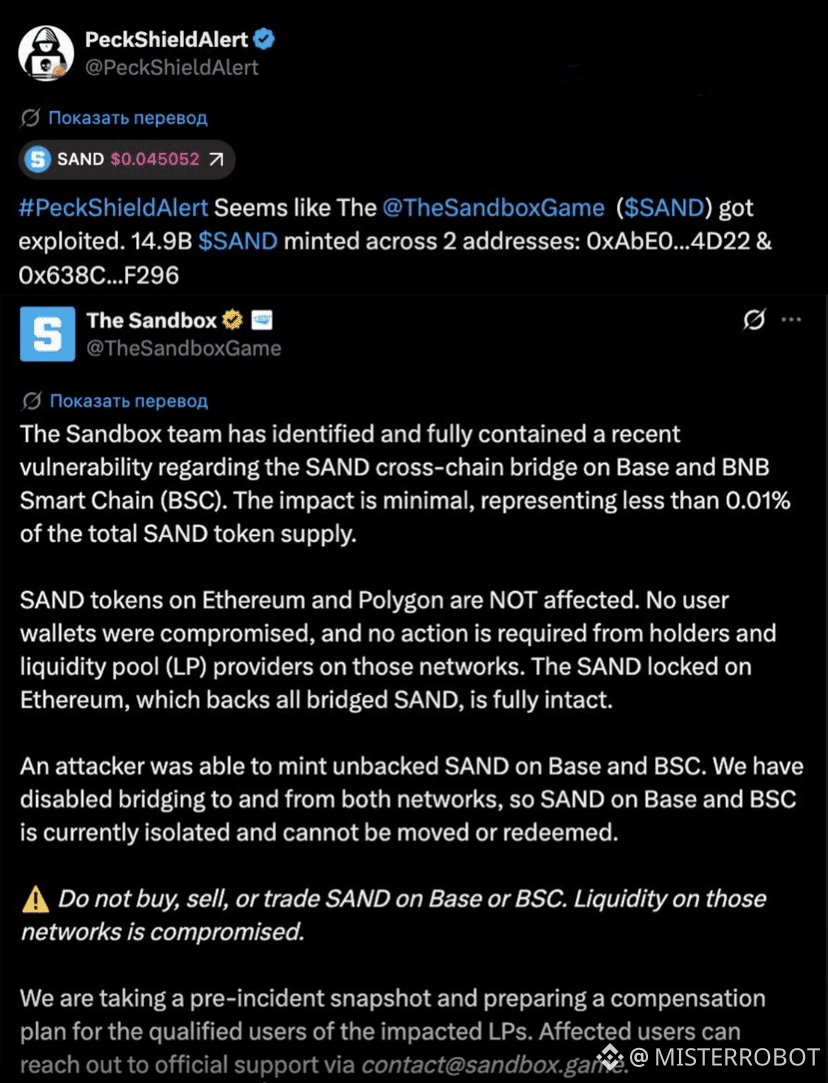
❌ THE SANDBOX HACKED — HACKER PRINTED SAND WORTH $700 MILLION
A hacker found a vulnerability in the SAND cross-chain bridge and released 14.9 billion tokens — about $700 million at the current rate. The Sandbox confirmed the hack. The bridges on Base and BNB Chain are already disabled, and the issued tokens are isolated.
Important: SAND on Ethereum and Polygon was not affected, and users’ funds on these networks are safe. The team urged people not to buy, sell, or trade SAND on Base and BNB Chain — liquidity there has been compromised.
Cross-chain bridges remain the most vulnerable point in DeFi — billions have already leaked through them. Minting non-existent tokens via a bridge is a classic: you don’t need to steal real assets—just convince the contract that they exist.
#Sandbox #sand #Hack #security
Subscribe — I track hacks while the details are still hot 🔔
{spot}(SANDUSDT)
❌ THE SANDBOX HACKED — HACKER PRINTED SAND WORTH $700 MILLION
A hacker found a vulnerability in the SAND cross-chain bridge and released 14.9 billion tokens — about $700 million at the current rate. The Sandbox confirmed the hack. The bridges on Base and BNB Chain are already disabled, and the issued tokens are isolated.
Important: SAND on Ethereum and Polygon was not affected, and users’ funds on these networks are safe. The team urged people not to buy, sell, or trade SAND on Base and BNB Chain — liquidity there has been compromised.
Cross-chain bridges remain the most vulnerable point in DeFi — billions have already leaked through them. Minting non-existent tokens via a bridge is a classic: you don’t need to steal real assets—just convince the contract that they exist.
#Sandbox #sand #Hack #security
Subscribe — I track hacks while the details are still hot 🔔
A hacker found a vulnerability in the SAND cross-chain bridge and released 14.9 billion tokens — about $700 million at the current rate. The Sandbox confirmed the hack. The bridges on Base and BNB Chain are already disabled, and the issued tokens are isolated.
Important: SAND on Ethereum and Polygon was not affected, and users’ funds on these networks are safe. The team urged people not to buy, sell, or trade SAND on Base and BNB Chain — liquidity there has been compromised.
Cross-chain bridges remain the most vulnerable point in DeFi — billions have already leaked through them. Minting non-existent tokens via a bridge is a classic: you don’t need to steal real assets—just convince the contract that they exist.
#Sandbox #sand #Hack #security
Subscribe — I track hacks while the details are still hot 🔔
1
4
9.8k
·
--
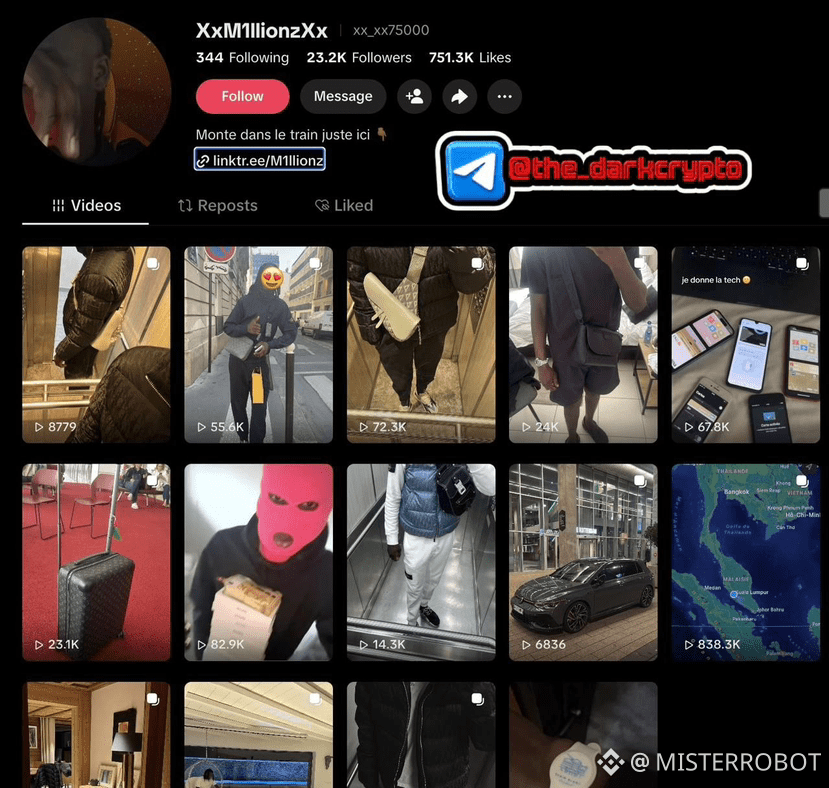
😮 Robin Hood’s on the Case Again — He Froze $93K for Armed Robberies
ZachXBT helped French authorities freeze $93K tied to two armed robberies totaling $667K. By tracking the on-chain movement of funds, he identified the local cybercriminal who was laundering the stolen money through crypto. Now criminal proceedings may be brought against him.
The scheme seemed simple: took cash, moved it into crypto, and live in peace. He didn’t account for one thing — there’s a person who reads the blockchain like an open book and does it for free, just for fun.
Zach has helped uncover dozens of similar schemes worldwide — from scams worth billions to regional laundering operations. No badge, no authority—just on-chain data and time.
#zachxbt #crypto #security #Onchain
Follow along — I track the work of the best crypto detective in the industry 🔔
😮 Robin Hood’s on the Case Again — He Froze $93K for Armed Robberies
ZachXBT helped French authorities freeze $93K tied to two armed robberies totaling $667K. By tracking the on-chain movement of funds, he identified the local cybercriminal who was laundering the stolen money through crypto. Now criminal proceedings may be brought against him.
The scheme seemed simple: took cash, moved it into crypto, and live in peace. He didn’t account for one thing — there’s a person who reads the blockchain like an open book and does it for free, just for fun.
Zach has helped uncover dozens of similar schemes worldwide — from scams worth billions to regional laundering operations. No badge, no authority—just on-chain data and time.
#zachxbt #crypto #security #Onchain
Follow along — I track the work of the best crypto detective in the industry 🔔
ZachXBT helped French authorities freeze $93K tied to two armed robberies totaling $667K. By tracking the on-chain movement of funds, he identified the local cybercriminal who was laundering the stolen money through crypto. Now criminal proceedings may be brought against him.
The scheme seemed simple: took cash, moved it into crypto, and live in peace. He didn’t account for one thing — there’s a person who reads the blockchain like an open book and does it for free, just for fun.
Zach has helped uncover dozens of similar schemes worldwide — from scams worth billions to regional laundering operations. No badge, no authority—just on-chain data and time.
#zachxbt #crypto #security #Onchain
Follow along — I track the work of the best crypto detective in the industry 🔔
1
665
·
--
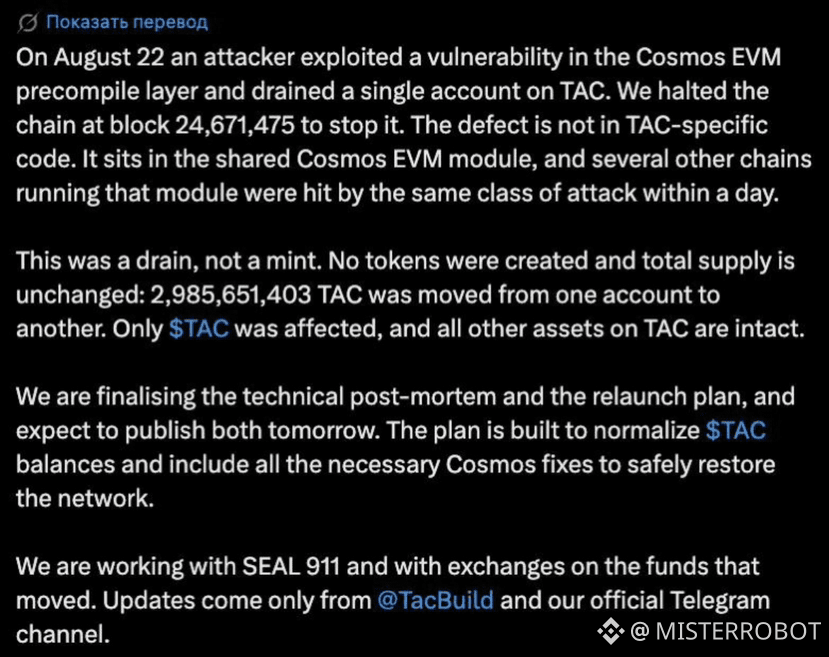
❌ TAC HACKED OUT FOR $7.5 MILLION — A VULNERABILITY IN COSMOS EVM IMPACTED SEVERAL NETWORKS
A hacker found a vulnerability in the Cosmos EVM module and withdrew 2,985,651,403 TAC from a single escrow account. Important point: no new tokens were issued, and issuance didn’t change—what was stolen was what already existed.
The team froze the blockchain to stop the attack. The issue is broader: other networks running on the Cosmos EVM module were also affected by a similar vulnerability—specifically, MANTRA Chain.
One vulnerable module — multiple affected networks at the same time. This is the main risk of the ecosystem approach: shared infrastructure scales not only capabilities, but also security holes.
#Cosmos #Crypto #Hack #security
Subscribe—I’m tracking hacks while the details are still hot 🔔
❌ TAC HACKED OUT FOR $7.5 MILLION — A VULNERABILITY IN COSMOS EVM IMPACTED SEVERAL NETWORKS
A hacker found a vulnerability in the Cosmos EVM module and withdrew 2,985,651,403 TAC from a single escrow account. Important point: no new tokens were issued, and issuance didn’t change—what was stolen was what already existed.
The team froze the blockchain to stop the attack. The issue is broader: other networks running on the Cosmos EVM module were also affected by a similar vulnerability—specifically, MANTRA Chain.
One vulnerable module — multiple affected networks at the same time. This is the main risk of the ecosystem approach: shared infrastructure scales not only capabilities, but also security holes.
#Cosmos #Crypto #Hack #security
Subscribe—I’m tracking hacks while the details are still hot 🔔
A hacker found a vulnerability in the Cosmos EVM module and withdrew 2,985,651,403 TAC from a single escrow account. Important point: no new tokens were issued, and issuance didn’t change—what was stolen was what already existed.
The team froze the blockchain to stop the attack. The issue is broader: other networks running on the Cosmos EVM module were also affected by a similar vulnerability—specifically, MANTRA Chain.
One vulnerable module — multiple affected networks at the same time. This is the main risk of the ecosystem approach: shared infrastructure scales not only capabilities, but also security holes.
#Cosmos #Crypto #Hack #security
Subscribe—I’m tracking hacks while the details are still hot 🔔
2
3.9k
·
--
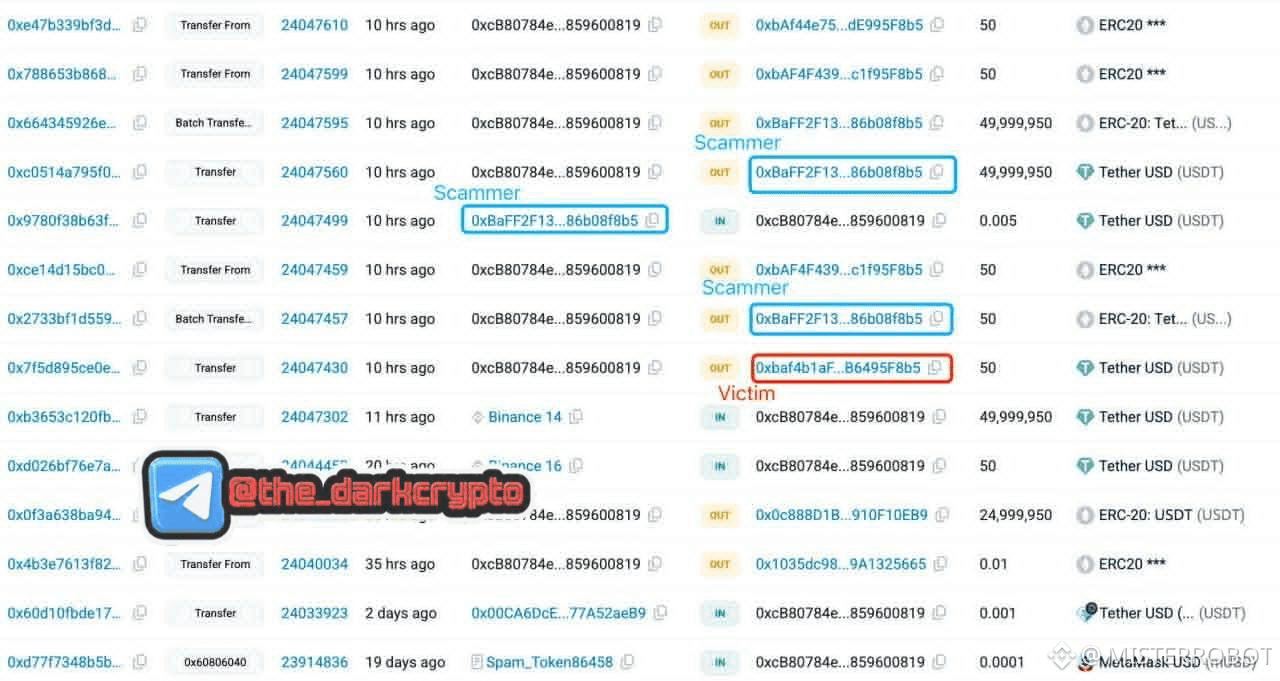
🤔 CAN YOU EARN MONEY YOURSELF FROM POISONING ATTACKS — I’LL ANSWER HONESTLY
Short answer: no. And here’s why.
Mass-scale mailings are carried out not by lone hackers, but by transnational crypto syndicates with budgets on the level of corporations. GPU farms for address targeting, custom smart contracts, full automation, and a staff of developers and analysts. The infrastructure costs millions. Just in 2022–2024 alone, 270 million attempts to poison were recorded across 17 million unique addresses. Success happens in just one case out of ten thousand. But one theft of $50 million more than pays for everything.
These groups compete with each other in real time. After a large transaction, bots from different factions race to be the first to plant a fake address. A case has been documented: after $2 million in USDC was transferred, within eight minutes thirteen fake transactions appeared from different attackers. They even poison each other—one thief who stole $2 million, after 25 minutes, poisoned his own wallet to muddy the trail.
Your Python script against this machine is like going at it with a knife against a tank division. Not by knowledge, but by resources.
#crypto #security #defi #blockchain
Subscribe — here I explain how the dark side of the crypto market works 🔔
🤔 CAN YOU EARN MONEY YOURSELF FROM POISONING ATTACKS — I’LL ANSWER HONESTLY
Short answer: no. And here’s why.
Mass-scale mailings are carried out not by lone hackers, but by transnational crypto syndicates with budgets on the level of corporations. GPU farms for address targeting, custom smart contracts, full automation, and a staff of developers and analysts. The infrastructure costs millions. Just in 2022–2024 alone, 270 million attempts to poison were recorded across 17 million unique addresses. Success happens in just one case out of ten thousand. But one theft of $50 million more than pays for everything.
These groups compete with each other in real time. After a large transaction, bots from different factions race to be the first to plant a fake address. A case has been documented: after $2 million in USDC was transferred, within eight minutes thirteen fake transactions appeared from different attackers. They even poison each other—one thief who stole $2 million, after 25 minutes, poisoned his own wallet to muddy the trail.
Your Python script against this machine is like going at it with a knife against a tank division. Not by knowledge, but by resources.
#crypto #security #defi #blockchain
Subscribe — here I explain how the dark side of the crypto market works 🔔
Short answer: no. And here’s why.
Mass-scale mailings are carried out not by lone hackers, but by transnational crypto syndicates with budgets on the level of corporations. GPU farms for address targeting, custom smart contracts, full automation, and a staff of developers and analysts. The infrastructure costs millions. Just in 2022–2024 alone, 270 million attempts to poison were recorded across 17 million unique addresses. Success happens in just one case out of ten thousand. But one theft of $50 million more than pays for everything.
These groups compete with each other in real time. After a large transaction, bots from different factions race to be the first to plant a fake address. A case has been documented: after $2 million in USDC was transferred, within eight minutes thirteen fake transactions appeared from different attackers. They even poison each other—one thief who stole $2 million, after 25 minutes, poisoned his own wallet to muddy the trail.
Your Python script against this machine is like going at it with a knife against a tank division. Not by knowledge, but by resources.
#crypto #security #defi #blockchain
Subscribe — here I explain how the dark side of the crypto market works 🔔
1
11.1k
·
--
🚬 HACKER VOTED FOR HIMSELF — AND WITHDREW $8.5 MILLION FROM TERM FINANCE
No code hacking, no vulnerabilities in smart contracts. The hacker simply bought enough TERM tokens, submitted his proposals through the voting process — and gained legitimate access to the protocol’s vaults. He withdrew $8.5 million.
All within the rules. The protocol worked exactly as it was programmed.
Governance attacks are one of the most underestimated vectors in DeFi. While everyone is watching for code vulnerabilities, it’s enough to simply buy votes. Decentralized governance works exactly until the moment when the tokens are distributed widely enough. When they can be bought up on the open market, it’s no longer protection—it becomes an attack surface.
#defi #crypto #Hack #security
Subscribe — I break down hacks here, including cases where the code had nothing to do with it 🔔
🚬 HACKER VOTED FOR HIMSELF — AND WITHDREW $8.5 MILLION FROM TERM FINANCE
No code hacking, no vulnerabilities in smart contracts. The hacker simply bought enough TERM tokens, submitted his proposals through the voting process — and gained legitimate access to the protocol’s vaults. He withdrew $8.5 million.
All within the rules. The protocol worked exactly as it was programmed.
Governance attacks are one of the most underestimated vectors in DeFi. While everyone is watching for code vulnerabilities, it’s enough to simply buy votes. Decentralized governance works exactly until the moment when the tokens are distributed widely enough. When they can be bought up on the open market, it’s no longer protection—it becomes an attack surface.
#defi #crypto #Hack #security
Subscribe — I break down hacks here, including cases where the code had nothing to do with it 🔔
No code hacking, no vulnerabilities in smart contracts. The hacker simply bought enough TERM tokens, submitted his proposals through the voting process — and gained legitimate access to the protocol’s vaults. He withdrew $8.5 million.
All within the rules. The protocol worked exactly as it was programmed.
Governance attacks are one of the most underestimated vectors in DeFi. While everyone is watching for code vulnerabilities, it’s enough to simply buy votes. Decentralized governance works exactly until the moment when the tokens are distributed widely enough. When they can be bought up on the open market, it’s no longer protection—it becomes an attack surface.
#defi #crypto #Hack #security
Subscribe — I break down hacks here, including cases where the code had nothing to do with it 🔔
1
1
413
·
--
Verified
🫡 EXMO IS CLOSING — WITHDRAW YOUR FUNDS RIGHT NOW
EXMO is shutting down. No long preambles: if you still have funds there — withdraw them as soon as possible while the window is still open.
At the same time, BitMart, which previously hinted at closing, has decided to change course amid market growth and is now looking for an “alternative to full closure.” The market is going up — and the desire to stay afloat has suddenly returned.
Tellingly: even exchanges can’t withstand these cycles. What can we say about projects with nice presentations and tokens with zero liquidity? Don’t keep large sums on little-known platforms — EXMO is far from being the first, and definitely not the last.
#EXMO #crypto #exchange #security
Subscribe — I warn about these stories here while it’s still not too late 🔔
🫡 EXMO IS CLOSING — WITHDRAW YOUR FUNDS RIGHT NOW
EXMO is shutting down. No long preambles: if you still have funds there — withdraw them as soon as possible while the window is still open.
At the same time, BitMart, which previously hinted at closing, has decided to change course amid market growth and is now looking for an “alternative to full closure.” The market is going up — and the desire to stay afloat has suddenly returned.
Tellingly: even exchanges can’t withstand these cycles. What can we say about projects with nice presentations and tokens with zero liquidity? Don’t keep large sums on little-known platforms — EXMO is far from being the first, and definitely not the last.
#EXMO #crypto #exchange #security
Subscribe — I warn about these stories here while it’s still not too late 🔔
EXMO is shutting down. No long preambles: if you still have funds there — withdraw them as soon as possible while the window is still open.
At the same time, BitMart, which previously hinted at closing, has decided to change course amid market growth and is now looking for an “alternative to full closure.” The market is going up — and the desire to stay afloat has suddenly returned.
Tellingly: even exchanges can’t withstand these cycles. What can we say about projects with nice presentations and tokens with zero liquidity? Don’t keep large sums on little-known platforms — EXMO is far from being the first, and definitely not the last.
#EXMO #crypto #exchange #security
Subscribe — I warn about these stories here while it’s still not too late 🔔

1
1.4k
·
--
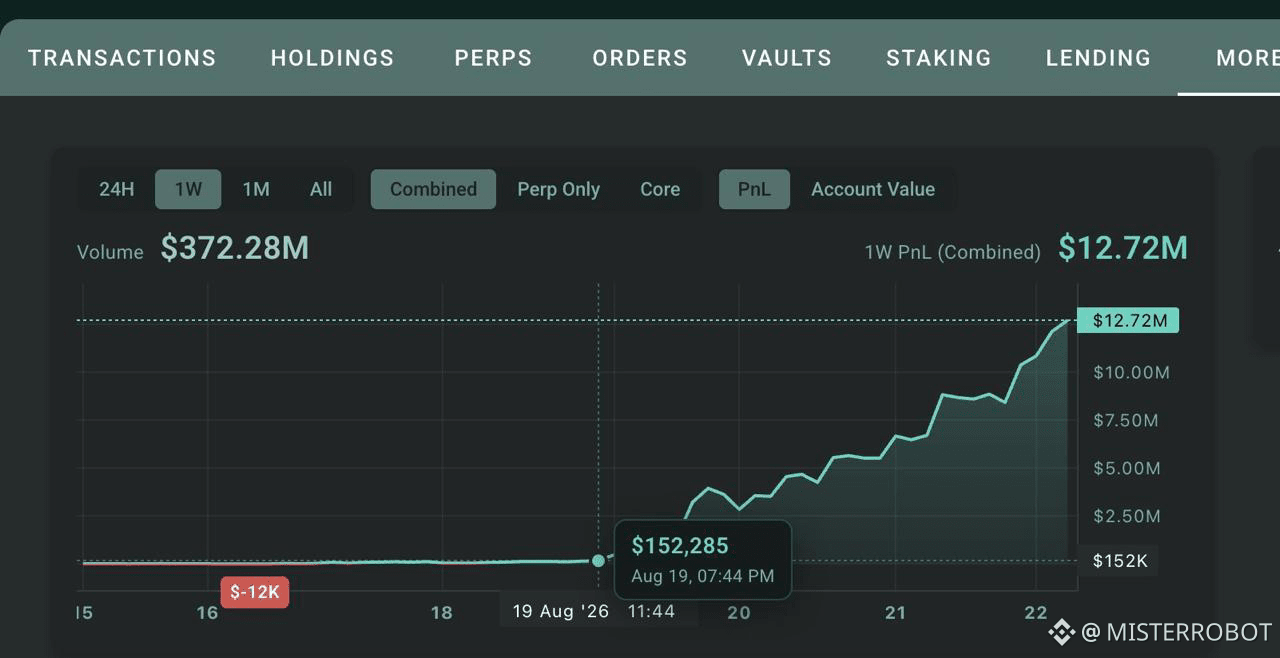
🤡 500 LIQUIDATIONS, SOLD AN NFT ON A DEXP — AND TURNED $152K INTO $12.7M IN 3 DAYS
Machi is a legend-level person. He was liquidated almost 500 times. No exaggeration, no metaphor—literally five hundred liquidations. To keep trading, he sold NFTs on a DEX.
And after all that, after this losing streak—$152K turns into $12.72M in three days.
There’s no single “correct” conclusion here. On the one hand, it’s a classic example of a survivor: out of a thousand stories like this, only one makes it to the end, while the rest just quietly bleed out. On the other hand—sometimes the stick really does fire off, and that’s what makes crypto both so dangerous and so irresistibly attractive at the same time.
James Wynn 2.0. For now 😄
#Crypto #Trading #Hyperliquid #DEGEN
Subscribe—I’m documenting both the losses and the comebacks here 🔔
🤡 500 LIQUIDATIONS, SOLD AN NFT ON A DEXP — AND TURNED $152K INTO $12.7M IN 3 DAYS
Machi is a legend-level person. He was liquidated almost 500 times. No exaggeration, no metaphor—literally five hundred liquidations. To keep trading, he sold NFTs on a DEX.
And after all that, after this losing streak—$152K turns into $12.72M in three days.
There’s no single “correct” conclusion here. On the one hand, it’s a classic example of a survivor: out of a thousand stories like this, only one makes it to the end, while the rest just quietly bleed out. On the other hand—sometimes the stick really does fire off, and that’s what makes crypto both so dangerous and so irresistibly attractive at the same time.
James Wynn 2.0. For now 😄
#Crypto #Trading #Hyperliquid #DEGEN
Subscribe—I’m documenting both the losses and the comebacks here 🔔
Machi is a legend-level person. He was liquidated almost 500 times. No exaggeration, no metaphor—literally five hundred liquidations. To keep trading, he sold NFTs on a DEX.
And after all that, after this losing streak—$152K turns into $12.72M in three days.
There’s no single “correct” conclusion here. On the one hand, it’s a classic example of a survivor: out of a thousand stories like this, only one makes it to the end, while the rest just quietly bleed out. On the other hand—sometimes the stick really does fire off, and that’s what makes crypto both so dangerous and so irresistibly attractive at the same time.
James Wynn 2.0. For now 😄
#Crypto #Trading #Hyperliquid #DEGEN
Subscribe—I’m documenting both the losses and the comebacks here 🔔

3
1.9k
·
--
🔫 MOSCOW CITY PURGE — 15 EXCHANGERS, 15 DETAINED, ONE ARREST
Special forces simultaneously entered approximately 15 locations in Moscow City. More than 15 employees were taken for questioning in a case involving illegal banking activity. After the night, most were released; two were kept in custody, and the owner of one of the venues was arrested.
This is already the second major blow in August—earlier, the FSB shut down nine illegal sites with an alleged turnover of up to $1–2 million per day, according to their data.
Moscow City has long become an unofficial hub for cash crypto exchange in Russia. Convenient, anonymous, close to banks—an ideal location. It looks like that’s exactly what attracted not only customers, but also law enforcement. The second raid in a month suggests this is no longer a one-off operation, but a systematic purge.
#crypto #russia #exchange #security
Subscribe—I track how governments tighten the screws on crypto 🔔
🔫 MOSCOW CITY PURGE — 15 EXCHANGERS, 15 DETAINED, ONE ARREST
Special forces simultaneously entered approximately 15 locations in Moscow City. More than 15 employees were taken for questioning in a case involving illegal banking activity. After the night, most were released; two were kept in custody, and the owner of one of the venues was arrested.
This is already the second major blow in August—earlier, the FSB shut down nine illegal sites with an alleged turnover of up to $1–2 million per day, according to their data.
Moscow City has long become an unofficial hub for cash crypto exchange in Russia. Convenient, anonymous, close to banks—an ideal location. It looks like that’s exactly what attracted not only customers, but also law enforcement. The second raid in a month suggests this is no longer a one-off operation, but a systematic purge.
#crypto #russia #exchange #security
Subscribe—I track how governments tighten the screws on crypto 🔔
Special forces simultaneously entered approximately 15 locations in Moscow City. More than 15 employees were taken for questioning in a case involving illegal banking activity. After the night, most were released; two were kept in custody, and the owner of one of the venues was arrested.
This is already the second major blow in August—earlier, the FSB shut down nine illegal sites with an alleged turnover of up to $1–2 million per day, according to their data.
Moscow City has long become an unofficial hub for cash crypto exchange in Russia. Convenient, anonymous, close to banks—an ideal location. It looks like that’s exactly what attracted not only customers, but also law enforcement. The second raid in a month suggests this is no longer a one-off operation, but a systematic purge.
#crypto #russia #exchange #security
Subscribe—I track how governments tighten the screws on crypto 🔔
1
1.7k
·
--
HACKER, MP AND GODFATHER OF A CARDING MAFIA 👨💻
Odesa, an educated family: the father is the head of the Composers’ Union. In 2001, Dmitry Golubov himself launches CarderPlanet.com—a forum for trading clones of Visa and Mastercard; the domain is registered in Madagascar. Seven hundred members, $11 million siphoned from banks. The WSJ dubbed him the “godfather of hacker mafia.”
An arrest in 2005 is cinematic: he burns documents while neighbors call the fire department. The result—five months in pretrial detention, a ridiculous bail set by two MPs, Visa and Mastercard weren’t allowed into the lawsuit, and the case was closed for lack of evidence.
Instead of Montenegro, he creates an Internet Party with Darth Vader in a campaign video. By 2014, he’s already a People’s Deputy from the Poroshenko Bloc. In the Verkhovna Rada, he pushes a law on the right to shut down unwanted websites. Comments are unnecessary.
According to #BitcoinMagazineUkraine—he’s among the top three largest holders of #Bitcoin among Ukrainian public figures. The forum has moved to parliament, but the habits haven’t 😏
#Crypto #Hacker
Follow along—things like this happen here every day 🔔
HACKER, MP AND GODFATHER OF A CARDING MAFIA 👨💻
Odesa, an educated family: the father is the head of the Composers’ Union. In 2001, Dmitry Golubov himself launches CarderPlanet.com—a forum for trading clones of Visa and Mastercard; the domain is registered in Madagascar. Seven hundred members, $11 million siphoned from banks. The WSJ dubbed him the “godfather of hacker mafia.”
An arrest in 2005 is cinematic: he burns documents while neighbors call the fire department. The result—five months in pretrial detention, a ridiculous bail set by two MPs, Visa and Mastercard weren’t allowed into the lawsuit, and the case was closed for lack of evidence.
Instead of Montenegro, he creates an Internet Party with Darth Vader in a campaign video. By 2014, he’s already a People’s Deputy from the Poroshenko Bloc. In the Verkhovna Rada, he pushes a law on the right to shut down unwanted websites. Comments are unnecessary.
According to #BitcoinMagazineUkraine—he’s among the top three largest holders of #Bitcoin among Ukrainian public figures. The forum has moved to parliament, but the habits haven’t 😏
#Crypto #Hacker
Follow along—things like this happen here every day 🔔
Odesa, an educated family: the father is the head of the Composers’ Union. In 2001, Dmitry Golubov himself launches CarderPlanet.com—a forum for trading clones of Visa and Mastercard; the domain is registered in Madagascar. Seven hundred members, $11 million siphoned from banks. The WSJ dubbed him the “godfather of hacker mafia.”
An arrest in 2005 is cinematic: he burns documents while neighbors call the fire department. The result—five months in pretrial detention, a ridiculous bail set by two MPs, Visa and Mastercard weren’t allowed into the lawsuit, and the case was closed for lack of evidence.
Instead of Montenegro, he creates an Internet Party with Darth Vader in a campaign video. By 2014, he’s already a People’s Deputy from the Poroshenko Bloc. In the Verkhovna Rada, he pushes a law on the right to shut down unwanted websites. Comments are unnecessary.
According to #BitcoinMagazineUkraine—he’s among the top three largest holders of #Bitcoin among Ukrainian public figures. The forum has moved to parliament, but the habits haven’t 😏
#Crypto #Hacker
Follow along—things like this happen here every day 🔔

7
14
24.8k
·
--
Partly True
TRADERS GOT RIPPED OFF FOR $160 000 THROUGH COPYTRADING 💰
The user was lured from Binance to BingX with promises of VIP status and bonuses. They were offered to connect copytrading to the trader Michael74. The account had $160 000.
In 6 minutes, he opened 94 trades with leverage up to 90x. About $148 000 went to trading commissions—not losses from market movement, but commissions themselves. Bitcoin has nothing to do with it here at all.
And now the most interesting part: on BingX there’s a referral scheme where the inviting trader gets up to 50% of the commissions paid by their copiers. From $148 000 in commissions, that’s about ~$74 000 in the organizer’s pocket.
The scheme is simple: find a wealthy client, bring them to the exchange, connect them to your trader, spin the deposit for 6 minutes through 94 trades, and pocket the cashback. The client loses everything, and the organizer looks for the next one. BingX is staying silent for now.
#bingx #Cryptoscam #Copytrading #BİNANCE
Follow along—stuff like this happens here every day 🔔
TRADERS GOT RIPPED OFF FOR $160 000 THROUGH COPYTRADING 💰
The user was lured from Binance to BingX with promises of VIP status and bonuses. They were offered to connect copytrading to the trader Michael74. The account had $160 000.
In 6 minutes, he opened 94 trades with leverage up to 90x. About $148 000 went to trading commissions—not losses from market movement, but commissions themselves. Bitcoin has nothing to do with it here at all.
And now the most interesting part: on BingX there’s a referral scheme where the inviting trader gets up to 50% of the commissions paid by their copiers. From $148 000 in commissions, that’s about ~$74 000 in the organizer’s pocket.
The scheme is simple: find a wealthy client, bring them to the exchange, connect them to your trader, spin the deposit for 6 minutes through 94 trades, and pocket the cashback. The client loses everything, and the organizer looks for the next one. BingX is staying silent for now.
#bingx #Cryptoscam #Copytrading #BİNANCE
Follow along—stuff like this happens here every day 🔔
The user was lured from Binance to BingX with promises of VIP status and bonuses. They were offered to connect copytrading to the trader Michael74. The account had $160 000.
In 6 minutes, he opened 94 trades with leverage up to 90x. About $148 000 went to trading commissions—not losses from market movement, but commissions themselves. Bitcoin has nothing to do with it here at all.
And now the most interesting part: on BingX there’s a referral scheme where the inviting trader gets up to 50% of the commissions paid by their copiers. From $148 000 in commissions, that’s about ~$74 000 in the organizer’s pocket.
The scheme is simple: find a wealthy client, bring them to the exchange, connect them to your trader, spin the deposit for 6 minutes through 94 trades, and pocket the cashback. The client loses everything, and the organizer looks for the next one. BingX is staying silent for now.
#bingx #Cryptoscam #Copytrading #BİNANCE
Follow along—stuff like this happens here every day 🔔

2
4
9.4k
·
--
Bearish
❌ BOUNCEBIT SHUTS DOWN ITS OWN BLOCKCHAIN AFTER A $3.1M HACK
The hacker found a vulnerability at the protocol level and withdrew about 286.5M BB from 9 wallets. After that, the team made a radical decision—to shut down its own blockchain.
Recovery plan: balances will be restored from a snapshot taken before the first attack, BB tokens will be reissued in the BEP-20 format on BNB Chain, and the new tokens will be automatically credited to the corresponding addresses—most users will not need to do anything.
Shutting down a blockchain after a hack is an uncommon move. Usually, projects patch the vulnerability and move on. Here, the team decided that trust in the protocol can’t be restored and migrated to another company’s infrastructure. Honest, but painful.
#BNBChain #crypto #Hack #Security
Subscribe—I track hacks and how projects get out of them 🔔
{future}(BBUSDT)
❌ BOUNCEBIT SHUTS DOWN ITS OWN BLOCKCHAIN AFTER A $3.1M HACK
The hacker found a vulnerability at the protocol level and withdrew about 286.5M BB from 9 wallets. After that, the team made a radical decision—to shut down its own blockchain.
Recovery plan: balances will be restored from a snapshot taken before the first attack, BB tokens will be reissued in the BEP-20 format on BNB Chain, and the new tokens will be automatically credited to the corresponding addresses—most users will not need to do anything.
Shutting down a blockchain after a hack is an uncommon move. Usually, projects patch the vulnerability and move on. Here, the team decided that trust in the protocol can’t be restored and migrated to another company’s infrastructure. Honest, but painful.
#BNBChain #crypto #Hack #Security
Subscribe—I track hacks and how projects get out of them 🔔
The hacker found a vulnerability at the protocol level and withdrew about 286.5M BB from 9 wallets. After that, the team made a radical decision—to shut down its own blockchain.
Recovery plan: balances will be restored from a snapshot taken before the first attack, BB tokens will be reissued in the BEP-20 format on BNB Chain, and the new tokens will be automatically credited to the corresponding addresses—most users will not need to do anything.
Shutting down a blockchain after a hack is an uncommon move. Usually, projects patch the vulnerability and move on. Here, the team decided that trust in the protocol can’t be restored and migrated to another company’s infrastructure. Honest, but painful.
#BNBChain #crypto #Hack #Security
Subscribe—I track hacks and how projects get out of them 🔔

2
794
·
--
Bearish
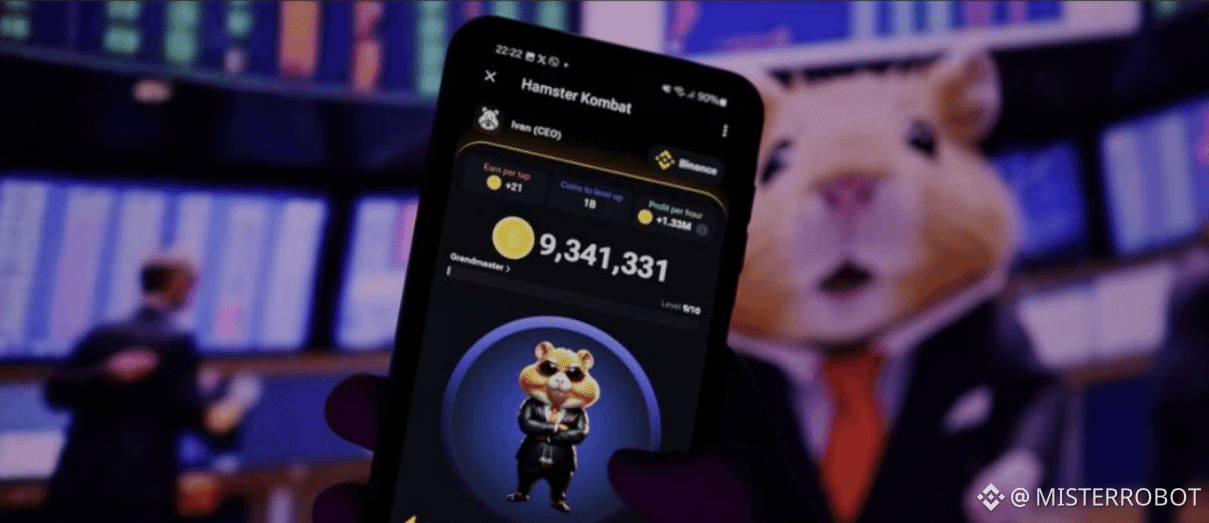
⚠️ SCAMMERS REMEMBERED HAMSTER — A NEW WAVE OF ACCOUNT AND WALLET THEFT
If you’ve played Hamster Kombat, be careful. Scammers have launched a new wave of attacks on the game’s former audience.
The schemes are standard but working: they offer to sell HMSTR at an inflated rate, withdraw “coins left after the airdrop,” or exchange tokens without a fee. Next comes a redirect to a third-party bot or a fake exchange, where they trick you into giving your Telegram code and two-step verification password. In another version, they ask you to connect a TON wallet, enter a seed phrase, or sign a transaction to “check your balance.” There are also cases of upfront payments for “network fees,” “tax,” or “wallet activation.”
The rule is simple: no one can help you withdraw tokens through a third-party bot. A seed phrase is not needed for any “verification.” Any upfront payment for withdrawal is a scam.
#Hamster #TON #Scam #Security
Subscribe — such warnings appear here promptly 🔔$HMSTR
⚠️ SCAMMERS REMEMBERED HAMSTER — A NEW WAVE OF ACCOUNT AND WALLET THEFT
If you’ve played Hamster Kombat, be careful. Scammers have launched a new wave of attacks on the game’s former audience.
The schemes are standard but working: they offer to sell HMSTR at an inflated rate, withdraw “coins left after the airdrop,” or exchange tokens without a fee. Next comes a redirect to a third-party bot or a fake exchange, where they trick you into giving your Telegram code and two-step verification password. In another version, they ask you to connect a TON wallet, enter a seed phrase, or sign a transaction to “check your balance.” There are also cases of upfront payments for “network fees,” “tax,” or “wallet activation.”
The rule is simple: no one can help you withdraw tokens through a third-party bot. A seed phrase is not needed for any “verification.” Any upfront payment for withdrawal is a scam.
#Hamster #TON #Scam #Security
Subscribe — such warnings appear here promptly 🔔$HMSTR
If you’ve played Hamster Kombat, be careful. Scammers have launched a new wave of attacks on the game’s former audience.
The schemes are standard but working: they offer to sell HMSTR at an inflated rate, withdraw “coins left after the airdrop,” or exchange tokens without a fee. Next comes a redirect to a third-party bot or a fake exchange, where they trick you into giving your Telegram code and two-step verification password. In another version, they ask you to connect a TON wallet, enter a seed phrase, or sign a transaction to “check your balance.” There are also cases of upfront payments for “network fees,” “tax,” or “wallet activation.”
The rule is simple: no one can help you withdraw tokens through a third-party bot. A seed phrase is not needed for any “verification.” Any upfront payment for withdrawal is a scam.
#Hamster #TON #Scam #Security
Subscribe — such warnings appear here promptly 🔔$HMSTR
4
3.5k
·
--
👀 10 YEARS OF COPING $800K — LOST $600K IN ONE DEAL
In X they discuss a story after which you want to close the terminal and breathe.
For 10 years, a person built a crypto portfolio and brought it to $800,000. The rounded million was just a bit away—and that became the problem. One trade, a desire to quickly get to $1M—and minus $600,000. After it happened, the man ended up in the hospital.
There’s no irony here or analysis of schemes. Just a real story about how the last 20% to a nice number often costs the most compared to the previous path. Ten years of discipline—and one moment when it ran out.
Take care of yourself. Follow risk management. Don’t trade with money you’re not ready to lose—and don’t trade $SPCX 🙏
#Crypto #Trading #RiskManagement #Bitcoin
Subscribe — this is not only news, but also reminders of what’s more important than money 🔔
👀 10 YEARS OF COPING $800K — LOST $600K IN ONE DEAL
In X they discuss a story after which you want to close the terminal and breathe.
For 10 years, a person built a crypto portfolio and brought it to $800,000. The rounded million was just a bit away—and that became the problem. One trade, a desire to quickly get to $1M—and minus $600,000. After it happened, the man ended up in the hospital.
There’s no irony here or analysis of schemes. Just a real story about how the last 20% to a nice number often costs the most compared to the previous path. Ten years of discipline—and one moment when it ran out.
Take care of yourself. Follow risk management. Don’t trade with money you’re not ready to lose—and don’t trade $SPCX 🙏
#Crypto #Trading #RiskManagement #Bitcoin
Subscribe — this is not only news, but also reminders of what’s more important than money 🔔
In X they discuss a story after which you want to close the terminal and breathe.
For 10 years, a person built a crypto portfolio and brought it to $800,000. The rounded million was just a bit away—and that became the problem. One trade, a desire to quickly get to $1M—and minus $600,000. After it happened, the man ended up in the hospital.
There’s no irony here or analysis of schemes. Just a real story about how the last 20% to a nice number often costs the most compared to the previous path. Ten years of discipline—and one moment when it ran out.
Take care of yourself. Follow risk management. Don’t trade with money you’re not ready to lose—and don’t trade $SPCX 🙏
#Crypto #Trading #RiskManagement #Bitcoin
Subscribe — this is not only news, but also reminders of what’s more important than money 🔔

1
168
Log in to explore more content
Join global crypto users on Binance Square
⚡️ Get latest and useful information about crypto.
💬 Trusted by the world’s largest crypto exchange.
👍 Discover real insights from verified creators.
Email / Phone number