
drawmoumou
400 Posts

drawmoumou
Report
Block User
High-Frequency Trader
6.1 Years
6 Following
6 Followers
5 Liked
Posts
·
--
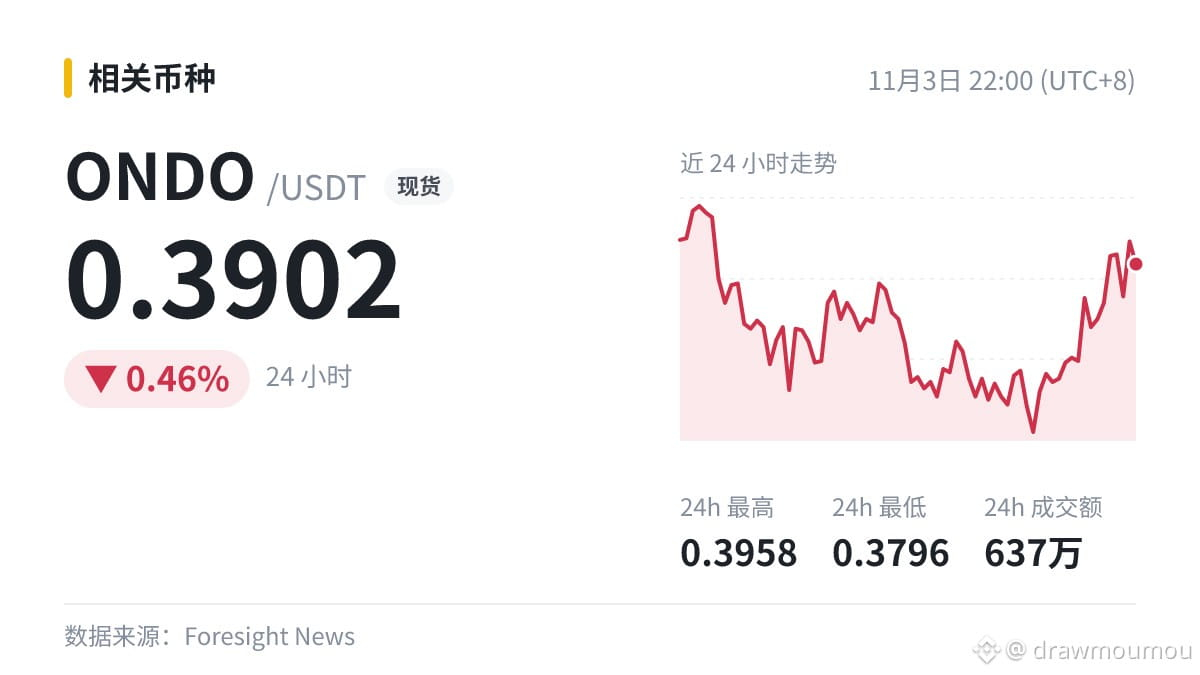
Today's quick update: Ondo's USDY has launched continuous pricing, with returns accruing by the second.
The bulls are feeling a little happy.
The comments section instantly turned into an analysts' convention, while I'm still looking up how to pronounce this term.
$ONDO , news is news, candlesticks are candlesticks, and I'm caught awkwardly in the middle.
The bulls are feeling a little happy.
The comments section instantly turned into an analysts' convention, while I'm still looking up how to pronounce this term.
$ONDO , news is news, candlesticks are candlesticks, and I'm caught awkwardly in the middle.
·
--
You receive an email from “official Binance”—how can you tell if it’s real or fake?
Here’s how I understand it: The purpose of two-factor authentication is that having your password leaked isn’t enough to log in to your account; the other person also needs to obtain the second authentication factor.
The one-time codes in an authenticator app usually refresh every 30 seconds. They’re generated from the secret key saved during setup and the current time, so no internet connection is needed.
The coin mentioned above: $BNB , current price 701.51, 24h -0.44%.
·
--
Metric Notes|$JCT |1-hour trading volume up 5.4x|Price down 7.02%
Definition: When trading volume surges, order book spreads and slippage often widen too, so entering or exiting with market orders can be costly.
How to read it: A volume surge may also be caused by widespread liquidations. Liquidation orders are forced trades, so this kind of volume has a different meaning from voluntary trading. Check liquidation data to assess it.
Indicators can fail, so always use stop-losses: thinking ahead about what to do if your judgment is wrong matters more than guessing correctly.
2
·
--
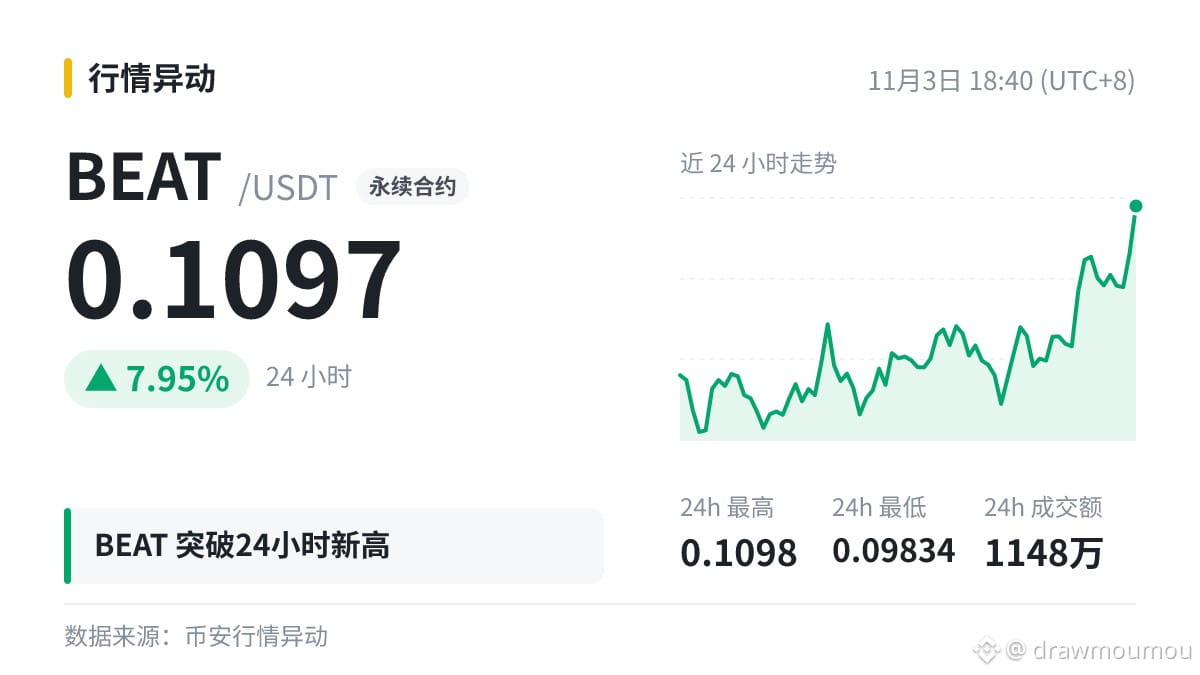
$BEAT breaks above the 24-hour high: current price 0.1097, previous high 0.1084.
After the breakout, there are two key things to watch:
· Can the previous high of 0.1084 turn from resistance into support (hold on a retest)?
· Was there a surge in volume during the breakout? A breakout on low volume can easily turn into a bull trap.
What reasons do you have for being bullish or bearish?
3
·
--
After reading this, I opened the K-line chart for a look. The market seems to still be digesting it.
I just came across another post: An address opened long positions in ETH and HYPE after losing $6.09 million in 6 hours. When bad news comes out, panic often gets amplified; we’ll see what the actual impact is in a day or two.
$ETH I’ll keep watching.
I just came across another post: An address opened long positions in ETH and HYPE after losing $6.09 million in 6 hours. When bad news comes out, panic often gets amplified; we’ll see what the actual impact is in a day or two.
$ETH I’ll keep watching.
1
·
--
$ARIA moved above the 0.115 level.
Getting back above this level is a boost to confidence, but whether it signals a trend reversal remains to be seen over the next few days.
Wait for the candlestick to close before deciding; an intraday spike doesn't count.
$ARIA moved above the 0.115 level.
Getting back above this level is a boost to confidence, but whether it signals a trend reversal remains to be seen over the next few days.
Wait for the candlestick to close before deciding; an intraday spike doesn't count.
Getting back above this level is a boost to confidence, but whether it signals a trend reversal remains to be seen over the next few days.
Wait for the candlestick to close before deciding; an intraday spike doesn't count.
·
--
No way!
Institution: Weak data and tighter financial conditions may reduce the likelihood of a Fed rate hike in December.
Macro factors are pouring cold water on things again… Will crypto markets come under pressure once more? Can $BTC hold up?
It’s best to read the original source; secondhand reports often get distorted.
·
--
Trending in the community: Someone asked a question about $TRX .
After reading it, I checked my own position—yeah, I can relate.
$TRX is currently priced at 0.3211 (24h +2.1%). Do you agree with this take?
Trending in the community: Someone asked a question about $TRX .
After reading it, I checked my own position—yeah, I can relate.
$TRX is currently priced at 0.3211 (24h +2.1%). Do you agree with this take?
After reading it, I checked my own position—yeah, I can relate.
$TRX is currently priced at 0.3211 (24h +2.1%). Do you agree with this take?
·
--
As a longtime crypto investor, when I come across news like this, I now run through my own little checklist:
✅ First, check the source: Mars Finance, followed up by 3 other outlets
✅ Then, check the market: $SOL 92.25 (24h -3.5%)
✅ Finally, ask myself: Is this worth changing my plans over? Most of the time, the answer is no.
This time, the news is: Solana: Stablecoin spending on-chain reached $141 million in October, a new all-time high
What's your process for evaluating news?
24
·
--
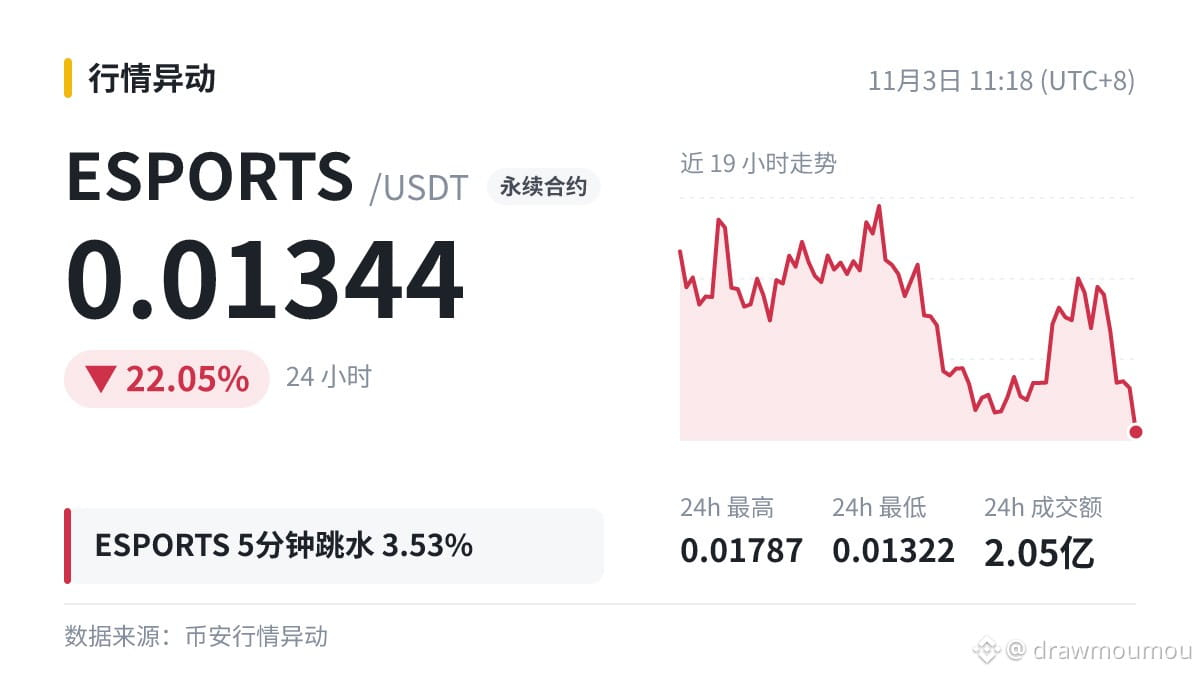
It's tanking, folks! $ESPORTS 5 minutes -3.53%, currently at 0.01344.
The decline hasn't stopped yet. If you want to buy in, do it in several batches—don't go all in at once.
#ESPORTS
It's tanking, folks! $ESPORTS 5 minutes -3.53%, currently at 0.01344.
The decline hasn't stopped yet. If you want to buy in, do it in several batches—don't go all in at once.
#ESPORTS
The decline hasn't stopped yet. If you want to buy in, do it in several batches—don't go all in at once.
#ESPORTS
25
·
--
😰 $SOON hits a new 30-day low at 0.2322, breaking below the previous low of 0.2341.
The waterfall is here ⚠️ In a weak market, doing less is also a strategy. Is this a shakeout or a real drop?
#SOON
😰 $SOON hits a new 30-day low at 0.2322, breaking below the previous low of 0.2341.
The waterfall is here ⚠️ In a weak market, doing less is also a strategy. Is this a shakeout or a real drop?
#SOON
The waterfall is here ⚠️ In a weak market, doing less is also a strategy. Is this a shakeout or a real drop?
#SOON
43
·
--
Folks, bullish breaking news is here—don't rush in; read the details before making a move!
👉 Akash Network will migrate its blockchain infrastructure to Solana within 24 months.
Another brick has been added to the story, but the price needs genuine follow-through for it to matter.
Can $AKT ride this momentum?
👉 Akash Network will migrate its blockchain infrastructure to Solana within 24 months.
Another brick has been added to the story, but the price needs genuine follow-through for it to matter.
Can $AKT ride this momentum?
48
·
--
A question: Why don't flash loans require collateral?
Flash loans let users borrow and repay funds within the same transaction, without collateral.
The borrowed funds and fees must be returned to the liquidity pool before the transaction ends; otherwise, the entire transaction is reverted, as if it had never happened.
To use flash loans, you need to write your own contract or use specialized tools. Be especially wary of software claiming to make flash-loan arbitrage easy.
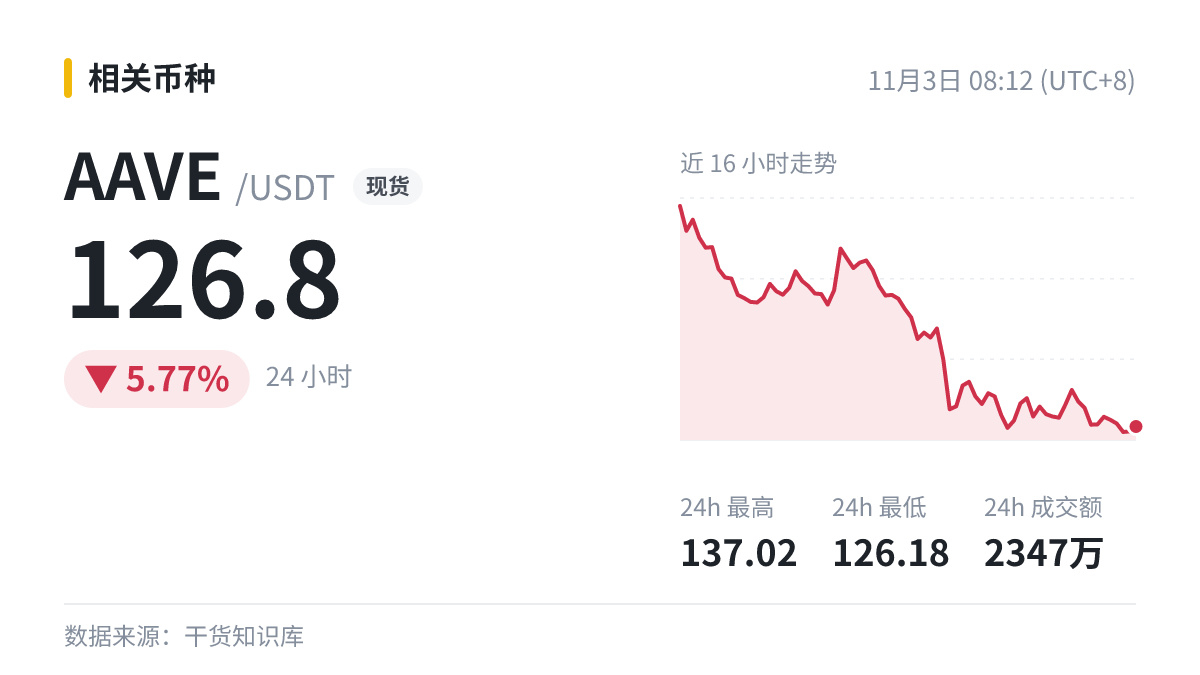
The lending protocol Aave, associated with $AAVE , supports flash loans.
68
·
--
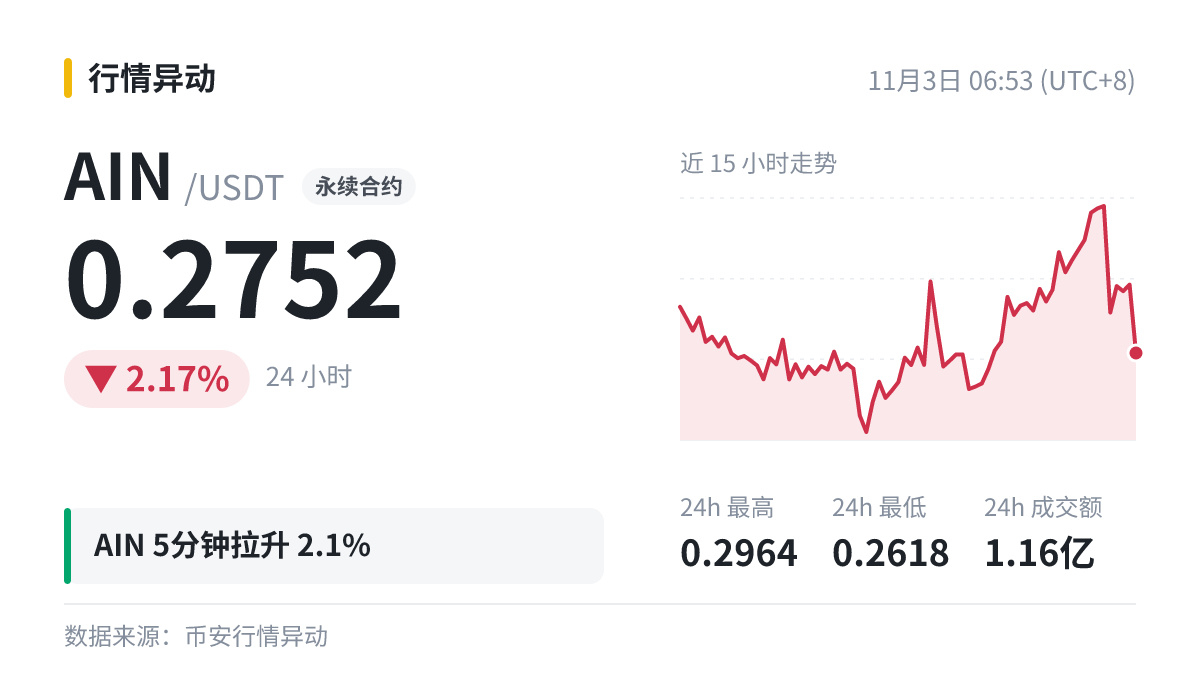
The data speaks: a sharp 2.1% rise in $AIN 5 minutes, with a 24-hour cumulative change of -2.17%.
Short-term opportunities come up every day, but once your principal is wiped out, it’s really gone. What do you usually wait to see before making a move?
The data speaks: a sharp 2.1% rise in $AIN 5 minutes, with a 24-hour cumulative change of -2.17%.
Short-term opportunities come up every day, but once your principal is wiped out, it’s really gone. What do you usually wait to see before making a move?
Short-term opportunities come up every day, but once your principal is wiped out, it’s really gone. What do you usually wait to see before making a move?
1
·
--
After seeing so many large orders, I increasingly feel that taking good care of yourself is the only way to keep going.
Take a break when you're tired; the market isn't going anywhere.
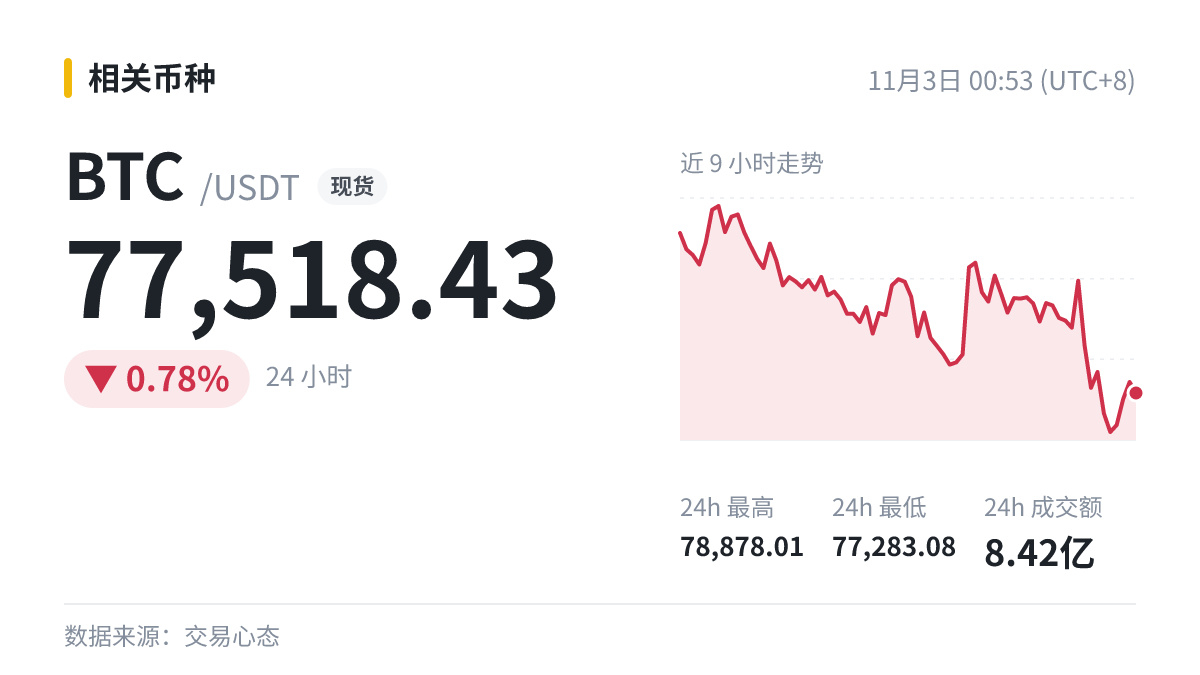
After writing this, I checked: $BTC current price 77518.43 (24h -0.78%).
After seeing so many large orders, I increasingly feel that taking good care of yourself is the only way to keep going.
Take a break when you're tired; the market isn't going anywhere.
After writing this, I checked: $BTC current price 77518.43 (24h -0.78%).
Take a break when you're tired; the market isn't going anywhere.
After writing this, I checked: $BTC current price 77518.43 (24h -0.78%).
1
·
--
I spent quite a while discussing this one with a friend: Tether freezes over 4.5 million USDT linked to the Mercado Bitcoin security incident.
Short-term volatility could pick up, so keeping leverage in check would be safer.
I have a little habit: when news comes out, I save it first, then come back a few hours later to see how the price has moved.
$BTC (24h -0.2%).
Short-term volatility could pick up, so keeping leverage in check would be safer.
I have a little habit: when news comes out, I save it first, then come back a few hours later to see how the price has moved.
$BTC (24h -0.2%).
·
--
Sharing a thought: when evaluating projects, I don’t care much about short-term price fluctuations. I care more about whether the team is getting things done.
Just saw this: “Chainlink: Aave adopts 24/7 data services to price RWA collateral.”
At least it shows the team is still moving things forward, and that’s worth recognizing.
$LINK What do you all think?
Just saw this: “Chainlink: Aave adopts 24/7 data services to price RWA collateral.”
At least it shows the team is still moving things forward, and that’s worth recognizing.
$LINK What do you all think?
4
·
--
What exactly does TGE mean?
TGE is short for Token Generation Event. It refers to the point when tokens are first generated and distribution begins.
Many projects calculate their unlock schedules from the TGE date, for example, “locked for 12 months after TGE.”
The most important thing to watch out for when managing your positions: be cautious of ads offering “pre-sale allocations before TGE”—many are scams impersonating project teams.
$ARB 0.159 (-2.87%)
·
--
Price Level Watch | $UAI loses the 0.14 level
The first rebound after the breakdown is crucial. If it fails to break back above this level, it will turn from support into resistance.
Price Level Watch | $UAI loses the 0.14 level
The first rebound after the breakdown is crucial. If it fails to break back above this level, it will turn from support into resistance.
The first rebound after the breakdown is crucial. If it fails to break back above this level, it will turn from support into resistance.
2
·
--
Error checklist: Take a quick look before placing an order.
One last look: $SOL is now 94.37 (24h -0.15%).
Error checklist: Take a quick look before placing an order.
One last look: $SOL is now 94.37 (24h -0.15%).
One last look: $SOL is now 94.37 (24h -0.15%).
Log in to explore more content
Join global crypto users on Binance Square
⚡️ Get latest and useful information about crypto.
💬 Trusted by the world’s largest crypto exchange.
👍 Discover real insights from verified creators.
Email / Phone number
Trending Topics
BinanceReopensWithdrawalsForMoreAssets
54,982 views
1,136 Discussing
Security Incident | Recovery Update #6: Withdrawals Reopen for More Assets (2026-11-03)
Binance Announcement
·179 Likes
·496.7k views
BinanceHourlyDepositsExceedWithdrawals
17,793 views
431 Discussing
AnthropicIPOPricedDownasInvestorsEye$1.5T
23 views
12 Discussing