

Cruise橘子哥
942 Posts

Cruise橘子哥
Report
Block User
web3 builder|碎碎念,热爱搞钱,又菜又爱玩|加密「破产」后 2025 年重新开始|不做投资建议,只分享亲身体验的产品🔸🔶
Open Trade

MEGA Holder
Frequent Trader
9.1 Years
200 Following
3K Followers
776 Liked
Posts
Portfolio
All
Quotes
Videos
Live
·
--
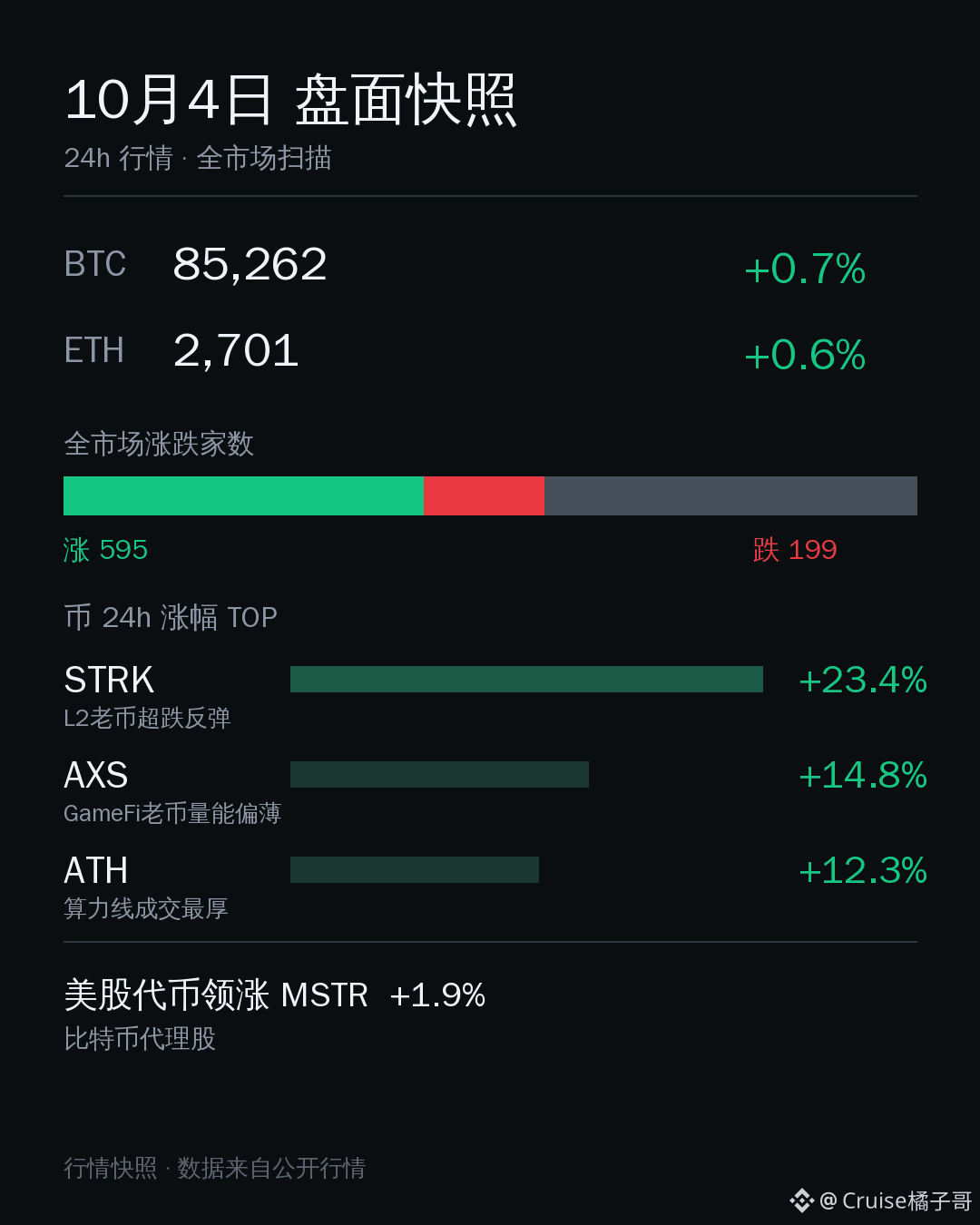
AXS is up nearly 15%. The price is over $1.3, but the trading volume is only a bit over $2 million. In the last round, that project—the hottest one for “playing and earning”—after the hype cooled down, it kept sliding down in a steady trend. Its market cap is still only a little over $200 million. Sure, it’s up, but the volume didn’t keep up. The order book is thin—just a few million can pull the price up by a chunk. It feels a bit satisfying, but also a little hard to believe. With such low trading volume, can it really support a big story? Are people really coming back, or is it simply that nobody’s selling in the float? We’ll see whether it puts out volume tomorrow.
AXS is up nearly 15%. The price is over $1.3, but the trading volume is only a bit over $2 million. In the last round, that project—the hottest one for “playing and earning”—after the hype cooled down, it kept sliding down in a steady trend. Its market cap is still only a little over $200 million. Sure, it’s up, but the volume didn’t keep up. The order book is thin—just a few million can pull the price up by a chunk. It feels a bit satisfying, but also a little hard to believe. With such low trading volume, can it really support a big story? Are people really coming back, or is it simply that nobody’s selling in the float? We’ll see whether it puts out volume tomorrow.
1
2.4k
·
--
After we talked about Acurast last time, I went back to the official website and took another look.
What I found most interesting this time is how it relates to the AI × DePIN track.
In this big AI era, when people talk about AI, the first things they usually think of are GPUs, data centers, and all kinds of large cloud services.
But if you look at it from another angle, there are also a lot of idle computing resources around us.
The most obvious one is our phones.
A smartphone today already has a fairly capable CPU, memory, network connectivity, and even a dedicated security module.
But for most of the time, it basically doesn’t run much.
What Acurast is trying to do is, in plain terms, to organize these idle devices so they can become computable resources that can be called upon.
So I don’t think the interesting part is simply “phone mining.”
Instead, it’s:
Some people provide idle computing power, while others need computing resources—and then the two sides are truly connected.
At the moment, the application scenarios Acurast shows aren’t limited to Web3.
Things like APIs, Webhooks, LLM inference, and privacy data processing are all within its application scope.
Of course, I don’t think we can only look at the narrative here.
Phone compute and GPUs are, after all, not the same.
Device performance, network conditions, battery level, online time, and task scheduling—all of these will affect how it works in practice.
So I’m actually not that concerned about how many phones it has connected right now.
What I want to know more is:
Are these phones actually being used by anyone in real terms?
Are developers consistently deploying real tasks?
How much of the money node operators earn comes from genuine compute demand?
In the future, will developers be willing to directly pay for this computing power?
Because for DePIN, there’s one simple principle I’ve always believed in:
Device supply is the input—real, paid demand is what creates value.
If it’s just a lot of phones joining, and the network is kept alive mainly by the token incentive of $ACU , then this story hasn’t fully worked out yet.
But if, in the future, scenarios like AI inference, privacy computing, and Web3 services really start using these distributed devices at scale, then it’s worth continuing to look into.
That’s also why, after watching Acurast for the second time, I found it more interesting. @Acurast
After we talked about Acurast last time, I went back to the official website and took another look.
What I found most interesting this time is how it relates to the AI × DePIN track.
In this big AI era, when people talk about AI, the first things they usually think of are GPUs, data centers, and all kinds of large cloud services.
But if you look at it from another angle, there are also a lot of idle computing resources around us.
The most obvious one is our phones.
A smartphone today already has a fairly capable CPU, memory, network connectivity, and even a dedicated security module.
But for most of the time, it basically doesn’t run much.
What Acurast is trying to do is, in plain terms, to organize these idle devices so they can become computable resources that can be called upon.
So I don’t think the interesting part is simply “phone mining.”
Instead, it’s:
Some people provide idle computing power, while others need computing resources—and then the two sides are truly connected.
At the moment, the application scenarios Acurast shows aren’t limited to Web3.
Things like APIs, Webhooks, LLM inference, and privacy data processing are all within its application scope.
Of course, I don’t think we can only look at the narrative here.
Phone compute and GPUs are, after all, not the same.
Device performance, network conditions, battery level, online time, and task scheduling—all of these will affect how it works in practice.
So I’m actually not that concerned about how many phones it has connected right now.
What I want to know more is:
Are these phones actually being used by anyone in real terms?
Are developers consistently deploying real tasks?
How much of the money node operators earn comes from genuine compute demand?
In the future, will developers be willing to directly pay for this computing power?
Because for DePIN, there’s one simple principle I’ve always believed in:
Device supply is the input—real, paid demand is what creates value.
If it’s just a lot of phones joining, and the network is kept alive mainly by the token incentive of $ACU , then this story hasn’t fully worked out yet.
But if, in the future, scenarios like AI inference, privacy computing, and Web3 services really start using these distributed devices at scale, then it’s worth continuing to look into.
That’s also why, after watching Acurast for the second time, I found it more interesting. @Acurast
What I found most interesting this time is how it relates to the AI × DePIN track.
In this big AI era, when people talk about AI, the first things they usually think of are GPUs, data centers, and all kinds of large cloud services.
But if you look at it from another angle, there are also a lot of idle computing resources around us.
The most obvious one is our phones.
A smartphone today already has a fairly capable CPU, memory, network connectivity, and even a dedicated security module.
But for most of the time, it basically doesn’t run much.
What Acurast is trying to do is, in plain terms, to organize these idle devices so they can become computable resources that can be called upon.
So I don’t think the interesting part is simply “phone mining.”
Instead, it’s:
Some people provide idle computing power, while others need computing resources—and then the two sides are truly connected.
At the moment, the application scenarios Acurast shows aren’t limited to Web3.
Things like APIs, Webhooks, LLM inference, and privacy data processing are all within its application scope.
Of course, I don’t think we can only look at the narrative here.
Phone compute and GPUs are, after all, not the same.
Device performance, network conditions, battery level, online time, and task scheduling—all of these will affect how it works in practice.
So I’m actually not that concerned about how many phones it has connected right now.
What I want to know more is:
Are these phones actually being used by anyone in real terms?
Are developers consistently deploying real tasks?
How much of the money node operators earn comes from genuine compute demand?
In the future, will developers be willing to directly pay for this computing power?
Because for DePIN, there’s one simple principle I’ve always believed in:
Device supply is the input—real, paid demand is what creates value.
If it’s just a lot of phones joining, and the network is kept alive mainly by the token incentive of $ACU , then this story hasn’t fully worked out yet.
But if, in the future, scenarios like AI inference, privacy computing, and Web3 services really start using these distributed devices at scale, then it’s worth continuing to look into.
That’s also why, after watching Acurast for the second time, I found it more interesting. @Acurast

92
·
--
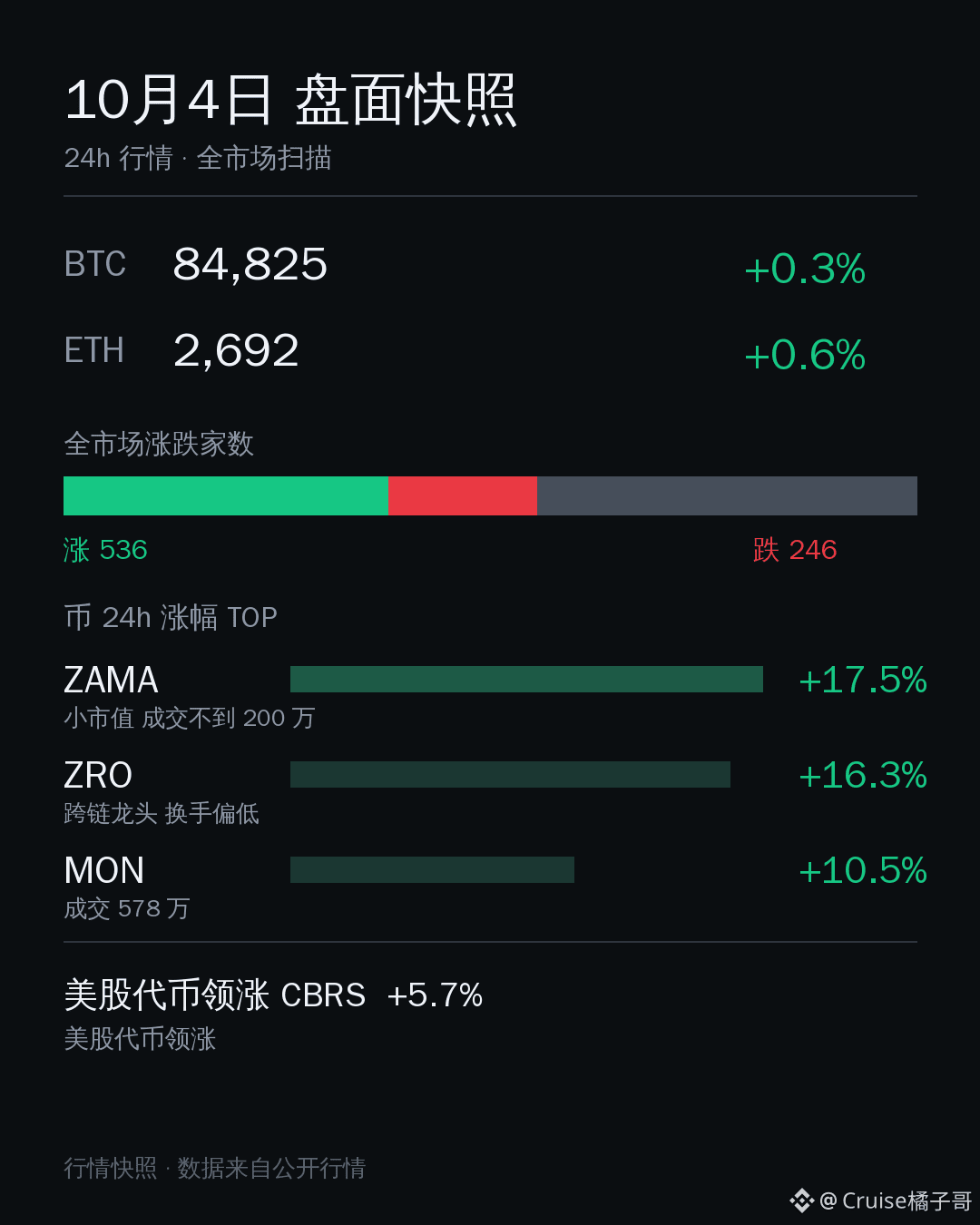
ZRO surged 16% in a single day, and its current price is just over two yuan. LayerZero’s governance token—trading volume of more than seven million only supports a market cap of about seven hundred million. The turnover is unbelievably low. It’s gone up, but it’s completely different from that earlier spike when price rose with heavy volume at the highs.
Seeing this volume makes one uneasy. Last time, I chased a coin when its成交量 suddenly doubled—once I got in, it was already the top. This time the sell pressure is indeed light, but when you really want to exit, nobody can catch the dump. The market just makes these small trades day after day; if you cancel your order, it instantly turns into a waterfall.
ZRO surged 16% in a single day, and its current price is just over two yuan. LayerZero’s governance token—trading volume of more than seven million only supports a market cap of about seven hundred million. The turnover is unbelievably low. It’s gone up, but it’s completely different from that earlier spike when price rose with heavy volume at the highs.
Seeing this volume makes one uneasy. Last time, I chased a coin when its成交量 suddenly doubled—once I got in, it was already the top. This time the sell pressure is indeed light, but when you really want to exit, nobody can catch the dump. The market just makes these small trades day after day; if you cancel your order, it instantly turns into a waterfall.
Seeing this volume makes one uneasy. Last time, I chased a coin when its成交量 suddenly doubled—once I got in, it was already the top. This time the sell pressure is indeed light, but when you really want to exit, nobody can catch the dump. The market just makes these small trades day after day; if you cancel your order, it instantly turns into a waterfall.
1
318
·
--
In the U.S., September nonfarm payrolls added only 29,000 jobs, far below market expectations, and market bets on a Fed rate hike in October cooled accordingly. That day, U.S. stocks rose across the board; the Nasdaq briefly touched a record high, up more than 1%, and Nvidia also hit a new intraday high.
Meanwhile, storage stocks told a different story. Toshiba announced it would invest 60 billion yen to expand mechanical hard drive production capacity by double, meaning supply is about to increase. On the same day, Seagate and Western Digital—both major hard drive leaders—fell by more than 10% each, and the two big bearish candles left many people stunned. This AI boom has pushed storage-chip stocks up and even led to stock shortages; when hard drive manufacturers expand production, the market’s first fear isn’t shortage anymore—it’s oversupply.
Next Wednesday, it will be the Fed’s turn with the release of the minutes from its September meeting, and the earnings season will also begin to heat up. The worse the data, the more the stock market rises—how long this rally can last depends on whether the minutes’ tone on inflation is relaxed or not.
In the U.S., September nonfarm payrolls added only 29,000 jobs, far below market expectations, and market bets on a Fed rate hike in October cooled accordingly. That day, U.S. stocks rose across the board; the Nasdaq briefly touched a record high, up more than 1%, and Nvidia also hit a new intraday high.
Meanwhile, storage stocks told a different story. Toshiba announced it would invest 60 billion yen to expand mechanical hard drive production capacity by double, meaning supply is about to increase. On the same day, Seagate and Western Digital—both major hard drive leaders—fell by more than 10% each, and the two big bearish candles left many people stunned. This AI boom has pushed storage-chip stocks up and even led to stock shortages; when hard drive manufacturers expand production, the market’s first fear isn’t shortage anymore—it’s oversupply.
Next Wednesday, it will be the Fed’s turn with the release of the minutes from its September meeting, and the earnings season will also begin to heat up. The worse the data, the more the stock market rises—how long this rally can last depends on whether the minutes’ tone on inflation is relaxed or not.
Meanwhile, storage stocks told a different story. Toshiba announced it would invest 60 billion yen to expand mechanical hard drive production capacity by double, meaning supply is about to increase. On the same day, Seagate and Western Digital—both major hard drive leaders—fell by more than 10% each, and the two big bearish candles left many people stunned. This AI boom has pushed storage-chip stocks up and even led to stock shortages; when hard drive manufacturers expand production, the market’s first fear isn’t shortage anymore—it’s oversupply.
Next Wednesday, it will be the Fed’s turn with the release of the minutes from its September meeting, and the earnings season will also begin to heat up. The worse the data, the more the stock market rises—how long this rally can last depends on whether the minutes’ tone on inflation is relaxed or not.
184
·
--
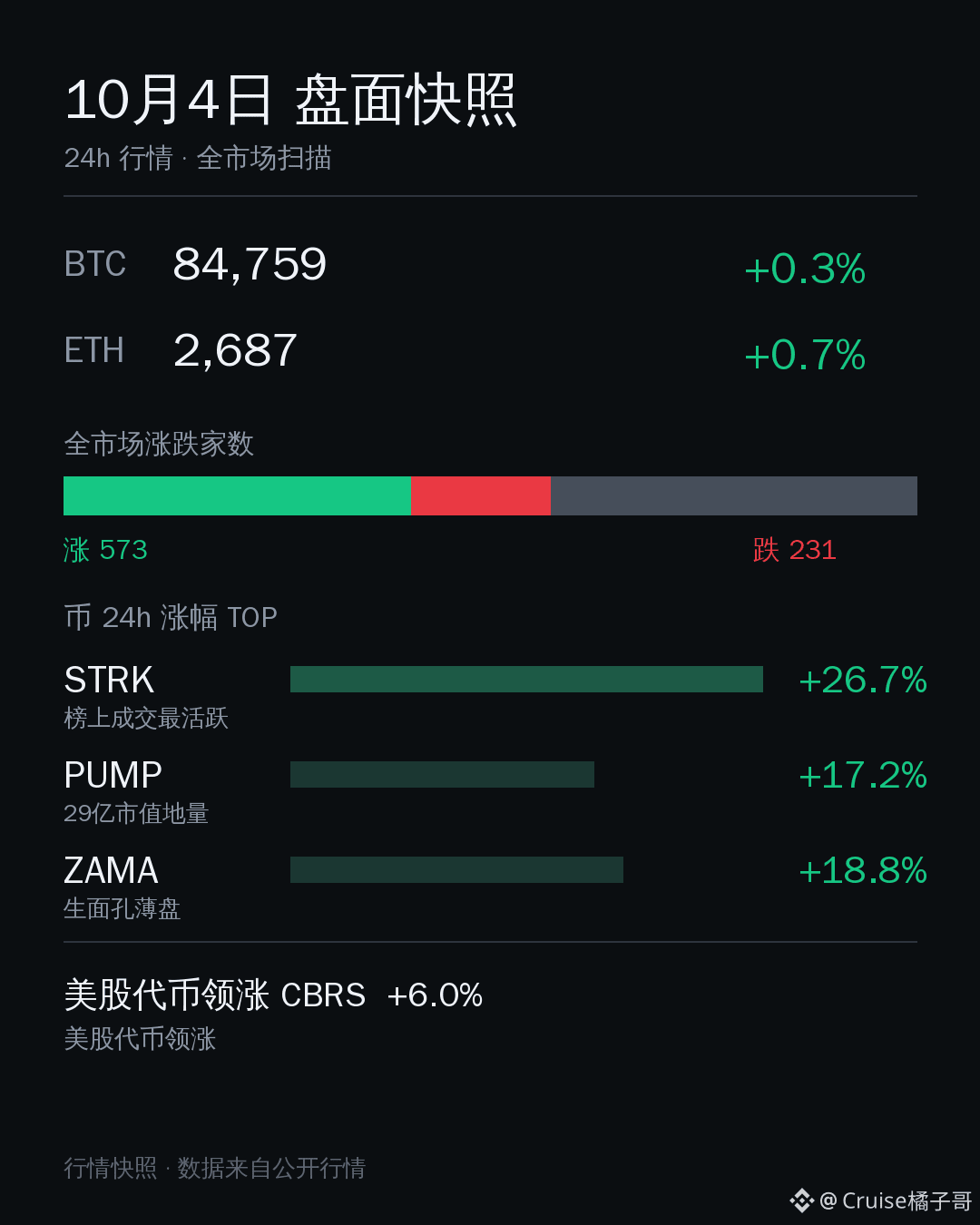
A PUMP with a market cap of 2.9 billion, and in 24 hours the trading volume is only about 1.3 million. With so little liquidity, it still managed to pump 17%, to three-tenths. Translate it into plain language: for a bucket this big by market cap, the daily trading volume isn’t even as much as a few small coins on the leaderboard. Pump.fun is a meme-coin launch platform on Solana. This kind of order book is so thin you can count the orders. To push it up by 20% doesn’t take much money.
A PUMP with a market cap of 2.9 billion, and in 24 hours the trading volume is only about 1.3 million. With so little liquidity, it still managed to pump 17%, to three-tenths. Translate it into plain language: for a bucket this big by market cap, the daily trading volume isn’t even as much as a few small coins on the leaderboard. Pump.fun is a meme-coin launch platform on Solana. This kind of order book is so thin you can count the orders. To push it up by 20% doesn’t take much money.
368
·
--
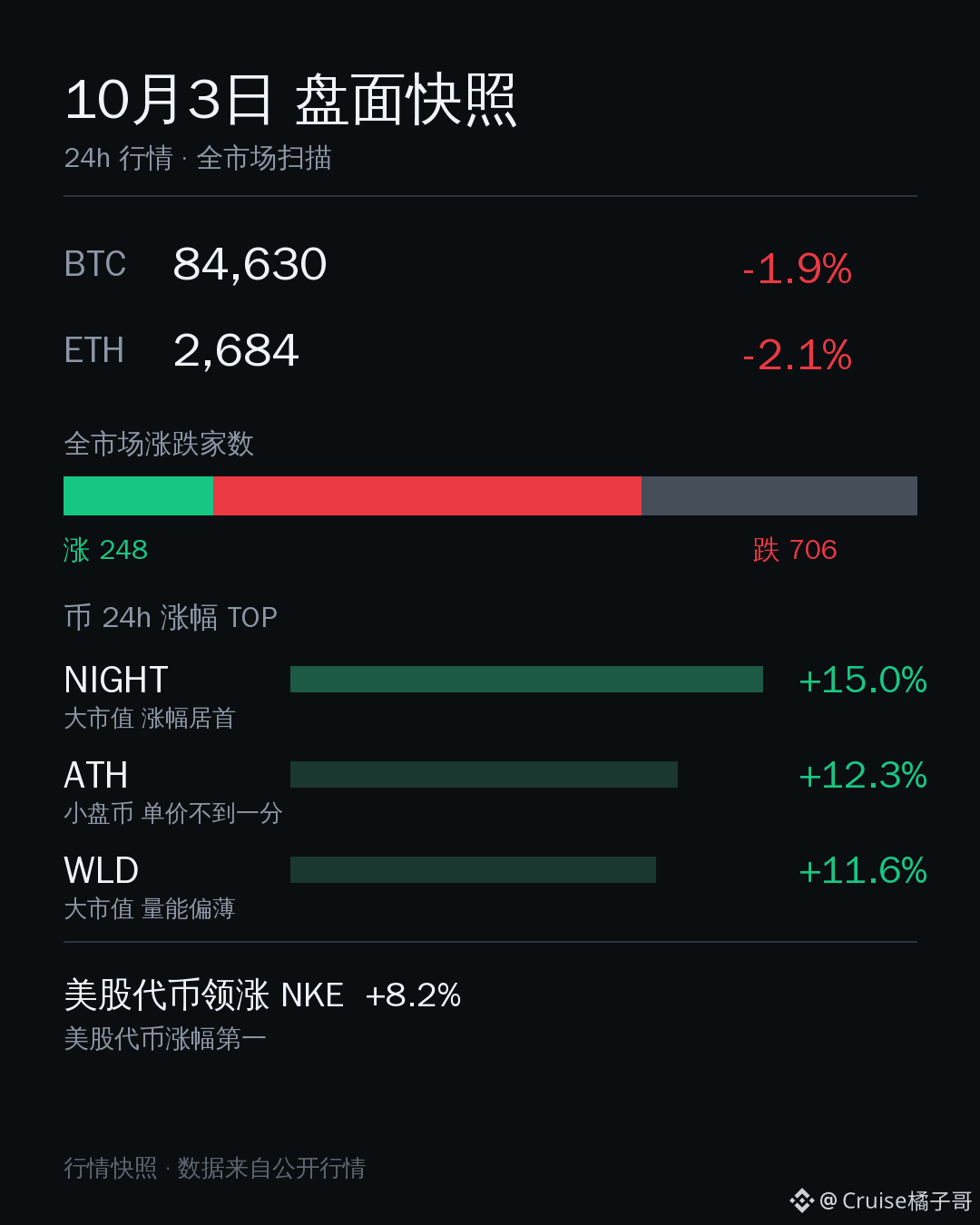
WLD has risen nearly 12%, with the price touching six-tenths. Today, amid a broad selloff, it stands out—but its market cap is $2.2 billion, and daily turnover is only $1.5 million.
The balance is a bit too top-heavy. With this kind of volume, just a few large orders can push the price up; there aren’t many true buyers switching hands beneath.
The large-cap rise looks good, but since the gains were lifted on thin volume, when it comes time to sell it back down, it won’t take much volume to do so.
WLD has risen nearly 12%, with the price touching six-tenths. Today, amid a broad selloff, it stands out—but its market cap is $2.2 billion, and daily turnover is only $1.5 million.
The balance is a bit too top-heavy. With this kind of volume, just a few large orders can push the price up; there aren’t many true buyers switching hands beneath.
The large-cap rise looks good, but since the gains were lifted on thin volume, when it comes time to sell it back down, it won’t take much volume to do so.
The balance is a bit too top-heavy. With this kind of volume, just a few large orders can push the price up; there aren’t many true buyers switching hands beneath.
The large-cap rise looks good, but since the gains were lifted on thin volume, when it comes time to sell it back down, it won’t take much volume to do so.
1
1.4k
·
--
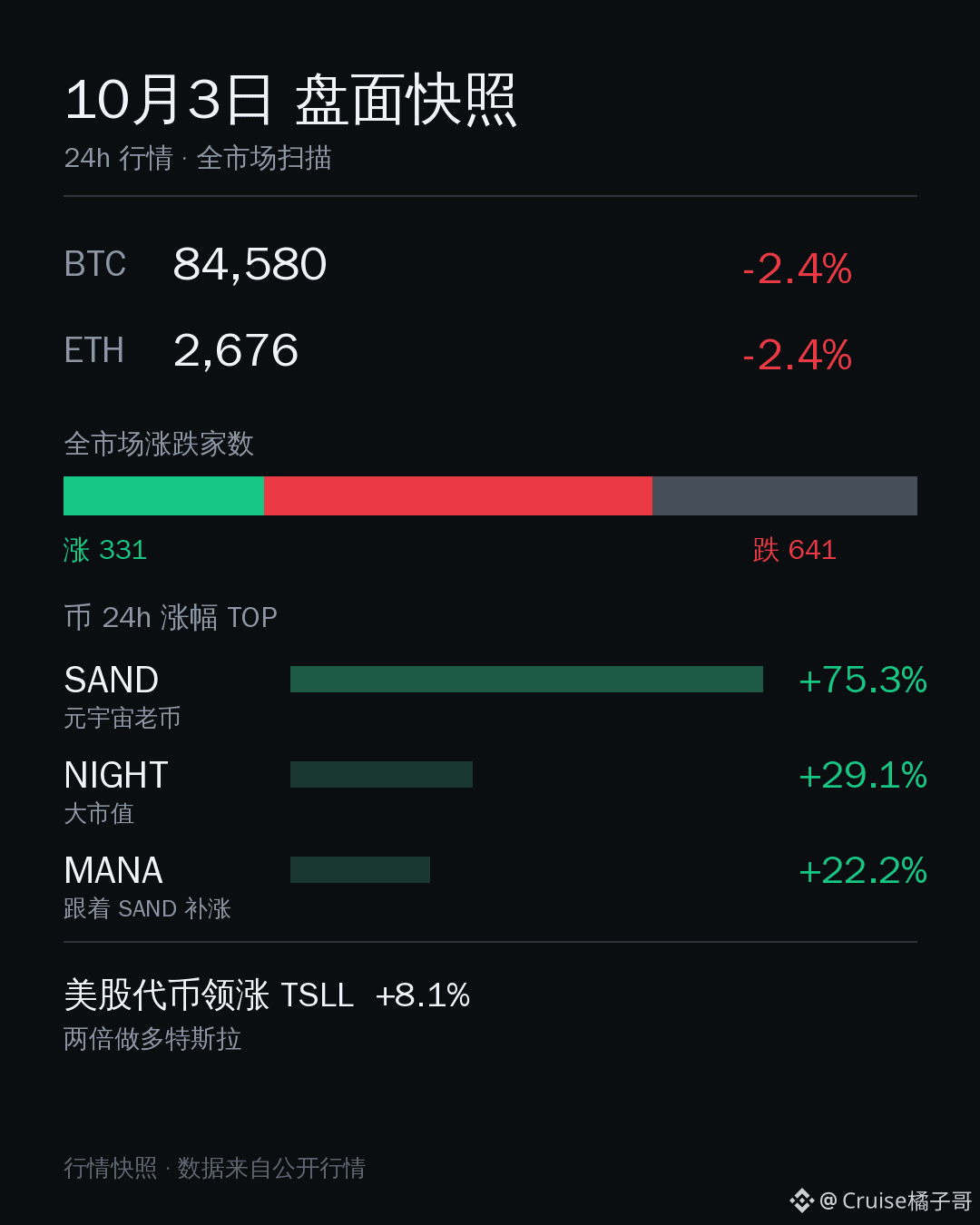
MANA is up 22% in 24 hours—price is just a bit over one cent, with a market cap around 200 million. It’s one of the other familiar faces from the metaverse’s old guard in that space. SAND in the same sector had a breakout earlier today, and MANA is only now catching up.
I didn’t catch the big green candle from SAND. Looking back, MANA’s trading volume is still under five million. For a $200 million market cap, that kind of chase energy just disappears. Volume didn’t really expand much. It’s been moving fast, and when it comes back down, it won’t be polite to you.
MANA is up 22% in 24 hours—price is just a bit over one cent, with a market cap around 200 million. It’s one of the other familiar faces from the metaverse’s old guard in that space. SAND in the same sector had a breakout earlier today, and MANA is only now catching up.
I didn’t catch the big green candle from SAND. Looking back, MANA’s trading volume is still under five million. For a $200 million market cap, that kind of chase energy just disappears. Volume didn’t really expand much. It’s been moving fast, and when it comes back down, it won’t be polite to you.
I didn’t catch the big green candle from SAND. Looking back, MANA’s trading volume is still under five million. For a $200 million market cap, that kind of chase energy just disappears. Volume didn’t really expand much. It’s been moving fast, and when it comes back down, it won’t be polite to you.
816
·
--
US stocks broadly rose on October 2; the Nasdaq jumped more than 1% to set a fresh record high again, and Nvidia briefly hit a new all-time high intraday. On the same day, however, the two leading HDD makers—Seagate and Western Digital—went against the market and both fell by more than 10%, the two most striking red candles in that day’s broader market.
The trigger was Toshiba’s plan to invest 60 billion yen to expand production in the Philippines, doubling HDD capacity. These large-capacity mechanical hard drives are currently in high demand from AI data centers, so expansion should, in theory, be a positive signal for industry conditions. But the market’s first reaction was fear that supply would rise and pricing power could be eroded—so investors ran first. Within the semiconductor sector, some stocks surged wildly while others plunged through support, and having these two faces side by side is really awkward.
Over at Tesla, the stock rose thanks to third-quarter deliveries coming in above expectations, but the storage leaders weren’t getting any attention, regardless of whether their AI-related demand is truly “urgent.”
US stocks broadly rose on October 2; the Nasdaq jumped more than 1% to set a fresh record high again, and Nvidia briefly hit a new all-time high intraday. On the same day, however, the two leading HDD makers—Seagate and Western Digital—went against the market and both fell by more than 10%, the two most striking red candles in that day’s broader market.
The trigger was Toshiba’s plan to invest 60 billion yen to expand production in the Philippines, doubling HDD capacity. These large-capacity mechanical hard drives are currently in high demand from AI data centers, so expansion should, in theory, be a positive signal for industry conditions. But the market’s first reaction was fear that supply would rise and pricing power could be eroded—so investors ran first. Within the semiconductor sector, some stocks surged wildly while others plunged through support, and having these two faces side by side is really awkward.
Over at Tesla, the stock rose thanks to third-quarter deliveries coming in above expectations, but the storage leaders weren’t getting any attention, regardless of whether their AI-related demand is truly “urgent.”
The trigger was Toshiba’s plan to invest 60 billion yen to expand production in the Philippines, doubling HDD capacity. These large-capacity mechanical hard drives are currently in high demand from AI data centers, so expansion should, in theory, be a positive signal for industry conditions. But the market’s first reaction was fear that supply would rise and pricing power could be eroded—so investors ran first. Within the semiconductor sector, some stocks surged wildly while others plunged through support, and having these two faces side by side is really awkward.
Over at Tesla, the stock rose thanks to third-quarter deliveries coming in above expectations, but the storage leaders weren’t getting any attention, regardless of whether their AI-related demand is truly “urgent.”
191
·
--
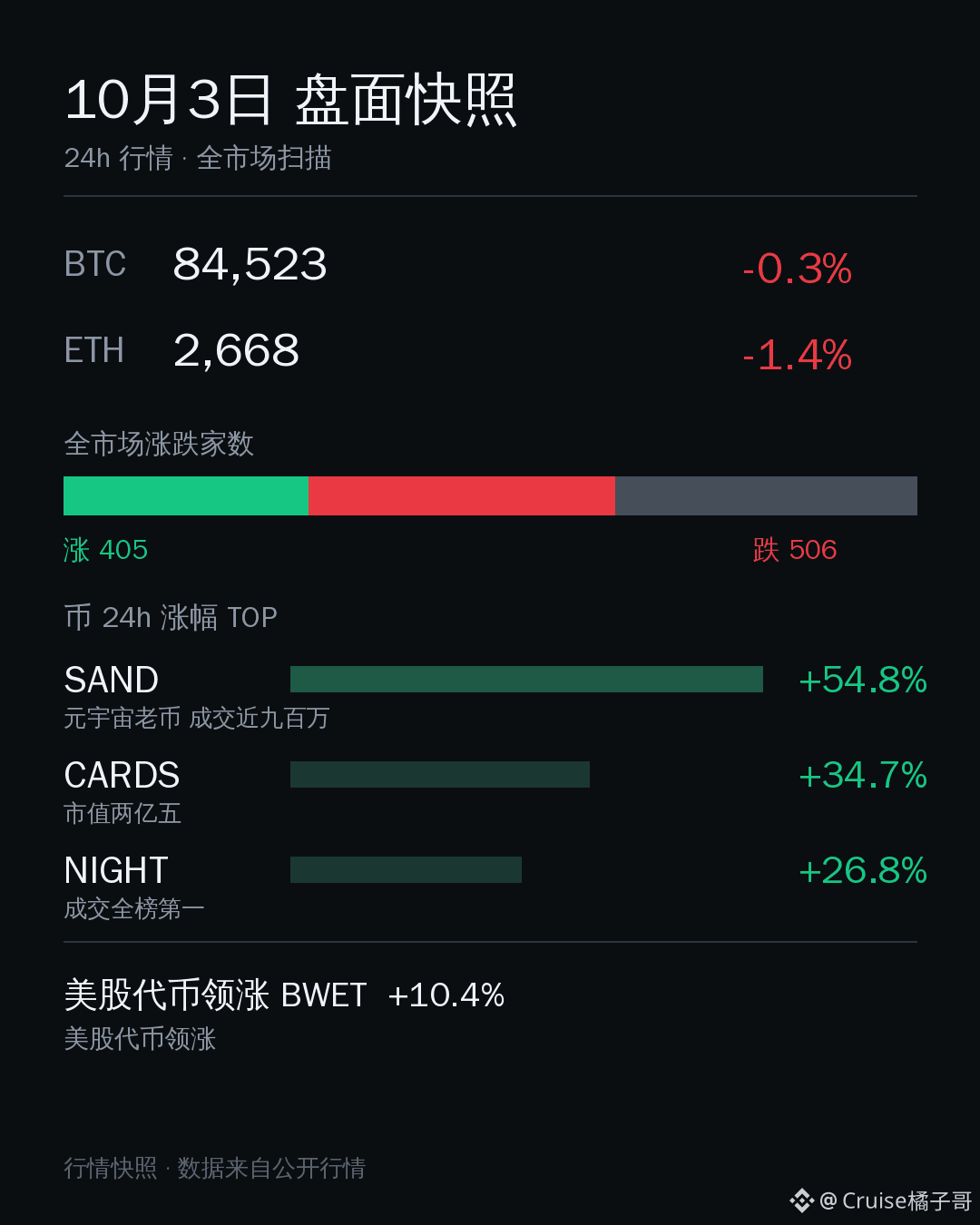
SAND jumped by more than 50% in a single day; the price is still below seven cents; trading volume is nearly nine million; and its market cap is just over 200 million. It’s the token of Sandbox, the older Metaverse project from the previous cycle’s boom—it was popular, then it lay dormant for years.
This kind of oversold old coin gets ignited by capital with this temperament: the float is small, and sell pressure is low. Once it’s pulled up, it rises fast and hard. I chased this kind of breakout once before—by the next day, I was buried in it. When the volume dries up, there’s no counterparty to run to.
SAND jumped by more than 50% in a single day; the price is still below seven cents; trading volume is nearly nine million; and its market cap is just over 200 million. It’s the token of Sandbox, the older Metaverse project from the previous cycle’s boom—it was popular, then it lay dormant for years.
This kind of oversold old coin gets ignited by capital with this temperament: the float is small, and sell pressure is low. Once it’s pulled up, it rises fast and hard. I chased this kind of breakout once before—by the next day, I was buried in it. When the volume dries up, there’s no counterparty to run to.
This kind of oversold old coin gets ignited by capital with this temperament: the float is small, and sell pressure is low. Once it’s pulled up, it rises fast and hard. I chased this kind of breakout once before—by the next day, I was buried in it. When the volume dries up, there’s no counterparty to run to.
2
8
6.7k
·
--
Bullish
Today I looked into Acurast. I went straight to its official website and checked each module. Overall, Acurast is a bit different.
When many people first see $ACU , they might simply categorize it as “yet another DePIN project.”
But what it does is much more straightforward and intuitive. It can take idle phones and their computing power, combine them into a decentralized computing network, and then let developers use that computing power.
In other words: on one side, people provide devices; on the other side, people need computing resources; and in between, $Acu connects everything.
Right now, $ACU in Acurast mainly has a few uses.
First is network usage.
If developers want to deploy tasks on Acurast, call computing resources, or perform related on-chain operations, it will involve $ACU.
In addition, regular users can participate too.
By running the Acurast Processor, you can turn idle phones into compute nodes.
The device’s performance, how long it stays online, and whether it can match to tasks will all affect how much reward you can ultimately earn.
There is also Staked Compute.
If you don’t have specialized devices, you can still participate in the network by staking or delegating stake, and receive corresponding rewards.
For ordinary users, this threshold is a bit lower.
For compute-power projects like this, I think what’s truly important may not be “how many devices exist right now,” but whether there are actually people willing to spend money to use those devices.
So for Acurast, I’m especially focused on three points:
First, whether developers continuously deploy real tasks on top of it;
Second, how much of the money earned by compute nodes truly comes from task demand, rather than simply from token incentives;
Third, as the network grows, whether fees and real revenue can gradually increase.
After all, having lots of phone nodes doesn’t necessarily mean it has value.
If it’s just that many people have phones running tasks there, but there isn’t much actual computing demand, then it still ends up relying mainly on token incentives.
But if in the future scenarios like AI inference, privacy computing, and Web3 infrastructure really start using Acurast’s distributed compute power, then the logic will be different.
At that time, $ACU won’t be connected to “phone compute power + a token” only—it will be connected to actual computing demand, node providers, and the entire network.
{future}(ACUUSDT)
Today I looked into Acurast. I went straight to its official website and checked each module. Overall, Acurast is a bit different.
When many people first see $ACU , they might simply categorize it as “yet another DePIN project.”
But what it does is much more straightforward and intuitive. It can take idle phones and their computing power, combine them into a decentralized computing network, and then let developers use that computing power.
In other words: on one side, people provide devices; on the other side, people need computing resources; and in between, $Acu connects everything.
Right now, $ACU in Acurast mainly has a few uses.
First is network usage.
If developers want to deploy tasks on Acurast, call computing resources, or perform related on-chain operations, it will involve $ACU .
In addition, regular users can participate too.
By running the Acurast Processor, you can turn idle phones into compute nodes.
The device’s performance, how long it stays online, and whether it can match to tasks will all affect how much reward you can ultimately earn.
There is also Staked Compute.
If you don’t have specialized devices, you can still participate in the network by staking or delegating stake, and receive corresponding rewards.
For ordinary users, this threshold is a bit lower.
For compute-power projects like this, I think what’s truly important may not be “how many devices exist right now,” but whether there are actually people willing to spend money to use those devices.
So for Acurast, I’m especially focused on three points:
First, whether developers continuously deploy real tasks on top of it;
Second, how much of the money earned by compute nodes truly comes from task demand, rather than simply from token incentives;
Third, as the network grows, whether fees and real revenue can gradually increase.
After all, having lots of phone nodes doesn’t necessarily mean it has value.
If it’s just that many people have phones running tasks there, but there isn’t much actual computing demand, then it still ends up relying mainly on token incentives.
But if in the future scenarios like AI inference, privacy computing, and Web3 infrastructure really start using Acurast’s distributed compute power, then the logic will be different.
At that time, $ACU won’t be connected to “phone compute power + a token” only—it will be connected to actual computing demand, node providers, and the entire network.
When many people first see $ACU , they might simply categorize it as “yet another DePIN project.”
But what it does is much more straightforward and intuitive. It can take idle phones and their computing power, combine them into a decentralized computing network, and then let developers use that computing power.
In other words: on one side, people provide devices; on the other side, people need computing resources; and in between, $Acu connects everything.
Right now, $ACU in Acurast mainly has a few uses.
First is network usage.
If developers want to deploy tasks on Acurast, call computing resources, or perform related on-chain operations, it will involve $ACU .
In addition, regular users can participate too.
By running the Acurast Processor, you can turn idle phones into compute nodes.
The device’s performance, how long it stays online, and whether it can match to tasks will all affect how much reward you can ultimately earn.
There is also Staked Compute.
If you don’t have specialized devices, you can still participate in the network by staking or delegating stake, and receive corresponding rewards.
For ordinary users, this threshold is a bit lower.
For compute-power projects like this, I think what’s truly important may not be “how many devices exist right now,” but whether there are actually people willing to spend money to use those devices.
So for Acurast, I’m especially focused on three points:
First, whether developers continuously deploy real tasks on top of it;
Second, how much of the money earned by compute nodes truly comes from task demand, rather than simply from token incentives;
Third, as the network grows, whether fees and real revenue can gradually increase.
After all, having lots of phone nodes doesn’t necessarily mean it has value.
If it’s just that many people have phones running tasks there, but there isn’t much actual computing demand, then it still ends up relying mainly on token incentives.
But if in the future scenarios like AI inference, privacy computing, and Web3 infrastructure really start using Acurast’s distributed compute power, then the logic will be different.
At that time, $ACU won’t be connected to “phone compute power + a token” only—it will be connected to actual computing demand, node providers, and the entire network.

1
108
·
--
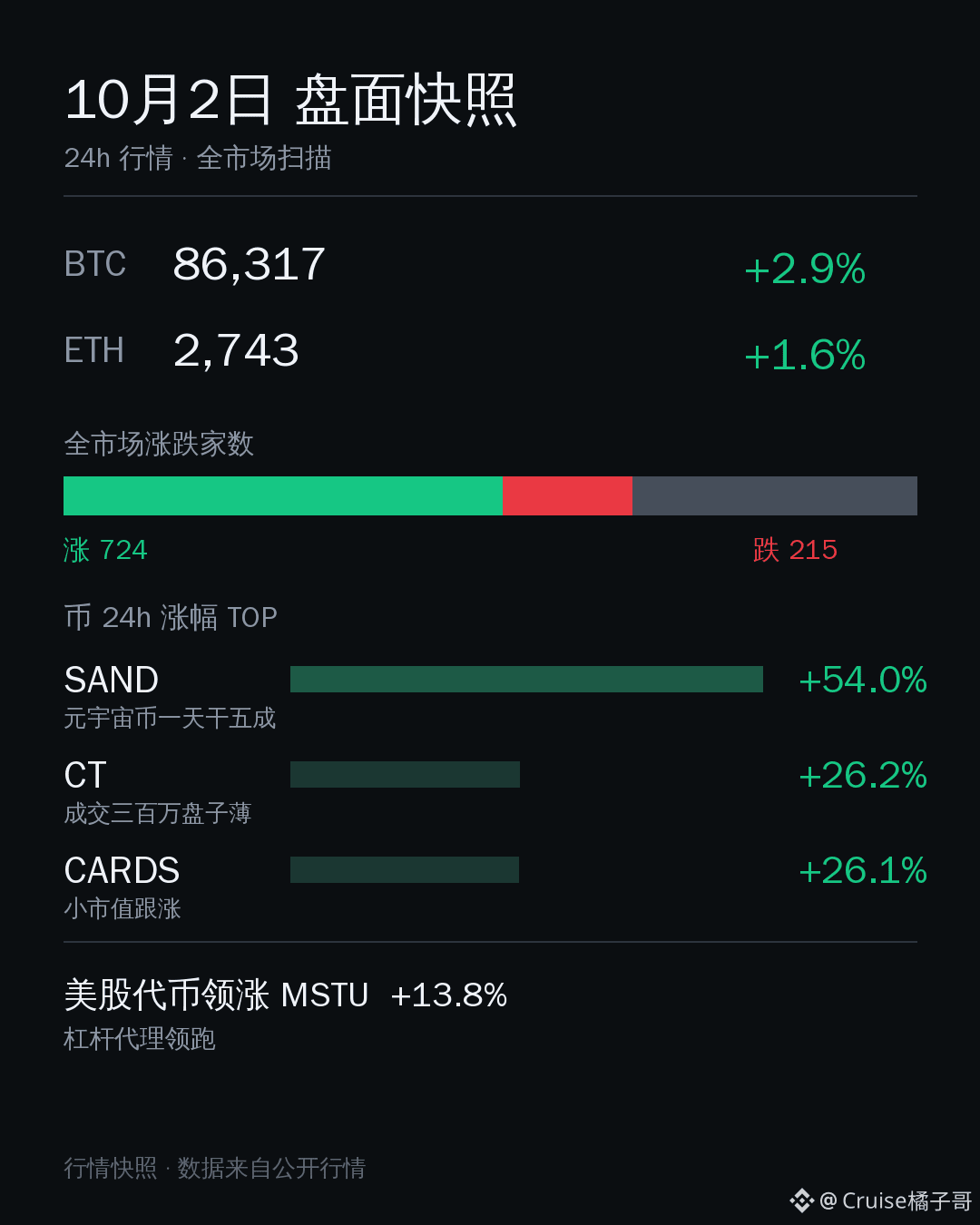
That metaverse coin selling virtual real estate—one day it did 54%, and the price is still sitting above six cents. The numbers look pretty frightening, but成交 only 3.1 million, with the float nearly 200 million. The turnover is unbelievably low. The sell orders are so thin you can count them; if someone really wanted to dump a large amount, slippage would be enough to scare people off. Last time I chased one of these small-float “妖” coins, I charged in at the open and got buried on the mountaintop. This time it’s at the very top of the gainers list, but instead of feeling excited, I’m actually uneasy. Today this whole metaverse batch is acting jittery, but there’s still no volume. With a rise like this, it’s hard to say how many days it can hold up.
That metaverse coin selling virtual real estate—one day it did 54%, and the price is still sitting above six cents. The numbers look pretty frightening, but成交 only 3.1 million, with the float nearly 200 million. The turnover is unbelievably low. The sell orders are so thin you can count them; if someone really wanted to dump a large amount, slippage would be enough to scare people off. Last time I chased one of these small-float “妖” coins, I charged in at the open and got buried on the mountaintop. This time it’s at the very top of the gainers list, but instead of feeling excited, I’m actually uneasy. Today this whole metaverse batch is acting jittery, but there’s still no volume. With a rise like this, it’s hard to say how many days it can hold up.
989
·
--
Verified
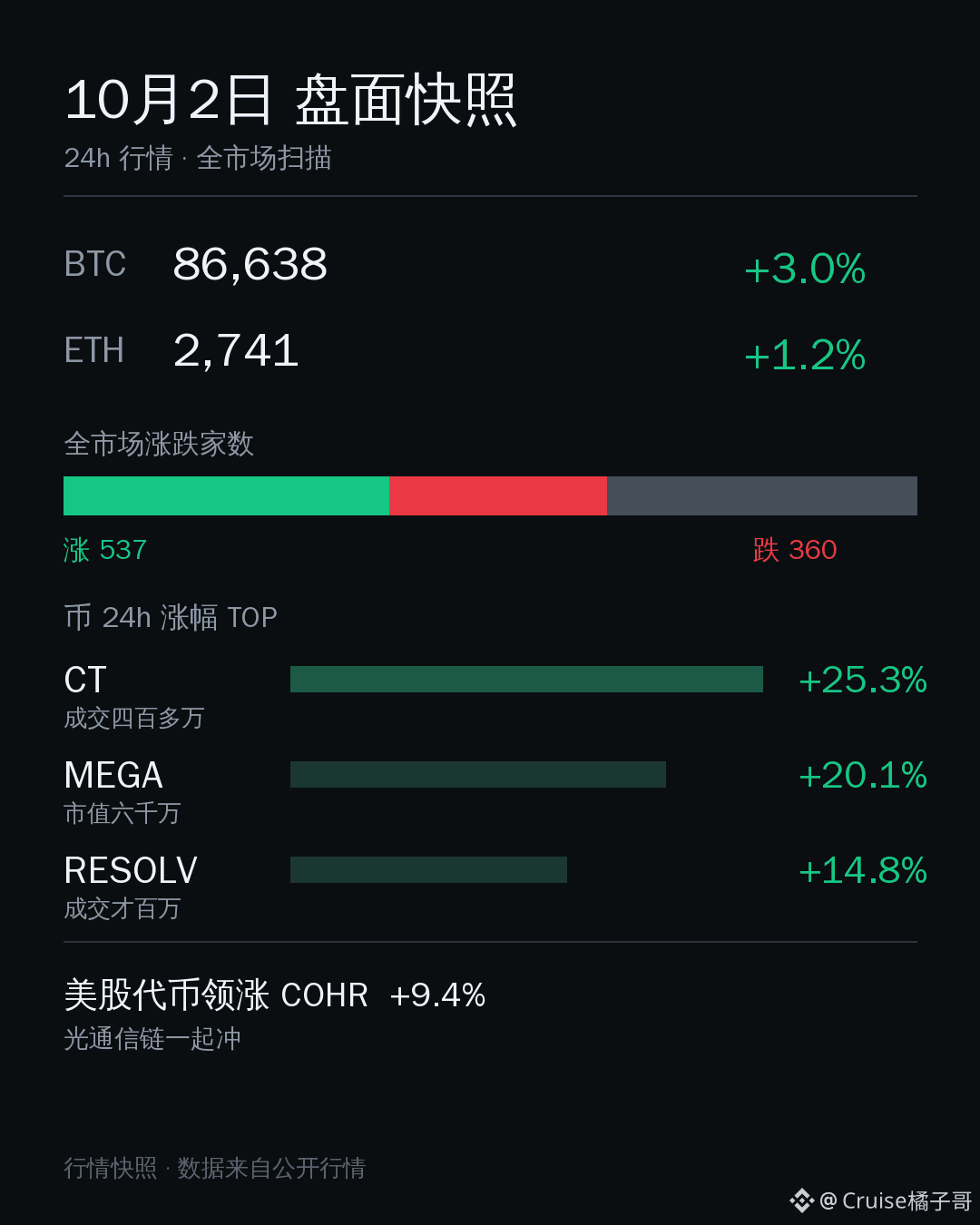
Overnight, these optical communication stocks collectively rioted. Coherent rose by nearly 10%. The token price is over $320, with trading volume of more than $5 million. A few companies in the same sector are all moving up; the whole industry chain is moving together—not something specific to just one company. Eighty percent of the time it’s because something new came out on the AI computing side. I didn’t dig into the specifics, though. I fell asleep overnight and only saw a row of red arrows when I woke up in the morning. This kind of overnight rally is the most exhausting: chasing it isn’t great, but not chasing it makes you worry it’ll keep going north all the way.
Overnight, these optical communication stocks collectively rioted. Coherent rose by nearly 10%. The token price is over $320, with trading volume of more than $5 million. A few companies in the same sector are all moving up; the whole industry chain is moving together—not something specific to just one company. Eighty percent of the time it’s because something new came out on the AI computing side. I didn’t dig into the specifics, though. I fell asleep overnight and only saw a row of red arrows when I woke up in the morning. This kind of overnight rally is the most exhausting: chasing it isn’t great, but not chasing it makes you worry it’ll keep going north all the way.
732
·
--
The market has been talking for half a year about how AI would wipe out the business of IT consulting and outsourcing. When Accenture’s earnings report came out, that claim temporarily went quiet. In the fourth fiscal quarter, revenue came in at around $18.7 billion, beating expectations. Full-year new bookings of $84.5 billion set a record. The revenue guidance for fiscal 2027 was set at 3% to 6%, and the midpoint of that range is also higher than analysts expected.
The stock reaction was even more dramatic—shares jumped about 16%, the biggest single-day gain since the company went public. Well, Accenture is the one that does IT consulting and outsourcing for large enterprises; if AI were really going to disrupt this industry, it should be the first to feel the chill.
On the same night, storage and optical communications also surged. SK hynix, Micron, and Coherent all rose together, and Nvidia closed at a new closing high in more than five months. The AI hardware supply chain kept climbing too. Even the IT service providers that were rumored to be headed for layoffs weren’t dumped. The market seems to have set that issue aside for now.
The market has been talking for half a year about how AI would wipe out the business of IT consulting and outsourcing. When Accenture’s earnings report came out, that claim temporarily went quiet. In the fourth fiscal quarter, revenue came in at around $18.7 billion, beating expectations. Full-year new bookings of $84.5 billion set a record. The revenue guidance for fiscal 2027 was set at 3% to 6%, and the midpoint of that range is also higher than analysts expected.
The stock reaction was even more dramatic—shares jumped about 16%, the biggest single-day gain since the company went public. Well, Accenture is the one that does IT consulting and outsourcing for large enterprises; if AI were really going to disrupt this industry, it should be the first to feel the chill.
On the same night, storage and optical communications also surged. SK hynix, Micron, and Coherent all rose together, and Nvidia closed at a new closing high in more than five months. The AI hardware supply chain kept climbing too. Even the IT service providers that were rumored to be headed for layoffs weren’t dumped. The market seems to have set that issue aside for now.
The stock reaction was even more dramatic—shares jumped about 16%, the biggest single-day gain since the company went public. Well, Accenture is the one that does IT consulting and outsourcing for large enterprises; if AI were really going to disrupt this industry, it should be the first to feel the chill.
On the same night, storage and optical communications also surged. SK hynix, Micron, and Coherent all rose together, and Nvidia closed at a new closing high in more than five months. The AI hardware supply chain kept climbing too. Even the IT service providers that were rumored to be headed for layoffs weren’t dumped. The market seems to have set that issue aside for now.
2
270
·
--
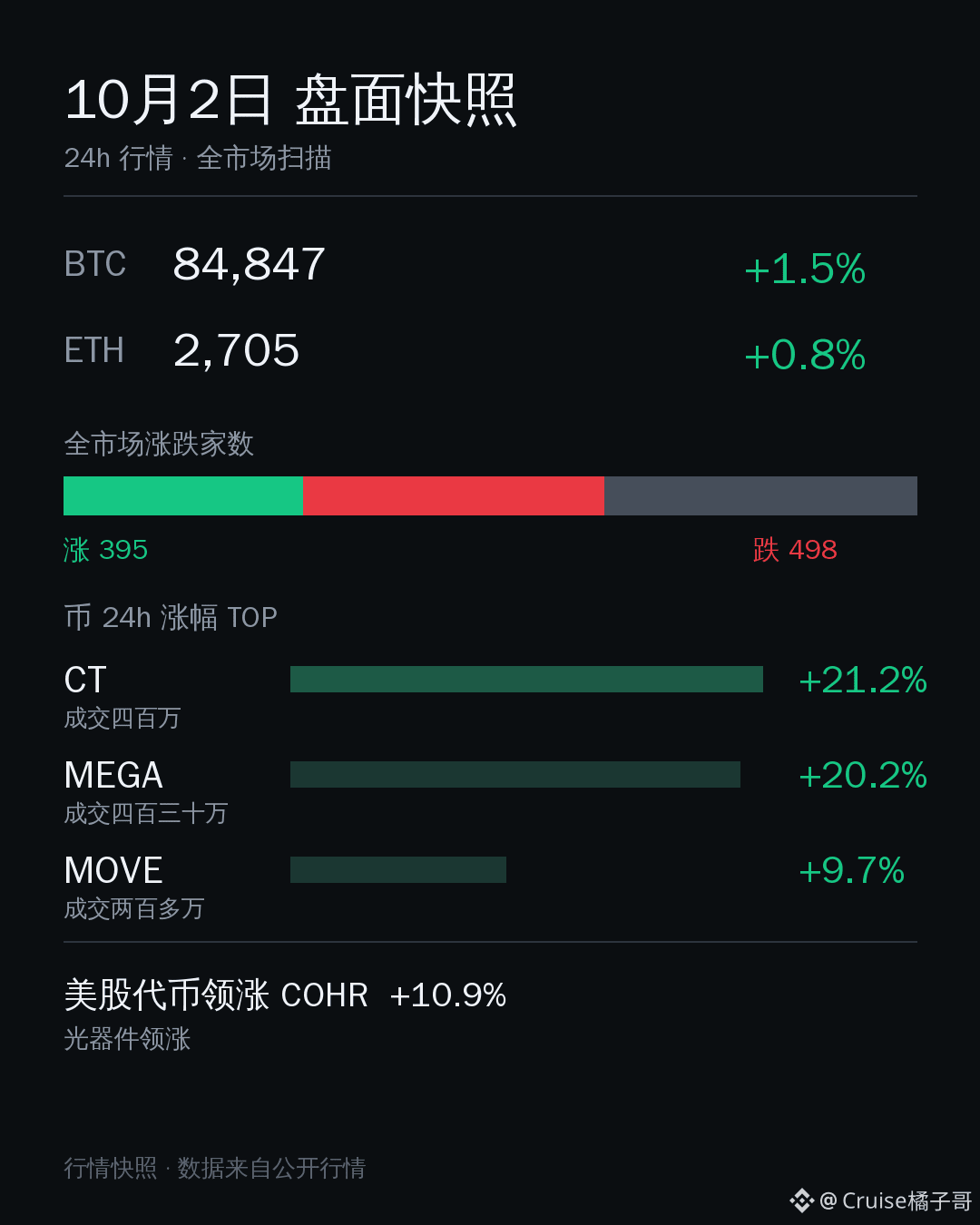
MSTR, which specifically borrowed money to stockpile Bitcoin, is up five percent today, while the king coin is only up one and a half percent. It has a huge pile of coins sitting on its balance sheet; its stock price is basically acting as a leveraged proxy for Bitcoin—when Bitcoin moves a little, it shakes three times. Trading volume today is over forty million dollars, and the volume is keeping up too. This kind of leveraged proxy moves fast and comes down quickly. Next, we’ll see whether it can hold its ground.
MSTR, which specifically borrowed money to stockpile Bitcoin, is up five percent today, while the king coin is only up one and a half percent. It has a huge pile of coins sitting on its balance sheet; its stock price is basically acting as a leveraged proxy for Bitcoin—when Bitcoin moves a little, it shakes three times. Trading volume today is over forty million dollars, and the volume is keeping up too. This kind of leveraged proxy moves fast and comes down quickly. Next, we’ll see whether it can hold its ground.
1
383
·
--
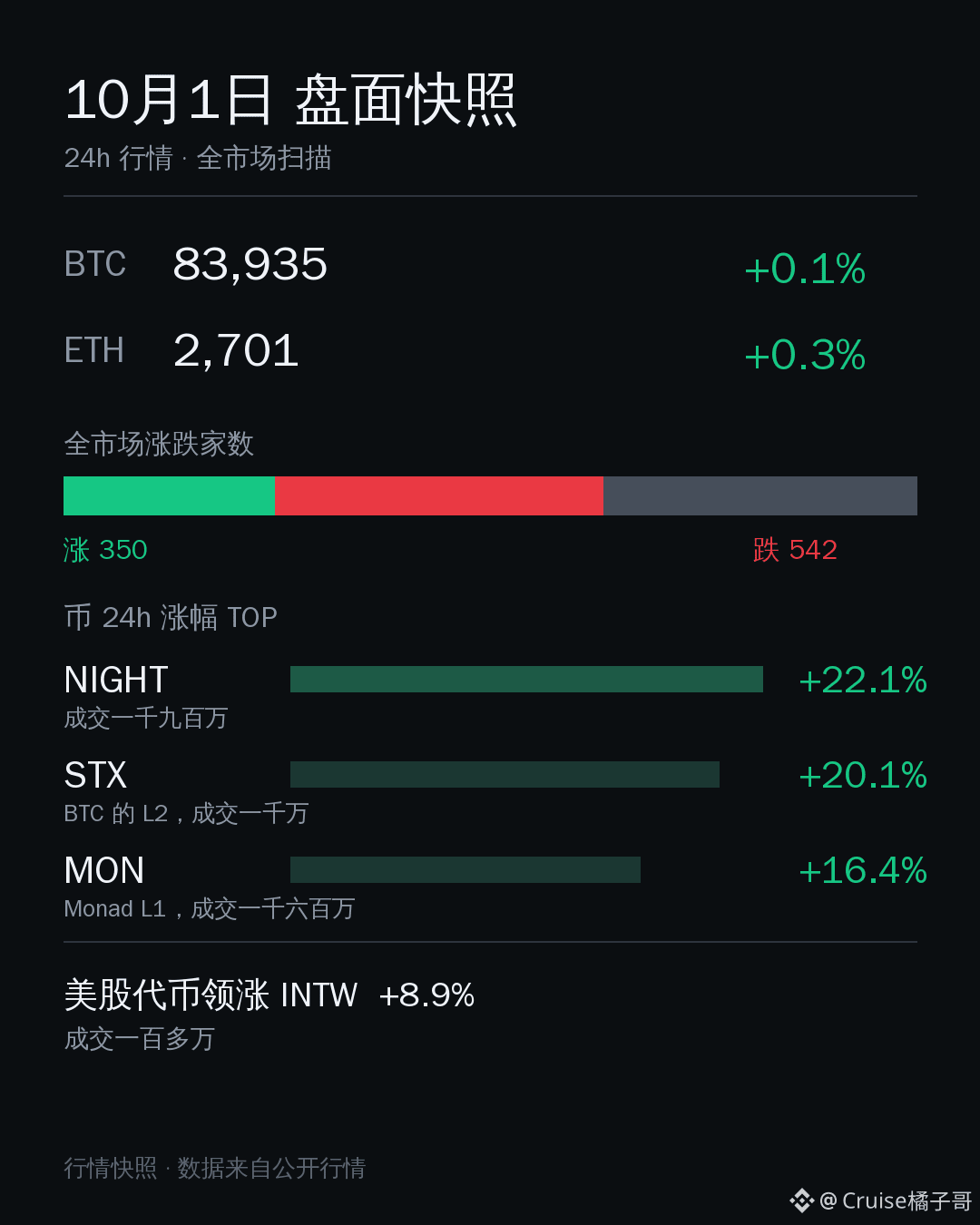
Monad 的 token MON today is up sixteen percent, with a market cap of 380 million and trading volume of 16 million, and the volume ratio is clearly larger than the past few days.
Monad is an L1 built around parallel EVM. It has long claimed that fees are almost zero. It has received investment from Paradigm and Coinbase Ventures and has been viewed as one of the challengers to Ethereum. This time the rally doesn’t seem to be driven by any new announcements—it's basically just capital looking for a direction. With a hard push that comes with no news, the biggest risk is that after it spikes, there’s nobody left to buy. Last time it was the same setup: the next day was a long upper-wick candle. How far this one can stand depends on how it reacts to that pullback.
Monad 的 token MON today is up sixteen percent, with a market cap of 380 million and trading volume of 16 million, and the volume ratio is clearly larger than the past few days.
Monad is an L1 built around parallel EVM. It has long claimed that fees are almost zero. It has received investment from Paradigm and Coinbase Ventures and has been viewed as one of the challengers to Ethereum. This time the rally doesn’t seem to be driven by any new announcements—it's basically just capital looking for a direction. With a hard push that comes with no news, the biggest risk is that after it spikes, there’s nobody left to buy. Last time it was the same setup: the next day was a long upper-wick candle. How far this one can stand depends on how it reacts to that pullback.
Monad is an L1 built around parallel EVM. It has long claimed that fees are almost zero. It has received investment from Paradigm and Coinbase Ventures and has been viewed as one of the challengers to Ethereum. This time the rally doesn’t seem to be driven by any new announcements—it's basically just capital looking for a direction. With a hard push that comes with no news, the biggest risk is that after it spikes, there’s nobody left to buy. Last time it was the same setup: the next day was a long upper-wick candle. How far this one can stand depends on how it reacts to that pullback.
854
·
--
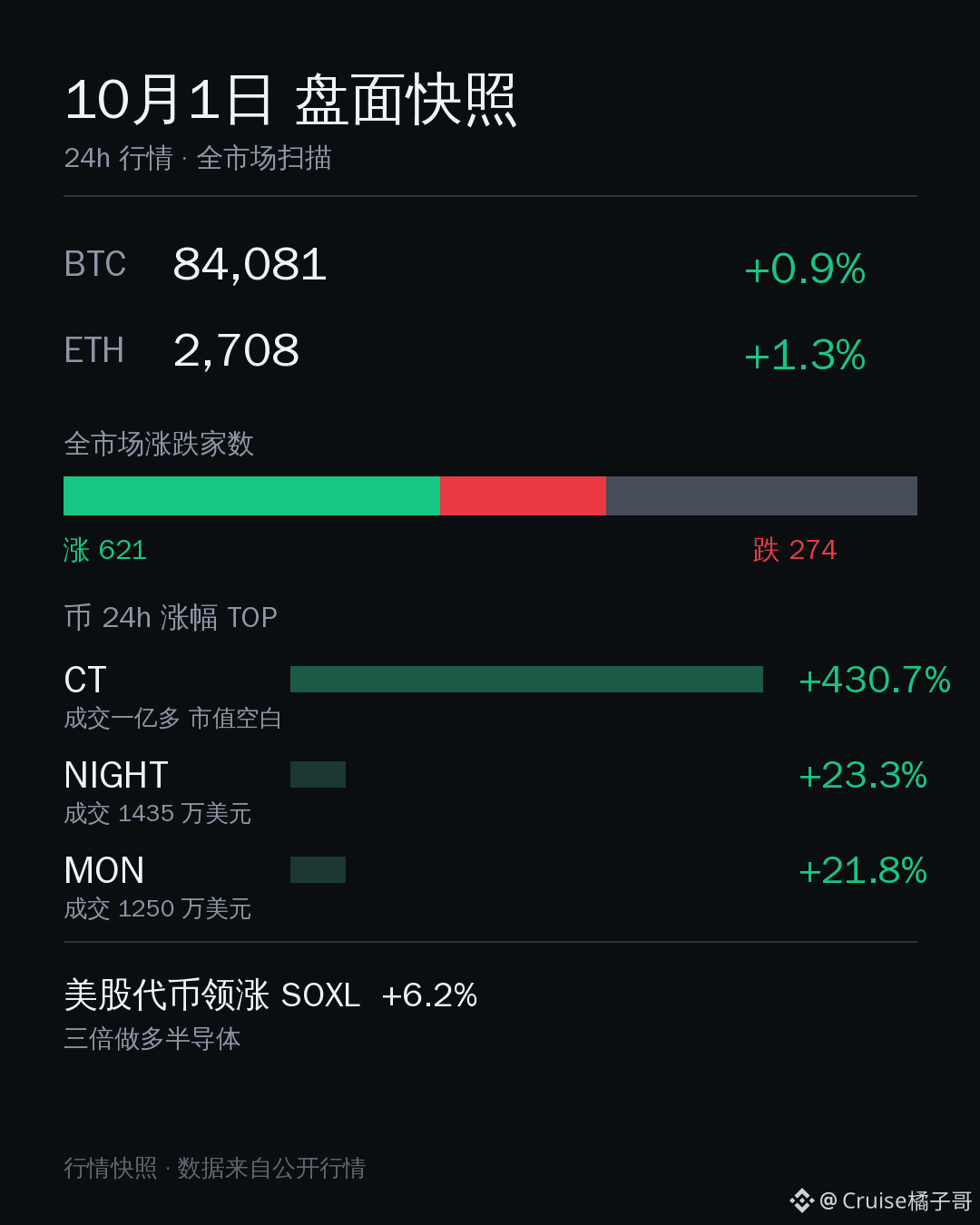
CT 24 hours up 431%; the price topped out near four cents. Trading value is over $100 million. When I saw the number at the top of the list, I thought I must have misread it. But the market cap column is blank, I can’t make out the float shares, and with $100 million in volume alone I can’t calculate turnover. The last time I chased one of these skyrocket moves, the next day at the open it got cut in half. This time I’m watching the thin depth on the order book—really can’t bring myself to place the order. The more violently it surges, the shorter the window for the bag-holders to get in.
CT 24 hours up 431%; the price topped out near four cents. Trading value is over $100 million. When I saw the number at the top of the list, I thought I must have misread it. But the market cap column is blank, I can’t make out the float shares, and with $100 million in volume alone I can’t calculate turnover. The last time I chased one of these skyrocket moves, the next day at the open it got cut in half. This time I’m watching the thin depth on the order book—really can’t bring myself to place the order. The more violently it surges, the shorter the window for the bag-holders to get in.
1
1
986
·
--
Micron’s earnings report blew up: in the fourth fiscal quarter, revenue came in at over $54 billion, up nearly fourfold year over year. Gross margin hit 87%, and guidance for next quarter calls for $60 billion-plus. With storage price hikes and AI data centers rushing to buy, this number—two years ago—would have been unimaginable.
Then as of the market close on September 30, the stock just stopped at a bit over $1,060 and didn’t move. After hours it first surged higher, then got pushed back down. With earnings this strong, the stock wouldn’t move—I watched the order book for a long time but couldn’t figure it out. Was it that funds were laying in positions early, or did they think the guidance for the next quarter’s growth wasn’t aggressive enough?
On the same day, other memory-related stocks didn’t follow suit. SK Hynix and ARM, in fact, both closed lower. Whether this cycle in memory prices can keep climbing will depend on what management says in the earnings call about next year.
Micron’s earnings report blew up: in the fourth fiscal quarter, revenue came in at over $54 billion, up nearly fourfold year over year. Gross margin hit 87%, and guidance for next quarter calls for $60 billion-plus. With storage price hikes and AI data centers rushing to buy, this number—two years ago—would have been unimaginable.
Then as of the market close on September 30, the stock just stopped at a bit over $1,060 and didn’t move. After hours it first surged higher, then got pushed back down. With earnings this strong, the stock wouldn’t move—I watched the order book for a long time but couldn’t figure it out. Was it that funds were laying in positions early, or did they think the guidance for the next quarter’s growth wasn’t aggressive enough?
On the same day, other memory-related stocks didn’t follow suit. SK Hynix and ARM, in fact, both closed lower. Whether this cycle in memory prices can keep climbing will depend on what management says in the earnings call about next year.
Then as of the market close on September 30, the stock just stopped at a bit over $1,060 and didn’t move. After hours it first surged higher, then got pushed back down. With earnings this strong, the stock wouldn’t move—I watched the order book for a long time but couldn’t figure it out. Was it that funds were laying in positions early, or did they think the guidance for the next quarter’s growth wasn’t aggressive enough?
On the same day, other memory-related stocks didn’t follow suit. SK Hynix and ARM, in fact, both closed lower. Whether this cycle in memory prices can keep climbing will depend on what management says in the earnings call about next year.
111
·
--
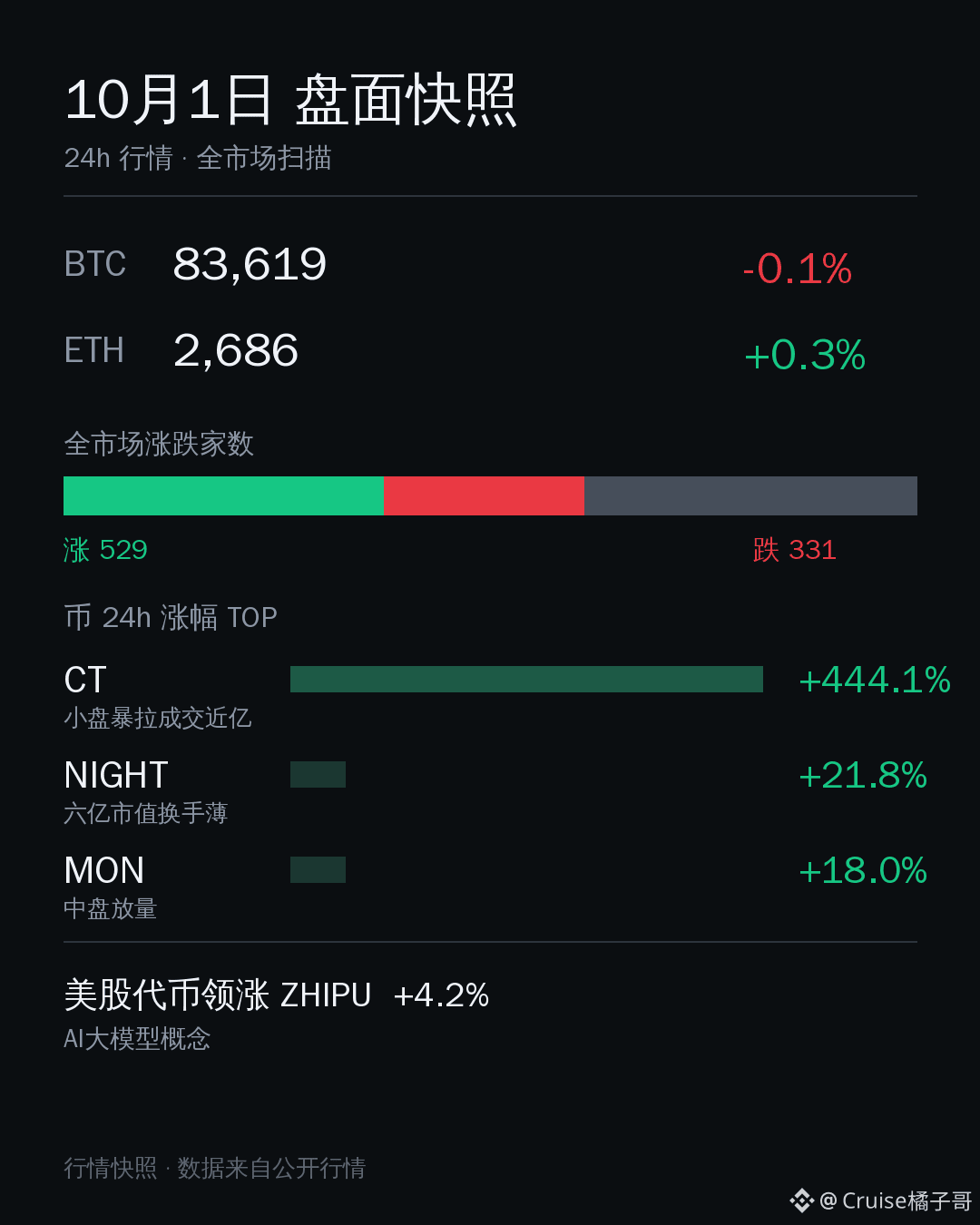
The tickets tied to BTC are usually the most lackluster, but today STX instead surged by seventeen percentage points. In a single day it went from around three mao to three mao seven; the market cap difference is roughly seven hundred million.
Stacks is the chain that runs smart contracts on Bitcoin. When Bitcoin isn’t doing anything, these stocks have very little presence. But today, suddenly, they saw heavy volume and rallied. The order book looks a bit odd—either someone found the news early and dug it up, or it’s capital being moved around. There are quite a number of trapped shares sitting above this level.
The tickets tied to BTC are usually the most lackluster, but today STX instead surged by seventeen percentage points. In a single day it went from around three mao to three mao seven; the market cap difference is roughly seven hundred million.
Stacks is the chain that runs smart contracts on Bitcoin. When Bitcoin isn’t doing anything, these stocks have very little presence. But today, suddenly, they saw heavy volume and rallied. The order book looks a bit odd—either someone found the news early and dug it up, or it’s capital being moved around. There are quite a number of trapped shares sitting above this level.
Stacks is the chain that runs smart contracts on Bitcoin. When Bitcoin isn’t doing anything, these stocks have very little presence. But today, suddenly, they saw heavy volume and rallied. The order book looks a bit odd—either someone found the news early and dug it up, or it’s capital being moved around. There are quite a number of trapped shares sitting above this level.
1
816
·
--
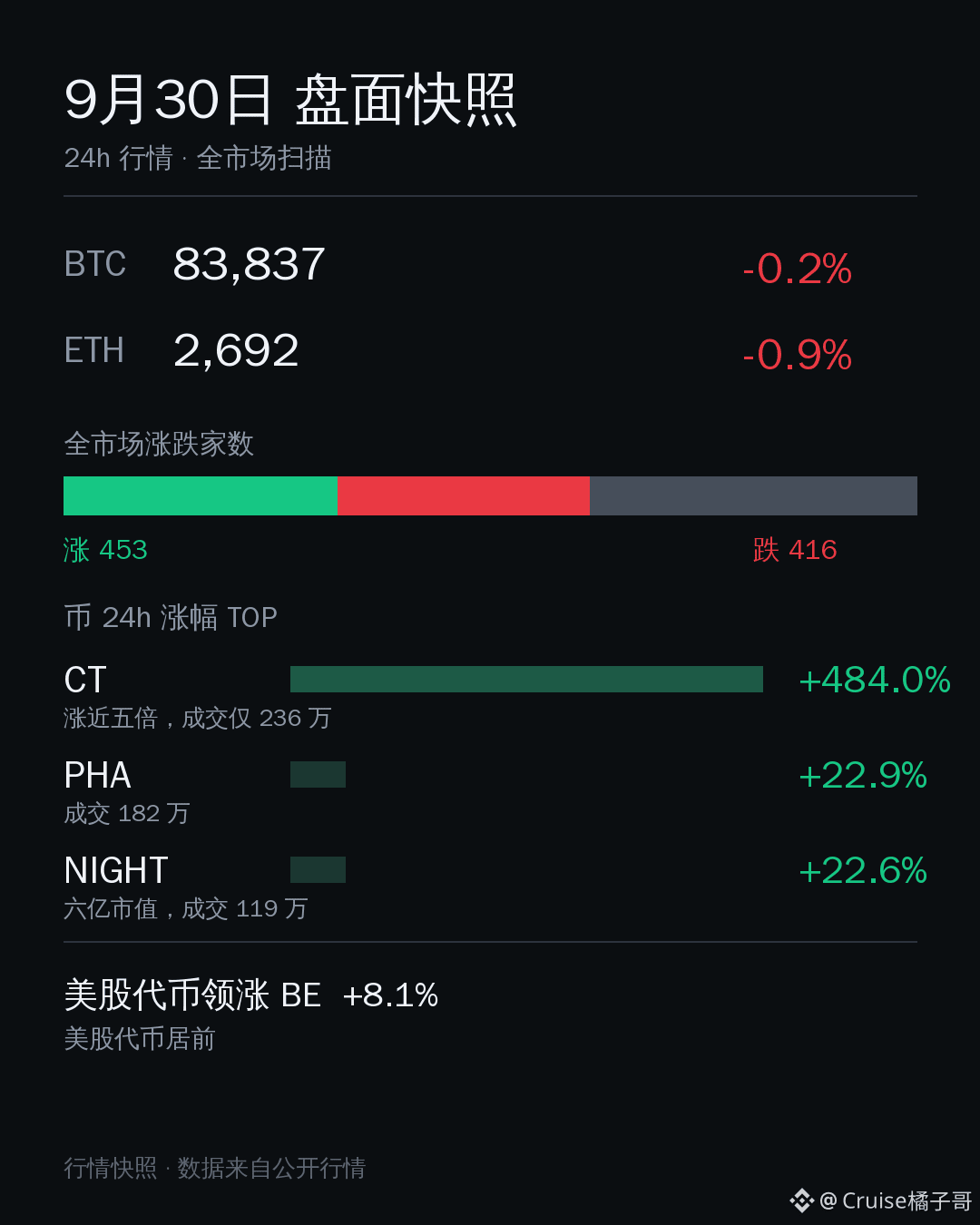
CT 24 hours surged nearly fivefold. The quote is just over four tenths, and it’s number one on the gainers list. Trading volume is over two million USD.
This kind of pump has nothing to do with fundamentals. With a volume of a bit over two million, it can push the price up five times. The order book is so thin you can count it, and just a few orders can move the price. Last time I chased one of these “monster” coins—when it opened I rushed in, and by the close it had slashed in half; I got out there. I still remember the intraday chart to this day.
In five minutes it can throw up a long bullish candle, yet it can also give it all back in an afternoon. The volume from those candles at tomorrow’s open will give the answer.
CT 24 hours surged nearly fivefold. The quote is just over four tenths, and it’s number one on the gainers list. Trading volume is over two million USD.
This kind of pump has nothing to do with fundamentals. With a volume of a bit over two million, it can push the price up five times. The order book is so thin you can count it, and just a few orders can move the price. Last time I chased one of these “monster” coins—when it opened I rushed in, and by the close it had slashed in half; I got out there. I still remember the intraday chart to this day.
In five minutes it can throw up a long bullish candle, yet it can also give it all back in an afternoon. The volume from those candles at tomorrow’s open will give the answer.
This kind of pump has nothing to do with fundamentals. With a volume of a bit over two million, it can push the price up five times. The order book is so thin you can count it, and just a few orders can move the price. Last time I chased one of these “monster” coins—when it opened I rushed in, and by the close it had slashed in half; I got out there. I still remember the intraday chart to this day.
In five minutes it can throw up a long bullish candle, yet it can also give it all back in an afternoon. The volume from those candles at tomorrow’s open will give the answer.
1.2k
·
--
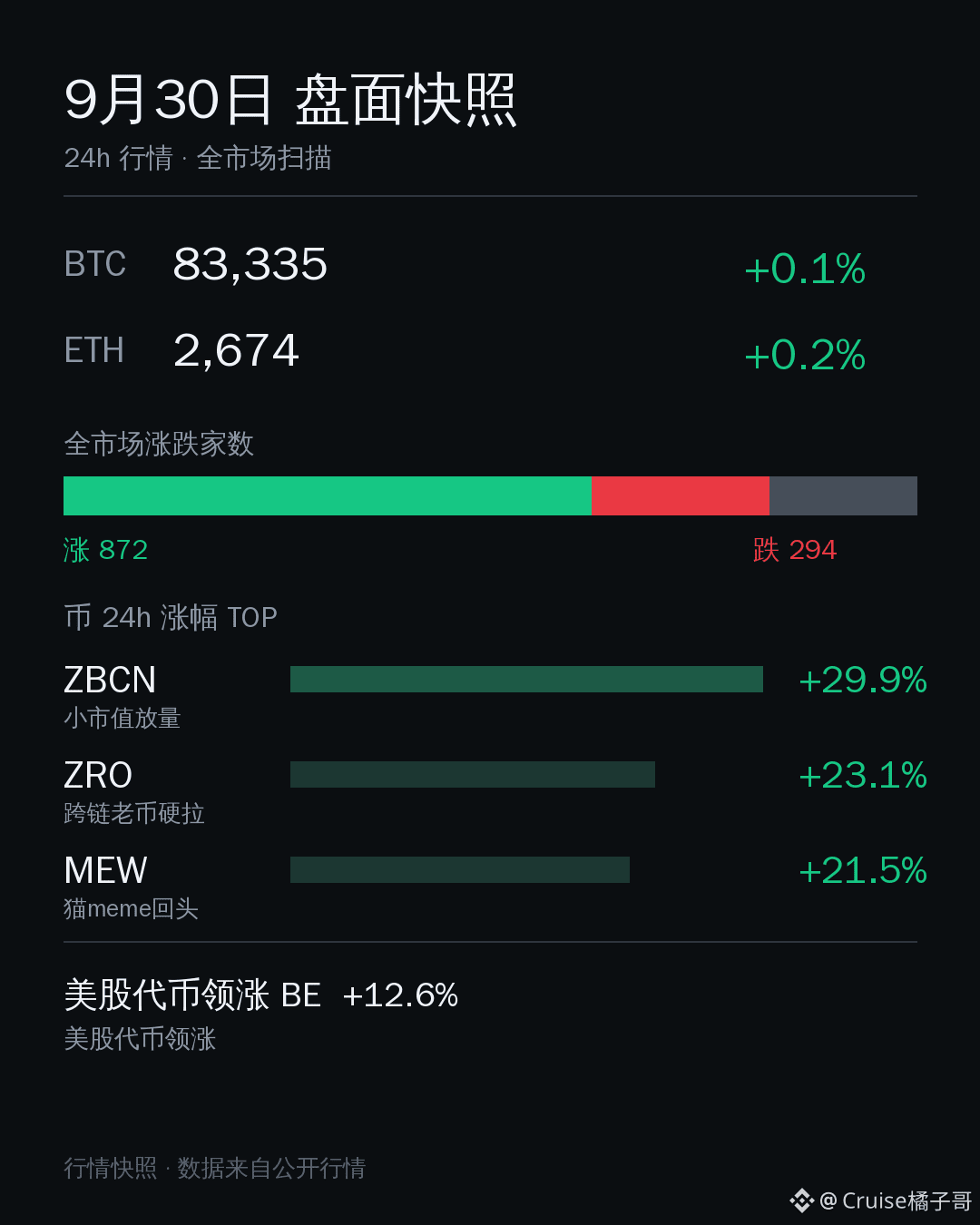
ZRO is caught on to a bit over 80 cents, up 23% in 24 hours, with a market cap of over 600 million. LayerZero is a cross-chain project; old players are familiar with it. Back in the April cross-chain vulnerability incident this year, it even traded blame back and forth with Kelp DAO. This time, there’s been no news at all—just a hard pump.
Trading volume is just over 5 million paired with a market cap of over 600 million; the turnover is so low it’s basically negligible. I can’t make sense of a rise like this out of nowhere. The order book is so thin that flipping two pages might be the bottom.
ZRO is caught on to a bit over 80 cents, up 23% in 24 hours, with a market cap of over 600 million. LayerZero is a cross-chain project; old players are familiar with it. Back in the April cross-chain vulnerability incident this year, it even traded blame back and forth with Kelp DAO. This time, there’s been no news at all—just a hard pump.
Trading volume is just over 5 million paired with a market cap of over 600 million; the turnover is so low it’s basically negligible. I can’t make sense of a rise like this out of nowhere. The order book is so thin that flipping two pages might be the bottom.
Trading volume is just over 5 million paired with a market cap of over 600 million; the turnover is so low it’s basically negligible. I can’t make sense of a rise like this out of nowhere. The order book is so thin that flipping two pages might be the bottom.
1
433
Log in to explore more content
Join global crypto users on Binance Square
⚡️ Get latest and useful information about crypto.
💬 Trusted by the world’s largest crypto exchange.
👍 Discover real insights from verified creators.
Email / Phone number
Trending Topics
BNBSurpasses$790
11,239 views
89 Discussing
$BNB strategic long plan -> FOCUS NOW
BNB has created 2 strong lows after taking out internal liquidity
I'm expecting a move towards swing high $815-$830 and looking for a long on a retest of the green box
#BNBSurpasses$790 #bnb
Ghost Writer
·4 Likes
·5.5k views
ZamaRises15.99%ToIntradayHigh$0.09
6,011 views
75 Discussing
BitcoinSpotETFsDraw$6.34BInflowsInQ3
3,805 views
61 Discussing