
Wellington09
5.7k Posts

Wellington09
Report
Block User
Quem pode me ajudar com informações verdadeiras eu agradeço
Open Trade

BTTC Holder
Frequent Trader
3.2 Years
1.9K+ Following
616 Followers
7.1K+ Liked
Posts
Portfolio
All
Quotes
Videos
·
--
United States fanboy$BTTC This passionate defense of life in the United States—often exaggerated—usually blends real economic factors with very strong psychological and cultural issues.
The main reasons behind this behavior include:
The purchasing-power shock (consumer goods): For people coming from Brazil, where electronics, cars, brand-name clothing, and tools are heavily taxed and cost several minimum wages, the ability to buy these things after working just a few weeks in the U.S. has an immediate impact. Many people confuse "easy access to consumer goods" with "absolute quality of life."
United States fanboy
$BTTC This passionate defense of life in the United States—often exaggerated—usually blends real economic factors with very strong psychological and cultural issues.
The main reasons behind this behavior include:
The purchasing-power shock (consumer goods): For people coming from Brazil, where electronics, cars, brand-name clothing, and tools are heavily taxed and cost several minimum wages, the ability to buy these things after working just a few weeks in the U.S. has an immediate impact. Many people confuse "easy access to consumer goods" with "absolute quality of life."
68
·
--
Holding $BTTC 166.4 USDT
$BTTC Extreme Fear continues in the market 🍒
BTC is still trading locally in the $64–65.5K range, but today we’re expecting volatility around Nvidia’s earnings report (after the market closes). As usual, crypto will be the first to react.
There’s nothing new to add about the market overall: things are up in the air, and at any moment we could break in either direction.
And aside from crypto, I think we all see what’s happening in the world every day—and it can really make you lose your mind.
So just keep doing what you’re good at. The main thing is to be patient—that’s part of the job too. 🤔
1
252
·
--
Holding $BTTC 166.4 USDT
$BTTC Blockstream Names Falcon-1024 the Best Quantum-Resistant Signature for Bitcoin
Blockstream has studied ways to protect Bitcoin from quantum computers and identified the Falcon-1024 algorithm as the most promising option for future network upgrades. Quantum-resistant signatures are a way to protect Bitcoin addresses from potential attacks by powerful quantum machines, which could theoretically break current cryptography.
The source does not specify a timeline or details for a possible implementation—the project is still at the research stage.
Source
Trade on Binance
1
242
·
--
Holding $BTTC 161.1 USDT
$BTTC DTCC and Barclays call tokenization a tool for unlocking “frozen” collateral
At the Solana Breakpoint conference, executives from DTCC and Barclays said that the main value of asset tokenization is not simply converting securities into digital form, but the ability to put collateral to work that is currently sitting idle in the system.
Both representatives acknowledged that mass adoption is still at an early stage, but the pace is accelerating. The fact that the largest U.S. clearinghouse and one of the top banks are discussing this on a Solana platform is itself a signal of the direction things are moving.
Source
Trade on Binance
1
257
·
--
Bullish
Holding $BTTC 166.3 USDT
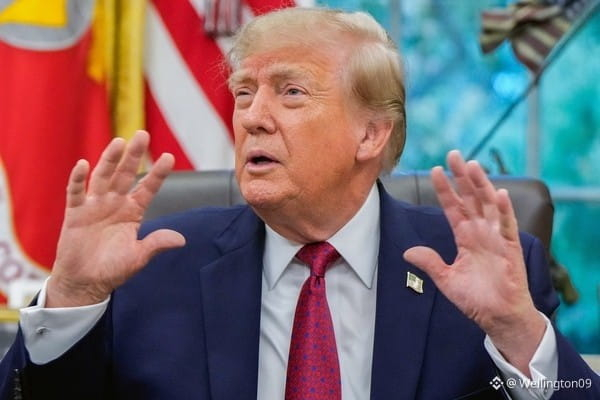
$BTTC Don't underestimate the creativity of people who need to meet quarterly profit targets, but technically, this would tie the business's own logic in knots.
Advertisers pay a lot precisely so you’ll see their product, not so you’ll quickly click on a “toll ad” just to get away from another one. If Google created a “5-second ad to skip a 30-second ad,” the second advertiser would complain that nobody was making it to their ad anymore, and the first would realize that viewers were just angrily clicking the screen without paying attention to anything.
In practice, the route they’ve already chosen to make more money without breaking the system is different: cram two or three ads in a row before the video, make you wait longer before you can hit “skip,” and, of course, push YouTube Premium as the only way out — basically creating the problem to sell the solution.
For now, the “ad inside an ad” is just a meme, because if it became reality, people would abandon the platform for good. But if a “Watch a quick survey to skip the next 4 commercials” ever shows up, then the advertising apocalypse will truly have arrived.
#CryptoSelloffTriggersMultipleWhaleLiquidations $USDC
{spot}(USDCUSDT)
$BTTC Don't underestimate the creativity of people who need to meet quarterly profit targets, but technically, this would tie the business's own logic in knots.
Advertisers pay a lot precisely so you’ll see their product, not so you’ll quickly click on a “toll ad” just to get away from another one. If Google created a “5-second ad to skip a 30-second ad,” the second advertiser would complain that nobody was making it to their ad anymore, and the first would realize that viewers were just angrily clicking the screen without paying attention to anything.
In practice, the route they’ve already chosen to make more money without breaking the system is different: cram two or three ads in a row before the video, make you wait longer before you can hit “skip,” and, of course, push YouTube Premium as the only way out — basically creating the problem to sell the solution.
For now, the “ad inside an ad” is just a meme, because if it became reality, people would abandon the platform for good. But if a “Watch a quick survey to skip the next 4 commercials” ever shows up, then the advertising apocalypse will truly have arrived.
#CryptoSelloffTriggersMultipleWhaleLiquidations $USDC
1
492
·
--
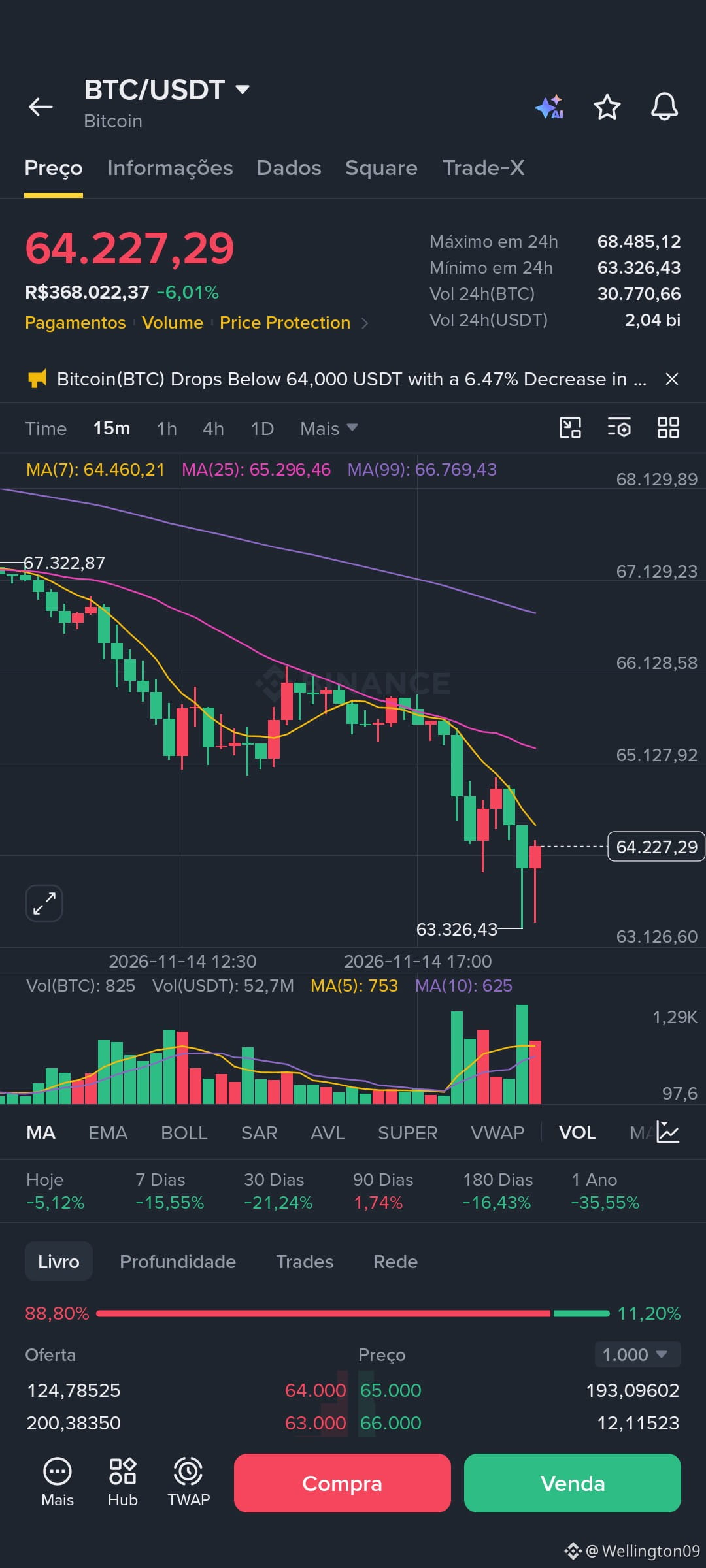
$BNB look at the Bitcoin situation: 80% are selling. Is this normal? I'm using 1000 Bitcoin
$BNB look at the Bitcoin situation: 80% are selling. Is this normal? I'm using 1000 Bitcoin
1
167
·
--
$BTTC Bitcoin lost 14% in a week and is trading around $65,000
Over the past week, BTC fell approximately 13–14%, dropping to $65,600 on Saturday. The weekend brought additional pressure—the price broke below Friday’s low.
Source
Trade on Binance
$BTTC Bitcoin lost 14% in a week and is trading around $65,000
Over the past week, BTC fell approximately 13–14%, dropping to $65,600 on Saturday. The weekend brought additional pressure—the price broke below Friday’s low.
Source
Trade on Binance
Over the past week, BTC fell approximately 13–14%, dropping to $65,600 on Saturday. The weekend brought additional pressure—the price broke below Friday’s low.
Source
Trade on Binance
62
·
--
Holding $BTTC 166.3 USDT
$BTTC Coinbase: Why Bitcoin fell below $67,000
Bitcoin fell to $66,456, its lowest level in some time, and lost about 12% over the week. The drop triggered $663.83 million in liquidations, of which $533.56 million came from long positions.
Coinbase Institutional explained the reason for the decline, but the source does not provide enough specific details about its position to summarize.
Source
#WhoWillSucceedJensenHuangatNvidia?
Trade on Binance
1
120
·
--
Bullish
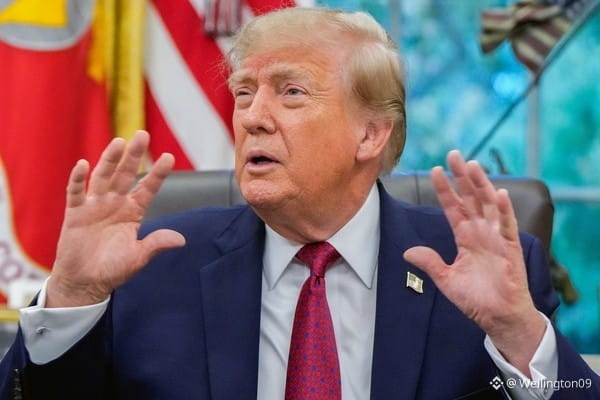
$BTTC Yes, a significant portion of the U.S. population buys and holds cryptocurrencies, but behavior in the U.S. has some very specific characteristics compared with emerging markets like Brazil.
The latest data shows how the market works there:
Percentage of the population: Recent surveys (such as Ipsos polls and market estimates for 2026) indicate that around 22% of adults in the U.S.—equivalent to approximately 67 million people—have bought, used, or hold some kind of crypto asset. However, only around 13% to 14% actively use crypto or regularly hold positions.
Focus on investment, not payments: Unlike in Brazil or countries with weak currencies, the average American is unlikely to use crypto or stablecoins (such as USDC/USDT) for everyday purchases or to protect against inflation of the local currency, since the dollar is already strong and credit cards dominate payments. Purchases there are almost entirely focused on speculation and long-term stores of value.
Entry through ETFs and traditional brokerages: A large share of financial volume in the U.S. comes from institutional investors (funds, banks, companies) and individuals buying indirectly through Bitcoin and Ethereum ETFs on the stock market (via brokerages such as Fidelity, BlackRock, or Robinhood), without needing to open an account with traditional crypto exchanges or deal with wallets.
Buyer profile: Direct adoption is heavily concentrated among young men (between 18 and 44) and people with higher incomes or greater familiarity with traditional financial markets.
Interestingly, in the global grassroots adoption rankings (which measure actual use by ordinary people, not just Wall Street's billions in trading volume), the U.S. usually ranks behind countries like Brazil, where the use of stablecoins and direct transfers has grown significantly, driven by fintechs and ease of payment $USDC
#WhoWillSucceedJensenHuangatNvidia? $
2
316
·
--
$BTTC Bitcoin fails to hold above $70,000 — price pulls back to $68,700
BTC hit a new intraday low of $67,568 before recovering slightly to $68,730. Earlier, the price reached $71,514 but failed to hold onto its gains. Sellers continue to pressure the market, and the technical structure has weakened noticeably.
Source
Trade on Binance
BTC hit a new intraday low of $67,568 before recovering slightly to $68,730. Earlier, the price reached $71,514 but failed to hold onto its gains. Sellers continue to pressure the market, and the technical structure has weakened noticeably.
Source
Trade on Binance
86
·
--
$BTTC Bitcoin fails to hold above $70,000 — price pulls back to $68,700
BTC hit a new intraday low of $67,568 before recovering slightly to $68,730. Earlier, the price reached $71,514, but the rally failed to hold. Sellers continue to weigh on the market, and the technical structure has weakened noticeably.
Source
Trade on Binance
BTC hit a new intraday low of $67,568 before recovering slightly to $68,730. Earlier, the price reached $71,514, but the rally failed to hold. Sellers continue to weigh on the market, and the technical structure has weakened noticeably.
Source
Trade on Binance
1
317
·
--
Holding $BTTC 171.5 USDT
$BTTC Do patriots really want to buy it just to question Anvisa?
I've never heard of this brand. It's probably dangerous to the health of your hair and skin.
Don't try to act like you're special. #USPPIMissMayEaseBTCPressure $USDC
$BTTC Do patriots really want to buy it just to question Anvisa?
I've never heard of this brand. It's probably dangerous to the health of your hair and skin.
Don't try to act like you're special. #USPPIMissMayEaseBTCPressure $USDC
I've never heard of this brand. It's probably dangerous to the health of your hair and skin.
Don't try to act like you're special. #USPPIMissMayEaseBTCPressure $USDC

1
1
2.2k
·
--
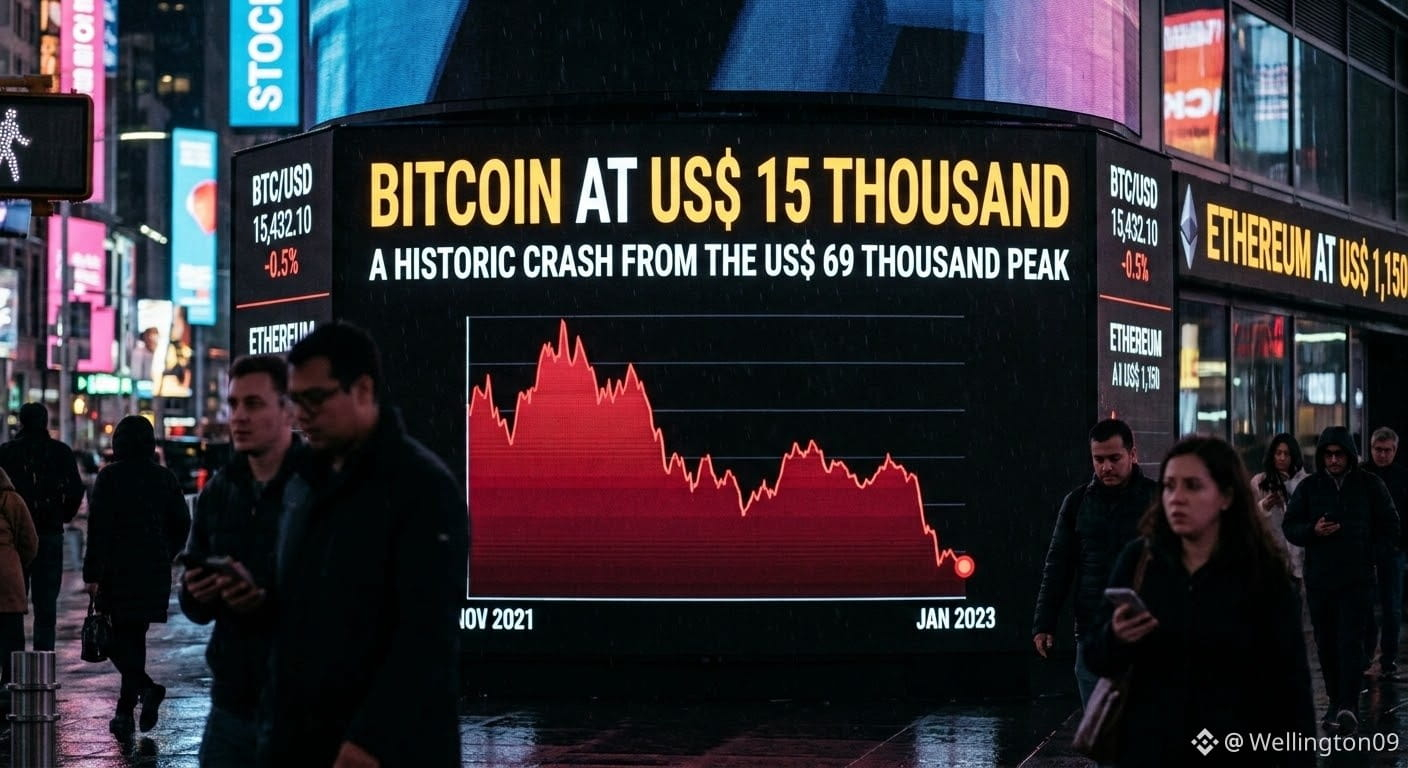
$BTTC Are you thinking this drop is just another correction?
The big companies are all leaving because this market is no longer profitable.
Your choices will decide your future, and BTC won’t guarantee this so-called financial freedom—especially since the most influential people are against ordinary people being able to have their own opinions.
For those looking for stability, BTT is the future.
2
1.4k
·
--
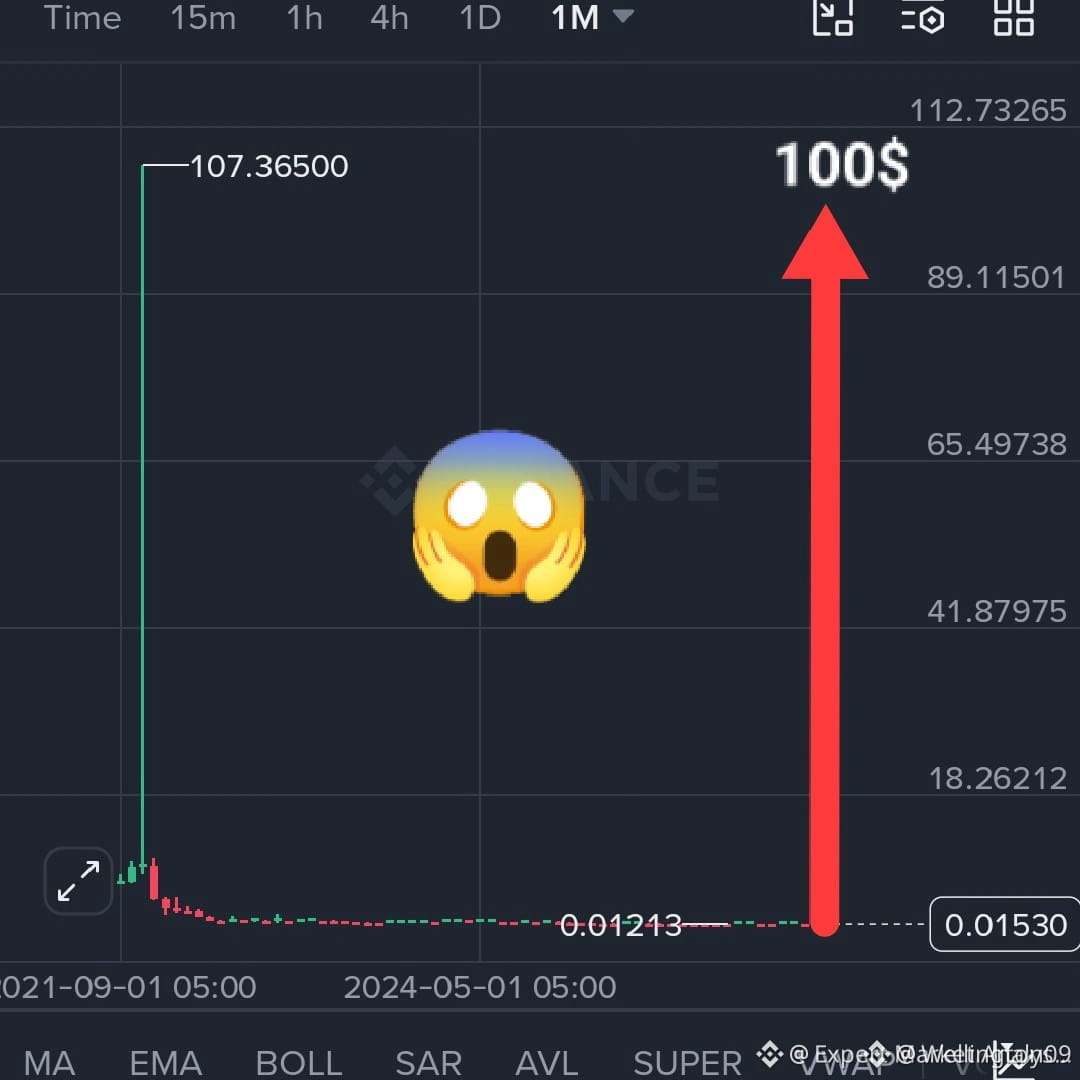
$BTTC Have you ever stopped to think that you can actually reach this amount, and you spend your money on s
$BTTC Have you ever stopped to think that you can actually reach this amount, and you spend your money on s
2
305
·
--
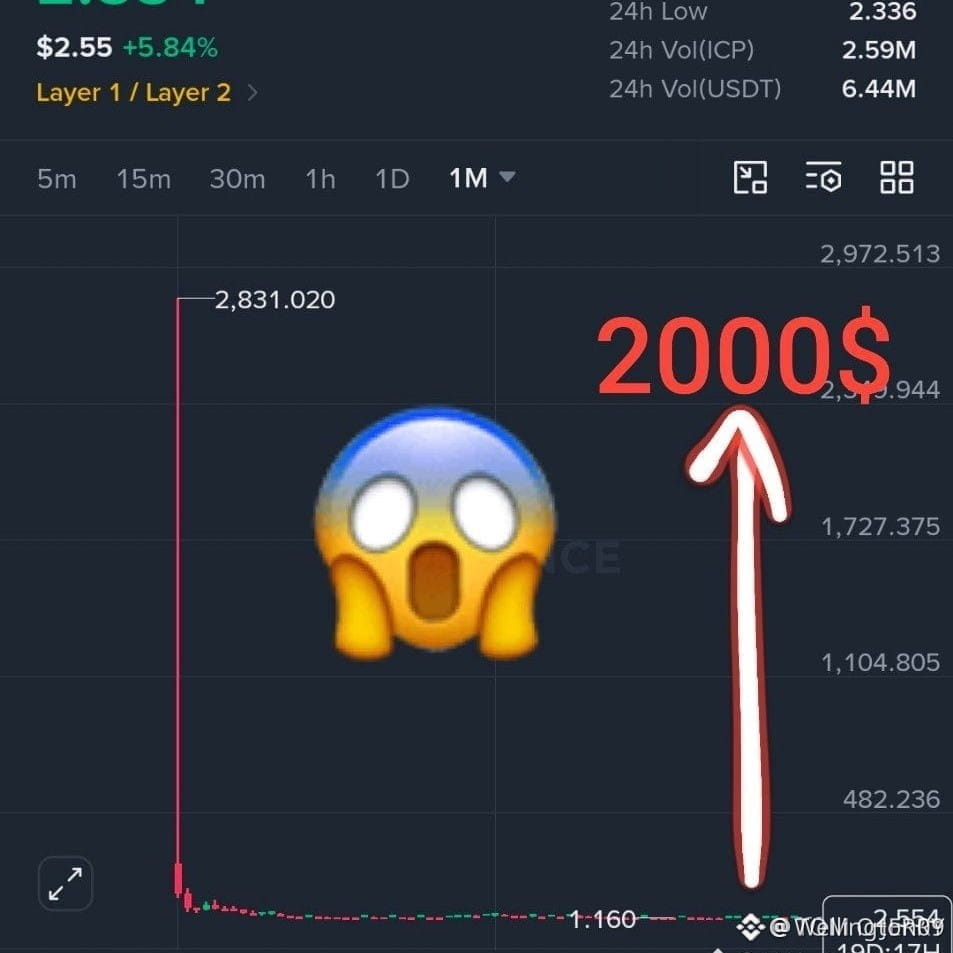
$SHELL Imagine waking up one morning and seeing $ICP
ICP
2.557
+0.39%
trading for an incredible $2,000! 🚀🌕
Would you be shocked, excited, or celebrate all day? 🤯🔥
Could this dream become reality?
$SHELL Imagine waking up one morning and seeing $ICP
ICP
2.557
+0.39%
trading for an incredible $2,000! 🚀🌕
Would you be shocked, excited, or celebrate all day? 🤯🔥
Could this dream become reality?
ICP
2.557
+0.39%
trading for an incredible $2,000! 🚀🌕
Would you be shocked, excited, or celebrate all day? 🤯🔥
Could this dream become reality?
77
·
--
Holding $BTTC 171.5 USDT
$BTTC ⭕️ The U.S. federal government defended KALSHI against Arkansas ⚖️
The U.S. Department of Justice and CFTC filed a federal lawsuit against the state of Arkansas to prevent it from shutting down KALSHI’s prediction markets. The lawsuit argues that federal laws take precedence over state regulations and cover the CFTC’s exclusive jurisdiction.
🔸 Key points:
• 🏛️ Arkansas accused KALSHI of illegal gambling and deceiving consumers, and is seeking penalties of up to $10,000 per violation
• 🚨 Federal officials warned that cumulative penalties could reach hundreds of millions of dollars
• ⚖️ Arkansas is the 11th state the CFTC has faced in its efforts to establish its exclusive jurisdiction…
📊 Source: News.Bitcoin.com | https://news.bitcoin.com/regulation-and-legal/doj-cftc-sue-arkansas-block-kalshi-crackdown-prediction-market-battle/
@baxcryptonews
174
·
--
Bullish
$BTTC While here in Brazil, southerners claim that taxes are used to support people in the Northeast, in the United States people are complaining that they are paying taxes to support Israel (for those who know absolutely nothing about religion, it is one of the most evangelical countries in the world, and a believer is not considered evangelical if they do not follow Martin Luther's teachings)
correct me if I'm wrong #WhatWillDriveCryptoandStocks’NextRebound? $USDC
{spot}(USDCUSDT)
$BTTC While here in Brazil, southerners claim that taxes are used to support people in the Northeast, in the United States people are complaining that they are paying taxes to support Israel (for those who know absolutely nothing about religion, it is one of the most evangelical countries in the world, and a believer is not considered evangelical if they do not follow Martin Luther's teachings)
correct me if I'm wrong #WhatWillDriveCryptoandStocks’NextRebound? $USDC
correct me if I'm wrong #WhatWillDriveCryptoandStocks’NextRebound? $USDC
14
4
5.2k
·
--
Bullish
Holding $BTTC 171.5 USDT
$BTTC The main Brazilian law criminalizing animal cruelty has been in force since March 30, 1998. This is the Environmental Crimes Law (Law No. 9,605/1998), enacted on February 12 of that year and which came into force 45 days after its publication (specifically, Article 32).
However, Brazilian legislation on this issue has seen important milestones both before and after that date:
Timeline of the main laws
July 10, 1934 (Decree No. 24,645): This was the first significant regulation in Brazil to define animal cruelty and place animals under the protection of the State. At the time, it provided only for a criminal misdemeanor (a fine and a short period of simple imprisonment).
March 30, 1998 (Law No. 9,605/1998 – Article 32): It made abusing, mistreating, injuring, or mutilating animals (wild, domestic, or domesticated, native or exotic) an environmental crime, originally punishable by 3 months to 1 year of detention, as well as a fine.
September 29, 2020 (Law No. 14,064/2020 – Sansão Law): It amended the 1998 law to toughen the punishment specifically for crimes committed against dogs and cats. The penalty became 2 to 5 years of imprisonment, a fine, and a ban on owning animals (which prevents bail at the police station and allows for pretrial detention).
To sum up the project 🏗️
Brazil has just spent 200,000 reais on a law that was already in force. It’s ironic that at a time like this there’s no dispute—everyone’s friends; Brazil is united in screwing us over.
Waiting for the next one, which would be a raise for politicians themselves, reducing the work schedule from 4 days on to 2, and increasing vacation from 6 months to 9 months.
#WhatWillDriveCryptoandStocks’NextRebound? $USDC
{spot}(USDCUSDT)
$BTTC The main Brazilian law criminalizing animal cruelty has been in force since March 30, 1998. This is the Environmental Crimes Law (Law No. 9,605/1998), enacted on February 12 of that year and which came into force 45 days after its publication (specifically, Article 32).
However, Brazilian legislation on this issue has seen important milestones both before and after that date:
Timeline of the main laws
July 10, 1934 (Decree No. 24,645): This was the first significant regulation in Brazil to define animal cruelty and place animals under the protection of the State. At the time, it provided only for a criminal misdemeanor (a fine and a short period of simple imprisonment).
March 30, 1998 (Law No. 9,605/1998 – Article 32): It made abusing, mistreating, injuring, or mutilating animals (wild, domestic, or domesticated, native or exotic) an environmental crime, originally punishable by 3 months to 1 year of detention, as well as a fine.
September 29, 2020 (Law No. 14,064/2020 – Sansão Law): It amended the 1998 law to toughen the punishment specifically for crimes committed against dogs and cats. The penalty became 2 to 5 years of imprisonment, a fine, and a ban on owning animals (which prevents bail at the police station and allows for pretrial detention).
To sum up the project 🏗️
Brazil has just spent 200,000 reais on a law that was already in force. It’s ironic that at a time like this there’s no dispute—everyone’s friends; Brazil is united in screwing us over.
Waiting for the next one, which would be a raise for politicians themselves, reducing the work schedule from 4 days on to 2, and increasing vacation from 6 months to 9 months.
#WhatWillDriveCryptoandStocks’NextRebound? $USDC
177
·
--
Is This a Joke or Are Brazilians Ignorant?$BTTC The United Nations (UN) expelled Iran from the Commission on the Status of Women (CSW)—the institution’s leading global body dedicated to gender equality and women’s empowerment—through a resolution approved by the Economic and Social Council (ECOSOC).
Key points of the decision
What happened: The UN Economic and Social Council (ECOSOC) approved Iran’s immediate removal from the Commission on the Status of Women for the remainder of its term (which would have run from 2022 to 2026).
Is This a Joke or Are Brazilians Ignorant?
$BTTC The United Nations (UN) expelled Iran from the Commission on the Status of Women (CSW)—the institution’s leading global body dedicated to gender equality and women’s empowerment—through a resolution approved by the Economic and Social Council (ECOSOC).
Key points of the decision
What happened: The UN Economic and Social Council (ECOSOC) approved Iran’s immediate removal from the Commission on the Status of Women for the remainder of its term (which would have run from 2022 to 2026).
Key points of the decision
What happened: The UN Economic and Social Council (ECOSOC) approved Iran’s immediate removal from the Commission on the Status of Women for the remainder of its term (which would have run from 2022 to 2026).
2
1
1.5k
Log in to explore more content
Join global crypto users on Binance Square
⚡️ Get latest and useful information about crypto.
💬 Trusted by the world’s largest crypto exchange.
👍 Discover real insights from verified creators.
Email / Phone number
Trending Topics
NvidiaBeatsEstimatesWith$130BQ4Outlook
9,717 views
144 Discussing
Nvidia Beats With $115.8 Billion in Revenue, Guides to $130 Billion and Adds $150 Billion Buyback
Binance News
·43 Likes
·39.8k views
AnthropicIPOPriceCouldExceed$80
15,742 views
131 Discussing
CanNvidia’sDataCenterGrowthContinue?
47,350 views
650 Discussing