

Mek
974 Posts

Mek
Report
Block User
Trader Institutional & Analyst since 2018 · Binance KOL & BNBChain Martian. Building at Web3 and Sovereign Infrastructure.
High-Frequency Trader
5.4 Years
45 Following
2.8K+ Followers
1.8K+ Liked
Posts
All
Quotes
Videos
Live
·
--
🎙️ Live Trading Institucional - Crypto, Stocks & Macroeconomia

End
01 h 10 m 49 s
118
1
0
·
--
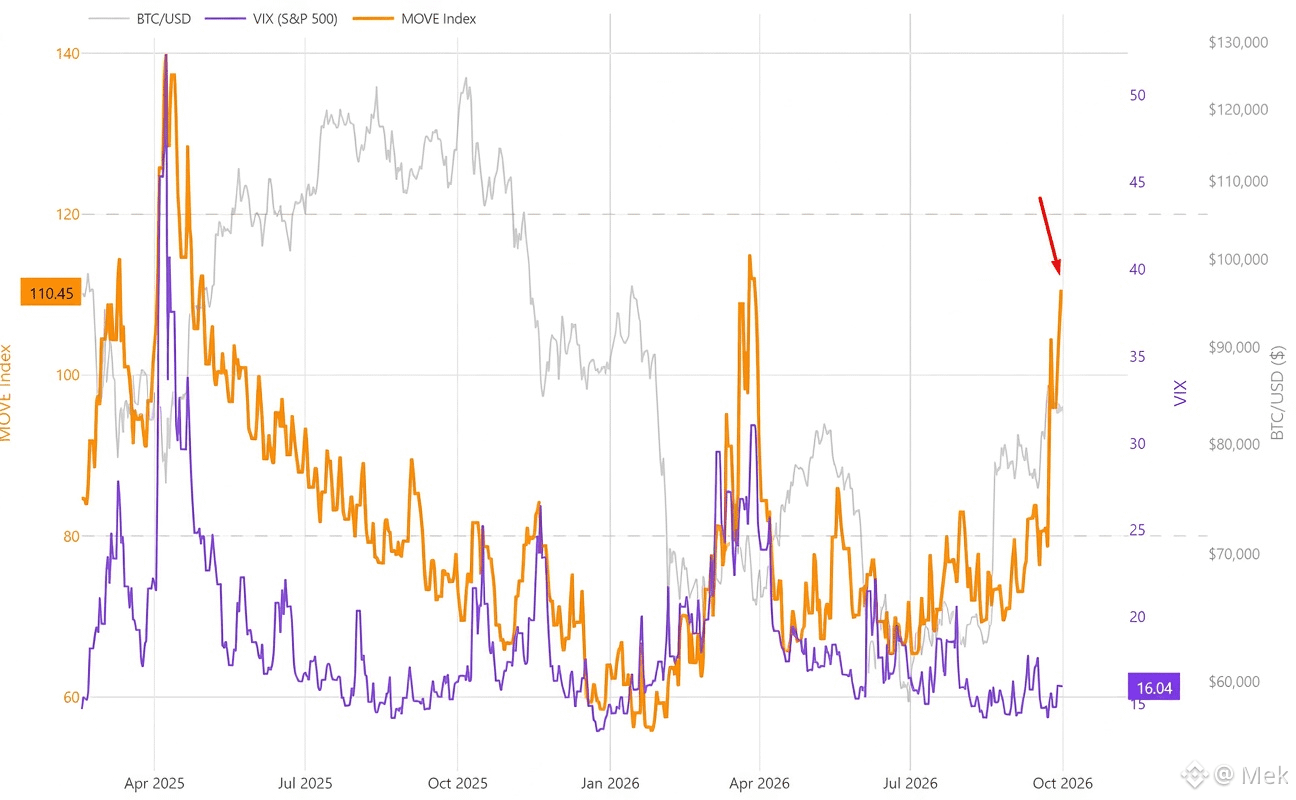
MOVE is shouting VOLATILITY. 🔴
Highest level since April 2026 and already close to the range that the index’s creator treats as a loss of control in the bond market.
The VIX held steady at 16.04.
The divergence I pointed out last week didn’t correct. It increased.
And now it adds up with the widening credit spread and the SPX skew hitting the year’s low.
Something is cooking...
MOVE is shouting VOLATILITY. 🔴
Highest level since April 2026 and already close to the range that the index’s creator treats as a loss of control in the bond market.
The VIX held steady at 16.04.
The divergence I pointed out last week didn’t correct. It increased.
And now it adds up with the widening credit spread and the SPX skew hitting the year’s low.
Something is cooking...
Highest level since April 2026 and already close to the range that the index’s creator treats as a loss of control in the bond market.
The VIX held steady at 16.04.
The divergence I pointed out last week didn’t correct. It increased.
And now it adds up with the widening credit spread and the SPX skew hitting the year’s low.
Something is cooking...
1
277
·
--
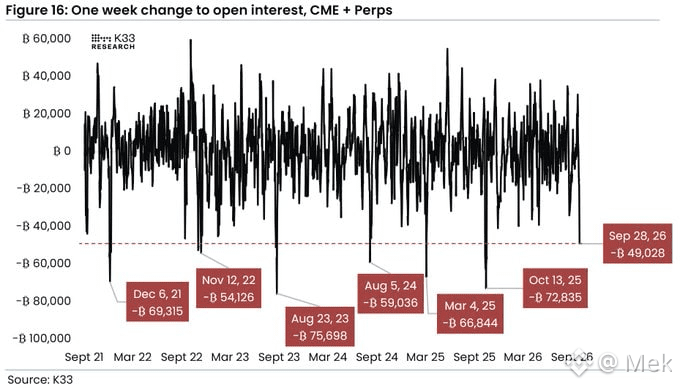
One of the calmest “resets” in leverage on $BTC that I’ve seen.
Bitcoin open interest dropped by 49k BTC in seven days, the biggest decline since October 2025.
And this time, nobody got liquidated.
Leverage is leaving the system in an orderly way, without breaking anything along the way.
One of the calmest “resets” in leverage on $BTC that I’ve seen.
Bitcoin open interest dropped by 49k BTC in seven days, the biggest decline since October 2025.
And this time, nobody got liquidated.
Leverage is leaving the system in an orderly way, without breaking anything along the way.
Bitcoin open interest dropped by 49k BTC in seven days, the biggest decline since October 2025.
And this time, nobody got liquidated.
Leverage is leaving the system in an orderly way, without breaking anything along the way.
1
333
·
--
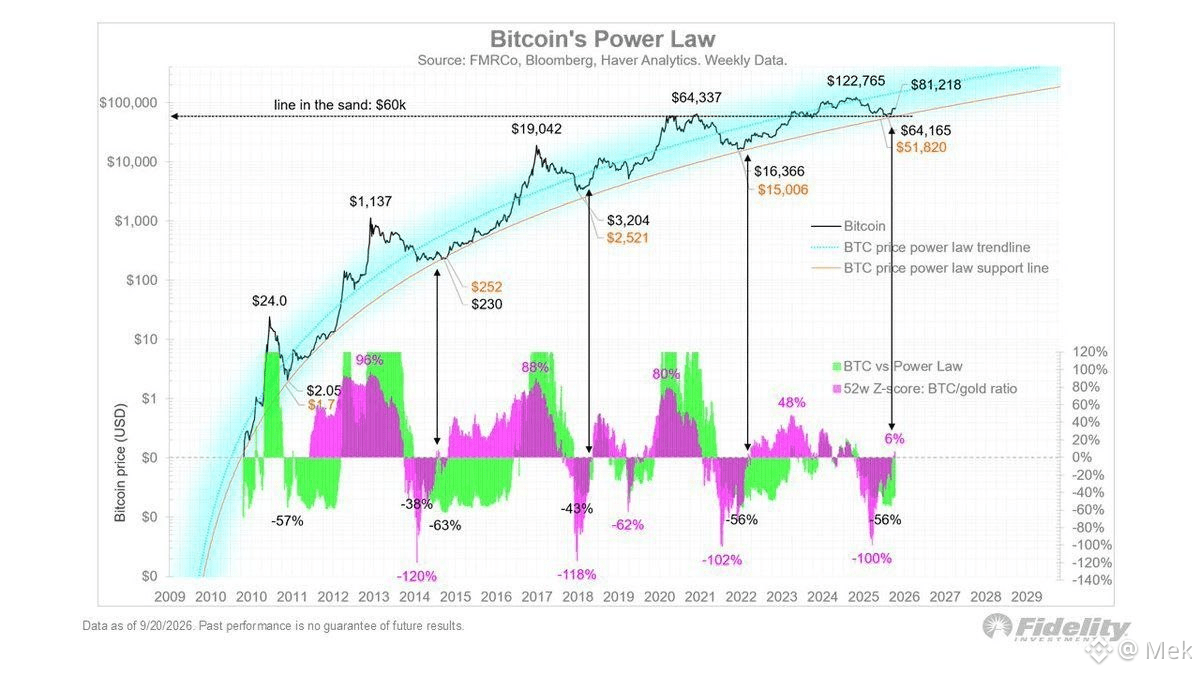
Bitcoin in US$ 83 million is boring. 🔥
Boring is usually the best place to be.
This is the thesis from Fidelity’s recent chart: 2016 was boring, 2019 was boring, mid-2023 was boring.
They all came before big moves.
And the current setup matches everything I’ve been showing here over the past week.
7-day realized volatility at the year’s low. Search Google for bitcoin at 21% of the 2017 peak. SPX skew on the floor. Whales accumulating quietly.
There’s no euphoria, no panic, no one talking about it.
"I’ll wait for confirmation"
"I’ll wait for demand to return"
Said the investor who’s going to wait to buy near the tops and then blame the market as "manipulated".
Bitcoin in US$ 83 million is boring. 🔥
Boring is usually the best place to be.
This is the thesis from Fidelity’s recent chart: 2016 was boring, 2019 was boring, mid-2023 was boring.
They all came before big moves.
And the current setup matches everything I’ve been showing here over the past week.
7-day realized volatility at the year’s low. Search Google for bitcoin at 21% of the 2017 peak. SPX skew on the floor. Whales accumulating quietly.
There’s no euphoria, no panic, no one talking about it.
"I’ll wait for confirmation"
"I’ll wait for demand to return"
Said the investor who’s going to wait to buy near the tops and then blame the market as "manipulated".
Boring is usually the best place to be.
This is the thesis from Fidelity’s recent chart: 2016 was boring, 2019 was boring, mid-2023 was boring.
They all came before big moves.
And the current setup matches everything I’ve been showing here over the past week.
7-day realized volatility at the year’s low. Search Google for bitcoin at 21% of the 2017 peak. SPX skew on the floor. Whales accumulating quietly.
There’s no euphoria, no panic, no one talking about it.
"I’ll wait for confirmation"
"I’ll wait for demand to return"
Said the investor who’s going to wait to buy near the tops and then blame the market as "manipulated".
4
824
·
--
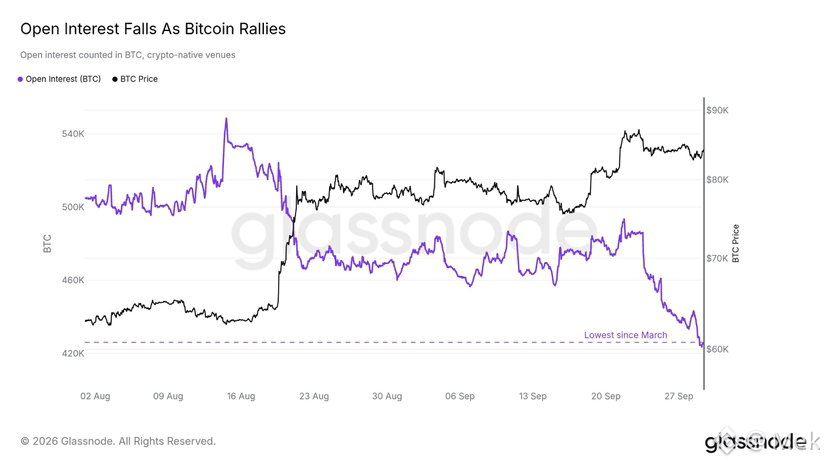
This rise in Bitcoin’s price was NOT just speculation in futures.🚨
The price is up 35% since August’s low.
In the same period, the open interest denominated in BTC fell by almost 20%.
It’s at its lowest level since March.
Highly leveraged trading does the opposite of that. When price rises, open interest rises along with it, because the move is built on a long position in derivatives.
Here, the price rose while leverage was leaving the system.
And this matches what I showed last week: the aggregated spot CVD recorded the biggest day of the month—green across all major exchanges at the same time.
I saw people posting the opposite, saying the rally is “fragile,” that it was only “futures liquidations,” but the data says otherwise.
This rise in Bitcoin’s price was NOT just speculation in futures.🚨
The price is up 35% since August’s low.
In the same period, the open interest denominated in BTC fell by almost 20%.
It’s at its lowest level since March.
Highly leveraged trading does the opposite of that. When price rises, open interest rises along with it, because the move is built on a long position in derivatives.
Here, the price rose while leverage was leaving the system.
And this matches what I showed last week: the aggregated spot CVD recorded the biggest day of the month—green across all major exchanges at the same time.
I saw people posting the opposite, saying the rally is “fragile,” that it was only “futures liquidations,” but the data says otherwise.
The price is up 35% since August’s low.
In the same period, the open interest denominated in BTC fell by almost 20%.
It’s at its lowest level since March.
Highly leveraged trading does the opposite of that. When price rises, open interest rises along with it, because the move is built on a long position in derivatives.
Here, the price rose while leverage was leaving the system.
And this matches what I showed last week: the aggregated spot CVD recorded the biggest day of the month—green across all major exchanges at the same time.
I saw people posting the opposite, saying the rally is “fragile,” that it was only “futures liquidations,” but the data says otherwise.
525
·
--
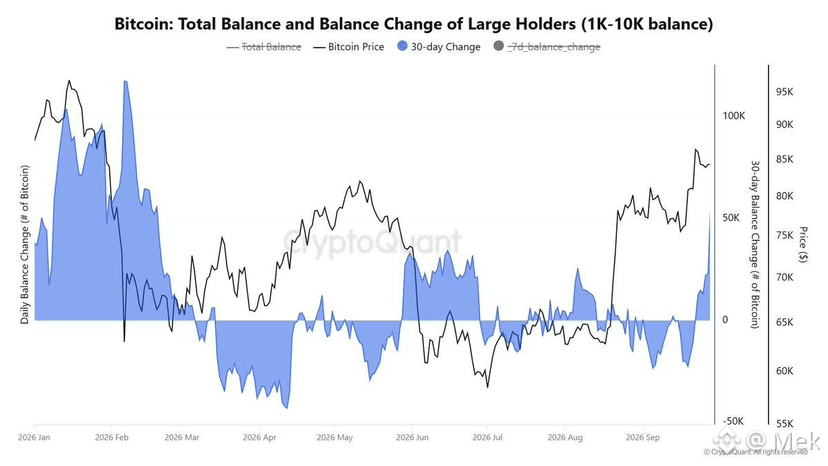
The Bitcoin whales have triggered a new accumulation mode. 🔥
This band has had two major accumulation regimes in 2026.
In both, the buying started and continued during the decline, for weeks.
But the 30-day move has just flipped to over 55 thousand BTCs accumulated in the last few days.
But now the price is at US$ 85 thousand.
What do they know?
The Bitcoin whales have triggered a new accumulation mode. 🔥
This band has had two major accumulation regimes in 2026.
In both, the buying started and continued during the decline, for weeks.
But the 30-day move has just flipped to over 55 thousand BTCs accumulated in the last few days.
But now the price is at US$ 85 thousand.
What do they know?
This band has had two major accumulation regimes in 2026.
In both, the buying started and continued during the decline, for weeks.
But the 30-day move has just flipped to over 55 thousand BTCs accumulated in the last few days.
But now the price is at US$ 85 thousand.
What do they know?
2
7
3.2k
·
--
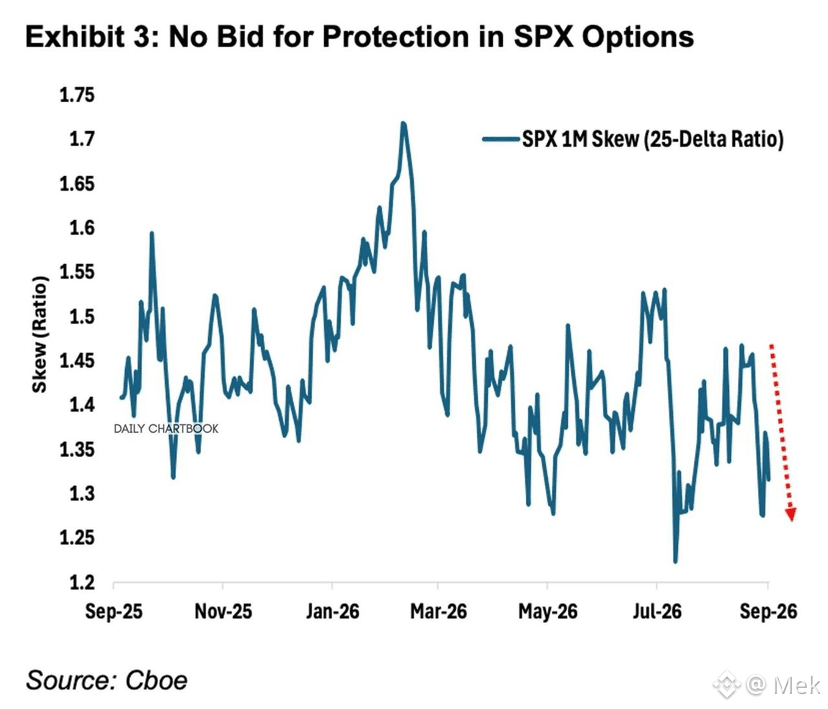
Nobody is buying protection in the US stock market🚨
The 1-month skew on the SPX has crashed to near 1.25, close to this year’s lows.
Low skew means the market isn’t paying a premium to protect against a decline.
It’s the same setup I showed yesterday in bitcoin and the VIX.
Compressed volatility and complacency in three places at the same time.
And it’s the exact opposite of what the MOVE is screaming in fixed income.
Protection gets cheap precisely when nobody thinks they’ll need it. Historically, this is the worst time to be without it.
A whiff of strong emotions coming…
Nobody is buying protection in the US stock market🚨
The 1-month skew on the SPX has crashed to near 1.25, close to this year’s lows.
Low skew means the market isn’t paying a premium to protect against a decline.
It’s the same setup I showed yesterday in bitcoin and the VIX.
Compressed volatility and complacency in three places at the same time.
And it’s the exact opposite of what the MOVE is screaming in fixed income.
Protection gets cheap precisely when nobody thinks they’ll need it. Historically, this is the worst time to be without it.
A whiff of strong emotions coming…
The 1-month skew on the SPX has crashed to near 1.25, close to this year’s lows.
Low skew means the market isn’t paying a premium to protect against a decline.
It’s the same setup I showed yesterday in bitcoin and the VIX.
Compressed volatility and complacency in three places at the same time.
And it’s the exact opposite of what the MOVE is screaming in fixed income.
Protection gets cheap precisely when nobody thinks they’ll need it. Historically, this is the worst time to be without it.
A whiff of strong emotions coming…
1
830
·
--
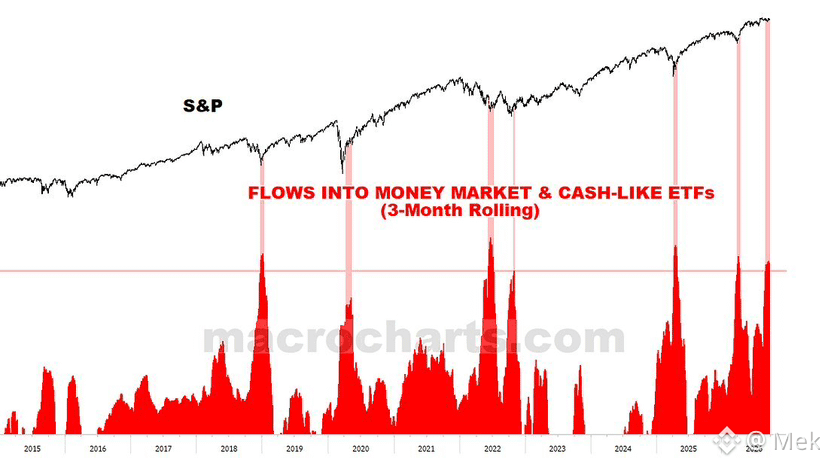
Traditional investor running to cash 👀
Flows into money market funds and cash ETFs are at the highest level since 2018.
In other words, there’s a pile of people leaving risk behind to sit in the dollar earning interest.
What’s funny to see on the $SPX chart is that the previous peaks of this indicator were in 2018, 2020, 2022, and 2025.
Precisely at local trend exhaustion points.
And what if all this pessimism about September/October isn’t as real as the tradfi believes?
Traditional investor running to cash 👀
Flows into money market funds and cash ETFs are at the highest level since 2018.
In other words, there’s a pile of people leaving risk behind to sit in the dollar earning interest.
What’s funny to see on the $SPX chart is that the previous peaks of this indicator were in 2018, 2020, 2022, and 2025.
Precisely at local trend exhaustion points.
And what if all this pessimism about September/October isn’t as real as the tradfi believes?
Flows into money market funds and cash ETFs are at the highest level since 2018.
In other words, there’s a pile of people leaving risk behind to sit in the dollar earning interest.
What’s funny to see on the $SPX chart is that the previous peaks of this indicator were in 2018, 2020, 2022, and 2025.
Precisely at local trend exhaustion points.
And what if all this pessimism about September/October isn’t as real as the tradfi believes?
1
354
·
--
Is this the END of ZCASH?
Researchers from Alloc Init proposed a metaprotocol that brings private transactions directly to Bitcoin’s Layer 1.
No soft fork, no new blockchain, no trusted operator, and no bridge.
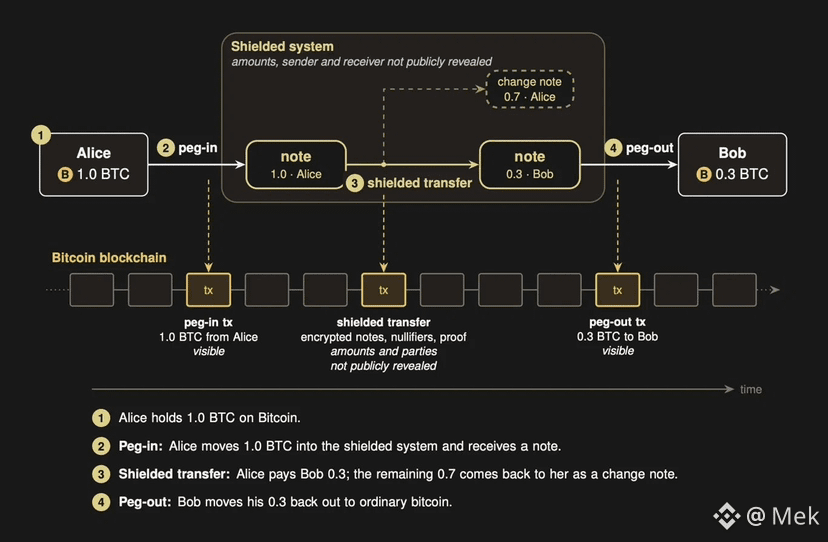
Here’s how it works: the value becomes represented by encrypted “notes,” and each transfer is published on Bitcoin along with a zero-knowledge proof that attests to its validity.
The network stores and orders the encrypted data.
A separate software verifies the proofs and derives the system’s state.
In practice, anyone entering the shielded system has value, sender, and recipient all hidden.
The input and output remain visible on the blockchain; the middle does not.
It’s the Zcash model running on top of Bitcoin, without needing to change the protocol.
It’s worth making clear that this is only an academic proposal for now, not an implementation.
A second paper will further detail how Bitcoin enters and exits the system via security vaults on L1.
Although it’s still in the early stages, it may be worth keeping an eye on!
Is this the END of ZCASH?
Researchers from Alloc Init proposed a metaprotocol that brings private transactions directly to Bitcoin’s Layer 1.
No soft fork, no new blockchain, no trusted operator, and no bridge.
Here’s how it works: the value becomes represented by encrypted “notes,” and each transfer is published on Bitcoin along with a zero-knowledge proof that attests to its validity.
The network stores and orders the encrypted data.
A separate software verifies the proofs and derives the system’s state.
In practice, anyone entering the shielded system has value, sender, and recipient all hidden.
The input and output remain visible on the blockchain; the middle does not.
It’s the Zcash model running on top of Bitcoin, without needing to change the protocol.
It’s worth making clear that this is only an academic proposal for now, not an implementation.
A second paper will further detail how Bitcoin enters and exits the system via security vaults on L1.
Although it’s still in the early stages, it may be worth keeping an eye on!
Researchers from Alloc Init proposed a metaprotocol that brings private transactions directly to Bitcoin’s Layer 1.
No soft fork, no new blockchain, no trusted operator, and no bridge.
Here’s how it works: the value becomes represented by encrypted “notes,” and each transfer is published on Bitcoin along with a zero-knowledge proof that attests to its validity.
The network stores and orders the encrypted data.
A separate software verifies the proofs and derives the system’s state.
In practice, anyone entering the shielded system has value, sender, and recipient all hidden.
The input and output remain visible on the blockchain; the middle does not.
It’s the Zcash model running on top of Bitcoin, without needing to change the protocol.
It’s worth making clear that this is only an academic proposal for now, not an implementation.
A second paper will further detail how Bitcoin enters and exits the system via security vaults on L1.
Although it’s still in the early stages, it may be worth keeping an eye on!
2
580
·
--
Verified
The era of on-chain ETFs has begun. 🔥
And behind it is BLACKROCK.
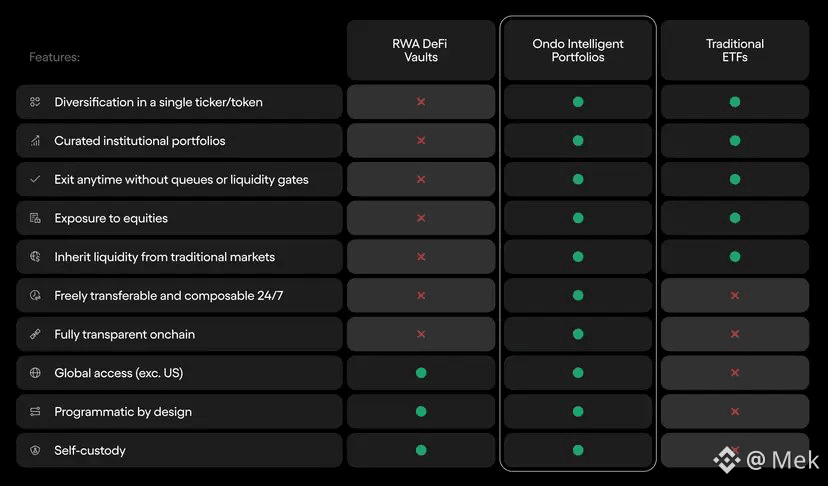
Ondo launched today Intelligent Portfolios, which are full portfolios delivered as a single transferable token.
Three tokens, each with a portfolio strategy developed by BlackRock specifically for Ondo.
Notice what this means in practice.
An ETF is a basket of assets with professional management that you buy as a single stock.
Here it’s the same idea: a basket of assets with BlackRock allocation that you buy as a single token.
The difference is that you don’t need a broker, you don’t need a bank account, and there’s no trading hours.
And there’s a detail that doesn’t exist in conventional tokenized ETFs: rebalancing is programmable.
The token doesn’t wrap an asset—it wraps an allocation that adjusts itself.
This is what BlackRock described in a paper from Monday about native machine economics, going from paper to reality in three days.
I don’t know if everyone is paying attention, but I don’t think they are.
And that’s exactly why the information gap is enormous.
The financial system will be on-chain.
The era of on-chain ETFs has begun. 🔥
And behind it is BLACKROCK.
Ondo launched today Intelligent Portfolios, which are full portfolios delivered as a single transferable token.
Three tokens, each with a portfolio strategy developed by BlackRock specifically for Ondo.
Notice what this means in practice.
An ETF is a basket of assets with professional management that you buy as a single stock.
Here it’s the same idea: a basket of assets with BlackRock allocation that you buy as a single token.
The difference is that you don’t need a broker, you don’t need a bank account, and there’s no trading hours.
And there’s a detail that doesn’t exist in conventional tokenized ETFs: rebalancing is programmable.
The token doesn’t wrap an asset—it wraps an allocation that adjusts itself.
This is what BlackRock described in a paper from Monday about native machine economics, going from paper to reality in three days.
I don’t know if everyone is paying attention, but I don’t think they are.
And that’s exactly why the information gap is enormous.
The financial system will be on-chain.
And behind it is BLACKROCK.
Ondo launched today Intelligent Portfolios, which are full portfolios delivered as a single transferable token.
Three tokens, each with a portfolio strategy developed by BlackRock specifically for Ondo.
Notice what this means in practice.
An ETF is a basket of assets with professional management that you buy as a single stock.
Here it’s the same idea: a basket of assets with BlackRock allocation that you buy as a single token.
The difference is that you don’t need a broker, you don’t need a bank account, and there’s no trading hours.
And there’s a detail that doesn’t exist in conventional tokenized ETFs: rebalancing is programmable.
The token doesn’t wrap an asset—it wraps an allocation that adjusts itself.
This is what BlackRock described in a paper from Monday about native machine economics, going from paper to reality in three days.
I don’t know if everyone is paying attention, but I don’t think they are.
And that’s exactly why the information gap is enormous.
The financial system will be on-chain.
2
3.1k
·
--
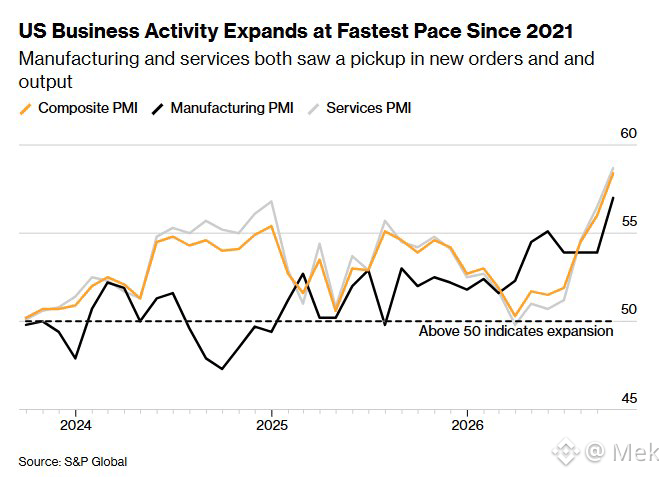
American economic activity is at its strongest pace since 2021. 🔥
The composite PMI rose, with both industry and services accelerating together, and both driven by new orders.
This directly contradicts those who have been shouting “imminent recession” since the beginning of the year.
You can have a bear market in crypto while interest rates are rising and economic activity is strong at the same time. These are different things.
New orders growing in industry and services means companies are selling, hiring, and investing.
Capital is still being generated and still needs somewhere to go.
Now add Treasury debt buybacks and liquidity being created while the economy keeps running.
Will the doomers be wrong again?
American economic activity is at its strongest pace since 2021. 🔥
The composite PMI rose, with both industry and services accelerating together, and both driven by new orders.
This directly contradicts those who have been shouting “imminent recession” since the beginning of the year.
You can have a bear market in crypto while interest rates are rising and economic activity is strong at the same time. These are different things.
New orders growing in industry and services means companies are selling, hiring, and investing.
Capital is still being generated and still needs somewhere to go.
Now add Treasury debt buybacks and liquidity being created while the economy keeps running.
Will the doomers be wrong again?
The composite PMI rose, with both industry and services accelerating together, and both driven by new orders.
This directly contradicts those who have been shouting “imminent recession” since the beginning of the year.
You can have a bear market in crypto while interest rates are rising and economic activity is strong at the same time. These are different things.
New orders growing in industry and services means companies are selling, hiring, and investing.
Capital is still being generated and still needs somewhere to go.
Now add Treasury debt buybacks and liquidity being created while the economy keeps running.
Will the doomers be wrong again?
1
1.5k
·
--
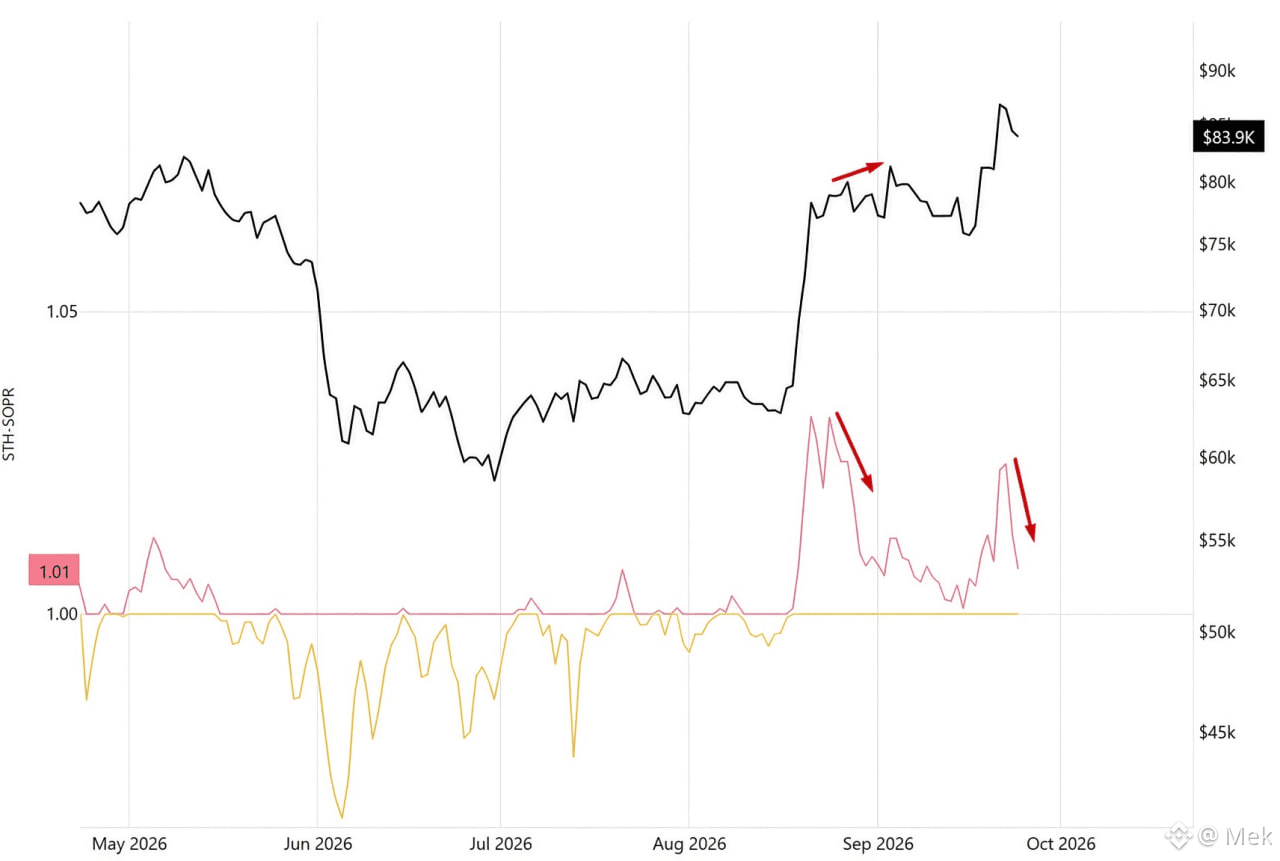
STH profit expenses start to decline in Bitcoin. 🚨
This pattern of reduced local profitability among short-term participants usually marks an exhaustion point in the microstructure.
That’s why, over the past few days, I’ve been talking about caution regarding FOMO.
Many "analysts" who left their followers with +40% gains have started capitulating, saying they "were wrong."
Retail that follows narratives and news probably boosted this last push higher quite a bit.
Possibly entering late into the trend and buying the move already at exhaustion.
It wouldn’t be surprising to see Bitcoin weaken for a few days/weeks, even though it could still give one last gasp in the short term.
It’s generally in this kind of weakness that inexperienced retail that followed the narrative tends to sell in panic.
And at that time, the structure resets. Because these same guys will think, "it’ll go back to 62k, so I’ll sell to buy back below."
They never get the perfect entry—they sell at the bottom, then come back buying for a higher price.
It’s rare, but it happens a lot. Pay attention!
STH profit expenses start to decline in Bitcoin. 🚨
This pattern of reduced local profitability among short-term participants usually marks an exhaustion point in the microstructure.
That’s why, over the past few days, I’ve been talking about caution regarding FOMO.
Many "analysts" who left their followers with +40% gains have started capitulating, saying they "were wrong."
Retail that follows narratives and news probably boosted this last push higher quite a bit.
Possibly entering late into the trend and buying the move already at exhaustion.
It wouldn’t be surprising to see Bitcoin weaken for a few days/weeks, even though it could still give one last gasp in the short term.
It’s generally in this kind of weakness that inexperienced retail that followed the narrative tends to sell in panic.
And at that time, the structure resets. Because these same guys will think, "it’ll go back to 62k, so I’ll sell to buy back below."
They never get the perfect entry—they sell at the bottom, then come back buying for a higher price.
It’s rare, but it happens a lot. Pay attention!
This pattern of reduced local profitability among short-term participants usually marks an exhaustion point in the microstructure.
That’s why, over the past few days, I’ve been talking about caution regarding FOMO.
Many "analysts" who left their followers with +40% gains have started capitulating, saying they "were wrong."
Retail that follows narratives and news probably boosted this last push higher quite a bit.
Possibly entering late into the trend and buying the move already at exhaustion.
It wouldn’t be surprising to see Bitcoin weaken for a few days/weeks, even though it could still give one last gasp in the short term.
It’s generally in this kind of weakness that inexperienced retail that followed the narrative tends to sell in panic.
And at that time, the structure resets. Because these same guys will think, "it’ll go back to 62k, so I’ll sell to buy back below."
They never get the perfect entry—they sell at the bottom, then come back buying for a higher price.
It’s rare, but it happens a lot. Pay attention!
2
823
·
--
I completed all 10 days of CryptoLingo Summer Camp!
I completed all 10 days of CryptoLingo Summer Camp!

1
2
223
·
--
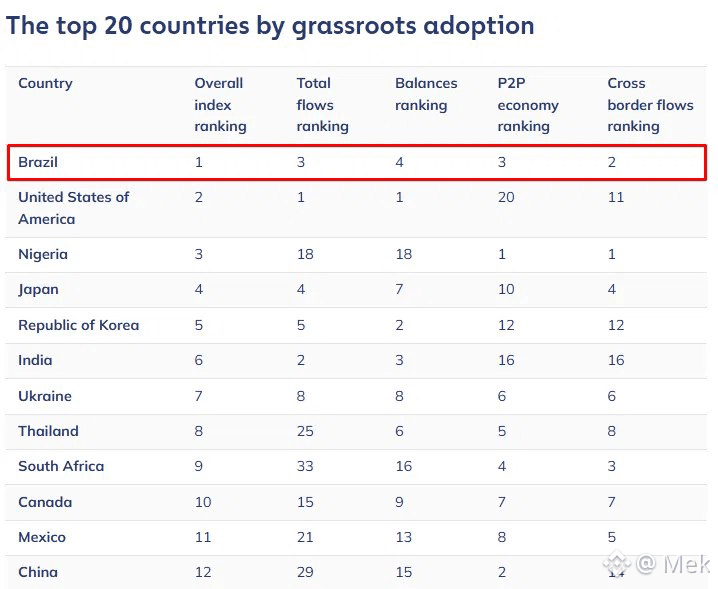
Brazil is the world’s #1 country in crypto adoption in the Chainalysis 2026 index. 🔥
It outranked the United States, India, and Nigeria.
And the detail is that it wasn’t because of a single criterion.
Brazil ranks 3rd in total volume, 4th in retained balance, 3rd in P2P economy, and 2nd in cross-border flow.
In other words, adoption is widespread. Institutional volume, people holding, people transacting among themselves, and people moving money abroad.
The US leads in volume and balance, but drops to 20th place in P2P. There it’s an ETF market and an institutional desk—less everyday use.
Brazil is one of the few countries that scores high on both ends at the same time.
Brazil is the world’s #1 country in crypto adoption in the Chainalysis 2026 index. 🔥
It outranked the United States, India, and Nigeria.
And the detail is that it wasn’t because of a single criterion.
Brazil ranks 3rd in total volume, 4th in retained balance, 3rd in P2P economy, and 2nd in cross-border flow.
In other words, adoption is widespread. Institutional volume, people holding, people transacting among themselves, and people moving money abroad.
The US leads in volume and balance, but drops to 20th place in P2P. There it’s an ETF market and an institutional desk—less everyday use.
Brazil is one of the few countries that scores high on both ends at the same time.
It outranked the United States, India, and Nigeria.
And the detail is that it wasn’t because of a single criterion.
Brazil ranks 3rd in total volume, 4th in retained balance, 3rd in P2P economy, and 2nd in cross-border flow.
In other words, adoption is widespread. Institutional volume, people holding, people transacting among themselves, and people moving money abroad.
The US leads in volume and balance, but drops to 20th place in P2P. There it’s an ETF market and an institutional desk—less everyday use.
Brazil is one of the few countries that scores high on both ends at the same time.
2
2.1k
·
--
No live today! I caught a cold and I'm recovering to get back 100%.
No live today! I caught a cold and I'm recovering to get back 100%.
1
5
71
·
--
Bullish
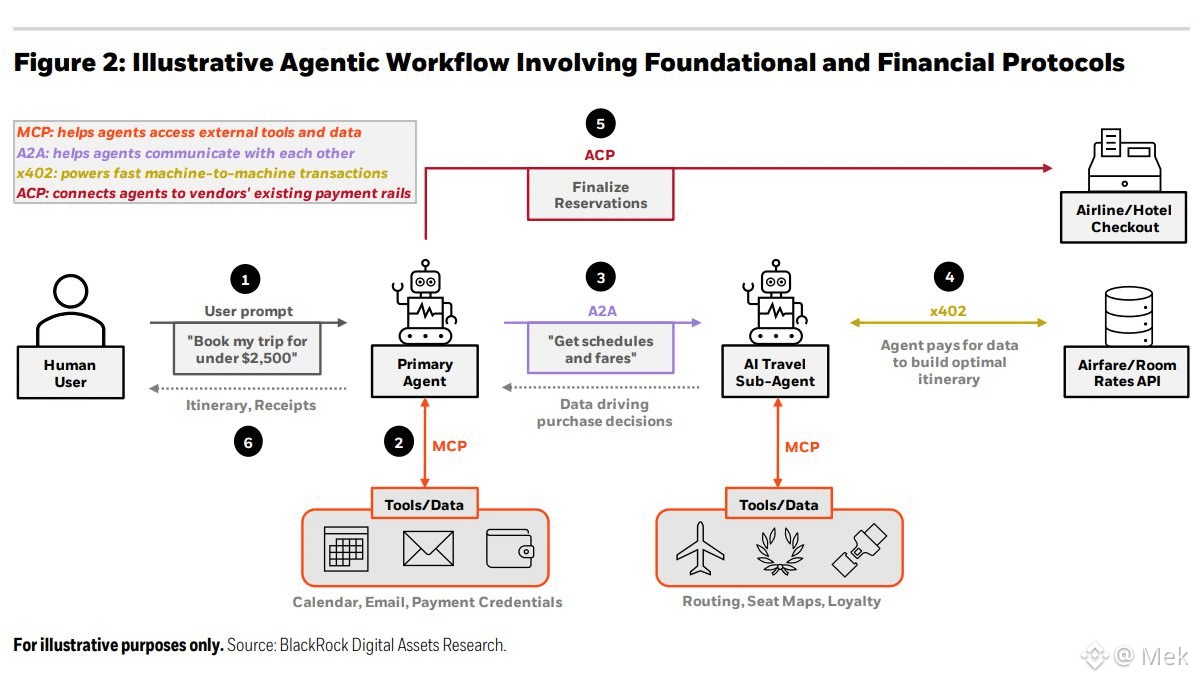
BLACKROCK just published a paper about the convergence between AI and cryptocurrencies. 🔥
And there’s a part there that almost nobody will read.
The logic of the paper is simple. LLMs transform language into tokens. Blockchain transforms value into tokens.
AI is machine-native intelligence. Crypto is machine-native money.
And an AI agent needs to pay for data, for APIs, for processing. Pennies, 24 hours a day, with nobody approving.
Credit cards and traditional rails weren’t made for that. Stablecoins/Bitcoin were.
The paper’s numbers reveal more than US$ 300 billion in stablecoin, US$ 11 trillion moved in 2025—same range as Visa and Mastercard—growing 80% per year versus ACH’s 8.5%.
And the third front: BlackRock argues that computing capacity becomes a tradable asset and gets settled on-chain in a market that should reach US$ 1,1 trillion by 2030.
Putting it into plain language what THE WORLD’S LARGEST ASSET MANAGER is saying: AI adoption is the missing structural demand the crypto ecosystem needed.
And that demand doesn’t depend on any human deciding to buy.
This isn’t loose theory.
In August, Stripe bought OpenRouter, which routes workloads across more than 400 models from 80 providers.
The biggest payments company in the world buying compute-allocation infrastructure.
Are you really paying attention? Follow me for more high-value content about Crypto and AI.
BLACKROCK just published a paper about the convergence between AI and cryptocurrencies. 🔥
And there’s a part there that almost nobody will read.
The logic of the paper is simple. LLMs transform language into tokens. Blockchain transforms value into tokens.
AI is machine-native intelligence. Crypto is machine-native money.
And an AI agent needs to pay for data, for APIs, for processing. Pennies, 24 hours a day, with nobody approving.
Credit cards and traditional rails weren’t made for that. Stablecoins/Bitcoin were.
The paper’s numbers reveal more than US$ 300 billion in stablecoin, US$ 11 trillion moved in 2025—same range as Visa and Mastercard—growing 80% per year versus ACH’s 8.5%.
And the third front: BlackRock argues that computing capacity becomes a tradable asset and gets settled on-chain in a market that should reach US$ 1,1 trillion by 2030.
Putting it into plain language what THE WORLD’S LARGEST ASSET MANAGER is saying: AI adoption is the missing structural demand the crypto ecosystem needed.
And that demand doesn’t depend on any human deciding to buy.
This isn’t loose theory.
In August, Stripe bought OpenRouter, which routes workloads across more than 400 models from 80 providers.
The biggest payments company in the world buying compute-allocation infrastructure.
Are you really paying attention? Follow me for more high-value content about Crypto and AI.
And there’s a part there that almost nobody will read.
The logic of the paper is simple. LLMs transform language into tokens. Blockchain transforms value into tokens.
AI is machine-native intelligence. Crypto is machine-native money.
And an AI agent needs to pay for data, for APIs, for processing. Pennies, 24 hours a day, with nobody approving.
Credit cards and traditional rails weren’t made for that. Stablecoins/Bitcoin were.
The paper’s numbers reveal more than US$ 300 billion in stablecoin, US$ 11 trillion moved in 2025—same range as Visa and Mastercard—growing 80% per year versus ACH’s 8.5%.
And the third front: BlackRock argues that computing capacity becomes a tradable asset and gets settled on-chain in a market that should reach US$ 1,1 trillion by 2030.
Putting it into plain language what THE WORLD’S LARGEST ASSET MANAGER is saying: AI adoption is the missing structural demand the crypto ecosystem needed.
And that demand doesn’t depend on any human deciding to buy.
This isn’t loose theory.
In August, Stripe bought OpenRouter, which routes workloads across more than 400 models from 80 providers.
The biggest payments company in the world buying compute-allocation infrastructure.
Are you really paying attention? Follow me for more high-value content about Crypto and AI.
2
1.1k
·
--
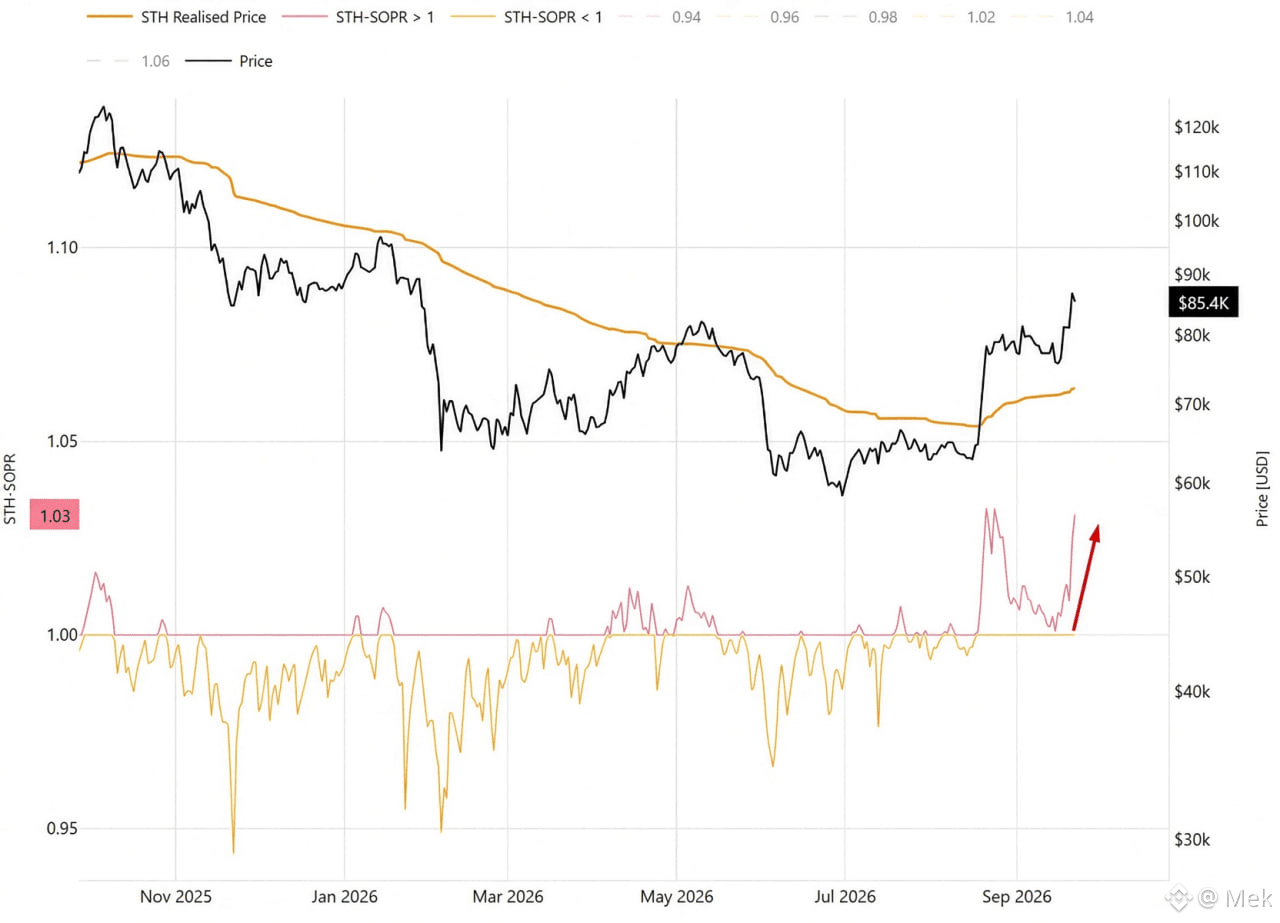
As discussed here in the analyses, novice investors are rushing to follow the bullish trend of bitcoin. 💰
Usually, these investors spending their profit signals local euphoria among newer participants.
The interesting part is that when these moves are made by retail investors, they attract new capital near local exhaustion points.
But they also offer re-entry points for more patient investors.
I’ll explain this in today’s live.
As discussed here in the analyses, novice investors are rushing to follow the bullish trend of bitcoin. 💰
Usually, these investors spending their profit signals local euphoria among newer participants.
The interesting part is that when these moves are made by retail investors, they attract new capital near local exhaustion points.
But they also offer re-entry points for more patient investors.
I’ll explain this in today’s live.
Usually, these investors spending their profit signals local euphoria among newer participants.
The interesting part is that when these moves are made by retail investors, they attract new capital near local exhaustion points.
But they also offer re-entry points for more patient investors.
I’ll explain this in today’s live.
1
1.6k
·
--
Verified
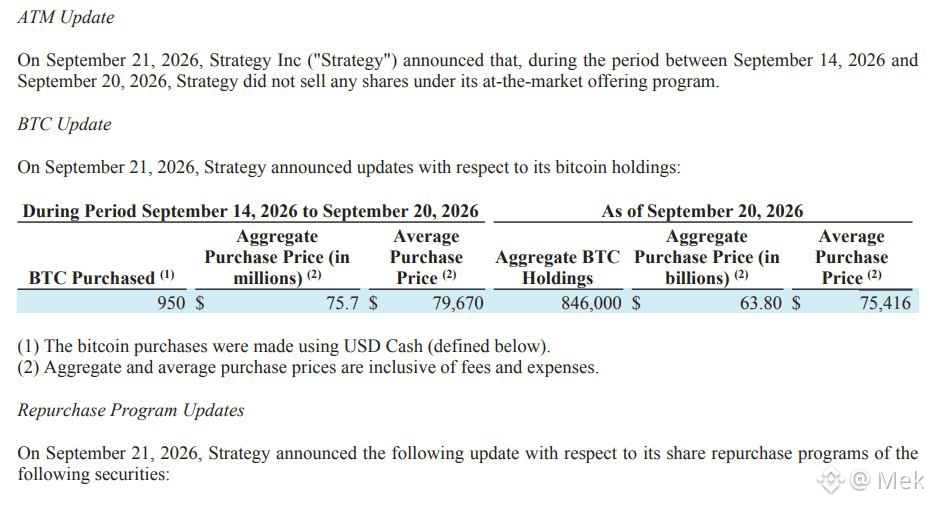
A Strategy bought 950 bitcoins this week for US$ 79.670 🔥
In July, the company led by Saylor sold 3.588 bitcoins at around US$ 60 thousand.
The cruel detail is that the July sale was to pay for the preferred dividend. It wasn’t a tactical choice—it was a liability obligation.
A Strategy bought 950 bitcoins this week for US$ 79.670 🔥
In July, the company led by Saylor sold 3.588 bitcoins at around US$ 60 thousand.
The cruel detail is that the July sale was to pay for the preferred dividend. It wasn’t a tactical choice—it was a liability obligation.
In July, the company led by Saylor sold 3.588 bitcoins at around US$ 60 thousand.
The cruel detail is that the July sale was to pay for the preferred dividend. It wasn’t a tactical choice—it was a liability obligation.
1
3.1k
·
--
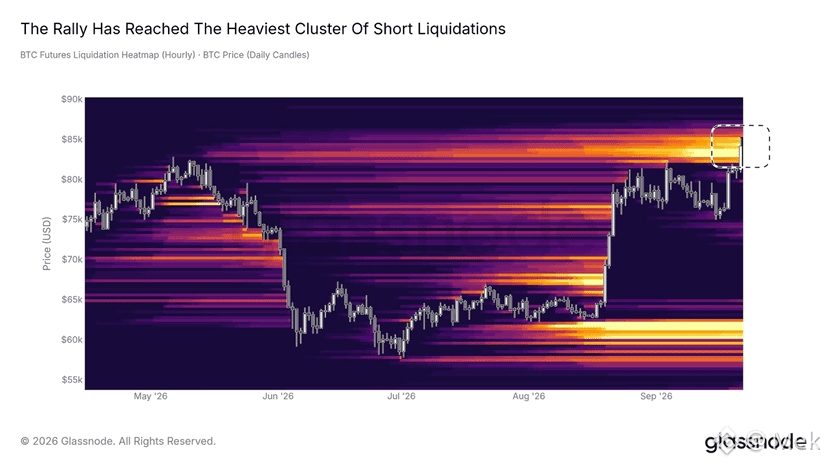
Bitcoin just crossed the heaviest short liquidation cluster of the year. 🚨
There was a short position building up between US$ 82 and US$ 86 for months.
Now those shorts have turned into fuel, because whoever is short there is forced to buy back.
Two days ago I posted that there were 605,900 BTC from long-term holders with an average cost of US$ 84.186 in this exact region, and that it would need real demand to absorb it.
Yesterday the aggregated spot CVD printed +332 million, the biggest of the month, green across all major exchanges.
So both things are happening at the same time. Real spot buying coming in from below and shorts being forced to cover from above.
But it’s worth separating: short liquidation is mechanical flow—it ends when the sold inventory runs out. What sustains price after that is the spot.
The question that matters now is whether the buyer keeps showing up once the shorts’ fuel runs out.
Bitcoin just crossed the heaviest short liquidation cluster of the year. 🚨
There was a short position building up between US$ 82 and US$ 86 for months.
Now those shorts have turned into fuel, because whoever is short there is forced to buy back.
Two days ago I posted that there were 605,900 BTC from long-term holders with an average cost of US$ 84.186 in this exact region, and that it would need real demand to absorb it.
Yesterday the aggregated spot CVD printed +332 million, the biggest of the month, green across all major exchanges.
So both things are happening at the same time. Real spot buying coming in from below and shorts being forced to cover from above.
But it’s worth separating: short liquidation is mechanical flow—it ends when the sold inventory runs out. What sustains price after that is the spot.
The question that matters now is whether the buyer keeps showing up once the shorts’ fuel runs out.
There was a short position building up between US$ 82 and US$ 86 for months.
Now those shorts have turned into fuel, because whoever is short there is forced to buy back.
Two days ago I posted that there were 605,900 BTC from long-term holders with an average cost of US$ 84.186 in this exact region, and that it would need real demand to absorb it.
Yesterday the aggregated spot CVD printed +332 million, the biggest of the month, green across all major exchanges.
So both things are happening at the same time. Real spot buying coming in from below and shorts being forced to cover from above.
But it’s worth separating: short liquidation is mechanical flow—it ends when the sold inventory runs out. What sustains price after that is the spot.
The question that matters now is whether the buyer keeps showing up once the shorts’ fuel runs out.
2
1.2k
Log in to explore more content
Join global crypto users on Binance Square
⚡️ Get latest and useful information about crypto.
💬 Trusted by the world’s largest crypto exchange.
👍 Discover real insights from verified creators.
Email / Phone number
Trending Topics
EtherGains70.9%InQ3
174,682 views
1,183 Discussing
One of the best third quarters in history 💰
September closed out last night, and with it, the quarter. For the quarter, BTC is up 42%—the second-best Q3 on record. ETH had a record-breaking Q3 overall, up 70%.
Looking at the chart, things are still looking good: we’re holding support, but we’re testing it more and more often. Plus, ETF momentum is weakening — inflows are gradually declining, and yesterday saw outflows for the first time in a long while.
Yes, historically, October has been a good month for crypto — it’s not called “Uptober” for nothing. But it’s also one of the most volatile months. Last year, for example, we managed to hit a new all-time high (ATH) and experience a flash crash.
🚀 High Accuracy Trades.
$BTC
$ETH
$SOL
#EtherGains70.9%InQ3 #DollarIndexHitsHighestSinceMay2025 #CFTCSubmitsTwoEventContractRulesToWhiteHouse #MicronBeatsEarningsLiftsGuidance
Knowledge is Power
·0 Likes
·250 views
TreasuryLetsStatesFileStablecoinCertificationsEarly
11,352 views
92 Discussing
US10YearYieldNears5.3%
158,283 views
1,159 Discussing