

Masao Fast News
6.5k Posts

Masao Fast News
Report
Block User
A CHANNEL FOR FAST AND ACCURATE NEWS
Open Trade
Frequent Trader
3.5 Years
100 Following
1.0K+ Followers
9.1K+ Liked
Posts
Portfolio
All
Quotes
Videos
Live
PINNED
🚨 CHAT GROUP IS HAVING AN AIRDROP FOR MEMBERS
Guys who are following Crypto and like hunting for Airdrops can join the chat group with me.
The group is currently updating some Airdrop programs so you can keep track, share information, and get guidance on how to participate.
Besides Airdrops, the group still focuses mainly on Crypto news, hot market updates, ETFs, the Fed, macro, and events that may affect the price of BTC and Altcoins.
I will prioritize updating the most noteworthy information so you don’t have to search through too many sources every day.
👇 JOIN THE CHAT GROUP AND SEE AIRDROP HERE 👇
[LINK NHÓM](https://app.binance.com/uni-qr/VLC8GjMV)
🚨 CHAT GROUP IS HAVING AN AIRDROP FOR MEMBERS
Guys who are following Crypto and like hunting for Airdrops can join the chat group with me.
The group is currently updating some Airdrop programs so you can keep track, share information, and get guidance on how to participate.
Besides Airdrops, the group still focuses mainly on Crypto news, hot market updates, ETFs, the Fed, macro, and events that may affect the price of BTC and Altcoins.
I will prioritize updating the most noteworthy information so you don’t have to search through too many sources every day.
👇 JOIN THE CHAT GROUP AND SEE AIRDROP HERE 👇
LINK NHÓM
Guys who are following Crypto and like hunting for Airdrops can join the chat group with me.
The group is currently updating some Airdrop programs so you can keep track, share information, and get guidance on how to participate.
Besides Airdrops, the group still focuses mainly on Crypto news, hot market updates, ETFs, the Fed, macro, and events that may affect the price of BTC and Altcoins.
I will prioritize updating the most noteworthy information so you don’t have to search through too many sources every day.
👇 JOIN THE CHAT GROUP AND SEE AIRDROP HERE 👇
LINK NHÓM

2
318
🚨 Japan Tests Payments Using Stablecoin
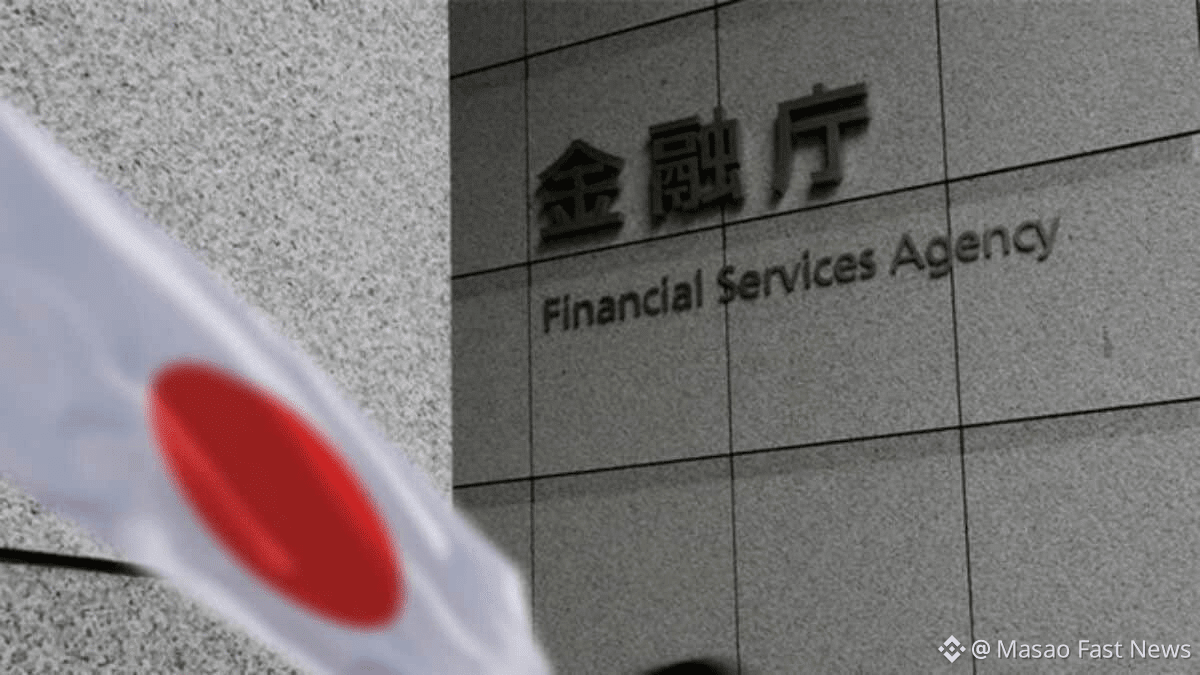
Japan’s Financial Services Agency (FSA) has just supported a pilot project using stablecoin for payments related to trade transactions.
The project includes TradeWaltz, NTT Data, along with 4 major banks: Mizuho, MUFG, SMBC, and Mitsubishi UFJ.
The project begins in September 2026 and focuses on testing the use of stablecoin in payments related to import-export transactions and export receivables.
Stablecoin usage is expected to be studied by the participating banks, but the specific name has not been disclosed yet. This is still only a pilot project and not an official commercial rollout.
Personal view:
What stands out to me is that stablecoin is being tested in a real financial process, rather than only serving money transfers between users.
If this model proves it can shorten payment times and reduce processing costs, stablecoin could become an additional infrastructure layer for international trade activities.
However, real-world effectiveness and how Japan addresses legal issues will determine whether this model can be scaled in the future.
👇 HOT COINS TRADING HERE 👇
$QNT
{future}(QNTUSDT)
$SEI
{future}(SEIUSDT)
$PUMP
{future}(PUMPUSDT)
🚨 Japan Tests Payments Using Stablecoin
Japan’s Financial Services Agency (FSA) has just supported a pilot project using stablecoin for payments related to trade transactions.
The project includes TradeWaltz, NTT Data, along with 4 major banks: Mizuho, MUFG, SMBC, and Mitsubishi UFJ.
The project begins in September 2026 and focuses on testing the use of stablecoin in payments related to import-export transactions and export receivables.
Stablecoin usage is expected to be studied by the participating banks, but the specific name has not been disclosed yet. This is still only a pilot project and not an official commercial rollout.
Personal view:
What stands out to me is that stablecoin is being tested in a real financial process, rather than only serving money transfers between users.
If this model proves it can shorten payment times and reduce processing costs, stablecoin could become an additional infrastructure layer for international trade activities.
However, real-world effectiveness and how Japan addresses legal issues will determine whether this model can be scaled in the future.
👇 HOT COINS TRADING HERE 👇
$QNT
$SEI
$PUMP
Japan’s Financial Services Agency (FSA) has just supported a pilot project using stablecoin for payments related to trade transactions.
The project includes TradeWaltz, NTT Data, along with 4 major banks: Mizuho, MUFG, SMBC, and Mitsubishi UFJ.
The project begins in September 2026 and focuses on testing the use of stablecoin in payments related to import-export transactions and export receivables.
Stablecoin usage is expected to be studied by the participating banks, but the specific name has not been disclosed yet. This is still only a pilot project and not an official commercial rollout.
Personal view:
What stands out to me is that stablecoin is being tested in a real financial process, rather than only serving money transfers between users.
If this model proves it can shorten payment times and reduce processing costs, stablecoin could become an additional infrastructure layer for international trade activities.
However, real-world effectiveness and how Japan addresses legal issues will determine whether this model can be scaled in the future.
👇 HOT COINS TRADING HERE 👇
$QNT
$SEI
$PUMP
1
236

Article
MICRON TO ANNOUNCE Q4 FY2026 EARNINGS: WILL THE ONCE-IN-A-LIFETIME MEMORY CYCLE CONTINUE?Micron Technology ($MU) will report its fiscal fourth-quarter results for 2026 on October 1, amid a backdrop of a sharp rise in the stock and very high market expectations for the memory industry.
This announcement is noteworthy not only because of Micron’s own business results, but also because it may provide additional data for the market to assess the health of the entire memory cycle, which is being driven by AI demand.
MICRON TO ANNOUNCE Q4 FY2026 EARNINGS: WILL THE ONCE-IN-A-LIFETIME MEMORY CYCLE CONTINUE?
Micron Technology ($MU) will report its fiscal fourth-quarter results for 2026 on October 1, amid a backdrop of a sharp rise in the stock and very high market expectations for the memory industry.
This announcement is noteworthy not only because of Micron’s own business results, but also because it may provide additional data for the market to assess the health of the entire memory cycle, which is being driven by AI demand.
This announcement is noteworthy not only because of Micron’s own business results, but also because it may provide additional data for the market to assess the health of the entire memory cycle, which is being driven by AI demand.
1
451
Verified
🚨 South Korea’s Big Player Teams Up with Ondo to Research Tokenized Stock Markets
Kakao Pay Securities has just signed two separate agreements with Ondo and Dinari to explore the potential of tokenizing listed stocks in South Korea, thereby opening up an additional approach to South Korean equities for foreign investors.
With Ondo, the two sides are researching a model that keeps the actual shares in South Korea and issues tokens representing those shares.
With Dinari, the focus is on a token model backed 1:1 by shares, while also considering how to handle dividends and voting rights.
At present, the project is still only in the research stage—there is no official product or launch timeline yet. Kakao Pay Securities has about 1.61 million monthly stock-trading customers as of the end of June 2026.
Personal view:
I think this is a noteworthy signal, because the tokenization story is starting to go deeper into traditional stock markets instead of only revolving around bonds or crypto assets.
If tokenized share models can handle issues like custody, dividends, and voting rights well, blockchain could become the underlying infrastructure that makes traditional assets more conveniently accessible to global investors.
However, this is still just a research step, so the real-world impact can’t yet be assessed. What’s worth watching next is how Kakao Pay Securities, Ondo, and Dinari address legal and ownership-related issues before bringing the product to market.
👇 HOT COINS TRADING HERE 👇
$QNT
$SEI
$PUMP
🚨 South Korea’s Big Player Teams Up with Ondo to Research Tokenized Stock Markets
Kakao Pay Securities has just signed two separate agreements with Ondo and Dinari to explore the potential of tokenizing listed stocks in South Korea, thereby opening up an additional approach to South Korean equities for foreign investors.
With Ondo, the two sides are researching a model that keeps the actual shares in South Korea and issues tokens representing those shares.
With Dinari, the focus is on a token model backed 1:1 by shares, while also considering how to handle dividends and voting rights.
At present, the project is still only in the research stage—there is no official product or launch timeline yet. Kakao Pay Securities has about 1.61 million monthly stock-trading customers as of the end of June 2026.
Personal view:
I think this is a noteworthy signal, because the tokenization story is starting to go deeper into traditional stock markets instead of only revolving around bonds or crypto assets.
If tokenized share models can handle issues like custody, dividends, and voting rights well, blockchain could become the underlying infrastructure that makes traditional assets more conveniently accessible to global investors.
However, this is still just a research step, so the real-world impact can’t yet be assessed. What’s worth watching next is how Kakao Pay Securities, Ondo, and Dinari address legal and ownership-related issues before bringing the product to market.
👇 HOT COINS TRADING HERE 👇
$QNT
$SEI
$PUMP
Kakao Pay Securities has just signed two separate agreements with Ondo and Dinari to explore the potential of tokenizing listed stocks in South Korea, thereby opening up an additional approach to South Korean equities for foreign investors.
With Ondo, the two sides are researching a model that keeps the actual shares in South Korea and issues tokens representing those shares.
With Dinari, the focus is on a token model backed 1:1 by shares, while also considering how to handle dividends and voting rights.
At present, the project is still only in the research stage—there is no official product or launch timeline yet. Kakao Pay Securities has about 1.61 million monthly stock-trading customers as of the end of June 2026.
Personal view:
I think this is a noteworthy signal, because the tokenization story is starting to go deeper into traditional stock markets instead of only revolving around bonds or crypto assets.
If tokenized share models can handle issues like custody, dividends, and voting rights well, blockchain could become the underlying infrastructure that makes traditional assets more conveniently accessible to global investors.
However, this is still just a research step, so the real-world impact can’t yet be assessed. What’s worth watching next is how Kakao Pay Securities, Ondo, and Dinari address legal and ownership-related issues before bringing the product to market.
👇 HOT COINS TRADING HERE 👇
$QNT
$SEI
$PUMP

1
1.2k
Verified
🚨 EL SALVADOR APPEARS WITH AN APP TO TRANSFER STABLECOINS ON BASE
Sivar is an app developed by Modveon that lets users transfer stablecoins between the US and El Salvador via the Base network, using Coinbase’s infrastructure.
Senders can fund their accounts using a debit card through Coinbase Onramp and have a dedicated wallet within the app to send and receive stablecoins.
On the El Salvador side, recipients can keep funds in their wallet or withdraw cash at more than 1,000 support locations.
The published fee is $2 per transaction, with a minimum deposit of $25.
Personal view:
I think the most notable point isn’t the addition of a new money-transfer app, but rather that stablecoins are being brought closer to a very practical need—remittances.
If this model works well, Base could become the infrastructure layer behind money-transfer services that everyday users hardly need to know they’re using blockchain.
However, the level of competition will still depend on total costs, the speed of receiving funds, and the coverage of withdrawal points. The $2 fee is quite clear, but the real deciding factor is the hands-on experience—whether users will switch from traditional channels to stablecoins.
👇 HOT COINS TRADING HERE 👇
$QNT
{future}(QNTUSDT)
$SEI
{future}(SEIUSDT)
$PUMP
{future}(PUMPUSDT)
🚨 EL SALVADOR APPEARS WITH AN APP TO TRANSFER STABLECOINS ON BASE
Sivar is an app developed by Modveon that lets users transfer stablecoins between the US and El Salvador via the Base network, using Coinbase’s infrastructure.
Senders can fund their accounts using a debit card through Coinbase Onramp and have a dedicated wallet within the app to send and receive stablecoins.
On the El Salvador side, recipients can keep funds in their wallet or withdraw cash at more than 1,000 support locations.
The published fee is $2 per transaction, with a minimum deposit of $25.
Personal view:
I think the most notable point isn’t the addition of a new money-transfer app, but rather that stablecoins are being brought closer to a very practical need—remittances.
If this model works well, Base could become the infrastructure layer behind money-transfer services that everyday users hardly need to know they’re using blockchain.
However, the level of competition will still depend on total costs, the speed of receiving funds, and the coverage of withdrawal points. The $2 fee is quite clear, but the real deciding factor is the hands-on experience—whether users will switch from traditional channels to stablecoins.
👇 HOT COINS TRADING HERE 👇
$QNT
$SEI
$PUMP
Sivar is an app developed by Modveon that lets users transfer stablecoins between the US and El Salvador via the Base network, using Coinbase’s infrastructure.
Senders can fund their accounts using a debit card through Coinbase Onramp and have a dedicated wallet within the app to send and receive stablecoins.
On the El Salvador side, recipients can keep funds in their wallet or withdraw cash at more than 1,000 support locations.
The published fee is $2 per transaction, with a minimum deposit of $25.
Personal view:
I think the most notable point isn’t the addition of a new money-transfer app, but rather that stablecoins are being brought closer to a very practical need—remittances.
If this model works well, Base could become the infrastructure layer behind money-transfer services that everyday users hardly need to know they’re using blockchain.
However, the level of competition will still depend on total costs, the speed of receiving funds, and the coverage of withdrawal points. The $2 fee is quite clear, but the real deciding factor is the hands-on experience—whether users will switch from traditional channels to stablecoins.
👇 HOT COINS TRADING HERE 👇
$QNT
$SEI
$PUMP

1
785
Verified
🚨 GRAYSCALE FILES APPLICATION FOR A GRAYSCALE ETF PROFILE TO GENERATE INCOME FROM ZCASH
Grayscale has just submitted an application to the SEC for the ZCSH High Income ETF, a new product that uses options tied to Zcash ETF products to generate income for investors.
The key point is that the fund does not directly hold ZEC.
Instead, the proposed strategy is to use call and put options linked to ZCSH, while selling short-dated call options to collect premium and distribute income on a regular basis, expected to be once every two weeks.
However, selling calls also means the fund may have its upside capped if Zcash rises sharply beyond the option’s strike level.
Personal view:
I think this is a notable step in how traditional financial products are building additional tools to generate cash flow from crypto.
Rather than only providing exposure to ZEC, Grayscale is trying to introduce more options strategies into the Zcash ETF ecosystem.
What I will watch is the actual distribution level and the fund’s ability to sustain income during periods of strong ZEC volatility, because “High Income” does not mean a fixed or guaranteed yield.
👇 HOT COIN TRADING HERE 👇
$ZEC
{future}(ZECUSDT)
$QNT
{future}(QNTUSDT)
$SEI
{future}(SEIUSDT)
🚨 GRAYSCALE FILES APPLICATION FOR A GRAYSCALE ETF PROFILE TO GENERATE INCOME FROM ZCASH
Grayscale has just submitted an application to the SEC for the ZCSH High Income ETF, a new product that uses options tied to Zcash ETF products to generate income for investors.
The key point is that the fund does not directly hold ZEC.
Instead, the proposed strategy is to use call and put options linked to ZCSH, while selling short-dated call options to collect premium and distribute income on a regular basis, expected to be once every two weeks.
However, selling calls also means the fund may have its upside capped if Zcash rises sharply beyond the option’s strike level.
Personal view:
I think this is a notable step in how traditional financial products are building additional tools to generate cash flow from crypto.
Rather than only providing exposure to ZEC, Grayscale is trying to introduce more options strategies into the Zcash ETF ecosystem.
What I will watch is the actual distribution level and the fund’s ability to sustain income during periods of strong ZEC volatility, because “High Income” does not mean a fixed or guaranteed yield.
👇 HOT COIN TRADING HERE 👇
$ZEC
$QNT
$SEI
Grayscale has just submitted an application to the SEC for the ZCSH High Income ETF, a new product that uses options tied to Zcash ETF products to generate income for investors.
The key point is that the fund does not directly hold ZEC.
Instead, the proposed strategy is to use call and put options linked to ZCSH, while selling short-dated call options to collect premium and distribute income on a regular basis, expected to be once every two weeks.
However, selling calls also means the fund may have its upside capped if Zcash rises sharply beyond the option’s strike level.
Personal view:
I think this is a notable step in how traditional financial products are building additional tools to generate cash flow from crypto.
Rather than only providing exposure to ZEC, Grayscale is trying to introduce more options strategies into the Zcash ETF ecosystem.
What I will watch is the actual distribution level and the fund’s ability to sustain income during periods of strong ZEC volatility, because “High Income” does not mean a fixed or guaranteed yield.
👇 HOT COIN TRADING HERE 👇
$ZEC
$QNT
$SEI


1
1.1k
Verified
🚨 CHAINLINK LAUNCHES CCIP 2.0, UPGRADING SECURITY LAYERS FOR BRIDGES
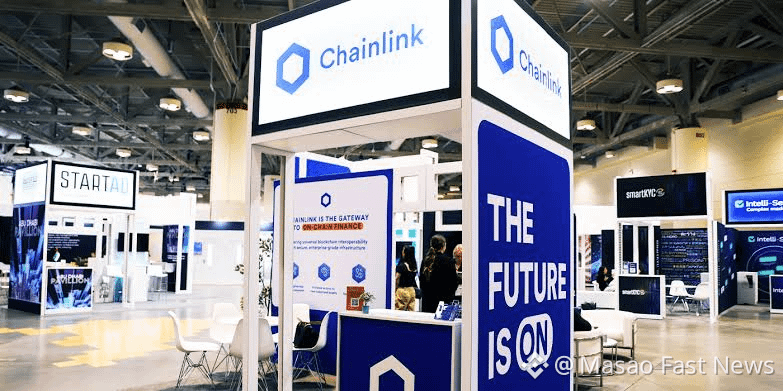
Chainlink has just launched CCIP 2.0, enabling enterprises and organizations to operate themselves or to add a Cross-Chain Verifier to provide an extra verification layer alongside the default network of 16 independent nodes.
This upgrade comes after the Kelp DAO incident in April, when it was exploited for around $292M, with the bridge using a 1-of-1 verification configuration. After the incident, Kelp DAO moved to Chainlink CCIP.
Notably, CCIP 2.0 does not require every application to use the additional verification layer. This is an optional feature, allowing organizations to design their own security level and verification procedures according to their needs.
Personal view:
I think this is a noteworthy direction of development as more and more institutional assets are being moved on-chain.
Instead of a fixed security model, CCIP 2.0 allows adding multiple verification layers depending on the transaction’s value and risk level.
However, practical effectiveness still depends on how organizations deploy it. So I’ll keep an eye on how widely CCIP 2.0 is adopted before assessing the long-term impact on $LINK.
👇 HOT COINS TRADING HERE 👇
$QNT
{future}(QNTUSDT)
$SEI
{future}(SEIUSDT)
$PUMP
{future}(PUMPUSDT)
🚨 CHAINLINK LAUNCHES CCIP 2.0, UPGRADING SECURITY LAYERS FOR BRIDGES
Chainlink has just launched CCIP 2.0, enabling enterprises and organizations to operate themselves or to add a Cross-Chain Verifier to provide an extra verification layer alongside the default network of 16 independent nodes.
This upgrade comes after the Kelp DAO incident in April, when it was exploited for around $292M, with the bridge using a 1-of-1 verification configuration. After the incident, Kelp DAO moved to Chainlink CCIP.
Notably, CCIP 2.0 does not require every application to use the additional verification layer. This is an optional feature, allowing organizations to design their own security level and verification procedures according to their needs.
Personal view:
I think this is a noteworthy direction of development as more and more institutional assets are being moved on-chain.
Instead of a fixed security model, CCIP 2.0 allows adding multiple verification layers depending on the transaction’s value and risk level.
However, practical effectiveness still depends on how organizations deploy it. So I’ll keep an eye on how widely CCIP 2.0 is adopted before assessing the long-term impact on $LINK.
👇 HOT COINS TRADING HERE 👇
$QNT
$SEI
$PUMP
Chainlink has just launched CCIP 2.0, enabling enterprises and organizations to operate themselves or to add a Cross-Chain Verifier to provide an extra verification layer alongside the default network of 16 independent nodes.
This upgrade comes after the Kelp DAO incident in April, when it was exploited for around $292M, with the bridge using a 1-of-1 verification configuration. After the incident, Kelp DAO moved to Chainlink CCIP.
Notably, CCIP 2.0 does not require every application to use the additional verification layer. This is an optional feature, allowing organizations to design their own security level and verification procedures according to their needs.
Personal view:
I think this is a noteworthy direction of development as more and more institutional assets are being moved on-chain.
Instead of a fixed security model, CCIP 2.0 allows adding multiple verification layers depending on the transaction’s value and risk level.
However, practical effectiveness still depends on how organizations deploy it. So I’ll keep an eye on how widely CCIP 2.0 is adopted before assessing the long-term impact on $LINK.
👇 HOT COINS TRADING HERE 👇
$QNT
$SEI
$PUMP
1
793
🚨 JPYC INCREASES 4-FOLD, SOUTH KOREA CONSIDERS ALLOWING MARKET MAKER FOR CRYPTO
On September 17, JPYC – a neo stablecoin pegged to the Japanese yen – was listed on Upbit.
JPYC opened at around 12 won, but after about 1 hour it surged to 37.6 won, more than 4 times the reference value of about 8.8 won. The main reason is believed to be liquidity being too thin as buying demand increased sharply.
After the incident, the Financial Services Commission of South Korea said it is reviewing a market maker mechanism for the digital asset market to improve liquidity and stabilize prices. However, this is only a review step, not an official policy change yet.
Personal viewpoint:
The JPYC case shows that even if a stablecoin is still pegged 1:1 in terms of issuance, its trading price on exchanges can still fluctuate dramatically if the order book is too thin.
A market maker could help maintain two-way liquidity and reduce large price gaps, but allowing operations also needs to be accompanied by monitoring mechanisms to limit manipulation.
If South Korea truly builds a clear market-making framework, this would be a noteworthy change for this country’s crypto market liquidity.
👇 HOT COINS TRADING HERE 👇
$QNT
{future}(QNTUSDT)
$SEI
{future}(SEIUSDT)
$PUMP
{future}(PUMPUSDT)
🚨 JPYC INCREASES 4-FOLD, SOUTH KOREA CONSIDERS ALLOWING MARKET MAKER FOR CRYPTO
On September 17, JPYC – a neo stablecoin pegged to the Japanese yen – was listed on Upbit.
JPYC opened at around 12 won, but after about 1 hour it surged to 37.6 won, more than 4 times the reference value of about 8.8 won. The main reason is believed to be liquidity being too thin as buying demand increased sharply.
After the incident, the Financial Services Commission of South Korea said it is reviewing a market maker mechanism for the digital asset market to improve liquidity and stabilize prices. However, this is only a review step, not an official policy change yet.
Personal viewpoint:
The JPYC case shows that even if a stablecoin is still pegged 1:1 in terms of issuance, its trading price on exchanges can still fluctuate dramatically if the order book is too thin.
A market maker could help maintain two-way liquidity and reduce large price gaps, but allowing operations also needs to be accompanied by monitoring mechanisms to limit manipulation.
If South Korea truly builds a clear market-making framework, this would be a noteworthy change for this country’s crypto market liquidity.
👇 HOT COINS TRADING HERE 👇
$QNT
$SEI
$PUMP
On September 17, JPYC – a neo stablecoin pegged to the Japanese yen – was listed on Upbit.
JPYC opened at around 12 won, but after about 1 hour it surged to 37.6 won, more than 4 times the reference value of about 8.8 won. The main reason is believed to be liquidity being too thin as buying demand increased sharply.
After the incident, the Financial Services Commission of South Korea said it is reviewing a market maker mechanism for the digital asset market to improve liquidity and stabilize prices. However, this is only a review step, not an official policy change yet.
Personal viewpoint:
The JPYC case shows that even if a stablecoin is still pegged 1:1 in terms of issuance, its trading price on exchanges can still fluctuate dramatically if the order book is too thin.
A market maker could help maintain two-way liquidity and reduce large price gaps, but allowing operations also needs to be accompanied by monitoring mechanisms to limit manipulation.
If South Korea truly builds a clear market-making framework, this would be a noteworthy change for this country’s crypto market liquidity.
👇 HOT COINS TRADING HERE 👇
$QNT
$SEI
$PUMP

937
🚨 US CRYPTO ETF FLOW: BTC, ETH AND SOL GET FUNDED
In the session on 28/9 in the US, ETF flows recorded:
🟢 BTC: +$31.07M
🟢 ETH: +$17.10M
🟢 SOL: +$12.70M
🟢 XRP: +$3.96M
🟢 LINK: +$2.41M
🟢 LTC: +$1.18M
On the opposite side, $ZEC saw withdrawals of about $8.12M.
Meanwhile, ETFs $HYPE, $HBAR, $AVAX, $TRX, $DOGE, $DOT, and $BNB recorded no flows in the session.
Personal viewpoint:
Notably, the flow is still tilted toward BTC, ETH, and SOL despite the broader market facing pressure.
In particular, SOL continues to show a fairly clear positive flow, indicating institutional demand is not only focused on BTC and ETH.
However, a single ETF session is not enough to confirm a long-term trend. I’ll pay attention to whether this flow continues to hold in the coming sessions.
👇 HOT COINS TRADING HERE 👇
$QNT
{future}(QNTUSDT)
$SEI
{future}(SEIUSDT)
$PUMP
{future}(PUMPUSDT)
🚨 US CRYPTO ETF FLOW: BTC, ETH AND SOL GET FUNDED
In the session on 28/9 in the US, ETF flows recorded:
🟢 BTC: +$31.07M
🟢 ETH: +$17.10M
🟢 SOL: +$12.70M
🟢 XRP: +$3.96M
🟢 LINK: +$2.41M
🟢 LTC: +$1.18M
On the opposite side, $ZEC saw withdrawals of about $8.12M.
Meanwhile, ETFs $HYPE, $HBAR, $AVAX, $TRX, $DOGE, $DOT, and $BNB recorded no flows in the session.
Personal viewpoint:
Notably, the flow is still tilted toward BTC, ETH, and SOL despite the broader market facing pressure.
In particular, SOL continues to show a fairly clear positive flow, indicating institutional demand is not only focused on BTC and ETH.
However, a single ETF session is not enough to confirm a long-term trend. I’ll pay attention to whether this flow continues to hold in the coming sessions.
👇 HOT COINS TRADING HERE 👇
$QNT
$SEI
$PUMP
In the session on 28/9 in the US, ETF flows recorded:
🟢 BTC: +$31.07M
🟢 ETH: +$17.10M
🟢 SOL: +$12.70M
🟢 XRP: +$3.96M
🟢 LINK: +$2.41M
🟢 LTC: +$1.18M
On the opposite side, $ZEC saw withdrawals of about $8.12M.
Meanwhile, ETFs $HYPE, $HBAR, $AVAX, $TRX, $DOGE, $DOT, and $BNB recorded no flows in the session.
Personal viewpoint:
Notably, the flow is still tilted toward BTC, ETH, and SOL despite the broader market facing pressure.
In particular, SOL continues to show a fairly clear positive flow, indicating institutional demand is not only focused on BTC and ETH.
However, a single ETF session is not enough to confirm a long-term trend. I’ll pay attention to whether this flow continues to hold in the coming sessions.
👇 HOT COINS TRADING HERE 👇
$QNT
$SEI
$PUMP
674
Verified
🚨 MICHAEL BURY PUSHES STRONG SHORTS, WARNING OF AN AI BUBBLE
Michael Burry, who previously became famous for shorting the U.S. housing market, has just shifted multiple short positions into put options on Micron, Nebius, Palantir, and the semiconductor ETF SOXX.
Burry says he is shortening the timeframe for the AI reversal scenario, and believes the AI bubble could burst “sooner than expected.” Palantir and SOXX puts extend to September 2027.
Personal viewpoint:
What’s notable isn’t that Burry is shorting AI, but that he’s using put options to increase leverage for a bearish scenario over a shorter timeframe.
Burry’s main argument is that AI valuation relies heavily on extremely high capital expenditures, while AI revenue still needs to prove it can meet expectations.
However, this is still just an investor’s view and does not necessarily mean the bubble will definitely burst. With options, if the market moves against expectations by the expiration date, the option premium could be nearly entirely lost.
👇 HOT COINS TRADES HERE 👇
$QNT
{future}(QNTUSDT)
$SEI
{future}(SEIUSDT)
$PUMP
{future}(PUMPUSDT)
🚨 MICHAEL BURY PUSHES STRONG SHORTS, WARNING OF AN AI BUBBLE
Michael Burry, who previously became famous for shorting the U.S. housing market, has just shifted multiple short positions into put options on Micron, Nebius, Palantir, and the semiconductor ETF SOXX.
Burry says he is shortening the timeframe for the AI reversal scenario, and believes the AI bubble could burst “sooner than expected.” Palantir and SOXX puts extend to September 2027.
Personal viewpoint:
What’s notable isn’t that Burry is shorting AI, but that he’s using put options to increase leverage for a bearish scenario over a shorter timeframe.
Burry’s main argument is that AI valuation relies heavily on extremely high capital expenditures, while AI revenue still needs to prove it can meet expectations.
However, this is still just an investor’s view and does not necessarily mean the bubble will definitely burst. With options, if the market moves against expectations by the expiration date, the option premium could be nearly entirely lost.
👇 HOT COINS TRADES HERE 👇
$QNT
$SEI
$PUMP
Michael Burry, who previously became famous for shorting the U.S. housing market, has just shifted multiple short positions into put options on Micron, Nebius, Palantir, and the semiconductor ETF SOXX.
Burry says he is shortening the timeframe for the AI reversal scenario, and believes the AI bubble could burst “sooner than expected.” Palantir and SOXX puts extend to September 2027.
Personal viewpoint:
What’s notable isn’t that Burry is shorting AI, but that he’s using put options to increase leverage for a bearish scenario over a shorter timeframe.
Burry’s main argument is that AI valuation relies heavily on extremely high capital expenditures, while AI revenue still needs to prove it can meet expectations.
However, this is still just an investor’s view and does not necessarily mean the bubble will definitely burst. With options, if the market moves against expectations by the expiration date, the option premium could be nearly entirely lost.
👇 HOT COINS TRADES HERE 👇
$QNT
$SEI
$PUMP

2
2.1k
🚨 U.S.–IRAN TALKS THROUGH MEDIATORS, HORMUZ STILL THE KEY BOTTLENECK
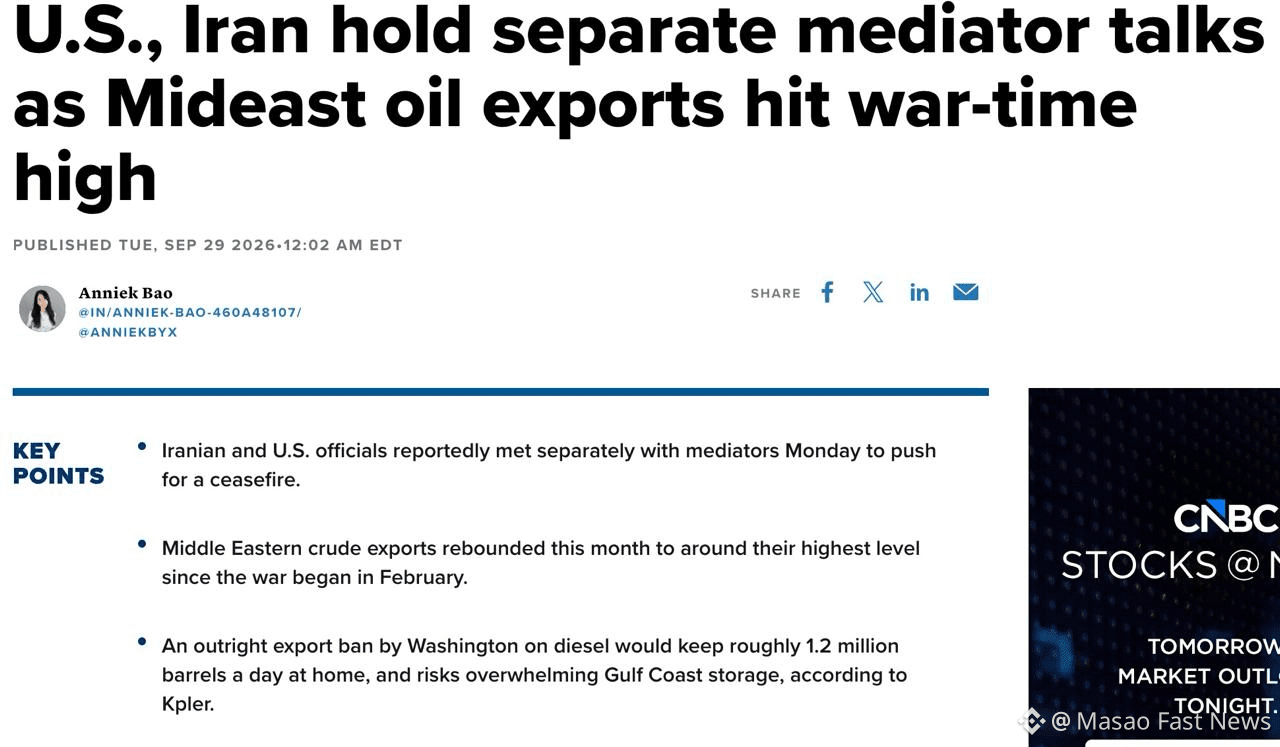
The backchannel channels are continuing to push negotiations between the U.S. and Iran in an effort to end the fighting and restore operations through the Strait of Hormuz. Iran is reportedly waiting for a response from the U.S. to a new proposal.
Under Tehran’s proposal, Iran wants the U.S. to lift port blockades, ease oil-related sanctions, and release part of the frozen assets. In return, Iran would reopen Hormuz and resume talks on the nuclear issue.
Even so, there are still significant differences between the two sides regarding conditions and the sequence of concessions. Washington also requires concrete progress related to Iran’s nuclear program.
On oil, Middle East crude exports in September have rebounded to nearly 80% of pre-war levels. However, oil flows through Hormuz remain significantly lower than before the conflict.
Personal view:
The most important point right now isn’t only whether the U.S. and Iran are negotiating, but whether the mediated exchanges can be turned into a practical, real-world agreement.
If Hormuz is reopened stably, supply risks could drop substantially and the market would gain an additional factor to cool off.
Conversely, if negotiations continue to stall, oil prices and the geopolitical risk premium may remain high, continuing to pressure inflation, Treasury yields, and risk assets such as stocks and crypto.
For now, I will closely track 3 variables: Hormuz, Brent prices, and Treasury yields. These could be key factors for gauging market sentiment in the near term.
👇 HOT COINS TRADING HERE 👇
$QNT
$SEI
$PUMP
🚨 U.S.–IRAN TALKS THROUGH MEDIATORS, HORMUZ STILL THE KEY BOTTLENECK
The backchannel channels are continuing to push negotiations between the U.S. and Iran in an effort to end the fighting and restore operations through the Strait of Hormuz. Iran is reportedly waiting for a response from the U.S. to a new proposal.
Under Tehran’s proposal, Iran wants the U.S. to lift port blockades, ease oil-related sanctions, and release part of the frozen assets. In return, Iran would reopen Hormuz and resume talks on the nuclear issue.
Even so, there are still significant differences between the two sides regarding conditions and the sequence of concessions. Washington also requires concrete progress related to Iran’s nuclear program.
On oil, Middle East crude exports in September have rebounded to nearly 80% of pre-war levels. However, oil flows through Hormuz remain significantly lower than before the conflict.
Personal view:
The most important point right now isn’t only whether the U.S. and Iran are negotiating, but whether the mediated exchanges can be turned into a practical, real-world agreement.
If Hormuz is reopened stably, supply risks could drop substantially and the market would gain an additional factor to cool off.
Conversely, if negotiations continue to stall, oil prices and the geopolitical risk premium may remain high, continuing to pressure inflation, Treasury yields, and risk assets such as stocks and crypto.
For now, I will closely track 3 variables: Hormuz, Brent prices, and Treasury yields. These could be key factors for gauging market sentiment in the near term.
👇 HOT COINS TRADING HERE 👇
$QNT
$SEI
$PUMP
The backchannel channels are continuing to push negotiations between the U.S. and Iran in an effort to end the fighting and restore operations through the Strait of Hormuz. Iran is reportedly waiting for a response from the U.S. to a new proposal.
Under Tehran’s proposal, Iran wants the U.S. to lift port blockades, ease oil-related sanctions, and release part of the frozen assets. In return, Iran would reopen Hormuz and resume talks on the nuclear issue.
Even so, there are still significant differences between the two sides regarding conditions and the sequence of concessions. Washington also requires concrete progress related to Iran’s nuclear program.
On oil, Middle East crude exports in September have rebounded to nearly 80% of pre-war levels. However, oil flows through Hormuz remain significantly lower than before the conflict.
Personal view:
The most important point right now isn’t only whether the U.S. and Iran are negotiating, but whether the mediated exchanges can be turned into a practical, real-world agreement.
If Hormuz is reopened stably, supply risks could drop substantially and the market would gain an additional factor to cool off.
Conversely, if negotiations continue to stall, oil prices and the geopolitical risk premium may remain high, continuing to pressure inflation, Treasury yields, and risk assets such as stocks and crypto.
For now, I will closely track 3 variables: Hormuz, Brent prices, and Treasury yields. These could be key factors for gauging market sentiment in the near term.
👇 HOT COINS TRADING HERE 👇
$QNT
$SEI
$PUMP
3
2.1k
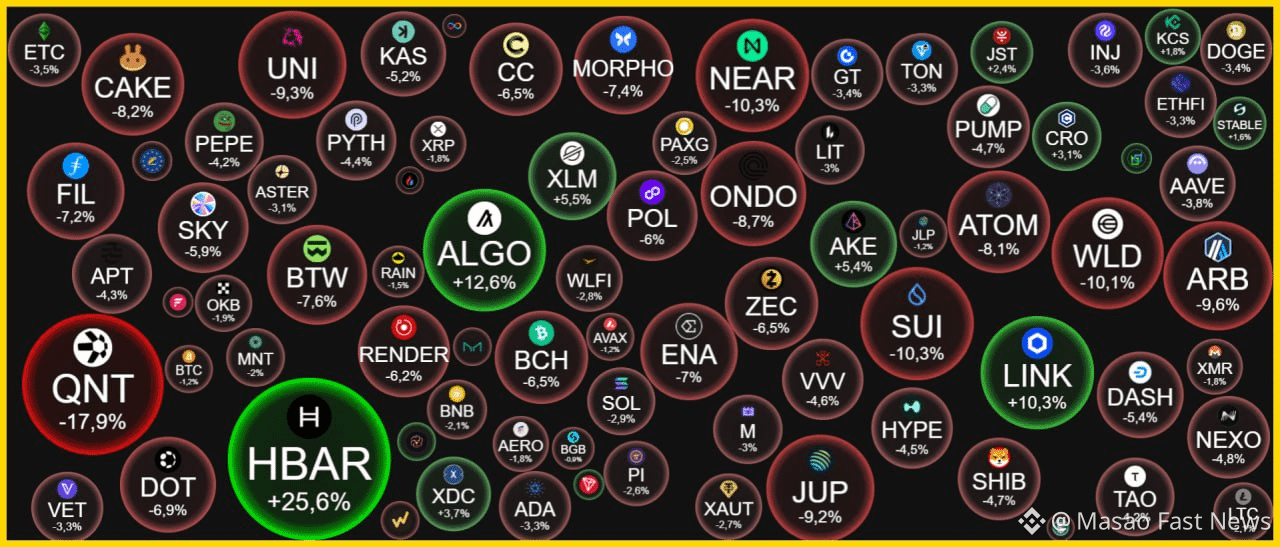
🚨 U.S. INTEREST RATES HIT A 19-YEAR PEAK, BTC GETS SWEPT TO $82K
U.S. bond yields continue to rise, with the 10Y yield hitting its highest level in 19 years. Brent remains above $100 as ongoing U.S.–Iran tensions continue to raise concerns about energy supply.
Gold and silver drop sharply, U.S. stocks close in the red, and BTC was at one point swept down to around $82K before rebounding.
However, not every altcoin is falling. $HBAR rose by about 26%, $ALGO +13%, while $LINK gained about 10% after ecosystem-related updates involving Chainlink.
Personal viewpoint:
The most noteworthy factors right now are still Treasury yields and crude oil prices.
When yields are high and Brent stays pinned above $100 at the same time, the market faces dual pressure from funding costs and inflation risk. This is an unfavorable environment for risk assets such as stocks and crypto.
BTC’s rebound after being swept through $82K shows there’s still buying power in lower levels, but to keep the market more stable, I think we need to monitor how yields and oil respond first.
As for the $HBAR, $ALGO, and $LINK group, they’re seeing relatively different flows thanks to their own specific catalysts. This is something to watch closely if the broader market remains weak.
👇 HOT COINS TRADING HERE 👇
$QNT
{future}(QNTUSDT)
$SEI
{future}(SEIUSDT)
$PUMP
{future}(PUMPUSDT)
🚨 U.S. INTEREST RATES HIT A 19-YEAR PEAK, BTC GETS SWEPT TO $82K
U.S. bond yields continue to rise, with the 10Y yield hitting its highest level in 19 years. Brent remains above $100 as ongoing U.S.–Iran tensions continue to raise concerns about energy supply.
Gold and silver drop sharply, U.S. stocks close in the red, and BTC was at one point swept down to around $82K before rebounding.
However, not every altcoin is falling. $HBAR rose by about 26%, $ALGO +13%, while $LINK gained about 10% after ecosystem-related updates involving Chainlink.
Personal viewpoint:
The most noteworthy factors right now are still Treasury yields and crude oil prices.
When yields are high and Brent stays pinned above $100 at the same time, the market faces dual pressure from funding costs and inflation risk. This is an unfavorable environment for risk assets such as stocks and crypto.
BTC’s rebound after being swept through $82K shows there’s still buying power in lower levels, but to keep the market more stable, I think we need to monitor how yields and oil respond first.
As for the $HBAR, $ALGO, and $LINK group, they’re seeing relatively different flows thanks to their own specific catalysts. This is something to watch closely if the broader market remains weak.
👇 HOT COINS TRADING HERE 👇
$QNT
$SEI
$PUMP
U.S. bond yields continue to rise, with the 10Y yield hitting its highest level in 19 years. Brent remains above $100 as ongoing U.S.–Iran tensions continue to raise concerns about energy supply.
Gold and silver drop sharply, U.S. stocks close in the red, and BTC was at one point swept down to around $82K before rebounding.
However, not every altcoin is falling. $HBAR rose by about 26%, $ALGO +13%, while $LINK gained about 10% after ecosystem-related updates involving Chainlink.
Personal viewpoint:
The most noteworthy factors right now are still Treasury yields and crude oil prices.
When yields are high and Brent stays pinned above $100 at the same time, the market faces dual pressure from funding costs and inflation risk. This is an unfavorable environment for risk assets such as stocks and crypto.
BTC’s rebound after being swept through $82K shows there’s still buying power in lower levels, but to keep the market more stable, I think we need to monitor how yields and oil respond first.
As for the $HBAR, $ALGO, and $LINK group, they’re seeing relatively different flows thanks to their own specific catalysts. This is something to watch closely if the broader market remains weak.
👇 HOT COINS TRADING HERE 👇
$QNT
$SEI
$PUMP
2.2k
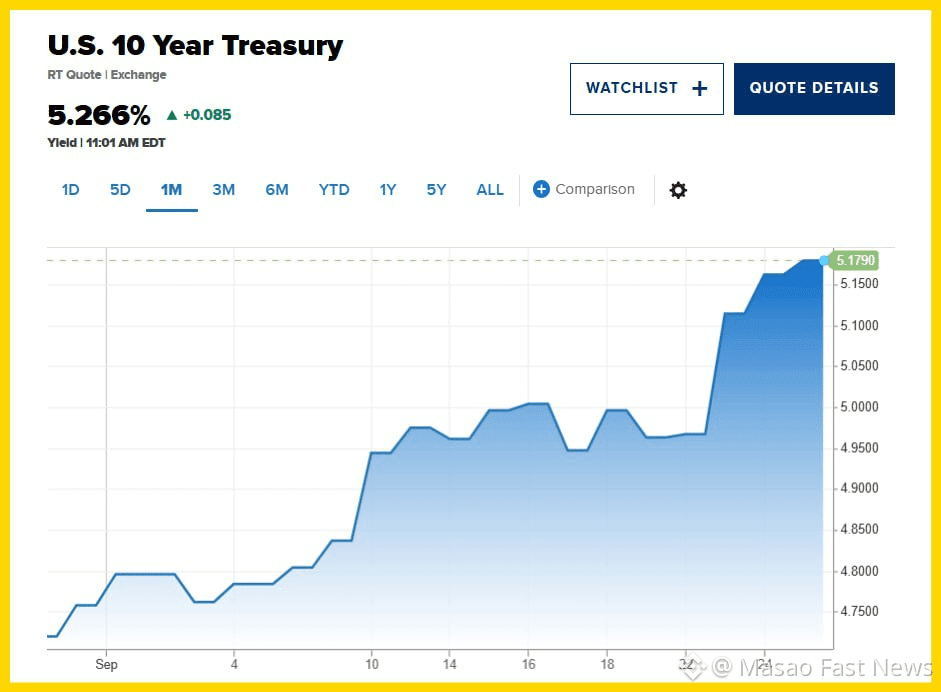
🚨 BTC HITS $82K, GOLD SLIPS TO $4.1K AS US YIELDS RISE
The financial market is awash in red.
BTC at one point fell to about $82.7K, while gold dropped to $4.1K as US Treasury yields and the US dollar surged sharply. US stocks also face pressure as they enter a new trading session.
Notably, the US and China have just announced a 30-30 trade mechanism, under which each side proposes a list of about $30B worth of goods that could qualify for preferential tariffs.
The China-side list being considered includes 1,619 US products, while the US side lists 77 Chinese products. The two parties have not yet released the specific tariff rates or the implementation timeline.
Personal view:
What I find most notable today isn’t the fact that BTC is down or gold is down individually, but that US bond yields are becoming a factor pressuring multiple asset groups at the same time.
When yields rise, risk assets such as stocks and crypto may come under pressure due to higher cost of capital and money flows tending to become more cautious.
Gold is also being affected similarly as yields and the USD move up together.
On the other hand, the US–China 30-30 deal could help ease some trade-related risks. However, this is only a tariff-preference framework; it can’t yet be considered as a $60B tariff cut that has been implemented immediately.
Therefore, in the short term, I’ll be paying more attention to Treasury yields, the USD, and how US stocks react. If yields continue to rise strongly, pressure on BTC may still persist even if US–China trade tensions ease.
👇 HOT COINS TRADING HERE 👇
$QNT
{future}(QNTUSDT)
$SEI
{spot}(SEIUSDT)
$PUMP
{future}(PUMPUSDT)
🚨 BTC HITS $82K, GOLD SLIPS TO $4.1K AS US YIELDS RISE
The financial market is awash in red.
BTC at one point fell to about $82.7K, while gold dropped to $4.1K as US Treasury yields and the US dollar surged sharply. US stocks also face pressure as they enter a new trading session.
Notably, the US and China have just announced a 30-30 trade mechanism, under which each side proposes a list of about $30B worth of goods that could qualify for preferential tariffs.
The China-side list being considered includes 1,619 US products, while the US side lists 77 Chinese products. The two parties have not yet released the specific tariff rates or the implementation timeline.
Personal view:
What I find most notable today isn’t the fact that BTC is down or gold is down individually, but that US bond yields are becoming a factor pressuring multiple asset groups at the same time.
When yields rise, risk assets such as stocks and crypto may come under pressure due to higher cost of capital and money flows tending to become more cautious.
Gold is also being affected similarly as yields and the USD move up together.
On the other hand, the US–China 30-30 deal could help ease some trade-related risks. However, this is only a tariff-preference framework; it can’t yet be considered as a $60B tariff cut that has been implemented immediately.
Therefore, in the short term, I’ll be paying more attention to Treasury yields, the USD, and how US stocks react. If yields continue to rise strongly, pressure on BTC may still persist even if US–China trade tensions ease.
👇 HOT COINS TRADING HERE 👇
$QNT
$SEI
$PUMP
The financial market is awash in red.
BTC at one point fell to about $82.7K, while gold dropped to $4.1K as US Treasury yields and the US dollar surged sharply. US stocks also face pressure as they enter a new trading session.
Notably, the US and China have just announced a 30-30 trade mechanism, under which each side proposes a list of about $30B worth of goods that could qualify for preferential tariffs.
The China-side list being considered includes 1,619 US products, while the US side lists 77 Chinese products. The two parties have not yet released the specific tariff rates or the implementation timeline.
Personal view:
What I find most notable today isn’t the fact that BTC is down or gold is down individually, but that US bond yields are becoming a factor pressuring multiple asset groups at the same time.
When yields rise, risk assets such as stocks and crypto may come under pressure due to higher cost of capital and money flows tending to become more cautious.
Gold is also being affected similarly as yields and the USD move up together.
On the other hand, the US–China 30-30 deal could help ease some trade-related risks. However, this is only a tariff-preference framework; it can’t yet be considered as a $60B tariff cut that has been implemented immediately.
Therefore, in the short term, I’ll be paying more attention to Treasury yields, the USD, and how US stocks react. If yields continue to rise strongly, pressure on BTC may still persist even if US–China trade tensions ease.
👇 HOT COINS TRADING HERE 👇
$QNT
$SEI
$PUMP

1.3k
Verified
🚨 STRATEGY CONTINUES TO BUY MORE BTC, HOLDING NEAR 848,000 BTC
The Strategy just bought an additional 1,665 BTC at an average price of $85,681/BTC, for a total value of about $142.7M.
This is the second consecutive week that Strategy has bought Bitcoin, bringing its total BTC holdings up to 847,666 BTC, with a total cost basis of about $63.95B.
In the same week, the company also repurchased 1.53 million shares of STRC, valued at about $151.7M.
Strategy said it currently has about $6.02B in assets in USD, including $5.02B in USD Reserve and $1B in cash. This reserve has a term of roughly 3.8 years to support obligations related to dividends and interest payments.
Personal view:
What’s noteworthy is that Strategy is returning to a BTC accumulation pace after a period of pausing purchases to strengthen its balance sheet.
This buy was funded primarily by selling MSTR shares rather than simply using all available cash to buy BTC. That suggests Strategy is still maintaining a capital-raising model in the market to expand its Bitcoin holdings.
The fact that the company just bought BTC while also repurchasing STRC indicates that it is managing both its Bitcoin treasury and its capital structure at the same time.
However, the BTC position is very large, so Strategy’s financial results depend significantly on Bitcoin price volatility. Therefore, I will continue to monitor whether the company maintains this buying pace in the coming weeks.
👇 HOT COINS TRADES HERE 👇
$QNT
{future}(QNTUSDT)
$SEI
{future}(SEIUSDT)
$PUMP
{future}(PUMPUSDT)
🚨 STRATEGY CONTINUES TO BUY MORE BTC, HOLDING NEAR 848,000 BTC
The Strategy just bought an additional 1,665 BTC at an average price of $85,681/BTC, for a total value of about $142.7M.
This is the second consecutive week that Strategy has bought Bitcoin, bringing its total BTC holdings up to 847,666 BTC, with a total cost basis of about $63.95B.
In the same week, the company also repurchased 1.53 million shares of STRC, valued at about $151.7M.
Strategy said it currently has about $6.02B in assets in USD, including $5.02B in USD Reserve and $1B in cash. This reserve has a term of roughly 3.8 years to support obligations related to dividends and interest payments.
Personal view:
What’s noteworthy is that Strategy is returning to a BTC accumulation pace after a period of pausing purchases to strengthen its balance sheet.
This buy was funded primarily by selling MSTR shares rather than simply using all available cash to buy BTC. That suggests Strategy is still maintaining a capital-raising model in the market to expand its Bitcoin holdings.
The fact that the company just bought BTC while also repurchasing STRC indicates that it is managing both its Bitcoin treasury and its capital structure at the same time.
However, the BTC position is very large, so Strategy’s financial results depend significantly on Bitcoin price volatility. Therefore, I will continue to monitor whether the company maintains this buying pace in the coming weeks.
👇 HOT COINS TRADES HERE 👇
$QNT
$SEI
$PUMP
The Strategy just bought an additional 1,665 BTC at an average price of $85,681/BTC, for a total value of about $142.7M.
This is the second consecutive week that Strategy has bought Bitcoin, bringing its total BTC holdings up to 847,666 BTC, with a total cost basis of about $63.95B.
In the same week, the company also repurchased 1.53 million shares of STRC, valued at about $151.7M.
Strategy said it currently has about $6.02B in assets in USD, including $5.02B in USD Reserve and $1B in cash. This reserve has a term of roughly 3.8 years to support obligations related to dividends and interest payments.
Personal view:
What’s noteworthy is that Strategy is returning to a BTC accumulation pace after a period of pausing purchases to strengthen its balance sheet.
This buy was funded primarily by selling MSTR shares rather than simply using all available cash to buy BTC. That suggests Strategy is still maintaining a capital-raising model in the market to expand its Bitcoin holdings.
The fact that the company just bought BTC while also repurchasing STRC indicates that it is managing both its Bitcoin treasury and its capital structure at the same time.
However, the BTC position is very large, so Strategy’s financial results depend significantly on Bitcoin price volatility. Therefore, I will continue to monitor whether the company maintains this buying pace in the coming weeks.
👇 HOT COINS TRADES HERE 👇
$QNT
$SEI
$PUMP

605
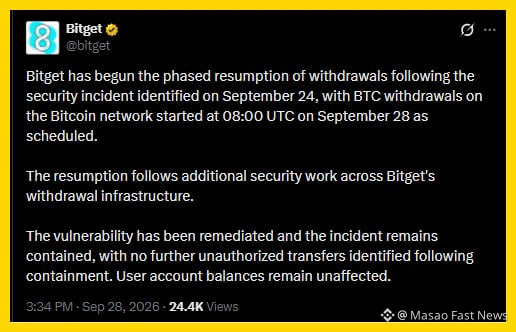
🚨 BITGET RESUMES WITHDRAWALS AFTER THE HACK
Bitget has started reopening the withdrawal feature in phases, with BTC on the Bitcoin network being the first to be enabled.
According to Bitget, before restarting, the exchange checked the withdrawal system and fixed the vulnerability. The incident has been contained and users’ account balances are not affected.
Next resumption schedule:
29/9 - 15:00: ETH on Ethereum, BSC, Arbitrum, Base and Optimism.
30/9 - 15:00: USDT on Ethereum, BSC, Solana and Tron.
2/10 - 15:00: Remaining tokens, fiat, and P2P.
Personal view:
By reopening withdrawals in groups rather than enabling everything at once, Bitget appears to be prioritizing the verification of each system before fully restoring services.
This is an important step after a major security incident, but I think users should still monitor the withdrawal reopening process in the coming days—especially the handling of transactions and any subsequent security alerts.
The positive point is that Bitget states users’ account balances are not affected. However, the extent of trust recovery will depend heavily on whether the system runs stably after all functions are fully restored.
👇 HOT COINS TRADING HERE 👇
$QNT
{future}(QNTUSDT)
$SEI
{future}(SEIUSDT)
$PUMP
{future}(PUMPUSDT)
🚨 BITGET RESUMES WITHDRAWALS AFTER THE HACK
Bitget has started reopening the withdrawal feature in phases, with BTC on the Bitcoin network being the first to be enabled.
According to Bitget, before restarting, the exchange checked the withdrawal system and fixed the vulnerability. The incident has been contained and users’ account balances are not affected.
Next resumption schedule:
29/9 - 15:00: ETH on Ethereum, BSC, Arbitrum, Base and Optimism.
30/9 - 15:00: USDT on Ethereum, BSC, Solana and Tron.
2/10 - 15:00: Remaining tokens, fiat, and P2P.
Personal view:
By reopening withdrawals in groups rather than enabling everything at once, Bitget appears to be prioritizing the verification of each system before fully restoring services.
This is an important step after a major security incident, but I think users should still monitor the withdrawal reopening process in the coming days—especially the handling of transactions and any subsequent security alerts.
The positive point is that Bitget states users’ account balances are not affected. However, the extent of trust recovery will depend heavily on whether the system runs stably after all functions are fully restored.
👇 HOT COINS TRADING HERE 👇
$QNT
$SEI
$PUMP
Bitget has started reopening the withdrawal feature in phases, with BTC on the Bitcoin network being the first to be enabled.
According to Bitget, before restarting, the exchange checked the withdrawal system and fixed the vulnerability. The incident has been contained and users’ account balances are not affected.
Next resumption schedule:
29/9 - 15:00: ETH on Ethereum, BSC, Arbitrum, Base and Optimism.
30/9 - 15:00: USDT on Ethereum, BSC, Solana and Tron.
2/10 - 15:00: Remaining tokens, fiat, and P2P.
Personal view:
By reopening withdrawals in groups rather than enabling everything at once, Bitget appears to be prioritizing the verification of each system before fully restoring services.
This is an important step after a major security incident, but I think users should still monitor the withdrawal reopening process in the coming days—especially the handling of transactions and any subsequent security alerts.
The positive point is that Bitget states users’ account balances are not affected. However, the extent of trust recovery will depend heavily on whether the system runs stably after all functions are fully restored.
👇 HOT COINS TRADING HERE 👇
$QNT
$SEI
$PUMP
1.1k
Partly True
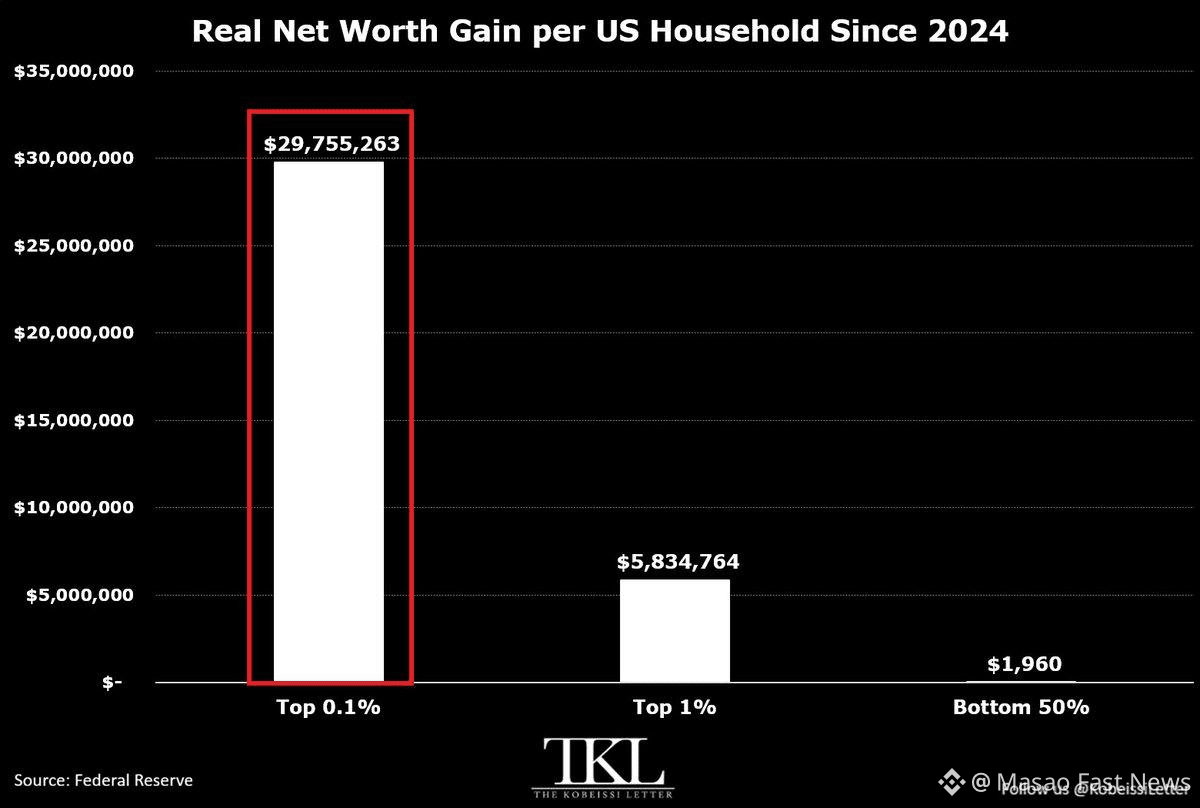
🚨 The wealth gap in the U.S. is widening
From Q4/2024 to Q2/2026, after adjusting for inflation:
Top 0.1%: average net worth per household increased by $29.76 million.
Top 1%: up by about $5.83 million per household.
Meanwhile, the bottom 50% of households with the lowest wealth saw only about a $1,960 increase per household.
In total, the top 0.1% increased wealth by around $4.44 trillion, while the bottom 50% of households increased by only about $198 billion.
Fed data also shows that U.S. household net worth surged in Q2/2026, mainly due to rising stock values.
Personal viewpoint:
What’s notable is that wealthy people usually own a lot of stocks, investment funds, real estate, and businesses. When the values of these assets rise, their net worth grows very quickly.
Conversely, the low-wealth group relies more on wages and cash, so they benefit less from the momentum of the financial markets.
Therefore, when looking at an economy where assets and stocks are rising strongly, I think we also need to look at who owns most of that wealth.
👇 HOT COINS TRADING HERE 👇
$QNT
$SEI
{future}(QNTUSDT)
{future}(SEIUSDT)
$PUMP
{future}(PUMPUSDT)
🚨 The wealth gap in the U.S. is widening
From Q4/2024 to Q2/2026, after adjusting for inflation:
Top 0.1%: average net worth per household increased by $29.76 million.
Top 1%: up by about $5.83 million per household.
Meanwhile, the bottom 50% of households with the lowest wealth saw only about a $1,960 increase per household.
In total, the top 0.1% increased wealth by around $4.44 trillion, while the bottom 50% of households increased by only about $198 billion.
Fed data also shows that U.S. household net worth surged in Q2/2026, mainly due to rising stock values.
Personal viewpoint:
What’s notable is that wealthy people usually own a lot of stocks, investment funds, real estate, and businesses. When the values of these assets rise, their net worth grows very quickly.
Conversely, the low-wealth group relies more on wages and cash, so they benefit less from the momentum of the financial markets.
Therefore, when looking at an economy where assets and stocks are rising strongly, I think we also need to look at who owns most of that wealth.
👇 HOT COINS TRADING HERE 👇
$QNT
$SEI
$PUMP
From Q4/2024 to Q2/2026, after adjusting for inflation:
Top 0.1%: average net worth per household increased by $29.76 million.
Top 1%: up by about $5.83 million per household.
Meanwhile, the bottom 50% of households with the lowest wealth saw only about a $1,960 increase per household.
In total, the top 0.1% increased wealth by around $4.44 trillion, while the bottom 50% of households increased by only about $198 billion.
Fed data also shows that U.S. household net worth surged in Q2/2026, mainly due to rising stock values.
Personal viewpoint:
What’s notable is that wealthy people usually own a lot of stocks, investment funds, real estate, and businesses. When the values of these assets rise, their net worth grows very quickly.
Conversely, the low-wealth group relies more on wages and cash, so they benefit less from the momentum of the financial markets.
Therefore, when looking at an economy where assets and stocks are rising strongly, I think we also need to look at who owns most of that wealth.
👇 HOT COINS TRADING HERE 👇
$QNT
$SEI
$PUMP
1.5k
Partly True
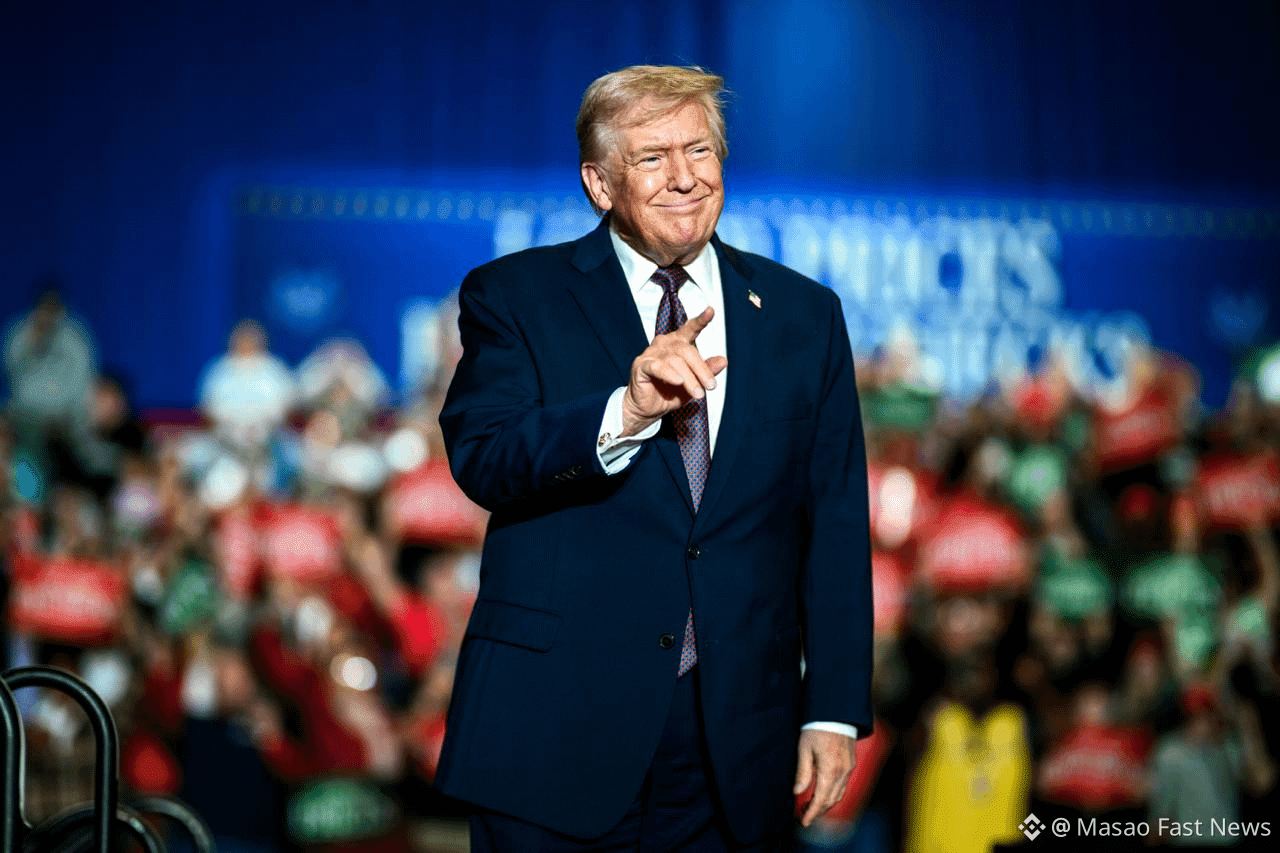
🚨 TRUMP WILL SOON MAKE AN ANNOUNCEMENT FROM THE OVAL OFFICE
U.S. President Donald Trump is expected to deliver an announcement at the Oval Office at 2 PM ET on Monday, September 28.
According to the White House schedule, the speaking time has been confirmed, but the specific content of the announcement has not yet been released.
Personal view:
For the crypto market, the key point right now is that you should not guess the content of the announcement.
Any information related to economic, trade, AI, or geopolitical policies may affect market sentiment, bond yields, and interest-rate expectations.
In particular, the announcement comes after a week full of activities involving the U.S. - China and AI, but there is currently no basis to confirm that this is the main topic of the speech.
I will wait for the official content before assessing the impact on BTC and the crypto market, rather than trading based on rumors.
👇 HOT COINS TRADING HERE 👇
$QNT
{future}(QNTUSDT)
$SEI
{future}(SEIUSDT)
$PUMP
{future}(PUMPUSDT)
🚨 TRUMP WILL SOON MAKE AN ANNOUNCEMENT FROM THE OVAL OFFICE
U.S. President Donald Trump is expected to deliver an announcement at the Oval Office at 2 PM ET on Monday, September 28.
According to the White House schedule, the speaking time has been confirmed, but the specific content of the announcement has not yet been released.
Personal view:
For the crypto market, the key point right now is that you should not guess the content of the announcement.
Any information related to economic, trade, AI, or geopolitical policies may affect market sentiment, bond yields, and interest-rate expectations.
In particular, the announcement comes after a week full of activities involving the U.S. - China and AI, but there is currently no basis to confirm that this is the main topic of the speech.
I will wait for the official content before assessing the impact on BTC and the crypto market, rather than trading based on rumors.
👇 HOT COINS TRADING HERE 👇
$QNT
$SEI
$PUMP
U.S. President Donald Trump is expected to deliver an announcement at the Oval Office at 2 PM ET on Monday, September 28.
According to the White House schedule, the speaking time has been confirmed, but the specific content of the announcement has not yet been released.
Personal view:
For the crypto market, the key point right now is that you should not guess the content of the announcement.
Any information related to economic, trade, AI, or geopolitical policies may affect market sentiment, bond yields, and interest-rate expectations.
In particular, the announcement comes after a week full of activities involving the U.S. - China and AI, but there is currently no basis to confirm that this is the main topic of the speech.
I will wait for the official content before assessing the impact on BTC and the crypto market, rather than trading based on rumors.
👇 HOT COINS TRADING HERE 👇
$QNT
$SEI
$PUMP
1
3
4.1k
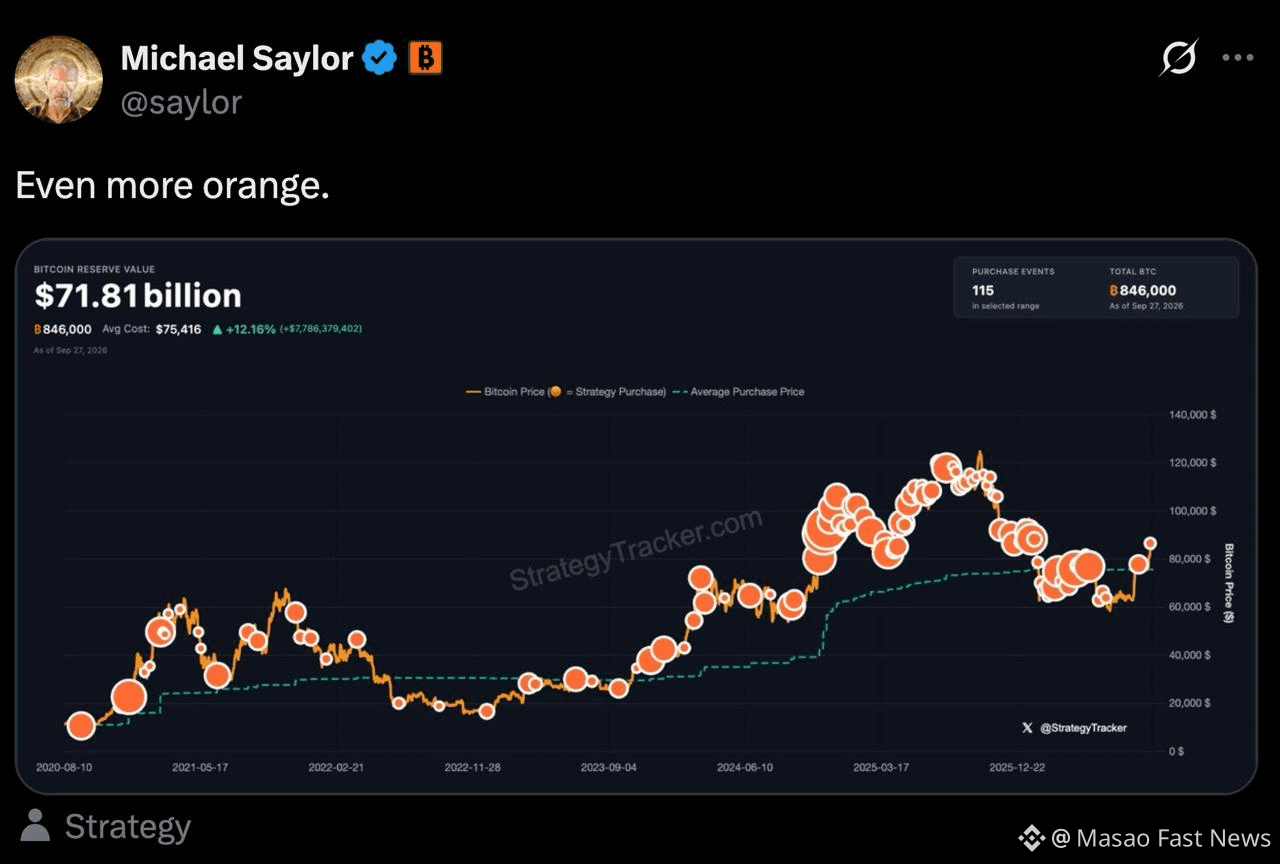
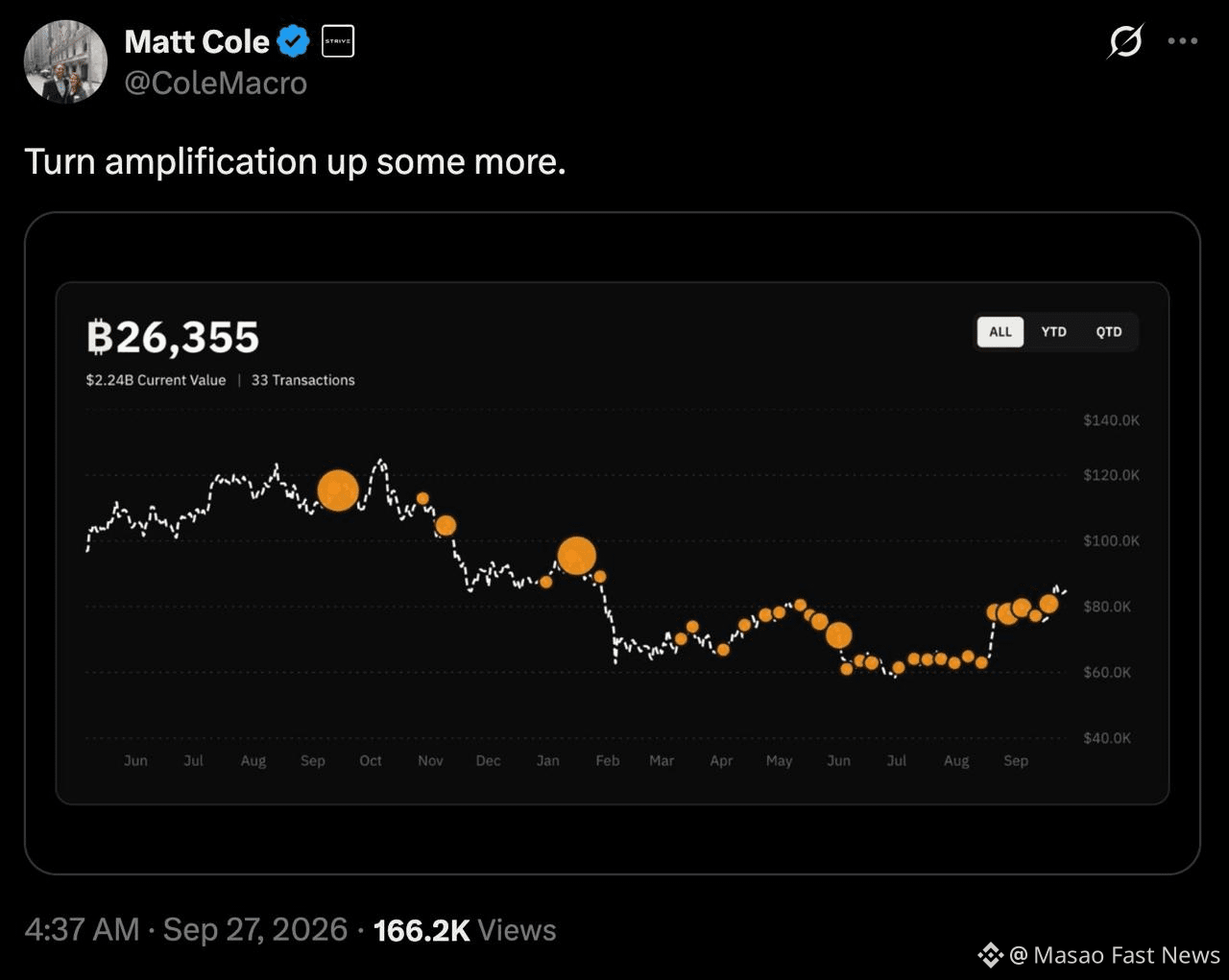
🚨 STRATEGY AND STRIVE TOGETHER SEND SIGNALS WILL BUY MORE BTC
Both Strategy and Strive are sending signals indicating they may continue to increase their Bitcoin holdings in the coming period.
These are two companies pursuing a BTC accumulation strategy on their balance sheets, so any new buying activity may draw attention from the crypto market.
My personal view:
What I’m interested in here is not just a one-time purchase of BTC, but whether the corporate model of holding Bitcoin continues to be maintained.
If Strategy and Strive truly continue buying, demand from the public-company group will create an additional source of BTC demand alongside ETFs and institutional investors.
However, it’s important to clearly distinguish between signals indicating preparation to buy and completed trades. Only when there is an official announcement of the number of BTC and the purchase timing can we assess the true scale of the impact.
For BTC, I’ll track ETF inflows, market liquidity, and price reaction once the new purchases are confirmed.
👇 HOT COINS TRADING HERE 👇
$QNT
{future}(QNTUSDT)
$SEI
{future}(SEIUSDT)
$PUMP
{future}(PUMPUSDT)
🚨 STRATEGY AND STRIVE TOGETHER SEND SIGNALS WILL BUY MORE BTC
Both Strategy and Strive are sending signals indicating they may continue to increase their Bitcoin holdings in the coming period.
These are two companies pursuing a BTC accumulation strategy on their balance sheets, so any new buying activity may draw attention from the crypto market.
My personal view:
What I’m interested in here is not just a one-time purchase of BTC, but whether the corporate model of holding Bitcoin continues to be maintained.
If Strategy and Strive truly continue buying, demand from the public-company group will create an additional source of BTC demand alongside ETFs and institutional investors.
However, it’s important to clearly distinguish between signals indicating preparation to buy and completed trades. Only when there is an official announcement of the number of BTC and the purchase timing can we assess the true scale of the impact.
For BTC, I’ll track ETF inflows, market liquidity, and price reaction once the new purchases are confirmed.
👇 HOT COINS TRADING HERE 👇
$QNT
$SEI
$PUMP
Both Strategy and Strive are sending signals indicating they may continue to increase their Bitcoin holdings in the coming period.
These are two companies pursuing a BTC accumulation strategy on their balance sheets, so any new buying activity may draw attention from the crypto market.
My personal view:
What I’m interested in here is not just a one-time purchase of BTC, but whether the corporate model of holding Bitcoin continues to be maintained.
If Strategy and Strive truly continue buying, demand from the public-company group will create an additional source of BTC demand alongside ETFs and institutional investors.
However, it’s important to clearly distinguish between signals indicating preparation to buy and completed trades. Only when there is an official announcement of the number of BTC and the purchase timing can we assess the true scale of the impact.
For BTC, I’ll track ETF inflows, market liquidity, and price reaction once the new purchases are confirmed.
👇 HOT COINS TRADING HERE 👇
$QNT
$SEI
$PUMP
2
686
Verified
🚨 BESSENT CALLS FOR THE FED TO BE MORE “OPEN” ON INTEREST RATES
U.S. Treasury Secretary Scott Bessent said the Fed should keep an open stance on interest rates, as AI and regulatory easing could boost productivity and help rein in inflation.
Bessent argued that the U.S. economy has productivity-growth drivers similar to—possibly even larger than—the Internet boom of the 1990s.
Personal view:
What’s noteworthy here isn’t that Bessent directly asked the Fed to cut rates, but rather the way he brings AI and productivity into the monetary policy narrative.
If AI truly helps businesses increase output without creating significant additional cost pressures, the Fed could have more room to sustain growth without tightening monetary policy too aggressively.
However, this is still more of an expectation than clearly proven data in the short term. The Minneapolis Fed also noted that the impact of AI on productivity and inflation remains uncertain, while investment in AI infrastructure could simultaneously add pressure on demand and interest rates.
As for crypto, I’ll be watching the reaction in bond yields and interest-rate expectations more than just this statement. If the market starts pricing in a less hawkish Fed, that could be a supportive factor for risk assets.
👇 HOT COIN TRADES HERE 👇
$QNT
{future}(QNTUSDT)
$SEI
{future}(SEIUSDT)
$PUMP
{future}(PUMPUSDT)
🚨 BESSENT CALLS FOR THE FED TO BE MORE “OPEN” ON INTEREST RATES
U.S. Treasury Secretary Scott Bessent said the Fed should keep an open stance on interest rates, as AI and regulatory easing could boost productivity and help rein in inflation.
Bessent argued that the U.S. economy has productivity-growth drivers similar to—possibly even larger than—the Internet boom of the 1990s.
Personal view:
What’s noteworthy here isn’t that Bessent directly asked the Fed to cut rates, but rather the way he brings AI and productivity into the monetary policy narrative.
If AI truly helps businesses increase output without creating significant additional cost pressures, the Fed could have more room to sustain growth without tightening monetary policy too aggressively.
However, this is still more of an expectation than clearly proven data in the short term. The Minneapolis Fed also noted that the impact of AI on productivity and inflation remains uncertain, while investment in AI infrastructure could simultaneously add pressure on demand and interest rates.
As for crypto, I’ll be watching the reaction in bond yields and interest-rate expectations more than just this statement. If the market starts pricing in a less hawkish Fed, that could be a supportive factor for risk assets.
👇 HOT COIN TRADES HERE 👇
$QNT
$SEI
$PUMP
U.S. Treasury Secretary Scott Bessent said the Fed should keep an open stance on interest rates, as AI and regulatory easing could boost productivity and help rein in inflation.
Bessent argued that the U.S. economy has productivity-growth drivers similar to—possibly even larger than—the Internet boom of the 1990s.
Personal view:
What’s noteworthy here isn’t that Bessent directly asked the Fed to cut rates, but rather the way he brings AI and productivity into the monetary policy narrative.
If AI truly helps businesses increase output without creating significant additional cost pressures, the Fed could have more room to sustain growth without tightening monetary policy too aggressively.
However, this is still more of an expectation than clearly proven data in the short term. The Minneapolis Fed also noted that the impact of AI on productivity and inflation remains uncertain, while investment in AI infrastructure could simultaneously add pressure on demand and interest rates.
As for crypto, I’ll be watching the reaction in bond yields and interest-rate expectations more than just this statement. If the market starts pricing in a less hawkish Fed, that could be a supportive factor for risk assets.
👇 HOT COIN TRADES HERE 👇
$QNT
$SEI
$PUMP


1
894
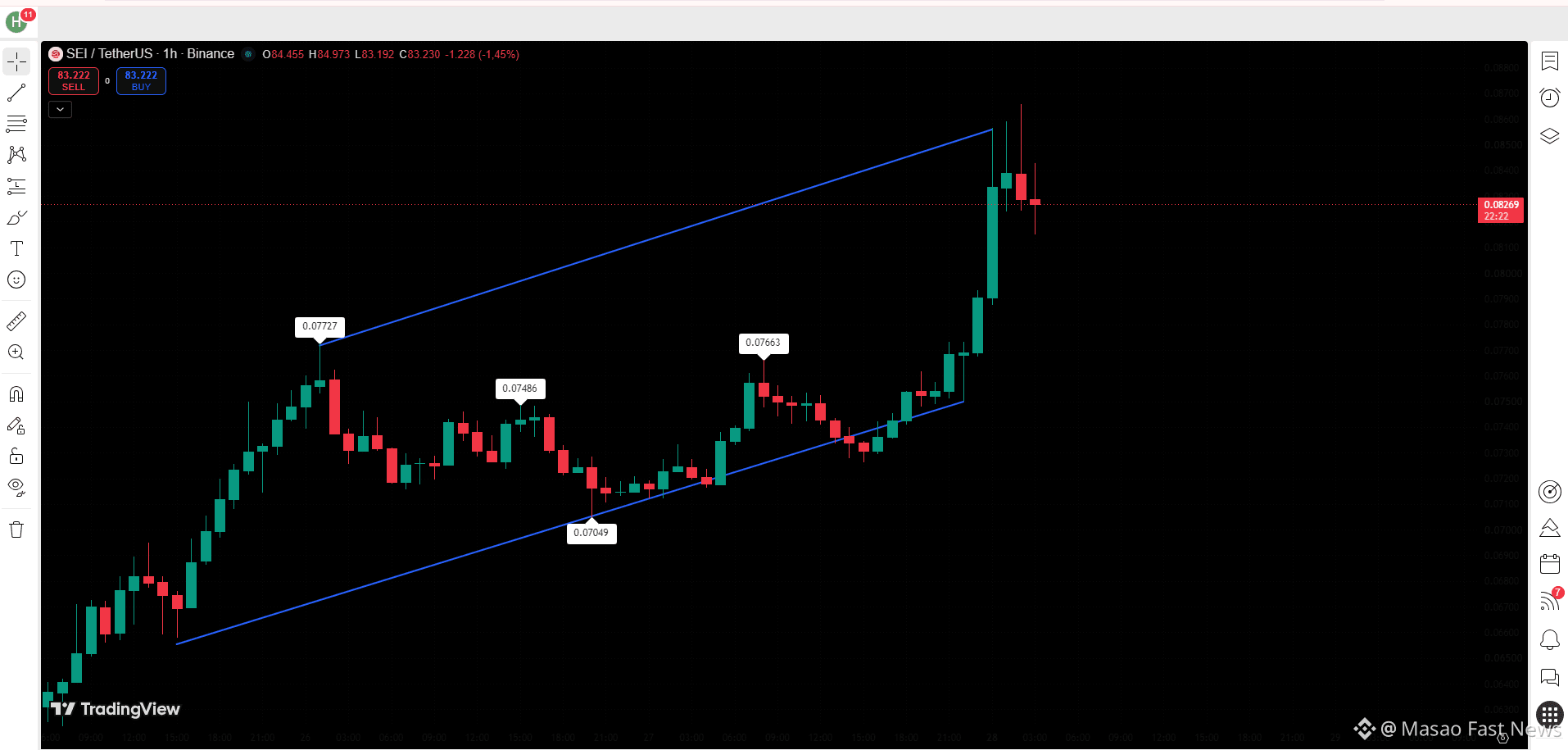
$SEI H1 — STRENGTHENING, WAIT FOR THE PRICE TO RETRACE
SEI just had a very strong breakout from the 0.077 zone to 0.085+, with a sudden surge in volume.
After forming the 0.08666 peak, the price is currently correcting toward nearby support. I will wait for a reaction at this zone instead of chasing.
PLAN LONG 🟢 | $SEI
{future}(SEIUSDT)
Entry: 0.0810–0.0820
SL: 0.0788
TP1: 0.0845
TP2: 0.0870
TP3: 0.0900
Trigger: Price retests 0.0810–0.0820; support holds and an H1 pin-bar candle appears or an H1 close turns bullish again.
Personal view:
I lean LONG because the H1 trend is still up, and that breakout just now came with very large volume. However, after a fast run-up, a deeper pullback to absorb take-profit pressure is entirely possible.
The 0.0810–0.0820 zone is what I want to watch, because if it holds, the short-term up structure remains intact. I won’t enter immediately when price hits the Entry—I need to see clear buy-side reaction on H1.
If H1 closes below 0.0788, the LONG setup is invalid and it’s not worth trying to hold the trade.
Invalid: H1 closes below 0.0788.
No FOMO. Wait for a confirmed retest.
$SEI H1 — STRENGTHENING, WAIT FOR THE PRICE TO RETRACE
SEI just had a very strong breakout from the 0.077 zone to 0.085+, with a sudden surge in volume.
After forming the 0.08666 peak, the price is currently correcting toward nearby support. I will wait for a reaction at this zone instead of chasing.
PLAN LONG 🟢 | $SEI
Entry: 0.0810–0.0820
SL: 0.0788
TP1: 0.0845
TP2: 0.0870
TP3: 0.0900
Trigger: Price retests 0.0810–0.0820; support holds and an H1 pin-bar candle appears or an H1 close turns bullish again.
Personal view:
I lean LONG because the H1 trend is still up, and that breakout just now came with very large volume. However, after a fast run-up, a deeper pullback to absorb take-profit pressure is entirely possible.
The 0.0810–0.0820 zone is what I want to watch, because if it holds, the short-term up structure remains intact. I won’t enter immediately when price hits the Entry—I need to see clear buy-side reaction on H1.
If H1 closes below 0.0788, the LONG setup is invalid and it’s not worth trying to hold the trade.
Invalid: H1 closes below 0.0788.
No FOMO. Wait for a confirmed retest.
SEI just had a very strong breakout from the 0.077 zone to 0.085+, with a sudden surge in volume.
After forming the 0.08666 peak, the price is currently correcting toward nearby support. I will wait for a reaction at this zone instead of chasing.
PLAN LONG 🟢 | $SEI
Entry: 0.0810–0.0820
SL: 0.0788
TP1: 0.0845
TP2: 0.0870
TP3: 0.0900
Trigger: Price retests 0.0810–0.0820; support holds and an H1 pin-bar candle appears or an H1 close turns bullish again.
Personal view:
I lean LONG because the H1 trend is still up, and that breakout just now came with very large volume. However, after a fast run-up, a deeper pullback to absorb take-profit pressure is entirely possible.
The 0.0810–0.0820 zone is what I want to watch, because if it holds, the short-term up structure remains intact. I won’t enter immediately when price hits the Entry—I need to see clear buy-side reaction on H1.
If H1 closes below 0.0788, the LONG setup is invalid and it’s not worth trying to hold the trade.
Invalid: H1 closes below 0.0788.
No FOMO. Wait for a confirmed retest.
1
565
Log in to explore more content
Join global crypto users on Binance Square
⚡️ Get latest and useful information about crypto.
💬 Trusted by the world’s largest crypto exchange.
👍 Discover real insights from verified creators.
Email / Phone number