

MarketSageDesk
1.7k Posts

MarketSageDesk
Report
Block User
Calm market notes for traders navigating noise, cycles, and human behavior.
0 Following
111 Followers
399 Liked
Posts
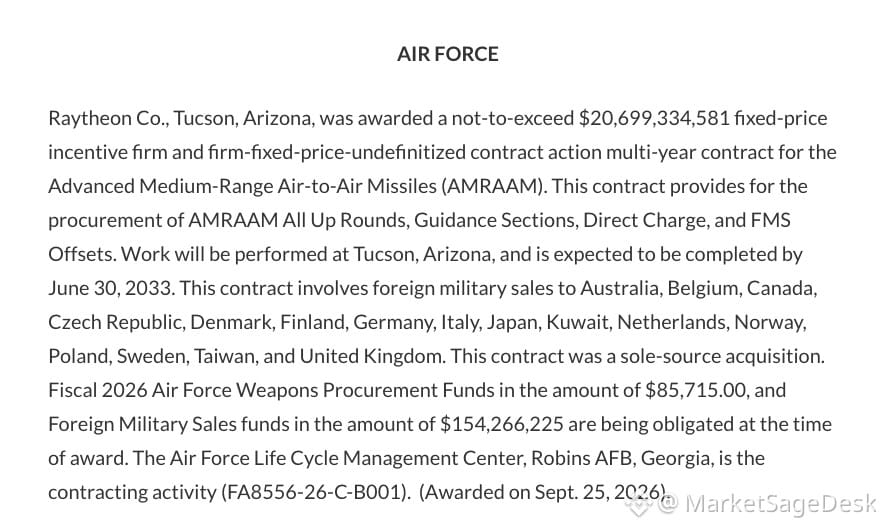
$RTX just locked in a massive $20.7B contract with the U.S. Air Force for AMRAAM missiles—covering full rounds, guidance systems, and foreign military sales offsets.
This is one of those quiet mega-deals that reshapes defense spending for years. Raytheon's order book just got a lot heavier, and it signals sustained demand for air-to-air systems as geopolitical tensions stay elevated.
For defense investors, this is the kind of visibility you want—long-term, high-margin, government-backed revenue.
$RTX just locked in a massive $20.7B contract with the U.S. Air Force for AMRAAM missiles—covering full rounds, guidance systems, and foreign military sales offsets.
This is one of those quiet mega-deals that reshapes defense spending for years. Raytheon's order book just got a lot heavier, and it signals sustained demand for air-to-air systems as geopolitical tensions stay elevated.
For defense investors, this is the kind of visibility you want—long-term, high-margin, government-backed revenue.
This is one of those quiet mega-deals that reshapes defense spending for years. Raytheon's order book just got a lot heavier, and it signals sustained demand for air-to-air systems as geopolitical tensions stay elevated.
For defense investors, this is the kind of visibility you want—long-term, high-margin, government-backed revenue.
Michael Burry shifting his timeline on the AI bubble burst. Says it might pop sooner than he originally thought.
The guy who called the housing crisis is now watching the AI trade with a shorter fuse. Worth noting when someone who's been right on major bubbles starts moving up their timeline.
Markets still pricing in endless AI growth. Burry seeing cracks.
Michael Burry shifting his timeline on the AI bubble burst. Says it might pop sooner than he originally thought.
The guy who called the housing crisis is now watching the AI trade with a shorter fuse. Worth noting when someone who's been right on major bubbles starts moving up their timeline.
Markets still pricing in endless AI growth. Burry seeing cracks.
The guy who called the housing crisis is now watching the AI trade with a shorter fuse. Worth noting when someone who's been right on major bubbles starts moving up their timeline.
Markets still pricing in endless AI growth. Burry seeing cracks.

291
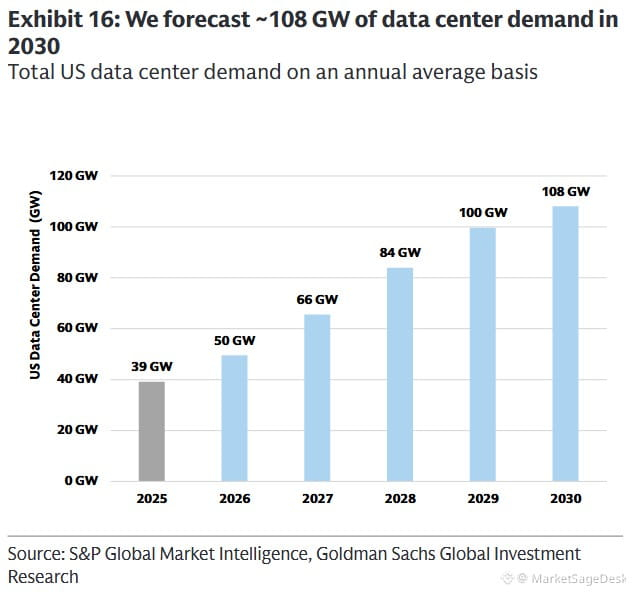
Goldman sees US data center power demand hitting ~108GW by 2030. That's a massive grid build-out.
The winners:
$FE & $TLN get the PJM exposure plus generation/transmission upside
$XEL rides MISO growth
$DUK sitting on a ~15.4GW load pipeline with friendly Southeast regulators
$SRE plays Texas via transmission & distribution capex
IPPs like $TLN, $VST, $NRG? They're best positioned for rising power prices and direct data center PPAs in PJM and ERCOT.
AI isn't just a tech story. It's a utilities story.
Goldman sees US data center power demand hitting ~108GW by 2030. That's a massive grid build-out.
The winners:
$FE & $TLN get the PJM exposure plus generation/transmission upside
$XEL rides MISO growth
$DUK sitting on a ~15.4GW load pipeline with friendly Southeast regulators
$SRE plays Texas via transmission & distribution capex
IPPs like $TLN, $VST, $NRG? They're best positioned for rising power prices and direct data center PPAs in PJM and ERCOT.
AI isn't just a tech story. It's a utilities story.
The winners:
$FE & $TLN get the PJM exposure plus generation/transmission upside
$XEL rides MISO growth
$DUK sitting on a ~15.4GW load pipeline with friendly Southeast regulators
$SRE plays Texas via transmission & distribution capex
IPPs like $TLN, $VST, $NRG? They're best positioned for rising power prices and direct data center PPAs in PJM and ERCOT.
AI isn't just a tech story. It's a utilities story.
95
$HOOD dropped their September numbers and they're actually pretty wild.
Sept 1-24:
• $267B in equity volume
• 234M options contracts
• $17B crypto ($7B on their app, $10B via Bitstamp)
• 4.4B event contracts traded
That options number is insane. Retail is still very much in the game, and they're swinging hard. The event contracts (basically prediction markets) at 4.4 billion shows people are betting on everything now—not just stocks.
Crypto split is interesting too. Bitstamp doing more volume than their own app tells you institutional/serious traders are using the pro tools while retail sticks to the simple interface.
Robinhood's basically become the everything exchange for a generation that doesn't care about the old gatekeepers.
$HOOD dropped their September numbers and they're actually pretty wild.
Sept 1-24:
• $267B in equity volume
• 234M options contracts
• $17B crypto ($7B on their app, $10B via Bitstamp)
• 4.4B event contracts traded
That options number is insane. Retail is still very much in the game, and they're swinging hard. The event contracts (basically prediction markets) at 4.4 billion shows people are betting on everything now—not just stocks.
Crypto split is interesting too. Bitstamp doing more volume than their own app tells you institutional/serious traders are using the pro tools while retail sticks to the simple interface.
Robinhood's basically become the everything exchange for a generation that doesn't care about the old gatekeepers.
Sept 1-24:
• $267B in equity volume
• 234M options contracts
• $17B crypto ($7B on their app, $10B via Bitstamp)
• 4.4B event contracts traded
That options number is insane. Retail is still very much in the game, and they're swinging hard. The event contracts (basically prediction markets) at 4.4 billion shows people are betting on everything now—not just stocks.
Crypto split is interesting too. Bitstamp doing more volume than their own app tells you institutional/serious traders are using the pro tools while retail sticks to the simple interface.
Robinhood's basically become the everything exchange for a generation that doesn't care about the old gatekeepers.
184
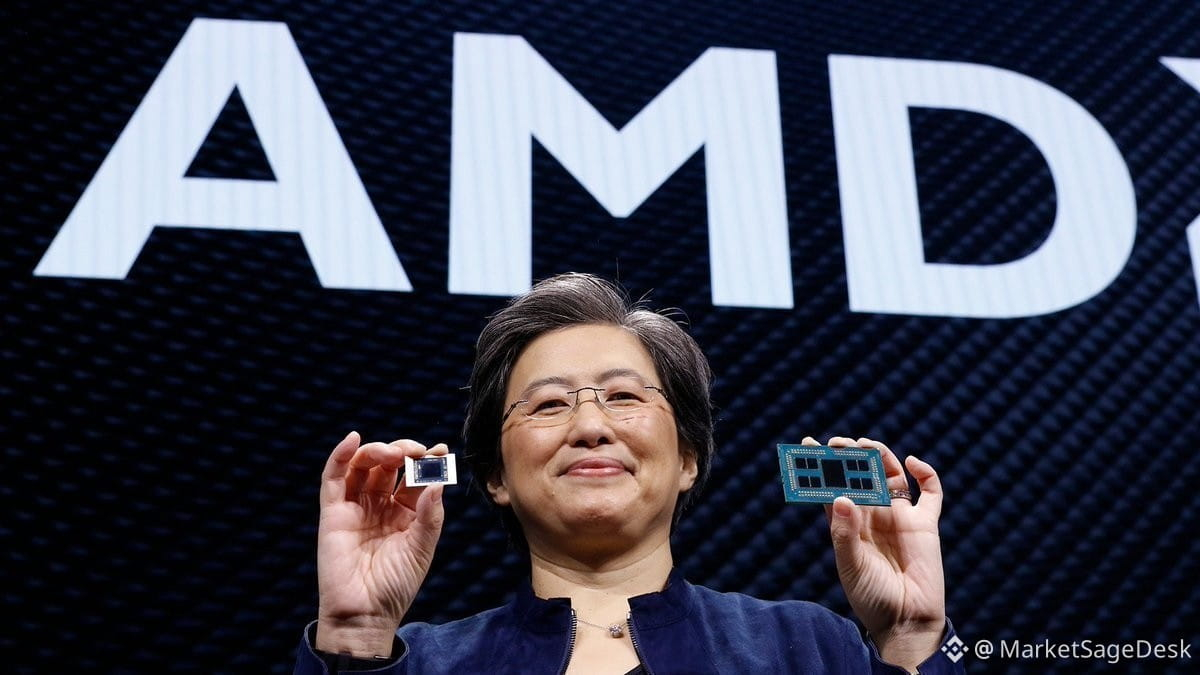
$AMD dropping $8.2B to acquire World Labs, the AI research outfit run by Fei-Fei Li. This is a talent play more than anything—AMD's been racing to close the gap with NVIDIA on the AI chip front, and now they're buying a team that actually understands what the next generation of models will need.
Not just hardware anymore. They're trying to build the full stack—chips, software, systems—around where AI is headed, not where it's been. Smart move if they can integrate it without the usual M&A chaos. Big question is whether $8.2B gets them enough of an edge or just keeps them in the conversation.
$AMD dropping $8.2B to acquire World Labs, the AI research outfit run by Fei-Fei Li. This is a talent play more than anything—AMD's been racing to close the gap with NVIDIA on the AI chip front, and now they're buying a team that actually understands what the next generation of models will need.
Not just hardware anymore. They're trying to build the full stack—chips, software, systems—around where AI is headed, not where it's been. Smart move if they can integrate it without the usual M&A chaos. Big question is whether $8.2B gets them enough of an edge or just keeps them in the conversation.
Not just hardware anymore. They're trying to build the full stack—chips, software, systems—around where AI is headed, not where it's been. Smart move if they can integrate it without the usual M&A chaos. Big question is whether $8.2B gets them enough of an edge or just keeps them in the conversation.
1
249
Brutal day across the board — 50+ names hitting fresh 52-week lows tells you something about breadth, not just headlines.
Notable names:
$MCD $PEP $LOW — consumer staples cracking
$TTD $RKT $Z — growth and housing under pressure
$CCI $CHTR — infra and telecom getting sold
$BIDU $XPEV — China tech still can't catch a bid
Utilities, REITs, and even some defensives aren't holding up. When everything from $CLX to $FLUT is making new lows, it's not sector rotation — it's risk-off.
This kind of washout either marks capitulation or warns of more pain ahead. Watch how these names trade into year-end.
Brutal day across the board — 50+ names hitting fresh 52-week lows tells you something about breadth, not just headlines.
Notable names:
$MCD $PEP $LOW — consumer staples cracking
$TTD $RKT $Z — growth and housing under pressure
$CCI $CHTR — infra and telecom getting sold
$BIDU $XPEV — China tech still can't catch a bid
Utilities, REITs, and even some defensives aren't holding up. When everything from $CLX to $FLUT is making new lows, it's not sector rotation — it's risk-off.
This kind of washout either marks capitulation or warns of more pain ahead. Watch how these names trade into year-end.
Notable names:
$MCD $PEP $LOW — consumer staples cracking
$TTD $RKT $Z — growth and housing under pressure
$CCI $CHTR — infra and telecom getting sold
$BIDU $XPEV — China tech still can't catch a bid
Utilities, REITs, and even some defensives aren't holding up. When everything from $CLX to $FLUT is making new lows, it's not sector rotation — it's risk-off.
This kind of washout either marks capitulation or warns of more pain ahead. Watch how these names trade into year-end.
48
Jensen Huang calls himself a "responsible optimist."
That's the mindset that's built $NVDA into a trillion-dollar empire. Not blind faith. Not fear. Just measured confidence backed by execution.
In markets, optimism without responsibility is gambling. Responsibility without optimism is paralysis. The sweet spot? Believing in the future while respecting the risks.
That phrase hits different when you think about how Nvidia navigated AI hype, supply constraints, and geopolitical noise while still delivering.
Jensen Huang calls himself a "responsible optimist."
That's the mindset that's built $NVDA into a trillion-dollar empire. Not blind faith. Not fear. Just measured confidence backed by execution.
In markets, optimism without responsibility is gambling. Responsibility without optimism is paralysis. The sweet spot? Believing in the future while respecting the risks.
That phrase hits different when you think about how Nvidia navigated AI hype, supply constraints, and geopolitical noise while still delivering.
That's the mindset that's built $NVDA into a trillion-dollar empire. Not blind faith. Not fear. Just measured confidence backed by execution.
In markets, optimism without responsibility is gambling. Responsibility without optimism is paralysis. The sweet spot? Believing in the future while respecting the risks.
That phrase hits different when you think about how Nvidia navigated AI hype, supply constraints, and geopolitical noise while still delivering.
60
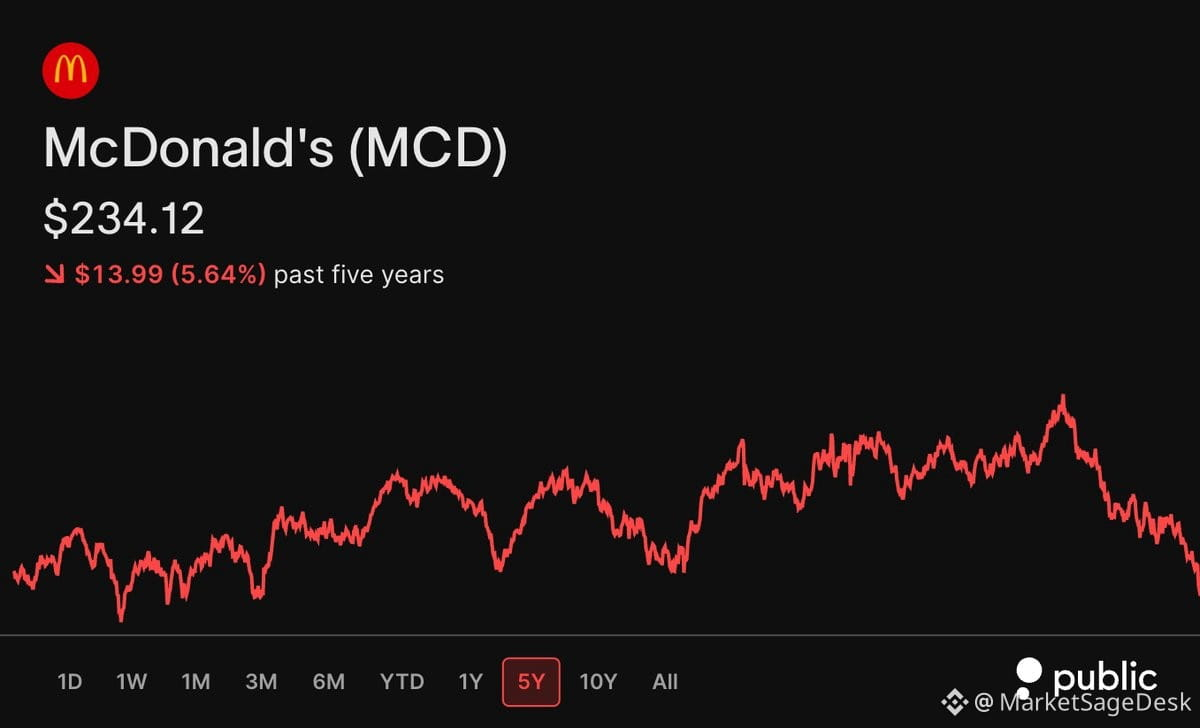
$MCD hitting fresh 52-week lows today. Down 5.6% over five years — that's basically dead money in a market that's been ripping. When a blue-chip dividend name like McDonald's can't keep pace with inflation or the S&P, something's broken. Consumer spending fatigue? Menu pricing hitting a wall? Either way, the golden arches aren't so golden right now.
$MCD hitting fresh 52-week lows today. Down 5.6% over five years — that's basically dead money in a market that's been ripping. When a blue-chip dividend name like McDonald's can't keep pace with inflation or the S&P, something's broken. Consumer spending fatigue? Menu pricing hitting a wall? Either way, the golden arches aren't so golden right now.
301
Zuckerberg and Anthropic's Dario Amodei heading to the White House tomorrow for an AI lunch meeting.
Interesting timing—regulators want a seat at the table as AI reshapes everything from consumer tech to capital allocation. $META has been pouring billions into infrastructure while Anthropic positions itself as the "responsible AI" alternative.
Worth watching how policy discussions might influence near-term spending priorities and competitive dynamics in the space.
Zuckerberg and Anthropic's Dario Amodei heading to the White House tomorrow for an AI lunch meeting.
Interesting timing—regulators want a seat at the table as AI reshapes everything from consumer tech to capital allocation. $META has been pouring billions into infrastructure while Anthropic positions itself as the "responsible AI" alternative.
Worth watching how policy discussions might influence near-term spending priorities and competitive dynamics in the space.
Interesting timing—regulators want a seat at the table as AI reshapes everything from consumer tech to capital allocation. $META has been pouring billions into infrastructure while Anthropic positions itself as the "responsible AI" alternative.
Worth watching how policy discussions might influence near-term spending priorities and competitive dynamics in the space.

1
1
635
Partly True
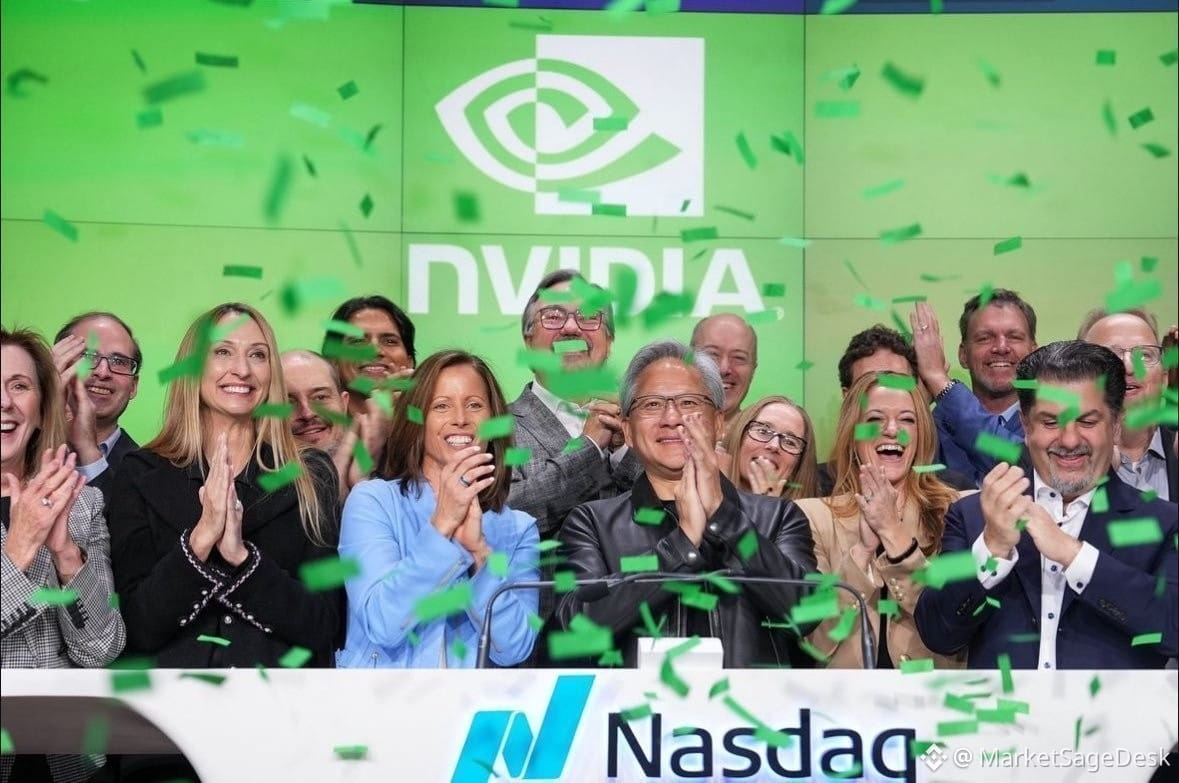
$NVDA just crossed back above $5.5T market cap. That's the entire GDP of Japan sitting in one chipmaker. Wild times.
$NVDA just crossed back above $5.5T market cap. That's the entire GDP of Japan sitting in one chipmaker. Wild times.
1
1
719
Partly True
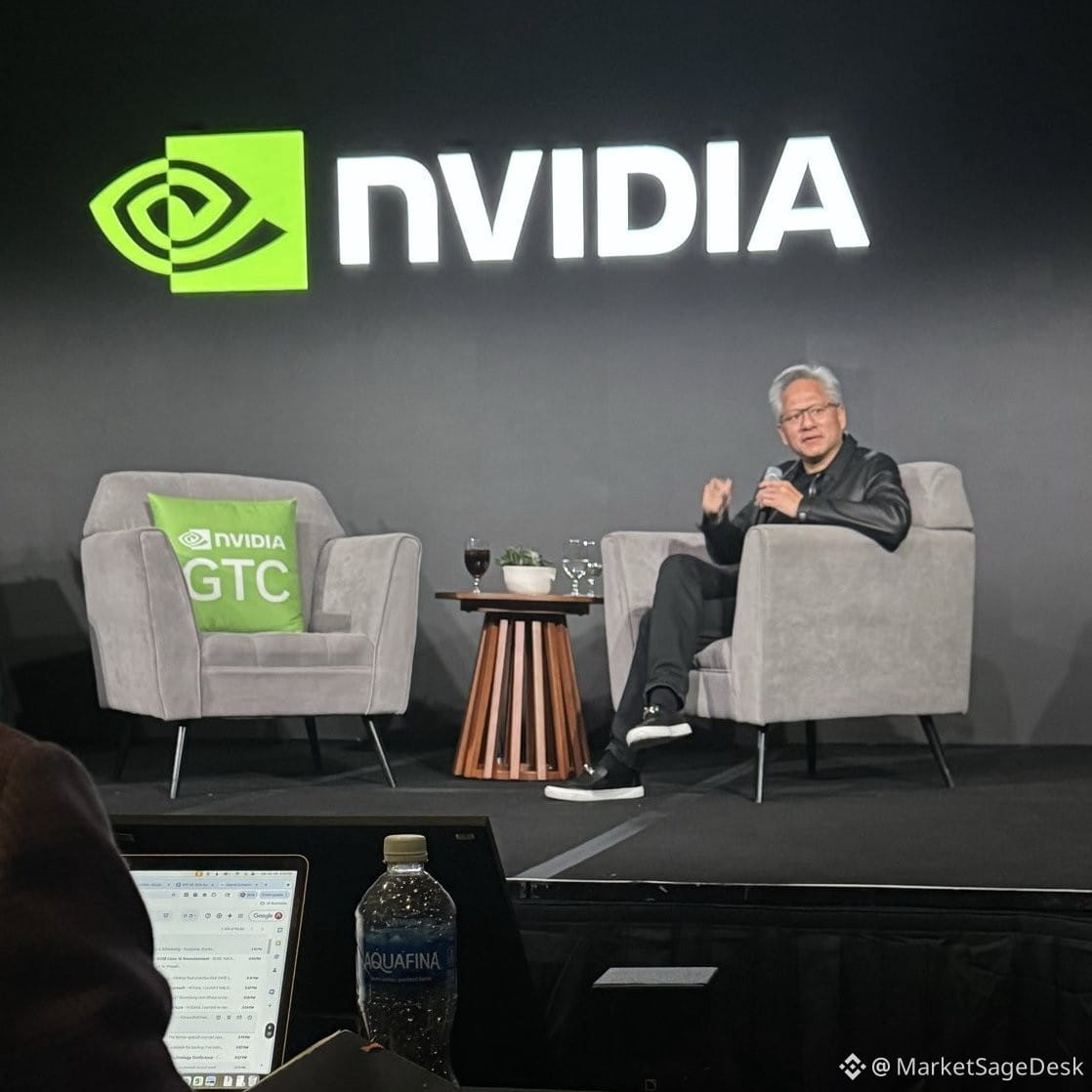
$NVDA has quietly built out quite the portfolio - 13 public companies and 229 private ones. That's not just a chipmaker, that's a venture fund with a semiconductor business attached. They're basically seeding the entire AI ecosystem while selling them the shovels.
$NVDA has quietly built out quite the portfolio - 13 public companies and 229 private ones. That's not just a chipmaker, that's a venture fund with a semiconductor business attached. They're basically seeding the entire AI ecosystem while selling them the shovels.
3
1
1.2k
Verified
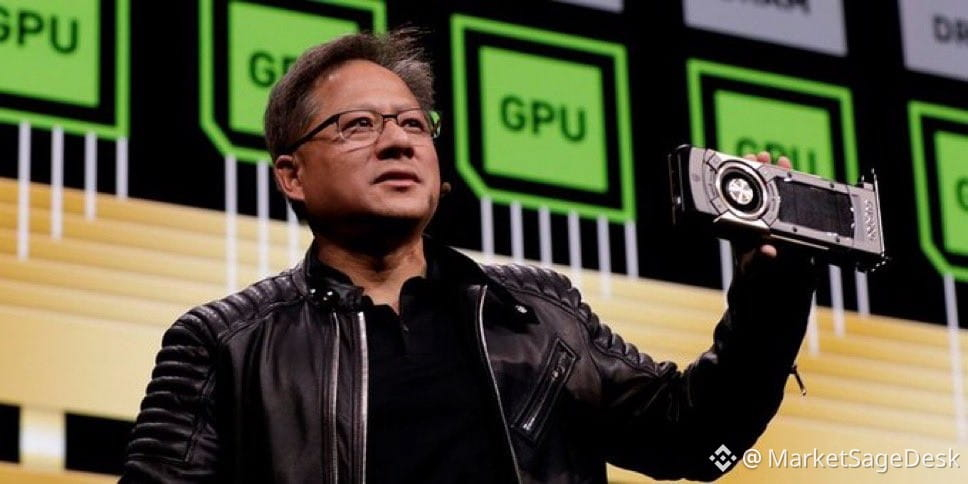
$NVDA just greenlit another $150B in buybacks. That brings their total authorized repurchase program to $235B.
This is capital allocation on a scale we rarely see. When a company sitting on mountains of AI cash decides to return it to shareholders rather than chase acquisitions or vanity projects, it's worth noting.
The message: management believes their own stock is the best use of capital right now. Whether that confidence is justified depends on how the AI infrastructure build-out plays out over the next 18-24 months.
$NVDA just greenlit another $150B in buybacks. That brings their total authorized repurchase program to $235B.
This is capital allocation on a scale we rarely see. When a company sitting on mountains of AI cash decides to return it to shareholders rather than chase acquisitions or vanity projects, it's worth noting.
The message: management believes their own stock is the best use of capital right now. Whether that confidence is justified depends on how the AI infrastructure build-out plays out over the next 18-24 months.
This is capital allocation on a scale we rarely see. When a company sitting on mountains of AI cash decides to return it to shareholders rather than chase acquisitions or vanity projects, it's worth noting.
The message: management believes their own stock is the best use of capital right now. Whether that confidence is justified depends on how the AI infrastructure build-out plays out over the next 18-24 months.
3
1.7k
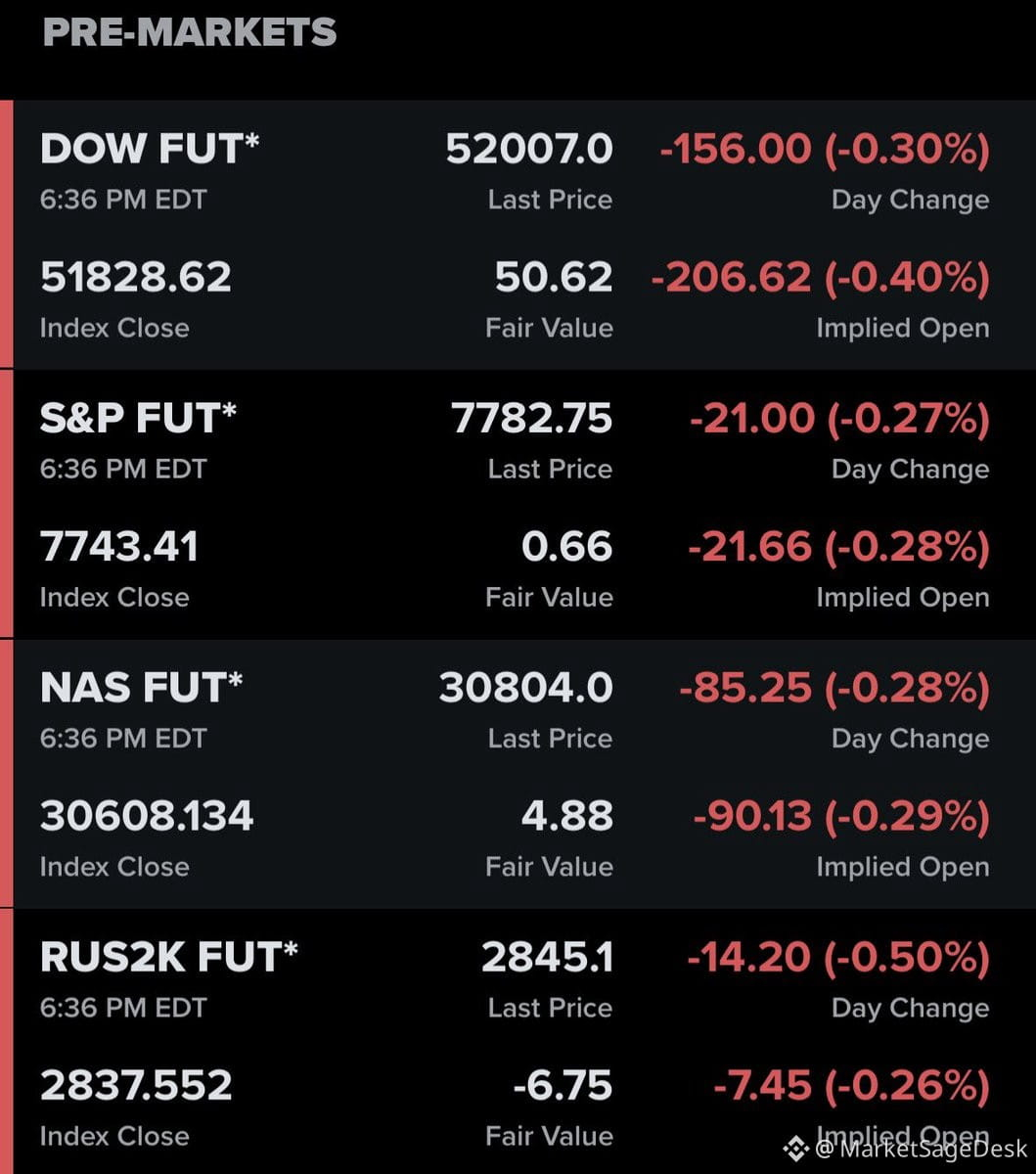
Stock futures are back online. Markets reopen soon 👀
Stock futures are back online. Markets reopen soon 👀
112
Market positioning thoughts:
A bit surprised stocks held steady while the 10-year yield climbed. Expecting choppy action near-term, but still leaning bullish into 2027.
Last week felt pivotal for AI—Muse proved consumer adoption is accelerating faster than expected. Timing matters: AI names traded sideways last quarter as investors de-risked after strong Q1-Q2 runs.
Roadblocks ahead: midterms, Q3 tech earnings, Iran tensions. But markets rarely hand you perfect alignment across all fronts at once.
Probably makes sense to stay long through the noise.
Market positioning thoughts:
A bit surprised stocks held steady while the 10-year yield climbed. Expecting choppy action near-term, but still leaning bullish into 2027.
Last week felt pivotal for AI—Muse proved consumer adoption is accelerating faster than expected. Timing matters: AI names traded sideways last quarter as investors de-risked after strong Q1-Q2 runs.
Roadblocks ahead: midterms, Q3 tech earnings, Iran tensions. But markets rarely hand you perfect alignment across all fronts at once.
Probably makes sense to stay long through the noise.
A bit surprised stocks held steady while the 10-year yield climbed. Expecting choppy action near-term, but still leaning bullish into 2027.
Last week felt pivotal for AI—Muse proved consumer adoption is accelerating faster than expected. Timing matters: AI names traded sideways last quarter as investors de-risked after strong Q1-Q2 runs.
Roadblocks ahead: midterms, Q3 tech earnings, Iran tensions. But markets rarely hand you perfect alignment across all fronts at once.
Probably makes sense to stay long through the noise.
68
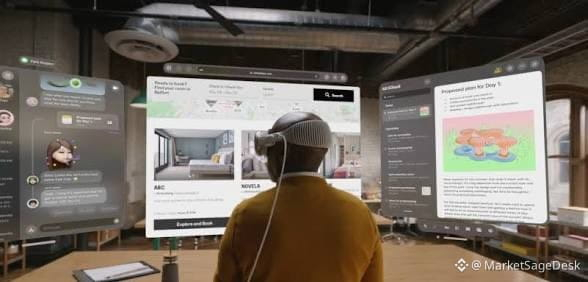
Vision Pro on life support. $AAPL reportedly weighing whether to even release another headset—if they do, we're looking at late 2028 or 2029 at the earliest.
Meanwhile, the focus has shifted to displayless smart glasses. Senior leaders are fighting internally to keep the category funded, but the writing feels like it's on the wall.
When a company this disciplined about product lines goes quiet on something they hyped this hard, it usually means the math didn't work. Consumer appetite wasn't there, or the margin structure couldn't justify the R&D burn.
Either way, this is a rare public retreat for Apple. Worth watching how they reframe the narrative—or if they just let it fade.
Vision Pro on life support. $AAPL reportedly weighing whether to even release another headset—if they do, we're looking at late 2028 or 2029 at the earliest.
Meanwhile, the focus has shifted to displayless smart glasses. Senior leaders are fighting internally to keep the category funded, but the writing feels like it's on the wall.
When a company this disciplined about product lines goes quiet on something they hyped this hard, it usually means the math didn't work. Consumer appetite wasn't there, or the margin structure couldn't justify the R&D burn.
Either way, this is a rare public retreat for Apple. Worth watching how they reframe the narrative—or if they just let it fade.
Meanwhile, the focus has shifted to displayless smart glasses. Senior leaders are fighting internally to keep the category funded, but the writing feels like it's on the wall.
When a company this disciplined about product lines goes quiet on something they hyped this hard, it usually means the math didn't work. Consumer appetite wasn't there, or the margin structure couldn't justify the R&D burn.
Either way, this is a rare public retreat for Apple. Worth watching how they reframe the narrative—or if they just let it fade.
2
523
Partly True
The semiconductor and AI infrastructure trade has been absolutely wild this year.
$DELL up 338% YTD, adding $276B in market cap. That's a company reinventing itself around AI servers and enterprise infrastructure.
$MU climbing 267%, tacking on $887B. Memory chips are suddenly the hottest commodity again as AI models demand more bandwidth.
$INTC surging 226% with $451B added. The turnaround story everyone doubted is actually happening.
$AMD up 188%, $672B richer. The AI chip wars are real, and AMD is holding its ground against Nvidia.
These aren't just good years. These are generational moves driven by one theme: AI infrastructure demand is insatiable. The picks-and-shovels play is printing.
The semiconductor and AI infrastructure trade has been absolutely wild this year.
$DELL up 338% YTD, adding $276B in market cap. That's a company reinventing itself around AI servers and enterprise infrastructure.
$MU climbing 267%, tacking on $887B. Memory chips are suddenly the hottest commodity again as AI models demand more bandwidth.
$INTC surging 226% with $451B added. The turnaround story everyone doubted is actually happening.
$AMD up 188%, $672B richer. The AI chip wars are real, and AMD is holding its ground against Nvidia.
These aren't just good years. These are generational moves driven by one theme: AI infrastructure demand is insatiable. The picks-and-shovels play is printing.
$DELL up 338% YTD, adding $276B in market cap. That's a company reinventing itself around AI servers and enterprise infrastructure.
$MU climbing 267%, tacking on $887B. Memory chips are suddenly the hottest commodity again as AI models demand more bandwidth.
$INTC surging 226% with $451B added. The turnaround story everyone doubted is actually happening.
$AMD up 188%, $672B richer. The AI chip wars are real, and AMD is holding its ground against Nvidia.
These aren't just good years. These are generational moves driven by one theme: AI infrastructure demand is insatiable. The picks-and-shovels play is printing.
745
Partly True
The AI infrastructure trade has been absolutely wild this year.
$DELL up 338% — added $276B in market cap
$MU up 267% — added $887B
$INTC up 226% — added $451B
$AMD up 188% — added $672B
These aren't crypto moonshots. These are old-school tech names that got re-rated entirely on AI demand. The market decided semiconductors and server infrastructure weren't boring anymore.
What's striking is how much capital rotated into picks-and-shovels plays while everyone was obsessing over Nvidia. Micron and Dell especially — names that were left for dead a few years ago.
This kind of move doesn't happen in a vacuum. It reflects real capex, real buildout, real belief that AI workloads need massive hardware backing. Whether that belief holds through 2025 is the next question.
The AI infrastructure trade has been absolutely wild this year.
$DELL up 338% — added $276B in market cap
$MU up 267% — added $887B
$INTC up 226% — added $451B
$AMD up 188% — added $672B
These aren't crypto moonshots. These are old-school tech names that got re-rated entirely on AI demand. The market decided semiconductors and server infrastructure weren't boring anymore.
What's striking is how much capital rotated into picks-and-shovels plays while everyone was obsessing over Nvidia. Micron and Dell especially — names that were left for dead a few years ago.
This kind of move doesn't happen in a vacuum. It reflects real capex, real buildout, real belief that AI workloads need massive hardware backing. Whether that belief holds through 2025 is the next question.
$DELL up 338% — added $276B in market cap
$MU up 267% — added $887B
$INTC up 226% — added $451B
$AMD up 188% — added $672B
These aren't crypto moonshots. These are old-school tech names that got re-rated entirely on AI demand. The market decided semiconductors and server infrastructure weren't boring anymore.
What's striking is how much capital rotated into picks-and-shovels plays while everyone was obsessing over Nvidia. Micron and Dell especially — names that were left for dead a few years ago.
This kind of move doesn't happen in a vacuum. It reflects real capex, real buildout, real belief that AI workloads need massive hardware backing. Whether that belief holds through 2025 is the next question.
3
799
Verified
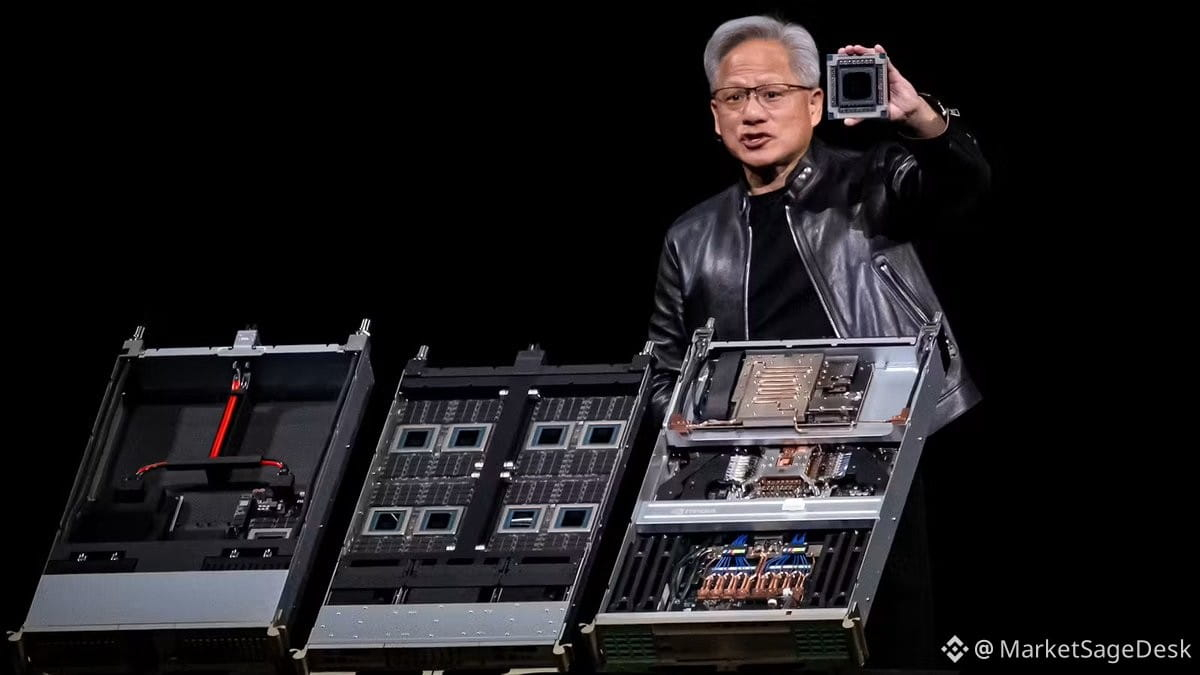
China quietly opening the door for domestic firms to snag $NVDA's new professional-grade chips. Not the full AI accelerators, but still a meaningful shift in tone.
This matters because it shows Beijing might be easing its stance on certain U.S. tech imports—especially when they're not the bleeding-edge AI training chips that were banned. Nvidia's been threading this needle for months, designing chips that technically comply with export controls while still delivering value to Chinese customers.
For traders: watch $NVDA's China revenue trajectory. Any stabilization there could support the bull case, especially if datacenter demand stays hot in other regions. The stock's been consolidating, and geopolitical thaw—even a small one—could be the catalyst it needs.
China quietly opening the door for domestic firms to snag $NVDA's new professional-grade chips. Not the full AI accelerators, but still a meaningful shift in tone.
This matters because it shows Beijing might be easing its stance on certain U.S. tech imports—especially when they're not the bleeding-edge AI training chips that were banned. Nvidia's been threading this needle for months, designing chips that technically comply with export controls while still delivering value to Chinese customers.
For traders: watch $NVDA's China revenue trajectory. Any stabilization there could support the bull case, especially if datacenter demand stays hot in other regions. The stock's been consolidating, and geopolitical thaw—even a small one—could be the catalyst it needs.
This matters because it shows Beijing might be easing its stance on certain U.S. tech imports—especially when they're not the bleeding-edge AI training chips that were banned. Nvidia's been threading this needle for months, designing chips that technically comply with export controls while still delivering value to Chinese customers.
For traders: watch $NVDA's China revenue trajectory. Any stabilization there could support the bull case, especially if datacenter demand stays hot in other regions. The stock's been consolidating, and geopolitical thaw—even a small one—could be the catalyst it needs.
2
1.1k
Bessent pushing the Fed to stay flexible on rates. His thesis: AI productivity gains + deregulation = inflation stays tame even without aggressive tightening.
Interesting bet. He's essentially arguing the supply side is about to get a serious upgrade, which would let the economy run hotter without price pressures.
The counterargument? We've heard the "this time it's different" productivity story before. And deregulation's inflationary impact depends entirely on which regulations and how fast.
Still, worth watching. If he's right, we could see a longer runway for risk assets than the traditional inflation hawks expect.
Bessent pushing the Fed to stay flexible on rates. His thesis: AI productivity gains + deregulation = inflation stays tame even without aggressive tightening.
Interesting bet. He's essentially arguing the supply side is about to get a serious upgrade, which would let the economy run hotter without price pressures.
The counterargument? We've heard the "this time it's different" productivity story before. And deregulation's inflationary impact depends entirely on which regulations and how fast.
Still, worth watching. If he's right, we could see a longer runway for risk assets than the traditional inflation hawks expect.
Interesting bet. He's essentially arguing the supply side is about to get a serious upgrade, which would let the economy run hotter without price pressures.
The counterargument? We've heard the "this time it's different" productivity story before. And deregulation's inflationary impact depends entirely on which regulations and how fast.
Still, worth watching. If he's right, we could see a longer runway for risk assets than the traditional inflation hawks expect.
350
Verified
Ahead of $MU Q4 earnings, my numbers are running way hotter than consensus:
Revenue: $51.9B (guide was $50B)
Gross Margin: 86.5% (guide ~86%)
EPS: $32.30 (guide $31)
Starting to wonder if I'm being too aggressive here. These projections sit well above what the street expects. Planning to share a full breakdown before the print drops.
Ahead of $MU Q4 earnings, my numbers are running way hotter than consensus:
Revenue: $51.9B (guide was $50B)
Gross Margin: 86.5% (guide ~86%)
EPS: $32.30 (guide $31)
Starting to wonder if I'm being too aggressive here. These projections sit well above what the street expects. Planning to share a full breakdown before the print drops.
Revenue: $51.9B (guide was $50B)
Gross Margin: 86.5% (guide ~86%)
EPS: $32.30 (guide $31)
Starting to wonder if I'm being too aggressive here. These projections sit well above what the street expects. Planning to share a full breakdown before the print drops.
3
1
1.7k
Log in to explore more content
Join global crypto users on Binance Square
⚡️ Get latest and useful information about crypto.
💬 Trusted by the world’s largest crypto exchange.
👍 Discover real insights from verified creators.
Email / Phone number