

Jeeva_jvan
6.9k Posts
Jeeva_jvan
 Square Verified+
Report
Block User
Web3 Strategist | 8M Views, Narratives to Alpha, Founder - Web3 Marketing Mavericks, NFTs, Memecoins, Market Psychology | Yaadhum Oore Yaavarum Kelir #DYOR
Open Trade

BNB Holder
High-Frequency Trader
5.6 Years
357 Following
43.1K+ Followers
33.5K+ Liked
Posts
Portfolio
All
Quotes
Videos
Live
PINNED
·
--
Bullish
Moments like this made my day 🥹🔥
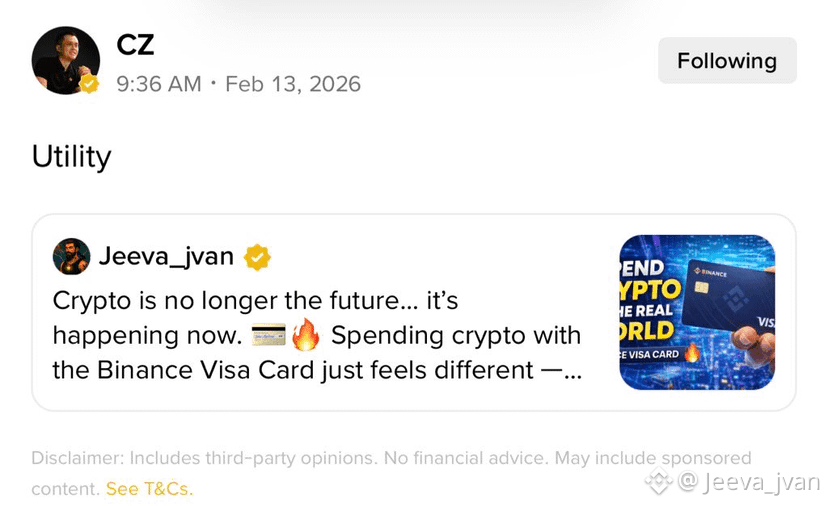
CZ shared my post — truly grateful for the support!
Thank you Binance and the Binance Square team 💛🚀 @CZ @Binance_Square_Official
#Binance #CZ #BinanceSquare #crypto #Community
Moments like this made my day 🥹🔥
CZ shared my post — truly grateful for the support!
Thank you Binance and the Binance Square team 💛🚀 @CZ @Binance_Square_Official
#Binance #CZ #BinanceSquare #crypto #Community
CZ shared my post — truly grateful for the support!
Thank you Binance and the Binance Square team 💛🚀 @CZ @Binance_Square_Official
#Binance #CZ #BinanceSquare #crypto #Community
14
3
85
744
PINNED
·
--
Bullish
Verified
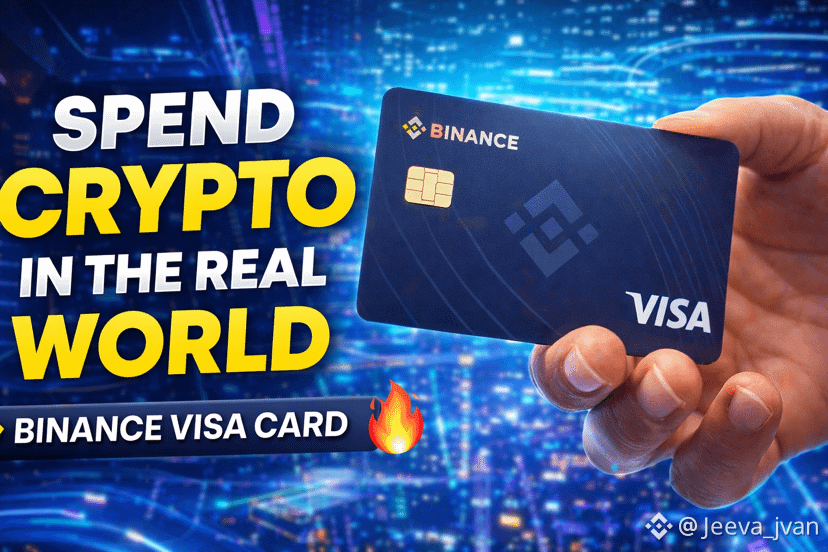
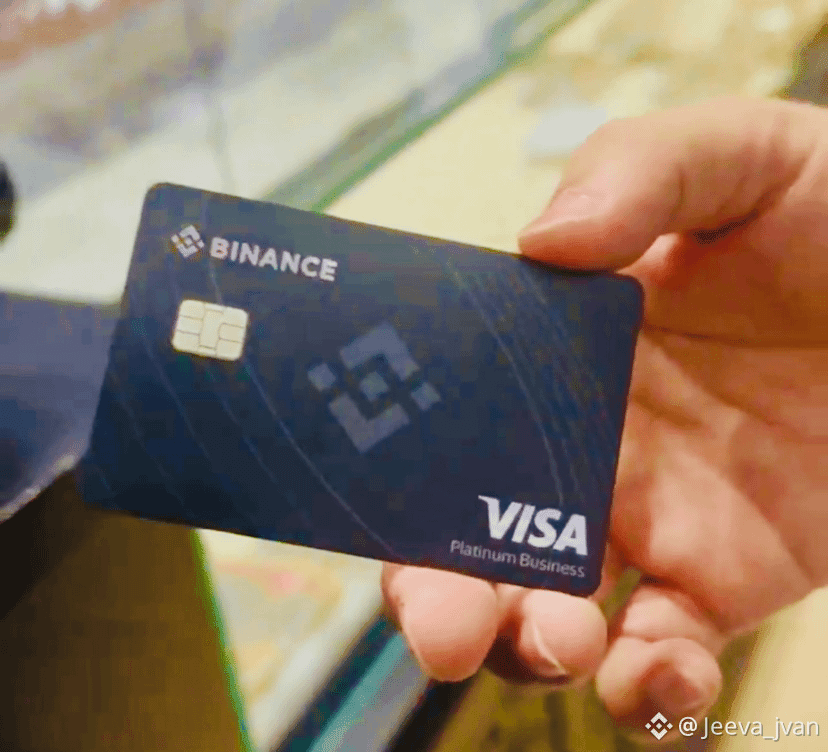
Crypto is no longer the future… it’s happening now. 💳🔥
Spending crypto with the Binance Visa Card just feels different — fast, simple, and global. This is how Web3 connects to the real world.
BNB isn’t just a token… it’s utility. 💛
#BNB #Binance #Crypto #Web3 #FutureOfPayments $BNB
{future}(BNBUSDT)
Crypto is no longer the future… it’s happening now. 💳🔥
Spending crypto with the Binance Visa Card just feels different — fast, simple, and global. This is how Web3 connects to the real world.
BNB isn’t just a token… it’s utility. 💛
#BNB #Binance #Crypto #Web3 #FutureOfPayments $BNB
Spending crypto with the Binance Visa Card just feels different — fast, simple, and global. This is how Web3 connects to the real world.
BNB isn’t just a token… it’s utility. 💛
#BNB #Binance #Crypto #Web3 #FutureOfPayments $BNB
505
211
552
41.4k
·
--
Article
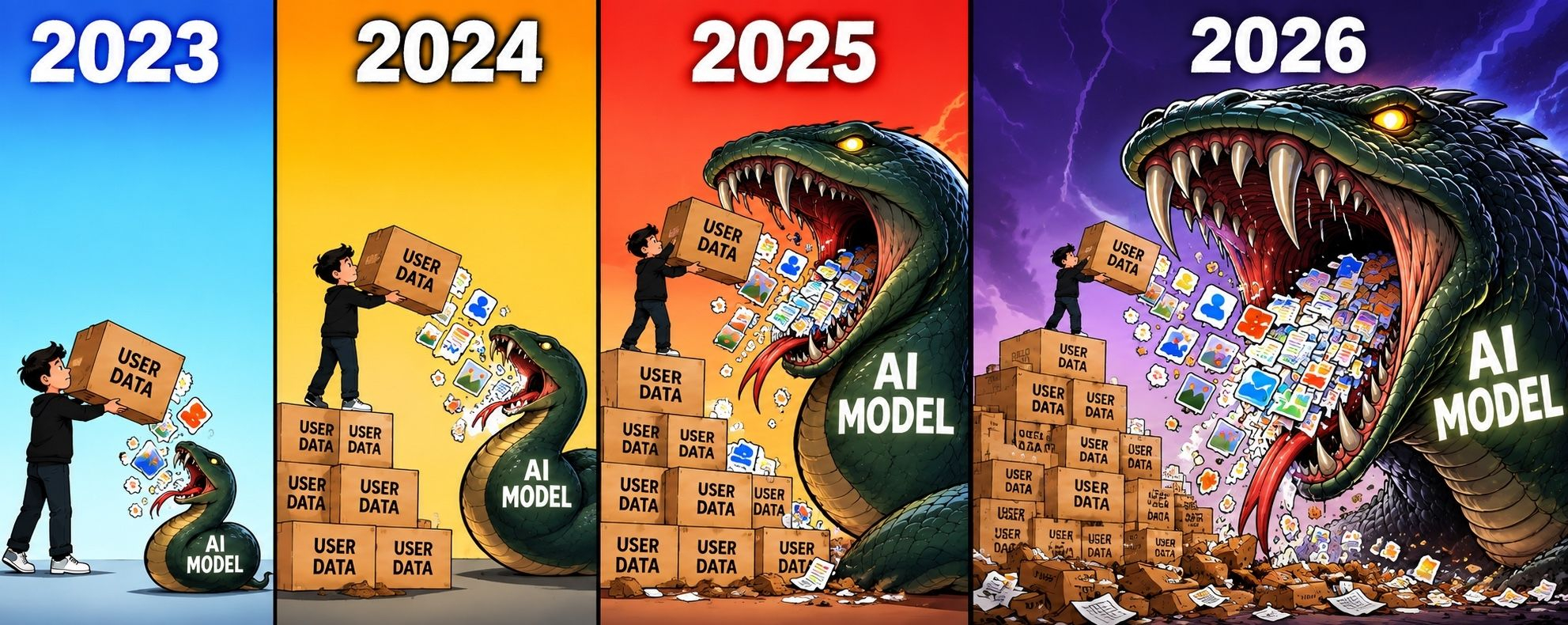
AI's Growing Hunger for Data: From a Small Model to a Digital MonsterIn 2023, AI was just getting started. By 2026, it has become a giant that needs more and more data to grow.
The real power of AI isn't just computing. It's the data we feed it. Every image, text, video, and interaction helps train smarter models.
But here's the big question: As AI becomes more powerful, how much of our data will it need next?
The future of AI will depend not only on how smart models become, but also on how responsibly we manage the data behind them.
#AI #ArtificialIntelligence #data #Web3 #jeevajvan
AI's Growing Hunger for Data: From a Small Model to a Digital Monster
In 2023, AI was just getting started. By 2026, it has become a giant that needs more and more data to grow.
The real power of AI isn't just computing. It's the data we feed it. Every image, text, video, and interaction helps train smarter models.
But here's the big question: As AI becomes more powerful, how much of our data will it need next?
The future of AI will depend not only on how smart models become, but also on how responsibly we manage the data behind them.
#AI #ArtificialIntelligence #data #Web3 #jeevajvan
The real power of AI isn't just computing. It's the data we feed it. Every image, text, video, and interaction helps train smarter models.
But here's the big question: As AI becomes more powerful, how much of our data will it need next?
The future of AI will depend not only on how smart models become, but also on how responsibly we manage the data behind them.
#AI #ArtificialIntelligence #data #Web3 #jeevajvan
8
1
44
22.1k
·
--
🏦 Banks can stop. Payments shouldn’t.
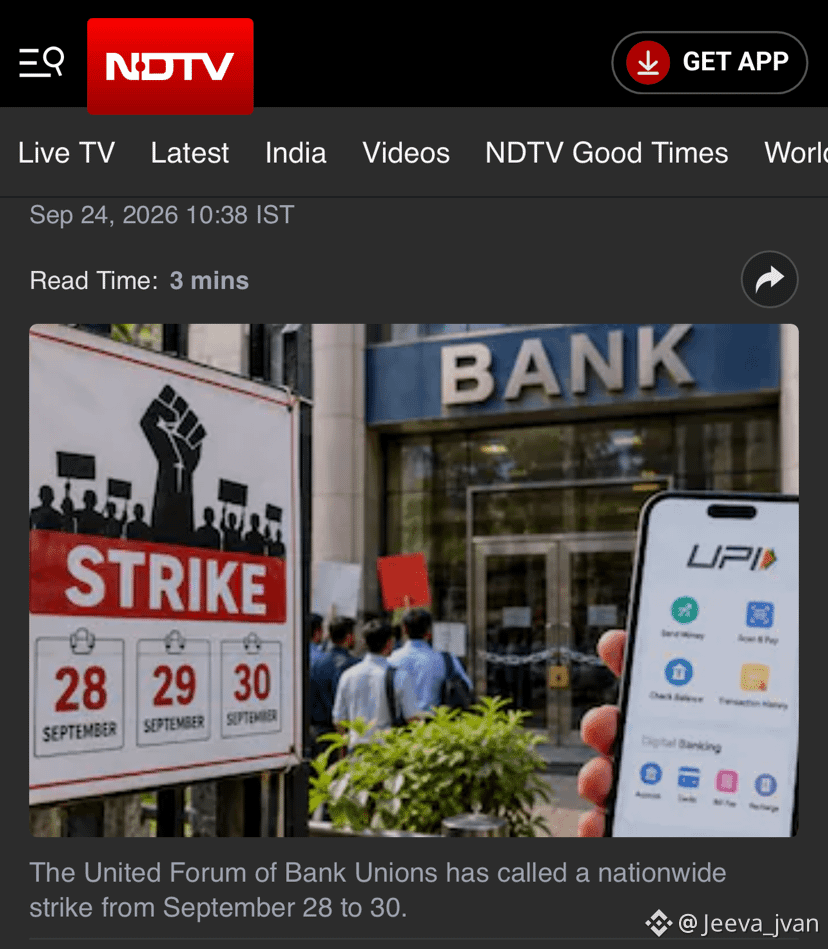
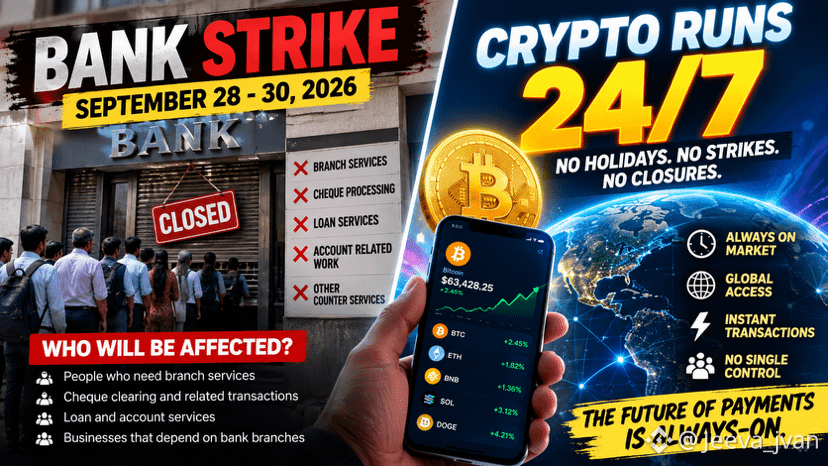
India is heading into a 3-day bank strike from Sept 28–30, which may disrupt some physical banking services.
This highlights one of crypto’s biggest ideas: a 24/7, global financial network that doesn’t depend on bank branch hours.
No weekend. No holiday. No waiting for Monday.
The future of payments is always-on. 🌍₿ #btc #ETC #xrp #sol #bankstrike
🏦 Banks can stop. Payments shouldn’t.
India is heading into a 3-day bank strike from Sept 28–30, which may disrupt some physical banking services.
This highlights one of crypto’s biggest ideas: a 24/7, global financial network that doesn’t depend on bank branch hours.
No weekend. No holiday. No waiting for Monday.
The future of payments is always-on. 🌍₿ #btc #ETC #xrp #sol #bankstrike
India is heading into a 3-day bank strike from Sept 28–30, which may disrupt some physical banking services.
This highlights one of crypto’s biggest ideas: a 24/7, global financial network that doesn’t depend on bank branch hours.
No weekend. No holiday. No waiting for Monday.
The future of payments is always-on. 🌍₿ #btc #ETC #xrp #sol #bankstrike
3
1.9k
·
--
Bullish
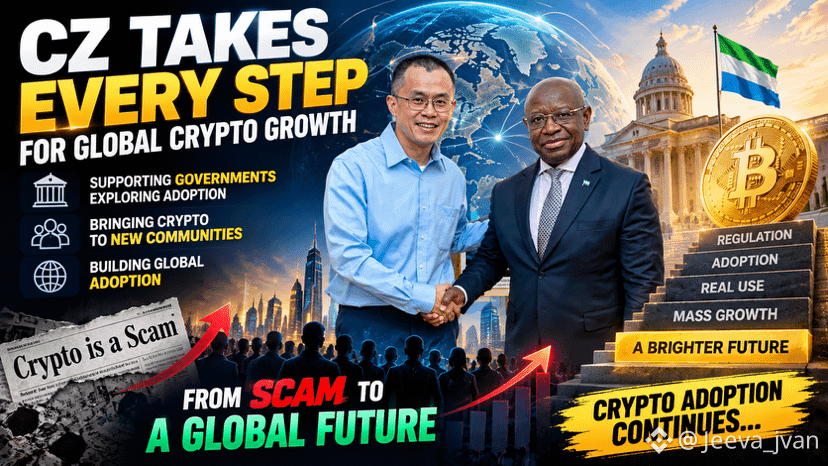
CZ has taken every step to push crypto forward globally — from supporting governments exploring adoption to helping bring crypto to new communities.
From being called a “scam” to becoming part of the future, the industry has come a long way. Crypto adoption continues to grow. @BNB_Chain @CZ 👏👏💛💛💛Binance #Binance #BinanceSquare #bnb #blockchain #crypto
CZ has taken every step to push crypto forward globally — from supporting governments exploring adoption to helping bring crypto to new communities.
From being called a “scam” to becoming part of the future, the industry has come a long way. Crypto adoption continues to grow. @BNB Chain @CZ 👏👏💛💛💛Binance #Binance #BinanceSquare #bnb #blockchain #crypto
From being called a “scam” to becoming part of the future, the industry has come a long way. Crypto adoption continues to grow. @BNB Chain @CZ 👏👏💛💛💛Binance #Binance #BinanceSquare #bnb #blockchain #crypto
1
1
9
4.9k
·
--
Bullish
30D trade $BTC 4.5K USDT
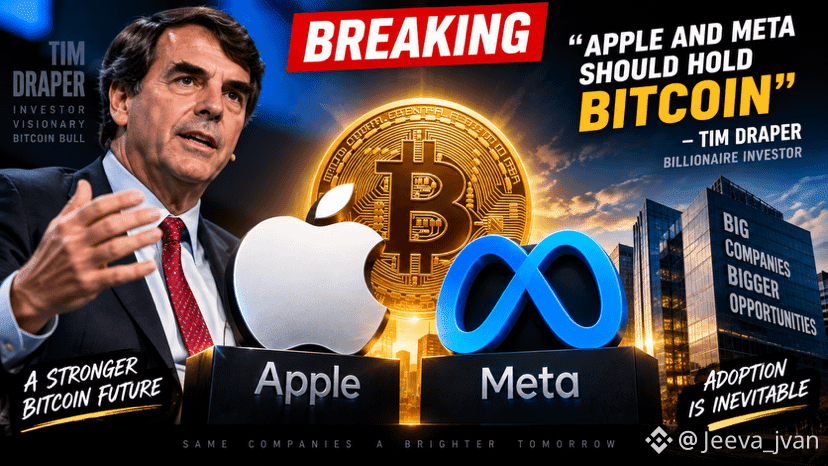
TIM DRAPER: APPLE & META SHOULD HOLD BITCOIN
Billionaire investor Tim Draper says it’s “irresponsible” for giants like Apple and Meta to hold zero Bitcoin on their balance sheets.
His message is simple:
Big companies should start treating BTC as a treasury asset.
Apple + Meta + Bitcoin…
Could this become the next major corporate Bitcoin story? 👀
#Bitcoin #BTC #Apple #Meta #jeevajvan $BTC
TIM DRAPER: APPLE & META SHOULD HOLD BITCOIN
Billionaire investor Tim Draper says it’s “irresponsible” for giants like Apple and Meta to hold zero Bitcoin on their balance sheets.
His message is simple:
Big companies should start treating BTC as a treasury asset.
Apple + Meta + Bitcoin…
Could this become the next major corporate Bitcoin story? 👀
#Bitcoin #BTC #Apple #Meta #jeevajvan $BTC
Billionaire investor Tim Draper says it’s “irresponsible” for giants like Apple and Meta to hold zero Bitcoin on their balance sheets.
His message is simple:
Big companies should start treating BTC as a treasury asset.
Apple + Meta + Bitcoin…
Could this become the next major corporate Bitcoin story? 👀
#Bitcoin #BTC #Apple #Meta #jeevajvan $BTC
1
2
2.5k
·
--
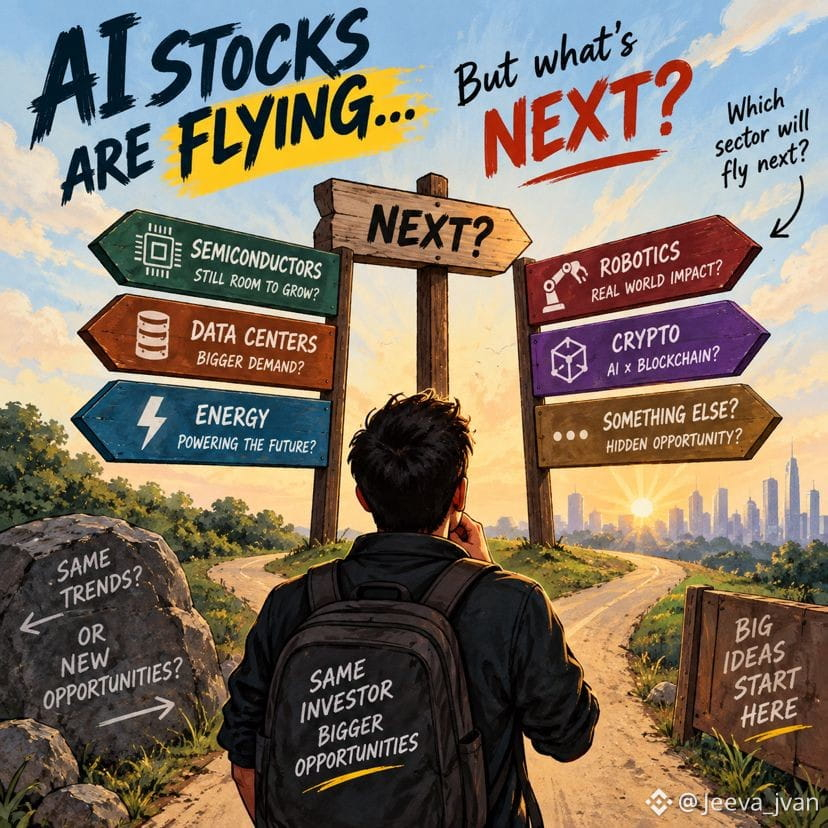
AI stocks are flying 🚀 But what comes after AI?
Semiconductors? Energy? Data centers? Robotics? Crypto?
What’s your next AI-related opportunity?
#AIStocksWhatNext #AI #bstock #Binance
AI stocks are flying 🚀 But what comes after AI?
Semiconductors? Energy? Data centers? Robotics? Crypto?
What’s your next AI-related opportunity?
#AIStocksWhatNext #AI #bstock #Binance
Semiconductors? Energy? Data centers? Robotics? Crypto?
What’s your next AI-related opportunity?
#AIStocksWhatNext #AI #bstock #Binance
7
6
419

·
--
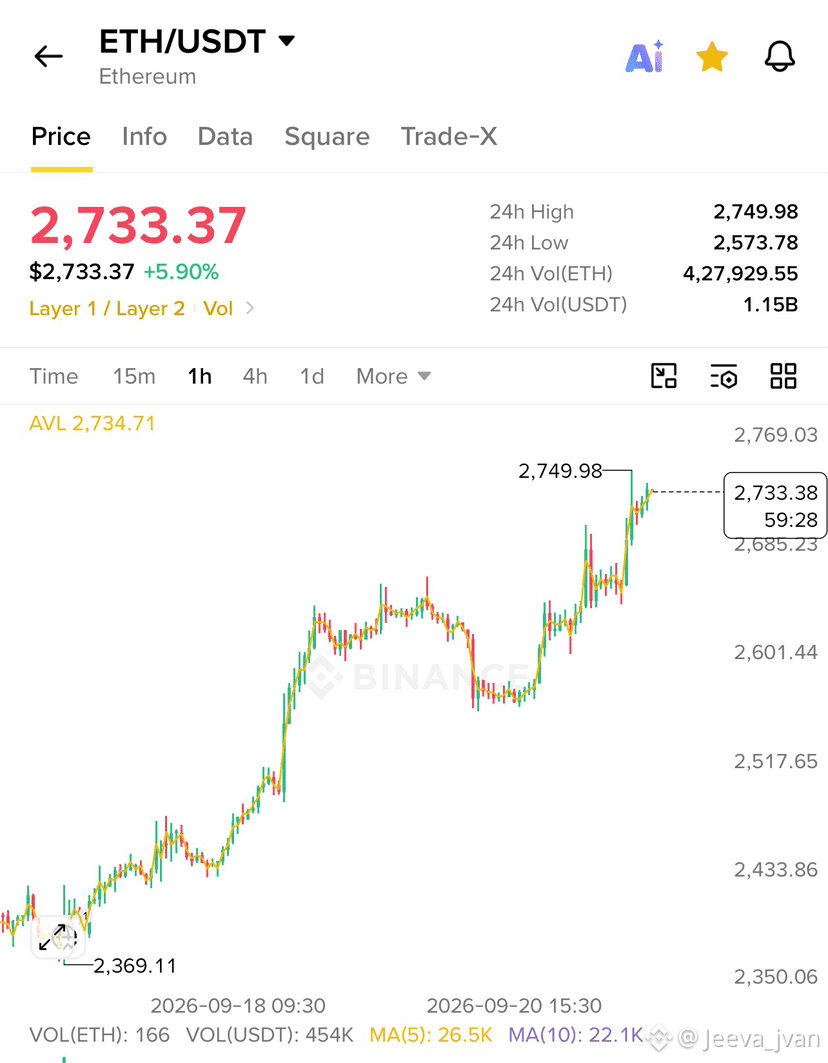
ETH $8K SOON?
BitMine keeps accumulating ETH, while Tom Lee sees major upside potential for Ethereum.
ETH is showing renewed momentum — and if this trend continues, $8,000 is back on the radar.
ETH season may be heating up.
#Ethereum #ETH #Crypto #Altcoins #jeevajvan $ETH
{future}(ETHUSDT)
ETH $8K SOON?
BitMine keeps accumulating ETH, while Tom Lee sees major upside potential for Ethereum.
ETH is showing renewed momentum — and if this trend continues, $8,000 is back on the radar.
ETH season may be heating up.
#Ethereum #ETH #Crypto #Altcoins #jeevajvan $ETH
BitMine keeps accumulating ETH, while Tom Lee sees major upside potential for Ethereum.
ETH is showing renewed momentum — and if this trend continues, $8,000 is back on the radar.
ETH season may be heating up.
#Ethereum #ETH #Crypto #Altcoins #jeevajvan $ETH
1
3
2.7k
·
--
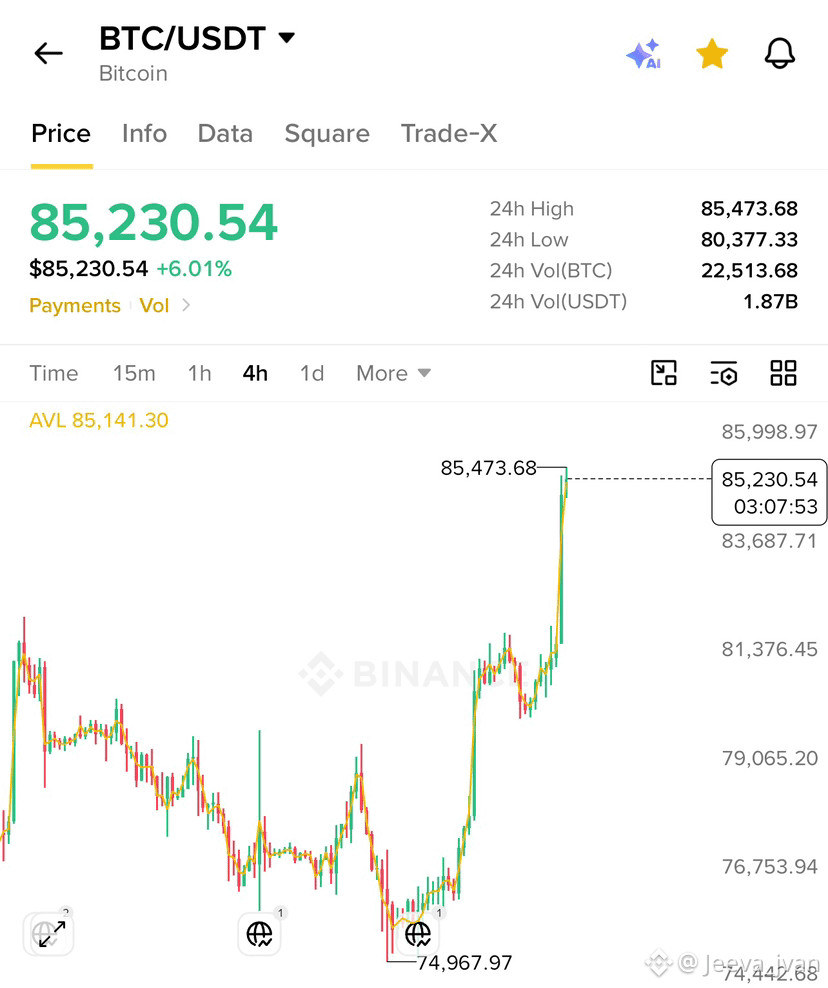
Bitcoin rally can start NOW.
BTC just pushed above $85K, and the momentum is getting stronger.
Nobody can stop Bitcoin? Maybe the market can try — but Bitcoin keeps proving why it remains the king of crypto.
The next move could be explosive. Watch BTC closely.
#Bitcoin #BTC #Crypto #BullRun #jeevajvan $BTC
Bitcoin rally can start NOW.
BTC just pushed above $85K, and the momentum is getting stronger.
Nobody can stop Bitcoin? Maybe the market can try — but Bitcoin keeps proving why it remains the king of crypto.
The next move could be explosive. Watch BTC closely.
#Bitcoin #BTC #Crypto #BullRun #jeevajvan $BTC
BTC just pushed above $85K, and the momentum is getting stronger.
Nobody can stop Bitcoin? Maybe the market can try — but Bitcoin keeps proving why it remains the king of crypto.
The next move could be explosive. Watch BTC closely.
#Bitcoin #BTC #Crypto #BullRun #jeevajvan $BTC
1
4.3k
·
--
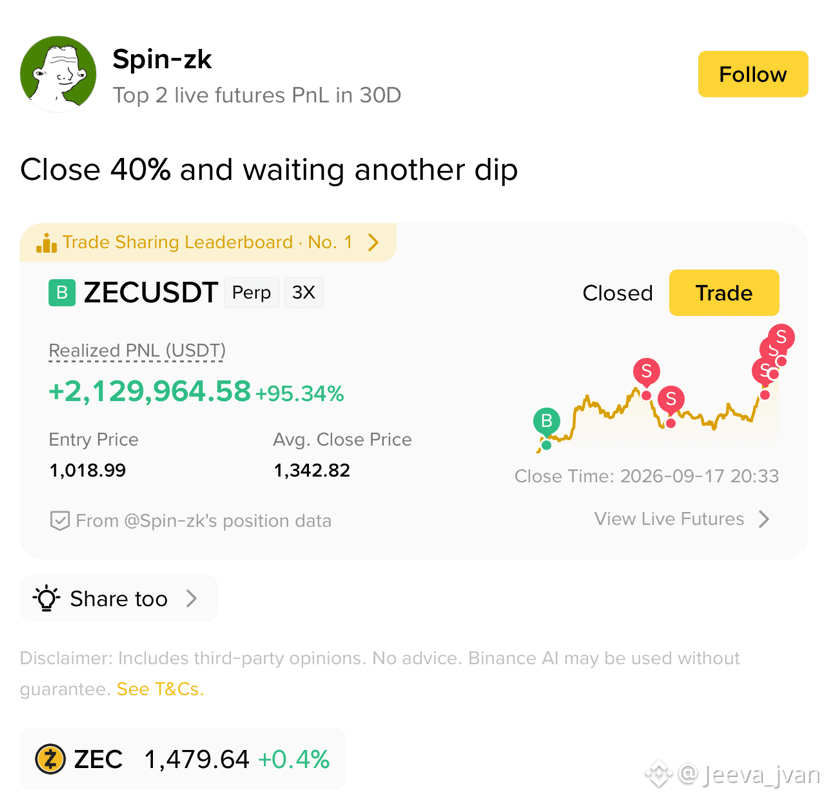
🔥 What a trade by @zkholder
ZEC/USDT: +95.34% realized PnL — closing 40% and waiting for another dip. Excellent execution and patience.
#ZEC #CryptoTrading #Trading #jeevajvan #DYOR $ZEC
🔥 What a trade by @Spinzk
ZEC/USDT: +95.34% realized PnL — closing 40% and waiting for another dip. Excellent execution and patience.
#ZEC #CryptoTrading #Trading #jeevajvan #DYOR $ZEC
ZEC/USDT: +95.34% realized PnL — closing 40% and waiting for another dip. Excellent execution and patience.
#ZEC #CryptoTrading #Trading #jeevajvan #DYOR $ZEC
2
358
·
--
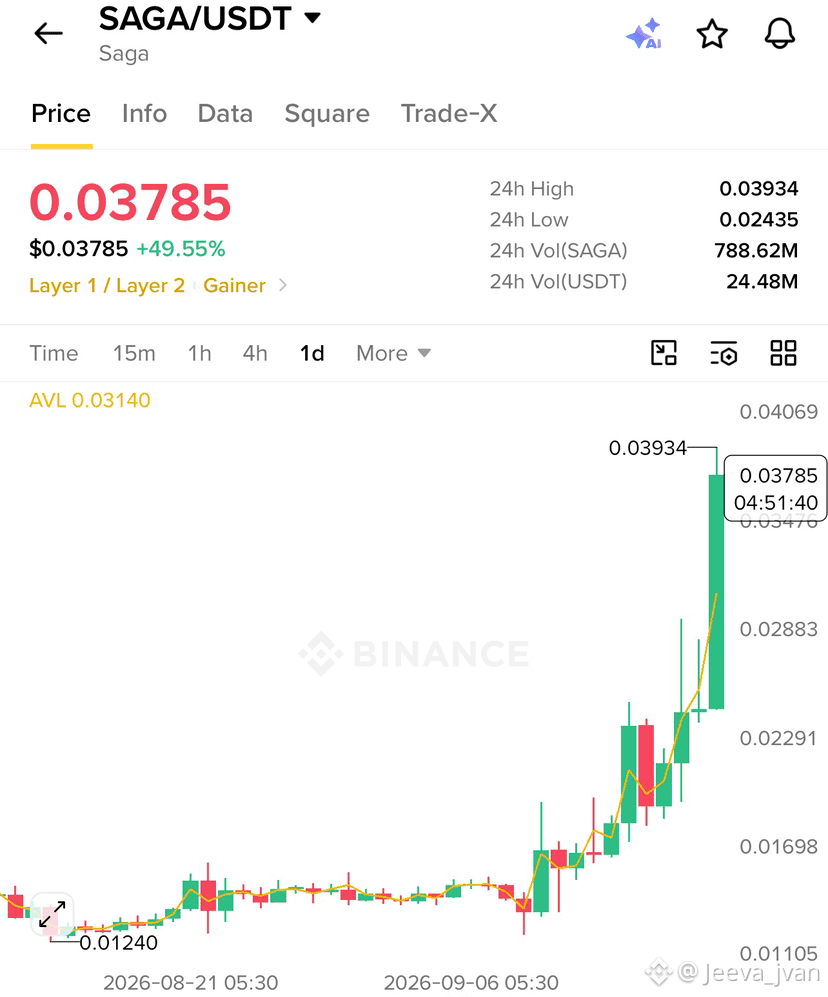
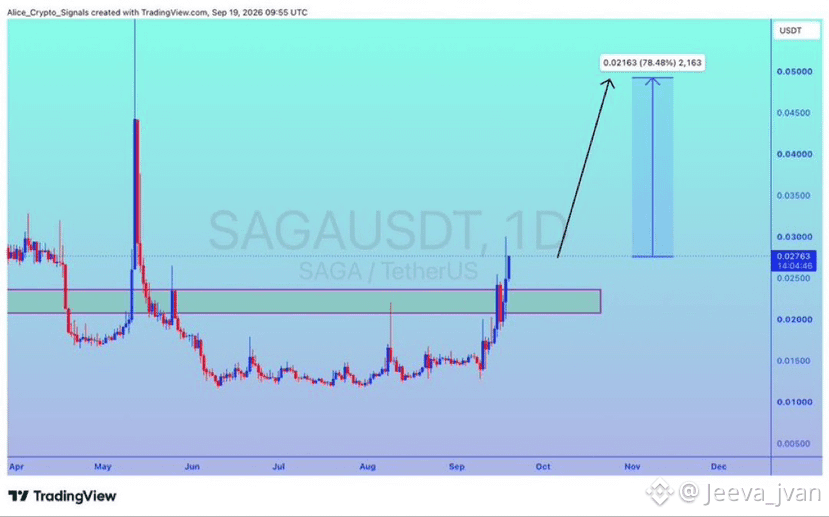
SAGA/USDT ENTRY
Entry: 0.0340–0.0370
TP1: 0.0400
TP2: 0.0450
TP3: 0.0500
SL: 0.0310
#DYOR — Not financial advice.
#SAGA #Crypto #Trading #jeevajvan $SAGA
{future}(SAGAUSDT)
SAGA/USDT ENTRY
Entry: 0.0340–0.0370
TP1: 0.0400
TP2: 0.0450
TP3: 0.0500
SL: 0.0310
#DYOR — Not financial advice.
#SAGA #Crypto #Trading #jeevajvan $SAGA
Entry: 0.0340–0.0370
TP1: 0.0400
TP2: 0.0450
TP3: 0.0500
SL: 0.0310
#DYOR — Not financial advice.
#SAGA #Crypto #Trading #jeevajvan $SAGA
1
399
·
--
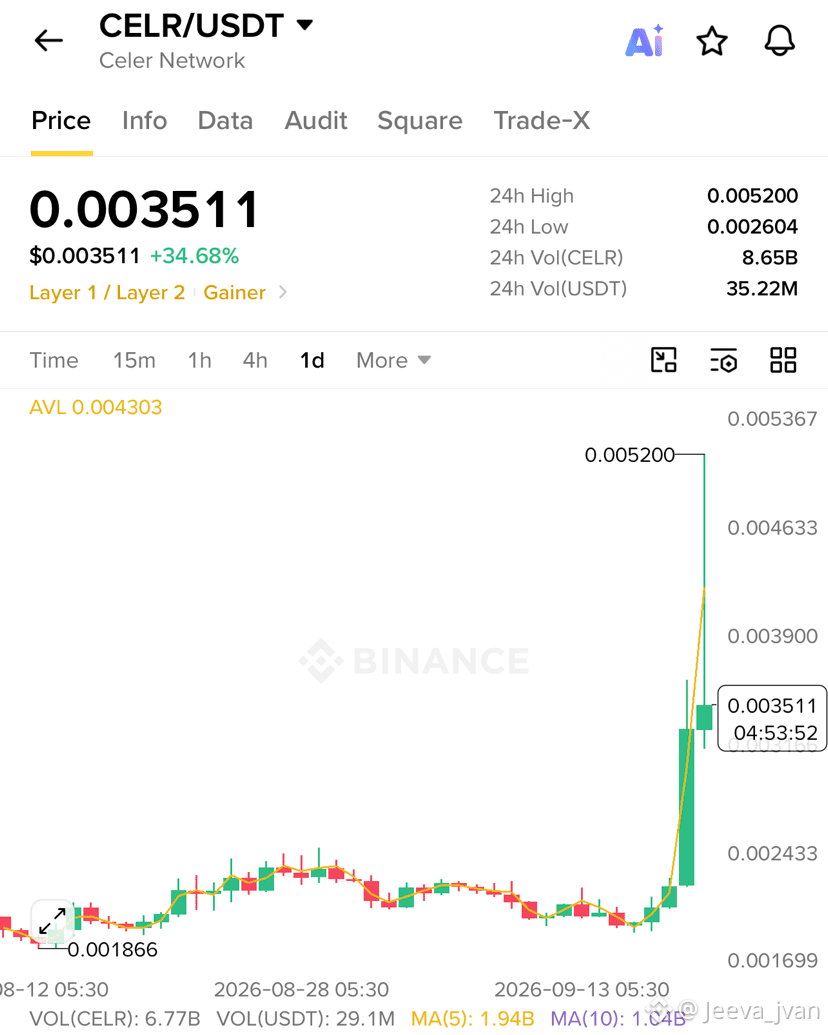
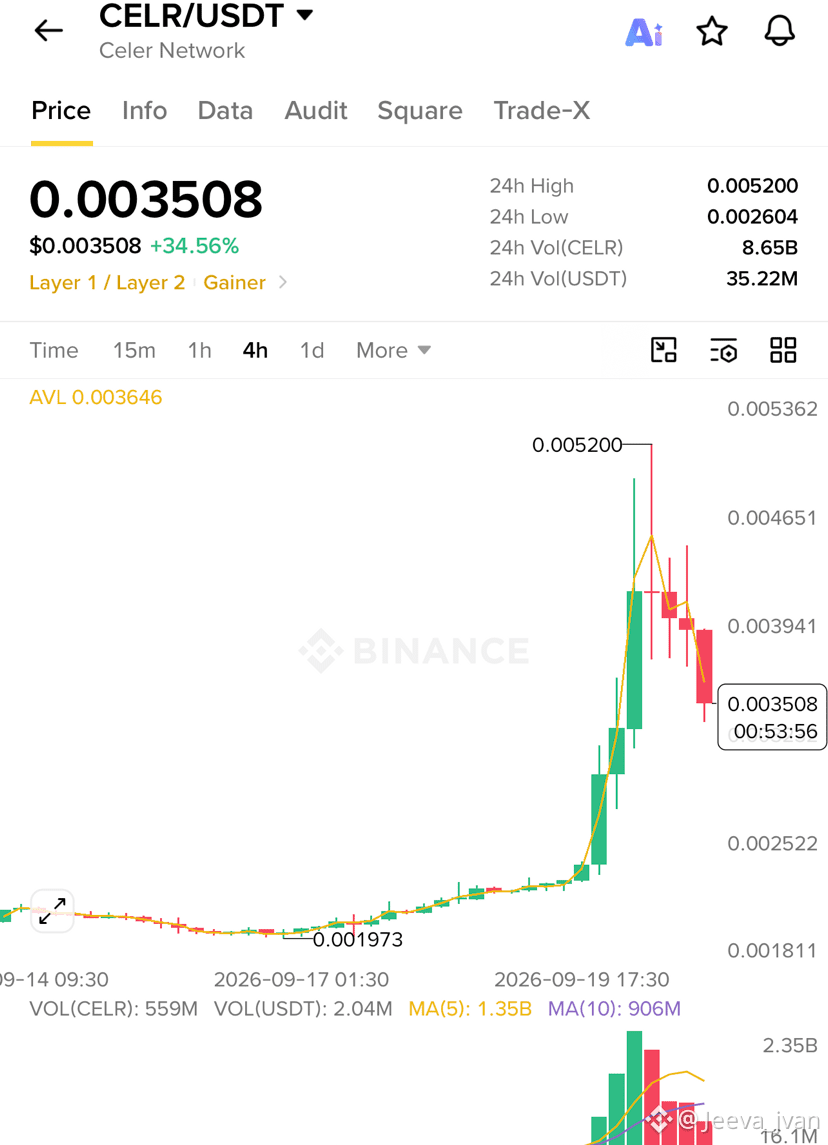
CELR/USDT TRADE
Entry: 0.00325–0.00350
TP1: 0.00390
TP2: 0.00450
TP3: 0.00510
SL: 0.00300
#DYOR — Not financial advice.
#CELR #Crypto #Trading #jeevajvan $CELR
{future}(CELRUSDT)
CELR/USDT TRADE
Entry: 0.00325–0.00350
TP1: 0.00390
TP2: 0.00450
TP3: 0.00510
SL: 0.00300
#DYOR — Not financial advice.
#CELR #Crypto #Trading #jeevajvan $CELR
Entry: 0.00325–0.00350
TP1: 0.00390
TP2: 0.00450
TP3: 0.00510
SL: 0.00300
#DYOR — Not financial advice.
#CELR #Crypto #Trading #jeevajvan $CELR

3
515
·
--
Verified
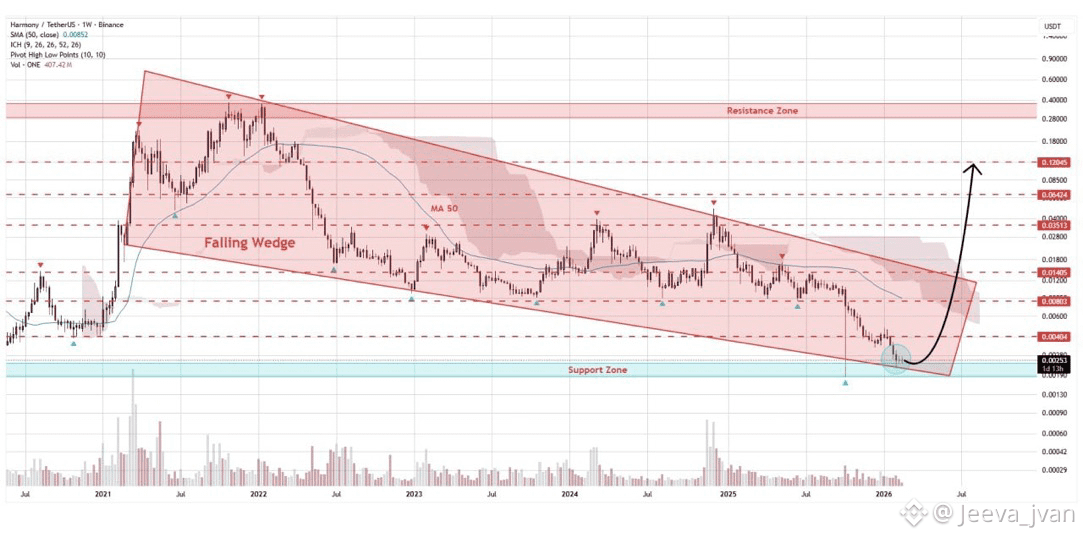
$ONE BIG UPDATE
Harmony has proposed shutting down its Layer-1 and migrating $ONE to Ethereum as an ERC-20 token.
The plan would snapshot ONE balances and distribute replacement tokens to the same Ethereum wallet addresses.
But this is still a proposal, not a completed migration.
The next phase for could be very different. 👀
#ONE #Harmony #Ethereum #Crypto #jeevajvan $ONE
{future}(ONEUSDT)
$ONE BIG UPDATE
Harmony has proposed shutting down its Layer-1 and migrating $ONE to Ethereum as an ERC-20 token.
The plan would snapshot ONE balances and distribute replacement tokens to the same Ethereum wallet addresses.
But this is still a proposal, not a completed migration.
The next phase for could be very different. 👀
#ONE #Harmony #Ethereum #Crypto #jeevajvan $ONE
Harmony has proposed shutting down its Layer-1 and migrating $ONE to Ethereum as an ERC-20 token.
The plan would snapshot ONE balances and distribute replacement tokens to the same Ethereum wallet addresses.
But this is still a proposal, not a completed migration.
The next phase for could be very different. 👀
#ONE #Harmony #Ethereum #Crypto #jeevajvan $ONE

1
3
4.8k
·
--
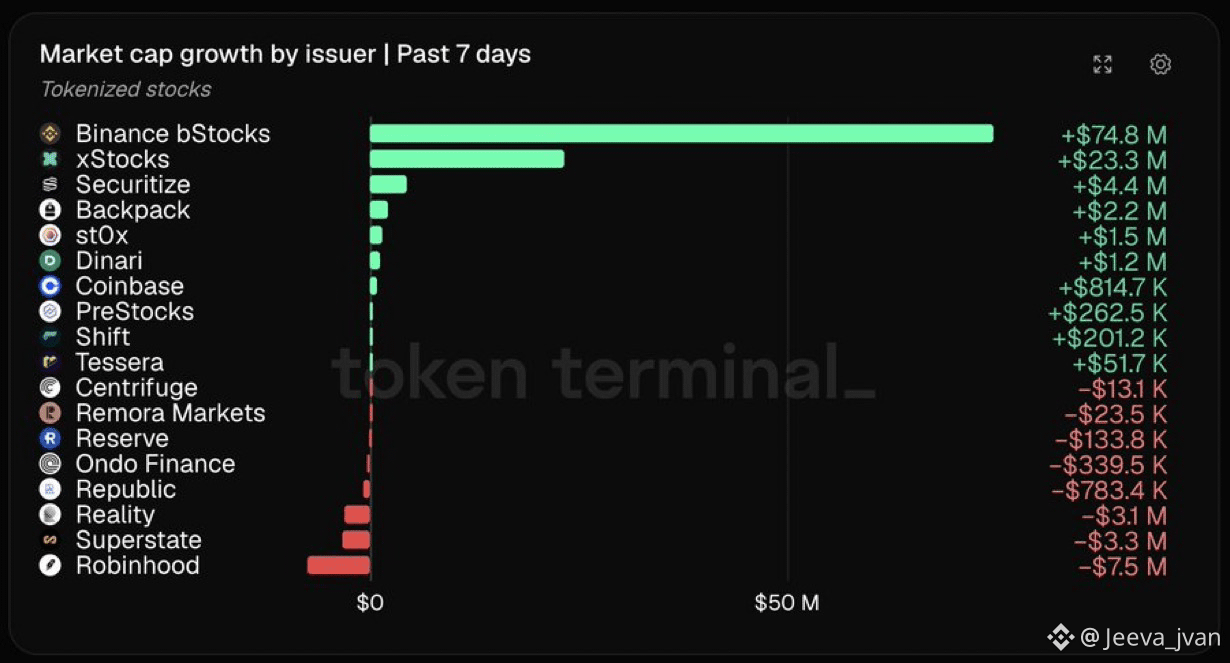
This could be a major moment for Binance.
Binance bStocks recorded +$74.8M in market-cap growth over the past 7 days — showing how quickly tokenized real-world assets are expanding.
If this trend continues, the BNB ecosystem could become increasingly important in the global tokenization and RWA infrastructure.
The RWA narrative is getting bigger. 💛@BNB_Chain
#RWA #BNB #Binance #Tokenization #jeevajvan @TokenTerminal Source
This could be a major moment for Binance.
Binance bStocks recorded +$74.8M in market-cap growth over the past 7 days — showing how quickly tokenized real-world assets are expanding.
If this trend continues, the BNB ecosystem could become increasingly important in the global tokenization and RWA infrastructure.
The RWA narrative is getting bigger. 💛@BNB Chain
#RWA #BNB #Binance #Tokenization #jeevajvan @Token Terminal Source
Binance bStocks recorded +$74.8M in market-cap growth over the past 7 days — showing how quickly tokenized real-world assets are expanding.
If this trend continues, the BNB ecosystem could become increasingly important in the global tokenization and RWA infrastructure.
The RWA narrative is getting bigger. 💛@BNB Chain
#RWA #BNB #Binance #Tokenization #jeevajvan @Token Terminal Source
4
299
·
--
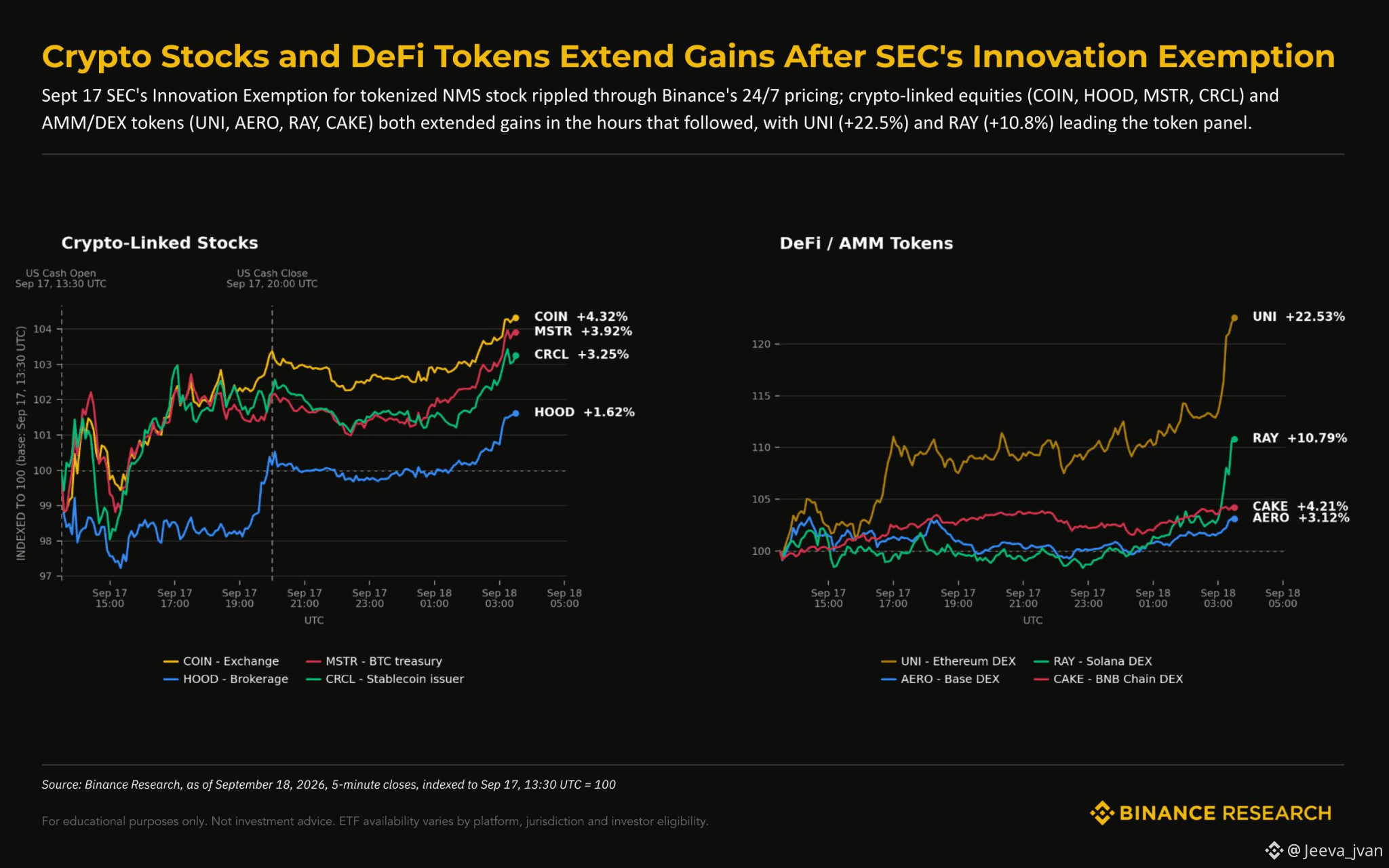
SEC move. Market reacts.
Tokenized stocks just got a major boost.
UNI +22.5% | RAY +10.8%
COIN, HOOD & MSTR also pushed higher.
Is tokenized equity finally entering the mainstream?
#Crypto #Tokenization #defi #bnb #jeevajvan @Binance_Research
SEC move. Market reacts.
Tokenized stocks just got a major boost.
UNI +22.5% | RAY +10.8%
COIN, HOOD & MSTR also pushed higher.
Is tokenized equity finally entering the mainstream?
#Crypto #Tokenization #defi #bnb #jeevajvan @Binance Research
Tokenized stocks just got a major boost.
UNI +22.5% | RAY +10.8%
COIN, HOOD & MSTR also pushed higher.
Is tokenized equity finally entering the mainstream?
#Crypto #Tokenization #defi #bnb #jeevajvan @Binance Research
2
358
·
--
Bullish
Verified
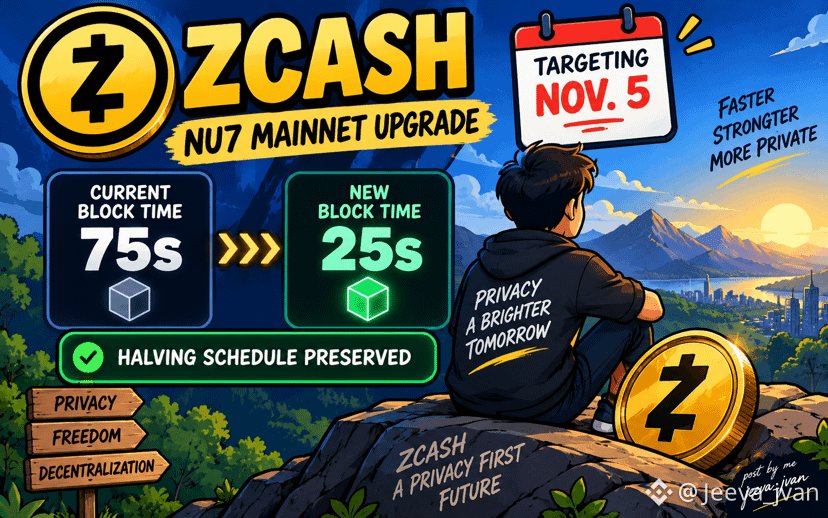
Zcash is gearing up for a major upgrade.
NU7 is targeting Nov. 5, with block times potentially dropping from 75s to 25s while keeping the halving schedule intact.
A big change for the ZEC network. $ZEC
#Zcash #ZEC #Crypto #Privacy #jeevajvan $ZEC
Zcash is gearing up for a major upgrade.
NU7 is targeting Nov. 5, with block times potentially dropping from 75s to 25s while keeping the halving schedule intact.
A big change for the ZEC network. $ZEC
#Zcash #ZEC #Crypto #Privacy #jeevajvan $ZEC
NU7 is targeting Nov. 5, with block times potentially dropping from 75s to 25s while keeping the halving schedule intact.
A big change for the ZEC network. $ZEC
#Zcash #ZEC #Crypto #Privacy #jeevajvan $ZEC
3
822
Log in to explore more content
Join global crypto users on Binance Square
⚡️ Get latest and useful information about crypto.
💬 Trusted by the world’s largest crypto exchange.
👍 Discover real insights from verified creators.
Email / Phone number
Trending Topics
UKFCAWinsCourtOrderToRecover851400Pounds
13,179 views
567 Discussing
🚨 CRYPTO REGULATION JUST ENTERED A NEW PHASE: THEY’RE NOT ONLY WRITING RULES — THEY’RE TAKING MONEY BACK.
The UK’s FCA has secured another court-backed asset recovery, reinforcing a broader enforcement push against unauthorized financial and crypto-related activity.
And look at what’s happening simultaneously:
🇬🇧 FCA → enforcement + asset recovery
🇺🇸 SEC → clearer rules for functional crypto assets
🇺🇸 Fed → formal stablecoin supervision under the GENIUS Act
That combination matters.
Regulators are no longer debating whether crypto belongs inside the financial system.
They’re increasingly deciding who gets access, what rules they follow, and what happens when those rules are broken.
The next crypto cycle may not be “regulation vs innovation.”
It may be regulated crypto vs everyone who can’t meet the standard. 👀
$COIN $CRCL $BTC
#ukfcawinscourtordertorecover851400pounds #ChainlinkLaunchesCCIP2WithEnterpriseVerification #GoldFallsTo$4144 #QNTFallsOver40%FromMorningHigh #USDTAdds845900HoldersInPast7Days
KimHotbae
·2 Likes
·4.1k views
ChainlinkLaunchesCCIP2WithEnterpriseVerification
27,054 views
774 Discussing
GoldFallsTo$4144
10,491 views
130 Discussing