

The Hive_Prophet
6 Posts
The Hive_Prophet
Report
Block User
1 Following
26 Followers
32 Liked
Posts

Article
How to make your family wealthyEnglish
**A single brilliant decision can create wealth. However, the best way to preserve one's fortune over the course of a century is not through a single brilliant decision, but through hundreds of sound decisions made over many years.**
**Cultivating the Right Family Culture**
-
The most successful families instill a sense of purpose in subsequent generations. They create an environment in which children and grandchildren **do not feel entitled to their inheritance**, but are instead motivated to forge their own paths and create value for the world.
In these families, subsequent generations view their wealth not as their personal property, but as something they are stewarding for the future.
**Viewing Tax Planning as an Ongoing Process**
-
The second most important factor these families utilize to preserve their wealth is a highly deliberate and thoughtful approach to expenses and costs.
**Typically, in such situations, taxes represent one of the largest cost factors; moreover, the manner in which one invests one's money can be either incredibly tax-efficient or incredibly tax-inefficient.**
For instance, one might purchase an equity fund where the fund manager is constantly buying and selling. One would have to anticipate that a significant portion of the short-term capital gains would be subject to taxation each year—thereby eroding the client's net return.
An alternative is a tax-loss harvesting strategy, in which—rather than purchasing a mutual fund—one acquires a basket of individual stocks and sells positions trading at a loss to offset gains elsewhere. The expected gross return remains the same, but the after-tax returns are significantly higher.
These wealthy families invest considerable time in engaging professional advisors to ensure they avoid making tax-inefficient decisions. They view tax planning not as a one-time event, but as an ongoing process. **Long-Term Investing**
-
Another common practice involves buying and holding core assets over extended periods to minimize taxes and transaction costs.
The same principle applies to financial assets. Ultra-high-net-worth individuals with well-structured stock portfolios almost never pay taxes on them, simply because they buy and hold.
For instance, if they require $1 million (approximately €920,000) to purchase a property, they do not sell off assets and thereby incur a tax liability. Instead, they take out a loan against their portfolio or secure a mortgage. Wealthy individuals generally avoid paying for their homes in cash, as this is rarely the most prudent financial strategy.
**Being Frugal**
-
It may come as a surprise, but ultra-high-net-worth individuals can be remarkably frugal. While most people assume that having such vast wealth would mean never having to worry about the small things, I believe that one key to preserving wealth lies in being highly frugal and keeping a close eye on expenses.
**The right approach is to make every financial decision with consistent, conscious intent—and that is precisely how wealthy families remain wealthy.**
My personal conclusion:
My wife and I now sit down together every Sunday and consciously discuss which major expenses are truly worthwhile. It's not just about spending money, but about strategically deciding which investments will create long-term value.
For example, it's about time I replaced my old van with a modern electric one. While there are no longer any government subsidies for electric vehicles for businesses, manufacturers and dealers often offer attractive discounts. At the same time, such an investment also has tax advantages: The higher operating expenses reduce my taxable income, saving me on income tax, business tax, and even health insurance contributions – costs that private individuals cannot claim in this way.
Of course, we also regularly discuss how we can best transfer our properties to our children later on without incurring unnecessary inheritance tax. One thing is already clear to us: These properties should remain in the family for the long term and not end up on the open market. One possibility would be a tax-free sale within the family or the establishment of a family foundation. However, we won't be able to decide which solution is ultimately best until the coming years.
Since I invest not only in my company and real estate but also in cryptocurrencies, the issue of taxes plays a significant role there as well. Should the one-year holding period be abolished at some point and profits no longer be tax-free, new strategies would have to be considered. One option, for example, would be to use cryptocurrencies as collateral and take out a loan against them instead of selling the positions directly. The resulting interest could then be tax-deductible.
I'm already trying to instill this kind of long-term, strategic thinking in my children.
https://ecency.com/hive-167922/@der-prophet/wie-du-es-schaffst-das-deine-familie-wohlhabend-wirdhow-to-make-your-family-wealthy--5kg
#MindsetOverMoney #hive #InvestSmart #investing
How to make your family wealthy
English
**A single brilliant decision can create wealth. However, the best way to preserve one's fortune over the course of a century is not through a single brilliant decision, but through hundreds of sound decisions made over many years.**
**Cultivating the Right Family Culture**
-
The most successful families instill a sense of purpose in subsequent generations. They create an environment in which children and grandchildren **do not feel entitled to their inheritance**, but are instead motivated to forge their own paths and create value for the world.
In these families, subsequent generations view their wealth not as their personal property, but as something they are stewarding for the future.
**Viewing Tax Planning as an Ongoing Process**
-
The second most important factor these families utilize to preserve their wealth is a highly deliberate and thoughtful approach to expenses and costs.
**Typically, in such situations, taxes represent one of the largest cost factors; moreover, the manner in which one invests one's money can be either incredibly tax-efficient or incredibly tax-inefficient.**
For instance, one might purchase an equity fund where the fund manager is constantly buying and selling. One would have to anticipate that a significant portion of the short-term capital gains would be subject to taxation each year—thereby eroding the client's net return.
An alternative is a tax-loss harvesting strategy, in which—rather than purchasing a mutual fund—one acquires a basket of individual stocks and sells positions trading at a loss to offset gains elsewhere. The expected gross return remains the same, but the after-tax returns are significantly higher.
These wealthy families invest considerable time in engaging professional advisors to ensure they avoid making tax-inefficient decisions. They view tax planning not as a one-time event, but as an ongoing process. **Long-Term Investing**
-
Another common practice involves buying and holding core assets over extended periods to minimize taxes and transaction costs.
The same principle applies to financial assets. Ultra-high-net-worth individuals with well-structured stock portfolios almost never pay taxes on them, simply because they buy and hold.
For instance, if they require $1 million (approximately €920,000) to purchase a property, they do not sell off assets and thereby incur a tax liability. Instead, they take out a loan against their portfolio or secure a mortgage. Wealthy individuals generally avoid paying for their homes in cash, as this is rarely the most prudent financial strategy.
**Being Frugal**
-
It may come as a surprise, but ultra-high-net-worth individuals can be remarkably frugal. While most people assume that having such vast wealth would mean never having to worry about the small things, I believe that one key to preserving wealth lies in being highly frugal and keeping a close eye on expenses.
**The right approach is to make every financial decision with consistent, conscious intent—and that is precisely how wealthy families remain wealthy.**
My personal conclusion:
My wife and I now sit down together every Sunday and consciously discuss which major expenses are truly worthwhile. It's not just about spending money, but about strategically deciding which investments will create long-term value.
For example, it's about time I replaced my old van with a modern electric one. While there are no longer any government subsidies for electric vehicles for businesses, manufacturers and dealers often offer attractive discounts. At the same time, such an investment also has tax advantages: The higher operating expenses reduce my taxable income, saving me on income tax, business tax, and even health insurance contributions – costs that private individuals cannot claim in this way.
Of course, we also regularly discuss how we can best transfer our properties to our children later on without incurring unnecessary inheritance tax. One thing is already clear to us: These properties should remain in the family for the long term and not end up on the open market. One possibility would be a tax-free sale within the family or the establishment of a family foundation. However, we won't be able to decide which solution is ultimately best until the coming years.
Since I invest not only in my company and real estate but also in cryptocurrencies, the issue of taxes plays a significant role there as well. Should the one-year holding period be abolished at some point and profits no longer be tax-free, new strategies would have to be considered. One option, for example, would be to use cryptocurrencies as collateral and take out a loan against them instead of selling the positions directly. The resulting interest could then be tax-deductible.
I'm already trying to instill this kind of long-term, strategic thinking in my children.
https://ecency.com/hive-167922/@der-prophet/wie-du-es-schaffst-das-deine-familie-wohlhabend-wirdhow-to-make-your-family-wealthy--5kg
#MindsetOverMoney #hive #InvestSmart #investing
**A single brilliant decision can create wealth. However, the best way to preserve one's fortune over the course of a century is not through a single brilliant decision, but through hundreds of sound decisions made over many years.**
**Cultivating the Right Family Culture**
-
The most successful families instill a sense of purpose in subsequent generations. They create an environment in which children and grandchildren **do not feel entitled to their inheritance**, but are instead motivated to forge their own paths and create value for the world.
In these families, subsequent generations view their wealth not as their personal property, but as something they are stewarding for the future.
**Viewing Tax Planning as an Ongoing Process**
-
The second most important factor these families utilize to preserve their wealth is a highly deliberate and thoughtful approach to expenses and costs.
**Typically, in such situations, taxes represent one of the largest cost factors; moreover, the manner in which one invests one's money can be either incredibly tax-efficient or incredibly tax-inefficient.**
For instance, one might purchase an equity fund where the fund manager is constantly buying and selling. One would have to anticipate that a significant portion of the short-term capital gains would be subject to taxation each year—thereby eroding the client's net return.
An alternative is a tax-loss harvesting strategy, in which—rather than purchasing a mutual fund—one acquires a basket of individual stocks and sells positions trading at a loss to offset gains elsewhere. The expected gross return remains the same, but the after-tax returns are significantly higher.
These wealthy families invest considerable time in engaging professional advisors to ensure they avoid making tax-inefficient decisions. They view tax planning not as a one-time event, but as an ongoing process. **Long-Term Investing**
-
Another common practice involves buying and holding core assets over extended periods to minimize taxes and transaction costs.
The same principle applies to financial assets. Ultra-high-net-worth individuals with well-structured stock portfolios almost never pay taxes on them, simply because they buy and hold.
For instance, if they require $1 million (approximately €920,000) to purchase a property, they do not sell off assets and thereby incur a tax liability. Instead, they take out a loan against their portfolio or secure a mortgage. Wealthy individuals generally avoid paying for their homes in cash, as this is rarely the most prudent financial strategy.
**Being Frugal**
-
It may come as a surprise, but ultra-high-net-worth individuals can be remarkably frugal. While most people assume that having such vast wealth would mean never having to worry about the small things, I believe that one key to preserving wealth lies in being highly frugal and keeping a close eye on expenses.
**The right approach is to make every financial decision with consistent, conscious intent—and that is precisely how wealthy families remain wealthy.**
My personal conclusion:
My wife and I now sit down together every Sunday and consciously discuss which major expenses are truly worthwhile. It's not just about spending money, but about strategically deciding which investments will create long-term value.
For example, it's about time I replaced my old van with a modern electric one. While there are no longer any government subsidies for electric vehicles for businesses, manufacturers and dealers often offer attractive discounts. At the same time, such an investment also has tax advantages: The higher operating expenses reduce my taxable income, saving me on income tax, business tax, and even health insurance contributions – costs that private individuals cannot claim in this way.
Of course, we also regularly discuss how we can best transfer our properties to our children later on without incurring unnecessary inheritance tax. One thing is already clear to us: These properties should remain in the family for the long term and not end up on the open market. One possibility would be a tax-free sale within the family or the establishment of a family foundation. However, we won't be able to decide which solution is ultimately best until the coming years.
Since I invest not only in my company and real estate but also in cryptocurrencies, the issue of taxes plays a significant role there as well. Should the one-year holding period be abolished at some point and profits no longer be tax-free, new strategies would have to be considered. One option, for example, would be to use cryptocurrencies as collateral and take out a loan against them instead of selling the positions directly. The resulting interest could then be tax-deductible.
I'm already trying to instill this kind of long-term, strategic thinking in my children.
https://ecency.com/hive-167922/@der-prophet/wie-du-es-schaffst-das-deine-familie-wohlhabend-wirdhow-to-make-your-family-wealthy--5kg
#MindsetOverMoney #hive #InvestSmart #investing
1
17
Investor or speculator – a difference many don't want to hear.A surprisingly large number of people today call themselves "investors" as soon as they open a brokerage account, invest in ETFs, or buy Bitcoin.
In reality, however, in most cases it's more about speculation than traditional investing.
**An investor builds value.**
They buy or develop real estate, found companies, participate in startups, or invest directly in productive business models. Their focus is on long-term cash flow, influence, substance, and sustainable wealth accumulation. A true investor thinks in decades—not quarters.
**The speculator, on the other hand, primarily bets on price movements.**
They buy stocks, ETFs, or cryptocurrencies in the hope that the market will be willing to pay more for them in the future. This can be highly profitable – no question. However, success here is often based more on market sentiment, timing, and liquidity than on direct value creation.
Important:
Speculation is not inherently negative. Many people have become very successful with it. The problem arises when speculation is confused with entrepreneurship or genuine investing.
The crucial difference lies in the approach:
**The investor creates or controls value.**
**The speculator trades expectations about value.**
Both paths can lead to wealth accumulation.
But the life of an investor is usually more sustainable, stable, and resilient to crises – because there is real substance behind their wealth.
Or, put more simply:
**The speculator hopes for rising prices.
The investor ensures that value is created.**
This difference is particularly evident in the current market phase.
While many risk assets, such as tech stocks or cryptocurrencies, have lost significant value, the actual investors have long since continued their work – often far from the public eye.
Companies are expanding their infrastructure, developing new products, and strengthening their market position. Banks and financial institutions are simultaneously working on networks and applications around digital assets and blockchain technologies. Even during the so-called "crypto winter," numerous projects are being further developed, partnerships are being forged, and systems are being built—almost unnoticed by most speculators who focus solely on the charts.
And that's precisely the crucial point:
Speculators watch prices.
Investors watch development, adoption, and network effects.
Those who want to be successful in the long term should therefore pay less attention to short-term price movements and more to which projects continue to grow, hire employees, expand infrastructure, and create real-world applications, even in difficult market phases.
Because wealth is rarely created where the greatest euphoria prevails.
It is usually created where consistent, behind-the-scenes development continues while the majority has already given up.
The best investments are often not identified by rising prices, but by the fact that development continues despite falling prices.
Posted Using [INLEO](https://inleo.io/@der-prophet/investor-oder-spekulant-ein-unterschied-den-viele-nicht-hren-wolleninvestor-or-speculator-a-difference-many-dont-want-to-hear--jq)
Investor or speculator – a difference many don't want to hear.
A surprisingly large number of people today call themselves "investors" as soon as they open a brokerage account, invest in ETFs, or buy Bitcoin.
In reality, however, in most cases it's more about speculation than traditional investing.
**An investor builds value.**
They buy or develop real estate, found companies, participate in startups, or invest directly in productive business models. Their focus is on long-term cash flow, influence, substance, and sustainable wealth accumulation. A true investor thinks in decades—not quarters.
**The speculator, on the other hand, primarily bets on price movements.**
They buy stocks, ETFs, or cryptocurrencies in the hope that the market will be willing to pay more for them in the future. This can be highly profitable – no question. However, success here is often based more on market sentiment, timing, and liquidity than on direct value creation.
Important:
Speculation is not inherently negative. Many people have become very successful with it. The problem arises when speculation is confused with entrepreneurship or genuine investing.
The crucial difference lies in the approach:
**The investor creates or controls value.**
**The speculator trades expectations about value.**
Both paths can lead to wealth accumulation.
But the life of an investor is usually more sustainable, stable, and resilient to crises – because there is real substance behind their wealth.
Or, put more simply:
**The speculator hopes for rising prices.
The investor ensures that value is created.**
This difference is particularly evident in the current market phase.
While many risk assets, such as tech stocks or cryptocurrencies, have lost significant value, the actual investors have long since continued their work – often far from the public eye.
Companies are expanding their infrastructure, developing new products, and strengthening their market position. Banks and financial institutions are simultaneously working on networks and applications around digital assets and blockchain technologies. Even during the so-called "crypto winter," numerous projects are being further developed, partnerships are being forged, and systems are being built—almost unnoticed by most speculators who focus solely on the charts.
And that's precisely the crucial point:
Speculators watch prices.
Investors watch development, adoption, and network effects.
Those who want to be successful in the long term should therefore pay less attention to short-term price movements and more to which projects continue to grow, hire employees, expand infrastructure, and create real-world applications, even in difficult market phases.
Because wealth is rarely created where the greatest euphoria prevails.
It is usually created where consistent, behind-the-scenes development continues while the majority has already given up.
The best investments are often not identified by rising prices, but by the fact that development continues despite falling prices.
Posted Using [INLEO](https://inleo.io/@der-prophet/investor-oder-spekulant-ein-unterschied-den-viele-nicht-hren-wolleninvestor-or-speculator-a-difference-many-dont-want-to-hear--jq)
In reality, however, in most cases it's more about speculation than traditional investing.
**An investor builds value.**
They buy or develop real estate, found companies, participate in startups, or invest directly in productive business models. Their focus is on long-term cash flow, influence, substance, and sustainable wealth accumulation. A true investor thinks in decades—not quarters.
**The speculator, on the other hand, primarily bets on price movements.**
They buy stocks, ETFs, or cryptocurrencies in the hope that the market will be willing to pay more for them in the future. This can be highly profitable – no question. However, success here is often based more on market sentiment, timing, and liquidity than on direct value creation.
Important:
Speculation is not inherently negative. Many people have become very successful with it. The problem arises when speculation is confused with entrepreneurship or genuine investing.
The crucial difference lies in the approach:
**The investor creates or controls value.**
**The speculator trades expectations about value.**
Both paths can lead to wealth accumulation.
But the life of an investor is usually more sustainable, stable, and resilient to crises – because there is real substance behind their wealth.
Or, put more simply:
**The speculator hopes for rising prices.
The investor ensures that value is created.**
This difference is particularly evident in the current market phase.
While many risk assets, such as tech stocks or cryptocurrencies, have lost significant value, the actual investors have long since continued their work – often far from the public eye.
Companies are expanding their infrastructure, developing new products, and strengthening their market position. Banks and financial institutions are simultaneously working on networks and applications around digital assets and blockchain technologies. Even during the so-called "crypto winter," numerous projects are being further developed, partnerships are being forged, and systems are being built—almost unnoticed by most speculators who focus solely on the charts.
And that's precisely the crucial point:
Speculators watch prices.
Investors watch development, adoption, and network effects.
Those who want to be successful in the long term should therefore pay less attention to short-term price movements and more to which projects continue to grow, hire employees, expand infrastructure, and create real-world applications, even in difficult market phases.
Because wealth is rarely created where the greatest euphoria prevails.
It is usually created where consistent, behind-the-scenes development continues while the majority has already given up.
The best investments are often not identified by rising prices, but by the fact that development continues despite falling prices.
Posted Using [INLEO](https://inleo.io/@der-prophet/investor-oder-spekulant-ein-unterschied-den-viele-nicht-hren-wolleninvestor-or-speculator-a-difference-many-dont-want-to-hear--jq)
157
The pattern of the "Big Cycle"The well-known billionaire and hedge fund founder Ray Dalio warns of a new phase of global instability. According to his analysis of historical cycles, the economy and politics could be facing a particularly turbulent time.
His analysis of roughly 500 years of history shows that world orders often follow recurring cycles.
Dalio calls this pattern the "Big Cycle." In such cycles, new monetary, power, and world orders emerge, develop over decades—and ultimately collapse.
Currently, he believes the world is in a particularly critical phase, on the verge of a potential upheaval.
According to Dalio's analysis, such major historical cycles last an average of about 75 years—sometimes considerably longer or shorter.
The last major upheaval, he argues, was the period between the Great Depression of 1929 and the end of World War II in 1945. Afterward, a new world order emerged under US leadership, which continues to shape the international financial and security system today.
However, according to Dalio, many current developments increasingly resemble the years preceding this upheaval.
Dalio cites several developments that, in his view, are typical of a particularly unstable phase of such a cycle.
These include:
High and rapidly growing national debt, as well as geopolitical conflicts, raise doubts about the value and stability of money—especially reserve currencies.
This drives capital out of paper currencies and into gold or cryptocurrencies.
The transition from a world order with a dominant power and relative stability to a world order characterized by conflicts between multiple major powers.
The disintegration of alliances such as NATO.
Growing wealth and income disparities within countries lead to:
The rise of populism—both right-wing and left-wing—and to irreconcilable differences that cannot be resolved through compromise or the rule of law.
I quoted from the following article...
https://www.focus.de/finanzen/ray-dalio-ich-habe-500-jahre-geschichte-studiert-und-befuerchte-dass-wir-in-die-gefaehrlichste-phase-des-grossen-zyklus-eintreten_a149ff87-b186-4aeb-94ba-0d6904dafbdb.html
My personal conclusion:
Do you also see the parallels? The only question is whether this system change will end in war or begin with a different financial system?
Posted Using [INLEO](https://inleo.io/@der-prophet/das-muster-des-big-cycle-the-pattern-of-the-big-cycle-gky)
$BTC #bitcoin #story #dollar #finance
The pattern of the "Big Cycle"
The well-known billionaire and hedge fund founder Ray Dalio warns of a new phase of global instability. According to his analysis of historical cycles, the economy and politics could be facing a particularly turbulent time.
His analysis of roughly 500 years of history shows that world orders often follow recurring cycles.
Dalio calls this pattern the "Big Cycle." In such cycles, new monetary, power, and world orders emerge, develop over decades—and ultimately collapse.
Currently, he believes the world is in a particularly critical phase, on the verge of a potential upheaval.
According to Dalio's analysis, such major historical cycles last an average of about 75 years—sometimes considerably longer or shorter.
The last major upheaval, he argues, was the period between the Great Depression of 1929 and the end of World War II in 1945. Afterward, a new world order emerged under US leadership, which continues to shape the international financial and security system today.
However, according to Dalio, many current developments increasingly resemble the years preceding this upheaval.
Dalio cites several developments that, in his view, are typical of a particularly unstable phase of such a cycle.
These include:
High and rapidly growing national debt, as well as geopolitical conflicts, raise doubts about the value and stability of money—especially reserve currencies.
This drives capital out of paper currencies and into gold or cryptocurrencies.
The transition from a world order with a dominant power and relative stability to a world order characterized by conflicts between multiple major powers.
The disintegration of alliances such as NATO.
Growing wealth and income disparities within countries lead to:
The rise of populism—both right-wing and left-wing—and to irreconcilable differences that cannot be resolved through compromise or the rule of law.
I quoted from the following article...
https://www.focus.de/finanzen/ray-dalio-ich-habe-500-jahre-geschichte-studiert-und-befuerchte-dass-wir-in-die-gefaehrlichste-phase-des-grossen-zyklus-eintreten_a149ff87-b186-4aeb-94ba-0d6904dafbdb.html
My personal conclusion:
Do you also see the parallels? The only question is whether this system change will end in war or begin with a different financial system?
Posted Using [INLEO](https://inleo.io/@der-prophet/das-muster-des-big-cycle-the-pattern-of-the-big-cycle-gky)
$BTC #bitcoin #story #dollar #finance
His analysis of roughly 500 years of history shows that world orders often follow recurring cycles.
Dalio calls this pattern the "Big Cycle." In such cycles, new monetary, power, and world orders emerge, develop over decades—and ultimately collapse.
Currently, he believes the world is in a particularly critical phase, on the verge of a potential upheaval.
According to Dalio's analysis, such major historical cycles last an average of about 75 years—sometimes considerably longer or shorter.
The last major upheaval, he argues, was the period between the Great Depression of 1929 and the end of World War II in 1945. Afterward, a new world order emerged under US leadership, which continues to shape the international financial and security system today.
However, according to Dalio, many current developments increasingly resemble the years preceding this upheaval.
Dalio cites several developments that, in his view, are typical of a particularly unstable phase of such a cycle.
These include:
High and rapidly growing national debt, as well as geopolitical conflicts, raise doubts about the value and stability of money—especially reserve currencies.
This drives capital out of paper currencies and into gold or cryptocurrencies.
The transition from a world order with a dominant power and relative stability to a world order characterized by conflicts between multiple major powers.
The disintegration of alliances such as NATO.
Growing wealth and income disparities within countries lead to:
The rise of populism—both right-wing and left-wing—and to irreconcilable differences that cannot be resolved through compromise or the rule of law.
I quoted from the following article...
https://www.focus.de/finanzen/ray-dalio-ich-habe-500-jahre-geschichte-studiert-und-befuerchte-dass-wir-in-die-gefaehrlichste-phase-des-grossen-zyklus-eintreten_a149ff87-b186-4aeb-94ba-0d6904dafbdb.html
My personal conclusion:
Do you also see the parallels? The only question is whether this system change will end in war or begin with a different financial system?
Posted Using [INLEO](https://inleo.io/@der-prophet/das-muster-des-big-cycle-the-pattern-of-the-big-cycle-gky)
$BTC #bitcoin #story #dollar #finance
1
112
Article
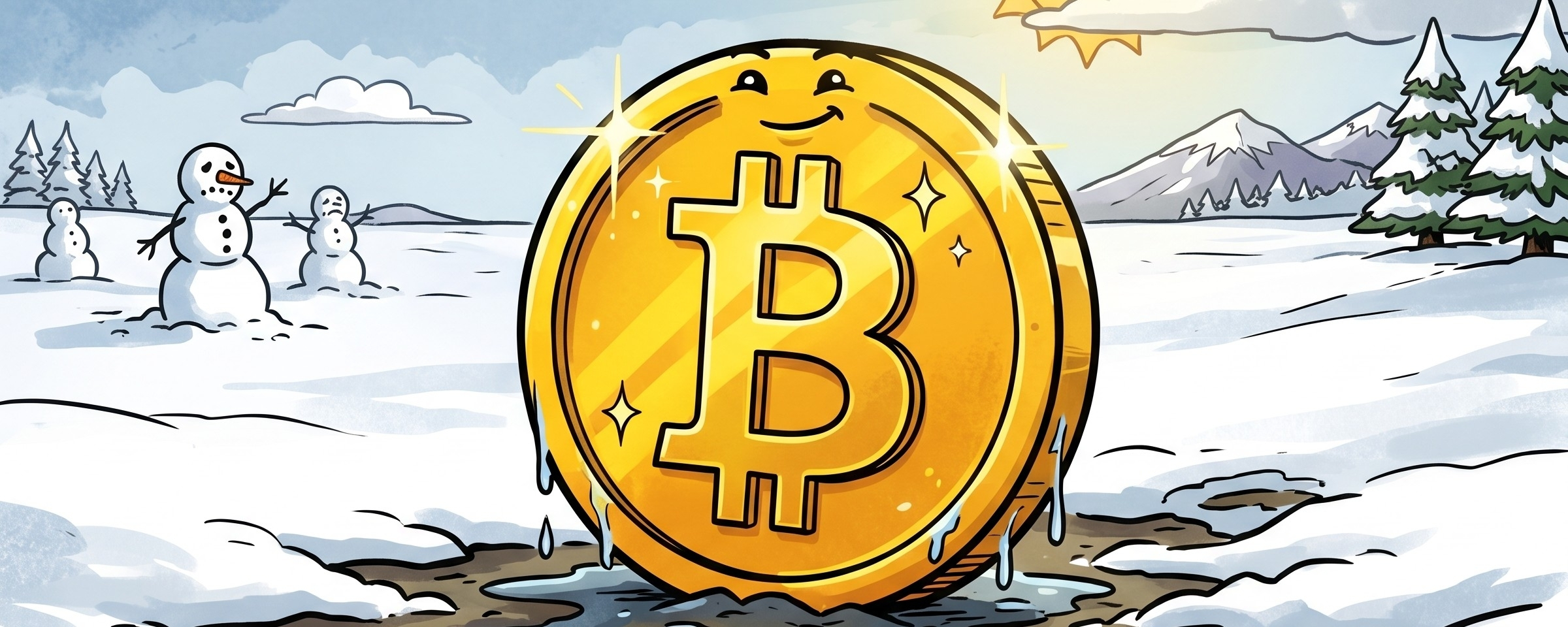
Is the crypto winter over?After Bitcoin's price crash to around $60,000 in February and two months of stubborn sideways movement, bullish signs are increasing. Michael Saylor's BTC accumulation machine is running at full speed, and spot ETFs from BlackRock and other providers are again seeing inflows in the hundreds of millions on some days. The shaky hands seem to have been swept out of the market. What remains is the core group of long-term holders. Have we already seen the Bitcoin bottom, and can we now hope for a genuine recovery rally? Many experts still have their doubts.
BTC Echo editor Tobias Zander: Hardly anyone would have expected a year ago that a single Bitcoin would cost less than $80,000 today. But although the four-year cycle caught up with its overly optimistic critics—myself included—this bear market has been surprisingly mild so far. The low point on February 6th represented a 53% correction from the all-time high of $126,000.
I quoted from the following interview...
https://www.btc-echo.de/news/steht-bitcoin-das-schlimmste-noch-bevor-229511/
Conclusion:
If the price action of the leading cryptocurrency has shown us one thing time and again, it's its merciless brutality against fair-weather investors who believe that Bitcoin offers a "simple" path to wealth. Therefore, I expect the BTC price to dip slightly below $60,000 again before a sustained recovery rally – even if only briefly. For true believers, it's once again a case of "buying when the cannons roar."
My question to you: Did I miss the opportunity to buy more in February, or is the real bottom yet to come?
Posted Using [INLEO](https://inleo.io/@der-prophet/der-kryptowinter-scheint-vorber-is-the-crypto-winter-over-bn4)
Is the crypto winter over?
After Bitcoin's price crash to around $60,000 in February and two months of stubborn sideways movement, bullish signs are increasing. Michael Saylor's BTC accumulation machine is running at full speed, and spot ETFs from BlackRock and other providers are again seeing inflows in the hundreds of millions on some days. The shaky hands seem to have been swept out of the market. What remains is the core group of long-term holders. Have we already seen the Bitcoin bottom, and can we now hope for a genuine recovery rally? Many experts still have their doubts.
BTC Echo editor Tobias Zander: Hardly anyone would have expected a year ago that a single Bitcoin would cost less than $80,000 today. But although the four-year cycle caught up with its overly optimistic critics—myself included—this bear market has been surprisingly mild so far. The low point on February 6th represented a 53% correction from the all-time high of $126,000.
I quoted from the following interview...
https://www.btc-echo.de/news/steht-bitcoin-das-schlimmste-noch-bevor-229511/
Conclusion:
If the price action of the leading cryptocurrency has shown us one thing time and again, it's its merciless brutality against fair-weather investors who believe that Bitcoin offers a "simple" path to wealth. Therefore, I expect the BTC price to dip slightly below $60,000 again before a sustained recovery rally – even if only briefly. For true believers, it's once again a case of "buying when the cannons roar."
My question to you: Did I miss the opportunity to buy more in February, or is the real bottom yet to come?
Posted Using [INLEO](https://inleo.io/@der-prophet/der-kryptowinter-scheint-vorber-is-the-crypto-winter-over-bn4)
BTC Echo editor Tobias Zander: Hardly anyone would have expected a year ago that a single Bitcoin would cost less than $80,000 today. But although the four-year cycle caught up with its overly optimistic critics—myself included—this bear market has been surprisingly mild so far. The low point on February 6th represented a 53% correction from the all-time high of $126,000.
I quoted from the following interview...
https://www.btc-echo.de/news/steht-bitcoin-das-schlimmste-noch-bevor-229511/
Conclusion:
If the price action of the leading cryptocurrency has shown us one thing time and again, it's its merciless brutality against fair-weather investors who believe that Bitcoin offers a "simple" path to wealth. Therefore, I expect the BTC price to dip slightly below $60,000 again before a sustained recovery rally – even if only briefly. For true believers, it's once again a case of "buying when the cannons roar."
My question to you: Did I miss the opportunity to buy more in February, or is the real bottom yet to come?
Posted Using [INLEO](https://inleo.io/@der-prophet/der-kryptowinter-scheint-vorber-is-the-crypto-winter-over-bn4)
10
166
Statement: CDU/CSU and AfD strictly against changes to the Bitcoin holding periodThe discussion around a possible change in the taxation of Bitcoin and other cryptocurrencies in Germany has been causing significant unrest within the industry and community for days. The background is the plans from the Federal Ministry of Finance under Finance Minister Lars Klingbeil (SPD), suggesting that the current tax treatment of cryptocurrencies should be changed.
**Now, for the first time, Blocktrainer.de has a concrete statement from the CDU/CSU Bundestag faction. In response to a citizen inquiry, the Union surprisingly positions itself clearly against changes to the existing regulation.**
Statement: CDU/CSU and AfD strictly against changes to the Bitcoin holding period
The discussion around a possible change in the taxation of Bitcoin and other cryptocurrencies in Germany has been causing significant unrest within the industry and community for days. The background is the plans from the Federal Ministry of Finance under Finance Minister Lars Klingbeil (SPD), suggesting that the current tax treatment of cryptocurrencies should be changed.
**Now, for the first time, Blocktrainer.de has a concrete statement from the CDU/CSU Bundestag faction. In response to a citizen inquiry, the Union surprisingly positions itself clearly against changes to the existing regulation.**
**Now, for the first time, Blocktrainer.de has a concrete statement from the CDU/CSU Bundestag faction. In response to a citizen inquiry, the Union surprisingly positions itself clearly against changes to the existing regulation.**
10
166
Michael Saylor: The biggest manipulator of the Bitcoin price?Michael Saylor: The biggest manipulator of the Bitcoin price?
MicroStrategy Inc. has halted its aggressive Bitcoin accumulation. CEO Michael Saylor announced on social media that no buys were made this week.

In his post on X, Saylor broke his pattern of hinting at new buys with the famous Orange Dots chart. Instead, he simply stated: 'No buys this week.' This statement indicates a pause after several weeks of steady accumulation.
Michael Saylor: The biggest manipulator of the Bitcoin price?
Michael Saylor: The biggest manipulator of the Bitcoin price?
MicroStrategy Inc. has halted its aggressive Bitcoin accumulation. CEO Michael Saylor announced on social media that no buys were made this week.

In his post on X, Saylor broke his pattern of hinting at new buys with the famous Orange Dots chart. Instead, he simply stated: 'No buys this week.' This statement indicates a pause after several weeks of steady accumulation.
MicroStrategy Inc. has halted its aggressive Bitcoin accumulation. CEO Michael Saylor announced on social media that no buys were made this week.

In his post on X, Saylor broke his pattern of hinting at new buys with the famous Orange Dots chart. Instead, he simply stated: 'No buys this week.' This statement indicates a pause after several weeks of steady accumulation.
11
368
Log in to explore more content
Join global crypto users on Binance Square
⚡️ Get latest and useful information about crypto.
💬 Trusted by the world’s largest crypto exchange.
👍 Discover real insights from verified creators.
Email / Phone number
Trending Topics
BitcoinClears$85200
7,994 views
187 Discussing
We got the move, and $BTC is standing exactly where we were before the data. That’s what actual patience for a trade looks like.
The data came in mixed but with some important numbers. ADP Non-Farm Employment Change came at 90K vs 73K forecast, while Core PCE came in at 0.2% vs 0.3% expected. Final GDP was also stronger at 2.2% vs 1.5% forecast, while Personal Spending came in at 0.9% vs 0.8% expected. At the same time, Personal Income missed at 0.2% vs 0.5% forecast.
BTC initially surged to $85,600 and is now back where it needs to be. I’m still looking toward the lower ranges at $82,759 and the $80,000 liquidity, because the overhead liquidity is done and dusted.
We had a live session during the data, and during that session we saw the market at $83,800, then $85,600, and then back toward $83,000 and we still didn’t enter a trade.
That’s what patience is.
We can’t force an entry when the market has no clear direction. The same range is still in focus, and we’ll wait for the market to give us the setup.
Let me know, guys, how was the session? And should we have more regular sessions with our respected members so we can have proper discussions regarding the market?
#BitcoinClears$85200 #AltcoinSeasonIndexHoldsAbove60For5Days #USADPAdds90000JobsInSeptember #BitcoinSlipsBelow$84000 #SECToClarifyOnChainFundraisingRules
Crypto_LUX
·24 Likes
·14.7k views
AltcoinSeasonIndexHoldsAbove60For5Days
42,108 views
1,016 Discussing
USADPAdds90000JobsInSeptember
19,185 views
575 Discussing