
Gavin_Cryptoo
609 Posts

Gavin_Cryptoo
Report
Block User
市场情绪分析|AI研究人员
8 Following
48 Followers
137 Liked
Posts
·
--
Bullish
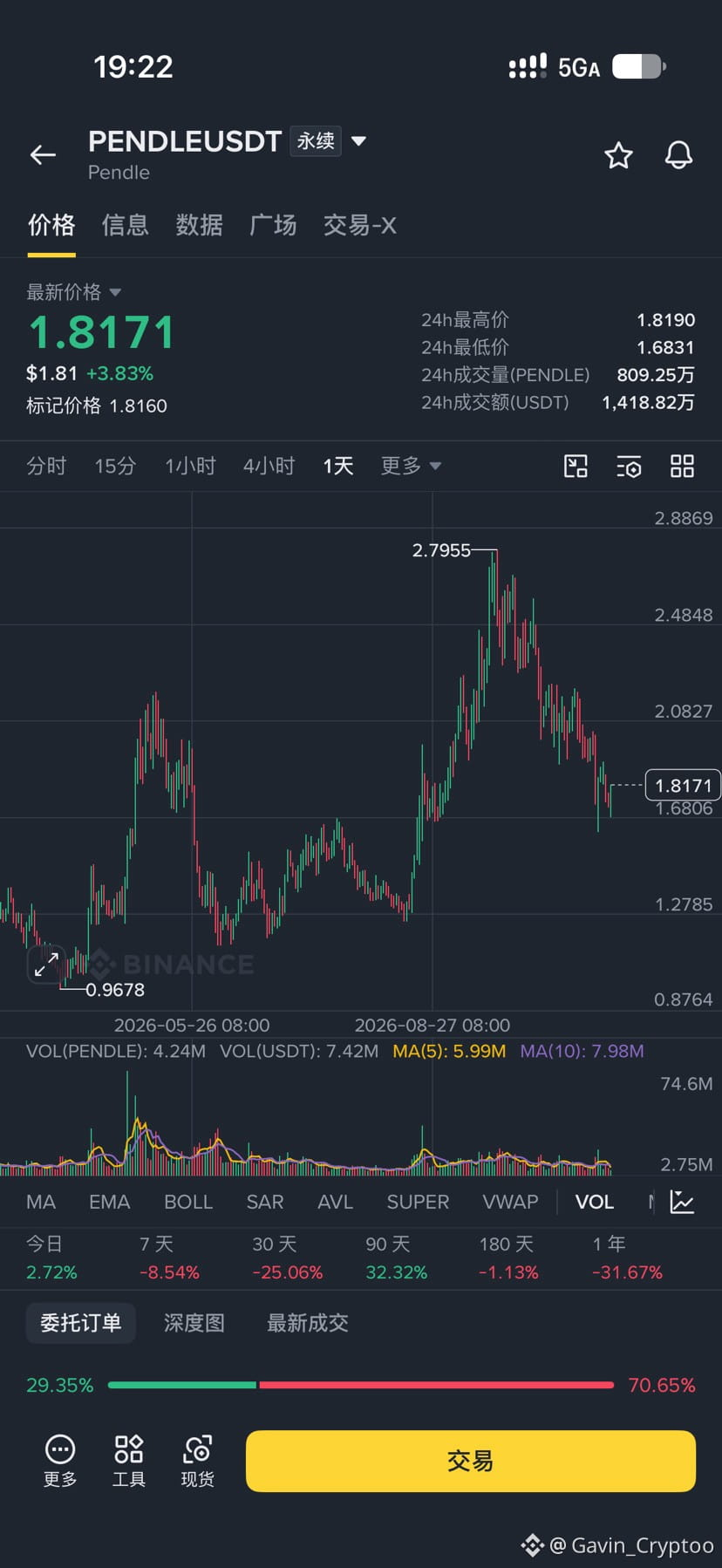
$PENDLE has made further progress in the RWA space, but its token price doesn’t seem to be responding much.
The partnership between Pendle and Centrifuge was recently officially announced, bringing a Janus Henderson-related AAA-rated CLO credit product to the fixed-rate market on Base.
Put simply, on-chain yields used to revolve mainly around stablecoins and staked assets. Now, even credit yields from traditional finance can be split into PTs and YTs, letting users trade principal and future yield.
I’ve always thought this direction has potential. As the RWA market grows, it will need more than just bringing assets on-chain—it will also need interest rate pricing and yield trading.
But don’t equate this partnership directly with a bullish signal for PENDLE.
PENDLE is currently around $1.75, basically flat over the past 24 hours, with trading volume of about $36 million, down roughly 27% from the previous day. The market has yet to show any clear confirmation through a surge in volume.
RWA credit also carries default, liquidity, and smart contract risks. Whether this new market can increase protocol fees and ultimately benefit PENDLE still needs to be validated by data.
My view: The long-term direction is worth watching, but I wouldn’t chase it for now. I’d first look for real trading volume and capital being committed before considering a reassessment.
#美国10月非农出炉:降息还有戏吗?
{future}(PENDLEUSDT)
$PENDLE has made further progress in the RWA space, but its token price doesn’t seem to be responding much.
The partnership between Pendle and Centrifuge was recently officially announced, bringing a Janus Henderson-related AAA-rated CLO credit product to the fixed-rate market on Base.
Put simply, on-chain yields used to revolve mainly around stablecoins and staked assets. Now, even credit yields from traditional finance can be split into PTs and YTs, letting users trade principal and future yield.
I’ve always thought this direction has potential. As the RWA market grows, it will need more than just bringing assets on-chain—it will also need interest rate pricing and yield trading.
But don’t equate this partnership directly with a bullish signal for PENDLE.
PENDLE is currently around $1.75, basically flat over the past 24 hours, with trading volume of about $36 million, down roughly 27% from the previous day. The market has yet to show any clear confirmation through a surge in volume.
RWA credit also carries default, liquidity, and smart contract risks. Whether this new market can increase protocol fees and ultimately benefit PENDLE still needs to be validated by data.
My view: The long-term direction is worth watching, but I wouldn’t chase it for now. I’d first look for real trading volume and capital being committed before considering a reassessment.
#美国10月非农出炉:降息还有戏吗?
1
209
·
--
Bullish
$RUNE After trading resumed, the price actually rose by around 15%. This rally is pretty surreal: the project had a vulnerability, paused cross-chain swaps on most of its networks, and still managed to climb so much.
Here’s what happened: A few days ago, an Ethereum chain reorganization triggered a refund vulnerability in THORChain, causing the vaults to overpay 10 ETH. The team had no choice but to urgently pause cross-chain swaps on several networks.
Yesterday, trading gradually resumed on major networks such as BTC and ETH, and RUNE rebounded as well. It’s currently around $0.64, with 24-hour trading volume of roughly $35 million.
I’ve always thought THORChain’s native cross-chain swaps were valuable. After all, they let you swap coins like BTC and ETH directly without wrapping them. RUNE also plays a role in node staking and network security, and the protocol has a fee-burning mechanism.
But this incident also exposed its biggest weakness.
On one hand, it has to compete with other cross-chain protocols for users; on the other, it has to address security issues. It’s even been drawn into a money-laundering controversy involving stolen Binance funds.
And right now, only 1% of system revenue is used to burn RUNE. High trading volume doesn’t necessarily mean the token price will rise.
I think RUNE is worth paying attention to again, but I’m not chasing this rally for now. First, I want to see whether the network can operate reliably and whether trading volume from regular users can truly recover.
#币安将恢复更多资产提现
{future}(RUNEUSDT)
$RUNE After trading resumed, the price actually rose by around 15%. This rally is pretty surreal: the project had a vulnerability, paused cross-chain swaps on most of its networks, and still managed to climb so much.
Here’s what happened: A few days ago, an Ethereum chain reorganization triggered a refund vulnerability in THORChain, causing the vaults to overpay 10 ETH. The team had no choice but to urgently pause cross-chain swaps on several networks.
Yesterday, trading gradually resumed on major networks such as BTC and ETH, and RUNE rebounded as well. It’s currently around $0.64, with 24-hour trading volume of roughly $35 million.
I’ve always thought THORChain’s native cross-chain swaps were valuable. After all, they let you swap coins like BTC and ETH directly without wrapping them. RUNE also plays a role in node staking and network security, and the protocol has a fee-burning mechanism.
But this incident also exposed its biggest weakness.
On one hand, it has to compete with other cross-chain protocols for users; on the other, it has to address security issues. It’s even been drawn into a money-laundering controversy involving stolen Binance funds.
And right now, only 1% of system revenue is used to burn RUNE. High trading volume doesn’t necessarily mean the token price will rise.
I think RUNE is worth paying attention to again, but I’m not chasing this rally for now. First, I want to see whether the network can operate reliably and whether trading volume from regular users can truly recover.
#币安将恢复更多资产提现
1
331

Article
November 4, 2026 | The Nasdaq has rebounded, but BTC remains under pressure! The U.S. midterm elections and tonight's jobs data are keyU.S. stocks finally rebounded last night, with the Nasdaq up 0.83% and the S&P 500 up 0.36%. Nvidia rose 2.3%, while Microsoft and Amazon also recovered noticeably. But I don't think we can say risk appetite has recovered just yet. Investors buying the dip in tech stocks doesn't mean the crypto market can rebound in tandem, especially after spot BTC ETFs saw large outflows for several consecutive days.
① The U.S. midterm elections may matter more than last night's rebound in U.S. stocks. The elections will be held on November 3, and markets are waiting for the results. Different configurations of control in Congress could affect future government spending, crypto regulatory legislation, and the pace at which the Trump administration advances its policies. If policy uncertainty eases, risk assets could benefit; but if political gridlock emerges, investors may stay on the sidelines. It's too early to treat any election outcome as positive for markets.
November 4, 2026 | The Nasdaq has rebounded, but BTC remains under pressure! The U.S. midterm elections and tonight's jobs data are key
U.S. stocks finally rebounded last night, with the Nasdaq up 0.83% and the S&P 500 up 0.36%. Nvidia rose 2.3%, while Microsoft and Amazon also recovered noticeably. But I don't think we can say risk appetite has recovered just yet. Investors buying the dip in tech stocks doesn't mean the crypto market can rebound in tandem, especially after spot BTC ETFs saw large outflows for several consecutive days.
① The U.S. midterm elections may matter more than last night's rebound in U.S. stocks. The elections will be held on November 3, and markets are waiting for the results. Different configurations of control in Congress could affect future government spending, crypto regulatory legislation, and the pace at which the Trump administration advances its policies. If policy uncertainty eases, risk assets could benefit; but if political gridlock emerges, investors may stay on the sidelines. It's too early to treat any election outcome as positive for markets.
① The U.S. midterm elections may matter more than last night's rebound in U.S. stocks. The elections will be held on November 3, and markets are waiting for the results. Different configurations of control in Congress could affect future government spending, crypto regulatory legislation, and the pace at which the Trump administration advances its policies. If policy uncertainty eases, risk assets could benefit; but if political gridlock emerges, investors may stay on the sidelines. It's too early to treat any election outcome as positive for markets.
257
Verified
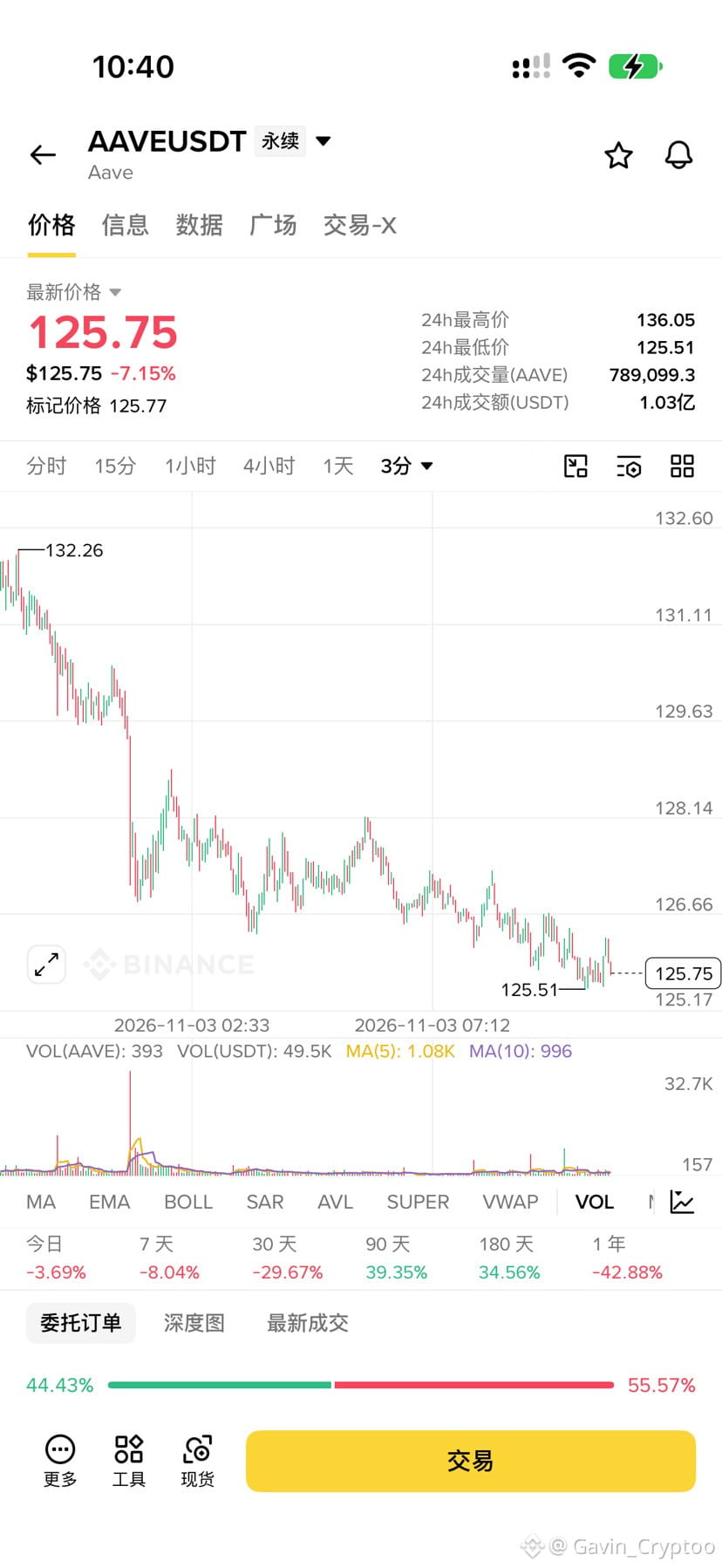
$AAVE released an update yesterday, and I think a few numbers are worth paying attention to.
Aave V4’s deposits have surpassed $1.5 billion, active borrowing has exceeded $450 million, and cumulative borrowing across the entire history of the Aave protocol has reached $1.1 trillion.
This shows that on-chain lending is no longer the kind of market it used to be, where funds were attracted purely by mining incentives. People are genuinely borrowing money and paying interest.
Aave is also starting to serve more institutional businesses, including stablecoins and Bitcoin-backed lending.
However, the recent Binance hack is a reminder for Aave, too. Hackers can use lending protocols to shift asset risk, forcing protocols to urgently freeze some markets.
I think Aave’s biggest strengths are still its liquidity and risk management experience, but competitors like Morpho are also vying for market share.
One more thing: growth in business scale doesn’t necessarily mean AAVE will rise. Ultimately, it also depends on protocol revenue and how much value the token captures.
I’ll continue to keep a close eye on AAVE over the long term, but the security incident hasn’t been fully resolved yet, so there’s no rush to chase it now.
#美国中期选举倒计时,美股博弈窗口已开启?
1
2
1.5k

Article
November 3 | U.S. Manufacturing Beats Expectations, but Stocks Keep Falling! What Should BTC Watch Out for Next?U.S. economic data last night was actually good, but U.S. stocks did not rally as a result. The Nasdaq fell 1.07%, the S&P 500 dropped 0.51%, Intel slid 8.8%, and Oracle fell nearly 9%. Concerns about returns on tech companies’ AI investments are still growing. For BTC and ETH, this shows that risk appetite has not quickly recovered just because the economic data was positive.
① U.S. manufacturing beat expectations, but inflationary pressures have not disappeared. The ISM Manufacturing PMI for October, released early this morning Beijing time, came in at 55.5, above the market forecast of 54.5, while the production index rose to 59.0. However, although the price index fell from 77.9 to 75.2, it remains elevated. My take is that the U.S. economy is resilient, but the Fed may have little reason to rush into easing. If price pressures continue to ease, that would be good for risk assets; if inflation accelerates again, Treasury yields and the dollar could continue to weigh on crypto.
November 3 | U.S. Manufacturing Beats Expectations, but Stocks Keep Falling! What Should BTC Watch Out for Next?
U.S. economic data last night was actually good, but U.S. stocks did not rally as a result. The Nasdaq fell 1.07%, the S&P 500 dropped 0.51%, Intel slid 8.8%, and Oracle fell nearly 9%. Concerns about returns on tech companies’ AI investments are still growing. For BTC and ETH, this shows that risk appetite has not quickly recovered just because the economic data was positive.
① U.S. manufacturing beat expectations, but inflationary pressures have not disappeared. The ISM Manufacturing PMI for October, released early this morning Beijing time, came in at 55.5, above the market forecast of 54.5, while the production index rose to 59.0. However, although the price index fell from 77.9 to 75.2, it remains elevated. My take is that the U.S. economy is resilient, but the Fed may have little reason to rush into easing. If price pressures continue to ease, that would be good for risk assets; if inflation accelerates again, Treasury yields and the dollar could continue to weigh on crypto.
① U.S. manufacturing beat expectations, but inflationary pressures have not disappeared. The ISM Manufacturing PMI for October, released early this morning Beijing time, came in at 55.5, above the market forecast of 54.5, while the production index rose to 59.0. However, although the price index fell from 77.9 to 75.2, it remains elevated. My take is that the U.S. economy is resilient, but the Fed may have little reason to rush into easing. If price pressures continue to ease, that would be good for risk assets; if inflation accelerates again, Treasury yields and the dollar could continue to weigh on crypto.
274
·
--
Bullish
$HYPE A major move today: $224 million worth of tokens unstaked, but I’m not rushing to turn bearish.
On November 2, on-chain monitoring found that 15 wallets suspected of being linked to Paradigm had gradually unstaked around 2.55 million HYPE over the past two days, about 17.85% of their remaining staked tokens.
That’s certainly a substantial amount, but unstaking doesn’t mean selling.
Paradigm made a similar move a few weeks ago, then consolidated the tokens again and restaked them. Whether that happens again remains to be seen; we’ll need to keep monitoring on-chain transfers.
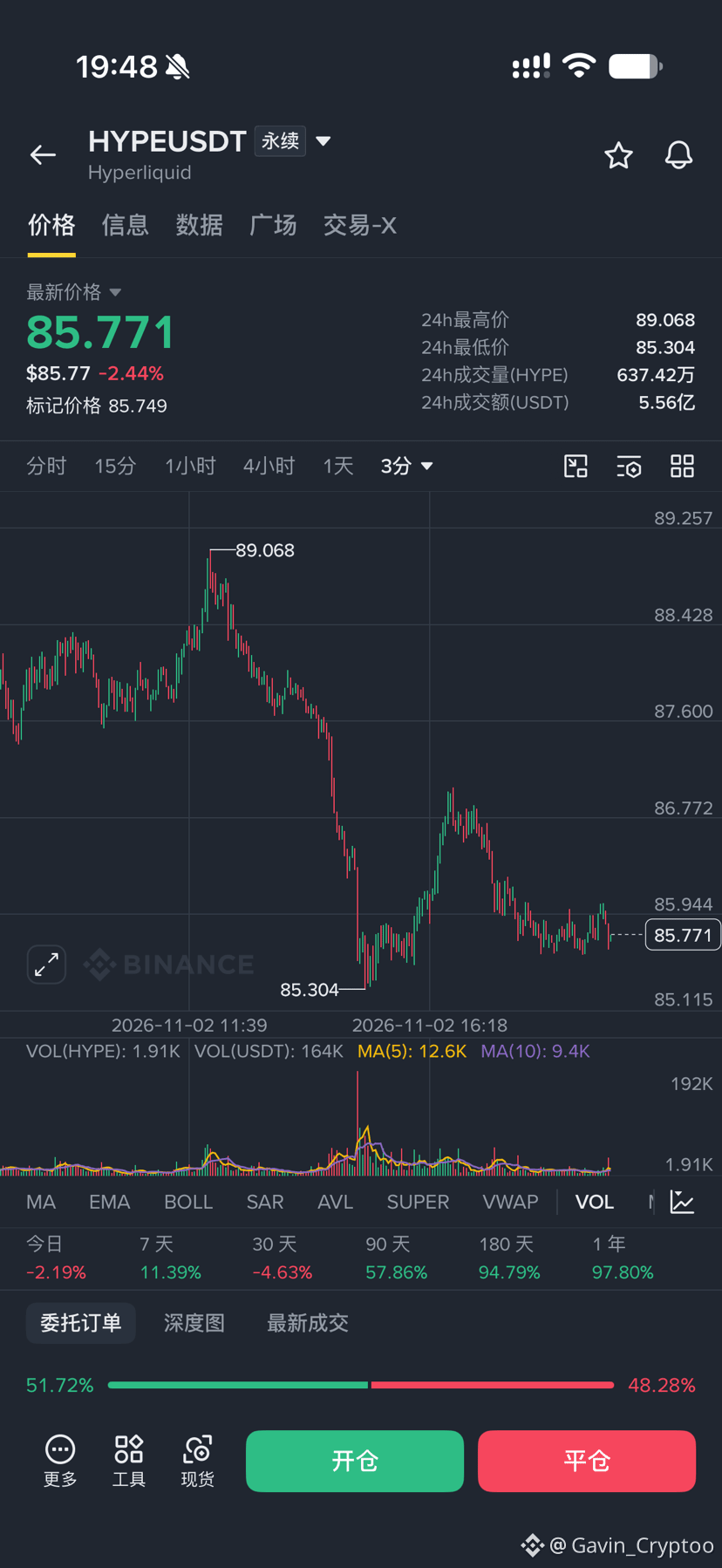
As for the market, HYPE is around $86.63, down 1.8% in 24 hours, with trading volume of about $1.18 billion, down roughly 15% from the previous day.
I think what’s more worth watching is that Hyperliquid still generated around $65.11 million in protocol revenue over the past 30 days, and that revenue is directly linked to HYPE buybacks.
That’s an advantage over other perpetuals platforms. But whale unstaking, upcoming unlocks, and competitive pressure should not be overlooked either.
My view: fundamentals have not deteriorated yet, but short-term token supply risk is rising.
For now, I’m neither chasing the price nor assuming a sharp crash just because tokens have been unstaked. The key thing to watch next is whether these 2.55 million HYPE are restaked, transferred to trading platforms, or actually sold.
#币安已处理46.5亿美元提款
{future}(HYPEUSDT)
$HYPE A major move today: $224 million worth of tokens unstaked, but I’m not rushing to turn bearish.
On November 2, on-chain monitoring found that 15 wallets suspected of being linked to Paradigm had gradually unstaked around 2.55 million HYPE over the past two days, about 17.85% of their remaining staked tokens.
That’s certainly a substantial amount, but unstaking doesn’t mean selling.
Paradigm made a similar move a few weeks ago, then consolidated the tokens again and restaked them. Whether that happens again remains to be seen; we’ll need to keep monitoring on-chain transfers.
As for the market, HYPE is around $86.63, down 1.8% in 24 hours, with trading volume of about $1.18 billion, down roughly 15% from the previous day.
I think what’s more worth watching is that Hyperliquid still generated around $65.11 million in protocol revenue over the past 30 days, and that revenue is directly linked to HYPE buybacks.
That’s an advantage over other perpetuals platforms. But whale unstaking, upcoming unlocks, and competitive pressure should not be overlooked either.
My view: fundamentals have not deteriorated yet, but short-term token supply risk is rising.
For now, I’m neither chasing the price nor assuming a sharp crash just because tokens have been unstaked. The key thing to watch next is whether these 2.55 million HYPE are restaked, transferred to trading platforms, or actually sold.
#币安已处理46.5亿美元提款
1
629
Article
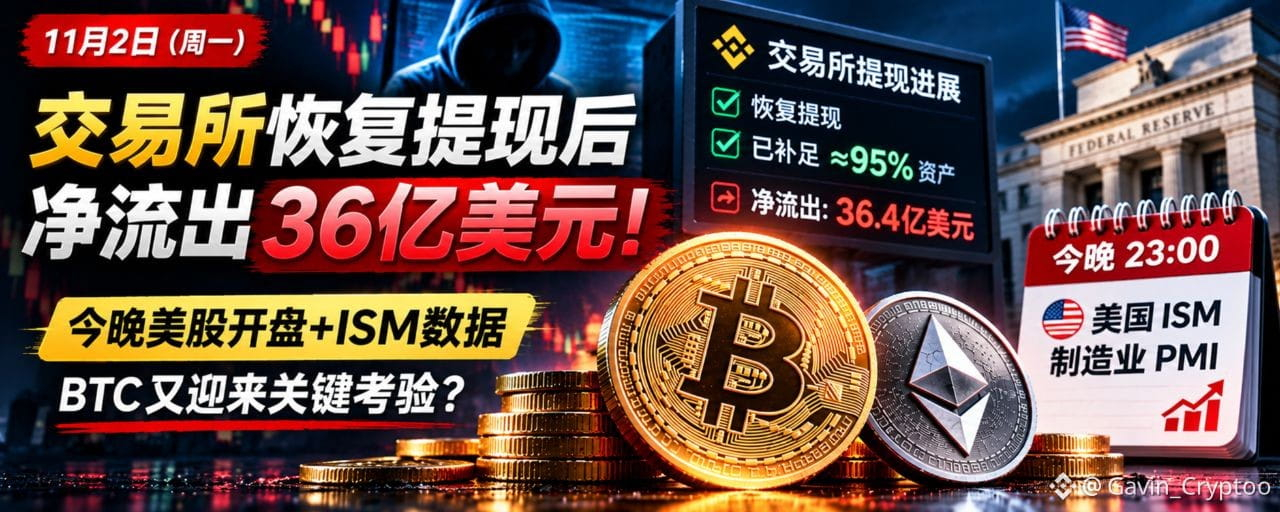
November 2, 2026 | Net outflows of $3.6 billion after exchange withdrawals resume; BTC faces another macro test tonight!This weekend, the most important development in crypto wasn’t how much BTC rebounded, but whether funds stayed on the exchange after withdrawals resumed. U.S. stocks are set to reopen today, and the market will also have to contend with tech stock selling, ETF outflows, and U.S. manufacturing data. I think the next 24 hours will be crucial.
① Withdrawals have resumed, but outflows are substantial. On November 1, the major exchange that suffered a $6.3 billion theft began restoring withdrawals in batches and said it had replenished or recovered about 95% of the affected assets. In the first nine and a half hours after withdrawals resumed, users withdrew about $4.65 billion, for net outflows of about $3.64 billion after deposits were deducted. The exchange said withdrawals were stabilizing.
November 2, 2026 | Net outflows of $3.6 billion after exchange withdrawals resume; BTC faces another macro test tonight!
This weekend, the most important development in crypto wasn’t how much BTC rebounded, but whether funds stayed on the exchange after withdrawals resumed. U.S. stocks are set to reopen today, and the market will also have to contend with tech stock selling, ETF outflows, and U.S. manufacturing data. I think the next 24 hours will be crucial.
① Withdrawals have resumed, but outflows are substantial. On November 1, the major exchange that suffered a $6.3 billion theft began restoring withdrawals in batches and said it had replenished or recovered about 95% of the affected assets. In the first nine and a half hours after withdrawals resumed, users withdrew about $4.65 billion, for net outflows of about $3.64 billion after deposits were deducted. The exchange said withdrawals were stabilizing.
① Withdrawals have resumed, but outflows are substantial. On November 1, the major exchange that suffered a $6.3 billion theft began restoring withdrawals in batches and said it had replenished or recovered about 95% of the affected assets. In the first nine and a half hours after withdrawals resumed, users withdrew about $4.65 billion, for net outflows of about $3.64 billion after deposits were deducted. The exchange said withdrawals were stabilizing.
192
·
--
Bullish
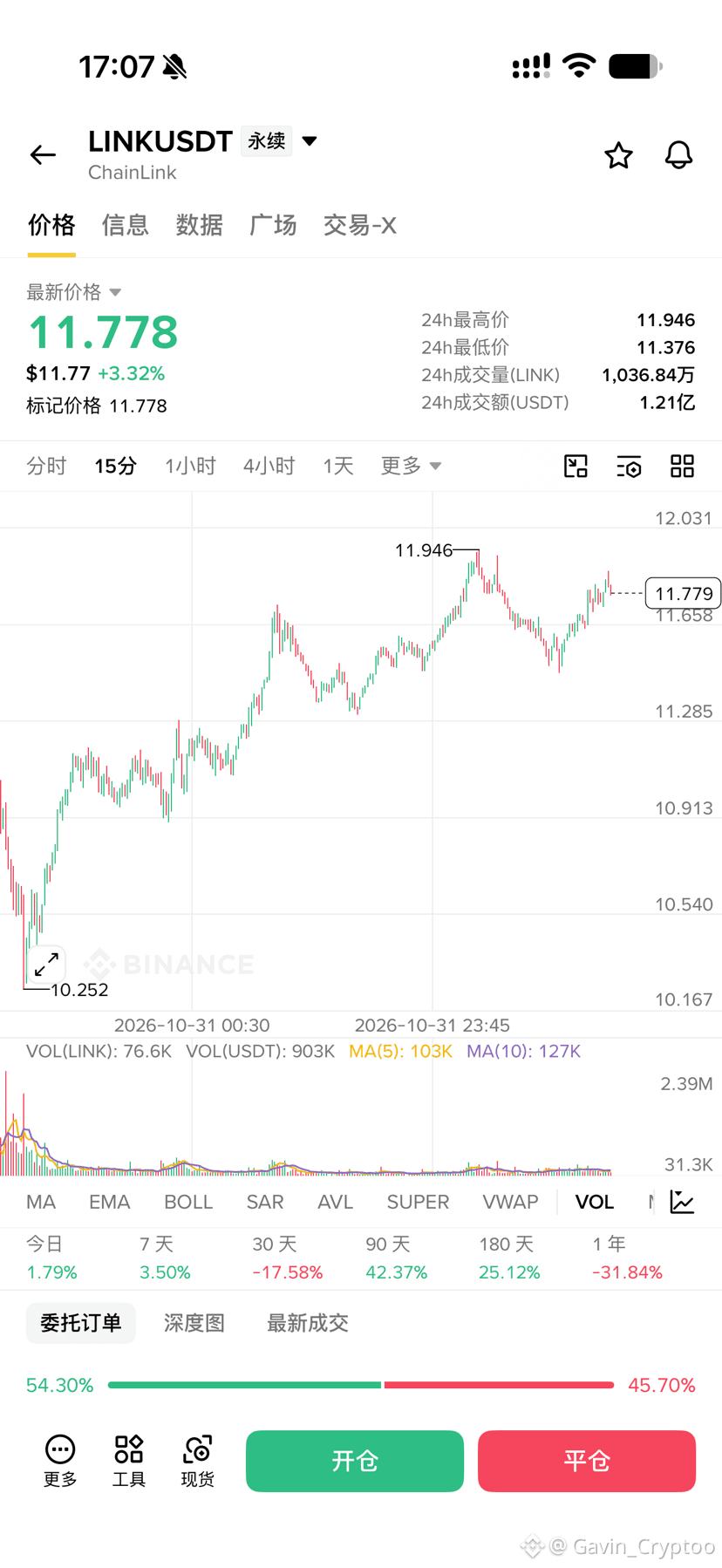
$LINK is about to take off
On October 27, Abu Dhabi asset manager Further Asset Management announced that it had adopted Chainlink ACE to provide automated compliance capabilities for its Anubis platform.
Simply put, in the future, institutions issuing, holding, and trading RWAs will be able to automatically enforce rules on-chain, such as KYC, anti-money laundering, and trading restrictions. The first phase focuses on the Abu Dhabi Global Market (ADGM) financial center.
As of around 5 p.m. on October 28, LINK was trading at about $11.79, up 3.9% over 24 hours. Trading volume for the LINK/USDT spot pair alone was about $12.44 million.
What I’m paying attention to isn’t this modest price increase, but the fact that Chainlink is expanding beyond oracles into RWA data, cross-chain services, and compliance infrastructure.
On the token front, Chainlink Reserve already has a mechanism for converting some business revenue into LINK. However, this partnership has not disclosed any revenue, nor does it show how much additional buying demand for LINK it may generate.
There are also competitive risks: large institutions could very well build their own compliance solutions.
Long-term outlook: slightly stronger. Action: keep watching; don’t chase the rally.
Next, watch for real institutional adoption and whether the Reserve continues to grow.
#FBI确认朝鲜应对币安被盗事件负责
{future}(LINKUSDT)
$LINK is about to take off
On October 27, Abu Dhabi asset manager Further Asset Management announced that it had adopted Chainlink ACE to provide automated compliance capabilities for its Anubis platform.
Simply put, in the future, institutions issuing, holding, and trading RWAs will be able to automatically enforce rules on-chain, such as KYC, anti-money laundering, and trading restrictions. The first phase focuses on the Abu Dhabi Global Market (ADGM) financial center.
As of around 5 p.m. on October 28, LINK was trading at about $11.79, up 3.9% over 24 hours. Trading volume for the LINK/USDT spot pair alone was about $12.44 million.
What I’m paying attention to isn’t this modest price increase, but the fact that Chainlink is expanding beyond oracles into RWA data, cross-chain services, and compliance infrastructure.
On the token front, Chainlink Reserve already has a mechanism for converting some business revenue into LINK. However, this partnership has not disclosed any revenue, nor does it show how much additional buying demand for LINK it may generate.
There are also competitive risks: large institutions could very well build their own compliance solutions.
Long-term outlook: slightly stronger. Action: keep watching; don’t chase the rally.
Next, watch for real institutional adoption and whether the Reserve continues to grow.
#FBI确认朝鲜应对币安被盗事件负责
1
1
368
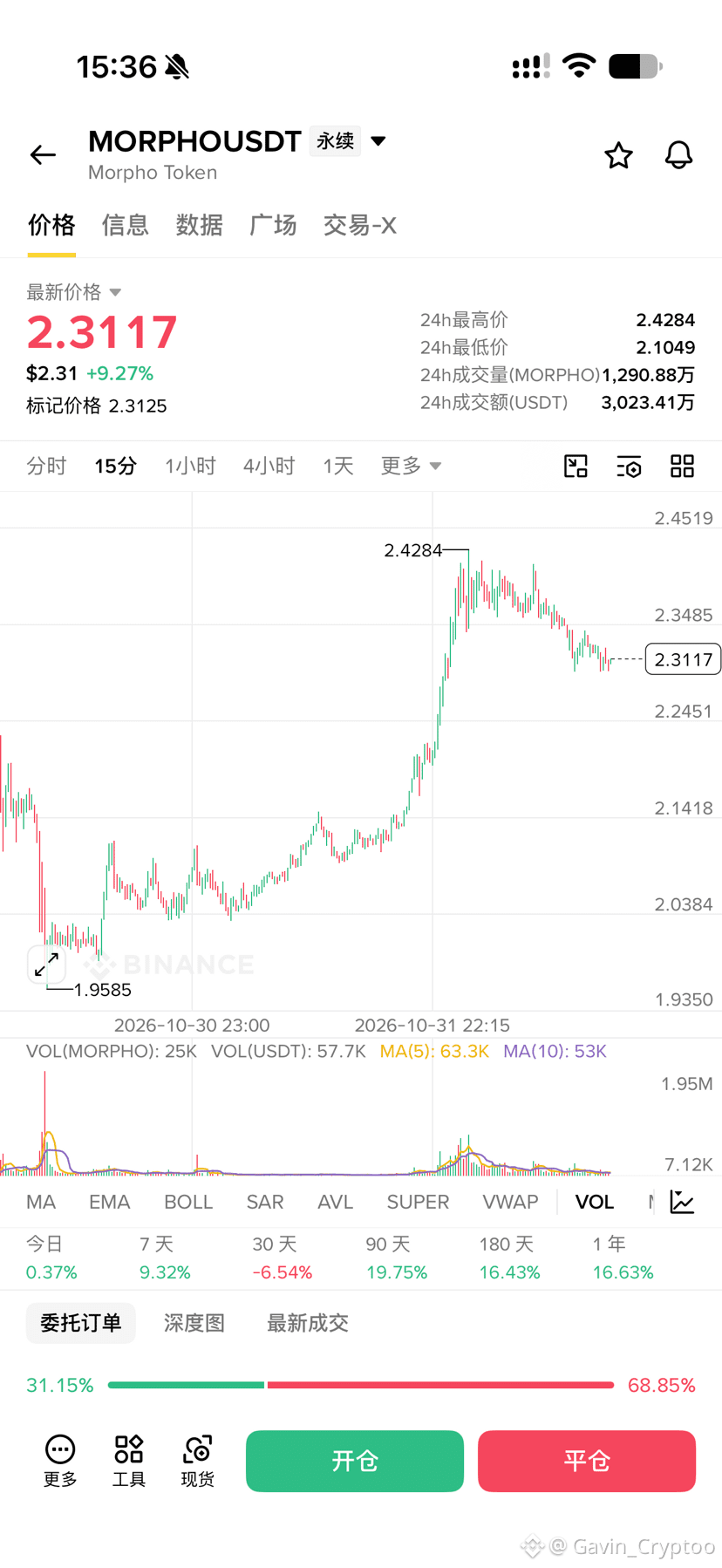
$MORPHO This one is up 11%. The exchange hack a couple of days ago affected Aave: the hacker used 60 million USDT as collateral and borrowed nearly 20,000 ETH. Aave then urgently froze some markets.
This incident also put Morpho in the spotlight.
The two projects take quite different approaches. Aave emphasizes unified risk management and emergency intervention, while Morpho focuses on isolated markets, where each lending pool bears its own risks.
But Morpho isn’t without its problems. Interest rates in some lending markets recently surged to around 40%, showing that things can still go wrong when liquidity is tight.
MORPHO is currently around $2.35, up 11.5% in 24 hours, with TVL at around $11.1 billion.
I’ve always thought Morpho is highly competitive in the on-chain lending sector, especially when it comes to institutional vaults and customized lending.
But there’s one key issue: although the protocol is sizable, MORPHO holders currently don’t directly receive any of the protocol’s revenue.
So I’ll keep an eye on this rally, but I won’t chase it. Rather than its short-term gains, I want to see whether it can truly translate business growth into value for the token.
#FBI确认朝鲜应对币安被盗事件负责 #Binance has covered $6 billion in stolen losses
1
186
Article
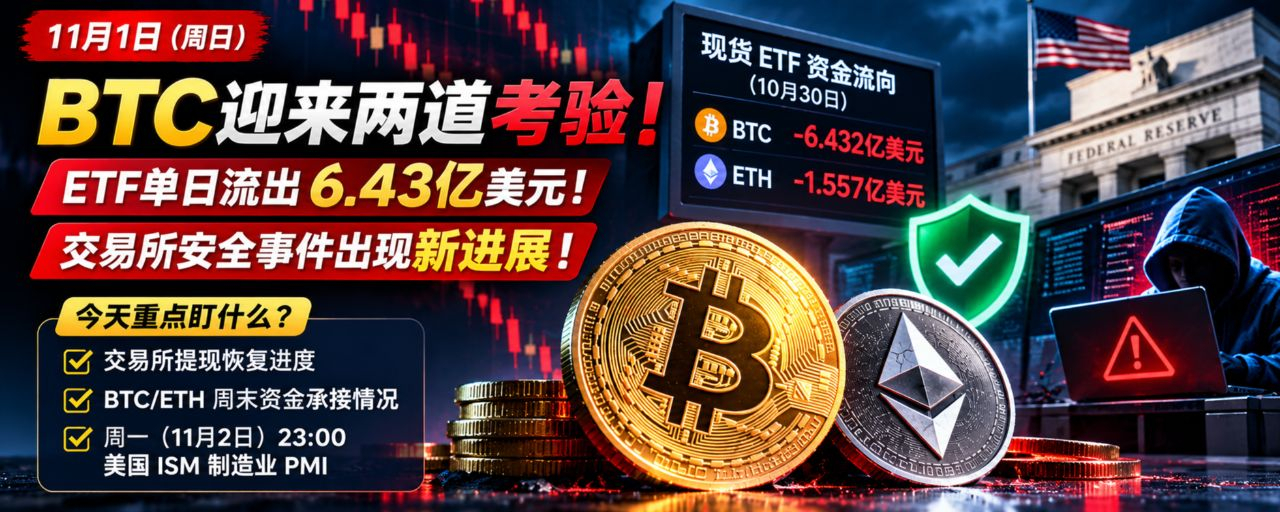
November 1, 2026 | BTC faces two weekend tests: $643 million in single-day ETF outflows and new developments in an exchange security incidentU.S. stock markets were closed on Sunday, but the pressure facing the crypto market had not fully eased.
Last Friday, the Nasdaq plunged 2.86% and the S&P 500 fell 1.82%. Crypto-related stocks such as Coinbase and Strategy dropped 7%–11%. Tech stocks faced a sell-off over concerns about returns on AI investments, while security incidents in the crypto industry further dampened market risk appetite.
① ETF funds suddenly saw massive outflows.
On October 30, U.S. spot BTC ETFs saw net outflows of $643.2 million, while spot ETH ETFs saw net outflows of $155.7 million.
BTC had previously recorded net inflows for four consecutive trading days, only to see a sharp reversal in a single day.
November 1, 2026 | BTC faces two weekend tests: $643 million in single-day ETF outflows and new developments in an exchange security incident
U.S. stock markets were closed on Sunday, but the pressure facing the crypto market had not fully eased.
Last Friday, the Nasdaq plunged 2.86% and the S&P 500 fell 1.82%. Crypto-related stocks such as Coinbase and Strategy dropped 7%–11%. Tech stocks faced a sell-off over concerns about returns on AI investments, while security incidents in the crypto industry further dampened market risk appetite.
① ETF funds suddenly saw massive outflows.
On October 30, U.S. spot BTC ETFs saw net outflows of $643.2 million, while spot ETH ETFs saw net outflows of $155.7 million.
BTC had previously recorded net inflows for four consecutive trading days, only to see a sharp reversal in a single day.
1
285
Article
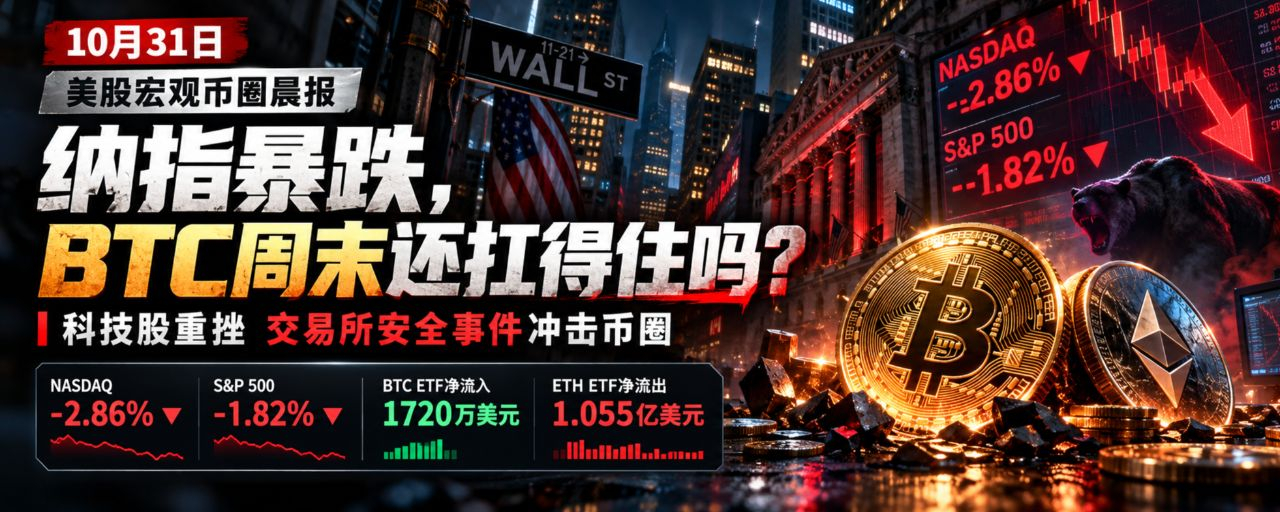
October 31 | Nasdaq plunges 2.86% as $6.3 billion theft rocks crypto! Can BTC hold up over the weekend?U.S. stocks fell sharply last night. The Nasdaq dropped 2.86%, the S&P 500 fell 1.82%, and Intel plunged 28.6%. Crypto-related stocks such as Coinbase and Strategy also declined significantly. I don’t think this can be blamed solely on negative news from the crypto sector. Pressure on tech stock valuations, a security incident at an exchange, and expectations of a hawkish Fed all converged at once.
① A $6.3 billion security incident—the market is worried about more than just the losses. The world’s largest crypto exchange suffered a major attack involving assets worth about $6.3 billion. The platform said it had set aside more than $6.34 billion to cover the losses and, together with industry partners, frozen about $3 billion in assets. But what matters next is whether the funds can be recovered and withdrawals can return to normal. If the response goes smoothly, the panic may ease; otherwise, the crisis of confidence could continue to affect BTC and ETH.
October 31 | Nasdaq plunges 2.86% as $6.3 billion theft rocks crypto! Can BTC hold up over the weekend?
U.S. stocks fell sharply last night. The Nasdaq dropped 2.86%, the S&P 500 fell 1.82%, and Intel plunged 28.6%. Crypto-related stocks such as Coinbase and Strategy also declined significantly. I don’t think this can be blamed solely on negative news from the crypto sector. Pressure on tech stock valuations, a security incident at an exchange, and expectations of a hawkish Fed all converged at once.
① A $6.3 billion security incident—the market is worried about more than just the losses. The world’s largest crypto exchange suffered a major attack involving assets worth about $6.3 billion. The platform said it had set aside more than $6.34 billion to cover the losses and, together with industry partners, frozen about $3 billion in assets. But what matters next is whether the funds can be recovered and withdrawals can return to normal. If the response goes smoothly, the panic may ease; otherwise, the crisis of confidence could continue to affect BTC and ETH.
① A $6.3 billion security incident—the market is worried about more than just the losses. The world’s largest crypto exchange suffered a major attack involving assets worth about $6.3 billion. The platform said it had set aside more than $6.34 billion to cover the losses and, together with industry partners, frozen about $3 billion in assets. But what matters next is whether the funds can be recovered and withdrawals can return to normal. If the response goes smoothly, the panic may ease; otherwise, the crisis of confidence could continue to affect BTC and ETH.
1
414
·
--
Bullish
Verified
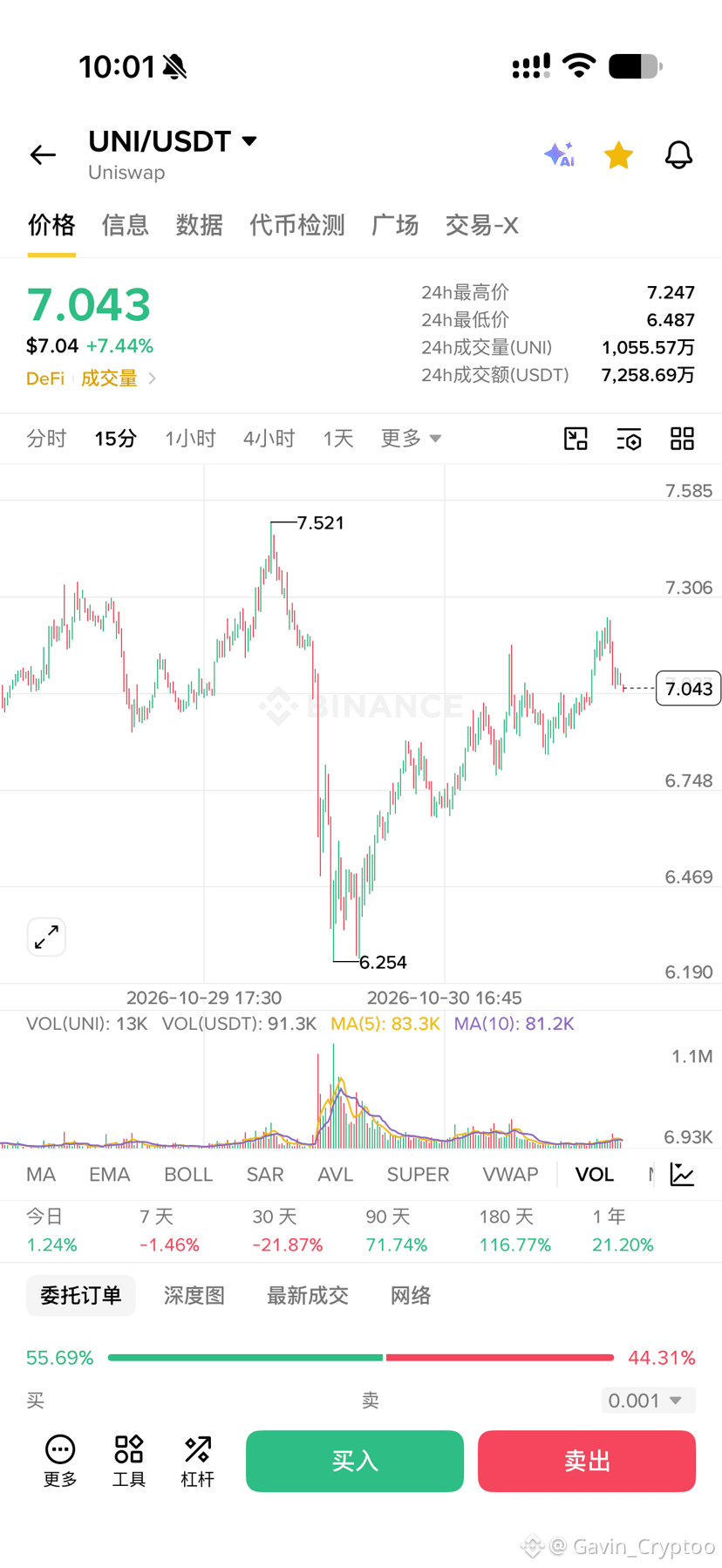
$UNI These past couple of days have been pretty interesting: a hacker just made off with nearly $40 million, while on-chain burns have clearly accelerated.
On October 30, 110,000 UNI were burned in a single day—nearly three times the average daily amount over the past 30 days. Meanwhile, the token price rebounded by around 8%, returning to near $7.
What's even more noteworthy is that Uniswap recently made its fee-conversion tool, TJAR, available to the public. Robinhood is already using it.
The tool was originally designed to support UNI's burn mechanism, but now other projects can also use it to automatically convert various fees into designated tokens.
I think this direction has a lot of potential. Uniswap isn't just building an exchange; it's turning its underlying capabilities into infrastructure that the entire DeFi ecosystem can use.
One thing needs to be made clear, though: other projects using TJAR doesn't necessarily mean they'll buy UNI.
And a sudden spike in daily burns doesn't mean they'll stay at that level every day going forward.
#Uniswap与a16z寻求伊利诺伊州DeFi税收豁免
{future}(UNIUSDT)
$UNI These past couple of days have been pretty interesting: a hacker just made off with nearly $40 million, while on-chain burns have clearly accelerated.
On October 30, 110,000 UNI were burned in a single day—nearly three times the average daily amount over the past 30 days. Meanwhile, the token price rebounded by around 8%, returning to near $7.
What's even more noteworthy is that Uniswap recently made its fee-conversion tool, TJAR, available to the public. Robinhood is already using it.
The tool was originally designed to support UNI's burn mechanism, but now other projects can also use it to automatically convert various fees into designated tokens.
I think this direction has a lot of potential. Uniswap isn't just building an exchange; it's turning its underlying capabilities into infrastructure that the entire DeFi ecosystem can use.
One thing needs to be made clear, though: other projects using TJAR doesn't necessarily mean they'll buy UNI.
And a sudden spike in daily burns doesn't mean they'll stay at that level every day going forward.
#Uniswap与a16z寻求伊利诺伊州DeFi税收豁免
2
1.3k
·
--
Bullish
Verified
$ARB Today, something happened that made me reassess how decentralized L2s really are.
At 8:08 this morning, Arbitrum’s Security Council transferred 74.56 million ARB and 8,425 ETH from addresses linked to the Binance hack directly to a frozen address.
The key question is how they did it.
They temporarily upgraded the Inbox contract, simulated a transaction initiated by the address involved in the incident, transferred the assets, and then restored the original contract.
About $30 million in assets was secured in time, and ordinary users were unaffected.
But this also shows that Arbitrum’s emergency governance powers are broader than many people imagine.
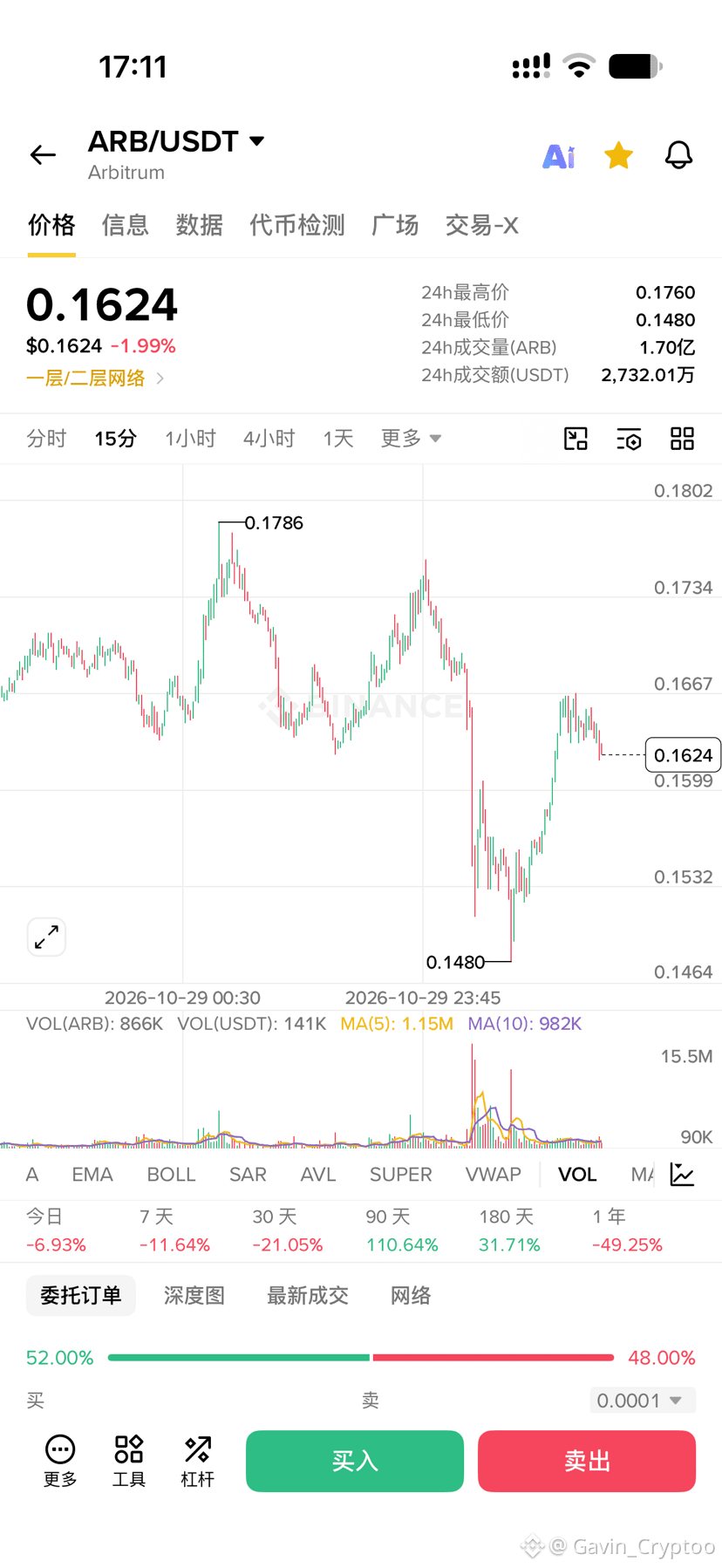
As of this afternoon, ARB was around $0.163, down 0.6% over 24 hours, with trading volume of about $269 million, up 63% from the previous day.
I think there are two sides to this.
Traditional financial institutions may appreciate this ability to quickly limit losses, but users who value decentralization may worry that similar powers could be abused in the future.
Also, freezing tokens doesn’t mean they’re burned, nor does it directly increase returns for ARB holders. About 92.65 million ARB are also set to unlock on November 16.
My take: the security response earns points, but the risks posed by governance powers have also been exposed. The long-term outlook remains neutral for now.
I’ll keep watching ARB and won’t rush to add to my position. What’s really worth watching is how the DAO handles these assets going forward, and whether tighter limits are placed on emergency powers.
#Arbitrium #美国中期选举倒计时,美股博弈窗口已开启?
{future}(ARBUSDT)
$ARB Today, something happened that made me reassess how decentralized L2s really are.
At 8:08 this morning, Arbitrum’s Security Council transferred 74.56 million ARB and 8,425 ETH from addresses linked to the Binance hack directly to a frozen address.
The key question is how they did it.
They temporarily upgraded the Inbox contract, simulated a transaction initiated by the address involved in the incident, transferred the assets, and then restored the original contract.
About $30 million in assets was secured in time, and ordinary users were unaffected.
But this also shows that Arbitrum’s emergency governance powers are broader than many people imagine.
As of this afternoon, ARB was around $0.163, down 0.6% over 24 hours, with trading volume of about $269 million, up 63% from the previous day.
I think there are two sides to this.
Traditional financial institutions may appreciate this ability to quickly limit losses, but users who value decentralization may worry that similar powers could be abused in the future.
Also, freezing tokens doesn’t mean they’re burned, nor does it directly increase returns for ARB holders. About 92.65 million ARB are also set to unlock on November 16.
My take: the security response earns points, but the risks posed by governance powers have also been exposed. The long-term outlook remains neutral for now.
I’ll keep watching ARB and won’t rush to add to my position. What’s really worth watching is how the DAO handles these assets going forward, and whether tighter limits are placed on emergency powers.
#Arbitrium #美国中期选举倒计时,美股博弈窗口已开启?
1
681

Article
October 30 | BTC falls below $80,000! U.S. inflation heats up, and Coinbase earnings send another dangerous signalU.S. stocks fell again last night, with the Nasdaq down 1.37% and the S&P 500 down 0.30%. Alphabet plunged 12.6%, and BTC also fell below $80,000 intraday.
But I think what the crypto community should really be paying attention to today is not just the tech stock sell-off, but also the several signals sent by U.S. economic data and crypto industry earnings reports at the same time.
① PCE inflation rises to 3.6%, making the Fed less likely to ease up
The U.S. PCE price index for September, released last night, rose 3.6% year over year, up from 3.4% in August. Core PCE rose 3.1% year over year.
The Fed just left interest rates unchanged, and now inflation is heating up again.
If upcoming data continues to come in hotter than expected, markets may push back rate-cut expectations further, and the U.S. dollar and Treasury yields could also put pressure on BTC. However, if inflation is driven mainly by short-term energy factors, the market reaction may be more subdued.
October 30 | BTC falls below $80,000! U.S. inflation heats up, and Coinbase earnings send another dangerous signal
U.S. stocks fell again last night, with the Nasdaq down 1.37% and the S&P 500 down 0.30%. Alphabet plunged 12.6%, and BTC also fell below $80,000 intraday.
But I think what the crypto community should really be paying attention to today is not just the tech stock sell-off, but also the several signals sent by U.S. economic data and crypto industry earnings reports at the same time.
① PCE inflation rises to 3.6%, making the Fed less likely to ease up
The U.S. PCE price index for September, released last night, rose 3.6% year over year, up from 3.4% in August. Core PCE rose 3.1% year over year.
The Fed just left interest rates unchanged, and now inflation is heating up again.
If upcoming data continues to come in hotter than expected, markets may push back rate-cut expectations further, and the U.S. dollar and Treasury yields could also put pressure on BTC. However, if inflation is driven mainly by short-term energy factors, the market reaction may be more subdued.
1
343
According to Cointelegraph, Bloomberg says RedotPay is considering confidentially filing for a U.S. IPO before year-end. The key phrase is “weighs confidential filing.” This means it is currently only at the evaluation stage, and even if it files, the filing would be confidential and would not trigger disclosure of a public prospectus. Combined with the company’s previous denials of reports that its listing had been delayed, this suggests a gap between the external narrative and its internal pace regarding the IPO timeline. For those watching the stablecoin payments sector, the confidential filing mechanism itself makes it difficult for the market to price in any purported timing milestones in advance.
According to Cointelegraph, Bloomberg says RedotPay is considering confidentially filing for a U.S. IPO before year-end. The key phrase is “weighs confidential filing.” This means it is currently only at the evaluation stage, and even if it files, the filing would be confidential and would not trigger disclosure of a public prospectus. Combined with the company’s previous denials of reports that its listing had been delayed, this suggests a gap between the external narrative and its internal pace regarding the IPO timeline. For those watching the stablecoin payments sector, the confidential filing mechanism itself makes it difficult for the market to price in any purported timing milestones in advance.
71
According to Cointelegraph, Ripple has received final approval for a U.S. national trust bank. Note the qualifier: “trust bank.” This means it is not a full-service commercial bank and cannot accept public deposits or issue loans. Its approved business activities are limited to managing reserves for the RLUSD stablecoin and providing digital asset custody. This changes readers’ understanding of the news as equivalent to “Ripple is opening a bank.” When stablecoin issuers bring reserve management in-house under a trust charter rather than relying on third-party custodians, the compliance infrastructure for on-chain assets is being redefined.
According to Cointelegraph, Ripple has received final approval for a U.S. national trust bank. Note the qualifier: “trust bank.” This means it is not a full-service commercial bank and cannot accept public deposits or issue loans. Its approved business activities are limited to managing reserves for the RLUSD stablecoin and providing digital asset custody. This changes readers’ understanding of the news as equivalent to “Ripple is opening a bank.” When stablecoin issuers bring reserve management in-house under a trust charter rather than relying on third-party custodians, the compliance infrastructure for on-chain assets is being redefined.
37
According to Decrypt, Seoul police said a 32-year-old suspect with no IT background used AI tools to hack into around 90 hospitals, schools, and businesses, extorting about $270,000. Note the qualifier: “no IT background.” This means AI has lowered the barrier to attacks that once required specialized skills to a level that nontechnical people can manage. For on-chain protocols, adversaries are no longer just hacker groups; any ordinary person who knows how to use the tools could launch an attack.
According to Decrypt, Seoul police said a 32-year-old suspect with no IT background used AI tools to hack into around 90 hospitals, schools, and businesses, extorting about $270,000. Note the qualifier: “no IT background.” This means AI has lowered the barrier to attacks that once required specialized skills to a level that nontechnical people can manage. For on-chain protocols, adversaries are no longer just hacker groups; any ordinary person who knows how to use the tools could launch an attack.
63

Article
October 29 | The Fed Holds Steady, but Two Officials Call for a Rate Hike! Tonight’s GDP and PCE Are the Next Test for BTCU.S. stocks closed modestly higher last night, with the S&P 500 up 0.28% and the Nasdaq up 0.27%. The Fed didn’t raise rates, but markets also got no clear signal of easing. For BTC and ETH, the real thing to watch out for is this: although rates didn’t move, inflationary pressures remain.
① The Fed held rates steady, and two dissenting votes are worth noting. At 2 a.m. Beijing time, the Fed announced it would keep its rate range at 3.75%–4.00%. The vote was 10–2, with both dissenters favoring a 25-basis-point hike. The statement emphasized that the U.S. economy remains strong and inflation remains elevated. This shows that pausing rate hikes does not mean the Fed is preparing to cut rates. If upcoming data continue to come in hot, the dollar and Treasury yields could put pressure on crypto markets; conversely, cooling inflation would help improve liquidity expectations.
October 29 | The Fed Holds Steady, but Two Officials Call for a Rate Hike! Tonight’s GDP and PCE Are the Next Test for BTC
U.S. stocks closed modestly higher last night, with the S&P 500 up 0.28% and the Nasdaq up 0.27%. The Fed didn’t raise rates, but markets also got no clear signal of easing. For BTC and ETH, the real thing to watch out for is this: although rates didn’t move, inflationary pressures remain.
① The Fed held rates steady, and two dissenting votes are worth noting. At 2 a.m. Beijing time, the Fed announced it would keep its rate range at 3.75%–4.00%. The vote was 10–2, with both dissenters favoring a 25-basis-point hike. The statement emphasized that the U.S. economy remains strong and inflation remains elevated. This shows that pausing rate hikes does not mean the Fed is preparing to cut rates. If upcoming data continue to come in hot, the dollar and Treasury yields could put pressure on crypto markets; conversely, cooling inflation would help improve liquidity expectations.
① The Fed held rates steady, and two dissenting votes are worth noting. At 2 a.m. Beijing time, the Fed announced it would keep its rate range at 3.75%–4.00%. The vote was 10–2, with both dissenters favoring a 25-basis-point hike. The statement emphasized that the U.S. economy remains strong and inflation remains elevated. This shows that pausing rate hikes does not mean the Fed is preparing to cut rates. If upcoming data continue to come in hot, the dollar and Treasury yields could put pressure on crypto markets; conversely, cooling inflation would help improve liquidity expectations.
1
363
·
--
Bullish
$HYPE has made further progress. Hyperliquid recently confirmed that Payward plans to become the first operator to deploy CFTC-regulated perpetual futures markets through HIP-3*.
Unlike its earlier announcement of a partnership plan, Hyperliquid has now outlined its own technical approach: using an on-chain whitelist to let compliant institutions operate independent markets on its trading infrastructure.
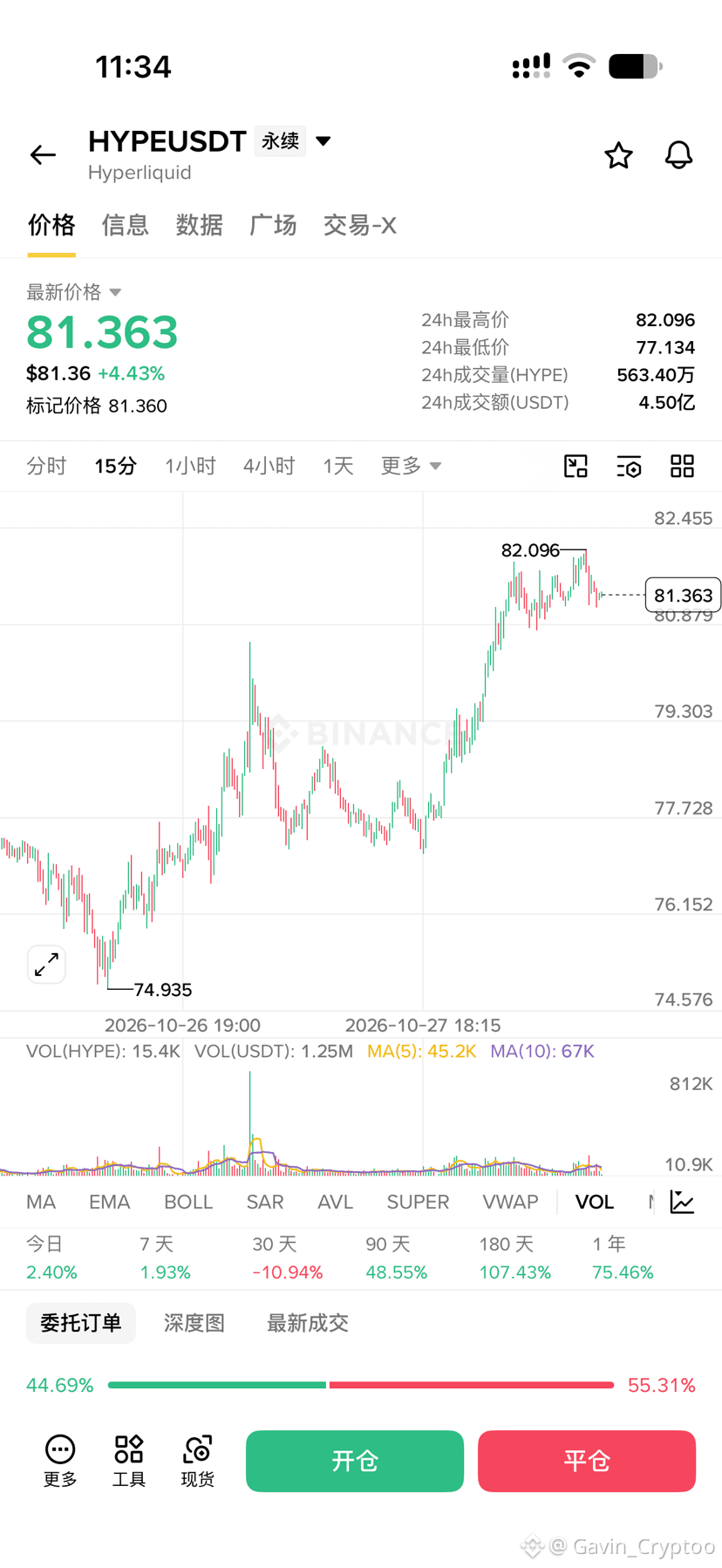
As of the morning of October 28, HYPE was around $81.94, up 4.7% in 24 hours. DefiLlama shows that Hyperliquid generated approximately $62.3 million in protocol revenue over the past 30 days, with about $8 billion in perpetual futures trading volume over the past 24 hours.
I think what’s really worth watching is Hyperliquid’s evolution from an on-chain perpetual trading platform into trading infrastructure that institutions can also use.
Unlike many governance tokens, protocol trading fees can already flow through the Assistance Fund to fund HYPE buybacks.
But don’t mistake a plan for a launch. HIP-3* is still in the testnet phase, and its U.S. business has not yet received final regulatory approval. It also faces competition from traditional exchanges and other on-chain derivatives platforms.
The long-term outlook is improving, but for now it’s better to keep watching rather than chase the price on this news.
Next, keep an eye on regulatory approval, the mainnet launch, and whether additional trading volume can actually lead to more buybacks.
{future}(HYPEUSDT)
#FOMC会议
$HYPE has made further progress. Hyperliquid recently confirmed that Payward plans to become the first operator to deploy CFTC-regulated perpetual futures markets through HIP-3*.
Unlike its earlier announcement of a partnership plan, Hyperliquid has now outlined its own technical approach: using an on-chain whitelist to let compliant institutions operate independent markets on its trading infrastructure.
As of the morning of October 28, HYPE was around $81.94, up 4.7% in 24 hours. DefiLlama shows that Hyperliquid generated approximately $62.3 million in protocol revenue over the past 30 days, with about $8 billion in perpetual futures trading volume over the past 24 hours.
I think what’s really worth watching is Hyperliquid’s evolution from an on-chain perpetual trading platform into trading infrastructure that institutions can also use.
Unlike many governance tokens, protocol trading fees can already flow through the Assistance Fund to fund HYPE buybacks.
But don’t mistake a plan for a launch. HIP-3* is still in the testnet phase, and its U.S. business has not yet received final regulatory approval. It also faces competition from traditional exchanges and other on-chain derivatives platforms.
The long-term outlook is improving, but for now it’s better to keep watching rather than chase the price on this news.
Next, keep an eye on regulatory approval, the mainnet launch, and whether additional trading volume can actually lead to more buybacks.
#FOMC会议
1
160

Article
Beijing Time, October 28 | U.S. stocks keep climbing, but BTC can’t keep up! The Fed’s decision early tomorrow morning is the real testU.S. stocks continued to rebound overnight, with the Nasdaq up 1.18% and the S&P 500 up 0.60%. AI and semiconductor stocks once again attracted investor interest. But BTC didn’t rally alongside them, and the market remains cautious. Why did U.S. stocks rise while crypto barely budged? I think it still comes down to interest rate expectations and institutional capital.
① Strong U.S. economic data isn’t necessarily good news for crypto. The consumer confidence index released last night rose to 91.7 in October, well above the market forecast of 81; durable goods orders grew 1.8% in September. Economic resilience is a positive, but it could also give the Fed more reason to keep interest rates high. On the other hand, if inflationary pressures ease, a strong economy could also support risk appetite.
Beijing Time, October 28 | U.S. stocks keep climbing, but BTC can’t keep up! The Fed’s decision early tomorrow morning is the real test
U.S. stocks continued to rebound overnight, with the Nasdaq up 1.18% and the S&P 500 up 0.60%. AI and semiconductor stocks once again attracted investor interest. But BTC didn’t rally alongside them, and the market remains cautious. Why did U.S. stocks rise while crypto barely budged? I think it still comes down to interest rate expectations and institutional capital.
① Strong U.S. economic data isn’t necessarily good news for crypto. The consumer confidence index released last night rose to 91.7 in October, well above the market forecast of 81; durable goods orders grew 1.8% in September. Economic resilience is a positive, but it could also give the Fed more reason to keep interest rates high. On the other hand, if inflationary pressures ease, a strong economy could also support risk appetite.
① Strong U.S. economic data isn’t necessarily good news for crypto. The consumer confidence index released last night rose to 91.7 in October, well above the market forecast of 81; durable goods orders grew 1.8% in September. Economic resilience is a positive, but it could also give the Fed more reason to keep interest rates high. On the other hand, if inflationary pressures ease, a strong economy could also support risk appetite.
1
237
Log in to explore more content
Join global crypto users on Binance Square
⚡️ Get latest and useful information about crypto.
💬 Trusted by the world’s largest crypto exchange.
👍 Discover real insights from verified creators.
Email / Phone number
Trending Topics
BTCRebounds80K
41,694 views
603 Discussing
BITCOIN UPDATE I’M STILL BEARISH, AND HERE’S WHY! 🚨⚠️
As you all witnessed, BTC bounced back from the $75,700 area and touched $81K. First, the market trapped long traders, and then it trapped short traders.
I’m still bearish. First of all, as everyone knows, Democrats won today’s US midterm elections, and in my view, this outcome is bearish for the market.
The market can remain volatile in the short term and trap as many traders as it wants, but that doesn’t change the overall market outlook.
There are several important upcoming events, including US Non Farm Payrolls (November 6), US CPI Inflation (November 10), US PPI (November 13), US Retail Sales (November 17), FOMC Meeting Minutes (November 18), US PCE Inflation (November 25), Federal Reserve interest rate expectations, the US Dollar Index (DXY), Treasury Yields, Nasdaq performance, Bitcoin ETF flows, and ongoing( Iran ) Israel geopolitical developments. All of these could have a significant impact on Bitcoin and the overall crypto market.
But don’t get too carried away by Bitcoin’s recent movement. Technically speaking, there hasn’t been any major bullish move yet. Yesterday, BTC was trading between $80K and $82K, and even today, it’s still around the same range.
If you want to turn bullish, that’s entirely your choice.
In my previous post, I clearly explained that BTC had technical support in the $75K / $76K zone, and the price bounced from that support and made its way back towards $80K. But this wasn’t something I had failed to mention before. In fact, I repeatedly mentioned in my posts that BTC could move towards $80K, $81K, or even $82K.
Despite that, I’m still bearish.
And I don’t have just one reason to support my bearish outlook. I have several reasons, which I’ve already explained in my previous posts.
For now, I’ll continue to wait for BTC to drop below $74K, which I believe could happen very soon. In my view, such a correction is also necessary for the market.
Anyone looking for crypto guidance just let me know.
#BTCRebounds80K
Strategic Adviser
·19 Likes
·15.6k views
Binance98PercentReplenished
31,982 views
504 Discussing
USMidterms-WhatAreMarketsExpecting?
318,268 views
2,002 Discussing