
flyawei
3.7k Posts

flyawei
 Square Verified
Report
Block User
我推特是 @flyiiawei
Open Trade

USD1 Holder
Frequent Trader
2.4 Years
538 Following
11.8K+ Followers
7.3K+ Liked
Posts
Portfolio
All
Quotes
Videos
Live
·
--
This “1:1” CFG ratio deserves a closer look.
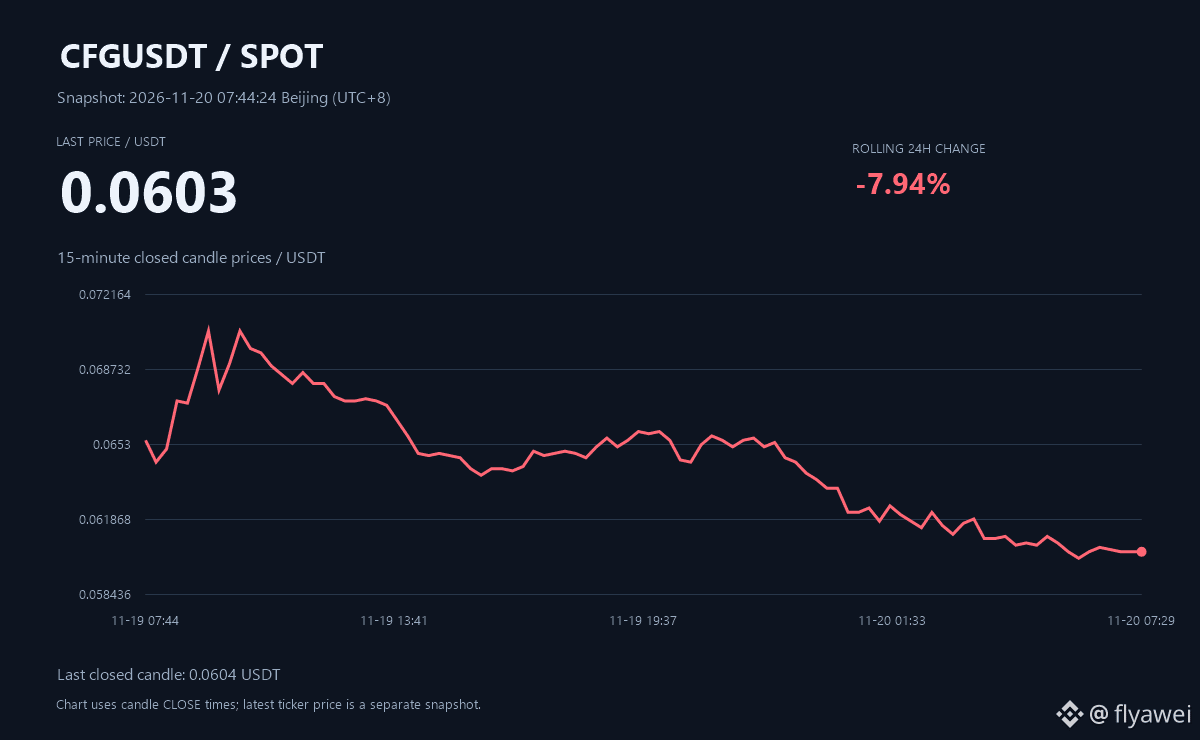
At 7:44 a.m. Beijing time on November 20, CFG/USDT was trading at around 0.0603 on Binance Spot, down 7.9% over the rolling 24-hour period.
Coinbase has switched CFG/USD to limit-only mode and plans to suspend trading at around 3 a.m. Beijing time on December 19. It won’t handle the token-to-share conversion for you.
Under the project’s proposal, eligible holders may voluntarily use CFG to subscribe for shares, at a rate of one token for one share. They must meet the KYC and eligibility requirements. This ratio alone does not indicate a valuation; the project also expects the shares to remain illiquid for the foreseeable future.
“Exchanging tokens for equity” certainly makes it easy to feel that what you hold is worth more. But before making a decision, I’d first make sure I understand what rights I’d receive and how I could exit. If I exchange my tokens and then can’t sell the shares, the frustration won’t be eased by a simple “1:1” ratio.
27
·
--
Services had just been suspended, and another 226 ETH was transferred out in a concentrated wave
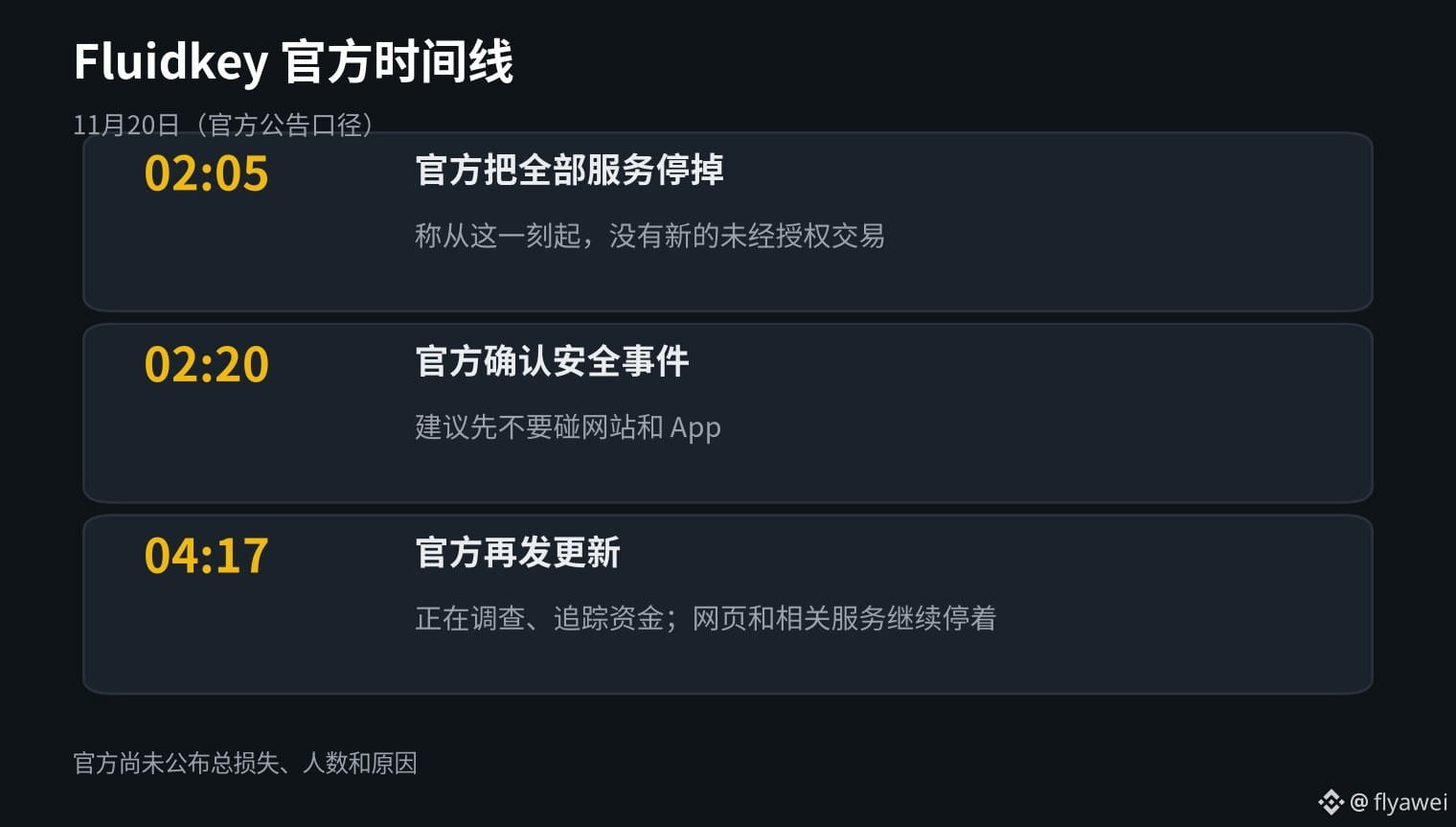
Fluidkey, a privacy wallet, officially confirmed at 2:20 a.m. on November 20 that a security incident affecting users had occurred, and advised users to avoid its website and app for now. The team said all services had been shut down by 2:05 a.m., and there had been no new unauthorized transactions since then. At 4:17 a.m., it said it was investigating and tracking the funds, and would provide an update after the investigation. Related services remain suspended.
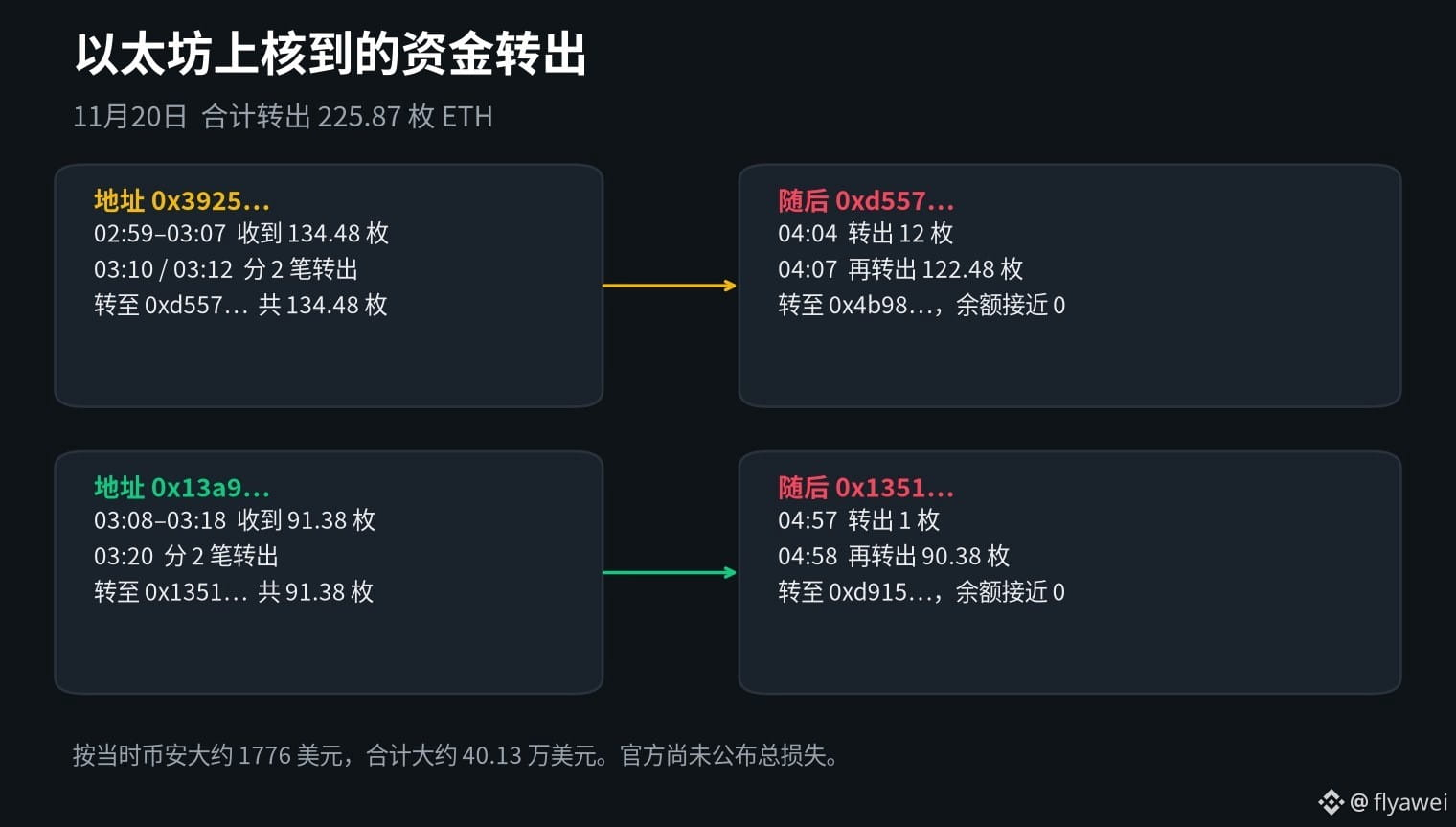
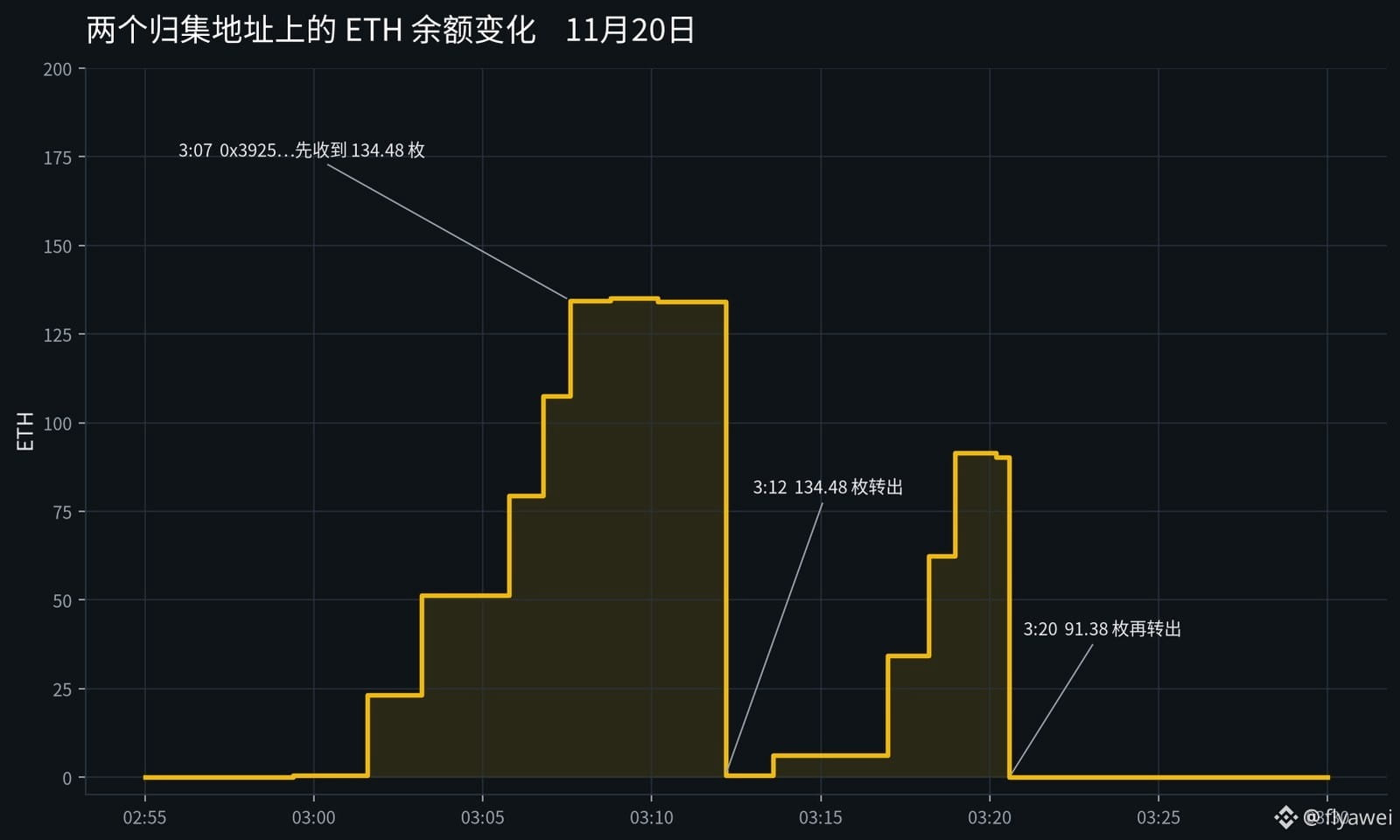
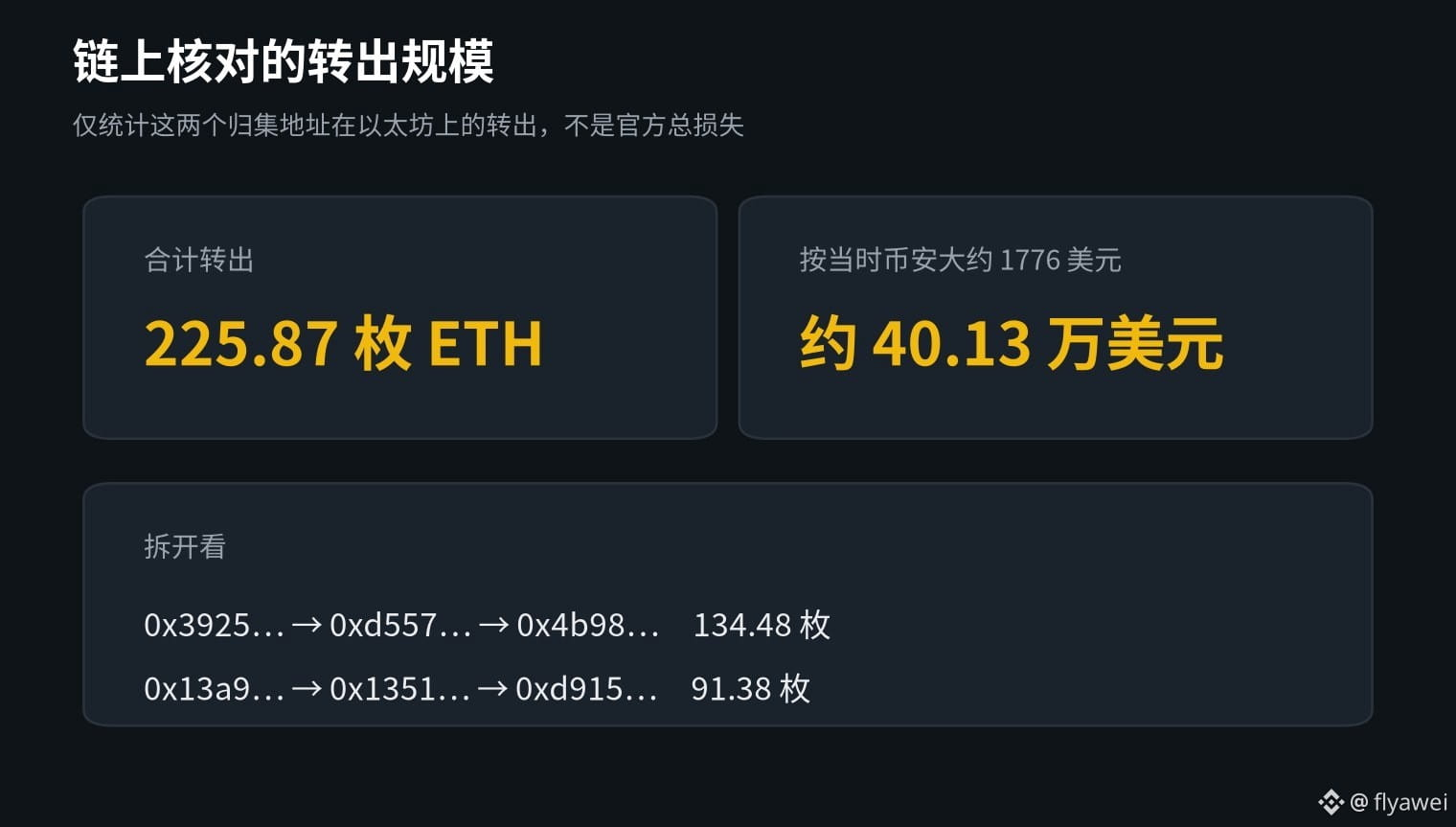
I checked the transactions on Ethereum. One address (0x3925…) received 134.48 ETH in several transfers between 2:59 and 3:07 a.m. Then, between 3:10 and 3:12 a.m., it sent all 134.48 ETH to another address (0xd557…) in two transactions. Another address (0x13a9…) received 91.38 ETH in several transfers between 3:08 and 3:18 a.m. Then, at 3:20 a.m., it sent all 91.38 ETH to another address (0x1351…) in two transactions. The two addresses transferred out a total of 225.87 ETH, worth about $401,300 at the Binance price at the time of roughly $1,776 per ETH.
Between 4:04 and 4:07 a.m., 0xd557… transferred out another approximately 134.48 ETH. Between 4:57 and 4:58 a.m., 0x1351… also transferred out approximately 91.38 ETH. At the time of writing, the balances of these subsequent addresses were all close to zero.
The team has not yet disclosed the total losses, number of people affected, or the cause. Some users say their funds were transferred out, but the team has not confirmed the individual transactions.
My view: don’t open its website or app for now, and don’t trust anyone messaging you privately claiming they can recover your funds. Wait for the team’s official explanation before making a judgment.
Beginners should observe more and take fewer actions. If you buy crypto, buy only $BTC
212
·
--
$21.51 million in ETH buy orders, still waiting down low.
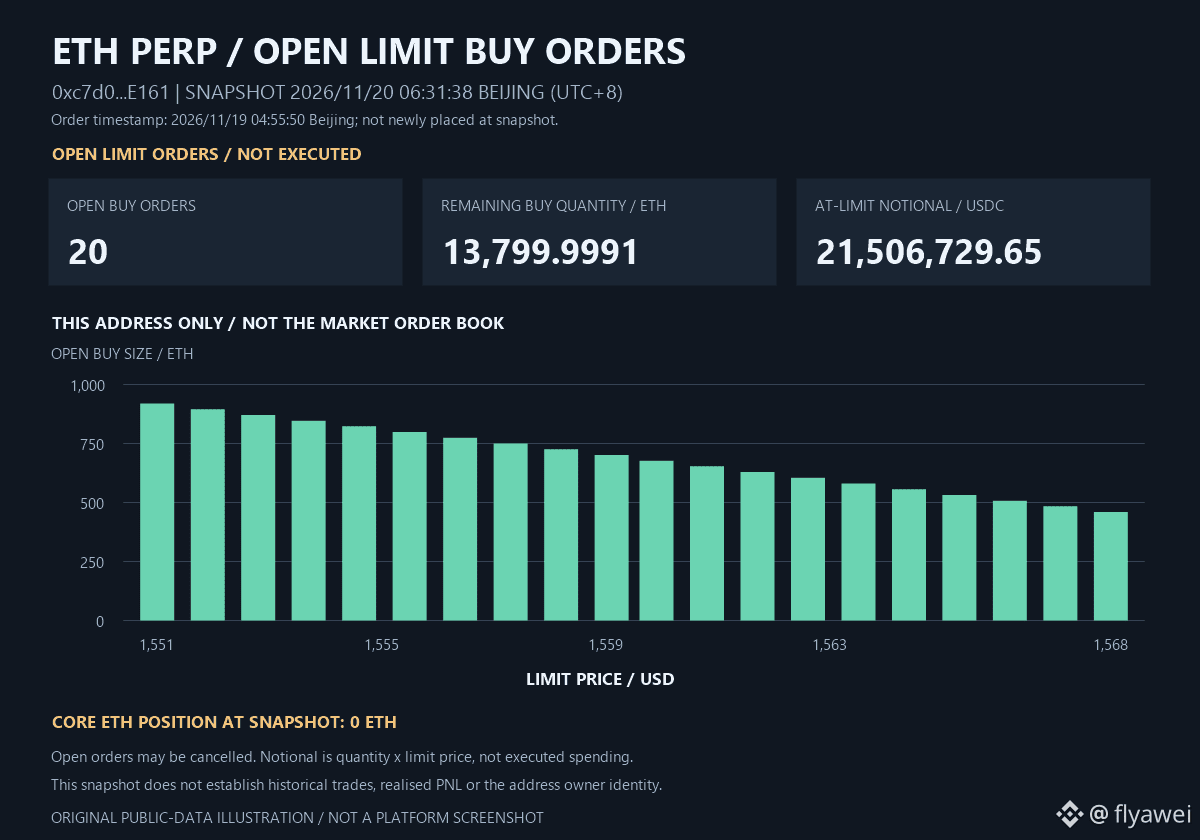
As of 6:31 a.m. Beijing time on November 20, the address beginning with 0xc7d0 on Hyperliquid still had 20 ETH perpetual limit buy orders open: between $1,551 and $1,568, totaling about 13,800 ETH, or roughly 21.51 million USDC at the listed prices. The order timestamps show they were placed in the early hours of the 19th.
The orders are still waiting to be filled. In the same snapshot, the address had no ETH position in this market.
Numbers this large can certainly make it seem like someone is propping up the price below. But limit orders can be canceled, and if the price really falls into that range, it’s worth checking whether the buy orders are still there.
I’ll keep a closer eye on actual trades and won’t treat this order book as a guaranteed floor for now. The whales are still waiting; rushing in headfirst yourself seems a bit like getting ahead of them.
333
·
--
Verified
SKY’s rebound has been pretty strong, but stUSDS redemptions need to be considered separately.
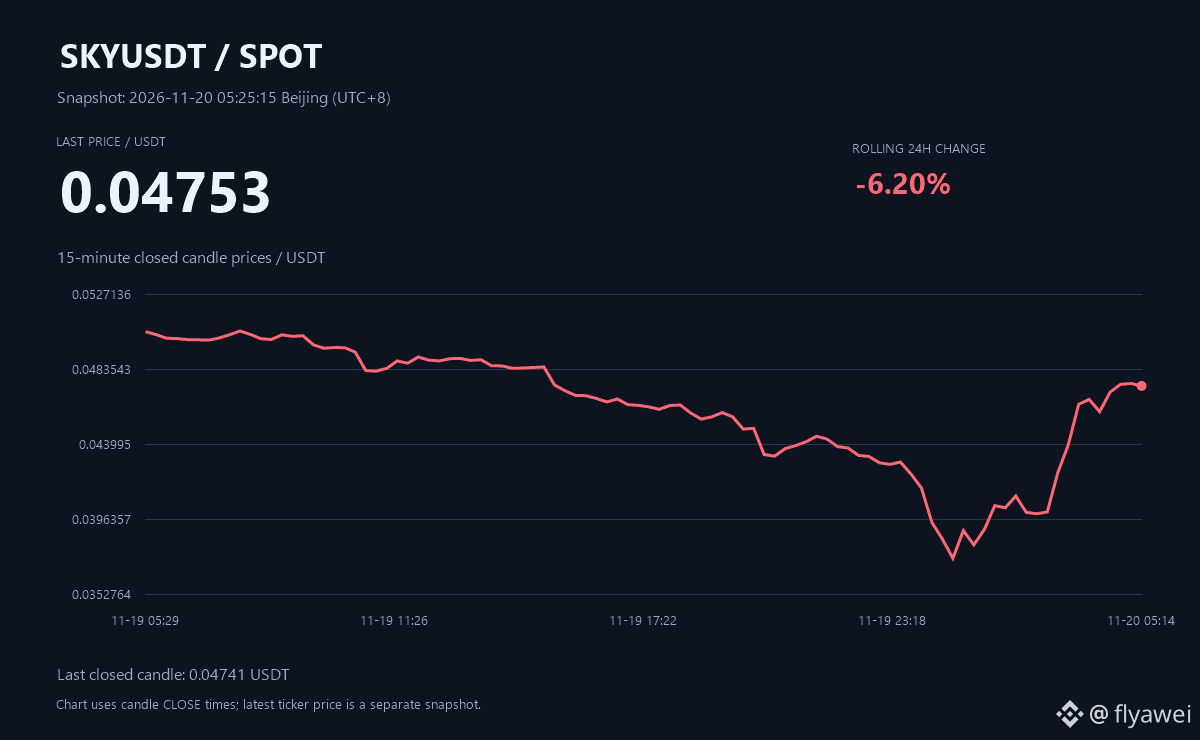
At 5:25 a.m. Beijing time on November 20, SKY/USDT was trading at around 0.04753 on Binance Spot, up about 29.5% from its rolling 24-hour low, though still down 6.2% over 24 hours.
The community is also discussing liquidity in the stUSDS pool. It accepts USDS to support loans collateralized by SKY. Under the product’s rules, redemptions depend on how much of the pool’s funds haven’t been lent out; when utilization is high, you may have to wait for repayments or new funds to come in.
That detail makes me a little wary. A recovery in SKY’s price on exchanges and whether stUSDS can be redeemed immediately are two separate things to verify. If I were to deposit USDS, I’d first ask myself: if I need the money urgently, am I prepared to wait?
1
4.4k
·
--
YB’s funding fee—just looking at it is enough to make you feel sorry for the shorts.
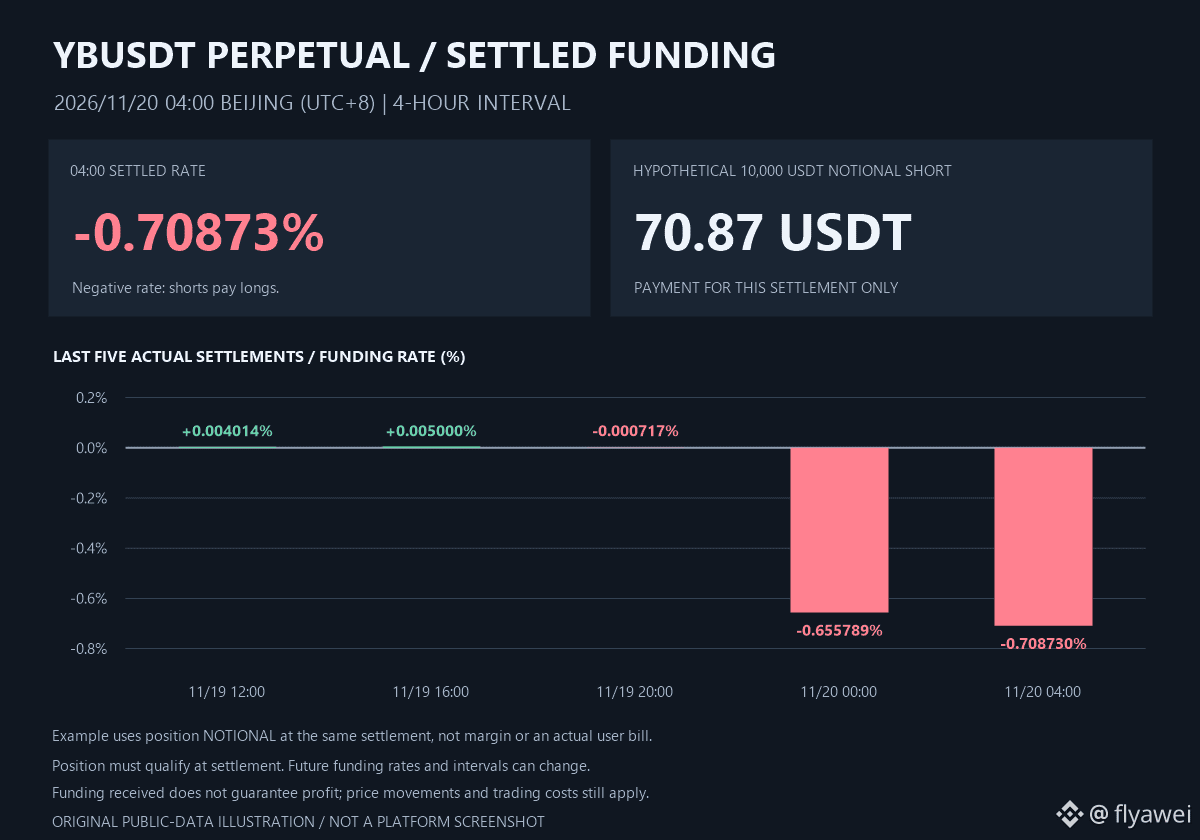
At 4 a.m. Beijing time on November 20, the actual settlement rate for Binance’s YB/USDT perpetual contract was -0.70873%, meaning shorts paid longs. For a short position worth 10,000 USDT at settlement, that one payment alone came to about 70.87 USDT.
The midnight round wasn’t much lower either: the rate was -0.655789%. Waiting for the price to fall is one thing; how much you actually make in the end also depends on the funding fees paid while holding the position. If you only look at your unrealized profit, it’s easy to make the numbers look better than they are.
But if I were to go long just to collect funding fees, I’d hesitate too. The rate could change by the next round, and if the coin’s price drops further, the amount collected might not be enough to cover the losses on the position.
229
·
--
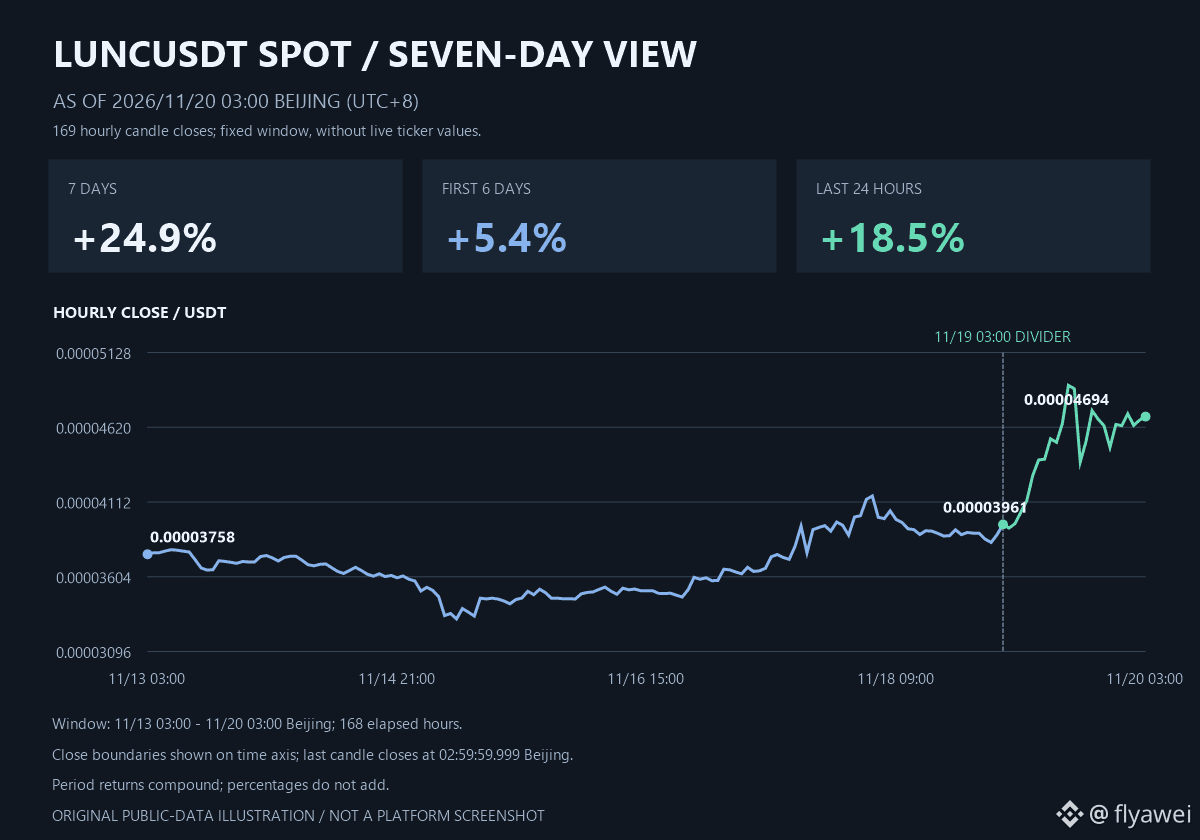
LUNC this time: one day outperformed the previous six.
As of 3 a.m. Beijing time on November 20, Binance spot LUNC/USDT was around 0.00004694. It was up 24.9% over the past seven days, with a combined gain of 5.4% in the first six days and an 18.5% gain in the last 24 hours.
The strongest stretch of the seven-day period was packed into the final day. The old coin suddenly sprang to life, and it really makes you want to trade.
I’m willing to watch it a little longer, but what I’d really like to see is whether buyers step in if it pulls back. If you only focus on how strong it was today and assume the next few days will keep rising, it’s easy to mistake expectations for judgment.
179
·
--
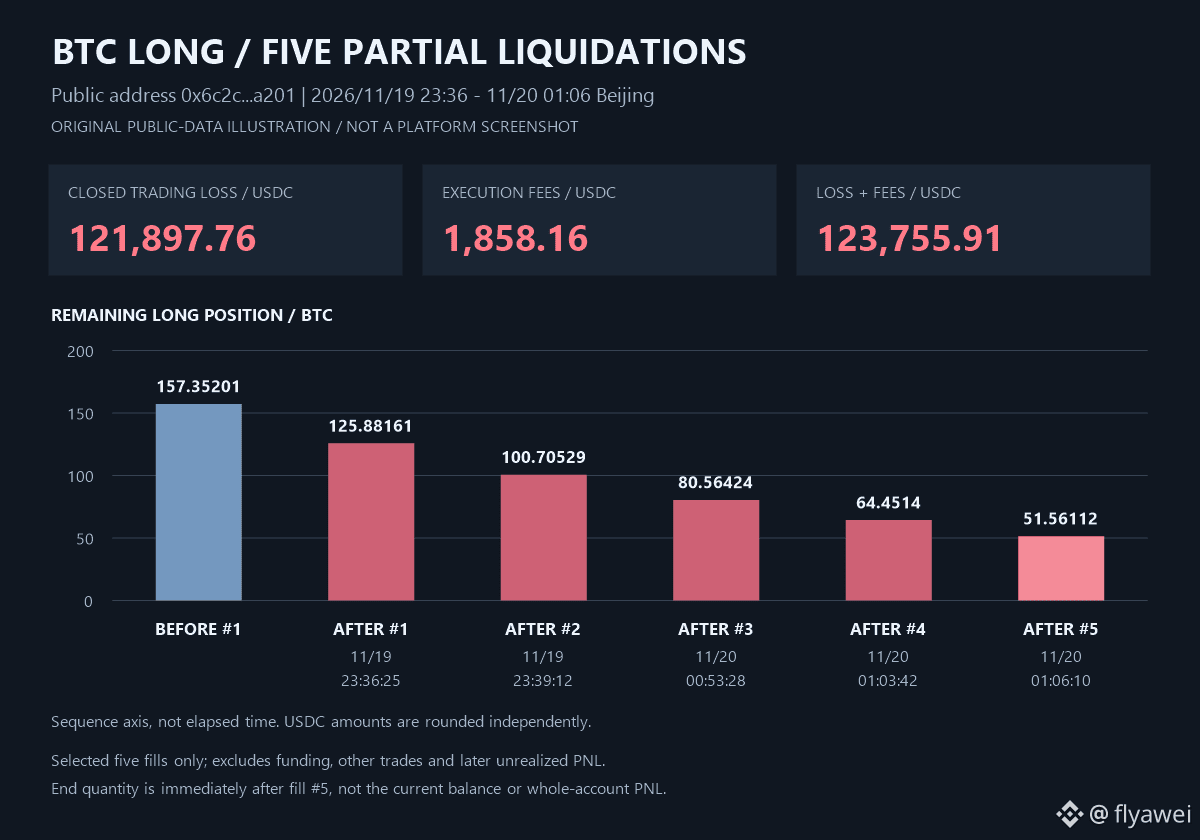
A BTC long position was liquidated in five installments—it hurts just to watch.
From 23:36 on November 19 to 1:06 on November 20, Beijing time, an address beginning with 0x6c2c on Hyperliquid had part of its long position liquidated five times in a row. The 157.35 BTC contract position was eventually reduced to 51.56 BTC, with each liquidation cutting about 20% of the position remaining at the time.
Counting only these five trades, the realized losses plus trading fees came to about 123,800 USDC. Funding fees are separate. The position was still open after the fifth liquidation.
This kind of process can be really draining. With some of the position still open, it’s easy to keep hoping for a rebound, but the remainder is still exposed to volatility.
I’d treat the first partial liquidation as a reminder to reassess the risk. If you just keep waiting to break even, you may have less and less control over how you exit.
235
·
--
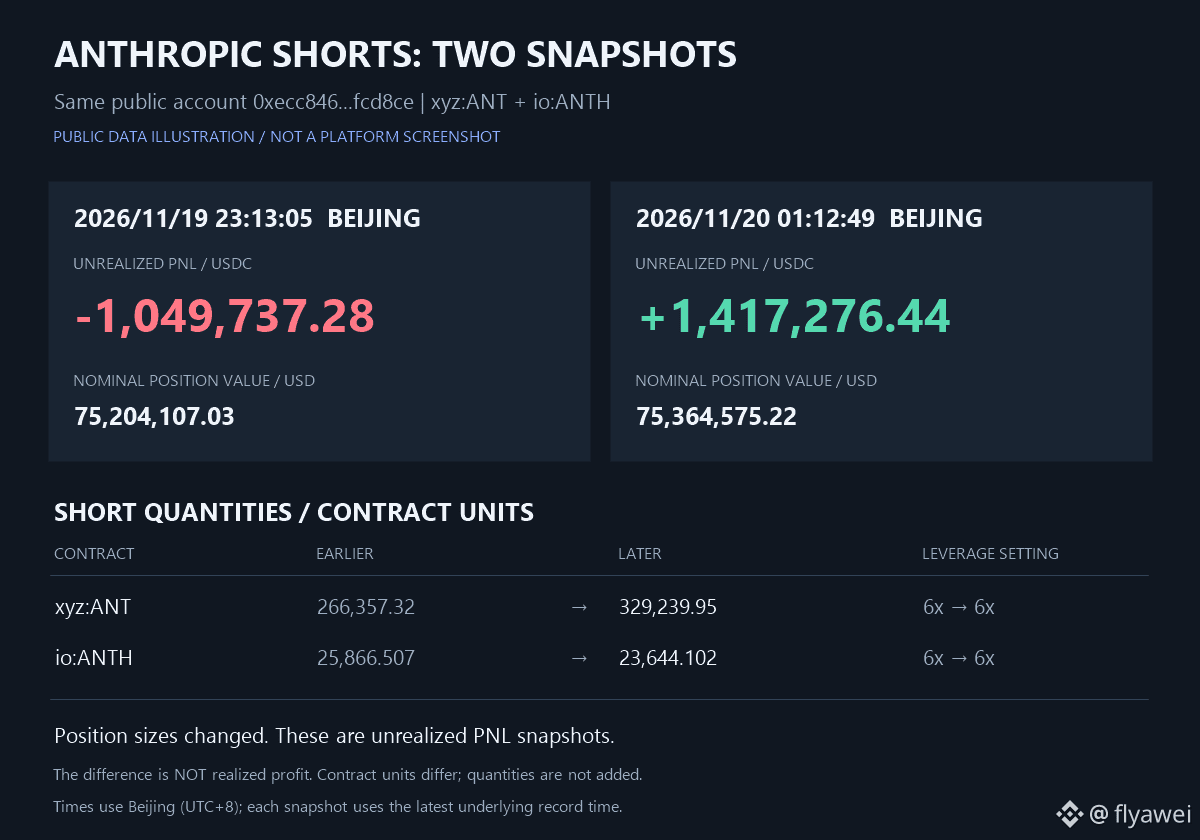
The big player shorting Anthropic has seen some serious swings in their P&L.
At 1:12 a.m. Beijing time on November 20, an address starting with 0xecc8 held Anthropic-related perpetual short positions in two markets on Hyperliquid, with a combined notional value of about $75.4 million. Both positions used 6x leverage, and together they were showing an unrealized profit of about 1.42 million USDC.
But in a snapshot taken at 11:13 p.m. on November 19, the same address was showing a combined unrealized loss of about 1.05 million USDC across those two markets. The position sizes in both markets changed in the meantime, so the difference in P&L can't be treated as realized profit.
A $1.05 million unrealized loss looks painful; a $1.42 million unrealized profit is tempting. But that profit hasn't been locked in yet. To judge how this trade turned out, I'd wait for the closing records. Looking only at the moment the position was in profit makes it easy to forget the hits it took along the way.
2
2.3k
·
--
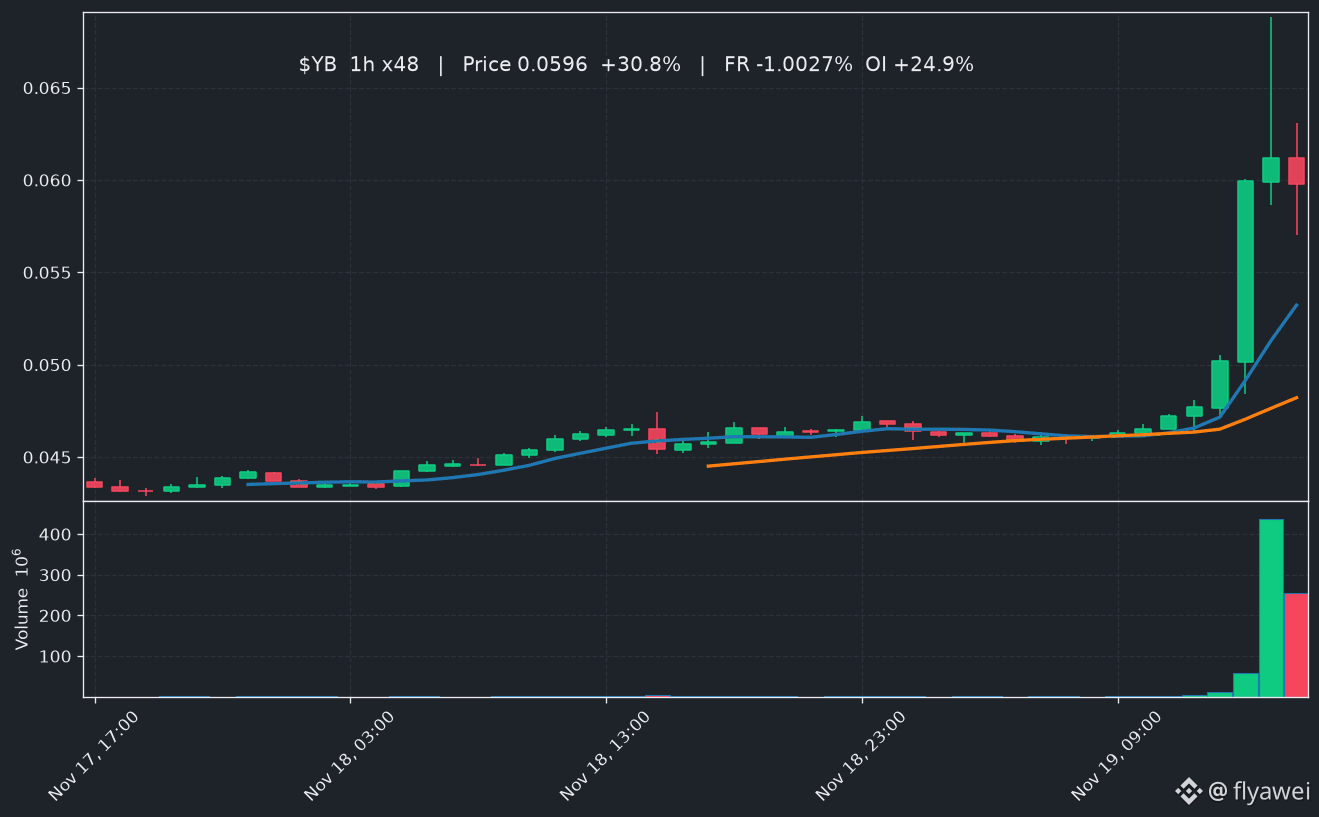
A YB perpetual contract signal was detected at 00:58 on November 20. Latest price: 0.0596 USDT. Change over the past 24 hours: +30.80%. Perpetual contract trading volume over the past 24 hours: $48.1M.
The funding rate changed from the previous reading of -0.9819% to -1.0027%. Open interest changed by +24.9% compared with the previous reading. The latest open interest readings, in order, are $1.1M > $1.1M > $1.1M > $1.3M. Market cap: $29.6M. This contract has a corresponding spot trading pair. The scanner recorded 10 recent related news articles, including one titled “Yield Basis (YB) is now live on Bybit Spot.”
#YB #币安 #Bitcoin
164
·
--
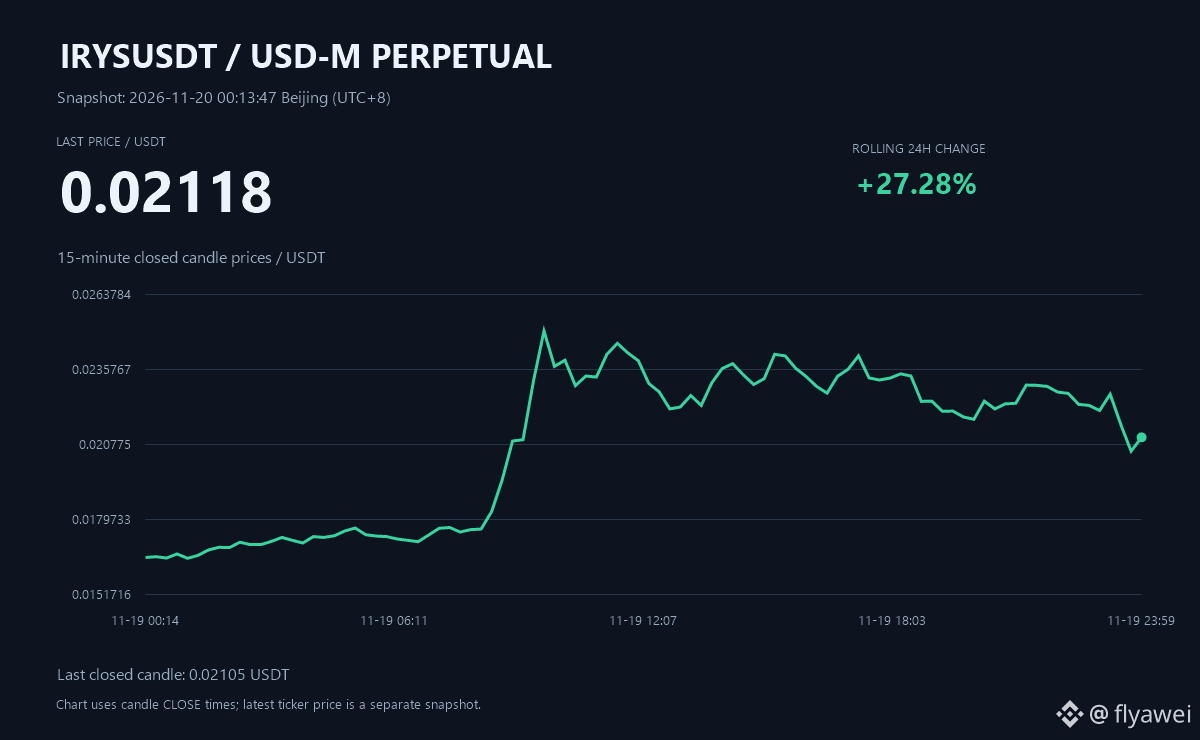
IRYS is up 27%—don’t misread the trading volume of over 200 million.
At 00:13 Beijing time on November 20, Binance’s IRYS/USDT perpetual contract was trading at around 0.02118, up 27.3% over the rolling 24 hours, with a trading volume of 212 million USDT. It peaked at 0.02561 and has since pulled back 17.3%. Those who chased the rally may not be smiling now.
Seeing “200 million in trading volume” can easily lead you to imagine that “200 million in funds flowed in.” The same money can change hands repeatedly, and each trade adds to the volume. This figure alone can’t tell you net inflows, let alone whether the whales are buying or selling.
A rally like this can definitely make your fingers itch. But if I haven’t even decided where I’d buy or how much of a pullback would make me exit, that little fear of missing out can easily turn into buying and then waiting around just to break even. I’d feel more at ease if I thought those two things through before deciding whether to get involved.
1
390
·
--
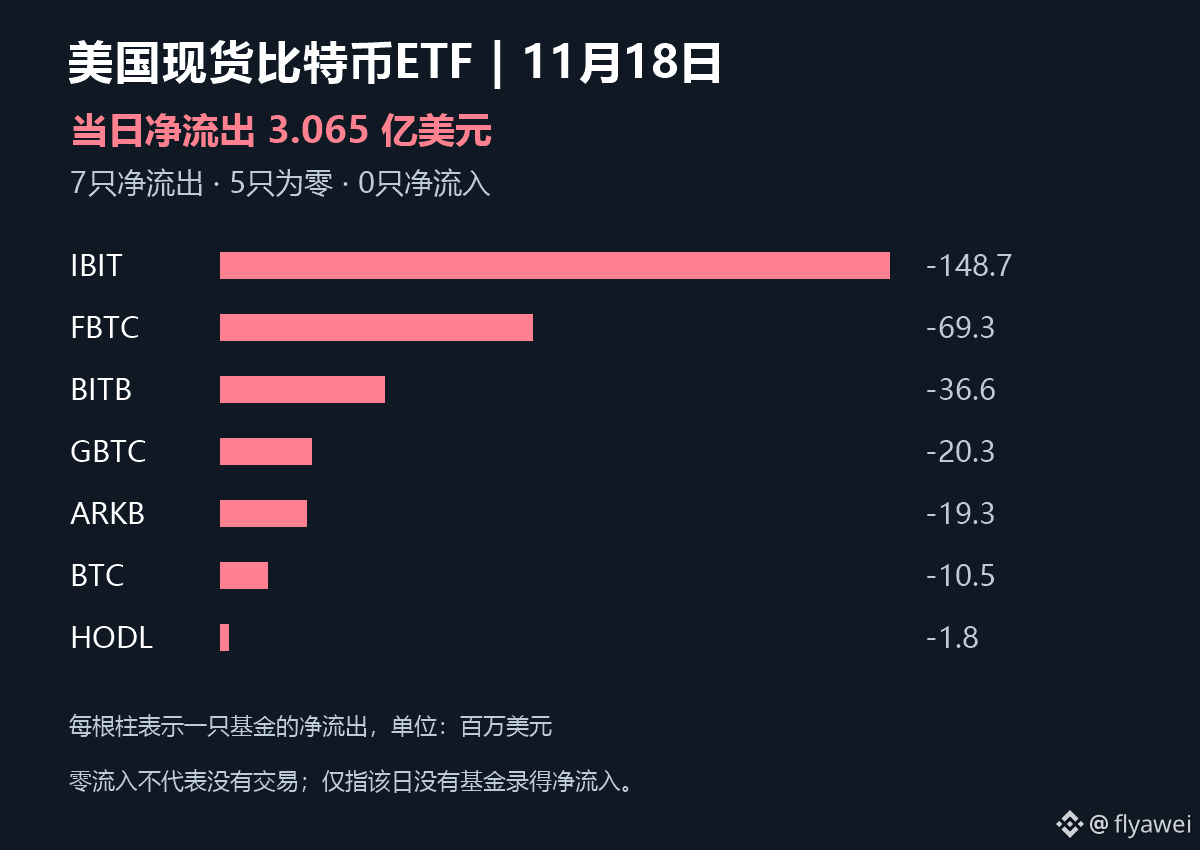
Bitcoin ETFs saw net outflows of more than $300 million in a single day—pretty bleak to see.
On the U.S. trading day of November 18, spot Bitcoin ETFs saw combined net outflows of $306.5 million. IBIT had outflows of about $148.7 million, and FBTC about $69.3 million.
Not one of the 12 funds recorded a net inflow: 7 saw net outflows, while the other 5 were flat. Be clear about the distinction—don’t casually say all 12 were selling.
It’s hard not to get a little excited when the market pops. But overall, money was still flowing out of the ETF channel that day, and we’ll have to wait for later data to see whether new money has come back. I think it’s a bit early to shout “institutions are getting in” based on prices ticking up alone.
I’ll keep an eye on creation and redemption data over the next few days. A positive day would certainly be good, but seeing those inflows stick around would reassure me more than a brief burst of activity.
IBITETF+0.00%
ARKBETF-0.02%
FBTCETF+0.00%
318
·
--
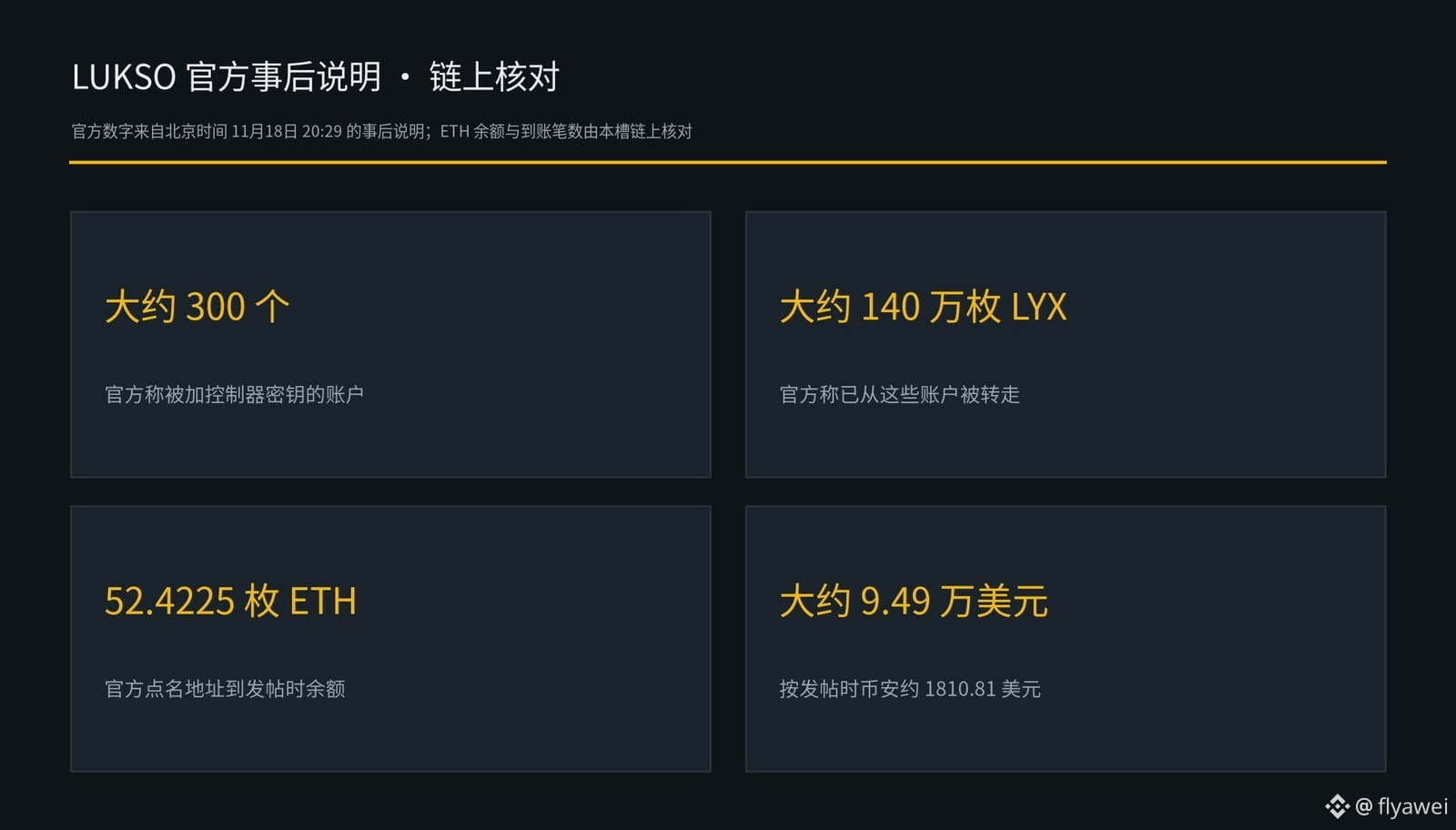
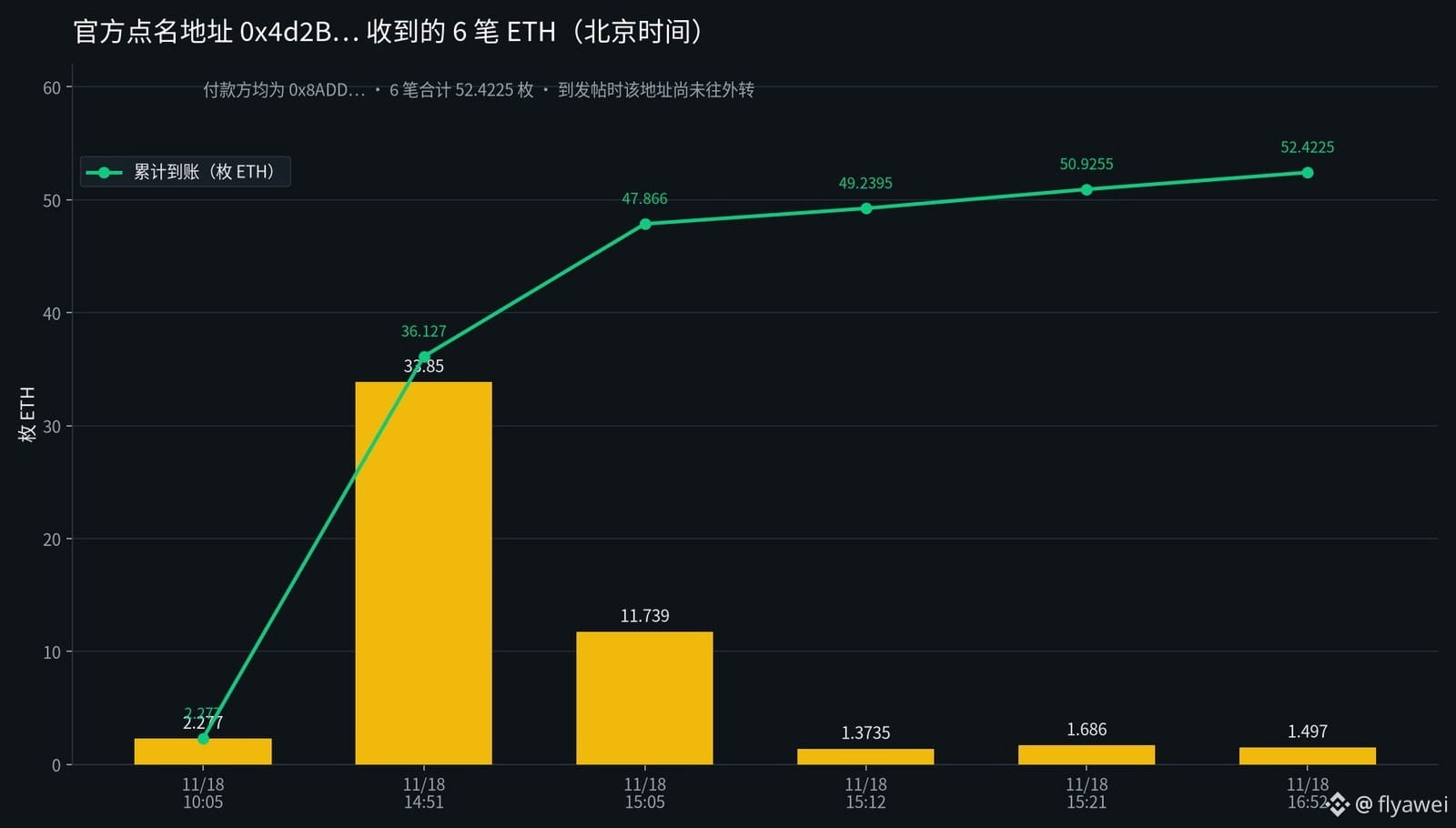
Hackers are practically picking up free money every day—52.42 ETH in the bag!
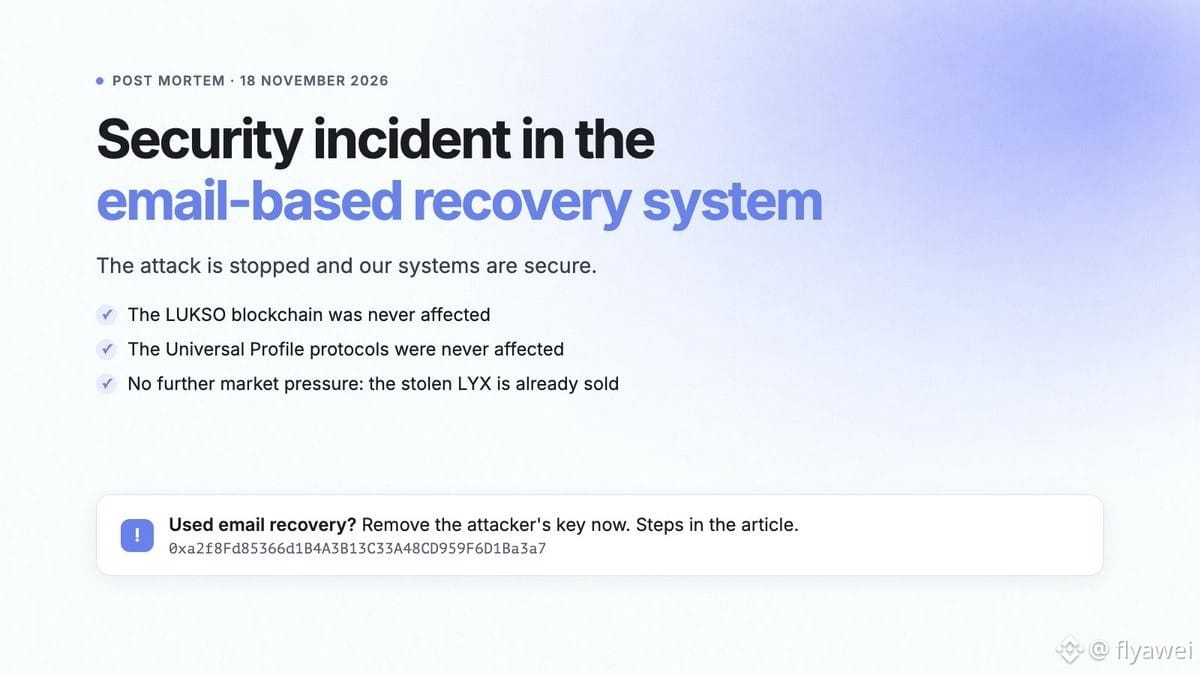
LUKSO officially posted a post-incident statement at 20:29 Beijing time on November 18, saying that from the night of November 17 through November 18, a vulnerability in the backend of its email recovery system allowed attackers to add controller keys to around 300 Universal Profile accounts. About 1.4 million LYX was stolen from these accounts in total.
The official statement said that all of the roughly 1.4 million LYX had been bridged to Ethereum, traded for ether on decentralized exchanges, and eventually converted into about 50 ETH, worth approximately $95,000.
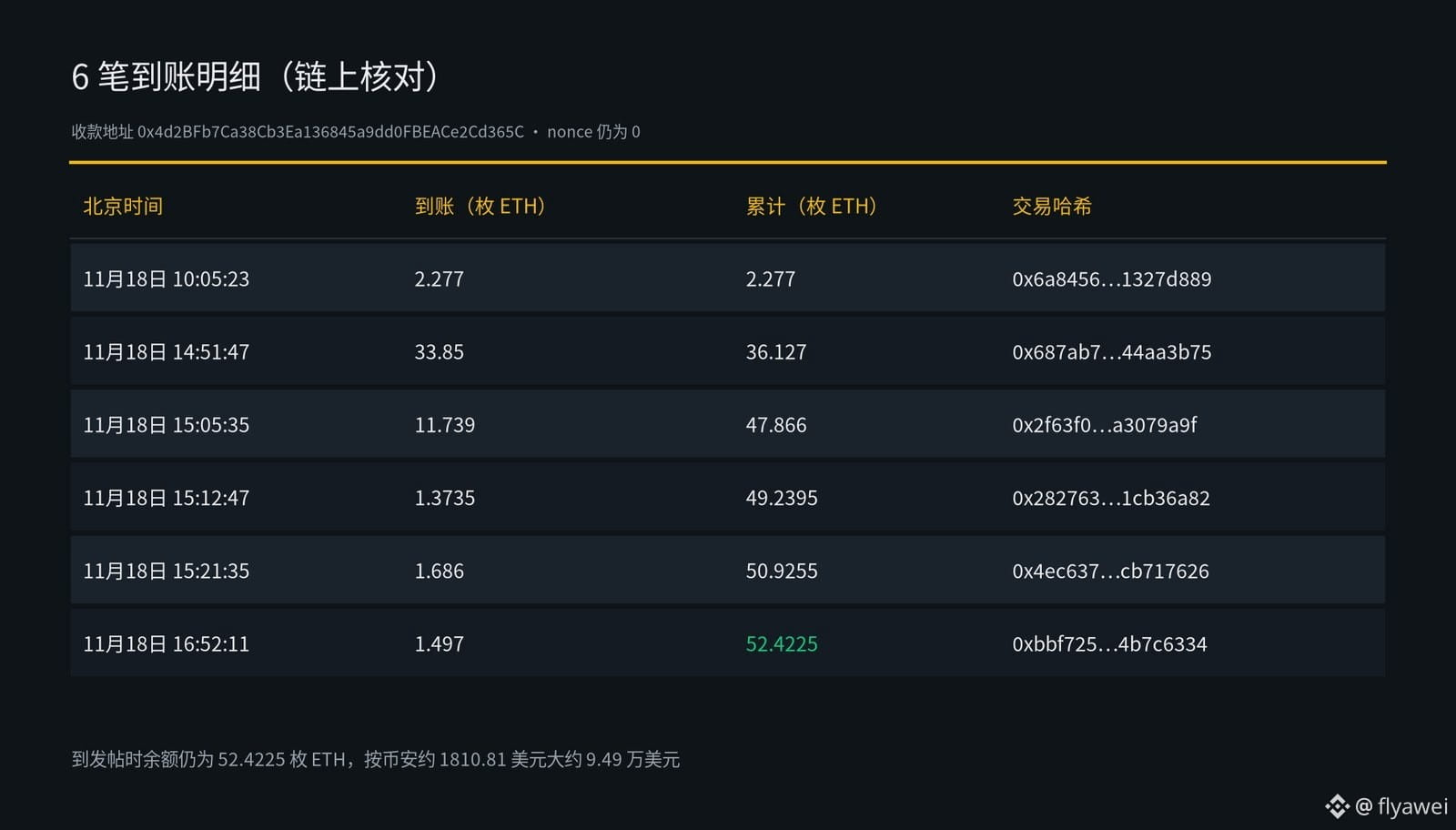
I checked the address named in the official statement (0x4d2B…). From 10:05 to 16:52 Beijing time on November 18, another address (0x8ADD…) sent it a total of 52.4225 ETH in six transactions. At the time of posting, this address had not sent any funds out; its balance was still 52.4225 ETH, worth about $94,900 at Binance’s price of approximately $1,810.81 per ETH.
The official statement also said that the email recovery system had been disabled, and that the public blockchain and the Universal Profile contracts themselves were unaffected. A compensation plan will be announced in the coming weeks, but no details have been given yet about how much will be paid or when.
At 20:40 Beijing time on November 19, the official account issued another reminder: the attack had been stopped, but some profiles still need to completely remove the attacker’s key and the malicious recovery controller.
My take: the funds have already been converted into ether and are sitting at this address. The compensation plan hasn’t been finalized yet, and profiles that had keys added still need to remove them first.
Beginners should watch more and trade less. If you buy crypto, only buy $BTC
2
1.9k
·
--
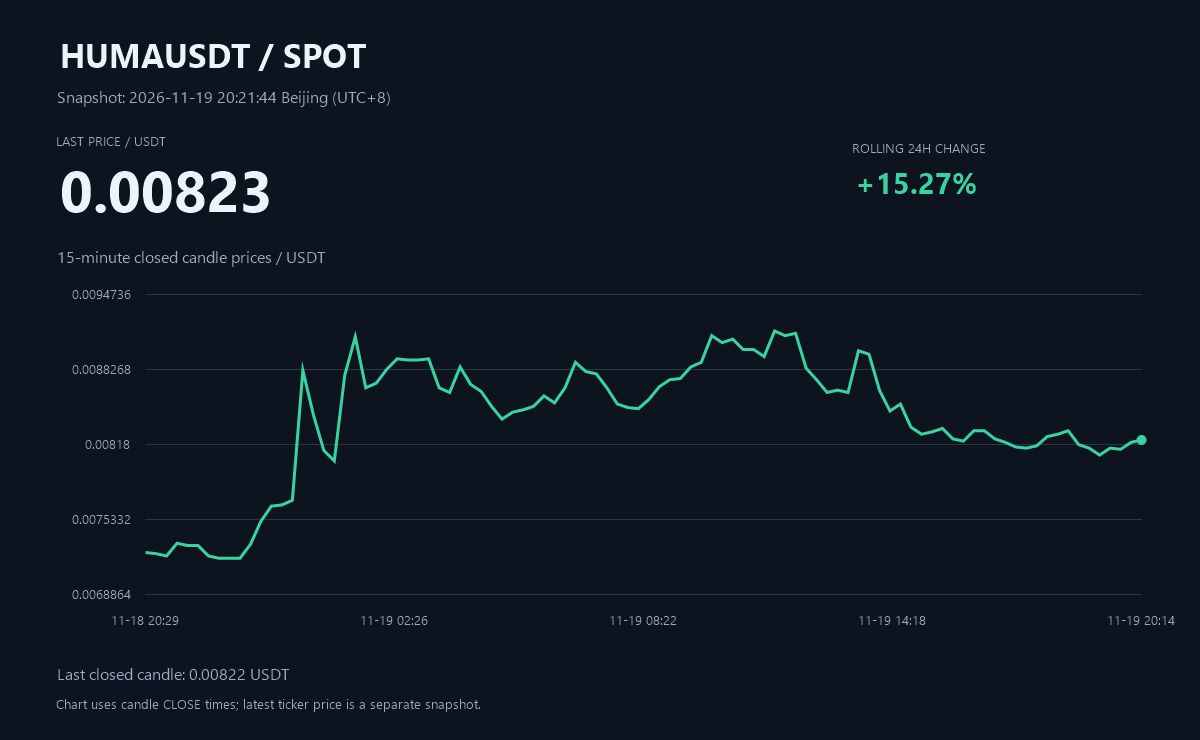
HUMA is up 22%. Short sellers, be careful—it looks like a short squeeze is coming.
HUMA is up 22%. Short sellers, be careful—it looks like a short squeeze is coming.
122
·
--
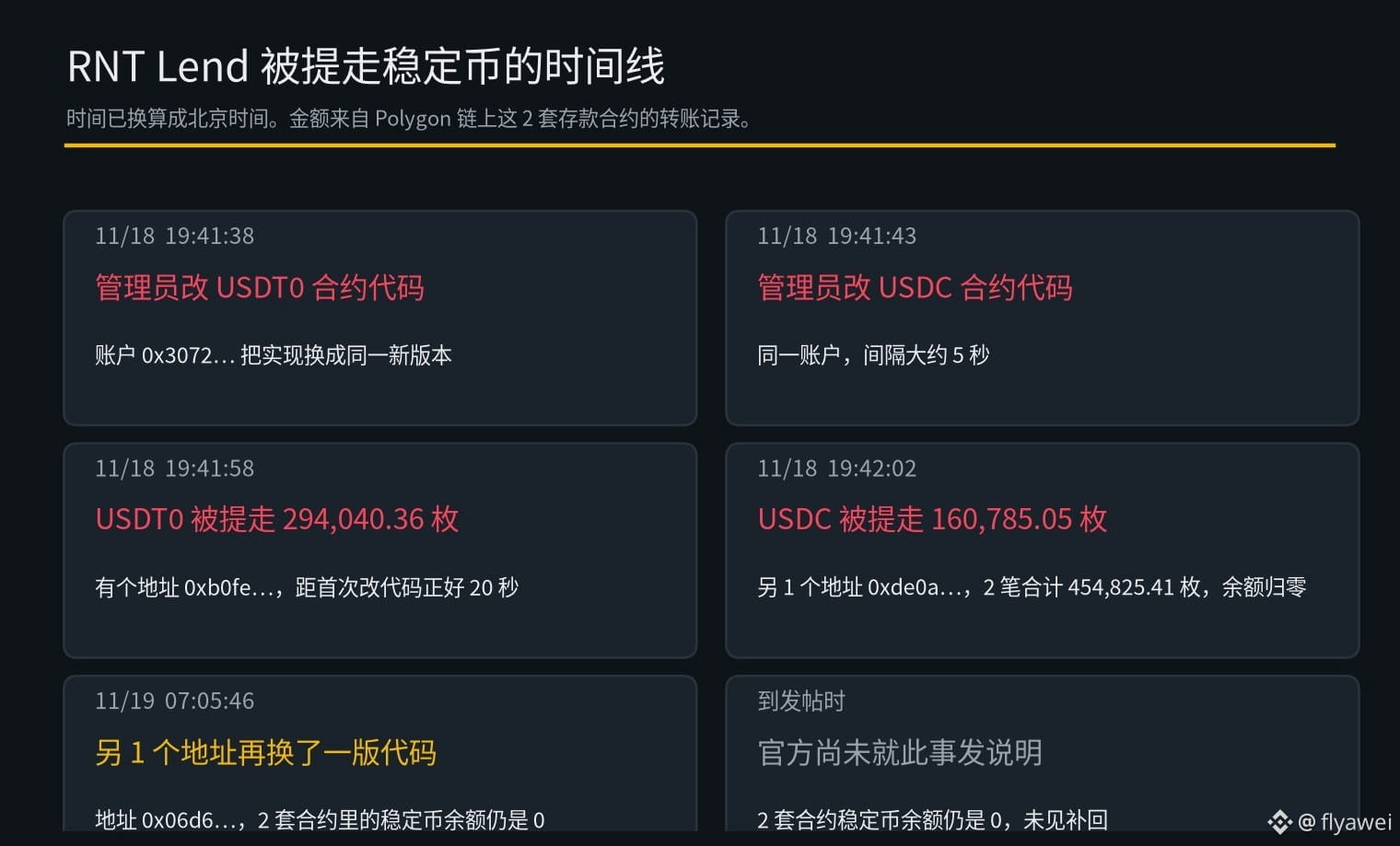
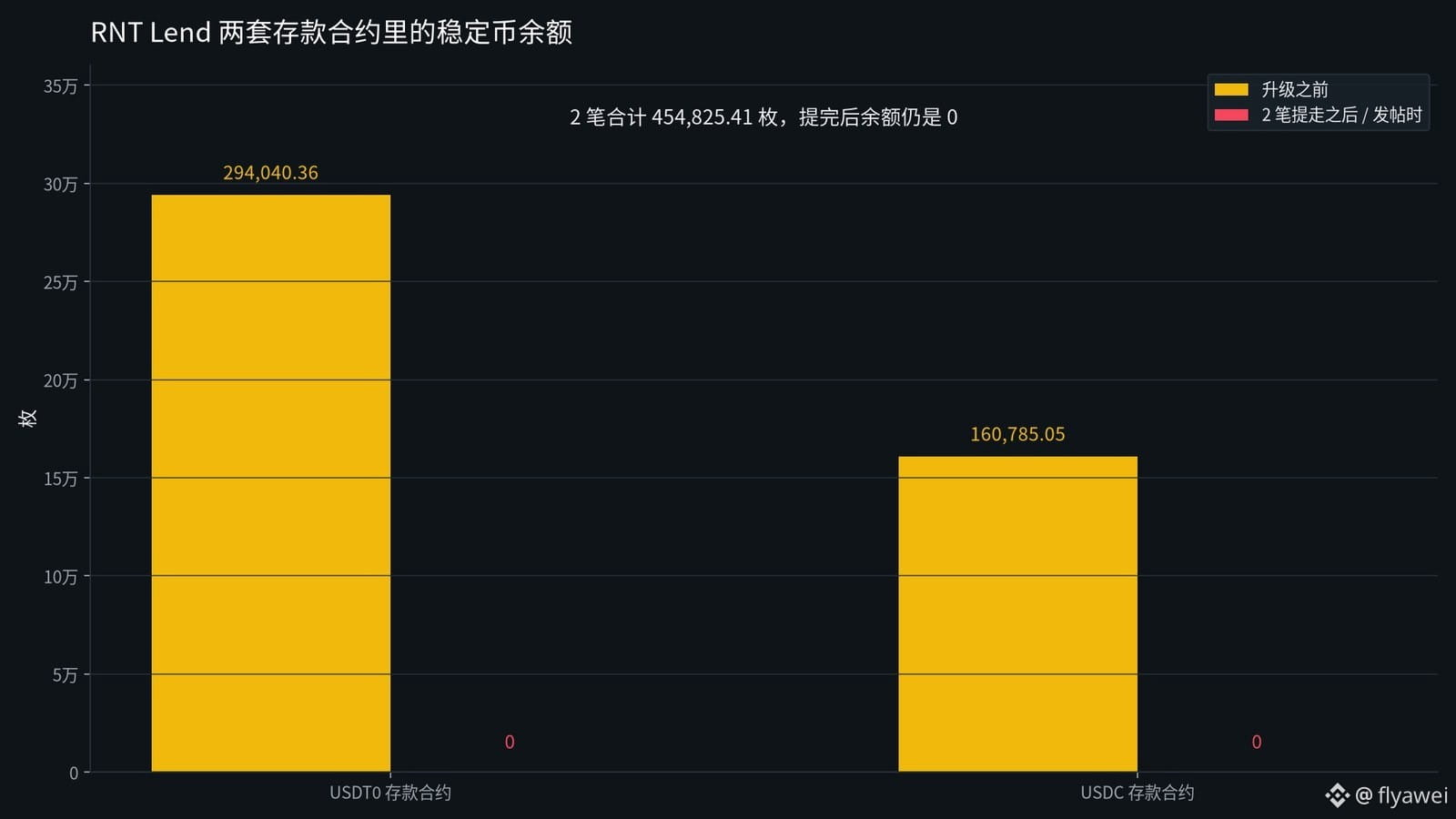
An admin changed the code; 454,825 tokens were withdrawn in 24 seconds
Reental, a real estate tokenization company, operates the RNT Lend lending market on Polygon. At 19:41:38 Beijing time on November 18, an admin account (0x3072…) changed the contract code for the USDT0 and USDC deposit contracts to the same new version.
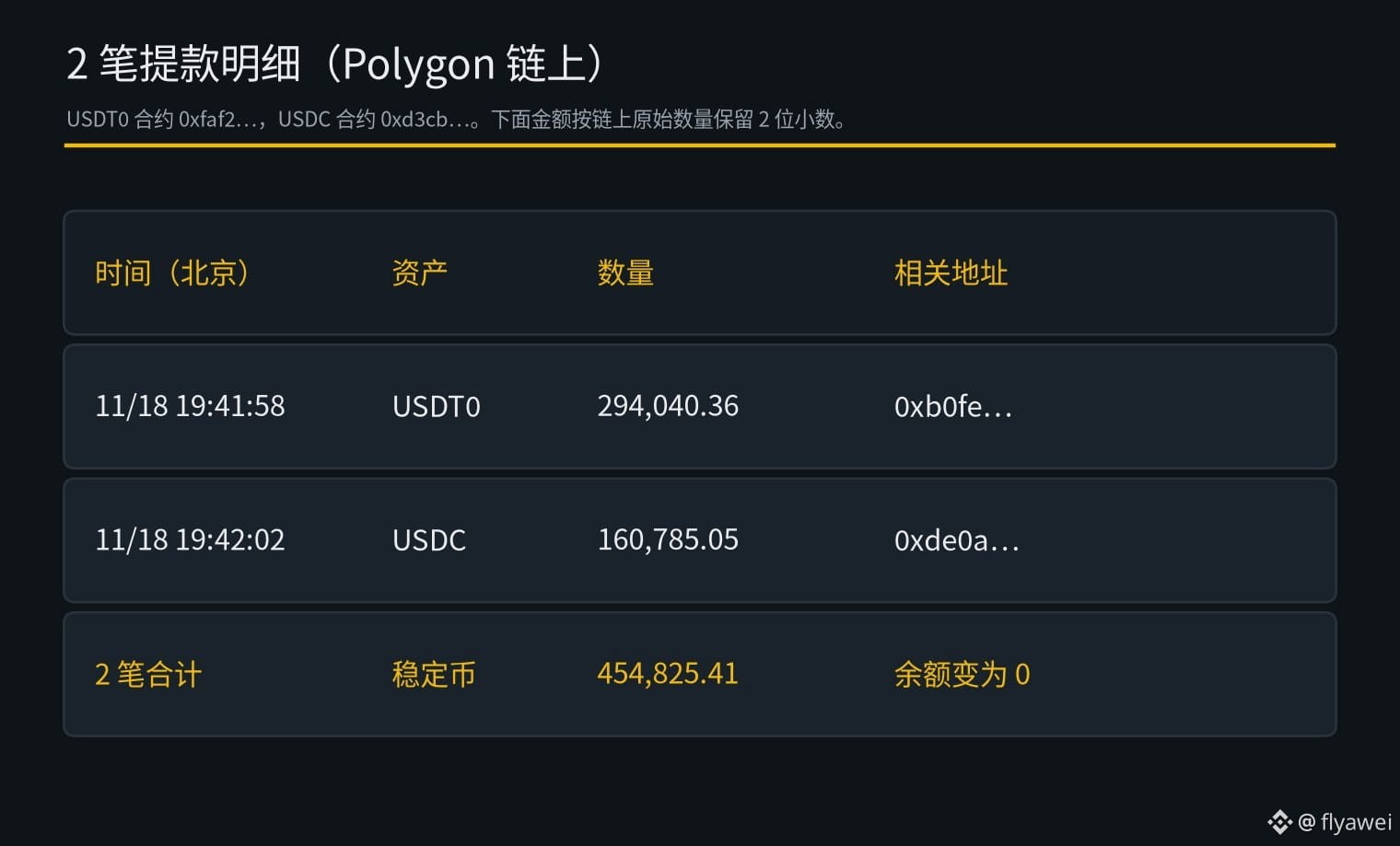
Twenty seconds later, at 19:41:58, an address (0xb0fe…) withdrew 294,040.36 tokens from the USDT0 contract. Four seconds after that, at 19:42:02, another address (0xde0a…) withdrew 160,785.05 tokens from the USDC contract. The two withdrawals totaled 454,825.41 stablecoins, leaving both contracts with a balance of 0.
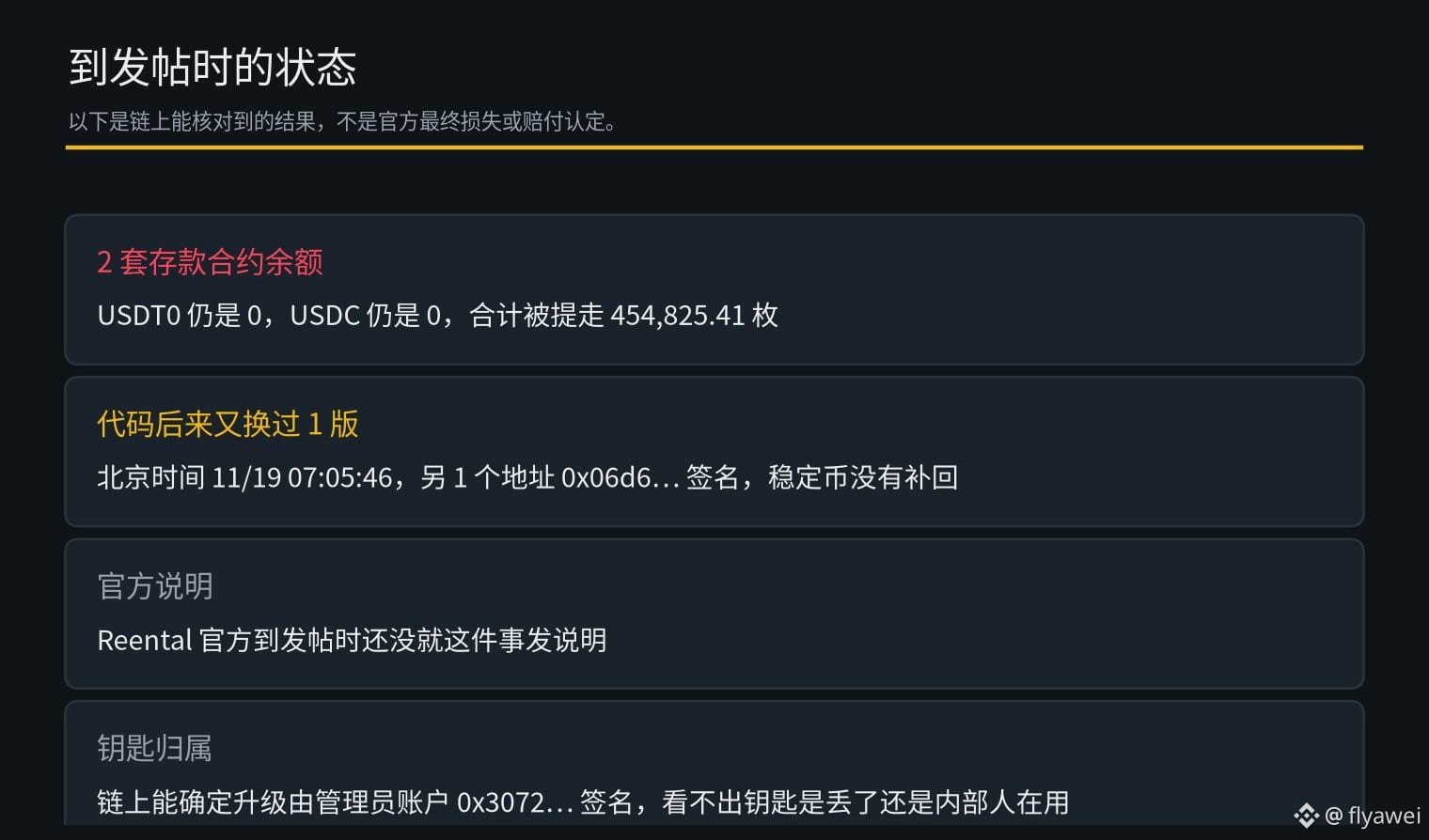
At the time of posting, the stablecoin balances in both contracts were still 0. At 07:05:46 Beijing time on November 19, another address (0x06d6…) changed the code of both contracts again, but the stablecoins were not replenished.
At the time of posting, Reental had not issued a statement about the incident. On-chain records show only that the admin account signed the transactions; it’s impossible to tell from these transactions alone whether someone took the key or an insider used it.
My take: once this kind of permission to directly change contract code is used, the money in the vault can be completely withdrawn in about 24 seconds.
Beginners should watch more and do less. If you buy crypto, buy only $BTC.
An admin changed the code; 454,825 tokens were withdrawn in 24 seconds
Reental, a real estate tokenization company, operates the RNT Lend lending market on Polygon. At 19:41:38 Beijing time on November 18, an admin account (0x3072…) changed the contract code for the USDT0 and USDC deposit contracts to the same new version.
Twenty seconds later, at 19:41:58, an address (0xb0fe…) withdrew 294,040.36 tokens from the USDT0 contract. Four seconds after that, at 19:42:02, another address (0xde0a…) withdrew 160,785.05 tokens from the USDC contract. The two withdrawals totaled 454,825.41 stablecoins, leaving both contracts with a balance of 0.
At the time of posting, the stablecoin balances in both contracts were still 0. At 07:05:46 Beijing time on November 19, another address (0x06d6…) changed the code of both contracts again, but the stablecoins were not replenished.
At the time of posting, Reental had not issued a statement about the incident. On-chain records show only that the admin account signed the transactions; it’s impossible to tell from these transactions alone whether someone took the key or an insider used it.
My take: once this kind of permission to directly change contract code is used, the money in the vault can be completely withdrawn in about 24 seconds.
Beginners should watch more and do less. If you buy crypto, buy only $BTC .
128
·
--
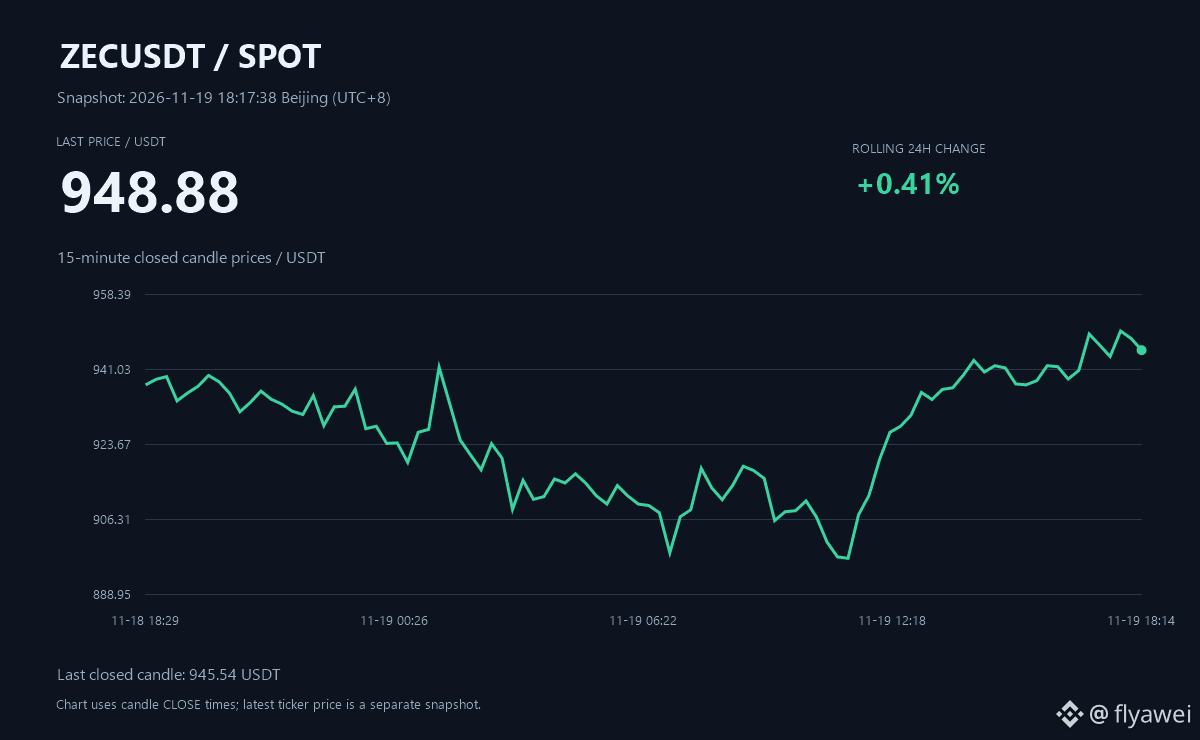
ZEC’s price action today looked calm on the surface, but it was a bumpy ride.
At 6:17 p.m. on November 19, ZEC/USDT was around 948.9 on Binance Spot, up just 0.4% over the rolling 24-hour period. But during that time, it dipped as low as 891.5, putting the current price about 6.4% above the low.
Looking only at that 0.4%, it’s easy to think not much happened. But spread the price action out, and you can see the roller coaster in between: first a drop, then a rebound.
The hardest part may be selling in frustration near the bottom, then buying back in for fear of missing out once the price recovers. After all that back and forth, the price is almost back where it was yesterday, but you’re left with fewer coins.
In this kind of market, I’d rather make fewer spur-of-the-moment decisions. If you haven’t worked out what would make you willing to buy or at what point you’d admit you were wrong, it’s easy to let the flashing red and green numbers wear you down.
80
·
--
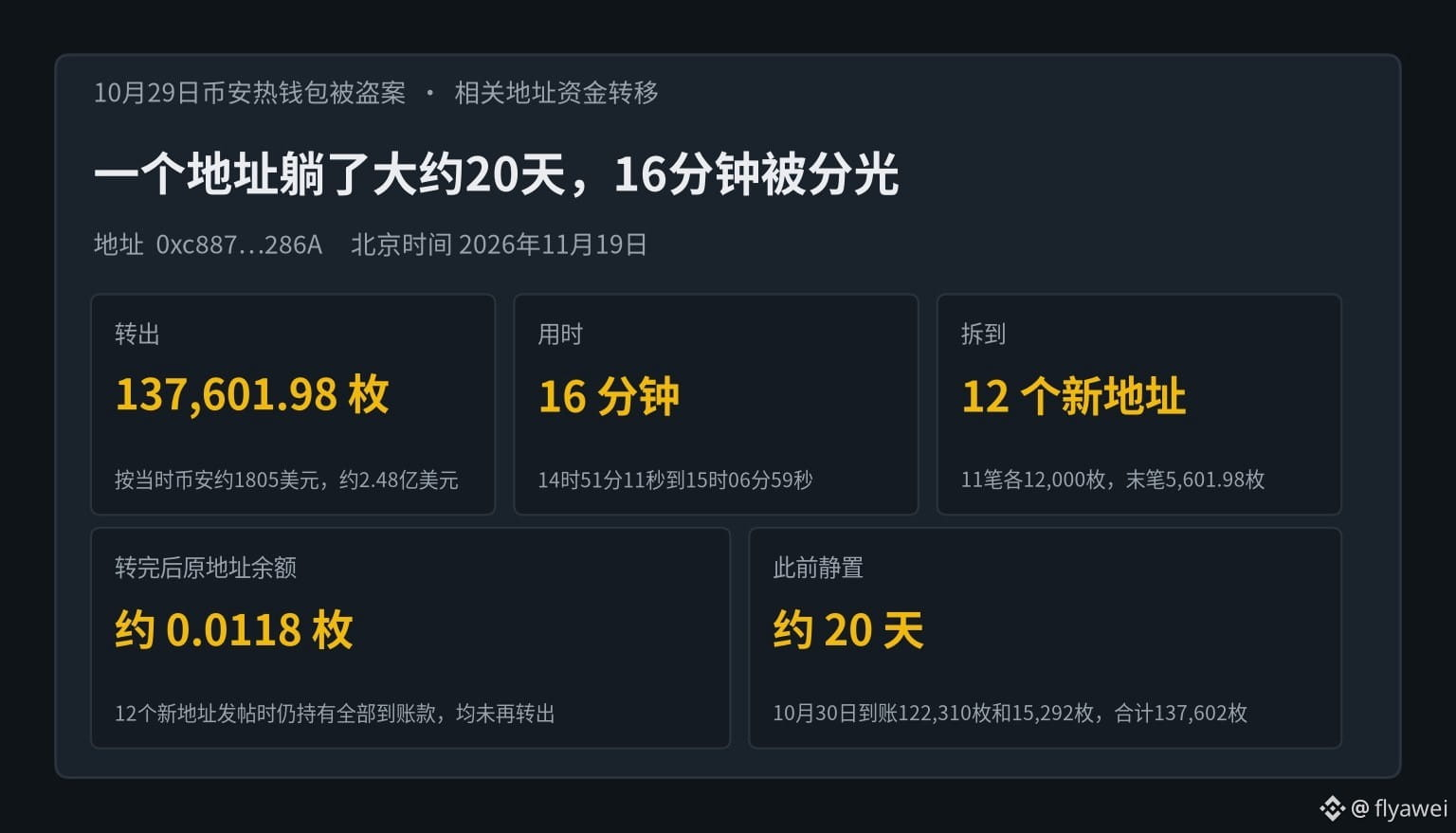
Dormant for 20 days, 137,600 ETH split up in 16 minutes
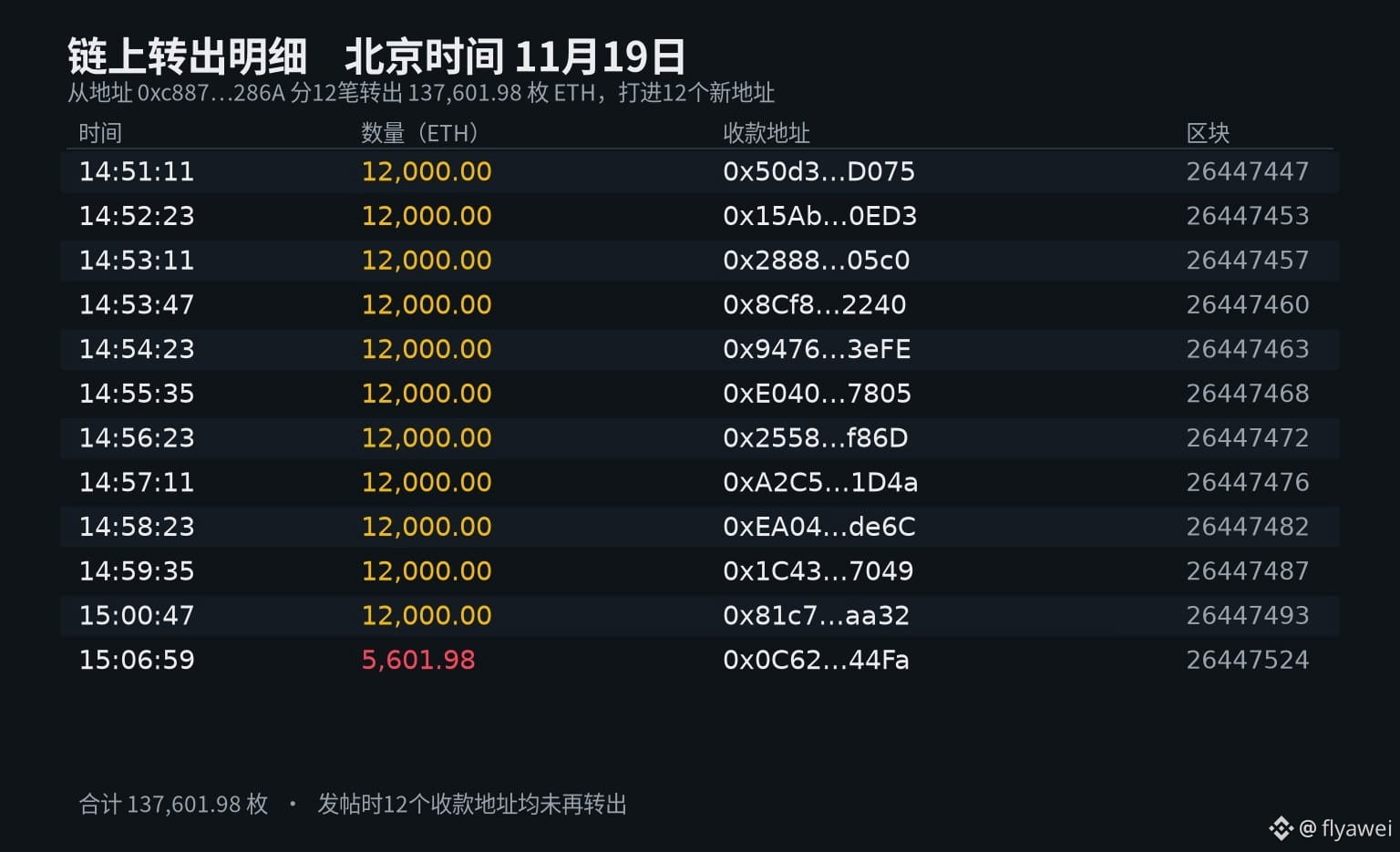
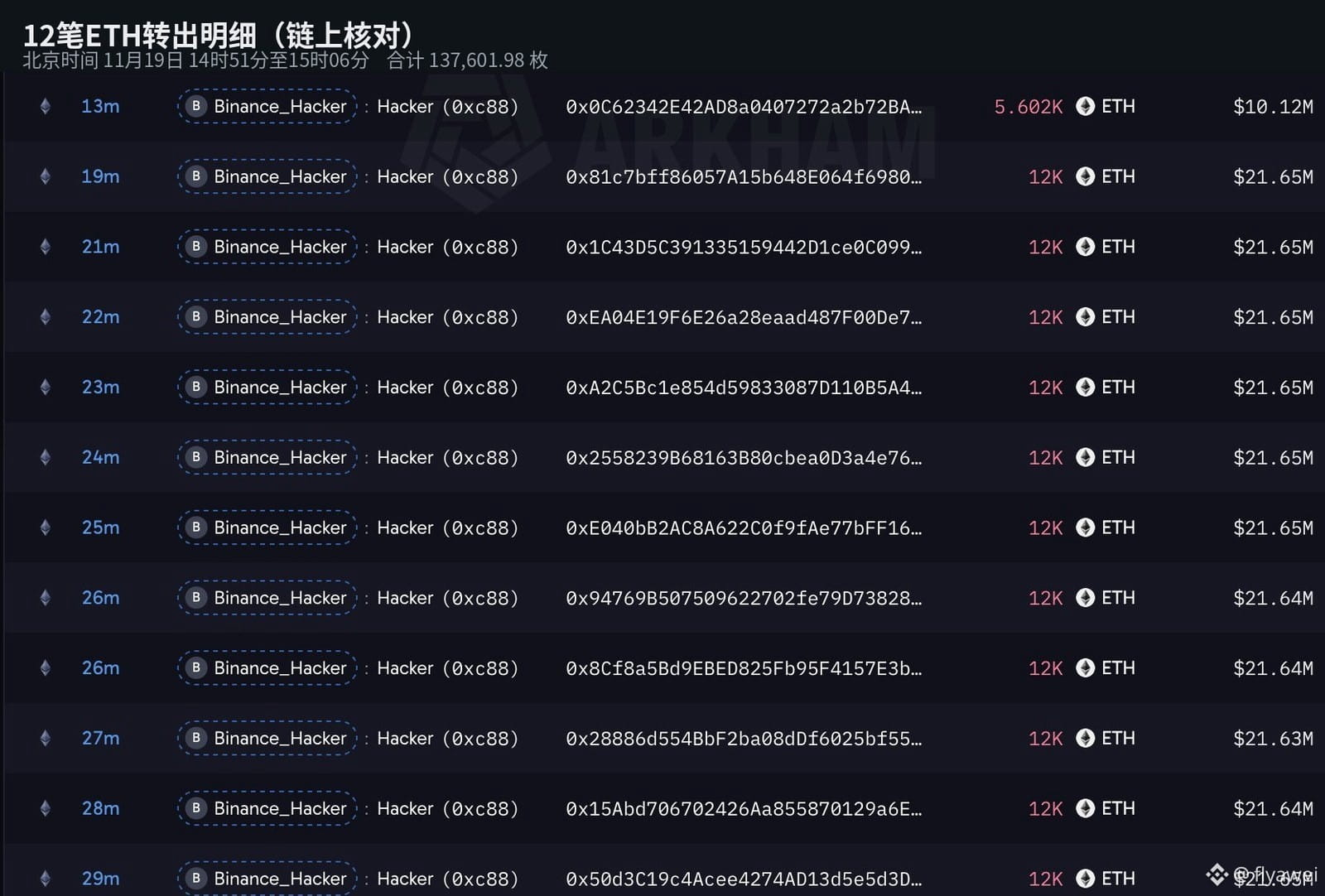
An address (0xc887…) left behind by the Binance hot wallet hack on October 29 transferred 137,601.98 ETH in 12 transactions between 14:51 and 15:06 Beijing time on November 19. At the time, ETH was trading at around $1,805 on Binance, putting the total at approximately $248 million.
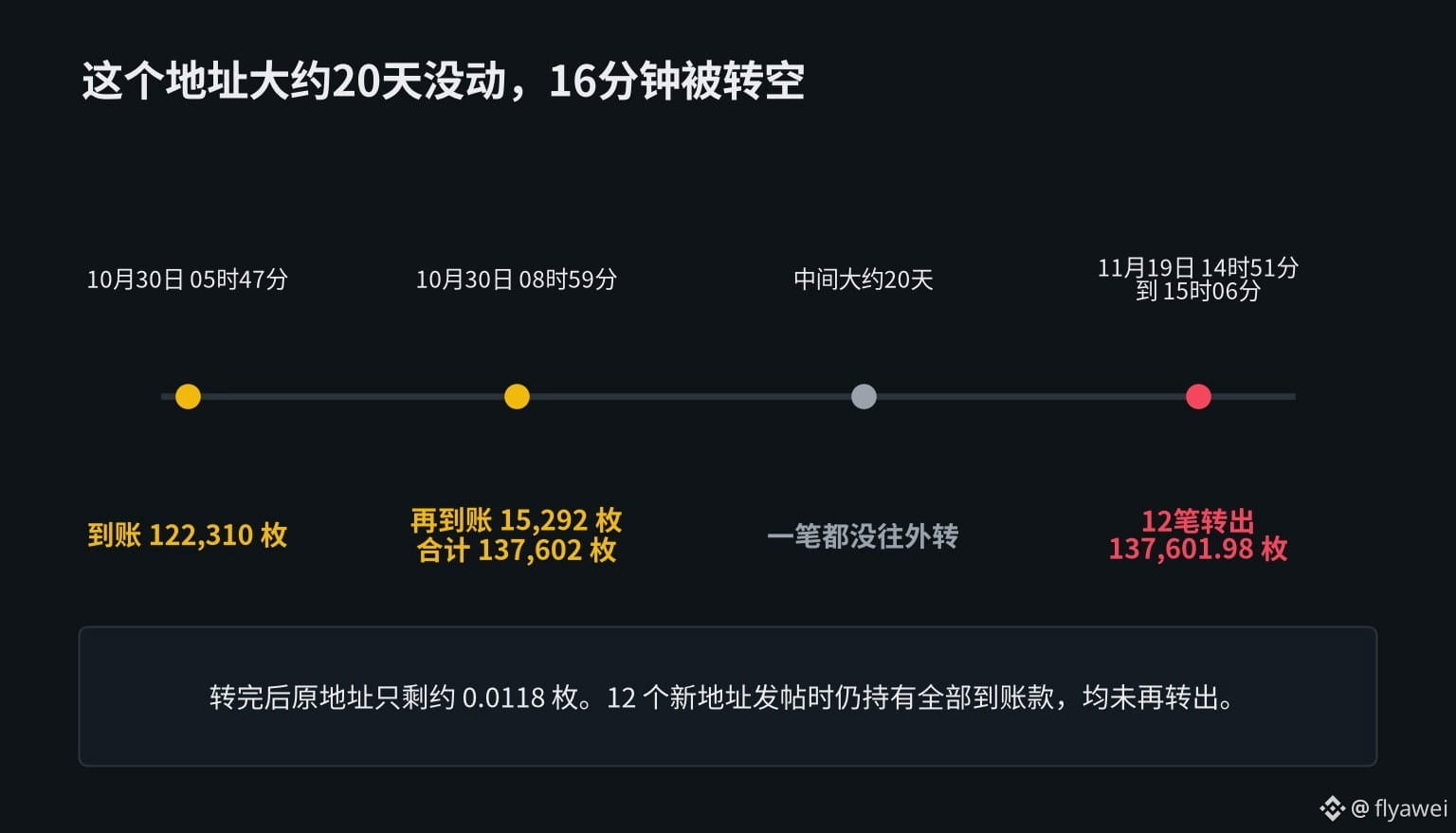
This address first received 122,310 ETH on the morning of October 30, then received another 15,292 ETH, for a total of 137,602 ETH. It didn’t make a single outgoing transfer over the next 20 days or so.
This afternoon, it started moving funds. The first 11 transfers were each for 12,000 ETH, and the final one was for 5,601.98 ETH. The funds were sent to 12 new addresses. Afterward, only around 0.0118 ETH remained in the original address.
As I write this, the ETH in all 12 new addresses is still there and hasn’t been moved again.
My personal take is that this is still about splitting up and spreading out the funds for now. They may not hit the market directly in the short term, but 137,600 ETH has already been distributed to new addresses. If it gets converted into other coins later, it’s still worth keeping an eye on.
Beginners should watch more and trade less. If you buy crypto, buy only $BTC
1
2.4k
·
--
BREV is down 19%, and the hardest thing to resist right now is the urge to average down.
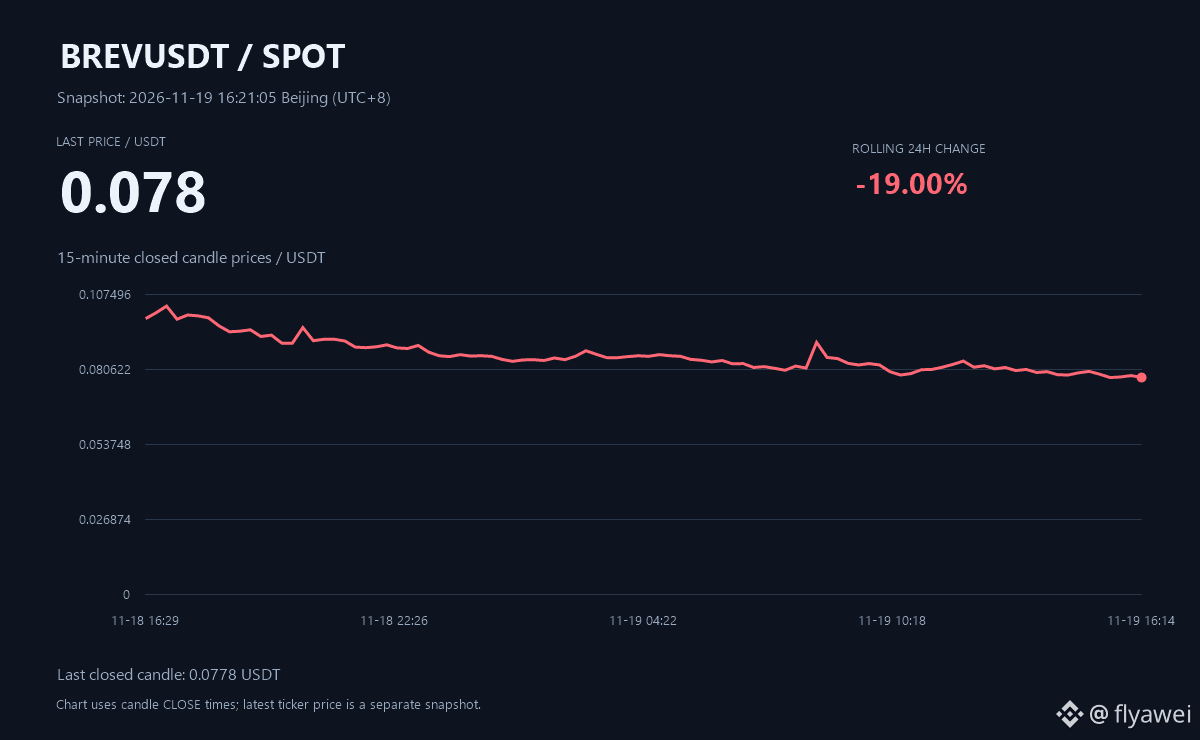
At 4:21 p.m. on November 19, BREV/USDT was trading at around 0.078 on Binance Spot, down 19% over the rolling 24 hours. It reached a high of 0.1047 and a low of 0.0769 during that period, and it’s still not much higher than the low.
Watching the price slide lower, I can understand the thought: “I’ll buy a little more, and I’ll break even sooner.” It’s especially hard to sit with a loss. But averaging down also puts more money into the same coin. If the price keeps falling, it’ll hurt even more.
If I really wanted to add to my position, I’d first ask myself: If I didn’t own any right now, would I still be willing to buy? If the only reason is “I’ve already lost so much,” then averaging down looks a lot like betting against my own cost basis.
1
117
·
--
The ultimatum hasn’t expired yet, and 593 ETH has already been sent back
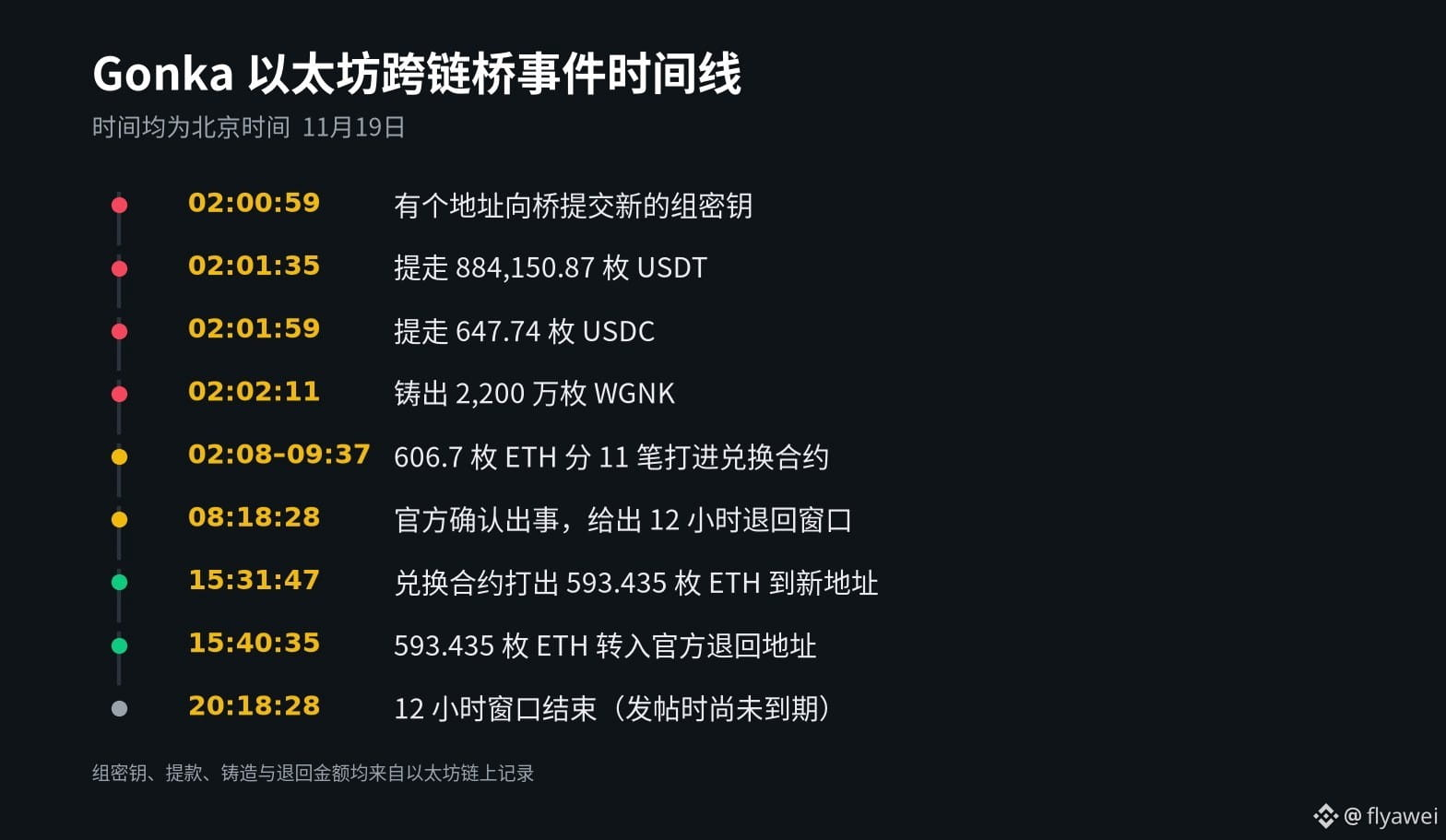
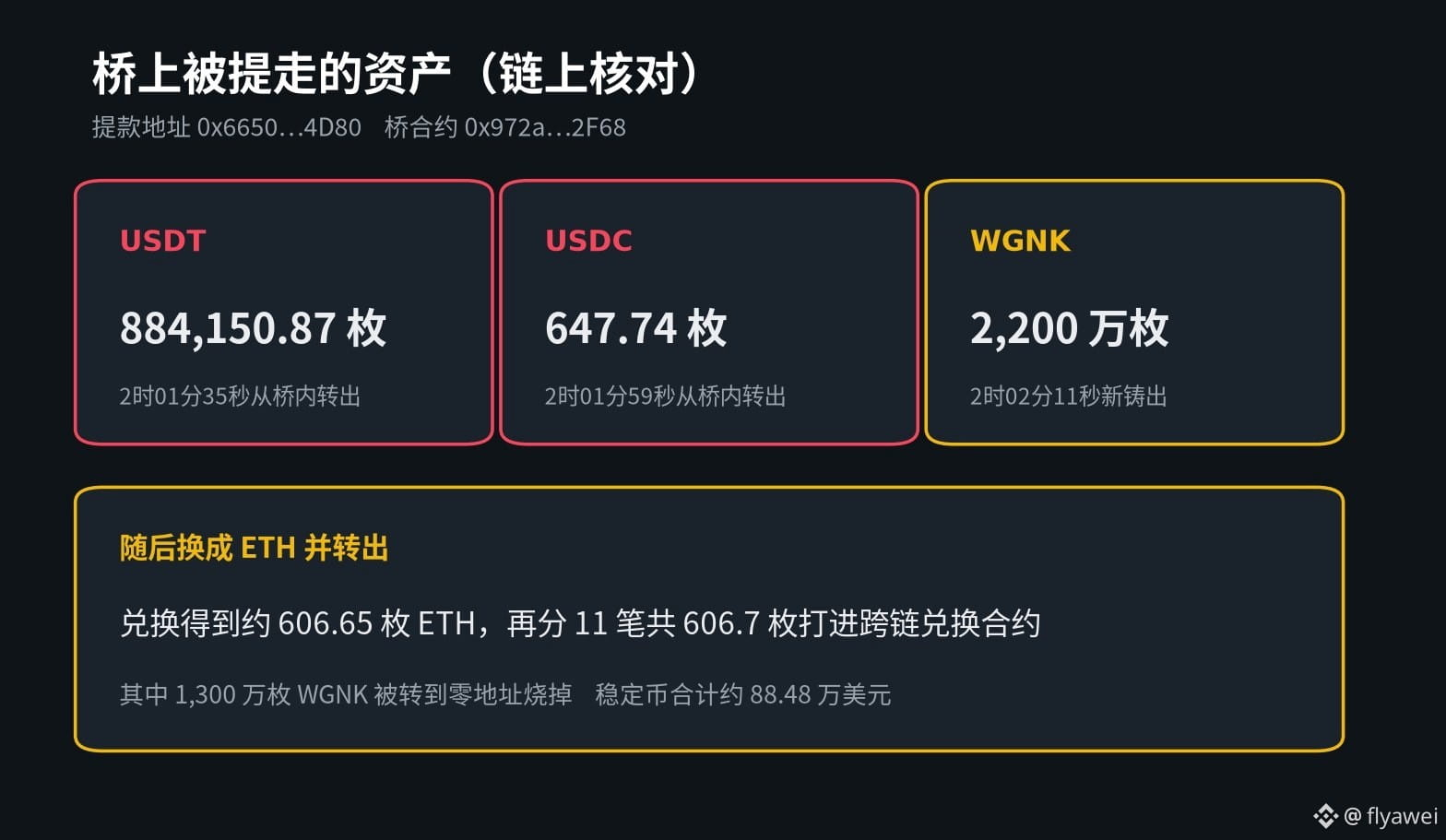
At 2:01 a.m. Beijing time on November 19, an address (0x6650…) withdrew 884,150.87 USDT and 647.74 USDC from the cross-chain bridge between Gonka and Ethereum.
At 2:00:59 a.m., the address first submitted a new group key to the bridge, then withdrew the stablecoins, and minted 22 million WGNK at 2:02 a.m. The stablecoins and some of the WGNK were swapped for ETH, while another 13 million WGNK were burned. The ETH was transferred to another address (0xde35…), then 606.7 ETH was sent to the exchange contract in 11 separate transactions.
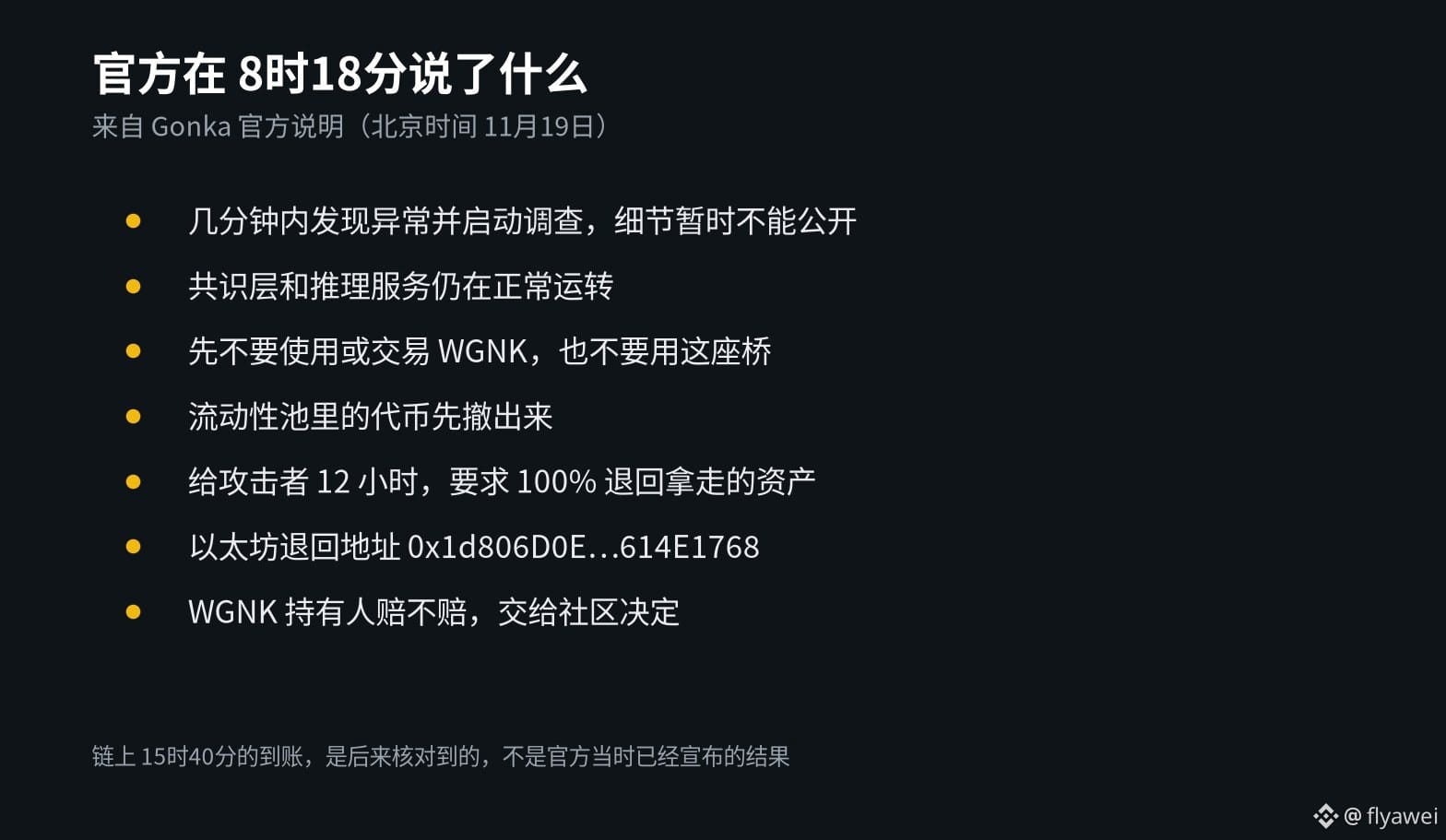
At 8:18 a.m. Beijing time, Gonka confirmed the incident, saying it had launched an investigation within minutes and advising everyone to stay away from the bridge for now. The team gave the attacker 12 hours to return 100% of the funds and published a return address (0x1d80…). The deadline was 8:18 p.m.
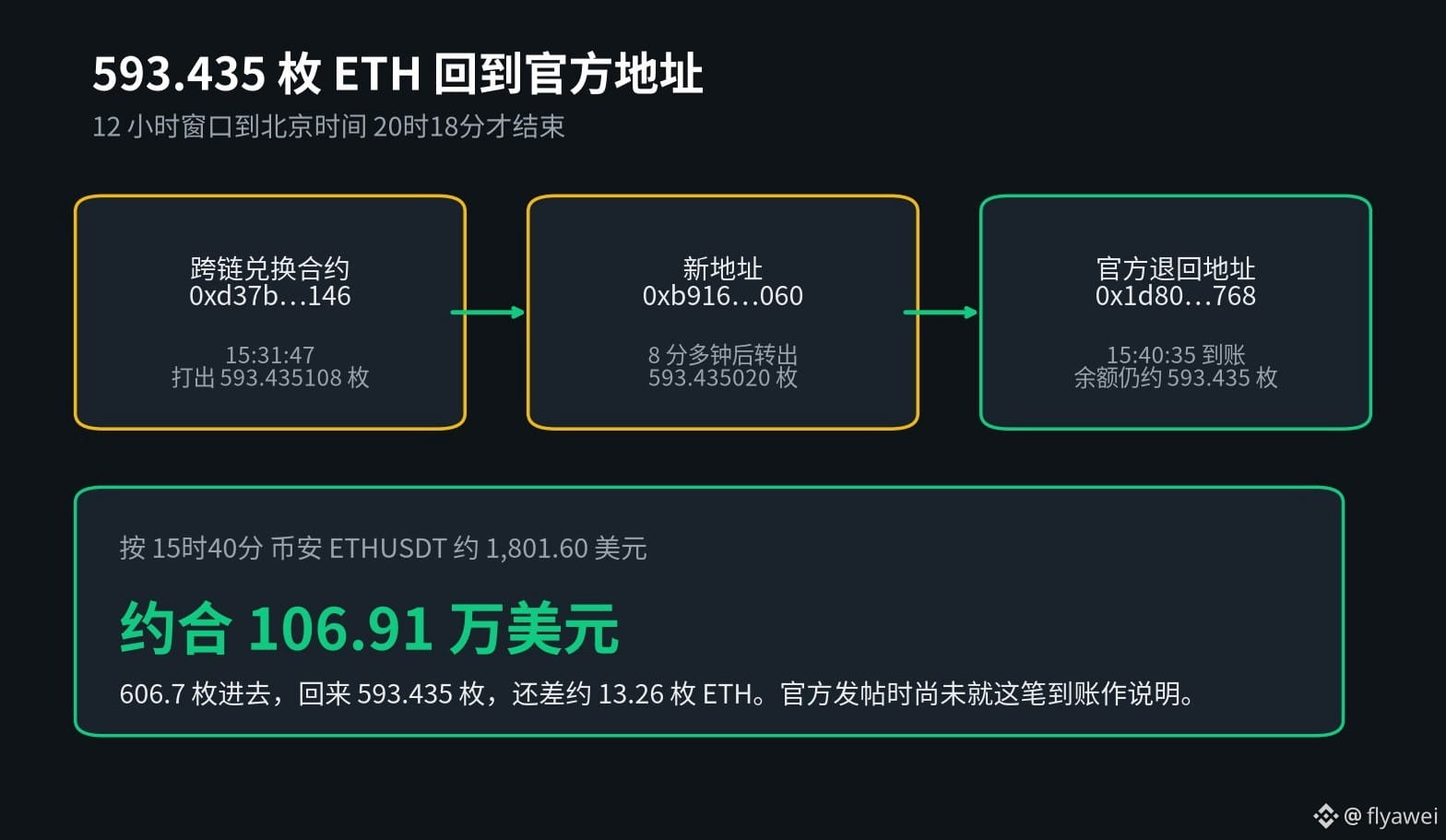
At 3:31 p.m. Beijing time, the same exchange contract sent 593.435 ETH to a new address (0xb916…). At 3:40 p.m., the funds arrived at the official return address. At the time, ETH was worth about $1,801.60 on Binance, putting the returned amount at roughly $1.0691 million. When I checked, the funds were still there, and the team had yet to announce that they had arrived.
606.7 ETH went in and 593.435 ETH came back, leaving a shortfall of about 13.26 ETH. The team says the community will decide whether WGNK holders should be compensated. My take: most of the funds are back, but the root cause and the shortfall remain unexplained. Don’t use this bridge for now.
For beginners, I recommend doing more research and trading less. If you buy crypto, just buy $BTC
296
·
--
AguilaTrades has switched sides again—makes you break out in a cold sweat.
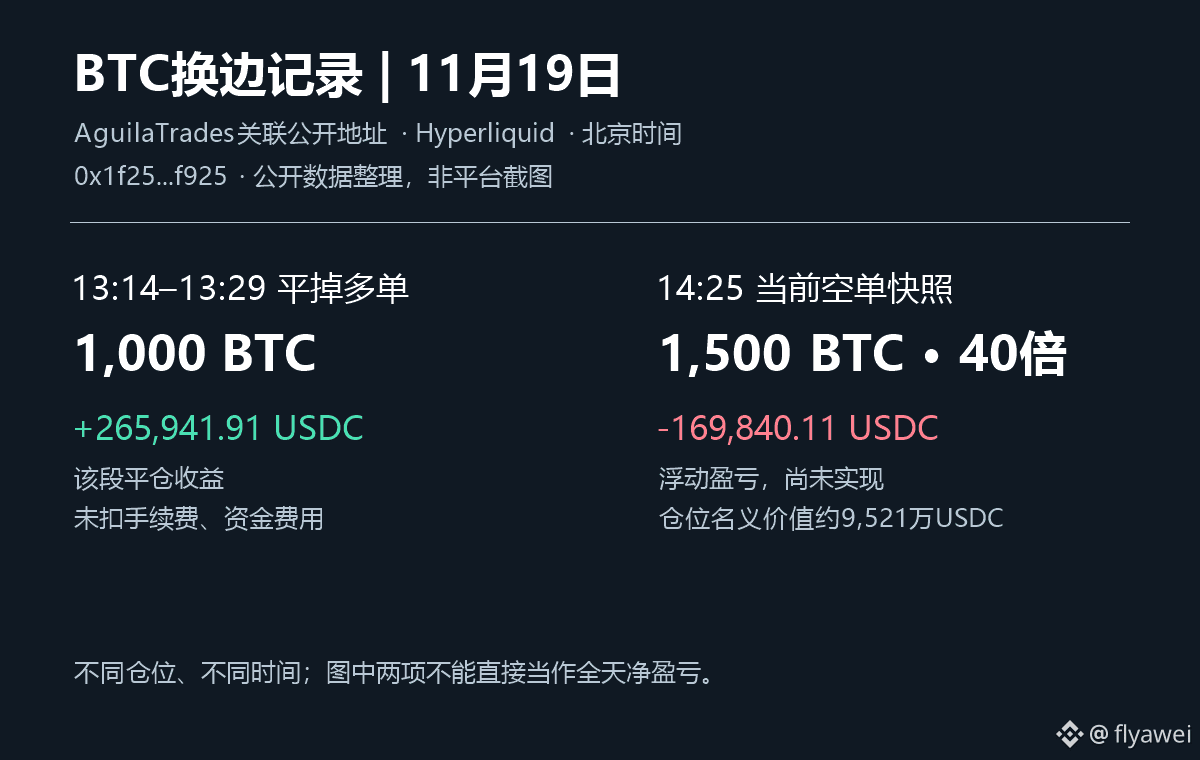
This afternoon, the associated public address on Hyperliquid closed a 1,000 BTC long position between 13:14 and 13:29, realizing a gross profit of about 266,000 USDC, before fees and funding costs.
By the 14:25 snapshot, the position had flipped to a 1,500 BTC short, with leverage set at 40x and an unrealized loss of about 170,000 USDC. The profit from the previous trade and the unrealized loss on the next one should be considered separately.
One trade can make money, and the next can still get hit. With this kind of trading, what worries me most is remembering only how much he just made, while missing that he’s already switched sides. Whales can turn around quickly; if you’re following an old screenshot, you may already be exposed to the risk of a completely different trade.
122
·
--
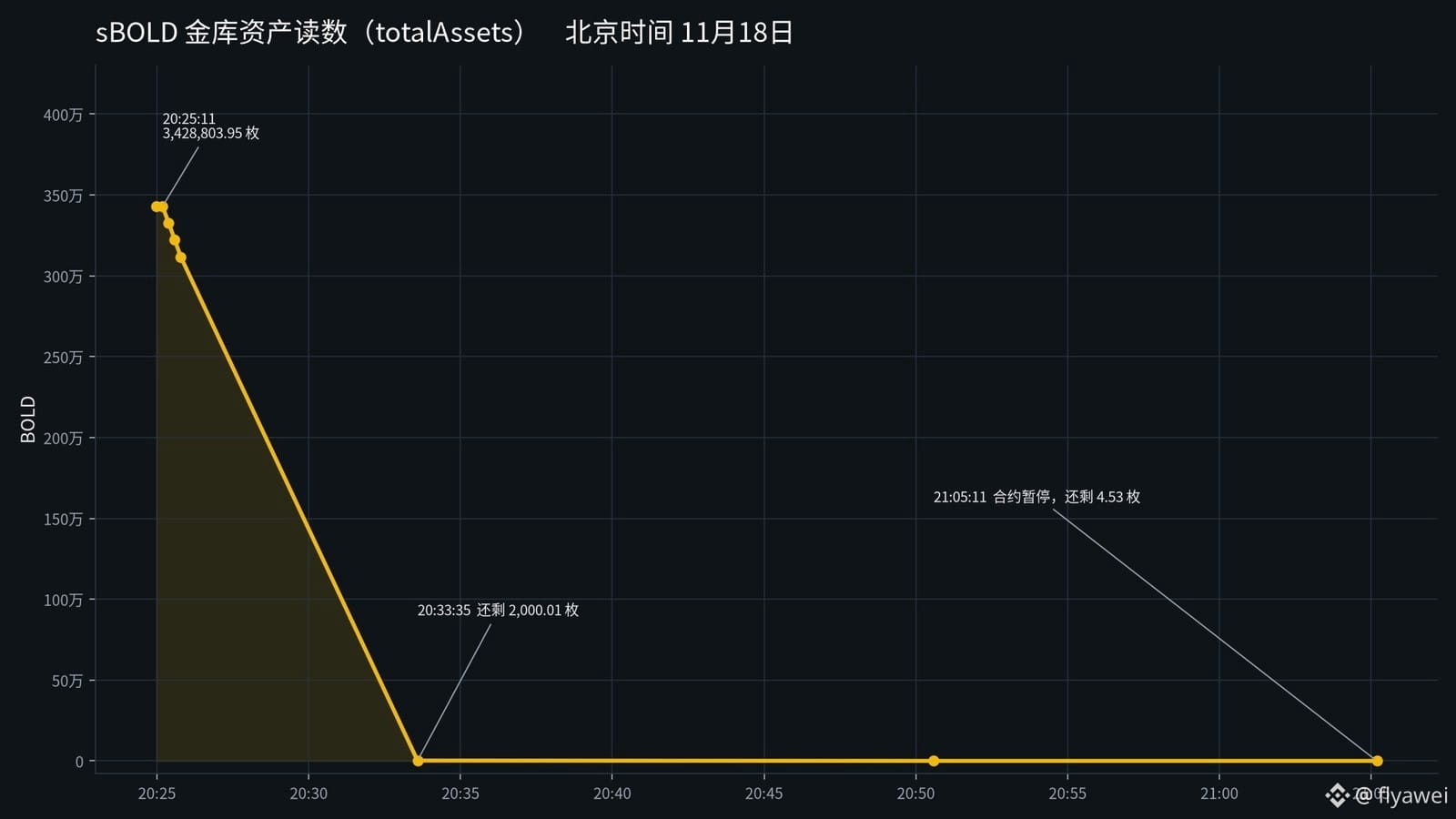
3.42 million withdrawn in 8 minutes; only 4.53 tokens remained when paused
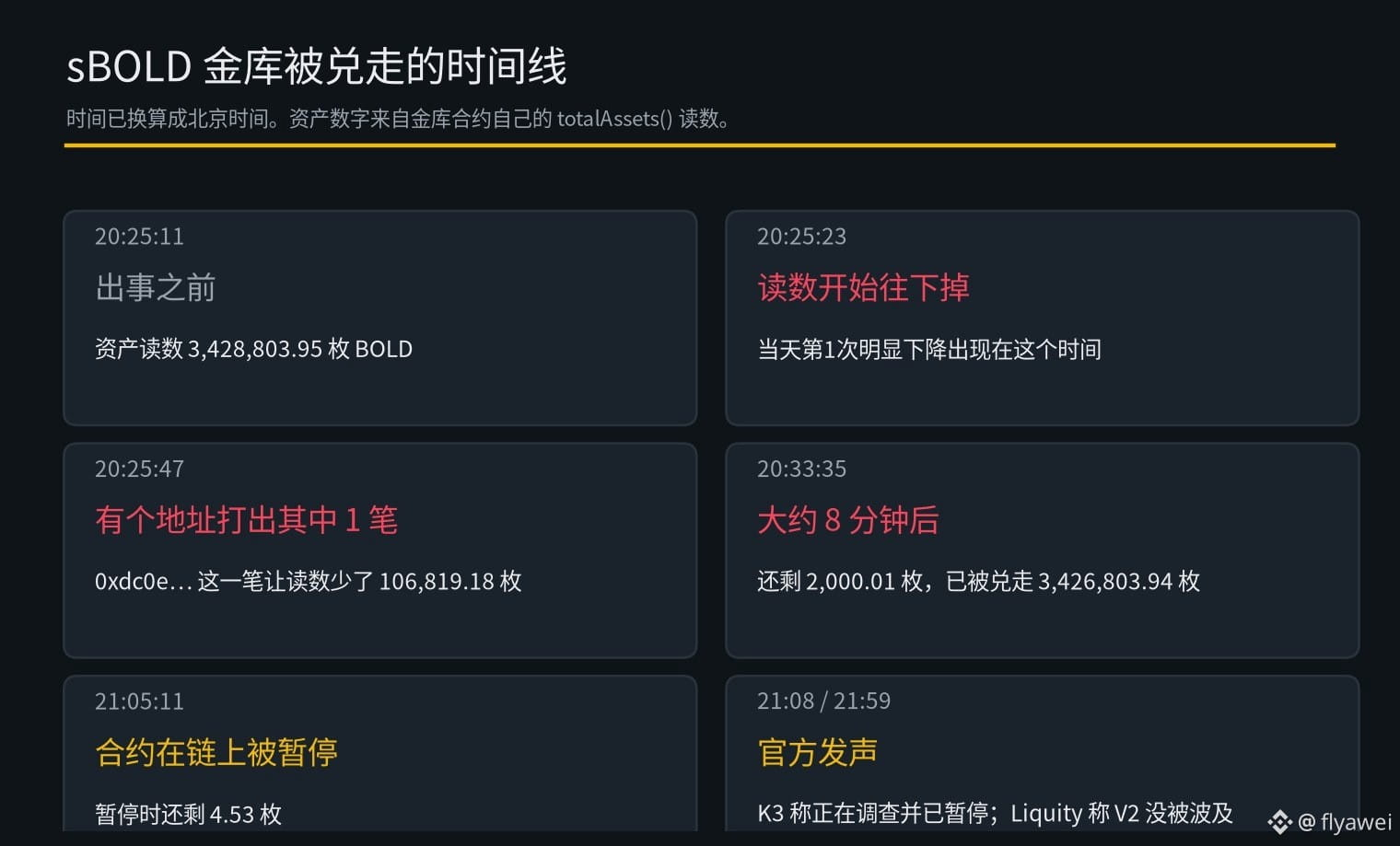
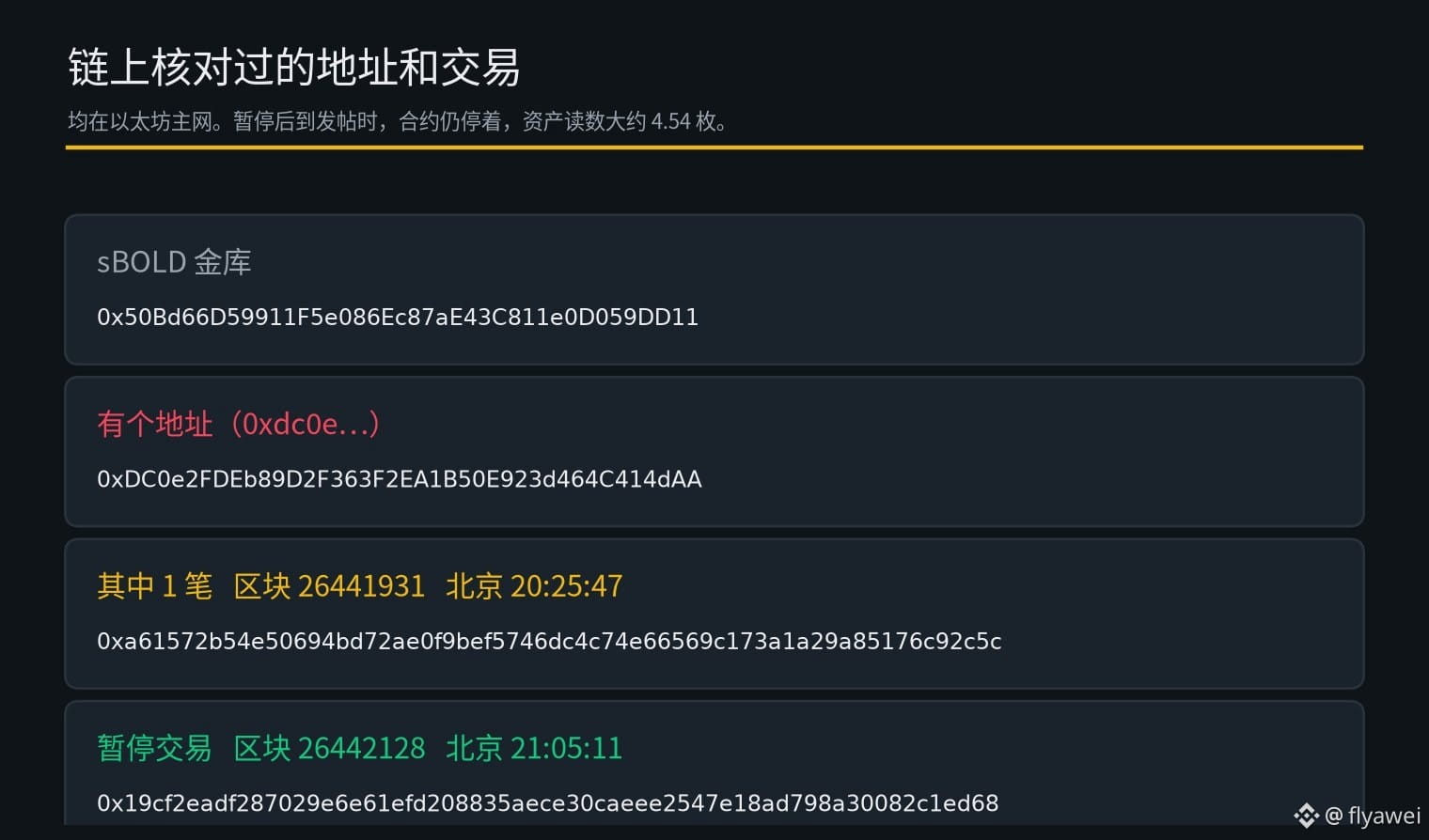
The sBOLD vault operated by K3 Capital began seeing deposits withdrawn at 20:25:23 Beijing time on November 18. Before the incident, the vault’s own asset balance showed 3,428,803.95 BOLD. By 20:33:35, only 2,000.01 remained—3,426,803.94 BOLD had been withdrawn in about eight minutes.
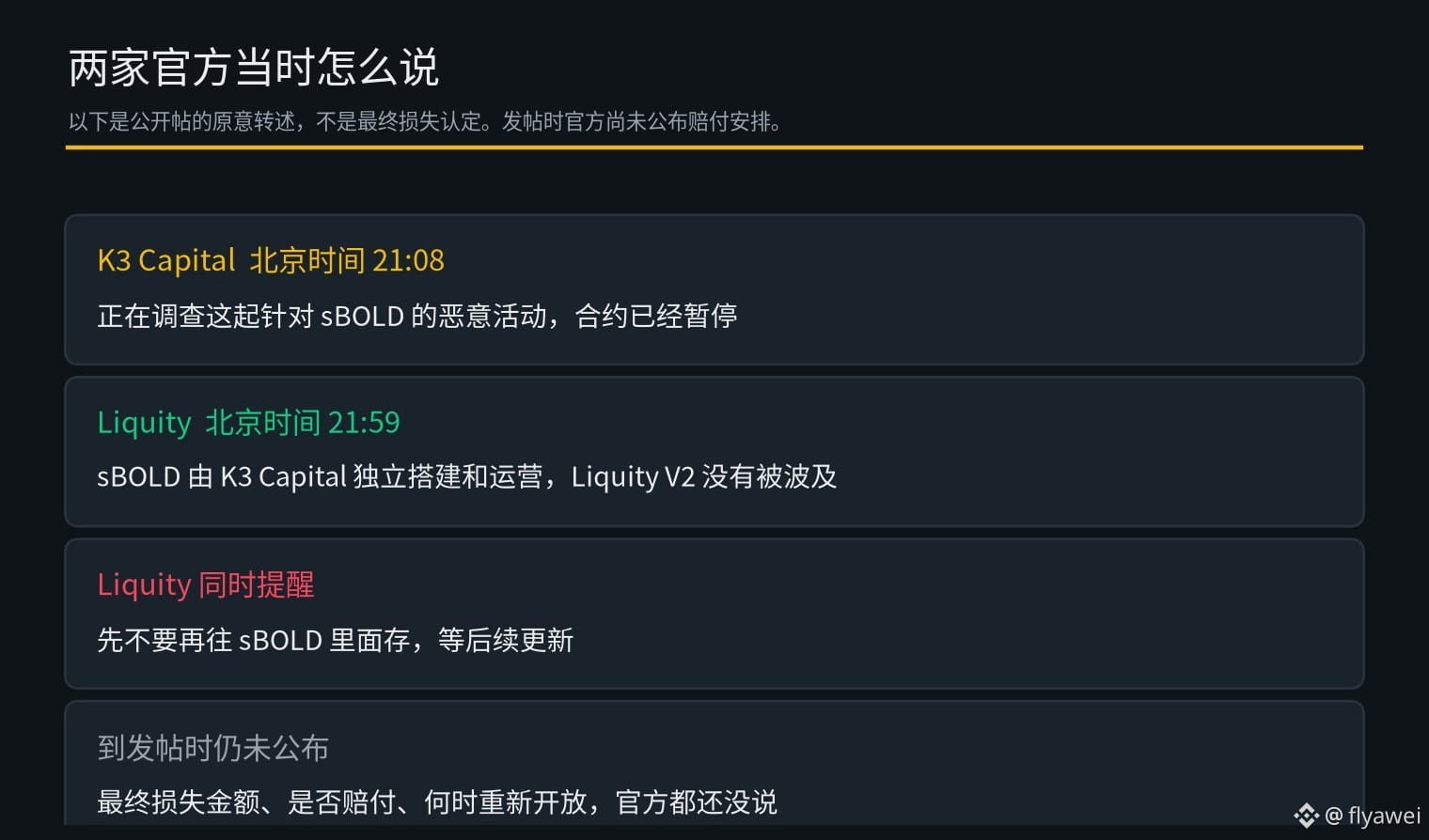
One address (0xdc0e…) made one of these withdrawals at 20:25:47. After that transaction, the vault’s balance had fallen by 106,819.18 BOLD. At 21:05:11, the contract was paused on-chain, with 4.53 BOLD remaining. K3 Capital said at 21:08 that it was investigating malicious activity targeting sBOLD and that the contract had been paused. Liquity later said at 21:59 that sBOLD is a vault independently built and operated by K3 Capital, advised users not to deposit any more funds into it for now, and added that Liquity V2 was unaffected.
The funds were withdrawn from the shares held by other vault depositors. The team has not yet announced the final loss amount or said whether compensation will be provided. At the time of posting, a fresh check showed that the contract was still paused and its asset balance was about 4.54 BOLD.
My take: With no official post-mortem yet, it’s not a good idea to put more money into this vault right now.
For beginners, I recommend observing more and trading less. If you buy crypto, only buy $BTC
1.6k
Log in to explore more content
Join global crypto users on Binance Square
⚡️ Get latest and useful information about crypto.
💬 Trusted by the world’s largest crypto exchange.
👍 Discover real insights from verified creators.
Email / Phone number
Trending Topics
IsAnthropic’s$1.5TMarketCapJustified?
13,603 views
109 Discussing
Anthropic Set to Open at $105 in Record Nasdaq Debut
Binance News
·12 Likes
·16.5k views
BTCRemainsUnderPressureAfterHawkishFOMCMinutes
266,602 views
2,145 Discussing
NvidiaBoardReportedlySplitOverHuang’sReturn
130,758 views
1,163 Discussing