

Fealty Cripto
2.4k Posts

Fealty Cripto
Report
Block User
O caminho até a riqueza absoluta! a verdadeira razão por qual vivemos. Esta perdido? não se preocupe vamos sair dessa juntos. space todos os dias às 15:30!

Creator Award Rising Star
Open Trade
High-Frequency Trader
3.6 Years
5 Following
11.9K+ Followers
5.9K+ Liked
1 Badges
Posts
Portfolio
All
Quotes
Videos
Live
PINNED
🚀 STARTING A NEW LONG-TERM EXPERIMENT.
Instead of trying to guess the market bottom, I’m going to do something much simpler:
buy every week.
I’m starting a new recurring investment plan directly via Binance, using weekly DCA.
My initial basket will be:
$BTC
$ETH
$SOL
$SPACEx
The rule is simple: consistency > trying to predict the market.
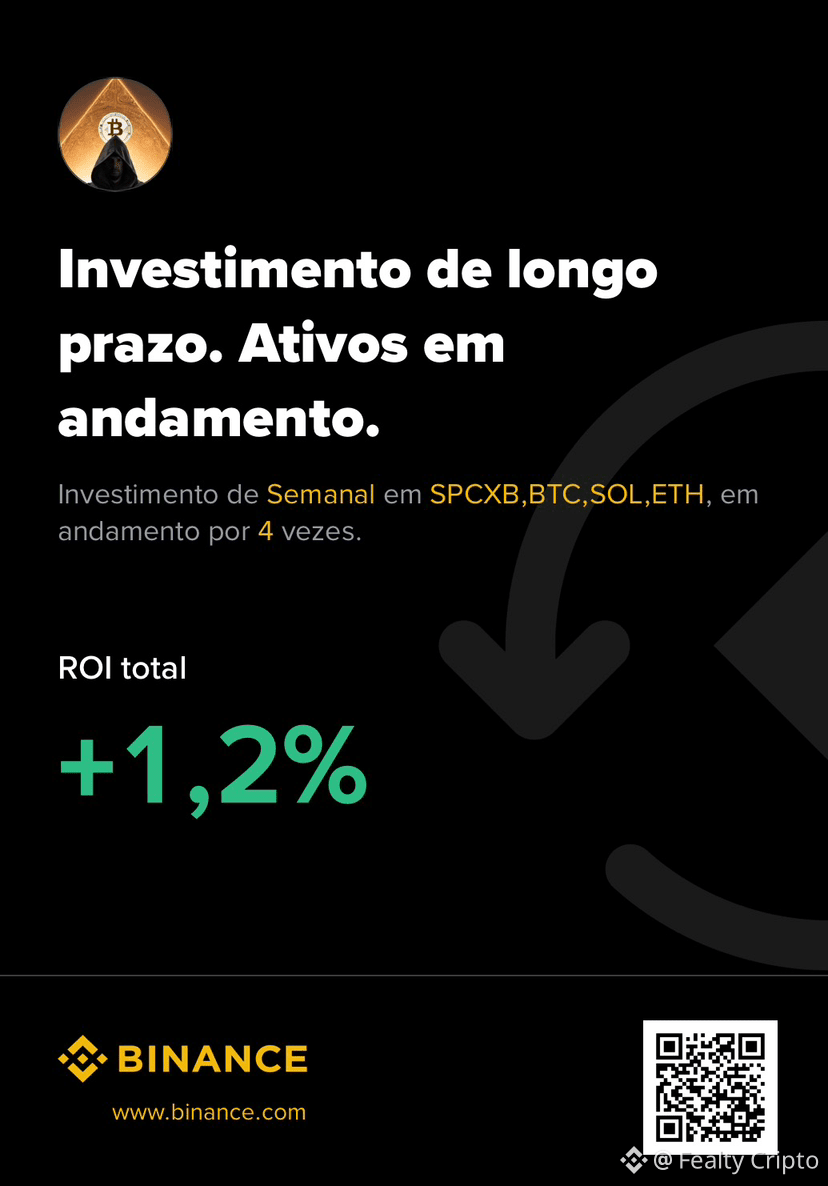
📊 From now on, every Monday I will publish an update of this wallet showing:
ROI:
Goal: long-term accumulation.
I want to turn this into a public experiment about what happens when discipline and time are put to work together.
Visit criotozion.xyz
🚀 STARTING A NEW LONG-TERM EXPERIMENT.
Instead of trying to guess the market bottom, I’m going to do something much simpler:
buy every week.
I’m starting a new recurring investment plan directly via Binance, using weekly DCA.
My initial basket will be:
$BTC
$ETH
$SOL
$SPACEx
The rule is simple: consistency > trying to predict the market.
📊 From now on, every Monday I will publish an update of this wallet showing:
ROI:
Goal: long-term accumulation.
I want to turn this into a public experiment about what happens when discipline and time are put to work together.
Visit criotozion.xyz
Instead of trying to guess the market bottom, I’m going to do something much simpler:
buy every week.
I’m starting a new recurring investment plan directly via Binance, using weekly DCA.
My initial basket will be:
$BTC
$ETH
$SOL
$SPACEx
The rule is simple: consistency > trying to predict the market.
📊 From now on, every Monday I will publish an update of this wallet showing:
ROI:
Goal: long-term accumulation.
I want to turn this into a public experiment about what happens when discipline and time are put to work together.
Visit criotozion.xyz
3
7
2.2k
PINNED
🚀 STARTING A NEW LONG-TERM EXPERIMENT.
Instead of trying to guess the bottom of the market, I’m going to do something much simpler:
buy every week.
I’m starting a new recurring investment plan directly through Binance, using weekly DCA.
My initial basket will be:
₿ $BTC
◈ $ETH
◎ $SOL
🚀 $SPCXB
The rule is simple: consistency > trying to predict the market.
📊 From now on, every Monday I’ll publish an update of this wallet showing:
• contribution made
• total amount invested
• accumulated quantity
• average price
• wallet ROI
• performance of each asset
• mistakes, wins, and strategy changes
And most importantly: I’ll also show when I’m in the red.
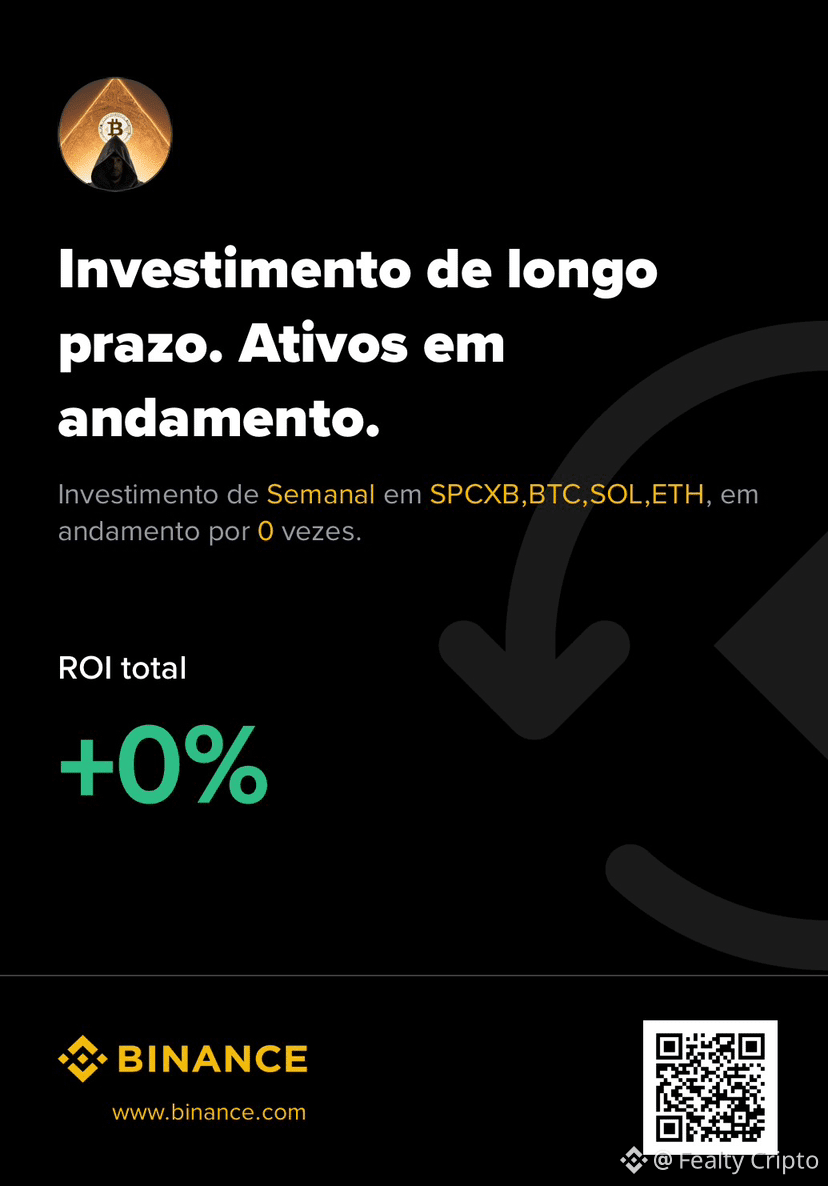
Today we’re officially in WEEK 0:
Executions: 0
ROI: +0%
Goal: long-term accumulation.
I want to turn this into a public experiment about what happens when discipline and time are made to work together.
Now I want to know:
If you had to choose only 3 of these 4 assets to do DCA with over the next few years, which ones would you pick?
#DCA #bitcoin #AutoInvest #BinanceSquare #Investment
🚀 STARTING A NEW LONG-TERM EXPERIMENT.
Instead of trying to guess the bottom of the market, I’m going to do something much simpler:
buy every week.
I’m starting a new recurring investment plan directly through Binance, using weekly DCA.
My initial basket will be:
₿ $BTC
◈ $ETH
◎ $SOL
🚀 $SPCXB
The rule is simple: consistency > trying to predict the market.
📊 From now on, every Monday I’ll publish an update of this wallet showing:
• contribution made
• total amount invested
• accumulated quantity
• average price
• wallet ROI
• performance of each asset
• mistakes, wins, and strategy changes
And most importantly: I’ll also show when I’m in the red.
Today we’re officially in WEEK 0:
Executions: 0
ROI: +0%
Goal: long-term accumulation.
I want to turn this into a public experiment about what happens when discipline and time are made to work together.
Now I want to know:
If you had to choose only 3 of these 4 assets to do DCA with over the next few years, which ones would you pick?
#DCA #bitcoin #AutoInvest #BinanceSquare #Investment
Instead of trying to guess the bottom of the market, I’m going to do something much simpler:
buy every week.
I’m starting a new recurring investment plan directly through Binance, using weekly DCA.
My initial basket will be:
₿ $BTC
◈ $ETH
◎ $SOL
🚀 $SPCXB
The rule is simple: consistency > trying to predict the market.
📊 From now on, every Monday I’ll publish an update of this wallet showing:
• contribution made
• total amount invested
• accumulated quantity
• average price
• wallet ROI
• performance of each asset
• mistakes, wins, and strategy changes
And most importantly: I’ll also show when I’m in the red.
Today we’re officially in WEEK 0:
Executions: 0
ROI: +0%
Goal: long-term accumulation.
I want to turn this into a public experiment about what happens when discipline and time are made to work together.
Now I want to know:
If you had to choose only 3 of these 4 assets to do DCA with over the next few years, which ones would you pick?
#DCA #bitcoin #AutoInvest #BinanceSquare #Investment
3
4
934
·
--
Bullish
Partly True
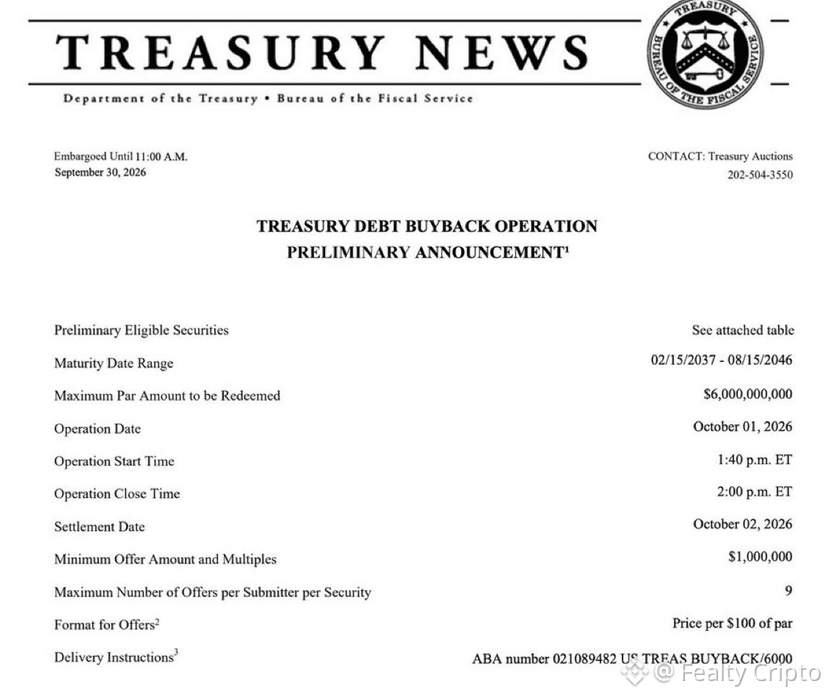
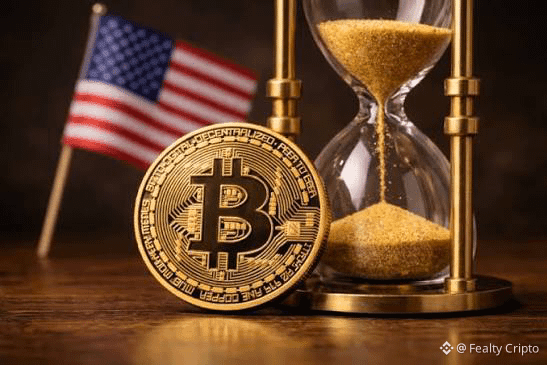
URGENT: 🇺🇸 US Treasury Department will buy back up to US$ 6 billion in long-term debt AGAIN 👀
Buy Bitcoin 🚀
{spot}(BTCUSDT)
URGENT: 🇺🇸 US Treasury Department will buy back up to US$ 6 billion in long-term debt AGAIN 👀
Buy Bitcoin 🚀
Buy Bitcoin 🚀
BTC+1.21%
TLTETF+0.34%
3
675

Article
DeFi Operational Alert — MetaMask Responds to Security IncidentMetaMask reported an incident still under investigation involving part of its infrastructure. As a precautionary measure, it began withdrawing affected validators from its staking operations. The company states it did not identify an immediate threat to wallets, that staking is non-custodial, and that it does not control customers’ withdrawal keys.
The removal of the validators would already have been initiated, with completion expected by 7/10, although the full withdrawal may take longer.
Why it matters: this is widely used infrastructure in the Ethereum ecosystem. The preventive exit of validators shows a concrete operational impact, but there is still no public evidence of compromise of seeds, private keys, the wallet extension, or users’ funds.
DeFi Operational Alert — MetaMask Responds to Security Incident
MetaMask reported an incident still under investigation involving part of its infrastructure. As a precautionary measure, it began withdrawing affected validators from its staking operations. The company states it did not identify an immediate threat to wallets, that staking is non-custodial, and that it does not control customers’ withdrawal keys.
The removal of the validators would already have been initiated, with completion expected by 7/10, although the full withdrawal may take longer.
Why it matters: this is widely used infrastructure in the Ethereum ecosystem. The preventive exit of validators shows a concrete operational impact, but there is still no public evidence of compromise of seeds, private keys, the wallet extension, or users’ funds.
The removal of the validators would already have been initiated, with completion expected by 7/10, although the full withdrawal may take longer.
Why it matters: this is widely used infrastructure in the Ethereum ecosystem. The preventive exit of validators shows a concrete operational impact, but there is still no public evidence of compromise of seeds, private keys, the wallet extension, or users’ funds.
4
479
·
--
Bullish
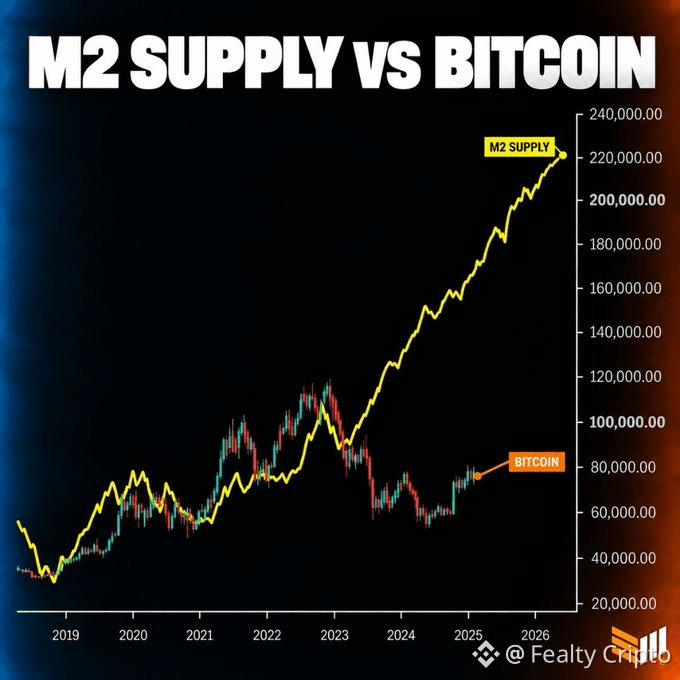
ONLY IN: The monetary supply M2 reached a peak.
That’s why we use Bitcoin. Get properly prepared 🚀
$BTC
{spot}(BTCUSDT)
ONLY IN: The monetary supply M2 reached a peak.
That’s why we use Bitcoin. Get properly prepared 🚀
$BTC
That’s why we use Bitcoin. Get properly prepared 🚀
$BTC
2
475
·
--
Bullish
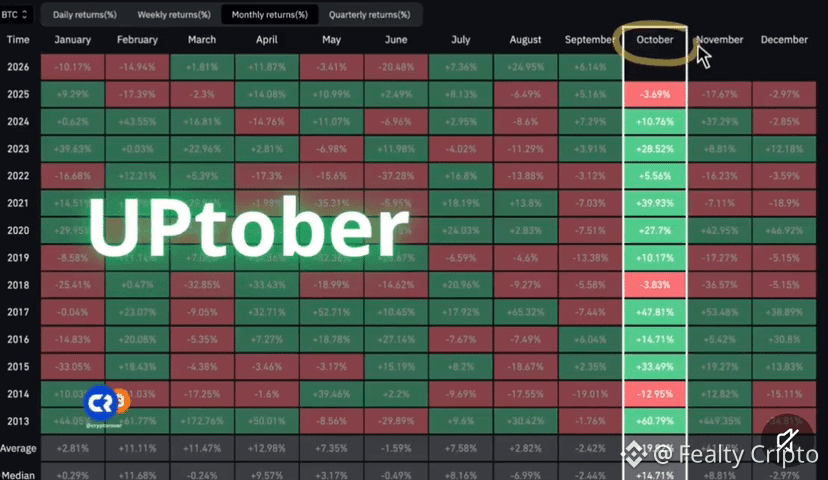
BITCOIN UPTEMBER STARTS TOMORROW!
Average return: 🟢 +14.71%.
Will history repeat itself?
$BTC #uptuber
{spot}(BTCUSDT)
BITCOIN UPTEMBER STARTS TOMORROW!
Average return: 🟢 +14.71%.
Will history repeat itself?
$BTC #uptuber
Average return: 🟢 +14.71%.
Will history repeat itself?
$BTC #uptuber

2
133
Partly True
Article
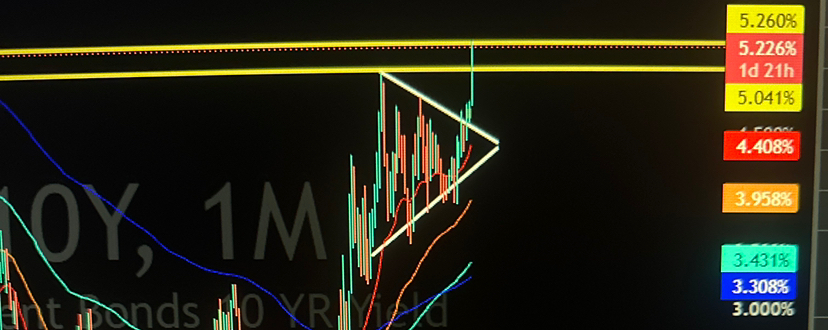
Relevant update — PCE eases the Fed, but not long-term ratesNew development on 9/30: the market began attributing about a 65% chance to keeping interest rates steady in October, versus 55% before the PCE. The 2-year Treasury yield fell to 4.868%, but the 10-year yield rose to 5.272% and the 30-year yield to 5.6298%. In other words: expectations for immediate tightening eased, while the cost of long-term capital worsened.
Reuters associates this long-standing pressure with fiscal deterioration, increased debt issuance, and energy inflation linked to the conflict with Iran; Brent was up toward $103.71.
Relevant update — PCE eases the Fed, but not long-term rates
New development on 9/30: the market began attributing about a 65% chance to keeping interest rates steady in October, versus 55% before the PCE. The 2-year Treasury yield fell to 4.868%, but the 10-year yield rose to 5.272% and the 30-year yield to 5.6298%. In other words: expectations for immediate tightening eased, while the cost of long-term capital worsened.
Reuters associates this long-standing pressure with fiscal deterioration, increased debt issuance, and energy inflation linked to the conflict with Iran; Brent was up toward $103.71.
Reuters associates this long-standing pressure with fiscal deterioration, increased debt issuance, and energy inflation linked to the conflict with Iran; Brent was up toward $103.71.
2
543
Verified
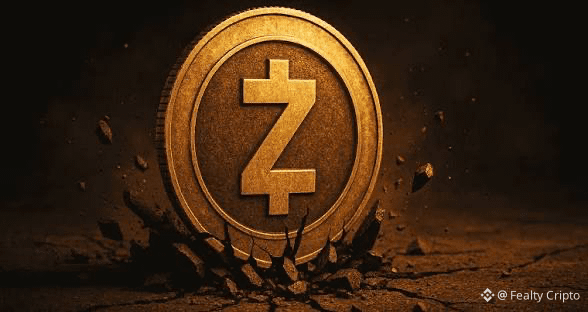
$ZEC is one of the biggest narratives of this month.
Now a development has appeared that I consider more interesting than another green candle.
Gemini changed the software it uses to track the Zcash network.
The old system took close to ONE DAY to sync the blockchain.
The new one took a little over 6 hours.
Why does this matter?
Because Zcash is preparing for NU7.
If the upgrade is activated as planned, the time between blocks should drop from:
75 seconds → 25 seconds.
That means:
the network will have to process new blocks 3x more often.
And this is where the narrative starts to get interesting to me.
Privacy brought attention.
Price brought speculation.
But now the infrastructure needs to prove it can handle the network’s evolution.
And there’s a detail that holds back the excitement:
Gemini has not YET published a test showing this new system running at the NU7 pace of 25 seconds.
So we have:
real improvement ✅
important upgrade on the way ✅
definitive test still pending ⚠️
$ZEC #zcash #Privacy #crypto
What sustains a narrative for longer:
price rising…
or infrastructure getting better after attention arrives?
{spot}(ZECUSDT)
$ZEC is one of the biggest narratives of this month.
Now a development has appeared that I consider more interesting than another green candle.
Gemini changed the software it uses to track the Zcash network.
The old system took close to ONE DAY to sync the blockchain.
The new one took a little over 6 hours.
Why does this matter?
Because Zcash is preparing for NU7.
If the upgrade is activated as planned, the time between blocks should drop from:
75 seconds → 25 seconds.
That means:
the network will have to process new blocks 3x more often.
And this is where the narrative starts to get interesting to me.
Privacy brought attention.
Price brought speculation.
But now the infrastructure needs to prove it can handle the network’s evolution.
And there’s a detail that holds back the excitement:
Gemini has not YET published a test showing this new system running at the NU7 pace of 25 seconds.
So we have:
real improvement ✅
important upgrade on the way ✅
definitive test still pending ⚠️
$ZEC #zcash #Privacy #crypto
What sustains a narrative for longer:
price rising…
or infrastructure getting better after attention arrives?
Now a development has appeared that I consider more interesting than another green candle.
Gemini changed the software it uses to track the Zcash network.
The old system took close to ONE DAY to sync the blockchain.
The new one took a little over 6 hours.
Why does this matter?
Because Zcash is preparing for NU7.
If the upgrade is activated as planned, the time between blocks should drop from:
75 seconds → 25 seconds.
That means:
the network will have to process new blocks 3x more often.
And this is where the narrative starts to get interesting to me.
Privacy brought attention.
Price brought speculation.
But now the infrastructure needs to prove it can handle the network’s evolution.
And there’s a detail that holds back the excitement:
Gemini has not YET published a test showing this new system running at the NU7 pace of 25 seconds.
So we have:
real improvement ✅
important upgrade on the way ✅
definitive test still pending ⚠️
$ZEC #zcash #Privacy #crypto
What sustains a narrative for longer:
price rising…
or infrastructure getting better after attention arrives?
3
708
Verified
“US$4 TRILLION are going to the XRP Ledger.”
You’ll probably see some version of this headline today.
But that’s not what happened.
And the REAL story is interesting enough on its own.
CSD BR, a company authorized in the Brazilian financial market, began recording on the XRP Ledger a representation of interests in selected BTG Pactual funds.
And here’s the huge number:
the CSD BR infrastructure holds more than R$22 TRILLION in recorded assets.
Approximately US$4 trillion.
But pay attention:
those US$4 trillion were NOT tokenized on the XRPL.
The first phase starts with selected BTG funds.
The official record remains the CSD BR system.
The XRP Ledger works as a second layer for recording and verification.
To me, that’s exactly why the news is interesting.
It’s not a promise that “one day banks will use blockchain.”
It’s public blockchain being tested within a regulated financial infrastructure with real assets.
And if this phase works, the next step being studied is even bigger:
issuance and trading of assets directly on the XRPL, including instruments linked to the real estate market and agribusiness.
Now comes the question I think is the most important:
is this bullish for the XRPL ECOSYSTEM.
But how much of this value will the token $XRP actually capture?
That answer still needs to show up.
$XRP #XRPL #RWA #Tokenization #crypto
Do you think the next big wave of blockchain adoption will come from DeFi…
or precisely from traditional financial markets?
{spot}(XRPUSDT)
“US$4 TRILLION are going to the XRP Ledger.”
You’ll probably see some version of this headline today.
But that’s not what happened.
And the REAL story is interesting enough on its own.
CSD BR, a company authorized in the Brazilian financial market, began recording on the XRP Ledger a representation of interests in selected BTG Pactual funds.
And here’s the huge number:
the CSD BR infrastructure holds more than R$22 TRILLION in recorded assets.
Approximately US$4 trillion.
But pay attention:
those US$4 trillion were NOT tokenized on the XRPL.
The first phase starts with selected BTG funds.
The official record remains the CSD BR system.
The XRP Ledger works as a second layer for recording and verification.
To me, that’s exactly why the news is interesting.
It’s not a promise that “one day banks will use blockchain.”
It’s public blockchain being tested within a regulated financial infrastructure with real assets.
And if this phase works, the next step being studied is even bigger:
issuance and trading of assets directly on the XRPL, including instruments linked to the real estate market and agribusiness.
Now comes the question I think is the most important:
is this bullish for the XRPL ECOSYSTEM.
But how much of this value will the token $XRP actually capture?
That answer still needs to show up.
$XRP #XRPL #RWA #Tokenization #crypto
Do you think the next big wave of blockchain adoption will come from DeFi…
or precisely from traditional financial markets?
You’ll probably see some version of this headline today.
But that’s not what happened.
And the REAL story is interesting enough on its own.
CSD BR, a company authorized in the Brazilian financial market, began recording on the XRP Ledger a representation of interests in selected BTG Pactual funds.
And here’s the huge number:
the CSD BR infrastructure holds more than R$22 TRILLION in recorded assets.
Approximately US$4 trillion.
But pay attention:
those US$4 trillion were NOT tokenized on the XRPL.
The first phase starts with selected BTG funds.
The official record remains the CSD BR system.
The XRP Ledger works as a second layer for recording and verification.
To me, that’s exactly why the news is interesting.
It’s not a promise that “one day banks will use blockchain.”
It’s public blockchain being tested within a regulated financial infrastructure with real assets.
And if this phase works, the next step being studied is even bigger:
issuance and trading of assets directly on the XRPL, including instruments linked to the real estate market and agribusiness.
Now comes the question I think is the most important:
is this bullish for the XRPL ECOSYSTEM.
But how much of this value will the token $XRP actually capture?
That answer still needs to show up.
$XRP #XRPL #RWA #Tokenization #crypto
Do you think the next big wave of blockchain adoption will come from DeFi…
or precisely from traditional financial markets?

4
5.4k
Bitcoin has a Bull Score of 90/100.
It looks extremely bullish.
But I went and looked at what’s underneath that number…
And I found something that would make me pay MORE attention, not less.
Over the last 30 days, the estimated spot demand has decreased by about 170k BTC.
And the growth in speculative demand in the futures dropped by roughly 90% in just 15 days.
At the same time:
$BTC came out of US$87.4K and went back to around US$83K.
And yesterday, the ETFs still received +US$66.2 million in net inflows.
So:
ETF is still positive ✅
macro structure is still bullish ✅
but the strength of new buyers is decreasing ⚠️
This is exactly the kind of scenario where I don’t like looking at a single indicator and saying:
“buy”.
At Zion Smart DCA, I want to know whether demand RETURNS before interpreting a bullish score as a guarantee of continuation.
And there’s another test coming:
the market still needs to digest the U.S. PCE, and long-term American interest rates are at levels we haven’t seen in years.
$BTC #bitcoin #crypto #etf
For you, is BTC holding US$82K–83K while demand cools a sign of strength…
or a warning that the market needs to breathe?
{spot}(BTCUSDT)
Bitcoin has a Bull Score of 90/100.
It looks extremely bullish.
But I went and looked at what’s underneath that number…
And I found something that would make me pay MORE attention, not less.
Over the last 30 days, the estimated spot demand has decreased by about 170k BTC.
And the growth in speculative demand in the futures dropped by roughly 90% in just 15 days.
At the same time:
$BTC came out of US$87.4K and went back to around US$83K.
And yesterday, the ETFs still received +US$66.2 million in net inflows.
So:
ETF is still positive ✅
macro structure is still bullish ✅
but the strength of new buyers is decreasing ⚠️
This is exactly the kind of scenario where I don’t like looking at a single indicator and saying:
“buy”.
At Zion Smart DCA, I want to know whether demand RETURNS before interpreting a bullish score as a guarantee of continuation.
And there’s another test coming:
the market still needs to digest the U.S. PCE, and long-term American interest rates are at levels we haven’t seen in years.
$BTC #bitcoin #crypto #etf
For you, is BTC holding US$82K–83K while demand cools a sign of strength…
or a warning that the market needs to breathe?
It looks extremely bullish.
But I went and looked at what’s underneath that number…
And I found something that would make me pay MORE attention, not less.
Over the last 30 days, the estimated spot demand has decreased by about 170k BTC.
And the growth in speculative demand in the futures dropped by roughly 90% in just 15 days.
At the same time:
$BTC came out of US$87.4K and went back to around US$83K.
And yesterday, the ETFs still received +US$66.2 million in net inflows.
So:
ETF is still positive ✅
macro structure is still bullish ✅
but the strength of new buyers is decreasing ⚠️
This is exactly the kind of scenario where I don’t like looking at a single indicator and saying:
“buy”.
At Zion Smart DCA, I want to know whether demand RETURNS before interpreting a bullish score as a guarantee of continuation.
And there’s another test coming:
the market still needs to digest the U.S. PCE, and long-term American interest rates are at levels we haven’t seen in years.
$BTC #bitcoin #crypto #etf
For you, is BTC holding US$82K–83K while demand cools a sign of strength…
or a warning that the market needs to breathe?
1
5
2.4k
·
--
Bullish
Partly True
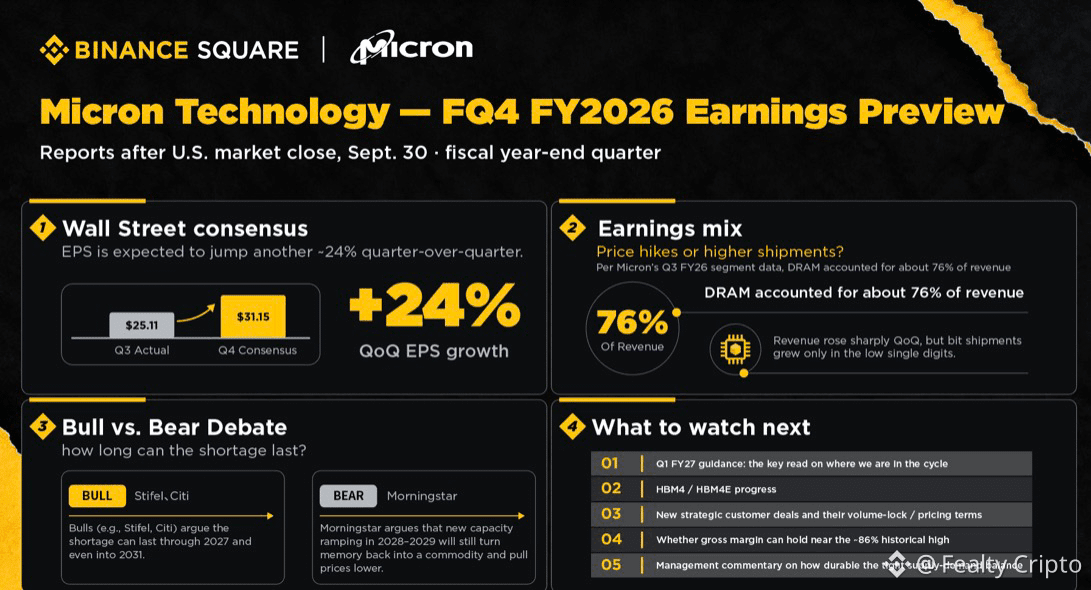
Everyone is looking at Micron’s result tomorrow.
But I think the most important number is NOT the revenue.
It’s the margin.
Even $MUB itself projected approximately:
US$50 billion in revenue
≈86% gross margin
≈US$31 earnings per share
That’s absurd for a company that for a long time has been treated as a “cyclical” memory manufacturer.
And here’s why:
AI doesn’t just need GPUs.
It needs A LOT of memory.
HBM has become a key component to feed AI chips with data fast enough.
So, for me, tomorrow’s result will answer a bigger question than:
“Did Micron beat or miss the consensus?”
The question is:
can this memory supercycle really continue?
If Micron delivers margins near or above 86% and still shows strong demand for HBM, the thesis that AI is structurally changing the memory market gains momentum.
But there’s a risk I wouldn’t ignore:
$MUB has already risen a lot, and expectations are enormous too.
When everyone expects an outstanding result, sometimes “excellent” just isn’t enough anymore.
What I want to see above all:
margin
guidance
demand for HBM
and how much the company plans to invest to increase capacity.
Because strong results count the past.
Guidance tells you what the company is seeing ahead.
$MUB #EarningsSeason #AIStocks #MicronSharesRise10
For you, is the memory supercycle still just beginning… or has the market already priced in too much expectation?
{spot}(MUBUSDT)
Everyone is looking at Micron’s result tomorrow.
But I think the most important number is NOT the revenue.
It’s the margin.
Even $MUB itself projected approximately:
US$50 billion in revenue
≈86% gross margin
≈US$31 earnings per share
That’s absurd for a company that for a long time has been treated as a “cyclical” memory manufacturer.
And here’s why:
AI doesn’t just need GPUs.
It needs A LOT of memory.
HBM has become a key component to feed AI chips with data fast enough.
So, for me, tomorrow’s result will answer a bigger question than:
“Did Micron beat or miss the consensus?”
The question is:
can this memory supercycle really continue?
If Micron delivers margins near or above 86% and still shows strong demand for HBM, the thesis that AI is structurally changing the memory market gains momentum.
But there’s a risk I wouldn’t ignore:
$MUB has already risen a lot, and expectations are enormous too.
When everyone expects an outstanding result, sometimes “excellent” just isn’t enough anymore.
What I want to see above all:
margin
guidance
demand for HBM
and how much the company plans to invest to increase capacity.
Because strong results count the past.
Guidance tells you what the company is seeing ahead.
$MUB #EarningsSeason #AIStocks #MicronSharesRise10
For you, is the memory supercycle still just beginning… or has the market already priced in too much expectation?
But I think the most important number is NOT the revenue.
It’s the margin.
Even $MUB itself projected approximately:
US$50 billion in revenue
≈86% gross margin
≈US$31 earnings per share
That’s absurd for a company that for a long time has been treated as a “cyclical” memory manufacturer.
And here’s why:
AI doesn’t just need GPUs.
It needs A LOT of memory.
HBM has become a key component to feed AI chips with data fast enough.
So, for me, tomorrow’s result will answer a bigger question than:
“Did Micron beat or miss the consensus?”
The question is:
can this memory supercycle really continue?
If Micron delivers margins near or above 86% and still shows strong demand for HBM, the thesis that AI is structurally changing the memory market gains momentum.
But there’s a risk I wouldn’t ignore:
$MUB has already risen a lot, and expectations are enormous too.
When everyone expects an outstanding result, sometimes “excellent” just isn’t enough anymore.
What I want to see above all:
margin
guidance
demand for HBM
and how much the company plans to invest to increase capacity.
Because strong results count the past.
Guidance tells you what the company is seeing ahead.
$MUB #EarningsSeason #AIStocks #MicronSharesRise10
For you, is the memory supercycle still just beginning… or has the market already priced in too much expectation?
3
2.3k
Verified
$AAVE is rising by about 13%.
But a single candle isn’t what I’m interested in.
There are TWO stories happening at the same time.
The first:
Aave V4 has started to accept tokenized versions of stocks like Apple, Nvidia, Tesla, Microsoft, Amazon, Meta, and Alphabet as collateral for loans in USDC.
This is DeFi starting to talk directly with assets from the traditional market.
The second:
Stani Kulechov raised the possibility of adding an AAVE burn to the next Aavenomics.
And here I’d make an important distinction.
TOKENIZED STOCKS:
are already working on Aave V4.
AAVE BURN:
is still a possibility under discussion.
This difference matters.
Because the market tends to price an idea before it even becomes reality.
To me, AAVE became interesting specifically because it has:
real product +
RWA narrative +
possible tokenomics change.
But after +13%, this is still a narrative-driven analysis.
Not permission to chase price.
$AAVE #AAVE #RWA
What do you think is more important for AAVE:
protocol growth or a possible reduction in token supply?
{spot}(AAVEUSDT)
$AAVE is rising by about 13%.
But a single candle isn’t what I’m interested in.
There are TWO stories happening at the same time.
The first:
Aave V4 has started to accept tokenized versions of stocks like Apple, Nvidia, Tesla, Microsoft, Amazon, Meta, and Alphabet as collateral for loans in USDC.
This is DeFi starting to talk directly with assets from the traditional market.
The second:
Stani Kulechov raised the possibility of adding an AAVE burn to the next Aavenomics.
And here I’d make an important distinction.
TOKENIZED STOCKS:
are already working on Aave V4.
AAVE BURN:
is still a possibility under discussion.
This difference matters.
Because the market tends to price an idea before it even becomes reality.
To me, AAVE became interesting specifically because it has:
real product +
RWA narrative +
possible tokenomics change.
But after +13%, this is still a narrative-driven analysis.
Not permission to chase price.
$AAVE #AAVE #RWA
What do you think is more important for AAVE:
protocol growth or a possible reduction in token supply?
But a single candle isn’t what I’m interested in.
There are TWO stories happening at the same time.
The first:
Aave V4 has started to accept tokenized versions of stocks like Apple, Nvidia, Tesla, Microsoft, Amazon, Meta, and Alphabet as collateral for loans in USDC.
This is DeFi starting to talk directly with assets from the traditional market.
The second:
Stani Kulechov raised the possibility of adding an AAVE burn to the next Aavenomics.
And here I’d make an important distinction.
TOKENIZED STOCKS:
are already working on Aave V4.
AAVE BURN:
is still a possibility under discussion.
This difference matters.
Because the market tends to price an idea before it even becomes reality.
To me, AAVE became interesting specifically because it has:
real product +
RWA narrative +
possible tokenomics change.
But after +13%, this is still a narrative-driven analysis.
Not permission to chase price.
$AAVE #AAVE #RWA
What do you think is more important for AAVE:
protocol growth or a possible reduction in token supply?
5
2.8k
Bitcoin is up again to US$84K.
But the data that caught my attention the most today wasn’t the price.
It was this:
US$31 million.
That’s roughly what went into yesterday’s spot Bitcoin ETFs.
Now compare:
21/09: +US$999M
22/09: +US$714.7M
23/09: +US$346.9M
24/09: +US$190.7M
25/09: +US$134.5M
28/09: ~+US$31M
The flow remains positive.
But the SPEED of that flow has dropped violently.
And at the same time, Bitcoin is managing to stay near US$84K even with U.S. interest rates above 5.2%.
For me, there’s now a much more interesting question than:
“Will BTC go up?”
The question is:
who is propping up the price while that ETF buyer loses momentum?
Tomorrow, the U.S. PCE will be released.
At Z Smart DCA, I’d rather watch how price, flow, and macro respond together before turning any candle into confirmation.
$BTC #bitcoin #crypto #etf
And you?
BTC holding US$84K with ETF flows slowing down—does that look like strength… or a warning?
{spot}(BTCUSDT)
Bitcoin is up again to US$84K.
But the data that caught my attention the most today wasn’t the price.
It was this:
US$31 million.
That’s roughly what went into yesterday’s spot Bitcoin ETFs.
Now compare:
21/09: +US$999M
22/09: +US$714.7M
23/09: +US$346.9M
24/09: +US$190.7M
25/09: +US$134.5M
28/09: ~+US$31M
The flow remains positive.
But the SPEED of that flow has dropped violently.
And at the same time, Bitcoin is managing to stay near US$84K even with U.S. interest rates above 5.2%.
For me, there’s now a much more interesting question than:
“Will BTC go up?”
The question is:
who is propping up the price while that ETF buyer loses momentum?
Tomorrow, the U.S. PCE will be released.
At Z Smart DCA, I’d rather watch how price, flow, and macro respond together before turning any candle into confirmation.
$BTC #bitcoin #crypto #etf
And you?
BTC holding US$84K with ETF flows slowing down—does that look like strength… or a warning?
But the data that caught my attention the most today wasn’t the price.
It was this:
US$31 million.
That’s roughly what went into yesterday’s spot Bitcoin ETFs.
Now compare:
21/09: +US$999M
22/09: +US$714.7M
23/09: +US$346.9M
24/09: +US$190.7M
25/09: +US$134.5M
28/09: ~+US$31M
The flow remains positive.
But the SPEED of that flow has dropped violently.
And at the same time, Bitcoin is managing to stay near US$84K even with U.S. interest rates above 5.2%.
For me, there’s now a much more interesting question than:
“Will BTC go up?”
The question is:
who is propping up the price while that ETF buyer loses momentum?
Tomorrow, the U.S. PCE will be released.
At Z Smart DCA, I’d rather watch how price, flow, and macro respond together before turning any candle into confirmation.
$BTC #bitcoin #crypto #etf
And you?
BTC holding US$84K with ETF flows slowing down—does that look like strength… or a warning?
5
5
7k
Article
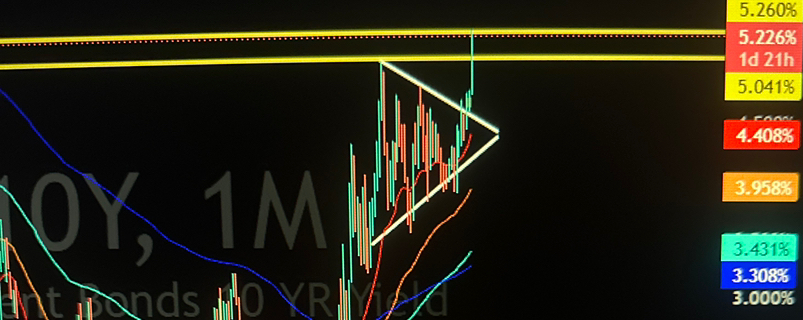
Macro Alert — U.S. long-term yields hit two-decade highsNew development on 28/9: the 10-year Treasury yield reached approximately 5.24%, the highest level since 2007, while the 30-year yield climbed to about 5.56%, the highest since 2004. Brent settled at US$105.28, pressured by tensions between the U.S. and Iran. The implied probability of another Fed rate hike in October rose to near 70%.
Why it matters: this is no longer just about expensive oil or a negative day in BTC. The market is pricing in:
persistent energy inflation;
Macro Alert — U.S. long-term yields hit two-decade highs
New development on 28/9: the 10-year Treasury yield reached approximately 5.24%, the highest level since 2007, while the 30-year yield climbed to about 5.56%, the highest since 2004. Brent settled at US$105.28, pressured by tensions between the U.S. and Iran. The implied probability of another Fed rate hike in October rose to near 70%.
Why it matters: this is no longer just about expensive oil or a negative day in BTC. The market is pricing in:
persistent energy inflation;
Why it matters: this is no longer just about expensive oil or a negative day in BTC. The market is pricing in:
persistent energy inflation;
2
3.4k
What is a blockchain technology company headquartered in London that aims to achieve universal interoperability between blockchains through its Overledger OS operating system.
The main product, Overledger, is an API gateway that integrates permissioned and permissionless blockchains through a single gateway. The Overledger Network is a community-run network that hosts remote connector gateways, which process transactions on Overledger.
What is a blockchain technology company headquartered in London that aims to achieve universal interoperability between blockchains through its Overledger OS operating system.
The main product, Overledger, is an API gateway that integrates permissioned and permissionless blockchains through a single gateway. The Overledger Network is a community-run network that hosts remote connector gateways, which process transactions on Overledger.
The main product, Overledger, is an API gateway that integrates permissioned and permissionless blockchains through a single gateway. The Overledger Network is a community-run network that hosts remote connector gateways, which process transactions on Overledger.
Fealty Cripto
·
--
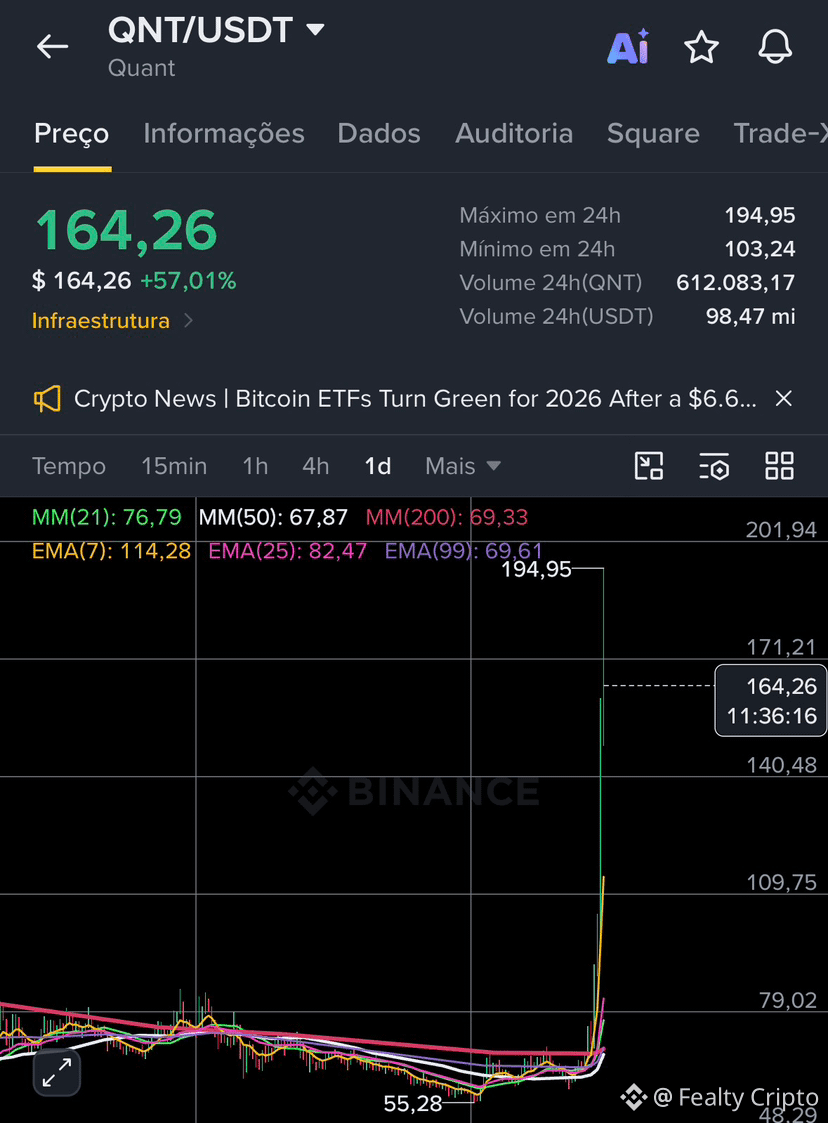
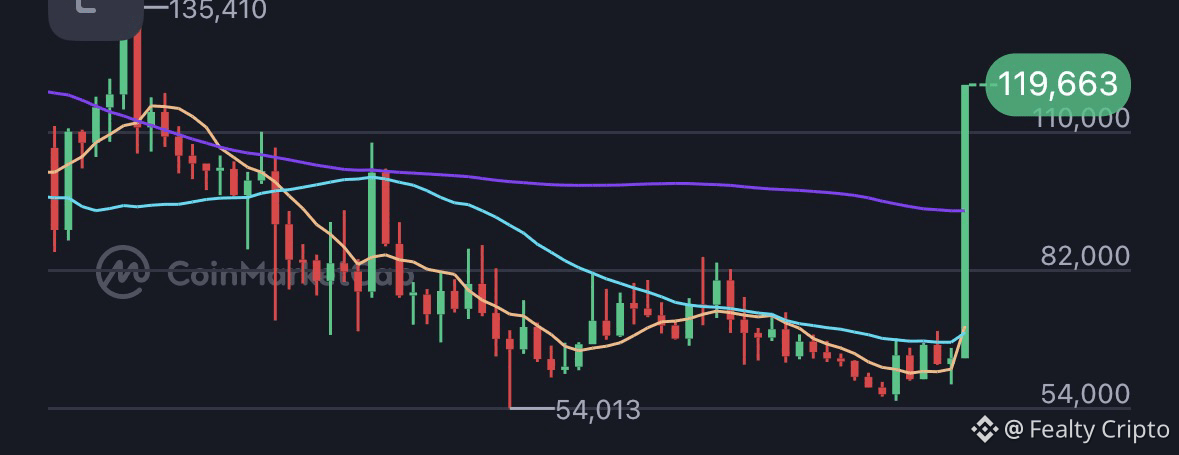
Bullish$QNT +39% in 24 hours.
Normally when I see a number like this, I think:
“that was already too much.”
But I went looking for the reason… and found something that really deserves attention.
The Clearing House chose Quant’s technology for a new infrastructure of tokenized bank deposits in the US.
To give you an idea of the scale:
The Clearing House operates networks that settle more than $2 TRILLION per day.
The idea is to connect tokenized money with systems that American banks already use, like RTP and CHIPS.
This interests me because we’re not just talking about:
“blockchain will change banks someday.”
There’s a real project being built.
Now here’s the part I wouldn’t ignore:
Quant being selected doesn’t automatically mean that the token $QNT captures all of that value.
That relationship needs to be tracked.
So for me, the move became interesting…
but after +39%, it also became much easier to jump in emotionally.
$QNT #Quant #RWA #tokenizations
For you, does a real partnership with banks justify looking at a token even after a run like that… or is that exactly when caution needs to double?
Normally when I see a number like this, I think:
“that was already too much.”
But I went looking for the reason… and found something that really deserves attention.
The Clearing House chose Quant’s technology for a new infrastructure of tokenized bank deposits in the US.
To give you an idea of the scale:
The Clearing House operates networks that settle more than $2 TRILLION per day.
The idea is to connect tokenized money with systems that American banks already use, like RTP and CHIPS.
This interests me because we’re not just talking about:
“blockchain will change banks someday.”
There’s a real project being built.
Now here’s the part I wouldn’t ignore:
Quant being selected doesn’t automatically mean that the token $QNT captures all of that value.
That relationship needs to be tracked.
So for me, the move became interesting…
but after +39%, it also became much easier to jump in emotionally.
$QNT #Quant #RWA #tokenizations
For you, does a real partnership with banks justify looking at a token even after a run like that… or is that exactly when caution needs to double?
4
2.1k
·
--
Bullish
Verified
$QNT +39% in 24 hours.
Normally when I see a number like this, I think:
“that was already too much.”
But I went looking for the reason… and found something that really deserves attention.
The Clearing House chose Quant’s technology for a new infrastructure of tokenized bank deposits in the US.
To give you an idea of the scale:
The Clearing House operates networks that settle more than $2 TRILLION per day.
The idea is to connect tokenized money with systems that American banks already use, like RTP and CHIPS.
This interests me because we’re not just talking about:
“blockchain will change banks someday.”
There’s a real project being built.
Now here’s the part I wouldn’t ignore:
Quant being selected doesn’t automatically mean that the token $QNT captures all of that value.
That relationship needs to be tracked.
So for me, the move became interesting…
but after +39%, it also became much easier to jump in emotionally.
$QNT #Quant #RWA #tokenizations
For you, does a real partnership with banks justify looking at a token even after a run like that… or is that exactly when caution needs to double?
{spot}(QNTUSDT)
$QNT +39% in 24 hours.
Normally when I see a number like this, I think:
“that was already too much.”
But I went looking for the reason… and found something that really deserves attention.
The Clearing House chose Quant’s technology for a new infrastructure of tokenized bank deposits in the US.
To give you an idea of the scale:
The Clearing House operates networks that settle more than $2 TRILLION per day.
The idea is to connect tokenized money with systems that American banks already use, like RTP and CHIPS.
This interests me because we’re not just talking about:
“blockchain will change banks someday.”
There’s a real project being built.
Now here’s the part I wouldn’t ignore:
Quant being selected doesn’t automatically mean that the token $QNT captures all of that value.
That relationship needs to be tracked.
So for me, the move became interesting…
but after +39%, it also became much easier to jump in emotionally.
$QNT #Quant #RWA #tokenizations
For you, does a real partnership with banks justify looking at a token even after a run like that… or is that exactly when caution needs to double?
Normally when I see a number like this, I think:
“that was already too much.”
But I went looking for the reason… and found something that really deserves attention.
The Clearing House chose Quant’s technology for a new infrastructure of tokenized bank deposits in the US.
To give you an idea of the scale:
The Clearing House operates networks that settle more than $2 TRILLION per day.
The idea is to connect tokenized money with systems that American banks already use, like RTP and CHIPS.
This interests me because we’re not just talking about:
“blockchain will change banks someday.”
There’s a real project being built.
Now here’s the part I wouldn’t ignore:
Quant being selected doesn’t automatically mean that the token $QNT captures all of that value.
That relationship needs to be tracked.
So for me, the move became interesting…
but after +39%, it also became much easier to jump in emotionally.
$QNT #Quant #RWA #tokenizations
For you, does a real partnership with banks justify looking at a token even after a run like that… or is that exactly when caution needs to double?
1
3
1.4k
·
--
Bullish
Everyone was expecting volatility in Bitcoin today.
More than US$17 BILLION in BTC and ETH options expired.
And you know what happened?
Practically nothing. 😅
$BTC keeps fighting in the US$84–85K range while the altcoins start to run.
But there’s another piece of data I wouldn’t ignore:
Bitcoin ETFs have already gone 6 straight sessions receiving money.
About US$2.84 billion during that period.
And here’s a curious turn:
in July, the ETFs had accumulated around US$5.8 billion negative year-to-date.
Now they’ve bounced back to nearly US$800 million POSITIVE.
This leaves me with a much more interesting question than “Will BTC go up or down?”:
if money keeps coming in… why did the price stop?
It could be consolidation ahead of another move.
It could be distribution.
Or simply capital starting to look for more risk in altcoins.
At Z Smart DCA, I prefer to observe this answer before chasing the price.
$BTC #bitcoin #crypto
What do you think is happening here:
accumulation or money starting to leave BTC for the altcoins?
{spot}(BTCUSDT)
Everyone was expecting volatility in Bitcoin today.
More than US$17 BILLION in BTC and ETH options expired.
And you know what happened?
Practically nothing. 😅
$BTC keeps fighting in the US$84–85K range while the altcoins start to run.
But there’s another piece of data I wouldn’t ignore:
Bitcoin ETFs have already gone 6 straight sessions receiving money.
About US$2.84 billion during that period.
And here’s a curious turn:
in July, the ETFs had accumulated around US$5.8 billion negative year-to-date.
Now they’ve bounced back to nearly US$800 million POSITIVE.
This leaves me with a much more interesting question than “Will BTC go up or down?”:
if money keeps coming in… why did the price stop?
It could be consolidation ahead of another move.
It could be distribution.
Or simply capital starting to look for more risk in altcoins.
At Z Smart DCA, I prefer to observe this answer before chasing the price.
$BTC #bitcoin #crypto
What do you think is happening here:
accumulation or money starting to leave BTC for the altcoins?
More than US$17 BILLION in BTC and ETH options expired.
And you know what happened?
Practically nothing. 😅
$BTC keeps fighting in the US$84–85K range while the altcoins start to run.
But there’s another piece of data I wouldn’t ignore:
Bitcoin ETFs have already gone 6 straight sessions receiving money.
About US$2.84 billion during that period.
And here’s a curious turn:
in July, the ETFs had accumulated around US$5.8 billion negative year-to-date.
Now they’ve bounced back to nearly US$800 million POSITIVE.
This leaves me with a much more interesting question than “Will BTC go up or down?”:
if money keeps coming in… why did the price stop?
It could be consolidation ahead of another move.
It could be distribution.
Or simply capital starting to look for more risk in altcoins.
At Z Smart DCA, I prefer to observe this answer before chasing the price.
$BTC #bitcoin #crypto
What do you think is happening here:
accumulation or money starting to leave BTC for the altcoins?
1
4
2.3k
·
--
Bullish
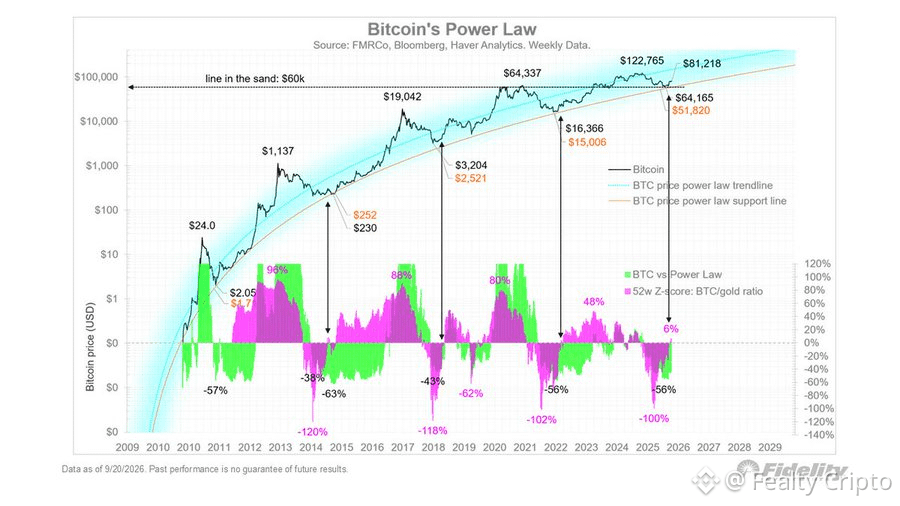
''JURRIEN TIMMER:'' The Bitcoin power-law mathematics continues suggesting that a new cyclical altcoin bull market is underway after halting at US$ 60 thousand, aiming for US$ 300 thousand in 2029.
{spot}(BTCUSDT)
''JURRIEN TIMMER:'' The Bitcoin power-law mathematics continues suggesting that a new cyclical altcoin bull market is underway after halting at US$ 60 thousand, aiming for US$ 300 thousand in 2029.
1
116
You still think we'll have a correction?
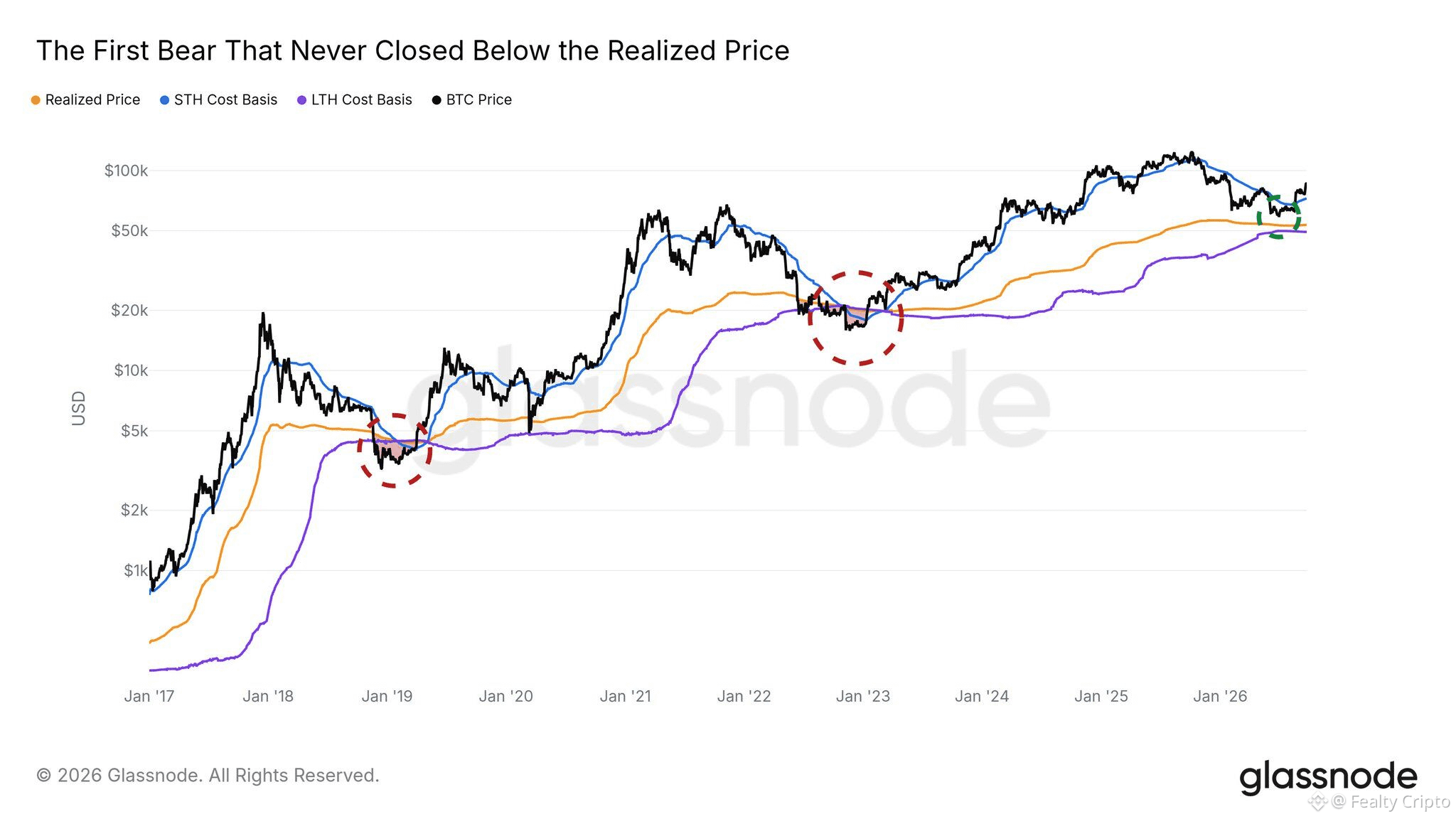
This was the only bitcoin cycle we haven't yet passed below the LTH!
DON'T DOUBT THE MARKET. NEVER...
{spot}(BTCUSDT)
You still think we'll have a correction?
This was the only bitcoin cycle we haven't yet passed below the LTH!
DON'T DOUBT THE MARKET. NEVER...
This was the only bitcoin cycle we haven't yet passed below the LTH!
DON'T DOUBT THE MARKET. NEVER...
4
2.8k
Log in to explore more content
Join global crypto users on Binance Square
⚡️ Get latest and useful information about crypto.
💬 Trusted by the world’s largest crypto exchange.
👍 Discover real insights from verified creators.
Email / Phone number
Trending Topics
EtherGains70.9%InQ3
49,445 views
631 Discussing
One of the best third quarters in history 💰
September closed out last night, and with it, the quarter. For the quarter, BTC is up 42%—the second-best Q3 on record. ETH had a record-breaking Q3 overall, up 70%.
Looking at the chart, things are still looking good: we’re holding support, but we’re testing it more and more often. Plus, ETF momentum is weakening — inflows are gradually declining, and yesterday saw outflows for the first time in a long while.
Yes, historically, October has been a good month for crypto — it’s not called “Uptober” for nothing. But it’s also one of the most volatile months. Last year, for example, we managed to hit a new all-time high (ATH) and experience a flash crash.
🚀 High Accuracy Trades.
$BTC
$ETH
$SOL
#EtherGains70.9%InQ3 #DollarIndexHitsHighestSinceMay2025 #CFTCSubmitsTwoEventContractRulesToWhiteHouse #MicronBeatsEarningsLiftsGuidance
Knowledge is Power
·0 Likes
·128 views
TreasuryLetsStatesFileStablecoinCertificationsEarly
1,614 views
25 Discussing
US10YearYieldNears5.3%
83,552 views
805 Discussing