

Emma Catherine
7.1k Posts

Emma Catherine
 Square Verified+
Report
Block User
Crypto Enthusiast || Trader || KOL || X:Emma_Cath91
Frequent Trader
1.4 Years
598 Following
31.2K+ Followers
26.9K+ Liked
Posts
All
Quotes
Live
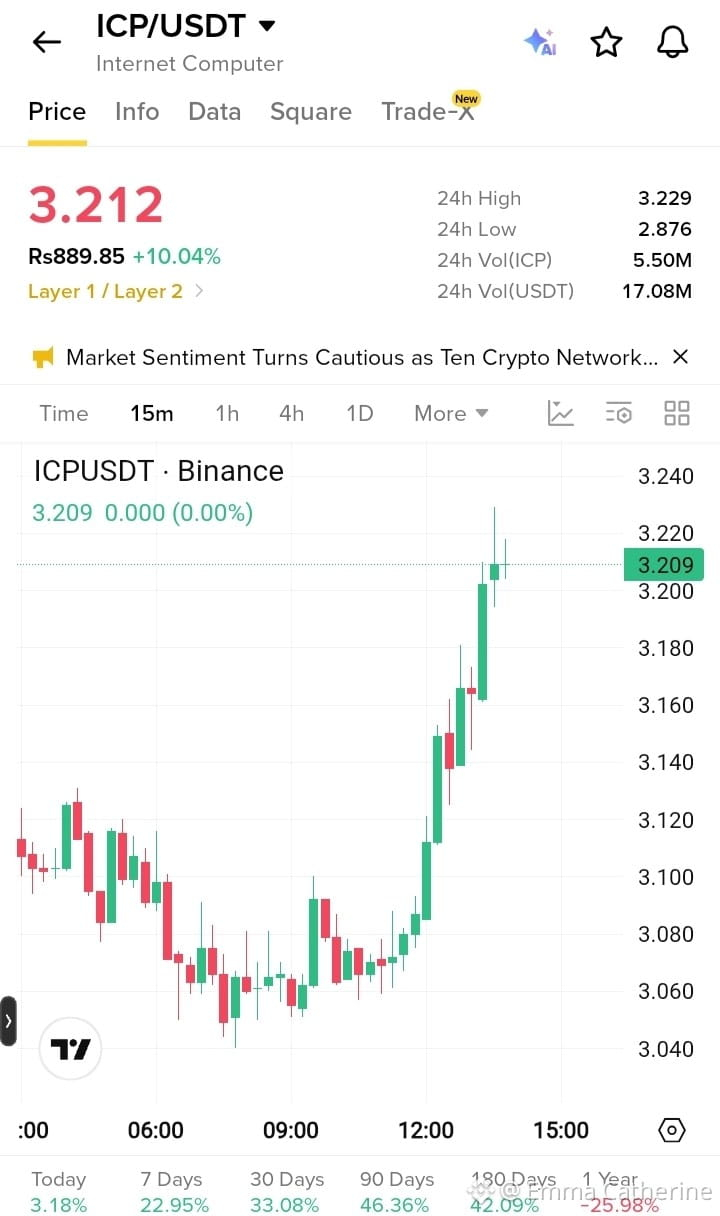
$ICP Poised for Another Breakout Above $3.22 as Bulls Target $3.30+ 🚀
Trade Setup: Long
Entry zone: 3.18 – 3.21
TP1: 3.24
TP2: 3.28
TP3: 3.33
SL: 3.15
ICP is showing strong bullish momentum after a sharp breakout from the 3.08–3.12 area, with buyers holding price near the session highs.
A clean break above $3.22 could trigger another push toward the next resistance zones, while $3.15 is the key support for this setup.
Trade Here On $ICP
{future}(ICPUSDT)
$NVDAB
$ICP Poised for Another Breakout Above $3.22 as Bulls Target $3.30+ 🚀
Trade Setup: Long
Entry zone: 3.18 – 3.21
TP1: 3.24
TP2: 3.28
TP3: 3.33
SL: 3.15
ICP is showing strong bullish momentum after a sharp breakout from the 3.08–3.12 area, with buyers holding price near the session highs.
A clean break above $3.22 could trigger another push toward the next resistance zones, while $3.15 is the key support for this setup.
Trade Here On $ICP
$NVDAB
Trade Setup: Long
Entry zone: 3.18 – 3.21
TP1: 3.24
TP2: 3.28
TP3: 3.33
SL: 3.15
ICP is showing strong bullish momentum after a sharp breakout from the 3.08–3.12 area, with buyers holding price near the session highs.
A clean break above $3.22 could trigger another push toward the next resistance zones, while $3.15 is the key support for this setup.
Trade Here On $ICP
$NVDAB
2
275
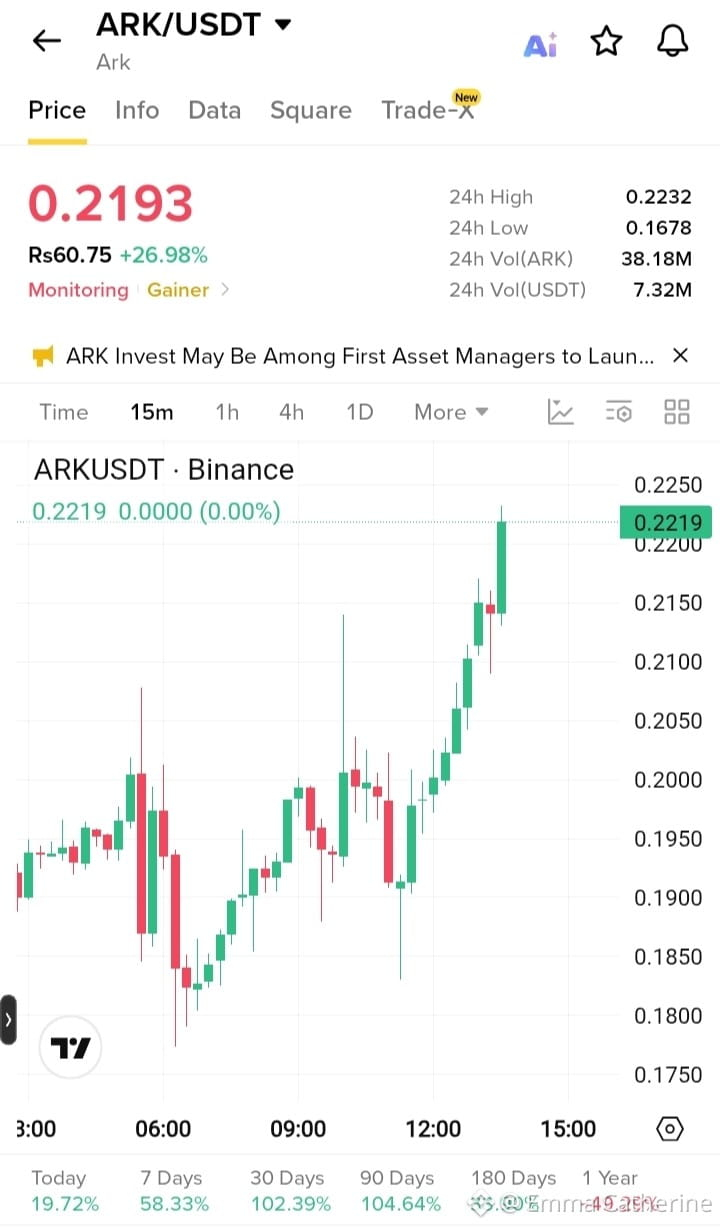
$ARK BREAKS ABOVE $0.215 RESISTANCE — BULLS EYEING A PUSH TOWARD $0.23+ 🚀
Trade Setup: Long
Entry zone: $0.216 – $0.220
TP1: $0.225
TP2: $0.232
TP3: $0.240
SL: $0.210
ARK is showing strong bullish momentum after breaking above the $0.215 resistance with consecutive higher highs and higher lows. A hold above the breakout zone could open the way toward the next upside targets.
Trade Here On $ARK
{future}(ARKUSDT)
$ARK BREAKS ABOVE $0.215 RESISTANCE — BULLS EYEING A PUSH TOWARD $0.23+ 🚀
Trade Setup: Long
Entry zone: $0.216 – $0.220
TP1: $0.225
TP2: $0.232
TP3: $0.240
SL: $0.210
ARK is showing strong bullish momentum after breaking above the $0.215 resistance with consecutive higher highs and higher lows. A hold above the breakout zone could open the way toward the next upside targets.
Trade Here On $ARK
Trade Setup: Long
Entry zone: $0.216 – $0.220
TP1: $0.225
TP2: $0.232
TP3: $0.240
SL: $0.210
ARK is showing strong bullish momentum after breaking above the $0.215 resistance with consecutive higher highs and higher lows. A hold above the breakout zone could open the way toward the next upside targets.
Trade Here On $ARK
2
90
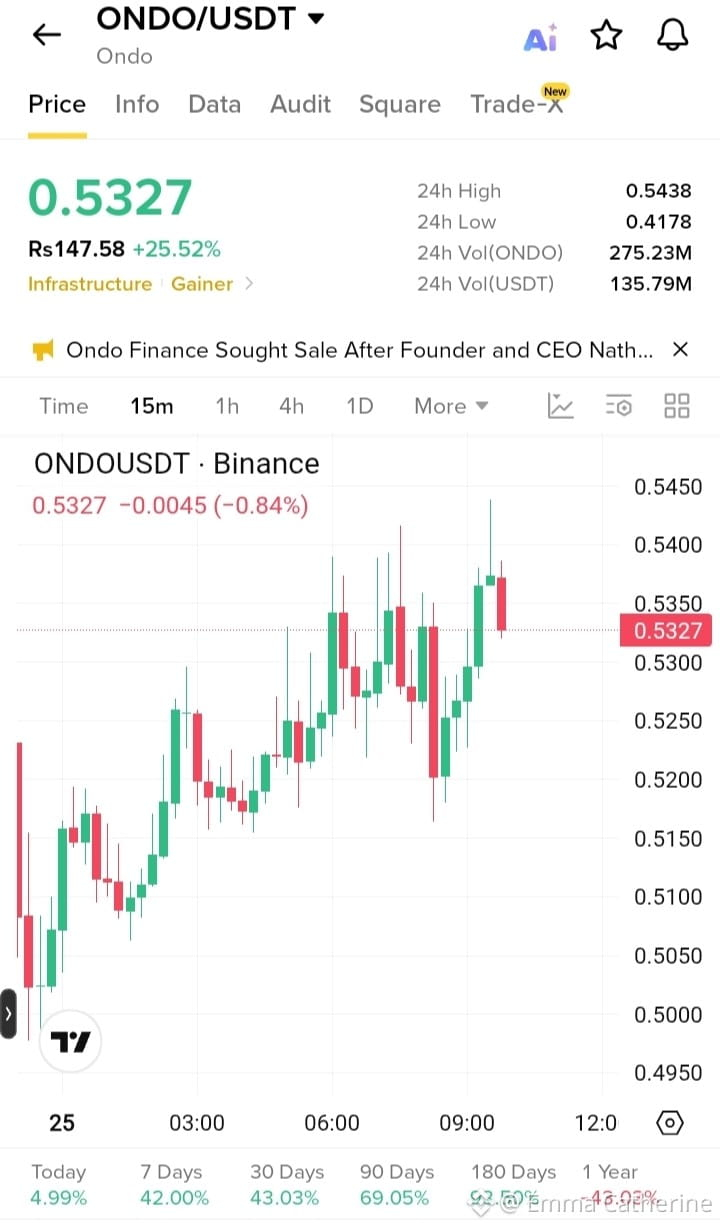
$ONDO Eyes a Break Above $0.5400 as Buyers Push Toward the $0.5450 Resistance 🚀
Trade Setup: Long
Entry zone: 0.5310 – 0.5340
TP1: 0.5380
TP2: 0.5420
TP3: 0.5470
SL: 0.5250
ONDO is maintaining a strong intraday uptrend with higher lows and repeated tests of the 0.5400 resistance zone.
A breakout and hold above 0.5400 could extend the momentum toward 0.5470, while a drop below 0.5250 would weaken the setup.
Trade Here On $ONDO 👇
{future}(ONDOUSDT)
$ONDO Eyes a Break Above $0.5400 as Buyers Push Toward the $0.5450 Resistance 🚀
Trade Setup: Long
Entry zone: 0.5310 – 0.5340
TP1: 0.5380
TP2: 0.5420
TP3: 0.5470
SL: 0.5250
ONDO is maintaining a strong intraday uptrend with higher lows and repeated tests of the 0.5400 resistance zone.
A breakout and hold above 0.5400 could extend the momentum toward 0.5470, while a drop below 0.5250 would weaken the setup.
Trade Here On $ONDO 👇
Trade Setup: Long
Entry zone: 0.5310 – 0.5340
TP1: 0.5380
TP2: 0.5420
TP3: 0.5470
SL: 0.5250
ONDO is maintaining a strong intraday uptrend with higher lows and repeated tests of the 0.5400 resistance zone.
A breakout and hold above 0.5400 could extend the momentum toward 0.5470, while a drop below 0.5250 would weaken the setup.
Trade Here On $ONDO 👇
1
168
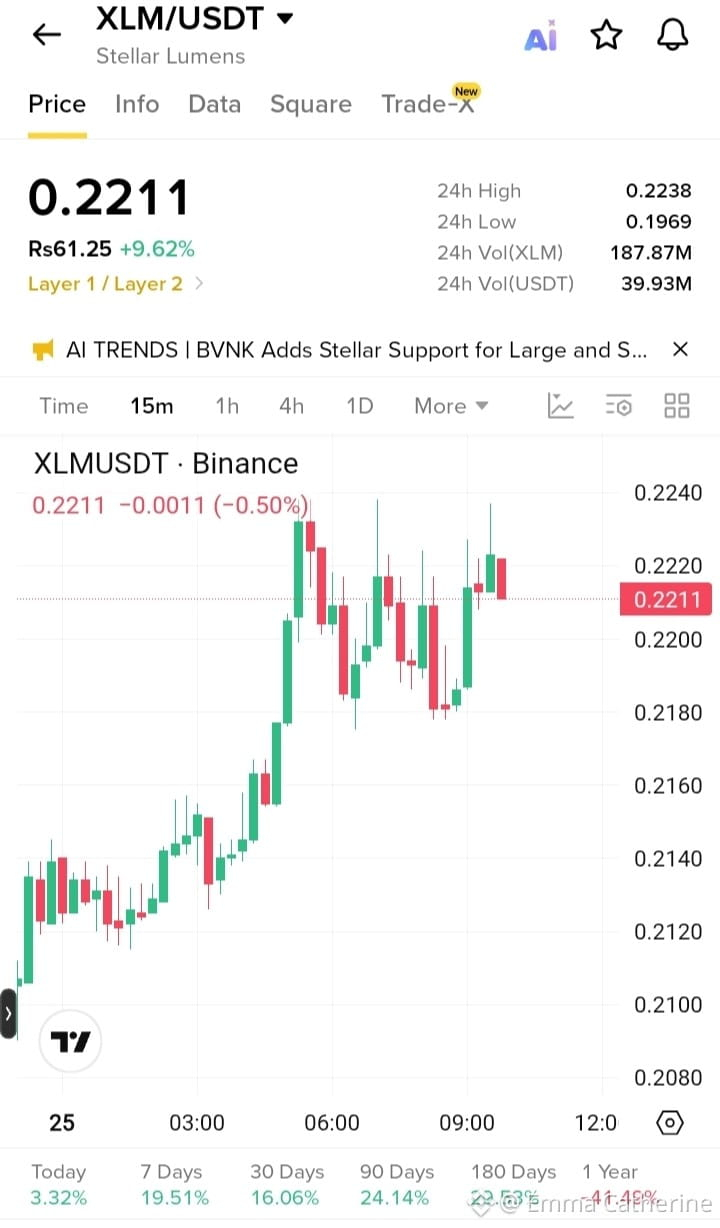
$XLM Eyes a Break Above $0.2230 as Bulls Hold the $0.2200 Support Zone 🚀
Trade Setup: Long
Entry zone: 0.2200 – 0.2215
TP1: 0.2225
TP2: 0.2235
TP3: 0.2250
SL: 0.2180
XLM is consolidating near the recent highs after a strong upward move, while buyers continue defending the 0.2200 area.
A clean break above 0.2225–0.2230 could trigger another push toward 0.2250, while losing 0.2180 would invalidate the setup.
Trade Here On $XLM
{future}(XLMUSDT)
$SOL
$XLM Eyes a Break Above $0.2230 as Bulls Hold the $0.2200 Support Zone 🚀
Trade Setup: Long
Entry zone: 0.2200 – 0.2215
TP1: 0.2225
TP2: 0.2235
TP3: 0.2250
SL: 0.2180
XLM is consolidating near the recent highs after a strong upward move, while buyers continue defending the 0.2200 area.
A clean break above 0.2225–0.2230 could trigger another push toward 0.2250, while losing 0.2180 would invalidate the setup.
Trade Here On $XLM
$SOL
Trade Setup: Long
Entry zone: 0.2200 – 0.2215
TP1: 0.2225
TP2: 0.2235
TP3: 0.2250
SL: 0.2180
XLM is consolidating near the recent highs after a strong upward move, while buyers continue defending the 0.2200 area.
A clean break above 0.2225–0.2230 could trigger another push toward 0.2250, while losing 0.2180 would invalidate the setup.
Trade Here On $XLM
$SOL
1
3
210
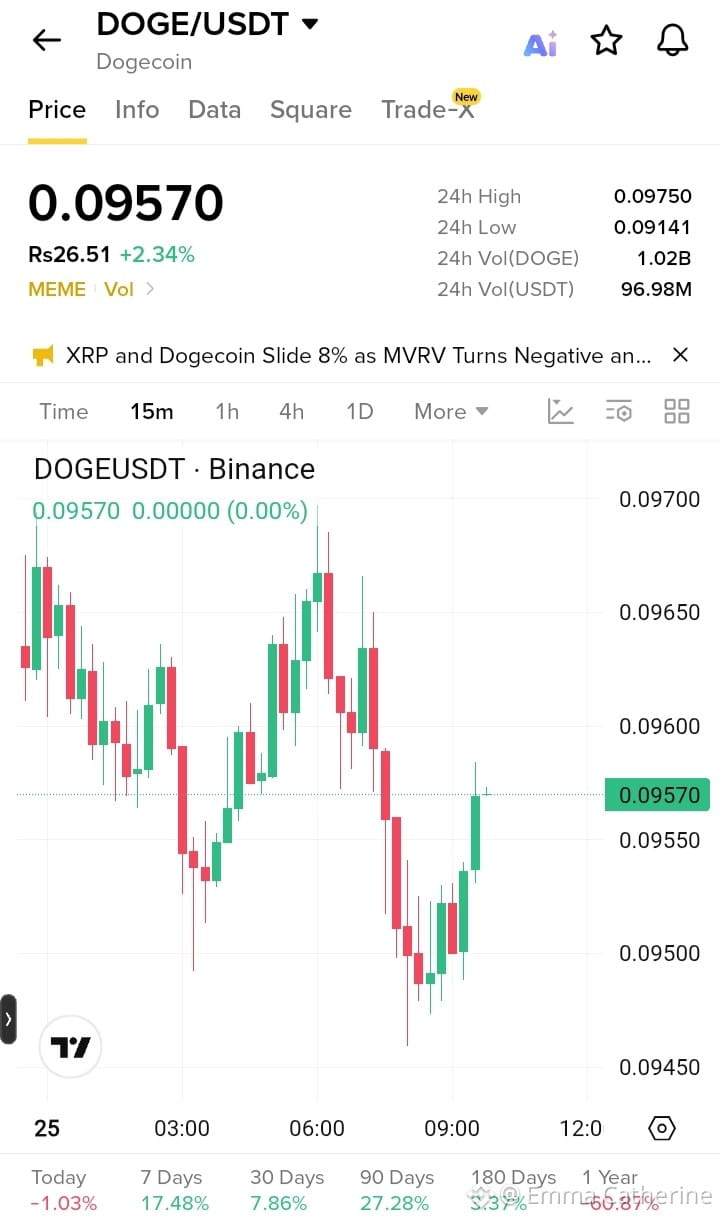
$DOGE Set for a Bullish Push Toward $0.0970 as Buyers Reclaim $0.0955 Support 🚀
Trade Setup: Long
Entry zone: 0.09540 – 0.09570
TP1: 0.09600
TP2: 0.09650
TP3: 0.09700
SL: 0.09480
DOGE is showing a strong rebound from the 0.0948–0.0950 support area, with bullish candles pushing price back above 0.0955.
A sustained hold above 0.0955 could open the way toward 0.0965 and potentially the 0.0970 resistance zone.
Trade Here On $DOGE
{future}(DOGEUSDT)
$XRP
$DOGE Set for a Bullish Push Toward $0.0970 as Buyers Reclaim $0.0955 Support 🚀
Trade Setup: Long
Entry zone: 0.09540 – 0.09570
TP1: 0.09600
TP2: 0.09650
TP3: 0.09700
SL: 0.09480
DOGE is showing a strong rebound from the 0.0948–0.0950 support area, with bullish candles pushing price back above 0.0955.
A sustained hold above 0.0955 could open the way toward 0.0965 and potentially the 0.0970 resistance zone.
Trade Here On $DOGE
$XRP
Trade Setup: Long
Entry zone: 0.09540 – 0.09570
TP1: 0.09600
TP2: 0.09650
TP3: 0.09700
SL: 0.09480
DOGE is showing a strong rebound from the 0.0948–0.0950 support area, with bullish candles pushing price back above 0.0955.
A sustained hold above 0.0955 could open the way toward 0.0965 and potentially the 0.0970 resistance zone.
Trade Here On $DOGE
$XRP
2
167
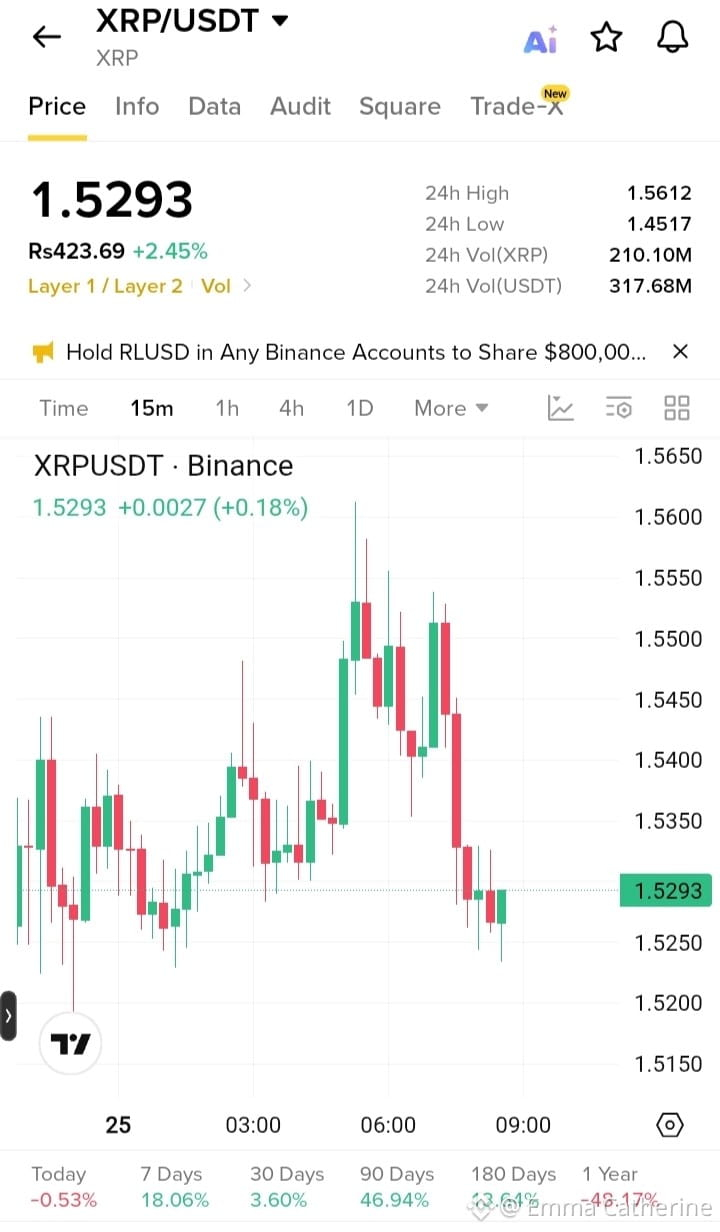
$XRP Looks Set for Another Leg Lower as 1.525 Support Comes Under Pressure
Trade Setup: Short
Entry zone: 1.5290–1.5330
TP1: 1.5250
TP2: 1.5200
TP3: 1.5150
SL: 1.5420
XRP was rejected around 1.550–1.555 and then formed a sharp bearish move, with price now consolidating near 1.525 support. A break below this zone could trigger another move lower toward the next support levels.
Trade Here On $XRP 👇
{future}(XRPUSDT)
$LSK
$XRP Looks Set for Another Leg Lower as 1.525 Support Comes Under Pressure
Trade Setup: Short
Entry zone: 1.5290–1.5330
TP1: 1.5250
TP2: 1.5200
TP3: 1.5150
SL: 1.5420
XRP was rejected around 1.550–1.555 and then formed a sharp bearish move, with price now consolidating near 1.525 support. A break below this zone could trigger another move lower toward the next support levels.
Trade Here On $XRP 👇
$LSK
Trade Setup: Short
Entry zone: 1.5290–1.5330
TP1: 1.5250
TP2: 1.5200
TP3: 1.5150
SL: 1.5420
XRP was rejected around 1.550–1.555 and then formed a sharp bearish move, with price now consolidating near 1.525 support. A break below this zone could trigger another move lower toward the next support levels.
Trade Here On $XRP 👇
$LSK
4
255
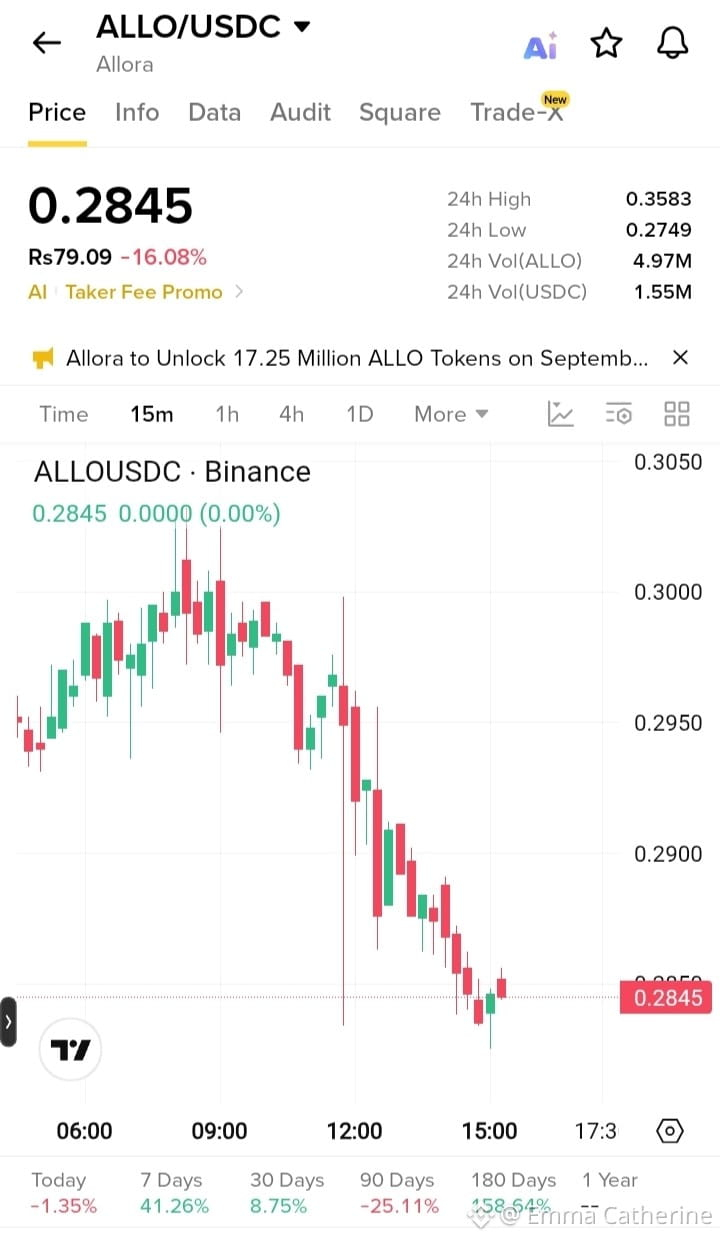
$ALLO Breakdown Continues — Sellers Could Drive Price Toward Lower Support 📉
Trade Setup: Short
Entry zone: 0.2840 – 0.2870
TP1: 0.2800
TP2: 0.2750
TP3: 0.2700
SL: 0.2920
ALLO is in a clear 15M downtrend with consecutive lower highs and lower lows, while sellers remain in control after the sharp rejection from 0.30. A sustained move below 0.2840 could open the way toward 0.2750–0.2700, while 0.2920 invalidates the setup.
Trade Here On $ALLO 👇
{future}(ALLOUSDT)
$ALLO Breakdown Continues — Sellers Could Drive Price Toward Lower Support 📉
Trade Setup: Short
Entry zone: 0.2840 – 0.2870
TP1: 0.2800
TP2: 0.2750
TP3: 0.2700
SL: 0.2920
ALLO is in a clear 15M downtrend with consecutive lower highs and lower lows, while sellers remain in control after the sharp rejection from 0.30. A sustained move below 0.2840 could open the way toward 0.2750–0.2700, while 0.2920 invalidates the setup.
Trade Here On $ALLO 👇
Trade Setup: Short
Entry zone: 0.2840 – 0.2870
TP1: 0.2800
TP2: 0.2750
TP3: 0.2700
SL: 0.2920
ALLO is in a clear 15M downtrend with consecutive lower highs and lower lows, while sellers remain in control after the sharp rejection from 0.30. A sustained move below 0.2840 could open the way toward 0.2750–0.2700, while 0.2920 invalidates the setup.
Trade Here On $ALLO 👇
2
4
257
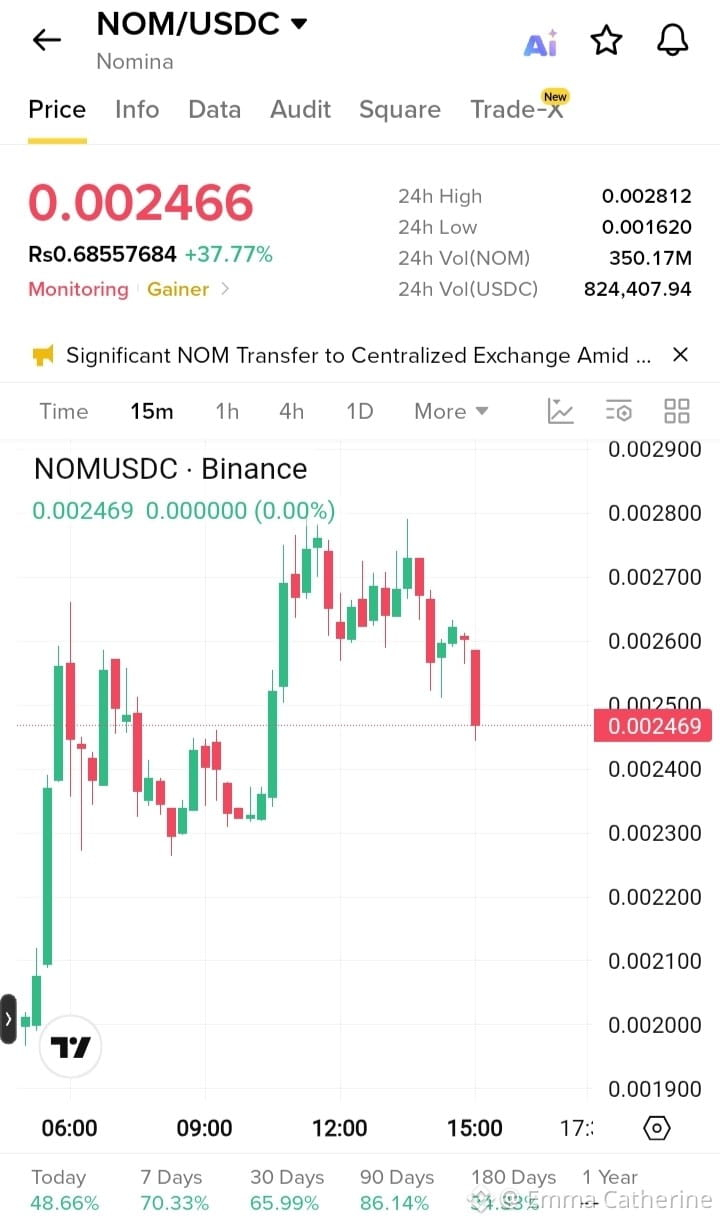
$NOM Faces Pullback Pressure — Sellers Could Push Price Toward Key Support Zones 📉
Trade Setup: Short
Entry zone: 0.00246 – 0.00252
TP1: 0.00240
TP2: 0.00234
TP3: 0.00228
SL: 0.00262
NOM is showing rejection after failing to hold the 0.00270–0.00280 area, while the latest candles are turning bearish. A break below 0.00246 could accelerate the pullback toward the next support zones, with 0.00262 acting as the invalidation level.
Trade Here On $NOM 👇
{future}(NOMUSDT)
$NOM Faces Pullback Pressure — Sellers Could Push Price Toward Key Support Zones 📉
Trade Setup: Short
Entry zone: 0.00246 – 0.00252
TP1: 0.00240
TP2: 0.00234
TP3: 0.00228
SL: 0.00262
NOM is showing rejection after failing to hold the 0.00270–0.00280 area, while the latest candles are turning bearish. A break below 0.00246 could accelerate the pullback toward the next support zones, with 0.00262 acting as the invalidation level.
Trade Here On $NOM 👇
Trade Setup: Short
Entry zone: 0.00246 – 0.00252
TP1: 0.00240
TP2: 0.00234
TP3: 0.00228
SL: 0.00262
NOM is showing rejection after failing to hold the 0.00270–0.00280 area, while the latest candles are turning bearish. A break below 0.00246 could accelerate the pullback toward the next support zones, with 0.00262 acting as the invalidation level.
Trade Here On $NOM 👇
2
153
{future}(LSKUSDT)
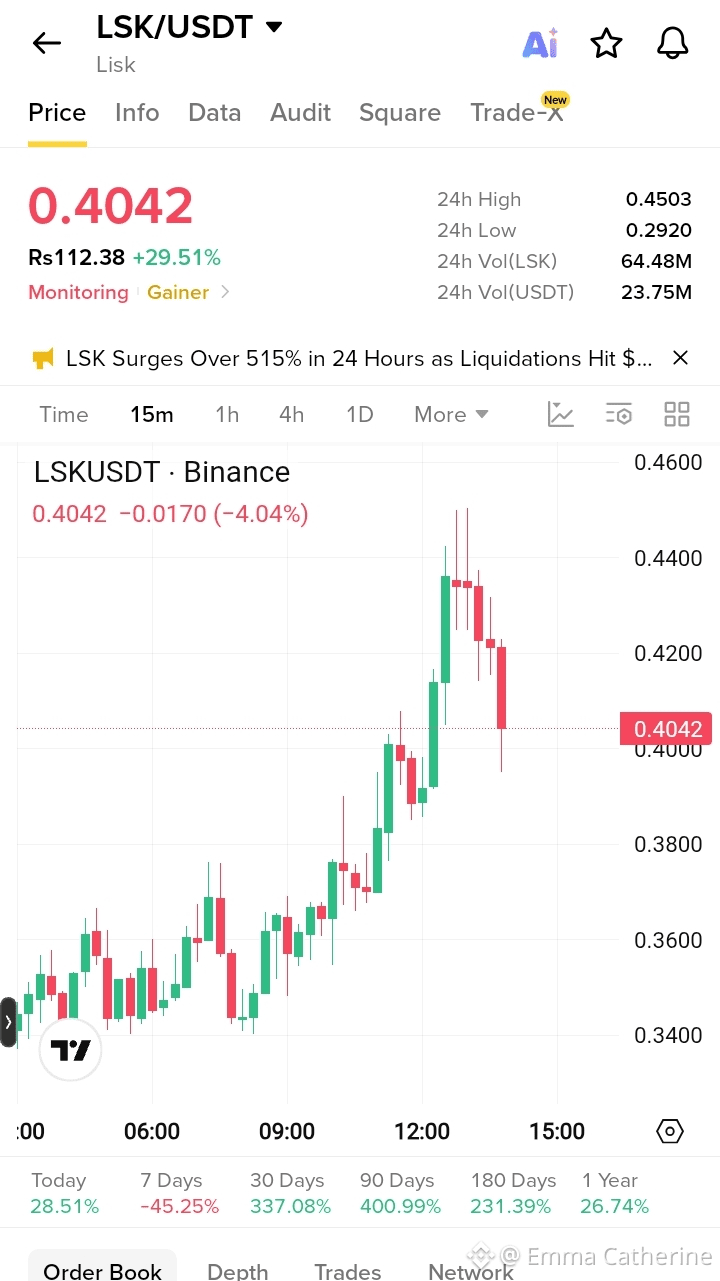
$LSK Rejection Signals a Pullback — Sellers Eye 0.38–0.39 Next
Trade Setup: Short
Entry zone: 0.408 – 0.416
TP1: 0.395
TP2: 0.385
TP3: 0.375
SL: 0.426
After a sharp rally, $LSK is showing strong rejection from the 0.44 area with consecutive red candles, suggesting short-term profit-taking and a possible retracement.
The setup favors a short on a pullback toward the entry zone, while a break above 0.426 would invalidate the bearish structure.
Trade Here On $LSK 👇
$LSK Rejection Signals a Pullback — Sellers Eye 0.38–0.39 Next
Trade Setup: Short
Entry zone: 0.408 – 0.416
TP1: 0.395
TP2: 0.385
TP3: 0.375
SL: 0.426
After a sharp rally, $LSK is showing strong rejection from the 0.44 area with consecutive red candles, suggesting short-term profit-taking and a possible retracement.
The setup favors a short on a pullback toward the entry zone, while a break above 0.426 would invalidate the bearish structure.
Trade Here On $LSK 👇
Trade Setup: Short
Entry zone: 0.408 – 0.416
TP1: 0.395
TP2: 0.385
TP3: 0.375
SL: 0.426
After a sharp rally, $LSK is showing strong rejection from the 0.44 area with consecutive red candles, suggesting short-term profit-taking and a possible retracement.
The setup favors a short on a pullback toward the entry zone, while a break above 0.426 would invalidate the bearish structure.
Trade Here On $LSK 👇
1
5
766
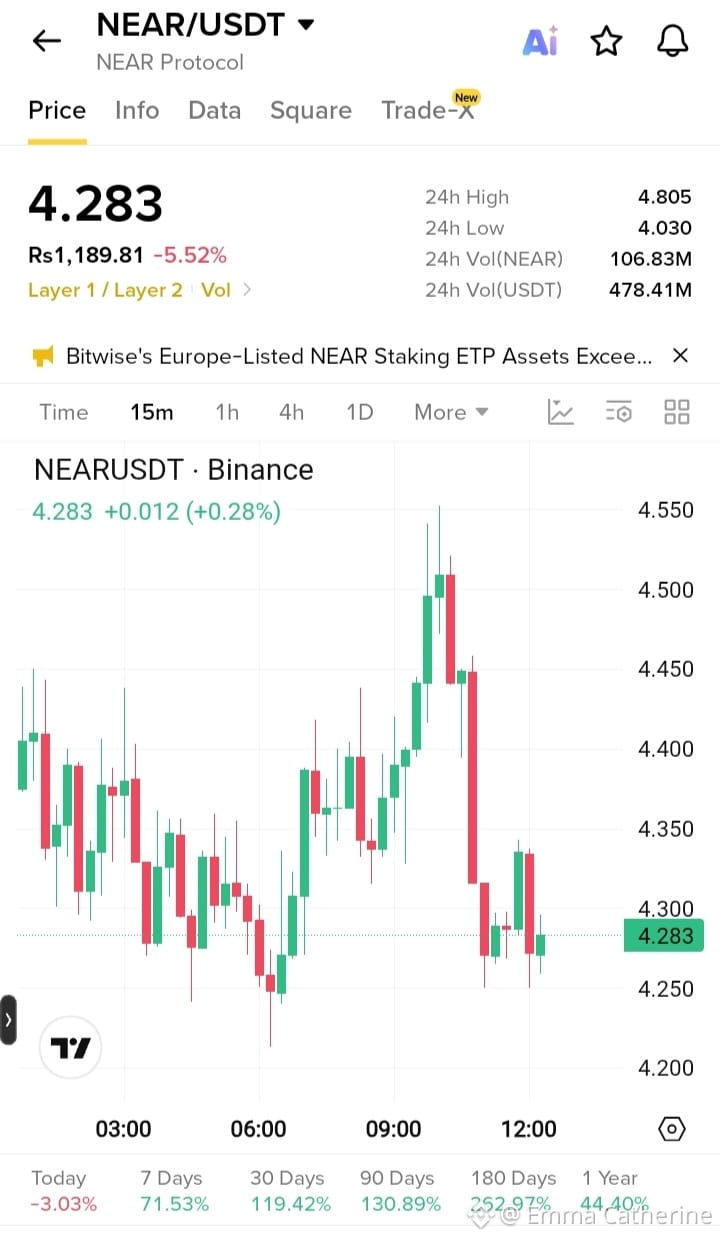
$NEAR Looks Ready For A Relief Bounce Toward $4.45 After Defending $4.25 Support
Trade Setup: Long
Entry zone: 4.26 – 4.30
TP1: 4.34
TP2: 4.40
TP3: 4.45
SL: 4.22
NEAR is holding the 4.25 support after a sharp sell-off, while buyers are starting to step back in around the current zone.
A reclaim of 4.34 can strengthen the bounce toward 4.40–4.45, while a break below 4.22 invalidates the setup.
Trade Here On $NEAR 👇
{spot}(NEARUSDT)
$NEAR Looks Ready For A Relief Bounce Toward $4.45 After Defending $4.25 Support
Trade Setup: Long
Entry zone: 4.26 – 4.30
TP1: 4.34
TP2: 4.40
TP3: 4.45
SL: 4.22
NEAR is holding the 4.25 support after a sharp sell-off, while buyers are starting to step back in around the current zone.
A reclaim of 4.34 can strengthen the bounce toward 4.40–4.45, while a break below 4.22 invalidates the setup.
Trade Here On $NEAR 👇
Trade Setup: Long
Entry zone: 4.26 – 4.30
TP1: 4.34
TP2: 4.40
TP3: 4.45
SL: 4.22
NEAR is holding the 4.25 support after a sharp sell-off, while buyers are starting to step back in around the current zone.
A reclaim of 4.34 can strengthen the bounce toward 4.40–4.45, while a break below 4.22 invalidates the setup.
Trade Here On $NEAR 👇
4
360
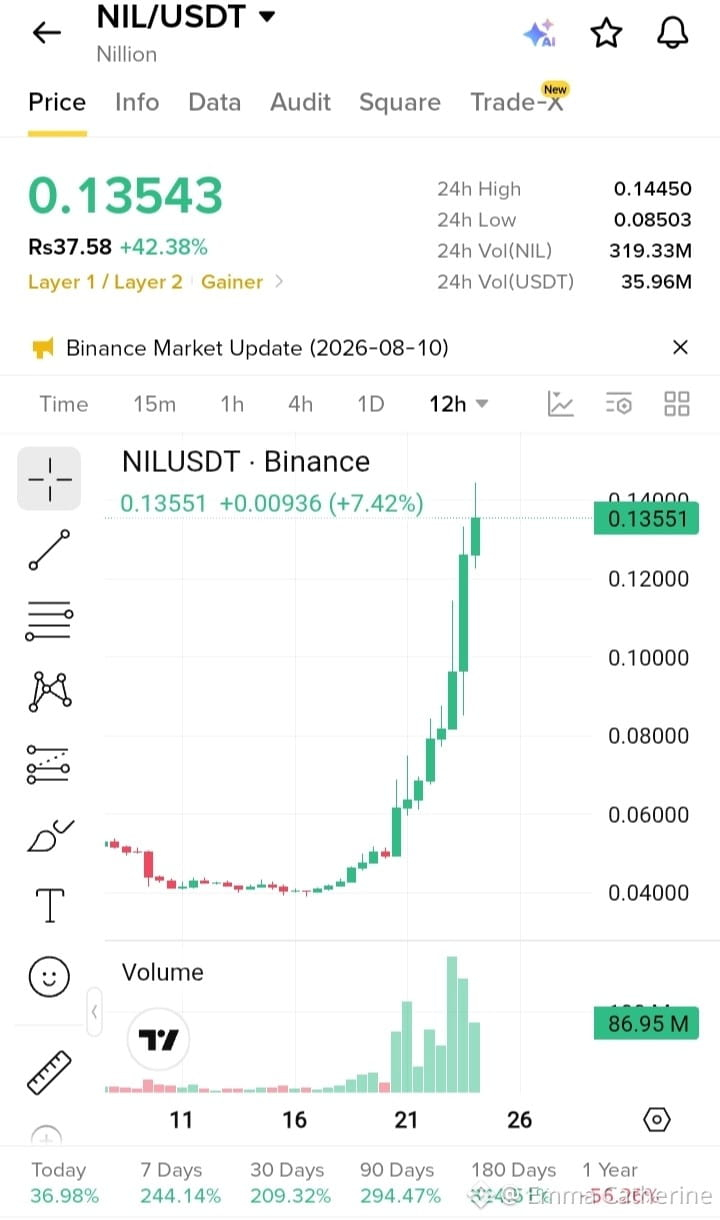
$NIL : After a sharp parabolic rally, rejection near $0.14 could trigger a healthy pullback before the next move.
Trade Setup: Short
Entry zone: 0.137–0.143
TP1: 0.128
TP2: 0.118
TP3: 0.105
SL: 0.148
Price has moved sharply from the 0.04 area with expanding volume, making the current zone highly extended.
The 0.14–0.145 area is the key resistance zone; a rejection there could open room for a pullback toward previous breakout levels.
Trade Here On $NIL
{spot}(NILUSDT)
$NIL : After a sharp parabolic rally, rejection near $0.14 could trigger a healthy pullback before the next move.
Trade Setup: Short
Entry zone: 0.137–0.143
TP1: 0.128
TP2: 0.118
TP3: 0.105
SL: 0.148
Price has moved sharply from the 0.04 area with expanding volume, making the current zone highly extended.
The 0.14–0.145 area is the key resistance zone; a rejection there could open room for a pullback toward previous breakout levels.
Trade Here On $NIL
Trade Setup: Short
Entry zone: 0.137–0.143
TP1: 0.128
TP2: 0.118
TP3: 0.105
SL: 0.148
Price has moved sharply from the 0.04 area with expanding volume, making the current zone highly extended.
The 0.14–0.145 area is the key resistance zone; a rejection there could open room for a pullback toward previous breakout levels.
Trade Here On $NIL
3
374
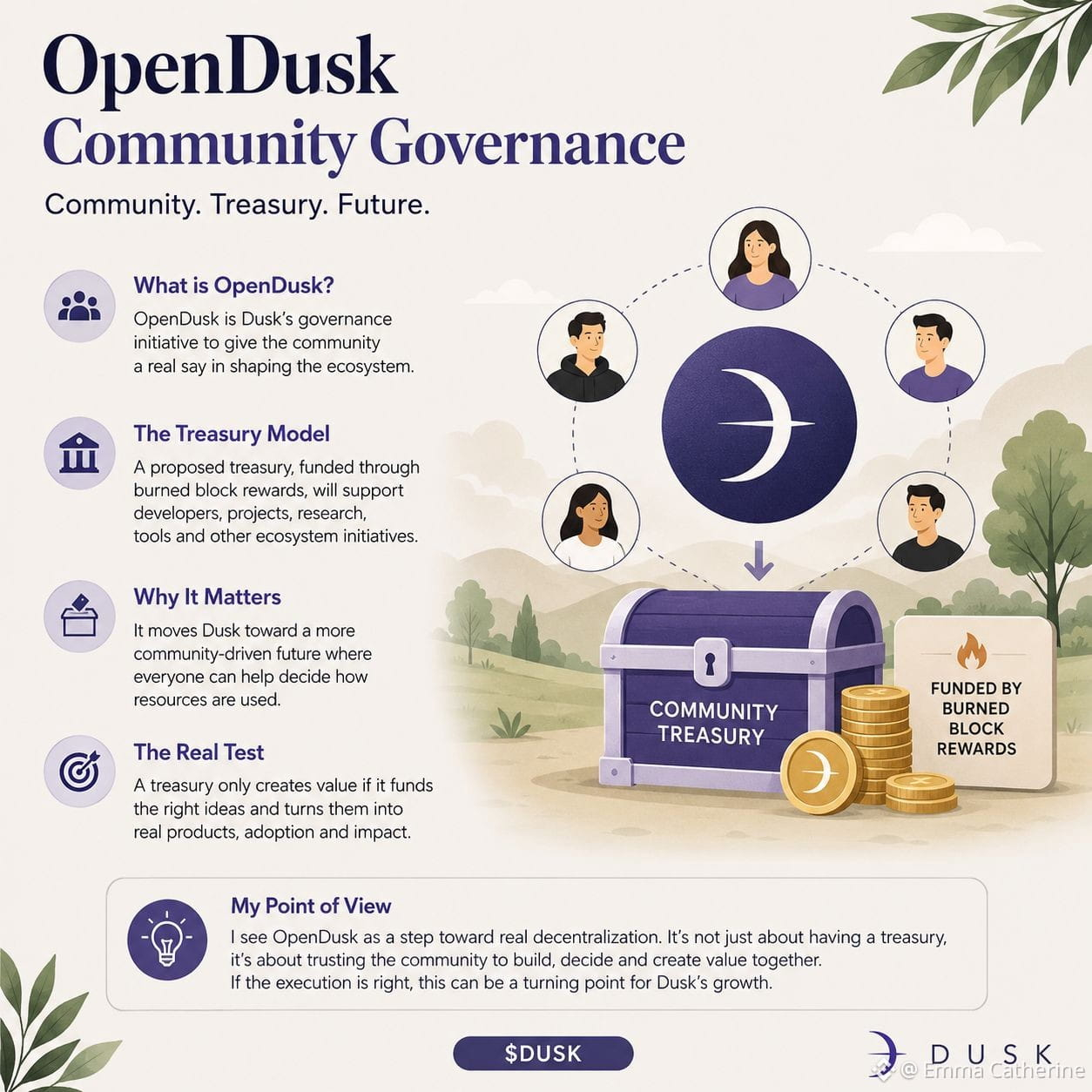
#dusk $DUSK The more I think about OpenDusk, the more interesting the governance side of @Dusk_Foundation becomes.
The proposal is simple on the surface: create a community-led treasury funded by burned block rewards, giving the ecosystem a potential source of funding for future initiatives. The first OpenDusk vote is focused on whether this structure should exist.
But for me, the bigger story isn't simply having a treasury.
It’s about who gets to decide where those resources go.
If the community can help direct funding toward developers, ecosystem projects, research, tools, and other initiatives, Dusk could gradually move from a foundation-driven ecosystem toward something with more community participation.
At the same time, I think the real test comes after the vote. A treasury only matters if the money is allocated thoughtfully and actually creates useful things.
I’m less interested in the headline of “community treasury” and more interested in what the community can build with it.
That’s the part I’ll be watching closely.
#dusk $DUSK The more I think about OpenDusk, the more interesting the governance side of @Dusk becomes.
The proposal is simple on the surface: create a community-led treasury funded by burned block rewards, giving the ecosystem a potential source of funding for future initiatives. The first OpenDusk vote is focused on whether this structure should exist.
But for me, the bigger story isn't simply having a treasury.
It’s about who gets to decide where those resources go.
If the community can help direct funding toward developers, ecosystem projects, research, tools, and other initiatives, Dusk could gradually move from a foundation-driven ecosystem toward something with more community participation.
At the same time, I think the real test comes after the vote. A treasury only matters if the money is allocated thoughtfully and actually creates useful things.
I’m less interested in the headline of “community treasury” and more interested in what the community can build with it.
That’s the part I’ll be watching closely.
The proposal is simple on the surface: create a community-led treasury funded by burned block rewards, giving the ecosystem a potential source of funding for future initiatives. The first OpenDusk vote is focused on whether this structure should exist.
But for me, the bigger story isn't simply having a treasury.
It’s about who gets to decide where those resources go.
If the community can help direct funding toward developers, ecosystem projects, research, tools, and other initiatives, Dusk could gradually move from a foundation-driven ecosystem toward something with more community participation.
At the same time, I think the real test comes after the vote. A treasury only matters if the money is allocated thoughtfully and actually creates useful things.
I’m less interested in the headline of “community treasury” and more interested in what the community can build with it.
That’s the part I’ll be watching closely.
3
4
192
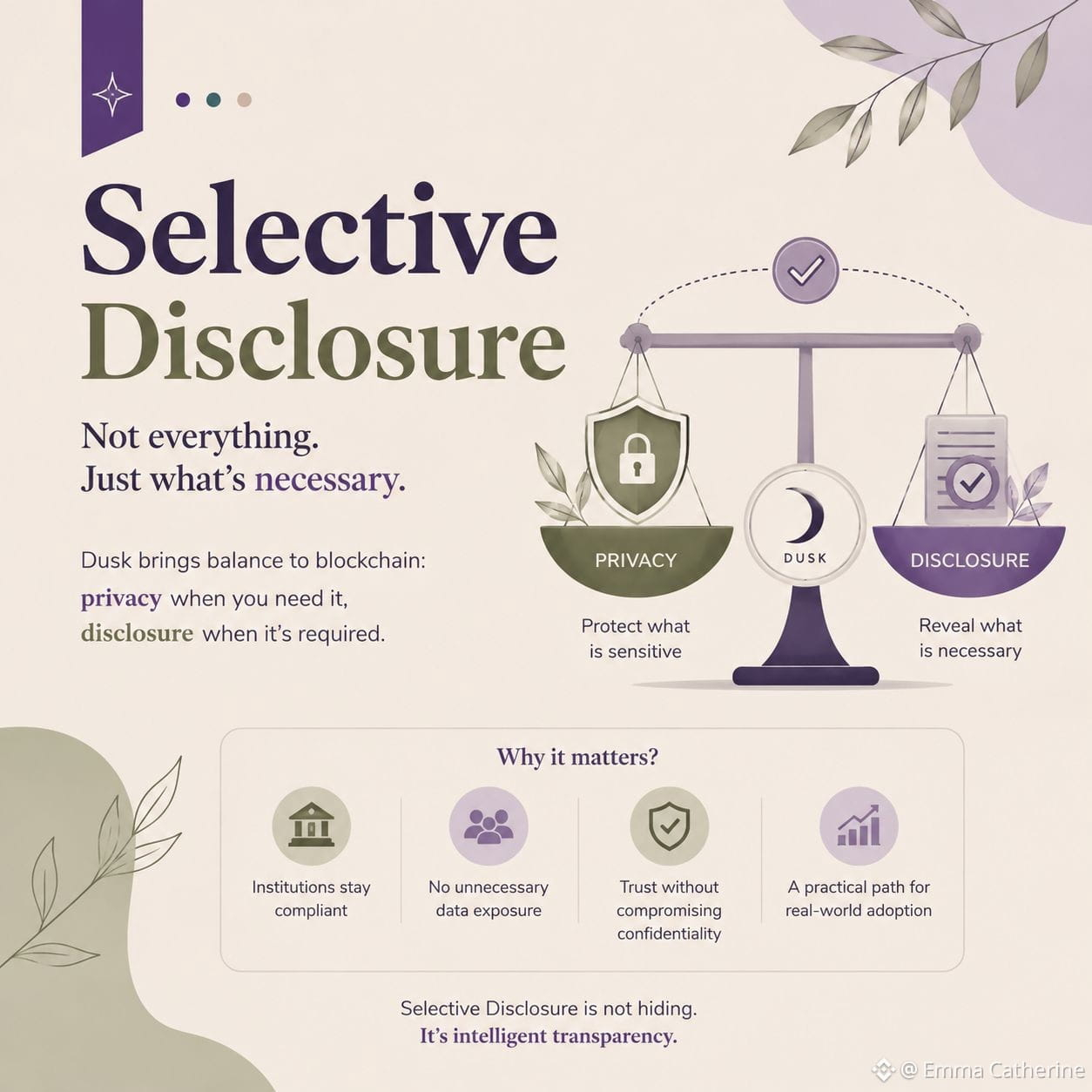
#dusk $DUSK One thing about Dusk that I think deserves more attention: selective disclosure.
Blockchain transparency sounds great until you imagine every financial move being visible forever.
But institutions can’t simply operate in complete secrecy either. They need to prove compliance, ownership, or eligibility when required.
So what if you didn’t have to reveal everything?
You could prove what needs to be proven without exposing your entire financial history, strategy, or transaction activity.
That’s the idea I find interesting about @Dusk_Foundation .
It’s not really about choosing between privacy and transparency.
It’s about finding the middle ground:
Reveal what is necessary.
Protect what is sensitive.
Stay accountable without giving up confidentiality.
To me, that’s a much more practical vision for institutional blockchain adoption.
#dusk $DUSK One thing about Dusk that I think deserves more attention: selective disclosure.
Blockchain transparency sounds great until you imagine every financial move being visible forever.
But institutions can’t simply operate in complete secrecy either. They need to prove compliance, ownership, or eligibility when required.
So what if you didn’t have to reveal everything?
You could prove what needs to be proven without exposing your entire financial history, strategy, or transaction activity.
That’s the idea I find interesting about @Dusk .
It’s not really about choosing between privacy and transparency.
It’s about finding the middle ground:
Reveal what is necessary.
Protect what is sensitive.
Stay accountable without giving up confidentiality.
To me, that’s a much more practical vision for institutional blockchain adoption.
Blockchain transparency sounds great until you imagine every financial move being visible forever.
But institutions can’t simply operate in complete secrecy either. They need to prove compliance, ownership, or eligibility when required.
So what if you didn’t have to reveal everything?
You could prove what needs to be proven without exposing your entire financial history, strategy, or transaction activity.
That’s the idea I find interesting about @Dusk .
It’s not really about choosing between privacy and transparency.
It’s about finding the middle ground:
Reveal what is necessary.
Protect what is sensitive.
Stay accountable without giving up confidentiality.
To me, that’s a much more practical vision for institutional blockchain adoption.
16
4
157
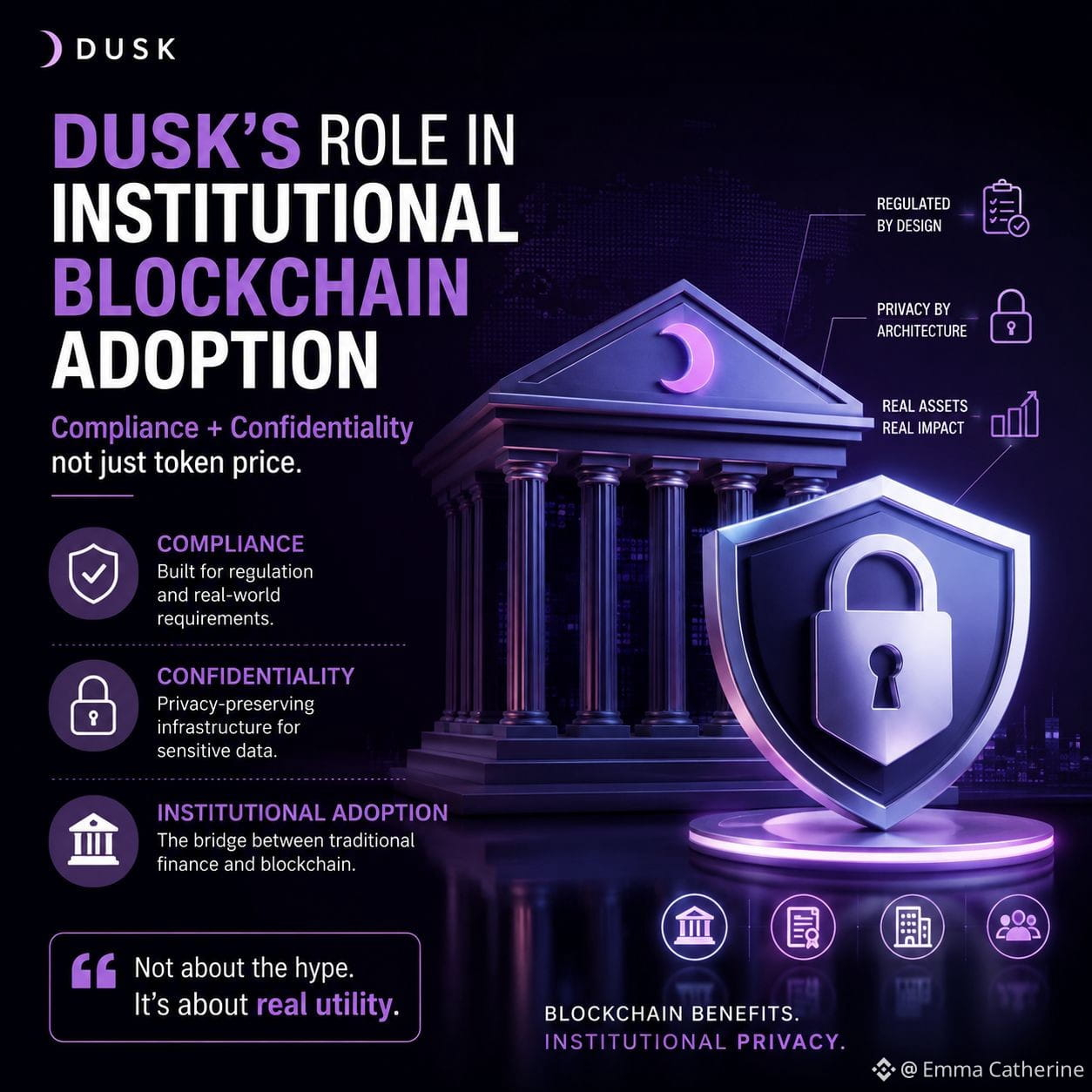
#dusk $DUSK Institutions don’t need another blockchain. They need a blockchain they can actually trust with sensitive data.
That’s why @Dusk_Foundation stands out to me.
For real institutional adoption, compliance + confidentiality matter just as much as decentralization. Financial institutions can’t expose every detail of their business on a public ledger.
Dusk is interesting because it’s trying to bridge that gap keeping blockchain benefits while giving institutions the privacy they need.
For me, that’s a much more interesting story than token price. 👀
#dusk $DUSK Institutions don’t need another blockchain. They need a blockchain they can actually trust with sensitive data.
That’s why @Dusk stands out to me.
For real institutional adoption, compliance + confidentiality matter just as much as decentralization. Financial institutions can’t expose every detail of their business on a public ledger.
Dusk is interesting because it’s trying to bridge that gap keeping blockchain benefits while giving institutions the privacy they need.
For me, that’s a much more interesting story than token price. 👀
That’s why @Dusk stands out to me.
For real institutional adoption, compliance + confidentiality matter just as much as decentralization. Financial institutions can’t expose every detail of their business on a public ledger.
Dusk is interesting because it’s trying to bridge that gap keeping blockchain benefits while giving institutions the privacy they need.
For me, that’s a much more interesting story than token price. 👀
2
2
214
$OPG “Decentralized AI” is becoming a buzzword.
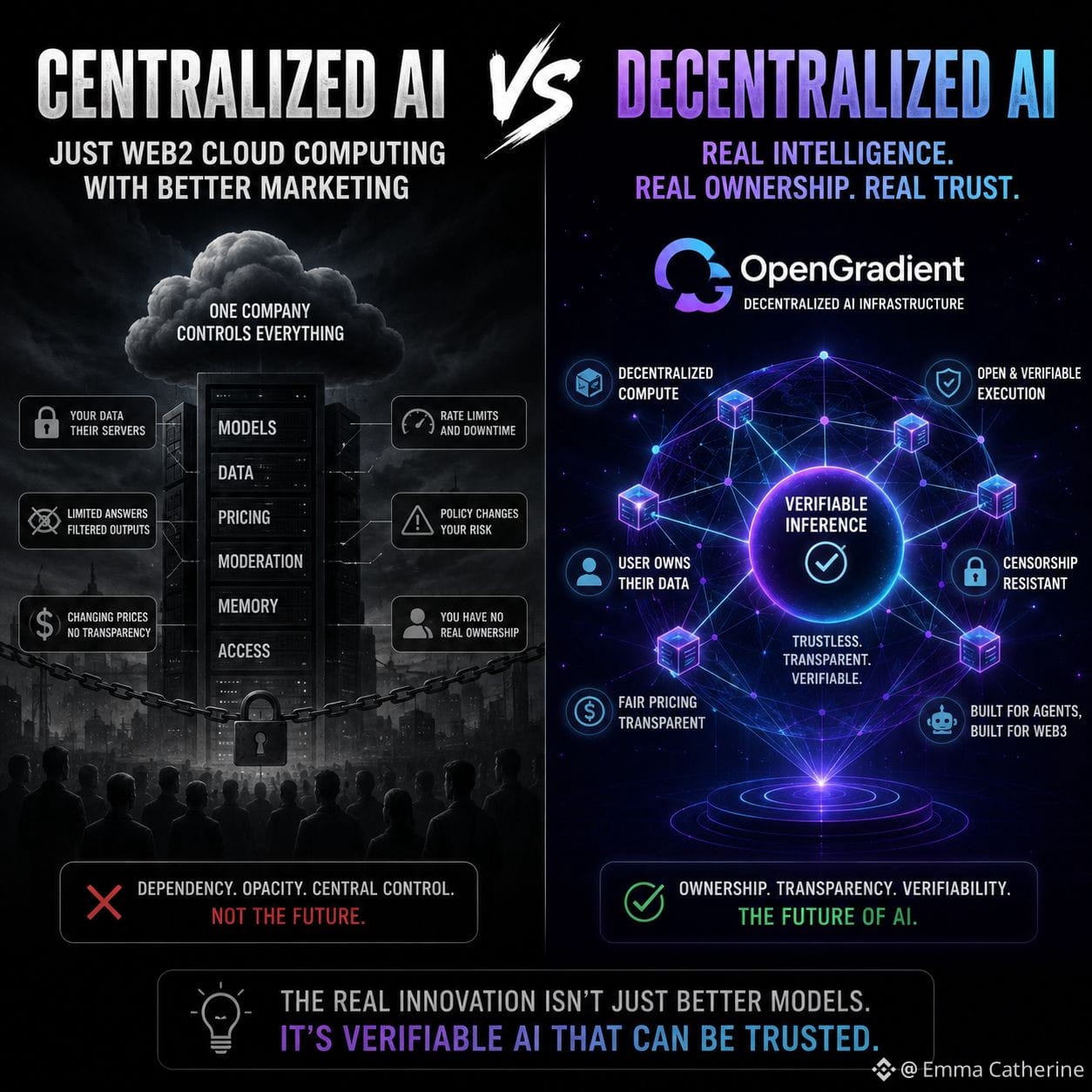
But most AI today is still just Web2 cloud computing with better marketing.
You upload your data.
Your prompts go to centralized servers.
One company controls the models, pricing, moderation, memory, and even what answers you’re allowed to see.$BABY
That’s not intelligence freedom.
That’s dependency with an AI wrapper.
My view is simple:
If AI is going to power finance, identity, governance, trading, research, and autonomous agents… then trust cannot depend on a single company.$ICP
Because the moment one provider goes down, changes policies, rate limits access, or manipulates outputs — the entire “AI economy” becomes fragile.
This is why projects like @OpenGradient matter.
The real innovation is not just “better models.”
It’s verifiable inference, decentralized execution, transparent computation, and AI systems that can actually be trusted.
Most people are racing to build smarter AI.
Very few are asking:
“How do we verify the AI is telling the truth?”
That question will define the next era of the internet.
Centralized AI scaled intelligence.
Decentralized AI may finally scale trust.
#OPG
$OPG “Decentralized AI” is becoming a buzzword.
But most AI today is still just Web2 cloud computing with better marketing.
You upload your data.
Your prompts go to centralized servers.
One company controls the models, pricing, moderation, memory, and even what answers you’re allowed to see.$BABY
That’s not intelligence freedom.
That’s dependency with an AI wrapper.
My view is simple:
If AI is going to power finance, identity, governance, trading, research, and autonomous agents… then trust cannot depend on a single company.$ICP
Because the moment one provider goes down, changes policies, rate limits access, or manipulates outputs — the entire “AI economy” becomes fragile.
This is why projects like @OpenGradient matter.
The real innovation is not just “better models.”
It’s verifiable inference, decentralized execution, transparent computation, and AI systems that can actually be trusted.
Most people are racing to build smarter AI.
Very few are asking:
“How do we verify the AI is telling the truth?”
That question will define the next era of the internet.
Centralized AI scaled intelligence.
Decentralized AI may finally scale trust.
#OPG
But most AI today is still just Web2 cloud computing with better marketing.
You upload your data.
Your prompts go to centralized servers.
One company controls the models, pricing, moderation, memory, and even what answers you’re allowed to see.$BABY
That’s not intelligence freedom.
That’s dependency with an AI wrapper.
My view is simple:
If AI is going to power finance, identity, governance, trading, research, and autonomous agents… then trust cannot depend on a single company.$ICP
Because the moment one provider goes down, changes policies, rate limits access, or manipulates outputs — the entire “AI economy” becomes fragile.
This is why projects like @OpenGradient matter.
The real innovation is not just “better models.”
It’s verifiable inference, decentralized execution, transparent computation, and AI systems that can actually be trusted.
Most people are racing to build smarter AI.
Very few are asking:
“How do we verify the AI is telling the truth?”
That question will define the next era of the internet.
Centralized AI scaled intelligence.
Decentralized AI may finally scale trust.
#OPG
12
6
707
$OPG I think we’re moving toward a world where protocols won’t just consume raw data —
they’ll consume AI-generated understanding.
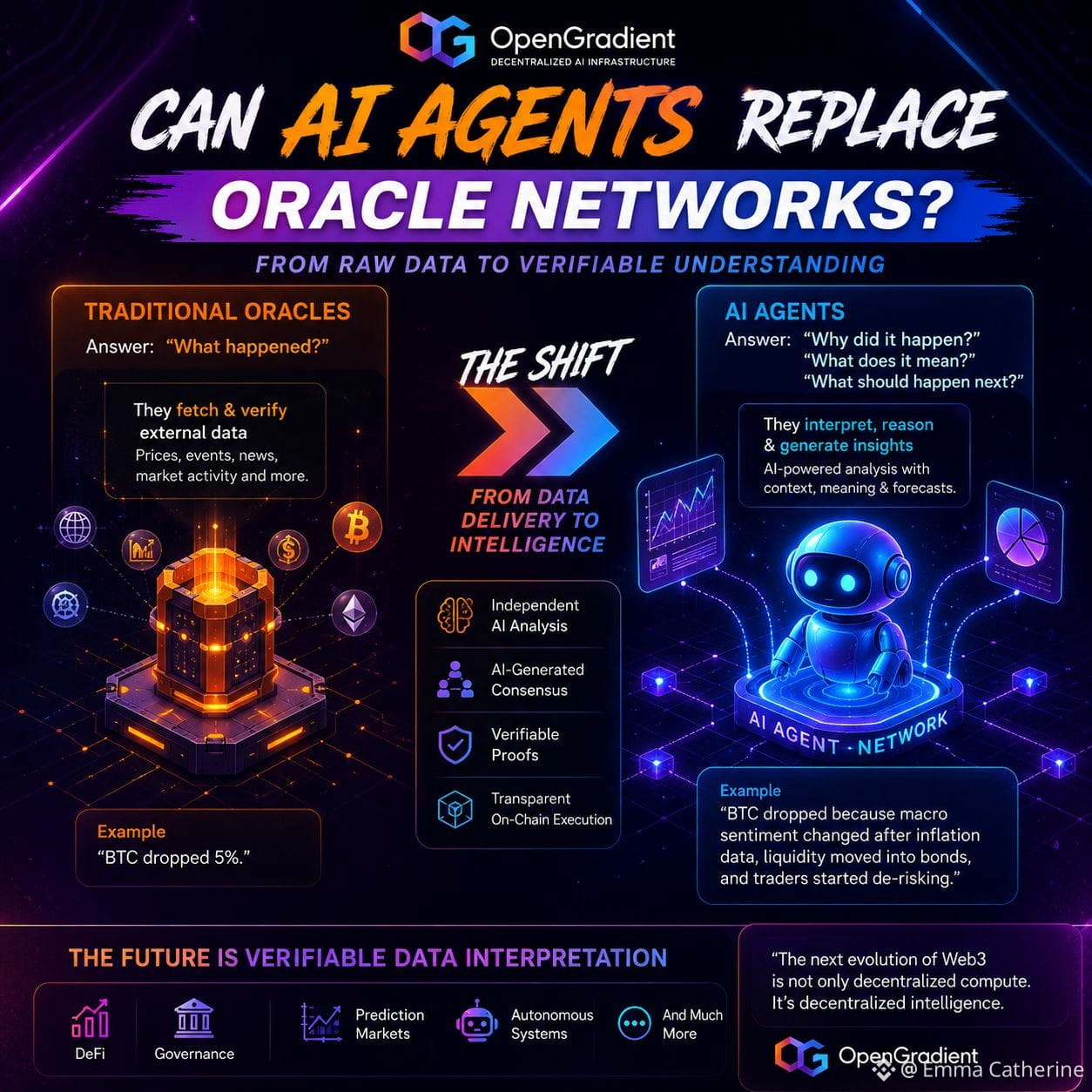
Traditional oracle networks are designed to answer:
“What happened?”
But AI agents can answer:
“Why did it happen?”
“What does it mean?”
“What should happen next?”
That changes everything.$Jager
Imagine a decentralized network of AI agents:
- analyzing real-world information independently
- interpreting market conditions
- reaching AI-generated consensus
- attaching verifiable proofs to outputs
- executing transparent on-chain decisions
This is bigger than simple data delivery.
It’s verifiable data interpretation.$POL
An oracle might report:
“ETH volatility increased.”
An AI agent could explain:
“ETH volatility increased because liquidity rotated after macro uncertainty, leverage increased across derivatives markets, and sentiment weakened after regulatory news.”
That layer of interpretation is where autonomous systems become truly intelligent.
In my view, this is one of the most underrated opportunities in decentralized AI.
And this is why infrastructure matters.
Without verifiable inference, decentralized AI becomes difficult to trust.
Without transparent execution, AI agents become black boxes.
Without decentralized compute, intelligence stays centralized.
I believe projects like @OpenGradient are helping build the foundation for a future where AI agents don’t just retrieve information —
they reason about reality in a verifiable way.
The next evolution of Web3 may not be powered only by smart contracts.
It may be powered by decentralized intelligence.
#OPG
$OPG I think we’re moving toward a world where protocols won’t just consume raw data —
they’ll consume AI-generated understanding.
Traditional oracle networks are designed to answer:
“What happened?”
But AI agents can answer:
“Why did it happen?”
“What does it mean?”
“What should happen next?”
That changes everything.$Jager
Imagine a decentralized network of AI agents:
- analyzing real-world information independently
- interpreting market conditions
- reaching AI-generated consensus
- attaching verifiable proofs to outputs
- executing transparent on-chain decisions
This is bigger than simple data delivery.
It’s verifiable data interpretation.$POL
An oracle might report:
“ETH volatility increased.”
An AI agent could explain:
“ETH volatility increased because liquidity rotated after macro uncertainty, leverage increased across derivatives markets, and sentiment weakened after regulatory news.”
That layer of interpretation is where autonomous systems become truly intelligent.
In my view, this is one of the most underrated opportunities in decentralized AI.
And this is why infrastructure matters.
Without verifiable inference, decentralized AI becomes difficult to trust.
Without transparent execution, AI agents become black boxes.
Without decentralized compute, intelligence stays centralized.
I believe projects like @OpenGradient are helping build the foundation for a future where AI agents don’t just retrieve information —
they reason about reality in a verifiable way.
The next evolution of Web3 may not be powered only by smart contracts.
It may be powered by decentralized intelligence.
#OPG
they’ll consume AI-generated understanding.
Traditional oracle networks are designed to answer:
“What happened?”
But AI agents can answer:
“Why did it happen?”
“What does it mean?”
“What should happen next?”
That changes everything.$Jager
Imagine a decentralized network of AI agents:
- analyzing real-world information independently
- interpreting market conditions
- reaching AI-generated consensus
- attaching verifiable proofs to outputs
- executing transparent on-chain decisions
This is bigger than simple data delivery.
It’s verifiable data interpretation.$POL
An oracle might report:
“ETH volatility increased.”
An AI agent could explain:
“ETH volatility increased because liquidity rotated after macro uncertainty, leverage increased across derivatives markets, and sentiment weakened after regulatory news.”
That layer of interpretation is where autonomous systems become truly intelligent.
In my view, this is one of the most underrated opportunities in decentralized AI.
And this is why infrastructure matters.
Without verifiable inference, decentralized AI becomes difficult to trust.
Without transparent execution, AI agents become black boxes.
Without decentralized compute, intelligence stays centralized.
I believe projects like @OpenGradient are helping build the foundation for a future where AI agents don’t just retrieve information —
they reason about reality in a verifiable way.
The next evolution of Web3 may not be powered only by smart contracts.
It may be powered by decentralized intelligence.
#OPG
11
12
715
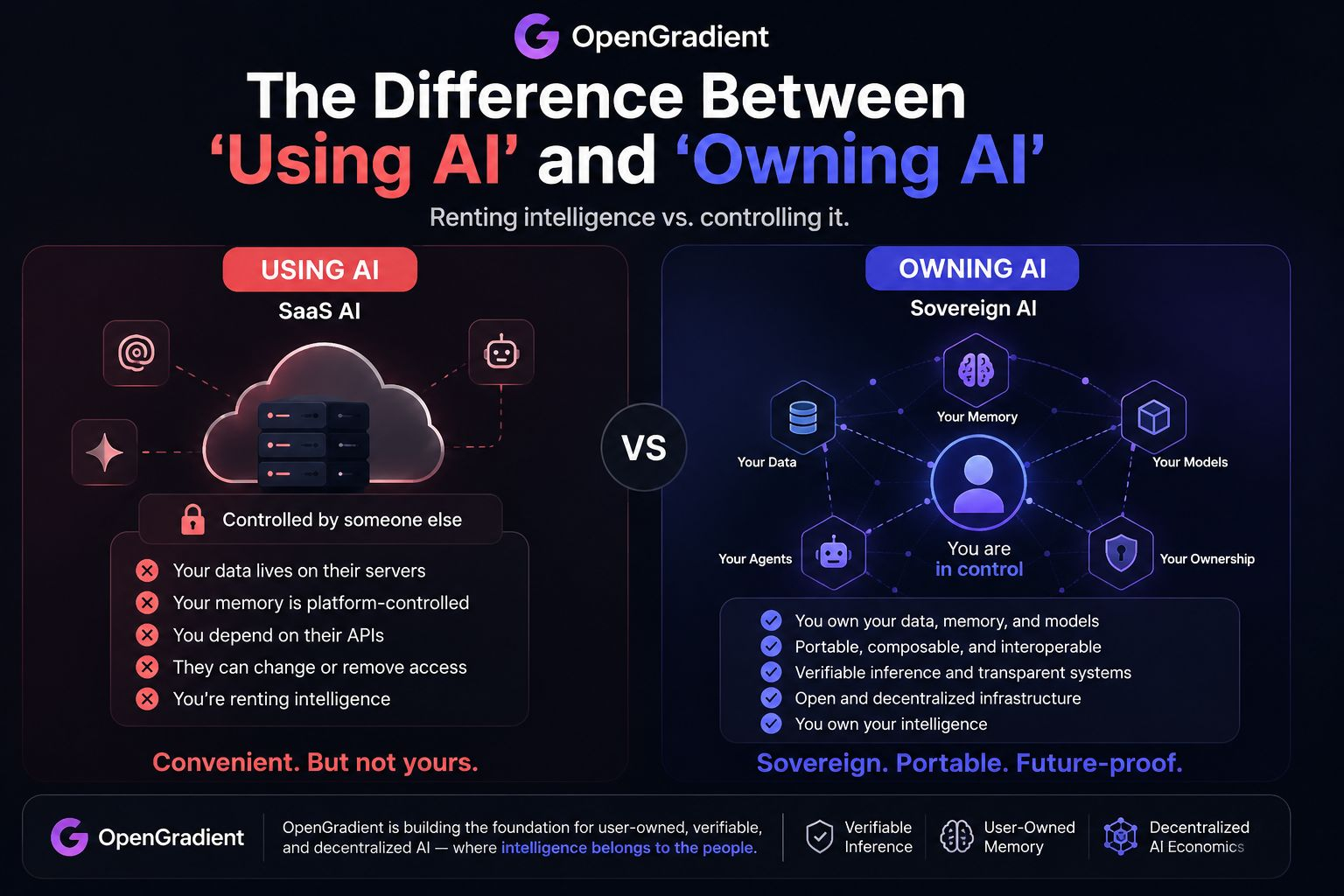
$OPG Most people today are using AI.
Very few actually own it.
There’s a big difference.
Right now, most AI works like SaaS:
- Your conversations live on someone else’s servers
- Your AI memory is controlled by a platform
- Your workflows depend on centralized APIs
- Your intelligence layer can change overnight without your consent
You’re not owning intelligence.
You’re renting it.
That model works — until it doesn’t.
The future of AI shouldn’t just be about smarter models. It should be about sovereignty.$ICP
I believe users should own:
- their AI memory
- their context
- their data
- their agents
- and eventually, their personalized models
That’s where decentralized AI becomes important.
Not because decentralization is trendy, but because intelligence is becoming infrastructure.
And infrastructure matters.$EDEN
If AI becomes the operating layer for work, creativity, finance, communication, and decision-making… then handing complete control of that layer to a few companies creates the same problems we saw in Web2:
- platform dependency
- lock-in
- invisible control
- limited transparency
@OpenGradient is interesting because it pushes the conversation beyond “AI apps” and into AI ownership.
Toward a future where:
- intelligence is portable
- inference is verifiable
- users control their memory
- and AI becomes more open, composable, and user-owned
The next era of AI won’t just be about who builds the best model.
It’ll be about who controls the intelligence layer itself.
#OPG
$OPG Most people today are using AI.
Very few actually own it.
There’s a big difference.
Right now, most AI works like SaaS:
- Your conversations live on someone else’s servers
- Your AI memory is controlled by a platform
- Your workflows depend on centralized APIs
- Your intelligence layer can change overnight without your consent
You’re not owning intelligence.
You’re renting it.
That model works — until it doesn’t.
The future of AI shouldn’t just be about smarter models. It should be about sovereignty.$ICP
I believe users should own:
- their AI memory
- their context
- their data
- their agents
- and eventually, their personalized models
That’s where decentralized AI becomes important.
Not because decentralization is trendy, but because intelligence is becoming infrastructure.
And infrastructure matters.$EDEN
If AI becomes the operating layer for work, creativity, finance, communication, and decision-making… then handing complete control of that layer to a few companies creates the same problems we saw in Web2:
- platform dependency
- lock-in
- invisible control
- limited transparency
@OpenGradient is interesting because it pushes the conversation beyond “AI apps” and into AI ownership.
Toward a future where:
- intelligence is portable
- inference is verifiable
- users control their memory
- and AI becomes more open, composable, and user-owned
The next era of AI won’t just be about who builds the best model.
It’ll be about who controls the intelligence layer itself.
#OPG
Very few actually own it.
There’s a big difference.
Right now, most AI works like SaaS:
- Your conversations live on someone else’s servers
- Your AI memory is controlled by a platform
- Your workflows depend on centralized APIs
- Your intelligence layer can change overnight without your consent
You’re not owning intelligence.
You’re renting it.
That model works — until it doesn’t.
The future of AI shouldn’t just be about smarter models. It should be about sovereignty.$ICP
I believe users should own:
- their AI memory
- their context
- their data
- their agents
- and eventually, their personalized models
That’s where decentralized AI becomes important.
Not because decentralization is trendy, but because intelligence is becoming infrastructure.
And infrastructure matters.$EDEN
If AI becomes the operating layer for work, creativity, finance, communication, and decision-making… then handing complete control of that layer to a few companies creates the same problems we saw in Web2:
- platform dependency
- lock-in
- invisible control
- limited transparency
@OpenGradient is interesting because it pushes the conversation beyond “AI apps” and into AI ownership.
Toward a future where:
- intelligence is portable
- inference is verifiable
- users control their memory
- and AI becomes more open, composable, and user-owned
The next era of AI won’t just be about who builds the best model.
It’ll be about who controls the intelligence layer itself.
#OPG
17
9
716
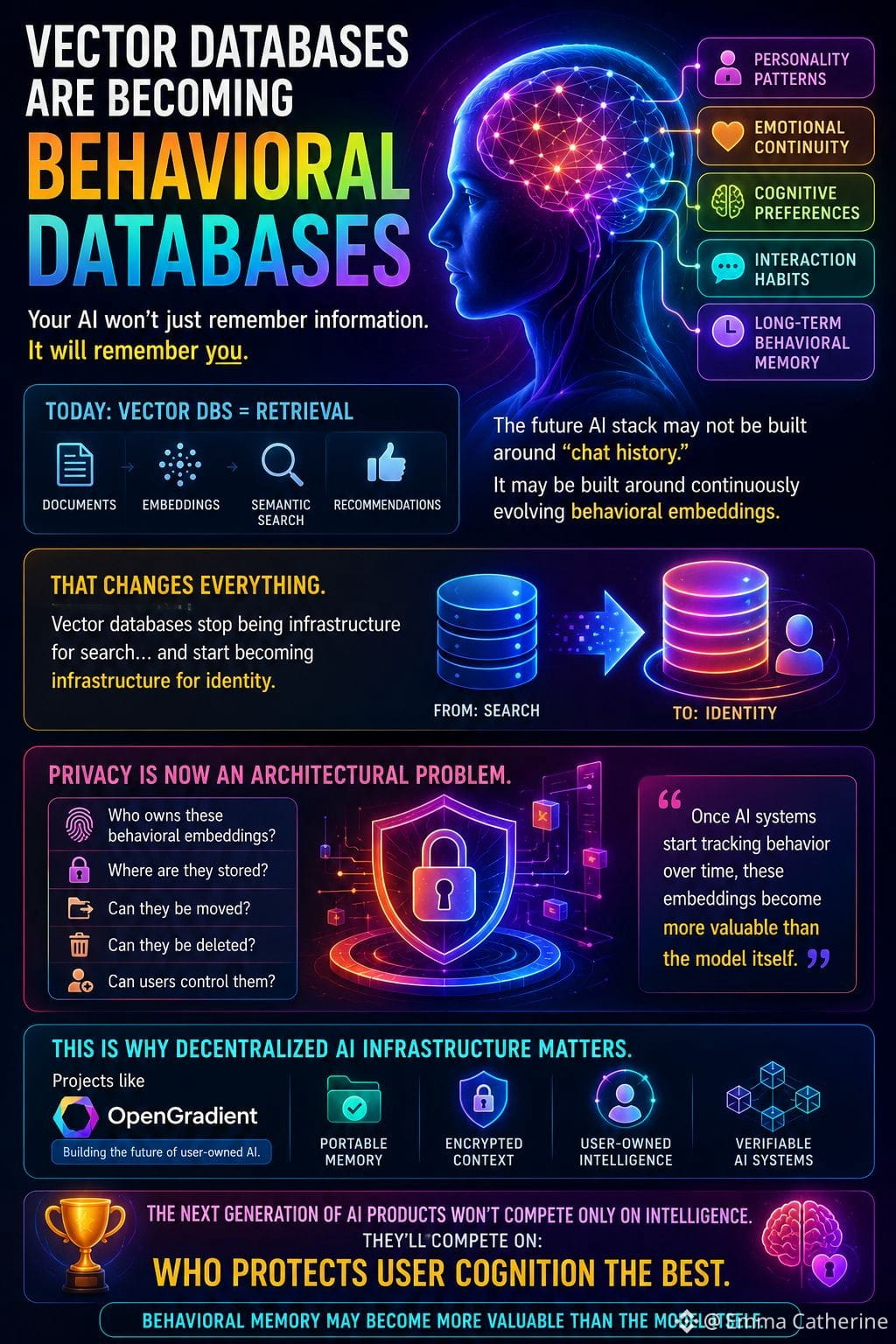
$OPG Most people think vector databases are just AI search tools.
I think they’re becoming something much bigger:
behavioral databases.
Right now, vector DBs are mainly used for retrieval:
documents, embeddings, semantic search, recommendations.
But over time, they may evolve into systems that store:
- personality patterns
- emotional continuity
- cognitive preferences
- interaction habits
- long-term behavioral memory
In simple terms:
Your AI won’t just remember information.
It will remember you.
How you think.
How you write.
What stresses you.
What motivates you.
What kind of answers you trust.$ARB
That changes everything.
The future AI stack may not be built around “chat history.”
It may be built around continuously evolving behavioral embeddings.
And honestly, I don’t think most people realize how important this shift is.
Because once AI systems start tracking behavior over time, vector databases stop being infrastructure for search…
and start becoming infrastructure for identity.
That’s where privacy suddenly becomes a very serious architectural problem.
Who owns these behavioral embeddings?
Where are they stored?
Can they be moved?
Can they be deleted?
Can users control them?
This is why decentralized AI infrastructure matters.
Projects like @OpenGradient are interesting to me because they push toward:
- portable memory
- encrypted context
- user-owned intelligence
- verifiable AI systems
I think the next generation of AI products won’t compete only on intelligence.$POL
They’ll compete on:
who protects user cognition the best.
And in the future, behavioral memory may become more valuable than the model itself.
#OPG
$OPG Most people think vector databases are just AI search tools.
I think they’re becoming something much bigger:
behavioral databases.
Right now, vector DBs are mainly used for retrieval:
documents, embeddings, semantic search, recommendations.
But over time, they may evolve into systems that store:
- personality patterns
- emotional continuity
- cognitive preferences
- interaction habits
- long-term behavioral memory
In simple terms:
Your AI won’t just remember information.
It will remember you.
How you think.
How you write.
What stresses you.
What motivates you.
What kind of answers you trust.$ARB
That changes everything.
The future AI stack may not be built around “chat history.”
It may be built around continuously evolving behavioral embeddings.
And honestly, I don’t think most people realize how important this shift is.
Because once AI systems start tracking behavior over time, vector databases stop being infrastructure for search…
and start becoming infrastructure for identity.
That’s where privacy suddenly becomes a very serious architectural problem.
Who owns these behavioral embeddings?
Where are they stored?
Can they be moved?
Can they be deleted?
Can users control them?
This is why decentralized AI infrastructure matters.
Projects like @OpenGradient are interesting to me because they push toward:
- portable memory
- encrypted context
- user-owned intelligence
- verifiable AI systems
I think the next generation of AI products won’t compete only on intelligence.$POL
They’ll compete on:
who protects user cognition the best.
And in the future, behavioral memory may become more valuable than the model itself.
#OPG
I think they’re becoming something much bigger:
behavioral databases.
Right now, vector DBs are mainly used for retrieval:
documents, embeddings, semantic search, recommendations.
But over time, they may evolve into systems that store:
- personality patterns
- emotional continuity
- cognitive preferences
- interaction habits
- long-term behavioral memory
In simple terms:
Your AI won’t just remember information.
It will remember you.
How you think.
How you write.
What stresses you.
What motivates you.
What kind of answers you trust.$ARB
That changes everything.
The future AI stack may not be built around “chat history.”
It may be built around continuously evolving behavioral embeddings.
And honestly, I don’t think most people realize how important this shift is.
Because once AI systems start tracking behavior over time, vector databases stop being infrastructure for search…
and start becoming infrastructure for identity.
That’s where privacy suddenly becomes a very serious architectural problem.
Who owns these behavioral embeddings?
Where are they stored?
Can they be moved?
Can they be deleted?
Can users control them?
This is why decentralized AI infrastructure matters.
Projects like @OpenGradient are interesting to me because they push toward:
- portable memory
- encrypted context
- user-owned intelligence
- verifiable AI systems
I think the next generation of AI products won’t compete only on intelligence.$POL
They’ll compete on:
who protects user cognition the best.
And in the future, behavioral memory may become more valuable than the model itself.
#OPG
11
9
400
$OPG Most AI tutorials teach you how to build agents.
Very few teach you how to trust them.
That’s the real problem.
As AI agents start making decisions, moving money, executing transactions, and interacting with users autonomously, “smart” is no longer enough.
We need AI systems that can be audited.$POL
This is where verifiable AI becomes important.
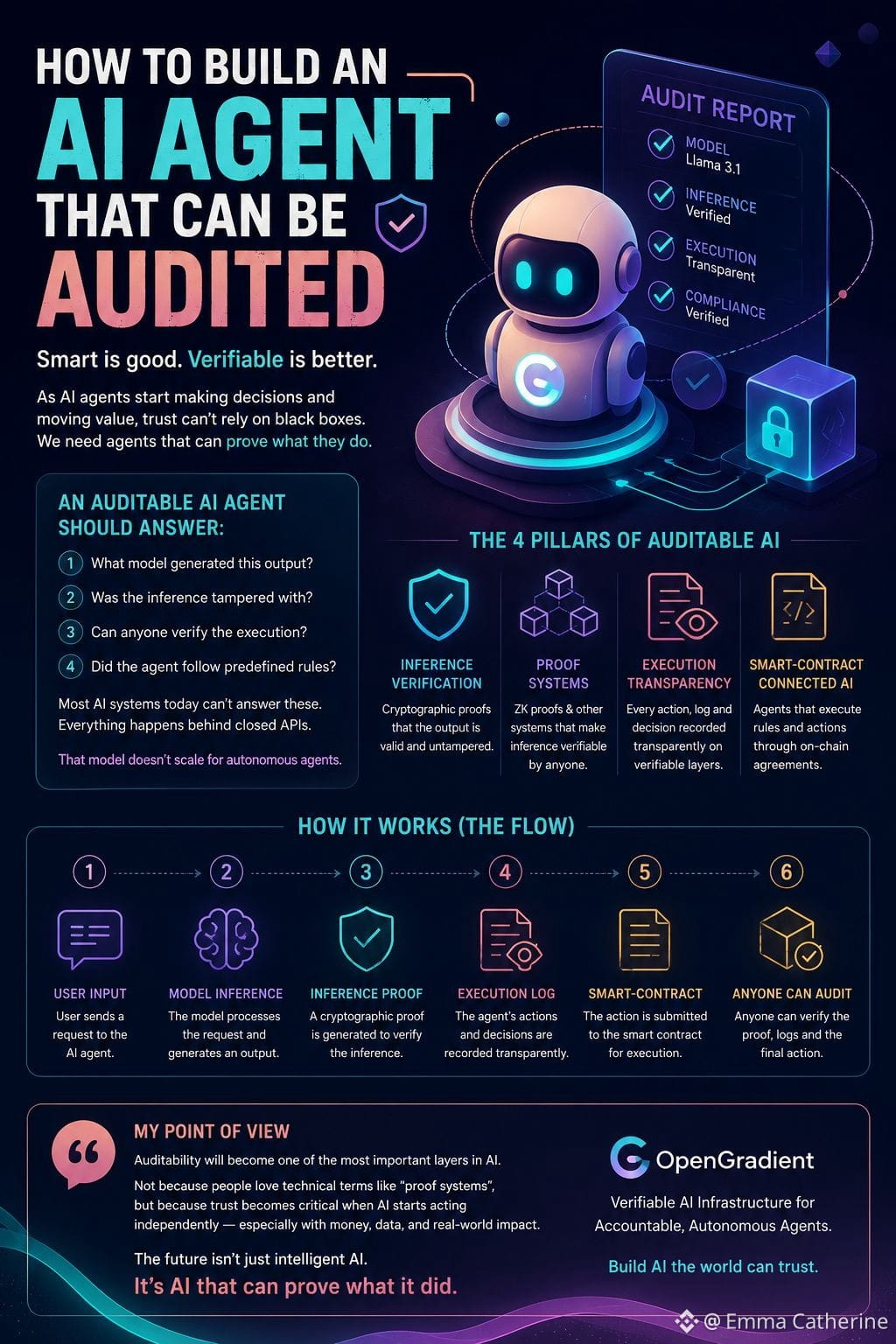
An auditable AI agent should answer four basic questions:
1. What model generated this output?
2. Was the inference tampered with?
3. Can anyone verify the execution?
4. Did the agent follow predefined rules?
Most AI systems today can’t answer these clearly.
Everything happens behind closed APIs.
You send a prompt.
You get a response.
You trust the black box.$EDEN
That model doesn’t scale for autonomous agents.
The next generation of AI infrastructure needs:
→ Inference verification
→ Cryptographic proof systems
→ Transparent execution logs
→ Smart-contract-connected decision making
This is why I find @OpenGradient ’s approach interesting.
Instead of treating AI like a closed assistant, OpenGradient treats it like verifiable infrastructure.
That changes the conversation completely.
Imagine an AI agent that:
- executes on-chain actions,
- stores transparent execution records,
- produces verifiable inference proofs,
- and can be audited after every decision.
Now AI becomes accountable.
And accountability is what separates a toy AI demo from real-world autonomous systems.
Personally, I think auditability will become one of the most important layers in AI over the next few years.
Not because users care about “proof systems” technically —
but because trust becomes critical once AI starts acting independently.
The future isn’t just intelligent AI.
It’s AI that can prove what it did.
#OPG
$OPG Most AI tutorials teach you how to build agents.
Very few teach you how to trust them.
That’s the real problem.
As AI agents start making decisions, moving money, executing transactions, and interacting with users autonomously, “smart” is no longer enough.
We need AI systems that can be audited.$POL
This is where verifiable AI becomes important.
An auditable AI agent should answer four basic questions:
1. What model generated this output?
2. Was the inference tampered with?
3. Can anyone verify the execution?
4. Did the agent follow predefined rules?
Most AI systems today can’t answer these clearly.
Everything happens behind closed APIs.
You send a prompt.
You get a response.
You trust the black box.$EDEN
That model doesn’t scale for autonomous agents.
The next generation of AI infrastructure needs:
→ Inference verification
→ Cryptographic proof systems
→ Transparent execution logs
→ Smart-contract-connected decision making
This is why I find @OpenGradient ’s approach interesting.
Instead of treating AI like a closed assistant, OpenGradient treats it like verifiable infrastructure.
That changes the conversation completely.
Imagine an AI agent that:
- executes on-chain actions,
- stores transparent execution records,
- produces verifiable inference proofs,
- and can be audited after every decision.
Now AI becomes accountable.
And accountability is what separates a toy AI demo from real-world autonomous systems.
Personally, I think auditability will become one of the most important layers in AI over the next few years.
Not because users care about “proof systems” technically —
but because trust becomes critical once AI starts acting independently.
The future isn’t just intelligent AI.
It’s AI that can prove what it did.
#OPG
Very few teach you how to trust them.
That’s the real problem.
As AI agents start making decisions, moving money, executing transactions, and interacting with users autonomously, “smart” is no longer enough.
We need AI systems that can be audited.$POL
This is where verifiable AI becomes important.
An auditable AI agent should answer four basic questions:
1. What model generated this output?
2. Was the inference tampered with?
3. Can anyone verify the execution?
4. Did the agent follow predefined rules?
Most AI systems today can’t answer these clearly.
Everything happens behind closed APIs.
You send a prompt.
You get a response.
You trust the black box.$EDEN
That model doesn’t scale for autonomous agents.
The next generation of AI infrastructure needs:
→ Inference verification
→ Cryptographic proof systems
→ Transparent execution logs
→ Smart-contract-connected decision making
This is why I find @OpenGradient ’s approach interesting.
Instead of treating AI like a closed assistant, OpenGradient treats it like verifiable infrastructure.
That changes the conversation completely.
Imagine an AI agent that:
- executes on-chain actions,
- stores transparent execution records,
- produces verifiable inference proofs,
- and can be audited after every decision.
Now AI becomes accountable.
And accountability is what separates a toy AI demo from real-world autonomous systems.
Personally, I think auditability will become one of the most important layers in AI over the next few years.
Not because users care about “proof systems” technically —
but because trust becomes critical once AI starts acting independently.
The future isn’t just intelligent AI.
It’s AI that can prove what it did.
#OPG
17
12
616
$OPG “Can Smart Contracts Become Autonomous Researchers?”
Right now, smart contracts only execute predefined rules.
They don’t think, analyze, or improve themselves.
But AI agents could completely change that.
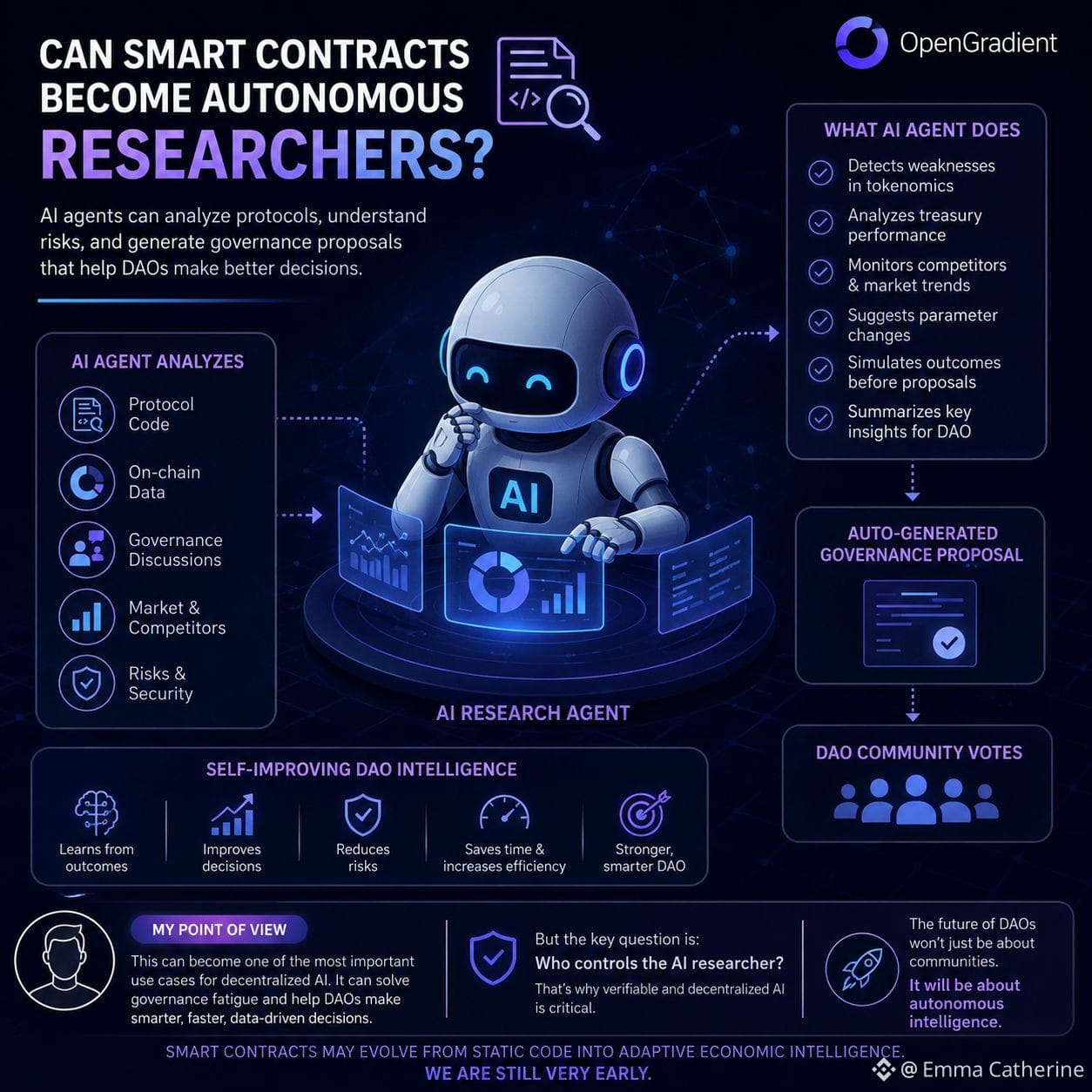
Imagine a DAO where AI continuously studies protocols, tracks governance activity, analyzes risks, compares market behavior, and automatically suggests governance proposals based on real-time data.
Not just automation.
Actual research.
An AI agent could:
- detect weaknesses in tokenomics
- analyze treasury performance
- monitor competitor protocols
- suggest parameter changes
- summarize governance discussions
- even simulate outcomes before proposals go live
Over time, these systems may evolve into “self-improving DAO intelligence” — where governance becomes smarter, faster, and more data-driven.
This is why decentralized AI infrastructure matters so much.
Projects like @OpenGradient are helping push this vision forward by enabling AI systems that can operate in more transparent, verifiable, and decentralized environments instead of relying entirely on centralized intelligence layers.
To me, this could become one of the most important long-term use cases for decentralized AI.$ARB
Today, most DAOs suffer from low participation, slow decision-making, and governance fatigue. Most people simply don’t have time to read every proposal or analyze every risk.
AI agents can reduce that friction dramatically.
But there’s also a major question:
Who controls the AI researcher?
If the intelligence layer is centralized, then governance only appears decentralized on the surface.$POL
That’s why verifiable AI, decentralized compute, and transparent agent behavior will matter more and more over time.
In the future, the strongest protocols may not just have communities.
They’ll have autonomous research systems constantly working in the background.
Smart contracts could evolve from static code into adaptive economic intelligence.
And honestly, we’re probably still very early.
#OPG
$OPG “Can Smart Contracts Become Autonomous Researchers?”
Right now, smart contracts only execute predefined rules.
They don’t think, analyze, or improve themselves.
But AI agents could completely change that.
Imagine a DAO where AI continuously studies protocols, tracks governance activity, analyzes risks, compares market behavior, and automatically suggests governance proposals based on real-time data.
Not just automation.
Actual research.
An AI agent could:
- detect weaknesses in tokenomics
- analyze treasury performance
- monitor competitor protocols
- suggest parameter changes
- summarize governance discussions
- even simulate outcomes before proposals go live
Over time, these systems may evolve into “self-improving DAO intelligence” — where governance becomes smarter, faster, and more data-driven.
This is why decentralized AI infrastructure matters so much.
Projects like @OpenGradient are helping push this vision forward by enabling AI systems that can operate in more transparent, verifiable, and decentralized environments instead of relying entirely on centralized intelligence layers.
To me, this could become one of the most important long-term use cases for decentralized AI.$ARB
Today, most DAOs suffer from low participation, slow decision-making, and governance fatigue. Most people simply don’t have time to read every proposal or analyze every risk.
AI agents can reduce that friction dramatically.
But there’s also a major question:
Who controls the AI researcher?
If the intelligence layer is centralized, then governance only appears decentralized on the surface.$POL
That’s why verifiable AI, decentralized compute, and transparent agent behavior will matter more and more over time.
In the future, the strongest protocols may not just have communities.
They’ll have autonomous research systems constantly working in the background.
Smart contracts could evolve from static code into adaptive economic intelligence.
And honestly, we’re probably still very early.
#OPG
Right now, smart contracts only execute predefined rules.
They don’t think, analyze, or improve themselves.
But AI agents could completely change that.
Imagine a DAO where AI continuously studies protocols, tracks governance activity, analyzes risks, compares market behavior, and automatically suggests governance proposals based on real-time data.
Not just automation.
Actual research.
An AI agent could:
- detect weaknesses in tokenomics
- analyze treasury performance
- monitor competitor protocols
- suggest parameter changes
- summarize governance discussions
- even simulate outcomes before proposals go live
Over time, these systems may evolve into “self-improving DAO intelligence” — where governance becomes smarter, faster, and more data-driven.
This is why decentralized AI infrastructure matters so much.
Projects like @OpenGradient are helping push this vision forward by enabling AI systems that can operate in more transparent, verifiable, and decentralized environments instead of relying entirely on centralized intelligence layers.
To me, this could become one of the most important long-term use cases for decentralized AI.$ARB
Today, most DAOs suffer from low participation, slow decision-making, and governance fatigue. Most people simply don’t have time to read every proposal or analyze every risk.
AI agents can reduce that friction dramatically.
But there’s also a major question:
Who controls the AI researcher?
If the intelligence layer is centralized, then governance only appears decentralized on the surface.$POL
That’s why verifiable AI, decentralized compute, and transparent agent behavior will matter more and more over time.
In the future, the strongest protocols may not just have communities.
They’ll have autonomous research systems constantly working in the background.
Smart contracts could evolve from static code into adaptive economic intelligence.
And honestly, we’re probably still very early.
#OPG
11
10
361
Log in to explore more content
Join global crypto users on Binance Square
⚡️ Get latest and useful information about crypto.
💬 Trusted by the world’s largest crypto exchange.
👍 Discover real insights from verified creators.
Email / Phone number
Trending Topics
EtherGains70.9%InQ3
105,245 views
970 Discussing
One of the best third quarters in history 💰
September closed out last night, and with it, the quarter. For the quarter, BTC is up 42%—the second-best Q3 on record. ETH had a record-breaking Q3 overall, up 70%.
Looking at the chart, things are still looking good: we’re holding support, but we’re testing it more and more often. Plus, ETF momentum is weakening — inflows are gradually declining, and yesterday saw outflows for the first time in a long while.
Yes, historically, October has been a good month for crypto — it’s not called “Uptober” for nothing. But it’s also one of the most volatile months. Last year, for example, we managed to hit a new all-time high (ATH) and experience a flash crash.
🚀 High Accuracy Trades.
$BTC
$ETH
$SOL
#EtherGains70.9%InQ3 #DollarIndexHitsHighestSinceMay2025 #CFTCSubmitsTwoEventContractRulesToWhiteHouse #MicronBeatsEarningsLiftsGuidance
Knowledge is Power
·0 Likes
·191 views
TreasuryLetsStatesFileStablecoinCertificationsEarly
5,627 views
64 Discussing
US10YearYieldNears5.3%
124,485 views
1,022 Discussing