

Eli Root_67
5k Posts

Eli Root_67
Report
Block User
Crypto Enthusiast Trade Master GEN KOL
339 Following
16.3K+ Followers
1.8K+ Liked
Posts
All
Quotes
Live
·
--
🎙️ Build the Binance Plaza, DCA BNB|Today with BTC leading the way, the whole market is green—did everyone get meat? Let’s chat~

End
05 h 31 m 16 s
16.8k
42
59
·
--
Bullish
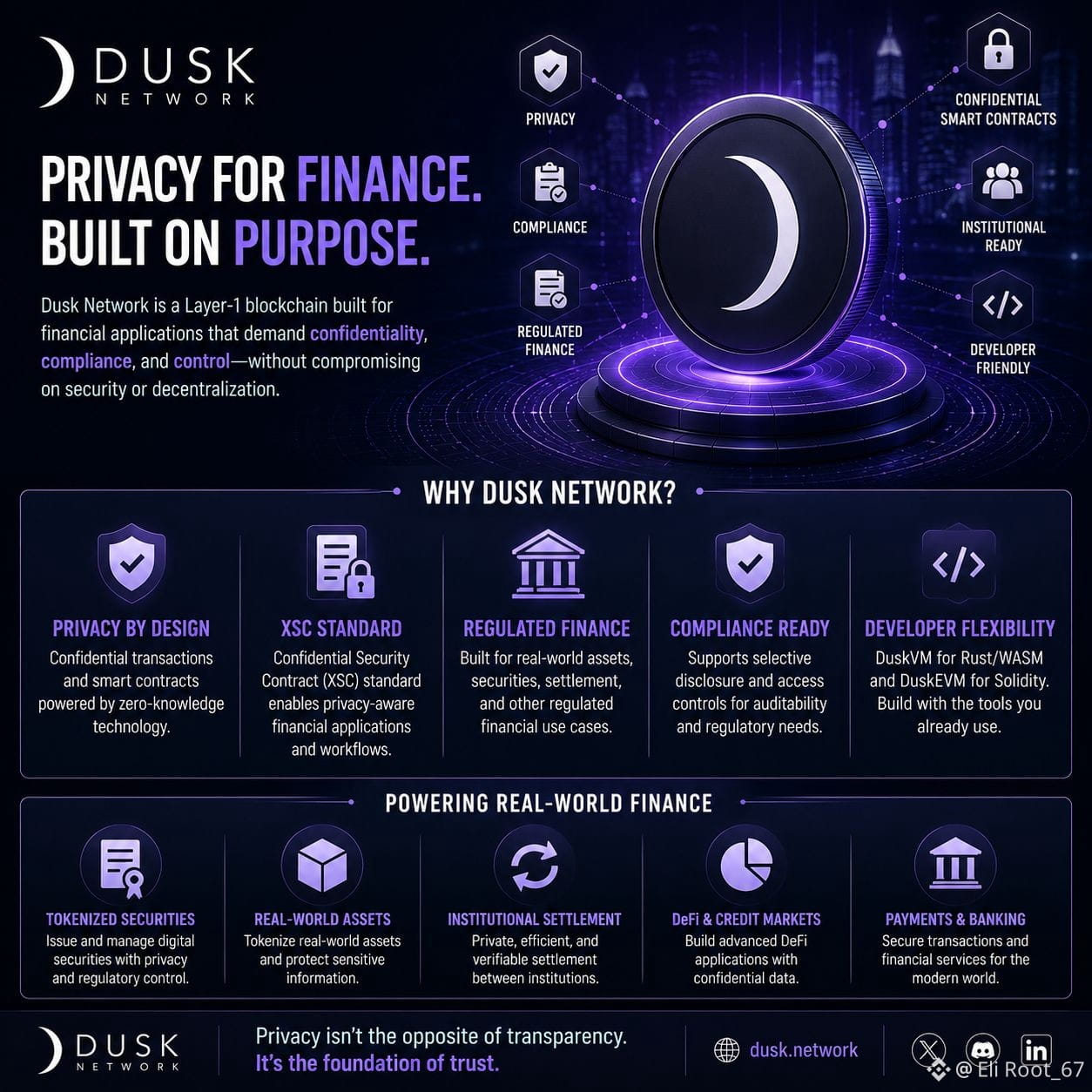
DUSK is building something the next phase of on-chain finance will need: privacy with control.
Its Layer-1 infrastructure is designed for financial applications where confidentiality, compliance, and verifiability all matter.
With confidential smart contracts and the XSC standard, DUSK is targeting real financial use cases such as tokenized securities, regulated assets, and institutional settlement.
The key isn’t making everything private.
It’s giving users and institutions control over what is disclosed, to whom, and when.
That’s a much stronger proposition for regulated finance.
DUSK isn’t trying to make blockchain less transparent.
It’s working toward making transparency selective, useful, and compatible with financial privacy.
For me, that’s the real thesis:
Privacy isn’t a barrier to on-chain finance.
It could be the infrastructure that makes it possible
@Dusk_Foundation $DUSK #dusk
{future}(DUSKUSDT)
DUSK is building something the next phase of on-chain finance will need: privacy with control.
Its Layer-1 infrastructure is designed for financial applications where confidentiality, compliance, and verifiability all matter.
With confidential smart contracts and the XSC standard, DUSK is targeting real financial use cases such as tokenized securities, regulated assets, and institutional settlement.
The key isn’t making everything private.
It’s giving users and institutions control over what is disclosed, to whom, and when.
That’s a much stronger proposition for regulated finance.
DUSK isn’t trying to make blockchain less transparent.
It’s working toward making transparency selective, useful, and compatible with financial privacy.
For me, that’s the real thesis:
Privacy isn’t a barrier to on-chain finance.
It could be the infrastructure that makes it possible
@Dusk $DUSK #dusk
Its Layer-1 infrastructure is designed for financial applications where confidentiality, compliance, and verifiability all matter.
With confidential smart contracts and the XSC standard, DUSK is targeting real financial use cases such as tokenized securities, regulated assets, and institutional settlement.
The key isn’t making everything private.
It’s giving users and institutions control over what is disclosed, to whom, and when.
That’s a much stronger proposition for regulated finance.
DUSK isn’t trying to make blockchain less transparent.
It’s working toward making transparency selective, useful, and compatible with financial privacy.
For me, that’s the real thesis:
Privacy isn’t a barrier to on-chain finance.
It could be the infrastructure that makes it possible
@Dusk $DUSK #dusk
99
·
--
Bullish
$ACE
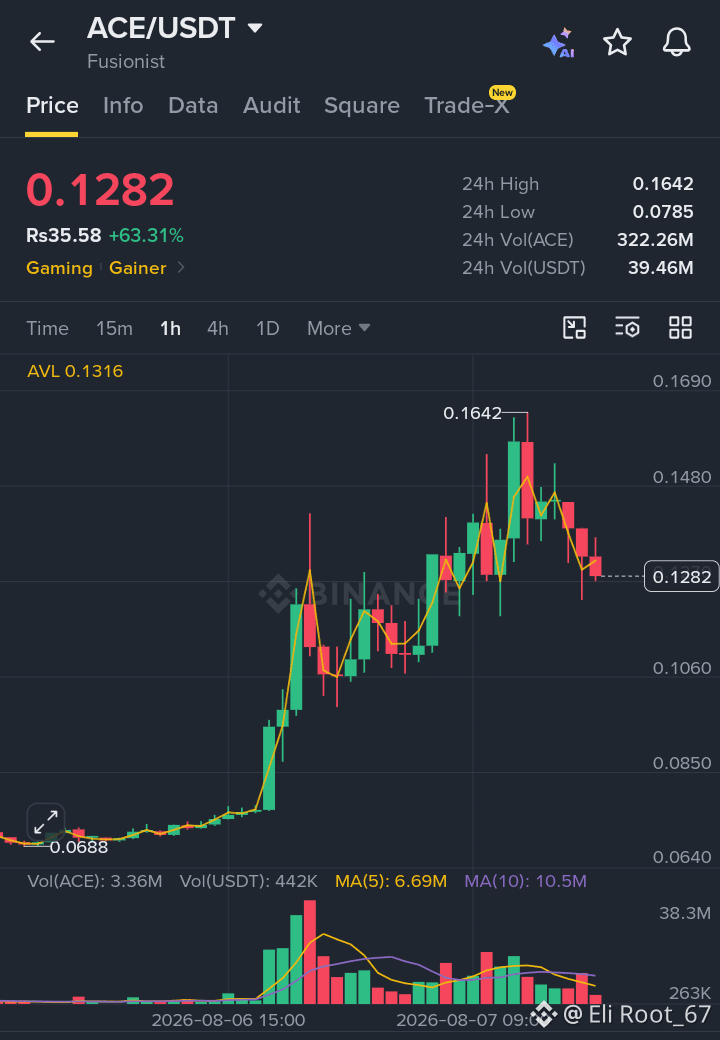
ACE is leading today's market with an impressive 89.31% gain. Buyers have taken full control after a strong breakout, supported by rising momentum and volume. If this strength continues, traders will be watching whether the price can establish a new support zone rather than giving back gains. Patience is key after such an explosive move.
#SKHynixToInvest19.1TWonInM17Plant
#TSEPlansReReviewForMajorBusinessChanges #GoldBreaksOutFromJanuaryDowntrend
{future}(ACEUSDT)
$ACE
ACE is leading today's market with an impressive 89.31% gain. Buyers have taken full control after a strong breakout, supported by rising momentum and volume. If this strength continues, traders will be watching whether the price can establish a new support zone rather than giving back gains. Patience is key after such an explosive move.
#SKHynixToInvest19.1TWonInM17Plant
#TSEPlansReReviewForMajorBusinessChanges #GoldBreaksOutFromJanuaryDowntrend
ACE is leading today's market with an impressive 89.31% gain. Buyers have taken full control after a strong breakout, supported by rising momentum and volume. If this strength continues, traders will be watching whether the price can establish a new support zone rather than giving back gains. Patience is key after such an explosive move.
#SKHynixToInvest19.1TWonInM17Plant
#TSEPlansReReviewForMajorBusinessChanges #GoldBreaksOutFromJanuaryDowntrend
250
·
--
Bullish
$ROBO
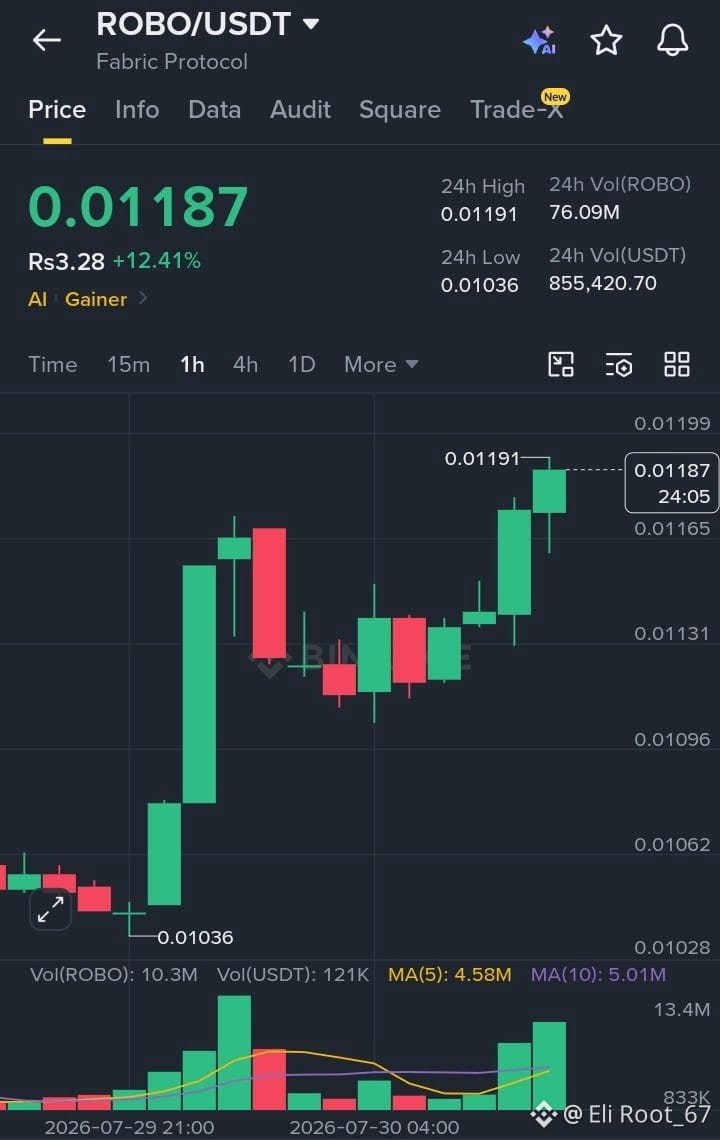
Market Event: Price reclaimed support after a liquidity sweep beneath recent lows. Momentum Implication: Buyers have regained short-term control with room for continuation.
Levels: • EP: 0.01160–0.01180 • TG1: 0.01240 • TG2: 0.01310 • TG3: 0.01400 • SL: 0.01110
Trade Decision: Stay long only while price remains above reclaimed support.
Close: Holding this level favors another push higher.
#US30YearYieldClimbsToNear5.23% #SenatorsReachClarityActEthicsCompromise
{future}(ROBOUSDT)
$ROBO
Market Event: Price reclaimed support after a liquidity sweep beneath recent lows. Momentum Implication: Buyers have regained short-term control with room for continuation.
Levels: • EP: 0.01160–0.01180 • TG1: 0.01240 • TG2: 0.01310 • TG3: 0.01400 • SL: 0.01110
Trade Decision: Stay long only while price remains above reclaimed support.
Close: Holding this level favors another push higher.
#US30YearYieldClimbsToNear5.23% #SenatorsReachClarityActEthicsCompromise
Market Event: Price reclaimed support after a liquidity sweep beneath recent lows. Momentum Implication: Buyers have regained short-term control with room for continuation.
Levels: • EP: 0.01160–0.01180 • TG1: 0.01240 • TG2: 0.01310 • TG3: 0.01400 • SL: 0.01110
Trade Decision: Stay long only while price remains above reclaimed support.
Close: Holding this level favors another push higher.
#US30YearYieldClimbsToNear5.23% #SenatorsReachClarityActEthicsCompromise
71
·
--
Bullish
$KORUB
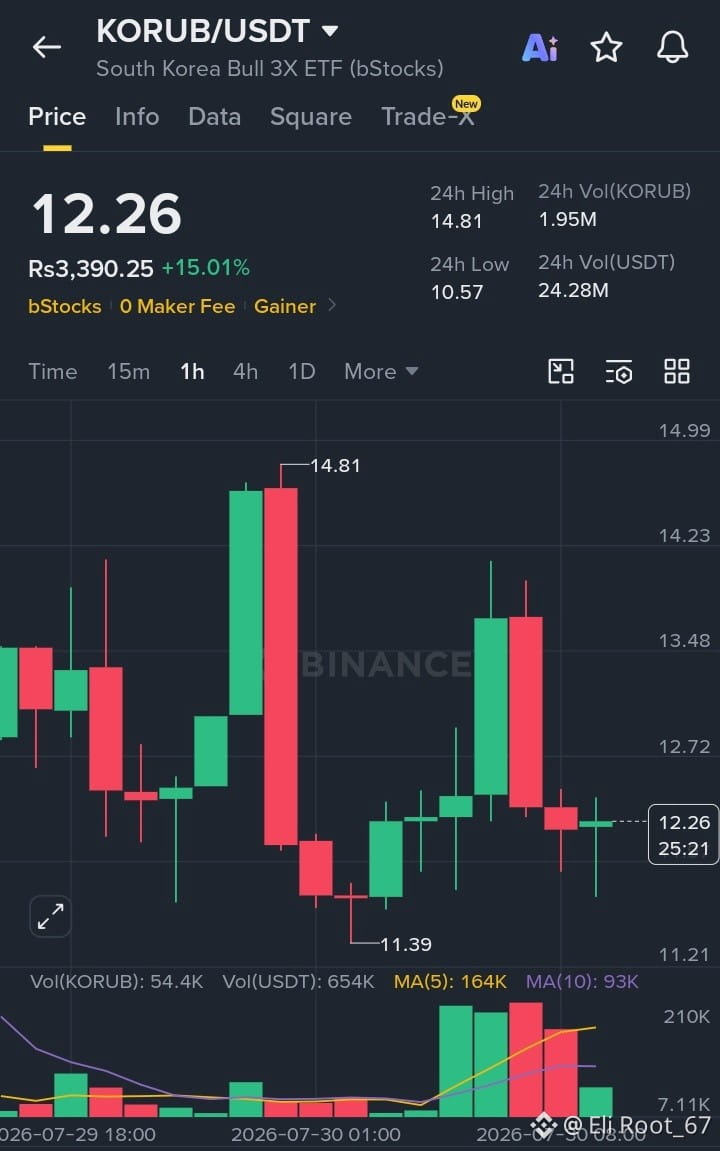
Market Event: Price rejected downside attempts and defended a major demand area. Momentum Implication: The structure remains constructive with buyers maintaining control.
Levels: • EP: 11.95–12.15 • TG1: 12.80 • TG2: 13.50 • TG3: 14.20 • SL: 11.55
Trade Decision: Favor longs while the higher-low sequence remains intact.
Close: Continued support defense keeps the trend positive.
#US30YearYieldClimbsToNear5.23% #SenatorsReachClarityActEthicsCompromise
{future}(KORUUSDT)
$KORUB
Market Event: Price rejected downside attempts and defended a major demand area. Momentum Implication: The structure remains constructive with buyers maintaining control.
Levels: • EP: 11.95–12.15 • TG1: 12.80 • TG2: 13.50 • TG3: 14.20 • SL: 11.55
Trade Decision: Favor longs while the higher-low sequence remains intact.
Close: Continued support defense keeps the trend positive.
#US30YearYieldClimbsToNear5.23% #SenatorsReachClarityActEthicsCompromise
Market Event: Price rejected downside attempts and defended a major demand area. Momentum Implication: The structure remains constructive with buyers maintaining control.
Levels: • EP: 11.95–12.15 • TG1: 12.80 • TG2: 13.50 • TG3: 14.20 • SL: 11.55
Trade Decision: Favor longs while the higher-low sequence remains intact.
Close: Continued support defense keeps the trend positive.
#US30YearYieldClimbsToNear5.23% #SenatorsReachClarityActEthicsCompromise
60
·
--
Bullish
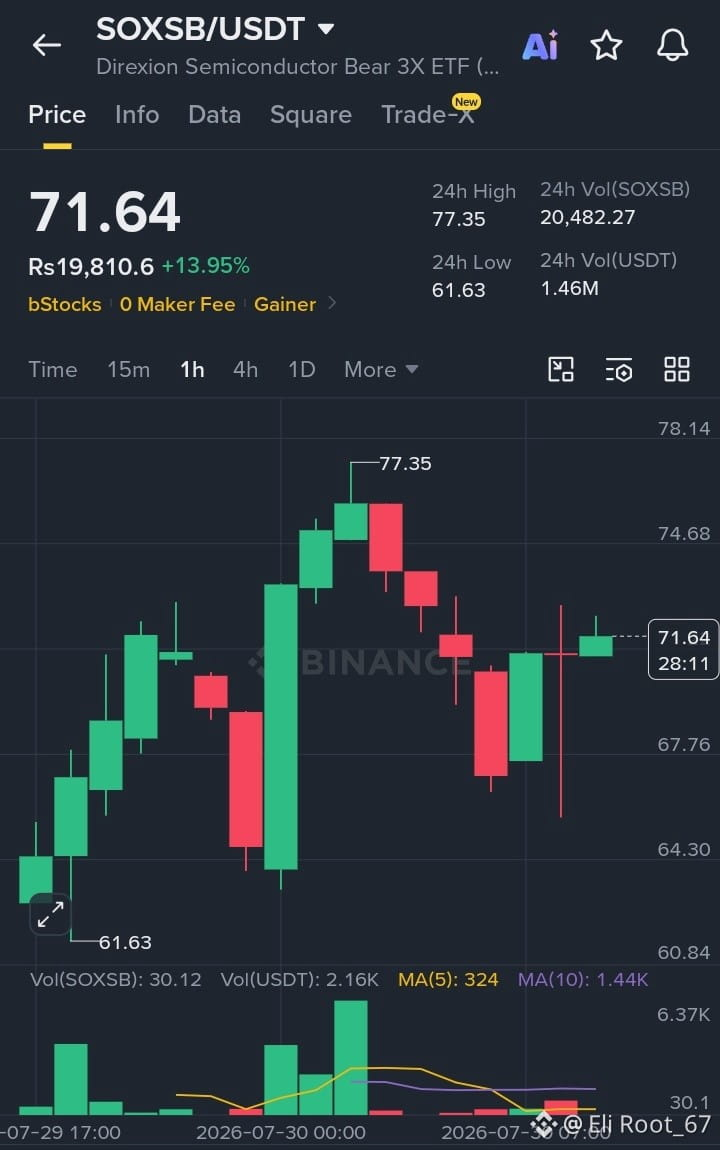
$SOXSB
Market Event: Price broke above consolidation after a sustained key level defense. Momentum Implication: Trend continuation remains favored while the breakout level holds.
Levels: • EP: 71.50–72.30 • TG1: 74.50 • TG2: 77.00 • TG3: 80.00 • SL: 69.80
Trade Decision: Buy only on controlled pullbacks into support.
Close: Holding the breakout zone favors higher prices.
#US30YearYieldClimbsToNear5.23% #USLaunchesFreshStrikesOnIRGC
{spot}(SOXSBUSDT)
$SOXSB
Market Event: Price broke above consolidation after a sustained key level defense. Momentum Implication: Trend continuation remains favored while the breakout level holds.
Levels: • EP: 71.50–72.30 • TG1: 74.50 • TG2: 77.00 • TG3: 80.00 • SL: 69.80
Trade Decision: Buy only on controlled pullbacks into support.
Close: Holding the breakout zone favors higher prices.
#US30YearYieldClimbsToNear5.23% #USLaunchesFreshStrikesOnIRGC
Market Event: Price broke above consolidation after a sustained key level defense. Momentum Implication: Trend continuation remains favored while the breakout level holds.
Levels: • EP: 71.50–72.30 • TG1: 74.50 • TG2: 77.00 • TG3: 80.00 • SL: 69.80
Trade Decision: Buy only on controlled pullbacks into support.
Close: Holding the breakout zone favors higher prices.
#US30YearYieldClimbsToNear5.23% #USLaunchesFreshStrikesOnIRGC
81
·
--
Bullish
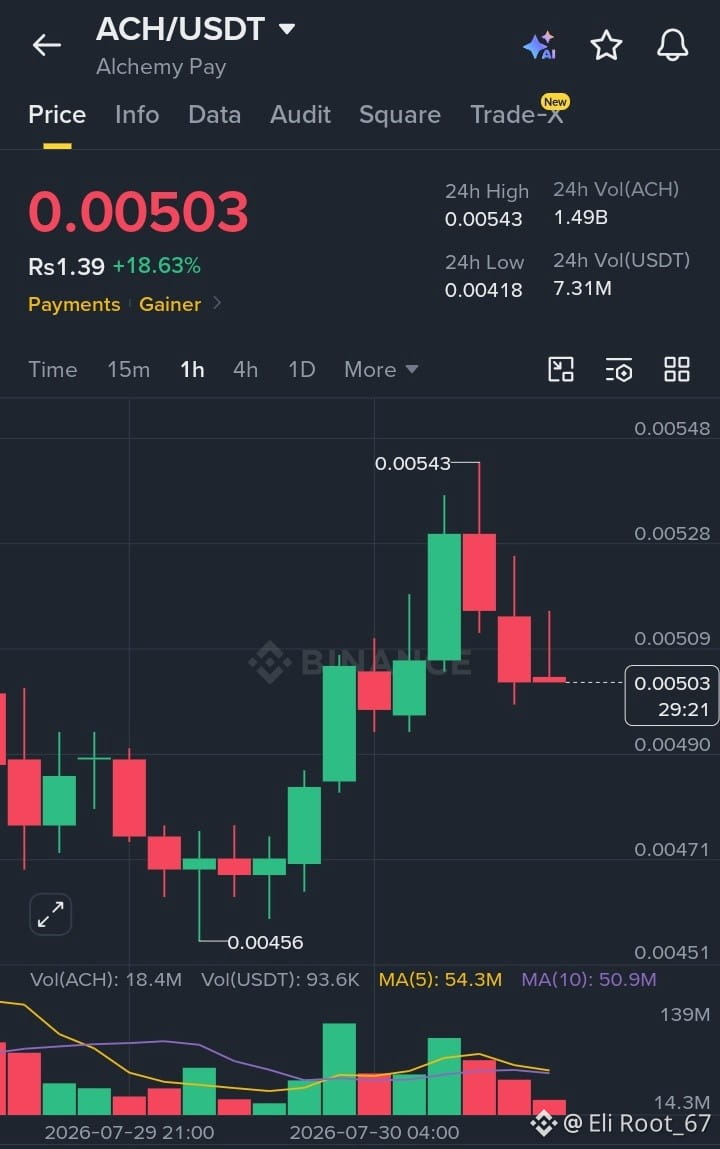
$ACH
Market Event: Price completed a liquidity sweep below support before reclaiming the range. Momentum Implication: Failed breakdowns frequently attract fresh buying interest.
Levels: • EP: 0.00500–0.00510 • TG1: 0.00545 • TG2: 0.00580 • TG3: 0.00620 • SL: 0.00482
Trade Decision: Long exposure remains valid while the reclaimed range is defended.
Close: Holding support keeps the recovery intact.
#USLaunchesFreshStrikesOnIRGC #SenatorsReachClarityActEthicsCompromise
{future}(ACHUSDT)
$ACH
Market Event: Price completed a liquidity sweep below support before reclaiming the range. Momentum Implication: Failed breakdowns frequently attract fresh buying interest.
Levels: • EP: 0.00500–0.00510 • TG1: 0.00545 • TG2: 0.00580 • TG3: 0.00620 • SL: 0.00482
Trade Decision: Long exposure remains valid while the reclaimed range is defended.
Close: Holding support keeps the recovery intact.
#USLaunchesFreshStrikesOnIRGC #SenatorsReachClarityActEthicsCompromise
Market Event: Price completed a liquidity sweep below support before reclaiming the range. Momentum Implication: Failed breakdowns frequently attract fresh buying interest.
Levels: • EP: 0.00500–0.00510 • TG1: 0.00545 • TG2: 0.00580 • TG3: 0.00620 • SL: 0.00482
Trade Decision: Long exposure remains valid while the reclaimed range is defended.
Close: Holding support keeps the recovery intact.
#USLaunchesFreshStrikesOnIRGC #SenatorsReachClarityActEthicsCompromise
106
·
--
Bullish
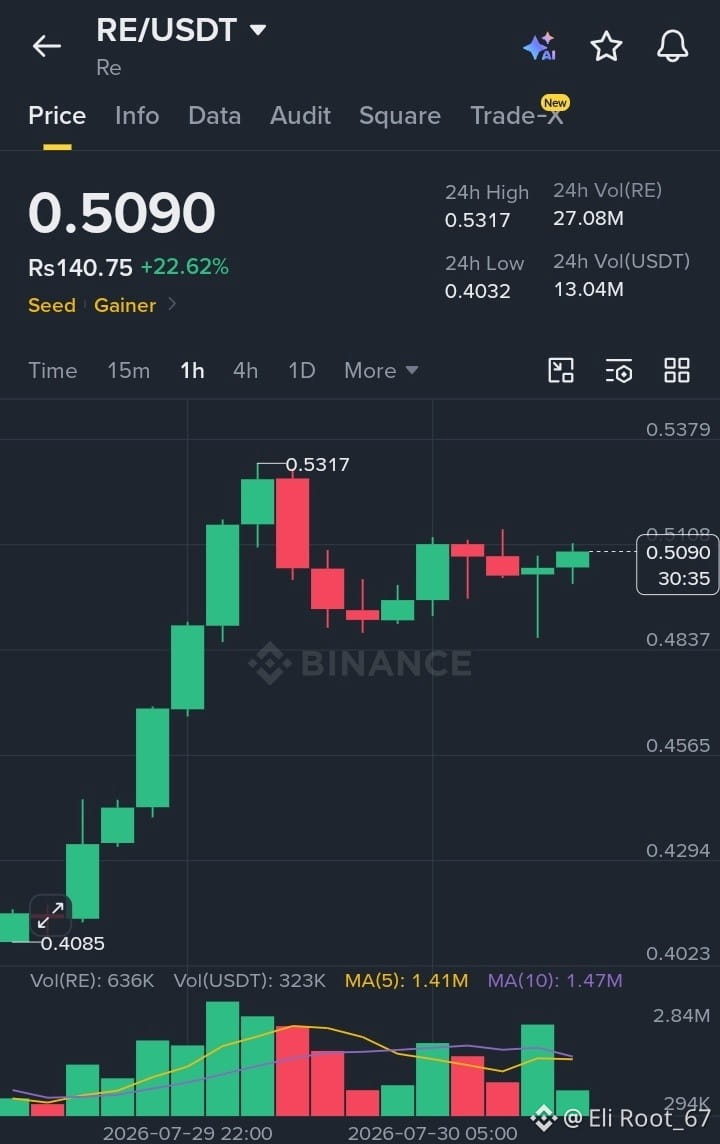
$RE
Market Event: Price defended a major support level and rejected downside pressure with strength. Momentum Implication: Momentum favors another leg higher if buyers protect the current base.
Levels: • EP: 0.5010–0.5090 • TG1: 0.5300 • TG2: 0.5550 • TG3: 0.5850 • SL: 0.4890
Trade Decision: Stay constructive while higher lows continue to form.
Close: Continued defense supports further upside.
#US30YearYieldClimbsToNear5.23% #USCourtRejectsCFTCWisconsinInjunctionBid
{spot}(REUSDT)
$RE
Market Event: Price defended a major support level and rejected downside pressure with strength. Momentum Implication: Momentum favors another leg higher if buyers protect the current base.
Levels: • EP: 0.5010–0.5090 • TG1: 0.5300 • TG2: 0.5550 • TG3: 0.5850 • SL: 0.4890
Trade Decision: Stay constructive while higher lows continue to form.
Close: Continued defense supports further upside.
#US30YearYieldClimbsToNear5.23% #USCourtRejectsCFTCWisconsinInjunctionBid
Market Event: Price defended a major support level and rejected downside pressure with strength. Momentum Implication: Momentum favors another leg higher if buyers protect the current base.
Levels: • EP: 0.5010–0.5090 • TG1: 0.5300 • TG2: 0.5550 • TG3: 0.5850 • SL: 0.4890
Trade Decision: Stay constructive while higher lows continue to form.
Close: Continued defense supports further upside.
#US30YearYieldClimbsToNear5.23% #USCourtRejectsCFTCWisconsinInjunctionBid
128
·
--
Bullish
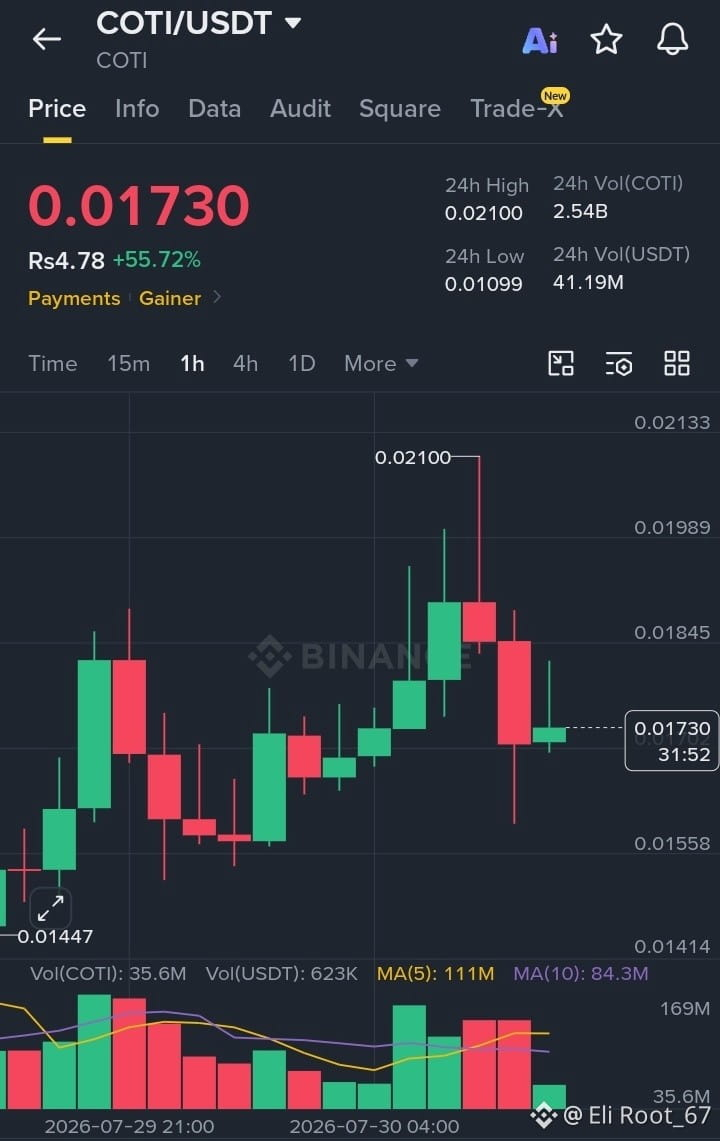
$COTI
Market Event: Price completed a short squeeze and reclaimed a key resistance zone, forcing late sellers to cover. Momentum Implication: Buyers remain in control while price holds above the reclaimed level.
Levels: • EP: 0.01690–0.01720 • TG1: 0.01820 • TG2: 0.01940 • TG3: 0.02100 • SL: 0.01620
Trade Decision: Maintain a bullish bias only while price respects the reclaimed support.
Close: Holding this level keeps continuation in play.
#US30YearYieldClimbsToNear5.23% #USCourtRejectsCFTCWisconsinInjunctionBid
{future}(COTIUSDT)
$COTI
Market Event: Price completed a short squeeze and reclaimed a key resistance zone, forcing late sellers to cover. Momentum Implication: Buyers remain in control while price holds above the reclaimed level.
Levels: • EP: 0.01690–0.01720 • TG1: 0.01820 • TG2: 0.01940 • TG3: 0.02100 • SL: 0.01620
Trade Decision: Maintain a bullish bias only while price respects the reclaimed support.
Close: Holding this level keeps continuation in play.
#US30YearYieldClimbsToNear5.23% #USCourtRejectsCFTCWisconsinInjunctionBid
Market Event: Price completed a short squeeze and reclaimed a key resistance zone, forcing late sellers to cover. Momentum Implication: Buyers remain in control while price holds above the reclaimed level.
Levels: • EP: 0.01690–0.01720 • TG1: 0.01820 • TG2: 0.01940 • TG3: 0.02100 • SL: 0.01620
Trade Decision: Maintain a bullish bias only while price respects the reclaimed support.
Close: Holding this level keeps continuation in play.
#US30YearYieldClimbsToNear5.23% #USCourtRejectsCFTCWisconsinInjunctionBid
1
249
·
--
Bullish
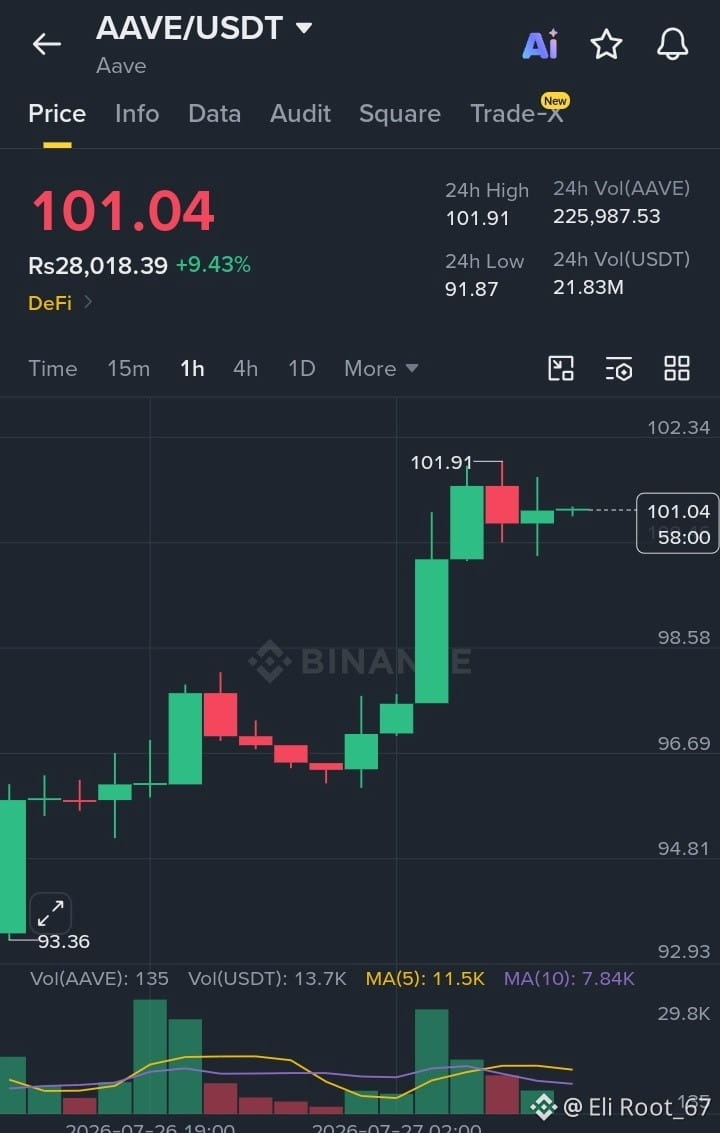
$AAVE
Market Event: Price defended a major support after a liquidity sweep and rebounded with strength.
Momentum Implication: Buyers retain control as long as the recovery structure remains intact.
Levels:
EP: 100.40–101.20
TG1: 103.50
TG2: 106.80
TG3: 110.50
SL: 98.60
Trade Decision: Look for continuation only while price remains above the defended support.
Close: Hold the key level and the trend has room to extend.
#SHIBSurges36%
{future}(AAVEUSDT)
$AAVE
Market Event: Price defended a major support after a liquidity sweep and rebounded with strength.
Momentum Implication: Buyers retain control as long as the recovery structure remains intact.
Levels:
EP: 100.40–101.20
TG1: 103.50
TG2: 106.80
TG3: 110.50
SL: 98.60
Trade Decision: Look for continuation only while price remains above the defended support.
Close: Hold the key level and the trend has room to extend.
#SHIBSurges36%
Market Event: Price defended a major support after a liquidity sweep and rebounded with strength.
Momentum Implication: Buyers retain control as long as the recovery structure remains intact.
Levels:
EP: 100.40–101.20
TG1: 103.50
TG2: 106.80
TG3: 110.50
SL: 98.60
Trade Decision: Look for continuation only while price remains above the defended support.
Close: Hold the key level and the trend has room to extend.
#SHIBSurges36%
80
·
--
Bullish
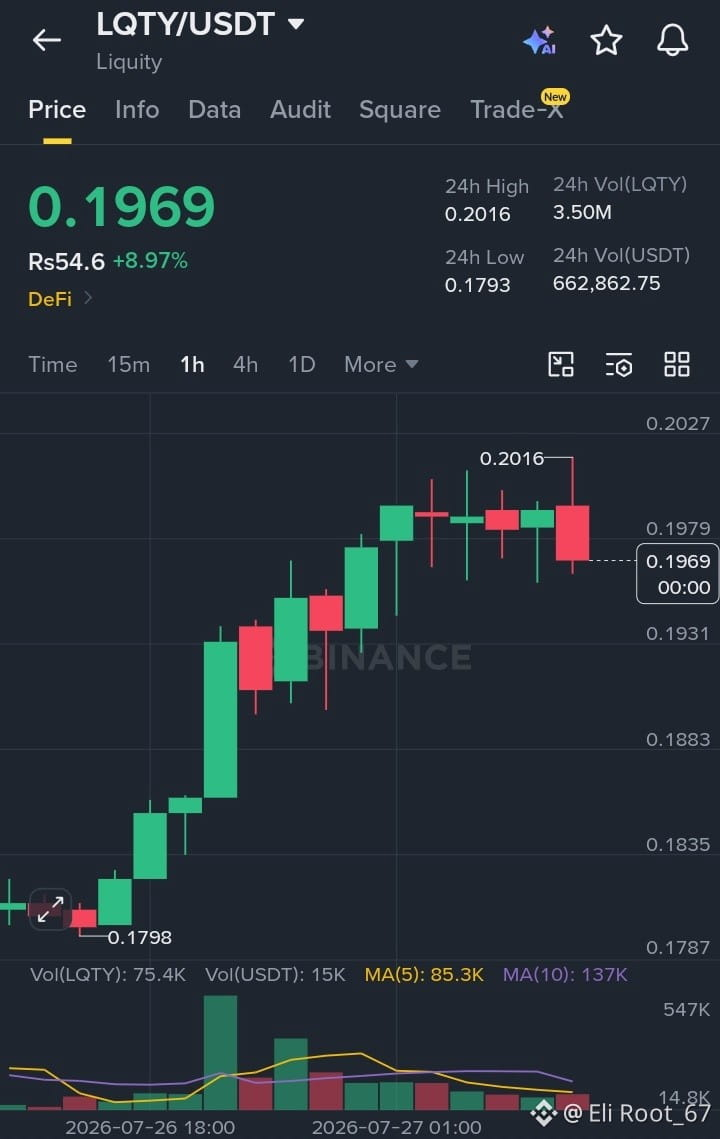
$LQTY
Market Event: Price swept downside liquidity before reclaiming a key support area.
Momentum Implication: The recovery signals buyers are absorbing supply at lower levels.
Levels:
EP: 0.1965–0.1985
TG1: 0.2040
TG2: 0.2100
TG3: 0.2175
SL: 0.1925
Trade Decision: Maintain a bullish bias while price holds above support.
Close: Continued defense of support keeps the upside scenario active.
#USStockFuturesRiseAheadOfMegacapEarningsAndFed #WTICrudeFuturesFall8%
{future}(LQTYUSDT)
$LQTY
Market Event: Price swept downside liquidity before reclaiming a key support area.
Momentum Implication: The recovery signals buyers are absorbing supply at lower levels.
Levels:
EP: 0.1965–0.1985
TG1: 0.2040
TG2: 0.2100
TG3: 0.2175
SL: 0.1925
Trade Decision: Maintain a bullish bias while price holds above support.
Close: Continued defense of support keeps the upside scenario active.
#USStockFuturesRiseAheadOfMegacapEarningsAndFed #WTICrudeFuturesFall8%
Market Event: Price swept downside liquidity before reclaiming a key support area.
Momentum Implication: The recovery signals buyers are absorbing supply at lower levels.
Levels:
EP: 0.1965–0.1985
TG1: 0.2040
TG2: 0.2100
TG3: 0.2175
SL: 0.1925
Trade Decision: Maintain a bullish bias while price holds above support.
Close: Continued defense of support keeps the upside scenario active.
#USStockFuturesRiseAheadOfMegacapEarningsAndFed #WTICrudeFuturesFall8%
98
·
--
Bullish
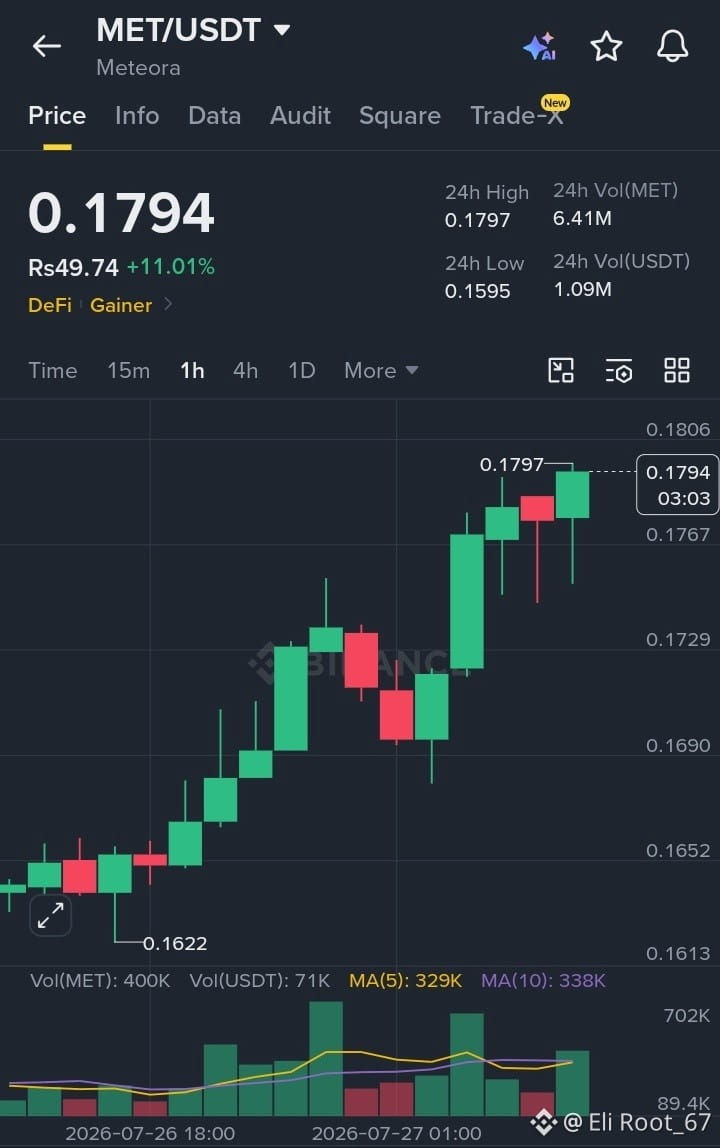
$MET
Market Event: Price rejected lower levels and reclaimed a key resistance with improving order flow.
Momentum Implication: The recovery favors continuation unless buyers lose control of support.
Levels:
EP: 0.1775–0.1790
TG1: 0.1840
TG2: 0.1895
TG3: 0.1960
SL: 0.1735
Trade Decision: Long bias remains valid while the reclaimed level is defended.
Close: Hold the current structure and continuation is likely.
#PensionFundsTurnNetBuyersOfKoreanShares #BitcoinMiningDifficultyMayFall1.2%
{spot}(METUSDT)
$MET
Market Event: Price rejected lower levels and reclaimed a key resistance with improving order flow.
Momentum Implication: The recovery favors continuation unless buyers lose control of support.
Levels:
EP: 0.1775–0.1790
TG1: 0.1840
TG2: 0.1895
TG3: 0.1960
SL: 0.1735
Trade Decision: Long bias remains valid while the reclaimed level is defended.
Close: Hold the current structure and continuation is likely.
#PensionFundsTurnNetBuyersOfKoreanShares #BitcoinMiningDifficultyMayFall1.2%
Market Event: Price rejected lower levels and reclaimed a key resistance with improving order flow.
Momentum Implication: The recovery favors continuation unless buyers lose control of support.
Levels:
EP: 0.1775–0.1790
TG1: 0.1840
TG2: 0.1895
TG3: 0.1960
SL: 0.1735
Trade Decision: Long bias remains valid while the reclaimed level is defended.
Close: Hold the current structure and continuation is likely.
#PensionFundsTurnNetBuyersOfKoreanShares #BitcoinMiningDifficultyMayFall1.2%
99
·
--
Bullish
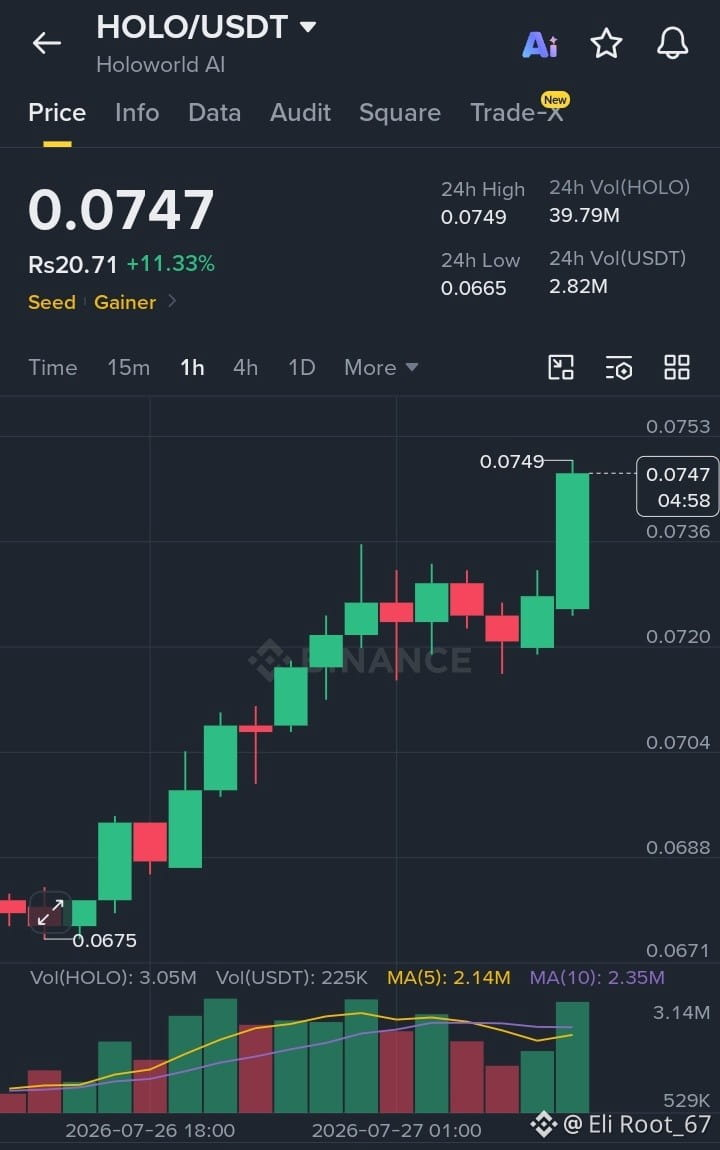
$HOLO
Market Event: Price defended a key level after sweeping downside liquidity and attracted fresh buying.
Momentum Implication: Buyers remain in control while higher lows continue to develop.
Levels:
EP: 0.0738–0.0745
TG1: 0.0765
TG2: 0.0788
TG3: 0.0810
SL: 0.0724
Trade Decision: Stay with the trend while support remains intact.
Close: If support holds, further upside remains favored.
#USPausesIranStrikesSecondNight #TeslaFallsNearly20%ThisWeek
{future}(HOLOUSDT)
$HOLO
Market Event: Price defended a key level after sweeping downside liquidity and attracted fresh buying.
Momentum Implication: Buyers remain in control while higher lows continue to develop.
Levels:
EP: 0.0738–0.0745
TG1: 0.0765
TG2: 0.0788
TG3: 0.0810
SL: 0.0724
Trade Decision: Stay with the trend while support remains intact.
Close: If support holds, further upside remains favored.
#USPausesIranStrikesSecondNight #TeslaFallsNearly20%ThisWeek
Market Event: Price defended a key level after sweeping downside liquidity and attracted fresh buying.
Momentum Implication: Buyers remain in control while higher lows continue to develop.
Levels:
EP: 0.0738–0.0745
TG1: 0.0765
TG2: 0.0788
TG3: 0.0810
SL: 0.0724
Trade Decision: Stay with the trend while support remains intact.
Close: If support holds, further upside remains favored.
#USPausesIranStrikesSecondNight #TeslaFallsNearly20%ThisWeek
99
·
--
Bullish
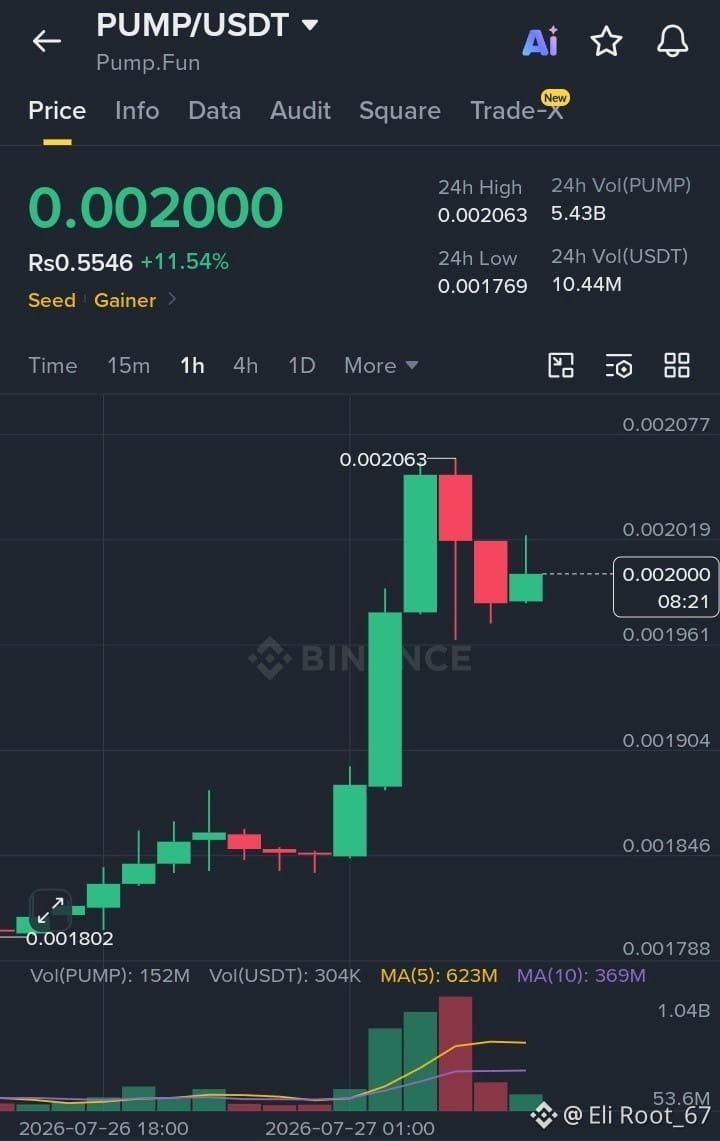
$PUMP
Market Event: A short squeeze pushed price above nearby liquidity and confirmed aggressive buyer participation.
Momentum Implication: Momentum stays constructive while the breakout zone continues to hold.
Levels:
EP: 0.001995–0.002015
TG1: 0.002080
TG2: 0.002150
TG3: 0.002240
SL: 0.001940
Trade Decision: Favor long exposure only while price respects the breakout structure.
Close: Hold above support and continuation remains the higher-probability outcome.
#USStockFuturesRiseAheadOfMegacapEarningsAndFed
{future}(PUMPUSDT)
$PUMP
Market Event: A short squeeze pushed price above nearby liquidity and confirmed aggressive buyer participation.
Momentum Implication: Momentum stays constructive while the breakout zone continues to hold.
Levels:
EP: 0.001995–0.002015
TG1: 0.002080
TG2: 0.002150
TG3: 0.002240
SL: 0.001940
Trade Decision: Favor long exposure only while price respects the breakout structure.
Close: Hold above support and continuation remains the higher-probability outcome.
#USStockFuturesRiseAheadOfMegacapEarningsAndFed
Market Event: A short squeeze pushed price above nearby liquidity and confirmed aggressive buyer participation.
Momentum Implication: Momentum stays constructive while the breakout zone continues to hold.
Levels:
EP: 0.001995–0.002015
TG1: 0.002080
TG2: 0.002150
TG3: 0.002240
SL: 0.001940
Trade Decision: Favor long exposure only while price respects the breakout structure.
Close: Hold above support and continuation remains the higher-probability outcome.
#USStockFuturesRiseAheadOfMegacapEarningsAndFed
124
·
--
Bullish
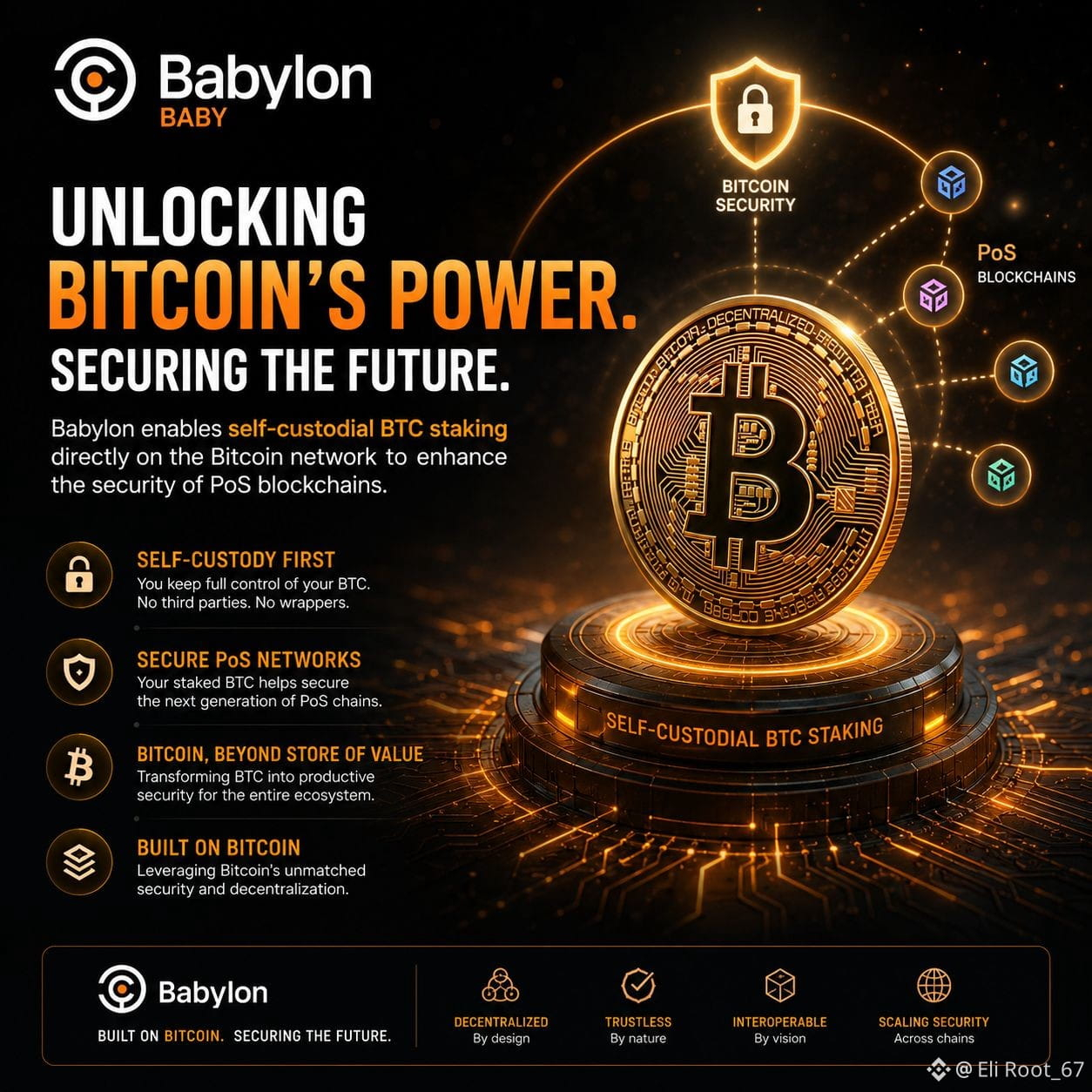
I've always believed Bitcoin's biggest strength is its unmatched security. But one question kept coming to mind: can that security protect more than just the Bitcoin network itself?
That's why Babylon (BABY) stands out to me.
Instead of asking me to give up custody of my BTC, Babylon introduces self-custodial Bitcoin staking directly on the Bitcoin network. I keep control of my Bitcoin while helping strengthen the security of Proof-of-Stake blockchains. That balance between ownership and utility is what makes this project different.
I think this could be one of the most important ideas in Bitcoin's next chapter. For years, BTC has been treated primarily as digital gold. Babylon opens the possibility for Bitcoin to become a shared security foundation for an expanding blockchain ecosystem without sacrificing the principles that made it valuable in the first place.
Of course, the real test isn't the concept. It's execution. Adoption, network resilience, and long-term reliability will determine whether Babylon delivers on its vision. That's what I'll be watching, not short-term price action or market hype.
To me, the most exciting innovations aren't the loudest ones. They're the ones that quietly solve real problems while staying true to core principles. Babylon feels like one of those projects. If it continues to execute well, it could redefine how Bitcoin contributes to the future of decentralized networks.
@babylonlabs_io
$BABY
#baby
{future}(BABYUSDT)
I've always believed Bitcoin's biggest strength is its unmatched security. But one question kept coming to mind: can that security protect more than just the Bitcoin network itself?
That's why Babylon (BABY) stands out to me.
Instead of asking me to give up custody of my BTC, Babylon introduces self-custodial Bitcoin staking directly on the Bitcoin network. I keep control of my Bitcoin while helping strengthen the security of Proof-of-Stake blockchains. That balance between ownership and utility is what makes this project different.
I think this could be one of the most important ideas in Bitcoin's next chapter. For years, BTC has been treated primarily as digital gold. Babylon opens the possibility for Bitcoin to become a shared security foundation for an expanding blockchain ecosystem without sacrificing the principles that made it valuable in the first place.
Of course, the real test isn't the concept. It's execution. Adoption, network resilience, and long-term reliability will determine whether Babylon delivers on its vision. That's what I'll be watching, not short-term price action or market hype.
To me, the most exciting innovations aren't the loudest ones. They're the ones that quietly solve real problems while staying true to core principles. Babylon feels like one of those projects. If it continues to execute well, it could redefine how Bitcoin contributes to the future of decentralized networks.
@BabylonLabs_io
$BABY
#baby
That's why Babylon (BABY) stands out to me.
Instead of asking me to give up custody of my BTC, Babylon introduces self-custodial Bitcoin staking directly on the Bitcoin network. I keep control of my Bitcoin while helping strengthen the security of Proof-of-Stake blockchains. That balance between ownership and utility is what makes this project different.
I think this could be one of the most important ideas in Bitcoin's next chapter. For years, BTC has been treated primarily as digital gold. Babylon opens the possibility for Bitcoin to become a shared security foundation for an expanding blockchain ecosystem without sacrificing the principles that made it valuable in the first place.
Of course, the real test isn't the concept. It's execution. Adoption, network resilience, and long-term reliability will determine whether Babylon delivers on its vision. That's what I'll be watching, not short-term price action or market hype.
To me, the most exciting innovations aren't the loudest ones. They're the ones that quietly solve real problems while staying true to core principles. Babylon feels like one of those projects. If it continues to execute well, it could redefine how Bitcoin contributes to the future of decentralized networks.
@BabylonLabs_io
$BABY
#baby
50
·
--
Bullish
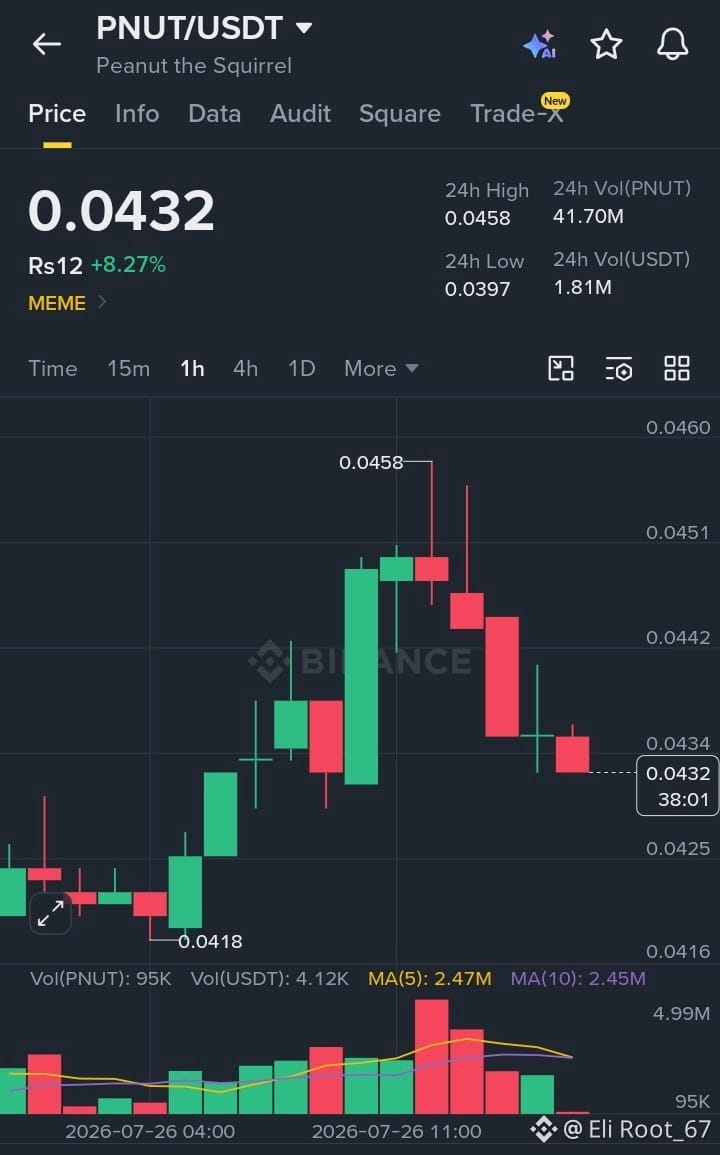
$PNUT
Market Event: A short squeeze forced price through nearby resistance and shifted momentum higher.
Momentum Implication: Buyers retain control unless the breakout level is lost.
Levels:
EP: $0.0439–$0.0443
TG1: $0.0458
TG2: $0.0475
TG3: $0.0495
SL: $0.0425
Trade Decision: Favor long exposure only after confirmation above the breakout zone.
Close: As long as support holds, continuation remains the preferred scenario.
#TeslaFallsNearly20%ThisWeek
{future}(PNUTUSDT)
$PNUT
Market Event: A short squeeze forced price through nearby resistance and shifted momentum higher.
Momentum Implication: Buyers retain control unless the breakout level is lost.
Levels:
EP: $0.0439–$0.0443
TG1: $0.0458
TG2: $0.0475
TG3: $0.0495
SL: $0.0425
Trade Decision: Favor long exposure only after confirmation above the breakout zone.
Close: As long as support holds, continuation remains the preferred scenario.
#TeslaFallsNearly20%ThisWeek
Market Event: A short squeeze forced price through nearby resistance and shifted momentum higher.
Momentum Implication: Buyers retain control unless the breakout level is lost.
Levels:
EP: $0.0439–$0.0443
TG1: $0.0458
TG2: $0.0475
TG3: $0.0495
SL: $0.0425
Trade Decision: Favor long exposure only after confirmation above the breakout zone.
Close: As long as support holds, continuation remains the preferred scenario.
#TeslaFallsNearly20%ThisWeek
155
·
--
Bullish
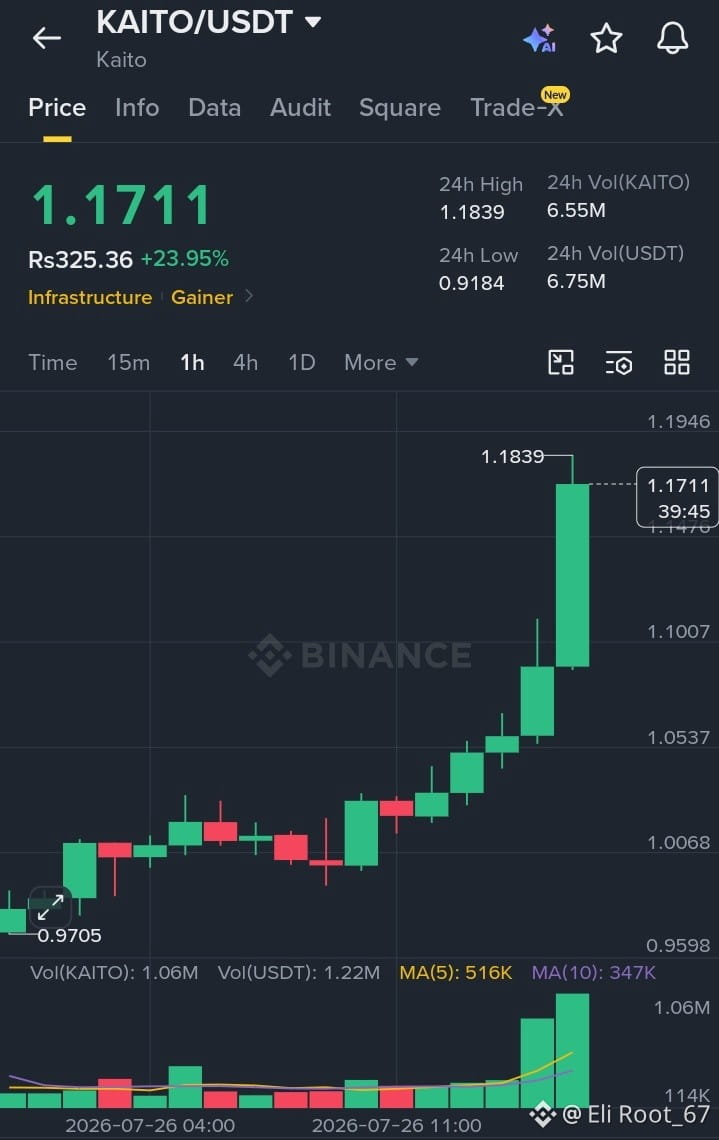
$KAITO
Market Event: Price held a major support area and triggered a fresh breakout.
Momentum Implication: The structure favors continuation while momentum remains positive.
Levels:
EP: $1.090–$1.105
TG1: $1.145
TG2: $1.190
TG3: $1.250
SL: $1.055
Trade Decision: Stay constructive while price trades above defended support.
Close: Hold the breakout zone and further upside remains favored.
#TeslaFallsNearly20%ThisWeek
{future}(KAITOUSDT)
$KAITO
Market Event: Price held a major support area and triggered a fresh breakout.
Momentum Implication: The structure favors continuation while momentum remains positive.
Levels:
EP: $1.090–$1.105
TG1: $1.145
TG2: $1.190
TG3: $1.250
SL: $1.055
Trade Decision: Stay constructive while price trades above defended support.
Close: Hold the breakout zone and further upside remains favored.
#TeslaFallsNearly20%ThisWeek
Market Event: Price held a major support area and triggered a fresh breakout.
Momentum Implication: The structure favors continuation while momentum remains positive.
Levels:
EP: $1.090–$1.105
TG1: $1.145
TG2: $1.190
TG3: $1.250
SL: $1.055
Trade Decision: Stay constructive while price trades above defended support.
Close: Hold the breakout zone and further upside remains favored.
#TeslaFallsNearly20%ThisWeek
136
·
--
Bullish
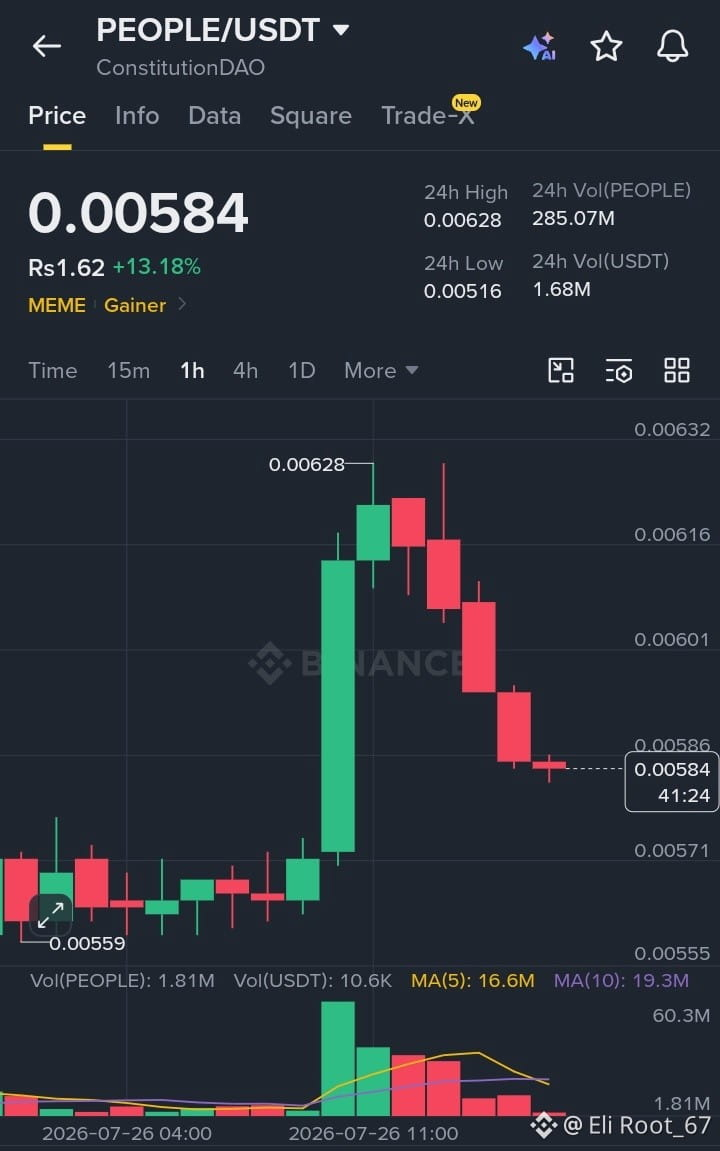
$PEOPLE
Market Event: Price swept local lows before reversing back above intraday support.
Momentum Implication: The recovery favors a continuation move if buyers keep defending the base.
Levels:
EP: $0.00584–$0.00592
TG1: $0.00610
TG2: $0.00635
TG3: $0.00660
SL: $0.00560
Trade Decision: Look for continuation only while price remains above reclaimed support.
Close: Hold this structure and buyers keep the advantage.
#TeslaFallsNearly20%ThisWeek #USPausesIranStrikesSecondNight
{future}(PEOPLEUSDT)
$PEOPLE
Market Event: Price swept local lows before reversing back above intraday support.
Momentum Implication: The recovery favors a continuation move if buyers keep defending the base.
Levels:
EP: $0.00584–$0.00592
TG1: $0.00610
TG2: $0.00635
TG3: $0.00660
SL: $0.00560
Trade Decision: Look for continuation only while price remains above reclaimed support.
Close: Hold this structure and buyers keep the advantage.
#TeslaFallsNearly20%ThisWeek #USPausesIranStrikesSecondNight
Market Event: Price swept local lows before reversing back above intraday support.
Momentum Implication: The recovery favors a continuation move if buyers keep defending the base.
Levels:
EP: $0.00584–$0.00592
TG1: $0.00610
TG2: $0.00635
TG3: $0.00660
SL: $0.00560
Trade Decision: Look for continuation only while price remains above reclaimed support.
Close: Hold this structure and buyers keep the advantage.
#TeslaFallsNearly20%ThisWeek #USPausesIranStrikesSecondNight
163
·
--
Bullish
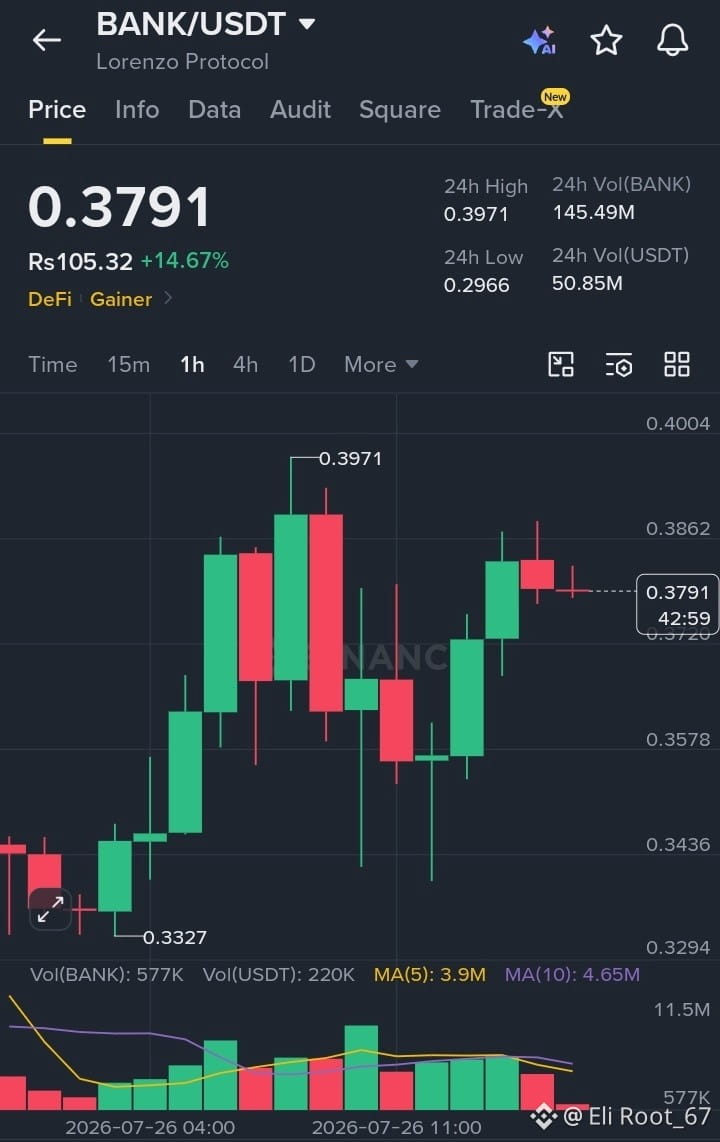
$BANK
Market Event: Price defended a key support zone following an impulsive breakout.
Momentum Implication: Holding this level keeps buyers in control of the trend.
Levels:
EP: $0.378–$0.384
TG1: $0.398
TG2: $0.415
TG3: $0.435
SL: $0.365
Trade Decision: Maintain a bullish bias while support remains intact.
Close: Continued defense increases the probability of trend extension.
#USPausesIranStrikesSecondNight #BitcoinMiningDifficultyMayFall1.2%
{future}(BANKUSDT)
$BANK
Market Event: Price defended a key support zone following an impulsive breakout.
Momentum Implication: Holding this level keeps buyers in control of the trend.
Levels:
EP: $0.378–$0.384
TG1: $0.398
TG2: $0.415
TG3: $0.435
SL: $0.365
Trade Decision: Maintain a bullish bias while support remains intact.
Close: Continued defense increases the probability of trend extension.
#USPausesIranStrikesSecondNight #BitcoinMiningDifficultyMayFall1.2%
Market Event: Price defended a key support zone following an impulsive breakout.
Momentum Implication: Holding this level keeps buyers in control of the trend.
Levels:
EP: $0.378–$0.384
TG1: $0.398
TG2: $0.415
TG3: $0.435
SL: $0.365
Trade Decision: Maintain a bullish bias while support remains intact.
Close: Continued defense increases the probability of trend extension.
#USPausesIranStrikesSecondNight #BitcoinMiningDifficultyMayFall1.2%
240
Log in to explore more content
Join global crypto users on Binance Square
⚡️ Get latest and useful information about crypto.
💬 Trusted by the world’s largest crypto exchange.
👍 Discover real insights from verified creators.
Email / Phone number
Trending Topics
BitgetHackerMoves$83MStolenXRP
4,079 views
48 Discussing
On September 24, 2026, Bitget suffered a major security breach, with around $387M–$390M in assets reportedly stolen.
A big part of the stolen funds was $XRP .
Around 103M $XRP, worth roughly $157M–$160M at the time, was moved into five wallets controlled by the attacker.
By September 26, about 54M XRP ($83M) had already been moved out of three of those wallets.
Two wallets that each held around 20M XRP were almost completely emptied, while another was reduced to about 5.8M XRP.
That left roughly 49M XRP, worth around $75M at the time, still sitting in the original wallets.
The transfers also picked up overnight, with the funds being split across new wallets. Some reports say part of the XRP was later moved through THORChain toward Bitcoin.
Definitely a situation I’m keeping an eye on as the funds continue to move.
#BitgetHackerMoves$83MStolenXRP
jujucrypt
·6 Likes
·7.7k views
SOLSpotETFWeeklyInflow$188M
2,089 views
45 Discussing
DogecoinETFsPostBiggestWeekSinceLaunch
256 views
38 Discussing