

Cryptoreach
643 Posts

Cryptoreach
Report
Block User
Activateur Web3 | Builder d’écosystèmes décentralisés | Tokenisation & Adoption RWA
1.2K+ Following
682 Followers
875 Liked
Posts
All
Quotes
Videos
·
--
British banks have just moved money onto blockchain. What you really need to understand:
Lloyds, NatWest, Barclays, and HSBC carried out the first interbank transactions with tokenized deposits as part of a UK Finance pilot project.
This is not a stablecoin.
A tokenized deposit is a traditional bank deposit represented by a token. It remains on the bank’s balance sheet and has the same legal status as a deposit. A stablecoin is issued by a private entity, outside the banking system.
Why it matters:
▪️ The real lock-in was interoperability: each bank had its own blockchain, and the systems didn’t talk to each other.
▪️ Programmability: in the online payment test, funds are held then released upon receipt of the goods, which reduces the risk of fraud.
▪️ The regulatory signal: the Bank of England clearly prefers tokenized deposits over private stablecoins.
The catch: this is a pilot, not a large-scale rollout. “Banks move to blockchain” is therefore premature. What comes next will hinge on tokenized obligations at the start of 2027 and on connections to more open networks.
For banks, regulators, and investors, the question is no longer “blockchain or not?”, but “which form of tokenized money will end up prevailing?”
#Tokenisation #TokenisedDeposits #Blockchain #Finance #Stablecoins $NVDAB $AAPLB $AMZNB
British banks have just moved money onto blockchain. What you really need to understand:
Lloyds, NatWest, Barclays, and HSBC carried out the first interbank transactions with tokenized deposits as part of a UK Finance pilot project.
This is not a stablecoin.
A tokenized deposit is a traditional bank deposit represented by a token. It remains on the bank’s balance sheet and has the same legal status as a deposit. A stablecoin is issued by a private entity, outside the banking system.
Why it matters:
▪️ The real lock-in was interoperability: each bank had its own blockchain, and the systems didn’t talk to each other.
▪️ Programmability: in the online payment test, funds are held then released upon receipt of the goods, which reduces the risk of fraud.
▪️ The regulatory signal: the Bank of England clearly prefers tokenized deposits over private stablecoins.
The catch: this is a pilot, not a large-scale rollout. “Banks move to blockchain” is therefore premature. What comes next will hinge on tokenized obligations at the start of 2027 and on connections to more open networks.
For banks, regulators, and investors, the question is no longer “blockchain or not?”, but “which form of tokenized money will end up prevailing?”
#Tokenisation #TokenisedDeposits #Blockchain #Finance #Stablecoins $NVDAB $AAPLB $AMZNB
Lloyds, NatWest, Barclays, and HSBC carried out the first interbank transactions with tokenized deposits as part of a UK Finance pilot project.
This is not a stablecoin.
A tokenized deposit is a traditional bank deposit represented by a token. It remains on the bank’s balance sheet and has the same legal status as a deposit. A stablecoin is issued by a private entity, outside the banking system.
Why it matters:
▪️ The real lock-in was interoperability: each bank had its own blockchain, and the systems didn’t talk to each other.
▪️ Programmability: in the online payment test, funds are held then released upon receipt of the goods, which reduces the risk of fraud.
▪️ The regulatory signal: the Bank of England clearly prefers tokenized deposits over private stablecoins.
The catch: this is a pilot, not a large-scale rollout. “Banks move to blockchain” is therefore premature. What comes next will hinge on tokenized obligations at the start of 2027 and on connections to more open networks.
For banks, regulators, and investors, the question is no longer “blockchain or not?”, but “which form of tokenized money will end up prevailing?”
#Tokenisation #TokenisedDeposits #Blockchain #Finance #Stablecoins $NVDAB $AAPLB $AMZNB
1
·
--
Tokenization: when all assets go on-chain
1. All equities will be tokenized
2. All bonds will be tokenized
3. All funds will be tokenized
4. Real estate will be tokenized
5. Private credit will be tokenized
6. Commodities will be tokenized
7. Treasury bills will be tokenized
8. Art will be tokenized
9. Collectibles will be tokenized
10. Infrastructure will be tokenized
11. Insurance will be tokenized
12. Companies’ shares will be issued on-chain
13. Stablecoins will become the default rails for transferring money
14. Every major financial institution will have an on-chain product
15. Every major asset manager will have tokenized products
16. Financial markets will trade 24/7
17. Settlement will move from days to seconds
18. Ownership will become programmable
19. Collateral will become composable
20. Assets will move across borders without traditional financial infrastructure
21. The line between crypto and finance will continue to blur
22. Tokenized assets will become normal for the average investor
23. Billions of people will ultimately interact with tokenized assets without even thinking about it
24. Most financial assets will eventually have an on-chain representation
25. Tokenization will become so normal that we’ll stop calling it tokenization
#Tokenisation #Blockchain #RWA #RealWorldAssets #Crypto #Web3 #DeFi #Stablecoins #Finance #DigitalAssets #OnChain #TokenizedAssets #FinTech #Innovation #Ethereum #Bitcoin #FutureOfFinance $NVDAB $AAPLB $AAPLB
Tokenization: when all assets go on-chain
1. All equities will be tokenized
2. All bonds will be tokenized
3. All funds will be tokenized
4. Real estate will be tokenized
5. Private credit will be tokenized
6. Commodities will be tokenized
7. Treasury bills will be tokenized
8. Art will be tokenized
9. Collectibles will be tokenized
10. Infrastructure will be tokenized
11. Insurance will be tokenized
12. Companies’ shares will be issued on-chain
13. Stablecoins will become the default rails for transferring money
14. Every major financial institution will have an on-chain product
15. Every major asset manager will have tokenized products
16. Financial markets will trade 24/7
17. Settlement will move from days to seconds
18. Ownership will become programmable
19. Collateral will become composable
20. Assets will move across borders without traditional financial infrastructure
21. The line between crypto and finance will continue to blur
22. Tokenized assets will become normal for the average investor
23. Billions of people will ultimately interact with tokenized assets without even thinking about it
24. Most financial assets will eventually have an on-chain representation
25. Tokenization will become so normal that we’ll stop calling it tokenization
#Tokenisation #Blockchain #RWA #RealWorldAssets #Crypto #Web3 #DeFi #Stablecoins #Finance #DigitalAssets #OnChain #TokenizedAssets #FinTech #Innovation #Ethereum #Bitcoin #FutureOfFinance $NVDAB $AAPLB $AAPLB
1. All equities will be tokenized
2. All bonds will be tokenized
3. All funds will be tokenized
4. Real estate will be tokenized
5. Private credit will be tokenized
6. Commodities will be tokenized
7. Treasury bills will be tokenized
8. Art will be tokenized
9. Collectibles will be tokenized
10. Infrastructure will be tokenized
11. Insurance will be tokenized
12. Companies’ shares will be issued on-chain
13. Stablecoins will become the default rails for transferring money
14. Every major financial institution will have an on-chain product
15. Every major asset manager will have tokenized products
16. Financial markets will trade 24/7
17. Settlement will move from days to seconds
18. Ownership will become programmable
19. Collateral will become composable
20. Assets will move across borders without traditional financial infrastructure
21. The line between crypto and finance will continue to blur
22. Tokenized assets will become normal for the average investor
23. Billions of people will ultimately interact with tokenized assets without even thinking about it
24. Most financial assets will eventually have an on-chain representation
25. Tokenization will become so normal that we’ll stop calling it tokenization
#Tokenisation #Blockchain #RWA #RealWorldAssets #Crypto #Web3 #DeFi #Stablecoins #Finance #DigitalAssets #OnChain #TokenizedAssets #FinTech #Innovation #Ethereum #Bitcoin #FutureOfFinance $NVDAB $AAPLB $AAPLB

105
·
--
Topic: Cryptocurrencies of today:
If the economy and real estate, automobile and housing markets were to collapse, which cryptocurrencies would you choose to protect your future?
#Bitcoin #BTC #Ethereum #ETH #Stablecoins #USDT #USDC #Solana #SOL #Chainlink #LINK #Polkadot #DOT #RWA #Tokenisation #Crypto #Cryptocurrencies #Blockchain #Web3 #DeFi #Finance #RealEstate #Economy #Investment #FutureFinance #Africa #Cote d'Ivoire
$AMZNB $MSFTB $AAPLB
Topic: Cryptocurrencies of today:
If the economy and real estate, automobile and housing markets were to collapse, which cryptocurrencies would you choose to protect your future?
#Bitcoin #BTC #Ethereum #ETH #Stablecoins #USDT #USDC #Solana #SOL #Chainlink #LINK #Polkadot #DOT #RWA #Tokenisation #Crypto #Cryptocurrencies #Blockchain #Web3 #DeFi #Finance #RealEstate #Economy #Investment #FutureFinance #Africa #Cote d'Ivoire
$AMZNB $MSFTB $AAPLB
If the economy and real estate, automobile and housing markets were to collapse, which cryptocurrencies would you choose to protect your future?
#Bitcoin #BTC #Ethereum #ETH #Stablecoins #USDT #USDC #Solana #SOL #Chainlink #LINK #Polkadot #DOT #RWA #Tokenisation #Crypto #Cryptocurrencies #Blockchain #Web3 #DeFi #Finance #RealEstate #Economy #Investment #FutureFinance #Africa #Cote d'Ivoire
$AMZNB $MSFTB $AAPLB

1
228
·
--
Today's cryptocurrency topic:
The biggest change in finance could happen when crypto stops looking like an alternative.
It becomes an infrastructure that people use without even thinking about it.
We no longer talk about “buying bitcoin,” but about instant settlement, asset tokenization, and stablecoins used as a payment rail in the background. The technology disappears behind the use case — just like nobody thinks about the TCP/IP protocol when sending an email.
For financial institutions, this changes the question to ask. It is no longer “should we expose ourselves to crypto?” but “where, in our value chain, will this infrastructure take hold first?”
The early movers won’t be the ones who have communicated the most about the topic, but the ones who rewrote their internal plumbing the earliest.
#Blockchain #CryptoAssets #Tokenisation #DigitalFinance #FinancialInfrastructure #Stablecoins #FinancialRegulation #BankingInnovation #Web3 #FinTech
$NVDAB $AAPLB $MSFTB
Today's cryptocurrency topic:
The biggest change in finance could happen when crypto stops looking like an alternative.
It becomes an infrastructure that people use without even thinking about it.
We no longer talk about “buying bitcoin,” but about instant settlement, asset tokenization, and stablecoins used as a payment rail in the background. The technology disappears behind the use case — just like nobody thinks about the TCP/IP protocol when sending an email.
For financial institutions, this changes the question to ask. It is no longer “should we expose ourselves to crypto?” but “where, in our value chain, will this infrastructure take hold first?”
The early movers won’t be the ones who have communicated the most about the topic, but the ones who rewrote their internal plumbing the earliest.
#Blockchain #CryptoAssets #Tokenisation #DigitalFinance #FinancialInfrastructure #Stablecoins #FinancialRegulation #BankingInnovation #Web3 #FinTech
$NVDAB $AAPLB $MSFTB
The biggest change in finance could happen when crypto stops looking like an alternative.
It becomes an infrastructure that people use without even thinking about it.
We no longer talk about “buying bitcoin,” but about instant settlement, asset tokenization, and stablecoins used as a payment rail in the background. The technology disappears behind the use case — just like nobody thinks about the TCP/IP protocol when sending an email.
For financial institutions, this changes the question to ask. It is no longer “should we expose ourselves to crypto?” but “where, in our value chain, will this infrastructure take hold first?”
The early movers won’t be the ones who have communicated the most about the topic, but the ones who rewrote their internal plumbing the earliest.
#Blockchain #CryptoAssets #Tokenisation #DigitalFinance #FinancialInfrastructure #Stablecoins #FinancialRegulation #BankingInnovation #Web3 #FinTech
$NVDAB $AAPLB $MSFTB

132
·
--
🚨THE LAST LOWER HIGH HAS ARRIVED FOR BITCOIN
Bitcoin has just climbed to $85,000, and the timeline is celebrating as if the bullish run is back.
It’s not. This is the last lower high, exactly where the next downward wave begins.
Same structure as the one we’ve seen all year, and the same bearish pattern is aligned to repeat.
Here’s the path from now on:
85 000 $ → 77 000 $ → 73 000 $ → 64 000 $ → 57 000 $ → 50 000 $
Look at how this cycle played out. Each bounce forms a lower high. Every rally gets sold. And every time, the crowd calls it “the bottom” right before the next purge.
This push to 85 000 $ is exactly that. The final pump that brings everyone back right before it all collapses.
77 000 $ goes first, fast. Then 73 000 $, where the crowd “buys the dip” kicks in. Then 64 000 $ breaks, and confidence starts to fracture. At 57 000 $, the timeline goes quiet. And this last push toward 50 000 $ is where the real capitulation hits—when everyone who chased this bounce is underwater and ready to give up.
It’s this zone that matters. Not up here at $85,000.
Those who buy this pump are buying the top of a trap. The patient ones wait for the level where selling really runs out.
#Bitcoin #BTC #Crypto #Cryptocurrencies #CryptoTrading #Trading #BTCUSD #BitcoinPrice #BearMarket #MarketStructure #Altcoins #DeFi #Web3 #Blockchain #Investing
🚨THE LAST LOWER HIGH HAS ARRIVED FOR BITCOIN
Bitcoin has just climbed to $85,000, and the timeline is celebrating as if the bullish run is back.
It’s not. This is the last lower high, exactly where the next downward wave begins.
Same structure as the one we’ve seen all year, and the same bearish pattern is aligned to repeat.
Here’s the path from now on:
85 000 $ → 77 000 $ → 73 000 $ → 64 000 $ → 57 000 $ → 50 000 $
Look at how this cycle played out. Each bounce forms a lower high. Every rally gets sold. And every time, the crowd calls it “the bottom” right before the next purge.
This push to 85 000 $ is exactly that. The final pump that brings everyone back right before it all collapses.
77 000 $ goes first, fast. Then 73 000 $, where the crowd “buys the dip” kicks in. Then 64 000 $ breaks, and confidence starts to fracture. At 57 000 $, the timeline goes quiet. And this last push toward 50 000 $ is where the real capitulation hits—when everyone who chased this bounce is underwater and ready to give up.
It’s this zone that matters. Not up here at $85,000.
Those who buy this pump are buying the top of a trap. The patient ones wait for the level where selling really runs out.
#Bitcoin #BTC #Crypto #Cryptocurrencies #CryptoTrading #Trading #BTCUSD #BitcoinPrice #BearMarket #MarketStructure #Altcoins #DeFi #Web3 #Blockchain #Investing
Bitcoin has just climbed to $85,000, and the timeline is celebrating as if the bullish run is back.
It’s not. This is the last lower high, exactly where the next downward wave begins.
Same structure as the one we’ve seen all year, and the same bearish pattern is aligned to repeat.
Here’s the path from now on:
85 000 $ → 77 000 $ → 73 000 $ → 64 000 $ → 57 000 $ → 50 000 $
Look at how this cycle played out. Each bounce forms a lower high. Every rally gets sold. And every time, the crowd calls it “the bottom” right before the next purge.
This push to 85 000 $ is exactly that. The final pump that brings everyone back right before it all collapses.
77 000 $ goes first, fast. Then 73 000 $, where the crowd “buys the dip” kicks in. Then 64 000 $ breaks, and confidence starts to fracture. At 57 000 $, the timeline goes quiet. And this last push toward 50 000 $ is where the real capitulation hits—when everyone who chased this bounce is underwater and ready to give up.
It’s this zone that matters. Not up here at $85,000.
Those who buy this pump are buying the top of a trap. The patient ones wait for the level where selling really runs out.
#Bitcoin #BTC #Crypto #Cryptocurrencies #CryptoTrading #Trading #BTCUSD #BitcoinPrice #BearMarket #MarketStructure #Altcoins #DeFi #Web3 #Blockchain #Investing
1
3
2.7k
·
--
The next real breakthrough in crypto might not be the loudest.
While the market chases buzz, memes, and spectacular announcements, lasting changes are often built elsewhere.
In quiet teams that tackle a problem that everyone had eventually learned to accept:
• interbank settlements that take days
• hard-to-access, low-liquidity financial assets
• heavy processes that nobody dares to question
This is where tokenization and blockchain infrastructure make all the sense in the world: less noise, more concrete solutions.
My way of reading things: I don’t look at who makes the most noise, but which real problem is being solved.
And you, what “accepted problem” should blockchain tackle first?
This is not investment advice.
The next real breakthrough in crypto might not be the loudest.
While the market chases buzz, memes, and spectacular announcements, lasting changes are often built elsewhere.
In quiet teams that tackle a problem that everyone had eventually learned to accept:
• interbank settlements that take days
• hard-to-access, low-liquidity financial assets
• heavy processes that nobody dares to question
This is where tokenization and blockchain infrastructure make all the sense in the world: less noise, more concrete solutions.
My way of reading things: I don’t look at who makes the most noise, but which real problem is being solved.
And you, what “accepted problem” should blockchain tackle first?
This is not investment advice.
While the market chases buzz, memes, and spectacular announcements, lasting changes are often built elsewhere.
In quiet teams that tackle a problem that everyone had eventually learned to accept:
• interbank settlements that take days
• hard-to-access, low-liquidity financial assets
• heavy processes that nobody dares to question
This is where tokenization and blockchain infrastructure make all the sense in the world: less noise, more concrete solutions.
My way of reading things: I don’t look at who makes the most noise, but which real problem is being solved.
And you, what “accepted problem” should blockchain tackle first?
This is not investment advice.

193
·
--
Crypto topics today:
Mega-IPO from Anthropic: what the market (and the cryptos) need to watch
Anthropic is aiming for an IPO starting in mid-October, with an expected valuation around $2,000B. It would be one of the biggest in history, after SpaceX in June.
Why it matters, even for crypto-assets:
• Liquidity: a fundraising of tens of billions of dollars absorbs capital that could go elsewhere, including into risky assets like Bitcoin.
• Concentration: the Mag 7 makes up about one third of the S&P 500. If appetite for AI turns around, the index can wobble.
• Entry into the index: the S&P 500 rules (profitability, and time in place after the IPO) impose a slow path. No immediate passive buying.
This is not an “inevitable” collapse scenario. SpaceX’s IPO didn’t derail the markets. But it’s a test of risk appetite, and crypto is sensitive to it.
To watch: the publication of the prospectus, the pricing date, and flows into equity and crypto markets.
I don’t make predictions: I watch the signals. And you—do you see risk or an opportunity?
This is not investment advice.
$TSMB $MSFTB $NVDAB
Crypto topics today:
Mega-IPO from Anthropic: what the market (and the cryptos) need to watch
Anthropic is aiming for an IPO starting in mid-October, with an expected valuation around $2,000B. It would be one of the biggest in history, after SpaceX in June.
Why it matters, even for crypto-assets:
• Liquidity: a fundraising of tens of billions of dollars absorbs capital that could go elsewhere, including into risky assets like Bitcoin.
• Concentration: the Mag 7 makes up about one third of the S&P 500. If appetite for AI turns around, the index can wobble.
• Entry into the index: the S&P 500 rules (profitability, and time in place after the IPO) impose a slow path. No immediate passive buying.
This is not an “inevitable” collapse scenario. SpaceX’s IPO didn’t derail the markets. But it’s a test of risk appetite, and crypto is sensitive to it.
To watch: the publication of the prospectus, the pricing date, and flows into equity and crypto markets.
I don’t make predictions: I watch the signals. And you—do you see risk or an opportunity?
This is not investment advice.
$TSMB $MSFTB $NVDAB
Mega-IPO from Anthropic: what the market (and the cryptos) need to watch
Anthropic is aiming for an IPO starting in mid-October, with an expected valuation around $2,000B. It would be one of the biggest in history, after SpaceX in June.
Why it matters, even for crypto-assets:
• Liquidity: a fundraising of tens of billions of dollars absorbs capital that could go elsewhere, including into risky assets like Bitcoin.
• Concentration: the Mag 7 makes up about one third of the S&P 500. If appetite for AI turns around, the index can wobble.
• Entry into the index: the S&P 500 rules (profitability, and time in place after the IPO) impose a slow path. No immediate passive buying.
This is not an “inevitable” collapse scenario. SpaceX’s IPO didn’t derail the markets. But it’s a test of risk appetite, and crypto is sensitive to it.
To watch: the publication of the prospectus, the pricing date, and flows into equity and crypto markets.
I don’t make predictions: I watch the signals. And you—do you see risk or an opportunity?
This is not investment advice.
$TSMB $MSFTB $NVDAB

184
·
--
Since I set foot in school until today, what has been realistic for me in terms of studies has been revolutions (what Trump is carrying out right now on a global scale). And it is happening right now: those who understood have built an empire for their generation.
This same revolution is underway—will you take advantage of it to build a fortune for your generation, or will you stay with the usual way of thinking, believing you already have everything, when in your family there are always people who are suffering.
Study the Industrial Revolution well, and you’ll understand revolutions better if you truly want to understand.
Every new revolution is an opportunity for wealth, but for those who understand and won’t be thinking that it’s only about having a job.
Thanks to blockchain technology, Web3, cryptocurrencies, and quantum technology—it’s not even too late, because we’re only at the beginning.
$AMZNB $MSFTB $AAPLB
Since I set foot in school until today, what has been realistic for me in terms of studies has been revolutions (what Trump is carrying out right now on a global scale). And it is happening right now: those who understood have built an empire for their generation.
This same revolution is underway—will you take advantage of it to build a fortune for your generation, or will you stay with the usual way of thinking, believing you already have everything, when in your family there are always people who are suffering.
Study the Industrial Revolution well, and you’ll understand revolutions better if you truly want to understand.
Every new revolution is an opportunity for wealth, but for those who understand and won’t be thinking that it’s only about having a job.
Thanks to blockchain technology, Web3, cryptocurrencies, and quantum technology—it’s not even too late, because we’re only at the beginning.
$AMZNB $MSFTB $AAPLB
This same revolution is underway—will you take advantage of it to build a fortune for your generation, or will you stay with the usual way of thinking, believing you already have everything, when in your family there are always people who are suffering.
Study the Industrial Revolution well, and you’ll understand revolutions better if you truly want to understand.
Every new revolution is an opportunity for wealth, but for those who understand and won’t be thinking that it’s only about having a job.
Thanks to blockchain technology, Web3, cryptocurrencies, and quantum technology—it’s not even too late, because we’re only at the beginning.
$AMZNB $MSFTB $AAPLB

138
·
--
Decree of 17 September 2026: Nestlé, Auchan, and the former Leroy Merlin placed under “temporary administration” in Russia.
The groups retain the legal ownership of their subsidiaries… but lose control: appointments, strategy, financial flows.
The lesson for finance:
Owning an asset ≠ having the ability to dispose of it.
This raises a fundamental question, including for tokenization. A token represents a right. But if that right depends on a jurisdiction that can neutralize it, technology doesn’t protect against everything.
What matters: jurisdiction, preservation, exposure to sanctions, and the legal framework surrounding the asset.
What do you think?
#Tokenization #Blockchain #Finance #SovereignRisk #Actifs $AAPLB $MSFTB $NVDAB
Decree of 17 September 2026: Nestlé, Auchan, and the former Leroy Merlin placed under “temporary administration” in Russia.
The groups retain the legal ownership of their subsidiaries… but lose control: appointments, strategy, financial flows.
The lesson for finance:
Owning an asset ≠ having the ability to dispose of it.
This raises a fundamental question, including for tokenization. A token represents a right. But if that right depends on a jurisdiction that can neutralize it, technology doesn’t protect against everything.
What matters: jurisdiction, preservation, exposure to sanctions, and the legal framework surrounding the asset.
What do you think?
#Tokenization #Blockchain #Finance #SovereignRisk #Actifs $AAPLB $MSFTB $NVDAB
The groups retain the legal ownership of their subsidiaries… but lose control: appointments, strategy, financial flows.
The lesson for finance:
Owning an asset ≠ having the ability to dispose of it.
This raises a fundamental question, including for tokenization. A token represents a right. But if that right depends on a jurisdiction that can neutralize it, technology doesn’t protect against everything.
What matters: jurisdiction, preservation, exposure to sanctions, and the legal framework surrounding the asset.
What do you think?
#Tokenization #Blockchain #Finance #SovereignRisk #Actifs $AAPLB $MSFTB $NVDAB

1
817
·
--
Crypto Topics Today
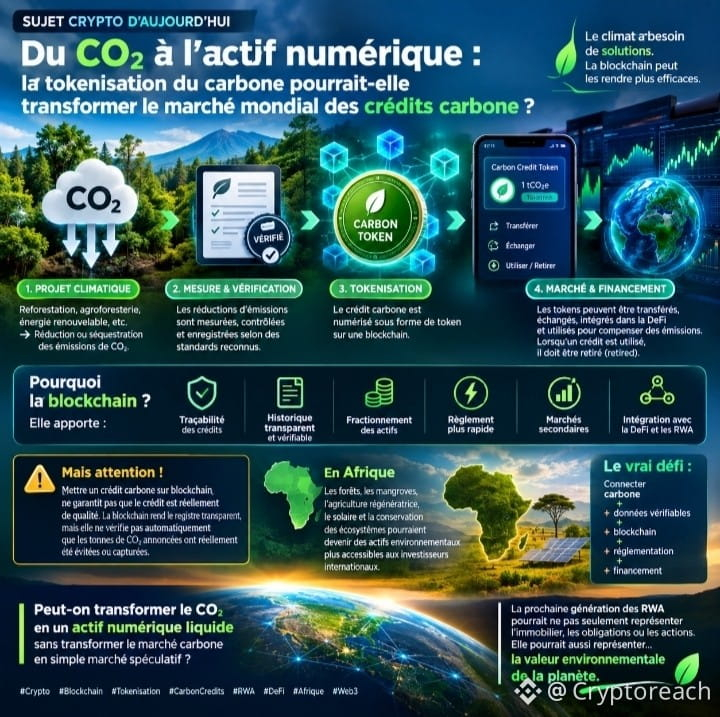
“From CO₂ to digital assets: could tokenizing carbon transform the global carbon credit market?”
The carbon market is gradually entering the blockchain era.
Tokenization makes it possible to digitally represent carbon credits on a blockchain, with the potential to improve their traceability, transferability, and accessibility.
But the real shift doesn’t lie merely in creating a token.
The challenge is to ensure that behind 1 carbon token there truly is 1 verified, measurable carbon credit that hasn’t been used twice.
If this infrastructure becomes reliable enough, it could enable:
* better transparency in carbon markets;
* the fractionalization of credits;
* broader investor participation;
* integration with DeFi and RWA;
* more direct funding for environmental projects in Africa.
Africa could be at the heart of this transformation, thanks to its forest, agricultural, and energy potential.
But one question remains:
Can we turn CO₂ into a liquid digital asset without turning the carbon market into a mere speculative market?
The next generation of RWA may not only represent real estate, bonds, or stocks.
It could also represent… the planet’s environmental value.
#Crypto #Blockchain #Tokenisation #CarbonCredits #RWA #DeFi #Africa #Web3 $NVDAB $AAPLB $MSFTB
Crypto Topics Today
“From CO₂ to digital assets: could tokenizing carbon transform the global carbon credit market?”
The carbon market is gradually entering the blockchain era.
Tokenization makes it possible to digitally represent carbon credits on a blockchain, with the potential to improve their traceability, transferability, and accessibility.
But the real shift doesn’t lie merely in creating a token.
The challenge is to ensure that behind 1 carbon token there truly is 1 verified, measurable carbon credit that hasn’t been used twice.
If this infrastructure becomes reliable enough, it could enable:
* better transparency in carbon markets;
* the fractionalization of credits;
* broader investor participation;
* integration with DeFi and RWA;
* more direct funding for environmental projects in Africa.
Africa could be at the heart of this transformation, thanks to its forest, agricultural, and energy potential.
But one question remains:
Can we turn CO₂ into a liquid digital asset without turning the carbon market into a mere speculative market?
The next generation of RWA may not only represent real estate, bonds, or stocks.
It could also represent… the planet’s environmental value.
#Crypto #Blockchain #Tokenisation #CarbonCredits #RWA #DeFi #Africa #Web3 $NVDAB $AAPLB $MSFTB
“From CO₂ to digital assets: could tokenizing carbon transform the global carbon credit market?”
The carbon market is gradually entering the blockchain era.
Tokenization makes it possible to digitally represent carbon credits on a blockchain, with the potential to improve their traceability, transferability, and accessibility.
But the real shift doesn’t lie merely in creating a token.
The challenge is to ensure that behind 1 carbon token there truly is 1 verified, measurable carbon credit that hasn’t been used twice.
If this infrastructure becomes reliable enough, it could enable:
* better transparency in carbon markets;
* the fractionalization of credits;
* broader investor participation;
* integration with DeFi and RWA;
* more direct funding for environmental projects in Africa.
Africa could be at the heart of this transformation, thanks to its forest, agricultural, and energy potential.
But one question remains:
Can we turn CO₂ into a liquid digital asset without turning the carbon market into a mere speculative market?
The next generation of RWA may not only represent real estate, bonds, or stocks.
It could also represent… the planet’s environmental value.
#Crypto #Blockchain #Tokenisation #CarbonCredits #RWA #DeFi #Africa #Web3 $NVDAB $AAPLB $MSFTB
220
·
--
Article
The absolute ok.Cryptocurrency topic of the day:
The SEC takes a key step toward the tokenization of U.S. equity markets
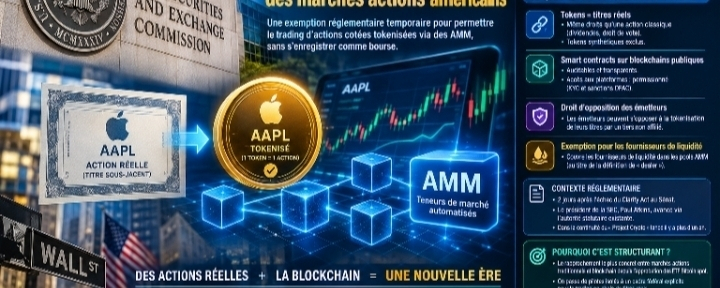
On September 17, 2026, the SEC published its “Innovation Exemption”: a temporary regulatory exemption (5 years) allowing approved platforms—“Tokenized Securities Venues” (TSV)—to trade tokenized exchange-listed stocks via automated market makers (AMMs), without having to register as an exchange.
What this order concretely provides:
The absolute ok.
Cryptocurrency topic of the day:
The SEC takes a key step toward the tokenization of U.S. equity markets
On September 17, 2026, the SEC published its “Innovation Exemption”: a temporary regulatory exemption (5 years) allowing approved platforms—“Tokenized Securities Venues” (TSV)—to trade tokenized exchange-listed stocks via automated market makers (AMMs), without having to register as an exchange.
What this order concretely provides:
The SEC takes a key step toward the tokenization of U.S. equity markets
On September 17, 2026, the SEC published its “Innovation Exemption”: a temporary regulatory exemption (5 years) allowing approved platforms—“Tokenized Securities Venues” (TSV)—to trade tokenized exchange-listed stocks via automated market makers (AMMs), without having to register as an exchange.
What this order concretely provides:
692
·
--
Everything is on our eyes.
It’s up to you to understand it—nothing more.
The economic collapse or crash, if you like, is underway; be careful.
$TSMB $MSFTB $AAPLB
Everything is on our eyes.
It’s up to you to understand it—nothing more.
The economic collapse or crash, if you like, is underway; be careful.
$TSMB $MSFTB $AAPLB
It’s up to you to understand it—nothing more.
The economic collapse or crash, if you like, is underway; be careful.
$TSMB $MSFTB $AAPLB

253
·
--
Cryptocurrency topics of today
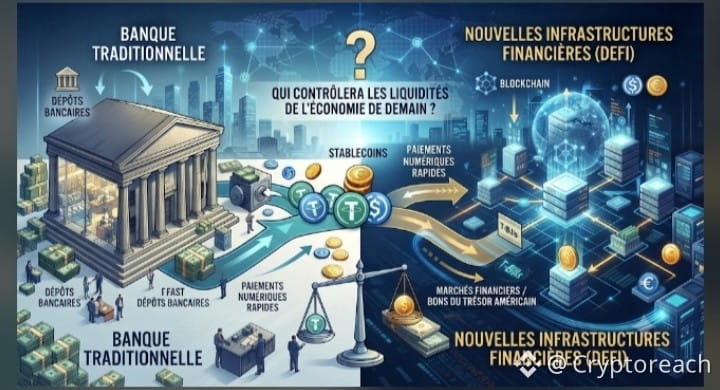
Bank disintermediation: will stablecoins change the financial system?
For decades, banks have been the indispensable intermediary between our money and the economy.
But a new model is emerging:
Bank deposit → Stablecoin → Financial markets / T-Bills
If users keep more of their liquidity in stablecoins rather than bank deposits, banks could gradually lose part of their deposit base.
And that’s where the real debate begins.
Stablecoins can simultaneously:
🔹 boost demand for U.S. Treasury bills;
🔹 accelerate digital payments;
🔹 reduce certain intermediation costs;
🔹 but also put pressure on traditional bank funding.
So the real issue may not be “crypto versus banks.”
It’s rather:
Who will control the liquidity of tomorrow’s economy: banks, or the new blockchain-based financial infrastructures?
The next financial revolution may not eliminate banks.
It could simply reduce their role as intermediaries.
$NVDAB $AAPLB $MSFTB
#Crypto #Stablecoins #Blockchain #DeFi #Finance #Bitcoin #CLARITYAct
Cryptocurrency topics of today
Bank disintermediation: will stablecoins change the financial system?
For decades, banks have been the indispensable intermediary between our money and the economy.
But a new model is emerging:
Bank deposit → Stablecoin → Financial markets / T-Bills
If users keep more of their liquidity in stablecoins rather than bank deposits, banks could gradually lose part of their deposit base.
And that’s where the real debate begins.
Stablecoins can simultaneously:
🔹 boost demand for U.S. Treasury bills;
🔹 accelerate digital payments;
🔹 reduce certain intermediation costs;
🔹 but also put pressure on traditional bank funding.
So the real issue may not be “crypto versus banks.”
It’s rather:
Who will control the liquidity of tomorrow’s economy: banks, or the new blockchain-based financial infrastructures?
The next financial revolution may not eliminate banks.
It could simply reduce their role as intermediaries.
$NVDAB $AAPLB $MSFTB
#Crypto #Stablecoins #Blockchain #DeFi #Finance #Bitcoin #CLARITYAct
Bank disintermediation: will stablecoins change the financial system?
For decades, banks have been the indispensable intermediary between our money and the economy.
But a new model is emerging:
Bank deposit → Stablecoin → Financial markets / T-Bills
If users keep more of their liquidity in stablecoins rather than bank deposits, banks could gradually lose part of their deposit base.
And that’s where the real debate begins.
Stablecoins can simultaneously:
🔹 boost demand for U.S. Treasury bills;
🔹 accelerate digital payments;
🔹 reduce certain intermediation costs;
🔹 but also put pressure on traditional bank funding.
So the real issue may not be “crypto versus banks.”
It’s rather:
Who will control the liquidity of tomorrow’s economy: banks, or the new blockchain-based financial infrastructures?
The next financial revolution may not eliminate banks.
It could simply reduce their role as intermediaries.
$NVDAB $AAPLB $MSFTB
#Crypto #Stablecoins #Blockchain #DeFi #Finance #Bitcoin #CLARITYAct
108
·
--
CLARITY Act: the real battle is no longer “crypto versus banks,” but who will control tomorrow’s financial rails?
The crypto market is entering a decisive week: the U.S. Senate must hold a key vote on the CLARITY Act on September 15. This vote does not yet mean the law will be adopted, but its outcome could determine whether the United States moves toward a much clearer regulatory framework for digital assets.
The most interesting part is elsewhere.
Bitcoin could benefit from a more predictable institutional environment.
Ethereum could benefit from the acceleration of tokenization, stablecoins, and real-world assets (RWAs).
XRP could benefit from reduced regulatory uncertainty surrounding digital assets used in payments.
But the real issue could be stablecoins.
Today, stablecoins already act as a bridge between the dollar and the blockchain. And Ripple, for example, is looking to position its RLUSD with corporate treasuries representing potentially $13,000 billion in annual cash flows.
The scenario to watch
CLARITY Act
↓
regulatory framework
↓
banks + stablecoins
↓
tokenization of assets
↓
RWA + blockchain
↓
new payment and settlement rails
The real change could be much deeper:
The next crypto wave may come less from speculation and more from the integration of blockchain into traditional finance.
And that transformation is what will have to be watched after September 15.
#Bitcoin #Ethereum #XRP #Stablecoins #CLARITYAct #RWA #Blockchain #Crypto #DeFi #Tokenization $NVDAB $AAPLB $MSFTB
CLARITY Act: the real battle is no longer “crypto versus banks,” but who will control tomorrow’s financial rails?
The crypto market is entering a decisive week: the U.S. Senate must hold a key vote on the CLARITY Act on September 15. This vote does not yet mean the law will be adopted, but its outcome could determine whether the United States moves toward a much clearer regulatory framework for digital assets.
The most interesting part is elsewhere.
Bitcoin could benefit from a more predictable institutional environment.
Ethereum could benefit from the acceleration of tokenization, stablecoins, and real-world assets (RWAs).
XRP could benefit from reduced regulatory uncertainty surrounding digital assets used in payments.
But the real issue could be stablecoins.
Today, stablecoins already act as a bridge between the dollar and the blockchain. And Ripple, for example, is looking to position its RLUSD with corporate treasuries representing potentially $13,000 billion in annual cash flows.
The scenario to watch
CLARITY Act
↓
regulatory framework
↓
banks + stablecoins
↓
tokenization of assets
↓
RWA + blockchain
↓
new payment and settlement rails
The real change could be much deeper:
The next crypto wave may come less from speculation and more from the integration of blockchain into traditional finance.
And that transformation is what will have to be watched after September 15.
#Bitcoin #Ethereum #XRP #Stablecoins #CLARITYAct #RWA #Blockchain #Crypto #DeFi #Tokenization $NVDAB $AAPLB $MSFTB
The crypto market is entering a decisive week: the U.S. Senate must hold a key vote on the CLARITY Act on September 15. This vote does not yet mean the law will be adopted, but its outcome could determine whether the United States moves toward a much clearer regulatory framework for digital assets.
The most interesting part is elsewhere.
Bitcoin could benefit from a more predictable institutional environment.
Ethereum could benefit from the acceleration of tokenization, stablecoins, and real-world assets (RWAs).
XRP could benefit from reduced regulatory uncertainty surrounding digital assets used in payments.
But the real issue could be stablecoins.
Today, stablecoins already act as a bridge between the dollar and the blockchain. And Ripple, for example, is looking to position its RLUSD with corporate treasuries representing potentially $13,000 billion in annual cash flows.
The scenario to watch
CLARITY Act
↓
regulatory framework
↓
banks + stablecoins
↓
tokenization of assets
↓
RWA + blockchain
↓
new payment and settlement rails
The real change could be much deeper:
The next crypto wave may come less from speculation and more from the integration of blockchain into traditional finance.
And that transformation is what will have to be watched after September 15.
#Bitcoin #Ethereum #XRP #Stablecoins #CLARITYAct #RWA #Blockchain #Crypto #DeFi #Tokenization $NVDAB $AAPLB $MSFTB

336
·
--
The next crypto revolution may not be a brand-new cryptocurrency.
It could be the financial infrastructure built around the blockchain.
Why?
* Banks tokenize assets
* Institutions use stablecoins
* DeFi seeks to integrate institutional liquidity
* RWAs turn real-world assets into digital assets
* Payments become programmable
The real challenge is therefore no longer only:
“Which crypto will explode?”
But rather:
“Which infrastructure will become indispensable to the finance of tomorrow?”
Bitcoin popularized decentralized digital money.
The next step could be the convergence of TradFi, DeFi, stablecoins, and tokenization.
Value could gradually shift from the token itself to the infrastructure that enables capital to flow.
$AMZNB $MSFTB $AAPLB
#Crypto #Blockchain #DeFi #RWA #Stablecoins #Web3
The next crypto revolution may not be a brand-new cryptocurrency.
It could be the financial infrastructure built around the blockchain.
Why?
* Banks tokenize assets
* Institutions use stablecoins
* DeFi seeks to integrate institutional liquidity
* RWAs turn real-world assets into digital assets
* Payments become programmable
The real challenge is therefore no longer only:
“Which crypto will explode?”
But rather:
“Which infrastructure will become indispensable to the finance of tomorrow?”
Bitcoin popularized decentralized digital money.
The next step could be the convergence of TradFi, DeFi, stablecoins, and tokenization.
Value could gradually shift from the token itself to the infrastructure that enables capital to flow.
$AMZNB $MSFTB $AAPLB
#Crypto #Blockchain #DeFi #RWA #Stablecoins #Web3
It could be the financial infrastructure built around the blockchain.
Why?
* Banks tokenize assets
* Institutions use stablecoins
* DeFi seeks to integrate institutional liquidity
* RWAs turn real-world assets into digital assets
* Payments become programmable
The real challenge is therefore no longer only:
“Which crypto will explode?”
But rather:
“Which infrastructure will become indispensable to the finance of tomorrow?”
Bitcoin popularized decentralized digital money.
The next step could be the convergence of TradFi, DeFi, stablecoins, and tokenization.
Value could gradually shift from the token itself to the infrastructure that enables capital to flow.
$AMZNB $MSFTB $AAPLB
#Crypto #Blockchain #DeFi #RWA #Stablecoins #Web3

1
70
·
--
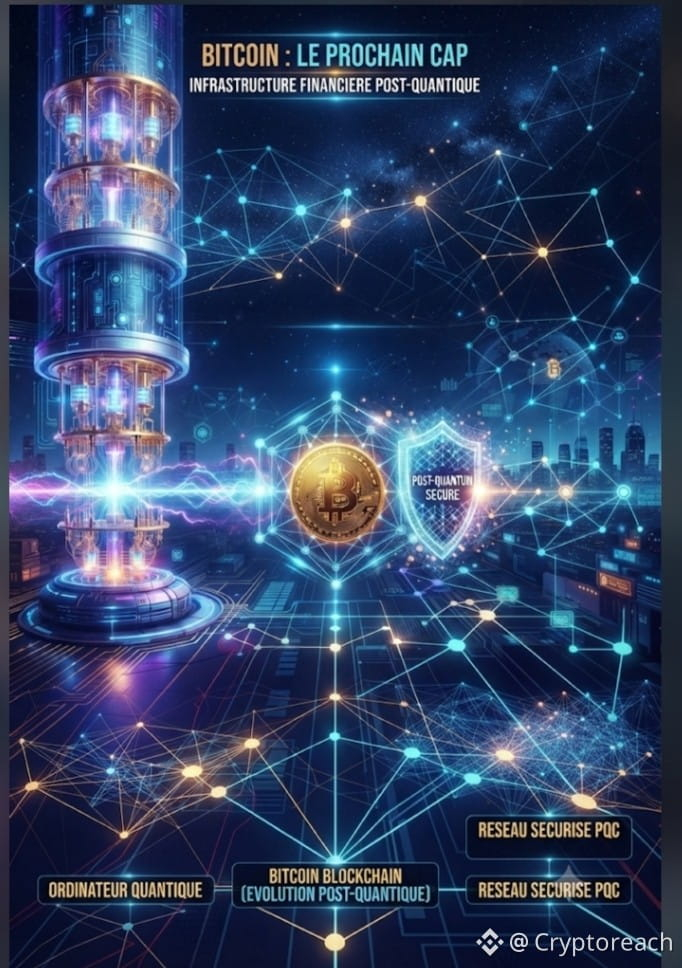
COULD A POST-QUANTUM FINANCIAL INFRASTRUCTURE BE THE NEXT GENERATION OF BITCOIN?
Quantum computing could one day call into question certain cryptographies used by today’s blockchains.
Bitcoin will therefore need to evolve: new signatures, post-quantum cryptography, strengthened security, and potentially new financial infrastructures.
But beware: post-quantum doesn’t automatically mean QFS, nor that Bitcoin is doomed.
The real question is elsewhere.
What if the next crypto revolution wasn’t about replacing Bitcoin, but about building an infrastructure capable of working in the post-quantum era?
Will Bitcoin be adapted… or overtaken?
$TSMB $MSFTB $AAPLB
#Bitcoin #Crypto #Blockchain #QuantumComputing #PostQuantum #Web3 #DeFi
COULD A POST-QUANTUM FINANCIAL INFRASTRUCTURE BE THE NEXT GENERATION OF BITCOIN?
Quantum computing could one day call into question certain cryptographies used by today’s blockchains.
Bitcoin will therefore need to evolve: new signatures, post-quantum cryptography, strengthened security, and potentially new financial infrastructures.
But beware: post-quantum doesn’t automatically mean QFS, nor that Bitcoin is doomed.
The real question is elsewhere.
What if the next crypto revolution wasn’t about replacing Bitcoin, but about building an infrastructure capable of working in the post-quantum era?
Will Bitcoin be adapted… or overtaken?
$TSMB $MSFTB $AAPLB
#Bitcoin #Crypto #Blockchain #QuantumComputing #PostQuantum #Web3 #DeFi
Quantum computing could one day call into question certain cryptographies used by today’s blockchains.
Bitcoin will therefore need to evolve: new signatures, post-quantum cryptography, strengthened security, and potentially new financial infrastructures.
But beware: post-quantum doesn’t automatically mean QFS, nor that Bitcoin is doomed.
The real question is elsewhere.
What if the next crypto revolution wasn’t about replacing Bitcoin, but about building an infrastructure capable of working in the post-quantum era?
Will Bitcoin be adapted… or overtaken?
$TSMB $MSFTB $AAPLB
#Bitcoin #Crypto #Blockchain #QuantumComputing #PostQuantum #Web3 #DeFi
119
·
--
$NVDAB $AAPLB $MSFTB All favor will be given only until the supporting document is found.
$NVDAB $AAPLB $MSFTB All favor will be given only until the supporting document is found.

277
·
--
Crypto topics of today
TradFi + Blockchain + DeFi: the winning trio of tomorrow’s finance.
The next financial revolution will probably not be the replacement of traditional finance, but its convergence with blockchain and DeFi.
TradFi brings banks, capital, regulation, and institutional trust.
Blockchain brings traceability, tokenization, and faster settlement.
DeFi brings smart contracts, programmability, and markets accessible 24/7.
The tokenization of bonds, funds, deposits, and other real-world assets is already showing this convergence. The IMF also estimates that the most likely scenario is a hybrid financial infrastructure, where institutions and blockchain technology work together.
And the movement is tangible: Nasdaq has just announced a $100 million investment in Kraken’s parent company to develop the infrastructure for tokenized securities.
Tomorrow, the question may no longer be TradFi OR DeFi, but: TradFi + Blockchain + DeFi.
$NVDAB $AAPLB $AMZNB
#Crypto #Blockchain #DeFi #TradFi #Tokenisation #Web3
Crypto topics of today
TradFi + Blockchain + DeFi: the winning trio of tomorrow’s finance.
The next financial revolution will probably not be the replacement of traditional finance, but its convergence with blockchain and DeFi.
TradFi brings banks, capital, regulation, and institutional trust.
Blockchain brings traceability, tokenization, and faster settlement.
DeFi brings smart contracts, programmability, and markets accessible 24/7.
The tokenization of bonds, funds, deposits, and other real-world assets is already showing this convergence. The IMF also estimates that the most likely scenario is a hybrid financial infrastructure, where institutions and blockchain technology work together.
And the movement is tangible: Nasdaq has just announced a $100 million investment in Kraken’s parent company to develop the infrastructure for tokenized securities.
Tomorrow, the question may no longer be TradFi OR DeFi, but: TradFi + Blockchain + DeFi.
$NVDAB $AAPLB $AMZNB
#Crypto #Blockchain #DeFi #TradFi #Tokenisation #Web3
TradFi + Blockchain + DeFi: the winning trio of tomorrow’s finance.
The next financial revolution will probably not be the replacement of traditional finance, but its convergence with blockchain and DeFi.
TradFi brings banks, capital, regulation, and institutional trust.
Blockchain brings traceability, tokenization, and faster settlement.
DeFi brings smart contracts, programmability, and markets accessible 24/7.
The tokenization of bonds, funds, deposits, and other real-world assets is already showing this convergence. The IMF also estimates that the most likely scenario is a hybrid financial infrastructure, where institutions and blockchain technology work together.
And the movement is tangible: Nasdaq has just announced a $100 million investment in Kraken’s parent company to develop the infrastructure for tokenized securities.
Tomorrow, the question may no longer be TradFi OR DeFi, but: TradFi + Blockchain + DeFi.
$NVDAB $AAPLB $AMZNB
#Crypto #Blockchain #DeFi #TradFi #Tokenisation #Web3

104
·
--
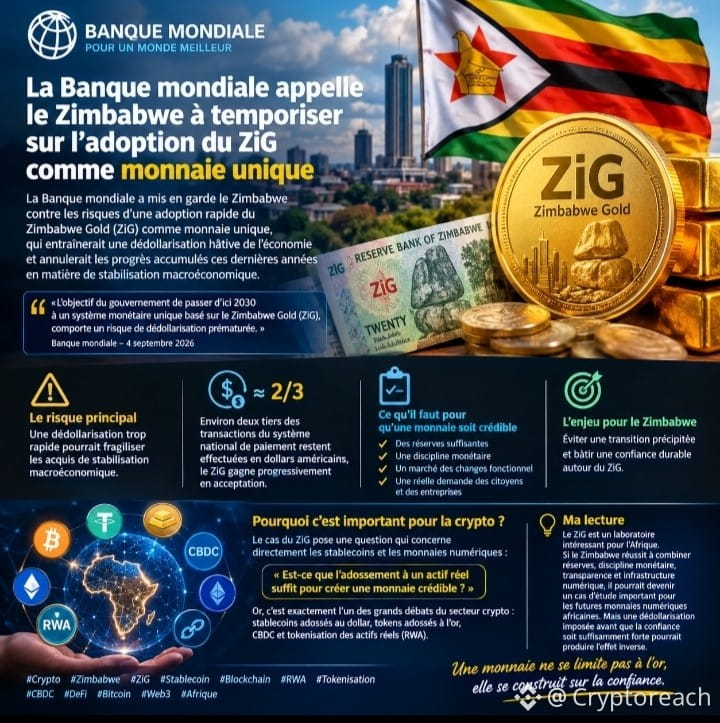
ZiG versus the dollar
The World Bank calls on Zimbabwe not to rush the transition to a single currency based on Zimbabwe Gold (ZiG). The government’s goal is to reach a ZiG-dominated monetary system by 2030, but the institution believes that de-dollarization that is too rapid could undermine the gains made in stabilization.
The problem is straightforward: a currency does not become credible just because it is backed by gold. It must also inspire confidence, have sufficient reserves, have a functional foreign-exchange market, and be genuinely demanded by citizens and businesses.
The IMF also points out that around two-thirds of transactions in the national payment system are still carried out in US dollars, while the ZiG is gradually gaining acceptance.
Why it matters for crypto?
The ZiG case raises a question that directly concerns stablecoins and digital currencies:
Is backing by a real asset enough to create a credible currency?
In fact, this is exactly one of the major debates in the crypto sector: dollar-backed stablecoins, gold-backed tokens, CBDCs, and the tokenization of real-world assets (RWAs).
Zimbabwe shows that between creating a new currency and winning market trust, there is a huge gap.
My take: ZiG is an interesting laboratory for Africa. If Zimbabwe manages to combine reserves, monetary discipline, transparency, and digital infrastructure, it could become an important case study for future African digital currencies. But de-dollarization imposed before trust is strong enough could produce the opposite effect.
$NVDAB $AMZNB $TSMB
#Crypto #Zimbabwe #ZiG #Stablecoin #Blockchain #RWA #Tokenisation #CBDC #DeFi #Bitcoin #Web3 #Afrique
ZiG versus the dollar
The World Bank calls on Zimbabwe not to rush the transition to a single currency based on Zimbabwe Gold (ZiG). The government’s goal is to reach a ZiG-dominated monetary system by 2030, but the institution believes that de-dollarization that is too rapid could undermine the gains made in stabilization.
The problem is straightforward: a currency does not become credible just because it is backed by gold. It must also inspire confidence, have sufficient reserves, have a functional foreign-exchange market, and be genuinely demanded by citizens and businesses.
The IMF also points out that around two-thirds of transactions in the national payment system are still carried out in US dollars, while the ZiG is gradually gaining acceptance.
Why it matters for crypto?
The ZiG case raises a question that directly concerns stablecoins and digital currencies:
Is backing by a real asset enough to create a credible currency?
In fact, this is exactly one of the major debates in the crypto sector: dollar-backed stablecoins, gold-backed tokens, CBDCs, and the tokenization of real-world assets (RWAs).
Zimbabwe shows that between creating a new currency and winning market trust, there is a huge gap.
My take: ZiG is an interesting laboratory for Africa. If Zimbabwe manages to combine reserves, monetary discipline, transparency, and digital infrastructure, it could become an important case study for future African digital currencies. But de-dollarization imposed before trust is strong enough could produce the opposite effect.
$NVDAB $AMZNB $TSMB
#Crypto #Zimbabwe #ZiG #Stablecoin #Blockchain #RWA #Tokenisation #CBDC #DeFi #Bitcoin #Web3 #Afrique
The World Bank calls on Zimbabwe not to rush the transition to a single currency based on Zimbabwe Gold (ZiG). The government’s goal is to reach a ZiG-dominated monetary system by 2030, but the institution believes that de-dollarization that is too rapid could undermine the gains made in stabilization.
The problem is straightforward: a currency does not become credible just because it is backed by gold. It must also inspire confidence, have sufficient reserves, have a functional foreign-exchange market, and be genuinely demanded by citizens and businesses.
The IMF also points out that around two-thirds of transactions in the national payment system are still carried out in US dollars, while the ZiG is gradually gaining acceptance.
Why it matters for crypto?
The ZiG case raises a question that directly concerns stablecoins and digital currencies:
Is backing by a real asset enough to create a credible currency?
In fact, this is exactly one of the major debates in the crypto sector: dollar-backed stablecoins, gold-backed tokens, CBDCs, and the tokenization of real-world assets (RWAs).
Zimbabwe shows that between creating a new currency and winning market trust, there is a huge gap.
My take: ZiG is an interesting laboratory for Africa. If Zimbabwe manages to combine reserves, monetary discipline, transparency, and digital infrastructure, it could become an important case study for future African digital currencies. But de-dollarization imposed before trust is strong enough could produce the opposite effect.
$NVDAB $AMZNB $TSMB
#Crypto #Zimbabwe #ZiG #Stablecoin #Blockchain #RWA #Tokenisation #CBDC #DeFi #Bitcoin #Web3 #Afrique
1
149
·
--
JAPAN: THE RISK THAT COULD SPREAD TO CRYPTOS
The real issue might not be a “war” between Japan and the United States.
It’s the yen carry trade.
The yen is strengthening quickly as markets anticipate another rate hike by the Bank of Japan. As a result, investors who had borrowed in yen to buy higher-risk assets may be forced to unwind their positions.
And cryptocurrencies?
If the unwind accelerates, the pressure could spill over to stocks, risky assets, and potentially Bitcoin and altcoins—especially positions that are heavily leveraged.
So September 18 becomes a date to watch, with the BoJ meeting and expectations around the yen.
But be careful: talking about a “guaranteed crash” would be premature.
The real question is:
Will Japan trigger a simple global rebalancing of capital, or a new liquidity shock for the crypto markets?
$AMZNB $MSFTB $NVDAB
#Bitcoin #Crypto #BTC #Ethereum #ETH #Japan #BOJ #Yen #CarryTrade #Liquidity #CryptoMarket #Finance
JAPAN: THE RISK THAT COULD SPREAD TO CRYPTOS
The real issue might not be a “war” between Japan and the United States.
It’s the yen carry trade.
The yen is strengthening quickly as markets anticipate another rate hike by the Bank of Japan. As a result, investors who had borrowed in yen to buy higher-risk assets may be forced to unwind their positions.
And cryptocurrencies?
If the unwind accelerates, the pressure could spill over to stocks, risky assets, and potentially Bitcoin and altcoins—especially positions that are heavily leveraged.
So September 18 becomes a date to watch, with the BoJ meeting and expectations around the yen.
But be careful: talking about a “guaranteed crash” would be premature.
The real question is:
Will Japan trigger a simple global rebalancing of capital, or a new liquidity shock for the crypto markets?
$AMZNB $MSFTB $NVDAB
#Bitcoin #Crypto #BTC #Ethereum #ETH #Japan #BOJ #Yen #CarryTrade #Liquidity #CryptoMarket #Finance
The real issue might not be a “war” between Japan and the United States.
It’s the yen carry trade.
The yen is strengthening quickly as markets anticipate another rate hike by the Bank of Japan. As a result, investors who had borrowed in yen to buy higher-risk assets may be forced to unwind their positions.
And cryptocurrencies?
If the unwind accelerates, the pressure could spill over to stocks, risky assets, and potentially Bitcoin and altcoins—especially positions that are heavily leveraged.
So September 18 becomes a date to watch, with the BoJ meeting and expectations around the yen.
But be careful: talking about a “guaranteed crash” would be premature.
The real question is:
Will Japan trigger a simple global rebalancing of capital, or a new liquidity shock for the crypto markets?
$AMZNB $MSFTB $NVDAB
#Bitcoin #Crypto #BTC #Ethereum #ETH #Japan #BOJ #Yen #CarryTrade #Liquidity #CryptoMarket #Finance

Log in to explore more content
Join global crypto users on Binance Square
⚡️ Get latest and useful information about crypto.
💬 Trusted by the world’s largest crypto exchange.
👍 Discover real insights from verified creators.
Email / Phone number