

CryptoPress
2.2k Posts

CryptoPress
 Square Verified+
Report
Block User
News and press releases about Bitcoin, cryptocurrencies, and blockchain.
1 Following
31.0K+ Followers
14.5K+ Liked
Posts
·
--
Bitget Restores Withdrawals Following Hot and Warm Wallet Security BreachCryptocurrency exchange Bitget has officially begun restoring withdrawal services after halting operations due to a security breach affecting its hot and warm wallet infrastructure.
The platform assured users that all affected assets resulting from the unauthorized transactions will be fully covered by the exchange’s internal reserves.
Security monitors and on-chain analysts are continuing to track the movement of funds associated with the incident as normal network operations resume.
Cryptocurrency exchange Bitget has officially begun restoring withdrawals following a recent security breach that compromised portions of its hot and warm wallet infrastructure. The resumption of services marks a critical step for the platform as it works to normalize operations for its global user base.
The incident came to light when abnormal outflow patterns were detected by automated security monitoring systems and on-chain investigators. Following the initial detection, Bitget’s engineering and security teams swiftly paused all withdrawal operations to contain the threat and prevent further unauthorized transfers from the affected hot and warm wallets.
According to an official statement shared on X by Bitget executives, the exchange has confirmed that user funds remain fully secure despite the breach. The company emphasized that its robust reserves will completely cover any losses incurred during the security incident, ensuring that no individual customer bears the financial impact of the exploit.
Security analysts and blockchain forensics firms are actively examining the transaction vectors used in the attack to trace the stolen assets and collaborate with other major exchanges to blacklist addresses tied to the threat actor. While hot wallets typically hold a fraction of an exchange’s total liquidity to facilitate daily trading and withdrawals, the swift action taken by Bitget’s risk management team helped limit the overall scope of the damage.
As withdrawal services gradually come back online, users are advised to monitor official communication channels for real-time updates regarding specific token networks and processing times. The exchange noted that certain assets may experience temporary queue delays as the system processes the backlog of pending transactions safely.
The post Bitget Restores Withdrawals Following Hot and Warm Wallet Security Breach appeared first on Cryptopress.
Bitget Restores Withdrawals Following Hot and Warm Wallet Security Breach
Cryptocurrency exchange Bitget has officially begun restoring withdrawal services after halting operations due to a security breach affecting its hot and warm wallet infrastructure.
The platform assured users that all affected assets resulting from the unauthorized transactions will be fully covered by the exchange’s internal reserves.
Security monitors and on-chain analysts are continuing to track the movement of funds associated with the incident as normal network operations resume.
Cryptocurrency exchange Bitget has officially begun restoring withdrawals following a recent security breach that compromised portions of its hot and warm wallet infrastructure. The resumption of services marks a critical step for the platform as it works to normalize operations for its global user base.
The incident came to light when abnormal outflow patterns were detected by automated security monitoring systems and on-chain investigators. Following the initial detection, Bitget’s engineering and security teams swiftly paused all withdrawal operations to contain the threat and prevent further unauthorized transfers from the affected hot and warm wallets.
According to an official statement shared on X by Bitget executives, the exchange has confirmed that user funds remain fully secure despite the breach. The company emphasized that its robust reserves will completely cover any losses incurred during the security incident, ensuring that no individual customer bears the financial impact of the exploit.
Security analysts and blockchain forensics firms are actively examining the transaction vectors used in the attack to trace the stolen assets and collaborate with other major exchanges to blacklist addresses tied to the threat actor. While hot wallets typically hold a fraction of an exchange’s total liquidity to facilitate daily trading and withdrawals, the swift action taken by Bitget’s risk management team helped limit the overall scope of the damage.
As withdrawal services gradually come back online, users are advised to monitor official communication channels for real-time updates regarding specific token networks and processing times. The exchange noted that certain assets may experience temporary queue delays as the system processes the backlog of pending transactions safely.
The post Bitget Restores Withdrawals Following Hot and Warm Wallet Security Breach appeared first on Cryptopress.
The platform assured users that all affected assets resulting from the unauthorized transactions will be fully covered by the exchange’s internal reserves.
Security monitors and on-chain analysts are continuing to track the movement of funds associated with the incident as normal network operations resume.
Cryptocurrency exchange Bitget has officially begun restoring withdrawals following a recent security breach that compromised portions of its hot and warm wallet infrastructure. The resumption of services marks a critical step for the platform as it works to normalize operations for its global user base.
The incident came to light when abnormal outflow patterns were detected by automated security monitoring systems and on-chain investigators. Following the initial detection, Bitget’s engineering and security teams swiftly paused all withdrawal operations to contain the threat and prevent further unauthorized transfers from the affected hot and warm wallets.
According to an official statement shared on X by Bitget executives, the exchange has confirmed that user funds remain fully secure despite the breach. The company emphasized that its robust reserves will completely cover any losses incurred during the security incident, ensuring that no individual customer bears the financial impact of the exploit.
Security analysts and blockchain forensics firms are actively examining the transaction vectors used in the attack to trace the stolen assets and collaborate with other major exchanges to blacklist addresses tied to the threat actor. While hot wallets typically hold a fraction of an exchange’s total liquidity to facilitate daily trading and withdrawals, the swift action taken by Bitget’s risk management team helped limit the overall scope of the damage.
As withdrawal services gradually come back online, users are advised to monitor official communication channels for real-time updates regarding specific token networks and processing times. The exchange noted that certain assets may experience temporary queue delays as the system processes the backlog of pending transactions safely.
The post Bitget Restores Withdrawals Following Hot and Warm Wallet Security Breach appeared first on Cryptopress.
36
·
--
Senate Report Places Tether’s USDT At Center of Iran’s Shadow Banking NetworkDemocratic staff on the Senate Permanent Subcommittee on Investigations said 84% of 846 Iran-linked sanctioned wallets transacted almost entirely in USDT.
Sen. Richard Blumenthal asked Treasury Secretary Scott Bessent and Attorney General Todd Blanche to investigate Tether’s sanctions and AML controls.
Tether said actions involving USDT froze about $550 million in Iran-linked assets in 2026, including more than $344 million in April.
Tether’s dollar-pegged stablecoin has become a “significant financial lifeline” inside Iran’s sanctions-evasion networks, according to a 28-page staff report released Monday by Democrats on the Senate Permanent Subcommittee on Investigations.
Investigators reviewed 846 wallets sanctioned or targeted for seizure by the U.S. Treasury’s Office of Foreign Assets Control and Israel’s National Bureau for Counter Terror Financing over ties to Iran and regional groups including Hamas, Hezbollah and the Houthis. The report found that 84% of those wallets transacted exclusively or nearly exclusively in USDT, with the share rising to 87% among the 757 addresses on Israel’s list and 57% among the 101 OFAC designations.
In a statement, Sen. Richard Blumenthal, the subcommittee’s ranking Democrat, said the findings “expose how Tether and its flagship token have become central to Iran’s shadow banking system, allowing the Iranian government to fund its regional proxies, commit human rights abuses, and pursue hostile drone and missile programs as they defy our sanctions regime.” He referred the report to Treasury Secretary Scott Bessent and Attorney General Todd Blanche and asked both departments to examine Tether’s anti-money laundering and sanctions practices.
The report also said two sanctioned Iranian oil traders, Alireza Derakhshan and Arash Estaki Alivand, moved more than $603 million in USDT between 2021 and 2025. Staff argued Tether’s wallet freezes have been uneven, citing cases in which funds continued to move after public designations.
Tether pushed back the same day. In a company statement, CEO Paolo Ardoino said, “Tether has consistently demonstrated that USD® is not a haven for sanctioned actors, terrorist organizations or criminal networks.” Tether said actions involving USDT froze about $550 million in Iran-linked assets in 2026, including more than $344 million across two addresses in April after information from OFAC and U.S. law enforcement, and more than $130 million across four wallets in July. The issuer said it has supported more than 2,900 investigations globally and helped freeze more than $4.9 billion in assets overall.
USDT remains the world’s largest dollar-backed stablecoin. The clash lands as the Treasury Department expands Iran-related sanctions work, including last month’s Operation Economic Outcast, which listed digital assets among sectors under heightened scrutiny. Whether Treasury or DOJ opens a formal inquiry into Tether is not yet public.
The post Senate Report Places Tether’s USDT at Center of Iran’s Shadow Banking Network appeared first on Cryptopress.
Senate Report Places Tether’s USDT At Center of Iran’s Shadow Banking Network
Democratic staff on the Senate Permanent Subcommittee on Investigations said 84% of 846 Iran-linked sanctioned wallets transacted almost entirely in USDT.
Sen. Richard Blumenthal asked Treasury Secretary Scott Bessent and Attorney General Todd Blanche to investigate Tether’s sanctions and AML controls.
Tether said actions involving USDT froze about $550 million in Iran-linked assets in 2026, including more than $344 million in April.
Tether’s dollar-pegged stablecoin has become a “significant financial lifeline” inside Iran’s sanctions-evasion networks, according to a 28-page staff report released Monday by Democrats on the Senate Permanent Subcommittee on Investigations.
Investigators reviewed 846 wallets sanctioned or targeted for seizure by the U.S. Treasury’s Office of Foreign Assets Control and Israel’s National Bureau for Counter Terror Financing over ties to Iran and regional groups including Hamas, Hezbollah and the Houthis. The report found that 84% of those wallets transacted exclusively or nearly exclusively in USDT, with the share rising to 87% among the 757 addresses on Israel’s list and 57% among the 101 OFAC designations.
In a statement, Sen. Richard Blumenthal, the subcommittee’s ranking Democrat, said the findings “expose how Tether and its flagship token have become central to Iran’s shadow banking system, allowing the Iranian government to fund its regional proxies, commit human rights abuses, and pursue hostile drone and missile programs as they defy our sanctions regime.” He referred the report to Treasury Secretary Scott Bessent and Attorney General Todd Blanche and asked both departments to examine Tether’s anti-money laundering and sanctions practices.
The report also said two sanctioned Iranian oil traders, Alireza Derakhshan and Arash Estaki Alivand, moved more than $603 million in USDT between 2021 and 2025. Staff argued Tether’s wallet freezes have been uneven, citing cases in which funds continued to move after public designations.
Tether pushed back the same day. In a company statement, CEO Paolo Ardoino said, “Tether has consistently demonstrated that USD® is not a haven for sanctioned actors, terrorist organizations or criminal networks.” Tether said actions involving USDT froze about $550 million in Iran-linked assets in 2026, including more than $344 million across two addresses in April after information from OFAC and U.S. law enforcement, and more than $130 million across four wallets in July. The issuer said it has supported more than 2,900 investigations globally and helped freeze more than $4.9 billion in assets overall.
USDT remains the world’s largest dollar-backed stablecoin. The clash lands as the Treasury Department expands Iran-related sanctions work, including last month’s Operation Economic Outcast, which listed digital assets among sectors under heightened scrutiny. Whether Treasury or DOJ opens a formal inquiry into Tether is not yet public.
The post Senate Report Places Tether’s USDT at Center of Iran’s Shadow Banking Network appeared first on Cryptopress.
Sen. Richard Blumenthal asked Treasury Secretary Scott Bessent and Attorney General Todd Blanche to investigate Tether’s sanctions and AML controls.
Tether said actions involving USDT froze about $550 million in Iran-linked assets in 2026, including more than $344 million in April.
Tether’s dollar-pegged stablecoin has become a “significant financial lifeline” inside Iran’s sanctions-evasion networks, according to a 28-page staff report released Monday by Democrats on the Senate Permanent Subcommittee on Investigations.
Investigators reviewed 846 wallets sanctioned or targeted for seizure by the U.S. Treasury’s Office of Foreign Assets Control and Israel’s National Bureau for Counter Terror Financing over ties to Iran and regional groups including Hamas, Hezbollah and the Houthis. The report found that 84% of those wallets transacted exclusively or nearly exclusively in USDT, with the share rising to 87% among the 757 addresses on Israel’s list and 57% among the 101 OFAC designations.
In a statement, Sen. Richard Blumenthal, the subcommittee’s ranking Democrat, said the findings “expose how Tether and its flagship token have become central to Iran’s shadow banking system, allowing the Iranian government to fund its regional proxies, commit human rights abuses, and pursue hostile drone and missile programs as they defy our sanctions regime.” He referred the report to Treasury Secretary Scott Bessent and Attorney General Todd Blanche and asked both departments to examine Tether’s anti-money laundering and sanctions practices.
The report also said two sanctioned Iranian oil traders, Alireza Derakhshan and Arash Estaki Alivand, moved more than $603 million in USDT between 2021 and 2025. Staff argued Tether’s wallet freezes have been uneven, citing cases in which funds continued to move after public designations.
Tether pushed back the same day. In a company statement, CEO Paolo Ardoino said, “Tether has consistently demonstrated that USD® is not a haven for sanctioned actors, terrorist organizations or criminal networks.” Tether said actions involving USDT froze about $550 million in Iran-linked assets in 2026, including more than $344 million across two addresses in April after information from OFAC and U.S. law enforcement, and more than $130 million across four wallets in July. The issuer said it has supported more than 2,900 investigations globally and helped freeze more than $4.9 billion in assets overall.
USDT remains the world’s largest dollar-backed stablecoin. The clash lands as the Treasury Department expands Iran-related sanctions work, including last month’s Operation Economic Outcast, which listed digital assets among sectors under heightened scrutiny. Whether Treasury or DOJ opens a formal inquiry into Tether is not yet public.
The post Senate Report Places Tether’s USDT at Center of Iran’s Shadow Banking Network appeared first on Cryptopress.
1
65
·
--
Bitget Restores Withdrawals Following Hot and Warm Wallet Security Breach<ul><li>Cryptocurrency exchange Bitget has officially begun restoring withdrawal services after halting operations due to a security breach affecting its hot and warm wallet infrastructure.</li><li>The platform assured users that all affected assets resulting from the unauthorized transactions will be fully covered by the exchange's internal reserves.</li><li>Security monitors and on-chain analysts are continuing to track the movement of funds associated with the incident as normal network operations resume.</li></ul><p>Cryptocurrency exchange <strong>Bitget</strong> has officially begun <a href="https://www.bitget.com/support/articles/" target="_blank" rel="noopener">restoring withdrawals</a> following a recent security breach that compromised portions of its hot and warm wallet infrastructure. The resumption of services marks a critical step for the platform as it works to normalize operations for its global user base.</p><p>The incident came to light when abnormal outflow patterns were detected by automated security monitoring systems and on-chain investigators. Following the initial detection, Bitget's engineering and security teams swiftly paused all withdrawal operations to contain the threat and prevent further unauthorized transfers from the affected hot and warm wallets.</p><p>According to an official <a href="https://x.com/bitgetglobal" target="_blank" rel="noopener">statement shared on X</a> by Bitget executives, the exchange has confirmed that <strong>user funds remain fully secure</strong> despite the breach. The company emphasized that its robust reserves will completely cover any losses incurred during the security incident, ensuring that no individual customer bears the financial impact of the exploit.</p><p>Security analysts and blockchain forensics firms are actively examining the transaction vectors used in the attack to trace the stolen assets and collaborate with other major exchanges to blacklist addresses tied to the threat actor. While hot wallets typically hold a fraction of an exchange's total liquidity to facilitate daily trading and withdrawals, the swift action taken by Bitget's risk management team helped limit the overall scope of the damage.</p><p>As withdrawal services gradually come back online, users are advised to monitor official communication channels for real-time updates regarding specific token networks and processing times. The exchange noted that certain assets may experience temporary queue delays as the system processes the backlog of pending transactions safely.</p>
Bitget Restores Withdrawals Following Hot and Warm Wallet Security Breach
<ul><li>Cryptocurrency exchange Bitget has officially begun restoring withdrawal services after halting operations due to a security breach affecting its hot and warm wallet infrastructure.</li><li>The platform assured users that all affected assets resulting from the unauthorized transactions will be fully covered by the exchange's internal reserves.</li><li>Security monitors and on-chain analysts are continuing to track the movement of funds associated with the incident as normal network operations resume.</li></ul><p>Cryptocurrency exchange <strong>Bitget</strong> has officially begun <a href="https://www.bitget.com/support/articles/" target="_blank" rel="noopener">restoring withdrawals</a> following a recent security breach that compromised portions of its hot and warm wallet infrastructure. The resumption of services marks a critical step for the platform as it works to normalize operations for its global user base.</p><p>The incident came to light when abnormal outflow patterns were detected by automated security monitoring systems and on-chain investigators. Following the initial detection, Bitget's engineering and security teams swiftly paused all withdrawal operations to contain the threat and prevent further unauthorized transfers from the affected hot and warm wallets.</p><p>According to an official <a href="https://x.com/bitgetglobal" target="_blank" rel="noopener">statement shared on X</a> by Bitget executives, the exchange has confirmed that <strong>user funds remain fully secure</strong> despite the breach. The company emphasized that its robust reserves will completely cover any losses incurred during the security incident, ensuring that no individual customer bears the financial impact of the exploit.</p><p>Security analysts and blockchain forensics firms are actively examining the transaction vectors used in the attack to trace the stolen assets and collaborate with other major exchanges to blacklist addresses tied to the threat actor. While hot wallets typically hold a fraction of an exchange's total liquidity to facilitate daily trading and withdrawals, the swift action taken by Bitget's risk management team helped limit the overall scope of the damage.</p><p>As withdrawal services gradually come back online, users are advised to monitor official communication channels for real-time updates regarding specific token networks and processing times. The exchange noted that certain assets may experience temporary queue delays as the system processes the backlog of pending transactions safely.</p>
20
·
--
Tether Freezes Over $29 Million in USDT Following Major Bitget ExploitsStablecoin issuer Tether blacklisted multiple addresses holding over $29 million in USDT linked to recent exploits targeting crypto exchange Bitget.
The freeze comes shortly after on-chain investigators flagged suspicious outflows and unauthorized asset movements originating from affected user accounts.
Bitget management assured users that the platform’s core funds remain secure and that affected individuals will be fully compensated following the security incident.
Stablecoin giant Tether has moved swiftly to contain the fallout from a security breach affecting cryptocurrency exchange Bitget, blacklisting addresses holding more than $29 million in USDT. The coordinated action was highlighted by on-chain security firm PeckShield, which detected the sudden freezing of funds associated with the perpetrator’s wallet addresses.
The intervention follows a series of unauthorized withdrawals that drained user funds from the platform. According to reports from The Block, the stablecoin issuer placed the suspicious addresses on its designated blacklist shortly after receiving intelligence regarding the exploit, effectively blocking the hacker from moving or liquidating the stolen digital assets.
Bitget executives moved quickly to reassure the broader trading community, issuing statements confirming that the exchange’s operational reserves and institutional funds were not compromised in the attack. Representatives stated that the vulnerability was localized and that the platform is actively cooperating with blockchain forensics teams and law enforcement agencies to trace the remaining stolen funds across various decentralized protocols and bridging networks.
In response to community concerns regarding user restitution, Bitget pledged to implement a full reimbursement plan for all retail traders and investors impacted by the security breach. Industry analysts note that centralized exchanges and stablecoin issuers are increasingly utilizing rapid-freeze mechanisms to mitigate damages during exploits, significantly reducing the profitability of large-scale crypto thefts.
The post Tether Freezes Over $29 Million in USDT Following Major Bitget Exploits appeared first on Cryptopress.
Tether Freezes Over $29 Million in USDT Following Major Bitget Exploits
Stablecoin issuer Tether blacklisted multiple addresses holding over $29 million in USDT linked to recent exploits targeting crypto exchange Bitget.
The freeze comes shortly after on-chain investigators flagged suspicious outflows and unauthorized asset movements originating from affected user accounts.
Bitget management assured users that the platform’s core funds remain secure and that affected individuals will be fully compensated following the security incident.
Stablecoin giant Tether has moved swiftly to contain the fallout from a security breach affecting cryptocurrency exchange Bitget, blacklisting addresses holding more than $29 million in USDT. The coordinated action was highlighted by on-chain security firm PeckShield, which detected the sudden freezing of funds associated with the perpetrator’s wallet addresses.
The intervention follows a series of unauthorized withdrawals that drained user funds from the platform. According to reports from The Block, the stablecoin issuer placed the suspicious addresses on its designated blacklist shortly after receiving intelligence regarding the exploit, effectively blocking the hacker from moving or liquidating the stolen digital assets.
Bitget executives moved quickly to reassure the broader trading community, issuing statements confirming that the exchange’s operational reserves and institutional funds were not compromised in the attack. Representatives stated that the vulnerability was localized and that the platform is actively cooperating with blockchain forensics teams and law enforcement agencies to trace the remaining stolen funds across various decentralized protocols and bridging networks.
In response to community concerns regarding user restitution, Bitget pledged to implement a full reimbursement plan for all retail traders and investors impacted by the security breach. Industry analysts note that centralized exchanges and stablecoin issuers are increasingly utilizing rapid-freeze mechanisms to mitigate damages during exploits, significantly reducing the profitability of large-scale crypto thefts.
The post Tether Freezes Over $29 Million in USDT Following Major Bitget Exploits appeared first on Cryptopress.
The freeze comes shortly after on-chain investigators flagged suspicious outflows and unauthorized asset movements originating from affected user accounts.
Bitget management assured users that the platform’s core funds remain secure and that affected individuals will be fully compensated following the security incident.
Stablecoin giant Tether has moved swiftly to contain the fallout from a security breach affecting cryptocurrency exchange Bitget, blacklisting addresses holding more than $29 million in USDT. The coordinated action was highlighted by on-chain security firm PeckShield, which detected the sudden freezing of funds associated with the perpetrator’s wallet addresses.
The intervention follows a series of unauthorized withdrawals that drained user funds from the platform. According to reports from The Block, the stablecoin issuer placed the suspicious addresses on its designated blacklist shortly after receiving intelligence regarding the exploit, effectively blocking the hacker from moving or liquidating the stolen digital assets.
Bitget executives moved quickly to reassure the broader trading community, issuing statements confirming that the exchange’s operational reserves and institutional funds were not compromised in the attack. Representatives stated that the vulnerability was localized and that the platform is actively cooperating with blockchain forensics teams and law enforcement agencies to trace the remaining stolen funds across various decentralized protocols and bridging networks.
In response to community concerns regarding user restitution, Bitget pledged to implement a full reimbursement plan for all retail traders and investors impacted by the security breach. Industry analysts note that centralized exchanges and stablecoin issuers are increasingly utilizing rapid-freeze mechanisms to mitigate damages during exploits, significantly reducing the profitability of large-scale crypto thefts.
The post Tether Freezes Over $29 Million in USDT Following Major Bitget Exploits appeared first on Cryptopress.
11
·
--
Citi Reportedly Eyes Stablecoin Checkout Services for Merchants Via CoinbaseCitigroup is allegedly preparing to roll out a stablecoin-powered merchant checkout solution in collaboration with crypto exchange Coinbase, according to industry reports.
The initiative marks a significant step for a major traditional financial institution integrating blockchain-based payments directly into global commerce.
Banking heavyweight Citigroup is reportedly developing a new stablecoin checkout infrastructure for its global merchants, with cryptocurrency exchange platform Coinbase slated to run the backend operations, according to a recent CoinDesk report. The move highlights the accelerating convergence of traditional banking and decentralized finance (DeFi) rails.
While official announcements from both institutions remain pending, the proposed service aims to allow merchants to accept stablecoin payments seamlessly, bypassing traditional legacy payment rails that often involve high interchange fees and multi-day settlement times. By leveraging Coinbase’s robust digital asset infrastructure, Citi could position itself at the forefront of institutional crypto adoption for cross-border settlements.
The integration of stablecoins into merchant checkout flows has gained considerable traction over the past year. Major payment processors and fintech giants, including Stripe and Shopify, have increasingly embraced dollar-pegged assets like USDC and USDT to offer merchants near-instant settlement finality. For Citi, incorporating a stablecoin settlement layer could drastically reduce operational friction for corporate clients operating in high-volume e-commerce sectors.
Coinbase, through its institutional arm Coinbase Prime and merchant services, continues to capture significant market share by partnering with legacy financial institutions looking to safely navigate the digital asset ecosystem. Market participants will be closely watching for an official rollout date and further technical details regarding which stablecoins will be supported at launch.
The post Citi Reportedly Eyes Stablecoin Checkout Services for Merchants via Coinbase appeared first on Cryptopress.
Citi Reportedly Eyes Stablecoin Checkout Services for Merchants Via Coinbase
Citigroup is allegedly preparing to roll out a stablecoin-powered merchant checkout solution in collaboration with crypto exchange Coinbase, according to industry reports.
The initiative marks a significant step for a major traditional financial institution integrating blockchain-based payments directly into global commerce.
Banking heavyweight Citigroup is reportedly developing a new stablecoin checkout infrastructure for its global merchants, with cryptocurrency exchange platform Coinbase slated to run the backend operations, according to a recent CoinDesk report. The move highlights the accelerating convergence of traditional banking and decentralized finance (DeFi) rails.
While official announcements from both institutions remain pending, the proposed service aims to allow merchants to accept stablecoin payments seamlessly, bypassing traditional legacy payment rails that often involve high interchange fees and multi-day settlement times. By leveraging Coinbase’s robust digital asset infrastructure, Citi could position itself at the forefront of institutional crypto adoption for cross-border settlements.
The integration of stablecoins into merchant checkout flows has gained considerable traction over the past year. Major payment processors and fintech giants, including Stripe and Shopify, have increasingly embraced dollar-pegged assets like USDC and USDT to offer merchants near-instant settlement finality. For Citi, incorporating a stablecoin settlement layer could drastically reduce operational friction for corporate clients operating in high-volume e-commerce sectors.
Coinbase, through its institutional arm Coinbase Prime and merchant services, continues to capture significant market share by partnering with legacy financial institutions looking to safely navigate the digital asset ecosystem. Market participants will be closely watching for an official rollout date and further technical details regarding which stablecoins will be supported at launch.
The post Citi Reportedly Eyes Stablecoin Checkout Services for Merchants via Coinbase appeared first on Cryptopress.
The initiative marks a significant step for a major traditional financial institution integrating blockchain-based payments directly into global commerce.
Banking heavyweight Citigroup is reportedly developing a new stablecoin checkout infrastructure for its global merchants, with cryptocurrency exchange platform Coinbase slated to run the backend operations, according to a recent CoinDesk report. The move highlights the accelerating convergence of traditional banking and decentralized finance (DeFi) rails.
While official announcements from both institutions remain pending, the proposed service aims to allow merchants to accept stablecoin payments seamlessly, bypassing traditional legacy payment rails that often involve high interchange fees and multi-day settlement times. By leveraging Coinbase’s robust digital asset infrastructure, Citi could position itself at the forefront of institutional crypto adoption for cross-border settlements.
The integration of stablecoins into merchant checkout flows has gained considerable traction over the past year. Major payment processors and fintech giants, including Stripe and Shopify, have increasingly embraced dollar-pegged assets like USDC and USDT to offer merchants near-instant settlement finality. For Citi, incorporating a stablecoin settlement layer could drastically reduce operational friction for corporate clients operating in high-volume e-commerce sectors.
Coinbase, through its institutional arm Coinbase Prime and merchant services, continues to capture significant market share by partnering with legacy financial institutions looking to safely navigate the digital asset ecosystem. Market participants will be closely watching for an official rollout date and further technical details regarding which stablecoins will be supported at launch.
The post Citi Reportedly Eyes Stablecoin Checkout Services for Merchants via Coinbase appeared first on Cryptopress.
15
·
--
Citi Reportedly Eyes Stablecoin Checkout Services for Merchants via Coinbase<ul><li>Citigroup is allegedly preparing to roll out a stablecoin-powered merchant checkout solution in collaboration with crypto exchange Coinbase, according to industry reports.</li><li>The initiative marks a significant step for a major traditional financial institution integrating blockchain-based payments directly into global commerce.</li></ul><p>Banking heavyweight <strong>Citigroup</strong> is reportedly developing a new stablecoin checkout infrastructure for its global merchants, with cryptocurrency exchange platform <strong>Coinbase</strong> slated to run the backend operations, according to a recent <a href="https://www.coindesk.com/" target="_blank" rel="noopener">CoinDesk report</a>. The move highlights the accelerating convergence of traditional banking and decentralized finance (DeFi) rails.</p><p>While official announcements from both institutions remain pending, the proposed service aims to allow merchants to accept <strong>stablecoin payments</strong> seamlessly, bypassing traditional legacy payment rails that often involve high interchange fees and multi-day settlement times. By leveraging Coinbase's robust digital asset infrastructure, Citi could position itself at the forefront of institutional crypto adoption for cross-border settlements.</p><p>The integration of stablecoins into merchant checkout flows has gained considerable traction over the past year. Major payment processors and fintech giants, including Stripe and Shopify, have increasingly embraced dollar-pegged assets like USDC and USDT to offer merchants near-instant settlement finality. For Citi, incorporating a stablecoin settlement layer could drastically reduce operational friction for corporate clients operating in high-volume e-commerce sectors.</p><p>Coinbase, through its institutional arm Coinbase Prime and merchant services, continues to capture significant market share by partnering with legacy financial institutions looking to safely navigate the digital asset ecosystem. Market participants will be closely watching for an official rollout date and further technical details regarding which stablecoins will be supported at launch.</p>
Citi Reportedly Eyes Stablecoin Checkout Services for Merchants via Coinbase
<ul><li>Citigroup is allegedly preparing to roll out a stablecoin-powered merchant checkout solution in collaboration with crypto exchange Coinbase, according to industry reports.</li><li>The initiative marks a significant step for a major traditional financial institution integrating blockchain-based payments directly into global commerce.</li></ul><p>Banking heavyweight <strong>Citigroup</strong> is reportedly developing a new stablecoin checkout infrastructure for its global merchants, with cryptocurrency exchange platform <strong>Coinbase</strong> slated to run the backend operations, according to a recent <a href="https://www.coindesk.com/" target="_blank" rel="noopener">CoinDesk report</a>. The move highlights the accelerating convergence of traditional banking and decentralized finance (DeFi) rails.</p><p>While official announcements from both institutions remain pending, the proposed service aims to allow merchants to accept <strong>stablecoin payments</strong> seamlessly, bypassing traditional legacy payment rails that often involve high interchange fees and multi-day settlement times. By leveraging Coinbase's robust digital asset infrastructure, Citi could position itself at the forefront of institutional crypto adoption for cross-border settlements.</p><p>The integration of stablecoins into merchant checkout flows has gained considerable traction over the past year. Major payment processors and fintech giants, including Stripe and Shopify, have increasingly embraced dollar-pegged assets like USDC and USDT to offer merchants near-instant settlement finality. For Citi, incorporating a stablecoin settlement layer could drastically reduce operational friction for corporate clients operating in high-volume e-commerce sectors.</p><p>Coinbase, through its institutional arm Coinbase Prime and merchant services, continues to capture significant market share by partnering with legacy financial institutions looking to safely navigate the digital asset ecosystem. Market participants will be closely watching for an official rollout date and further technical details regarding which stablecoins will be supported at launch.</p>
51
·
--
Tether Freezes Over $29 Million in USDT Following Major Bitget Exploits<ul><li>Stablecoin issuer Tether blacklisted multiple addresses holding over <strong>$29 million in USDT</strong> linked to recent exploits targeting crypto exchange Bitget.</li><li>The freeze comes shortly after on-chain investigators flagged suspicious outflows and unauthorized asset movements originating from affected user accounts.</li><li>Bitget management assured users that the platform's core funds remain secure and that affected individuals will be fully compensated following the security incident.</li></ul><p>Stablecoin giant <strong>Tether</strong> has moved swiftly to contain the fallout from a security breach affecting cryptocurrency exchange <strong>Bitget</strong>, blacklisting addresses holding more than <strong>$29 million in USDT</strong>. The coordinated action was <a href="https://x.com/PeckShieldAlert/status/1892837482938472910" target="_blank" rel="noopener">highlighted by on-chain security firm PeckShield</a>, which detected the sudden freezing of funds associated with the perpetrator's wallet addresses.</p><p>The intervention follows a series of unauthorized withdrawals that drained user funds from the platform. According to <a href="https://www.theblock.co/post/342183/tether-freezes-usdt-bitget-hacker-wallet" target="_blank" rel="noopener">reports from The Block</a>, the stablecoin issuer placed the suspicious addresses on its designated blacklist shortly after receiving intelligence regarding the exploit, effectively blocking the hacker from moving or liquidating the stolen digital assets.</p><p>Bitget executives moved quickly to reassure the broader trading community, issuing statements confirming that the exchange's operational reserves and institutional funds were not compromised in the attack. Representatives stated that the vulnerability was localized and that the platform is actively cooperating with blockchain forensics teams and law enforcement agencies to trace the remaining stolen funds across various decentralized protocols and bridging networks.</p><p>In response to community concerns regarding user restitution, Bitget pledged to implement a full reimbursement plan for all retail traders and investors impacted by the security breach. Industry analysts note that centralized exchanges and stablecoin issuers are increasingly utilizing rapid-freeze mechanisms to mitigate damages during exploits, significantly reducing the profitability of large-scale crypto thefts.</p>
Tether Freezes Over $29 Million in USDT Following Major Bitget Exploits
<ul><li>Stablecoin issuer Tether blacklisted multiple addresses holding over <strong>$29 million in USDT</strong> linked to recent exploits targeting crypto exchange Bitget.</li><li>The freeze comes shortly after on-chain investigators flagged suspicious outflows and unauthorized asset movements originating from affected user accounts.</li><li>Bitget management assured users that the platform's core funds remain secure and that affected individuals will be fully compensated following the security incident.</li></ul><p>Stablecoin giant <strong>Tether</strong> has moved swiftly to contain the fallout from a security breach affecting cryptocurrency exchange <strong>Bitget</strong>, blacklisting addresses holding more than <strong>$29 million in USDT</strong>. The coordinated action was <a href="https://x.com/PeckShieldAlert/status/1892837482938472910" target="_blank" rel="noopener">highlighted by on-chain security firm PeckShield</a>, which detected the sudden freezing of funds associated with the perpetrator's wallet addresses.</p><p>The intervention follows a series of unauthorized withdrawals that drained user funds from the platform. According to <a href="https://www.theblock.co/post/342183/tether-freezes-usdt-bitget-hacker-wallet" target="_blank" rel="noopener">reports from The Block</a>, the stablecoin issuer placed the suspicious addresses on its designated blacklist shortly after receiving intelligence regarding the exploit, effectively blocking the hacker from moving or liquidating the stolen digital assets.</p><p>Bitget executives moved quickly to reassure the broader trading community, issuing statements confirming that the exchange's operational reserves and institutional funds were not compromised in the attack. Representatives stated that the vulnerability was localized and that the platform is actively cooperating with blockchain forensics teams and law enforcement agencies to trace the remaining stolen funds across various decentralized protocols and bridging networks.</p><p>In response to community concerns regarding user restitution, Bitget pledged to implement a full reimbursement plan for all retail traders and investors impacted by the security breach. Industry analysts note that centralized exchanges and stablecoin issuers are increasingly utilizing rapid-freeze mechanisms to mitigate damages during exploits, significantly reducing the profitability of large-scale crypto thefts.</p>
64
·
--
Senate Report Places Tether's USDT at Center of Iran's Shadow Banking Network<ul><li>Democratic staff on the Senate Permanent Subcommittee on Investigations said <strong>84%</strong> of <strong>846</strong> Iran-linked sanctioned wallets transacted almost entirely in USDT.</li><li>Sen. Richard Blumenthal asked Treasury Secretary Scott Bessent and Attorney General Todd Blanche to investigate Tether's sanctions and AML controls.</li><li>Tether said actions involving USDT froze about <strong>$550 million</strong> in Iran-linked assets in 2026, including more than <strong>$344 million</strong> in April.</li></ul><p class="has-drop-cap">Tether's dollar-pegged stablecoin has become a "significant financial lifeline" inside Iran's sanctions-evasion networks, according to a <a href="https://www.hsgac.senate.gov/wp-content/uploads/2026-09-28-Crypto-and-Irans-Shadow-Banking-Network.pdf" target="_blank" rel="noopener">28-page staff report</a> released Monday by Democrats on the Senate Permanent Subcommittee on Investigations.</p><p>Investigators reviewed <strong>846</strong> wallets sanctioned or targeted for seizure by the U.S. Treasury's Office of Foreign Assets Control and Israel's National Bureau for Counter Terror Financing over ties to Iran and regional groups including Hamas, Hezbollah and the Houthis. The report found that <strong>84%</strong> of those wallets transacted exclusively or nearly exclusively in USDT, with the share rising to <strong>87%</strong> among the 757 addresses on Israel's list and <strong>57%</strong> among the 101 OFAC designations.</p><p>In a <a href="https://www.blumenthal.senate.gov/newsroom/press/release/blumenthal-releases-psi-report-detailing-how-lutnick-linked-crypto-firm-tether-props-up-irans-shadow-banking-system" target="_blank" rel="noopener">statement</a>, Sen. Richard Blumenthal, the subcommittee's ranking Democrat, said the findings "expose how Tether and its flagship token have become central to Iran's shadow banking system, allowing the Iranian government to fund its regional proxies, commit human rights abuses, and pursue hostile drone and missile programs as they defy our sanctions regime." He referred the report to Treasury Secretary Scott Bessent and Attorney General Todd Blanche and asked both departments to examine Tether's anti-money laundering and sanctions practices.</p><p>The report also said two sanctioned Iranian oil traders, Alireza Derakhshan and Arash Estaki Alivand, moved more than <strong>$603 million</strong> in USDT between 2021 and 2025. Staff argued Tether's wallet freezes have been uneven, citing cases in which funds continued to move after public designations.</p><p>Tether pushed back the same day. In a <a href="https://tether.io/news/tether-has-supported-nearly-550-million-in-iran-linked-usdt-freezes-as-u-s-expands-sanctions-campaign/" target="_blank" rel="noopener">company statement</a>, CEO Paolo Ardoino said, "Tether has consistently demonstrated that USD® is not a haven for sanctioned actors, terrorist organizations or criminal networks." Tether said actions involving USDT froze about <strong>$550 million</strong> in Iran-linked assets in 2026, including more than <strong>$344 million</strong> across two addresses in April after information from OFAC and U.S. law enforcement, and more than <strong>$130 million</strong> across four wallets in July. The issuer said it has supported more than <strong>2,900</strong> investigations globally and helped freeze more than <strong>$4.9 billion</strong> in assets overall.</p><p>USDT remains the <a href="https://www.reuters.com/technology/tether-usdt-aids-iran-funding-senate-report-says-2026-09-28/" target="_blank" rel="noopener">world's largest dollar-backed stablecoin</a>. The clash lands as the Treasury Department expands Iran-related sanctions work, including last month's <a href="https://tether.io/news/tether-has-supported-nearly-550-million-in-iran-linked-usdt-freezes-as-u-s-expands-sanctions-campaign/" target="_blank" rel="noopener">Operation Economic Outcast</a>, which listed digital assets among sectors under heightened scrutiny. Whether Treasury or DOJ opens a formal inquiry into Tether is not yet public.</p>
Senate Report Places Tether's USDT at Center of Iran's Shadow Banking Network
<ul><li>Democratic staff on the Senate Permanent Subcommittee on Investigations said <strong>84%</strong> of <strong>846</strong> Iran-linked sanctioned wallets transacted almost entirely in USDT.</li><li>Sen. Richard Blumenthal asked Treasury Secretary Scott Bessent and Attorney General Todd Blanche to investigate Tether's sanctions and AML controls.</li><li>Tether said actions involving USDT froze about <strong>$550 million</strong> in Iran-linked assets in 2026, including more than <strong>$344 million</strong> in April.</li></ul><p class="has-drop-cap">Tether's dollar-pegged stablecoin has become a "significant financial lifeline" inside Iran's sanctions-evasion networks, according to a <a href="https://www.hsgac.senate.gov/wp-content/uploads/2026-09-28-Crypto-and-Irans-Shadow-Banking-Network.pdf" target="_blank" rel="noopener">28-page staff report</a> released Monday by Democrats on the Senate Permanent Subcommittee on Investigations.</p><p>Investigators reviewed <strong>846</strong> wallets sanctioned or targeted for seizure by the U.S. Treasury's Office of Foreign Assets Control and Israel's National Bureau for Counter Terror Financing over ties to Iran and regional groups including Hamas, Hezbollah and the Houthis. The report found that <strong>84%</strong> of those wallets transacted exclusively or nearly exclusively in USDT, with the share rising to <strong>87%</strong> among the 757 addresses on Israel's list and <strong>57%</strong> among the 101 OFAC designations.</p><p>In a <a href="https://www.blumenthal.senate.gov/newsroom/press/release/blumenthal-releases-psi-report-detailing-how-lutnick-linked-crypto-firm-tether-props-up-irans-shadow-banking-system" target="_blank" rel="noopener">statement</a>, Sen. Richard Blumenthal, the subcommittee's ranking Democrat, said the findings "expose how Tether and its flagship token have become central to Iran's shadow banking system, allowing the Iranian government to fund its regional proxies, commit human rights abuses, and pursue hostile drone and missile programs as they defy our sanctions regime." He referred the report to Treasury Secretary Scott Bessent and Attorney General Todd Blanche and asked both departments to examine Tether's anti-money laundering and sanctions practices.</p><p>The report also said two sanctioned Iranian oil traders, Alireza Derakhshan and Arash Estaki Alivand, moved more than <strong>$603 million</strong> in USDT between 2021 and 2025. Staff argued Tether's wallet freezes have been uneven, citing cases in which funds continued to move after public designations.</p><p>Tether pushed back the same day. In a <a href="https://tether.io/news/tether-has-supported-nearly-550-million-in-iran-linked-usdt-freezes-as-u-s-expands-sanctions-campaign/" target="_blank" rel="noopener">company statement</a>, CEO Paolo Ardoino said, "Tether has consistently demonstrated that USD® is not a haven for sanctioned actors, terrorist organizations or criminal networks." Tether said actions involving USDT froze about <strong>$550 million</strong> in Iran-linked assets in 2026, including more than <strong>$344 million</strong> across two addresses in April after information from OFAC and U.S. law enforcement, and more than <strong>$130 million</strong> across four wallets in July. The issuer said it has supported more than <strong>2,900</strong> investigations globally and helped freeze more than <strong>$4.9 billion</strong> in assets overall.</p><p>USDT remains the <a href="https://www.reuters.com/technology/tether-usdt-aids-iran-funding-senate-report-says-2026-09-28/" target="_blank" rel="noopener">world's largest dollar-backed stablecoin</a>. The clash lands as the Treasury Department expands Iran-related sanctions work, including last month's <a href="https://tether.io/news/tether-has-supported-nearly-550-million-in-iran-linked-usdt-freezes-as-u-s-expands-sanctions-campaign/" target="_blank" rel="noopener">Operation Economic Outcast</a>, which listed digital assets among sectors under heightened scrutiny. Whether Treasury or DOJ opens a formal inquiry into Tether is not yet public.</p>
2
475
·
--
SEC Official Clarifies Token Buybacks Do Not Automatically Constitute Securities TransactionsA high-ranking official at the U.S. Securities and Exchange Commission has publicly stated that token buyback programs do not inherently constitute securities transactions under federal law. The clarification provides much-needed regulatory nuance for decentralized finance protocols and token-based projects seeking to implement buyback mechanisms without triggering strict compliance mandates. Market participants and legal experts have increasingly debated how traditional corporate financial strategies translate into the digital asset ecosystem.
The U.S. Securities and Exchange Commission (SEC) has provided fresh regulatory perspective on digital asset mechanics, with a key official noting that token buybacks are not automatically securities under federal law. The remarks delivered significant relief to digital asset developers and market participants who have navigated years of regulatory ambiguity regarding corporate-style maneuvers in Web3.
Speaking at a recent industry gathering, the regulatory representative addressed the application of the Howey test to decentralized networks and token economies. The official emphasized that the legal status of a buyback mechanism depends heavily on the specific facts and circumstances surrounding its implementation, rather than the mere existence of the buyback itself. This nuanced approach separates routine protocol maintenance and value-accrual mechanisms from the direct offering of investment contracts.
In the traditional financial markets, corporate share buybacks are standard tools utilized by companies to return excess capital to shareholders, thereby reducing the circulating supply and theoretically boosting per-share value. Within the cryptocurrency sector, however, protocols frequently implement token buy-and-burn or buy-and-distribute models to align stakeholder incentives and manage native asset liquidity. Until now, legal counsel frequently advised extreme caution, warning that such activities could attract intense regulatory scrutiny regarding market manipulation or unregistered securities offerings.
Legal analysts quickly weighed in on the implications of the statement. While the clarification does not constitute formal rulemaking or a safe harbor, it signals a more sophisticated understanding of blockchain economics within the regulatory agency. Industry advocates point out that distinguishing between centralized investment schemes and decentralized utility tokens remains a critical hurdle for fostering domestic innovation.
Despite the positive reception, compliance professionals urge caution, noting that projects executing buybacks must still ensure their underlying tokens do not satisfy the traditional criteria of an investment contract. Factors such as managerial efforts, centralization of control, and investor expectations of profit derived primarily from the efforts of others remain central to the SEC’s ongoing evaluation of digital assets.
The post SEC Official Clarifies Token Buybacks Do Not Automatically Constitute Securities Transactions appeared first on Cryptopress.
SEC Official Clarifies Token Buybacks Do Not Automatically Constitute Securities Transactions
A high-ranking official at the U.S. Securities and Exchange Commission has publicly stated that token buyback programs do not inherently constitute securities transactions under federal law. The clarification provides much-needed regulatory nuance for decentralized finance protocols and token-based projects seeking to implement buyback mechanisms without triggering strict compliance mandates. Market participants and legal experts have increasingly debated how traditional corporate financial strategies translate into the digital asset ecosystem.
The U.S. Securities and Exchange Commission (SEC) has provided fresh regulatory perspective on digital asset mechanics, with a key official noting that token buybacks are not automatically securities under federal law. The remarks delivered significant relief to digital asset developers and market participants who have navigated years of regulatory ambiguity regarding corporate-style maneuvers in Web3.
Speaking at a recent industry gathering, the regulatory representative addressed the application of the Howey test to decentralized networks and token economies. The official emphasized that the legal status of a buyback mechanism depends heavily on the specific facts and circumstances surrounding its implementation, rather than the mere existence of the buyback itself. This nuanced approach separates routine protocol maintenance and value-accrual mechanisms from the direct offering of investment contracts.
In the traditional financial markets, corporate share buybacks are standard tools utilized by companies to return excess capital to shareholders, thereby reducing the circulating supply and theoretically boosting per-share value. Within the cryptocurrency sector, however, protocols frequently implement token buy-and-burn or buy-and-distribute models to align stakeholder incentives and manage native asset liquidity. Until now, legal counsel frequently advised extreme caution, warning that such activities could attract intense regulatory scrutiny regarding market manipulation or unregistered securities offerings.
Legal analysts quickly weighed in on the implications of the statement. While the clarification does not constitute formal rulemaking or a safe harbor, it signals a more sophisticated understanding of blockchain economics within the regulatory agency. Industry advocates point out that distinguishing between centralized investment schemes and decentralized utility tokens remains a critical hurdle for fostering domestic innovation.
Despite the positive reception, compliance professionals urge caution, noting that projects executing buybacks must still ensure their underlying tokens do not satisfy the traditional criteria of an investment contract. Factors such as managerial efforts, centralization of control, and investor expectations of profit derived primarily from the efforts of others remain central to the SEC’s ongoing evaluation of digital assets.
The post SEC Official Clarifies Token Buybacks Do Not Automatically Constitute Securities Transactions appeared first on Cryptopress.
The U.S. Securities and Exchange Commission (SEC) has provided fresh regulatory perspective on digital asset mechanics, with a key official noting that token buybacks are not automatically securities under federal law. The remarks delivered significant relief to digital asset developers and market participants who have navigated years of regulatory ambiguity regarding corporate-style maneuvers in Web3.
Speaking at a recent industry gathering, the regulatory representative addressed the application of the Howey test to decentralized networks and token economies. The official emphasized that the legal status of a buyback mechanism depends heavily on the specific facts and circumstances surrounding its implementation, rather than the mere existence of the buyback itself. This nuanced approach separates routine protocol maintenance and value-accrual mechanisms from the direct offering of investment contracts.
In the traditional financial markets, corporate share buybacks are standard tools utilized by companies to return excess capital to shareholders, thereby reducing the circulating supply and theoretically boosting per-share value. Within the cryptocurrency sector, however, protocols frequently implement token buy-and-burn or buy-and-distribute models to align stakeholder incentives and manage native asset liquidity. Until now, legal counsel frequently advised extreme caution, warning that such activities could attract intense regulatory scrutiny regarding market manipulation or unregistered securities offerings.
Legal analysts quickly weighed in on the implications of the statement. While the clarification does not constitute formal rulemaking or a safe harbor, it signals a more sophisticated understanding of blockchain economics within the regulatory agency. Industry advocates point out that distinguishing between centralized investment schemes and decentralized utility tokens remains a critical hurdle for fostering domestic innovation.
Despite the positive reception, compliance professionals urge caution, noting that projects executing buybacks must still ensure their underlying tokens do not satisfy the traditional criteria of an investment contract. Factors such as managerial efforts, centralization of control, and investor expectations of profit derived primarily from the efforts of others remain central to the SEC’s ongoing evaluation of digital assets.
The post SEC Official Clarifies Token Buybacks Do Not Automatically Constitute Securities Transactions appeared first on Cryptopress.
88
·
--
Solana Spot ETFs Set Record Single-Day Net Inflows Amid Market RallySolana spot exchange-traded funds recorded their highest single-day net inflows to date, signaling a strong acceleration in institutional interest.
The milestone comes as broader digital asset markets experience heightened volatility and renewed capital allocation into alternative layer-1 networks.
Market analysts attribute the surge to increasing product maturity, improved liquidity, and favorable macroeconomic conditions for crypto investment vehicles.
Spot exchange-traded funds tracking Solana achieved a major milestone by posting their highest single-day net inflows since inception. The influx of capital underscores a robust shift in investor sentiment toward high-throughput alternative layer-1 networks, even as traditional cryptocurrency benchmarks navigate choppy trading ranges.
According to data compiled across major financial tracking platforms, the collective net inflows for Solana-based investment products shattered previous daily volume records. Market participants noted that the surge was driven by a combination of institutional block purchases and steady retail inflows through regulated brokerage accounts. This record-breaking activity highlights how structured financial products continue to bridge traditional capital markets with decentralized blockchain ecosystems.
The latest capital surge places Solana among the top-performing assets in terms of relative net inflows relative to assets under management (AUM). Financial analysts suggest that the growing adoption of these exchange-traded products reduces friction for institutional allocators who require regulated custody and compliance frameworks before gaining direct exposure to digital assets. As network activity remains strong and developer ecosystems continue to expand, institutional validation via spot ETFs could provide a sustained price floor during broader market corrections.
Despite the bullish momentum, industry participants maintain a balanced outlook, emphasizing that regulatory scrutiny and macroeconomic shifts remain key variables for future inflows. Nonetheless, the record-setting session demonstrates that investor appetite for diversified crypto exposure extends well beyond Bitcoin and Ethereum, cementing Solana’s position as a core institutional asset class.
The post Solana Spot ETFs Set Record Single-Day Net Inflows Amid Market Rally appeared first on Cryptopress.
Solana Spot ETFs Set Record Single-Day Net Inflows Amid Market Rally
Solana spot exchange-traded funds recorded their highest single-day net inflows to date, signaling a strong acceleration in institutional interest.
The milestone comes as broader digital asset markets experience heightened volatility and renewed capital allocation into alternative layer-1 networks.
Market analysts attribute the surge to increasing product maturity, improved liquidity, and favorable macroeconomic conditions for crypto investment vehicles.
Spot exchange-traded funds tracking Solana achieved a major milestone by posting their highest single-day net inflows since inception. The influx of capital underscores a robust shift in investor sentiment toward high-throughput alternative layer-1 networks, even as traditional cryptocurrency benchmarks navigate choppy trading ranges.
According to data compiled across major financial tracking platforms, the collective net inflows for Solana-based investment products shattered previous daily volume records. Market participants noted that the surge was driven by a combination of institutional block purchases and steady retail inflows through regulated brokerage accounts. This record-breaking activity highlights how structured financial products continue to bridge traditional capital markets with decentralized blockchain ecosystems.
The latest capital surge places Solana among the top-performing assets in terms of relative net inflows relative to assets under management (AUM). Financial analysts suggest that the growing adoption of these exchange-traded products reduces friction for institutional allocators who require regulated custody and compliance frameworks before gaining direct exposure to digital assets. As network activity remains strong and developer ecosystems continue to expand, institutional validation via spot ETFs could provide a sustained price floor during broader market corrections.
Despite the bullish momentum, industry participants maintain a balanced outlook, emphasizing that regulatory scrutiny and macroeconomic shifts remain key variables for future inflows. Nonetheless, the record-setting session demonstrates that investor appetite for diversified crypto exposure extends well beyond Bitcoin and Ethereum, cementing Solana’s position as a core institutional asset class.
The post Solana Spot ETFs Set Record Single-Day Net Inflows Amid Market Rally appeared first on Cryptopress.
The milestone comes as broader digital asset markets experience heightened volatility and renewed capital allocation into alternative layer-1 networks.
Market analysts attribute the surge to increasing product maturity, improved liquidity, and favorable macroeconomic conditions for crypto investment vehicles.
Spot exchange-traded funds tracking Solana achieved a major milestone by posting their highest single-day net inflows since inception. The influx of capital underscores a robust shift in investor sentiment toward high-throughput alternative layer-1 networks, even as traditional cryptocurrency benchmarks navigate choppy trading ranges.
According to data compiled across major financial tracking platforms, the collective net inflows for Solana-based investment products shattered previous daily volume records. Market participants noted that the surge was driven by a combination of institutional block purchases and steady retail inflows through regulated brokerage accounts. This record-breaking activity highlights how structured financial products continue to bridge traditional capital markets with decentralized blockchain ecosystems.
The latest capital surge places Solana among the top-performing assets in terms of relative net inflows relative to assets under management (AUM). Financial analysts suggest that the growing adoption of these exchange-traded products reduces friction for institutional allocators who require regulated custody and compliance frameworks before gaining direct exposure to digital assets. As network activity remains strong and developer ecosystems continue to expand, institutional validation via spot ETFs could provide a sustained price floor during broader market corrections.
Despite the bullish momentum, industry participants maintain a balanced outlook, emphasizing that regulatory scrutiny and macroeconomic shifts remain key variables for future inflows. Nonetheless, the record-setting session demonstrates that investor appetite for diversified crypto exposure extends well beyond Bitcoin and Ethereum, cementing Solana’s position as a core institutional asset class.
The post Solana Spot ETFs Set Record Single-Day Net Inflows Amid Market Rally appeared first on Cryptopress.
103
·
--
SEC Official Clarifies Token Buybacks Do Not Automatically Constitute Securities Transactions<p>A high-ranking official at the U.S. Securities and Exchange Commission has publicly stated that token buyback programs do not inherently constitute securities transactions under federal law. The clarification provides much-needed regulatory nuance for decentralized finance protocols and token-based projects seeking to implement buyback mechanisms without triggering strict compliance mandates. Market participants and legal experts have increasingly debated how traditional corporate financial strategies translate into the digital asset ecosystem.</p><p class="has-drop-cap">The <strong>U.S. Securities and Exchange Commission (SEC)</strong> has provided fresh regulatory perspective on digital asset mechanics, with a key official noting that <a href="https://www.coindesk.com/policy/2024/11/14/sec-official-says-token-buybacks-not-necessarily-securities-transactions/" target="_blank" rel="noopener">token buybacks are not automatically securities</a> under federal law. The remarks delivered significant relief to digital asset developers and market participants who have navigated years of regulatory ambiguity regarding corporate-style maneuvers in Web3.</p><p>Speaking at a recent industry gathering, the regulatory representative addressed the application of the Howey test to decentralized networks and token economies. The official emphasized that the legal status of a buyback mechanism depends heavily on the specific facts and circumstances surrounding its implementation, rather than the mere existence of the buyback itself. This nuanced approach separates routine protocol maintenance and value-accrual mechanisms from the direct offering of investment contracts.</p><p>In the traditional financial markets, corporate share buybacks are standard tools utilized by companies to return excess capital to shareholders, thereby reducing the circulating supply and theoretically boosting per-share value. Within the cryptocurrency sector, however, protocols frequently implement token buy-and-burn or buy-and-distribute models to align stakeholder incentives and manage native asset liquidity. Until now, legal counsel frequently advised extreme caution, warning that such activities could attract intense regulatory scrutiny regarding market manipulation or unregistered securities offerings.</p><p>Legal analysts quickly weighed in on the implications of the statement. While the clarification does not constitute formal rulemaking or a safe harbor, it signals a more sophisticated understanding of blockchain economics within the regulatory agency. Industry advocates point out that distinguishing between centralized investment schemes and decentralized utility tokens remains a critical hurdle for fostering domestic innovation.</p><p>Despite the positive reception, compliance professionals urge caution, noting that projects executing buybacks must still ensure their underlying tokens do not satisfy the traditional criteria of an investment contract. Factors such as managerial efforts, centralization of control, and investor expectations of profit derived primarily from the efforts of others remain central to the SEC's ongoing evaluation of digital assets.</p>
SEC Official Clarifies Token Buybacks Do Not Automatically Constitute Securities Transactions
<p>A high-ranking official at the U.S. Securities and Exchange Commission has publicly stated that token buyback programs do not inherently constitute securities transactions under federal law. The clarification provides much-needed regulatory nuance for decentralized finance protocols and token-based projects seeking to implement buyback mechanisms without triggering strict compliance mandates. Market participants and legal experts have increasingly debated how traditional corporate financial strategies translate into the digital asset ecosystem.</p><p class="has-drop-cap">The <strong>U.S. Securities and Exchange Commission (SEC)</strong> has provided fresh regulatory perspective on digital asset mechanics, with a key official noting that <a href="https://www.coindesk.com/policy/2024/11/14/sec-official-says-token-buybacks-not-necessarily-securities-transactions/" target="_blank" rel="noopener">token buybacks are not automatically securities</a> under federal law. The remarks delivered significant relief to digital asset developers and market participants who have navigated years of regulatory ambiguity regarding corporate-style maneuvers in Web3.</p><p>Speaking at a recent industry gathering, the regulatory representative addressed the application of the Howey test to decentralized networks and token economies. The official emphasized that the legal status of a buyback mechanism depends heavily on the specific facts and circumstances surrounding its implementation, rather than the mere existence of the buyback itself. This nuanced approach separates routine protocol maintenance and value-accrual mechanisms from the direct offering of investment contracts.</p><p>In the traditional financial markets, corporate share buybacks are standard tools utilized by companies to return excess capital to shareholders, thereby reducing the circulating supply and theoretically boosting per-share value. Within the cryptocurrency sector, however, protocols frequently implement token buy-and-burn or buy-and-distribute models to align stakeholder incentives and manage native asset liquidity. Until now, legal counsel frequently advised extreme caution, warning that such activities could attract intense regulatory scrutiny regarding market manipulation or unregistered securities offerings.</p><p>Legal analysts quickly weighed in on the implications of the statement. While the clarification does not constitute formal rulemaking or a safe harbor, it signals a more sophisticated understanding of blockchain economics within the regulatory agency. Industry advocates point out that distinguishing between centralized investment schemes and decentralized utility tokens remains a critical hurdle for fostering domestic innovation.</p><p>Despite the positive reception, compliance professionals urge caution, noting that projects executing buybacks must still ensure their underlying tokens do not satisfy the traditional criteria of an investment contract. Factors such as managerial efforts, centralization of control, and investor expectations of profit derived primarily from the efforts of others remain central to the SEC's ongoing evaluation of digital assets.</p>
58
·
--
Solana Spot ETFs Set Record Single-Day Net Inflows Amid Market Rally<ul>
<li>Solana spot exchange-traded funds recorded their highest single-day net inflows to date, signaling a strong acceleration in institutional interest.</li>
<li>The milestone comes as broader digital asset markets experience heightened volatility and renewed capital allocation into alternative layer-1 networks.</li>
<li>Market analysts attribute the surge to increasing product maturity, improved liquidity, and favorable macroeconomic conditions for crypto investment vehicles.</li>
</ul>
<p class="has-drop-cap">Spot exchange-traded funds tracking <a href="https://www.coindesk.com/markets/2024/11/04/solana-leads-altcoin-inflows-as-institutional-products-gain-traction/" target="_blank" rel="noopener">Solana</a> achieved a major milestone by posting their <strong>highest single-day net inflows</strong> since inception. The influx of capital underscores a robust shift in investor sentiment toward high-throughput alternative layer-1 networks, even as traditional cryptocurrency benchmarks navigate choppy trading ranges.</p>
<p>According to data compiled across major financial tracking platforms, the collective net inflows for Solana-based investment products shattered previous daily volume records. Market participants noted that the surge was driven by a combination of institutional block purchases and steady retail inflows through regulated brokerage accounts. This record-breaking activity highlights how structured financial products continue to bridge traditional capital markets with decentralized blockchain ecosystems.</p>
<p>The latest capital surge places Solana among the top-performing assets in terms of relative net inflows relative to assets under management (AUM). Financial analysts suggest that the growing adoption of these exchange-traded products reduces friction for institutional allocators who require regulated custody and compliance frameworks before gaining direct exposure to digital assets. As network activity remains strong and developer ecosystems continue to expand, institutional validation via spot ETFs could provide a sustained price floor during broader market corrections.</p>
<p>Despite the bullish momentum, industry participants maintain a balanced outlook, emphasizing that regulatory scrutiny and macroeconomic shifts remain key variables for future inflows. Nonetheless, the record-setting session demonstrates that investor appetite for diversified crypto exposure extends well beyond Bitcoin and Ethereum, cementing Solana's position as a core institutional asset class.</p>
Solana Spot ETFs Set Record Single-Day Net Inflows Amid Market Rally
<ul>
<li>Solana spot exchange-traded funds recorded their highest single-day net inflows to date, signaling a strong acceleration in institutional interest.</li>
<li>The milestone comes as broader digital asset markets experience heightened volatility and renewed capital allocation into alternative layer-1 networks.</li>
<li>Market analysts attribute the surge to increasing product maturity, improved liquidity, and favorable macroeconomic conditions for crypto investment vehicles.</li>
</ul>
<p class="has-drop-cap">Spot exchange-traded funds tracking <a href="https://www.coindesk.com/markets/2024/11/04/solana-leads-altcoin-inflows-as-institutional-products-gain-traction/" target="_blank" rel="noopener">Solana</a> achieved a major milestone by posting their <strong>highest single-day net inflows</strong> since inception. The influx of capital underscores a robust shift in investor sentiment toward high-throughput alternative layer-1 networks, even as traditional cryptocurrency benchmarks navigate choppy trading ranges.</p>
<p>According to data compiled across major financial tracking platforms, the collective net inflows for Solana-based investment products shattered previous daily volume records. Market participants noted that the surge was driven by a combination of institutional block purchases and steady retail inflows through regulated brokerage accounts. This record-breaking activity highlights how structured financial products continue to bridge traditional capital markets with decentralized blockchain ecosystems.</p>
<p>The latest capital surge places Solana among the top-performing assets in terms of relative net inflows relative to assets under management (AUM). Financial analysts suggest that the growing adoption of these exchange-traded products reduces friction for institutional allocators who require regulated custody and compliance frameworks before gaining direct exposure to digital assets. As network activity remains strong and developer ecosystems continue to expand, institutional validation via spot ETFs could provide a sustained price floor during broader market corrections.</p>
<p>Despite the bullish momentum, industry participants maintain a balanced outlook, emphasizing that regulatory scrutiny and macroeconomic shifts remain key variables for future inflows. Nonetheless, the record-setting session demonstrates that investor appetite for diversified crypto exposure extends well beyond Bitcoin and Ethereum, cementing Solana's position as a core institutional asset class.</p>
<li>Solana spot exchange-traded funds recorded their highest single-day net inflows to date, signaling a strong acceleration in institutional interest.</li>
<li>The milestone comes as broader digital asset markets experience heightened volatility and renewed capital allocation into alternative layer-1 networks.</li>
<li>Market analysts attribute the surge to increasing product maturity, improved liquidity, and favorable macroeconomic conditions for crypto investment vehicles.</li>
</ul>
<p class="has-drop-cap">Spot exchange-traded funds tracking <a href="https://www.coindesk.com/markets/2024/11/04/solana-leads-altcoin-inflows-as-institutional-products-gain-traction/" target="_blank" rel="noopener">Solana</a> achieved a major milestone by posting their <strong>highest single-day net inflows</strong> since inception. The influx of capital underscores a robust shift in investor sentiment toward high-throughput alternative layer-1 networks, even as traditional cryptocurrency benchmarks navigate choppy trading ranges.</p>
<p>According to data compiled across major financial tracking platforms, the collective net inflows for Solana-based investment products shattered previous daily volume records. Market participants noted that the surge was driven by a combination of institutional block purchases and steady retail inflows through regulated brokerage accounts. This record-breaking activity highlights how structured financial products continue to bridge traditional capital markets with decentralized blockchain ecosystems.</p>
<p>The latest capital surge places Solana among the top-performing assets in terms of relative net inflows relative to assets under management (AUM). Financial analysts suggest that the growing adoption of these exchange-traded products reduces friction for institutional allocators who require regulated custody and compliance frameworks before gaining direct exposure to digital assets. As network activity remains strong and developer ecosystems continue to expand, institutional validation via spot ETFs could provide a sustained price floor during broader market corrections.</p>
<p>Despite the bullish momentum, industry participants maintain a balanced outlook, emphasizing that regulatory scrutiny and macroeconomic shifts remain key variables for future inflows. Nonetheless, the record-setting session demonstrates that investor appetite for diversified crypto exposure extends well beyond Bitcoin and Ethereum, cementing Solana's position as a core institutional asset class.</p>
182
·
--
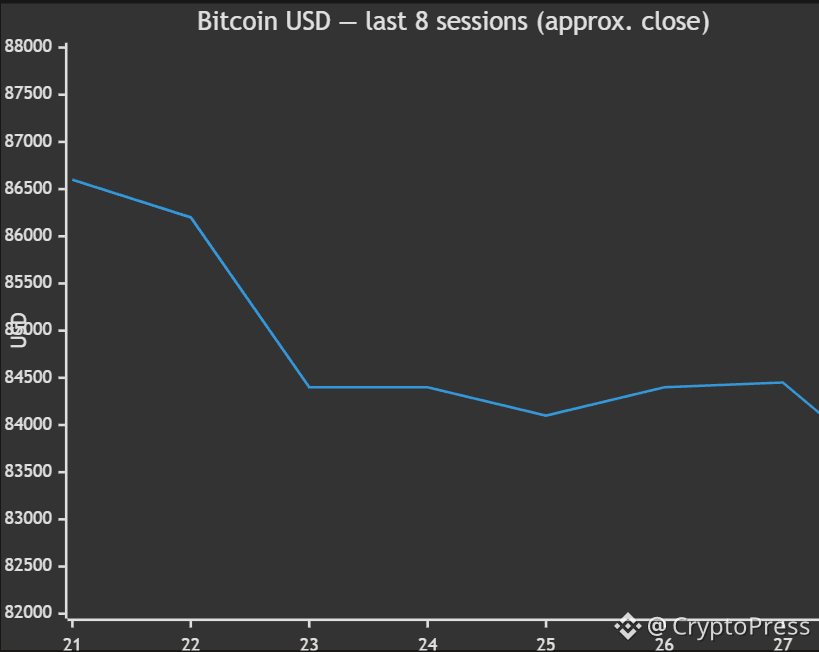
Article
Bitcoin Holds Near $83K As $2.4B ETF Inflows Offset Iran RiskBitcoin is trading near $83,200–$83,500 on 28 September after rejecting an eight-month high above $87,000 last week. The pullback is orderly, not a breakdown: US spot Bitcoin ETFs absorbed about $2.39 billion in the week ended 25 September — the largest weekly haul since October 2025 — and 2026 year-to-date flows flipped positive after a $1.96 billion deficit. Ether ETFs added roughly $690 million. Strategy bought another 1,665 BTC for about $143 million, lifting its stack to a record 847,666 coins.
That bid is colliding with a harder macro tape. Stronger US PMI data lifted the 10-year yield toward 5.17%, and crude jumped back above $100 after President Trump declined Iran’s conditions for reopening the Strait of Hormuz. Gold and equity futures sold with crypto on Monday. Support sits near $82,000–$83,300; resistance remains $85,000–$87,000. Institutional demand is the floor; yields and geopolitics are the ceiling until this week’s PCE and jobs prints.
Other news:
Positive
Strategy purchased 1,665 BTC (~$143M); holdings hit a record 847,666 BTC.
Quant (QNT) surged ~300% after The Clearing House (JPMorgan, Citi, BofA, Wells Fargo among 25 banks) selected Quant for its On-Chain Money tokenized-deposit network (H1 2027) and UK banks completed live tokenized-sterling pilots.
SUI advanced on the DeepBook App launch and Linux Foundation LF Decentralized Trust membership.
Bitcoin Cash rallied on CME plans for BCH futures and Grayscale’s spot BCH ETF filing.
Binance invested $100 million in Circle and extended a five-year USDC partnership.
Franklin Templeton listed its $687M tokenized money-market fund (Benji) as Bybit collateral.
Neutral
The Federal Reserve published proposed GENIUS Act stablecoin rules requiring full reserves in T-bills and other high-quality liquid assets plus capital and risk controls.
The UK FCA crypto-authorisation gateway opens 30 September (applications through 28 February 2027).
The Graph (GRT) jumped after Subgraph Studio queries began routing on-chain, lifting indexer demand.
Negative
Bitget lost about $387.5 million from hot/warm wallets on 24 September (largest reported theft of 2026 so far); withdrawals restart in phases from 28 September (BTC first). North Korea-linked actors are the leading suspect; stolen XRP continues to move.
Rising oil and Treasury yields plus Iran-related risk triggered a Monday risk-off session and large liquidations.
Several large token unlocks this week add supply overhang for selected alts.
Coins moving the most
Weekly leaders: Quant (QNT) ~+300% on the bank tokenization mandates, then a Monday fade from overbought levels; RHEA on Confidential Swap 2.0; SUI ~+36–52%; BCH ~+29–36%; GRT ~+16–45%; NEAR and HBAR also led the large-cap rotation. Bitcoin lagged (~+3–5.5% into Sunday, then −1.5% Monday) as capital rotated into higher-beta names.
Buying opportunities (not advice): BTC holding $82k–$83.3k with ETF creations still positive is the cleanest large-cap dip if PCE does not reprice yields higher. QNT is the narrative winner but printed extreme overbought after a ~4x move; any deeper retrace toward prior breakout zones is more interesting than chasing the Sunday high. SUI and BCH have identifiable catalysts (DeFi/institutional rails; CME/ETF path), but SUI faces an unlock test. Avoid thin names that only moved on unlocks or one-day volume spikes.
Bitcoin 7-day price evolution (approx. USD closes)
Date Close Day change Note 21 Sep ~86,600 +6.7% Break, high ~$87,370 22 Sep ~86,200 −0.5% Hold below high 23 Sep ~84,400 −2.1% Rejection as yields rise 24 Sep ~84,400 flat Bitget hack; Fed stablecoin draft 25 Sep ~84,100 −0.3% ETF week close ~$2.39B 26 Sep ~84,400 +0.4% Weekend range 27 Sep ~84,450 +0.1% Best weekly close since January 28 Sep ~83,400 −1.3% to −1.8% Oil >$100, Asia selloff
Week range: high ~$87,370 (21 Sep), post-spike low ~$82,600 (28 Sep). Market cap sits near $2.86 trillion, off last Wednesday’s peak but still up on the week. Next catalysts: US PCE (30 Sep) and labour data; Bitget ETH/USDT reopenings; UK licensing window.
QNT path this week: ~$60–70 into the 24 Sep bank announcements, a parabolic run toward $250–$370, then a Monday fade toward the low $220s as traders booked the 4x. The Clearing House mandate is real and multi-year (go-live targeted H1 2027); the token’s claim on bank volume is still unproven.
The post Bitcoin Holds Near $83K as $2.4B ETF Inflows Offset Iran Risk appeared first on Cryptopress.
Bitcoin Holds Near $83K As $2.4B ETF Inflows Offset Iran Risk
Bitcoin is trading near $83,200–$83,500 on 28 September after rejecting an eight-month high above $87,000 last week. The pullback is orderly, not a breakdown: US spot Bitcoin ETFs absorbed about $2.39 billion in the week ended 25 September — the largest weekly haul since October 2025 — and 2026 year-to-date flows flipped positive after a $1.96 billion deficit. Ether ETFs added roughly $690 million. Strategy bought another 1,665 BTC for about $143 million, lifting its stack to a record 847,666 coins.
That bid is colliding with a harder macro tape. Stronger US PMI data lifted the 10-year yield toward 5.17%, and crude jumped back above $100 after President Trump declined Iran’s conditions for reopening the Strait of Hormuz. Gold and equity futures sold with crypto on Monday. Support sits near $82,000–$83,300; resistance remains $85,000–$87,000. Institutional demand is the floor; yields and geopolitics are the ceiling until this week’s PCE and jobs prints.
Other news:
Positive
Strategy purchased 1,665 BTC (~$143M); holdings hit a record 847,666 BTC.
Quant (QNT) surged ~300% after The Clearing House (JPMorgan, Citi, BofA, Wells Fargo among 25 banks) selected Quant for its On-Chain Money tokenized-deposit network (H1 2027) and UK banks completed live tokenized-sterling pilots.
SUI advanced on the DeepBook App launch and Linux Foundation LF Decentralized Trust membership.
Bitcoin Cash rallied on CME plans for BCH futures and Grayscale’s spot BCH ETF filing.
Binance invested $100 million in Circle and extended a five-year USDC partnership.
Franklin Templeton listed its $687M tokenized money-market fund (Benji) as Bybit collateral.
Neutral
The Federal Reserve published proposed GENIUS Act stablecoin rules requiring full reserves in T-bills and other high-quality liquid assets plus capital and risk controls.
The UK FCA crypto-authorisation gateway opens 30 September (applications through 28 February 2027).
The Graph (GRT) jumped after Subgraph Studio queries began routing on-chain, lifting indexer demand.
Negative
Bitget lost about $387.5 million from hot/warm wallets on 24 September (largest reported theft of 2026 so far); withdrawals restart in phases from 28 September (BTC first). North Korea-linked actors are the leading suspect; stolen XRP continues to move.
Rising oil and Treasury yields plus Iran-related risk triggered a Monday risk-off session and large liquidations.
Several large token unlocks this week add supply overhang for selected alts.
Coins moving the most
Weekly leaders: Quant (QNT) ~+300% on the bank tokenization mandates, then a Monday fade from overbought levels; RHEA on Confidential Swap 2.0; SUI ~+36–52%; BCH ~+29–36%; GRT ~+16–45%; NEAR and HBAR also led the large-cap rotation. Bitcoin lagged (~+3–5.5% into Sunday, then −1.5% Monday) as capital rotated into higher-beta names.
Buying opportunities (not advice): BTC holding $82k–$83.3k with ETF creations still positive is the cleanest large-cap dip if PCE does not reprice yields higher. QNT is the narrative winner but printed extreme overbought after a ~4x move; any deeper retrace toward prior breakout zones is more interesting than chasing the Sunday high. SUI and BCH have identifiable catalysts (DeFi/institutional rails; CME/ETF path), but SUI faces an unlock test. Avoid thin names that only moved on unlocks or one-day volume spikes.
Bitcoin 7-day price evolution (approx. USD closes)
Date Close Day change Note 21 Sep ~86,600 +6.7% Break, high ~$87,370 22 Sep ~86,200 −0.5% Hold below high 23 Sep ~84,400 −2.1% Rejection as yields rise 24 Sep ~84,400 flat Bitget hack; Fed stablecoin draft 25 Sep ~84,100 −0.3% ETF week close ~$2.39B 26 Sep ~84,400 +0.4% Weekend range 27 Sep ~84,450 +0.1% Best weekly close since January 28 Sep ~83,400 −1.3% to −1.8% Oil >$100, Asia selloff
Week range: high ~$87,370 (21 Sep), post-spike low ~$82,600 (28 Sep). Market cap sits near $2.86 trillion, off last Wednesday’s peak but still up on the week. Next catalysts: US PCE (30 Sep) and labour data; Bitget ETH/USDT reopenings; UK licensing window.
QNT path this week: ~$60–70 into the 24 Sep bank announcements, a parabolic run toward $250–$370, then a Monday fade toward the low $220s as traders booked the 4x. The Clearing House mandate is real and multi-year (go-live targeted H1 2027); the token’s claim on bank volume is still unproven.
The post Bitcoin Holds Near $83K as $2.4B ETF Inflows Offset Iran Risk appeared first on Cryptopress.
That bid is colliding with a harder macro tape. Stronger US PMI data lifted the 10-year yield toward 5.17%, and crude jumped back above $100 after President Trump declined Iran’s conditions for reopening the Strait of Hormuz. Gold and equity futures sold with crypto on Monday. Support sits near $82,000–$83,300; resistance remains $85,000–$87,000. Institutional demand is the floor; yields and geopolitics are the ceiling until this week’s PCE and jobs prints.
Other news:
Positive
Strategy purchased 1,665 BTC (~$143M); holdings hit a record 847,666 BTC.
Quant (QNT) surged ~300% after The Clearing House (JPMorgan, Citi, BofA, Wells Fargo among 25 banks) selected Quant for its On-Chain Money tokenized-deposit network (H1 2027) and UK banks completed live tokenized-sterling pilots.
SUI advanced on the DeepBook App launch and Linux Foundation LF Decentralized Trust membership.
Bitcoin Cash rallied on CME plans for BCH futures and Grayscale’s spot BCH ETF filing.
Binance invested $100 million in Circle and extended a five-year USDC partnership.
Franklin Templeton listed its $687M tokenized money-market fund (Benji) as Bybit collateral.
Neutral
The Federal Reserve published proposed GENIUS Act stablecoin rules requiring full reserves in T-bills and other high-quality liquid assets plus capital and risk controls.
The UK FCA crypto-authorisation gateway opens 30 September (applications through 28 February 2027).
The Graph (GRT) jumped after Subgraph Studio queries began routing on-chain, lifting indexer demand.
Negative
Bitget lost about $387.5 million from hot/warm wallets on 24 September (largest reported theft of 2026 so far); withdrawals restart in phases from 28 September (BTC first). North Korea-linked actors are the leading suspect; stolen XRP continues to move.
Rising oil and Treasury yields plus Iran-related risk triggered a Monday risk-off session and large liquidations.
Several large token unlocks this week add supply overhang for selected alts.
Coins moving the most
Weekly leaders: Quant (QNT) ~+300% on the bank tokenization mandates, then a Monday fade from overbought levels; RHEA on Confidential Swap 2.0; SUI ~+36–52%; BCH ~+29–36%; GRT ~+16–45%; NEAR and HBAR also led the large-cap rotation. Bitcoin lagged (~+3–5.5% into Sunday, then −1.5% Monday) as capital rotated into higher-beta names.
Buying opportunities (not advice): BTC holding $82k–$83.3k with ETF creations still positive is the cleanest large-cap dip if PCE does not reprice yields higher. QNT is the narrative winner but printed extreme overbought after a ~4x move; any deeper retrace toward prior breakout zones is more interesting than chasing the Sunday high. SUI and BCH have identifiable catalysts (DeFi/institutional rails; CME/ETF path), but SUI faces an unlock test. Avoid thin names that only moved on unlocks or one-day volume spikes.
Bitcoin 7-day price evolution (approx. USD closes)
Date Close Day change Note 21 Sep ~86,600 +6.7% Break, high ~$87,370 22 Sep ~86,200 −0.5% Hold below high 23 Sep ~84,400 −2.1% Rejection as yields rise 24 Sep ~84,400 flat Bitget hack; Fed stablecoin draft 25 Sep ~84,100 −0.3% ETF week close ~$2.39B 26 Sep ~84,400 +0.4% Weekend range 27 Sep ~84,450 +0.1% Best weekly close since January 28 Sep ~83,400 −1.3% to −1.8% Oil >$100, Asia selloff
Week range: high ~$87,370 (21 Sep), post-spike low ~$82,600 (28 Sep). Market cap sits near $2.86 trillion, off last Wednesday’s peak but still up on the week. Next catalysts: US PCE (30 Sep) and labour data; Bitget ETH/USDT reopenings; UK licensing window.
QNT path this week: ~$60–70 into the 24 Sep bank announcements, a parabolic run toward $250–$370, then a Monday fade toward the low $220s as traders booked the 4x. The Clearing House mandate is real and multi-year (go-live targeted H1 2027); the token’s claim on bank volume is still unproven.
The post Bitcoin Holds Near $83K as $2.4B ETF Inflows Offset Iran Risk appeared first on Cryptopress.
612
·
--
Bitget Starts Phased Withdrawals After $388 Million Exploit, 2026’s Largest Crypto TheftBitget began restoring Bitcoin withdrawals at 8:00 UTC on Sept. 28 after a Sept. 24 exploit that drained about $388 million.
The exchange said attackers compromised a backend wallet system and spoofed transaction data; private keys were not stolen.
A User Protection Fund of more than $464 million is covering the loss, and customer balances were not written down.
Ether, USDT and remaining assets are scheduled to return in stages through Oct. 2.
Bitget began a phased resumption of withdrawals on Monday, starting with bitcoin at 8:00 UTC, four days after an exploit drained about $388 million from hot and warm wallets. The exchange said in an official support notice that the vulnerability has been patched and that each chain must pass extra security checks before withdrawals reopen.
Unauthorized transfers were detected at 18:31 UTC on Sept. 24. Bitget first put the affected amount at about $351.6 million, then raised the figure to roughly $387.5 million after on-chain tracing added assets on Zcash and TRON, according to a fund-tracing update. That total makes the incident the largest reported crypto theft of 2026 so far. Cold wallets were not compromised, and deposits and trading stayed open throughout the pause.
In a follow-up on X, CEO Gracy Chen said the attacker “compromised a critical backend system within our wallet infrastructure, used it to spoof transaction data, and triggered our authorization process to move funds out.” She added that private-key compromise has been ruled out and that no further unauthorized transfers are possible. Chen later said IP and VPN patterns made a North Korea-linked group “very likely”, an attribution that remains under investigation with Mandiant and SlowMist.
Stolen assets included XRP, ether, USDT, USDC, BNB, AVAX, ZEC and TRX across several networks. Circle and Tether later froze about $318,000 in related stablecoins, a small slice of the haul. Bitget is offering a 5% bounty for help freezing or recovering funds.
Chen told users in her initial security notice that “the full amount of this loss falls within the coverage of Bitget’s User Protection Fund, which currently holds over $464 million.” The firm later said the reserve holds 5,500 BTC and that it will replenish the fund after covering the incident. Covering the full revised loss would consume most of that backstop, leaving the reserve well below the exchange’s stated $300 million floor unless recoveries or a top-up arrive quickly.
Under the published timetable, ETH withdrawals on Ethereum, BSC, Arbitrum, Base and Optimism open at 8:00 UTC on Sept. 29, USDT on Ethereum, BSC, Solana and Tron on Sept. 30, and remaining tokens, fiat and P2P on Oct. 2. Chen hosted a live AMA at 7:30 UTC Monday, 30 minutes before bitcoin withdrawals restarted, and said Bitget was taking a slower, chain-by-chain approach than Bybit did after its 2025 breach in order to reduce risk.
The post Bitget starts phased withdrawals after $388 million exploit, 2026’s largest crypto theft appeared first on Cryptopress.
Bitget Starts Phased Withdrawals After $388 Million Exploit, 2026’s Largest Crypto Theft
Bitget began restoring Bitcoin withdrawals at 8:00 UTC on Sept. 28 after a Sept. 24 exploit that drained about $388 million.
The exchange said attackers compromised a backend wallet system and spoofed transaction data; private keys were not stolen.
A User Protection Fund of more than $464 million is covering the loss, and customer balances were not written down.
Ether, USDT and remaining assets are scheduled to return in stages through Oct. 2.
Bitget began a phased resumption of withdrawals on Monday, starting with bitcoin at 8:00 UTC, four days after an exploit drained about $388 million from hot and warm wallets. The exchange said in an official support notice that the vulnerability has been patched and that each chain must pass extra security checks before withdrawals reopen.
Unauthorized transfers were detected at 18:31 UTC on Sept. 24. Bitget first put the affected amount at about $351.6 million, then raised the figure to roughly $387.5 million after on-chain tracing added assets on Zcash and TRON, according to a fund-tracing update. That total makes the incident the largest reported crypto theft of 2026 so far. Cold wallets were not compromised, and deposits and trading stayed open throughout the pause.
In a follow-up on X, CEO Gracy Chen said the attacker “compromised a critical backend system within our wallet infrastructure, used it to spoof transaction data, and triggered our authorization process to move funds out.” She added that private-key compromise has been ruled out and that no further unauthorized transfers are possible. Chen later said IP and VPN patterns made a North Korea-linked group “very likely”, an attribution that remains under investigation with Mandiant and SlowMist.
Stolen assets included XRP, ether, USDT, USDC, BNB, AVAX, ZEC and TRX across several networks. Circle and Tether later froze about $318,000 in related stablecoins, a small slice of the haul. Bitget is offering a 5% bounty for help freezing or recovering funds.
Chen told users in her initial security notice that “the full amount of this loss falls within the coverage of Bitget’s User Protection Fund, which currently holds over $464 million.” The firm later said the reserve holds 5,500 BTC and that it will replenish the fund after covering the incident. Covering the full revised loss would consume most of that backstop, leaving the reserve well below the exchange’s stated $300 million floor unless recoveries or a top-up arrive quickly.
Under the published timetable, ETH withdrawals on Ethereum, BSC, Arbitrum, Base and Optimism open at 8:00 UTC on Sept. 29, USDT on Ethereum, BSC, Solana and Tron on Sept. 30, and remaining tokens, fiat and P2P on Oct. 2. Chen hosted a live AMA at 7:30 UTC Monday, 30 minutes before bitcoin withdrawals restarted, and said Bitget was taking a slower, chain-by-chain approach than Bybit did after its 2025 breach in order to reduce risk.
The post Bitget starts phased withdrawals after $388 million exploit, 2026’s largest crypto theft appeared first on Cryptopress.
The exchange said attackers compromised a backend wallet system and spoofed transaction data; private keys were not stolen.
A User Protection Fund of more than $464 million is covering the loss, and customer balances were not written down.
Ether, USDT and remaining assets are scheduled to return in stages through Oct. 2.
Bitget began a phased resumption of withdrawals on Monday, starting with bitcoin at 8:00 UTC, four days after an exploit drained about $388 million from hot and warm wallets. The exchange said in an official support notice that the vulnerability has been patched and that each chain must pass extra security checks before withdrawals reopen.
Unauthorized transfers were detected at 18:31 UTC on Sept. 24. Bitget first put the affected amount at about $351.6 million, then raised the figure to roughly $387.5 million after on-chain tracing added assets on Zcash and TRON, according to a fund-tracing update. That total makes the incident the largest reported crypto theft of 2026 so far. Cold wallets were not compromised, and deposits and trading stayed open throughout the pause.
In a follow-up on X, CEO Gracy Chen said the attacker “compromised a critical backend system within our wallet infrastructure, used it to spoof transaction data, and triggered our authorization process to move funds out.” She added that private-key compromise has been ruled out and that no further unauthorized transfers are possible. Chen later said IP and VPN patterns made a North Korea-linked group “very likely”, an attribution that remains under investigation with Mandiant and SlowMist.
Stolen assets included XRP, ether, USDT, USDC, BNB, AVAX, ZEC and TRX across several networks. Circle and Tether later froze about $318,000 in related stablecoins, a small slice of the haul. Bitget is offering a 5% bounty for help freezing or recovering funds.
Chen told users in her initial security notice that “the full amount of this loss falls within the coverage of Bitget’s User Protection Fund, which currently holds over $464 million.” The firm later said the reserve holds 5,500 BTC and that it will replenish the fund after covering the incident. Covering the full revised loss would consume most of that backstop, leaving the reserve well below the exchange’s stated $300 million floor unless recoveries or a top-up arrive quickly.
Under the published timetable, ETH withdrawals on Ethereum, BSC, Arbitrum, Base and Optimism open at 8:00 UTC on Sept. 29, USDT on Ethereum, BSC, Solana and Tron on Sept. 30, and remaining tokens, fiat and P2P on Oct. 2. Chen hosted a live AMA at 7:30 UTC Monday, 30 minutes before bitcoin withdrawals restarted, and said Bitget was taking a slower, chain-by-chain approach than Bybit did after its 2025 breach in order to reduce risk.
The post Bitget starts phased withdrawals after $388 million exploit, 2026’s largest crypto theft appeared first on Cryptopress.
98
·
--
Bitget starts phased withdrawals after $388 million exploit, 2026's largest crypto theft<ul><li>Bitget began restoring Bitcoin withdrawals at 8:00 UTC on Sept. 28 after a Sept. 24 exploit that drained about <strong>$388 million</strong>.</li><li>The exchange said attackers compromised a backend wallet system and spoofed transaction data; <strong>private keys were not stolen</strong>.</li><li>A <strong>User Protection Fund of more than $464 million</strong> is covering the loss, and customer balances were not written down.</li><li>Ether, USDT and remaining assets are scheduled to return in stages through <strong>Oct. 2</strong>.</li></ul><p class="has-drop-cap">Bitget began a <a href="https://www.theblock.co/news/business/2026-09-28-bitget-starts-phased-withdrawal-resumption-416965" target="_blank" rel="noopener">phased resumption of withdrawals</a> on Monday, starting with bitcoin at <strong>8:00 UTC</strong>, four days after an exploit drained about <strong>$388 million</strong> from hot and warm wallets. The exchange said in an <a href="https://www.bitget.com/support/articles/12560603896110" target="_blank" rel="noopener">official support notice</a> that the vulnerability has been patched and that each chain must pass extra security checks before withdrawals reopen.</p><p>Unauthorized transfers were detected at <strong>18:31 UTC on Sept. 24</strong>. Bitget first put the affected amount at about <strong>$351.6 million</strong>, then raised the figure to roughly <strong>$387.5 million</strong> after on-chain tracing added assets on Zcash and TRON, according to a <a href="https://www.bitget.com/support/articles/12560603896108" target="_blank" rel="noopener">fund-tracing update</a>. That total makes the incident the <strong>largest reported crypto theft of 2026</strong> so far. Cold wallets were not compromised, and deposits and trading stayed open throughout the pause.</p><p>In a <a href="https://x.com/GracyBitget/status/2103284265563902056" target="_blank" rel="noopener">follow-up on X</a>, CEO Gracy Chen said the attacker "compromised a critical backend system within our wallet infrastructure, used it to spoof transaction data, and triggered our authorization process to move funds out." She added that <strong>private-key compromise has been ruled out</strong> and that no further unauthorized transfers are possible. Chen later said IP and VPN patterns made a <strong>North Korea-linked group "very likely"</strong>, an attribution that remains under investigation with Mandiant and SlowMist.</p><p>Stolen assets included XRP, ether, USDT, USDC, BNB, AVAX, ZEC and TRX across several networks. Circle and Tether later froze about <strong>$318,000</strong> in related stablecoins, a small slice of the haul. Bitget is offering a <strong>5% bounty</strong> for help freezing or recovering funds.</p><p>Chen told users in her <a href="https://x.com/GracyBitget/status/2103235655879074084" target="_blank" rel="noopener">initial security notice</a> that "the full amount of this loss falls within the coverage of Bitget's User Protection Fund, which currently holds over <strong>$464 million</strong>." The firm later said the reserve holds <strong>5,500 BTC</strong> and that it will replenish the fund after covering the incident. Covering the full revised loss would consume most of that backstop, leaving the reserve well below the exchange's stated <strong>$300 million</strong> floor unless recoveries or a top-up arrive quickly.</p><p>Under the published timetable, ETH withdrawals on Ethereum, BSC, Arbitrum, Base and Optimism open at 8:00 UTC on <strong>Sept. 29</strong>, USDT on Ethereum, BSC, Solana and Tron on <strong>Sept. 30</strong>, and remaining tokens, fiat and P2P on <strong>Oct. 2</strong>. Chen hosted a live AMA at 7:30 UTC Monday, 30 minutes before bitcoin withdrawals restarted, and said Bitget was taking a slower, chain-by-chain approach than Bybit did after its 2025 breach in order to reduce risk.</p>
Bitget starts phased withdrawals after $388 million exploit, 2026's largest crypto theft
<ul><li>Bitget began restoring Bitcoin withdrawals at 8:00 UTC on Sept. 28 after a Sept. 24 exploit that drained about <strong>$388 million</strong>.</li><li>The exchange said attackers compromised a backend wallet system and spoofed transaction data; <strong>private keys were not stolen</strong>.</li><li>A <strong>User Protection Fund of more than $464 million</strong> is covering the loss, and customer balances were not written down.</li><li>Ether, USDT and remaining assets are scheduled to return in stages through <strong>Oct. 2</strong>.</li></ul><p class="has-drop-cap">Bitget began a <a href="https://www.theblock.co/news/business/2026-09-28-bitget-starts-phased-withdrawal-resumption-416965" target="_blank" rel="noopener">phased resumption of withdrawals</a> on Monday, starting with bitcoin at <strong>8:00 UTC</strong>, four days after an exploit drained about <strong>$388 million</strong> from hot and warm wallets. The exchange said in an <a href="https://www.bitget.com/support/articles/12560603896110" target="_blank" rel="noopener">official support notice</a> that the vulnerability has been patched and that each chain must pass extra security checks before withdrawals reopen.</p><p>Unauthorized transfers were detected at <strong>18:31 UTC on Sept. 24</strong>. Bitget first put the affected amount at about <strong>$351.6 million</strong>, then raised the figure to roughly <strong>$387.5 million</strong> after on-chain tracing added assets on Zcash and TRON, according to a <a href="https://www.bitget.com/support/articles/12560603896108" target="_blank" rel="noopener">fund-tracing update</a>. That total makes the incident the <strong>largest reported crypto theft of 2026</strong> so far. Cold wallets were not compromised, and deposits and trading stayed open throughout the pause.</p><p>In a <a href="https://x.com/GracyBitget/status/2103284265563902056" target="_blank" rel="noopener">follow-up on X</a>, CEO Gracy Chen said the attacker "compromised a critical backend system within our wallet infrastructure, used it to spoof transaction data, and triggered our authorization process to move funds out." She added that <strong>private-key compromise has been ruled out</strong> and that no further unauthorized transfers are possible. Chen later said IP and VPN patterns made a <strong>North Korea-linked group "very likely"</strong>, an attribution that remains under investigation with Mandiant and SlowMist.</p><p>Stolen assets included XRP, ether, USDT, USDC, BNB, AVAX, ZEC and TRX across several networks. Circle and Tether later froze about <strong>$318,000</strong> in related stablecoins, a small slice of the haul. Bitget is offering a <strong>5% bounty</strong> for help freezing or recovering funds.</p><p>Chen told users in her <a href="https://x.com/GracyBitget/status/2103235655879074084" target="_blank" rel="noopener">initial security notice</a> that "the full amount of this loss falls within the coverage of Bitget's User Protection Fund, which currently holds over <strong>$464 million</strong>." The firm later said the reserve holds <strong>5,500 BTC</strong> and that it will replenish the fund after covering the incident. Covering the full revised loss would consume most of that backstop, leaving the reserve well below the exchange's stated <strong>$300 million</strong> floor unless recoveries or a top-up arrive quickly.</p><p>Under the published timetable, ETH withdrawals on Ethereum, BSC, Arbitrum, Base and Optimism open at 8:00 UTC on <strong>Sept. 29</strong>, USDT on Ethereum, BSC, Solana and Tron on <strong>Sept. 30</strong>, and remaining tokens, fiat and P2P on <strong>Oct. 2</strong>. Chen hosted a live AMA at 7:30 UTC Monday, 30 minutes before bitcoin withdrawals restarted, and said Bitget was taking a slower, chain-by-chain approach than Bybit did after its 2025 breach in order to reduce risk.</p>
268
·
--
SEC Staff Clarifies Stance on Token Buybacks and Liquid Staking in New FAQsThe U.S. Securities and Exchange Commission (SEC) staff published a series of new frequently asked questions regarding crypto assets.
The guidance specifically addresses compliance parameters surrounding token buybacks and liquid staking protocols.
Market participants and legal experts are actively analyzing the potential impact of these clarifications on decentralized finance operations.
The U.S. Securities and Exchange Commission has expanded its regulatory footprint regarding digital assets by issuing a fresh set of frequently asked questions. According to the SEC official website, the new guidance focuses heavily on complex financial mechanisms native to the blockchain industry, including token buyback programs and liquid staking derivatives.
As detailed in the guidance released by the SEC press disclosures, the regulatory body aims to provide clearer boundaries for how decentralized finance (DeFi) protocols and centralized entities manage protocol revenues and yield-bearing assets. Market analysts note that these FAQs arrive at a critical time when regulatory clarity remains a top priority for institutional investors and crypto founders alike.
Under the updated framework, the staff outlined specific scenarios where programmatic token buybacks could potentially trigger federal securities laws, depending on how the mechanisms are structured and marketed to holders. Furthermore, the documents address the legal classification of liquid staking tokens, highlighting the regulatory scrutiny facing assets that offer automated staking rewards in exchange for locked native tokens.
Industry stakeholders have been responding to the developments across various platforms. Prominent legal commentators, such as crypto legal experts on X, have pointed out that while FAQs do not carry the formal weight of new rules or commissioner-voted guidance, they offer vital insight into how the agency’s division of corporation finance views ongoing compliance matters.
As the regulatory landscape continues to evolve, market participants are expected to adjust their operational models to align with these supervisory expectations. Observers suggest that protocols engaging in automated revenue distribution and liquid staking will face increased pressure to perform rigorous legal reviews of their tokenomics.
The post SEC Staff Clarifies Stance on Token Buybacks and Liquid Staking in New FAQs appeared first on Cryptopress.
SEC Staff Clarifies Stance on Token Buybacks and Liquid Staking in New FAQs
The U.S. Securities and Exchange Commission (SEC) staff published a series of new frequently asked questions regarding crypto assets.
The guidance specifically addresses compliance parameters surrounding token buybacks and liquid staking protocols.
Market participants and legal experts are actively analyzing the potential impact of these clarifications on decentralized finance operations.
The U.S. Securities and Exchange Commission has expanded its regulatory footprint regarding digital assets by issuing a fresh set of frequently asked questions. According to the SEC official website, the new guidance focuses heavily on complex financial mechanisms native to the blockchain industry, including token buyback programs and liquid staking derivatives.
As detailed in the guidance released by the SEC press disclosures, the regulatory body aims to provide clearer boundaries for how decentralized finance (DeFi) protocols and centralized entities manage protocol revenues and yield-bearing assets. Market analysts note that these FAQs arrive at a critical time when regulatory clarity remains a top priority for institutional investors and crypto founders alike.
Under the updated framework, the staff outlined specific scenarios where programmatic token buybacks could potentially trigger federal securities laws, depending on how the mechanisms are structured and marketed to holders. Furthermore, the documents address the legal classification of liquid staking tokens, highlighting the regulatory scrutiny facing assets that offer automated staking rewards in exchange for locked native tokens.
Industry stakeholders have been responding to the developments across various platforms. Prominent legal commentators, such as crypto legal experts on X, have pointed out that while FAQs do not carry the formal weight of new rules or commissioner-voted guidance, they offer vital insight into how the agency’s division of corporation finance views ongoing compliance matters.
As the regulatory landscape continues to evolve, market participants are expected to adjust their operational models to align with these supervisory expectations. Observers suggest that protocols engaging in automated revenue distribution and liquid staking will face increased pressure to perform rigorous legal reviews of their tokenomics.
The post SEC Staff Clarifies Stance on Token Buybacks and Liquid Staking in New FAQs appeared first on Cryptopress.
The guidance specifically addresses compliance parameters surrounding token buybacks and liquid staking protocols.
Market participants and legal experts are actively analyzing the potential impact of these clarifications on decentralized finance operations.
The U.S. Securities and Exchange Commission has expanded its regulatory footprint regarding digital assets by issuing a fresh set of frequently asked questions. According to the SEC official website, the new guidance focuses heavily on complex financial mechanisms native to the blockchain industry, including token buyback programs and liquid staking derivatives.
As detailed in the guidance released by the SEC press disclosures, the regulatory body aims to provide clearer boundaries for how decentralized finance (DeFi) protocols and centralized entities manage protocol revenues and yield-bearing assets. Market analysts note that these FAQs arrive at a critical time when regulatory clarity remains a top priority for institutional investors and crypto founders alike.
Under the updated framework, the staff outlined specific scenarios where programmatic token buybacks could potentially trigger federal securities laws, depending on how the mechanisms are structured and marketed to holders. Furthermore, the documents address the legal classification of liquid staking tokens, highlighting the regulatory scrutiny facing assets that offer automated staking rewards in exchange for locked native tokens.
Industry stakeholders have been responding to the developments across various platforms. Prominent legal commentators, such as crypto legal experts on X, have pointed out that while FAQs do not carry the formal weight of new rules or commissioner-voted guidance, they offer vital insight into how the agency’s division of corporation finance views ongoing compliance matters.
As the regulatory landscape continues to evolve, market participants are expected to adjust their operational models to align with these supervisory expectations. Observers suggest that protocols engaging in automated revenue distribution and liquid staking will face increased pressure to perform rigorous legal reviews of their tokenomics.
The post SEC Staff Clarifies Stance on Token Buybacks and Liquid Staking in New FAQs appeared first on Cryptopress.
136
·
--
SEC Staff Clarifies Stance on Token Buybacks and Liquid Staking in New FAQs<ul><li>The U.S. Securities and Exchange Commission (SEC) staff published a series of new frequently asked questions regarding crypto assets.</li><li>The guidance specifically addresses compliance parameters surrounding token buybacks and liquid staking protocols.</li><li>Market participants and legal experts are actively analyzing the potential impact of these clarifications on decentralized finance operations.</li></ul><p>The <strong>U.S. Securities and Exchange Commission</strong> has expanded its regulatory footprint regarding digital assets by issuing a fresh set of frequently asked questions. According to the <a href="https://www.sec.gov" target="_blank" rel="noopener">SEC official website</a>, the new guidance focuses heavily on complex financial mechanisms native to the blockchain industry, including <strong>token buyback programs</strong> and <strong>liquid staking derivatives</strong>.</p><p>As detailed in the guidance released by the <a href="https://www.sec.gov/newsroom" target="_blank" rel="noopener">SEC press disclosures</a>, the regulatory body aims to provide clearer boundaries for how decentralized finance (DeFi) protocols and centralized entities manage protocol revenues and yield-bearing assets. Market analysts note that these FAQs arrive at a critical time when regulatory clarity remains a top priority for institutional investors and crypto founders alike.</p><p>Under the updated framework, the staff outlined specific scenarios where programmatic token buybacks could potentially trigger federal securities laws, depending on how the mechanisms are structured and marketed to holders. Furthermore, the documents address the legal classification of liquid staking tokens, highlighting the regulatory scrutiny facing assets that offer automated staking rewards in exchange for locked native tokens.</p><p>Industry stakeholders have been responding to the developments across various platforms. Prominent legal commentators, such as <a href="https://x.com" target="_blank" rel="noopener">crypto legal experts on X</a>, have pointed out that while FAQs do not carry the formal weight of new rules or commissioner-voted guidance, they offer vital insight into how the agency's division of corporation finance views ongoing compliance matters.</p><p>As the regulatory landscape continues to evolve, market participants are expected to adjust their operational models to align with these supervisory expectations. Observers suggest that protocols engaging in automated revenue distribution and liquid staking will face increased pressure to perform rigorous legal reviews of their tokenomics.</p>
SEC Staff Clarifies Stance on Token Buybacks and Liquid Staking in New FAQs
<ul><li>The U.S. Securities and Exchange Commission (SEC) staff published a series of new frequently asked questions regarding crypto assets.</li><li>The guidance specifically addresses compliance parameters surrounding token buybacks and liquid staking protocols.</li><li>Market participants and legal experts are actively analyzing the potential impact of these clarifications on decentralized finance operations.</li></ul><p>The <strong>U.S. Securities and Exchange Commission</strong> has expanded its regulatory footprint regarding digital assets by issuing a fresh set of frequently asked questions. According to the <a href="https://www.sec.gov" target="_blank" rel="noopener">SEC official website</a>, the new guidance focuses heavily on complex financial mechanisms native to the blockchain industry, including <strong>token buyback programs</strong> and <strong>liquid staking derivatives</strong>.</p><p>As detailed in the guidance released by the <a href="https://www.sec.gov/newsroom" target="_blank" rel="noopener">SEC press disclosures</a>, the regulatory body aims to provide clearer boundaries for how decentralized finance (DeFi) protocols and centralized entities manage protocol revenues and yield-bearing assets. Market analysts note that these FAQs arrive at a critical time when regulatory clarity remains a top priority for institutional investors and crypto founders alike.</p><p>Under the updated framework, the staff outlined specific scenarios where programmatic token buybacks could potentially trigger federal securities laws, depending on how the mechanisms are structured and marketed to holders. Furthermore, the documents address the legal classification of liquid staking tokens, highlighting the regulatory scrutiny facing assets that offer automated staking rewards in exchange for locked native tokens.</p><p>Industry stakeholders have been responding to the developments across various platforms. Prominent legal commentators, such as <a href="https://x.com" target="_blank" rel="noopener">crypto legal experts on X</a>, have pointed out that while FAQs do not carry the formal weight of new rules or commissioner-voted guidance, they offer vital insight into how the agency's division of corporation finance views ongoing compliance matters.</p><p>As the regulatory landscape continues to evolve, market participants are expected to adjust their operational models to align with these supervisory expectations. Observers suggest that protocols engaging in automated revenue distribution and liquid staking will face increased pressure to perform rigorous legal reviews of their tokenomics.</p>
142
·
--
Kamino Institutional 8% APY on Solana Based on Cargo Shipping 🚢💰Stablecoins are crypto’s hardest-working assets — except when they’re sitting idle. As OnChain Times’ recent “Cash Cargo” coverage highlights, a quiet migration is underway: treasuries and funds are loading their dollars onto Solana. The port of entry? Kamino’s Institutional Yield — a purpose-built product that converts parked USDC into lending-powered, auto-compounding returns.
What is Kamino?
Kamino Finance is a full-stack DeFi protocol on Solana, consistently ranking among the largest platforms by total value locked. The suite includes:
Kamino Lend — isolated lending markets with risk-managed parameters and E-mode efficiency
Kamino Liquidity — automated, concentrated liquidity vaults
Multiply — one-click leveraged yield strategies
The protocol’s native token, KMNO, powers incentives and governance. With battle-tested risk controls and deep liquidity, Kamino has become the default money market where Solana’s leverage, market-making and hedging activity happens.
What is Kamino Institutional Yield?
Institutional Yield is Kamino’s dedicated product line for professional capital — treasuries, funds and fintechs that want money-market returns without managing positions manually. The design is deliberately boring (a compliment in this sector):
Single-sided USDC deposits — no LP pairs, no impermanent loss
Curated, risk-isolated configuration — exposure limited to vetted markets
Auto-compounding — yield accrues and reinvests automatically in USDC
Liquidity on demand — no lock-ups or redemption queues
Tokenized receipt position — the vault mints a yield-bearing token that appreciates as interest accrues
Institutions onboard directly through Kamino’s institutional desk, while retail users can tap comparable lending yields in Kamino’s public markets and Earn vaults.
How is revenue generated?
The yield is real interest, not emissions theater:
Borrowers pay it. Leverage traders, market makers, perp-venue hedgers and institutional credit desks borrow against Kamino’s liquidity pools — and interest flows to depositors.
Incentives top it up. Protocol and partner reward programs can boost effective APY during high-demand periods.
Compounding scales it. Earned yield is automatically redeployed, so returns stack instead of sitting unclaimed.
Kamino itself takes protocol fees on activity — but for the depositor, revenue is simply borrower interest plus incentives, denominated in USDC.
Factsheet
Name Kamino Institutional Yield (Kamino Finance) Yield ≈ 5–12% APY, variable (USDC-denominated; incentive periods can push higher) Sector Lending / Institutional DeFi yield Chains Solana
APYs are dynamic and demand-driven — treat all figures as indicative ranges, not promises.
Yield Steps:
To access the 7–8% APY through Kamino Institutional Commodity Yield:
Set Up a Compatible Solana Wallet: Ensure your wallet (such as Phantom, Solflare, or Backpack) is funded with USDC for the deposit and a fractional amount of SOL (approx. 0.05 SOL) to cover network transaction fees.
Access the Kamino App: Navigate directly to the official portal at [kamino.com/earn/institutional](https://kamino.com/earn/institutional).
Select Commodity Yield: Locate the Commodity Yield vault featuring the kicUSDC receipt asset.
Review Legal Terms: Read the pop-up modal containing the Loan Agreement with the Institutional Yield SPV, acknowledging the legal structure and risks.
Deposit USDC: Enter your intended deposit amount, check the live liquidity buffer indicator, and sign the transaction via your wallet.
Track kicUSDC Accrual: Once confirmed, kicUSDC tokens will appear in your wallet. The yield compounds directly into the token’s exchange value relative to USDC, viewable anytime on the Kamino portfolio dashboard.
Risks & Fine Print
Variable rates — APY floats with borrow demand; there is no guaranteed return
Smart contract risk — audited code reduces, but never eliminates, exposure
Stablecoin risk — USDC depeg scenarios would hit deposits
Market risk — oracle disruptions or liquidation cascades in underlying markets can affect utilization and rates
Collateral Evolution: Cash to Cargo, Cargo to Cash
Unlike unsecured undercollateralized crypto loans, every commodity facility undergoes strict collateral staging:
Stage 1 (Pre-Transit Escrow): The loan begins backed 1:1 by cash held in segregated escrow or by an irrevocable bank letter of credit.
Stage 2 (In-Transit Cargo): Cash is only released to the supplier once independent verification agents inspect the cargo and confirm shipping documentation (bills of lading, certificates of origin, quality assays, and insurance). Legal ownership of the cargo transfers to the lending vehicle, overcollateralizing the loan since the goods are purchased below the forward contracted sale price.
Stage 3 (Settlement & Repayment): Upon delivery, the end buyer settles the purchase. The proceeds repay the loan principal and interest back into controlled accounts, which then flow on-chain to accrue to kicUSDC holders.
Legal Architecture & Oversight
Bridging decentralized liquidity with off-chain commercial physical trade requires a multi-layered legal setup:
Special Purpose Vehicle (SPV): Depositors do not lend directly to commodity merchants. Instead, depositors enter into an on-chain Loan Agreement with an independent Institutional Yield SPV.
Regulated Lending Operation: The SPV deploys capital into an independent fund supervised by the Cayman Islands Monetary Authority (CIMA). This regulated vehicle originates and monitors the loan facilities.
Monthly Independent Attestations: To verify the health of the underlying book, an independent accounting firm conducts monthly audits covering active loan balances, escrow status, and collateral records.
Key Credit Distinction: Depositors hold an unsecured claim against the SPV, which holds claims against the CIMA-regulated lending vehicle. Depositors do not hold direct legal liens on the physical shipping containers or raw copper.
Liquidity & Withdrawal Mechanics
Because physical trade loans run on fixed maturities of 1 to 3 months, liquidity cannot be 100% instant for all capital at all times. Kamino addresses this through a hybrid framework:
Instant Liquidity Buffer: A portion of vault capital is kept idle in liquid USDC. Redemptions within the limits of this buffer settle immediately.
FIFO Queued Withdrawals: If withdrawal demand exceeds the liquid buffer, redemption requests enter an on-chain First-In, First-Out (FIFO) queue. These settle systematically as underlying 30-to-90-day commodity loans reach maturity and repay principal into the vault.
The Bottom Line
Kamino Institutional Yield packages what money markets do best — borrower-paid interest — into a wrapper built for professional capital: simple deposits, transparent risk, on-demand liquidity. If idle stablecoins are your cargo, Kamino has built the port. As always, size positions to your risk tolerance and verify live rates on the official app before deploying.
This is not financial advice. Do your own research.
The post Kamino Institutional 8% APY on Solana Based on Cargo Shipping 🚢💰 appeared first on Cryptopress.
Kamino Institutional 8% APY on Solana Based on Cargo Shipping 🚢💰
Stablecoins are crypto’s hardest-working assets — except when they’re sitting idle. As OnChain Times’ recent “Cash Cargo” coverage highlights, a quiet migration is underway: treasuries and funds are loading their dollars onto Solana. The port of entry? Kamino’s Institutional Yield — a purpose-built product that converts parked USDC into lending-powered, auto-compounding returns.
What is Kamino?
Kamino Finance is a full-stack DeFi protocol on Solana, consistently ranking among the largest platforms by total value locked. The suite includes:
Kamino Lend — isolated lending markets with risk-managed parameters and E-mode efficiency
Kamino Liquidity — automated, concentrated liquidity vaults
Multiply — one-click leveraged yield strategies
The protocol’s native token, KMNO, powers incentives and governance. With battle-tested risk controls and deep liquidity, Kamino has become the default money market where Solana’s leverage, market-making and hedging activity happens.
What is Kamino Institutional Yield?
Institutional Yield is Kamino’s dedicated product line for professional capital — treasuries, funds and fintechs that want money-market returns without managing positions manually. The design is deliberately boring (a compliment in this sector):
Single-sided USDC deposits — no LP pairs, no impermanent loss
Curated, risk-isolated configuration — exposure limited to vetted markets
Auto-compounding — yield accrues and reinvests automatically in USDC
Liquidity on demand — no lock-ups or redemption queues
Tokenized receipt position — the vault mints a yield-bearing token that appreciates as interest accrues
Institutions onboard directly through Kamino’s institutional desk, while retail users can tap comparable lending yields in Kamino’s public markets and Earn vaults.
How is revenue generated?
The yield is real interest, not emissions theater:
Borrowers pay it. Leverage traders, market makers, perp-venue hedgers and institutional credit desks borrow against Kamino’s liquidity pools — and interest flows to depositors.
Incentives top it up. Protocol and partner reward programs can boost effective APY during high-demand periods.
Compounding scales it. Earned yield is automatically redeployed, so returns stack instead of sitting unclaimed.
Kamino itself takes protocol fees on activity — but for the depositor, revenue is simply borrower interest plus incentives, denominated in USDC.
Factsheet
Name Kamino Institutional Yield (Kamino Finance) Yield ≈ 5–12% APY, variable (USDC-denominated; incentive periods can push higher) Sector Lending / Institutional DeFi yield Chains Solana
APYs are dynamic and demand-driven — treat all figures as indicative ranges, not promises.
Yield Steps:
To access the 7–8% APY through Kamino Institutional Commodity Yield:
Set Up a Compatible Solana Wallet: Ensure your wallet (such as Phantom, Solflare, or Backpack) is funded with USDC for the deposit and a fractional amount of SOL (approx. 0.05 SOL) to cover network transaction fees.
Access the Kamino App: Navigate directly to the official portal at [kamino.com/earn/institutional](https://kamino.com/earn/institutional).
Select Commodity Yield: Locate the Commodity Yield vault featuring the kicUSDC receipt asset.
Review Legal Terms: Read the pop-up modal containing the Loan Agreement with the Institutional Yield SPV, acknowledging the legal structure and risks.
Deposit USDC: Enter your intended deposit amount, check the live liquidity buffer indicator, and sign the transaction via your wallet.
Track kicUSDC Accrual: Once confirmed, kicUSDC tokens will appear in your wallet. The yield compounds directly into the token’s exchange value relative to USDC, viewable anytime on the Kamino portfolio dashboard.
Risks & Fine Print
Variable rates — APY floats with borrow demand; there is no guaranteed return
Smart contract risk — audited code reduces, but never eliminates, exposure
Stablecoin risk — USDC depeg scenarios would hit deposits
Market risk — oracle disruptions or liquidation cascades in underlying markets can affect utilization and rates
Collateral Evolution: Cash to Cargo, Cargo to Cash
Unlike unsecured undercollateralized crypto loans, every commodity facility undergoes strict collateral staging:
Stage 1 (Pre-Transit Escrow): The loan begins backed 1:1 by cash held in segregated escrow or by an irrevocable bank letter of credit.
Stage 2 (In-Transit Cargo): Cash is only released to the supplier once independent verification agents inspect the cargo and confirm shipping documentation (bills of lading, certificates of origin, quality assays, and insurance). Legal ownership of the cargo transfers to the lending vehicle, overcollateralizing the loan since the goods are purchased below the forward contracted sale price.
Stage 3 (Settlement & Repayment): Upon delivery, the end buyer settles the purchase. The proceeds repay the loan principal and interest back into controlled accounts, which then flow on-chain to accrue to kicUSDC holders.
Legal Architecture & Oversight
Bridging decentralized liquidity with off-chain commercial physical trade requires a multi-layered legal setup:
Special Purpose Vehicle (SPV): Depositors do not lend directly to commodity merchants. Instead, depositors enter into an on-chain Loan Agreement with an independent Institutional Yield SPV.
Regulated Lending Operation: The SPV deploys capital into an independent fund supervised by the Cayman Islands Monetary Authority (CIMA). This regulated vehicle originates and monitors the loan facilities.
Monthly Independent Attestations: To verify the health of the underlying book, an independent accounting firm conducts monthly audits covering active loan balances, escrow status, and collateral records.
Key Credit Distinction: Depositors hold an unsecured claim against the SPV, which holds claims against the CIMA-regulated lending vehicle. Depositors do not hold direct legal liens on the physical shipping containers or raw copper.
Liquidity & Withdrawal Mechanics
Because physical trade loans run on fixed maturities of 1 to 3 months, liquidity cannot be 100% instant for all capital at all times. Kamino addresses this through a hybrid framework:
Instant Liquidity Buffer: A portion of vault capital is kept idle in liquid USDC. Redemptions within the limits of this buffer settle immediately.
FIFO Queued Withdrawals: If withdrawal demand exceeds the liquid buffer, redemption requests enter an on-chain First-In, First-Out (FIFO) queue. These settle systematically as underlying 30-to-90-day commodity loans reach maturity and repay principal into the vault.
The Bottom Line
Kamino Institutional Yield packages what money markets do best — borrower-paid interest — into a wrapper built for professional capital: simple deposits, transparent risk, on-demand liquidity. If idle stablecoins are your cargo, Kamino has built the port. As always, size positions to your risk tolerance and verify live rates on the official app before deploying.
This is not financial advice. Do your own research.
The post Kamino Institutional 8% APY on Solana Based on Cargo Shipping 🚢💰 appeared first on Cryptopress.
What is Kamino?
Kamino Finance is a full-stack DeFi protocol on Solana, consistently ranking among the largest platforms by total value locked. The suite includes:
Kamino Lend — isolated lending markets with risk-managed parameters and E-mode efficiency
Kamino Liquidity — automated, concentrated liquidity vaults
Multiply — one-click leveraged yield strategies
The protocol’s native token, KMNO, powers incentives and governance. With battle-tested risk controls and deep liquidity, Kamino has become the default money market where Solana’s leverage, market-making and hedging activity happens.
What is Kamino Institutional Yield?
Institutional Yield is Kamino’s dedicated product line for professional capital — treasuries, funds and fintechs that want money-market returns without managing positions manually. The design is deliberately boring (a compliment in this sector):
Single-sided USDC deposits — no LP pairs, no impermanent loss
Curated, risk-isolated configuration — exposure limited to vetted markets
Auto-compounding — yield accrues and reinvests automatically in USDC
Liquidity on demand — no lock-ups or redemption queues
Tokenized receipt position — the vault mints a yield-bearing token that appreciates as interest accrues
Institutions onboard directly through Kamino’s institutional desk, while retail users can tap comparable lending yields in Kamino’s public markets and Earn vaults.
How is revenue generated?
The yield is real interest, not emissions theater:
Borrowers pay it. Leverage traders, market makers, perp-venue hedgers and institutional credit desks borrow against Kamino’s liquidity pools — and interest flows to depositors.
Incentives top it up. Protocol and partner reward programs can boost effective APY during high-demand periods.
Compounding scales it. Earned yield is automatically redeployed, so returns stack instead of sitting unclaimed.
Kamino itself takes protocol fees on activity — but for the depositor, revenue is simply borrower interest plus incentives, denominated in USDC.
Factsheet
Name Kamino Institutional Yield (Kamino Finance) Yield ≈ 5–12% APY, variable (USDC-denominated; incentive periods can push higher) Sector Lending / Institutional DeFi yield Chains Solana
APYs are dynamic and demand-driven — treat all figures as indicative ranges, not promises.
Yield Steps:
To access the 7–8% APY through Kamino Institutional Commodity Yield:
Set Up a Compatible Solana Wallet: Ensure your wallet (such as Phantom, Solflare, or Backpack) is funded with USDC for the deposit and a fractional amount of SOL (approx. 0.05 SOL) to cover network transaction fees.
Access the Kamino App: Navigate directly to the official portal at [kamino.com/earn/institutional](https://kamino.com/earn/institutional).
Select Commodity Yield: Locate the Commodity Yield vault featuring the kicUSDC receipt asset.
Review Legal Terms: Read the pop-up modal containing the Loan Agreement with the Institutional Yield SPV, acknowledging the legal structure and risks.
Deposit USDC: Enter your intended deposit amount, check the live liquidity buffer indicator, and sign the transaction via your wallet.
Track kicUSDC Accrual: Once confirmed, kicUSDC tokens will appear in your wallet. The yield compounds directly into the token’s exchange value relative to USDC, viewable anytime on the Kamino portfolio dashboard.
Risks & Fine Print
Variable rates — APY floats with borrow demand; there is no guaranteed return
Smart contract risk — audited code reduces, but never eliminates, exposure
Stablecoin risk — USDC depeg scenarios would hit deposits
Market risk — oracle disruptions or liquidation cascades in underlying markets can affect utilization and rates
Collateral Evolution: Cash to Cargo, Cargo to Cash
Unlike unsecured undercollateralized crypto loans, every commodity facility undergoes strict collateral staging:
Stage 1 (Pre-Transit Escrow): The loan begins backed 1:1 by cash held in segregated escrow or by an irrevocable bank letter of credit.
Stage 2 (In-Transit Cargo): Cash is only released to the supplier once independent verification agents inspect the cargo and confirm shipping documentation (bills of lading, certificates of origin, quality assays, and insurance). Legal ownership of the cargo transfers to the lending vehicle, overcollateralizing the loan since the goods are purchased below the forward contracted sale price.
Stage 3 (Settlement & Repayment): Upon delivery, the end buyer settles the purchase. The proceeds repay the loan principal and interest back into controlled accounts, which then flow on-chain to accrue to kicUSDC holders.
Legal Architecture & Oversight
Bridging decentralized liquidity with off-chain commercial physical trade requires a multi-layered legal setup:
Special Purpose Vehicle (SPV): Depositors do not lend directly to commodity merchants. Instead, depositors enter into an on-chain Loan Agreement with an independent Institutional Yield SPV.
Regulated Lending Operation: The SPV deploys capital into an independent fund supervised by the Cayman Islands Monetary Authority (CIMA). This regulated vehicle originates and monitors the loan facilities.
Monthly Independent Attestations: To verify the health of the underlying book, an independent accounting firm conducts monthly audits covering active loan balances, escrow status, and collateral records.
Key Credit Distinction: Depositors hold an unsecured claim against the SPV, which holds claims against the CIMA-regulated lending vehicle. Depositors do not hold direct legal liens on the physical shipping containers or raw copper.
Liquidity & Withdrawal Mechanics
Because physical trade loans run on fixed maturities of 1 to 3 months, liquidity cannot be 100% instant for all capital at all times. Kamino addresses this through a hybrid framework:
Instant Liquidity Buffer: A portion of vault capital is kept idle in liquid USDC. Redemptions within the limits of this buffer settle immediately.
FIFO Queued Withdrawals: If withdrawal demand exceeds the liquid buffer, redemption requests enter an on-chain First-In, First-Out (FIFO) queue. These settle systematically as underlying 30-to-90-day commodity loans reach maturity and repay principal into the vault.
The Bottom Line
Kamino Institutional Yield packages what money markets do best — borrower-paid interest — into a wrapper built for professional capital: simple deposits, transparent risk, on-demand liquidity. If idle stablecoins are your cargo, Kamino has built the port. As always, size positions to your risk tolerance and verify live rates on the official app before deploying.
This is not financial advice. Do your own research.
The post Kamino Institutional 8% APY on Solana Based on Cargo Shipping 🚢💰 appeared first on Cryptopress.
332
·
--
Bitget Raises Breach Estimate to $387.5 Million, Sets Phased Withdrawal RestartBitget confirmed about $387.5 million moved to attacker addresses on Sept. 24, up from an initial $351.6 million after adding Zcash and TRON assets.
CEO Gracy Chen said attackers spoofed transaction data in a compromised wallet backend; private keys and cold wallets were not taken.
A User Protection Fund of more than $464 million is slated to cover the loss. Withdrawals restart in phases from Sept. 28.
Bitget said onchain tracing now puts assets transferred to attacker-controlled addresses at approximately $387.5 million after a Sept. 24 incident that first appeared as unauthorized outflows from some of the exchange’s hot wallets.
The exchange’s security systems flagged the transfers at 18:31 UTC on Sept. 24, according to a Bitget security notice. An initial estimate of $351.6 million was revised the next day after the firm added Zcash and TRON transfers missing from the first count. In a follow-up incident update, Bitget said the higher figure does not reflect further unauthorized transfers and that the incident remains contained.
CEO Gracy Chen said the attacker compromised a critical backend system inside Bitget’s wallet infrastructure, spoofed transaction data and triggered the firm’s own authorization process. Chen later wrote that private-key compromise has been ruled out. Cold wallets and the separate self-custodial Bitget Wallet product were not affected, the company said.
Affected assets include XRP, ETH, USDT, ZEC, USDC, USDT0, XAUt, BNB, AVAX and TRX across Ethereum and other EVM networks, the XRP Ledger, Zcash and TRON. In a livestream summary, Chen said XRP was the largest single-chain loss and that IP patterns and onchain signatures are consistent with techniques used by DPRK-linked groups, a link that has not been independently confirmed. Mandiant and SlowMist are assisting the investigation.
Bitget said customer balances remain intact and that the loss falls within its User Protection Fund of more than $464 million. Chen added that the firm holds over $1 billion in its own assets. The exchange launched a 5% recovery bounty for funds frozen or recovered through voluntary action and published a live tracing dashboard for industry partners.
Withdrawals remain paused as a security measure. In a withdrawal notice, Bitget said they will resume in phases: BTC on Sept. 28 at 08:00 UTC, ETH networks on Sept. 29, USDT on Sept. 30, and remaining tokens, fiat and P2P on Oct. 2. Chen said she will host a live AMA at 07:30 UTC on Sept. 28, 30 minutes before bitcoin withdrawals restart.
The post Bitget Raises Breach Estimate to $387.5 Million, Sets Phased Withdrawal Restart appeared first on Cryptopress.
Bitget Raises Breach Estimate to $387.5 Million, Sets Phased Withdrawal Restart
Bitget confirmed about $387.5 million moved to attacker addresses on Sept. 24, up from an initial $351.6 million after adding Zcash and TRON assets.
CEO Gracy Chen said attackers spoofed transaction data in a compromised wallet backend; private keys and cold wallets were not taken.
A User Protection Fund of more than $464 million is slated to cover the loss. Withdrawals restart in phases from Sept. 28.
Bitget said onchain tracing now puts assets transferred to attacker-controlled addresses at approximately $387.5 million after a Sept. 24 incident that first appeared as unauthorized outflows from some of the exchange’s hot wallets.
The exchange’s security systems flagged the transfers at 18:31 UTC on Sept. 24, according to a Bitget security notice. An initial estimate of $351.6 million was revised the next day after the firm added Zcash and TRON transfers missing from the first count. In a follow-up incident update, Bitget said the higher figure does not reflect further unauthorized transfers and that the incident remains contained.
CEO Gracy Chen said the attacker compromised a critical backend system inside Bitget’s wallet infrastructure, spoofed transaction data and triggered the firm’s own authorization process. Chen later wrote that private-key compromise has been ruled out. Cold wallets and the separate self-custodial Bitget Wallet product were not affected, the company said.
Affected assets include XRP, ETH, USDT, ZEC, USDC, USDT0, XAUt, BNB, AVAX and TRX across Ethereum and other EVM networks, the XRP Ledger, Zcash and TRON. In a livestream summary, Chen said XRP was the largest single-chain loss and that IP patterns and onchain signatures are consistent with techniques used by DPRK-linked groups, a link that has not been independently confirmed. Mandiant and SlowMist are assisting the investigation.
Bitget said customer balances remain intact and that the loss falls within its User Protection Fund of more than $464 million. Chen added that the firm holds over $1 billion in its own assets. The exchange launched a 5% recovery bounty for funds frozen or recovered through voluntary action and published a live tracing dashboard for industry partners.
Withdrawals remain paused as a security measure. In a withdrawal notice, Bitget said they will resume in phases: BTC on Sept. 28 at 08:00 UTC, ETH networks on Sept. 29, USDT on Sept. 30, and remaining tokens, fiat and P2P on Oct. 2. Chen said she will host a live AMA at 07:30 UTC on Sept. 28, 30 minutes before bitcoin withdrawals restart.
The post Bitget Raises Breach Estimate to $387.5 Million, Sets Phased Withdrawal Restart appeared first on Cryptopress.
CEO Gracy Chen said attackers spoofed transaction data in a compromised wallet backend; private keys and cold wallets were not taken.
A User Protection Fund of more than $464 million is slated to cover the loss. Withdrawals restart in phases from Sept. 28.
Bitget said onchain tracing now puts assets transferred to attacker-controlled addresses at approximately $387.5 million after a Sept. 24 incident that first appeared as unauthorized outflows from some of the exchange’s hot wallets.
The exchange’s security systems flagged the transfers at 18:31 UTC on Sept. 24, according to a Bitget security notice. An initial estimate of $351.6 million was revised the next day after the firm added Zcash and TRON transfers missing from the first count. In a follow-up incident update, Bitget said the higher figure does not reflect further unauthorized transfers and that the incident remains contained.
CEO Gracy Chen said the attacker compromised a critical backend system inside Bitget’s wallet infrastructure, spoofed transaction data and triggered the firm’s own authorization process. Chen later wrote that private-key compromise has been ruled out. Cold wallets and the separate self-custodial Bitget Wallet product were not affected, the company said.
Affected assets include XRP, ETH, USDT, ZEC, USDC, USDT0, XAUt, BNB, AVAX and TRX across Ethereum and other EVM networks, the XRP Ledger, Zcash and TRON. In a livestream summary, Chen said XRP was the largest single-chain loss and that IP patterns and onchain signatures are consistent with techniques used by DPRK-linked groups, a link that has not been independently confirmed. Mandiant and SlowMist are assisting the investigation.
Bitget said customer balances remain intact and that the loss falls within its User Protection Fund of more than $464 million. Chen added that the firm holds over $1 billion in its own assets. The exchange launched a 5% recovery bounty for funds frozen or recovered through voluntary action and published a live tracing dashboard for industry partners.
Withdrawals remain paused as a security measure. In a withdrawal notice, Bitget said they will resume in phases: BTC on Sept. 28 at 08:00 UTC, ETH networks on Sept. 29, USDT on Sept. 30, and remaining tokens, fiat and P2P on Oct. 2. Chen said she will host a live AMA at 07:30 UTC on Sept. 28, 30 minutes before bitcoin withdrawals restart.
The post Bitget Raises Breach Estimate to $387.5 Million, Sets Phased Withdrawal Restart appeared first on Cryptopress.
85
·
--
Iran Proposes Unexpected Diplomatic Plan Amid Regional Tensions, Awaiting Trump Administration Re...Iran has reportedly introduced an unexpected diplomatic initiative aimed at easing ongoing regional conflicts and de-escalating geopolitical tensions.
The proposal comes as global markets and digital asset traders closely monitor foreign policy developments surrounding the upcoming U.S. presidential transition.
Tehran is currently waiting for a formal response or signal from the incoming administration of Donald Trump regarding the framework.
Geopolitical dynamics took an unexpected turn as Iran unveiled a surprise diplomatic framework designed to address regional hostilities and open channels for dialogue. As reported by international news wires, the initiative reflects a strategic pivot in Tehran’s foreign policy approach as it navigates a complex economic landscape influenced by sanctions and shifting global alliances.
For crypto investors and macroeconomic traders, geopolitical developments in the Middle East hold significant weight, often causing immediate volatility in energy markets and risk-on assets such as Bitcoin and Ethereum. Market participants have increasingly factored geopolitical risk premiums into their digital asset strategies, making diplomatic signals from major actors crucial for short-term sentiment analysis.
The core of the proposal reportedly focuses on stabilizing regional flashpoints and establishing a pathway for broader diplomatic engagement. However, the viability of the initiative largely hinges on how the incoming U.S. leadership chooses to respond. Analysts note that the Trump administration’s historical posture toward Iran has been characterized by a maximum pressure campaign, leaving uncertainty around whether Washington will entertain the newly proposed framework.
Financial markets have responded with cautious observation as details remain scarce. Commodity traders and crypto liquidity providers are keeping a close eye on potential developments that could impact global supply chains or prompt new regulatory actions affecting digital asset infrastructure. As the situation develops, market participants await official statements from both Tehran and Washington to gauge the potential market impact.
The post Iran Proposes Unexpected Diplomatic Plan Amid Regional Tensions, Awaiting Trump Administration Response appeared first on Cryptopress.
Iran Proposes Unexpected Diplomatic Plan Amid Regional Tensions, Awaiting Trump Administration Re...
Iran has reportedly introduced an unexpected diplomatic initiative aimed at easing ongoing regional conflicts and de-escalating geopolitical tensions.
The proposal comes as global markets and digital asset traders closely monitor foreign policy developments surrounding the upcoming U.S. presidential transition.
Tehran is currently waiting for a formal response or signal from the incoming administration of Donald Trump regarding the framework.
Geopolitical dynamics took an unexpected turn as Iran unveiled a surprise diplomatic framework designed to address regional hostilities and open channels for dialogue. As reported by international news wires, the initiative reflects a strategic pivot in Tehran’s foreign policy approach as it navigates a complex economic landscape influenced by sanctions and shifting global alliances.
For crypto investors and macroeconomic traders, geopolitical developments in the Middle East hold significant weight, often causing immediate volatility in energy markets and risk-on assets such as Bitcoin and Ethereum. Market participants have increasingly factored geopolitical risk premiums into their digital asset strategies, making diplomatic signals from major actors crucial for short-term sentiment analysis.
The core of the proposal reportedly focuses on stabilizing regional flashpoints and establishing a pathway for broader diplomatic engagement. However, the viability of the initiative largely hinges on how the incoming U.S. leadership chooses to respond. Analysts note that the Trump administration’s historical posture toward Iran has been characterized by a maximum pressure campaign, leaving uncertainty around whether Washington will entertain the newly proposed framework.
Financial markets have responded with cautious observation as details remain scarce. Commodity traders and crypto liquidity providers are keeping a close eye on potential developments that could impact global supply chains or prompt new regulatory actions affecting digital asset infrastructure. As the situation develops, market participants await official statements from both Tehran and Washington to gauge the potential market impact.
The post Iran Proposes Unexpected Diplomatic Plan Amid Regional Tensions, Awaiting Trump Administration Response appeared first on Cryptopress.
The proposal comes as global markets and digital asset traders closely monitor foreign policy developments surrounding the upcoming U.S. presidential transition.
Tehran is currently waiting for a formal response or signal from the incoming administration of Donald Trump regarding the framework.
Geopolitical dynamics took an unexpected turn as Iran unveiled a surprise diplomatic framework designed to address regional hostilities and open channels for dialogue. As reported by international news wires, the initiative reflects a strategic pivot in Tehran’s foreign policy approach as it navigates a complex economic landscape influenced by sanctions and shifting global alliances.
For crypto investors and macroeconomic traders, geopolitical developments in the Middle East hold significant weight, often causing immediate volatility in energy markets and risk-on assets such as Bitcoin and Ethereum. Market participants have increasingly factored geopolitical risk premiums into their digital asset strategies, making diplomatic signals from major actors crucial for short-term sentiment analysis.
The core of the proposal reportedly focuses on stabilizing regional flashpoints and establishing a pathway for broader diplomatic engagement. However, the viability of the initiative largely hinges on how the incoming U.S. leadership chooses to respond. Analysts note that the Trump administration’s historical posture toward Iran has been characterized by a maximum pressure campaign, leaving uncertainty around whether Washington will entertain the newly proposed framework.
Financial markets have responded with cautious observation as details remain scarce. Commodity traders and crypto liquidity providers are keeping a close eye on potential developments that could impact global supply chains or prompt new regulatory actions affecting digital asset infrastructure. As the situation develops, market participants await official statements from both Tehran and Washington to gauge the potential market impact.
The post Iran Proposes Unexpected Diplomatic Plan Amid Regional Tensions, Awaiting Trump Administration Response appeared first on Cryptopress.
83
Log in to explore more content
Join global crypto users on Binance Square
⚡️ Get latest and useful information about crypto.
💬 Trusted by the world’s largest crypto exchange.
👍 Discover real insights from verified creators.
Email / Phone number
Trending Topics
TrumpRejectsAIRulesForVoluntaryAudits
0 views
11 Discussing
📊 AI Regulation Debate Continues
New federal AI rules were rejected in favor of a voluntary industry framework involving safety reviews and outside audits.
With AI capabilities advancing quickly, transparency and accountability remain central issues.
$BTC $ETH $ADA
#trumprejectsairulesforvoluntaryaudits
CryptoMahibaloch
·0 Likes
·13 views
BitgetHotWalletBreachTiedToThirdPartySecurityFlaw
1 views
13 Discussing
OpenAIUnveilsAlwaysOnAgentDots
938 views
56 Discussing