
Wellington Sanctorum
235 Posts

Wellington Sanctorum
Report
Block User
9 anos no mercado cripto. Coautor em blockchain. Sinais com alta assertividade. Não vendo hype, entrego direção. E quem segue, lucra.
45 Following
608 Followers
174 Liked
Posts
All
Quotes
Videos
Live
PINNED
The crypto market is about to define its next big steps! 🚨
This Sunday (20), at 2:30 PM (Brasília time), I’ll go live on Binance Square to map out the route for the main coins of the moment:
⚡ Market Strategies: Bitcoin, Ethereum, Zcash and Near
Let’s break it down:
📊 Key supports and resistances of $BTC and $ETH
🔍 The silent moves of $ZEC (privacy on the rise?)
📈 Upside potential and the NEAR ecosystem
🎯 Points to watch and risk management for the week
Don’t trade in the dark. Join the live, participate in the chat, and get your questions answered in real time!
👉 Access directly via the link and set your reminder:
[https://app.binance.com/uni-qr/cspa/46025626979658?r=KRTDZ643&l=pt-PT&source=host_share&uc=app_square_share_link&us=copylinkt](https://app.binance.com/uni-qr/cspa/46025626979658?r=KRTDZ643&l=pt-PT&source=host_share&uc=app_square_share_link&us=copylinkt)
#Binance #bitcoin
The crypto market is about to define its next big steps! 🚨
This Sunday (20), at 2:30 PM (Brasília time), I’ll go live on Binance Square to map out the route for the main coins of the moment:
⚡ Market Strategies: Bitcoin, Ethereum, Zcash and Near
Let’s break it down:
📊 Key supports and resistances of $BTC and $ETH
🔍 The silent moves of $ZEC (privacy on the rise?)
📈 Upside potential and the NEAR ecosystem
🎯 Points to watch and risk management for the week
Don’t trade in the dark. Join the live, participate in the chat, and get your questions answered in real time!
👉 Access directly via the link and set your reminder:
https://app.binance.com/uni-qr/cspa/46025626979658?r=KRTDZ643&l=pt-PT&source=host_share&uc=app_square_share_link&us=copylinkt
#Binance #bitcoin

3
1.6k
Verified
See translation
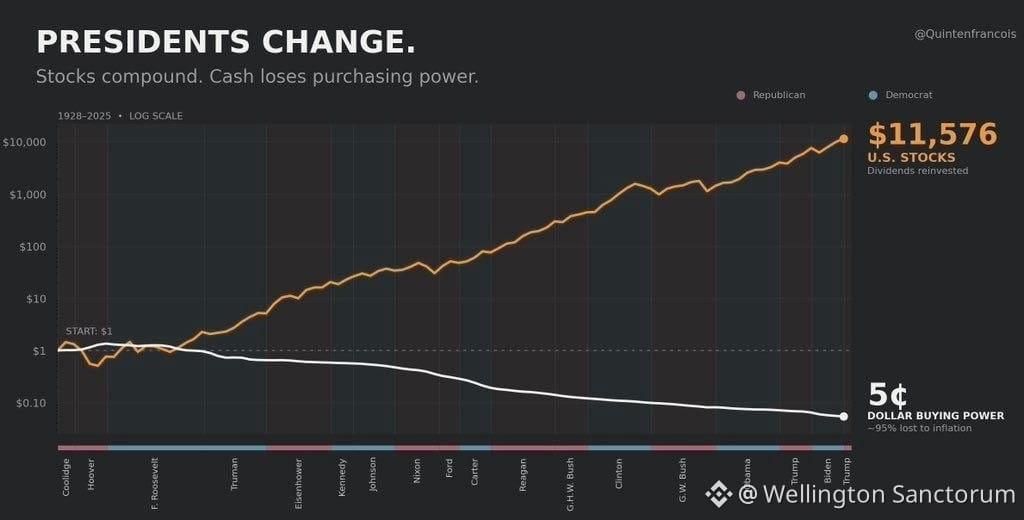
O poder do mercado supera a política. A análise histórica de 1928 a 2025 revela que o desempenho das ações americanas segue uma tendência de alta consistente, independentemente de quem ocupa a Casa Branca. Enquanto o índice de ações acumulou um valor de $11.576 com dividendos reinvestidos, o poder de compra do dinheiro em espécie despencou para apenas 5 centavos devido à inflação.
Essa divergência gritante serve como um alerta para os investidores: a estagnação do capital parado é a maior ameaça à sua riqueza. A imagem reforça que a volatilidade política é irrelevante diante da força do crescimento de longo prazo dos ativos produtivos.
📈 A lição é clara: não se distraia com o ruído das eleições. O foco deve ser a proteção do seu patrimônio contra a erosão inflacionária, garantindo que seus investimentos acompanhem a curva ascendente do mercado.
1
756
Partly True
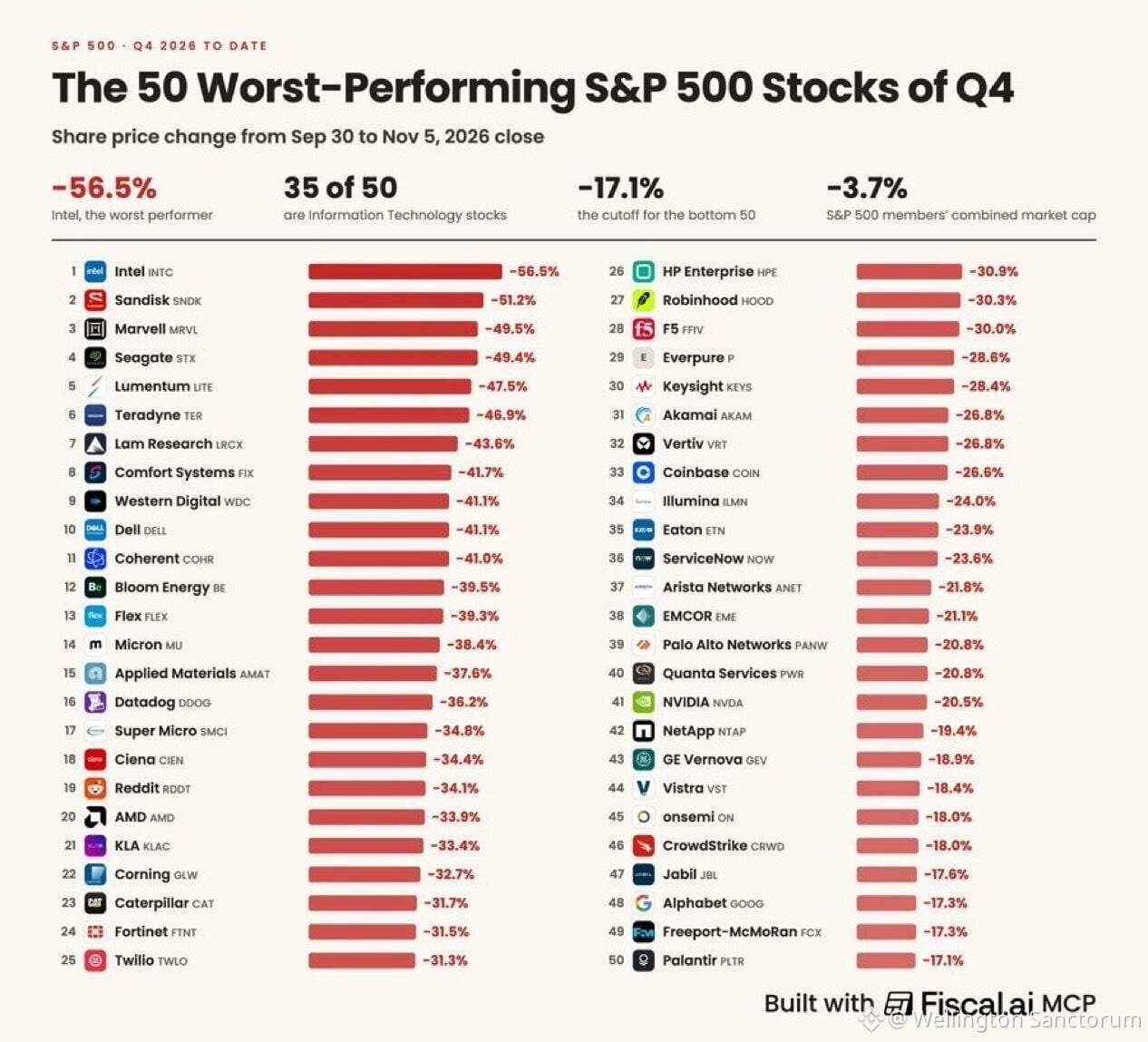
The U.S. stock market suffered a sharp downturn in the fourth quarter, with Intel leading the list of worst-performing S&P 500 stocks after its market value plunged 56.5%. The technology sector was hit hardest, accounting for 35 of the top 50 positions in the loss rankings, signaling a severe correction in high-tech assets.
Among the biggest losers, alongside Intel, were names such as Sandisk, Marvell, and Seagate, which also fell by more than 49%. Selling pressure even hit established giants such as NVIDIA, Alphabet, and Palantir, which ended the period down between 17% and 20%, reflecting investors’ short-term disinterest in growth stocks.
This risk aversion in traditional markets may be interpreted as a sign of capital rotation, with money flowing out of falling technology stocks and seeking refuge in other asset classes, such as the cryptocurrency market. 📉
1
1.9k
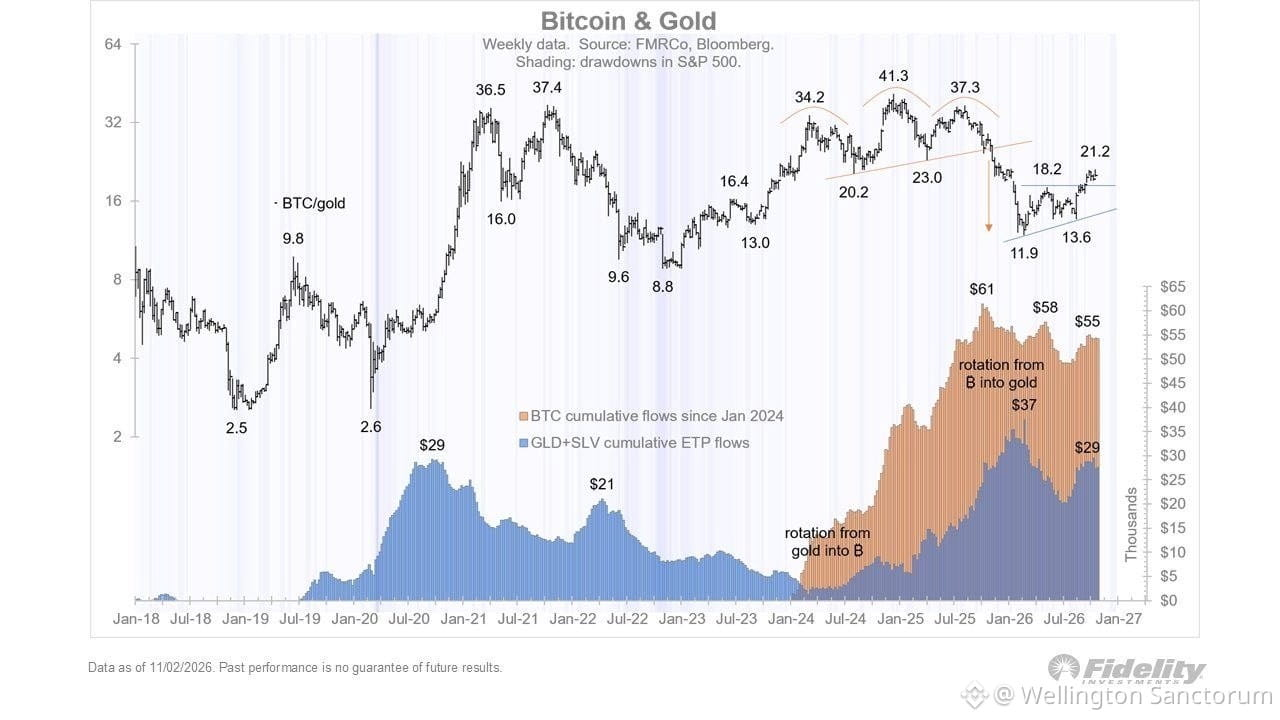
$BTC is showing notable strength by maintaining its price parity with gold, even as the values of both assets fall simultaneously. This resilience suggests that the market continues to view the cryptocurrency as a competitive store of value compared with the traditional metal.
Capital flow data reveal a trend of investment rotation: after a period of capital moving from Bitcoin to gold, we are seeing a significant return of flows to BTC. This dynamic indicates that investors are reassessing their positions and once again betting on the cryptocurrency’s upside potential.
Capital flow data reveal a trend of investment rotation: after a period of capital moving from Bitcoin to gold, we are seeing a significant return of flows to BTC. This dynamic indicates that investors are reassessing their positions and once again betting on the cryptocurrency’s upside potential.
30
Verified
See translation
A Binance nomeou Justin Yek como novo diretor financeiro (CFO), substituindo Kaiser Ng, que deixará a empresa para iniciar um novo empreendimento. Segundo a Bloomberg, o co-CEO da Binance, Yi He, destacou que Ng atuou na companhia por mais de cinco anos e que um plano de transição já estava em andamento há seis meses. Antes, Yek ocupou o cargo de vice-presidente de finanças na Airwallex e liderou o banco de investimento de tecnologia no Sudeste Asiático na Morgan Stanley. Ng, por sua vez, foi CFO da Kraken.
A Binance nomeou Justin Yek como novo diretor financeiro (CFO), substituindo Kaiser Ng, que deixará a empresa para iniciar um novo empreendimento. Segundo a Bloomberg, o co-CEO da Binance, Yi He, destacou que Ng atuou na companhia por mais de cinco anos e que um plano de transição já estava em andamento há seis meses. Antes, Yek ocupou o cargo de vice-presidente de finanças na Airwallex e liderou o banco de investimento de tecnologia no Sudeste Asiático na Morgan Stanley. Ng, por sua vez, foi CFO da Kraken.
819
See translation
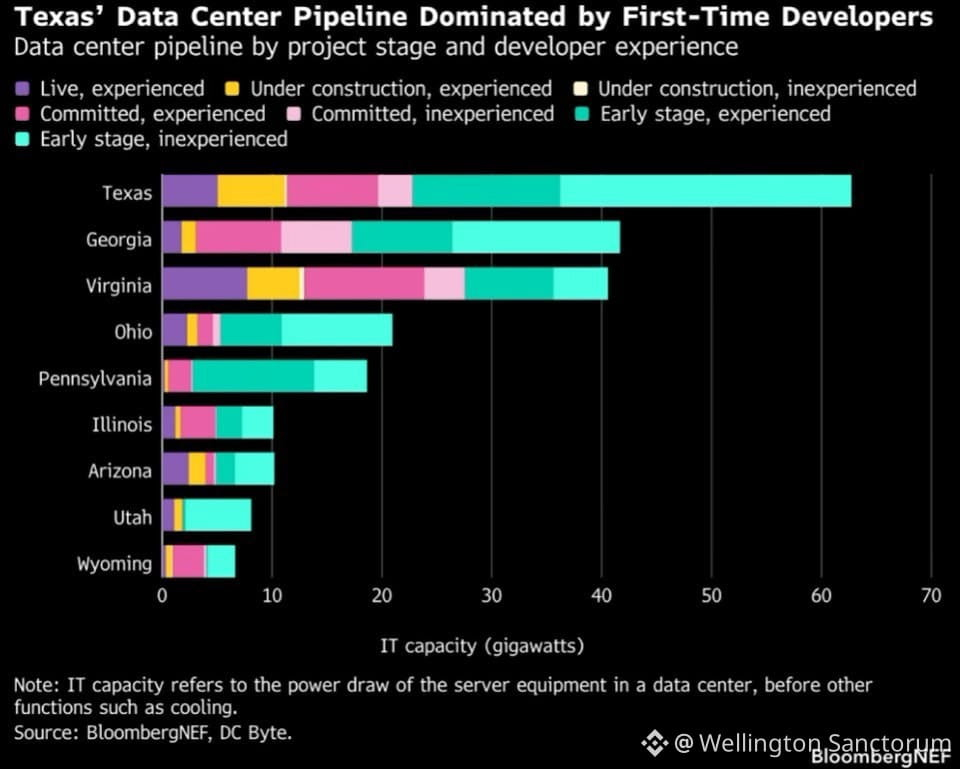
O estado do Texas consolida sua posição como o principal hub de infraestrutura de data centers nos Estados Unidos, liderando o ranking com uma capacidade de IT superior a 60 gigawatts. O gráfico revela que o estado é dominado por desenvolvedores de primeira viagem, com uma forte presença de projetos em fase inicial e sem experiência prévia no setor.
Essa tendência de expansão acelerada é visível também em estados vizinhos como Geórgia e Virgínia, que apresentam grandes volumes de capacidade em construção e projetos comprometidos. A entrada de novos players no mercado indica uma corrida agressiva para atender à demanda crescente por poder de processamento.
Para o setor de criptomoedas, essa infraestrutura é vital para suportar a mineração e a operação de redes descentralizadas. A concentração de novos centros de dados no Texas sugere que a região se tornará o epicentro da capacidade de computação para a próxima geração de ativos digitais. 🏗️⚡
214
How much experience do you have in the cryptocurrency market? I'll give you tips based on...
How much experience do you have in the cryptocurrency market? I'll give you tips based on...
1
113
Strategy ($MSTR ) bought 811 bitcoins and repurchased US$208 million in preferred stock.
The company acquired 811 BTC for US$65.5 million, at an average price of US$80,846 per Bitcoin, bringing its total holdings to 849,327 BTC.
Additionally, the company sold 1.18 million MSTR shares, raising US$164 million, of which US$98.5 million was allocated to its U.S. dollar reserve.
Strategy repurchased US$208.2 million in STRC preferred stock during the week.
Its dollar reserve stands at US$4.79 billion, with an additional US$132.7 million in cash.
38
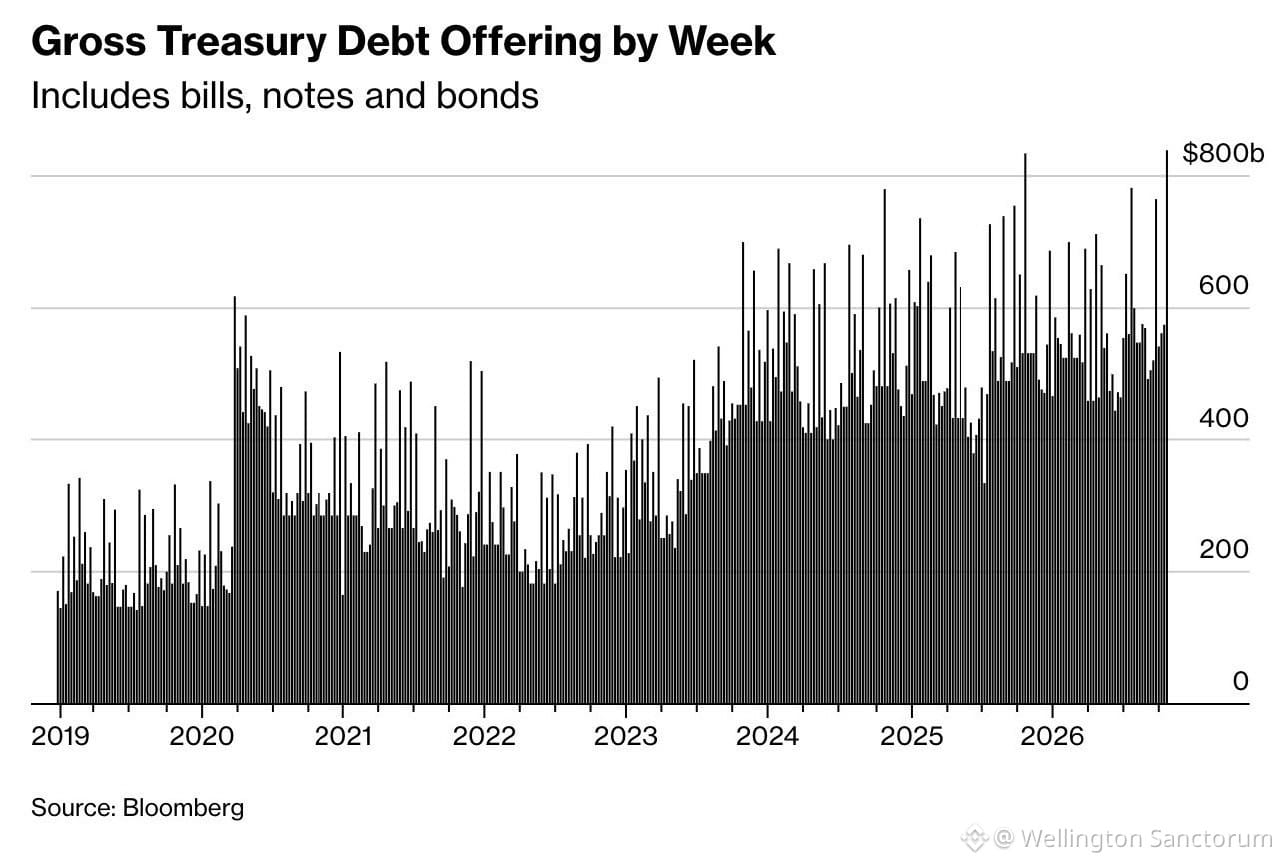
The U.S. Treasury has just set a historic record, issuing US$$ 839 billion in debt securities last week. The chart illustrates the continuous rise in issuance since 2019, with increasingly aggressive peaks that exceed the averages of previous years.
This massive injection of debt into the global market increases the supply of liquidity and could put pressure on long-term interest rates. For the cryptocurrency market, this monetary expansion scenario is often interpreted as a supportive factor for risk assets such as Bitcoin.
Investors should monitor how the capital markets absorb this new wave of debt, as demand for these securities is crucial to economic stability and the flow of capital into the crypto sector. 📉📈
BTC-0.16%
AGGETF-0.05%
42
BitMine acquired 8,573 ETH last week, bringing its total portfolio to 6,060,506 ETH, representing approximately 4.9% of Ethereum’s total supply. The company holds 5,227,037 ETH in staking, while its total assets in cryptocurrencies, cash, securities, and other investments amount to around US$ 14.5 billion, including US$ 498 million in cash and securities.
BitMine acquired 8,573 ETH last week, bringing its total portfolio to 6,060,506 ETH, representing approximately 4.9% of Ethereum’s total supply. The company holds 5,227,037 ETH in staking, while its total assets in cryptocurrencies, cash, securities, and other investments amount to around US$ 14.5 billion, including US$ 498 million in cash and securities.
77
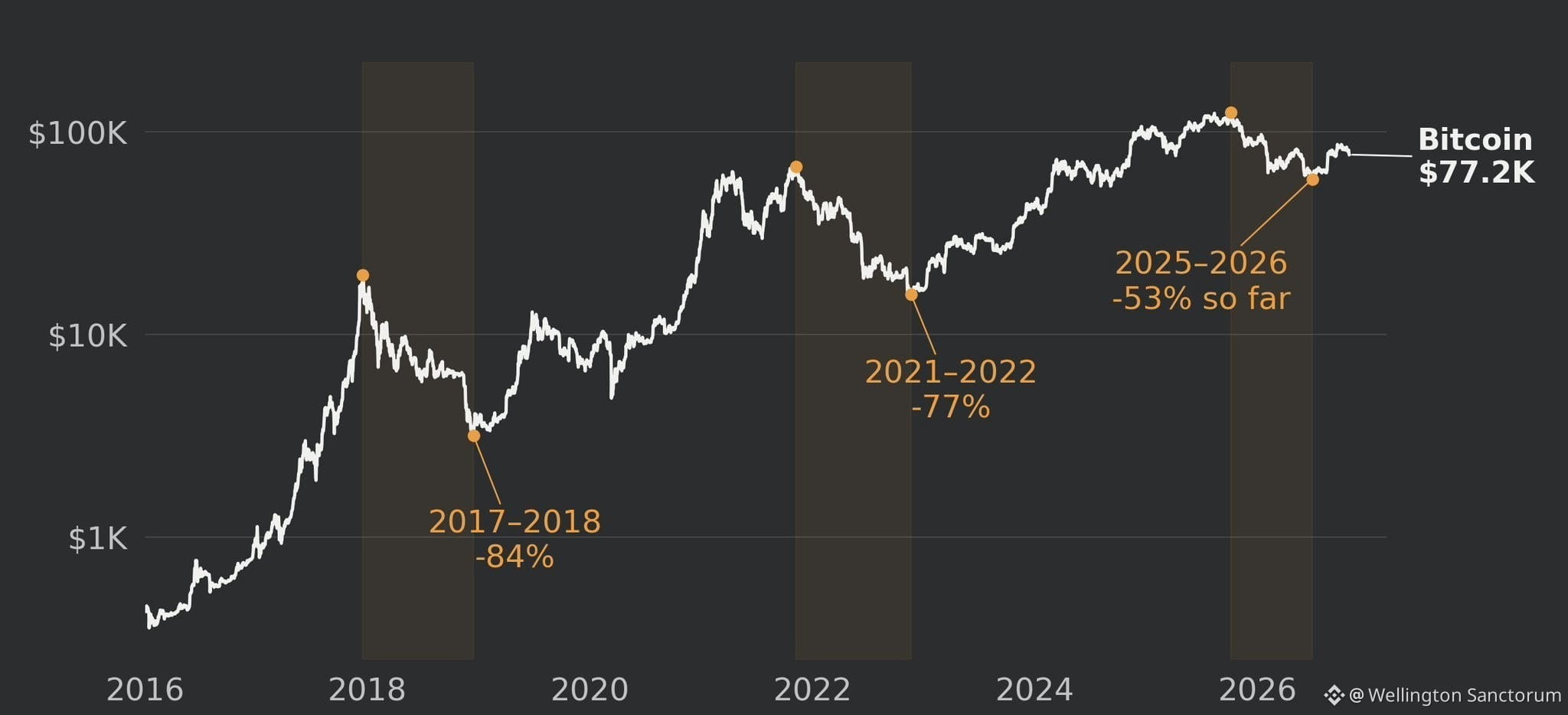
Bitcoin’s history reinforces the thesis that the asset offers recurring accumulation opportunities after severe corrections. Technical analysis highlights that every four years, the market goes through downturns of more than 50%, creating buying windows for long-term investors.
The data show remarkable consistency: the 2017–2018 cycle recorded an 84% decline, followed by a 77% retracement in 2021–2022. Currently, the market has fallen 53% in the 2025–2026 cycle, with the asset trading around $77.2K.
This recurring pattern suggests that extreme volatility is part of the cryptocurrency’s cyclical nature. According to the chief analyst, the current retracement follows the historical trend of consolidation before new bull runs, keeping the focus on patience and a strategy of buying during moments of panic. 📉📊
37
⚠️ Mercado Bitcoin hacker drains old deposit addresses and sells memecoins/altcoins; losses have already reached US$ 46 million and continue to rise.
⚠️ Mercado Bitcoin hacker drains old deposit addresses and sells memecoins/altcoins; losses have already reached US$ 46 million and continue to rise.
751
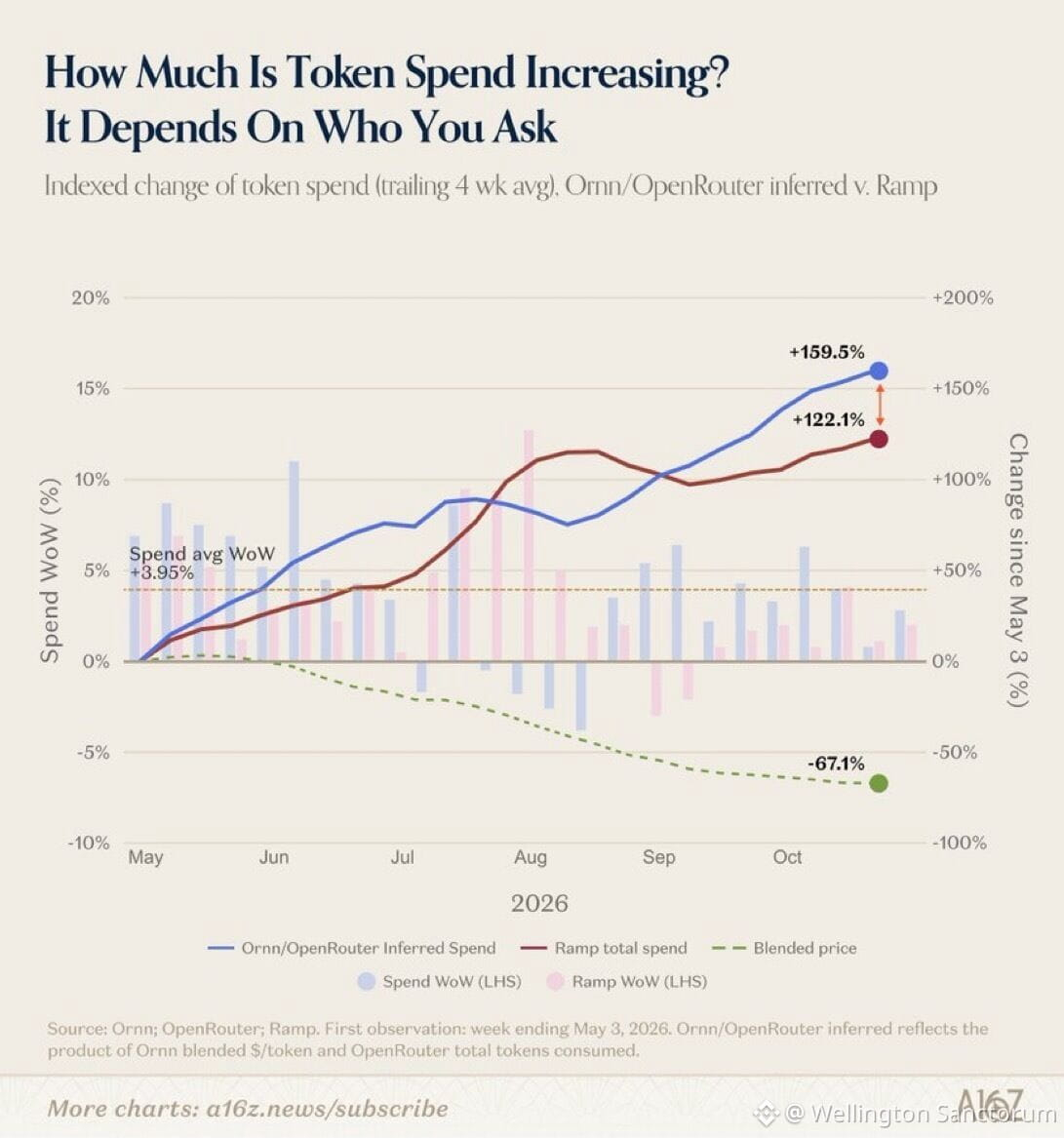
🚀 The AI market is booming, with token spending surging between 122% and 160% since May.
This significant increase comes despite a 67% drop in token prices, indicating that consumption volumes and demand for processing are growing rapidly.
📈 The trend suggests that AI infrastructure is becoming a central pillar of the industry, attracting more investment and real-world use.
This significant increase comes despite a 67% drop in token prices, indicating that consumption volumes and demand for processing are growing rapidly.
📈 The trend suggests that AI infrastructure is becoming a central pillar of the industry, attracting more investment and real-world use.
1
81
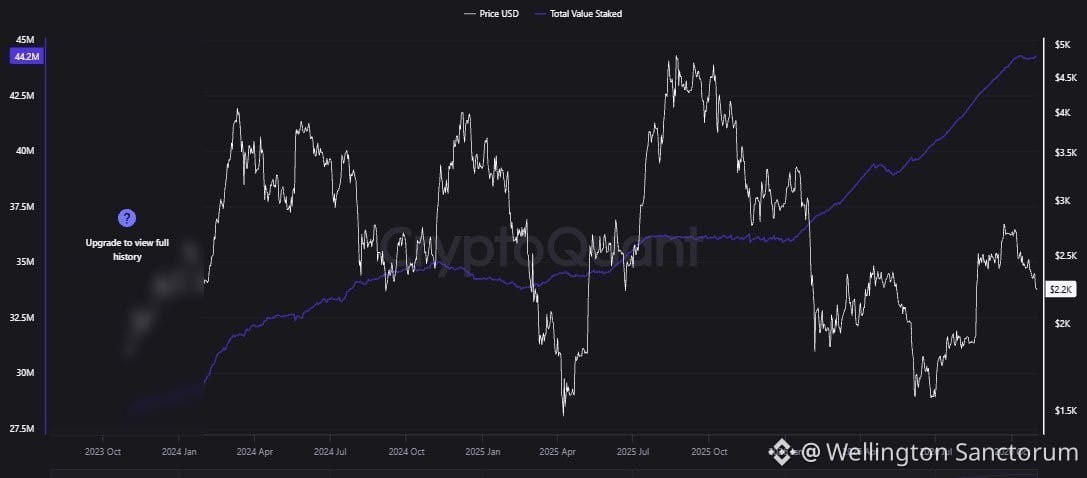
The Ethereum market has just reached a historic milestone: October 2025 was the month with the highest volume of ETH staked in the network’s history.
Market charts confirm this upward trend, showing that Total Value Staked (blue line) continues on a steady growth trajectory, reaching levels above $5 billion. This increase indicates that a record number of investors are choosing to lock up their assets to validate transactions and earn passive income, rather than keeping them in cold wallets.
This massive shift to staking is seen as a sign of institutional and long-term confidence in the technology, suggesting that demand for network security and yield is outweighing the need for immediate liquidity in the market. 📈
95
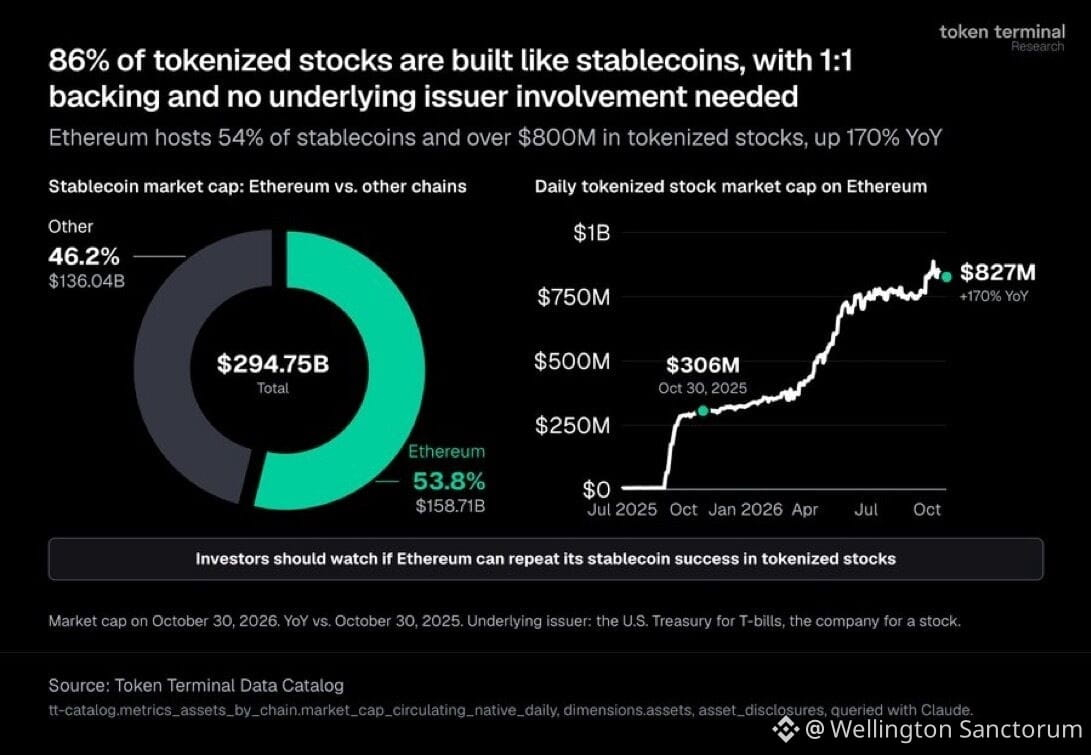
📈 The tokenized stock market on Ethereum recorded an impressive surge, reaching a market capitalization of US$ 827 million. This represents year-over-year growth of 170%, cementing the network’s position as the leading hub for the tokenization of traditional assets.
The structure of these assets is notable: 86% of tokenized stocks are built using the same logic as stablecoins, with 1:1 backing and no need for direct involvement from the original issuer. This technical approach aims to increase liquidity and transaction security in the on-chain environment.
The structure of these assets is notable: 86% of tokenized stocks are built using the same logic as stablecoins, with 1:1 backing and no need for direct involvement from the original issuer. This technical approach aims to increase liquidity and transaction security in the on-chain environment.
111
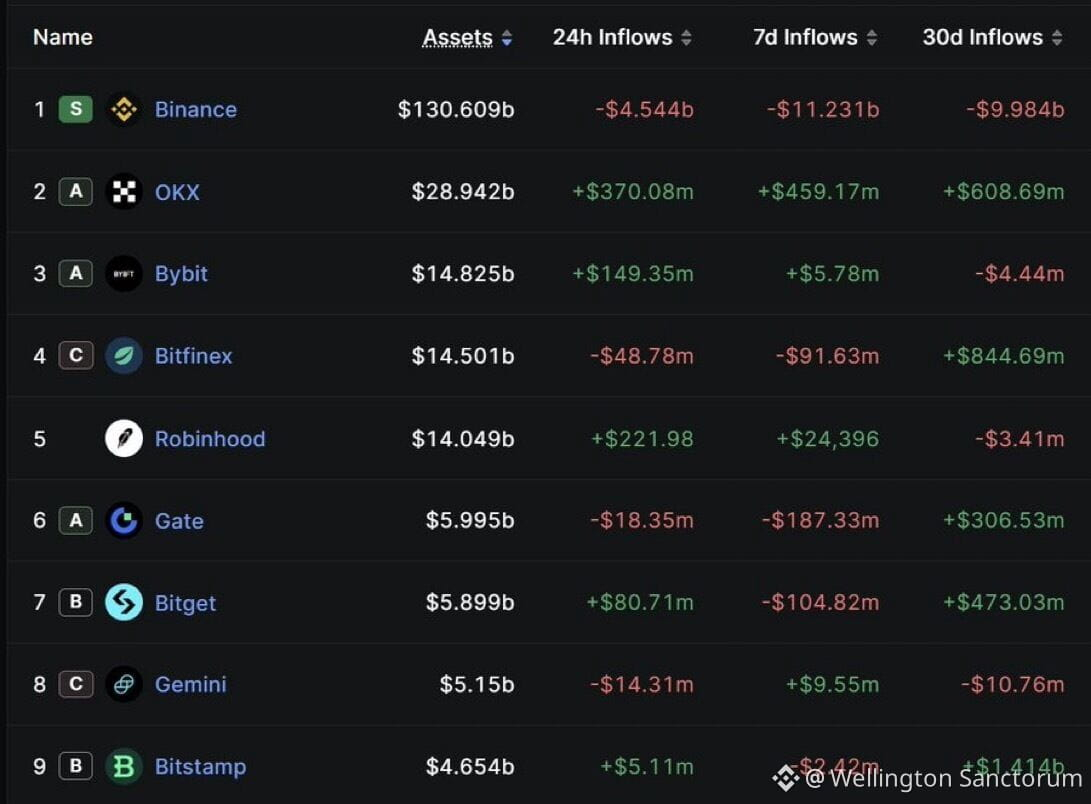
Binance reopened withdrawals after the security incident, but on-chain data reveal significant outflow pressure. The exchange recorded a net outflow of US$ 4,5 billion in just 24 hours, indicating that investors are prioritizing withdrawing their assets en masse.
Most of this capital did not go to direct competitors. While OKX and Bybit attracted around US$ 520 million combined, the vast majority of funds were transferred to private wallets or other platforms outside the radar of the major listed exchanges.
This massive migration suggests that confidence in the centralized system is being tested, as the market seeks liquidity elsewhere. Monitoring these flows is essential to understanding the sector’s new liquidity dynamics. 📉🔍
140
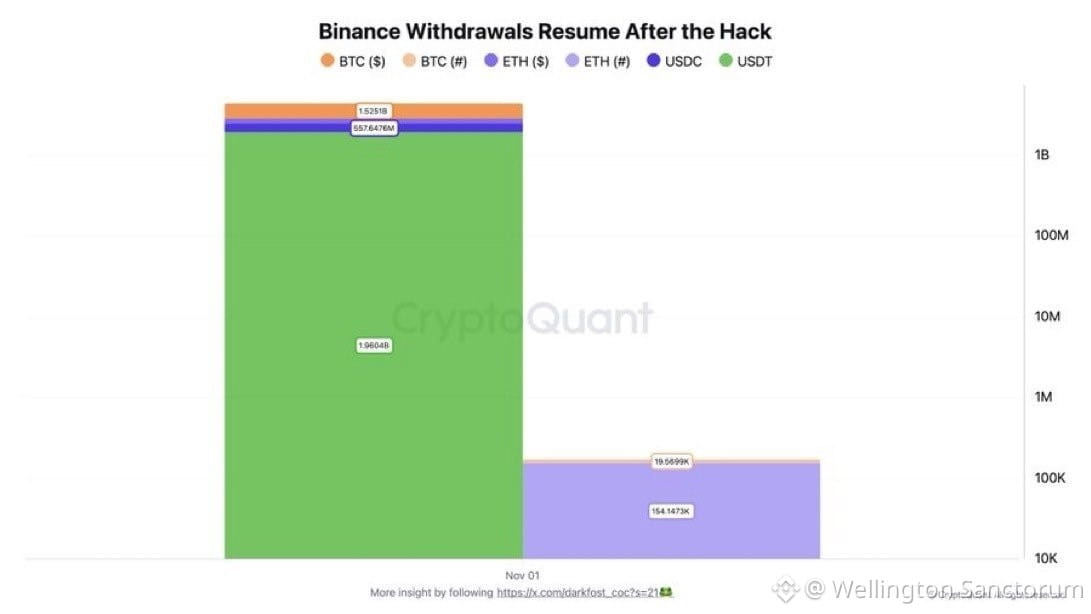
Binance records US$ 4 billion in withdrawals after resuming withdrawals
Following the security incident that resulted in a US$ 6.3 billion hack, the world's largest exchange saw a massive outflow of capital from its platform. Reports indicate that more than US$ 4 billion in assets were withdrawn by users as soon as operations returned to normal.
The data shows that USDT was the most active asset, leading withdrawal volume with approximately US$ 1 billion. ETH also had a significant share, with more than US$ 557 million in withdrawals, highlighting investors' preference for highly liquid assets during times of uncertainty.
This movement reflects market caution and the immediate search for asset security following the attack. Binance's swift response in restoring operations was crucial in preventing widespread panic, but withdrawal volumes continue to be monitored. 📉🔒
335
Everything that could go wrong happened in 2026
- War between the US and Iran
- High inflation
- Brutal crypto market downturn
- Quantum FUD
- Exchange hacks
- DeFi exploits
- Clarity Act failure
- Saylor sell-off
- Cold wallet hacks
- Fed rate hikes
- Stock market crash
Everything that could go wrong happened in 2026
- War between the US and Iran
- High inflation
- Brutal crypto market downturn
- Quantum FUD
- Exchange hacks
- DeFi exploits
- Clarity Act failure
- Saylor sell-off
- Cold wallet hacks
- Fed rate hikes
- Stock market crash
- War between the US and Iran
- High inflation
- Brutal crypto market downturn
- Quantum FUD
- Exchange hacks
- DeFi exploits
- Clarity Act failure
- Saylor sell-off
- Cold wallet hacks
- Fed rate hikes
- Stock market crash
266
Log in to explore more content
Join global crypto users on Binance Square
⚡️ Get latest and useful information about crypto.
💬 Trusted by the world’s largest crypto exchange.
👍 Discover real insights from verified creators.
Email / Phone number
Trending Topics
JobsReportRaisesHikeOdds
512,709 views
3,305 Discussing
TradFi News | US Adds 165,000 Jobs in October, More Than Double the 65,000 Forecast, as Unemployment Falls to 4.1%
Binance News
·42 Likes
·24.2k views
CPITestsDecemberRateOutlook
147,097 views
1,090 Discussing
BitcoinRebounds$75KAsChipsLead
47,085 views
339 Discussing