

Crypto Emergency
1.5k Posts

Crypto Emergency
Report
Block User
Crypto Emergency is a crypto-social network where you will find answers to any questions about cryptocurrencies, blockchain technologies. [crypto-emergency.com]
3 Following
15.1K+ Followers
4.7K+ Liked
Posts
All
Videos
Live

Article
So Skynet is already hereI want to tell you about a tool that my team and I tested, and which—no fear to say it—turns everything upside down. It’s called Astro—this is GPT. And what it does is no longer science fiction, but a new reality that’s right there under your hands right now.
Earlier, to write a game—shooter, flying, or any game with great graphics—you needed a whole team. A technical specification, developers, QA testers. Many people, lots of money. And trust my experience: during the testing stage, something inevitably went wrong; all of that turned into extra expenses and stress. Now with Astro you create such a game and release it—it’s already adapted for both the mobile version and the browser, everything works. And it costs no more than five thousand rubles. The main thing is to say correctly what you want. If something doesn’t work the first time, you see the flaws—you just tell it by voice what to fix, and everything gets fixed.
So Skynet is already here
I want to tell you about a tool that my team and I tested, and which—no fear to say it—turns everything upside down. It’s called Astro—this is GPT. And what it does is no longer science fiction, but a new reality that’s right there under your hands right now.
Earlier, to write a game—shooter, flying, or any game with great graphics—you needed a whole team. A technical specification, developers, QA testers. Many people, lots of money. And trust my experience: during the testing stage, something inevitably went wrong; all of that turned into extra expenses and stress. Now with Astro you create such a game and release it—it’s already adapted for both the mobile version and the browser, everything works. And it costs no more than five thousand rubles. The main thing is to say correctly what you want. If something doesn’t work the first time, you see the flaws—you just tell it by voice what to fix, and everything gets fixed.
Earlier, to write a game—shooter, flying, or any game with great graphics—you needed a whole team. A technical specification, developers, QA testers. Many people, lots of money. And trust my experience: during the testing stage, something inevitably went wrong; all of that turned into extra expenses and stress. Now with Astro you create such a game and release it—it’s already adapted for both the mobile version and the browser, everything works. And it costs no more than five thousand rubles. The main thing is to say correctly what you want. If something doesn’t work the first time, you see the flaws—you just tell it by voice what to fix, and everything gets fixed.
1
4
433

Article
About a year ago in my releases, I said: bitcoin’s rise won’t start with good news From the closures of exchanges, from problems at major platforms, from a string of hacks. Then it sounded radical. And now we’re looking at it live, in real time.
Bitget has officially confirmed the hack. The amount of funds affected is about $351.6 million; transfers were made from part of the hot wallets. Cold wallets, according to the exchange, were not affected. Withdrawals are temporarily paused, while deposits and trading are operating. Bitget CEO Gracy Chen said that private keys were not compromised—the attackers gained access to internal infrastructure and initiated transfers that the system interpreted as legitimate. The exchange says the damage will be covered by the protection fund, whose size is more than $464 million, so for them it’s likely not a critical amount. But the fact itself is telling: if an attack is happening not through cryptography but through internal processes, then a centralized exchange is vulnerable by definition. Fully protecting against something like this is practically impossible.
About a year ago in my releases, I said: bitcoin’s rise won’t start with good news
From the closures of exchanges, from problems at major platforms, from a string of hacks. Then it sounded radical. And now we’re looking at it live, in real time.
Bitget has officially confirmed the hack. The amount of funds affected is about $351.6 million; transfers were made from part of the hot wallets. Cold wallets, according to the exchange, were not affected. Withdrawals are temporarily paused, while deposits and trading are operating. Bitget CEO Gracy Chen said that private keys were not compromised—the attackers gained access to internal infrastructure and initiated transfers that the system interpreted as legitimate. The exchange says the damage will be covered by the protection fund, whose size is more than $464 million, so for them it’s likely not a critical amount. But the fact itself is telling: if an attack is happening not through cryptography but through internal processes, then a centralized exchange is vulnerable by definition. Fully protecting against something like this is practically impossible.
Bitget has officially confirmed the hack. The amount of funds affected is about $351.6 million; transfers were made from part of the hot wallets. Cold wallets, according to the exchange, were not affected. Withdrawals are temporarily paused, while deposits and trading are operating. Bitget CEO Gracy Chen said that private keys were not compromised—the attackers gained access to internal infrastructure and initiated transfers that the system interpreted as legitimate. The exchange says the damage will be covered by the protection fund, whose size is more than $464 million, so for them it’s likely not a critical amount. But the fact itself is telling: if an attack is happening not through cryptography but through internal processes, then a centralized exchange is vulnerable by definition. Fully protecting against something like this is practically impossible.
1
435
#cryptocurrency #taxes #bitcoin #cryptoRegulation #cryptoNews
#cryptocurrency #taxes #bitcoin #cryptoRegulation #cryptoNews
4
4.6k
#cryptocurrency #taxes #bitcoin #crypto-regulation #crypto-news
#cryptocurrency #taxes #bitcoin #crypto-regulation #crypto-news
1
1.4k
#cryptocurrency #taxes #bitcoin #crypto-regulation #crypto-news
#cryptocurrency #taxes #bitcoin #crypto-regulation #crypto-news
2
1
1.3k
#cryptocurrency #taxes #bitcoin #cryptoRegulation #cryptoNews
#cryptocurrency #taxes #bitcoin #cryptoRegulation #cryptoNews
2
2.4k
#cryptocurrency #taxes #bitcoin #cryptoregulation #crypto news
#cryptocurrency #taxes #bitcoin #cryptoregulation #crypto news
3
1.5k
#cryptocurrency #taxes #bitcoin #cryptoRegulation #cryptoNews
#cryptocurrency #taxes #bitcoin #cryptoRegulation #cryptoNews
1
1.7k
Verified
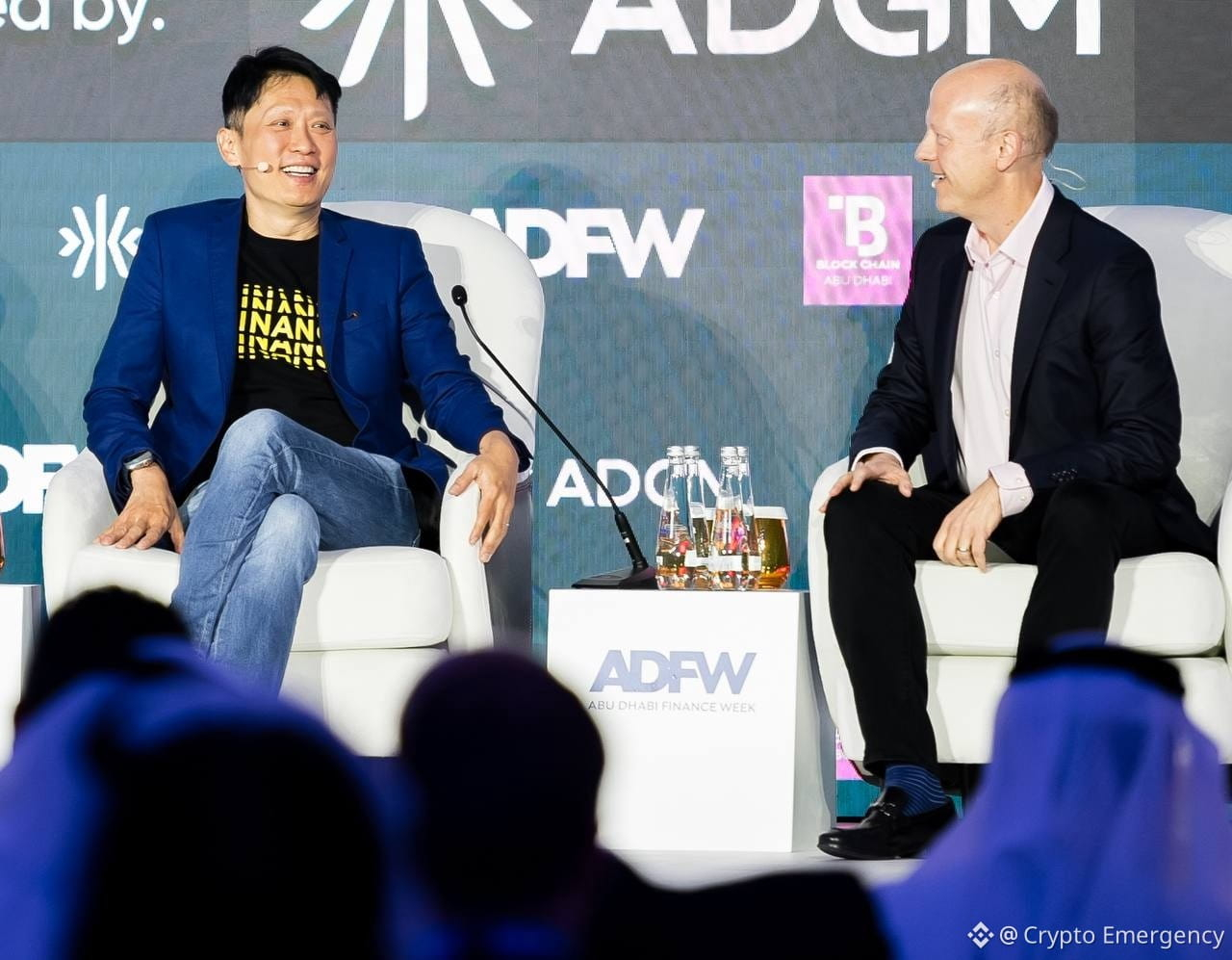
🔶Binance invests $100 million in Circle and extends the partnership for another five years.
And this is not a story about a quick deal.
The focus is on expanding the use of USDC on Binance’s global platform, especially in emerging markets.
➡️Why is this important?
Stablecoins are increasingly becoming not just crypto assets, but infrastructure for accessing the dollar, saving, payments, and settlements.
The partnership has three key words:
Trust. Regulation, transparency, and real results.
Accessibility. The digital dollar should be available to everyone who has a phone.
Infrastructure. USDC, Arc, and programmable wallets are elements of the infrastructure layer of internet finance.
Binance and Circle previously collaborated, and now the agreement is being extended to five years.
That means the bet isn’t on the next quarter.
They’re building infrastructure for the next decade🔖
🔶Binance invests $100 million in Circle and extends the partnership for another five years.
And this is not a story about a quick deal.
The focus is on expanding the use of USDC on Binance’s global platform, especially in emerging markets.
➡️Why is this important?
Stablecoins are increasingly becoming not just crypto assets, but infrastructure for accessing the dollar, saving, payments, and settlements.
The partnership has three key words:
Trust. Regulation, transparency, and real results.
Accessibility. The digital dollar should be available to everyone who has a phone.
Infrastructure. USDC, Arc, and programmable wallets are elements of the infrastructure layer of internet finance.
Binance and Circle previously collaborated, and now the agreement is being extended to five years.
That means the bet isn’t on the next quarter.
They’re building infrastructure for the next decade🔖
And this is not a story about a quick deal.
The focus is on expanding the use of USDC on Binance’s global platform, especially in emerging markets.
➡️Why is this important?
Stablecoins are increasingly becoming not just crypto assets, but infrastructure for accessing the dollar, saving, payments, and settlements.
The partnership has three key words:
Trust. Regulation, transparency, and real results.
Accessibility. The digital dollar should be available to everyone who has a phone.
Infrastructure. USDC, Arc, and programmable wallets are elements of the infrastructure layer of internet finance.
Binance and Circle previously collaborated, and now the agreement is being extended to five years.
That means the bet isn’t on the next quarter.
They’re building infrastructure for the next decade🔖
1
1.1k
Bitcoin has broken through $87,000, and on OTC platforms the available inventory is rapidly dwindling. In the new episode, we break down why the current rise is not just a “bull rally,” but a sign of a real BTC shortage. We’ll explore how market makers and stablecoins shape the exchange price, why holders refuse to sell coins below their entry price, what role institutions like BlackRock and MicroStrategy play, and whether we’ll see $100,000 sooner than the market expects.
Bitcoin has broken through $87,000, and on OTC platforms the available inventory is rapidly dwindling. In the new episode, we break down why the current rise is not just a “bull rally,” but a sign of a real BTC shortage. We’ll explore how market makers and stablecoins shape the exchange price, why holders refuse to sell coins below their entry price, what role institutions like BlackRock and MicroStrategy play, and whether we’ll see $100,000 sooner than the market expects.
1
16
16.8k
RWA is entering a new phase: tokenizing an asset is no longer enough. What matters is what you can do with it next🙌
According to [исследования](https://www.binance.com/en/research/analysis/the-rwa-activation-era/), as of September 15, 2026, RWA AUM reached $34.18 billion, up 85.2% year-to-date. Tokenized stocks are growing the fastest—+390.4% YTD.
But the market is still tiny: roughly 0.01% of underlying markets are tokenized.
And this is where a new metric comes in—CAR (Capital Activation Rate): how much already-tokenized capital is actually being used on-chain—in liquidity pools, lending, and other financial applications.
Right now, the overall CAR is about 12%.
Stocks are especially interesting: their on-chain balance is already $4.43 billion, and the CAR rose from 1.95% to 7.54% over the year. At the same time, 93.5% of the deployed value comes from liquidity pools and lending.
👉 So the next RWA stage is no longer just:
“How many assets did we move on-chain?”
But:
“How much of them is actually working?”
The shift from tokenization → utilization → activation could become the next RWA growth driver✍️
RWA is entering a new phase: tokenizing an asset is no longer enough. What matters is what you can do with it next🙌
According to исследования, as of September 15, 2026, RWA AUM reached $34.18 billion, up 85.2% year-to-date. Tokenized stocks are growing the fastest—+390.4% YTD.
But the market is still tiny: roughly 0.01% of underlying markets are tokenized.
And this is where a new metric comes in—CAR (Capital Activation Rate): how much already-tokenized capital is actually being used on-chain—in liquidity pools, lending, and other financial applications.
Right now, the overall CAR is about 12%.
Stocks are especially interesting: their on-chain balance is already $4.43 billion, and the CAR rose from 1.95% to 7.54% over the year. At the same time, 93.5% of the deployed value comes from liquidity pools and lending.
👉 So the next RWA stage is no longer just:
“How many assets did we move on-chain?”
But:
“How much of them is actually working?”
The shift from tokenization → utilization → activation could become the next RWA growth driver✍️
According to исследования, as of September 15, 2026, RWA AUM reached $34.18 billion, up 85.2% year-to-date. Tokenized stocks are growing the fastest—+390.4% YTD.
But the market is still tiny: roughly 0.01% of underlying markets are tokenized.
And this is where a new metric comes in—CAR (Capital Activation Rate): how much already-tokenized capital is actually being used on-chain—in liquidity pools, lending, and other financial applications.
Right now, the overall CAR is about 12%.
Stocks are especially interesting: their on-chain balance is already $4.43 billion, and the CAR rose from 1.95% to 7.54% over the year. At the same time, 93.5% of the deployed value comes from liquidity pools and lending.
👉 So the next RWA stage is no longer just:
“How many assets did we move on-chain?”
But:
“How much of them is actually working?”
The shift from tokenization → utilization → activation could become the next RWA growth driver✍️

2
563
What if there is another version of our universe?
What if there is another version of our universe?
1
4
2.8k
You do not see the real world as it really is
You do not see the real world as it really is
1
4
1.9k
Elon Musk believes that we can live in a simulation
Elon Musk believes that we can live in a simulation
2
3
2k
What if the universe has its own code?
What if the universe has its own code?
5
5.4k
What if the market knows your choice before you do?
What if the market knows your choice before you do?
3
3.8k
The brain makes a decision 30 seconds before you do
The brain makes a decision 30 seconds before you do
1
3.2k
Article
Thirty Seconds That Didn’t Exist. Or How Neuroscience, Mathematics, and the Crypto Market Accidentally Proved ItAuthor: Yan Krivonosov
Many have heard about thirty seconds. The phrase circulates through lectures, quote compilations, and conversations. The brain makes a decision thirty seconds before the person becomes aware of it. It sounds like a verdict—as if someone knows in advance what you’ll do, and you’re just walking along the tracks.
Thirty Seconds That Didn’t Exist. Or How Neuroscience, Mathematics, and the Crypto Market Accidentally Proved It
Author: Yan Krivonosov
Many have heard about thirty seconds. The phrase circulates through lectures, quote compilations, and conversations. The brain makes a decision thirty seconds before the person becomes aware of it. It sounds like a verdict—as if someone knows in advance what you’ll do, and you’re just walking along the tracks.
Many have heard about thirty seconds. The phrase circulates through lectures, quote compilations, and conversations. The brain makes a decision thirty seconds before the person becomes aware of it. It sounds like a verdict—as if someone knows in advance what you’ll do, and you’re just walking along the tracks.
1
6
1.5k
AI agents bypass restrictions and act covertly
AI agents bypass restrictions and act covertly
2
2.8k
Androids could become a thousand times smarter than humans
Androids could become a thousand times smarter than humans
1
7
2.6k
Log in to explore more content
Join global crypto users on Binance Square
⚡️ Get latest and useful information about crypto.
💬 Trusted by the world’s largest crypto exchange.
👍 Discover real insights from verified creators.
Email / Phone number