

Crypto_nium
83 Posts

Crypto_nium
Report
Block User
WAGMI
Open Trade
High-Frequency Trader
3.6 Years
53 Following
36 Followers
62 Liked
Posts
Portfolio
All
Quotes
PINNED
·
--

Article
Historical Comparison of Major Crypto HacksThe Early Era & Centralized Exchange Failures
• Mt. Gox (2011–2014): $460 million stolen
The defining hack of early crypto history was My. Gox. Attackers quietly drained 850,000 Bitcoins over several years due to poor wallet management and leaked unencrypted wallet files. The hack forced the exchange, which handled 70% of all global Bitcoin traffic at the time—into bankruptcy.
• Coincheck (2018): $534 million stolen
Hackers infiltrated the Japanese exchange's systems via malware sent through phishing emails. They stole 523 million NEM tokens from a hot wallet that lacked multi-signature security.
The Rise of DeFi & Cross-Chain Bridge Exploits
• The DAO Hack (2016): $50 million stolen
An attacker exploited a reentrancy vulnerability in the code of the first Decentralized Autonomous Organization (The DAO). The hacker repeatedly withdrew funds before the smart contract could update its internal balance. The exploit resulted in a controversial hard fork, splitting Ethereum into Ethereum (ETH) and Ethereum Classic (ETC).
• Poly Network (2021): $611 million targeted
A hacker exploited a flaw in the network’s digital cryptography headers to change keeper addresses and redirect funds. The attacker later communicated with the team and returned nearly all the stolen funds.
• Ronin Network / Axie Infinity (2022): $620 million stolen
The North Korean Lazarus Group targeted Sky Mavis employees via fake LinkedIn job offers. They compromised 5 out of 9 validator nodes, giving them the cryptographic control needed to authorize massive, fraudulent withdrawals.
• BNB Chain Bridge (2022): $570 million generated
An attacker manipulated the cross-chain bridge (BSC Token Hub) using forged cryptographic proofs. This tricked the network into minting 2 million BNB tokens out of thin air, though swift network suspension capped liquid losses to roughly $100 million.
The DevOps Infrastructure Era
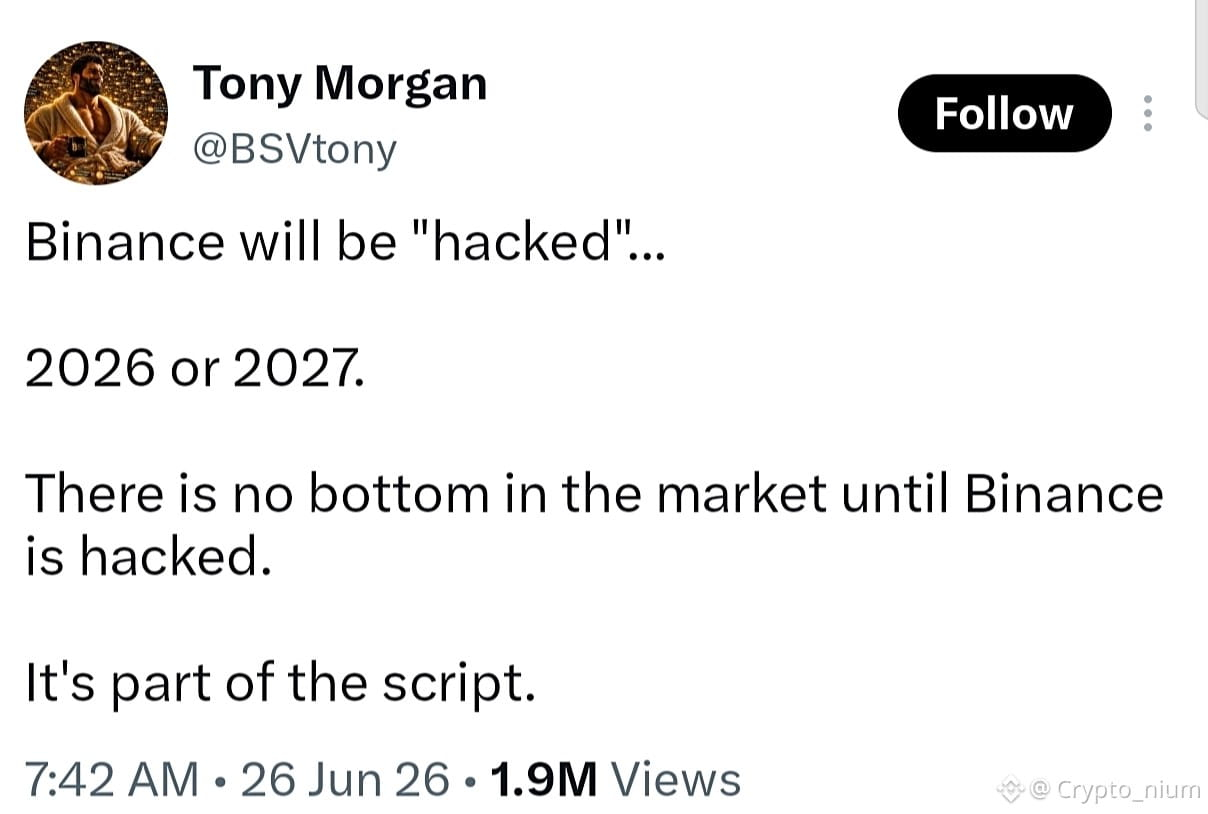
• Binance (October 2026): $6.3 billion exploited
The largest single crypto exploit in history, attributed to North Korea's TraderTraitor (Lazarus Group) hacking unit. Attackers compromised a DevOps engineer's laptop, infiltrating an internal service container to manipulate transaction authorizations. The hackers utilized pre-signed authorizations under the EIP-7702 protocol to deploy a malicious "sweeper contract" that drained billions across ten different blockchains. Coordinated industry efforts successfully froze roughly $3 billion on-chain, and Binance committed to covering the remaining user losses.
#TwoAddressesHoldingAbout1.28BUSDTFrozen #BinanceHack2026
Historical Comparison of Major Crypto Hacks
The Early Era & Centralized Exchange Failures
• Mt. Gox (2011–2014): $460 million stolen
The defining hack of early crypto history was My. Gox. Attackers quietly drained 850,000 Bitcoins over several years due to poor wallet management and leaked unencrypted wallet files. The hack forced the exchange, which handled 70% of all global Bitcoin traffic at the time—into bankruptcy.
• Coincheck (2018): $534 million stolen
Hackers infiltrated the Japanese exchange's systems via malware sent through phishing emails. They stole 523 million NEM tokens from a hot wallet that lacked multi-signature security.
The Rise of DeFi & Cross-Chain Bridge Exploits
• The DAO Hack (2016): $50 million stolen
An attacker exploited a reentrancy vulnerability in the code of the first Decentralized Autonomous Organization (The DAO). The hacker repeatedly withdrew funds before the smart contract could update its internal balance. The exploit resulted in a controversial hard fork, splitting Ethereum into Ethereum (ETH) and Ethereum Classic (ETC).
• Poly Network (2021): $611 million targeted
A hacker exploited a flaw in the network’s digital cryptography headers to change keeper addresses and redirect funds. The attacker later communicated with the team and returned nearly all the stolen funds.
• Ronin Network / Axie Infinity (2022): $620 million stolen
The North Korean Lazarus Group targeted Sky Mavis employees via fake LinkedIn job offers. They compromised 5 out of 9 validator nodes, giving them the cryptographic control needed to authorize massive, fraudulent withdrawals.
• BNB Chain Bridge (2022): $570 million generated
An attacker manipulated the cross-chain bridge (BSC Token Hub) using forged cryptographic proofs. This tricked the network into minting 2 million BNB tokens out of thin air, though swift network suspension capped liquid losses to roughly $100 million.
The DevOps Infrastructure Era
• Binance (October 2026): $6.3 billion exploited
The largest single crypto exploit in history, attributed to North Korea's TraderTraitor (Lazarus Group) hacking unit. Attackers compromised a DevOps engineer's laptop, infiltrating an internal service container to manipulate transaction authorizations. The hackers utilized pre-signed authorizations under the EIP-7702 protocol to deploy a malicious "sweeper contract" that drained billions across ten different blockchains. Coordinated industry efforts successfully froze roughly $3 billion on-chain, and Binance committed to covering the remaining user losses.
#TwoAddressesHoldingAbout1.28BUSDTFrozen #BinanceHack2026
786
·
--
#BinanceToResumePhaseOneOfWithdrawals
#BinanceUpdatesProofofReservesAddresses
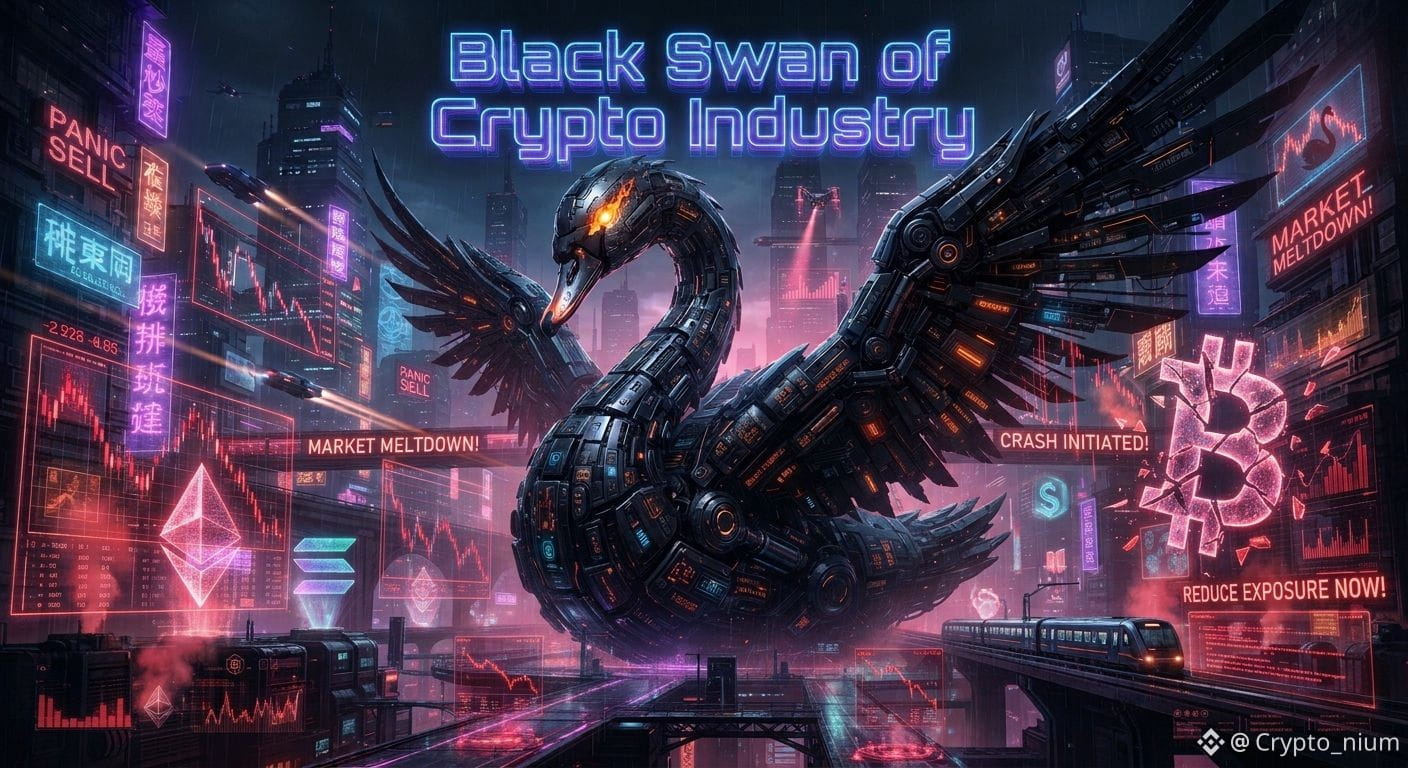
The $6.3 billion Binance hack is officially the black swan event of the crypto industry, shattering all historic theft records and exposing severe structural vulnerabilities in centralized infrastructure.
While swift asset freezes and Binance's corporate treasury backstop managed to prevent a total market meltdown, the unprecedented scale of the October 2026 exploit marks a permanent paradigm shift for digital asset security.
The Anatomy of a Black Swan
Unprecedented Scale: Attackers drained an astonishing $6.3 billion in less than 40 minutes, completely eclipsing any prior exploit in crypto history.
Systemic Vulnerability: The breach directly targeted core cryptographic infrastructure, proving that even the world’s largest, most well-capitalized exchange is vulnerable.
Sophisticated Execution: Linked to elite cyber units, the attack utilized hyper-advanced, programmatic AI laundering and rapid-fire on-chain exploits.
Permanent Trust Crisis: The event forces a massive industry-wide re-evaluation of centralized risk, driving a structural migration toward self-custody and decentralized finance (DeFi).
Ultimately, this breach has redefined the risk parameters of the entire Web3 ecosystem. It stands as a stark reminder that in crypto, systemic fragility can be exposed in a matter of minutes.
#BinanceSAFUFundTransferCompleted7499BTC
101
·
--
Verified
Blockchain trackers saw roughly $2 billion in BTC, ETH and stablecoins leave Binance in the first three hours after withdrawals resumed. Despite the outflows, Binance says it has covered 90–95 percent of hacked funds with company money and still reports platform assets in the $130–150 billion range. The key signals now are whether net outflows remain elevated, how fast other networks reopen, and whether upcoming proof-of-reserves checks restore confidence.
#BinanceUpdatesProofofReservesAddresses
#BinanceToResumePhaseOneOfWithdrawals
#BinanceSAFUFundTransferCompleted7499BTC
#BinanceUpdatesProofofReservesAddresses
#BinanceToResumePhaseOneOfWithdrawals
#BinanceSAFUFundTransferCompleted7499BTC
1
618
·
--
Just think about it, if a single compromised laptop costs crypto 6.3 billion loss, how much is it concerning to more than one?
#CZSaysCompensationIsinPlaceUsersAreProtected
Just think about it, if a single compromised laptop costs crypto 6.3 billion loss, how much is it concerning to more than one?
#CZSaysCompensationIsinPlaceUsersAreProtected
#CZSaysCompensationIsinPlaceUsersAreProtected
1
216
·
--
Banks hacked in 2026:
None
Crypto hacks in 2026:
Binance: $6.3B
Bitget: $387.5M
Liquid Network: $318.7M
KelpDAO: $291.3M
Drift Protocol: $285.3M
Individual wallet theft: $284.8M
Tectonic: $120.4M
COLDCARD: $116M
Ledger / CryptoBilis: $102M
Aave-user wallet theft: $50.4M
Nesa: $50M
Step Finance: $40M
Humanity Protocol: $33M
Truebit: $26.4M
Resolv Labs: $25M
AFX Bridge: $24.15M
Ostium: $23.75M
BonkDAO: $20M
Rhea Finance: $18.4M
CoinDCX: $16M
Superfortune AI: $15.2M
79th Vault: $14.35M
SwapNet: $13.4M
KITE Foundation: $13.34M
Verus–Ethereum Bridge: $11.5M
THORChain: $10.7M
YieldBlox / Blend V2: $10.6M
Wanchain: $10M
Syscoin Bridge: $10M
KiiChain: $9.7M
Triple-A: $9.7M
Bonzo Lend: $9.05M
Moonwell Lending: $8.7M
TermFinance Vaults: $8.5M
Crypto DAO: $8.2M
Coinsbuy: $7.9M
TAC: $7.5M
DxSale: $7.3M
Duelbits: $7M
SagaEVM: $7M
Polymarket: $5.73M
#HeYiSaysWithdrawalsExpectedtoResumeWithin42Hours
#CZSaysCompensationIsinPlaceUsersAreProtected
2
327
·
--
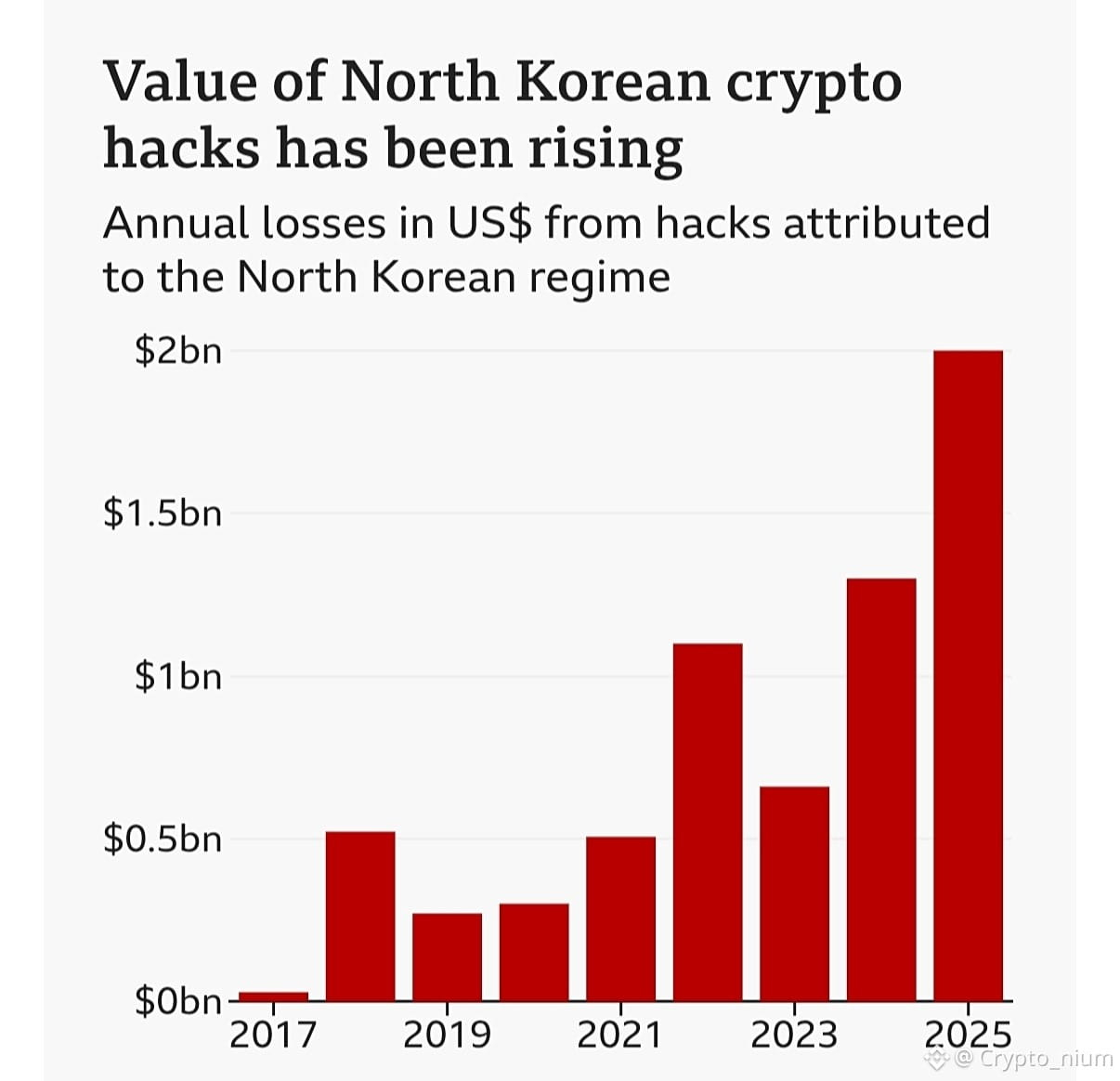
North Korean state-sponsored cyber crimes have increasingly focused on big-scale crypto thefts over the past years. The regime has been repeatedly been accused of using cryptocurrency theft to generate revenue to help fund its weapons programmes.
#TwoAddressesHoldingAbout1.28BUSDTFrozen
North Korean state-sponsored cyber crimes have increasingly focused on big-scale crypto thefts over the past years. The regime has been repeatedly been accused of using cryptocurrency theft to generate revenue to help fund its weapons programmes.
#TwoAddressesHoldingAbout1.28BUSDTFrozen
#TwoAddressesHoldingAbout1.28BUSDTFrozen
2.5k
·
--
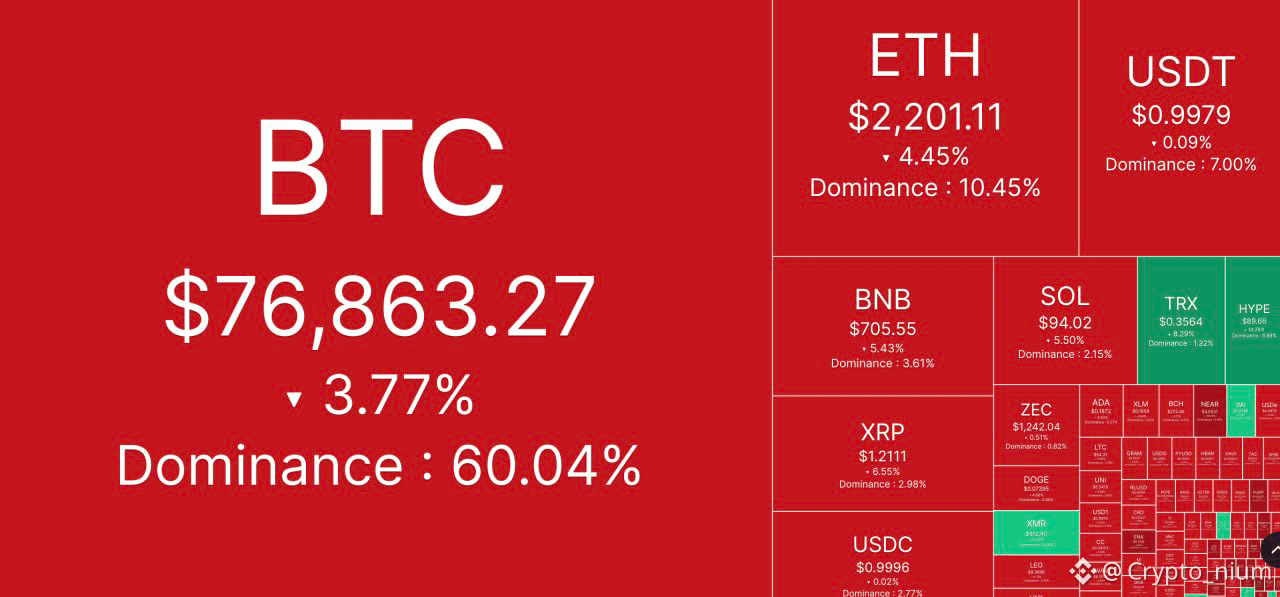
Those who were safe from attack got liquidated lols😂
Those who were safe from attack got liquidated lols😂
5
6
2.5k
·
--
Ever wonder why you always hear about crypto hackers coming from North Korea? 🕵️♂️
It isn't just random individuals working from their bedrooms. It is a highly organized, state-backed system.
They are cut off from the world:
Due to strict international sanctions, North Korea cannot trade or use the normal global banking system. The government uses crypto heists as a shortcut to steal "hard cash" and bypass these blocks.
Government funding:
Unlike regular hackers who steal for personal greed, these groups operate like a government department. The stolen funds go directly into financing the state's military and weapons programs.
School for hackers:
The government spots kids who are math geniuses at a very young age. They pull them into special schools and train them for years to become elite cyber warriors (like the famous Lazarus Group).
The Crypto Reality:
Because these attacks are state-sponsored, they are highly sophisticated. That is why major exchanges and blockchain analysts work around the clock to track stolen funds and freeze them on-chain.
Always keep your personal accounts locked down with 2FA, passkeys, and strong security habits!
#TwoAddressesHoldingAbout1.28BUSDTFrozen

1
433
·
--
In the last 24 hours:
Google dropped 12%.
Amazon dropped 12%.
Intel dropped 20%.
Binance got hacked for $6B.
And BTC is down only 2%.
Everyone knows what this means.
#TwoAddressesHoldingAbout1.28BUSDTFrozen
In the last 24 hours:
Google dropped 12%.
Amazon dropped 12%.
Intel dropped 20%.
Binance got hacked for $6B.
And BTC is down only 2%.
Everyone knows what this means.
#TwoAddressesHoldingAbout1.28BUSDTFrozen
Google dropped 12%.
Amazon dropped 12%.
Intel dropped 20%.
Binance got hacked for $6B.
And BTC is down only 2%.
Everyone knows what this means.
#TwoAddressesHoldingAbout1.28BUSDTFrozen
2
1
848
·
--
Why can’t the hackers hack the corrupt corporations, traditional banks and federal reserve and distribute millions to the citizens?
Why is it always crypto?
#TwoAddressesHoldingAbout1.28BUSDTFrozen
Why can’t the hackers hack the corrupt corporations, traditional banks and federal reserve and distribute millions to the citizens?
Why is it always crypto?
#TwoAddressesHoldingAbout1.28BUSDTFrozen
Why is it always crypto?
#TwoAddressesHoldingAbout1.28BUSDTFrozen
28
1
26
20.9k
·
--
Article
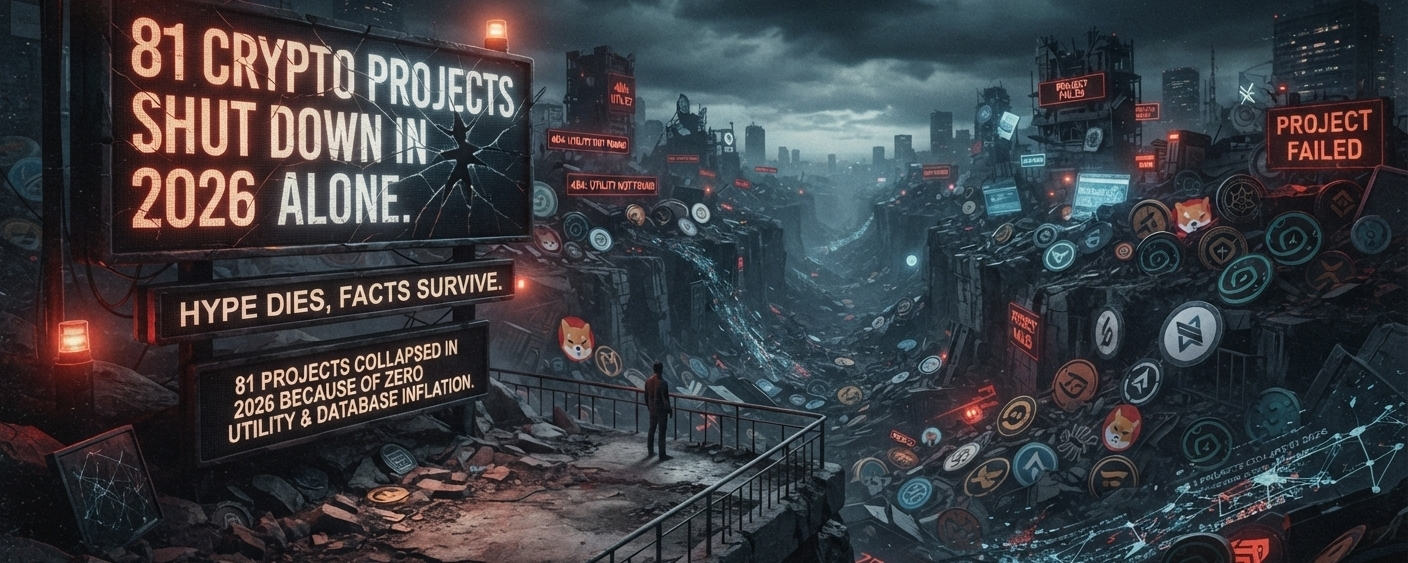
81 CRYPTO PROJECTS SHUT DOWN IN 2026 ALONEHype dies, facts survive. 81 projects collapsed in 2026 because of zero utility and database inflation.
October 2026
1..Blur (October 12)
2..Abstract (October 6)
3..Blast (October 2)
4..Neon EVM (October 1)
5..September 2026
6..OneSwap (September 15)
7..Coinx Smart Chain (September 15)
8..CoinEx (September 15)
9..Balancer (September 14)
10..Router Protocol (September 5)
11..Full Sail (September 1)
August 2026
1..Lisk Chain (August 25)
2..Shipyard (IPFS) (August 24)
3..Paystream (August 15)
4..Trepa (August 10)
5..Fireplace (August 10)
6..Step App (August 5)
7..Proof of Play (August 4)
8..POAP (August 3)
July 2026
1..BitMart (July 26)
2..Dango (July 25)
3..BitMEX (July 23)
4..ODOS (July 23)
5..Movement Labs (July 22)
6..SecondFi (July 22)
7..Xenea (July 13)
8..AscendEX (July 11)
9..Zapper (July 9)
10..Ctrl Wallet (July 7)
11..Loopring (July 3)
12..Polygon zkEVM (July 1)
June 2026
1..Sophon (June 26)
2..Ionic (June 18)
3..Soundness (June 18)
4..Swell (June 17)
5..Powerloom (June 16)
6..Satori (June 16)
7..Ventuals (June 15)
8..Fishing Frenzy (June 15)
9..Pudgy Party (June 13)
10..Botanix (June 10)
11..Hyli (June 10)
12..Radiant Capital (June 1)
May 2026
1..Zero Network (May 22)
2..Everclear (May 21)
3..Syndicate (May 21)
4..Fantasy (May 20)
5..Legend (May 13)
6..Phi (May 4)
7..Carrot (May 1)
April 2026
1..Genso Online (April 30)
2..Luckio (April 24)
3..Beets (April 17)
4..Mint Blockchain (April 17)
5..Pixel Heroes Adventure (April 17)
6..XOCIETY (April 16)
7..77-Bit (April 16)
8..Opulous (April 15)
9..Foundation (April 15)
10..Megaphone (April 12)
11..Seamless Protocol (April 8)
12..Intergaze (April 3)
13..Dmail (April 2)
14..Leap Wallet (April 2)
15..Fey (April 1)
16..Magic Eden Wallet (April 1)
March 2026
1..Yupp AI (March 31)
2..Bit.com (March)
3..MilkyWay (March 26)
4..Tally (March 17)
5..BlockFills (March 16)
6..Genome Protocol (March 11)
7..DataHaven (March 4)
8..Angle Protocol (March 4)
February 2026
1..Step Finance (February 24)
2..Remora Markets (February 24)
3..Parsec (February 19)
4..ZeroLend (February 16)
5..Polynomial (February 13)
January 2026
1..NGS (January 26)
2..Entropy (January 24)
3..Slingshot (January 21)
81 CRYPTO PROJECTS SHUT DOWN IN 2026 ALONE
Hype dies, facts survive. 81 projects collapsed in 2026 because of zero utility and database inflation.
October 2026
1..Blur (October 12)
2..Abstract (October 6)
3..Blast (October 2)
4..Neon EVM (October 1)
5..September 2026
6..OneSwap (September 15)
7..Coinx Smart Chain (September 15)
8..CoinEx (September 15)
9..Balancer (September 14)
10..Router Protocol (September 5)
11..Full Sail (September 1)
August 2026
1..Lisk Chain (August 25)
2..Shipyard (IPFS) (August 24)
3..Paystream (August 15)
4..Trepa (August 10)
5..Fireplace (August 10)
6..Step App (August 5)
7..Proof of Play (August 4)
8..POAP (August 3)
July 2026
1..BitMart (July 26)
2..Dango (July 25)
3..BitMEX (July 23)
4..ODOS (July 23)
5..Movement Labs (July 22)
6..SecondFi (July 22)
7..Xenea (July 13)
8..AscendEX (July 11)
9..Zapper (July 9)
10..Ctrl Wallet (July 7)
11..Loopring (July 3)
12..Polygon zkEVM (July 1)
June 2026
1..Sophon (June 26)
2..Ionic (June 18)
3..Soundness (June 18)
4..Swell (June 17)
5..Powerloom (June 16)
6..Satori (June 16)
7..Ventuals (June 15)
8..Fishing Frenzy (June 15)
9..Pudgy Party (June 13)
10..Botanix (June 10)
11..Hyli (June 10)
12..Radiant Capital (June 1)
May 2026
1..Zero Network (May 22)
2..Everclear (May 21)
3..Syndicate (May 21)
4..Fantasy (May 20)
5..Legend (May 13)
6..Phi (May 4)
7..Carrot (May 1)
April 2026
1..Genso Online (April 30)
2..Luckio (April 24)
3..Beets (April 17)
4..Mint Blockchain (April 17)
5..Pixel Heroes Adventure (April 17)
6..XOCIETY (April 16)
7..77-Bit (April 16)
8..Opulous (April 15)
9..Foundation (April 15)
10..Megaphone (April 12)
11..Seamless Protocol (April 8)
12..Intergaze (April 3)
13..Dmail (April 2)
14..Leap Wallet (April 2)
15..Fey (April 1)
16..Magic Eden Wallet (April 1)
March 2026
1..Yupp AI (March 31)
2..Bit.com (March)
3..MilkyWay (March 26)
4..Tally (March 17)
5..BlockFills (March 16)
6..Genome Protocol (March 11)
7..DataHaven (March 4)
8..Angle Protocol (March 4)
February 2026
1..Step Finance (February 24)
2..Remora Markets (February 24)
3..Parsec (February 19)
4..ZeroLend (February 16)
5..Polynomial (February 13)
January 2026
1..NGS (January 26)
2..Entropy (January 24)
3..Slingshot (January 21)
110
·
--
The Next FOMC Meeting is Coming: What Crypto Traders Need to Watch 🚨
Mark your calendars! The Federal Open Market Committee (FOMC) meeting is taking place on October 27–28, 2026. The official interest rate decision and policy statement will drop on Wednesday, October 28, 2026, at 2:00 PM ET, followed by Federal Reserve Chair Jerome Powell's press conference at 2:30 PM ET.
Why This Matters for Crypto 📉📈
FOMC meetings are massive volatility catalysts for Bitcoin (BTC) and the broader altcoins market. Here is what the market is looking for:
Rate Decisions: Any unexpected hikes, pauses, or cuts can instantly trigger sharp liquidations or massive rallies.
The Powell Effect: Fed Chair Jerome Powell's tone during the 2:30 PM ET press conference often moves the markets more than the actual rate decision. Watch for "hawkish" (unfavorable for crypto) or "dovish" (favorable for crypto) signals.
Macro Liquidity: Higher rates generally strengthen the US Dollar Index (DXY) and put pressure on risk assets like crypto. Lower rates or hints of easing tend to fuel bullish momentum.
💡 Trader Checklist & Risk Management
1. Expect Volatility: Spreads can widen and sudden wicks can hunt stop-losses right around 2:00 PM ET.
2. Manage Leverage: If you are trading futures, consider lowering your leverage or tightening your risk parameters to survive sudden market swings.
3. Watch the DXY and SPX: Crypto often moves inversely to the Dollar Index (DXY) and highly correlates with the S&P 500 around macro news events.
#FOMC $BTC
103
·
--
What would happen if Strategy sold all their $BTC ? Is there anyone who could provide satisfactory answer?
$MSTR
What would happen if Strategy sold all their $BTC ? Is there anyone who could provide satisfactory answer?
$MSTR
$MSTR
1
355
·
--
Market Reaction on Election
Historically, crypto follows a "fall first, then rise" pattern around U.S. midterms due to shifting policy anxiety.
Before the election, regulatory uncertainty usually drives institutional capital to deleverage. However, once the political tail risk clears, the market has historically rebounded strongly.
The Midterm Cycle Trend
• Pre-Election Drawdowns: In 2014, 2018, and 2022, Bitcoin fell 56%, 73%, and 64% respectively leading up to November as investors moved to cash.
• Post-Election Rallies: Within 12 months of the votes being settled, Bitcoin historically rallied by 24.5% (2014), 44.9% (2018), and 92.3% (2022).
The 2026 Shift
The current 2026 midterm cycle is bucking the historical pre-election crash. Backed by steady spot ETF inflows, Bitcoin is down only about 3% year-to-date as of October 2026. While politics create short-term volatility, broader macroeconomic liquidity and Federal Reserve interest rate policies remain the primary structural drivers of crypto asset prices.
86
·
--
Verified
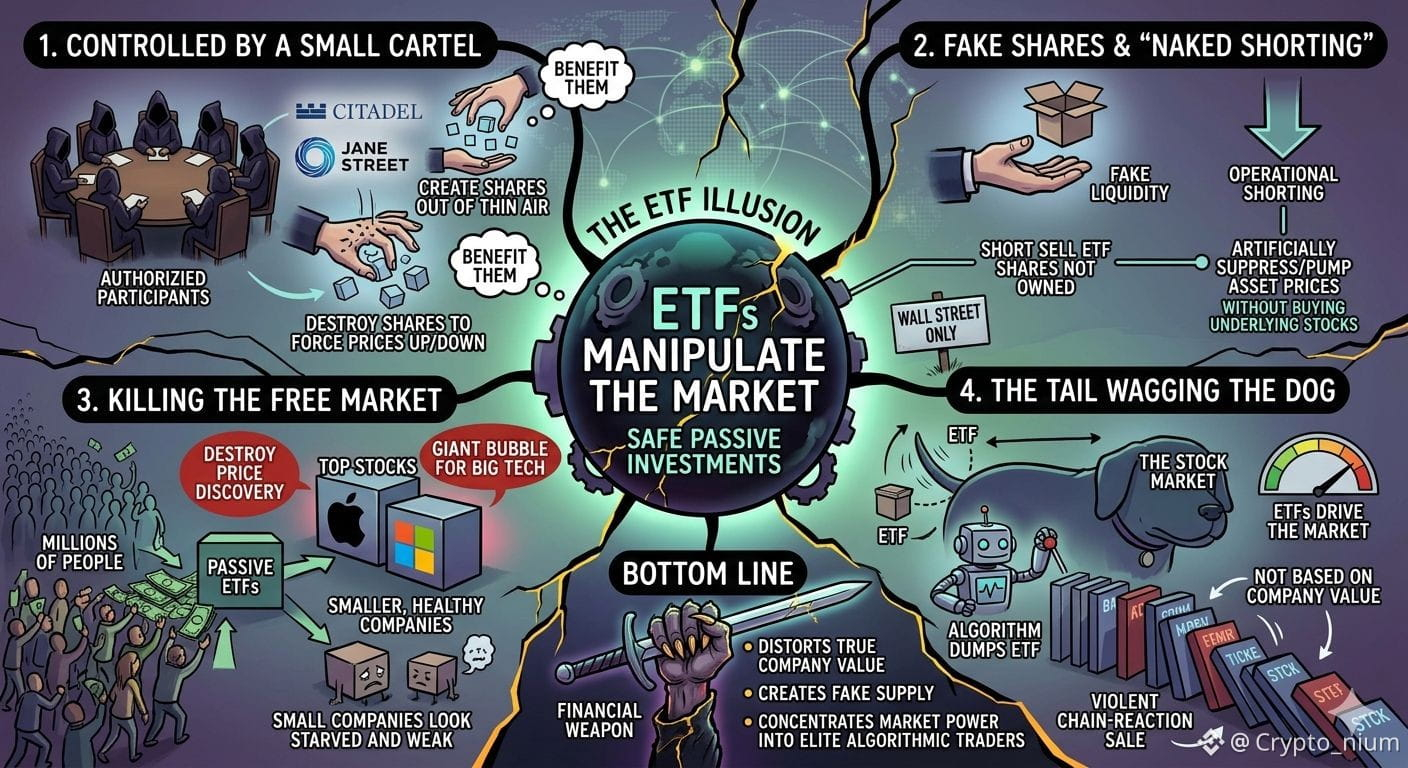
The ETF Illusion: Why ETFs Manipulate the Market
Most people think Exchange-Traded Funds (ETFs) are safe, passive investments. In reality, the ETF system is a highly engineered tool that Wall Street uses to control and manipulate asset prices.
1. Controlled by a Small Cartel
A handful of giant trading firms (like Citadel and Jane Street) run the ETF market. They are called Authorized Participants. They have the unique power to create new ETF shares out of thin air or destroy them to force prices up or down whenever it benefits them.
2. Fake Shares and "Naked Shorting"
ETFs create fake liquidity. These big trading firms are legally allowed to short sell ETF shares they do not actually own. This is called operational shorting. It allows Wall Street to artificially suppress or pump the price of assets without buying the real underlying stocks.
3. Killing the Free Market
Passive ETFs destroy real price discovery. When millions of people buy an S&P 500 ETF, money flows automatically into top stocks like Apple or Microsoft, regardless of whether those companies are doing well. This creates a giant bubble for big tech while starving smaller, healthy companies of cash.
4. The Tail Wagging the Dog
ETFs were made to track the stock market, but now they drive the market. When an algorithm dumps a massive ETF, it forces a violent chain-reaction sale of hundreds of individual stocks at the exact same time. Stocks no longer trade on company value; they move purely based on ETF trading flows.
An ETF is not a passive basket of stocks. It is a financial weapon that distorts the true value of companies, creates fake supply, and concentrates total market power into the hands of a few elite algorithmic traders.
#BitcoinDropsBelow$60KWorstWeekSinceJuly2024
$BTC $ETH
100
·
--
When a trader liquidates where his money goes to?
When a trader is liquidated in a leveraged or margin trade, their lost margin (collateral) does not just vanish. It is redistributed to cover the loss of the borrowed funds and offset the opposing side of the market.
Funds are distributed in the following order:
The Exchange or Broker: The funds you used to open the trade (your margin) are kept to cover the losses you incurred.
Liquidation Fees: A portion is automatically deducted as a penalty fee to compensate the trading platform (e.g., Binance) for facilitating and executing the emergency closure.
Counterparties & Liquidity Providers: For every liquidated trade (like a failed long), there is a trader on the opposing side who correctly bet in the opposite direction (like a short). Your losses directly fund their profits.
Insurance Funds: If your losses are extreme or the market suffers a flash crash, the exchange’s insurance fund absorbs the difference to keep the platform solvent.
184
·
--
Summary of Donald Trump Visit to China
Donald Trump’s two-day visit to China was mostly about keeping the peace between the world’s two biggest economies. While both sides smiled and signed some big business deals, they did not solve their deepest disagreements about trade, technology, or global conflicts.
🤝 What Happened During the Visit
Lots of Pageantry: China's President gave Trump a grand welcome with military bands, a tour of the ancient Temple of Heaven, and private talks in a historic garden compound.
Big Business Deals: Trump brought top American tech bosses (like Elon Musk and Tim Cook) and announced deals for China to buy U.S. goods like beef, soybeans, and Boeing airplanes.
Warnings Over Taiwan: President Xi gave a strict warning that any wrong moves regarding Taiwan could lead to a military clash.
Talks on Iran: With a war in Iran hurting global oil supplies, both leaders agreed they want to keep shipping lanes safe, but China did not promise to stop buying Iranian oil.
⚖️ The Final Result
The meeting did not fix the long-term rivalry between the U.S. and China. Its main success was simply slowing down the tension and making sure the two countries keep talking instead of starting a trade war.
538
·
--
Absolutely, accounts on which we have full control
Absolutely, accounts on which we have full control


Richard Teng
·
--
Wallets are the new bank accounts.
The financial system is being rebuilt, and it's happening on-chain. ⛏️
The financial system is being rebuilt, and it's happening on-chain. ⛏️
5
Log in to explore more content
Join global crypto users on Binance Square
⚡️ Get latest and useful information about crypto.
💬 Trusted by the world’s largest crypto exchange.
👍 Discover real insights from verified creators.
Email / Phone number
Trending Topics
WithdrawalsBack: 15 networks live
126 views
15 Discussing
Binance News Update | Binance Reopens Withdrawals for BTC, ETH, USDT and More Across 15 Networks, Meeting Its Sunday Target
Binance News
·18 Likes
·8k views
BinanceUpdatesProofofReservesAddresses
30,464 views
703 Discussing
BinanceToResumePhaseOneOfWithdrawals
62,317 views
971 Discussing