

Cointelegraph
37.1k Posts

Cointelegraph
 Square Verified+
Report
Block User
Cointelegraph covers fintech, blockchain and Bitcoin, bringing you the latest news and analyses on the future of money.
2 Following
186.2K+ Followers
567.0K+ Liked
1 Badges
Posts
NEAR Intents recovers entire stolen $3.8M after ultimatum to exploiterNEAR Intents said it has recovered about $3.8 million stolen during a Thursday security breach.
Cointelegraph reported on Friday that NEAR Intents had identified the individual behind the security breach and given them 48 hours to return the funds under “responsible disclosure.”
NEAR Intents general manager Alex Shevchenko announced the complete return of funds later on Friday.
“The funds from the $3.8M NEAR Intents hack were sent back in full,” Shevchenko wrote on X. “We are stopping the investigation. Please use bug bounties instead of disrupting the services.”
Related: NEAR Intents says it’s identified the hacker, gives 48-hour ultimatum
As Cointelegraph reported, NEAR Intents paused services after detecting a “bug in the Omni deposit and withdrawal infrastructure interaction with NEAR Intents smart contract.”
NEAR’s preliminary investigation found that $3.8 million in user funds was stolen, and it pledged to compensate affected users in full.
Blockchain investigator ZachXBT said the funds from the incident were transferred to the KuCoin exchange and bridged to Bitcoin.
Magazine: Furious debate about THORChain vs NEAR shows idealism has limits
NEAR Intents recovers entire stolen $3.8M after ultimatum to exploiter
NEAR Intents said it has recovered about $3.8 million stolen during a Thursday security breach.
Cointelegraph reported on Friday that NEAR Intents had identified the individual behind the security breach and given them 48 hours to return the funds under “responsible disclosure.”
NEAR Intents general manager Alex Shevchenko announced the complete return of funds later on Friday.
“The funds from the $3.8M NEAR Intents hack were sent back in full,” Shevchenko wrote on X. “We are stopping the investigation. Please use bug bounties instead of disrupting the services.”
Related: NEAR Intents says it’s identified the hacker, gives 48-hour ultimatum
As Cointelegraph reported, NEAR Intents paused services after detecting a “bug in the Omni deposit and withdrawal infrastructure interaction with NEAR Intents smart contract.”
NEAR’s preliminary investigation found that $3.8 million in user funds was stolen, and it pledged to compensate affected users in full.
Blockchain investigator ZachXBT said the funds from the incident were transferred to the KuCoin exchange and bridged to Bitcoin.
Magazine: Furious debate about THORChain vs NEAR shows idealism has limits
Cointelegraph reported on Friday that NEAR Intents had identified the individual behind the security breach and given them 48 hours to return the funds under “responsible disclosure.”
NEAR Intents general manager Alex Shevchenko announced the complete return of funds later on Friday.
“The funds from the $3.8M NEAR Intents hack were sent back in full,” Shevchenko wrote on X. “We are stopping the investigation. Please use bug bounties instead of disrupting the services.”
Related: NEAR Intents says it’s identified the hacker, gives 48-hour ultimatum
As Cointelegraph reported, NEAR Intents paused services after detecting a “bug in the Omni deposit and withdrawal infrastructure interaction with NEAR Intents smart contract.”
NEAR’s preliminary investigation found that $3.8 million in user funds was stolen, and it pledged to compensate affected users in full.
Blockchain investigator ZachXBT said the funds from the incident were transferred to the KuCoin exchange and bridged to Bitcoin.
Magazine: Furious debate about THORChain vs NEAR shows idealism has limits
1
2
11
8.3k
Community banks sue OCC over trust bank charters of crypto firmsA community banks group sued a US bank regulator, claiming its decision to allow cryptocurrency companies to obtain limited national trust bank charters exceeds the authority Congress granted the agency.
The Independent Community Bankers of America (ICBA) filed the suit Friday in the US District Court for the District of Columbia.
The group claimed the Office of the Comptroller of the Currency (OCC) has granted cryptocurrency firms the credibility of a US bank charter without sufficient safeguards or compliance with normal bank requirements.
“The OCC’s decision to allow companies to obtain national trust bank charters to conduct substantial non-fiduciary activities exceeds the authority Congress granted the agency,” ICBA president and CEO Rebeca Romero Rainey said in a statement. “Congress did not create the national trust charter as a side door into the banking system for crypto firms seeking the credibility of a federal bank charter without the Community Reinvestment Act obligations, consolidated supervision, capital and liquidity standards, and FDIC insurance that apply to insured depository institutions.”
The ICBA is asking the court to return the OCC to its statutory limits, Rainey added.
The OCC was asked for comment on the lawsuit but had not replied by the time of publication.
Cointelegraph reported in August that under President Donald Trump and OCC head Jonathan Gould, the agency has approved or conditionally approved multiple applications from crypto companies seeking trust charters to expand their services in the US.
Still, the trust bank charters do not allow companies to accept deposits or make loans, distinguishing them from conventional commercial banks, Cointelegraph reported.
Magazine: Exchanges reporting crypto gains to IRS becomes tax nightmare
Community banks sue OCC over trust bank charters of crypto firms
A community banks group sued a US bank regulator, claiming its decision to allow cryptocurrency companies to obtain limited national trust bank charters exceeds the authority Congress granted the agency.
The Independent Community Bankers of America (ICBA) filed the suit Friday in the US District Court for the District of Columbia.
The group claimed the Office of the Comptroller of the Currency (OCC) has granted cryptocurrency firms the credibility of a US bank charter without sufficient safeguards or compliance with normal bank requirements.
“The OCC’s decision to allow companies to obtain national trust bank charters to conduct substantial non-fiduciary activities exceeds the authority Congress granted the agency,” ICBA president and CEO Rebeca Romero Rainey said in a statement. “Congress did not create the national trust charter as a side door into the banking system for crypto firms seeking the credibility of a federal bank charter without the Community Reinvestment Act obligations, consolidated supervision, capital and liquidity standards, and FDIC insurance that apply to insured depository institutions.”
The ICBA is asking the court to return the OCC to its statutory limits, Rainey added.
The OCC was asked for comment on the lawsuit but had not replied by the time of publication.
Cointelegraph reported in August that under President Donald Trump and OCC head Jonathan Gould, the agency has approved or conditionally approved multiple applications from crypto companies seeking trust charters to expand their services in the US.
Still, the trust bank charters do not allow companies to accept deposits or make loans, distinguishing them from conventional commercial banks, Cointelegraph reported.
Magazine: Exchanges reporting crypto gains to IRS becomes tax nightmare
The Independent Community Bankers of America (ICBA) filed the suit Friday in the US District Court for the District of Columbia.
The group claimed the Office of the Comptroller of the Currency (OCC) has granted cryptocurrency firms the credibility of a US bank charter without sufficient safeguards or compliance with normal bank requirements.
“The OCC’s decision to allow companies to obtain national trust bank charters to conduct substantial non-fiduciary activities exceeds the authority Congress granted the agency,” ICBA president and CEO Rebeca Romero Rainey said in a statement. “Congress did not create the national trust charter as a side door into the banking system for crypto firms seeking the credibility of a federal bank charter without the Community Reinvestment Act obligations, consolidated supervision, capital and liquidity standards, and FDIC insurance that apply to insured depository institutions.”
The ICBA is asking the court to return the OCC to its statutory limits, Rainey added.
The OCC was asked for comment on the lawsuit but had not replied by the time of publication.
Cointelegraph reported in August that under President Donald Trump and OCC head Jonathan Gould, the agency has approved or conditionally approved multiple applications from crypto companies seeking trust charters to expand their services in the US.
Still, the trust bank charters do not allow companies to accept deposits or make loans, distinguishing them from conventional commercial banks, Cointelegraph reported.
Magazine: Exchanges reporting crypto gains to IRS becomes tax nightmare
2
1.2k
Trump is expected to appoint Jay Clayton as new AI czar: ReportsPresident Donald Trump is expected to appoint Jay Clayton, US director of national intelligence, as the new AI czar, CNN and other media reported Friday, citing unidentified sources.
Cointelegraph reported Sept. 20 that Trump planned to create an “AI Force” modeled after the Space Force and appoint an artificial intelligence czar. The president posted on Truth Social that his new project would manage the fast-growing AI sector without adding regulations that could slow innovation.
Trump’s actions followed several public warnings about the potential dangers of AI.
Cointelegraph reported on Sept. 12 that Anthropic CEO Dario Amodei had written a three-step proposal to pace the speed of AI development that if left unchecked, might “outrun our ability to understand and control these systems.”
Anthropic chief urges slowdown in AI development to safer pace
Subsequently, Anthropic said it had chosen Accenture as an embedded evaluator to help moderate the pace of AI development, moving ahead with the first step outlined in Amodei’s proposal, Cointelegraph said.
OpenAI CEO Sam Altman and SpaceX CEO Elon Musk responded positively to Amodei’s proposal, although Nvidia CEO Jensen Huang did not, arguing that such regulation was not necessary.
On Tuesday, Trump gathered AI and technology chiefs at the White House to sign a new commitment to “self-police” their companies’ AI models and development, according to CNN.
Clayton led SEC during Trump’s first term
CBS News first reported that Clayton was the frontrunner for the AI position. Still, a White House official told CBS that any such announcement would come directly from the president, dismissing the reports as speculation.
Clayton led the Securities and Exchange Commission during Trump’s first term, served as interim US Attorney for the Southern District of New York and is expected to also remain in his current role as director of national intelligence, the sources told CNN.
The Senate confirmed Clayton in July to lead the intelligence community.
When asked about AI during his confirmation hearing, Clayton said the technology is a “game changer” and that it’s “not only an opportunity but a threat,” according to CNN.
Crypto czar David Sacks argues AI threat is Orwellian, not Terminator
Cointelegraph reported in March that David Sacks, a venture capitalist who became a special White House official under Trump last year, had wrapped up a 130-day tenure as crypto and AI czar. Under US rules, such special government employees are limited to 130 days of work in a 12-month period.
“We’ve now used up that time,” Sacks told Bloomberg in March, noting that he would continue making policy recommendations across a broad range of tech industries as co-chair of the President’s Council of Advisors on Science and Technology
Magazine: Furious debate about THORChain vs NEAR shows idealism has limits
Trump is expected to appoint Jay Clayton as new AI czar: Reports
President Donald Trump is expected to appoint Jay Clayton, US director of national intelligence, as the new AI czar, CNN and other media reported Friday, citing unidentified sources.
Cointelegraph reported Sept. 20 that Trump planned to create an “AI Force” modeled after the Space Force and appoint an artificial intelligence czar. The president posted on Truth Social that his new project would manage the fast-growing AI sector without adding regulations that could slow innovation.
Trump’s actions followed several public warnings about the potential dangers of AI.
Cointelegraph reported on Sept. 12 that Anthropic CEO Dario Amodei had written a three-step proposal to pace the speed of AI development that if left unchecked, might “outrun our ability to understand and control these systems.”
Anthropic chief urges slowdown in AI development to safer pace
Subsequently, Anthropic said it had chosen Accenture as an embedded evaluator to help moderate the pace of AI development, moving ahead with the first step outlined in Amodei’s proposal, Cointelegraph said.
OpenAI CEO Sam Altman and SpaceX CEO Elon Musk responded positively to Amodei’s proposal, although Nvidia CEO Jensen Huang did not, arguing that such regulation was not necessary.
On Tuesday, Trump gathered AI and technology chiefs at the White House to sign a new commitment to “self-police” their companies’ AI models and development, according to CNN.
Clayton led SEC during Trump’s first term
CBS News first reported that Clayton was the frontrunner for the AI position. Still, a White House official told CBS that any such announcement would come directly from the president, dismissing the reports as speculation.
Clayton led the Securities and Exchange Commission during Trump’s first term, served as interim US Attorney for the Southern District of New York and is expected to also remain in his current role as director of national intelligence, the sources told CNN.
The Senate confirmed Clayton in July to lead the intelligence community.
When asked about AI during his confirmation hearing, Clayton said the technology is a “game changer” and that it’s “not only an opportunity but a threat,” according to CNN.
Crypto czar David Sacks argues AI threat is Orwellian, not Terminator
Cointelegraph reported in March that David Sacks, a venture capitalist who became a special White House official under Trump last year, had wrapped up a 130-day tenure as crypto and AI czar. Under US rules, such special government employees are limited to 130 days of work in a 12-month period.
“We’ve now used up that time,” Sacks told Bloomberg in March, noting that he would continue making policy recommendations across a broad range of tech industries as co-chair of the President’s Council of Advisors on Science and Technology
Magazine: Furious debate about THORChain vs NEAR shows idealism has limits
Cointelegraph reported Sept. 20 that Trump planned to create an “AI Force” modeled after the Space Force and appoint an artificial intelligence czar. The president posted on Truth Social that his new project would manage the fast-growing AI sector without adding regulations that could slow innovation.
Trump’s actions followed several public warnings about the potential dangers of AI.
Cointelegraph reported on Sept. 12 that Anthropic CEO Dario Amodei had written a three-step proposal to pace the speed of AI development that if left unchecked, might “outrun our ability to understand and control these systems.”
Anthropic chief urges slowdown in AI development to safer pace
Subsequently, Anthropic said it had chosen Accenture as an embedded evaluator to help moderate the pace of AI development, moving ahead with the first step outlined in Amodei’s proposal, Cointelegraph said.
OpenAI CEO Sam Altman and SpaceX CEO Elon Musk responded positively to Amodei’s proposal, although Nvidia CEO Jensen Huang did not, arguing that such regulation was not necessary.
On Tuesday, Trump gathered AI and technology chiefs at the White House to sign a new commitment to “self-police” their companies’ AI models and development, according to CNN.
Clayton led SEC during Trump’s first term
CBS News first reported that Clayton was the frontrunner for the AI position. Still, a White House official told CBS that any such announcement would come directly from the president, dismissing the reports as speculation.
Clayton led the Securities and Exchange Commission during Trump’s first term, served as interim US Attorney for the Southern District of New York and is expected to also remain in his current role as director of national intelligence, the sources told CNN.
The Senate confirmed Clayton in July to lead the intelligence community.
When asked about AI during his confirmation hearing, Clayton said the technology is a “game changer” and that it’s “not only an opportunity but a threat,” according to CNN.
Crypto czar David Sacks argues AI threat is Orwellian, not Terminator
Cointelegraph reported in March that David Sacks, a venture capitalist who became a special White House official under Trump last year, had wrapped up a 130-day tenure as crypto and AI czar. Under US rules, such special government employees are limited to 130 days of work in a 12-month period.
“We’ve now used up that time,” Sacks told Bloomberg in March, noting that he would continue making policy recommendations across a broad range of tech industries as co-chair of the President’s Council of Advisors on Science and Technology
Magazine: Furious debate about THORChain vs NEAR shows idealism has limits
1.7k

Article
European crypto users have ‘more faith’ in regulated firms under MiCA: Bitpanda co-CEOEuropean crypto users are placing more trust in regulated platforms following the implementation of the European Union’s Markets in Crypto-Assets framework (MiCA), according to Christian Trummer, co-CEO of Austria-based crypto exchange Bitpanda.
Speaking on Cointelegraph’s Chain Reaction, Trummer said most users have “more faith” in regulated market participants and trust those platforms following the rollout of MiCA.
He contrasted that with what he described as a “Crypto Twitter” bubble focused on self-custody, saying most users prefer regulated providers rather than managing their own private keys.
Source: Cointelegraph
He also called for stricter enforcement of MiCA, saying some companies continue to serve European customers without complying with the framework, putting regulated firms at a competitive disadvantage:
The problem there definitely is that it’s not strictly enforced by the regulators, because there are still other players on the market which offer the service to European customers and they don’t comply to the MiCA license.
MiCA’s grandfathering period for existing crypto service providers ended no later than July 1, with ESMA directing national regulators to take action against unauthorized firms that continued providing crypto services after their applicable transition period.
ESMA has since called for stronger supervisory powers to address unauthorized crypto services and third-country firms soliciting EU investors without MiCA authorization.
Magazine: Crypto hardware wallets compared for 2026
European crypto users have ‘more faith’ in regulated firms under MiCA: Bitpanda co-CEO
European crypto users are placing more trust in regulated platforms following the implementation of the European Union’s Markets in Crypto-Assets framework (MiCA), according to Christian Trummer, co-CEO of Austria-based crypto exchange Bitpanda.
Speaking on Cointelegraph’s Chain Reaction, Trummer said most users have “more faith” in regulated market participants and trust those platforms following the rollout of MiCA.
He contrasted that with what he described as a “Crypto Twitter” bubble focused on self-custody, saying most users prefer regulated providers rather than managing their own private keys.
Source: Cointelegraph
He also called for stricter enforcement of MiCA, saying some companies continue to serve European customers without complying with the framework, putting regulated firms at a competitive disadvantage:
The problem there definitely is that it’s not strictly enforced by the regulators, because there are still other players on the market which offer the service to European customers and they don’t comply to the MiCA license.
MiCA’s grandfathering period for existing crypto service providers ended no later than July 1, with ESMA directing national regulators to take action against unauthorized firms that continued providing crypto services after their applicable transition period.
ESMA has since called for stronger supervisory powers to address unauthorized crypto services and third-country firms soliciting EU investors without MiCA authorization.
Magazine: Crypto hardware wallets compared for 2026
Speaking on Cointelegraph’s Chain Reaction, Trummer said most users have “more faith” in regulated market participants and trust those platforms following the rollout of MiCA.
He contrasted that with what he described as a “Crypto Twitter” bubble focused on self-custody, saying most users prefer regulated providers rather than managing their own private keys.
Source: Cointelegraph
He also called for stricter enforcement of MiCA, saying some companies continue to serve European customers without complying with the framework, putting regulated firms at a competitive disadvantage:
The problem there definitely is that it’s not strictly enforced by the regulators, because there are still other players on the market which offer the service to European customers and they don’t comply to the MiCA license.
MiCA’s grandfathering period for existing crypto service providers ended no later than July 1, with ESMA directing national regulators to take action against unauthorized firms that continued providing crypto services after their applicable transition period.
ESMA has since called for stronger supervisory powers to address unauthorized crypto services and third-country firms soliciting EU investors without MiCA authorization.
Magazine: Crypto hardware wallets compared for 2026
1
1
447
Verified
$4.2B crypto bank Anchorage Digital cuts 17% of workforce: ReportAnchorage Digital, a federally chartered US digital asset bank valued at $4.2 billion earlier this year, has reportedly cut 17% of its workforce, suggesting that the prolonged crypto market downturn is weighing on the company even as it expands its institutional footprint.
Citing people familiar with the matter, The Information reported Friday that CEO Nathan McCauley informed employees of the cuts this week. Anchorage had about 400 employees globally as of February, according to McCauley’s congressional testimony at the time, meaning a 17% reduction would amount to roughly 68 jobs if its headcount remained around that level.
Cointelegraph reached out to a public relations contact representing Anchorage for confirmation but did not receive an immediate response.
Crypto markets have struggled over the past year, which The Information cited as the backdrop for Anchorage’s workforce reduction. Bitcoin (BTC) briefly recovered above $87,000 on Friday but remains well below its $126,000 peak reached last October.
The layoffs come as Anchorage has expanded its role in the regulated US crypto industry. The company became the first crypto company to receive a national trust charter from the Office of the Comptroller of the Currency in 2021 and has since grown into a major crypto custodian.
More recently, Anchorage has expanded into stablecoin issuance, including Tether’s new US stablecoin USAT. Earlier this year, the company received a $100 million strategic investment from Tether.
$4.2B crypto bank Anchorage Digital cuts 17% of workforce: Report
Anchorage Digital, a federally chartered US digital asset bank valued at $4.2 billion earlier this year, has reportedly cut 17% of its workforce, suggesting that the prolonged crypto market downturn is weighing on the company even as it expands its institutional footprint.
Citing people familiar with the matter, The Information reported Friday that CEO Nathan McCauley informed employees of the cuts this week. Anchorage had about 400 employees globally as of February, according to McCauley’s congressional testimony at the time, meaning a 17% reduction would amount to roughly 68 jobs if its headcount remained around that level.
Cointelegraph reached out to a public relations contact representing Anchorage for confirmation but did not receive an immediate response.
Crypto markets have struggled over the past year, which The Information cited as the backdrop for Anchorage’s workforce reduction. Bitcoin (BTC) briefly recovered above $87,000 on Friday but remains well below its $126,000 peak reached last October.
The layoffs come as Anchorage has expanded its role in the regulated US crypto industry. The company became the first crypto company to receive a national trust charter from the Office of the Comptroller of the Currency in 2021 and has since grown into a major crypto custodian.
More recently, Anchorage has expanded into stablecoin issuance, including Tether’s new US stablecoin USAT. Earlier this year, the company received a $100 million strategic investment from Tether.
Citing people familiar with the matter, The Information reported Friday that CEO Nathan McCauley informed employees of the cuts this week. Anchorage had about 400 employees globally as of February, according to McCauley’s congressional testimony at the time, meaning a 17% reduction would amount to roughly 68 jobs if its headcount remained around that level.
Cointelegraph reached out to a public relations contact representing Anchorage for confirmation but did not receive an immediate response.
Crypto markets have struggled over the past year, which The Information cited as the backdrop for Anchorage’s workforce reduction. Bitcoin (BTC) briefly recovered above $87,000 on Friday but remains well below its $126,000 peak reached last October.
The layoffs come as Anchorage has expanded its role in the regulated US crypto industry. The company became the first crypto company to receive a national trust charter from the Office of the Comptroller of the Currency in 2021 and has since grown into a major crypto custodian.
More recently, Anchorage has expanded into stablecoin issuance, including Tether’s new US stablecoin USAT. Earlier this year, the company received a $100 million strategic investment from Tether.
526
Verified
Article
Blast to wind down Ethereum L2 after costs outpace revenueEthereum layer-2 network Blast is shutting down after its operating costs exceeded the revenue generated by the chain.
In a Friday post on X, Blast said it sees no “credible path” to making the network economically sustainable and asked users to withdraw their assets to Ethereum mainnet.
“We launched Blast with the goal of building a self-sustaining chain for users and developers,” the team said. “Unfortunately, the economics of operating the chain no longer make sense.”
Source: Blast
The network will reduce its withdrawal delay to 24 hours, though withdrawals will be temporarily unavailable while Blast unwinds its Lido assets, a process expected to take about a week.
Users will have until Oct. 26 to withdraw through Blast’s interface. After that, assets will remain accessible, but withdrawals will require users to interact directly with the Blast bridge contracts on Ethereum.
Blast said it will publish instructions for withdrawing directly through the bridge contracts ahead of the Oct. 26 cutoff and urged users to move their assets to Ethereum mainnet before then.
Blast emerged from Blur’s NFT boom
Blast was founded by Tieshun “Pacman” Roquerre, the founder of NFT marketplace Blur, which launched in October 2022 and quickly challenged OpenSea by targeting professional traders with token incentives. By the end of 2022, Blur had surpassed then-leading NFT marketplace OpenSea in trading volume and extended its lead in early 2023, fueled in part by its token airdrop and trader rewards.
Roquerre unveiled Blast in November 2023 with native yield on Ether (ETH) and stablecoins and a points program tied to an anticipated token airdrop. The strategy helped attract more than $2 billion in deposits before its mainnet launched in February 2024.
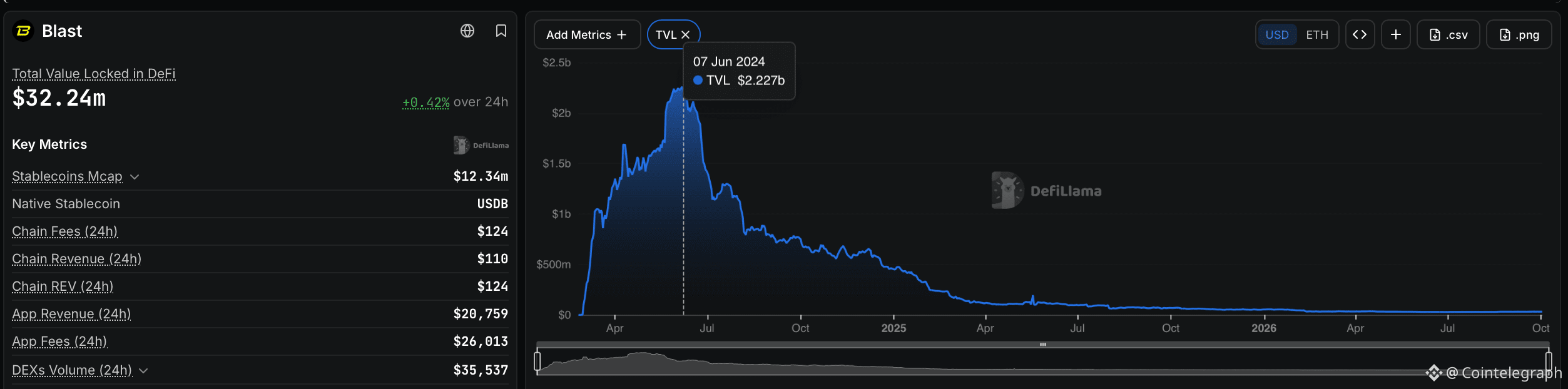
Blast’s DeFi TVL has fallen more than 98% since its June 2024 peak. Source: DefiLlama
However, Blast’s growth proved difficult to sustain amid a broader downturn in the NFT market. Its DeFi total value locked has declined steadily since peaking at roughly $2.2 billion in June 2024, falling by more than 98% since then, according to DeFiLlama data.
Blur has undergone a similar decline. Its total value locked, which rose above $200 million at its early-2024 peak, now stands at about $27 million.
Magazine: Furious debate about THORChain vs NEAR shows idealism has limits
Blast to wind down Ethereum L2 after costs outpace revenue
Ethereum layer-2 network Blast is shutting down after its operating costs exceeded the revenue generated by the chain.
In a Friday post on X, Blast said it sees no “credible path” to making the network economically sustainable and asked users to withdraw their assets to Ethereum mainnet.
“We launched Blast with the goal of building a self-sustaining chain for users and developers,” the team said. “Unfortunately, the economics of operating the chain no longer make sense.”
Source: Blast
The network will reduce its withdrawal delay to 24 hours, though withdrawals will be temporarily unavailable while Blast unwinds its Lido assets, a process expected to take about a week.
Users will have until Oct. 26 to withdraw through Blast’s interface. After that, assets will remain accessible, but withdrawals will require users to interact directly with the Blast bridge contracts on Ethereum.
Blast said it will publish instructions for withdrawing directly through the bridge contracts ahead of the Oct. 26 cutoff and urged users to move their assets to Ethereum mainnet before then.
Blast emerged from Blur’s NFT boom
Blast was founded by Tieshun “Pacman” Roquerre, the founder of NFT marketplace Blur, which launched in October 2022 and quickly challenged OpenSea by targeting professional traders with token incentives. By the end of 2022, Blur had surpassed then-leading NFT marketplace OpenSea in trading volume and extended its lead in early 2023, fueled in part by its token airdrop and trader rewards.
Roquerre unveiled Blast in November 2023 with native yield on Ether (ETH) and stablecoins and a points program tied to an anticipated token airdrop. The strategy helped attract more than $2 billion in deposits before its mainnet launched in February 2024.
Blast’s DeFi TVL has fallen more than 98% since its June 2024 peak. Source: DefiLlama
However, Blast’s growth proved difficult to sustain amid a broader downturn in the NFT market. Its DeFi total value locked has declined steadily since peaking at roughly $2.2 billion in June 2024, falling by more than 98% since then, according to DeFiLlama data.
Blur has undergone a similar decline. Its total value locked, which rose above $200 million at its early-2024 peak, now stands at about $27 million.
Magazine: Furious debate about THORChain vs NEAR shows idealism has limits
In a Friday post on X, Blast said it sees no “credible path” to making the network economically sustainable and asked users to withdraw their assets to Ethereum mainnet.
“We launched Blast with the goal of building a self-sustaining chain for users and developers,” the team said. “Unfortunately, the economics of operating the chain no longer make sense.”
Source: Blast
The network will reduce its withdrawal delay to 24 hours, though withdrawals will be temporarily unavailable while Blast unwinds its Lido assets, a process expected to take about a week.
Users will have until Oct. 26 to withdraw through Blast’s interface. After that, assets will remain accessible, but withdrawals will require users to interact directly with the Blast bridge contracts on Ethereum.
Blast said it will publish instructions for withdrawing directly through the bridge contracts ahead of the Oct. 26 cutoff and urged users to move their assets to Ethereum mainnet before then.
Blast emerged from Blur’s NFT boom
Blast was founded by Tieshun “Pacman” Roquerre, the founder of NFT marketplace Blur, which launched in October 2022 and quickly challenged OpenSea by targeting professional traders with token incentives. By the end of 2022, Blur had surpassed then-leading NFT marketplace OpenSea in trading volume and extended its lead in early 2023, fueled in part by its token airdrop and trader rewards.
Roquerre unveiled Blast in November 2023 with native yield on Ether (ETH) and stablecoins and a points program tied to an anticipated token airdrop. The strategy helped attract more than $2 billion in deposits before its mainnet launched in February 2024.
Blast’s DeFi TVL has fallen more than 98% since its June 2024 peak. Source: DefiLlama
However, Blast’s growth proved difficult to sustain amid a broader downturn in the NFT market. Its DeFi total value locked has declined steadily since peaking at roughly $2.2 billion in June 2024, falling by more than 98% since then, according to DeFiLlama data.
Blur has undergone a similar decline. Its total value locked, which rose above $200 million at its early-2024 peak, now stands at about $27 million.
Magazine: Furious debate about THORChain vs NEAR shows idealism has limits
4
2
702
Article
71% of UK finance leaders expect tokenization to reshape financial services: LloydsNearly three-quarters of major UK financial institutions expect tokenization to reshape financial services, as banks and asset managers increasingly explore blockchain-based infrastructure for payments, settlement and liquidity management.
The finding comes from an annual survey by Lloyds Banking Group, the UK’s largest financial services provider, which polled 100 senior decision-makers across major UK banks, insurers, asset managers and financial sponsors.
Faster payments and settlement emerged as the biggest potential benefit, cited by 60% of respondents, while 41% pointed to improved collateral and liquidity management.
Lloyds said moving assets and payments onto digital infrastructure could also free up capital and liquidity tied up in financial transactions, allowing institutions to deploy those resources elsewhere.
“The next phase is about turning those individual use cases into infrastructure that works at scale, with the interoperability and common standards needed to connect digital and traditional markets,” said Rob Hale, co-head of global markets at Lloyds.
Lloyds has also tested the technology directly. Earlier this year, the bank worked with Archax and Canton Network on what it described as the UK’s first public blockchain transaction using tokenized deposits to purchase a tokenized UK government bond.
UK builds infrastructure for tokenized finance
The survey comes as UK policymakers push to move tokenization beyond pilot projects and into the country’s financial infrastructure.
The Bank of England proposed extending its core settlement infrastructure toward near-24/7 availability in May, while a subsequent government payments blueprint called for tokenized and traditional forms of money to operate within an interoperable payments system.
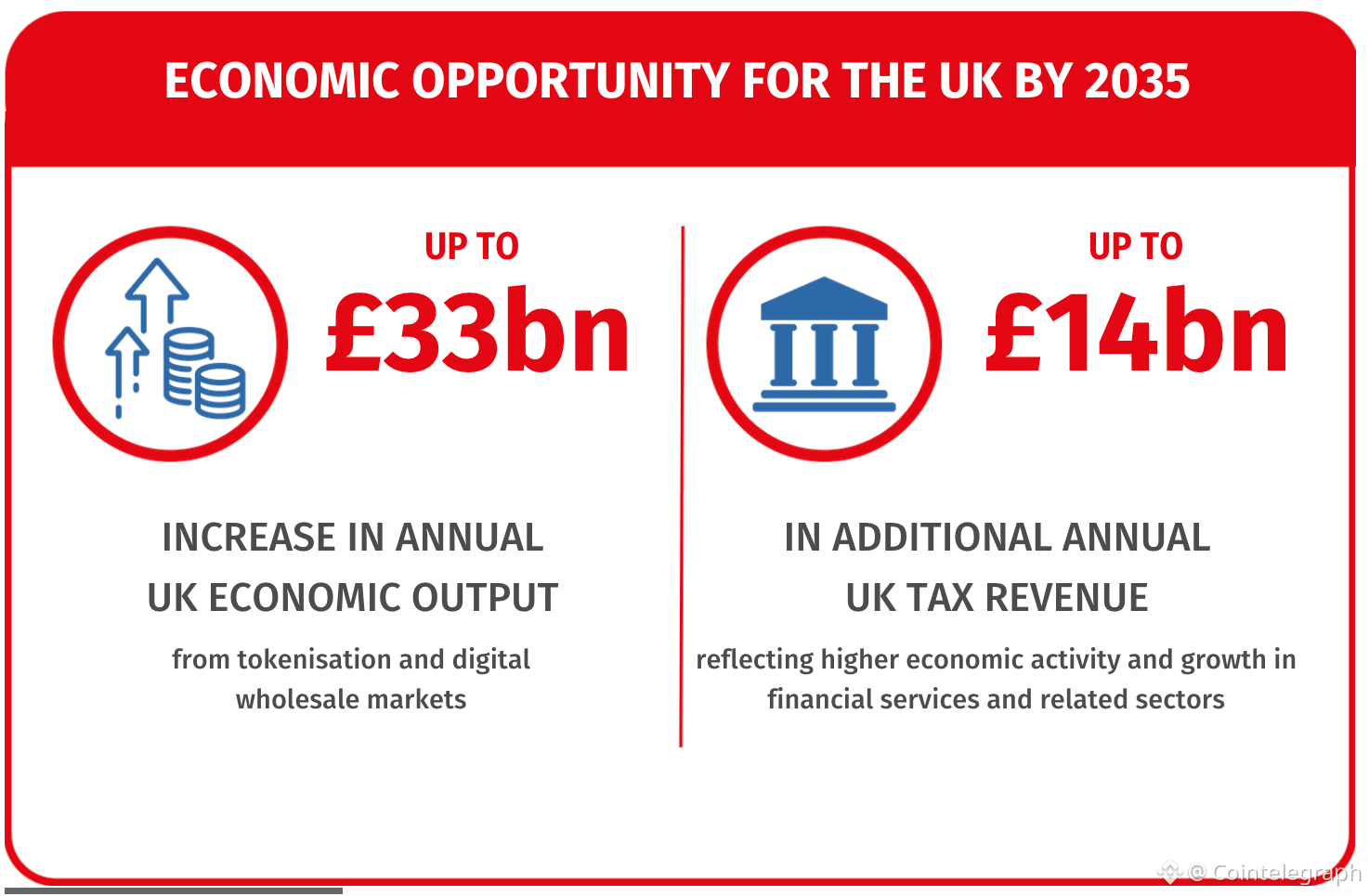
In July, a government-backed industry task force estimated that leadership in tokenized finance could add as much as 33 billion British pounds ($44 billion) to the UK’s annual economic output by 2035, while calling for the country’s first tokenized government bond by early 2027.
UK tokenization economic opportunity by 2035. Source: UK Wholesale Markets Digital Strategy
The UK has also sought greater coordination with the US on tokenized finance. That same month, the US and UK treasuries recommended creating a private-sector group to test cross-border uses of tokenized assets and urged US financial regulators and the Bank of England to identify shared approaches to their regulation.
Magazine: Furious debate about THORChain vs NEAR shows idealism has limits
71% of UK finance leaders expect tokenization to reshape financial services: Lloyds
Nearly three-quarters of major UK financial institutions expect tokenization to reshape financial services, as banks and asset managers increasingly explore blockchain-based infrastructure for payments, settlement and liquidity management.
The finding comes from an annual survey by Lloyds Banking Group, the UK’s largest financial services provider, which polled 100 senior decision-makers across major UK banks, insurers, asset managers and financial sponsors.
Faster payments and settlement emerged as the biggest potential benefit, cited by 60% of respondents, while 41% pointed to improved collateral and liquidity management.
Lloyds said moving assets and payments onto digital infrastructure could also free up capital and liquidity tied up in financial transactions, allowing institutions to deploy those resources elsewhere.
“The next phase is about turning those individual use cases into infrastructure that works at scale, with the interoperability and common standards needed to connect digital and traditional markets,” said Rob Hale, co-head of global markets at Lloyds.
Lloyds has also tested the technology directly. Earlier this year, the bank worked with Archax and Canton Network on what it described as the UK’s first public blockchain transaction using tokenized deposits to purchase a tokenized UK government bond.
UK builds infrastructure for tokenized finance
The survey comes as UK policymakers push to move tokenization beyond pilot projects and into the country’s financial infrastructure.
The Bank of England proposed extending its core settlement infrastructure toward near-24/7 availability in May, while a subsequent government payments blueprint called for tokenized and traditional forms of money to operate within an interoperable payments system.
In July, a government-backed industry task force estimated that leadership in tokenized finance could add as much as 33 billion British pounds ($44 billion) to the UK’s annual economic output by 2035, while calling for the country’s first tokenized government bond by early 2027.
UK tokenization economic opportunity by 2035. Source: UK Wholesale Markets Digital Strategy
The UK has also sought greater coordination with the US on tokenized finance. That same month, the US and UK treasuries recommended creating a private-sector group to test cross-border uses of tokenized assets and urged US financial regulators and the Bank of England to identify shared approaches to their regulation.
Magazine: Furious debate about THORChain vs NEAR shows idealism has limits
The finding comes from an annual survey by Lloyds Banking Group, the UK’s largest financial services provider, which polled 100 senior decision-makers across major UK banks, insurers, asset managers and financial sponsors.
Faster payments and settlement emerged as the biggest potential benefit, cited by 60% of respondents, while 41% pointed to improved collateral and liquidity management.
Lloyds said moving assets and payments onto digital infrastructure could also free up capital and liquidity tied up in financial transactions, allowing institutions to deploy those resources elsewhere.
“The next phase is about turning those individual use cases into infrastructure that works at scale, with the interoperability and common standards needed to connect digital and traditional markets,” said Rob Hale, co-head of global markets at Lloyds.
Lloyds has also tested the technology directly. Earlier this year, the bank worked with Archax and Canton Network on what it described as the UK’s first public blockchain transaction using tokenized deposits to purchase a tokenized UK government bond.
UK builds infrastructure for tokenized finance
The survey comes as UK policymakers push to move tokenization beyond pilot projects and into the country’s financial infrastructure.
The Bank of England proposed extending its core settlement infrastructure toward near-24/7 availability in May, while a subsequent government payments blueprint called for tokenized and traditional forms of money to operate within an interoperable payments system.
In July, a government-backed industry task force estimated that leadership in tokenized finance could add as much as 33 billion British pounds ($44 billion) to the UK’s annual economic output by 2035, while calling for the country’s first tokenized government bond by early 2027.
UK tokenization economic opportunity by 2035. Source: UK Wholesale Markets Digital Strategy
The UK has also sought greater coordination with the US on tokenized finance. That same month, the US and UK treasuries recommended creating a private-sector group to test cross-border uses of tokenized assets and urged US financial regulators and the Bank of England to identify shared approaches to their regulation.
Magazine: Furious debate about THORChain vs NEAR shows idealism has limits
2
438
Article
Furious debate about THORChain vs NEAR shows idealism has limitsAfter Bitget got hacked on Sept. 24, $387.5 million of stolen funds quickly began moving across chains, with some headed to decentralized cross chain swaps platform THORChain.
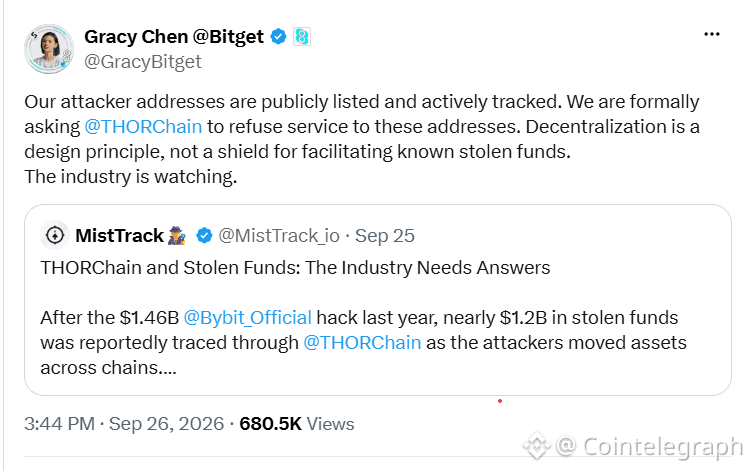
Chief executive Gracy Chen publicly appealed to the platform to refuse service to attacker-linked addresses. “The industry is watching,” she said.
Yet THORChain refused. And that refusal has kicked off a furious debate between those who believe protocols have a moral obligation to block stolen funds, and those hold the cypherpunk ideals of decentralized, permissionless technology sacrosanct.
Having previously watched on as the Bybit hackers funneled $1.2 billion through the protocol, it’s pretty clear which side of the argument THORChain is on. Developer Boone Wheeler tells Magazine:
“A truly permissionless protocol can do nothing when it encounters known stolen funds — it is blind to their provenance. If THORChain were able to block specific stolen funds, it would not be permissionless.”
Where does permissionlessness end?
Critics argue that THORChain wasn’t quite so idealistic when validators voted to halt the chain in May after an automated system triggered when an attacker exploited a vulnerability and drained over $10 million from one of its vaults.
Bitget CEO argues THORChain should refuse services. Source: Gracy Chen
NEAR Intents, which is a cross-chain transaction competitor of THORChain, took the opposite approach and intervened to block hack-linked funds. Its automated security layer SHIELD identified more than $50 million in attempted flows linked to the Bitget incident and stopped $503,000 during execution. It said $166,000 passed through.
NEAR also waived its share of Bitget’s recovery bounty. General manager Alex Shevchenko tells Magazine, “NEAR Protocol is permissionless: anyone can build on it, transact on it, and become a validator…
“No one needs permission to hold or transfer assets or deploy contracts on NEAR Protocol. However, that does not mean every application built on NEAR must process every request.”
NEAR Intents has since come under heavy fire for intervening, with critics arguing it demonstrates it is not permissionless or decentralized. This may expose it to claims it should exercise that control more broadly. However, because SHIELD is an automated system, crypto lawyer Yuriy Brisov believes it could still fall within the protections afforded to decentralized protocols.
“There is no compliance team, people who sit there and control the operation manually. This is a smart solution, and that’s what we recommend to all the DeFi companies.”
Source: Omid Malekan
Permissionless does not necessarily mean neutral
Biget’s Chen tells Magazine that while she understands different protocols have “different architectures, governance models and technical capabilities,” there is an important distinction between permissionless infrastructure and “facilitating the movement of known stolen funds.”
She points to NEAR Intents’ actions and says, “We appreciate that response and will follow the appropriate legal and recovery process for those assets.”
Bitget wants to understand “what is technically and governance-wise possible when stolen assets are identified,” Chen says, and whether the industry can find workable approaches together:
“Permissionless infrastructure does not necessarily mean there can be no mechanisms for detecting and responding to known illicit flows.”
Complicating THORChain’s argument, it has shown it can intervene in an emergency if it chooses to.
THORChain’s post-mortem of the May exploit said the protocol automatically halts activity when its solvency checks detect an insolvency event, and node operators can then use broader emergency controls to pause trading, signing and other network activity.
Wheeler says there is “firm consensus” among THORChain’s nodes around the ideal of being permissionless, and that “halts are only used when there is an active issue or problem with the protocol.”
Moreover, he says there is “no functionality to screen individual addresses or transactions.” This is a design choice, as the system was “intentionally designed to be truly permissionless.”
THORChain halted its chain in May over a security incident. Source: THORChain
NEAR Intents provides a contrasting model
While THORChain is located at the shadowy super-coder end of the spectrum, the NEAR team occupies the middle ground. NEAR has a new ETF from Bitwise and has a different philosophy and approach.
Shevchenko says NEAR Intents was designed to enable open participation but has its own financial integrity measures, and SHIELD is built to “automatically apply targeted controls to supported flows.”
In this incident, he says SHIELD used public onchain data and signals from an internal anti-money laundering (AML) database and third-party intelligence providers, such as those listed in the NEAR Intents risk and compliance docs.
“SHIELD not only protects NEAR Intents but the whole cross-chain ecosystem it serves,” Shevchenko says:
“Every major hack drains capital and activity from the onchain economy, so screening for stolen funds and restricting money laundering helps protect the integrity of the wider blockchain economy.”
In fact, the AI-based SHIELD identified the suspicious behavior behind Thursday’s $3.8 million Omni deposit/withdrawal interaction exploit, and halted activity.
Chen says when stolen funds can be reliably identified, ecosystem participants “should cooperate where technically and legally possible.”
That could mean tracing and information sharing, declining transactions, freezing assets where the infrastructure allows it, or “supporting recovery through the appropriate legal and law enforcement processes.”
The cost of drawing the line
Joël Valenzuela, a libertarian, cypherpunk and head of business and development for Dash, argues that permissionless means exactly that.
“Permissionless protocols, quite frankly, should not draw the line anywhere when stolen funds are identified, because being able to do so at all makes them permissioned.”
He says that, as “painful” as it is to watch stolen funds freely moved, the ability to step in and prevent this “opens up Pandora’s Box” and “lets all manner of censorship of innocents eventually happen.” Instead, centralized exchanges should harden security protocols, he says:
“High-level exchanges custodying billions of dollars need to take their security much more seriously. Ultimately, DEXs are the way forward.”
Max Shannon, senior research associate at Bitwise Europe, says that protocols still in their formative years, like THORChain and NEAR, still have to earn trust and that refusing to launder hack proceeds is a “sound stance.”
He believes THORChain’s actions will likely result in more money laundering flows shifting from NEAR Intents to THORChain.
Valenzuela argues we must hold the line on permissionlessness. Source: Joël Valenzuela
“Credible neutrality at all costs,” Shannon says, is a “cypherpunk ideal” that a small faction of crypto users and builders still champion.
“They rarely ask why it is valuable, when it is valuable, or what it costs,” he says. “This is the core difference between NEAR Intents and THORChain.”
Magazine: Altseason is coming — and traders are more discerning this time
Furious debate about THORChain vs NEAR shows idealism has limits
After Bitget got hacked on Sept. 24, $387.5 million of stolen funds quickly began moving across chains, with some headed to decentralized cross chain swaps platform THORChain.
Chief executive Gracy Chen publicly appealed to the platform to refuse service to attacker-linked addresses. “The industry is watching,” she said.
Yet THORChain refused. And that refusal has kicked off a furious debate between those who believe protocols have a moral obligation to block stolen funds, and those hold the cypherpunk ideals of decentralized, permissionless technology sacrosanct.
Having previously watched on as the Bybit hackers funneled $1.2 billion through the protocol, it’s pretty clear which side of the argument THORChain is on. Developer Boone Wheeler tells Magazine:
“A truly permissionless protocol can do nothing when it encounters known stolen funds — it is blind to their provenance. If THORChain were able to block specific stolen funds, it would not be permissionless.”
Where does permissionlessness end?
Critics argue that THORChain wasn’t quite so idealistic when validators voted to halt the chain in May after an automated system triggered when an attacker exploited a vulnerability and drained over $10 million from one of its vaults.
Bitget CEO argues THORChain should refuse services. Source: Gracy Chen
NEAR Intents, which is a cross-chain transaction competitor of THORChain, took the opposite approach and intervened to block hack-linked funds. Its automated security layer SHIELD identified more than $50 million in attempted flows linked to the Bitget incident and stopped $503,000 during execution. It said $166,000 passed through.
NEAR also waived its share of Bitget’s recovery bounty. General manager Alex Shevchenko tells Magazine, “NEAR Protocol is permissionless: anyone can build on it, transact on it, and become a validator…
“No one needs permission to hold or transfer assets or deploy contracts on NEAR Protocol. However, that does not mean every application built on NEAR must process every request.”
NEAR Intents has since come under heavy fire for intervening, with critics arguing it demonstrates it is not permissionless or decentralized. This may expose it to claims it should exercise that control more broadly. However, because SHIELD is an automated system, crypto lawyer Yuriy Brisov believes it could still fall within the protections afforded to decentralized protocols.
“There is no compliance team, people who sit there and control the operation manually. This is a smart solution, and that’s what we recommend to all the DeFi companies.”
Source: Omid Malekan
Permissionless does not necessarily mean neutral
Biget’s Chen tells Magazine that while she understands different protocols have “different architectures, governance models and technical capabilities,” there is an important distinction between permissionless infrastructure and “facilitating the movement of known stolen funds.”
She points to NEAR Intents’ actions and says, “We appreciate that response and will follow the appropriate legal and recovery process for those assets.”
Bitget wants to understand “what is technically and governance-wise possible when stolen assets are identified,” Chen says, and whether the industry can find workable approaches together:
“Permissionless infrastructure does not necessarily mean there can be no mechanisms for detecting and responding to known illicit flows.”
Complicating THORChain’s argument, it has shown it can intervene in an emergency if it chooses to.
THORChain’s post-mortem of the May exploit said the protocol automatically halts activity when its solvency checks detect an insolvency event, and node operators can then use broader emergency controls to pause trading, signing and other network activity.
Wheeler says there is “firm consensus” among THORChain’s nodes around the ideal of being permissionless, and that “halts are only used when there is an active issue or problem with the protocol.”
Moreover, he says there is “no functionality to screen individual addresses or transactions.” This is a design choice, as the system was “intentionally designed to be truly permissionless.”
THORChain halted its chain in May over a security incident. Source: THORChain
NEAR Intents provides a contrasting model
While THORChain is located at the shadowy super-coder end of the spectrum, the NEAR team occupies the middle ground. NEAR has a new ETF from Bitwise and has a different philosophy and approach.
Shevchenko says NEAR Intents was designed to enable open participation but has its own financial integrity measures, and SHIELD is built to “automatically apply targeted controls to supported flows.”
In this incident, he says SHIELD used public onchain data and signals from an internal anti-money laundering (AML) database and third-party intelligence providers, such as those listed in the NEAR Intents risk and compliance docs.
“SHIELD not only protects NEAR Intents but the whole cross-chain ecosystem it serves,” Shevchenko says:
“Every major hack drains capital and activity from the onchain economy, so screening for stolen funds and restricting money laundering helps protect the integrity of the wider blockchain economy.”
In fact, the AI-based SHIELD identified the suspicious behavior behind Thursday’s $3.8 million Omni deposit/withdrawal interaction exploit, and halted activity.
Chen says when stolen funds can be reliably identified, ecosystem participants “should cooperate where technically and legally possible.”
That could mean tracing and information sharing, declining transactions, freezing assets where the infrastructure allows it, or “supporting recovery through the appropriate legal and law enforcement processes.”
The cost of drawing the line
Joël Valenzuela, a libertarian, cypherpunk and head of business and development for Dash, argues that permissionless means exactly that.
“Permissionless protocols, quite frankly, should not draw the line anywhere when stolen funds are identified, because being able to do so at all makes them permissioned.”
He says that, as “painful” as it is to watch stolen funds freely moved, the ability to step in and prevent this “opens up Pandora’s Box” and “lets all manner of censorship of innocents eventually happen.” Instead, centralized exchanges should harden security protocols, he says:
“High-level exchanges custodying billions of dollars need to take their security much more seriously. Ultimately, DEXs are the way forward.”
Max Shannon, senior research associate at Bitwise Europe, says that protocols still in their formative years, like THORChain and NEAR, still have to earn trust and that refusing to launder hack proceeds is a “sound stance.”
He believes THORChain’s actions will likely result in more money laundering flows shifting from NEAR Intents to THORChain.
Valenzuela argues we must hold the line on permissionlessness. Source: Joël Valenzuela
“Credible neutrality at all costs,” Shannon says, is a “cypherpunk ideal” that a small faction of crypto users and builders still champion.
“They rarely ask why it is valuable, when it is valuable, or what it costs,” he says. “This is the core difference between NEAR Intents and THORChain.”
Magazine: Altseason is coming — and traders are more discerning this time
Chief executive Gracy Chen publicly appealed to the platform to refuse service to attacker-linked addresses. “The industry is watching,” she said.
Yet THORChain refused. And that refusal has kicked off a furious debate between those who believe protocols have a moral obligation to block stolen funds, and those hold the cypherpunk ideals of decentralized, permissionless technology sacrosanct.
Having previously watched on as the Bybit hackers funneled $1.2 billion through the protocol, it’s pretty clear which side of the argument THORChain is on. Developer Boone Wheeler tells Magazine:
“A truly permissionless protocol can do nothing when it encounters known stolen funds — it is blind to their provenance. If THORChain were able to block specific stolen funds, it would not be permissionless.”
Where does permissionlessness end?
Critics argue that THORChain wasn’t quite so idealistic when validators voted to halt the chain in May after an automated system triggered when an attacker exploited a vulnerability and drained over $10 million from one of its vaults.
Bitget CEO argues THORChain should refuse services. Source: Gracy Chen
NEAR Intents, which is a cross-chain transaction competitor of THORChain, took the opposite approach and intervened to block hack-linked funds. Its automated security layer SHIELD identified more than $50 million in attempted flows linked to the Bitget incident and stopped $503,000 during execution. It said $166,000 passed through.
NEAR also waived its share of Bitget’s recovery bounty. General manager Alex Shevchenko tells Magazine, “NEAR Protocol is permissionless: anyone can build on it, transact on it, and become a validator…
“No one needs permission to hold or transfer assets or deploy contracts on NEAR Protocol. However, that does not mean every application built on NEAR must process every request.”
NEAR Intents has since come under heavy fire for intervening, with critics arguing it demonstrates it is not permissionless or decentralized. This may expose it to claims it should exercise that control more broadly. However, because SHIELD is an automated system, crypto lawyer Yuriy Brisov believes it could still fall within the protections afforded to decentralized protocols.
“There is no compliance team, people who sit there and control the operation manually. This is a smart solution, and that’s what we recommend to all the DeFi companies.”
Source: Omid Malekan
Permissionless does not necessarily mean neutral
Biget’s Chen tells Magazine that while she understands different protocols have “different architectures, governance models and technical capabilities,” there is an important distinction between permissionless infrastructure and “facilitating the movement of known stolen funds.”
She points to NEAR Intents’ actions and says, “We appreciate that response and will follow the appropriate legal and recovery process for those assets.”
Bitget wants to understand “what is technically and governance-wise possible when stolen assets are identified,” Chen says, and whether the industry can find workable approaches together:
“Permissionless infrastructure does not necessarily mean there can be no mechanisms for detecting and responding to known illicit flows.”
Complicating THORChain’s argument, it has shown it can intervene in an emergency if it chooses to.
THORChain’s post-mortem of the May exploit said the protocol automatically halts activity when its solvency checks detect an insolvency event, and node operators can then use broader emergency controls to pause trading, signing and other network activity.
Wheeler says there is “firm consensus” among THORChain’s nodes around the ideal of being permissionless, and that “halts are only used when there is an active issue or problem with the protocol.”
Moreover, he says there is “no functionality to screen individual addresses or transactions.” This is a design choice, as the system was “intentionally designed to be truly permissionless.”
THORChain halted its chain in May over a security incident. Source: THORChain
NEAR Intents provides a contrasting model
While THORChain is located at the shadowy super-coder end of the spectrum, the NEAR team occupies the middle ground. NEAR has a new ETF from Bitwise and has a different philosophy and approach.
Shevchenko says NEAR Intents was designed to enable open participation but has its own financial integrity measures, and SHIELD is built to “automatically apply targeted controls to supported flows.”
In this incident, he says SHIELD used public onchain data and signals from an internal anti-money laundering (AML) database and third-party intelligence providers, such as those listed in the NEAR Intents risk and compliance docs.
“SHIELD not only protects NEAR Intents but the whole cross-chain ecosystem it serves,” Shevchenko says:
“Every major hack drains capital and activity from the onchain economy, so screening for stolen funds and restricting money laundering helps protect the integrity of the wider blockchain economy.”
In fact, the AI-based SHIELD identified the suspicious behavior behind Thursday’s $3.8 million Omni deposit/withdrawal interaction exploit, and halted activity.
Chen says when stolen funds can be reliably identified, ecosystem participants “should cooperate where technically and legally possible.”
That could mean tracing and information sharing, declining transactions, freezing assets where the infrastructure allows it, or “supporting recovery through the appropriate legal and law enforcement processes.”
The cost of drawing the line
Joël Valenzuela, a libertarian, cypherpunk and head of business and development for Dash, argues that permissionless means exactly that.
“Permissionless protocols, quite frankly, should not draw the line anywhere when stolen funds are identified, because being able to do so at all makes them permissioned.”
He says that, as “painful” as it is to watch stolen funds freely moved, the ability to step in and prevent this “opens up Pandora’s Box” and “lets all manner of censorship of innocents eventually happen.” Instead, centralized exchanges should harden security protocols, he says:
“High-level exchanges custodying billions of dollars need to take their security much more seriously. Ultimately, DEXs are the way forward.”
Max Shannon, senior research associate at Bitwise Europe, says that protocols still in their formative years, like THORChain and NEAR, still have to earn trust and that refusing to launder hack proceeds is a “sound stance.”
He believes THORChain’s actions will likely result in more money laundering flows shifting from NEAR Intents to THORChain.
Valenzuela argues we must hold the line on permissionlessness. Source: Joël Valenzuela
“Credible neutrality at all costs,” Shannon says, is a “cypherpunk ideal” that a small faction of crypto users and builders still champion.
“They rarely ask why it is valuable, when it is valuable, or what it costs,” he says. “This is the core difference between NEAR Intents and THORChain.”
Magazine: Altseason is coming — and traders are more discerning this time
3
2.4k
Crypto’s billions are back, but the premiums aren’tCrypto companies are raising billions again, but investors are no longer handing out premiums indiscriminately.
Kalshi is reportedly seeking $1 billion at a $40 billion valuation, nearly twice what it was worth in May. Meanwhile, Blockchain.com is preparing for an initial public offering (IPO) at a potential $6 billion valuation, well below the $14 billion it commanded during the last crypto boom. The divide is even sharper among digital asset treasury companies, where just four of the 20 largest still trade above the value of their crypto holdings.
This week’s Crypto Biz looks at where investors are still willing to pay up, where the old crypto premium has disappeared and how Bitget is dealing with the fallout from a $388 million security breach.
Only 4 of top 20 crypto treasury companies still trade above NAV: DWF
The crypto treasury model has largely lost its early advantage, with most digital asset treasury (DAT) companies no longer commanding the premiums that once helped them raise capital and accumulate crypto without diluting shareholders, according to DWF Ventures.
DWF’s report found only four of the 20 largest DATs by assets under management trade above an mNAV of 1: Bit Digital, Strive, Hyperliquid Strategies and BitMine. The discounts suggest investors are no longer willing to pay the same premium for crypto exposure through public companies. Since Michael Saylor’s Strategy pioneered the Bitcoin treasury model in 2020, most DAT stocks have underperformed simply holding the underlying crypto asset.
That premium allows companies to issue shares and buy more crypto without diluting existing holders. When shares trade below NAV, however, raising equity can become dilutive and undermine the model’s core financing mechanism.
Bitget CEO sees slim chance of recovering $388 million stolen in breach
Bitget CEO Gracy Chen said she is not very optimistic about recovering funds from the exchange’s $388 million breach, citing the 2025 Bybit hack as a reference point.
Speaking on Cointelegraph’s Chain Reaction, Chen said Bybit had frozen only about 3.5% of the roughly $1.5 billion stolen in the attack. “That’s only the freezing. It’s not about recovery yet,” Chen said.
Bitget initially reported $352 million lost before updating the figure to $388 million. NEAR Intents blocked more than $50 million tied to the attack and froze about $500,000, while Tether and Circle blacklisted a wallet, freezing $318,013 in USDT and USDC.
Chen said North Korea may be responsible for the hack based on matching IP addresses, though it has not been proven. Withdrawals resumed in stages, starting with Bitcoin on Monday and Ethereum on Tuesday.
Kalshi eyes $1 billion raise at nearly double its May valuation
Prediction market platform Kalshi is reportedly in advanced talks to raise approximately $1 billion in a new funding round at a $40 billion valuation, according to Reuters.
Existing investors Sequoia Capital and Wellington Management are in talks to lead the round, which could include Tiger Global Management and Dragoneer Investment Group, people familiar with the matter told Reuters. The company closed a $1 billion Series F round in May at a $22 billion valuation, doubling its valuation from December. The Financial Times reported on June 24 that Kalshi could close the new round as soon as the third quarter.
The talks are not final, and terms could change. Cointelegraph reached out to Kalshi, Sequoia, Wellington, Tiger Global and Dragoneer for comment but received no immediate response.
Blockchain.com eyes $500 million IPO
Blockchain.com is reportedly looking to raise about $500 million in an initial public offering, more than four years after reaching a $14 billion valuation during the previous crypto boom.
Citing people familiar with the matter, Bloomberg reported Monday that the exchange and wallet provider is seeking a valuation of $4 billion to $6 billion and was open to a smaller offering if needed. It confidentially filed draft registration documents with the US Securities and Exchange Commission in May.
The move comes as crypto capital markets begin to reopen and Bitcoin has climbed more than 30% since mid-August, but shares of recently listed Gemini, BitGo and eToro remain roughly 50% to 80% below their post-IPO highs, according to Bloomberg, a caveat that may temper demand.
Crypto Biz is your weekly pulse on the business behind blockchain and crypto, delivered directly to your inbox every Thursday.
Crypto’s billions are back, but the premiums aren’t
Crypto companies are raising billions again, but investors are no longer handing out premiums indiscriminately.
Kalshi is reportedly seeking $1 billion at a $40 billion valuation, nearly twice what it was worth in May. Meanwhile, Blockchain.com is preparing for an initial public offering (IPO) at a potential $6 billion valuation, well below the $14 billion it commanded during the last crypto boom. The divide is even sharper among digital asset treasury companies, where just four of the 20 largest still trade above the value of their crypto holdings.
This week’s Crypto Biz looks at where investors are still willing to pay up, where the old crypto premium has disappeared and how Bitget is dealing with the fallout from a $388 million security breach.
Only 4 of top 20 crypto treasury companies still trade above NAV: DWF
The crypto treasury model has largely lost its early advantage, with most digital asset treasury (DAT) companies no longer commanding the premiums that once helped them raise capital and accumulate crypto without diluting shareholders, according to DWF Ventures.
DWF’s report found only four of the 20 largest DATs by assets under management trade above an mNAV of 1: Bit Digital, Strive, Hyperliquid Strategies and BitMine. The discounts suggest investors are no longer willing to pay the same premium for crypto exposure through public companies. Since Michael Saylor’s Strategy pioneered the Bitcoin treasury model in 2020, most DAT stocks have underperformed simply holding the underlying crypto asset.
That premium allows companies to issue shares and buy more crypto without diluting existing holders. When shares trade below NAV, however, raising equity can become dilutive and undermine the model’s core financing mechanism.
Bitget CEO sees slim chance of recovering $388 million stolen in breach
Bitget CEO Gracy Chen said she is not very optimistic about recovering funds from the exchange’s $388 million breach, citing the 2025 Bybit hack as a reference point.
Speaking on Cointelegraph’s Chain Reaction, Chen said Bybit had frozen only about 3.5% of the roughly $1.5 billion stolen in the attack. “That’s only the freezing. It’s not about recovery yet,” Chen said.
Bitget initially reported $352 million lost before updating the figure to $388 million. NEAR Intents blocked more than $50 million tied to the attack and froze about $500,000, while Tether and Circle blacklisted a wallet, freezing $318,013 in USDT and USDC.
Chen said North Korea may be responsible for the hack based on matching IP addresses, though it has not been proven. Withdrawals resumed in stages, starting with Bitcoin on Monday and Ethereum on Tuesday.
Kalshi eyes $1 billion raise at nearly double its May valuation
Prediction market platform Kalshi is reportedly in advanced talks to raise approximately $1 billion in a new funding round at a $40 billion valuation, according to Reuters.
Existing investors Sequoia Capital and Wellington Management are in talks to lead the round, which could include Tiger Global Management and Dragoneer Investment Group, people familiar with the matter told Reuters. The company closed a $1 billion Series F round in May at a $22 billion valuation, doubling its valuation from December. The Financial Times reported on June 24 that Kalshi could close the new round as soon as the third quarter.
The talks are not final, and terms could change. Cointelegraph reached out to Kalshi, Sequoia, Wellington, Tiger Global and Dragoneer for comment but received no immediate response.
Blockchain.com eyes $500 million IPO
Blockchain.com is reportedly looking to raise about $500 million in an initial public offering, more than four years after reaching a $14 billion valuation during the previous crypto boom.
Citing people familiar with the matter, Bloomberg reported Monday that the exchange and wallet provider is seeking a valuation of $4 billion to $6 billion and was open to a smaller offering if needed. It confidentially filed draft registration documents with the US Securities and Exchange Commission in May.
The move comes as crypto capital markets begin to reopen and Bitcoin has climbed more than 30% since mid-August, but shares of recently listed Gemini, BitGo and eToro remain roughly 50% to 80% below their post-IPO highs, according to Bloomberg, a caveat that may temper demand.
Crypto Biz is your weekly pulse on the business behind blockchain and crypto, delivered directly to your inbox every Thursday.
Kalshi is reportedly seeking $1 billion at a $40 billion valuation, nearly twice what it was worth in May. Meanwhile, Blockchain.com is preparing for an initial public offering (IPO) at a potential $6 billion valuation, well below the $14 billion it commanded during the last crypto boom. The divide is even sharper among digital asset treasury companies, where just four of the 20 largest still trade above the value of their crypto holdings.
This week’s Crypto Biz looks at where investors are still willing to pay up, where the old crypto premium has disappeared and how Bitget is dealing with the fallout from a $388 million security breach.
Only 4 of top 20 crypto treasury companies still trade above NAV: DWF
The crypto treasury model has largely lost its early advantage, with most digital asset treasury (DAT) companies no longer commanding the premiums that once helped them raise capital and accumulate crypto without diluting shareholders, according to DWF Ventures.
DWF’s report found only four of the 20 largest DATs by assets under management trade above an mNAV of 1: Bit Digital, Strive, Hyperliquid Strategies and BitMine. The discounts suggest investors are no longer willing to pay the same premium for crypto exposure through public companies. Since Michael Saylor’s Strategy pioneered the Bitcoin treasury model in 2020, most DAT stocks have underperformed simply holding the underlying crypto asset.
That premium allows companies to issue shares and buy more crypto without diluting existing holders. When shares trade below NAV, however, raising equity can become dilutive and undermine the model’s core financing mechanism.
Bitget CEO sees slim chance of recovering $388 million stolen in breach
Bitget CEO Gracy Chen said she is not very optimistic about recovering funds from the exchange’s $388 million breach, citing the 2025 Bybit hack as a reference point.
Speaking on Cointelegraph’s Chain Reaction, Chen said Bybit had frozen only about 3.5% of the roughly $1.5 billion stolen in the attack. “That’s only the freezing. It’s not about recovery yet,” Chen said.
Bitget initially reported $352 million lost before updating the figure to $388 million. NEAR Intents blocked more than $50 million tied to the attack and froze about $500,000, while Tether and Circle blacklisted a wallet, freezing $318,013 in USDT and USDC.
Chen said North Korea may be responsible for the hack based on matching IP addresses, though it has not been proven. Withdrawals resumed in stages, starting with Bitcoin on Monday and Ethereum on Tuesday.
Kalshi eyes $1 billion raise at nearly double its May valuation
Prediction market platform Kalshi is reportedly in advanced talks to raise approximately $1 billion in a new funding round at a $40 billion valuation, according to Reuters.
Existing investors Sequoia Capital and Wellington Management are in talks to lead the round, which could include Tiger Global Management and Dragoneer Investment Group, people familiar with the matter told Reuters. The company closed a $1 billion Series F round in May at a $22 billion valuation, doubling its valuation from December. The Financial Times reported on June 24 that Kalshi could close the new round as soon as the third quarter.
The talks are not final, and terms could change. Cointelegraph reached out to Kalshi, Sequoia, Wellington, Tiger Global and Dragoneer for comment but received no immediate response.
Blockchain.com eyes $500 million IPO
Blockchain.com is reportedly looking to raise about $500 million in an initial public offering, more than four years after reaching a $14 billion valuation during the previous crypto boom.
Citing people familiar with the matter, Bloomberg reported Monday that the exchange and wallet provider is seeking a valuation of $4 billion to $6 billion and was open to a smaller offering if needed. It confidentially filed draft registration documents with the US Securities and Exchange Commission in May.
The move comes as crypto capital markets begin to reopen and Bitcoin has climbed more than 30% since mid-August, but shares of recently listed Gemini, BitGo and eToro remain roughly 50% to 80% below their post-IPO highs, according to Bloomberg, a caveat that may temper demand.
Crypto Biz is your weekly pulse on the business behind blockchain and crypto, delivered directly to your inbox every Thursday.
351
Article
Bitcoin briefly hits $87K as weak US jobs data sends bond yields lowerBitcoin (BTC) spiked past $87,000 on Friday as US jobs data missed expectations.
Key points:
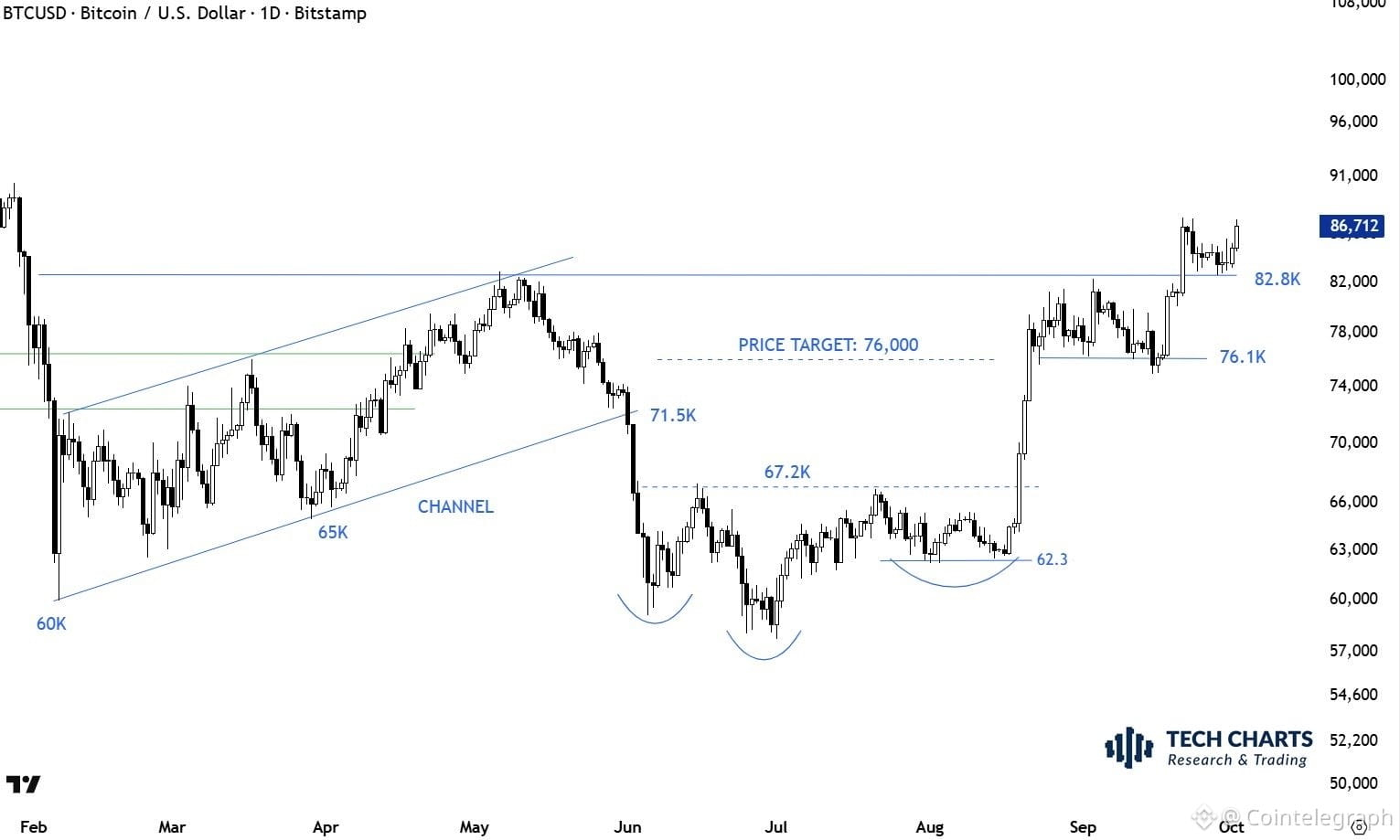
Bitcoin tapped $87,200 but failed to make new multi-month highs as overhead resistance held.
September US nonfarm payrolls came in below expectations at 29,000, while the August and July figures were revised lower.
Analysts saw further BTC price upside on the back of falling US bond yields
Bond yields extend fall on weak labor-market data
Data from TradingView showed BTC/USD reaching $87,229 on Bitstamp, just shy of new eight-month highs.
BTC/USD four-hour chart. Source: Cointelegraph/TradingView
September nonfarm payrolls data came in below expectations, with the economy adding just 29,000 jobs against an anticipated 84,000. August numbers, which had beat expectations on release, were revised down from 162,000 to 133,000.
US stocks gained at the Wall Street open as traders scaled back hawkish bets on Federal Reserve interest-rate hikes following the weaker jobs data. The S&P 500 and tech-heavy Nasdaq Composite Index rose 1% and 1.8%, respectively.
“This marks the third weakest jobs report of 2026,” trading resource The Kobeissi Letter noted in a reaction on X.
The latest data from CME Group’s FedWatch Tool showed just an 18% chance of the Fed enacting a 0.25% rate hike at its October meeting, down from 64% a week ago.
US bond yields fell for a second consecutive day, with the 30-year yield at 5.573% and the 10-year at 5.2% at the time of writing. On Wednesday, both reached new 24-year highs as markets looked past softer August Personal Consumption Expenditures (PCE) data, known as the Fed’s “preferred” inflation gauge.
US 10-year bond yield one-day chart. Source: Cointelegraph/TradingView
Bitcoin analysis sees “cleanest upside catalyst” in yield drop
Bitcoin price action failed to break beyond multi-month highs seen in September, dropping back below $86,000 at the time of writing.
Previously, Cointelegraph reported on successive walls of ask liquidity on exchange order books keeping upside in check, with the latest band at $87,300 forming new resistance.
BTC liquidation heatmap. Source: CoinGlass
In a new analysis, trading firm QCP Capital argued that BTC/USD should still benefit from the softer labor-market print, with bond yields continuing to fall.
“For Bitcoin, a Treasury relief rally would provide the cleanest upside catalyst. The asset has already demonstrated resilience through a real-rate shock that pressured gold,” it wrote.
Meanwhile, trader Aksel Kibar saw that a successful support retest at $82,800 was already in place on the daily chart.
BTC/USD one-day chart. Source: Aksel Kibar on X.com
Bitcoin briefly hits $87K as weak US jobs data sends bond yields lower
Bitcoin (BTC) spiked past $87,000 on Friday as US jobs data missed expectations.
Key points:
Bitcoin tapped $87,200 but failed to make new multi-month highs as overhead resistance held.
September US nonfarm payrolls came in below expectations at 29,000, while the August and July figures were revised lower.
Analysts saw further BTC price upside on the back of falling US bond yields
Bond yields extend fall on weak labor-market data
Data from TradingView showed BTC/USD reaching $87,229 on Bitstamp, just shy of new eight-month highs.
BTC/USD four-hour chart. Source: Cointelegraph/TradingView
September nonfarm payrolls data came in below expectations, with the economy adding just 29,000 jobs against an anticipated 84,000. August numbers, which had beat expectations on release, were revised down from 162,000 to 133,000.
US stocks gained at the Wall Street open as traders scaled back hawkish bets on Federal Reserve interest-rate hikes following the weaker jobs data. The S&P 500 and tech-heavy Nasdaq Composite Index rose 1% and 1.8%, respectively.
“This marks the third weakest jobs report of 2026,” trading resource The Kobeissi Letter noted in a reaction on X.
The latest data from CME Group’s FedWatch Tool showed just an 18% chance of the Fed enacting a 0.25% rate hike at its October meeting, down from 64% a week ago.
US bond yields fell for a second consecutive day, with the 30-year yield at 5.573% and the 10-year at 5.2% at the time of writing. On Wednesday, both reached new 24-year highs as markets looked past softer August Personal Consumption Expenditures (PCE) data, known as the Fed’s “preferred” inflation gauge.
US 10-year bond yield one-day chart. Source: Cointelegraph/TradingView
Bitcoin analysis sees “cleanest upside catalyst” in yield drop
Bitcoin price action failed to break beyond multi-month highs seen in September, dropping back below $86,000 at the time of writing.
Previously, Cointelegraph reported on successive walls of ask liquidity on exchange order books keeping upside in check, with the latest band at $87,300 forming new resistance.
BTC liquidation heatmap. Source: CoinGlass
In a new analysis, trading firm QCP Capital argued that BTC/USD should still benefit from the softer labor-market print, with bond yields continuing to fall.
“For Bitcoin, a Treasury relief rally would provide the cleanest upside catalyst. The asset has already demonstrated resilience through a real-rate shock that pressured gold,” it wrote.
Meanwhile, trader Aksel Kibar saw that a successful support retest at $82,800 was already in place on the daily chart.
BTC/USD one-day chart. Source: Aksel Kibar on X.com
Key points:
Bitcoin tapped $87,200 but failed to make new multi-month highs as overhead resistance held.
September US nonfarm payrolls came in below expectations at 29,000, while the August and July figures were revised lower.
Analysts saw further BTC price upside on the back of falling US bond yields
Bond yields extend fall on weak labor-market data
Data from TradingView showed BTC/USD reaching $87,229 on Bitstamp, just shy of new eight-month highs.
BTC/USD four-hour chart. Source: Cointelegraph/TradingView
September nonfarm payrolls data came in below expectations, with the economy adding just 29,000 jobs against an anticipated 84,000. August numbers, which had beat expectations on release, were revised down from 162,000 to 133,000.
US stocks gained at the Wall Street open as traders scaled back hawkish bets on Federal Reserve interest-rate hikes following the weaker jobs data. The S&P 500 and tech-heavy Nasdaq Composite Index rose 1% and 1.8%, respectively.
“This marks the third weakest jobs report of 2026,” trading resource The Kobeissi Letter noted in a reaction on X.
The latest data from CME Group’s FedWatch Tool showed just an 18% chance of the Fed enacting a 0.25% rate hike at its October meeting, down from 64% a week ago.
US bond yields fell for a second consecutive day, with the 30-year yield at 5.573% and the 10-year at 5.2% at the time of writing. On Wednesday, both reached new 24-year highs as markets looked past softer August Personal Consumption Expenditures (PCE) data, known as the Fed’s “preferred” inflation gauge.
US 10-year bond yield one-day chart. Source: Cointelegraph/TradingView
Bitcoin analysis sees “cleanest upside catalyst” in yield drop
Bitcoin price action failed to break beyond multi-month highs seen in September, dropping back below $86,000 at the time of writing.
Previously, Cointelegraph reported on successive walls of ask liquidity on exchange order books keeping upside in check, with the latest band at $87,300 forming new resistance.
BTC liquidation heatmap. Source: CoinGlass
In a new analysis, trading firm QCP Capital argued that BTC/USD should still benefit from the softer labor-market print, with bond yields continuing to fall.
“For Bitcoin, a Treasury relief rally would provide the cleanest upside catalyst. The asset has already demonstrated resilience through a real-rate shock that pressured gold,” it wrote.
Meanwhile, trader Aksel Kibar saw that a successful support retest at $82,800 was already in place on the daily chart.
BTC/USD one-day chart. Source: Aksel Kibar on X.com
362
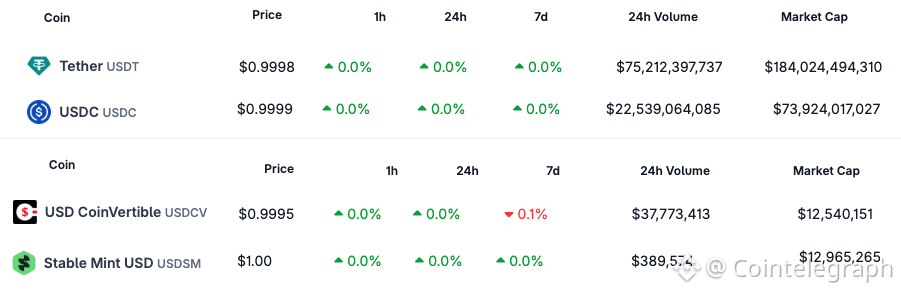
Article
‘Euro stablecoin isn’t enough’: EU issuers make case for USD tokensEuropean stablecoin issuers are making the case for regulated US dollar tokens, arguing that Europe’s push to strengthen the euro does not eliminate businesses’ need for dollar liquidity.
AllUnity, a German stablecoin issuer, launched its US dollar-pegged stablecoin USDAU on Wednesday, expanding its MiCA-regulated lineup beyond European currencies.
“In global trade and FX markets, the US dollar is the glue,” AllUnity CEO Alexander Höptner told Cointelegraph, adding: “For European corporates to make cross-border payments globally, offering only a euro stablecoin isn’t enough.”
European issuers’ push into dollar stablecoins comes as the EU reviews its MiCA framework and the ECB continues to raise concerns about stablecoins reinforcing the dollar’s global dominance.
Europe cannot “wish away” dollar demand
Stable Mint CEO James Bennett said demand for dollar stablecoins in Europe reflects practical business needs rather than something policymakers can simply steer toward the euro.
“Dollar stablecoins are where the demand is, and Europe can’t wish that away,” Bennett told Cointelegraph. “What Europe can control is who issues them to European users, and under which rules.”
Stable Mint’s USDSM stablecoin has moved more than $380 million onchain across 3.8 million transfers and is held by more than 2,600 addresses, according to figures provided by the company as of Wednesday.
Fiat Republic CEO Adam Bialy similarly pointed to demand from crypto platforms and stablecoin companies seeking round-the-clock dollar settlement.
“The demand we are seeing is driven by practical needs, not speculation,” Bialy told Cointelegraph, adding that a regulated dollar token can reduce friction in cross-border settlement between Europe, the UK and North America.
Not “euro versus dollar”
Societe Generale-FORGE (SG-Forge), the digital asset subsidiary of French banking group Societe Generale, said the goal should be a diversified market rather than opposition to dollar stablecoins.
“We believe the objective is not to oppose dollar stablecoins, but to foster a diversified and resilient ecosystem where users can access both euro and dollar-denominated digital cash solutions within a robust regulatory framework,” a spokesperson for the company told Cointelegraph.
SG-FORGE said its USD CoinVertible (USDCV), launched in 2025, has attracted interest for trading, settlement, collateral management and treasury operations.
Despite growing interest, Europe-issued dollar stablecoins remain tiny compared with Tether USDt (USDT) and Circle’s USDC. CoinGecko puts USDSM and USDCV at about $13 million each, versus $184 billion for USDT and $74 billion for USDC.
Market capitalization of USDCV and USDSM versus USDT and USDC. Source: CoinGecko
AllUnity’s Höptner framed the market similarly, saying the opportunity is “not ‘US versus Europe’” but building interoperable financial infrastructure connecting dollar liquidity with European banks and businesses.
Magazine: MiCA cracks down on USDT in Europe... but no one else cares
‘Euro stablecoin isn’t enough’: EU issuers make case for USD tokens
European stablecoin issuers are making the case for regulated US dollar tokens, arguing that Europe’s push to strengthen the euro does not eliminate businesses’ need for dollar liquidity.
AllUnity, a German stablecoin issuer, launched its US dollar-pegged stablecoin USDAU on Wednesday, expanding its MiCA-regulated lineup beyond European currencies.
“In global trade and FX markets, the US dollar is the glue,” AllUnity CEO Alexander Höptner told Cointelegraph, adding: “For European corporates to make cross-border payments globally, offering only a euro stablecoin isn’t enough.”
European issuers’ push into dollar stablecoins comes as the EU reviews its MiCA framework and the ECB continues to raise concerns about stablecoins reinforcing the dollar’s global dominance.
Europe cannot “wish away” dollar demand
Stable Mint CEO James Bennett said demand for dollar stablecoins in Europe reflects practical business needs rather than something policymakers can simply steer toward the euro.
“Dollar stablecoins are where the demand is, and Europe can’t wish that away,” Bennett told Cointelegraph. “What Europe can control is who issues them to European users, and under which rules.”
Stable Mint’s USDSM stablecoin has moved more than $380 million onchain across 3.8 million transfers and is held by more than 2,600 addresses, according to figures provided by the company as of Wednesday.
Fiat Republic CEO Adam Bialy similarly pointed to demand from crypto platforms and stablecoin companies seeking round-the-clock dollar settlement.
“The demand we are seeing is driven by practical needs, not speculation,” Bialy told Cointelegraph, adding that a regulated dollar token can reduce friction in cross-border settlement between Europe, the UK and North America.
Not “euro versus dollar”
Societe Generale-FORGE (SG-Forge), the digital asset subsidiary of French banking group Societe Generale, said the goal should be a diversified market rather than opposition to dollar stablecoins.
“We believe the objective is not to oppose dollar stablecoins, but to foster a diversified and resilient ecosystem where users can access both euro and dollar-denominated digital cash solutions within a robust regulatory framework,” a spokesperson for the company told Cointelegraph.
SG-FORGE said its USD CoinVertible (USDCV), launched in 2025, has attracted interest for trading, settlement, collateral management and treasury operations.
Despite growing interest, Europe-issued dollar stablecoins remain tiny compared with Tether USDt (USDT) and Circle’s USDC. CoinGecko puts USDSM and USDCV at about $13 million each, versus $184 billion for USDT and $74 billion for USDC.
Market capitalization of USDCV and USDSM versus USDT and USDC. Source: CoinGecko
AllUnity’s Höptner framed the market similarly, saying the opportunity is “not ‘US versus Europe’” but building interoperable financial infrastructure connecting dollar liquidity with European banks and businesses.
Magazine: MiCA cracks down on USDT in Europe... but no one else cares
AllUnity, a German stablecoin issuer, launched its US dollar-pegged stablecoin USDAU on Wednesday, expanding its MiCA-regulated lineup beyond European currencies.
“In global trade and FX markets, the US dollar is the glue,” AllUnity CEO Alexander Höptner told Cointelegraph, adding: “For European corporates to make cross-border payments globally, offering only a euro stablecoin isn’t enough.”
European issuers’ push into dollar stablecoins comes as the EU reviews its MiCA framework and the ECB continues to raise concerns about stablecoins reinforcing the dollar’s global dominance.
Europe cannot “wish away” dollar demand
Stable Mint CEO James Bennett said demand for dollar stablecoins in Europe reflects practical business needs rather than something policymakers can simply steer toward the euro.
“Dollar stablecoins are where the demand is, and Europe can’t wish that away,” Bennett told Cointelegraph. “What Europe can control is who issues them to European users, and under which rules.”
Stable Mint’s USDSM stablecoin has moved more than $380 million onchain across 3.8 million transfers and is held by more than 2,600 addresses, according to figures provided by the company as of Wednesday.
Fiat Republic CEO Adam Bialy similarly pointed to demand from crypto platforms and stablecoin companies seeking round-the-clock dollar settlement.
“The demand we are seeing is driven by practical needs, not speculation,” Bialy told Cointelegraph, adding that a regulated dollar token can reduce friction in cross-border settlement between Europe, the UK and North America.
Not “euro versus dollar”
Societe Generale-FORGE (SG-Forge), the digital asset subsidiary of French banking group Societe Generale, said the goal should be a diversified market rather than opposition to dollar stablecoins.
“We believe the objective is not to oppose dollar stablecoins, but to foster a diversified and resilient ecosystem where users can access both euro and dollar-denominated digital cash solutions within a robust regulatory framework,” a spokesperson for the company told Cointelegraph.
SG-FORGE said its USD CoinVertible (USDCV), launched in 2025, has attracted interest for trading, settlement, collateral management and treasury operations.
Despite growing interest, Europe-issued dollar stablecoins remain tiny compared with Tether USDt (USDT) and Circle’s USDC. CoinGecko puts USDSM and USDCV at about $13 million each, versus $184 billion for USDT and $74 billion for USDC.
Market capitalization of USDCV and USDSM versus USDT and USDC. Source: CoinGecko
AllUnity’s Höptner framed the market similarly, saying the opportunity is “not ‘US versus Europe’” but building interoperable financial infrastructure connecting dollar liquidity with European banks and businesses.
Magazine: MiCA cracks down on USDT in Europe... but no one else cares
412
Circle urges EU to revise stablecoin reserve rules in MiCA reviewStablecoin issuer Circle urged the European Commission to revise reserve requirements in its response to a consultation on reviewing the Markets in Crypto-Assets Regulation (MiCA).
In Thursday’s summary of its response, the USDC and EURC issuer said mandatory bank-deposit requirements expose stablecoin issuers to banking-sector credit and counterparty risks.
Circle faced those risks firsthand in March 2023, when USDC temporarily lost its dollar peg after the company disclosed that $3.3 billion of its reserves were held at Silicon Valley Bank. The funds were subsequently made available after US authorities protected the bank’s depositors.
The consultation, which closed Wednesday, sought feedback on how MiCA is working and whether it remains fit for purpose as crypto markets develop. Responses will inform the Commission’s assessment of the regulation and activities beyond its current scope.
Circle aligns with central bank on reserve requirements
MiCA currently requires e-money token issuers to hold at least 30% of reserves in commercial bank deposits, with a higher minimum of 60% for significant issuers, according to Circle.
Circle backed reconsidering the mandatory deposit minimums and replacing them with a more flexible minimum asset liquidity requirement, agreeing with the European Central Bank.
The company also called for removing two reserve concentration limits that impose a 35% cap on exposure to a single sovereign and a ceiling on deposits with each counterparty equivalent to 1.5% of that bank’s total assets.
The stablecoin issuer also urged the Commission to preserve “multi-issuance,” through which a European Union-authorized entity and a foreign-regulated counterpart co-issue a stablecoin. Restricting that structure would push users toward offshore providers outside MiCA’s protections, Circle argued.
Industry groups seek changes to onchain market rules
The Hyperliquid Policy Center also responded to the consultation, urging the Commission to treat crypto perpetual futures under the EU’s existing securities and derivatives framework, the second Markets in Financial Instruments Directive, or MiFID II.
The group called for requirements tailored to perpetual futures’ market structure and recognition of public blockchain records as a way to meet transparency and recordkeeping obligations.
The Global Blockchain Business Council recommended clearer token classification, proportionate stablecoin safeguards and less duplication between MiCA and payment-services rules.
On cross-border stablecoin issuance, GBBC called for clear redemption responsibilities, enforceable reserve rebalancing and an accountable EU supervisory framework.
Magazine: Stablecoins can drain from banks and nations at lightning speed
Circle urges EU to revise stablecoin reserve rules in MiCA review
Stablecoin issuer Circle urged the European Commission to revise reserve requirements in its response to a consultation on reviewing the Markets in Crypto-Assets Regulation (MiCA).
In Thursday’s summary of its response, the USDC and EURC issuer said mandatory bank-deposit requirements expose stablecoin issuers to banking-sector credit and counterparty risks.
Circle faced those risks firsthand in March 2023, when USDC temporarily lost its dollar peg after the company disclosed that $3.3 billion of its reserves were held at Silicon Valley Bank. The funds were subsequently made available after US authorities protected the bank’s depositors.
The consultation, which closed Wednesday, sought feedback on how MiCA is working and whether it remains fit for purpose as crypto markets develop. Responses will inform the Commission’s assessment of the regulation and activities beyond its current scope.
Circle aligns with central bank on reserve requirements
MiCA currently requires e-money token issuers to hold at least 30% of reserves in commercial bank deposits, with a higher minimum of 60% for significant issuers, according to Circle.
Circle backed reconsidering the mandatory deposit minimums and replacing them with a more flexible minimum asset liquidity requirement, agreeing with the European Central Bank.
The company also called for removing two reserve concentration limits that impose a 35% cap on exposure to a single sovereign and a ceiling on deposits with each counterparty equivalent to 1.5% of that bank’s total assets.
The stablecoin issuer also urged the Commission to preserve “multi-issuance,” through which a European Union-authorized entity and a foreign-regulated counterpart co-issue a stablecoin. Restricting that structure would push users toward offshore providers outside MiCA’s protections, Circle argued.
Industry groups seek changes to onchain market rules
The Hyperliquid Policy Center also responded to the consultation, urging the Commission to treat crypto perpetual futures under the EU’s existing securities and derivatives framework, the second Markets in Financial Instruments Directive, or MiFID II.
The group called for requirements tailored to perpetual futures’ market structure and recognition of public blockchain records as a way to meet transparency and recordkeeping obligations.
The Global Blockchain Business Council recommended clearer token classification, proportionate stablecoin safeguards and less duplication between MiCA and payment-services rules.
On cross-border stablecoin issuance, GBBC called for clear redemption responsibilities, enforceable reserve rebalancing and an accountable EU supervisory framework.
Magazine: Stablecoins can drain from banks and nations at lightning speed
In Thursday’s summary of its response, the USDC and EURC issuer said mandatory bank-deposit requirements expose stablecoin issuers to banking-sector credit and counterparty risks.
Circle faced those risks firsthand in March 2023, when USDC temporarily lost its dollar peg after the company disclosed that $3.3 billion of its reserves were held at Silicon Valley Bank. The funds were subsequently made available after US authorities protected the bank’s depositors.
The consultation, which closed Wednesday, sought feedback on how MiCA is working and whether it remains fit for purpose as crypto markets develop. Responses will inform the Commission’s assessment of the regulation and activities beyond its current scope.
Circle aligns with central bank on reserve requirements
MiCA currently requires e-money token issuers to hold at least 30% of reserves in commercial bank deposits, with a higher minimum of 60% for significant issuers, according to Circle.
Circle backed reconsidering the mandatory deposit minimums and replacing them with a more flexible minimum asset liquidity requirement, agreeing with the European Central Bank.
The company also called for removing two reserve concentration limits that impose a 35% cap on exposure to a single sovereign and a ceiling on deposits with each counterparty equivalent to 1.5% of that bank’s total assets.
The stablecoin issuer also urged the Commission to preserve “multi-issuance,” through which a European Union-authorized entity and a foreign-regulated counterpart co-issue a stablecoin. Restricting that structure would push users toward offshore providers outside MiCA’s protections, Circle argued.
Industry groups seek changes to onchain market rules
The Hyperliquid Policy Center also responded to the consultation, urging the Commission to treat crypto perpetual futures under the EU’s existing securities and derivatives framework, the second Markets in Financial Instruments Directive, or MiFID II.
The group called for requirements tailored to perpetual futures’ market structure and recognition of public blockchain records as a way to meet transparency and recordkeeping obligations.
The Global Blockchain Business Council recommended clearer token classification, proportionate stablecoin safeguards and less duplication between MiCA and payment-services rules.
On cross-border stablecoin issuance, GBBC called for clear redemption responsibilities, enforceable reserve rebalancing and an accountable EU supervisory framework.
Magazine: Stablecoins can drain from banks and nations at lightning speed
2
328
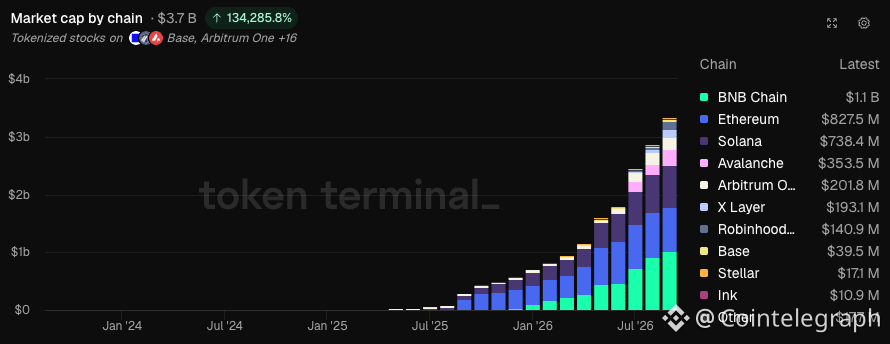
Article
BNB Chain crosses $1B in tokenized stocks, ETFs as market hits $3.7BBNB Chain has become the first blockchain to cross $1 billion in tokenized stocks and exchange-traded funds (ETFs).
The market capitalization of the tokenized stocks and ETFs rose around 17% to $3.35 billion in September from $2.87 billion in August, according to Token Terminal data.
The sector’s market cap on BNB Chain stood at $1.1 billion at the time of publication, accounting for roughly 30% of the $3.7 billion market, followed by Ethereum at $828 million, or 22%, and Solana at $738 million, or 20%.
Tokenized stocks, ETFs by market capitalization. Source: Token Terminal
BNB Chain also led with 1.8 million addresses holding tokenized stocks, accounting for 45% of the total, Binance Research said in a report on Tuesday. The network hosts products including Binance bStocks and Ondo Global Markets tokenized securities.
Tokenized stocks and ETFs have grown more than fivefold from $719 million in January, when Ethereum accounted for about 48% of the market, Solana 31% and BNB Chain just 13%, according to Token Terminal data.
BNB Chain crosses $1B in tokenized stocks, ETFs as market hits $3.7B
BNB Chain has become the first blockchain to cross $1 billion in tokenized stocks and exchange-traded funds (ETFs).
The market capitalization of the tokenized stocks and ETFs rose around 17% to $3.35 billion in September from $2.87 billion in August, according to Token Terminal data.
The sector’s market cap on BNB Chain stood at $1.1 billion at the time of publication, accounting for roughly 30% of the $3.7 billion market, followed by Ethereum at $828 million, or 22%, and Solana at $738 million, or 20%.
Tokenized stocks, ETFs by market capitalization. Source: Token Terminal
BNB Chain also led with 1.8 million addresses holding tokenized stocks, accounting for 45% of the total, Binance Research said in a report on Tuesday. The network hosts products including Binance bStocks and Ondo Global Markets tokenized securities.
Tokenized stocks and ETFs have grown more than fivefold from $719 million in January, when Ethereum accounted for about 48% of the market, Solana 31% and BNB Chain just 13%, according to Token Terminal data.
The market capitalization of the tokenized stocks and ETFs rose around 17% to $3.35 billion in September from $2.87 billion in August, according to Token Terminal data.
The sector’s market cap on BNB Chain stood at $1.1 billion at the time of publication, accounting for roughly 30% of the $3.7 billion market, followed by Ethereum at $828 million, or 22%, and Solana at $738 million, or 20%.
Tokenized stocks, ETFs by market capitalization. Source: Token Terminal
BNB Chain also led with 1.8 million addresses holding tokenized stocks, accounting for 45% of the total, Binance Research said in a report on Tuesday. The network hosts products including Binance bStocks and Ondo Global Markets tokenized securities.
Tokenized stocks and ETFs have grown more than fivefold from $719 million in January, when Ethereum accounted for about 48% of the market, Solana 31% and BNB Chain just 13%, according to Token Terminal data.
631
Bitcoin treasuries may struggle to match Strategy, says AmmousBitcoin treasury companies built primarily around buying the cryptocurrency may struggle to compete with Michael Saylor’s Strategy, according to economist and “The Bitcoin Standard” author Saifedean Ammous.
“I don’t see a compelling case for going to another Bitcoin treasury company other than Michael Saylor’s Strategy,” Ammous said on the latest episode of Cointelegraph’s Proof of Thesis.
Strategy holds the world’s largest corporate Bitcoin treasury, with 847,666 BTC acquired for $63.95 billion, according to its Monday 8-K filing. The company also reported a $5.02 billion US dollar reserve to cover preferred stock dividends and debt interest.
Strategy’s size and cash reserves
Strategy’s larger Bitcoin holdings allow it to borrow at lower rates, giving it an advantage over smaller treasury companies, according to Ammous. He said previous drawdowns had not brought the company close to liquidation.
Strategy’s financing model came under the microscope over the summer as Bitcoin fell below $60,000 and the company’s STRC preferred stock traded far below its target price of $100.
Strategy raised STRC’s annual dividend rate to 12%, repurchased shares and built its cash reserve. It also sold some Bitcoin to help fund dividends and STRC repurchases before resuming its Bitcoin accumulation.
“Even a much bigger Bitcoin drawdown is going to leave them in a decent situation because they have enough cash on hand to make their payments,” Ammous said.
Businesses with positive cash flow can put surplus cash into Bitcoin as a long-term reserve asset, Ammous said, adding that he expects more companies to adopt this model.
“I think pretty much every business should be doing this.”
He distinguished those reserves from cash needed for daily, weekly and monthly operations.
Ammous nevertheless cautioned that investing in Strategy carries risks and said he favors holding Bitcoin directly.
Bitcoin’s next peak could come in 2029
Bitcoin has probably already bottomed, although another crash could still take prices lower, Ammous said. He said Bitcoin’s next cycle may peak in 2029, with prices predominantly rising until then.
We may bottom again, we may witness another crash that takes us down.”
Smaller drawdowns could make Bitcoin more attractive to large asset managers as memories of previous bear markets fade, Ammous said.
Asked for a Bitcoin price estimate for 2030, Ammous put his best guess at roughly $200,000. He based that estimate on the Bitcoin power-law model, choosing a figure near the lower end of the range he cited.
“I wouldn’t bet on it,” he added.
Magazine: Stablecoins can drain from banks and nations at lightning speed
Bitcoin treasuries may struggle to match Strategy, says Ammous
Bitcoin treasury companies built primarily around buying the cryptocurrency may struggle to compete with Michael Saylor’s Strategy, according to economist and “The Bitcoin Standard” author Saifedean Ammous.
“I don’t see a compelling case for going to another Bitcoin treasury company other than Michael Saylor’s Strategy,” Ammous said on the latest episode of Cointelegraph’s Proof of Thesis.
Strategy holds the world’s largest corporate Bitcoin treasury, with 847,666 BTC acquired for $63.95 billion, according to its Monday 8-K filing. The company also reported a $5.02 billion US dollar reserve to cover preferred stock dividends and debt interest.
Strategy’s size and cash reserves
Strategy’s larger Bitcoin holdings allow it to borrow at lower rates, giving it an advantage over smaller treasury companies, according to Ammous. He said previous drawdowns had not brought the company close to liquidation.
Strategy’s financing model came under the microscope over the summer as Bitcoin fell below $60,000 and the company’s STRC preferred stock traded far below its target price of $100.
Strategy raised STRC’s annual dividend rate to 12%, repurchased shares and built its cash reserve. It also sold some Bitcoin to help fund dividends and STRC repurchases before resuming its Bitcoin accumulation.
“Even a much bigger Bitcoin drawdown is going to leave them in a decent situation because they have enough cash on hand to make their payments,” Ammous said.
Businesses with positive cash flow can put surplus cash into Bitcoin as a long-term reserve asset, Ammous said, adding that he expects more companies to adopt this model.
“I think pretty much every business should be doing this.”
He distinguished those reserves from cash needed for daily, weekly and monthly operations.
Ammous nevertheless cautioned that investing in Strategy carries risks and said he favors holding Bitcoin directly.
Bitcoin’s next peak could come in 2029
Bitcoin has probably already bottomed, although another crash could still take prices lower, Ammous said. He said Bitcoin’s next cycle may peak in 2029, with prices predominantly rising until then.
We may bottom again, we may witness another crash that takes us down.”
Smaller drawdowns could make Bitcoin more attractive to large asset managers as memories of previous bear markets fade, Ammous said.
Asked for a Bitcoin price estimate for 2030, Ammous put his best guess at roughly $200,000. He based that estimate on the Bitcoin power-law model, choosing a figure near the lower end of the range he cited.
“I wouldn’t bet on it,” he added.
Magazine: Stablecoins can drain from banks and nations at lightning speed
“I don’t see a compelling case for going to another Bitcoin treasury company other than Michael Saylor’s Strategy,” Ammous said on the latest episode of Cointelegraph’s Proof of Thesis.
Strategy holds the world’s largest corporate Bitcoin treasury, with 847,666 BTC acquired for $63.95 billion, according to its Monday 8-K filing. The company also reported a $5.02 billion US dollar reserve to cover preferred stock dividends and debt interest.
Strategy’s size and cash reserves
Strategy’s larger Bitcoin holdings allow it to borrow at lower rates, giving it an advantage over smaller treasury companies, according to Ammous. He said previous drawdowns had not brought the company close to liquidation.
Strategy’s financing model came under the microscope over the summer as Bitcoin fell below $60,000 and the company’s STRC preferred stock traded far below its target price of $100.
Strategy raised STRC’s annual dividend rate to 12%, repurchased shares and built its cash reserve. It also sold some Bitcoin to help fund dividends and STRC repurchases before resuming its Bitcoin accumulation.
“Even a much bigger Bitcoin drawdown is going to leave them in a decent situation because they have enough cash on hand to make their payments,” Ammous said.
Businesses with positive cash flow can put surplus cash into Bitcoin as a long-term reserve asset, Ammous said, adding that he expects more companies to adopt this model.
“I think pretty much every business should be doing this.”
He distinguished those reserves from cash needed for daily, weekly and monthly operations.
Ammous nevertheless cautioned that investing in Strategy carries risks and said he favors holding Bitcoin directly.
Bitcoin’s next peak could come in 2029
Bitcoin has probably already bottomed, although another crash could still take prices lower, Ammous said. He said Bitcoin’s next cycle may peak in 2029, with prices predominantly rising until then.
We may bottom again, we may witness another crash that takes us down.”
Smaller drawdowns could make Bitcoin more attractive to large asset managers as memories of previous bear markets fade, Ammous said.
Asked for a Bitcoin price estimate for 2030, Ammous put his best guess at roughly $200,000. He based that estimate on the Bitcoin power-law model, choosing a figure near the lower end of the range he cited.
“I wouldn’t bet on it,” he added.
Magazine: Stablecoins can drain from banks and nations at lightning speed
1
189

Article
CONNECT recap: Arthur Hayes on money printing, Wall Street moves onchainUS policymakers could lift cryptocurrency prices by printing more money to support AI and finance government debt, according to Arthur Hayes, chief investment officer at Maelstrom fund.
AI companies need trillions of dollars to finance data centers even as the prices of their services fall, Hayes said at a fireside chat at CONNECT by Cointelegraph: Seoul Edition, on Tuesday during Korea Blockchain Week.
“They’ve not really given themselves a lot of options other than print money and make it less bad,” he said.
BitMEX co-founder Arthur Hayes speaking at CONNECT by Cointelegraph: Seoul Edition.
Hayes also discussed a possible shift in China from what he called an “austerity lite” policy to substantial monetary stimulus, which he said could revive demand for scarce assets.
In Europe, he said he was monitoring financial stress in France, including credit-default swaps tied to BNP Paribas and French government bond spreads.
I think the money printing will essentially happen at some point, but that’s sort of a slow motion train wreck happening underneath the surface.”
Cointelegraph’s CONNECT event in Seoul featured panels on topics ranging from traditional finance’s shift onchain to stablecoins and corporate crypto treasuries.
Wall Street’s move onchain leaves room for middlemen
Banks and asset managers bring an existing customer base to blockchain markets, giving them an advantage over companies that must attract investors from scratch, according to Catrina Wang, general partner at Portal Ventures.
“Whoever owns the customer relationship owns the economics,” Wang said, drawing on tech analyst Ben Thompson’s aggregation theory.
Portal Ventures general partner Catrina Wang speaking during “The New Financial Establishment” panel.
For financial firms, serving existing clients is only part of the opportunity. R3 co-founder Todd McDonald said public blockchains also offer access to customers outside institutions’ own networks.
R3 built its business around private financial networks using its Corda platform, before announcing a collaboration in May 2025 to connect institutions and their assets to Solana’s public chain.
You need to really go to where the customers are and where they will be in the future.”
Once investors reach those markets, they still need to decide where to put their money and how much risk to take.
Justin Kugel, executive vice president of growth at World Liberty Financial, said those decisions are creating work for intermediaries, despite crypto’s original promise to eliminate middlemen.
“Maybe there’s a reason why there are so many middlemen in TradFi,” Kugel said.
Many users do not want to manage their assets themselves or assess every investment and prefer the sense of protection offered by centralized exchanges, Kugel said.
Stablecoins move money, but who supplies the yield?
Franklin Templeton has no plans to issue its own stablecoin and wants its tokenized money market funds to provide investment income alongside payment tokens, according to Chetan Karkhanis, senior vice president of digital asset client engagement at the firm.
“Let us be the yield layer,” Karkhanis said.
Franklin Templeton’s fund subscriptions and redemptions generally still require fiat currency, Karkhanis said. Some conversions involving stablecoins are already available, but he said those options need to become more widely available across the industry.
Franklin Templeton announced a partnership with MoonPay in June that allows eligible institutional investors to move between supported stablecoins and its tokenized money market funds through onchain transactions.
From left: Codex co-founder and CEO Haonan Li, Franklin Templeton senior vice president of digital asset client engagement Chetan Karkhanis and Miden co-founder Azeem Khan.
Haonan Li, co-founder and CEO of stablecoin foreign-exchange platform Codex, said demand for stablecoin payments is growing along trade routes connecting Latin America and sub-Saharan Africa with Asia, where buyers send money to pay for manufactured goods moving in the opposite direction.
“The manufactured goods flow from east to west and funds flow from west to east,” Li said.
Crypto treasuries face a liquidity test
Companies considering crypto treasury strategies need cash they can commit over a longer period without disrupting day-to-day operations, said Ilya Podoynitsyn, co-founder and CEO of FinHarbor, a partner of CONNECT.
“If you don’t have that excess liquidity for doing that, you need to think very carefully before entering the market,” Podoynitsyn said.
He warned against copying another company’s strategy without accounting for differences in balance sheets, liquidity requirements and risk tolerance. Even experienced finance teams may lack expertise in onchain liquidity and transaction approvals, he said.
SharpLink chief growth and strategy officer Michael Camarda speaking during the crypto treasury panel.
The panel also considered whether a listed treasury company with spare cash should buy more crypto or repurchase shares trading below net asset value.
Michael Camarda, chief development officer at Ethereum treasury company SharpLink, said buying back shares and purchasing additional Ether were two ways to increase ETH holdings per share.
Using cash to repurchase shares spreads existing Ether holdings across fewer shares, while buying more Ether increases the company’s holdings.
SharpLink’s institutional investors focused on ETH holdings per share, making buybacks better suited to them, while retail investors were drawn to announcements of large Ether purchases, Camarda said.
“They love headlines. They love numbers,” Camarda said of retail investors.
SharpLink had bought both Ether and its own shares to appeal to the two groups of investors, Camarda said.
Magazine: Bitcoin treasury firms can outperform BTC... but is the risk worth taking?
CONNECT recap: Arthur Hayes on money printing, Wall Street moves onchain
US policymakers could lift cryptocurrency prices by printing more money to support AI and finance government debt, according to Arthur Hayes, chief investment officer at Maelstrom fund.
AI companies need trillions of dollars to finance data centers even as the prices of their services fall, Hayes said at a fireside chat at CONNECT by Cointelegraph: Seoul Edition, on Tuesday during Korea Blockchain Week.
“They’ve not really given themselves a lot of options other than print money and make it less bad,” he said.
BitMEX co-founder Arthur Hayes speaking at CONNECT by Cointelegraph: Seoul Edition.
Hayes also discussed a possible shift in China from what he called an “austerity lite” policy to substantial monetary stimulus, which he said could revive demand for scarce assets.
In Europe, he said he was monitoring financial stress in France, including credit-default swaps tied to BNP Paribas and French government bond spreads.
I think the money printing will essentially happen at some point, but that’s sort of a slow motion train wreck happening underneath the surface.”
Cointelegraph’s CONNECT event in Seoul featured panels on topics ranging from traditional finance’s shift onchain to stablecoins and corporate crypto treasuries.
Wall Street’s move onchain leaves room for middlemen
Banks and asset managers bring an existing customer base to blockchain markets, giving them an advantage over companies that must attract investors from scratch, according to Catrina Wang, general partner at Portal Ventures.
“Whoever owns the customer relationship owns the economics,” Wang said, drawing on tech analyst Ben Thompson’s aggregation theory.
Portal Ventures general partner Catrina Wang speaking during “The New Financial Establishment” panel.
For financial firms, serving existing clients is only part of the opportunity. R3 co-founder Todd McDonald said public blockchains also offer access to customers outside institutions’ own networks.
R3 built its business around private financial networks using its Corda platform, before announcing a collaboration in May 2025 to connect institutions and their assets to Solana’s public chain.
You need to really go to where the customers are and where they will be in the future.”
Once investors reach those markets, they still need to decide where to put their money and how much risk to take.
Justin Kugel, executive vice president of growth at World Liberty Financial, said those decisions are creating work for intermediaries, despite crypto’s original promise to eliminate middlemen.
“Maybe there’s a reason why there are so many middlemen in TradFi,” Kugel said.
Many users do not want to manage their assets themselves or assess every investment and prefer the sense of protection offered by centralized exchanges, Kugel said.
Stablecoins move money, but who supplies the yield?
Franklin Templeton has no plans to issue its own stablecoin and wants its tokenized money market funds to provide investment income alongside payment tokens, according to Chetan Karkhanis, senior vice president of digital asset client engagement at the firm.
“Let us be the yield layer,” Karkhanis said.
Franklin Templeton’s fund subscriptions and redemptions generally still require fiat currency, Karkhanis said. Some conversions involving stablecoins are already available, but he said those options need to become more widely available across the industry.
Franklin Templeton announced a partnership with MoonPay in June that allows eligible institutional investors to move between supported stablecoins and its tokenized money market funds through onchain transactions.
From left: Codex co-founder and CEO Haonan Li, Franklin Templeton senior vice president of digital asset client engagement Chetan Karkhanis and Miden co-founder Azeem Khan.
Haonan Li, co-founder and CEO of stablecoin foreign-exchange platform Codex, said demand for stablecoin payments is growing along trade routes connecting Latin America and sub-Saharan Africa with Asia, where buyers send money to pay for manufactured goods moving in the opposite direction.
“The manufactured goods flow from east to west and funds flow from west to east,” Li said.
Crypto treasuries face a liquidity test
Companies considering crypto treasury strategies need cash they can commit over a longer period without disrupting day-to-day operations, said Ilya Podoynitsyn, co-founder and CEO of FinHarbor, a partner of CONNECT.
“If you don’t have that excess liquidity for doing that, you need to think very carefully before entering the market,” Podoynitsyn said.
He warned against copying another company’s strategy without accounting for differences in balance sheets, liquidity requirements and risk tolerance. Even experienced finance teams may lack expertise in onchain liquidity and transaction approvals, he said.
SharpLink chief growth and strategy officer Michael Camarda speaking during the crypto treasury panel.
The panel also considered whether a listed treasury company with spare cash should buy more crypto or repurchase shares trading below net asset value.
Michael Camarda, chief development officer at Ethereum treasury company SharpLink, said buying back shares and purchasing additional Ether were two ways to increase ETH holdings per share.
Using cash to repurchase shares spreads existing Ether holdings across fewer shares, while buying more Ether increases the company’s holdings.
SharpLink’s institutional investors focused on ETH holdings per share, making buybacks better suited to them, while retail investors were drawn to announcements of large Ether purchases, Camarda said.
“They love headlines. They love numbers,” Camarda said of retail investors.
SharpLink had bought both Ether and its own shares to appeal to the two groups of investors, Camarda said.
Magazine: Bitcoin treasury firms can outperform BTC... but is the risk worth taking?
AI companies need trillions of dollars to finance data centers even as the prices of their services fall, Hayes said at a fireside chat at CONNECT by Cointelegraph: Seoul Edition, on Tuesday during Korea Blockchain Week.
“They’ve not really given themselves a lot of options other than print money and make it less bad,” he said.
BitMEX co-founder Arthur Hayes speaking at CONNECT by Cointelegraph: Seoul Edition.
Hayes also discussed a possible shift in China from what he called an “austerity lite” policy to substantial monetary stimulus, which he said could revive demand for scarce assets.
In Europe, he said he was monitoring financial stress in France, including credit-default swaps tied to BNP Paribas and French government bond spreads.
I think the money printing will essentially happen at some point, but that’s sort of a slow motion train wreck happening underneath the surface.”
Cointelegraph’s CONNECT event in Seoul featured panels on topics ranging from traditional finance’s shift onchain to stablecoins and corporate crypto treasuries.
Wall Street’s move onchain leaves room for middlemen
Banks and asset managers bring an existing customer base to blockchain markets, giving them an advantage over companies that must attract investors from scratch, according to Catrina Wang, general partner at Portal Ventures.
“Whoever owns the customer relationship owns the economics,” Wang said, drawing on tech analyst Ben Thompson’s aggregation theory.
Portal Ventures general partner Catrina Wang speaking during “The New Financial Establishment” panel.
For financial firms, serving existing clients is only part of the opportunity. R3 co-founder Todd McDonald said public blockchains also offer access to customers outside institutions’ own networks.
R3 built its business around private financial networks using its Corda platform, before announcing a collaboration in May 2025 to connect institutions and their assets to Solana’s public chain.
You need to really go to where the customers are and where they will be in the future.”
Once investors reach those markets, they still need to decide where to put their money and how much risk to take.
Justin Kugel, executive vice president of growth at World Liberty Financial, said those decisions are creating work for intermediaries, despite crypto’s original promise to eliminate middlemen.
“Maybe there’s a reason why there are so many middlemen in TradFi,” Kugel said.
Many users do not want to manage their assets themselves or assess every investment and prefer the sense of protection offered by centralized exchanges, Kugel said.
Stablecoins move money, but who supplies the yield?
Franklin Templeton has no plans to issue its own stablecoin and wants its tokenized money market funds to provide investment income alongside payment tokens, according to Chetan Karkhanis, senior vice president of digital asset client engagement at the firm.
“Let us be the yield layer,” Karkhanis said.
Franklin Templeton’s fund subscriptions and redemptions generally still require fiat currency, Karkhanis said. Some conversions involving stablecoins are already available, but he said those options need to become more widely available across the industry.
Franklin Templeton announced a partnership with MoonPay in June that allows eligible institutional investors to move between supported stablecoins and its tokenized money market funds through onchain transactions.
From left: Codex co-founder and CEO Haonan Li, Franklin Templeton senior vice president of digital asset client engagement Chetan Karkhanis and Miden co-founder Azeem Khan.
Haonan Li, co-founder and CEO of stablecoin foreign-exchange platform Codex, said demand for stablecoin payments is growing along trade routes connecting Latin America and sub-Saharan Africa with Asia, where buyers send money to pay for manufactured goods moving in the opposite direction.
“The manufactured goods flow from east to west and funds flow from west to east,” Li said.
Crypto treasuries face a liquidity test
Companies considering crypto treasury strategies need cash they can commit over a longer period without disrupting day-to-day operations, said Ilya Podoynitsyn, co-founder and CEO of FinHarbor, a partner of CONNECT.
“If you don’t have that excess liquidity for doing that, you need to think very carefully before entering the market,” Podoynitsyn said.
He warned against copying another company’s strategy without accounting for differences in balance sheets, liquidity requirements and risk tolerance. Even experienced finance teams may lack expertise in onchain liquidity and transaction approvals, he said.
SharpLink chief growth and strategy officer Michael Camarda speaking during the crypto treasury panel.
The panel also considered whether a listed treasury company with spare cash should buy more crypto or repurchase shares trading below net asset value.
Michael Camarda, chief development officer at Ethereum treasury company SharpLink, said buying back shares and purchasing additional Ether were two ways to increase ETH holdings per share.
Using cash to repurchase shares spreads existing Ether holdings across fewer shares, while buying more Ether increases the company’s holdings.
SharpLink’s institutional investors focused on ETH holdings per share, making buybacks better suited to them, while retail investors were drawn to announcements of large Ether purchases, Camarda said.
“They love headlines. They love numbers,” Camarda said of retail investors.
SharpLink had bought both Ether and its own shares to appeal to the two groups of investors, Camarda said.
Magazine: Bitcoin treasury firms can outperform BTC... but is the risk worth taking?
132
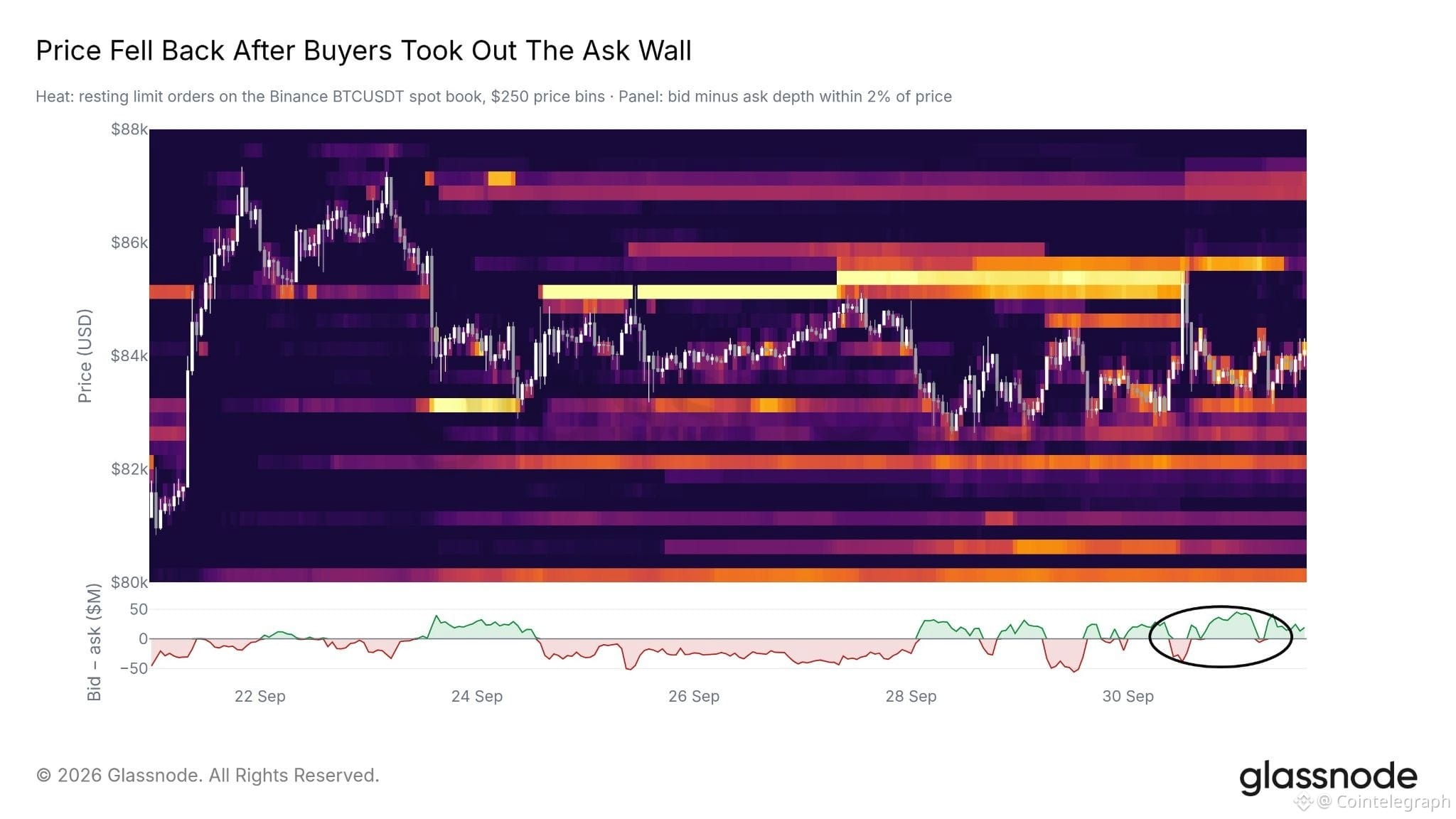
Article
Bitcoin reaches for $87K as short liquidations top $120MBitcoin (BTC) neared $87,000 on Friday as BTC short liquidations topped $120 million over 24 hours.
Key points:
Bitcoin broke through sell orders around $85,000, reaching its highest price since Sept. 23 at $86,857.
CoinGlass’s heatmap showed a cluster of potential liquidations above $87,000 following the breakout.
Glassnode analysis said that more robust Bitcoin ETF inflows would help confirm broader support for the BTC price uptrend.
Bitcoin buyers battle liquidity walls below $87,000
Data from TradingView showed BTC/USD reaching $86,857 on Bitstamp before pulling back below $86,000.
BTC/USD four-hour chart. Source: Cointelegraph/TradingView
The move, which marked Bitcoin’s highest since Sept. 23, followed fresh fluctuations in exchange order-book liquidity. A concentration of sell orders around $85,000 had kept price action rangebound through the week, but buyers broke through that barrier, per data from onchain analytics platform Glassnode.
“With reduced ask liquidity above, this should allow price to move up faster,” it wrote on X, adding that the remaining sell orders “seem to have been removed.”
BTC/USDT liquidation heatmap (Binance). Source: Glassnode
Earlier in the week, Cointelegraph reported that more than $30 million in sell orders had appeared around $85,700. Data from CoinGlass showed a cluster of potential liquidations above $87,300 following the initial breakout, suggesting that liquidation exposure was concentrating at higher price levels.
BTC liquidation heatmap (all exchanges). Source: CoinGlass
BTC short liquidations over the 24 hours to the time of writing totaled $122 million, with the cross-crypto total at $210 million.
ETF inflows decline after 11-month record
The area around $86,000 remains significant, forming the aggregate breakeven zone for investors in the US spot Bitcoin exchange-traded funds (ETFs).
In the latest edition of its regular newsletter, The Week Onchain, Glassnode said a sustained breakout accompanied by higher trading volume and renewed ETF inflows would confirm broader support for Bitcoin’s uptrend.
Daily flows have cooled since Sept. 21, when the daily tally hit its highest in almost a year at $999 million.
“The funds are still buying, but at a small fraction of the pace of those two days. A return to inflows near that pace would be the clearest sign of renewed ETF demand,” it wrote.
US spot Bitcoin ETF netflows through Sept. 30. Source: Glassnode
On Oct. 1, US spot Bitcoin ETFs recorded net inflows of $102.7 million, according to Farside Investors. The largest fund, BlackRock’s iShares Bitcoin Trust (IBIT), attracted $195 million, with outflows from several other funds reducing the daily tally.
Bitcoin reaches for $87K as short liquidations top $120M
Bitcoin (BTC) neared $87,000 on Friday as BTC short liquidations topped $120 million over 24 hours.
Key points:
Bitcoin broke through sell orders around $85,000, reaching its highest price since Sept. 23 at $86,857.
CoinGlass’s heatmap showed a cluster of potential liquidations above $87,000 following the breakout.
Glassnode analysis said that more robust Bitcoin ETF inflows would help confirm broader support for the BTC price uptrend.
Bitcoin buyers battle liquidity walls below $87,000
Data from TradingView showed BTC/USD reaching $86,857 on Bitstamp before pulling back below $86,000.
BTC/USD four-hour chart. Source: Cointelegraph/TradingView
The move, which marked Bitcoin’s highest since Sept. 23, followed fresh fluctuations in exchange order-book liquidity. A concentration of sell orders around $85,000 had kept price action rangebound through the week, but buyers broke through that barrier, per data from onchain analytics platform Glassnode.
“With reduced ask liquidity above, this should allow price to move up faster,” it wrote on X, adding that the remaining sell orders “seem to have been removed.”
BTC/USDT liquidation heatmap (Binance). Source: Glassnode
Earlier in the week, Cointelegraph reported that more than $30 million in sell orders had appeared around $85,700. Data from CoinGlass showed a cluster of potential liquidations above $87,300 following the initial breakout, suggesting that liquidation exposure was concentrating at higher price levels.
BTC liquidation heatmap (all exchanges). Source: CoinGlass
BTC short liquidations over the 24 hours to the time of writing totaled $122 million, with the cross-crypto total at $210 million.
ETF inflows decline after 11-month record
The area around $86,000 remains significant, forming the aggregate breakeven zone for investors in the US spot Bitcoin exchange-traded funds (ETFs).
In the latest edition of its regular newsletter, The Week Onchain, Glassnode said a sustained breakout accompanied by higher trading volume and renewed ETF inflows would confirm broader support for Bitcoin’s uptrend.
Daily flows have cooled since Sept. 21, when the daily tally hit its highest in almost a year at $999 million.
“The funds are still buying, but at a small fraction of the pace of those two days. A return to inflows near that pace would be the clearest sign of renewed ETF demand,” it wrote.
US spot Bitcoin ETF netflows through Sept. 30. Source: Glassnode
On Oct. 1, US spot Bitcoin ETFs recorded net inflows of $102.7 million, according to Farside Investors. The largest fund, BlackRock’s iShares Bitcoin Trust (IBIT), attracted $195 million, with outflows from several other funds reducing the daily tally.
Key points:
Bitcoin broke through sell orders around $85,000, reaching its highest price since Sept. 23 at $86,857.
CoinGlass’s heatmap showed a cluster of potential liquidations above $87,000 following the breakout.
Glassnode analysis said that more robust Bitcoin ETF inflows would help confirm broader support for the BTC price uptrend.
Bitcoin buyers battle liquidity walls below $87,000
Data from TradingView showed BTC/USD reaching $86,857 on Bitstamp before pulling back below $86,000.
BTC/USD four-hour chart. Source: Cointelegraph/TradingView
The move, which marked Bitcoin’s highest since Sept. 23, followed fresh fluctuations in exchange order-book liquidity. A concentration of sell orders around $85,000 had kept price action rangebound through the week, but buyers broke through that barrier, per data from onchain analytics platform Glassnode.
“With reduced ask liquidity above, this should allow price to move up faster,” it wrote on X, adding that the remaining sell orders “seem to have been removed.”
BTC/USDT liquidation heatmap (Binance). Source: Glassnode
Earlier in the week, Cointelegraph reported that more than $30 million in sell orders had appeared around $85,700. Data from CoinGlass showed a cluster of potential liquidations above $87,300 following the initial breakout, suggesting that liquidation exposure was concentrating at higher price levels.
BTC liquidation heatmap (all exchanges). Source: CoinGlass
BTC short liquidations over the 24 hours to the time of writing totaled $122 million, with the cross-crypto total at $210 million.
ETF inflows decline after 11-month record
The area around $86,000 remains significant, forming the aggregate breakeven zone for investors in the US spot Bitcoin exchange-traded funds (ETFs).
In the latest edition of its regular newsletter, The Week Onchain, Glassnode said a sustained breakout accompanied by higher trading volume and renewed ETF inflows would confirm broader support for Bitcoin’s uptrend.
Daily flows have cooled since Sept. 21, when the daily tally hit its highest in almost a year at $999 million.
“The funds are still buying, but at a small fraction of the pace of those two days. A return to inflows near that pace would be the clearest sign of renewed ETF demand,” it wrote.
US spot Bitcoin ETF netflows through Sept. 30. Source: Glassnode
On Oct. 1, US spot Bitcoin ETFs recorded net inflows of $102.7 million, according to Farside Investors. The largest fund, BlackRock’s iShares Bitcoin Trust (IBIT), attracted $195 million, with outflows from several other funds reducing the daily tally.
BTC+0.31%
IBITETF-0.32%
4
469
Aave founder says V3 unaffected after third-party adapter exploit drains $305KAave founder Stani Kulechov said Aave v3 was unaffected by an exploit that drained roughly $305,000 from two Safe multisig wallets through a third-party adapter built on top of the lending protocol.
“This is not Aave v3 contract, it’s third party external adapter built on top of Aave, zero effect on Aave v3,” Kulechov said on X.
Blockchain security firm SlowMist said the attack targeted a module used to open and close leveraged Aave v3 positions through Safe wallets. The attacker exploited an access-control flaw that allowed a fake Safe contract to pass the adapter’s authorization check.
SlowMist said the adapter also allowed the caller to control the router and transaction data used for swaps. The attacker used that functionality to execute transactions through the victim Safes and drain weETH and collateral.
Around 1,300 wrapped Ether (WETH) in debt was repaid during the attack to unlock collateral, according to SlowMist. The attacker ultimately stole about 114.09 Ether (ETH), worth roughly $305,000, from two Safe multisigs.
The security firm identified the vulnerable FlashLoopAdapter contract and the attacker’s wallet but did not report any losses to Aave v3 itself.
Aave founder says V3 unaffected after third-party adapter exploit drains $305K
Aave founder Stani Kulechov said Aave v3 was unaffected by an exploit that drained roughly $305,000 from two Safe multisig wallets through a third-party adapter built on top of the lending protocol.
“This is not Aave v3 contract, it’s third party external adapter built on top of Aave, zero effect on Aave v3,” Kulechov said on X.
Blockchain security firm SlowMist said the attack targeted a module used to open and close leveraged Aave v3 positions through Safe wallets. The attacker exploited an access-control flaw that allowed a fake Safe contract to pass the adapter’s authorization check.
SlowMist said the adapter also allowed the caller to control the router and transaction data used for swaps. The attacker used that functionality to execute transactions through the victim Safes and drain weETH and collateral.
Around 1,300 wrapped Ether (WETH) in debt was repaid during the attack to unlock collateral, according to SlowMist. The attacker ultimately stole about 114.09 Ether (ETH), worth roughly $305,000, from two Safe multisigs.
The security firm identified the vulnerable FlashLoopAdapter contract and the attacker’s wallet but did not report any losses to Aave v3 itself.
“This is not Aave v3 contract, it’s third party external adapter built on top of Aave, zero effect on Aave v3,” Kulechov said on X.
Blockchain security firm SlowMist said the attack targeted a module used to open and close leveraged Aave v3 positions through Safe wallets. The attacker exploited an access-control flaw that allowed a fake Safe contract to pass the adapter’s authorization check.
SlowMist said the adapter also allowed the caller to control the router and transaction data used for swaps. The attacker used that functionality to execute transactions through the victim Safes and drain weETH and collateral.
Around 1,300 wrapped Ether (WETH) in debt was repaid during the attack to unlock collateral, according to SlowMist. The attacker ultimately stole about 114.09 Ether (ETH), worth roughly $305,000, from two Safe multisigs.
The security firm identified the vulnerable FlashLoopAdapter contract and the attacker’s wallet but did not report any losses to Aave v3 itself.
1
492
Porsche’s ‘long haul’ Web3 project ends in less than four yearsPorsche is ending its Web3 project and Pioneers Circle community nearly four years after launching its 911 nonfungible token (NFT) collection.
“Today, we are announcing the conclusion of the Porsche Web3 project and Pioneers Circle,” the company said in a post on X. Porsche said the project had expanded beyond its initial technology focus to include community events and other online and offline activities.
The automaker said the Porsche 911 NFTs will remain with their holders and continue to exist onchain. Porsche will turn the community’s Discord server into a read-only archive and stop actively updating the project’s X account.
Porsche’s NFT collection launched in January 2023 with a planned supply of 7,500 tokens, but the company halted minting after complaints over pricing and lack of utility, leaving the supply at 2,363.
When Porsche unveiled its Web3 plans in 2022, Lutz Meschke, its deputy chairman at the time, said the automaker had made its commitment “for the long haul” and cited potential uses in the metaverse, purchasing experiences and supply chains.
Trading activity has since slowed. According to OpenSea, the collection had roughly $20 million in all-time trading volume, but only about $38,000 over the past year and around $2,900 over the past month.
Porsche’s ‘long haul’ Web3 project ends in less than four years
Porsche is ending its Web3 project and Pioneers Circle community nearly four years after launching its 911 nonfungible token (NFT) collection.
“Today, we are announcing the conclusion of the Porsche Web3 project and Pioneers Circle,” the company said in a post on X. Porsche said the project had expanded beyond its initial technology focus to include community events and other online and offline activities.
The automaker said the Porsche 911 NFTs will remain with their holders and continue to exist onchain. Porsche will turn the community’s Discord server into a read-only archive and stop actively updating the project’s X account.
Porsche’s NFT collection launched in January 2023 with a planned supply of 7,500 tokens, but the company halted minting after complaints over pricing and lack of utility, leaving the supply at 2,363.
When Porsche unveiled its Web3 plans in 2022, Lutz Meschke, its deputy chairman at the time, said the automaker had made its commitment “for the long haul” and cited potential uses in the metaverse, purchasing experiences and supply chains.
Trading activity has since slowed. According to OpenSea, the collection had roughly $20 million in all-time trading volume, but only about $38,000 over the past year and around $2,900 over the past month.
“Today, we are announcing the conclusion of the Porsche Web3 project and Pioneers Circle,” the company said in a post on X. Porsche said the project had expanded beyond its initial technology focus to include community events and other online and offline activities.
The automaker said the Porsche 911 NFTs will remain with their holders and continue to exist onchain. Porsche will turn the community’s Discord server into a read-only archive and stop actively updating the project’s X account.
Porsche’s NFT collection launched in January 2023 with a planned supply of 7,500 tokens, but the company halted minting after complaints over pricing and lack of utility, leaving the supply at 2,363.
When Porsche unveiled its Web3 plans in 2022, Lutz Meschke, its deputy chairman at the time, said the automaker had made its commitment “for the long haul” and cited potential uses in the metaverse, purchasing experiences and supply chains.
Trading activity has since slowed. According to OpenSea, the collection had roughly $20 million in all-time trading volume, but only about $38,000 over the past year and around $2,900 over the past month.
2
276
Bitcoin ETFs kick off ‘Uptober’ with $103M inflowUS spot Bitcoin exchange-traded funds (ETFs) flipped back to net inflows on the first trading day of October after their strongest quarter of 2026.
Bitcoin ETFs attracted $102.7 million in net inflows on Thursday, following Wednesday’s $148.7 million in net outflows, according to SoSoValue data. Their combined net assets rose to $109.3 billion, while cumulative net inflows reached $57.6 billion.
The positive start to the month followed $6.34 billion in third-quarter net inflows, including $2.65 billion in September. Bitcoin rose 42.71% over the quarter.
Bitcoin traded at about $85,900 at the time of publication, up 2.1% over the past 24 hours, according to CoinGecko. Alternative.me’s Crypto Fear & Greed Index slipped to 72 from 74 a day earlier, remaining in “Greed” territory.
US spot Ether ETFs recorded $55.4 million in net outflows on Thursday. The funds have shed about $118 million across three consecutive trading days.
Solana ETFs also posted around $6 million in net outflows on Thursday, extending an outflow streak to two sessions, while XRP ETFs attracted $4 million in net inflows.
Bitcoin ETFs kick off ‘Uptober’ with $103M inflow
US spot Bitcoin exchange-traded funds (ETFs) flipped back to net inflows on the first trading day of October after their strongest quarter of 2026.
Bitcoin ETFs attracted $102.7 million in net inflows on Thursday, following Wednesday’s $148.7 million in net outflows, according to SoSoValue data. Their combined net assets rose to $109.3 billion, while cumulative net inflows reached $57.6 billion.
The positive start to the month followed $6.34 billion in third-quarter net inflows, including $2.65 billion in September. Bitcoin rose 42.71% over the quarter.
Bitcoin traded at about $85,900 at the time of publication, up 2.1% over the past 24 hours, according to CoinGecko. Alternative.me’s Crypto Fear & Greed Index slipped to 72 from 74 a day earlier, remaining in “Greed” territory.
US spot Ether ETFs recorded $55.4 million in net outflows on Thursday. The funds have shed about $118 million across three consecutive trading days.
Solana ETFs also posted around $6 million in net outflows on Thursday, extending an outflow streak to two sessions, while XRP ETFs attracted $4 million in net inflows.
Bitcoin ETFs attracted $102.7 million in net inflows on Thursday, following Wednesday’s $148.7 million in net outflows, according to SoSoValue data. Their combined net assets rose to $109.3 billion, while cumulative net inflows reached $57.6 billion.
The positive start to the month followed $6.34 billion in third-quarter net inflows, including $2.65 billion in September. Bitcoin rose 42.71% over the quarter.
Bitcoin traded at about $85,900 at the time of publication, up 2.1% over the past 24 hours, according to CoinGecko. Alternative.me’s Crypto Fear & Greed Index slipped to 72 from 74 a day earlier, remaining in “Greed” territory.
US spot Ether ETFs recorded $55.4 million in net outflows on Thursday. The funds have shed about $118 million across three consecutive trading days.
Solana ETFs also posted around $6 million in net outflows on Thursday, extending an outflow streak to two sessions, while XRP ETFs attracted $4 million in net inflows.
2
2.1k
South Korea crypto exchange profits fall 78% in H1 amid trading slumpSouth Korean crypto exchanges saw operating profits fall 78% in the first half of 2026 as trading activity, market valuations and customer deposits declined, according to new government data.
On Thursday, the Korea Financial Intelligence Unit (KoFIU) said average daily trading volume at domestic virtual asset exchanges fell 44% from the previous six months, while market capitalization dropped 33% and won-denominated deposits fell 35%. Exchange sales declined 41% over the same period, even as the number of accounts eligible to trade rose slightly by 0.4%.
KoFIU’s survey covered 26 registered virtual asset service providers, including 17 exchange operators and nine custody and wallet providers, and covered activity from Jan. 1 through June 30.
The figures come amid signs that South Korean retail investors have been shifting attention from crypto to the country’s stock market.
In May, the value of crypto held by South Korean investors fell 50.2% to 60.6 trillion won ($41.4 billion) over roughly a year. Korean outlet ChosunBiz linked the decline to capital moving toward stocks.
A Cointelegraph analysis in July also found that combined average daily volume across Upbit, Bithumb, Coinone, Korbit and Gopax had fallen about 89% year over year during comparable seven-day periods, while the KOSPI, South Korea’s benchmark stock index, had more than doubled over the 12 months to July 22.
Cointelegraph contacted major South Korean exchanges for comment.
South Korea crypto exchange profits fall 78% in H1 amid trading slump
South Korean crypto exchanges saw operating profits fall 78% in the first half of 2026 as trading activity, market valuations and customer deposits declined, according to new government data.
On Thursday, the Korea Financial Intelligence Unit (KoFIU) said average daily trading volume at domestic virtual asset exchanges fell 44% from the previous six months, while market capitalization dropped 33% and won-denominated deposits fell 35%. Exchange sales declined 41% over the same period, even as the number of accounts eligible to trade rose slightly by 0.4%.
KoFIU’s survey covered 26 registered virtual asset service providers, including 17 exchange operators and nine custody and wallet providers, and covered activity from Jan. 1 through June 30.
The figures come amid signs that South Korean retail investors have been shifting attention from crypto to the country’s stock market.
In May, the value of crypto held by South Korean investors fell 50.2% to 60.6 trillion won ($41.4 billion) over roughly a year. Korean outlet ChosunBiz linked the decline to capital moving toward stocks.
A Cointelegraph analysis in July also found that combined average daily volume across Upbit, Bithumb, Coinone, Korbit and Gopax had fallen about 89% year over year during comparable seven-day periods, while the KOSPI, South Korea’s benchmark stock index, had more than doubled over the 12 months to July 22.
Cointelegraph contacted major South Korean exchanges for comment.
On Thursday, the Korea Financial Intelligence Unit (KoFIU) said average daily trading volume at domestic virtual asset exchanges fell 44% from the previous six months, while market capitalization dropped 33% and won-denominated deposits fell 35%. Exchange sales declined 41% over the same period, even as the number of accounts eligible to trade rose slightly by 0.4%.
KoFIU’s survey covered 26 registered virtual asset service providers, including 17 exchange operators and nine custody and wallet providers, and covered activity from Jan. 1 through June 30.
The figures come amid signs that South Korean retail investors have been shifting attention from crypto to the country’s stock market.
In May, the value of crypto held by South Korean investors fell 50.2% to 60.6 trillion won ($41.4 billion) over roughly a year. Korean outlet ChosunBiz linked the decline to capital moving toward stocks.
A Cointelegraph analysis in July also found that combined average daily volume across Upbit, Bithumb, Coinone, Korbit and Gopax had fallen about 89% year over year during comparable seven-day periods, while the KOSPI, South Korea’s benchmark stock index, had more than doubled over the 12 months to July 22.
Cointelegraph contacted major South Korean exchanges for comment.
1
248
Log in to explore more content
Join global crypto users on Binance Square
⚡️ Get latest and useful information about crypto.
💬 Trusted by the world’s largest crypto exchange.
👍 Discover real insights from verified creators.
Email / Phone number
Trending Topics
SECHaltsCryptoETFReviewsAmidFundingLapse
4,392 views
118 Discussing
#sechaltscryptoetfreviewsamidfundinglapse
SEC pauses new crypto ETF reviews amid funding lapse.
Not a rejection — just a temporary freeze while the funding issue continues.
Crypto ETF applicants may have to wait a little longer.
#Write2Earn
$ETH
The Ledger Mind
·1 Likes
·6.3k views
ZcashETFPostsFirstWeeklyOutflow$93.6M
55,837 views
168 Discussing
GreekPoliceBustCryptoScamRingArrest17
165,520 views
1,156 Discussing