

Cocuyen
565 Posts

Cocuyen
Report
Block User
Open Trade
Occasional Trader
1.8 Years
93 Following
39 Followers
9 Liked
Posts
Portfolio
All
Quotes
·
--
#binancep2pantoan Here are two perspectives, One golden rule: P2P safety from both the buyer and the seller side 💻
Have you ever wondered, “Why does the counterparty keep pushing me to release so fast?” or “They’re checking for too long—could something be wrong?” I’ve stood on both sides hundreds of times. And I realized this: when both the buyer and the seller understand Binance’s protection mechanism, the transaction becomes surprisingly smooth.
😇 From the buyer’s side:
I place the order → the seller’s crypto is immediately locked in escrow. I transfer exactly according to the account name on the order, then wait patiently. I never send a bill image and demand an instant release. I only confirm once the money has truly arrived in my bank app.
🤑 From the seller’s side:
I see a new order → my crypto is held by Binance. I don’t release just because the screenshot looks good. I log into the banking app, check the real balance and verify that the transfer content matches the Order ID. Only when I’m sure do I click to unlock.
Same process, two perspectives protect each other:
> Verify the counterparty: Both sides check completion rate, badges, and history before trading.
> Chat only on Binance: No one invites anyone over to Zalo/Telegram.
> If something goes wrong: Both sides have the right to open an Appeal. Escrow still holds the crypto, and the 24/7 support team reviews the evidence (Order ID + chat + receipt) to resolve things fairly.
The only golden rule I always follow:
1. Never leave the platform. Only when you’re on Binance can escrow and the dispute system protect both sides.
2. After every successful transaction, I save the Order ID + all chat + the receipt.
3. Safety isn’t luck—it comes from the fact that both the buyer and the seller
Thank you @Binance_Vietnam for creating a fair playing field for everyone.
#binancep2pantoan
#binancep2pantoan Here are two perspectives, One golden rule: P2P safety from both the buyer and the seller side 💻
Have you ever wondered, “Why does the counterparty keep pushing me to release so fast?” or “They’re checking for too long—could something be wrong?” I’ve stood on both sides hundreds of times. And I realized this: when both the buyer and the seller understand Binance’s protection mechanism, the transaction becomes surprisingly smooth.
😇 From the buyer’s side:
I place the order → the seller’s crypto is immediately locked in escrow. I transfer exactly according to the account name on the order, then wait patiently. I never send a bill image and demand an instant release. I only confirm once the money has truly arrived in my bank app.
🤑 From the seller’s side:
I see a new order → my crypto is held by Binance. I don’t release just because the screenshot looks good. I log into the banking app, check the real balance and verify that the transfer content matches the Order ID. Only when I’m sure do I click to unlock.
Same process, two perspectives protect each other:
> Verify the counterparty: Both sides check completion rate, badges, and history before trading.
> Chat only on Binance: No one invites anyone over to Zalo/Telegram.
> If something goes wrong: Both sides have the right to open an Appeal. Escrow still holds the crypto, and the 24/7 support team reviews the evidence (Order ID + chat + receipt) to resolve things fairly.
The only golden rule I always follow:
1. Never leave the platform. Only when you’re on Binance can escrow and the dispute system protect both sides.
2. After every successful transaction, I save the Order ID + all chat + the receipt.
3. Safety isn’t luck—it comes from the fact that both the buyer and the seller
Thank you @Binance Vietnam for creating a fair playing field for everyone.
#binancep2pantoan
Have you ever wondered, “Why does the counterparty keep pushing me to release so fast?” or “They’re checking for too long—could something be wrong?” I’ve stood on both sides hundreds of times. And I realized this: when both the buyer and the seller understand Binance’s protection mechanism, the transaction becomes surprisingly smooth.
😇 From the buyer’s side:
I place the order → the seller’s crypto is immediately locked in escrow. I transfer exactly according to the account name on the order, then wait patiently. I never send a bill image and demand an instant release. I only confirm once the money has truly arrived in my bank app.
🤑 From the seller’s side:
I see a new order → my crypto is held by Binance. I don’t release just because the screenshot looks good. I log into the banking app, check the real balance and verify that the transfer content matches the Order ID. Only when I’m sure do I click to unlock.
Same process, two perspectives protect each other:
> Verify the counterparty: Both sides check completion rate, badges, and history before trading.
> Chat only on Binance: No one invites anyone over to Zalo/Telegram.
> If something goes wrong: Both sides have the right to open an Appeal. Escrow still holds the crypto, and the 24/7 support team reviews the evidence (Order ID + chat + receipt) to resolve things fairly.
The only golden rule I always follow:
1. Never leave the platform. Only when you’re on Binance can escrow and the dispute system protect both sides.
2. After every successful transaction, I save the Order ID + all chat + the receipt.
3. Safety isn’t luck—it comes from the fact that both the buyer and the seller
Thank you @Binance Vietnam for creating a fair playing field for everyone.
#binancep2pantoan

19
·
--
Bearish
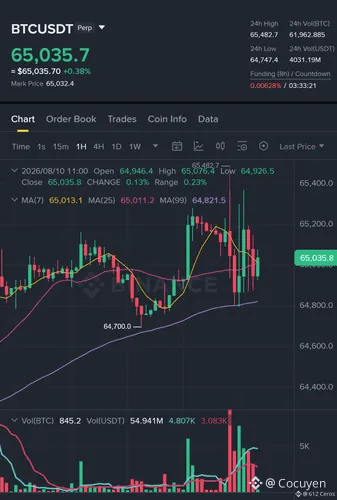
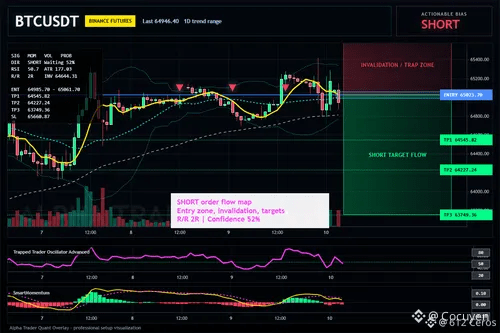
Everyone is staring at the buy order $BTC /USDT—while I’m paying attention to the "collapse" on the 4H chart. Trading plan
$BTC - SHORT
:
Entry price: 64985.70 – 65061.70
SL: 65660.87
TP1: 64545.82
TP2: 64227.24
TP3: 63749.36
Why choose this setup?
- RSI on the 15m timeframe is at 50.72—no momentum, just a dead zone.
- The 1D trend is sideways, but the 4H trend has shifted to SHORT with 52% confidence—weak edge, strong setup.
- Price is stuck around 65,023.70; TP1 at 64,545 is only 0.7% away.
- ATR (1H) = 177—tight coils snap quickly. Why now? Volatility is compressing, and the short orders have three clear targets (64.545 → 64.227 → 63.749).
- The stop-loss at 65,660 helps keep risk low at 1%.
Discussion:
Are we filling the gap up to 64,200, or is this a bullish trap before a strong move at the end of the week—what price level do you think is invalid?
Click here to trade 👇️
Everyone is staring at the buy order $BTC /USDT—while I’m paying attention to the "collapse" on the 4H chart. Trading plan
$BTC - SHORT
:
Entry price: 64985.70 – 65061.70
SL: 65660.87
TP1: 64545.82
TP2: 64227.24
TP3: 63749.36
Why choose this setup?
- RSI on the 15m timeframe is at 50.72—no momentum, just a dead zone.
- The 1D trend is sideways, but the 4H trend has shifted to SHORT with 52% confidence—weak edge, strong setup.
- Price is stuck around 65,023.70; TP1 at 64,545 is only 0.7% away.
- ATR (1H) = 177—tight coils snap quickly. Why now? Volatility is compressing, and the short orders have three clear targets (64.545 → 64.227 → 63.749).
- The stop-loss at 65,660 helps keep risk low at 1%.
Discussion:
Are we filling the gap up to 64,200, or is this a bullish trap before a strong move at the end of the week—what price level do you think is invalid?
Click here to trade 👇️
$BTC - SHORT
:
Entry price: 64985.70 – 65061.70
SL: 65660.87
TP1: 64545.82
TP2: 64227.24
TP3: 63749.36
Why choose this setup?
- RSI on the 15m timeframe is at 50.72—no momentum, just a dead zone.
- The 1D trend is sideways, but the 4H trend has shifted to SHORT with 52% confidence—weak edge, strong setup.
- Price is stuck around 65,023.70; TP1 at 64,545 is only 0.7% away.
- ATR (1H) = 177—tight coils snap quickly. Why now? Volatility is compressing, and the short orders have three clear targets (64.545 → 64.227 → 63.749).
- The stop-loss at 65,660 helps keep risk low at 1%.
Discussion:
Are we filling the gap up to 64,200, or is this a bullish trap before a strong move at the end of the week—what price level do you think is invalid?
Click here to trade 👇️
19
·
--
Bearish
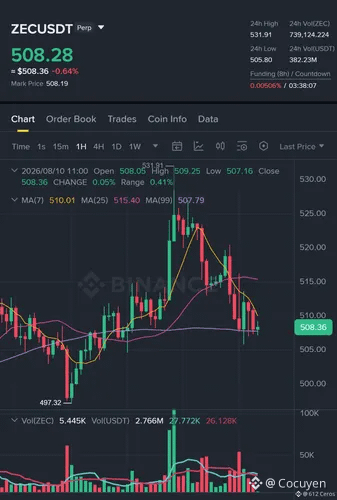
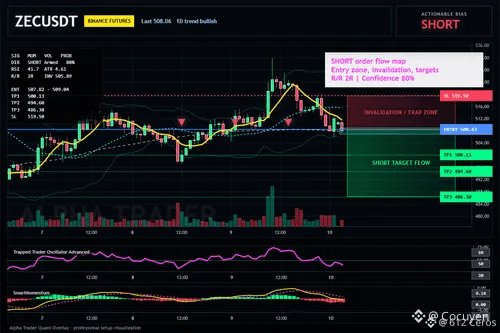
The daily uptrend of ZEC is exactly the trap that short-sellers love to set. Trading plan
$ZEC /USDT - SHORT SELL
:
Entry: 507.82 – 509.04
Stop loss: 519.50 Take profit
1: 500.13
Take profit 2: 494.60
Take profit 3: 486.30
Why choose this setup?
- The 4H trend leans toward short-selling with 80% confidence, but the 1D trend suggests “price increase” — that’s the friction zone.
- The 15m RSI at 41.7 indicates momentum has started to weaken; it’s not oversold yet.
- The entry zone 507.82–509.04 sits below the 4H pivot point; Take profit 1 at 500.13 is the first real support test—if this level breaks, Take profit 2 (494.60) will be reached quickly.
- The 1h ATR at 4.61 means about 5 swings per candle; this movement is tight and not chaotic.
- Why now? Price is stalling below the resistance level while shorter timeframes are dropping strongly—that’s the classic sign right before a trend break.
Discussion:
Are we seeing a downward correction in an uptrend that’s being sold off near TP2, or will the 1D trend soon invalidate this short order at 505.89?
Click here to trade 👇️
The daily uptrend of ZEC is exactly the trap that short-sellers love to set. Trading plan
$ZEC /USDT - SHORT SELL
:
Entry: 507.82 – 509.04
Stop loss: 519.50 Take profit
1: 500.13
Take profit 2: 494.60
Take profit 3: 486.30
Why choose this setup?
- The 4H trend leans toward short-selling with 80% confidence, but the 1D trend suggests “price increase” — that’s the friction zone.
- The 15m RSI at 41.7 indicates momentum has started to weaken; it’s not oversold yet.
- The entry zone 507.82–509.04 sits below the 4H pivot point; Take profit 1 at 500.13 is the first real support test—if this level breaks, Take profit 2 (494.60) will be reached quickly.
- The 1h ATR at 4.61 means about 5 swings per candle; this movement is tight and not chaotic.
- Why now? Price is stalling below the resistance level while shorter timeframes are dropping strongly—that’s the classic sign right before a trend break.
Discussion:
Are we seeing a downward correction in an uptrend that’s being sold off near TP2, or will the 1D trend soon invalidate this short order at 505.89?
Click here to trade 👇️
$ZEC /USDT - SHORT SELL
:
Entry: 507.82 – 509.04
Stop loss: 519.50 Take profit
1: 500.13
Take profit 2: 494.60
Take profit 3: 486.30
Why choose this setup?
- The 4H trend leans toward short-selling with 80% confidence, but the 1D trend suggests “price increase” — that’s the friction zone.
- The 15m RSI at 41.7 indicates momentum has started to weaken; it’s not oversold yet.
- The entry zone 507.82–509.04 sits below the 4H pivot point; Take profit 1 at 500.13 is the first real support test—if this level breaks, Take profit 2 (494.60) will be reached quickly.
- The 1h ATR at 4.61 means about 5 swings per candle; this movement is tight and not chaotic.
- Why now? Price is stalling below the resistance level while shorter timeframes are dropping strongly—that’s the classic sign right before a trend break.
Discussion:
Are we seeing a downward correction in an uptrend that’s being sold off near TP2, or will the 1D trend soon invalidate this short order at 505.89?
Click here to trade 👇️
44
·
--
Bearish
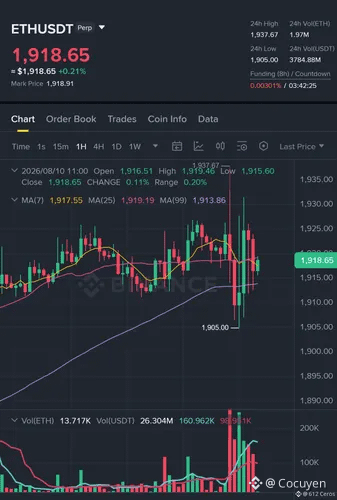
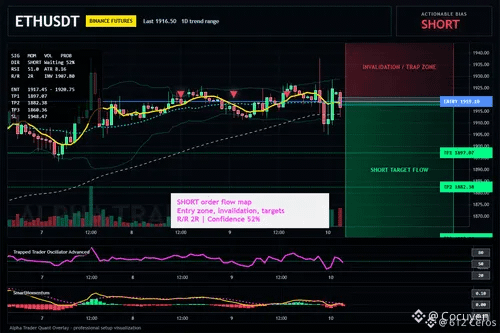
Everyone is watching Bitcoin, but the 4H chart of $ETH /USDT is quietly setting a trap that most won’t notice until it “snaps.”
$ETH - SHORT
Trading plan:
Entry: 1917.45 – 1920.75
SL: 1948.47
TP1: 1897.07
TP2: 1882.38
TP3: 1860.36
Why set this up?
- Price is being “pinned” at 1919.10, right at the 4H reference — but the 15m RSI (50.99) shows there’s no momentum; it’s just standby.
- The 1D trend is sideways, but the SHORT signal (Conf: 52) with a -1.5 point indicates selling pressure is quietly building underneath the surface.
- ATR (8.16) is relatively tight—meaning when a breakout happens, it will be violent. The area from 1917 to 1920 looks like a spring, not a solid “floor.”
- If 1907.80 invalidates this scenario, the LONG alt targets (1941–1977) will tempt you — but that’s the answer. The main roadmap: TP1 at 1897, TP2 at 1882.
Debate:
Are we seeing a dead-cat bounce at 1919, or is this the final shake before the real dump to 1882?
Click here to trade 👇️
Everyone is watching Bitcoin, but the 4H chart of $ETH /USDT is quietly setting a trap that most won’t notice until it “snaps.”
$ETH - SHORT
Trading plan:
Entry: 1917.45 – 1920.75
SL: 1948.47
TP1: 1897.07
TP2: 1882.38
TP3: 1860.36
Why set this up?
- Price is being “pinned” at 1919.10, right at the 4H reference — but the 15m RSI (50.99) shows there’s no momentum; it’s just standby.
- The 1D trend is sideways, but the SHORT signal (Conf: 52) with a -1.5 point indicates selling pressure is quietly building underneath the surface.
- ATR (8.16) is relatively tight—meaning when a breakout happens, it will be violent. The area from 1917 to 1920 looks like a spring, not a solid “floor.”
- If 1907.80 invalidates this scenario, the LONG alt targets (1941–1977) will tempt you — but that’s the answer. The main roadmap: TP1 at 1897, TP2 at 1882.
Debate:
Are we seeing a dead-cat bounce at 1919, or is this the final shake before the real dump to 1882?
Click here to trade 👇️
$ETH - SHORT
Trading plan:
Entry: 1917.45 – 1920.75
SL: 1948.47
TP1: 1897.07
TP2: 1882.38
TP3: 1860.36
Why set this up?
- Price is being “pinned” at 1919.10, right at the 4H reference — but the 15m RSI (50.99) shows there’s no momentum; it’s just standby.
- The 1D trend is sideways, but the SHORT signal (Conf: 52) with a -1.5 point indicates selling pressure is quietly building underneath the surface.
- ATR (8.16) is relatively tight—meaning when a breakout happens, it will be violent. The area from 1917 to 1920 looks like a spring, not a solid “floor.”
- If 1907.80 invalidates this scenario, the LONG alt targets (1941–1977) will tempt you — but that’s the answer. The main roadmap: TP1 at 1897, TP2 at 1882.
Debate:
Are we seeing a dead-cat bounce at 1919, or is this the final shake before the real dump to 1882?
Click here to trade 👇️
19
·
--
Bearish
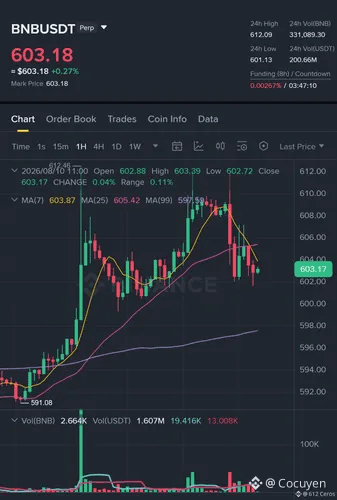
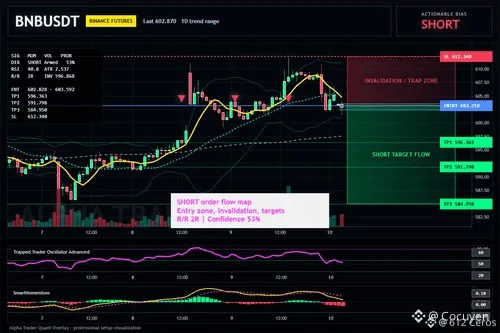
People are following LONG from the BNB command while the market is quietly flipping direction to create a trap.
$BNB /USDT - SHORT
Trading plan:
Entry: 602.828 – 603.592
SL: 612.340
TP1: 596.363
TP2: 591.798
TP3: 584.950
Why set this up?
- The 4H trend is SHORT with a confidence level of 53%—it doesn’t have to be crystal clear, but the edge is 2.5.
- Price is at 603.21, hovering around the bottom zone for the entry while the 15m RSI is at 40.76—momentum is weakening, no sudden explosion.
- The 1D trend is “range-bound,” so we widen the limits. The short route to TP1 (596.36) is only 1.1% away; the alt targets in the direction of LONG require a breakout that current data doesn’t support yet.
- Why now? The 1h ATR is 2.53—volatility is tightening, meaning any breakout in the direction will be very strong. The data found with a minimum returning path points downward.
Discussion:
Will we see a gradual “bullish fade” in the pullback toward 596, or will the 603.59 top get swept first?
Click here to trade 👇️
People are following LONG from the BNB command while the market is quietly flipping direction to create a trap.
$BNB /USDT - SHORT
Trading plan:
Entry: 602.828 – 603.592
SL: 612.340
TP1: 596.363
TP2: 591.798
TP3: 584.950
Why set this up?
- The 4H trend is SHORT with a confidence level of 53%—it doesn’t have to be crystal clear, but the edge is 2.5.
- Price is at 603.21, hovering around the bottom zone for the entry while the 15m RSI is at 40.76—momentum is weakening, no sudden explosion.
- The 1D trend is “range-bound,” so we widen the limits. The short route to TP1 (596.36) is only 1.1% away; the alt targets in the direction of LONG require a breakout that current data doesn’t support yet.
- Why now? The 1h ATR is 2.53—volatility is tightening, meaning any breakout in the direction will be very strong. The data found with a minimum returning path points downward.
Discussion:
Will we see a gradual “bullish fade” in the pullback toward 596, or will the 603.59 top get swept first?
Click here to trade 👇️
$BNB /USDT - SHORT
Trading plan:
Entry: 602.828 – 603.592
SL: 612.340
TP1: 596.363
TP2: 591.798
TP3: 584.950
Why set this up?
- The 4H trend is SHORT with a confidence level of 53%—it doesn’t have to be crystal clear, but the edge is 2.5.
- Price is at 603.21, hovering around the bottom zone for the entry while the 15m RSI is at 40.76—momentum is weakening, no sudden explosion.
- The 1D trend is “range-bound,” so we widen the limits. The short route to TP1 (596.36) is only 1.1% away; the alt targets in the direction of LONG require a breakout that current data doesn’t support yet.
- Why now? The 1h ATR is 2.53—volatility is tightening, meaning any breakout in the direction will be very strong. The data found with a minimum returning path points downward.
Discussion:
Will we see a gradual “bullish fade” in the pullback toward 596, or will the 603.59 top get swept first?
Click here to trade 👇️
16
·
--
Bullish
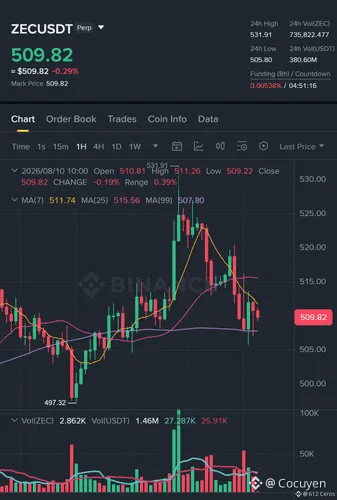
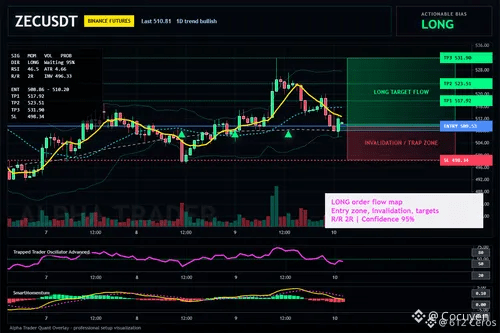
ZEC's 4h chart is screaming a long-term uptrend, but when the 15m RSI suddenly explodes, it whispers doubts—who’s lying?
$ZEC /USDT -
Planned LONG trade:
Entry: 508.86 – 510.20
SL: 498.34
TP1: 517.92
TP2: 523.51
TP3: 531.90
Why this setup?
- The Daily timeframe trend is rising, and the 4h structure has just rejected a drop, keeping 508.86–510.20 as a bounce point.
- RSI at 46 on the 15m timeframe gives us a “cool” entry point before the next push—neither too hot nor dead.
- TP1 at 517.92 is 1.6R, but TP3 at 531.90 is the real reward if the captured volume is right.
- Invalidate/disable the level at 496.33—risk has been defined, and the upside edge is opening.
Why now? The market is waiting to complete the gap between the 4h resistance and the Daily support.
Debate:
Are we moving ahead of the breakout toward 531, or will it stall at 498 first?
Click here to trade 👇️
ZEC's 4h chart is screaming a long-term uptrend, but when the 15m RSI suddenly explodes, it whispers doubts—who’s lying?
$ZEC /USDT -
Planned LONG trade:
Entry: 508.86 – 510.20
SL: 498.34
TP1: 517.92
TP2: 523.51
TP3: 531.90
Why this setup?
- The Daily timeframe trend is rising, and the 4h structure has just rejected a drop, keeping 508.86–510.20 as a bounce point.
- RSI at 46 on the 15m timeframe gives us a “cool” entry point before the next push—neither too hot nor dead.
- TP1 at 517.92 is 1.6R, but TP3 at 531.90 is the real reward if the captured volume is right.
- Invalidate/disable the level at 496.33—risk has been defined, and the upside edge is opening.
Why now? The market is waiting to complete the gap between the 4h resistance and the Daily support.
Debate:
Are we moving ahead of the breakout toward 531, or will it stall at 498 first?
Click here to trade 👇️
$ZEC /USDT -
Planned LONG trade:
Entry: 508.86 – 510.20
SL: 498.34
TP1: 517.92
TP2: 523.51
TP3: 531.90
Why this setup?
- The Daily timeframe trend is rising, and the 4h structure has just rejected a drop, keeping 508.86–510.20 as a bounce point.
- RSI at 46 on the 15m timeframe gives us a “cool” entry point before the next push—neither too hot nor dead.
- TP1 at 517.92 is 1.6R, but TP3 at 531.90 is the real reward if the captured volume is right.
- Invalidate/disable the level at 496.33—risk has been defined, and the upside edge is opening.
Why now? The market is waiting to complete the gap between the 4h resistance and the Daily support.
Debate:
Are we moving ahead of the breakout toward 531, or will it stall at 498 first?
Click here to trade 👇️
34
·
--
Bearish
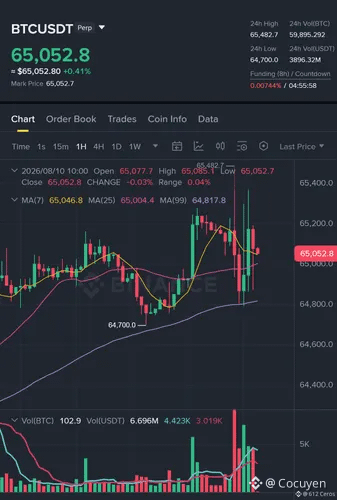
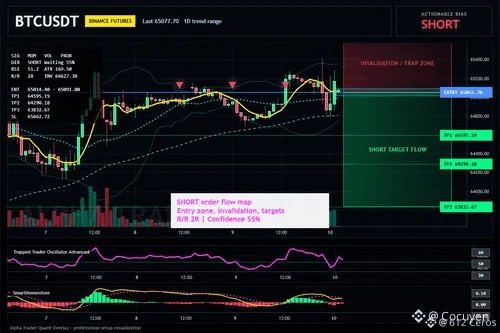
Everyone is watching the 1D zone—yet the 4h timeframe just quietly whispers a secret to keep calm and peace of mind.
$BTC /USDT - SHORT
Trading plan:
Entry: 65014.40 – 65091.00
SL: 65662.72
TP1: 64595.19
TP2: 64290.18
TP3: 63832.67
Why set this up?
- RSI on the 15m timeframe is at 51.18: there’s no “fuel” energy—more like a flat tire before the big drop.
- ATR (169.49) for the moving window has been identified; the 4h bias is SHORT (Conf: 55), leaning into the lower range.
- Entering at 65,052.70 with TP1 at 64,595—that’s a 0.7% slip before the real strong move down to TP3 (63,832).
- Why right now? Price is sitting in the middle of the boundaries, and the 1D trend says “range (sideways),” but the 4h timeframe says “rejection (refuse).”
Debate:
Are you “going against the flow” by shorting this 4h setup on the 1D range floor—or is this a fakeout before a powerful push up to 65,662?
Click here to trade 👇️
Everyone is watching the 1D zone—yet the 4h timeframe just quietly whispers a secret to keep calm and peace of mind.
$BTC /USDT - SHORT
Trading plan:
Entry: 65014.40 – 65091.00
SL: 65662.72
TP1: 64595.19
TP2: 64290.18
TP3: 63832.67
Why set this up?
- RSI on the 15m timeframe is at 51.18: there’s no “fuel” energy—more like a flat tire before the big drop.
- ATR (169.49) for the moving window has been identified; the 4h bias is SHORT (Conf: 55), leaning into the lower range.
- Entering at 65,052.70 with TP1 at 64,595—that’s a 0.7% slip before the real strong move down to TP3 (63,832).
- Why right now? Price is sitting in the middle of the boundaries, and the 1D trend says “range (sideways),” but the 4h timeframe says “rejection (refuse).”
Debate:
Are you “going against the flow” by shorting this 4h setup on the 1D range floor—or is this a fakeout before a powerful push up to 65,662?
Click here to trade 👇️
$BTC /USDT - SHORT
Trading plan:
Entry: 65014.40 – 65091.00
SL: 65662.72
TP1: 64595.19
TP2: 64290.18
TP3: 63832.67
Why set this up?
- RSI on the 15m timeframe is at 51.18: there’s no “fuel” energy—more like a flat tire before the big drop.
- ATR (169.49) for the moving window has been identified; the 4h bias is SHORT (Conf: 55), leaning into the lower range.
- Entering at 65,052.70 with TP1 at 64,595—that’s a 0.7% slip before the real strong move down to TP3 (63,832).
- Why right now? Price is sitting in the middle of the boundaries, and the 1D trend says “range (sideways),” but the 4h timeframe says “rejection (refuse).”
Debate:
Are you “going against the flow” by shorting this 4h setup on the 1D range floor—or is this a fakeout before a powerful push up to 65,662?
Click here to trade 👇️
12
·
--
Bearish
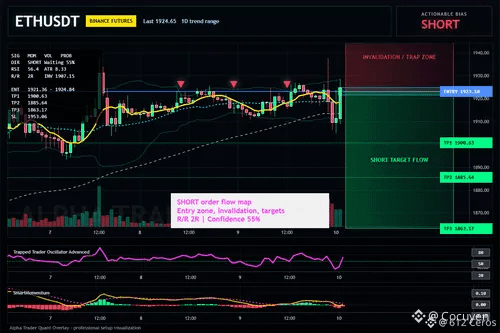
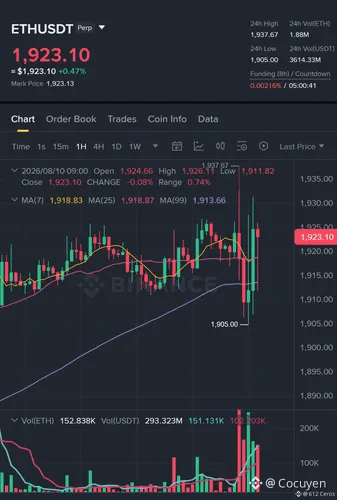
Everyone is watching $ETH /USDT, waiting for a breakthrough—but the 4H chart is whispering a different story.
$ETH - SHORT
Trading plan:
Entry: 1921.36 – 1924.84
SL: 1953.06
TP1: 1900.63
TP2: 1885.64
TP3: 1863.17
Why this setup?
- The 1D trend is *sideways*, not a trend—so trade in the opposite direction when price retraces; don’t chase.
- The 15m RSI at 56.36 suggests slight upward momentum, but the 4H structure is capped around 1923.10.
- Short bias (confidence 55.4) to 1900.63 first, then 1885.64—an efficient drop of about 1.2% to 2% from the reference demand.
- The invalidation zone is at 1907.15, meaning if we drop to that level, the door closes below it—so this is *now or never* before this range tightens.
Debate:
Is this high a trap for LONG orders, or are we just one candle away from a fake move up to 1945? Vote with your chart.
Click here to trade 👇️
Everyone is watching $ETH /USDT, waiting for a breakthrough—but the 4H chart is whispering a different story.
$ETH - SHORT
Trading plan:
Entry: 1921.36 – 1924.84
SL: 1953.06
TP1: 1900.63
TP2: 1885.64
TP3: 1863.17
Why this setup?
- The 1D trend is *sideways*, not a trend—so trade in the opposite direction when price retraces; don’t chase.
- The 15m RSI at 56.36 suggests slight upward momentum, but the 4H structure is capped around 1923.10.
- Short bias (confidence 55.4) to 1900.63 first, then 1885.64—an efficient drop of about 1.2% to 2% from the reference demand.
- The invalidation zone is at 1907.15, meaning if we drop to that level, the door closes below it—so this is *now or never* before this range tightens.
Debate:
Is this high a trap for LONG orders, or are we just one candle away from a fake move up to 1945? Vote with your chart.
Click here to trade 👇️
$ETH - SHORT
Trading plan:
Entry: 1921.36 – 1924.84
SL: 1953.06
TP1: 1900.63
TP2: 1885.64
TP3: 1863.17
Why this setup?
- The 1D trend is *sideways*, not a trend—so trade in the opposite direction when price retraces; don’t chase.
- The 15m RSI at 56.36 suggests slight upward momentum, but the 4H structure is capped around 1923.10.
- Short bias (confidence 55.4) to 1900.63 first, then 1885.64—an efficient drop of about 1.2% to 2% from the reference demand.
- The invalidation zone is at 1907.15, meaning if we drop to that level, the door closes below it—so this is *now or never* before this range tightens.
Debate:
Is this high a trap for LONG orders, or are we just one candle away from a fake move up to 1945? Vote with your chart.
Click here to trade 👇️
10
·
--
Bearish
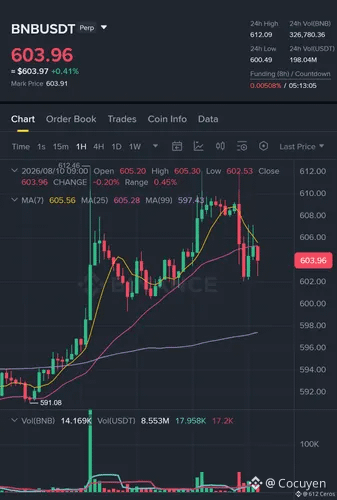
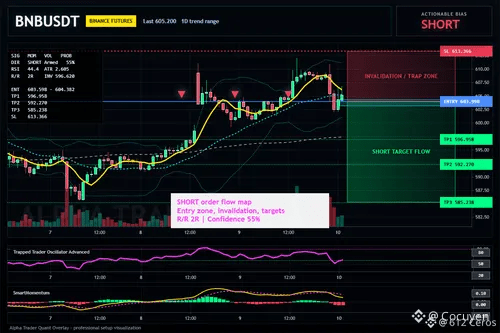
Everyone is watching 604, but the real trap has already been set below 597.
$BNB /USDT - SHORT
Trading plan:
Entry: 603.598 – 604.382
SL: 613.366
TP1: 596.958
TP2: 592.270
TP3: 585.238
Why set this up?
- The 4H structure indicates SHORT, but the confidence level is only 55—not a knockout, but a strategic move.
- The 15m RSI is at 44.37: weak mode—there isn’t enough buying power to save the bulls.
- ATR on the 1H timeframe (2.60) shows volatility is compressing—when a breakout happens, it will be violent, and the path with the fewest obstacles is downward to TP1 (596.9) then TP2 (592.2).
- The critical invalidation zone is at 596.6; if it’s breached, the SHORT thesis dies immediately.
Discussion:
If price hits 597.5 first, would you enter a SHORT again after a retest, or wait for the 4H candle to close below that level?
Click here to Trade 👇️
Everyone is watching 604, but the real trap has already been set below 597.
$BNB /USDT - SHORT
Trading plan:
Entry: 603.598 – 604.382
SL: 613.366
TP1: 596.958
TP2: 592.270
TP3: 585.238
Why set this up?
- The 4H structure indicates SHORT, but the confidence level is only 55—not a knockout, but a strategic move.
- The 15m RSI is at 44.37: weak mode—there isn’t enough buying power to save the bulls.
- ATR on the 1H timeframe (2.60) shows volatility is compressing—when a breakout happens, it will be violent, and the path with the fewest obstacles is downward to TP1 (596.9) then TP2 (592.2).
- The critical invalidation zone is at 596.6; if it’s breached, the SHORT thesis dies immediately.
Discussion:
If price hits 597.5 first, would you enter a SHORT again after a retest, or wait for the 4H candle to close below that level?
Click here to Trade 👇️
$BNB /USDT - SHORT
Trading plan:
Entry: 603.598 – 604.382
SL: 613.366
TP1: 596.958
TP2: 592.270
TP3: 585.238
Why set this up?
- The 4H structure indicates SHORT, but the confidence level is only 55—not a knockout, but a strategic move.
- The 15m RSI is at 44.37: weak mode—there isn’t enough buying power to save the bulls.
- ATR on the 1H timeframe (2.60) shows volatility is compressing—when a breakout happens, it will be violent, and the path with the fewest obstacles is downward to TP1 (596.9) then TP2 (592.2).
- The critical invalidation zone is at 596.6; if it’s breached, the SHORT thesis dies immediately.
Discussion:
If price hits 597.5 first, would you enter a SHORT again after a retest, or wait for the 4H candle to close below that level?
Click here to Trade 👇️
50
·
--
Bullish
People are looking at BTC—but this 4h chart is quietly tightening up, ready for a 3% squeeze.
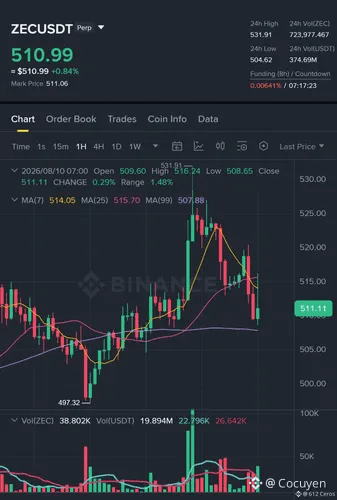
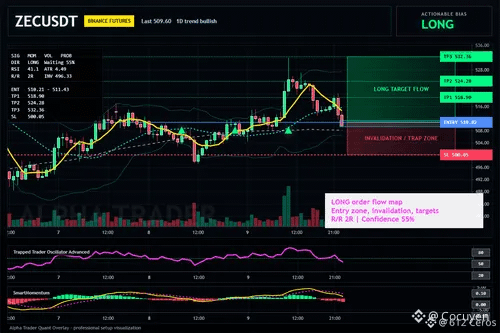
$ZEC /USDT - LONG
Trading plan:
Entry: 510.21 – 511.43
SL: 500.05
TP1: 518.90
TP2: 524.28
TP3: 532.36
Why set it up this way?
- The daily timeframe trend is bullish, but the 15m RSI is at 41—liquidity is being swept before the push.
- The entry zone 510.21–511.43 is “holding” like a magnet; TP1 at 518.90 is only 1.5% away.
- ATR (1h) at 4.48 suggests volatility is being compressed—breakout here would be violent, not gradual.
- Why now? The “waiting” state is the signal: smart money is loading up ahead of the 4h candle close.
Discussion:
Are we entering early before the 524.28 touch, or is this a fakeout before the trap at 500.05?
Click here to Trade 👇️
People are looking at BTC—but this 4h chart is quietly tightening up, ready for a 3% squeeze.
$ZEC /USDT - LONG
Trading plan:
Entry: 510.21 – 511.43
SL: 500.05
TP1: 518.90
TP2: 524.28
TP3: 532.36
Why set it up this way?
- The daily timeframe trend is bullish, but the 15m RSI is at 41—liquidity is being swept before the push.
- The entry zone 510.21–511.43 is “holding” like a magnet; TP1 at 518.90 is only 1.5% away.
- ATR (1h) at 4.48 suggests volatility is being compressed—breakout here would be violent, not gradual.
- Why now? The “waiting” state is the signal: smart money is loading up ahead of the 4h candle close.
Discussion:
Are we entering early before the 524.28 touch, or is this a fakeout before the trap at 500.05?
Click here to Trade 👇️
$ZEC /USDT - LONG
Trading plan:
Entry: 510.21 – 511.43
SL: 500.05
TP1: 518.90
TP2: 524.28
TP3: 532.36
Why set it up this way?
- The daily timeframe trend is bullish, but the 15m RSI is at 41—liquidity is being swept before the push.
- The entry zone 510.21–511.43 is “holding” like a magnet; TP1 at 518.90 is only 1.5% away.
- ATR (1h) at 4.48 suggests volatility is being compressed—breakout here would be violent, not gradual.
- Why now? The “waiting” state is the signal: smart money is loading up ahead of the 4h candle close.
Discussion:
Are we entering early before the 524.28 touch, or is this a fakeout before the trap at 500.05?
Click here to Trade 👇️
117
·
--
Bearish
Everyone’s focused on the uptrend, but the 4H candle has just whispered a different name.
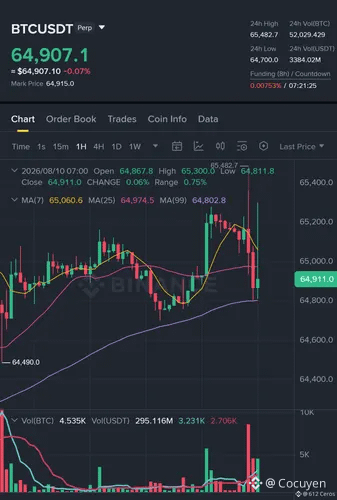
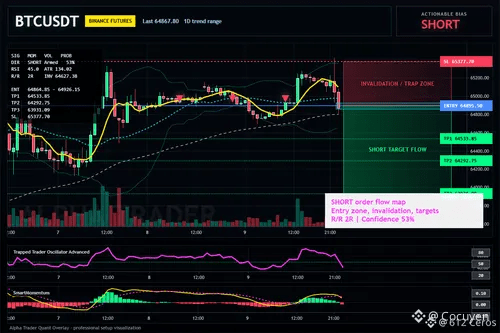
$BTC /USDT - SHORT
Trading plan:
Entry: 64864.85 – 64926.15
SL: 65377.70
TP1: 64533.85
TP2: 64292.75
TP3: 63931.09
Why set it up like this?
- $BTC is around 64,895, but the 1D trend is flat like a “range” — there’s no fuel for the bulls.
- The 15m RSI is cooling down at 44.96; momentum is weakening, and there hasn’t been any reversal yet.
- This short setup is “Ready to Go”: entry at 64,895, TP1 at 64,533, TP2 at 64,292. It’s a clean 0.9% down move before any resistance zones.
- Why right now? ATR (1h) at 134 shows volatility is contracting—breakouts out of a range often fail quickly, and this scenario has a 52.76% edge, not a coin-flip kind of play.
Debate:
Are you planning to fade the short from the range down to TP2, or is the cut at 65,377 the real trap?
Click here to trade 👇️
Everyone’s focused on the uptrend, but the 4H candle has just whispered a different name.
$BTC /USDT - SHORT
Trading plan:
Entry: 64864.85 – 64926.15
SL: 65377.70
TP1: 64533.85
TP2: 64292.75
TP3: 63931.09
Why set it up like this?
- $BTC is around 64,895, but the 1D trend is flat like a “range” — there’s no fuel for the bulls.
- The 15m RSI is cooling down at 44.96; momentum is weakening, and there hasn’t been any reversal yet.
- This short setup is “Ready to Go”: entry at 64,895, TP1 at 64,533, TP2 at 64,292. It’s a clean 0.9% down move before any resistance zones.
- Why right now? ATR (1h) at 134 shows volatility is contracting—breakouts out of a range often fail quickly, and this scenario has a 52.76% edge, not a coin-flip kind of play.
Debate:
Are you planning to fade the short from the range down to TP2, or is the cut at 65,377 the real trap?
Click here to trade 👇️
$BTC /USDT - SHORT
Trading plan:
Entry: 64864.85 – 64926.15
SL: 65377.70
TP1: 64533.85
TP2: 64292.75
TP3: 63931.09
Why set it up like this?
- $BTC is around 64,895, but the 1D trend is flat like a “range” — there’s no fuel for the bulls.
- The 15m RSI is cooling down at 44.96; momentum is weakening, and there hasn’t been any reversal yet.
- This short setup is “Ready to Go”: entry at 64,895, TP1 at 64,533, TP2 at 64,292. It’s a clean 0.9% down move before any resistance zones.
- Why right now? ATR (1h) at 134 shows volatility is contracting—breakouts out of a range often fail quickly, and this scenario has a 52.76% edge, not a coin-flip kind of play.
Debate:
Are you planning to fade the short from the range down to TP2, or is the cut at 65,377 the real trap?
Click here to trade 👇️
1
69
·
--
Bearish
Everyone is staring at 605 while the 4H chart quietly screams lower.
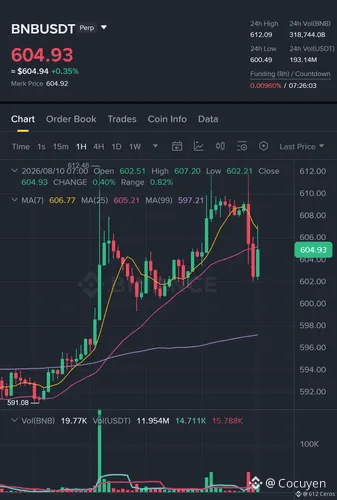
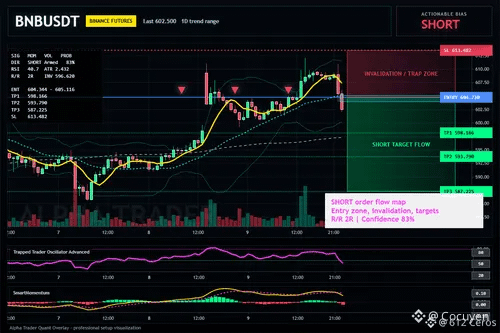
$BNB /USDT - SHORT
Trade Plan:
Entry: 604.344 – 605.116
SL: 613.482
TP1: 598.166
TP2: 593.790
TP3: 587.225
Why this setup?
- $BNB is pinned at 604.73, but momentum is fading—RSI 15m sits at 40.72, already below mid-range.
- 1D trend is *range*, not breakout—mean reversion favors the downside.
- The short setup is armed with 83% confidence: TP1 at 598.16 is only 1% away, but the real juice is TP3 at 587.22.
- ATR 1H = 2.43 means a single candle can cover the distance to TP1 before you blink.
- Why now? Price is rejecting the 605.11 upper boundary while the long score is -1.8—the path of least resistance is down.
Debate:
If BNB dips to 598, do you fade the bounce or ride it straight to 587?
Click here to Trade 👇️
Everyone is staring at 605 while the 4H chart quietly screams lower.
$BNB /USDT - SHORT
Trade Plan:
Entry: 604.344 – 605.116
SL: 613.482
TP1: 598.166
TP2: 593.790
TP3: 587.225
Why this setup?
- $BNB is pinned at 604.73, but momentum is fading—RSI 15m sits at 40.72, already below mid-range.
- 1D trend is *range*, not breakout—mean reversion favors the downside.
- The short setup is armed with 83% confidence: TP1 at 598.16 is only 1% away, but the real juice is TP3 at 587.22.
- ATR 1H = 2.43 means a single candle can cover the distance to TP1 before you blink.
- Why now? Price is rejecting the 605.11 upper boundary while the long score is -1.8—the path of least resistance is down.
Debate:
If BNB dips to 598, do you fade the bounce or ride it straight to 587?
Click here to Trade 👇️
$BNB /USDT - SHORT
Trade Plan:
Entry: 604.344 – 605.116
SL: 613.482
TP1: 598.166
TP2: 593.790
TP3: 587.225
Why this setup?
- $BNB is pinned at 604.73, but momentum is fading—RSI 15m sits at 40.72, already below mid-range.
- 1D trend is *range*, not breakout—mean reversion favors the downside.
- The short setup is armed with 83% confidence: TP1 at 598.16 is only 1% away, but the real juice is TP3 at 587.22.
- ATR 1H = 2.43 means a single candle can cover the distance to TP1 before you blink.
- Why now? Price is rejecting the 605.11 upper boundary while the long score is -1.8—the path of least resistance is down.
Debate:
If BNB dips to 598, do you fade the bounce or ride it straight to 587?
Click here to Trade 👇️
69
·
--
Bearish
Everyone is watching the $ETH /USDT range—but the 4H watch just started marking the beat.
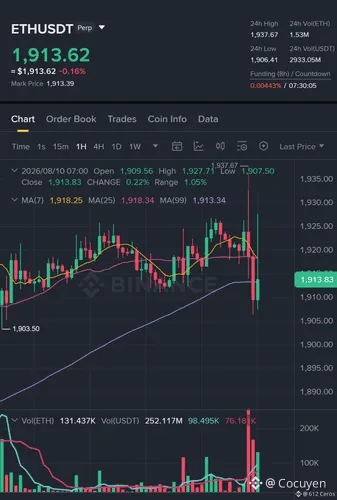
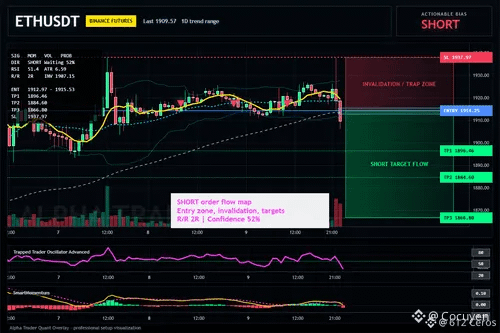
$ETH - SHORT
Trading plan:
Entry: 1912.97 – 1915.53
SL: 1937.97
TP1: 1896.46
TP2: 1884.60
TP3: 1866.80
Why set it this way?
- The price is “stuck” at 1914.25, but the path with the least resistance is downward: TP1 at 1896, TP2 at 1884.
- RSI (15m: 51.4) is moving sideways, not yet oversold—there is still room to fall before buyers step in.
- The 1D trend is “sideways/range,” but with a SHORT bias (confidence 52%) and an SL at 1937.97, the risk of moving against you upward is limited.
- Why now? The 4H structure is compressing; ATR (6.59) suggests a breakout may be coming—and the data is falling before.
Debate:
For range traders: would you short this move right at 1914, or wait for the 1907 level to break before switching to long?
Click here to Trade 👇️
Everyone is watching the $ETH /USDT range—but the 4H watch just started marking the beat.
$ETH - SHORT
Trading plan:
Entry: 1912.97 – 1915.53
SL: 1937.97
TP1: 1896.46
TP2: 1884.60
TP3: 1866.80
Why set it this way?
- The price is “stuck” at 1914.25, but the path with the least resistance is downward: TP1 at 1896, TP2 at 1884.
- RSI (15m: 51.4) is moving sideways, not yet oversold—there is still room to fall before buyers step in.
- The 1D trend is “sideways/range,” but with a SHORT bias (confidence 52%) and an SL at 1937.97, the risk of moving against you upward is limited.
- Why now? The 4H structure is compressing; ATR (6.59) suggests a breakout may be coming—and the data is falling before.
Debate:
For range traders: would you short this move right at 1914, or wait for the 1907 level to break before switching to long?
Click here to Trade 👇️
$ETH - SHORT
Trading plan:
Entry: 1912.97 – 1915.53
SL: 1937.97
TP1: 1896.46
TP2: 1884.60
TP3: 1866.80
Why set it this way?
- The price is “stuck” at 1914.25, but the path with the least resistance is downward: TP1 at 1896, TP2 at 1884.
- RSI (15m: 51.4) is moving sideways, not yet oversold—there is still room to fall before buyers step in.
- The 1D trend is “sideways/range,” but with a SHORT bias (confidence 52%) and an SL at 1937.97, the risk of moving against you upward is limited.
- Why now? The 4H structure is compressing; ATR (6.59) suggests a breakout may be coming—and the data is falling before.
Debate:
For range traders: would you short this move right at 1914, or wait for the 1907 level to break before switching to long?
Click here to Trade 👇️
111
·
--
Bullish
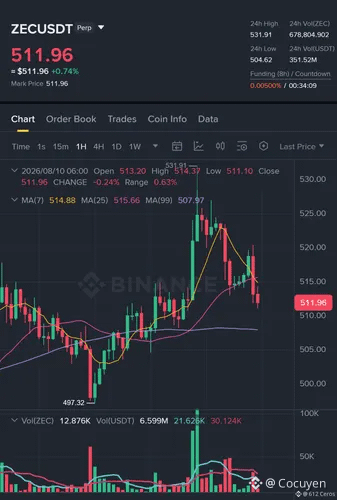
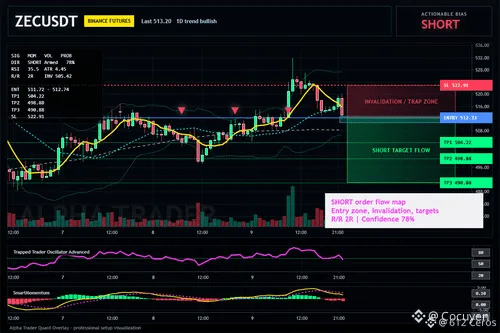
Everyone is getting hot with the daily timeframe, but 4H just issued a SELL signal at $ZEC /USDT. Who’s getting in early?
$ZEC - SHORT
Trading plan:
Entry: 511.72 – 512.74
SL: 522.91
TP1: 504.22
TP2: 498.88
TP3: 490.88
Why set it up like this?
- The 4H timeframe is **ready for a SHORT order** (confidence 77.67) while the 1D timeframe trend is still up—this is a typical intraday correction (pullback) pattern.
- The 15m RSI is currently **35.55**, meaning momentum is weakening quickly compared to the 512.23 level.
- Immediate downside targets: **TP1 at 504.22** and **TP2 at 498.88**. The invalidation zone is at 505.42—short-term risk, big profit.
- Why now? Price is rejecting the upper boundary of the 4H range, and ATR (4.45) indicates a fast bearish move is forming.
Debate:
Are you “fading” the uptrend on the daily timeframe to trade quickly, or waiting for a rebound from 498.88 before entering LONG? Which side are you on?
Click here to Trade 👇️
Everyone is getting hot with the daily timeframe, but 4H just issued a SELL signal at $ZEC /USDT. Who’s getting in early?
$ZEC - SHORT
Trading plan:
Entry: 511.72 – 512.74
SL: 522.91
TP1: 504.22
TP2: 498.88
TP3: 490.88
Why set it up like this?
- The 4H timeframe is **ready for a SHORT order** (confidence 77.67) while the 1D timeframe trend is still up—this is a typical intraday correction (pullback) pattern.
- The 15m RSI is currently **35.55**, meaning momentum is weakening quickly compared to the 512.23 level.
- Immediate downside targets: **TP1 at 504.22** and **TP2 at 498.88**. The invalidation zone is at 505.42—short-term risk, big profit.
- Why now? Price is rejecting the upper boundary of the 4H range, and ATR (4.45) indicates a fast bearish move is forming.
Debate:
Are you “fading” the uptrend on the daily timeframe to trade quickly, or waiting for a rebound from 498.88 before entering LONG? Which side are you on?
Click here to Trade 👇️
$ZEC - SHORT
Trading plan:
Entry: 511.72 – 512.74
SL: 522.91
TP1: 504.22
TP2: 498.88
TP3: 490.88
Why set it up like this?
- The 4H timeframe is **ready for a SHORT order** (confidence 77.67) while the 1D timeframe trend is still up—this is a typical intraday correction (pullback) pattern.
- The 15m RSI is currently **35.55**, meaning momentum is weakening quickly compared to the 512.23 level.
- Immediate downside targets: **TP1 at 504.22** and **TP2 at 498.88**. The invalidation zone is at 505.42—short-term risk, big profit.
- Why now? Price is rejecting the upper boundary of the 4H range, and ATR (4.45) indicates a fast bearish move is forming.
Debate:
Are you “fading” the uptrend on the daily timeframe to trade quickly, or waiting for a rebound from 498.88 before entering LONG? Which side are you on?
Click here to Trade 👇️
86
·
--
Bullish
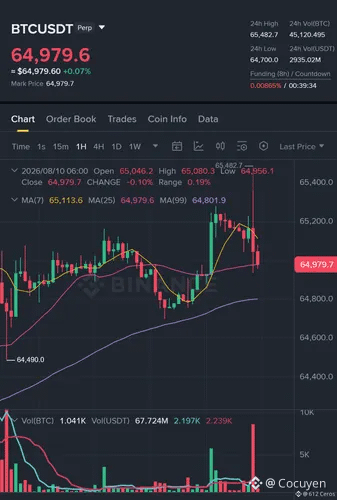
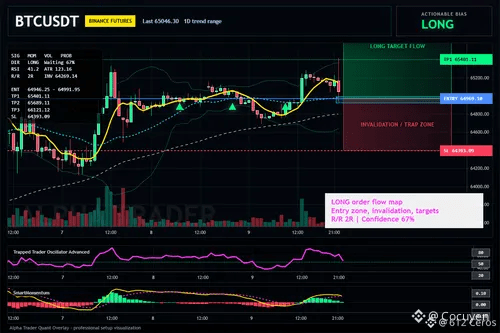
Everyone is watching the 1D zone, but the 4h chart is quietly loading up the spring.
$BTC /USDT - LONG
Trading plan:
Entry: 64946.25 – 64991.95
SL: 64393.09
TP1: 65401.11
TP2: 65689.11
TP3: 66121.12
Why set this up?
- The 15m RSI is at 41.16—still not overbought, but it’s being “rolled back” hidden beneath the surface.
- Price is holding close to the 64,969 level with a narrow ATR (123)—compression usually comes before expansion.
- Our edge is 5.5 points leaning toward LONG, but the 1D zone is saying “be patient”—the breakout door is right now.
- TP1 at 65,401 is a 0.66% scalp; TP3 at 66,121 is the real target if volume confirms.
Debate:
Is this a fakeout pump before the daily range flush, or the first step of a 4h reversal?
Click here to Trade 👇️
Everyone is watching the 1D zone, but the 4h chart is quietly loading up the spring.
$BTC /USDT - LONG
Trading plan:
Entry: 64946.25 – 64991.95
SL: 64393.09
TP1: 65401.11
TP2: 65689.11
TP3: 66121.12
Why set this up?
- The 15m RSI is at 41.16—still not overbought, but it’s being “rolled back” hidden beneath the surface.
- Price is holding close to the 64,969 level with a narrow ATR (123)—compression usually comes before expansion.
- Our edge is 5.5 points leaning toward LONG, but the 1D zone is saying “be patient”—the breakout door is right now.
- TP1 at 65,401 is a 0.66% scalp; TP3 at 66,121 is the real target if volume confirms.
Debate:
Is this a fakeout pump before the daily range flush, or the first step of a 4h reversal?
Click here to Trade 👇️
$BTC /USDT - LONG
Trading plan:
Entry: 64946.25 – 64991.95
SL: 64393.09
TP1: 65401.11
TP2: 65689.11
TP3: 66121.12
Why set this up?
- The 15m RSI is at 41.16—still not overbought, but it’s being “rolled back” hidden beneath the surface.
- Price is holding close to the 64,969 level with a narrow ATR (123)—compression usually comes before expansion.
- Our edge is 5.5 points leaning toward LONG, but the 1D zone is saying “be patient”—the breakout door is right now.
- TP1 at 65,401 is a 0.66% scalp; TP3 at 66,121 is the real target if volume confirms.
Debate:
Is this a fakeout pump before the daily range flush, or the first step of a 4h reversal?
Click here to Trade 👇️
41
·
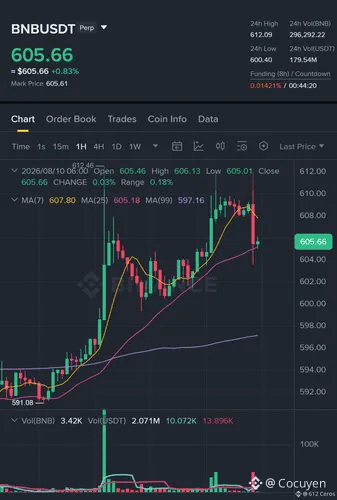
--
Bearish
Everyone is paying attention to the breakout $BNB /USDT — but the 4H band is quietly whispering another secret.
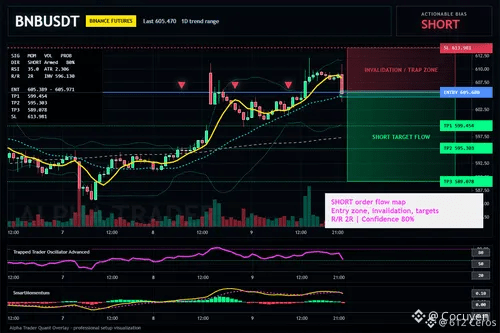
$BNB - SHORT
Trading plan:
Entry: 605.389 – 605.971
SL: 613.981
TP1: 599.454
TP2: 595.303
TP3: 589.078
Why this setup?
- The signal is **SHORT** with a confidence of 79.7%, and the 1D trend is clearly stuck in a **range** — not a breakout.
- RSI on the 15m timeframe is already at **35.05**, indicating early bearish momentum, while the 1h ATR (2.31) shows we still have room to fall.
- Current price is **605.68**, with immediate downside targets **599.45** (TP1) and **595.30** (TP2). The stop-loss at **613.98** is fairly tight, giving a solid risk/reward ratio of 1:2 or higher.
- Why now? The "Armed" status means the setup is active — waiting for the next 4H candle to confirm rejection at the range high.
Discussion:
Are you with us to ambush this range high, or are you still chasing a LONG position that hasn’t printed yet?
Click here to Trade 👇️
Everyone is paying attention to the breakout $BNB /USDT — but the 4H band is quietly whispering another secret.
$BNB - SHORT
Trading plan:
Entry: 605.389 – 605.971
SL: 613.981
TP1: 599.454
TP2: 595.303
TP3: 589.078
Why this setup?
- The signal is **SHORT** with a confidence of 79.7%, and the 1D trend is clearly stuck in a **range** — not a breakout.
- RSI on the 15m timeframe is already at **35.05**, indicating early bearish momentum, while the 1h ATR (2.31) shows we still have room to fall.
- Current price is **605.68**, with immediate downside targets **599.45** (TP1) and **595.30** (TP2). The stop-loss at **613.98** is fairly tight, giving a solid risk/reward ratio of 1:2 or higher.
- Why now? The "Armed" status means the setup is active — waiting for the next 4H candle to confirm rejection at the range high.
Discussion:
Are you with us to ambush this range high, or are you still chasing a LONG position that hasn’t printed yet?
Click here to Trade 👇️
$BNB - SHORT
Trading plan:
Entry: 605.389 – 605.971
SL: 613.981
TP1: 599.454
TP2: 595.303
TP3: 589.078
Why this setup?
- The signal is **SHORT** with a confidence of 79.7%, and the 1D trend is clearly stuck in a **range** — not a breakout.
- RSI on the 15m timeframe is already at **35.05**, indicating early bearish momentum, while the 1h ATR (2.31) shows we still have room to fall.
- Current price is **605.68**, with immediate downside targets **599.45** (TP1) and **595.30** (TP2). The stop-loss at **613.98** is fairly tight, giving a solid risk/reward ratio of 1:2 or higher.
- Why now? The "Armed" status means the setup is active — waiting for the next 4H candle to confirm rejection at the range high.
Discussion:
Are you with us to ambush this range high, or are you still chasing a LONG position that hasn’t printed yet?
Click here to Trade 👇️
44
·
--
Bearish
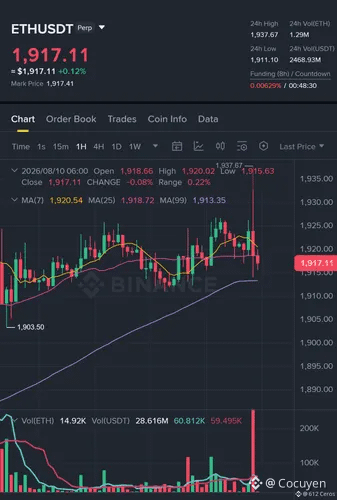
Everyone is looking at the 4H zone, but the real money is in betting on the breakout below 1917.
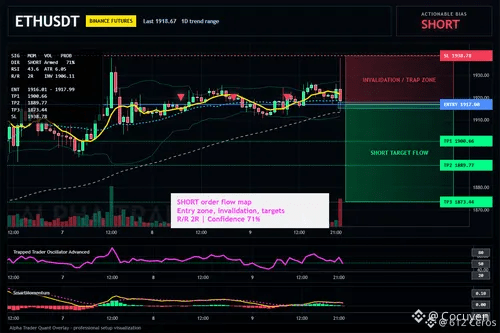
$ETH /USDT - SHORT
Trading plan:
Entry: 1916.01 – 1917.99
SL: 1938.78
TP1: 1900.66
TP2: 1889.77
TP3: 1873.44
Why this setup?
- The signal is “Armed” with SHORT confidence 71%, and the 1D trend is currently only a *range*—meaning there is no strong upside breakout momentum.
- The 15m RSI is at 43.61 (weak), while the 1H ATR (6.05) shows volatility is contracting—perfect for a squeeze downward move.
- Why now? Price is being “stuck” around the 1917 level. A rejection here will target TP1 (1900) and TP2 (1889) before the daily close. Being invalidated at 1906 is the only thing that prevents us from a quick drop.
Debate:
If 1906 is lost, do you think the short will crash straight to 1873 or get wicked out first?
Click here to Trade 👇️
Everyone is looking at the 4H zone, but the real money is in betting on the breakout below 1917.
$ETH /USDT - SHORT
Trading plan:
Entry: 1916.01 – 1917.99
SL: 1938.78
TP1: 1900.66
TP2: 1889.77
TP3: 1873.44
Why this setup?
- The signal is “Armed” with SHORT confidence 71%, and the 1D trend is currently only a *range*—meaning there is no strong upside breakout momentum.
- The 15m RSI is at 43.61 (weak), while the 1H ATR (6.05) shows volatility is contracting—perfect for a squeeze downward move.
- Why now? Price is being “stuck” around the 1917 level. A rejection here will target TP1 (1900) and TP2 (1889) before the daily close. Being invalidated at 1906 is the only thing that prevents us from a quick drop.
Debate:
If 1906 is lost, do you think the short will crash straight to 1873 or get wicked out first?
Click here to Trade 👇️
$ETH /USDT - SHORT
Trading plan:
Entry: 1916.01 – 1917.99
SL: 1938.78
TP1: 1900.66
TP2: 1889.77
TP3: 1873.44
Why this setup?
- The signal is “Armed” with SHORT confidence 71%, and the 1D trend is currently only a *range*—meaning there is no strong upside breakout momentum.
- The 15m RSI is at 43.61 (weak), while the 1H ATR (6.05) shows volatility is contracting—perfect for a squeeze downward move.
- Why now? Price is being “stuck” around the 1917 level. A rejection here will target TP1 (1900) and TP2 (1889) before the daily close. Being invalidated at 1906 is the only thing that prevents us from a quick drop.
Debate:
If 1906 is lost, do you think the short will crash straight to 1873 or get wicked out first?
Click here to Trade 👇️
73
·
--
#binancep2pantoan P2P Safety Map: Perfect Trading from A–Z—Like Traveling with Insurance
My first time “traveling” via P2P, I felt the same nerves as when I traveled abroad alone for the first time. Worried—but after hundreds of safe trips, I realized: Binance P2P is exactly like a fully insured flight, as long as you don’t jump out of the plane mid-flight.
Stop 1: Departure point
Binance P2P is a peer-to-peer marketplace where you buy/sell crypto in VND directly with others. The moment you place an order, the seller’s crypto is locked in Binance’s escrow. The money doesn’t “fly away,” and no one can “hold it hostage.” In-app chat plus a 24/7 dispute process is the second layer of insurance.
Stop 2: Passport check
I always scrutinize the completion rate ≥98%, the number of orders (a few hundred), the merchant badge (if any), and the latest reviews. I cross-check the name on the bank account in the order against the user’s name.
Mismatch? → Cancel immediately
Stop 3: Boarding the plane
I once got invited to “move to Zalo for faster speed.” I refused outright. Leaving the platform = losing all information and support. All communication stays in Binance chat only.
Stop 4: Confirm before landing
Never unlock just because of a screenshot. I log into the banking app, wait for the balance to update for real, and only then release. Not sure yet? Wait a bit more or open a dispute.
Stop 5: Save memories & get support
Screenshot the Order ID, transfer receipt, and the entire chat. If anything goes wrong, just press Appeal—Binance’s support team will handle it based on the evidence.
Packing checklist:
✅ Trusted counterparty + matching name
✅ Chat only on Binance
✅ Funds have entered the real account
Thanks @Binance_Vietnam for building this safe journey!
#BinanceP2PAnToan #P2P #creatorpad
#binancep2pantoan P2P Safety Map: Perfect Trading from A–Z—Like Traveling with Insurance
My first time “traveling” via P2P, I felt the same nerves as when I traveled abroad alone for the first time. Worried—but after hundreds of safe trips, I realized: Binance P2P is exactly like a fully insured flight, as long as you don’t jump out of the plane mid-flight.
Stop 1: Departure point
Binance P2P is a peer-to-peer marketplace where you buy/sell crypto in VND directly with others. The moment you place an order, the seller’s crypto is locked in Binance’s escrow. The money doesn’t “fly away,” and no one can “hold it hostage.” In-app chat plus a 24/7 dispute process is the second layer of insurance.
Stop 2: Passport check
I always scrutinize the completion rate ≥98%, the number of orders (a few hundred), the merchant badge (if any), and the latest reviews. I cross-check the name on the bank account in the order against the user’s name.
Mismatch? → Cancel immediately
Stop 3: Boarding the plane
I once got invited to “move to Zalo for faster speed.” I refused outright. Leaving the platform = losing all information and support. All communication stays in Binance chat only.
Stop 4: Confirm before landing
Never unlock just because of a screenshot. I log into the banking app, wait for the balance to update for real, and only then release. Not sure yet? Wait a bit more or open a dispute.
Stop 5: Save memories & get support
Screenshot the Order ID, transfer receipt, and the entire chat. If anything goes wrong, just press Appeal—Binance’s support team will handle it based on the evidence.
Packing checklist:
✅ Trusted counterparty + matching name
✅ Chat only on Binance
✅ Funds have entered the real account
Thanks @Binance Vietnam for building this safe journey!
#BinanceP2PAnToan #P2P #creatorpad
My first time “traveling” via P2P, I felt the same nerves as when I traveled abroad alone for the first time. Worried—but after hundreds of safe trips, I realized: Binance P2P is exactly like a fully insured flight, as long as you don’t jump out of the plane mid-flight.
Stop 1: Departure point
Binance P2P is a peer-to-peer marketplace where you buy/sell crypto in VND directly with others. The moment you place an order, the seller’s crypto is locked in Binance’s escrow. The money doesn’t “fly away,” and no one can “hold it hostage.” In-app chat plus a 24/7 dispute process is the second layer of insurance.
Stop 2: Passport check
I always scrutinize the completion rate ≥98%, the number of orders (a few hundred), the merchant badge (if any), and the latest reviews. I cross-check the name on the bank account in the order against the user’s name.
Mismatch? → Cancel immediately
Stop 3: Boarding the plane
I once got invited to “move to Zalo for faster speed.” I refused outright. Leaving the platform = losing all information and support. All communication stays in Binance chat only.
Stop 4: Confirm before landing
Never unlock just because of a screenshot. I log into the banking app, wait for the balance to update for real, and only then release. Not sure yet? Wait a bit more or open a dispute.
Stop 5: Save memories & get support
Screenshot the Order ID, transfer receipt, and the entire chat. If anything goes wrong, just press Appeal—Binance’s support team will handle it based on the evidence.
Packing checklist:
✅ Trusted counterparty + matching name
✅ Chat only on Binance
✅ Funds have entered the real account
Thanks @Binance Vietnam for building this safe journey!
#BinanceP2PAnToan #P2P #creatorpad

80
·
--
Bullish
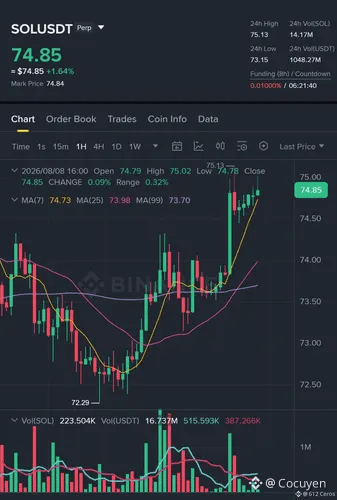
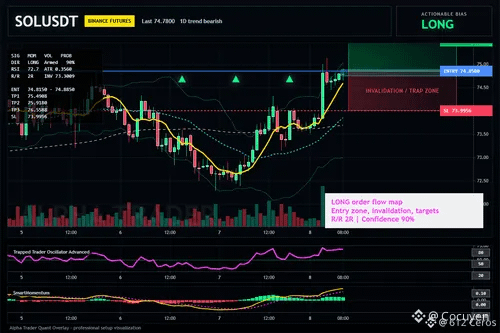
Everyone is staring at the bear flag every day, but 4H has just whispered a secret.
$SOL /USDT - LONG
Trading plan:
Entry: 74.8150 – 74.8850
SL: 73.9956
TP1: 75.4908
TP2: 75.9180
TP3: 76.5588
Why set it up this way?
- $SOL has *ARMAMENT* with a LONG bias, with 90.29 degrees of confidence—trading around 74.85.
- RSI (15m) is hot at 72.68—momentum is charging, not depleted yet.
- The Daily trend says it’s down, but 4H’s edge (+2.8) is overpowering the noise.
- The targets are already defined: TP1 75.49, TP2 75.91, TP3 76.55—a clear 2.2% run if the bulls hold their ground.
- Why now? The 1H ATR (0.356) shows low volatility is being compressed—any breakout here would be very violent.
Debate:
Will the Daily bear trap knock out this 4H bull, or is 76.55 the way out?
Tap here to trade 👇️
Everyone is staring at the bear flag every day, but 4H has just whispered a secret.
$SOL /USDT - LONG
Trading plan:
Entry: 74.8150 – 74.8850
SL: 73.9956
TP1: 75.4908
TP2: 75.9180
TP3: 76.5588
Why set it up this way?
- $SOL has *ARMAMENT* with a LONG bias, with 90.29 degrees of confidence—trading around 74.85.
- RSI (15m) is hot at 72.68—momentum is charging, not depleted yet.
- The Daily trend says it’s down, but 4H’s edge (+2.8) is overpowering the noise.
- The targets are already defined: TP1 75.49, TP2 75.91, TP3 76.55—a clear 2.2% run if the bulls hold their ground.
- Why now? The 1H ATR (0.356) shows low volatility is being compressed—any breakout here would be very violent.
Debate:
Will the Daily bear trap knock out this 4H bull, or is 76.55 the way out?
Tap here to trade 👇️
$SOL /USDT - LONG
Trading plan:
Entry: 74.8150 – 74.8850
SL: 73.9956
TP1: 75.4908
TP2: 75.9180
TP3: 76.5588
Why set it up this way?
- $SOL has *ARMAMENT* with a LONG bias, with 90.29 degrees of confidence—trading around 74.85.
- RSI (15m) is hot at 72.68—momentum is charging, not depleted yet.
- The Daily trend says it’s down, but 4H’s edge (+2.8) is overpowering the noise.
- The targets are already defined: TP1 75.49, TP2 75.91, TP3 76.55—a clear 2.2% run if the bulls hold their ground.
- Why now? The 1H ATR (0.356) shows low volatility is being compressed—any breakout here would be very violent.
Debate:
Will the Daily bear trap knock out this 4H bull, or is 76.55 the way out?
Tap here to trade 👇️
75
·
--
Bearish
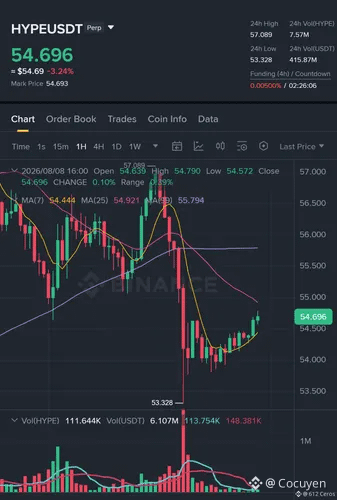
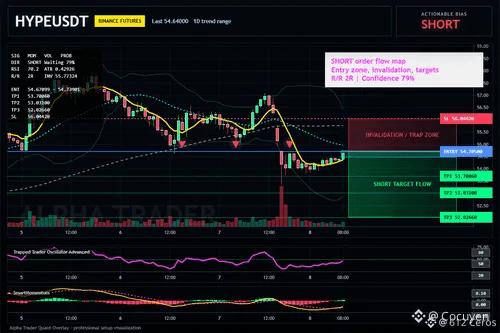
Everyone is looking at the 4H chart, but the 15M RSI just shouted a reading of 70.22.
$HYPE /USDT - SHORT
Trading plan:
Entry: 54.67099 – 54.73901
SL: 56.04420
TP1: 53.70060
TP2: 53.03100
TP3: 52.02660
Why set it up this way?
While the daily range is trapping the buyers, the short-term momentum is overheated. The 4H trend is SHORT with 79% confidence, and the reference price for the order is at 54.705. ATR (0.429) is fairly tight, meaning the breakout phase is consolidating. TP1 at 53.70 is the first magnet, but the real “fuel” comes from the rejection at the invalidation line of 55.77. Why now? Because the exhaustion of the 15M RSI matches perfectly with the 4H downside advantage.
Debate:
Does the 15M RSI indicate a strong reversal all the way to TP2, or is it just an upside trap before the range continues?
Click here to Trade 👇️
Everyone is looking at the 4H chart, but the 15M RSI just shouted a reading of 70.22.
$HYPE /USDT - SHORT
Trading plan:
Entry: 54.67099 – 54.73901
SL: 56.04420
TP1: 53.70060
TP2: 53.03100
TP3: 52.02660
Why set it up this way?
While the daily range is trapping the buyers, the short-term momentum is overheated. The 4H trend is SHORT with 79% confidence, and the reference price for the order is at 54.705. ATR (0.429) is fairly tight, meaning the breakout phase is consolidating. TP1 at 53.70 is the first magnet, but the real “fuel” comes from the rejection at the invalidation line of 55.77. Why now? Because the exhaustion of the 15M RSI matches perfectly with the 4H downside advantage.
Debate:
Does the 15M RSI indicate a strong reversal all the way to TP2, or is it just an upside trap before the range continues?
Click here to Trade 👇️
$HYPE /USDT - SHORT
Trading plan:
Entry: 54.67099 – 54.73901
SL: 56.04420
TP1: 53.70060
TP2: 53.03100
TP3: 52.02660
Why set it up this way?
While the daily range is trapping the buyers, the short-term momentum is overheated. The 4H trend is SHORT with 79% confidence, and the reference price for the order is at 54.705. ATR (0.429) is fairly tight, meaning the breakout phase is consolidating. TP1 at 53.70 is the first magnet, but the real “fuel” comes from the rejection at the invalidation line of 55.77. Why now? Because the exhaustion of the 15M RSI matches perfectly with the 4H downside advantage.
Debate:
Does the 15M RSI indicate a strong reversal all the way to TP2, or is it just an upside trap before the range continues?
Click here to Trade 👇️
17
Log in to explore more content
Join global crypto users on Binance Square
⚡️ Get latest and useful information about crypto.
💬 Trusted by the world’s largest crypto exchange.
👍 Discover real insights from verified creators.
Email / Phone number
Trending Topics
FedMinutesFocusOnOctoberPause
361,247 views
2,242 Discussing
🚨 THE FED JUST DROPPED A HUGE HINT — OCTOBER PAUSE INCOMING?
Wall Street is betting the Fed will HIT THE BRAKES in October. And crypto traders are watching closely. 👀
The latest FOMC minutes have shifted attention toward a potential pause at the October 27–28 meeting.
📊 The market setup:
🔥 October rate hold: approximately 82.8% in the latest previously reported pricing.
🔥 Rate hike probability: approximately 17.2%.
🔥 Weakening labor-market data is making an immediate hike harder to justify.
But here's the twist.
A PAUSE IS NOT A RATE CUT.
The Fed could hold in October while keeping the door open for additional tightening later.
For $BTC, $ ETH and $XAU, that distinction matters.
A pause could ease immediate pressure on risk assets. But persistent inflation and elevated Treasury yields could still crush bullish momentum.
⚠️ THE BIG QUESTION:
Is Wall Street positioning for a crypto breakout — or setting up another massive bull trap before the next Fed decision?
$BTC $ETH $BNB $SOL $XAU
#fedminutesfocusonoctoberpause #BinanceLaunchesBinanceIntelligence #EvernorthDelaysNasdaqDebutToOct12 #RobinhoodAdds$25MInBitcoinToBalanceSheet #SP500AndNasdaqHitRecordHighs
KimHotbae
·27 Likes
·32k views
VitalikWarnsAICouldWeakenCryptographySecurity
240 views
50 Discussing
XRPSpotETFsHold$1.7BWeeklyInflowsSlow
216 views
19 Discussing