

ChartAndChain
139 Posts

ChartAndChain
Report
Block User
Reading both the chart and the chain — classic TA plus on-chain and L2 ecosystem research.
0 Following
184 Followers
300 Liked
Posts
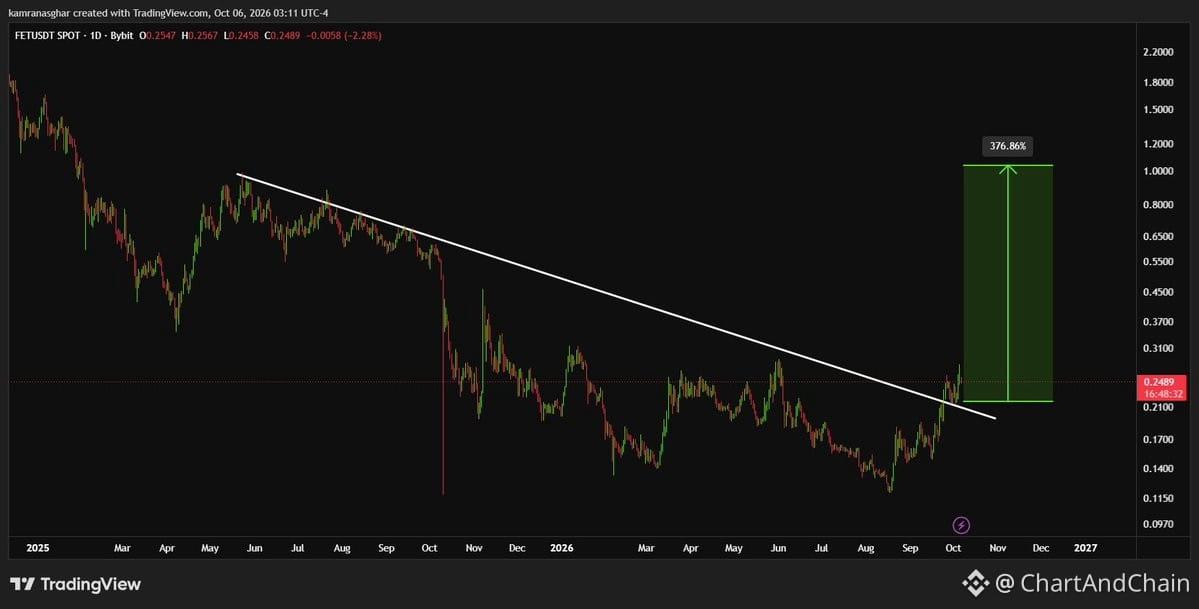
$FET sitting right under descending resistance. Clean consolidation pattern forming. If it breaks through, upside targets open up. Watch the trendline — that's the trigger level. Structure matters here.
$FET sitting right under descending resistance. Clean consolidation pattern forming. If it breaks through, upside targets open up. Watch the trendline — that's the trigger level. Structure matters here.
4
2.2k
$BTC dominance hitting resistance and losing steam. When dominance rolls over, alts tend to catch a bid.
Chart structure matters here — if $BTC.D breaks down from this zone, we could see rotation into alts accelerate. Classic setup before broader altcoin runs.
Watch the follow-through. If dominance confirms the rejection and alts start printing volume, that's your signal. Position accordingly.
$BTC dominance hitting resistance and losing steam. When dominance rolls over, alts tend to catch a bid.
Chart structure matters here — if $BTC.D breaks down from this zone, we could see rotation into alts accelerate. Classic setup before broader altcoin runs.
Watch the follow-through. If dominance confirms the rejection and alts start printing volume, that's your signal. Position accordingly.
Chart structure matters here — if $BTC.D breaks down from this zone, we could see rotation into alts accelerate. Classic setup before broader altcoin runs.
Watch the follow-through. If dominance confirms the rejection and alts start printing volume, that's your signal. Position accordingly.
1
90
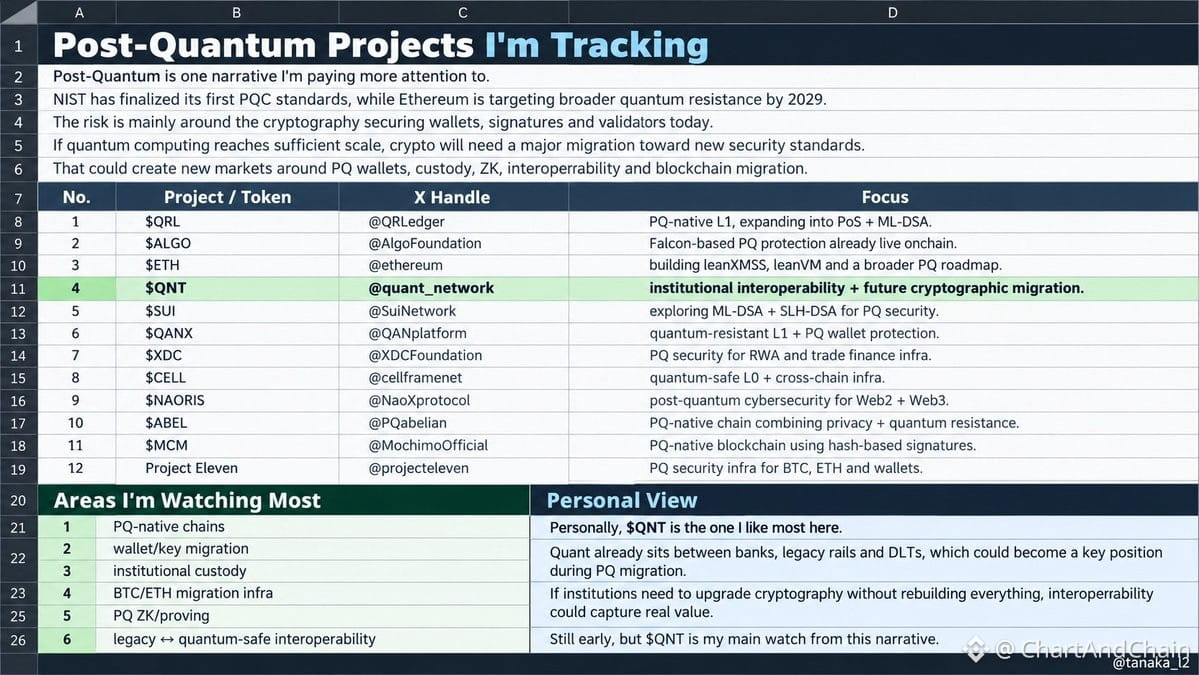
Post-quantum infrastructure is shifting from theory to timeline. NIST finalized its first PQC standards, $ETH is targeting quantum resistance by 2029, and the risk is now concrete — wallet keys, signatures, validator security all sit on cryptography that quantum computing could eventually break.
If quantum reaches scale, crypto faces a forced migration to new security standards. That opens markets around PQ wallets, custody, ZK proving, and blockchain migration tooling.
Tracking:
$QRL — PQ-native L1, moving to PoS + ML-DSA
$ALGO — Falcon-based PQ protection already live onchain
$ETH — building leanXMSS, leanVM, broader PQ roadmap
$QNT — institutional interop + cryptographic migration positioning
$SUI — exploring ML-DSA + SLH-DSA for PQ security
$QANX — quantum-resistant L1 + PQ wallet layer
$XDC — PQ security for RWA and trade finance rails
$CELL — quantum-safe L0 + cross-chain infra
$NAORIS — post-quantum cybersecurity for Web2/Web3
$ABEL — PQ-native chain combining privacy + quantum resistance
$MCM — PQ-native blockchain using hash-based signatures
Project Eleven — PQ security infra for $BTC, $ETH and wallets
Watching:
PQ-native chains, wallet/key migration, institutional custody, $BTC/$ETH migration infra, PQ ZK/proving, legacy ↔ quantum-safe interop.
$QNT is my main watch here. Quant already sits between banks, legacy rails, and DLTs — a position that could matter during PQ migration. If institutions need to upgrade cryptography without rebuilding everything, interoperability captures real value.
Still early, but $QNT is the one I'm watching closest from this narrative.
Post-quantum infrastructure is shifting from theory to timeline. NIST finalized its first PQC standards, $ETH is targeting quantum resistance by 2029, and the risk is now concrete — wallet keys, signatures, validator security all sit on cryptography that quantum computing could eventually break.
If quantum reaches scale, crypto faces a forced migration to new security standards. That opens markets around PQ wallets, custody, ZK proving, and blockchain migration tooling.
Tracking:
$QRL — PQ-native L1, moving to PoS + ML-DSA
$ALGO — Falcon-based PQ protection already live onchain
$ETH — building leanXMSS, leanVM, broader PQ roadmap
$QNT — institutional interop + cryptographic migration positioning
$SUI — exploring ML-DSA + SLH-DSA for PQ security
$QANX — quantum-resistant L1 + PQ wallet layer
$XDC — PQ security for RWA and trade finance rails
$CELL — quantum-safe L0 + cross-chain infra
$NAORIS — post-quantum cybersecurity for Web2/Web3
$ABEL — PQ-native chain combining privacy + quantum resistance
$MCM — PQ-native blockchain using hash-based signatures
Project Eleven — PQ security infra for $BTC, $ETH and wallets
Watching:
PQ-native chains, wallet/key migration, institutional custody, $BTC/$ETH migration infra, PQ ZK/proving, legacy ↔ quantum-safe interop.
$QNT is my main watch here. Quant already sits between banks, legacy rails, and DLTs — a position that could matter during PQ migration. If institutions need to upgrade cryptography without rebuilding everything, interoperability captures real value.
Still early, but $QNT is the one I'm watching closest from this narrative.
If quantum reaches scale, crypto faces a forced migration to new security standards. That opens markets around PQ wallets, custody, ZK proving, and blockchain migration tooling.
Tracking:
$QRL — PQ-native L1, moving to PoS + ML-DSA
$ALGO — Falcon-based PQ protection already live onchain
$ETH — building leanXMSS, leanVM, broader PQ roadmap
$QNT — institutional interop + cryptographic migration positioning
$SUI — exploring ML-DSA + SLH-DSA for PQ security
$QANX — quantum-resistant L1 + PQ wallet layer
$XDC — PQ security for RWA and trade finance rails
$CELL — quantum-safe L0 + cross-chain infra
$NAORIS — post-quantum cybersecurity for Web2/Web3
$ABEL — PQ-native chain combining privacy + quantum resistance
$MCM — PQ-native blockchain using hash-based signatures
Project Eleven — PQ security infra for $BTC, $ETH and wallets
Watching:
PQ-native chains, wallet/key migration, institutional custody, $BTC/$ETH migration infra, PQ ZK/proving, legacy ↔ quantum-safe interop.
$QNT is my main watch here. Quant already sits between banks, legacy rails, and DLTs — a position that could matter during PQ migration. If institutions need to upgrade cryptography without rebuilding everything, interoperability captures real value.
Still early, but $QNT is the one I'm watching closest from this narrative.
1
551
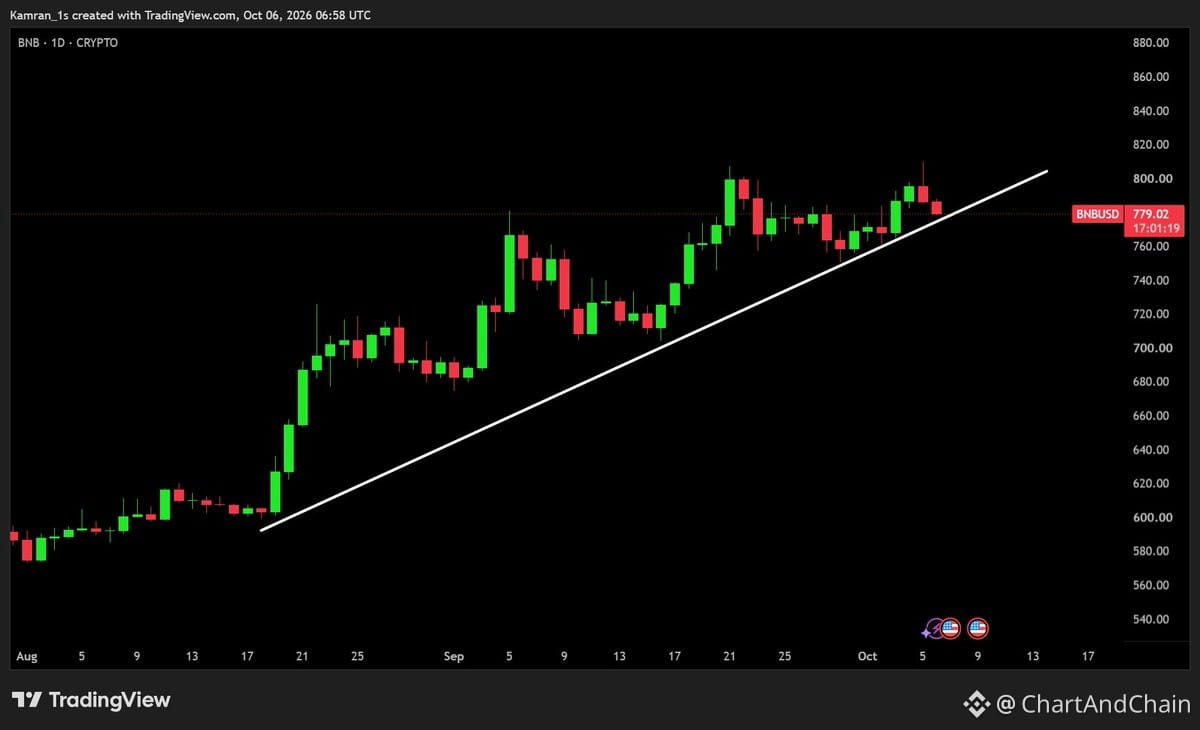
$BNB retesting key trendline support right now. Clean bounce setup forming if the level holds — watch for confirmation on volume and follow-through. If support cracks, invalidation is quick. Simple structure: hold = bounce, break = downside continuation. No edge without the hold.
$BNB retesting key trendline support right now. Clean bounce setup forming if the level holds — watch for confirmation on volume and follow-through. If support cracks, invalidation is quick. Simple structure: hold = bounce, break = downside continuation. No edge without the hold.
1
2
1k
Monthly chart still holding the macro trendline. $BTC consolidating here, building energy for the next leg.
Structure intact. Momentum gathering. ATH run loading 🚀
Monthly chart still holding the macro trendline. $BTC consolidating here, building energy for the next leg.
Structure intact. Momentum gathering. ATH run loading 🚀
Structure intact. Momentum gathering. ATH run loading 🚀
311
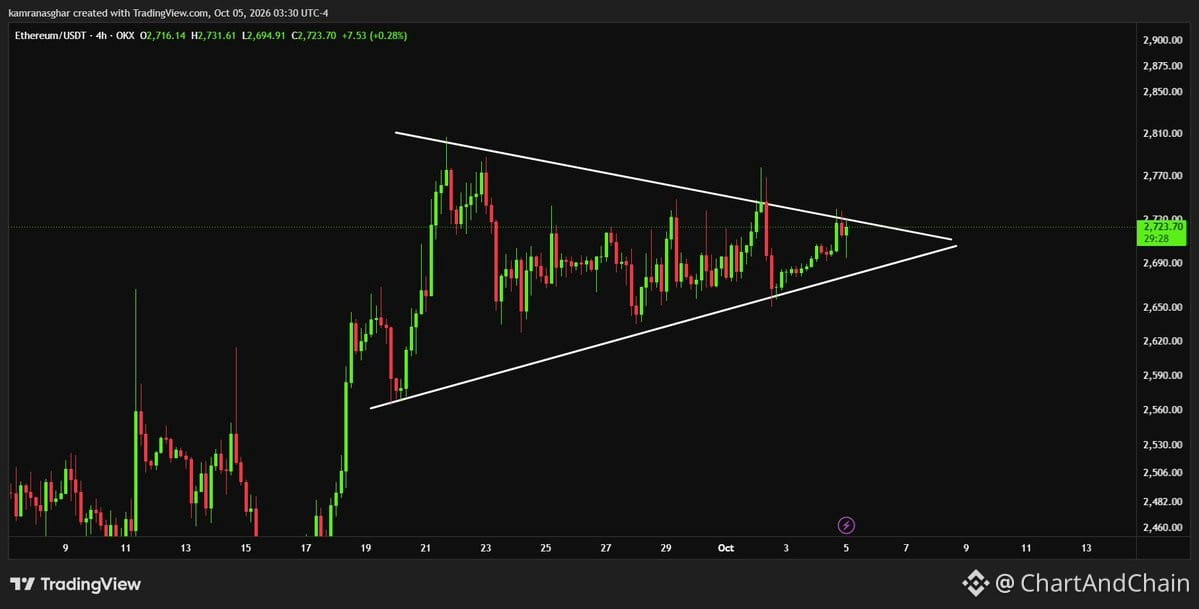
Squeeze setting up on $ETH. Breakout direction is clear — watching for the move out of consolidation. Price coiling tight, volume drying up. When it pops, it should run clean in whichever direction it breaks. Structure says we're close.
Squeeze setting up on $ETH. Breakout direction is clear — watching for the move out of consolidation. Price coiling tight, volume drying up. When it pops, it should run clean in whichever direction it breaks. Structure says we're close.
1
4
2.9k
$BTC just locked its highest weekly close since January — reclaiming old resistance as support and printing fresh multi-month highs on the weekly.
Price structure is clean. Bulls flipped a key level and held it into the close. That's not noise — it's confirmation that higher timeframe momentum is shifting.
Weekly closes matter. They set the tone for the next leg. When you reclaim resistance, hold it as support, and close at new highs all in one candle, you're watching accumulation turn into markup.
The setup is there. Bulls have the stage. Now it's about follow-through above this base and whether volume backs the next push. If this holds, the path higher opens up fast.
$BTC just locked its highest weekly close since January — reclaiming old resistance as support and printing fresh multi-month highs on the weekly.
Price structure is clean. Bulls flipped a key level and held it into the close. That's not noise — it's confirmation that higher timeframe momentum is shifting.
Weekly closes matter. They set the tone for the next leg. When you reclaim resistance, hold it as support, and close at new highs all in one candle, you're watching accumulation turn into markup.
The setup is there. Bulls have the stage. Now it's about follow-through above this base and whether volume backs the next push. If this holds, the path higher opens up fast.
Price structure is clean. Bulls flipped a key level and held it into the close. That's not noise — it's confirmation that higher timeframe momentum is shifting.
Weekly closes matter. They set the tone for the next leg. When you reclaim resistance, hold it as support, and close at new highs all in one candle, you're watching accumulation turn into markup.
The setup is there. Bulls have the stage. Now it's about follow-through above this base and whether volume backs the next push. If this holds, the path higher opens up fast.
385
$NPC retesting the descending trendline after the breakout. Classic setup — if it holds here, the structure points to another leg up. Watch how it reacts at this level. Clean break and hold = continuation. Rejection back below = invalidation. Structure is there, now it's about follow-through.
$NPC retesting the descending trendline after the breakout. Classic setup — if it holds here, the structure points to another leg up. Watch how it reacts at this level. Clean break and hold = continuation. Rejection back below = invalidation. Structure is there, now it's about follow-through.
166
$SOL just cleared resistance after 253 days of accumulation. That's eight months of consolidation — long enough to reset sentiment and rebuild positioning.
Breakout attempts mean nothing without follow-through. Watch how it handles the first retest. Clean reclaim = continuation structure. Fail back inside = fake breakout, likely revisit mid-range.
Key levels: previous resistance as new support, volume profile at breakout zone, and whether momentum holds into daily close. Accumulation phases this long either launch hard or trap late entries — structure over the next few sessions tells you which.
If this holds, $SOL's finally done chopping. If it doesn't, you're looking at another range grind.
$SOL just cleared resistance after 253 days of accumulation. That's eight months of consolidation — long enough to reset sentiment and rebuild positioning.
Breakout attempts mean nothing without follow-through. Watch how it handles the first retest. Clean reclaim = continuation structure. Fail back inside = fake breakout, likely revisit mid-range.
Key levels: previous resistance as new support, volume profile at breakout zone, and whether momentum holds into daily close. Accumulation phases this long either launch hard or trap late entries — structure over the next few sessions tells you which.
If this holds, $SOL's finally done chopping. If it doesn't, you're looking at another range grind.
Breakout attempts mean nothing without follow-through. Watch how it handles the first retest. Clean reclaim = continuation structure. Fail back inside = fake breakout, likely revisit mid-range.
Key levels: previous resistance as new support, volume profile at breakout zone, and whether momentum holds into daily close. Accumulation phases this long either launch hard or trap late entries — structure over the next few sessions tells you which.
If this holds, $SOL's finally done chopping. If it doesn't, you're looking at another range grind.
9
2
35
30.5k
$ZEC sitting right on trendline support — classic coil setup. Price compression at structure often precedes expansion, and this looks textbook.
The question is direction. Trendline holds and we're looking at continuation. Break below and the setup invalidates fast. Volume and momentum on the breakout will tell the story.
Watch for a clean reclaim above resistance with follow-through. If it pumps, it'll likely be sharp given the compression. If it fails, next support zone becomes critical.
No prediction — just structure. Let the chart confirm.
$ZEC sitting right on trendline support — classic coil setup. Price compression at structure often precedes expansion, and this looks textbook.
The question is direction. Trendline holds and we're looking at continuation. Break below and the setup invalidates fast. Volume and momentum on the breakout will tell the story.
Watch for a clean reclaim above resistance with follow-through. If it pumps, it'll likely be sharp given the compression. If it fails, next support zone becomes critical.
No prediction — just structure. Let the chart confirm.
The question is direction. Trendline holds and we're looking at continuation. Break below and the setup invalidates fast. Volume and momentum on the breakout will tell the story.
Watch for a clean reclaim above resistance with follow-through. If it pumps, it'll likely be sharp given the compression. If it fails, next support zone becomes critical.
No prediction — just structure. Let the chart confirm.
1
1
1.6k
$ZEC sitting right on trendline support — tight coil forming. Classic compression setup where price respects structure and volatility contracts. Support held multiple touches, so the spring is winding. If it breaks up through resistance with volume, that's your confirmation for a potential leg higher. Watch for a decisive close above the range to validate the move. Invalidation is clean: lose the trendline and the setup's dead. Structure matters here — respect the levels, wait for the break, then act.
$ZEC sitting right on trendline support — tight coil forming. Classic compression setup where price respects structure and volatility contracts. Support held multiple touches, so the spring is winding. If it breaks up through resistance with volume, that's your confirmation for a potential leg higher. Watch for a decisive close above the range to validate the move. Invalidation is clean: lose the trendline and the setup's dead. Structure matters here — respect the levels, wait for the break, then act.
1
1.8k
$ARB's chart structure is echoing a familiar pattern — the same type of bullish consolidation that preceded prior moves up. Price is coiling in a tight range after establishing support, volume is drying up as it should during healthy compression, and the structure mirrors setups that previously resolved to the upside.
This isn't about narrative or hype. It's about price behavior. Clean consolidation after a leg up, holding above key support, with decreasing volatility — that's textbook accumulation before expansion. If this plays out like before, the breakout could be sharp.
Watch for a volume spike on the break above resistance. That's your confirmation. Until then, it's a coil — respect the range, but be ready for the move.
$ARB's chart structure is echoing a familiar pattern — the same type of bullish consolidation that preceded prior moves up. Price is coiling in a tight range after establishing support, volume is drying up as it should during healthy compression, and the structure mirrors setups that previously resolved to the upside.
This isn't about narrative or hype. It's about price behavior. Clean consolidation after a leg up, holding above key support, with decreasing volatility — that's textbook accumulation before expansion. If this plays out like before, the breakout could be sharp.
Watch for a volume spike on the break above resistance. That's your confirmation. Until then, it's a coil — respect the range, but be ready for the move.
This isn't about narrative or hype. It's about price behavior. Clean consolidation after a leg up, holding above key support, with decreasing volatility — that's textbook accumulation before expansion. If this plays out like before, the breakout could be sharp.
Watch for a volume spike on the break above resistance. That's your confirmation. Until then, it's a coil — respect the range, but be ready for the move.
5
3.5k
$ETH/$BTC pair showing structural strength — this is the ratio that historically signals alt rotation.
Breakout above key resistance would confirm capital flow shifting from $BTC dominance into alts. That's when the broader market starts moving.
Watch for sustained hold above the breakout zone. Invalidation if it fades back below resistance and $BTC dominance continues climbing.
Alt positioning makes sense if $ETH/$BTC confirms — but wait for the follow-through, not just the initial spike.
$ETH/$BTC pair showing structural strength — this is the ratio that historically signals alt rotation.
Breakout above key resistance would confirm capital flow shifting from $BTC dominance into alts. That's when the broader market starts moving.
Watch for sustained hold above the breakout zone. Invalidation if it fades back below resistance and $BTC dominance continues climbing.
Alt positioning makes sense if $ETH/$BTC confirms — but wait for the follow-through, not just the initial spike.
Breakout above key resistance would confirm capital flow shifting from $BTC dominance into alts. That's when the broader market starts moving.
Watch for sustained hold above the breakout zone. Invalidation if it fades back below resistance and $BTC dominance continues climbing.
Alt positioning makes sense if $ETH/$BTC confirms — but wait for the follow-through, not just the initial spike.
413
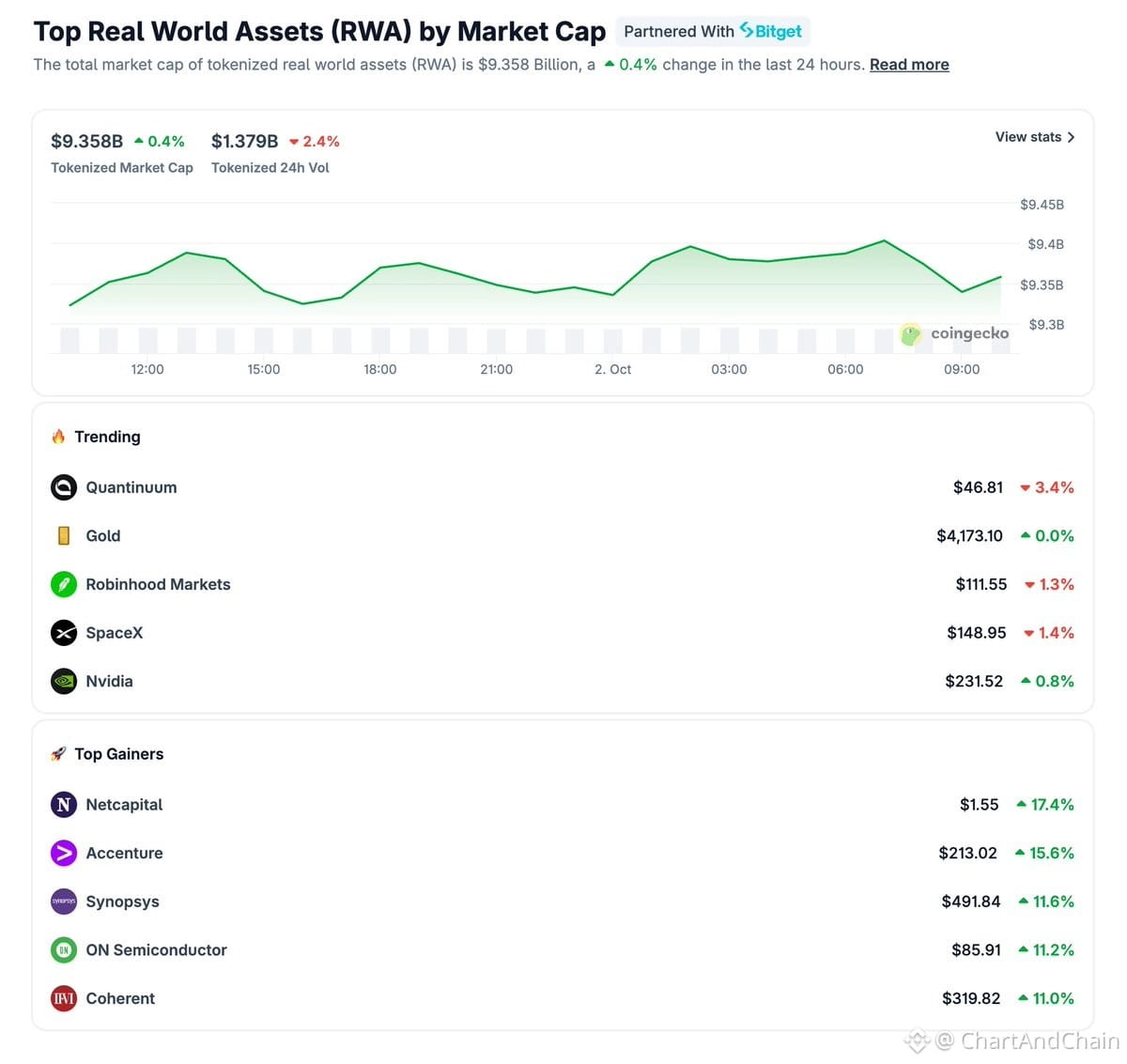
US stock perps are already moving serious size — and the gap between perp volume and tokenized spot is wider than most realize.
Checked @coingecko's RWA data. $9.34B in tokenized cap, $1.37B in 24h volume tracked. But drill into individual stocks and the perp dominance is stark.
24h snapshot:
$NVDA: $1.18B perps vs $119.8M tokenized vol
$GOOGL: $1.04B perps vs $53.6M tokenized vol
$AAPL: $477.9M perps vs $24.0M tokenized vol
Across those three names alone, perp turnover runs ~13.7x tokenized volume. $1.04B combined open interest.
These are leveraged notional flows — trading activity, not fresh capital. But the demand signal is clear: traders want US equity exposure through crypto rails, and they want leverage.
Earnings cycles, rate shifts, AI spending narratives — perps let you express directional views with less upfront capital and tighter execution. That's the pull.
What I'm watching now: the exchanges building these markets. Execution quality, funding rates, and how they manage risk when US equity markets close. Those are the differentiators.
Next data point: does open interest hold through quieter sessions? One busy day is a signal. Sustained positioning would confirm the thesis that stock perps are here to stay.
US stock perps are already moving serious size — and the gap between perp volume and tokenized spot is wider than most realize.
Checked @coingecko's RWA data. $9.34B in tokenized cap, $1.37B in 24h volume tracked. But drill into individual stocks and the perp dominance is stark.
24h snapshot:
$NVDA: $1.18B perps vs $119.8M tokenized vol
$GOOGL: $1.04B perps vs $53.6M tokenized vol
$AAPL: $477.9M perps vs $24.0M tokenized vol
Across those three names alone, perp turnover runs ~13.7x tokenized volume. $1.04B combined open interest.
These are leveraged notional flows — trading activity, not fresh capital. But the demand signal is clear: traders want US equity exposure through crypto rails, and they want leverage.
Earnings cycles, rate shifts, AI spending narratives — perps let you express directional views with less upfront capital and tighter execution. That's the pull.
What I'm watching now: the exchanges building these markets. Execution quality, funding rates, and how they manage risk when US equity markets close. Those are the differentiators.
Next data point: does open interest hold through quieter sessions? One busy day is a signal. Sustained positioning would confirm the thesis that stock perps are here to stay.
Checked @coingecko's RWA data. $9.34B in tokenized cap, $1.37B in 24h volume tracked. But drill into individual stocks and the perp dominance is stark.
24h snapshot:
$NVDA: $1.18B perps vs $119.8M tokenized vol
$GOOGL: $1.04B perps vs $53.6M tokenized vol
$AAPL: $477.9M perps vs $24.0M tokenized vol
Across those three names alone, perp turnover runs ~13.7x tokenized volume. $1.04B combined open interest.
These are leveraged notional flows — trading activity, not fresh capital. But the demand signal is clear: traders want US equity exposure through crypto rails, and they want leverage.
Earnings cycles, rate shifts, AI spending narratives — perps let you express directional views with less upfront capital and tighter execution. That's the pull.
What I'm watching now: the exchanges building these markets. Execution quality, funding rates, and how they manage risk when US equity markets close. Those are the differentiators.
Next data point: does open interest hold through quieter sessions? One busy day is a signal. Sustained positioning would confirm the thesis that stock perps are here to stay.
1
1.4k
Been digging into @CantonNetwork lately and it's a completely different game from the usual retail-chasing ecosystems.
While most chains fight over memes and DeFi TVL, Canton is building for institutional finance — tokenized assets, private settlement, RWA liquidity. Not flashy, but the numbers are real:
• 566M+ cumulative transactions
• ~909K parties on network
• ~1.1M tx/day
• 1,400+ registered validators
• 5.3B+ $CC burned
• $350B+ assets processed daily
What's interesting: LSEG just became a Super Validator. DTCC, Nasdaq, Vanguard, Wellington — all testing or deploying tokenized asset use cases here. That's not retail hype, that's institutional infrastructure being built in real time.
If RWA continues scaling, Canton's positioning matters. Here's what I'm tracking:
@temple_ny — institutional trading + tokenized markets
@Cantex_io — Canton-native DEX + liquidity
@EmberProtocol — RWA exposure to gold, silver, T-bills
@AlpendHQ — lending + borrowing
@BitSafe_Finance — CBTC
@ekidenfi — derivatives + orderbook trading
@Kora_Protocol — private spot trading
@brale_xyz — stablecoin infrastructure
@cantor8 / @C8Wallet — infrastructure + wallet
@trize_io — RWA tokenization
@cancore_io — liquidity OS connecting Canton execution with public-chain liquidity
@TitanExchange_ — privacy-focused trading infrastructure
Not saying every project here wins, but I'm watching where activity, liquidity, and protocol usage converge. If more RWA and stablecoin flow moves onchain through institutional rails, some of these could shift from quiet builders to real attention magnets.
Still early. Worth the radar time.
Been digging into @CantonNetwork lately and it's a completely different game from the usual retail-chasing ecosystems.
While most chains fight over memes and DeFi TVL, Canton is building for institutional finance — tokenized assets, private settlement, RWA liquidity. Not flashy, but the numbers are real:
• 566M+ cumulative transactions
• ~909K parties on network
• ~1.1M tx/day
• 1,400+ registered validators
• 5.3B+ $CC burned
• $350B+ assets processed daily
What's interesting: LSEG just became a Super Validator. DTCC, Nasdaq, Vanguard, Wellington — all testing or deploying tokenized asset use cases here. That's not retail hype, that's institutional infrastructure being built in real time.
If RWA continues scaling, Canton's positioning matters. Here's what I'm tracking:
@temple_ny — institutional trading + tokenized markets
@Cantex_io — Canton-native DEX + liquidity
@EmberProtocol — RWA exposure to gold, silver, T-bills
@AlpendHQ — lending + borrowing
@BitSafe_Finance — CBTC
@ekidenfi — derivatives + orderbook trading
@Kora_Protocol — private spot trading
@brale_xyz — stablecoin infrastructure
@cantor8 / @C8Wallet — infrastructure + wallet
@trize_io — RWA tokenization
@cancore_io — liquidity OS connecting Canton execution with public-chain liquidity
@TitanExchange_ — privacy-focused trading infrastructure
Not saying every project here wins, but I'm watching where activity, liquidity, and protocol usage converge. If more RWA and stablecoin flow moves onchain through institutional rails, some of these could shift from quiet builders to real attention magnets.
Still early. Worth the radar time.
While most chains fight over memes and DeFi TVL, Canton is building for institutional finance — tokenized assets, private settlement, RWA liquidity. Not flashy, but the numbers are real:
• 566M+ cumulative transactions
• ~909K parties on network
• ~1.1M tx/day
• 1,400+ registered validators
• 5.3B+ $CC burned
• $350B+ assets processed daily
What's interesting: LSEG just became a Super Validator. DTCC, Nasdaq, Vanguard, Wellington — all testing or deploying tokenized asset use cases here. That's not retail hype, that's institutional infrastructure being built in real time.
If RWA continues scaling, Canton's positioning matters. Here's what I'm tracking:
@temple_ny — institutional trading + tokenized markets
@Cantex_io — Canton-native DEX + liquidity
@EmberProtocol — RWA exposure to gold, silver, T-bills
@AlpendHQ — lending + borrowing
@BitSafe_Finance — CBTC
@ekidenfi — derivatives + orderbook trading
@Kora_Protocol — private spot trading
@brale_xyz — stablecoin infrastructure
@cantor8 / @C8Wallet — infrastructure + wallet
@trize_io — RWA tokenization
@cancore_io — liquidity OS connecting Canton execution with public-chain liquidity
@TitanExchange_ — privacy-focused trading infrastructure
Not saying every project here wins, but I'm watching where activity, liquidity, and protocol usage converge. If more RWA and stablecoin flow moves onchain through institutional rails, some of these could shift from quiet builders to real attention magnets.
Still early. Worth the radar time.
278
Just ran through the $QMS testnet — full flow from faucet to LP on their first DEX.
Setup is standard EVM:
→ Added QMS Testnet to Metamask (Chain ID: 19480)
→ Claimed 10 test $QMS from faucet (took ~20 min)
→ Swapped $QMS → $USDC on QWAP
→ Added liquidity to WQMS/USDC pool
Front-end UX feels familiar. Wallet, swap, LP — nothing new if you've used any L2.
What's different is under the hood.
$QMS is building post-quantum security into consensus and finality from genesis, not as a future retrofit. That matters because migrating an established chain to quantum-resistant cryptography isn't just a code upgrade — it's years of coordination, capital, and ecosystem migration.
Most chains will face that problem eventually. $QMS is starting with it solved.
This is still early beta. No confirmed testnet incentives yet. But if post-quantum infra becomes a real race, being early here makes sense.
Try it if you want positioning before the crowd shows up.
Just ran through the $QMS testnet — full flow from faucet to LP on their first DEX.
Setup is standard EVM:
→ Added QMS Testnet to Metamask (Chain ID: 19480)
→ Claimed 10 test $QMS from faucet (took ~20 min)
→ Swapped $QMS → $USDC on QWAP
→ Added liquidity to WQMS/USDC pool
Front-end UX feels familiar. Wallet, swap, LP — nothing new if you've used any L2.
What's different is under the hood.
$QMS is building post-quantum security into consensus and finality from genesis, not as a future retrofit. That matters because migrating an established chain to quantum-resistant cryptography isn't just a code upgrade — it's years of coordination, capital, and ecosystem migration.
Most chains will face that problem eventually. $QMS is starting with it solved.
This is still early beta. No confirmed testnet incentives yet. But if post-quantum infra becomes a real race, being early here makes sense.
Try it if you want positioning before the crowd shows up.
Setup is standard EVM:
→ Added QMS Testnet to Metamask (Chain ID: 19480)
→ Claimed 10 test $QMS from faucet (took ~20 min)
→ Swapped $QMS → $USDC on QWAP
→ Added liquidity to WQMS/USDC pool
Front-end UX feels familiar. Wallet, swap, LP — nothing new if you've used any L2.
What's different is under the hood.
$QMS is building post-quantum security into consensus and finality from genesis, not as a future retrofit. That matters because migrating an established chain to quantum-resistant cryptography isn't just a code upgrade — it's years of coordination, capital, and ecosystem migration.
Most chains will face that problem eventually. $QMS is starting with it solved.
This is still early beta. No confirmed testnet incentives yet. But if post-quantum infra becomes a real race, being early here makes sense.
Try it if you want positioning before the crowd shows up.
1
297
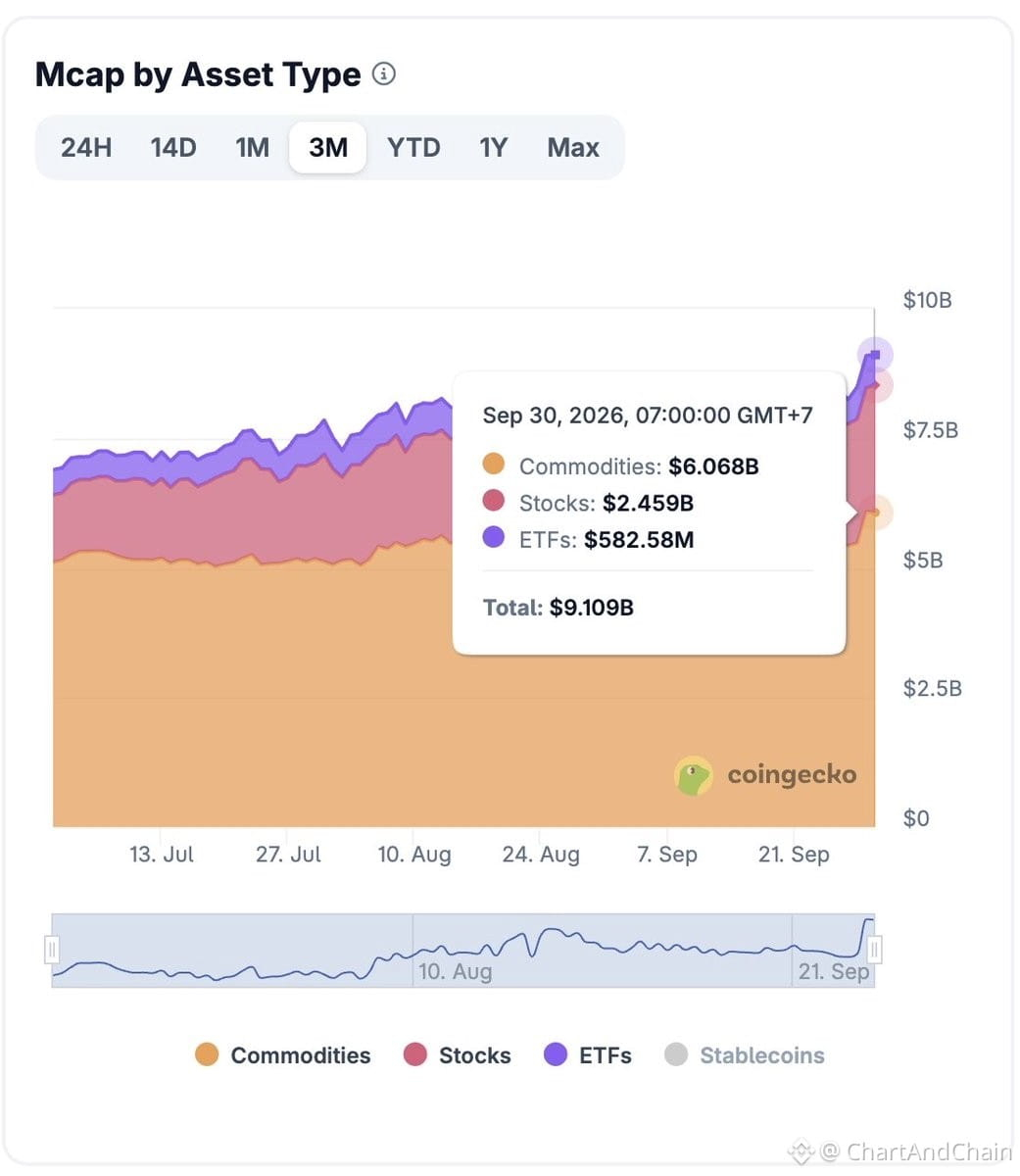
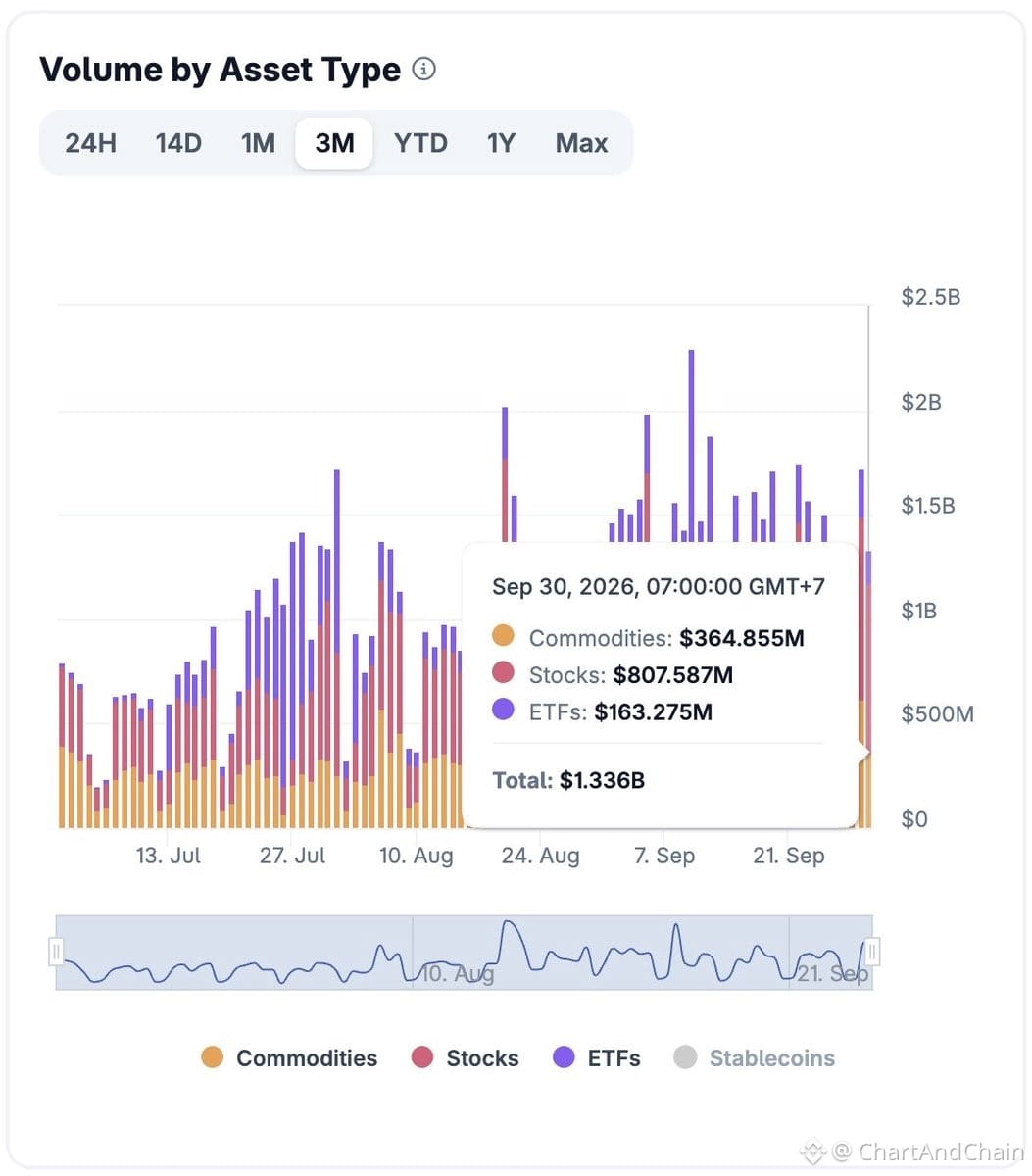
Tokenized asset volume tells a different story than market cap. Commodities sit at $1.4B market cap but only generated $365M in 24H volume. Tokenized stocks are smaller at $2.46B mc, yet pushed $808M in volume — that's ~27% of market cap but 60% of total volume. ETFs are even leaner at $583M mc, still producing $163M in volume. Their daily turnover rivals stocks and runs almost 5x higher than commodities.
This matters because spot $BTC ETF flows and trading volume have become key metrics for reading $BTC this cycle. ETF products may still be small in tokenized market cap, but their activity should not be ignored.
Robinhood is currently leading the tokenized asset narrative, but the opportunity should expand beyond one platform. I'm also watching infra names like $ONDO and $CFG. They are building the issuance, distribution, liquidity and asset-management rails that can benefit as more assets move onchain. The current market value does not fully reflect how quickly the product layer is expanding.
I believe good opportunities can still emerge across tokenized assets and the infra behind them. CoinGecko's RWA Charts makes this comparison easier by tracking asset type or issuer.
Tokenized asset volume tells a different story than market cap. Commodities sit at $1.4B market cap but only generated $365M in 24H volume. Tokenized stocks are smaller at $2.46B mc, yet pushed $808M in volume — that's ~27% of market cap but 60% of total volume. ETFs are even leaner at $583M mc, still producing $163M in volume. Their daily turnover rivals stocks and runs almost 5x higher than commodities.
This matters because spot $BTC ETF flows and trading volume have become key metrics for reading $BTC this cycle. ETF products may still be small in tokenized market cap, but their activity should not be ignored.
Robinhood is currently leading the tokenized asset narrative, but the opportunity should expand beyond one platform. I'm also watching infra names like $ONDO and $CFG. They are building the issuance, distribution, liquidity and asset-management rails that can benefit as more assets move onchain. The current market value does not fully reflect how quickly the product layer is expanding.
I believe good opportunities can still emerge across tokenized assets and the infra behind them. CoinGecko's RWA Charts makes this comparison easier by tracking asset type or issuer.
This matters because spot $BTC ETF flows and trading volume have become key metrics for reading $BTC this cycle. ETF products may still be small in tokenized market cap, but their activity should not be ignored.
Robinhood is currently leading the tokenized asset narrative, but the opportunity should expand beyond one platform. I'm also watching infra names like $ONDO and $CFG. They are building the issuance, distribution, liquidity and asset-management rails that can benefit as more assets move onchain. The current market value does not fully reflect how quickly the product layer is expanding.
I believe good opportunities can still emerge across tokenized assets and the infra behind them. CoinGecko's RWA Charts makes this comparison easier by tracking asset type or issuer.
2
841
Tokenized stocks are punching above their weight—$2.46B market cap but $808M in 24H volume. That's 27% of total mc yet 60% of volume. Commodities at $19B mc only did $365M. ETFs at $583M mc pushed $163M volume—daily turnover near stocks, 5x commodities.
This matters because spot $BTC ETF flows and volume became key cycle indicators. ETF products are small in tokenized mc, but their activity signals real capital movement.
Robinhood leads the tokenized asset narrative now, but the opportunity should expand beyond one platform. Watching infra plays like $ONDO and $CFG—they're building issuance, distribution, liquidity, and asset-management rails. Current market value doesn't reflect how fast the product layer is scaling.
Good opportunities still exist across tokenized assets and the infra powering them. CoinGecko's RWA Charts tracks by asset type and issuer—useful for comparing activity vs. valuation.
Tokenized stocks are punching above their weight—$2.46B market cap but $808M in 24H volume. That's 27% of total mc yet 60% of volume. Commodities at $19B mc only did $365M. ETFs at $583M mc pushed $163M volume—daily turnover near stocks, 5x commodities.
This matters because spot $BTC ETF flows and volume became key cycle indicators. ETF products are small in tokenized mc, but their activity signals real capital movement.
Robinhood leads the tokenized asset narrative now, but the opportunity should expand beyond one platform. Watching infra plays like $ONDO and $CFG—they're building issuance, distribution, liquidity, and asset-management rails. Current market value doesn't reflect how fast the product layer is scaling.
Good opportunities still exist across tokenized assets and the infra powering them. CoinGecko's RWA Charts tracks by asset type and issuer—useful for comparing activity vs. valuation.
This matters because spot $BTC ETF flows and volume became key cycle indicators. ETF products are small in tokenized mc, but their activity signals real capital movement.
Robinhood leads the tokenized asset narrative now, but the opportunity should expand beyond one platform. Watching infra plays like $ONDO and $CFG—they're building issuance, distribution, liquidity, and asset-management rails. Current market value doesn't reflect how fast the product layer is scaling.
Good opportunities still exist across tokenized assets and the infra powering them. CoinGecko's RWA Charts tracks by asset type and issuer—useful for comparing activity vs. valuation.
2
745
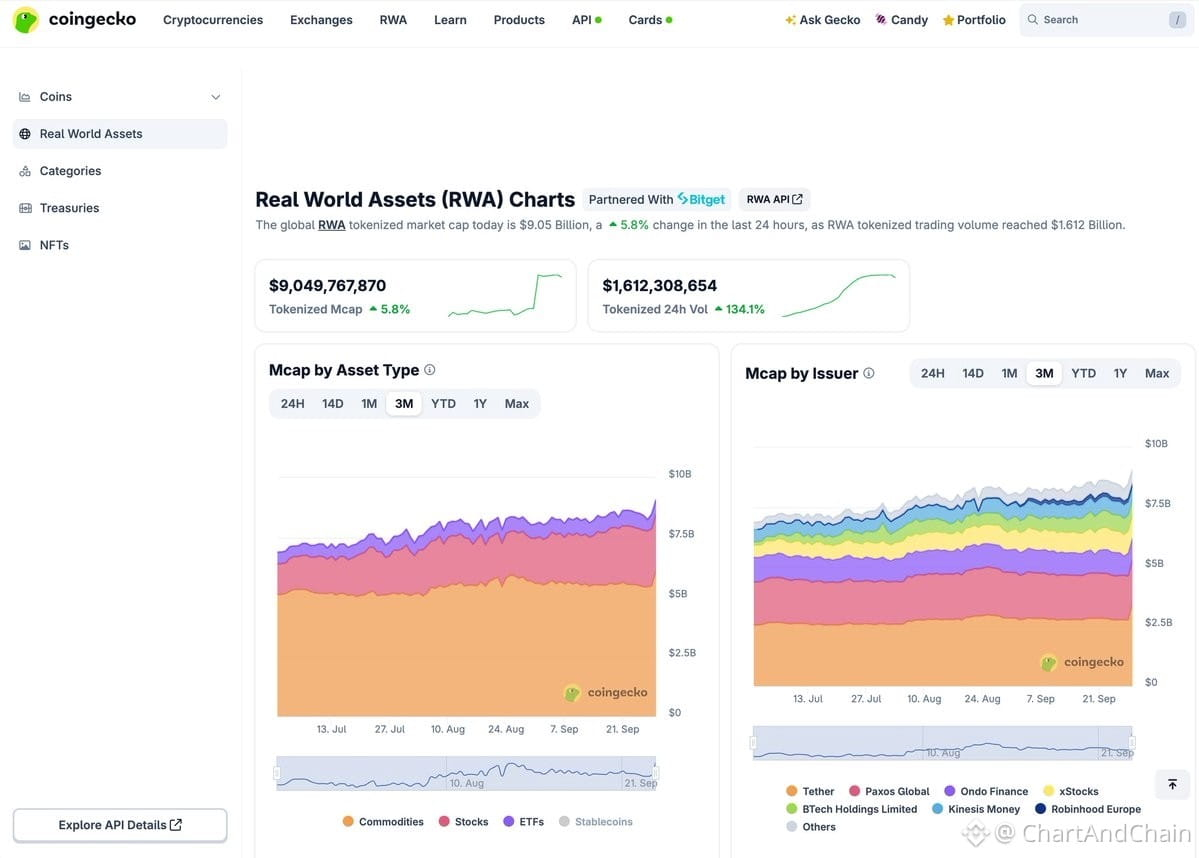
Seeing every new tokenized asset called RWA adoption doesn't sit right. Issuance ≠ adoption.
Pulled CoinGecko's RWA charts. Tokenized RWA market cap: $9.04B (+6.3% / 24H). Trading volume: $1.64B (+148.2% / 24H).
That's ~18% of total market cap moved in one day.
Volume is accelerating way faster than the value being tokenized. Asset base grows, but activity is spiking harder.
Doesn't mean the whole RWA market is liquid. Could be one asset or issuer driving most of it.
How to read it:
→ Compare market cap by asset type
→ Check if volume follows the same category
→ Switch to issuer view — who controls the activity?
→ Use token count to separate real demand from just adding more listings
→ Move between 24H / 3M / 1Y / Max to see if it's temporary or structural
If token count rises but volume per asset stays weak = supply expansion, not adoption.
If market cap, volume, and issuer activity all grow together across longer timeframes = stronger signal.
Current volume spike is worth investigating. Asset-type and issuer breakdown will show if it's broad RWA growth or concentrated activity in one corner.
More assets tokenized ≠ more capital onchain ≠ more users trading them. Track all three separately.
Seeing every new tokenized asset called RWA adoption doesn't sit right. Issuance ≠ adoption.
Pulled CoinGecko's RWA charts. Tokenized RWA market cap: $9.04B (+6.3% / 24H). Trading volume: $1.64B (+148.2% / 24H).
That's ~18% of total market cap moved in one day.
Volume is accelerating way faster than the value being tokenized. Asset base grows, but activity is spiking harder.
Doesn't mean the whole RWA market is liquid. Could be one asset or issuer driving most of it.
How to read it:
→ Compare market cap by asset type
→ Check if volume follows the same category
→ Switch to issuer view — who controls the activity?
→ Use token count to separate real demand from just adding more listings
→ Move between 24H / 3M / 1Y / Max to see if it's temporary or structural
If token count rises but volume per asset stays weak = supply expansion, not adoption.
If market cap, volume, and issuer activity all grow together across longer timeframes = stronger signal.
Current volume spike is worth investigating. Asset-type and issuer breakdown will show if it's broad RWA growth or concentrated activity in one corner.
More assets tokenized ≠ more capital onchain ≠ more users trading them. Track all three separately.
Pulled CoinGecko's RWA charts. Tokenized RWA market cap: $9.04B (+6.3% / 24H). Trading volume: $1.64B (+148.2% / 24H).
That's ~18% of total market cap moved in one day.
Volume is accelerating way faster than the value being tokenized. Asset base grows, but activity is spiking harder.
Doesn't mean the whole RWA market is liquid. Could be one asset or issuer driving most of it.
How to read it:
→ Compare market cap by asset type
→ Check if volume follows the same category
→ Switch to issuer view — who controls the activity?
→ Use token count to separate real demand from just adding more listings
→ Move between 24H / 3M / 1Y / Max to see if it's temporary or structural
If token count rises but volume per asset stays weak = supply expansion, not adoption.
If market cap, volume, and issuer activity all grow together across longer timeframes = stronger signal.
Current volume spike is worth investigating. Asset-type and issuer breakdown will show if it's broad RWA growth or concentrated activity in one corner.
More assets tokenized ≠ more capital onchain ≠ more users trading them. Track all three separately.
1
639
$BTC sitting at a make-or-break zone right now.
Major support level in play — if it holds, we could see a bounce. If it breaks, next leg down is on the table.
Price action here matters. Watch how it reacts at this level — clean hold or breakdown will set the tone for the next move.
$BTC sitting at a make-or-break zone right now.
Major support level in play — if it holds, we could see a bounce. If it breaks, next leg down is on the table.
Price action here matters. Watch how it reacts at this level — clean hold or breakdown will set the tone for the next move.
Major support level in play — if it holds, we could see a bounce. If it breaks, next leg down is on the table.
Price action here matters. Watch how it reacts at this level — clean hold or breakdown will set the tone for the next move.
3
1
776
Log in to explore more content
Join global crypto users on Binance Square
⚡️ Get latest and useful information about crypto.
💬 Trusted by the world’s largest crypto exchange.
👍 Discover real insights from verified creators.
Email / Phone number
Trending Topics
BinanceLaunchesBinanceIntelligence
667,443 views
4,156 Discussing
#binancelaunchesbinanceintelligence 🚨 WHAT IF THE NEXT BIG EXCHANGE BATTLE ISN’T ABOUT FEES? 👀
Binance just made a bigger move than adding another AI chatbot.
With Binance Intelligence, AI is moving deeper into the exchange — from understanding market data to building trading workflows. 🤖⚡
The real question is:
Who has the best liquidity?
Or who has the smartest AI layer?
If users can research, test ideas and manage trading workflows without switching between different tools, the exchange itself could become a financial assistant.
That could be a much bigger shift than it looks today.
If Binance Intelligence drives more users, more strategies and more trading activity, $BNB could become one of the tokens to watch. 👀
Is Binance building the future of AI-powered finance?
$BNB
#binancelaunchesbinanceintelligence #BinanceAI #CryptoAI #AITrading
Suleman Khan Haqqani
·9 Likes
·16.5k views
BTCFallsBelow$84K
14,805 views
68 Discussing
DubaiVARAIssuesReserveAssetAuditCircular
818 views
132 Discussing