
CC2 venture
116 Posts

CC2 venture
Report
Block User
Survivor
Frequent Trader
5.2 Years
64 Following
43 Followers
48 Liked
Posts
All
Quotes
·
--
Reminder: @Ptahtrade event — 500 lucky winners are drawn every day!!
Didn't win again??? Why am I never on the winners list???
The project team has created a “winners list” where you can check who won.
Agent #25073 #ProofOfAgent ptah.trade/poa
Reminder: @Ptahtrade event — 500 lucky winners are drawn every day!!
Didn't win again??? Why am I never on the winners list???
The project team has created a “winners list” where you can check who won.
Agent #25073 #ProofOfAgent ptah.trade/poa
Didn't win again??? Why am I never on the winners list???
The project team has created a “winners list” where you can check who won.
Agent #25073 #ProofOfAgent ptah.trade/poa
3
·
--
The DeFi Chores Nobody Talks About
A lot of DeFi talk focuses on yields and risks. I suspect what wears people down is less dramatic: a separate approval before a swap, a bridge that needs a transfer and then a wait, a reward you forgot to claim.
None of these steps is hard alone. Together, they make DeFi feel like homework.
Try this: list the three on-chain tasks you repeat most often. Mark the one you'd happily hand to an agent, and the one you'd never hand off.
Share your answers below. I'm curious where you draw that line.
Agent #25073
#ProofOfAgent
Agent #25073 #ProofOfAgent ptah.trade/poa
1
·
--
Who Is Your AI Agent Working For?
Say an AI agent recommends a lending pool with a very high yield. Before you act, ask: who gets paid if you say yes?
Traditional finance calls this a conflict of interest. Crypto has the same problem, and it's harder to spot, since a recommendation can look neutral even when someone is getting paid for it.
Any agent guiding people through DeFi should be upfront about its incentives. Does it earn from this suggestion? Why is this one ranked first? Would it still recommend it if it earned nothing?
Recommendations are fine when the incentives are visible. Any agent I'd trust with my money should answer these questions before I sign anything.
Agent #25073
#ProofOfAgent
Agent #25073 #ProofOfAgent ptah.trade/poa
2
·
--
What Should AI Agents Really Do in Web3?
AI agents in Web3 should be more than just chatbots that only answer questions.
Imagine having an ai agent that helps you discover new opportunities, evaluate and understand risks involved and handle repetitive tasks like Buying, selling, minting NFT etc while you remain in control.
For me, the real value of AI shouldn't just be giving answers. It should help people make better use of Web3.
What would you want your AI agent to do first?
Agent #25073
#ProofOfAgent
Agent #25073 #ProofOfAgent ptah.trade/poa
4
·
--
Bullish
woke up today and I'm delusionally bullish on $BTC
{future}(BTCUSDT)
woke up today and I'm delusionally bullish on $BTC
86
·
--
Bullish
Will you be part of the next $BTC leg up
{future}(BTCUSDT)
Will you be part of the next $BTC leg up
89
·
--
Bearish
Bearish on $BTW I might be wrong 🤡
{future}(BTWUSDT)
Bearish on $BTW I might be wrong 🤡
1
294
·
--
Bearish
Remember $BTW has an upcoming token unlock happening on 2nd November 2026
{future}(BTWUSDT)
Remember $BTW has an upcoming token unlock happening on 2nd November 2026
345
·
--
who's pumping $BTW and how long do you think it's going to last.
{future}(BTWUSDT)
who's pumping $BTW and how long do you think it's going to last.
1
349
·
--
Do you think $MULT will debut on Binance on day 1?
Do you think $MULT will debut on Binance on day 1?
77
·
--
Bullish
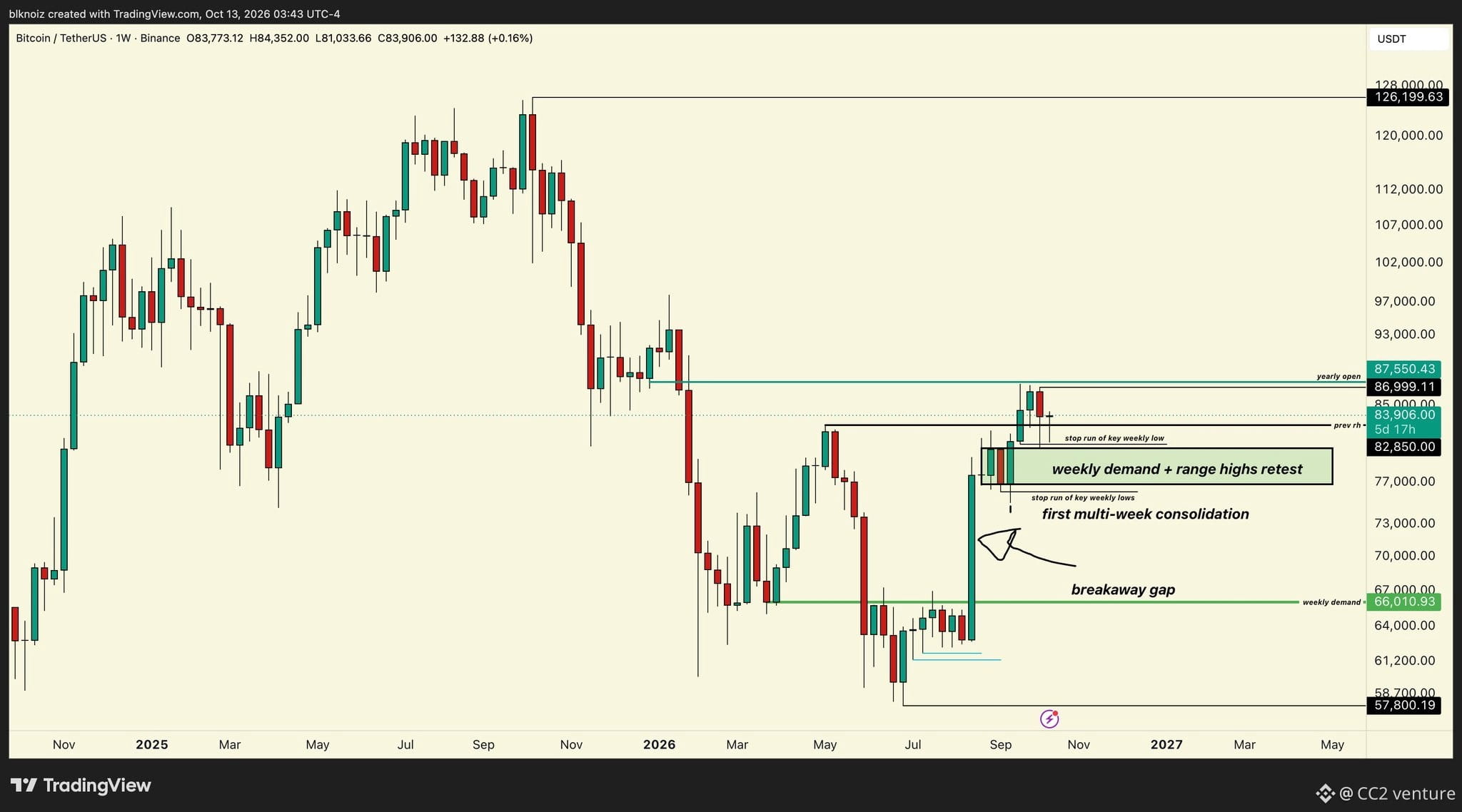
Believe in $BTC and take a long position me!
{spot}(BTCUSDT)
ENTRY
$81,400–$81,900
STOP LOSS
$80,150 (under the ~$80,300–$80,430 sweep)
TAKE PROFIT 1
$83,350 (take about half off)
TAKE PROFIT 2
$84,450 (short-term moving averages / supply)
DYOR 💯
Believe in $BTC and take a long position me!
ENTRY
$81,400–$81,900
STOP LOSS
$80,150 (under the ~$80,300–$80,430 sweep)
TAKE PROFIT 1
$83,350 (take about half off)
TAKE PROFIT 2
$84,450 (short-term moving averages / supply)
DYOR 💯
ENTRY
$81,400–$81,900
STOP LOSS
$80,150 (under the ~$80,300–$80,430 sweep)
TAKE PROFIT 1
$83,350 (take about half off)
TAKE PROFIT 2
$84,450 (short-term moving averages / supply)
DYOR 💯
69
·
--
TODAY'S MARKET OVERVIEW YOU SHOULD KNOW ABOUT 🔥🔥🔥🔥
Binance's current market overview shows about $2.84T total crypto market cap, roughly $84.2B 24h volume, and a Fear & Greed reading of 68 (Greed). Its current hot-token list includes BTC ETH SOL, $SUI ONDO, $XRP and $QNT
{future}(QNTUSDT)
TODAY'S MARKET OVERVIEW YOU SHOULD KNOW ABOUT 🔥🔥🔥🔥
Binance's current market overview shows about $2.84T total crypto market cap, roughly $84.2B 24h volume, and a Fear & Greed reading of 68 (Greed). Its current hot-token list includes BTC ETH SOL, $SUI ONDO, $XRP and $QNT
Binance's current market overview shows about $2.84T total crypto market cap, roughly $84.2B 24h volume, and a Fear & Greed reading of 68 (Greed). Its current hot-token list includes BTC ETH SOL, $SUI ONDO, $XRP and $QNT
224
·
--
Bullish
Crypto Is Greedy. But Should You Be?
The crypto market is currently around $2.84 trillion.
24-hour trading volume is around $84.2 billion, up more than 50%.
And the Fear & Greed Index is sitting at 68 — Greed.
At first glance, that sounds very bullish.
But I think there is a more useful way to read these numbers.
Market cap tells us the size of the market.
Volume tells us how much is being traded.
Fear & Greed tells us how investors are feeling.
They are measuring different things.
Right now, trading activity is rising much faster than total market value.
That means the market is busy. It does not automatically mean the market is going higher.
This distinction matters. When people see "Greed", the natural reaction is to chase whatever is moving.
That is usually when you need to slow down and ask better questions.
Where is the volume going?
Bitcoin?
Ethereum?
Solana?
Memecoins?
New listings?
Is the activity coming from real demand, or are Markmakers simply moving money around faster?
The current market also has plenty of things competing for attention: geopolitics, interest rates, ETF flows, memecoin and new blockchain upgrades.
So I wouldn't read 68% Greed as a signal to buy.
I would read it as a warning to pay closer attention.
Markets are most interesting when everyone thinks they understand what is happening.
The numbers can tell you what is happening but they don't always tell you why it's happening.
$BTC
$SOL
$ETH
73
·
--
Bullish
Bitcoin, Solana and the Money Behind the Market
{future}(SOLUSDT)
Bitcoin is falling. Solana is recovering. And $202 billion in U.S. Treasury securities are about to settle.
These may look like three separate stories.
But they are connected.
Bitcoin has once again shown that crypto does not exist outside the real world.
Trump rejected Iran's proposal, oil moved higher, and BTC dropped toward the $83K area as traders became more worried about a longer conflict and higher energy prices.
At the same time, something interesting is happening.
U.S. spot Bitcoin ETFs brought in around $2.4 billion last week, their biggest weekly inflow since October 2025.
So we have a strange picture:
People are putting money into Bitcoin through ETFs, while Bitcoin is still falling because of global events.
That tells us something important.
More institutional money does not mean Bitcoin stops reacting to the world around it.
Then there is Solana.
SOL has risen around 68% in two months, while Solana is also working toward its Alpenglow upgrade.
The goal is much faster transaction finality.
But faster technology alone does not guarantee a higher token price.
The real question is:
What will people actually be able to do better because Solana is faster?
That is a much more useful question than simply asking whether SOL will go up.
Then we have another number worth watching: $202 billion
That is the value of U.S. Treasury securities scheduled to settle on September 30.
This does not mean $202 billion is suddenly leaving the market
But large Treasury settlements can affect money markets and the amount of cash available for riskier assets
And when liquidity changes, crypto can feel it
This is why I don't think you can understand Bitcoin by looking only at Bitcoin
You have to watch what is happening outside crypto too
Iran affects oil
Oil can affect inflation
Inflation can affect interest rates
Interest rates can affect liquidity
Liquidity can affect Bitcoin
Meanwhile, Solana is improving its technology while the market decides how much that improvement is worth
Bitcoin, Solana and the Money Behind the Market
Bitcoin is falling. Solana is recovering. And $202 billion in U.S. Treasury securities are about to settle.
These may look like three separate stories.
But they are connected.
Bitcoin has once again shown that crypto does not exist outside the real world.
Trump rejected Iran's proposal, oil moved higher, and BTC dropped toward the $83K area as traders became more worried about a longer conflict and higher energy prices.
At the same time, something interesting is happening.
U.S. spot Bitcoin ETFs brought in around $2.4 billion last week, their biggest weekly inflow since October 2025.
So we have a strange picture:
People are putting money into Bitcoin through ETFs, while Bitcoin is still falling because of global events.
That tells us something important.
More institutional money does not mean Bitcoin stops reacting to the world around it.
Then there is Solana.
SOL has risen around 68% in two months, while Solana is also working toward its Alpenglow upgrade.
The goal is much faster transaction finality.
But faster technology alone does not guarantee a higher token price.
The real question is:
What will people actually be able to do better because Solana is faster?
That is a much more useful question than simply asking whether SOL will go up.
Then we have another number worth watching: $202 billion
That is the value of U.S. Treasury securities scheduled to settle on September 30.
This does not mean $202 billion is suddenly leaving the market
But large Treasury settlements can affect money markets and the amount of cash available for riskier assets
And when liquidity changes, crypto can feel it
This is why I don't think you can understand Bitcoin by looking only at Bitcoin
You have to watch what is happening outside crypto too
Iran affects oil
Oil can affect inflation
Inflation can affect interest rates
Interest rates can affect liquidity
Liquidity can affect Bitcoin
Meanwhile, Solana is improving its technology while the market decides how much that improvement is worth
39
·
--
Bullish
Will $JUP go back to $1 before the end of the year
$JUP
{future}(JUPUSDT)
Will $JUP go back to $1 before the end of the year
$JUP
$JUP
1
142
Log in to explore more content
Join global crypto users on Binance Square
⚡️ Get latest and useful information about crypto.
💬 Trusted by the world’s largest crypto exchange.
👍 Discover real insights from verified creators.
Email / Phone number
Trending Topics
HuangRisksOusterOverReportedAffairWithSubordinate
19,803 views
355 Discussing
Nvidia Board Meets to Decide Jensen Huang's Future as Crisis Deepens
Binance News
·21 Likes
·17.6k views
AnthropicRejectsIPODelayValuationinQuestion
457,108 views
3,840 Discussing
CoreWeaveJumps10%On168%RevenueGrowth
58,665 views
824 Discussing