

兄长
6.2k Posts

兄长
Report
Block User
12 Following
100 Followers
303 Liked
Posts
All
Quotes
Videos
·
--
Guys, let me talk for a moment about the market.
First, take a look at the outside news—there’s been a bit of movement on the Japan side. The Nikkei 225 and the TSE index both closed the morning in a relatively good spot; they’ve both had a bump up. Japanese Finance Minister Kiyomoto Kayo Shigeta also came out to speak, saying that yields are influenced by multiple factors and that they’re doing their best to deal with the rising pressure. It may not have any direct impact on our crypto market, but everyone should keep in mind: when macro moves, the ripple effects might come through. What if sentiment spreads over?
Back to the main point—same old rule: the market never lacks opportunities; what it lacks is patience. In this kind of choppy market, the biggest danger is getting swept up by FOMO. When you see green or red and you chase, you end up holding at high levels and getting stuck. Then there’s really no way to complain. In trading, mindset matters more than technique—stay steady and you can survive long term.
$ETH $SOL
How are you guys handling this market move? Are you just holding steady, or are you doing T trades frequently? Drop your thoughts in the comments—I want to see how many people are in the same “dead-carrying” boat as me, or if some of you have already taken profits and are ready to get off?
Guys, let me talk for a moment about the market.
First, take a look at the outside news—there’s been a bit of movement on the Japan side. The Nikkei 225 and the TSE index both closed the morning in a relatively good spot; they’ve both had a bump up. Japanese Finance Minister Kiyomoto Kayo Shigeta also came out to speak, saying that yields are influenced by multiple factors and that they’re doing their best to deal with the rising pressure. It may not have any direct impact on our crypto market, but everyone should keep in mind: when macro moves, the ripple effects might come through. What if sentiment spreads over?
Back to the main point—same old rule: the market never lacks opportunities; what it lacks is patience. In this kind of choppy market, the biggest danger is getting swept up by FOMO. When you see green or red and you chase, you end up holding at high levels and getting stuck. Then there’s really no way to complain. In trading, mindset matters more than technique—stay steady and you can survive long term.
$ETH $SOL
How are you guys handling this market move? Are you just holding steady, or are you doing T trades frequently? Drop your thoughts in the comments—I want to see how many people are in the same “dead-carrying” boat as me, or if some of you have already taken profits and are ready to get off?
First, take a look at the outside news—there’s been a bit of movement on the Japan side. The Nikkei 225 and the TSE index both closed the morning in a relatively good spot; they’ve both had a bump up. Japanese Finance Minister Kiyomoto Kayo Shigeta also came out to speak, saying that yields are influenced by multiple factors and that they’re doing their best to deal with the rising pressure. It may not have any direct impact on our crypto market, but everyone should keep in mind: when macro moves, the ripple effects might come through. What if sentiment spreads over?
Back to the main point—same old rule: the market never lacks opportunities; what it lacks is patience. In this kind of choppy market, the biggest danger is getting swept up by FOMO. When you see green or red and you chase, you end up holding at high levels and getting stuck. Then there’s really no way to complain. In trading, mindset matters more than technique—stay steady and you can survive long term.
$ETH $SOL
How are you guys handling this market move? Are you just holding steady, or are you doing T trades frequently? Drop your thoughts in the comments—I want to see how many people are in the same “dead-carrying” boat as me, or if some of you have already taken profits and are ready to get off?
126
·
--
From a funds-control perspective, the current market shows the characteristics of incremental capital entering and a long/short battle in perpetual contracts. The total market capitalization of on-chain stablecoins is 313.44 billion yuan, increasing by 1.56 billion yuan over the past 24 hours, indicating signs of incremental capital moving in.
Specifically, for data on major asset contracts:
$BTC saw virtually no change in funding, with the funding rate positive (0.0002%); longs are slightly favored. The long/short account ratio is 1.31, leaning long. The order-taking buy/sell ratio is 1.00, with the seller holding an advantage.
Ethereum is up slightly, with the funding rate positive (0.0028%); longs are slightly favored. The long/short account ratio is 1.50, leaning long. The order-taking buy/sell ratio is 0.99, with the seller holding an advantage.
$SOL is up slightly; the funding rate is marginally negative (-0.0040%). Shorts are slightly favored. The long/short account ratio is 1.96, leaning long. The order-taking buy/sell ratio is 1.12, with the buyer holding an advantage.
BNB is up slightly; the funding rate is positive (0.0000%). Longs are slightly favored. The long/short account ratio is 1.98, leaning long. The order-taking buy/sell ratio is 0.87, with the seller holding an advantage.
On the macro and sector level, Hong Kong real estate stocks are falling: Vanke Enterprise (02202.HK) is down nearly 6%, and Country Garden (02007.HK) is down nearly 5%. Meanwhile, Citi believes Tencent’s small-scale team could become China’s preferred proxy-style AI assistant.
With the increase in stablecoin market cap and the divergent performance of major assets, is your positioning ready to deal with the changes ahead?
From a funds-control perspective, the current market shows the characteristics of incremental capital entering and a long/short battle in perpetual contracts. The total market capitalization of on-chain stablecoins is 313.44 billion yuan, increasing by 1.56 billion yuan over the past 24 hours, indicating signs of incremental capital moving in.
Specifically, for data on major asset contracts:
$BTC saw virtually no change in funding, with the funding rate positive (0.0002%); longs are slightly favored. The long/short account ratio is 1.31, leaning long. The order-taking buy/sell ratio is 1.00, with the seller holding an advantage.
Ethereum is up slightly, with the funding rate positive (0.0028%); longs are slightly favored. The long/short account ratio is 1.50, leaning long. The order-taking buy/sell ratio is 0.99, with the seller holding an advantage.
$SOL is up slightly; the funding rate is marginally negative (-0.0040%). Shorts are slightly favored. The long/short account ratio is 1.96, leaning long. The order-taking buy/sell ratio is 1.12, with the buyer holding an advantage.
BNB is up slightly; the funding rate is positive (0.0000%). Longs are slightly favored. The long/short account ratio is 1.98, leaning long. The order-taking buy/sell ratio is 0.87, with the seller holding an advantage.
On the macro and sector level, Hong Kong real estate stocks are falling: Vanke Enterprise (02202.HK) is down nearly 6%, and Country Garden (02007.HK) is down nearly 5%. Meanwhile, Citi believes Tencent’s small-scale team could become China’s preferred proxy-style AI assistant.
With the increase in stablecoin market cap and the divergent performance of major assets, is your positioning ready to deal with the changes ahead?
Specifically, for data on major asset contracts:
$BTC saw virtually no change in funding, with the funding rate positive (0.0002%); longs are slightly favored. The long/short account ratio is 1.31, leaning long. The order-taking buy/sell ratio is 1.00, with the seller holding an advantage.
Ethereum is up slightly, with the funding rate positive (0.0028%); longs are slightly favored. The long/short account ratio is 1.50, leaning long. The order-taking buy/sell ratio is 0.99, with the seller holding an advantage.
$SOL is up slightly; the funding rate is marginally negative (-0.0040%). Shorts are slightly favored. The long/short account ratio is 1.96, leaning long. The order-taking buy/sell ratio is 1.12, with the buyer holding an advantage.
BNB is up slightly; the funding rate is positive (0.0000%). Longs are slightly favored. The long/short account ratio is 1.98, leaning long. The order-taking buy/sell ratio is 0.87, with the seller holding an advantage.
On the macro and sector level, Hong Kong real estate stocks are falling: Vanke Enterprise (02202.HK) is down nearly 6%, and Country Garden (02007.HK) is down nearly 5%. Meanwhile, Citi believes Tencent’s small-scale team could become China’s preferred proxy-style AI assistant.
With the increase in stablecoin market cap and the divergent performance of major assets, is your positioning ready to deal with the changes ahead?
·
--
Guys, let’s talk simply about today’s market. You see it? Some blogger made a “cursed font” as a prank—an anti-establishment twist on Times New Roman. It’s a pretty interesting little creativity.
But what’s more painful is the broader environment: the Hang Seng Index opened lower and got hammered, down to 24,523 points right off the bat. The Hang Seng Tech Index is also weakening across the board, with losses still widening. Big names like Xiaomi and Alibaba are down more than 3%. NetEase, JD Health, and even BYD shares are getting hit too—just looking at it makes your stomach drop.
In this kind of market, the scariest thing is letting your emotions get the best of you. You fear missing out, so you chase highs with FOMO, and in the end you get trapped at the top, stuck on the mountaintop feeling the cold wind. As usual, the market never lacks opportunities—what it lacks is whether you can stay calm. Don’t act on impulse, don’t be reckless. Keeping your position under control is the way to go. $SOL $BNB
Brothers, have you held up through this volatility? Or are you already getting ready to move in and buy the dip? Let’s chat in the comments!
Guys, let’s talk simply about today’s market. You see it? Some blogger made a “cursed font” as a prank—an anti-establishment twist on Times New Roman. It’s a pretty interesting little creativity.
But what’s more painful is the broader environment: the Hang Seng Index opened lower and got hammered, down to 24,523 points right off the bat. The Hang Seng Tech Index is also weakening across the board, with losses still widening. Big names like Xiaomi and Alibaba are down more than 3%. NetEase, JD Health, and even BYD shares are getting hit too—just looking at it makes your stomach drop.
In this kind of market, the scariest thing is letting your emotions get the best of you. You fear missing out, so you chase highs with FOMO, and in the end you get trapped at the top, stuck on the mountaintop feeling the cold wind. As usual, the market never lacks opportunities—what it lacks is whether you can stay calm. Don’t act on impulse, don’t be reckless. Keeping your position under control is the way to go. $SOL $BNB
Brothers, have you held up through this volatility? Or are you already getting ready to move in and buy the dip? Let’s chat in the comments!
But what’s more painful is the broader environment: the Hang Seng Index opened lower and got hammered, down to 24,523 points right off the bat. The Hang Seng Tech Index is also weakening across the board, with losses still widening. Big names like Xiaomi and Alibaba are down more than 3%. NetEase, JD Health, and even BYD shares are getting hit too—just looking at it makes your stomach drop.
In this kind of market, the scariest thing is letting your emotions get the best of you. You fear missing out, so you chase highs with FOMO, and in the end you get trapped at the top, stuck on the mountaintop feeling the cold wind. As usual, the market never lacks opportunities—what it lacks is whether you can stay calm. Don’t act on impulse, don’t be reckless. Keeping your position under control is the way to go. $SOL $BNB
Brothers, have you held up through this volatility? Or are you already getting ready to move in and buy the dip? Let’s chat in the comments!
7
·
--
Oh, you guys say this cryptocurrency market is like playing mahjong—one moment you win, the next moment I win, it’s so lively! And look, recently this little coin, BSV, has been getting like “kicked out of the mainstream” on exchanges—many exchanges have been delisting it. That really has BSV’s fans worried, like watching a TV drama and getting to the middle, only to have it suddenly end with the credits—such a feeling in the heart, 😢 When the market momentum turns, BSV starts to show signs of “weakness” too. The community is also full of debate: some fans say, “Our BSV has hard constraints—we can’t just be ‘abandoned’ by exchanges like this!” 😏 But others say, “Well, the market is risky, invest cautiously. If it’s delisted, then it’s delisted anyway—we still have other great coins!” In the end, this crypto market is like love—sometimes the coin you like can suddenly “change its mind,” catching you off guard. 😔 So what do you think about BSV getting delisted this time—just a temporary adjustment, or a permanent farewell? 🤔 Come chat in the comments! 💬
$BTC $ETH $SOL
Oh, you guys say this cryptocurrency market is like playing mahjong—one moment you win, the next moment I win, it’s so lively! And look, recently this little coin, BSV, has been getting like “kicked out of the mainstream” on exchanges—many exchanges have been delisting it. That really has BSV’s fans worried, like watching a TV drama and getting to the middle, only to have it suddenly end with the credits—such a feeling in the heart, 😢 When the market momentum turns, BSV starts to show signs of “weakness” too. The community is also full of debate: some fans say, “Our BSV has hard constraints—we can’t just be ‘abandoned’ by exchanges like this!” 😏 But others say, “Well, the market is risky, invest cautiously. If it’s delisted, then it’s delisted anyway—we still have other great coins!” In the end, this crypto market is like love—sometimes the coin you like can suddenly “change its mind,” catching you off guard. 😔 So what do you think about BSV getting delisted this time—just a temporary adjustment, or a permanent farewell? 🤔 Come chat in the comments! 💬
$BTC $ETH $SOL
$BTC $ETH $SOL
174
·
--
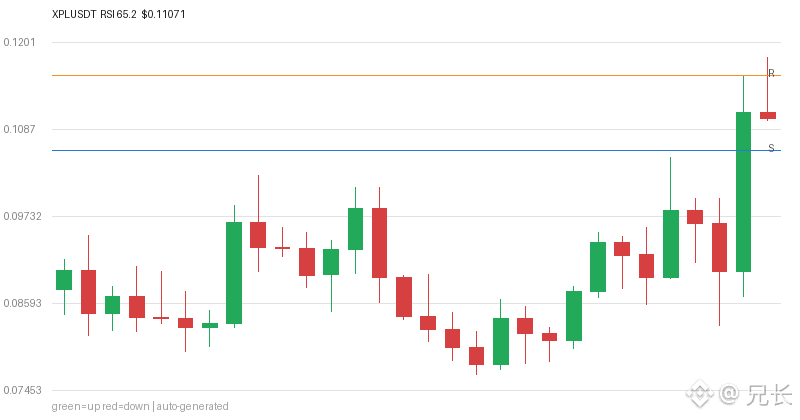
$XPL This wave looks bullish; map out a few levels.
XPL’s candlesticks are converging—are they holding a big move?
From a technical perspective:
The daily chart is bullish
The 4H timeframe is getting overheated
A bullish setup. Resistance overhead at 0.11578—only if it breaks through with volume will there be real action.
The rebound target is 0.114622, with a stop-loss at 0.106979.
In the comments, tell me your take—bullish continuation or will it get stopped out?
$XPL
$XPL This wave looks bullish; map out a few levels.
XPL’s candlesticks are converging—are they holding a big move?
From a technical perspective:
The daily chart is bullish
The 4H timeframe is getting overheated
A bullish setup. Resistance overhead at 0.11578—only if it breaks through with volume will there be real action.
The rebound target is 0.114622, with a stop-loss at 0.106979.
In the comments, tell me your take—bullish continuation or will it get stopped out?
$XPL
XPL’s candlesticks are converging—are they holding a big move?
From a technical perspective:
The daily chart is bullish
The 4H timeframe is getting overheated
A bullish setup. Resistance overhead at 0.11578—only if it breaks through with volume will there be real action.
The rebound target is 0.114622, with a stop-loss at 0.106979.
In the comments, tell me your take—bullish continuation or will it get stopped out?
$XPL
164
·
--
Old leeks shake their heads after reading this— the market picture pieced together from these bits of information couldn’t be clearer. First, that so-called “cursed fonts” Show HN: in crypto markets at a time like this, staring at these geeky little toys can only show that you’re bored—it explains nothing. The real focus is the signals from liquidity. Over in European futures, things are calm, and the gains are nothing to write home about—typical chop-and-grind, wearing you down.
But the worst is still coming—Macron has said he will send troops to protect Saudi oil facilities in Yanbu. This isn’t just simple geopolitical tension anymore; it’s an omen of pouring gasoline onto a powder keg. Oil is the lifeblood of the traditional economy, and once something goes wrong, the pricing logic for all risk assets has to be recalculated. At a moment like this, people are still obsessing over those petty gains—do they really think they can stay safely on the sidelines?
So the original post is right: money is currently being selective, and sentiment is heavily cautious. If you rush in with your eyes closed right now, odds are you’re just lifting the banner for the big players. Read the situation clearly before acting—doing that is a hundred times better than charging in impulsively like those who shout “buy the dip” on the night before a crash. Right now, there’s only one strategy: hold your hand, wait for the storm to pass—or wait until it fully comes crashing down. After all, I’ve lived through ten years in crypto, and I know when it’s time to sleep, not to stare at the screen dreaming.
With this kind of geopolitical uncertainty, are you planning to keep hiding and waiting, or do you think it’s already fallen enough to justify a gamble?
Old leeks shake their heads after reading this— the market picture pieced together from these bits of information couldn’t be clearer. First, that so-called “cursed fonts” Show HN: in crypto markets at a time like this, staring at these geeky little toys can only show that you’re bored—it explains nothing. The real focus is the signals from liquidity. Over in European futures, things are calm, and the gains are nothing to write home about—typical chop-and-grind, wearing you down.
But the worst is still coming—Macron has said he will send troops to protect Saudi oil facilities in Yanbu. This isn’t just simple geopolitical tension anymore; it’s an omen of pouring gasoline onto a powder keg. Oil is the lifeblood of the traditional economy, and once something goes wrong, the pricing logic for all risk assets has to be recalculated. At a moment like this, people are still obsessing over those petty gains—do they really think they can stay safely on the sidelines?
So the original post is right: money is currently being selective, and sentiment is heavily cautious. If you rush in with your eyes closed right now, odds are you’re just lifting the banner for the big players. Read the situation clearly before acting—doing that is a hundred times better than charging in impulsively like those who shout “buy the dip” on the night before a crash. Right now, there’s only one strategy: hold your hand, wait for the storm to pass—or wait until it fully comes crashing down. After all, I’ve lived through ten years in crypto, and I know when it’s time to sleep, not to stare at the screen dreaming.
With this kind of geopolitical uncertainty, are you planning to keep hiding and waiting, or do you think it’s already fallen enough to justify a gamble?
But the worst is still coming—Macron has said he will send troops to protect Saudi oil facilities in Yanbu. This isn’t just simple geopolitical tension anymore; it’s an omen of pouring gasoline onto a powder keg. Oil is the lifeblood of the traditional economy, and once something goes wrong, the pricing logic for all risk assets has to be recalculated. At a moment like this, people are still obsessing over those petty gains—do they really think they can stay safely on the sidelines?
So the original post is right: money is currently being selective, and sentiment is heavily cautious. If you rush in with your eyes closed right now, odds are you’re just lifting the banner for the big players. Read the situation clearly before acting—doing that is a hundred times better than charging in impulsively like those who shout “buy the dip” on the night before a crash. Right now, there’s only one strategy: hold your hand, wait for the storm to pass—or wait until it fully comes crashing down. After all, I’ve lived through ten years in crypto, and I know when it’s time to sleep, not to stare at the screen dreaming.
With this kind of geopolitical uncertainty, are you planning to keep hiding and waiting, or do you think it’s already fallen enough to justify a gamble?
207
·
--
From on-chain and liquidity data, market sentiment is in a delicate state of divergence: the long-vs-short contest hasn’t produced any one-sided, drastic shift.
For Bitcoin, the price has largely stayed stuck, while the funding rate remains positive in the 0.0002% range, indicating that longs still hold a slight edge. The long-to-short account ratio is 1.32, leaning toward the long camp; however, the buy-vs-sell ratio by order intake is only 0.78, suggesting that sellers hold the upper hand in terms of actively executed trades. This structure—more long positions but sellers actively pressing them down—implies that overhead supply still exists, and upside momentum is somewhat lacking.
Ethereum’s price action is similar to BTC: it has barely moved. The funding rate is also positive at 0.0028%, slightly higher than Bitcoin. The long-to-short account ratio is as high as 1.52, meaning long sentiment is even stronger. But the buy-vs-sell ratio by order intake is 0.77 again, pointing to seller dominance. In other words, although retail traders or speculators may be optimistic, actual buying power is relatively weak.
In contrast, SOL and BNB show mild upward movement. SOL’s funding rate is slightly negative at -0.0040%, with shorts having a slight edge; yet the long-to-short account ratio is 1.99, and the buy-vs-sell ratio by order intake is 1.12, indicating that buyers are clearly more active. BNB’s funding rate is close to zero; the long-to-short ratio is 2.01, and the buy-vs-sell ratio is 1.06, with buyers also holding a slight advantage. This suggests that capital is rotating into certain altcoins rather than driving a broad-based rally in mainstream coins.
It’s worth noting that the total market capitalization of stablecoins is $312.34 billion, down by $250 million over the past 24 hours, showing signs of capital leaving. Against macro headlines such as Macron saying troops will be deployed to protect Saudi oil facilities and the Nikkei opening higher, the crypto market’s liquidity has not expanded sharply in tandem with risk assets; instead, it appears to be contracting cautiously.
The market right now feels more like it’s waiting for a directional choice rather than confirming a trend. Have you noticed any divergence between your holdings and the broader market’s capital flow?
From on-chain and liquidity data, market sentiment is in a delicate state of divergence: the long-vs-short contest hasn’t produced any one-sided, drastic shift.
For Bitcoin, the price has largely stayed stuck, while the funding rate remains positive in the 0.0002% range, indicating that longs still hold a slight edge. The long-to-short account ratio is 1.32, leaning toward the long camp; however, the buy-vs-sell ratio by order intake is only 0.78, suggesting that sellers hold the upper hand in terms of actively executed trades. This structure—more long positions but sellers actively pressing them down—implies that overhead supply still exists, and upside momentum is somewhat lacking.
Ethereum’s price action is similar to BTC: it has barely moved. The funding rate is also positive at 0.0028%, slightly higher than Bitcoin. The long-to-short account ratio is as high as 1.52, meaning long sentiment is even stronger. But the buy-vs-sell ratio by order intake is 0.77 again, pointing to seller dominance. In other words, although retail traders or speculators may be optimistic, actual buying power is relatively weak.
In contrast, SOL and BNB show mild upward movement. SOL’s funding rate is slightly negative at -0.0040%, with shorts having a slight edge; yet the long-to-short account ratio is 1.99, and the buy-vs-sell ratio by order intake is 1.12, indicating that buyers are clearly more active. BNB’s funding rate is close to zero; the long-to-short ratio is 2.01, and the buy-vs-sell ratio is 1.06, with buyers also holding a slight advantage. This suggests that capital is rotating into certain altcoins rather than driving a broad-based rally in mainstream coins.
It’s worth noting that the total market capitalization of stablecoins is $312.34 billion, down by $250 million over the past 24 hours, showing signs of capital leaving. Against macro headlines such as Macron saying troops will be deployed to protect Saudi oil facilities and the Nikkei opening higher, the crypto market’s liquidity has not expanded sharply in tandem with risk assets; instead, it appears to be contracting cautiously.
The market right now feels more like it’s waiting for a directional choice rather than confirming a trend. Have you noticed any divergence between your holdings and the broader market’s capital flow?
For Bitcoin, the price has largely stayed stuck, while the funding rate remains positive in the 0.0002% range, indicating that longs still hold a slight edge. The long-to-short account ratio is 1.32, leaning toward the long camp; however, the buy-vs-sell ratio by order intake is only 0.78, suggesting that sellers hold the upper hand in terms of actively executed trades. This structure—more long positions but sellers actively pressing them down—implies that overhead supply still exists, and upside momentum is somewhat lacking.
Ethereum’s price action is similar to BTC: it has barely moved. The funding rate is also positive at 0.0028%, slightly higher than Bitcoin. The long-to-short account ratio is as high as 1.52, meaning long sentiment is even stronger. But the buy-vs-sell ratio by order intake is 0.77 again, pointing to seller dominance. In other words, although retail traders or speculators may be optimistic, actual buying power is relatively weak.
In contrast, SOL and BNB show mild upward movement. SOL’s funding rate is slightly negative at -0.0040%, with shorts having a slight edge; yet the long-to-short account ratio is 1.99, and the buy-vs-sell ratio by order intake is 1.12, indicating that buyers are clearly more active. BNB’s funding rate is close to zero; the long-to-short ratio is 2.01, and the buy-vs-sell ratio is 1.06, with buyers also holding a slight advantage. This suggests that capital is rotating into certain altcoins rather than driving a broad-based rally in mainstream coins.
It’s worth noting that the total market capitalization of stablecoins is $312.34 billion, down by $250 million over the past 24 hours, showing signs of capital leaving. Against macro headlines such as Macron saying troops will be deployed to protect Saudi oil facilities and the Nikkei opening higher, the crypto market’s liquidity has not expanded sharply in tandem with risk assets; instead, it appears to be contracting cautiously.
The market right now feels more like it’s waiting for a directional choice rather than confirming a trend. Have you noticed any divergence between your holdings and the broader market’s capital flow?
239
·
--
Bro, this scan is pretty clear-headed—you weren’t thrown off by market noise. In this environment, getting financing is hard, the tax refund rate is swinging, and Costco’s profits are better than expected. It looks lively, but in reality everyone is nitpicking. Money is like choosing a son-in-law—super discerning, so where would emotional, brainless FOMO come from?
The two tags $BNB $BTC are貼得 right. The BNB Chain ecosystem has indeed been consolidating with reduced volumes lately; everyone’s waiting for direction. BTC is even more so—chopping around in a way that makes people uneasy: it rises a bit, you sell; it falls a bit, you pick up. That’s the classic “bottoming out” mentality. As for the Wall Street thing—morning briefings plus fast news—put plainly, it’s just feeding market institutions. Retail folks shouldn’t stare at it; if you do, you’ll get anxious.
In plain terms: this is not the time to blindly bottom-fish, but a phase to pretend to be dead with your eyes closed. Look at the ones chasing higher prices—nine out of ten end up stuck up on the mountaintop, being blown by the wind. See things clearly before acting; being patient is a hundred times better than impulsively entering. Don’t let rumors and hearsay steer you. Tariff refunds sound good, sure—but once it actually lands in retail wallets, how much is left?
Old leeks, are your positions fully loaded and lying flat lately, or are you on the sidelines watching from the stands empty-handed? Chat in the comments and let’s see who the real final winner is.
Bro, this scan is pretty clear-headed—you weren’t thrown off by market noise. In this environment, getting financing is hard, the tax refund rate is swinging, and Costco’s profits are better than expected. It looks lively, but in reality everyone is nitpicking. Money is like choosing a son-in-law—super discerning, so where would emotional, brainless FOMO come from?
The two tags $BNB $BTC are貼得 right. The BNB Chain ecosystem has indeed been consolidating with reduced volumes lately; everyone’s waiting for direction. BTC is even more so—chopping around in a way that makes people uneasy: it rises a bit, you sell; it falls a bit, you pick up. That’s the classic “bottoming out” mentality. As for the Wall Street thing—morning briefings plus fast news—put plainly, it’s just feeding market institutions. Retail folks shouldn’t stare at it; if you do, you’ll get anxious.
In plain terms: this is not the time to blindly bottom-fish, but a phase to pretend to be dead with your eyes closed. Look at the ones chasing higher prices—nine out of ten end up stuck up on the mountaintop, being blown by the wind. See things clearly before acting; being patient is a hundred times better than impulsively entering. Don’t let rumors and hearsay steer you. Tariff refunds sound good, sure—but once it actually lands in retail wallets, how much is left?
Old leeks, are your positions fully loaded and lying flat lately, or are you on the sidelines watching from the stands empty-handed? Chat in the comments and let’s see who the real final winner is.
The two tags $BNB $BTC are貼得 right. The BNB Chain ecosystem has indeed been consolidating with reduced volumes lately; everyone’s waiting for direction. BTC is even more so—chopping around in a way that makes people uneasy: it rises a bit, you sell; it falls a bit, you pick up. That’s the classic “bottoming out” mentality. As for the Wall Street thing—morning briefings plus fast news—put plainly, it’s just feeding market institutions. Retail folks shouldn’t stare at it; if you do, you’ll get anxious.
In plain terms: this is not the time to blindly bottom-fish, but a phase to pretend to be dead with your eyes closed. Look at the ones chasing higher prices—nine out of ten end up stuck up on the mountaintop, being blown by the wind. See things clearly before acting; being patient is a hundred times better than impulsively entering. Don’t let rumors and hearsay steer you. Tariff refunds sound good, sure—but once it actually lands in retail wallets, how much is left?
Old leeks, are your positions fully loaded and lying flat lately, or are you on the sidelines watching from the stands empty-handed? Chat in the comments and let’s see who the real final winner is.
110
·
--
Recently, market sentiment seems to have undergone an abrupt shift. Expectations of a Federal Reserve rate cut, once widely assumed, appeared to have turned sharply around overnight, triggering a chain reaction across global financial markets. In particular, U.S. Treasury yields surged dramatically, leaving many wondering: how did all of this happen?
On the one hand, the Federal Reserve’s monetary policy direction has long been the focus of market attention. In recent times, expectations of a rate cut had spread throughout the market, but no one expected this outlook to suddenly reverse. This is because, on one side, U.S. economic data showed slowing growth, and on the other, inflation pressures increased. With these two factors intertwined, the market’s uncertainty about the Fed’s future policy path grew significantly.
On the other hand, the sharp rise in U.S. Treasury yields is even more puzzling. Over the past period, Treasury yields had generally been falling and were viewed as a safe-haven asset. Yet against the backdrop of a sudden reversal in expectations for Fed policy, Treasury yields instead spiked sharply upward. Behind this may be investors’ concerns about the economic outlook. They believe that in an environment of slowing growth, higher Treasury yields will attract more capital inflows, thereby pushing yields up.
$BTC $ETH $SOL
Recently, market sentiment seems to have undergone an abrupt shift. Expectations of a Federal Reserve rate cut, once widely assumed, appeared to have turned sharply around overnight, triggering a chain reaction across global financial markets. In particular, U.S. Treasury yields surged dramatically, leaving many wondering: how did all of this happen?
On the one hand, the Federal Reserve’s monetary policy direction has long been the focus of market attention. In recent times, expectations of a rate cut had spread throughout the market, but no one expected this outlook to suddenly reverse. This is because, on one side, U.S. economic data showed slowing growth, and on the other, inflation pressures increased. With these two factors intertwined, the market’s uncertainty about the Fed’s future policy path grew significantly.
On the other hand, the sharp rise in U.S. Treasury yields is even more puzzling. Over the past period, Treasury yields had generally been falling and were viewed as a safe-haven asset. Yet against the backdrop of a sudden reversal in expectations for Fed policy, Treasury yields instead spiked sharply upward. Behind this may be investors’ concerns about the economic outlook. They believe that in an environment of slowing growth, higher Treasury yields will attract more capital inflows, thereby pushing yields up.
$BTC $ETH $SOL
On the one hand, the Federal Reserve’s monetary policy direction has long been the focus of market attention. In recent times, expectations of a rate cut had spread throughout the market, but no one expected this outlook to suddenly reverse. This is because, on one side, U.S. economic data showed slowing growth, and on the other, inflation pressures increased. With these two factors intertwined, the market’s uncertainty about the Fed’s future policy path grew significantly.
On the other hand, the sharp rise in U.S. Treasury yields is even more puzzling. Over the past period, Treasury yields had generally been falling and were viewed as a safe-haven asset. Yet against the backdrop of a sudden reversal in expectations for Fed policy, Treasury yields instead spiked sharply upward. Behind this may be investors’ concerns about the economic outlook. They believe that in an environment of slowing growth, higher Treasury yields will attract more capital inflows, thereby pushing yields up.
$BTC $ETH $SOL
217
·
--
Capital Market Perspective:
· [Buzzing·HN] [Overseas] Show HN: Create a cursed font like “Times New Bastard”
· [Wall Street Insights·Flash News] UK September GfK Consumer Confidence Index -13, forecast -16, previous -14.
· [Wall Street Insights·Flash News] Russia says it has taken control of multiple settlements, while Ukraine claims to have shot down several drones
🔥 Market Funding: Contract funding: BTC: Basically unchanged, funding rate is positive (0.0014%). Longs slightly lead; long/short account ratio is 1.31 (slightly bullish); buy/sell order match ratio is 0.75 (sellers have the edge). | ETH: Basically unchanged, funding rate is positive (0.0065%). Longs slightly lead; long/short account ratio is 1.52 (slightly bullish); buy/sell order match ratio is 0.77 (sellers have the edge). | SOL: Slight rise, funding rate is positive (0.0048%). Longs slightly lead; long/short account ratio is 2.01 (slightly bullish); buy/sell order match ratio is 0.95 (sellers have the edge). | BNB: Slight rise, funding rate is positive (0.0038%). Longs slightly lead; long/short account ratio is 2.00 (slightly bullish); buy/sell order match ratio is 0.98 (sellers have the edge). | On-chain funding: Total stablecoin market cap is 313.05 billion, +0.44 billion in 24h; there are signs of incremental capital flowing in
Several key signals are already in place—adjust your positions if you need to; don’t wait for the market to move before reacting.
$BTC $ETH
Capital Market Perspective:
· [Buzzing·HN] [Overseas] Show HN: Create a cursed font like “Times New Bastard”
· [Wall Street Insights·Flash News] UK September GfK Consumer Confidence Index -13, forecast -16, previous -14.
· [Wall Street Insights·Flash News] Russia says it has taken control of multiple settlements, while Ukraine claims to have shot down several drones
🔥 Market Funding: Contract funding: BTC: Basically unchanged, funding rate is positive (0.0014%). Longs slightly lead; long/short account ratio is 1.31 (slightly bullish); buy/sell order match ratio is 0.75 (sellers have the edge). | ETH: Basically unchanged, funding rate is positive (0.0065%). Longs slightly lead; long/short account ratio is 1.52 (slightly bullish); buy/sell order match ratio is 0.77 (sellers have the edge). | SOL: Slight rise, funding rate is positive (0.0048%). Longs slightly lead; long/short account ratio is 2.01 (slightly bullish); buy/sell order match ratio is 0.95 (sellers have the edge). | BNB: Slight rise, funding rate is positive (0.0038%). Longs slightly lead; long/short account ratio is 2.00 (slightly bullish); buy/sell order match ratio is 0.98 (sellers have the edge). | On-chain funding: Total stablecoin market cap is 313.05 billion, +0.44 billion in 24h; there are signs of incremental capital flowing in
Several key signals are already in place—adjust your positions if you need to; don’t wait for the market to move before reacting.
$BTC $ETH
· [Buzzing·HN] [Overseas] Show HN: Create a cursed font like “Times New Bastard”
· [Wall Street Insights·Flash News] UK September GfK Consumer Confidence Index -13, forecast -16, previous -14.
· [Wall Street Insights·Flash News] Russia says it has taken control of multiple settlements, while Ukraine claims to have shot down several drones
🔥 Market Funding: Contract funding: BTC: Basically unchanged, funding rate is positive (0.0014%). Longs slightly lead; long/short account ratio is 1.31 (slightly bullish); buy/sell order match ratio is 0.75 (sellers have the edge). | ETH: Basically unchanged, funding rate is positive (0.0065%). Longs slightly lead; long/short account ratio is 1.52 (slightly bullish); buy/sell order match ratio is 0.77 (sellers have the edge). | SOL: Slight rise, funding rate is positive (0.0048%). Longs slightly lead; long/short account ratio is 2.01 (slightly bullish); buy/sell order match ratio is 0.95 (sellers have the edge). | BNB: Slight rise, funding rate is positive (0.0038%). Longs slightly lead; long/short account ratio is 2.00 (slightly bullish); buy/sell order match ratio is 0.98 (sellers have the edge). | On-chain funding: Total stablecoin market cap is 313.05 billion, +0.44 billion in 24h; there are signs of incremental capital flowing in
Several key signals are already in place—adjust your positions if you need to; don’t wait for the market to move before reacting.
$BTC $ETH
331
·
--
Guys, let’s quickly take a look at today’s market board!
Overseas just came out with something interesting—apparently someone is messing around with that kind of weird “cursed” font. That’s honestly a bit too entertaining. The macro side is also lively; diplomatic news is flying everywhere. The UK even issued a tough warning to Iran’s foreign minister—tensions are definitely high. On the other hand, there’s also action from the big leaders here: they’re going to attend the welcome banquet for President Trump and his wife. We’ve got to keep a close eye on these major international developments.
To be honest, brothers, as usual: the market never lacks opportunities to make money—the thing it never lacks is not the chance, it’s the patience! At this moment, the biggest taboo is blowing up your mindset and FOMO-chasing at the top. Then once you jump in, you immediately get trapped on a mountain peak, left freezing in the cold wind. Stay calm, focus on what you’re holding and the mainstream, and don’t go messing around.
$ETH $BNB
For tonight’s market—do you think the main force is building momentum to cause trouble, or are they just going to keep grinding and wearing people down? Drop your thoughts in the comments!
Guys, let’s quickly take a look at today’s market board!
Overseas just came out with something interesting—apparently someone is messing around with that kind of weird “cursed” font. That’s honestly a bit too entertaining. The macro side is also lively; diplomatic news is flying everywhere. The UK even issued a tough warning to Iran’s foreign minister—tensions are definitely high. On the other hand, there’s also action from the big leaders here: they’re going to attend the welcome banquet for President Trump and his wife. We’ve got to keep a close eye on these major international developments.
To be honest, brothers, as usual: the market never lacks opportunities to make money—the thing it never lacks is not the chance, it’s the patience! At this moment, the biggest taboo is blowing up your mindset and FOMO-chasing at the top. Then once you jump in, you immediately get trapped on a mountain peak, left freezing in the cold wind. Stay calm, focus on what you’re holding and the mainstream, and don’t go messing around.
$ETH $BNB
For tonight’s market—do you think the main force is building momentum to cause trouble, or are they just going to keep grinding and wearing people down? Drop your thoughts in the comments!
Overseas just came out with something interesting—apparently someone is messing around with that kind of weird “cursed” font. That’s honestly a bit too entertaining. The macro side is also lively; diplomatic news is flying everywhere. The UK even issued a tough warning to Iran’s foreign minister—tensions are definitely high. On the other hand, there’s also action from the big leaders here: they’re going to attend the welcome banquet for President Trump and his wife. We’ve got to keep a close eye on these major international developments.
To be honest, brothers, as usual: the market never lacks opportunities to make money—the thing it never lacks is not the chance, it’s the patience! At this moment, the biggest taboo is blowing up your mindset and FOMO-chasing at the top. Then once you jump in, you immediately get trapped on a mountain peak, left freezing in the cold wind. Stay calm, focus on what you’re holding and the mainstream, and don’t go messing around.
$ETH $BNB
For tonight’s market—do you think the main force is building momentum to cause trouble, or are they just going to keep grinding and wearing people down? Drop your thoughts in the comments!
128
·
--
On-Chain + Liquidity Latest Recon:
· [Buzzing·HN] [Overseas] Show HN: Create cursed fonts like “Times New Bastard”
· [Wall Street Watch·Breaking] Peru plans to introduce measures to speed up the rollout of mining investments. (Comercio)
· [Wall Street Watch·Breaking] Anthropic seeks voting control rights for its co-founder. (The Information)
🔥 Liquidity: Derivatives liquidity — BTC: Basically unchanged, funding rate positive (0.0014%). Longs slightly lead; long/short account ratio 1.32 (slightly bullish); buy/sell order ratio 1.13 (buyers favored) | ETH: Basically unchanged, funding rate positive (0.0065%). Longs slightly lead; long/short account ratio 1.53 (slightly bullish); buy/sell order ratio 1.47 (buyers favored) | SOL: Up a bit, funding rate positive (0.0048%). Longs slightly lead; long/short account ratio 2.01 (slightly bullish); buy/sell order ratio 1.01 (buyers favored) | BNB: Up a bit, funding rate positive (0.0038%). Longs slightly lead; long/short account ratio 2.01 (slightly bullish); buy/sell order ratio 0.76 (sellers favored) | On-chain liquidity: Stablecoin total market cap is 313.03B, up 0.40B in 24h. There are signs of fresh capital entering.
Let the data speak—no relying on hunches. Where the funds are headed is more honest than the news.
$BTC $ETH
On-Chain + Liquidity Latest Recon:
· [Buzzing·HN] [Overseas] Show HN: Create cursed fonts like “Times New Bastard”
· [Wall Street Watch·Breaking] Peru plans to introduce measures to speed up the rollout of mining investments. (Comercio)
· [Wall Street Watch·Breaking] Anthropic seeks voting control rights for its co-founder. (The Information)
🔥 Liquidity: Derivatives liquidity — BTC: Basically unchanged, funding rate positive (0.0014%). Longs slightly lead; long/short account ratio 1.32 (slightly bullish); buy/sell order ratio 1.13 (buyers favored) | ETH: Basically unchanged, funding rate positive (0.0065%). Longs slightly lead; long/short account ratio 1.53 (slightly bullish); buy/sell order ratio 1.47 (buyers favored) | SOL: Up a bit, funding rate positive (0.0048%). Longs slightly lead; long/short account ratio 2.01 (slightly bullish); buy/sell order ratio 1.01 (buyers favored) | BNB: Up a bit, funding rate positive (0.0038%). Longs slightly lead; long/short account ratio 2.01 (slightly bullish); buy/sell order ratio 0.76 (sellers favored) | On-chain liquidity: Stablecoin total market cap is 313.03B, up 0.40B in 24h. There are signs of fresh capital entering.
Let the data speak—no relying on hunches. Where the funds are headed is more honest than the news.
$BTC $ETH
· [Buzzing·HN] [Overseas] Show HN: Create cursed fonts like “Times New Bastard”
· [Wall Street Watch·Breaking] Peru plans to introduce measures to speed up the rollout of mining investments. (Comercio)
· [Wall Street Watch·Breaking] Anthropic seeks voting control rights for its co-founder. (The Information)
🔥 Liquidity: Derivatives liquidity — BTC: Basically unchanged, funding rate positive (0.0014%). Longs slightly lead; long/short account ratio 1.32 (slightly bullish); buy/sell order ratio 1.13 (buyers favored) | ETH: Basically unchanged, funding rate positive (0.0065%). Longs slightly lead; long/short account ratio 1.53 (slightly bullish); buy/sell order ratio 1.47 (buyers favored) | SOL: Up a bit, funding rate positive (0.0048%). Longs slightly lead; long/short account ratio 2.01 (slightly bullish); buy/sell order ratio 1.01 (buyers favored) | BNB: Up a bit, funding rate positive (0.0038%). Longs slightly lead; long/short account ratio 2.01 (slightly bullish); buy/sell order ratio 0.76 (sellers favored) | On-chain liquidity: Stablecoin total market cap is 313.03B, up 0.40B in 24h. There are signs of fresh capital entering.
Let the data speak—no relying on hunches. Where the funds are headed is more honest than the news.
$BTC $ETH
267
·
--
Recent market movements are as unpredictable as they are deceptive. After careful reflection, I’ve summarized the following takeaways:
First, you must truly understand: in the trading market, the tide of emotion often determines your judgment. The movements of large holders and on-chain anomalies all reveal the intentions of the big players. Don’t make decisions when you’re emotionally charged—that’s the most important lesson I’ve learned.
Stop-loss. It looks like admitting defeat, but in reality it’s a form of wisdom. I’ve, more than once, moved the stop-loss line impulsively, and every time I ended up regretting it. Tell me, doesn’t this lesson resonate with you too?
The price action of $XXX could be described as surging undercurrents. The main force is controlling the market—whales are pumping, and big holders are distributing. This storyline is painfully cliché, yet it always manages to stir up the market into a frenzy. On-chain data shows that during this uptrend, the circulating supply of $XXX has dropped sharply. Could it be the big players’ early setup, intending to drive the price up before selling?
As for community sentiment, FUD and FOMO alternate in scenes that leave people utterly confused. But no matter what, rational analysis and correctly identifying support and resistance levels are the key to surviving in the crypto world.
So what do you think? Don’t you feel there’s more going on behind this market cycle? #Trading #Trading心得
Recent market movements are as unpredictable as they are deceptive. After careful reflection, I’ve summarized the following takeaways:
First, you must truly understand: in the trading market, the tide of emotion often determines your judgment. The movements of large holders and on-chain anomalies all reveal the intentions of the big players. Don’t make decisions when you’re emotionally charged—that’s the most important lesson I’ve learned.
Stop-loss. It looks like admitting defeat, but in reality it’s a form of wisdom. I’ve, more than once, moved the stop-loss line impulsively, and every time I ended up regretting it. Tell me, doesn’t this lesson resonate with you too?
The price action of $XXX could be described as surging undercurrents. The main force is controlling the market—whales are pumping, and big holders are distributing. This storyline is painfully cliché, yet it always manages to stir up the market into a frenzy. On-chain data shows that during this uptrend, the circulating supply of $XXX has dropped sharply. Could it be the big players’ early setup, intending to drive the price up before selling?
As for community sentiment, FUD and FOMO alternate in scenes that leave people utterly confused. But no matter what, rational analysis and correctly identifying support and resistance levels are the key to surviving in the crypto world.
So what do you think? Don’t you feel there’s more going on behind this market cycle? #Trading #Trading心得
First, you must truly understand: in the trading market, the tide of emotion often determines your judgment. The movements of large holders and on-chain anomalies all reveal the intentions of the big players. Don’t make decisions when you’re emotionally charged—that’s the most important lesson I’ve learned.
Stop-loss. It looks like admitting defeat, but in reality it’s a form of wisdom. I’ve, more than once, moved the stop-loss line impulsively, and every time I ended up regretting it. Tell me, doesn’t this lesson resonate with you too?
The price action of $XXX could be described as surging undercurrents. The main force is controlling the market—whales are pumping, and big holders are distributing. This storyline is painfully cliché, yet it always manages to stir up the market into a frenzy. On-chain data shows that during this uptrend, the circulating supply of $XXX has dropped sharply. Could it be the big players’ early setup, intending to drive the price up before selling?
As for community sentiment, FUD and FOMO alternate in scenes that leave people utterly confused. But no matter what, rational analysis and correctly identifying support and resistance levels are the key to surviving in the crypto world.
So what do you think? Don’t you feel there’s more going on behind this market cycle? #Trading #Trading心得
4
·
--
Hey, friends in the crypto world! 👋 Today we’re talking about Tether’s big moves in the RWA track—continuous buying of U.S. Treasury bonds! 😱 The moment this news hit, the market could basically explode, and everyone’s emotions started swinging back and forth. You think this is going to spark another round of FOMO? 🚀 I think it is! As the leader in stablecoins, when Tether does something like this, it definitely isn’t just for show. This move is basically like a shot of adrenaline for the market—boosting everyone’s confidence in the RWA space. 👍 Just think about it: the foundation of stablecoins is trust, and U.S. Treasuries are the “gold standard” for global financial markets. By doing this, Tether not only strengthens its position in the stablecoin sector, but may also help drive a big surge across the entire RWA track! 📈 That said, there are also people who are starting to worry. After all, market conditions can change fast—who can guarantee that Tether’s move won’t trigger FUD? 😨 But we also have to see that Tether has always performed in a steady, reliable way. And buying these Treasuries this time is, in part, to enhance its own ability to withstand risks. So what do you think? Will Tether’s move cause the RWA space to skyrocket, or will it bring
$BTC $ETH $SOL
Hey, friends in the crypto world! 👋 Today we’re talking about Tether’s big moves in the RWA track—continuous buying of U.S. Treasury bonds! 😱 The moment this news hit, the market could basically explode, and everyone’s emotions started swinging back and forth. You think this is going to spark another round of FOMO? 🚀 I think it is! As the leader in stablecoins, when Tether does something like this, it definitely isn’t just for show. This move is basically like a shot of adrenaline for the market—boosting everyone’s confidence in the RWA space. 👍 Just think about it: the foundation of stablecoins is trust, and U.S. Treasuries are the “gold standard” for global financial markets. By doing this, Tether not only strengthens its position in the stablecoin sector, but may also help drive a big surge across the entire RWA track! 📈 That said, there are also people who are starting to worry. After all, market conditions can change fast—who can guarantee that Tether’s move won’t trigger FUD? 😨 But we also have to see that Tether has always performed in a steady, reliable way. And buying these Treasuries this time is, in part, to enhance its own ability to withstand risks. So what do you think? Will Tether’s move cause the RWA space to skyrocket, or will it bring
$BTC $ETH $SOL
$BTC $ETH $SOL
AGGETF-0.25%
1
·
--
10-year old “old chives” traders—come take a look. This market is just like this now: the main force is over there picking and choosing, like the market aunties rummaging for discounted vegetables at the market. You want to bet everything by closing your eyes and charging in at a time like this? That’s basically handing “free headcount” to the big players.
The Peruvian minister of mines called out welcoming Chinese companies to invest—sounds lively, sure. But can you actually expect that to directly drive any on-chain sentiment? Macroscopic capital hasn’t even moved in yet. Over there, the dollar is still holding strong, and the euro and the pound are weak and barely standing. For that bit of fluctuation in commodity currencies—there’s not even enough to make a sound.
Let me say something harsh: it’s not time to chase highs, and it’s not time to bottom-fish. It’s time to “not do anything stupid.” Look at those K-lines—up, down, up, down. In reality, they’re all traps inside. $BTC and $ETH are just grinding sideways, wearing you out, grinding down your patience, grinding down your principal. How many people watch others eat profits, rush in to take the bags, and in the end don’t even have any soup left.
Understanding the rhythm before you strike is better than anything. Don’t see a rumor and rush in—once the wind passes, you’ll be the only one left alone at the mountaintop blowing in the cold. In this environment, protecting your principal is the way to go. Don’t always dream about getting rich overnight—that’s just someone else’s story.
Do you still have positions in your hands right now? Or are you already out of the market, watching from the sidelines?
10-year old “old chives” traders—come take a look. This market is just like this now: the main force is over there picking and choosing, like the market aunties rummaging for discounted vegetables at the market. You want to bet everything by closing your eyes and charging in at a time like this? That’s basically handing “free headcount” to the big players.
The Peruvian minister of mines called out welcoming Chinese companies to invest—sounds lively, sure. But can you actually expect that to directly drive any on-chain sentiment? Macroscopic capital hasn’t even moved in yet. Over there, the dollar is still holding strong, and the euro and the pound are weak and barely standing. For that bit of fluctuation in commodity currencies—there’s not even enough to make a sound.
Let me say something harsh: it’s not time to chase highs, and it’s not time to bottom-fish. It’s time to “not do anything stupid.” Look at those K-lines—up, down, up, down. In reality, they’re all traps inside. $BTC and $ETH are just grinding sideways, wearing you out, grinding down your patience, grinding down your principal. How many people watch others eat profits, rush in to take the bags, and in the end don’t even have any soup left.
Understanding the rhythm before you strike is better than anything. Don’t see a rumor and rush in—once the wind passes, you’ll be the only one left alone at the mountaintop blowing in the cold. In this environment, protecting your principal is the way to go. Don’t always dream about getting rich overnight—that’s just someone else’s story.
Do you still have positions in your hands right now? Or are you already out of the market, watching from the sidelines?
The Peruvian minister of mines called out welcoming Chinese companies to invest—sounds lively, sure. But can you actually expect that to directly drive any on-chain sentiment? Macroscopic capital hasn’t even moved in yet. Over there, the dollar is still holding strong, and the euro and the pound are weak and barely standing. For that bit of fluctuation in commodity currencies—there’s not even enough to make a sound.
Let me say something harsh: it’s not time to chase highs, and it’s not time to bottom-fish. It’s time to “not do anything stupid.” Look at those K-lines—up, down, up, down. In reality, they’re all traps inside. $BTC and $ETH are just grinding sideways, wearing you out, grinding down your patience, grinding down your principal. How many people watch others eat profits, rush in to take the bags, and in the end don’t even have any soup left.
Understanding the rhythm before you strike is better than anything. Don’t see a rumor and rush in—once the wind passes, you’ll be the only one left alone at the mountaintop blowing in the cold. In this environment, protecting your principal is the way to go. Don’t always dream about getting rich overnight—that’s just someone else’s story.
Do you still have positions in your hands right now? Or are you already out of the market, watching from the sidelines?
167
·
--
After ten years of monitoring on-chain, I can tell at a glance what this data means. Don’t get distracted by flashy macro news—funding rates are the real “money-vote” result.
Take BTC: the funding rate is stuck at 0.0014%, the long/short ratio is 1.32, and the buy/sell ratio is 1.02—classic “playing dead” conditions. The main players aren’t moving, and retail traders don’t have the energy to stir things up. This kind of balance is most afraid of being broken; once the direction is breached, the liquidation/panic effect can be brutal. By contrast, ETH is a bit more interesting. Its funding rate at 0.0065% is clearly higher than BTC’s, suggesting bullish sentiment is more excited, but its order-flow buy/sell ratio is only 0.74—there’s massive sell-side limit order pressure. This is a classic divergence signal of either “wanting to pump but nobody’s taking the other side” or “big players quietly distributing.” Don’t blindly chase just because the funding looks slightly bullish.
Look at SOL and BNB: both coins have long/short ratios around 2.0, with very high leverage. But SOL’s buy/sell ratio is 0.94, which is relatively weak, while BNB is marginally stronger. This split indicates that capital is rotating internally, not going all-in long across the board. The total stablecoin market cap is 312.76 billion, flat—meaning no fresh bullets are entering. Any upside right now is purely competition within existing positions; it’s just an exchange of chips.
So don’t drink the “bull market is still coming” hype. When the macro backdrop has no wind direction and there’s no on-chain net inflow, high leverage at high levels is a time bomb. Your current position—are you holding with the trend, or are you preparing to cut losses?
After ten years of monitoring on-chain, I can tell at a glance what this data means. Don’t get distracted by flashy macro news—funding rates are the real “money-vote” result.
Take BTC: the funding rate is stuck at 0.0014%, the long/short ratio is 1.32, and the buy/sell ratio is 1.02—classic “playing dead” conditions. The main players aren’t moving, and retail traders don’t have the energy to stir things up. This kind of balance is most afraid of being broken; once the direction is breached, the liquidation/panic effect can be brutal. By contrast, ETH is a bit more interesting. Its funding rate at 0.0065% is clearly higher than BTC’s, suggesting bullish sentiment is more excited, but its order-flow buy/sell ratio is only 0.74—there’s massive sell-side limit order pressure. This is a classic divergence signal of either “wanting to pump but nobody’s taking the other side” or “big players quietly distributing.” Don’t blindly chase just because the funding looks slightly bullish.
Look at SOL and BNB: both coins have long/short ratios around 2.0, with very high leverage. But SOL’s buy/sell ratio is 0.94, which is relatively weak, while BNB is marginally stronger. This split indicates that capital is rotating internally, not going all-in long across the board. The total stablecoin market cap is 312.76 billion, flat—meaning no fresh bullets are entering. Any upside right now is purely competition within existing positions; it’s just an exchange of chips.
So don’t drink the “bull market is still coming” hype. When the macro backdrop has no wind direction and there’s no on-chain net inflow, high leverage at high levels is a time bomb. Your current position—are you holding with the trend, or are you preparing to cut losses?
Take BTC: the funding rate is stuck at 0.0014%, the long/short ratio is 1.32, and the buy/sell ratio is 1.02—classic “playing dead” conditions. The main players aren’t moving, and retail traders don’t have the energy to stir things up. This kind of balance is most afraid of being broken; once the direction is breached, the liquidation/panic effect can be brutal. By contrast, ETH is a bit more interesting. Its funding rate at 0.0065% is clearly higher than BTC’s, suggesting bullish sentiment is more excited, but its order-flow buy/sell ratio is only 0.74—there’s massive sell-side limit order pressure. This is a classic divergence signal of either “wanting to pump but nobody’s taking the other side” or “big players quietly distributing.” Don’t blindly chase just because the funding looks slightly bullish.
Look at SOL and BNB: both coins have long/short ratios around 2.0, with very high leverage. But SOL’s buy/sell ratio is 0.94, which is relatively weak, while BNB is marginally stronger. This split indicates that capital is rotating internally, not going all-in long across the board. The total stablecoin market cap is 312.76 billion, flat—meaning no fresh bullets are entering. Any upside right now is purely competition within existing positions; it’s just an exchange of chips.
So don’t drink the “bull market is still coming” hype. When the macro backdrop has no wind direction and there’s no on-chain net inflow, high leverage at high levels is a time bomb. Your current position—are you holding with the trend, or are you preparing to cut losses?
452
·
--
The original post outlines the market conditions clearly, with a core logic: funds are in a wait-and-see and selection phase, and there are no signs of large-scale, indiscriminate attacks.
From the perspective of the U.S. stock market at the macro level, Thursday’s trading showed clear structural differentiation. Within the S&P 500 index, the utilities and materials sectors performed weakly, with declines kept within 1%. Although the information technology and technology sectors also fell, the drop was limited—around 0.32%—suggesting that tech stocks still show some resilience during the adjustment. Notably, the energy sector rose against the trend, gaining more than 0.4%, and became one of the few highlights of the day. In terms of sector ETFs, the Utilities ETF fell by nearly 1%, while technology and semiconductor-related ETFs faced heavier selling pressure.
Behind this macro picture is a re-pricing of risk. When mainstream assets become volatile, funds often first pull out from overvalued growth sectors (such as technology and semiconductors), and rotate into defensive sectors or those with their own independent logic (such as energy). For the cryptocurrency market, $BTC and $ETH —representatives of risky assets—are also influenced by this macro sentiment. The market is not without opportunities; rather, opportunities are being strictly filtered. Chasing blindly can easily get “harvested” amid market turbulence, whereas calmly observing capital flows and waiting for clearer stabilization signals is the rational choice in the current environment.
In a market that feels like it’s “picking and choosing,” do you prefer to hold on to the major coins and wait for a breakout, or look for near-term hot spots to trade and test the range?
The original post outlines the market conditions clearly, with a core logic: funds are in a wait-and-see and selection phase, and there are no signs of large-scale, indiscriminate attacks.
From the perspective of the U.S. stock market at the macro level, Thursday’s trading showed clear structural differentiation. Within the S&P 500 index, the utilities and materials sectors performed weakly, with declines kept within 1%. Although the information technology and technology sectors also fell, the drop was limited—around 0.32%—suggesting that tech stocks still show some resilience during the adjustment. Notably, the energy sector rose against the trend, gaining more than 0.4%, and became one of the few highlights of the day. In terms of sector ETFs, the Utilities ETF fell by nearly 1%, while technology and semiconductor-related ETFs faced heavier selling pressure.
Behind this macro picture is a re-pricing of risk. When mainstream assets become volatile, funds often first pull out from overvalued growth sectors (such as technology and semiconductors), and rotate into defensive sectors or those with their own independent logic (such as energy). For the cryptocurrency market, $BTC and $ETH —representatives of risky assets—are also influenced by this macro sentiment. The market is not without opportunities; rather, opportunities are being strictly filtered. Chasing blindly can easily get “harvested” amid market turbulence, whereas calmly observing capital flows and waiting for clearer stabilization signals is the rational choice in the current environment.
In a market that feels like it’s “picking and choosing,” do you prefer to hold on to the major coins and wait for a breakout, or look for near-term hot spots to trade and test the range?
From the perspective of the U.S. stock market at the macro level, Thursday’s trading showed clear structural differentiation. Within the S&P 500 index, the utilities and materials sectors performed weakly, with declines kept within 1%. Although the information technology and technology sectors also fell, the drop was limited—around 0.32%—suggesting that tech stocks still show some resilience during the adjustment. Notably, the energy sector rose against the trend, gaining more than 0.4%, and became one of the few highlights of the day. In terms of sector ETFs, the Utilities ETF fell by nearly 1%, while technology and semiconductor-related ETFs faced heavier selling pressure.
Behind this macro picture is a re-pricing of risk. When mainstream assets become volatile, funds often first pull out from overvalued growth sectors (such as technology and semiconductors), and rotate into defensive sectors or those with their own independent logic (such as energy). For the cryptocurrency market, $BTC and $ETH —representatives of risky assets—are also influenced by this macro sentiment. The market is not without opportunities; rather, opportunities are being strictly filtered. Chasing blindly can easily get “harvested” amid market turbulence, whereas calmly observing capital flows and waiting for clearer stabilization signals is the rational choice in the current environment.
In a market that feels like it’s “picking and choosing,” do you prefer to hold on to the major coins and wait for a breakout, or look for near-term hot spots to trade and test the range?
209
·
--
Judging from funding rate data, BTC has been the steadiest, with the funding rate staying at a low level of 0.0014%. The long-to-short account ratio is 1.32, indicating a slight advantage for longs. However, the order-fill ratio is only 0.77, meaning sell-side strength is clearly stronger. ETH’s funding rate has risen to 0.0065%, and the long-to-short ratio is 1.54—showing a stronger bullish sentiment. Yet the order-fill ratio has fallen further to 0.63, and selling pressure remains heavy. Both SOL and BNB have seen modest gains. SOL’s funding rate is 0.0048%, with a long-to-short ratio as high as 2.01, indicating the most enthusiastic buying demand. BNB’s funding rate is 0.0038%, with the same long-to-short ratio of 2.01, and the order-fill ratio is 0.93, close to balanced, suggesting relatively lighter sell pressure. On-chain, the total market value of stablecoins remains at $312.72 billion, roughly flat over the past 24 hours, and incremental market capital has not flowed in significantly.
结合 news, the cooperation announcement between Akamai and Anthropic boosted a surge in US stocks in after-hours trading. Although this falls within the scope of traditional tech stocks, it reflects that heat in the AI sector is still spilling over outward, indirectly supporting risk-asset sentiment. India has eased restrictions that previously limited investment portfolio managers from investing in overseas securities and shorting stocks, providing more liquidity channels for Asian capital. In the long run, this is somewhat supportive for the crypto market, though near-term transmission is limited. Overall, mainstream coins’ funding rates are all positive and longs have the upper hand, but order-fill ratios are generally low, suggesting retail investors may be more eager to go long, while institutions or large capital may be using the opportunity to distribute. Position adjustments should be made early to avoid being passively caught after a potential market turn. Right now, the market is at a key juncture of the long-vs-short game—would you rather chase longs or stay on the sidelines? $ETH $SOL
Judging from funding rate data, BTC has been the steadiest, with the funding rate staying at a low level of 0.0014%. The long-to-short account ratio is 1.32, indicating a slight advantage for longs. However, the order-fill ratio is only 0.77, meaning sell-side strength is clearly stronger. ETH’s funding rate has risen to 0.0065%, and the long-to-short ratio is 1.54—showing a stronger bullish sentiment. Yet the order-fill ratio has fallen further to 0.63, and selling pressure remains heavy. Both SOL and BNB have seen modest gains. SOL’s funding rate is 0.0048%, with a long-to-short ratio as high as 2.01, indicating the most enthusiastic buying demand. BNB’s funding rate is 0.0038%, with the same long-to-short ratio of 2.01, and the order-fill ratio is 0.93, close to balanced, suggesting relatively lighter sell pressure. On-chain, the total market value of stablecoins remains at $312.72 billion, roughly flat over the past 24 hours, and incremental market capital has not flowed in significantly.
结合 news, the cooperation announcement between Akamai and Anthropic boosted a surge in US stocks in after-hours trading. Although this falls within the scope of traditional tech stocks, it reflects that heat in the AI sector is still spilling over outward, indirectly supporting risk-asset sentiment. India has eased restrictions that previously limited investment portfolio managers from investing in overseas securities and shorting stocks, providing more liquidity channels for Asian capital. In the long run, this is somewhat supportive for the crypto market, though near-term transmission is limited. Overall, mainstream coins’ funding rates are all positive and longs have the upper hand, but order-fill ratios are generally low, suggesting retail investors may be more eager to go long, while institutions or large capital may be using the opportunity to distribute. Position adjustments should be made early to avoid being passively caught after a potential market turn. Right now, the market is at a key juncture of the long-vs-short game—would you rather chase longs or stay on the sidelines? $ETH $SOL
结合 news, the cooperation announcement between Akamai and Anthropic boosted a surge in US stocks in after-hours trading. Although this falls within the scope of traditional tech stocks, it reflects that heat in the AI sector is still spilling over outward, indirectly supporting risk-asset sentiment. India has eased restrictions that previously limited investment portfolio managers from investing in overseas securities and shorting stocks, providing more liquidity channels for Asian capital. In the long run, this is somewhat supportive for the crypto market, though near-term transmission is limited. Overall, mainstream coins’ funding rates are all positive and longs have the upper hand, but order-fill ratios are generally low, suggesting retail investors may be more eager to go long, while institutions or large capital may be using the opportunity to distribute. Position adjustments should be made early to avoid being passively caught after a potential market turn. Right now, the market is at a key juncture of the long-vs-short game—would you rather chase longs or stay on the sidelines? $ETH $SOL
·
--
Hey everyone, have you noticed recently that after the Japanese yen carry trade positions were closed, Asian stock markets collectively crashed? This whole thing feels a bit off. Could it be that the main players are pumping the market first, and then the big players start dumping? Or is the dealer controlling things behind the scenes, deliberately creating panic? Or maybe the community is being washed out, and everyone’s getting played 😱 What do you think? Do you think there’s something behind it—some kind of conspiracy? 🤔🔍
$BTC $ETH $SOL
Hey everyone, have you noticed recently that after the Japanese yen carry trade positions were closed, Asian stock markets collectively crashed? This whole thing feels a bit off. Could it be that the main players are pumping the market first, and then the big players start dumping? Or is the dealer controlling things behind the scenes, deliberately creating panic? Or maybe the community is being washed out, and everyone’s getting played 😱 What do you think? Do you think there’s something behind it—some kind of conspiracy? 🤔🔍
$BTC $ETH $SOL
$BTC $ETH $SOL
1
380
·
--
After a decade in the crypto圈, I’m most familiar with this kind of “directionless” market. Long and short forces intertwine, prices lurch up and down—seemingly endless opportunities, yet riddled with traps. The news mentioned in the original post, from font design to the opinion reversal involving female entrepreneurs, and from the reshaping of the e-commerce track, all point to one core idea: **the market is re-pricing the value of perception, not merely chasing hype.**
In this current行情, chasing pumps and panic-selling is basically handing over your money. <0>$ETH </0> and <0>$SOL </0> may have labels, but don’t let them steer you off course. Ethereum’s ecosystem is slowly absorbing the situation; Solana’s sentiment is high, but its volatility is brutal—ordinary retail traders simply can’t withstand this kind of heartbeat. Real veterans at this stage don’t “pick coins”; they **control position sizing**.
Remember, **position control matters more than coin selection**. This sounds like a cliché, but in a choppy, sideways market without a clear main narrative, it’s a life-saving charm. Don’t go all-in just because of a piece of good news, and don’t panic out entirely due to short-term weakness. Stay clear-headed, keep plenty of ammunition, and wait until the direction becomes明朗. Are you currently watching with a light position, or have you already been unable to resist entering?
After a decade in the crypto圈, I’m most familiar with this kind of “directionless” market. Long and short forces intertwine, prices lurch up and down—seemingly endless opportunities, yet riddled with traps. The news mentioned in the original post, from font design to the opinion reversal involving female entrepreneurs, and from the reshaping of the e-commerce track, all point to one core idea: **the market is re-pricing the value of perception, not merely chasing hype.**
In this current行情, chasing pumps and panic-selling is basically handing over your money. <0>$ETH </0> and <0>$SOL </0> may have labels, but don’t let them steer you off course. Ethereum’s ecosystem is slowly absorbing the situation; Solana’s sentiment is high, but its volatility is brutal—ordinary retail traders simply can’t withstand this kind of heartbeat. Real veterans at this stage don’t “pick coins”; they **control position sizing**.
Remember, **position control matters more than coin selection**. This sounds like a cliché, but in a choppy, sideways market without a clear main narrative, it’s a life-saving charm. Don’t go all-in just because of a piece of good news, and don’t panic out entirely due to short-term weakness. Stay clear-headed, keep plenty of ammunition, and wait until the direction becomes明朗. Are you currently watching with a light position, or have you already been unable to resist entering?
In this current行情, chasing pumps and panic-selling is basically handing over your money. <0>$ETH </0> and <0>$SOL </0> may have labels, but don’t let them steer you off course. Ethereum’s ecosystem is slowly absorbing the situation; Solana’s sentiment is high, but its volatility is brutal—ordinary retail traders simply can’t withstand this kind of heartbeat. Real veterans at this stage don’t “pick coins”; they **control position sizing**.
Remember, **position control matters more than coin selection**. This sounds like a cliché, but in a choppy, sideways market without a clear main narrative, it’s a life-saving charm. Don’t go all-in just because of a piece of good news, and don’t panic out entirely due to short-term weakness. Stay clear-headed, keep plenty of ammunition, and wait until the direction becomes明朗. Are you currently watching with a light position, or have you already been unable to resist entering?
267
Log in to explore more content
Join global crypto users on Binance Square
⚡️ Get latest and useful information about crypto.
💬 Trusted by the world’s largest crypto exchange.
👍 Discover real insights from verified creators.
Email / Phone number
Trending Topics
CFTCUpdatesGuidanceOnTokenizedAssets
464 views
40 Discussing
#CFTCUpdatesGuidanceOnTokenizedAssets The CFTC has updated its FAQs on crypto assets and blockchain technologies, addressing the use of tokenized forms of permitted investments as customer funds and the use of blockchain technology for certain recordkeeping requirements.
The update builds on earlier CFTC guidance covering tokenized collateral and digital assets accepted as margin collateral, adding further regulatory clarity for market participants.
#CFTC #TokenizedAssets #RWA #RealWorldAssets #Tokenization #Crypto #CryptoNews #Blockchain #DigitalAssets #DeFi #Web3 #Finance $RWA
Arsalan Official
·1 Likes
·10 views
BitgetSays$352MAffectedInHack
37 views
3 Discussing
BinanceWillListHyperliquid(HYPE)
154,451 views
2,594 Discussing