

BOBO波波
2.7k Posts

BOBO波波
Report
Block User
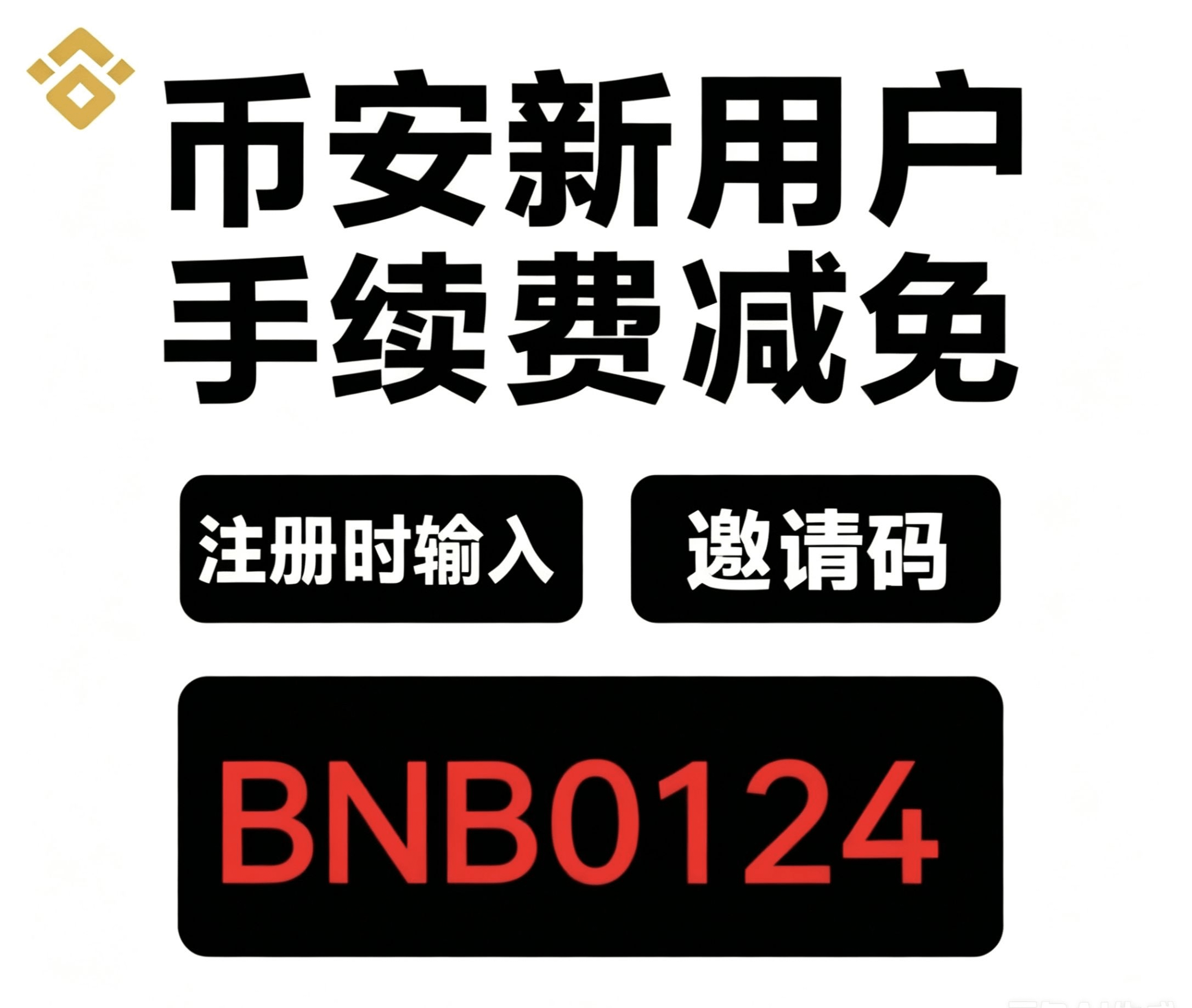
邀请码BNB0124🔥聊天id:bnb0124🔥欢迎打扰🔥ALPHA现货赛合约赛爱好者🔥有兴趣者私聊🔥
Open Trade

SOL Holder
High-Frequency Trader
1.1 Years
184 Following
23.3K+ Followers
7.9K+ Liked
Posts
Portfolio
All
Quotes
Live
PINNED
·
--
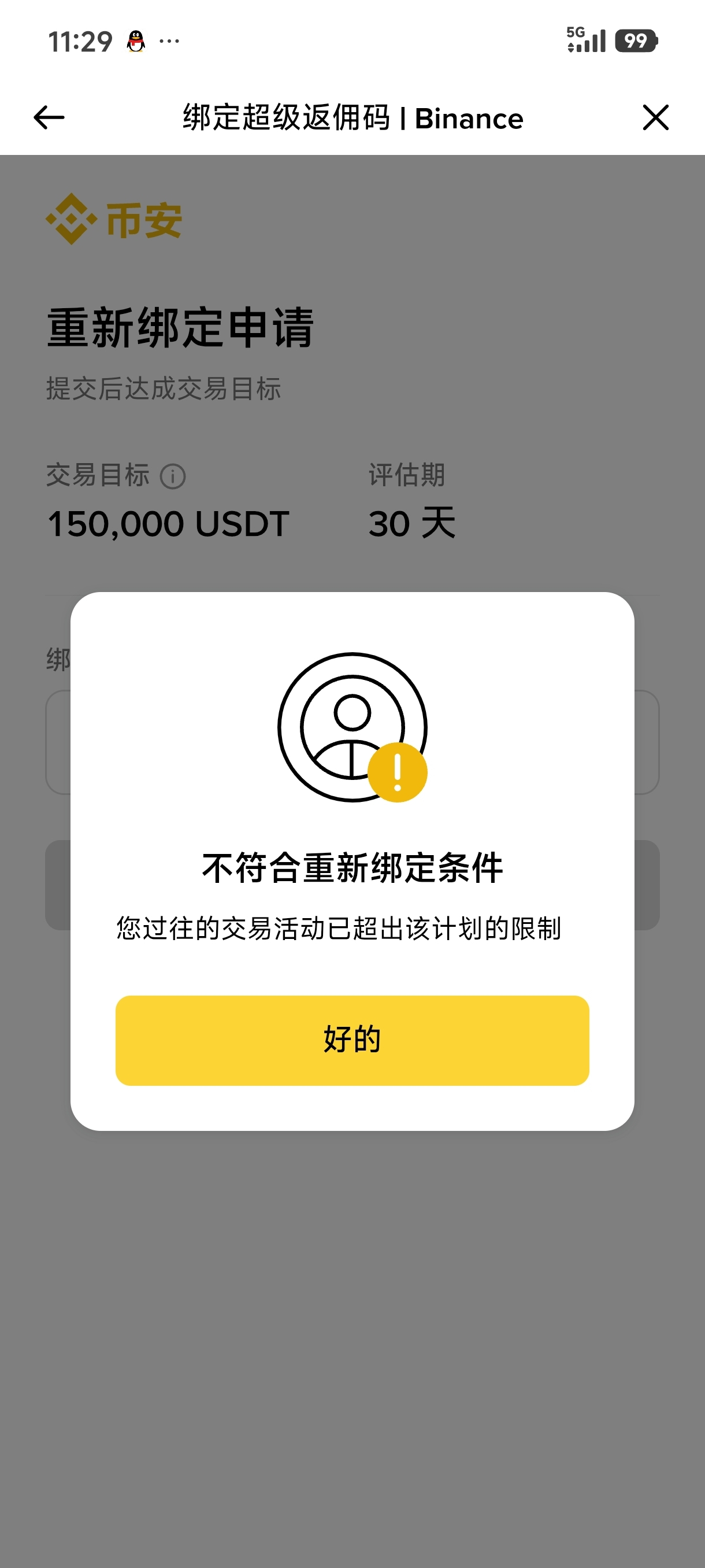
Old users can also补-bind an invitation code.
Who can supplement-bind:
1. Never entered an invitation code during registration
2. Trading volume in the past 3 months < 5000
Check eligibility: Tap the Query entry to get the result instantly.
If you’re eligible, follow these steps: [点击查询资格](https://www.bsmkweb.cc/activity/referral/bind-ref)
1. Fill in the invitation code BNB0124
2. Within 30 days, generate 150,000 in trading volume (spot or futures). It’s recommended to use futures—the fees are low and it’s faster.
3. Trade XAUT or USDC in futures; placing orders will be fee-free.
4. Those who registered via an invitation link (any rewards like voucher/USDC/token count as having an invitation relationship) cannot supplement-bind.
5. If the query shows you don’t meet the requirements = no chance.
6. If you meet the requirements, get started directly; completing 300,000 in futures volume will be used for the evaluation.
For old users without an invitation code, we recommend self-checking.
#币安九周年 #ALPHA
Old users can also补-bind an invitation code.
Who can supplement-bind:
1. Never entered an invitation code during registration
2. Trading volume in the past 3 months < 5000
Check eligibility: Tap the Query entry to get the result instantly.
If you’re eligible, follow these steps: 点击查询资格
1. Fill in the invitation code BNB0124
2. Within 30 days, generate 150,000 in trading volume (spot or futures). It’s recommended to use futures—the fees are low and it’s faster.
3. Trade XAUT or USDC in futures; placing orders will be fee-free.
4. Those who registered via an invitation link (any rewards like voucher/USDC/token count as having an invitation relationship) cannot supplement-bind.
5. If the query shows you don’t meet the requirements = no chance.
6. If you meet the requirements, get started directly; completing 300,000 in futures volume will be used for the evaluation.
For old users without an invitation code, we recommend self-checking.
#币安九周年 #ALPHA
Who can supplement-bind:
1. Never entered an invitation code during registration
2. Trading volume in the past 3 months < 5000
Check eligibility: Tap the Query entry to get the result instantly.
If you’re eligible, follow these steps: 点击查询资格
1. Fill in the invitation code BNB0124
2. Within 30 days, generate 150,000 in trading volume (spot or futures). It’s recommended to use futures—the fees are low and it’s faster.
3. Trade XAUT or USDC in futures; placing orders will be fee-free.
4. Those who registered via an invitation link (any rewards like voucher/USDC/token count as having an invitation relationship) cannot supplement-bind.
5. If the query shows you don’t meet the requirements = no chance.
6. If you meet the requirements, get started directly; completing 300,000 in futures volume will be used for the evaluation.
For old users without an invitation code, we recommend self-checking.
#币安九周年 #ALPHA
8
1
7
395
·
--
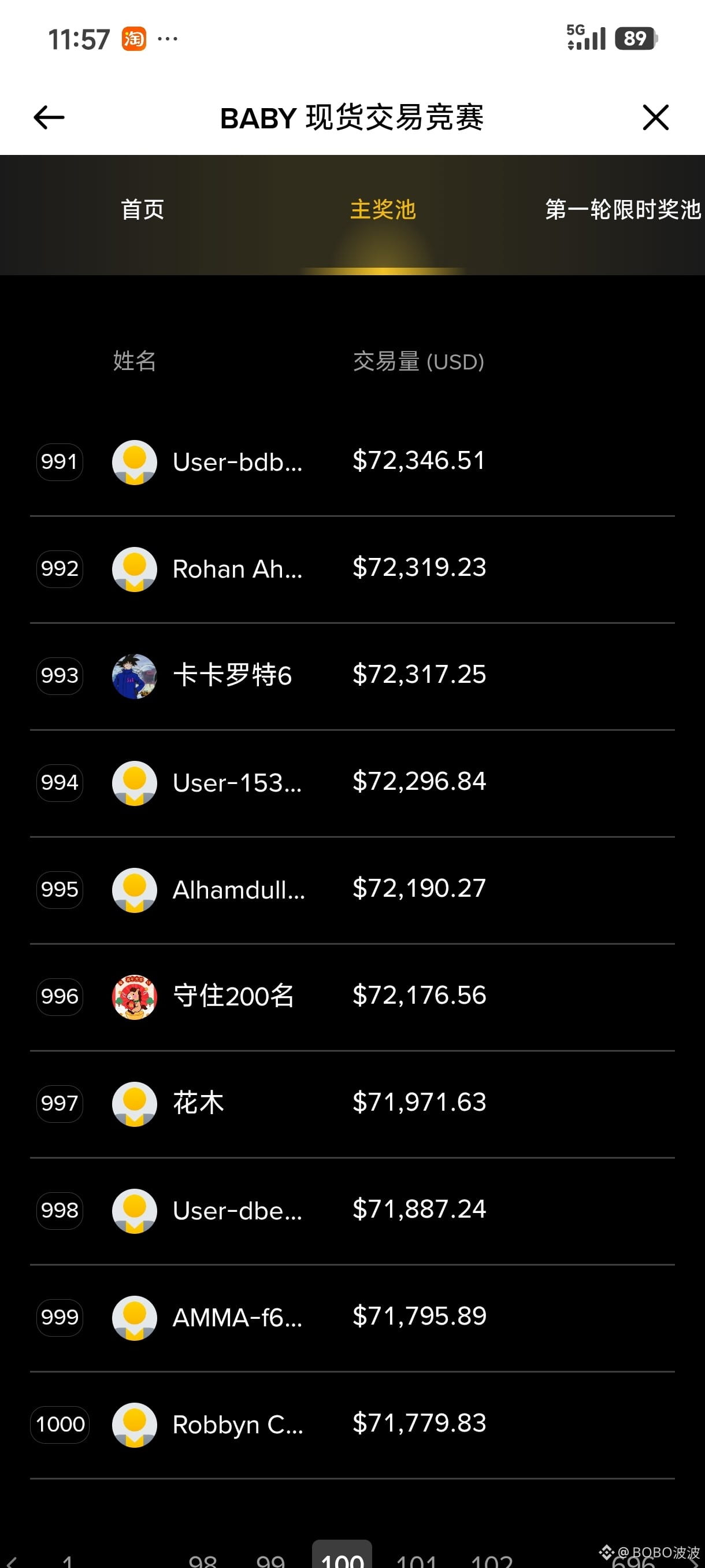
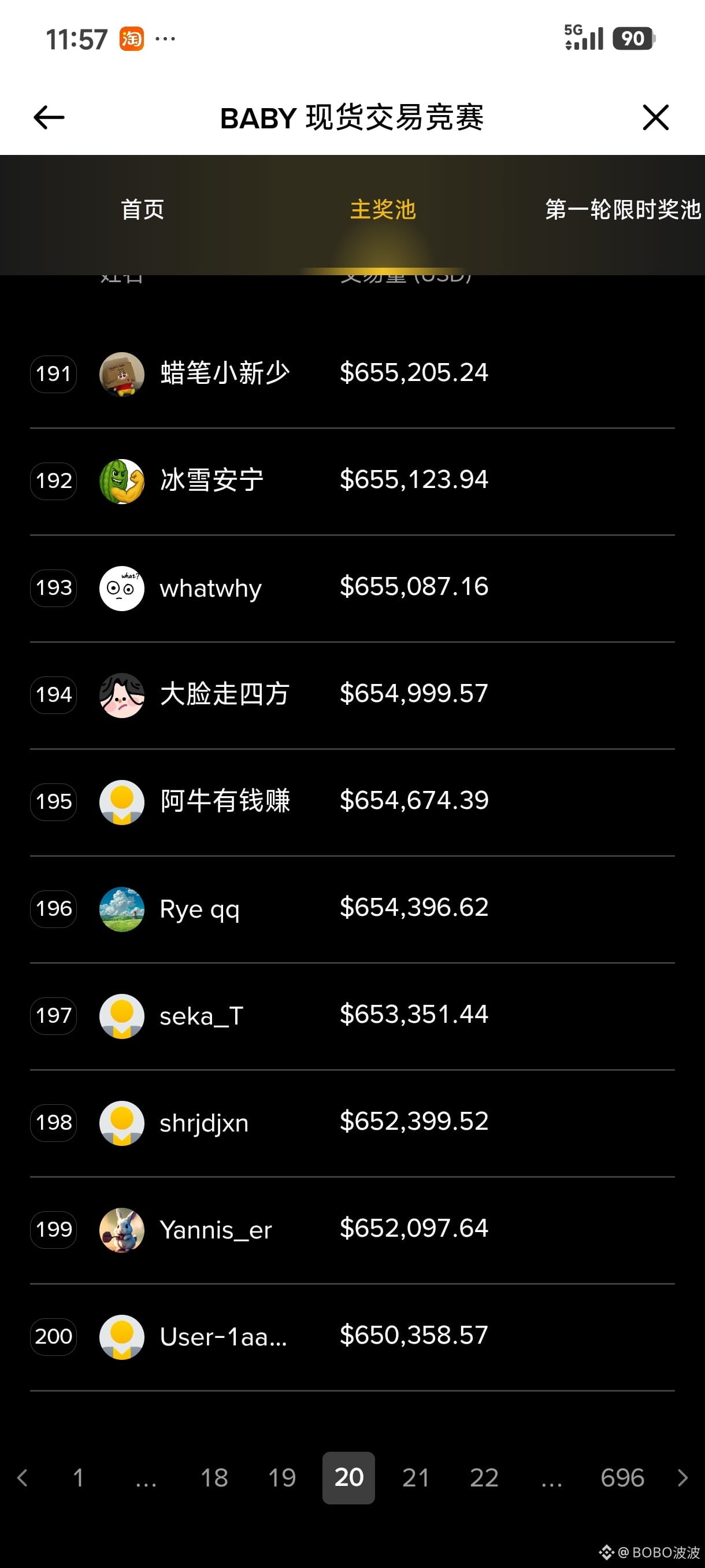
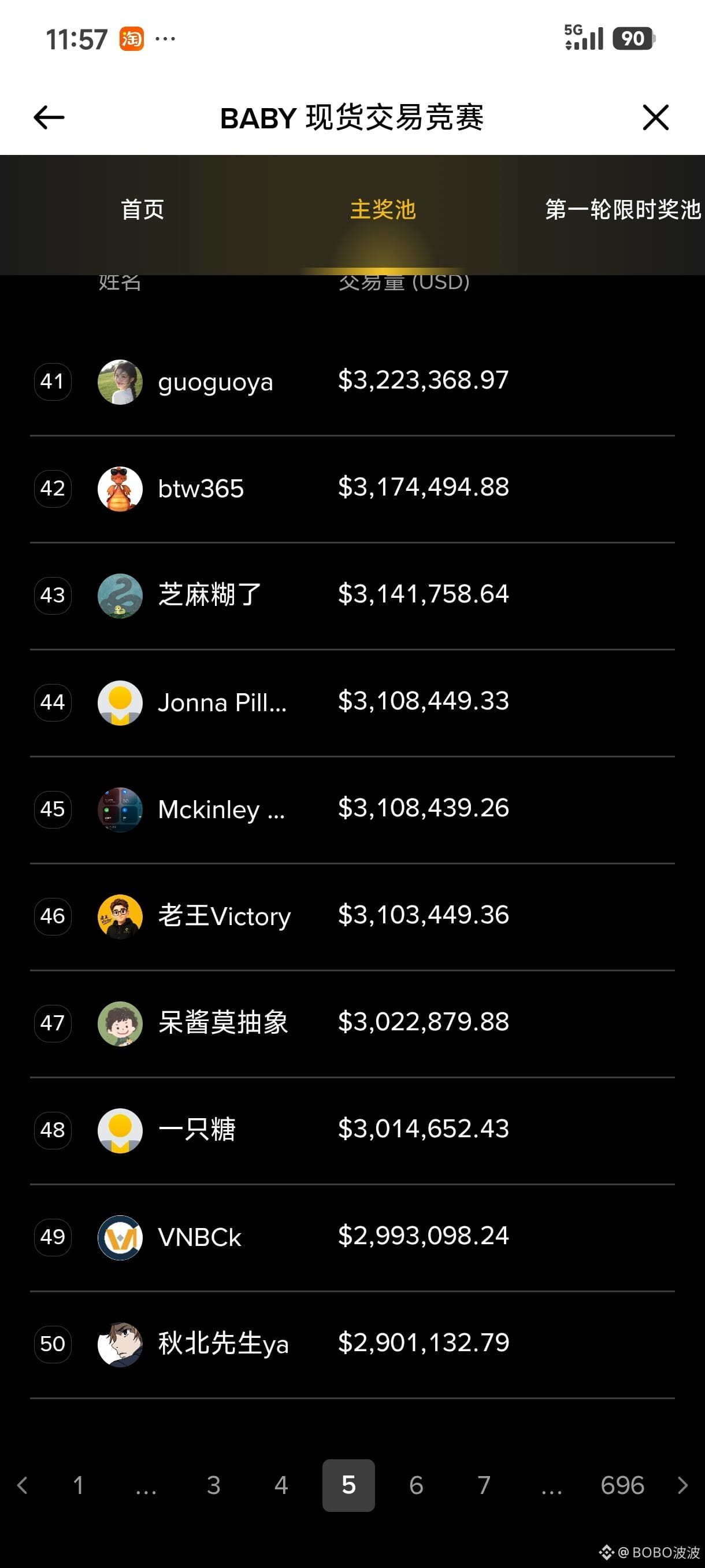
$BABY spot match: the front row isn’t really that competitive, but the back row is insanely competitive. It’s also the first match in which spot matches started having a thousand participants that has appeared where the market price was losing money—#BitMine以太坊持仓突破600万枚
Rank 20 reward 2,041 u Trading volume: 6,372,865
Rank 50 reward 1,021 u, Trading volume: 2,901,133
Rank 200 reward 327 u, Trading volume: 650,359
Rank 1,000 reward 54 u, Trading volume: 71,780
From Rank 1,001 onward
Prize pool: 80BNB
Every 10,000 trading volume / reward 8.66 u (cap: 0.05BNB ≈ 38 u)
Total trading volume (1001+): 70,711,947
Trading volume needed to fill the cap: 44,195$BTC
$BABY spot match: the front row isn’t really that competitive, but the back row is insanely competitive. It’s also the first match in which spot matches started having a thousand participants that has appeared where the market price was losing money—#BitMine以太坊持仓突破600万枚
Rank 20 reward 2,041 u Trading volume: 6,372,865
Rank 50 reward 1,021 u, Trading volume: 2,901,133
Rank 200 reward 327 u, Trading volume: 650,359
Rank 1,000 reward 54 u, Trading volume: 71,780
From Rank 1,001 onward
Prize pool: 80BNB
Every 10,000 trading volume / reward 8.66 u (cap: 0.05BNB ≈ 38 u)
Total trading volume (1001+): 70,711,947
Trading volume needed to fill the cap: 44,195$BTC
Rank 20 reward 2,041 u Trading volume: 6,372,865
Rank 50 reward 1,021 u, Trading volume: 2,901,133
Rank 200 reward 327 u, Trading volume: 650,359
Rank 1,000 reward 54 u, Trading volume: 71,780
From Rank 1,001 onward
Prize pool: 80BNB
Every 10,000 trading volume / reward 8.66 u (cap: 0.05BNB ≈ 38 u)
Total trading volume (1001+): 70,711,947
Trading volume needed to fill the cap: 44,195$BTC
1k
·
--
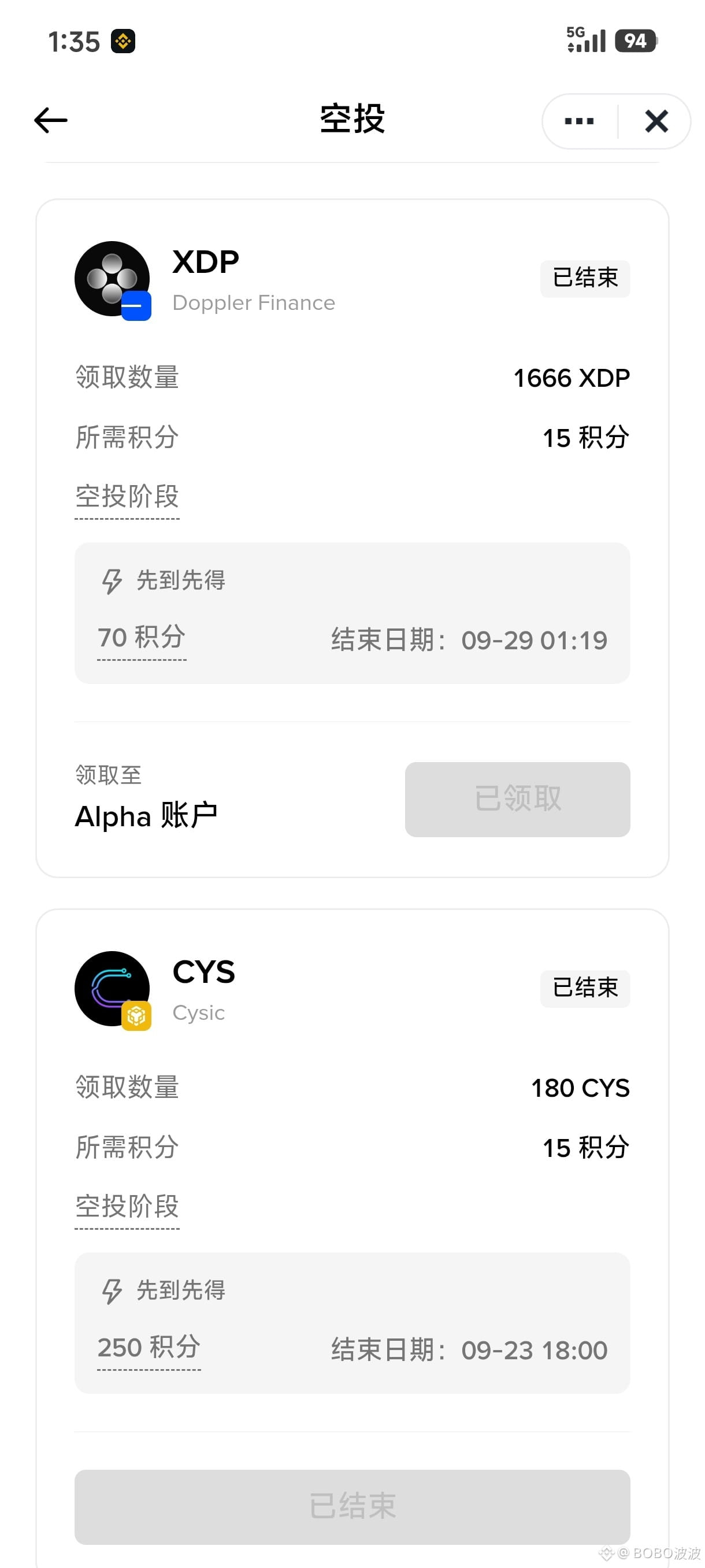
New coin air drop is doing a surprise raid—honestly, I don’t even know myself. If you don’t claim it, you lose nothing.
Now the #ALPHA still running on—everyone who’s still farming is betting that the team will drop a big one. Back then, alpha was at its peak, but now all you can do is look for whatever new projects there are. In the crypto world, they never reheat leftovers.
New coin air drop is doing a surprise raid—honestly, I don’t even know myself. If you don’t claim it, you lose nothing.
Now the #ALPHA still running on—everyone who’s still farming is betting that the team will drop a big one. Back then, alpha was at its peak, but now all you can do is look for whatever new projects there are. In the crypto world, they never reheat leftovers.
Now the #ALPHA still running on—everyone who’s still farming is betting that the team will drop a big one. Back then, alpha was at its peak, but now all you can do is look for whatever new projects there are. In the crypto world, they never reheat leftovers.
2
3.6k
·
--
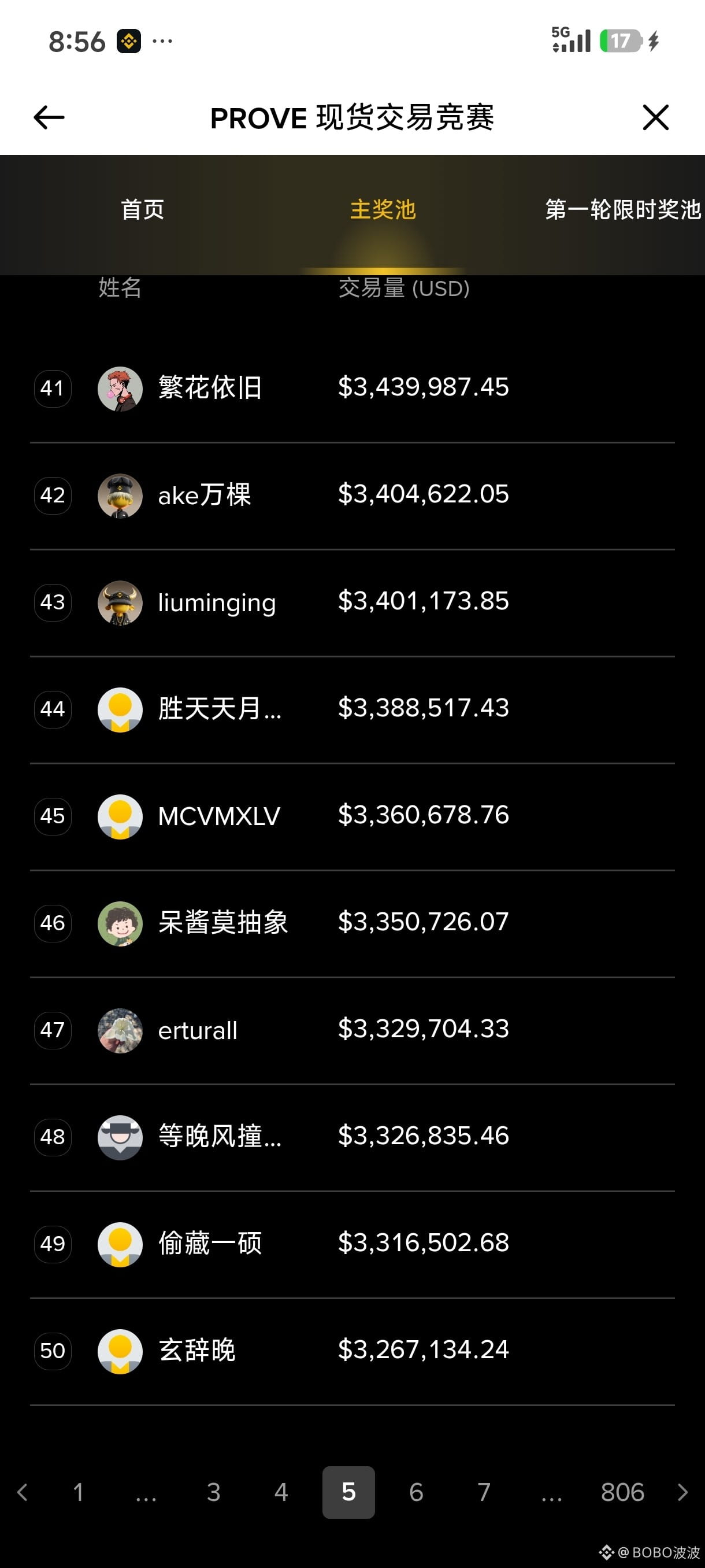
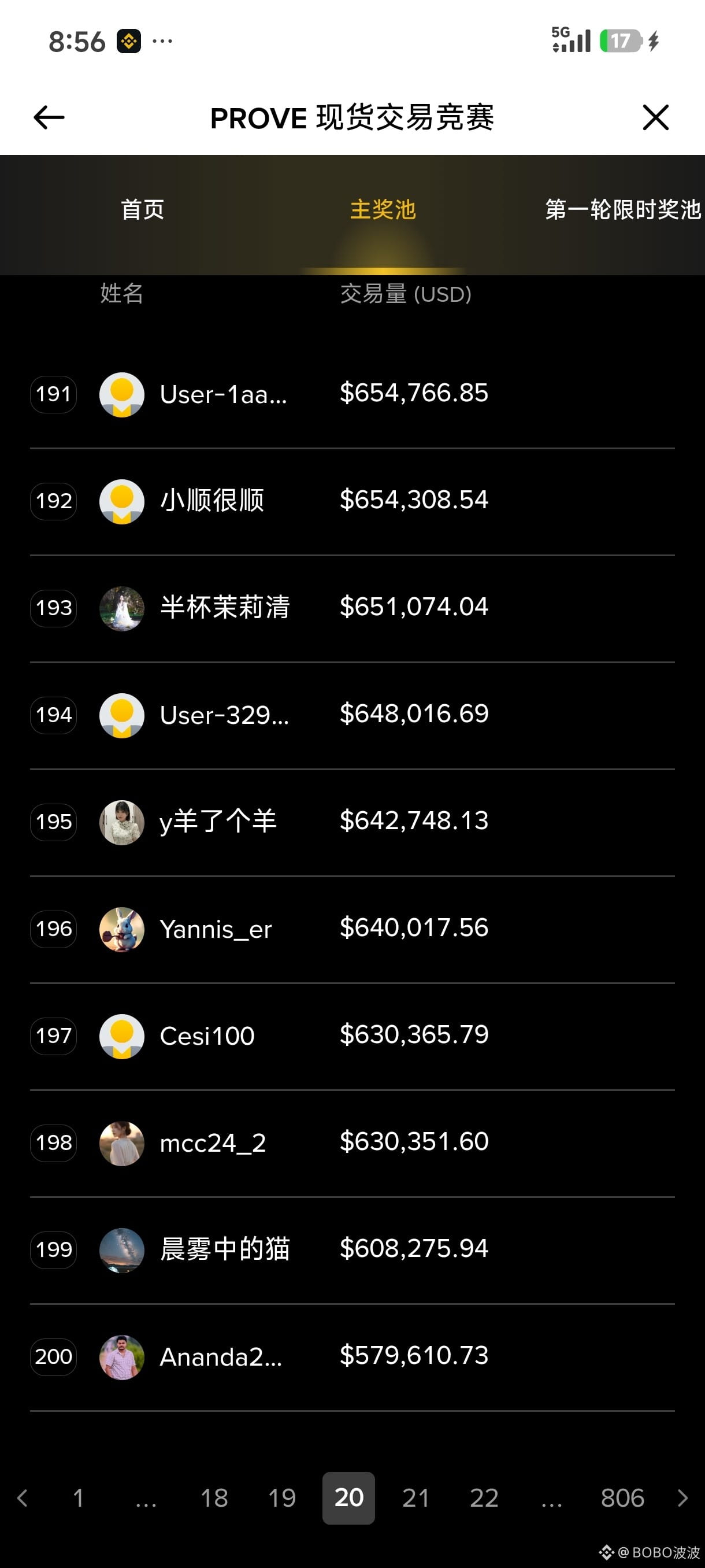
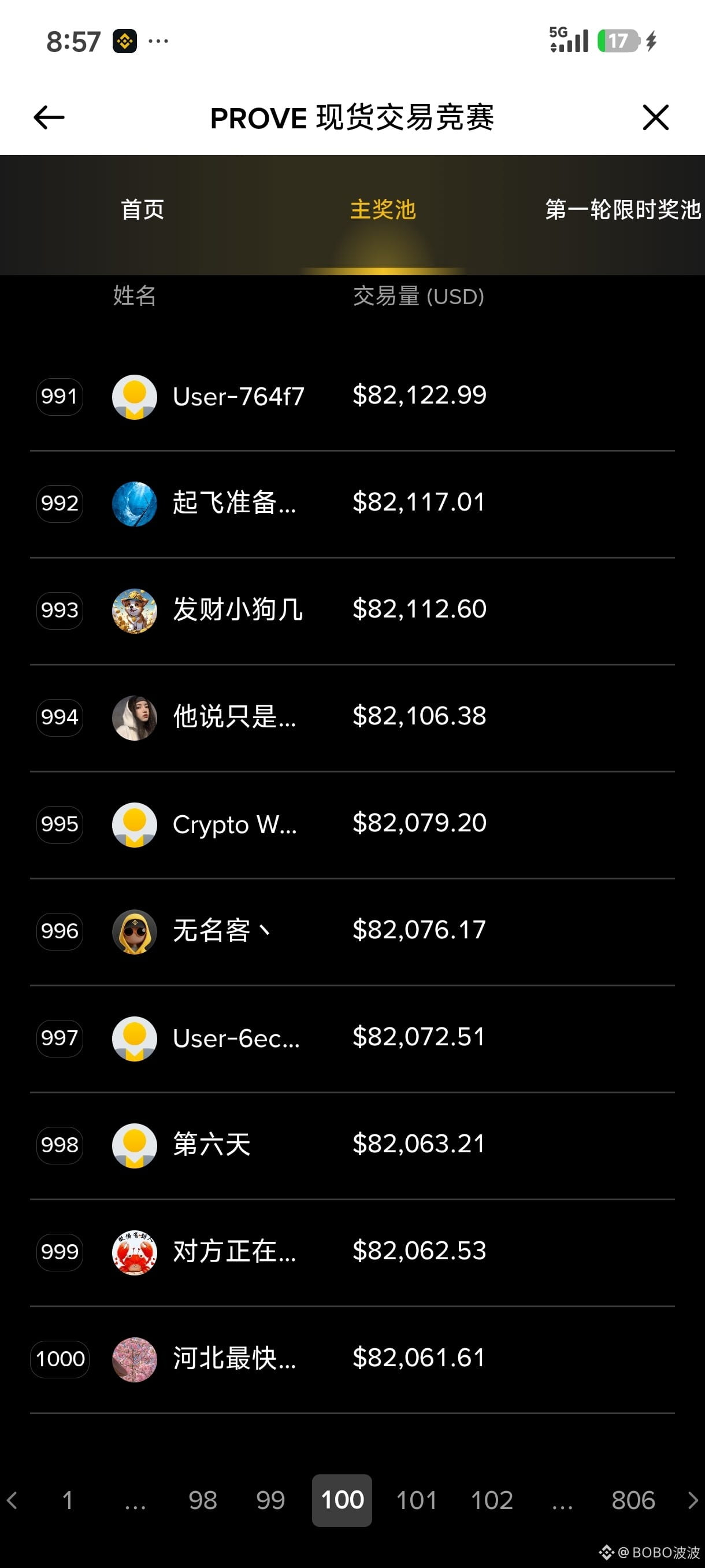
$PROVE The spot trading competition has ended. We split yesterday’s losses and ended up losing money; today, splitting profits actually made money. Instead, there’s a batch of 1,000 rolls. I think if you want to play the spot trading competition, you should learn a bit of psychology. $BTC
Rank 20: Prize 2,274 u, Trading volume: 6,614,625
Rank 50: Prize 1,137 u, Trading volume: 3,267,134
Rank 200: Prize 364 u, Trading volume: 579,611
Rank 1,000: Prize 60 u, Trading volume: 82,062
Rank 1,001 and beyond
Prize pool: 300000 PROVE
For every 10,000 trading volume / reward 8.41 u (Cap: 190 PROVE ≈ 43 u)
1001+ Total trading volume: 81,123,843
Trading volume needed to fill the cap: 51,378
#币安将上市Hyperliquid(HYPE)
$PROVE The spot trading competition has ended. We split yesterday’s losses and ended up losing money; today, splitting profits actually made money. Instead, there’s a batch of 1,000 rolls. I think if you want to play the spot trading competition, you should learn a bit of psychology. $BTC
Rank 20: Prize 2,274 u, Trading volume: 6,614,625
Rank 50: Prize 1,137 u, Trading volume: 3,267,134
Rank 200: Prize 364 u, Trading volume: 579,611
Rank 1,000: Prize 60 u, Trading volume: 82,062
Rank 1,001 and beyond
Prize pool: 300000 PROVE
For every 10,000 trading volume / reward 8.41 u (Cap: 190 PROVE ≈ 43 u)
1001+ Total trading volume: 81,123,843
Trading volume needed to fill the cap: 51,378
#币安将上市Hyperliquid(HYPE)
Rank 20: Prize 2,274 u, Trading volume: 6,614,625
Rank 50: Prize 1,137 u, Trading volume: 3,267,134
Rank 200: Prize 364 u, Trading volume: 579,611
Rank 1,000: Prize 60 u, Trading volume: 82,062
Rank 1,001 and beyond
Prize pool: 300000 PROVE
For every 10,000 trading volume / reward 8.41 u (Cap: 190 PROVE ≈ 43 u)
1001+ Total trading volume: 81,123,843
Trading volume needed to fill the cap: 51,378
#币安将上市Hyperliquid(HYPE)
2
1
477
·
--
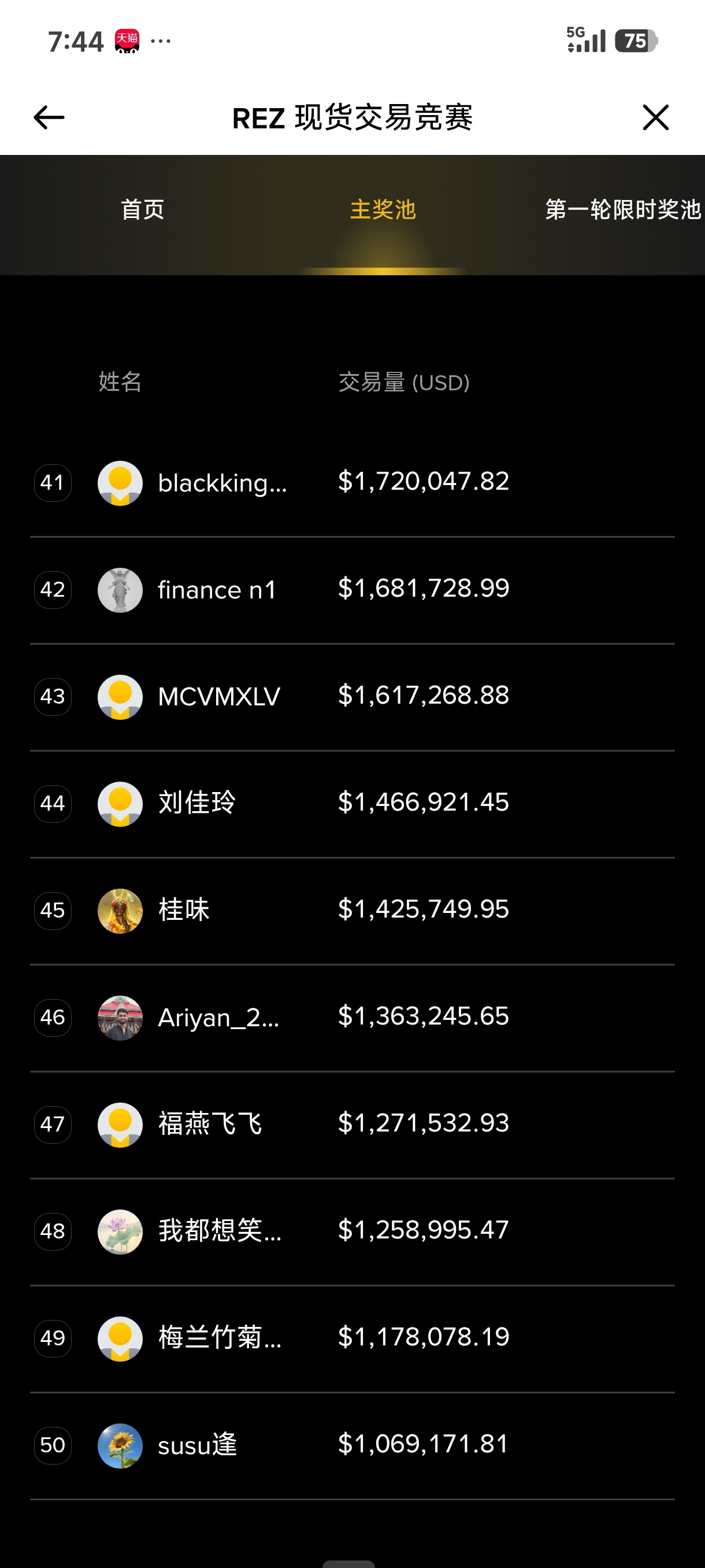
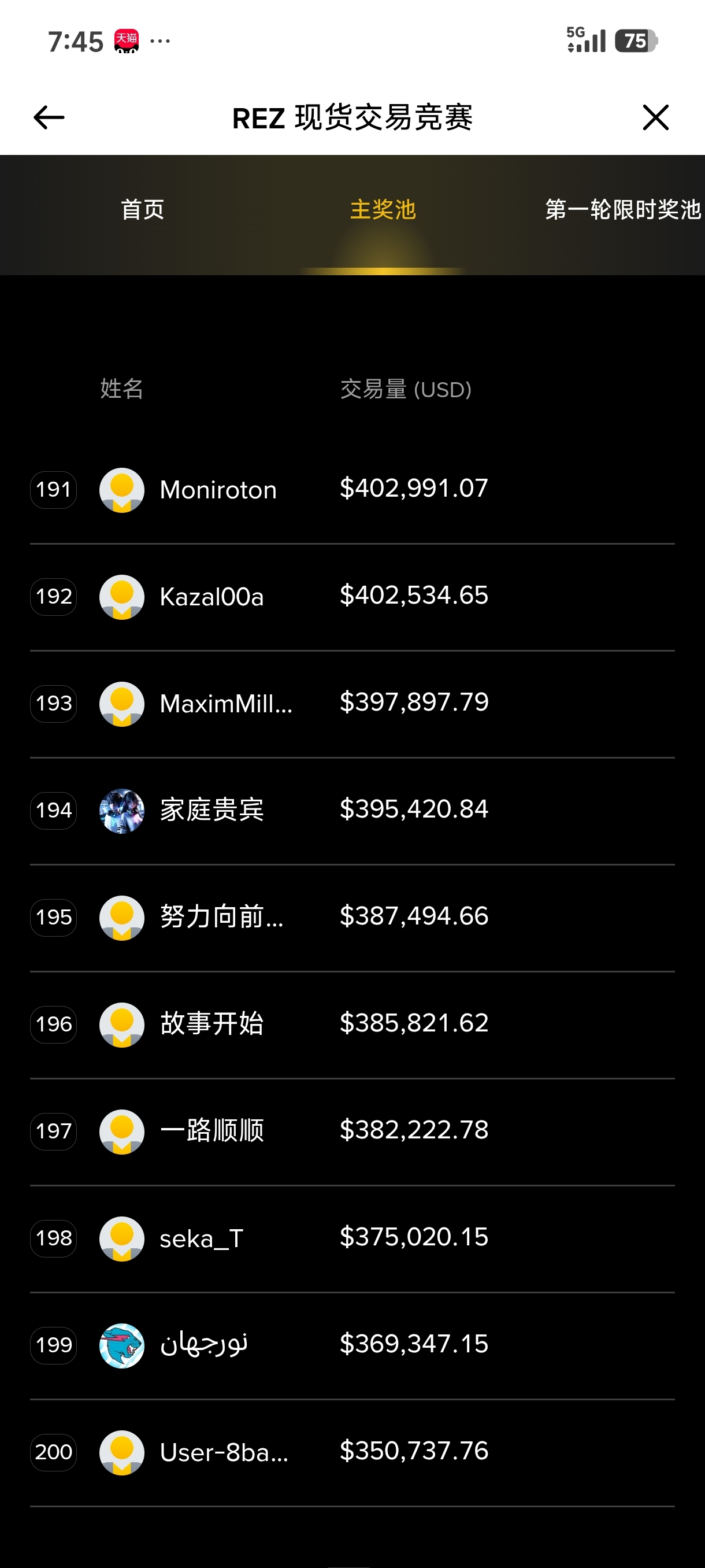
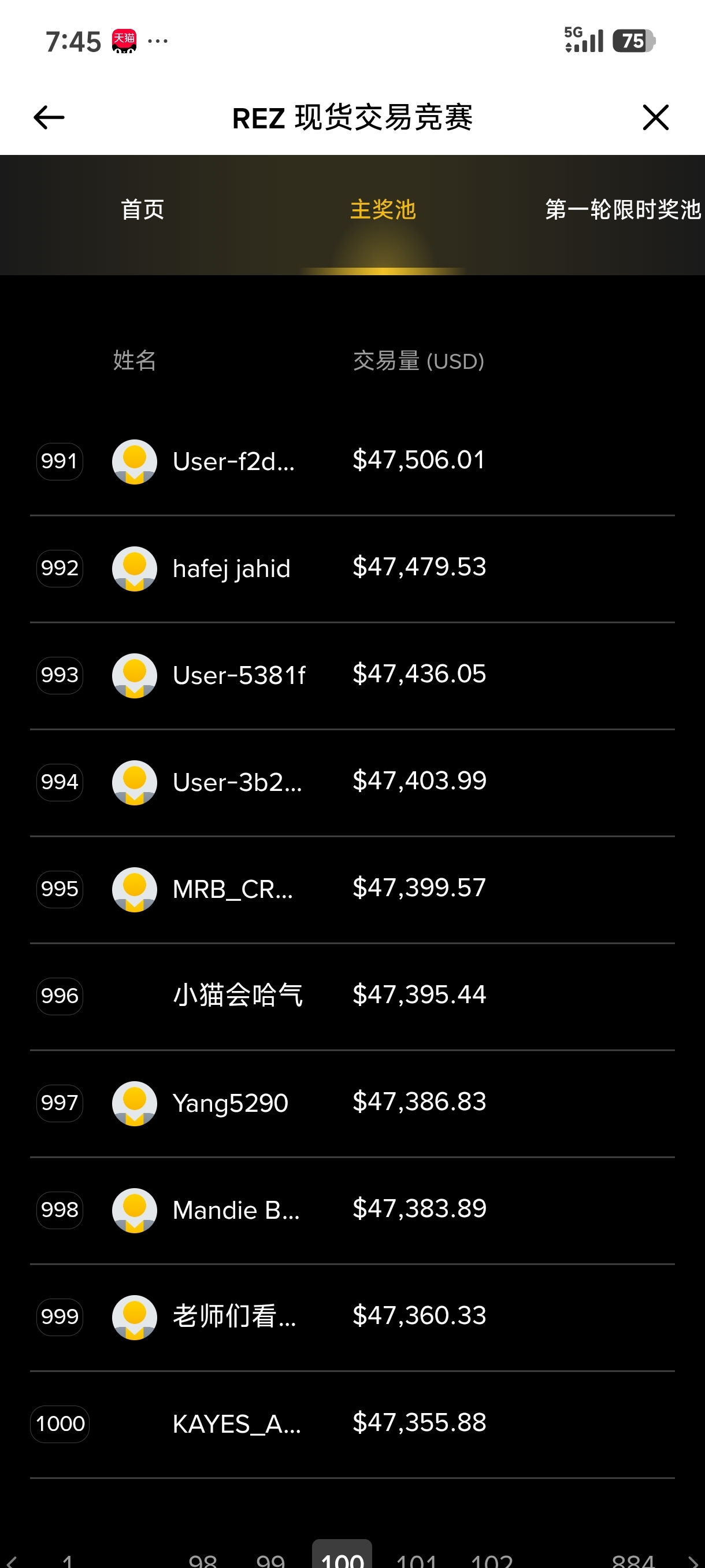
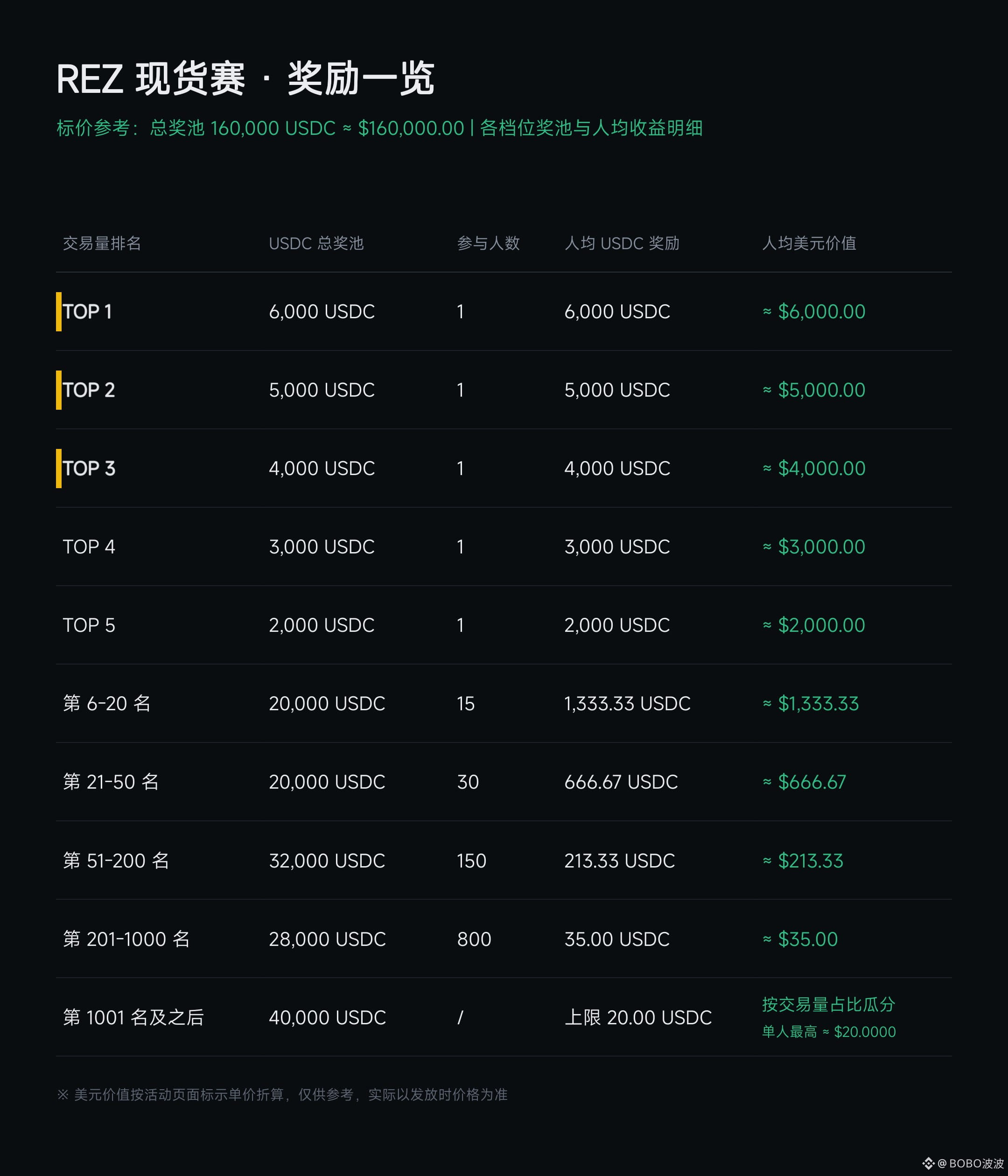
$REZ spot competition. In the top 1,000 it’s very competitive—splitting is still a normal amount. However, the first 200 and the first 50 both saw some big leak-outs. For the top 50, the gatekeeper’s profit was 400 u—nice.
$BTC
Rank 20 reward: 1,333 u; trading volume: 4,236,753
Rank 50 reward: 667 u; trading volume: 1,069,172
Rank 200 reward: 213 u; trading volume: 350,738
Rank 1,000 reward: 35 u; trading volume: 47,356
Rank 1,001 and after
Prize pool: 40,000 USDC
For every 10,000 trading volume / reward: 8.11 u (cap: 20 USDC ≈ 20 u)
Total trading volume for 1001+: 49,341,551
Trading volume needed to max out the cap: 24,671
#BTC☀
$REZ spot competition. In the top 1,000 it’s very competitive—splitting is still a normal amount. However, the first 200 and the first 50 both saw some big leak-outs. For the top 50, the gatekeeper’s profit was 400 u—nice.
$BTC
Rank 20 reward: 1,333 u; trading volume: 4,236,753
Rank 50 reward: 667 u; trading volume: 1,069,172
Rank 200 reward: 213 u; trading volume: 350,738
Rank 1,000 reward: 35 u; trading volume: 47,356
Rank 1,001 and after
Prize pool: 40,000 USDC
For every 10,000 trading volume / reward: 8.11 u (cap: 20 USDC ≈ 20 u)
Total trading volume for 1001+: 49,341,551
Trading volume needed to max out the cap: 24,671
#BTC☀
$BTC
Rank 20 reward: 1,333 u; trading volume: 4,236,753
Rank 50 reward: 667 u; trading volume: 1,069,172
Rank 200 reward: 213 u; trading volume: 350,738
Rank 1,000 reward: 35 u; trading volume: 47,356
Rank 1,001 and after
Prize pool: 40,000 USDC
For every 10,000 trading volume / reward: 8.11 u (cap: 20 USDC ≈ 20 u)
Total trading volume for 1001+: 49,341,551
Trading volume needed to max out the cap: 24,671
#BTC☀
1
762
·
--
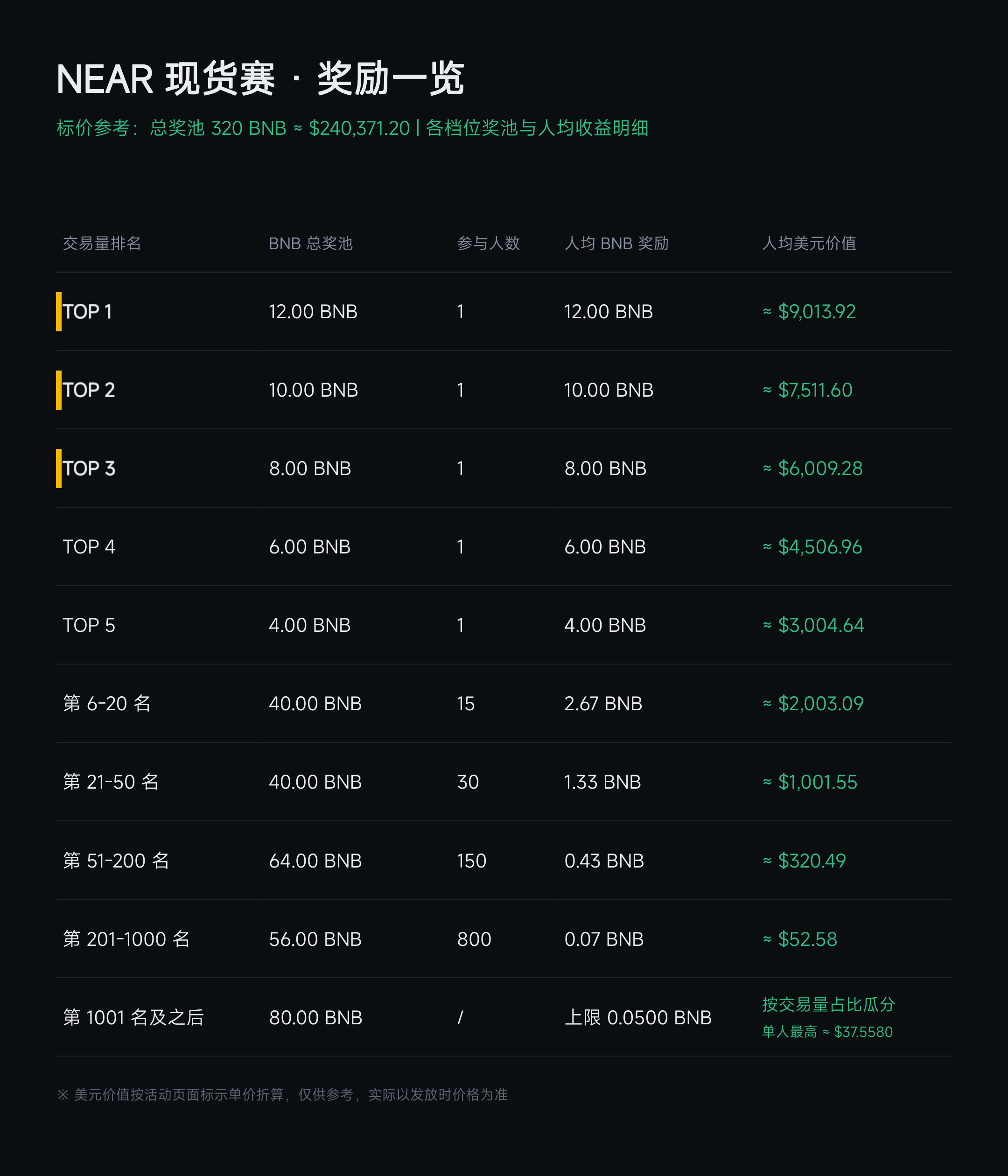
$NEAR immediate stock race, price spread 21.1 ten-thousands
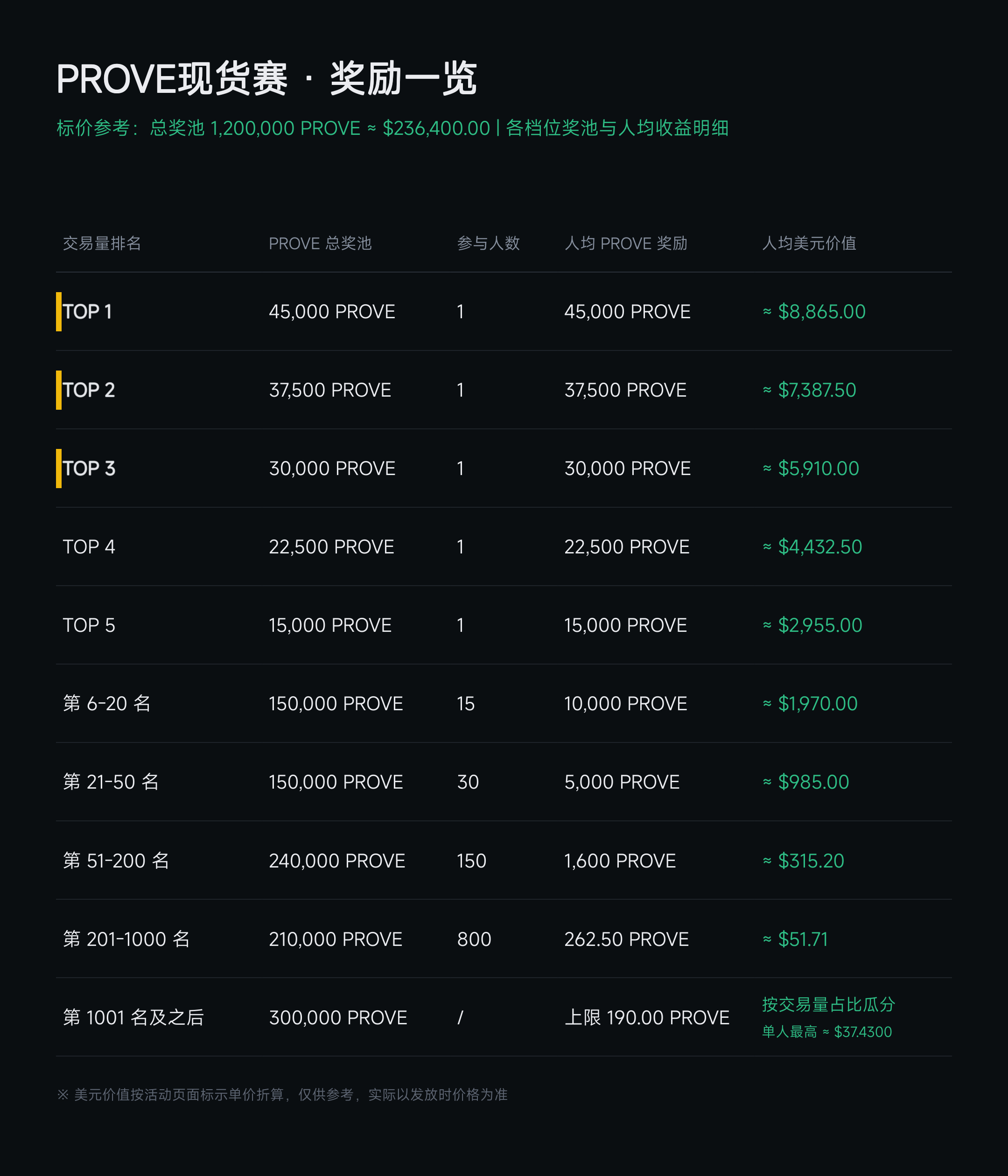
$PROVE immediate stock race price spread 26 ten-thousands
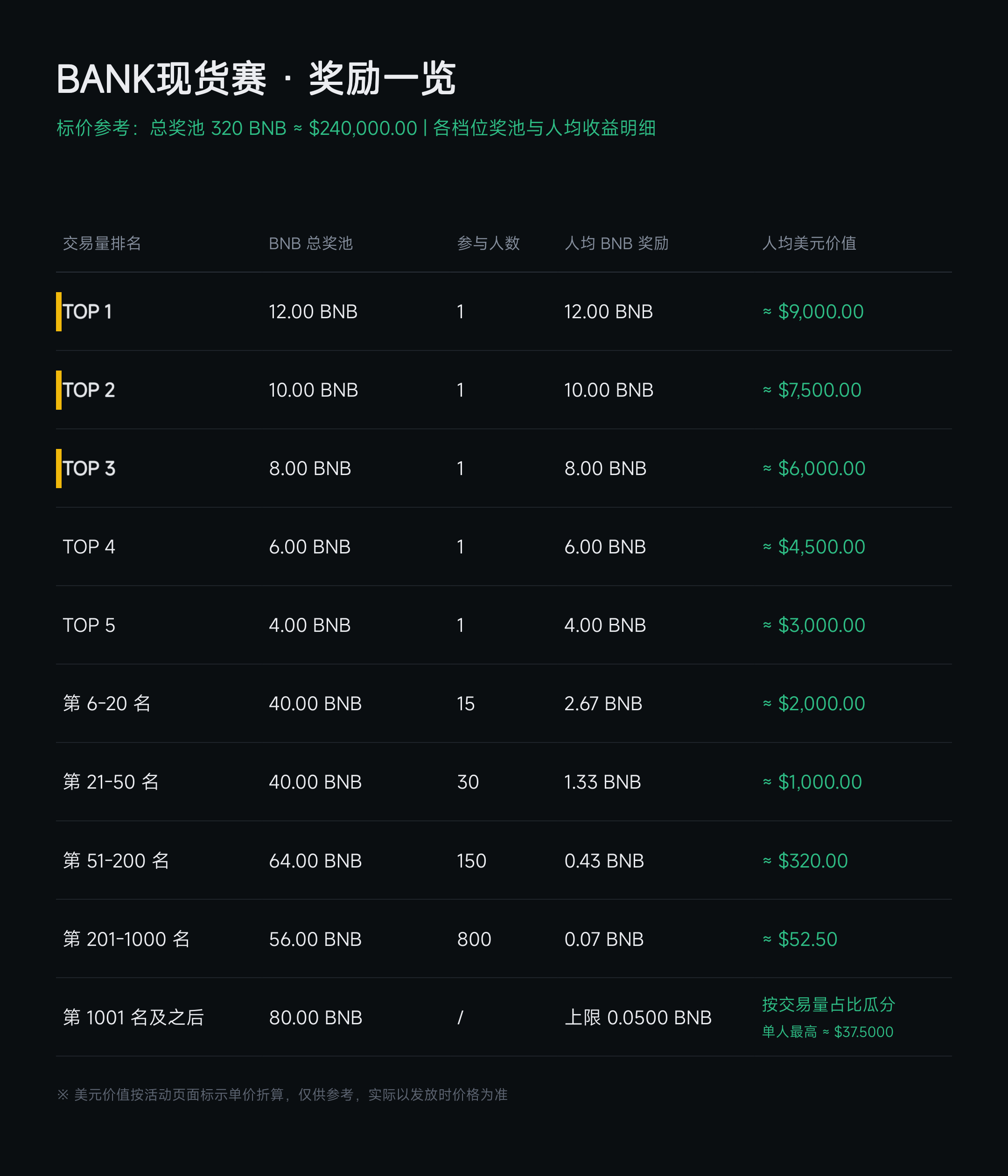
$BANK immediate stock race, price spread 160 ten-thousands
$NEAR immediate stock race, price spread 21.1 ten-thousands
$PROVE immediate stock race price spread 26 ten-thousands
$BANK immediate stock race, price spread 160 ten-thousands
$PROVE immediate stock race price spread 26 ten-thousands
$BANK immediate stock race, price spread 160 ten-thousands
1
768
·
--
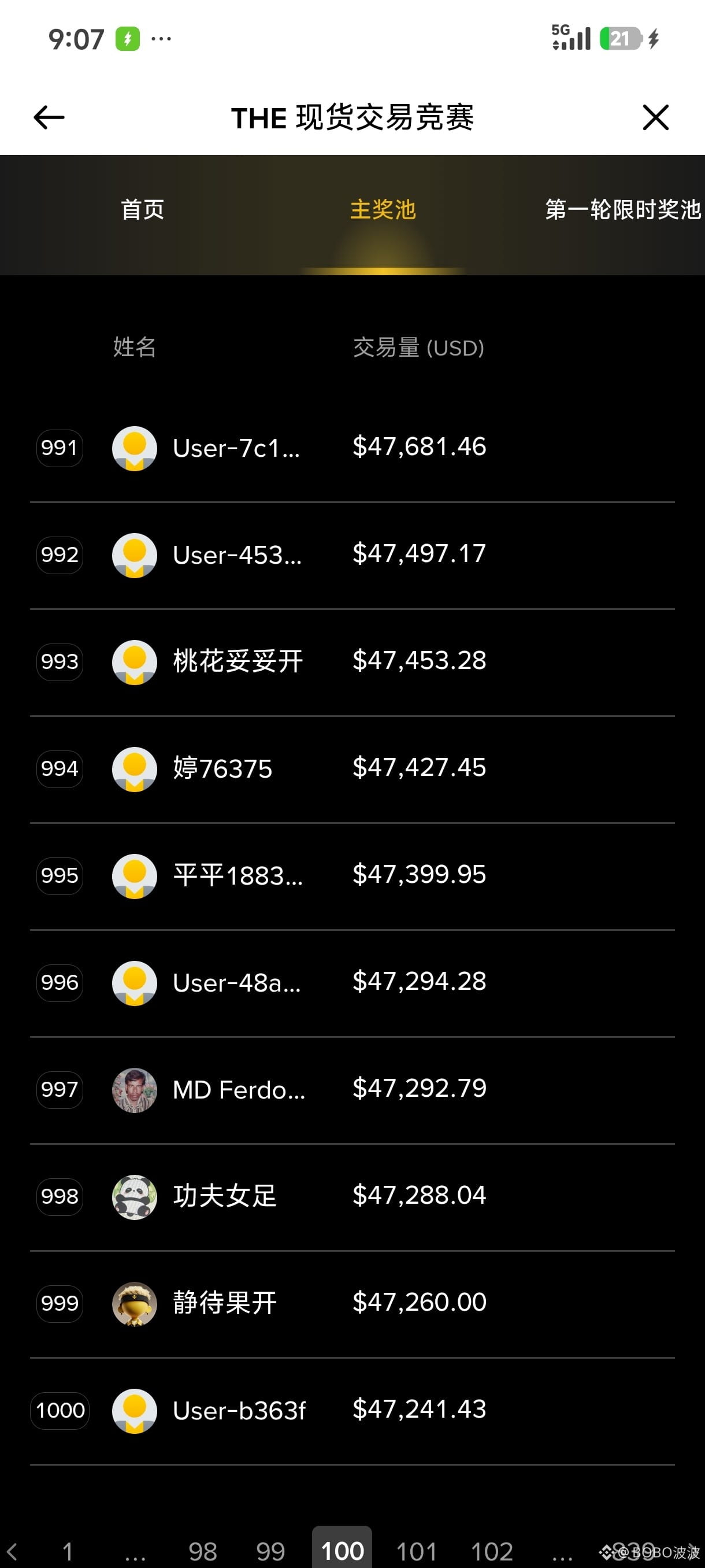
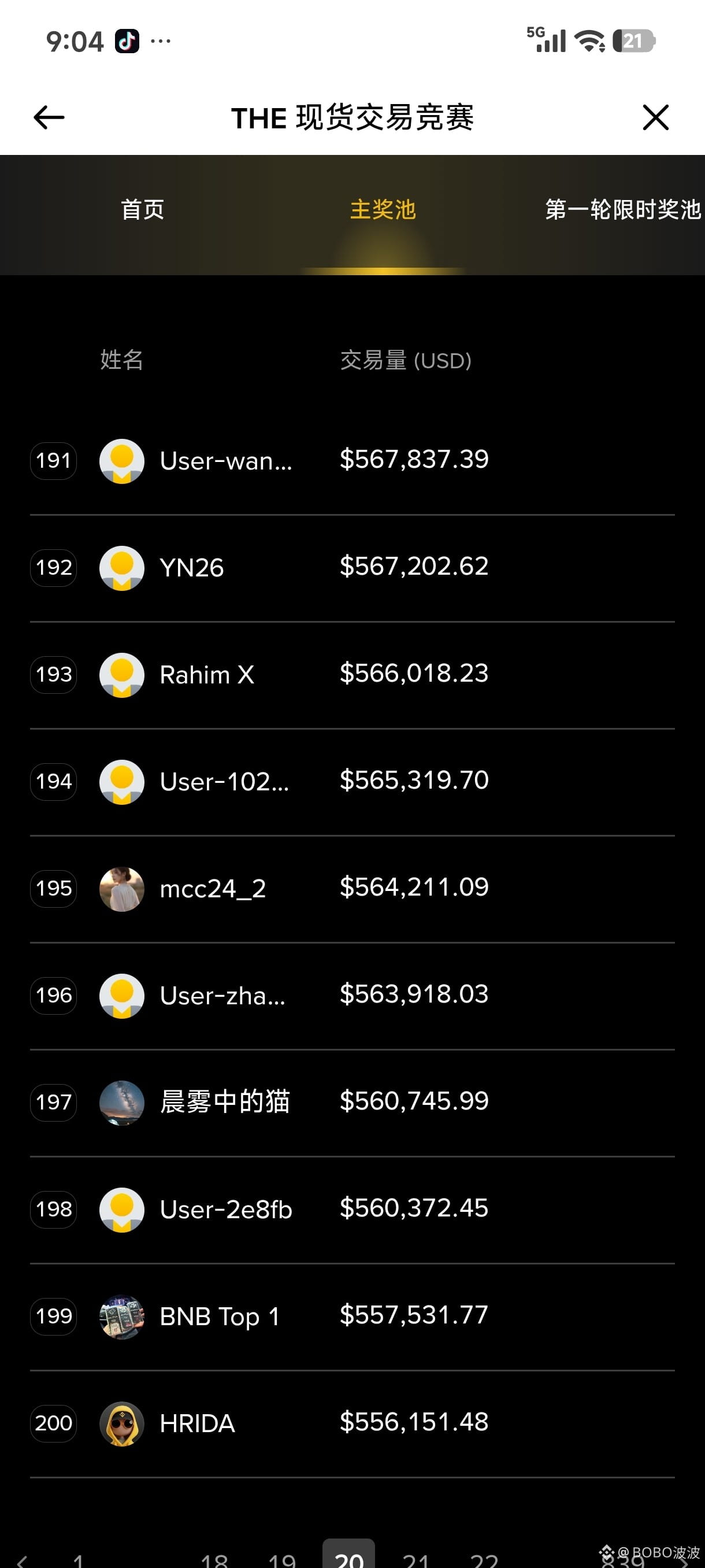
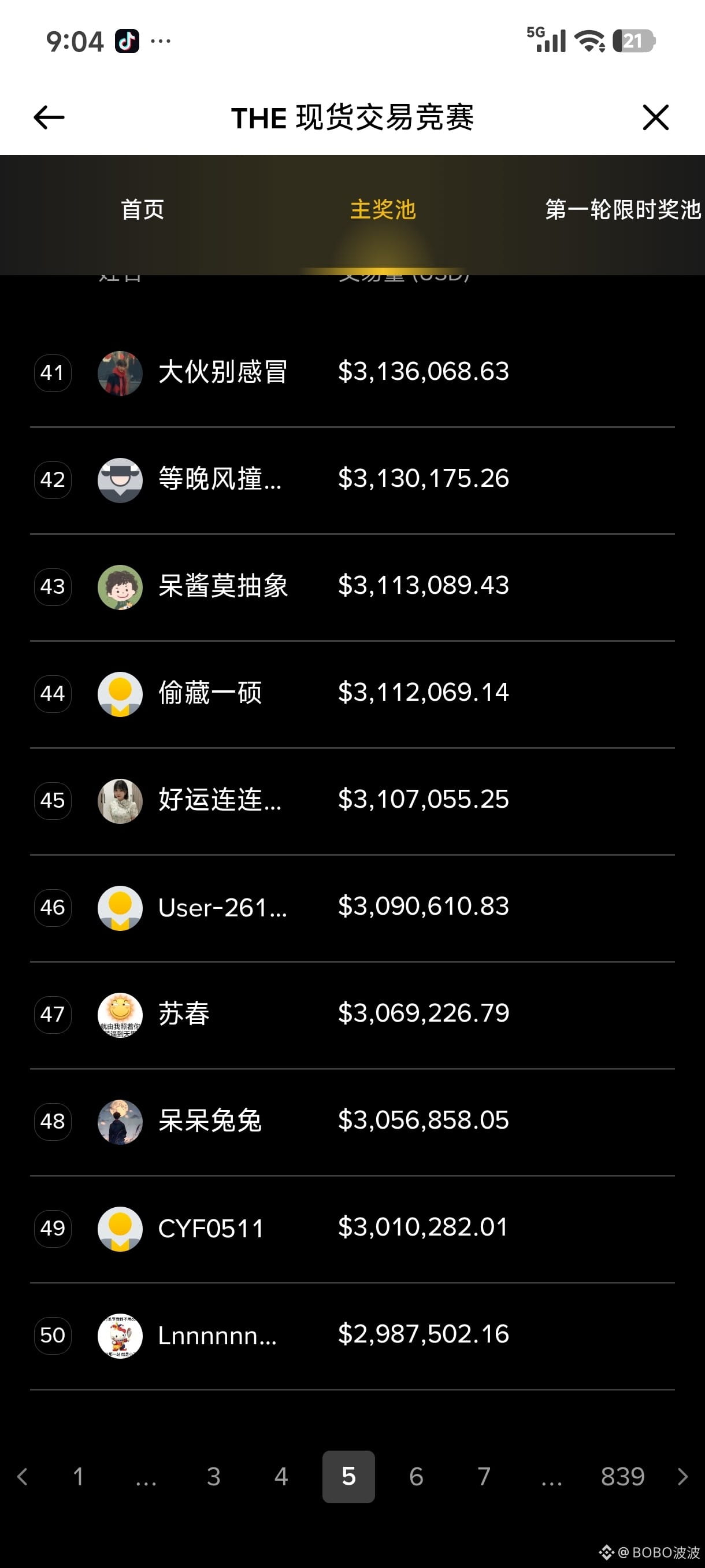
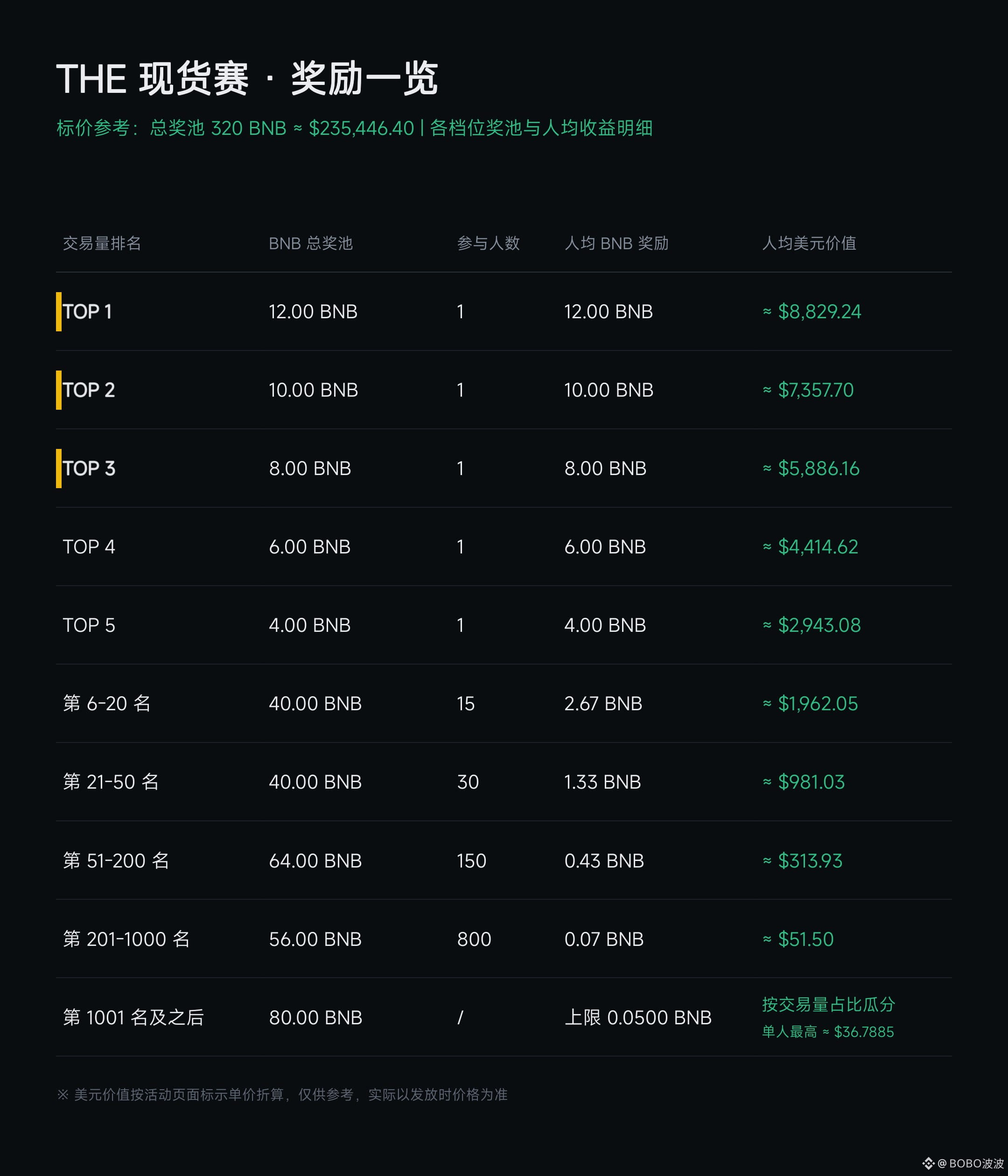
$THE available stock event ends today. The top 1,000 is getting more and more competitive; surprisingly, the瓜分 (division) phase isn’t as intense. Until the end of the event, the threshold data hasn’t been updated. There were some missing entries within the top 50. I glanced at the data for the top 200—there wasn’t much missing, so I didn’t keep refreshing. $BTC
20th place reward: 1,941 u, trading volume: 5,241,974
50th place reward: 971 u, trading volume: 2,987,502
200th place reward: 311 u, trading volume: 556,151
1,000th place reward: 51 u, trading volume: 47,241
From 1,001st place onward
Prize pool: 80BNB
For every 10,000 trading volume / reward: 13.10 u (cap: 0.05BNB ≈ 36 u)
Total trading volume for 1001+: 44,443,185
Trading volume needed to fully hit the cap: 27,777
#BTC走势分析
$THE available stock event ends today. The top 1,000 is getting more and more competitive; surprisingly, the瓜分 (division) phase isn’t as intense. Until the end of the event, the threshold data hasn’t been updated. There were some missing entries within the top 50. I glanced at the data for the top 200—there wasn’t much missing, so I didn’t keep refreshing. $BTC
20th place reward: 1,941 u, trading volume: 5,241,974
50th place reward: 971 u, trading volume: 2,987,502
200th place reward: 311 u, trading volume: 556,151
1,000th place reward: 51 u, trading volume: 47,241
From 1,001st place onward
Prize pool: 80BNB
For every 10,000 trading volume / reward: 13.10 u (cap: 0.05BNB ≈ 36 u)
Total trading volume for 1001+: 44,443,185
Trading volume needed to fully hit the cap: 27,777
#BTC走势分析
20th place reward: 1,941 u, trading volume: 5,241,974
50th place reward: 971 u, trading volume: 2,987,502
200th place reward: 311 u, trading volume: 556,151
1,000th place reward: 51 u, trading volume: 47,241
From 1,001st place onward
Prize pool: 80BNB
For every 10,000 trading volume / reward: 13.10 u (cap: 0.05BNB ≈ 36 u)
Total trading volume for 1001+: 44,443,185
Trading volume needed to fully hit the cap: 27,777
#BTC走势分析
1
690
·
--
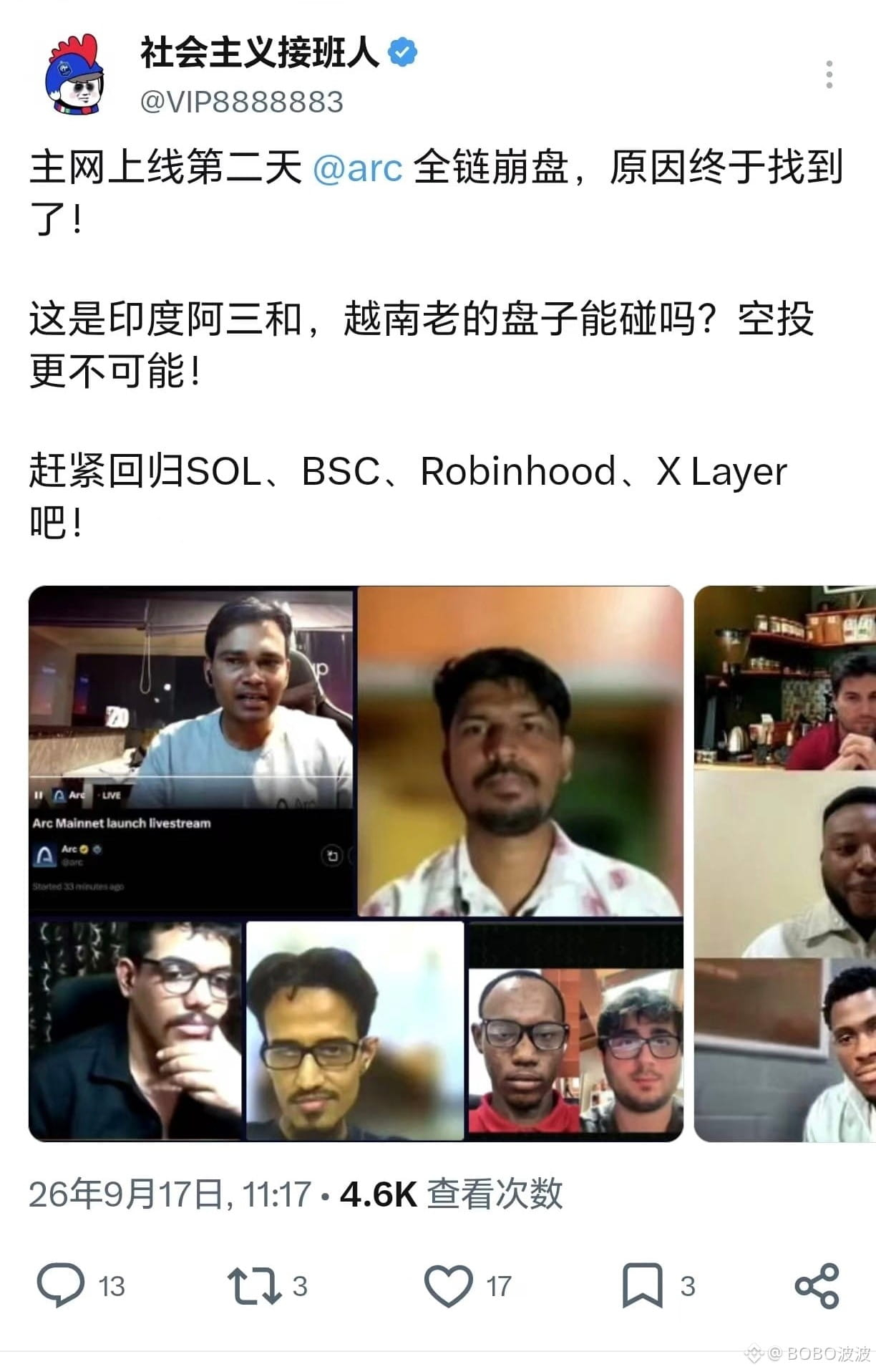
Why didn’t #ARC chain take off? The founder missed showing a face, scaring everyone away—everyone knows that you can’t touch coins from the Vietnamese and “A-s” (Indian) community. Airdrops, points—none of it is possible.
Why didn’t #ARC chain take off? The founder missed showing a face, scaring everyone away—everyone knows that you can’t touch coins from the Vietnamese and “A-s” (Indian) community. Airdrops, points—none of it is possible.
1
287
·
--
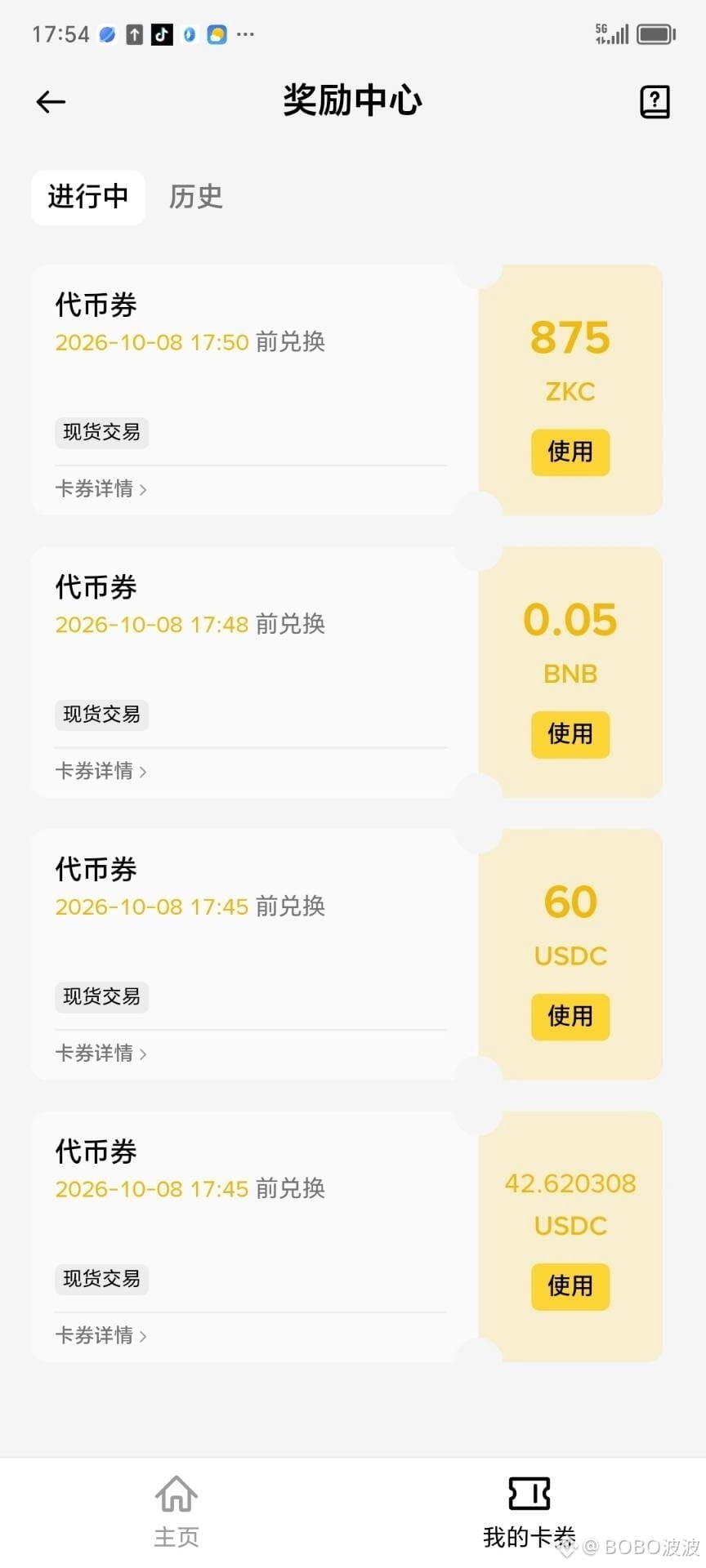
All four matches from last week were posted. Sigh. To earn $50,000 in a week against the top five—I'm so envious. $BTC
All four matches from last week were posted. Sigh. To earn $50,000 in a week against the top five—I'm so envious. $BTC
2
390
·
--
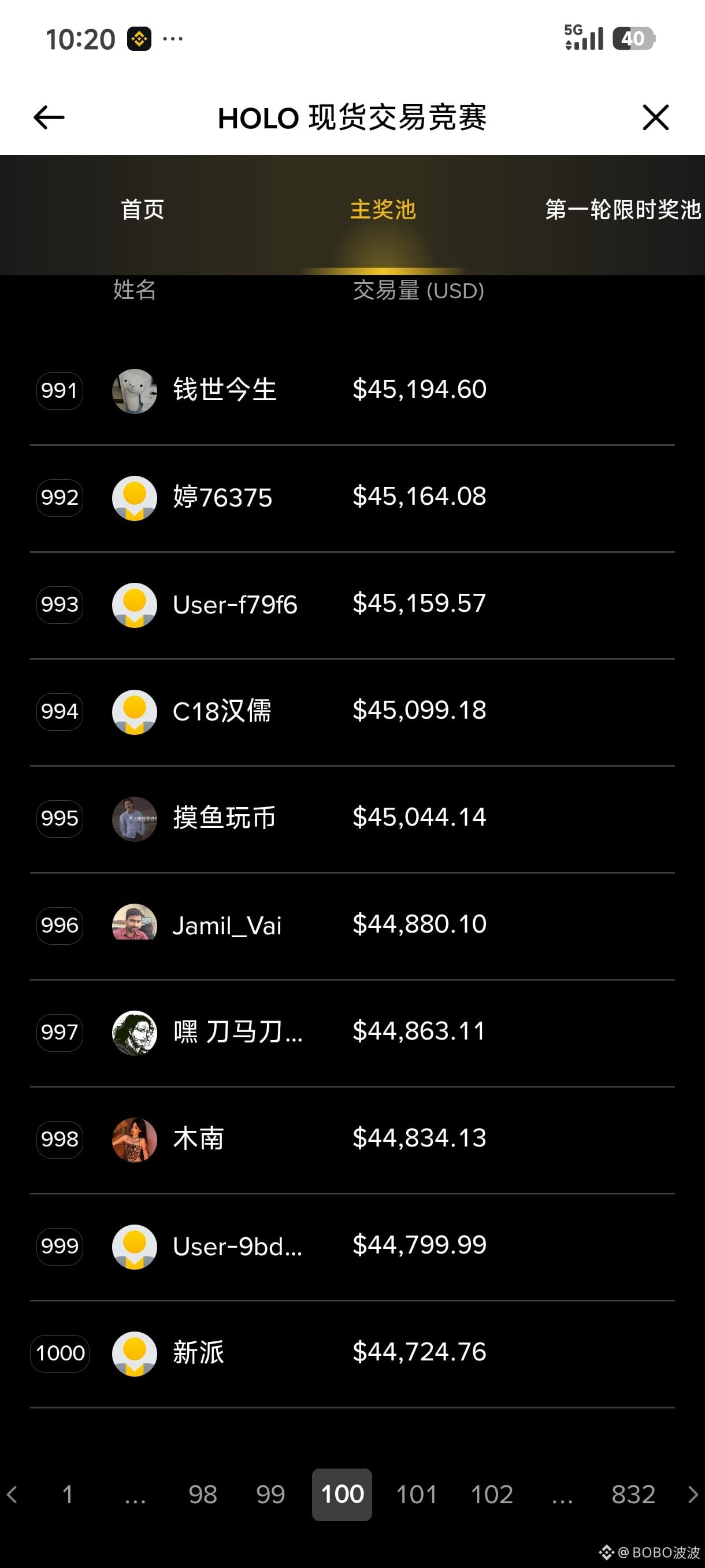
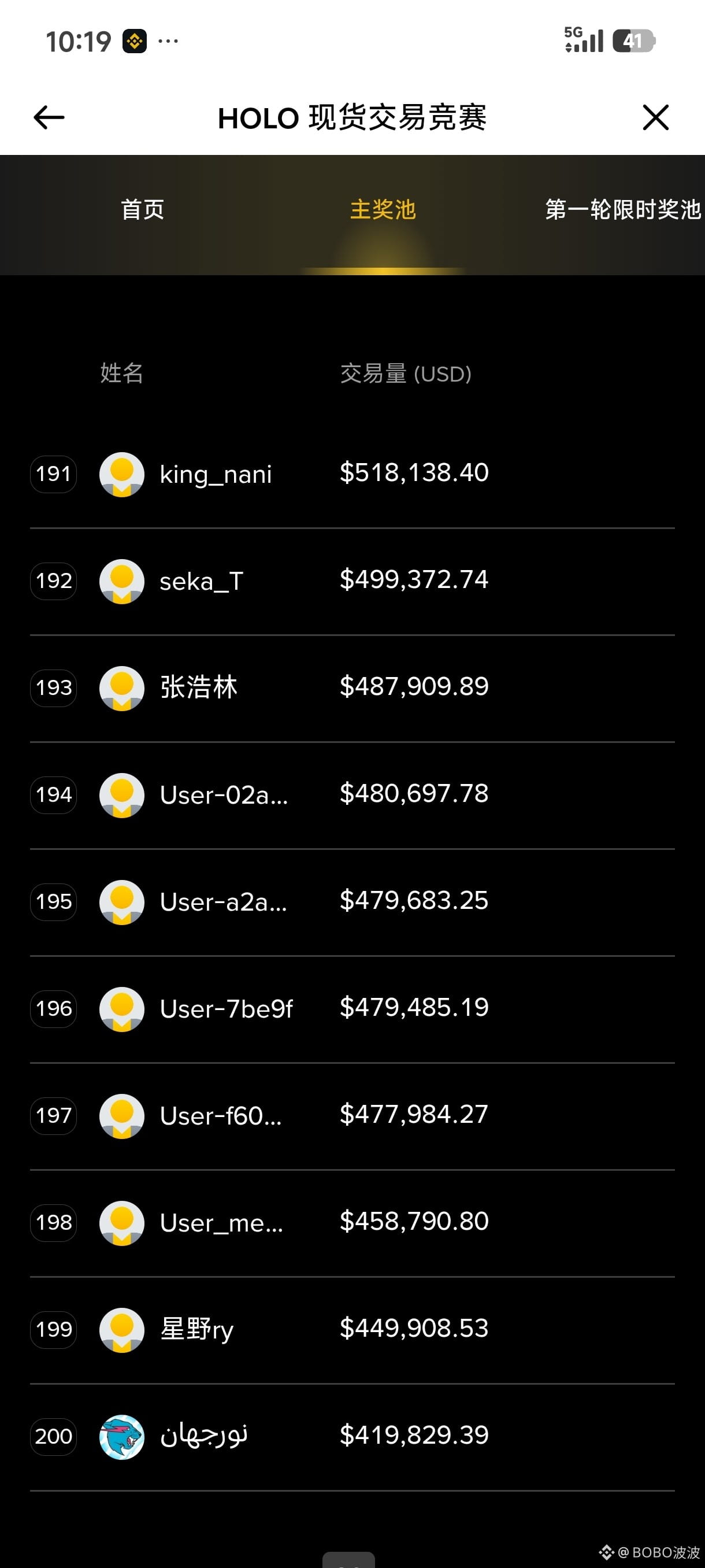
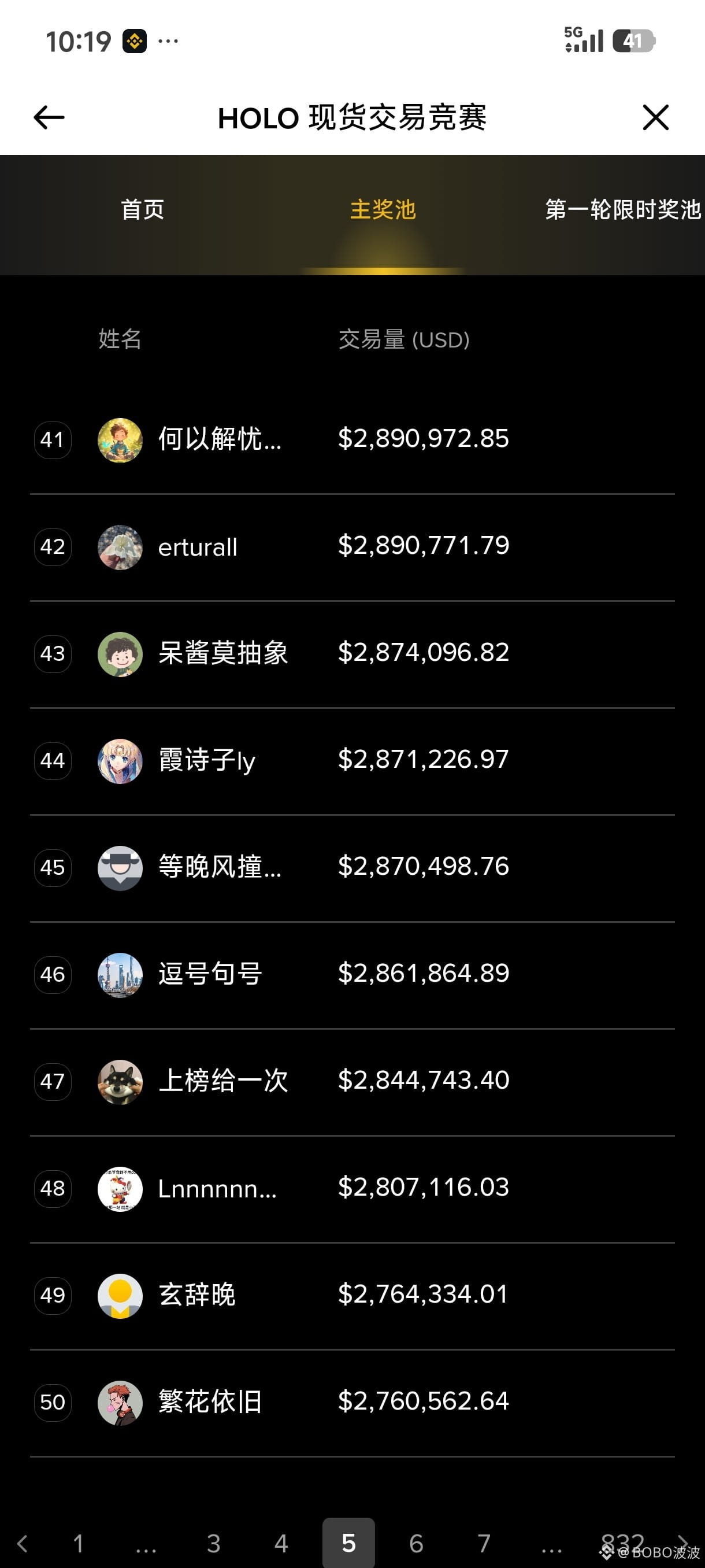
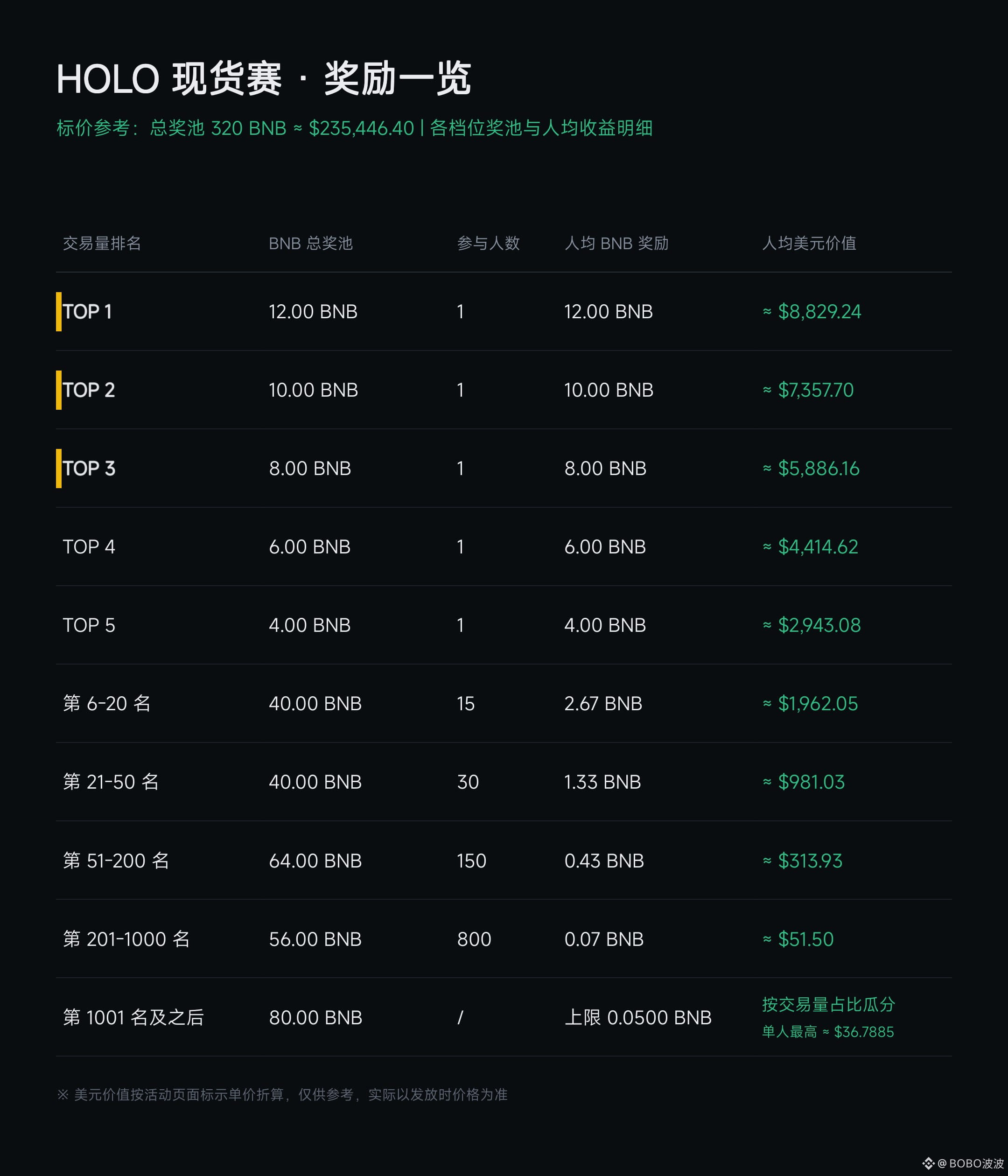
$HOLO Spot arbitrage analysis: even coins with large price spreads can be profitable without return codes/bonuses. It’s a bit competitive—there are 1,000 participants.
Rank 20 reward: 1,903 u; Trading volume: 3,237,776
Rank 50 reward: 951 u; Trading volume: 2,760,563
Rank 200 reward: 304 u; Trading volume: 419,829
Rank 1,000 reward: 50 u; Trading volume: 44,725
Rank 1,001 and after
Prize pool: 80 BNB
Reward: 13.15 u per 10,000 trading volume (cap: 0.05 BNB ≈ 36 u)
Total trading volume for 1001+: 43,392,229
To fill the cap, required trading volume: 27,120
$HOLO Spot arbitrage analysis: even coins with large price spreads can be profitable without return codes/bonuses. It’s a bit competitive—there are 1,000 participants.
Rank 20 reward: 1,903 u; Trading volume: 3,237,776
Rank 50 reward: 951 u; Trading volume: 2,760,563
Rank 200 reward: 304 u; Trading volume: 419,829
Rank 1,000 reward: 50 u; Trading volume: 44,725
Rank 1,001 and after
Prize pool: 80 BNB
Reward: 13.15 u per 10,000 trading volume (cap: 0.05 BNB ≈ 36 u)
Total trading volume for 1001+: 43,392,229
To fill the cap, required trading volume: 27,120
Rank 20 reward: 1,903 u; Trading volume: 3,237,776
Rank 50 reward: 951 u; Trading volume: 2,760,563
Rank 200 reward: 304 u; Trading volume: 419,829
Rank 1,000 reward: 50 u; Trading volume: 44,725
Rank 1,001 and after
Prize pool: 80 BNB
Reward: 13.15 u per 10,000 trading volume (cap: 0.05 BNB ≈ 36 u)
Total trading volume for 1001+: 43,392,229
To fill the cap, required trading volume: 27,120
1
711
·
--
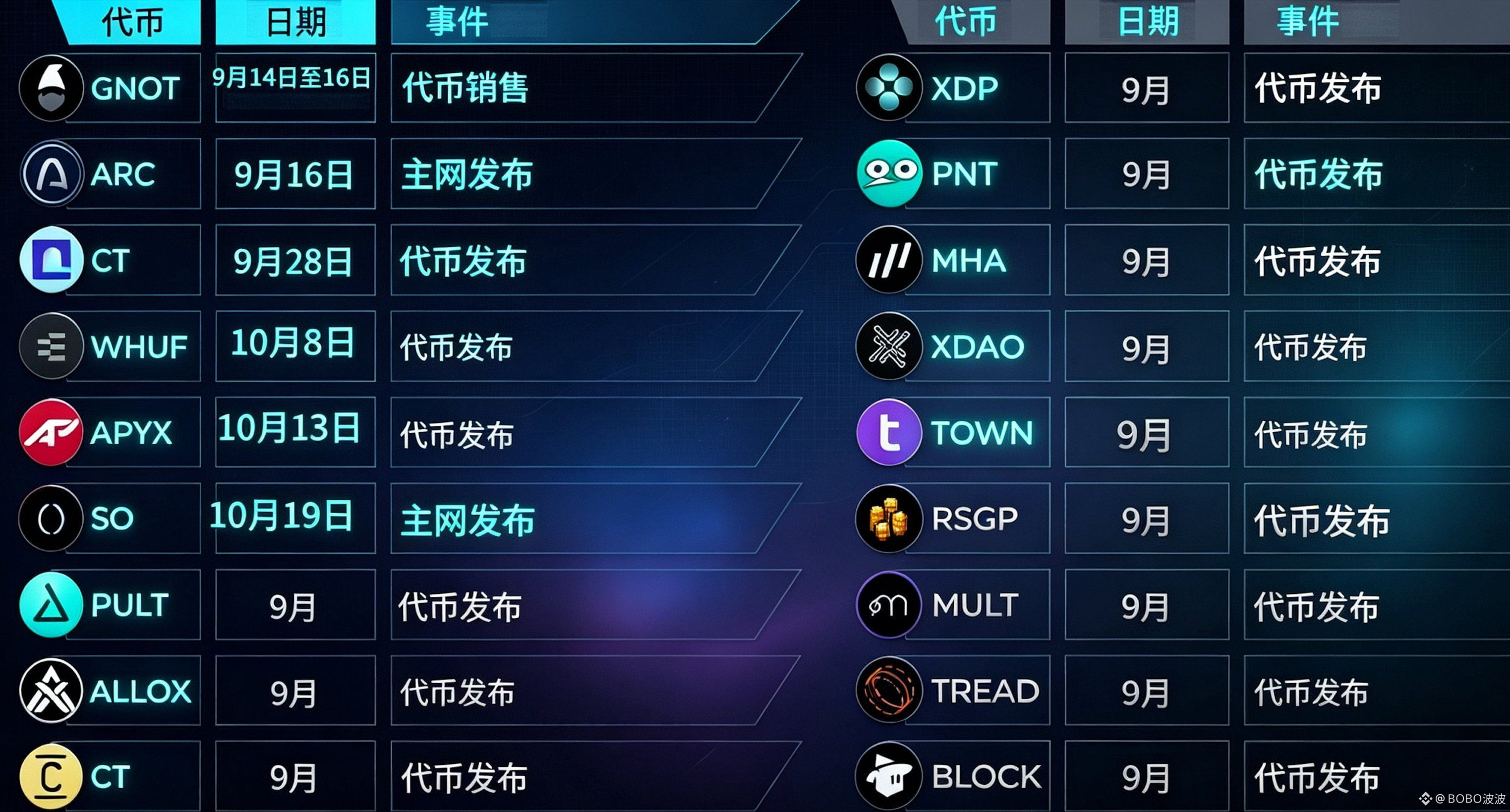
It’s already been half of September, and there are enough for about one hand of the new coins with #ALPHA that can get through.
I roughly counted the not-yet-released new coins, and unexpectedly there are almost twenty of them, but I don’t know whether they will go live on Alpha. The bigger likelihood is that these new coins will be delayed in their release.
It’s already been half of September, and there are enough for about one hand of the new coins with #ALPHA that can get through.
I roughly counted the not-yet-released new coins, and unexpectedly there are almost twenty of them, but I don’t know whether they will go live on Alpha. The bigger likelihood is that these new coins will be delayed in their release.
I roughly counted the not-yet-released new coins, and unexpectedly there are almost twenty of them, but I don’t know whether they will go live on Alpha. The bigger likelihood is that these new coins will be delayed in their release.
1
1
411
·
--
$HOLO spot price difference 75k, big meat
$THE spot price difference 70k, big meat
$REZ spot price difference 15k, a match for VIPs
#以太坊时隔七个月重返2600美元
$HOLO spot price difference 75k, big meat
$THE spot price difference 70k, big meat
$REZ spot price difference 15k, a match for VIPs
#以太坊时隔七个月重返2600美元
$THE spot price difference 70k, big meat
$REZ spot price difference 15k, a match for VIPs
#以太坊时隔七个月重返2600美元
2
709
·
--
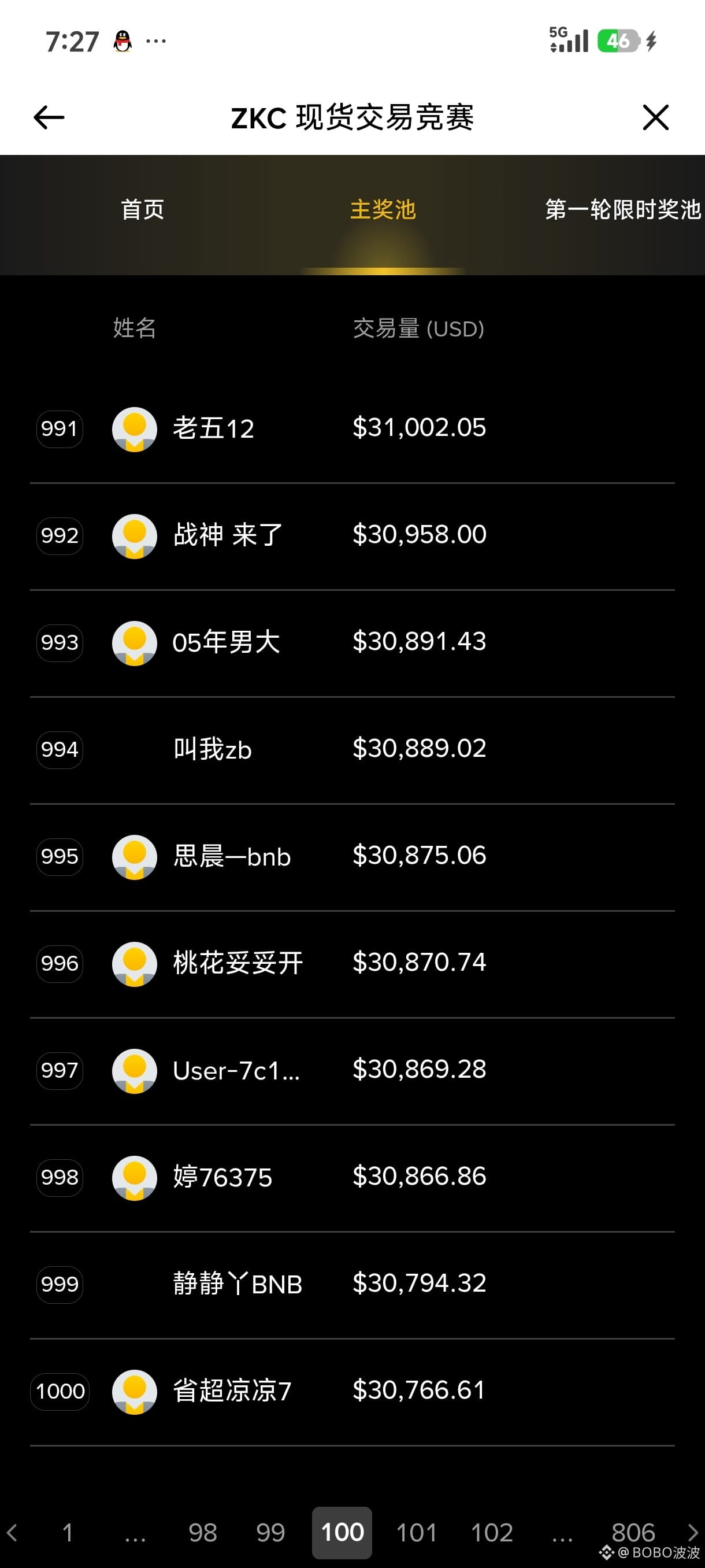
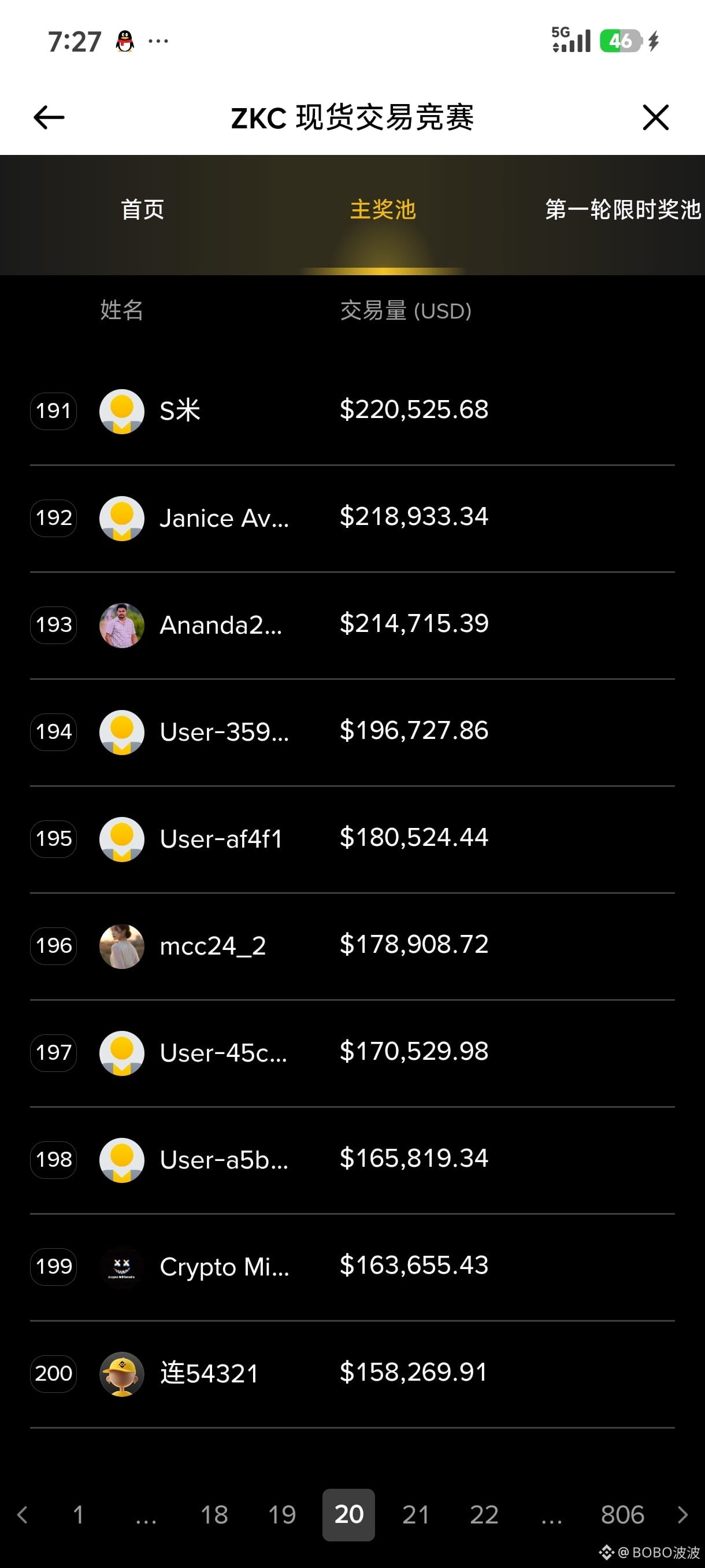
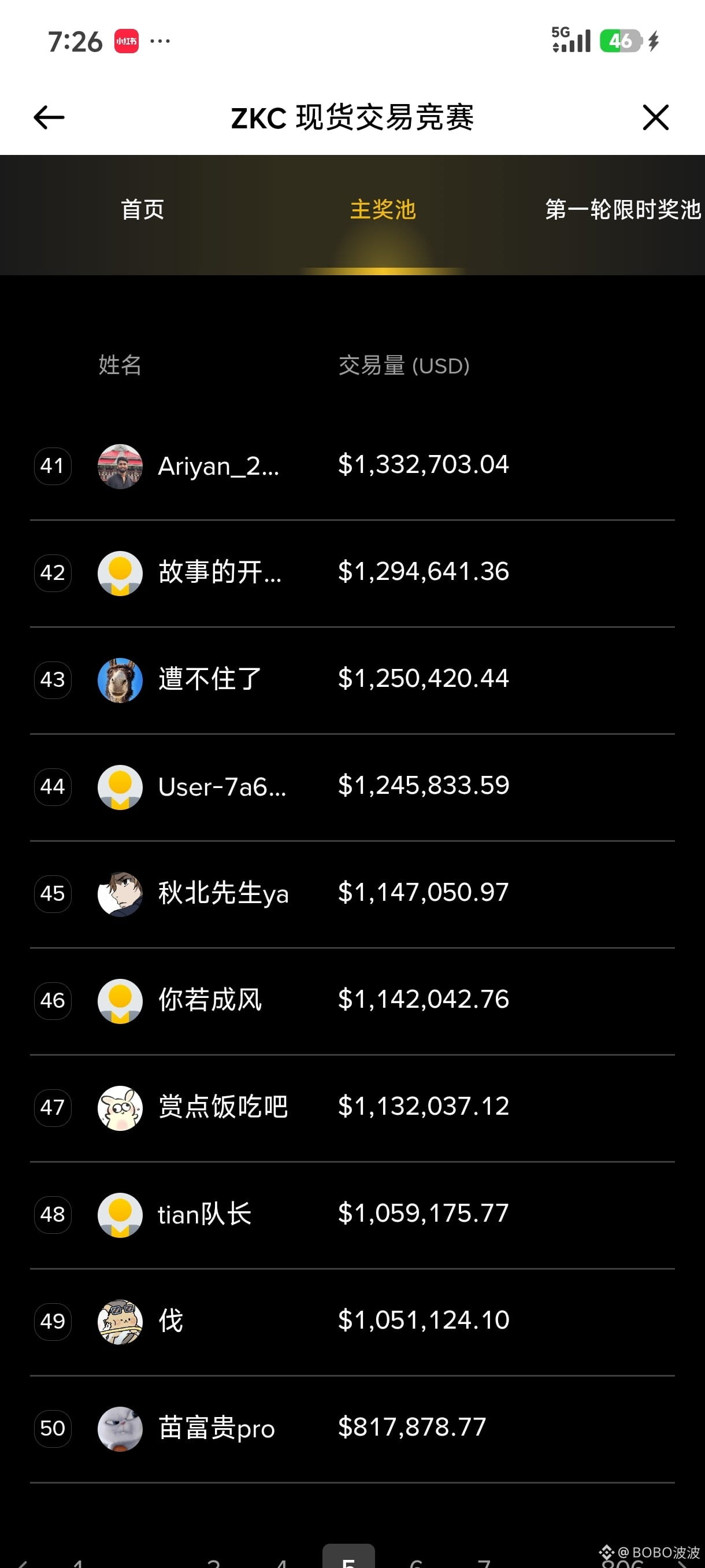
$ZKC In-stock game report. The price difference of Wan Shi caused the top 50 to be mostly missed/left out (a lot of leakage). The top 200 is even worse—a huge miss. It’s all just using about 200–300k (i.e., tens of thousands) to end up with the results. With a cost of around 100U, I managed to get a profit of 150U.
Rank 20 reward: 1,640 u, trading volume: 2,494,161
Rank 50 reward: 820 u, trading volume: 817,879
Rank 200 reward: 262 u, trading volume: 158,270
Rank 1,000 reward: 43 u, trading volume: 30,767
Rank 1,001 and after
For every 10,000 trading volume / reward: 22.14 u (limit: 450ZKC ≈ 22 u)
Total trading volume: 21,595,457
Trading volume needed to max the limit: 9,718
$ZKC In-stock game report. The price difference of Wan Shi caused the top 50 to be mostly missed/left out (a lot of leakage). The top 200 is even worse—a huge miss. It’s all just using about 200–300k (i.e., tens of thousands) to end up with the results. With a cost of around 100U, I managed to get a profit of 150U.
Rank 20 reward: 1,640 u, trading volume: 2,494,161
Rank 50 reward: 820 u, trading volume: 817,879
Rank 200 reward: 262 u, trading volume: 158,270
Rank 1,000 reward: 43 u, trading volume: 30,767
Rank 1,001 and after
For every 10,000 trading volume / reward: 22.14 u (limit: 450ZKC ≈ 22 u)
Total trading volume: 21,595,457
Trading volume needed to max the limit: 9,718
Rank 20 reward: 1,640 u, trading volume: 2,494,161
Rank 50 reward: 820 u, trading volume: 817,879
Rank 200 reward: 262 u, trading volume: 158,270
Rank 1,000 reward: 43 u, trading volume: 30,767
Rank 1,001 and after
For every 10,000 trading volume / reward: 22.14 u (limit: 450ZKC ≈ 22 u)
Total trading volume: 21,595,457
Trading volume needed to max the limit: 9,718
2
563
·
--
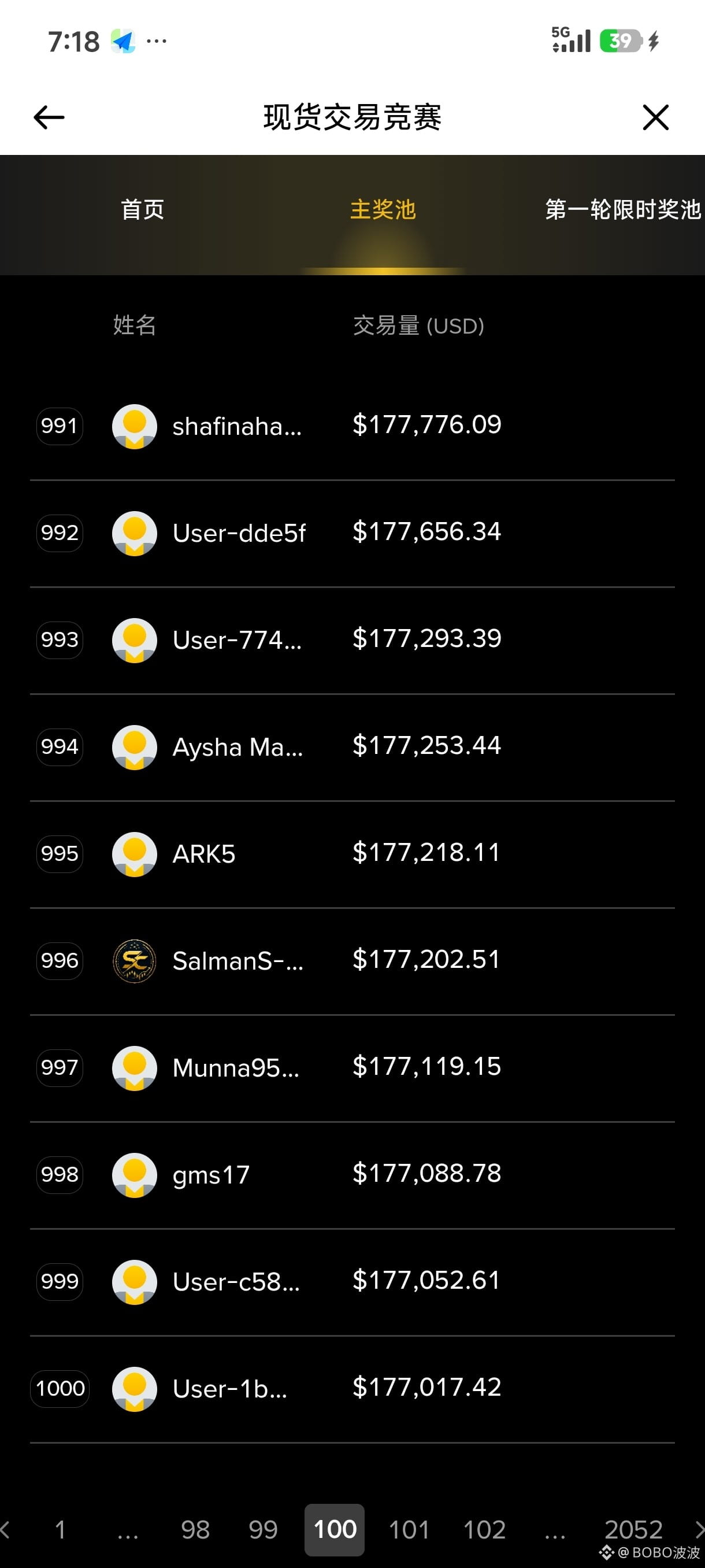
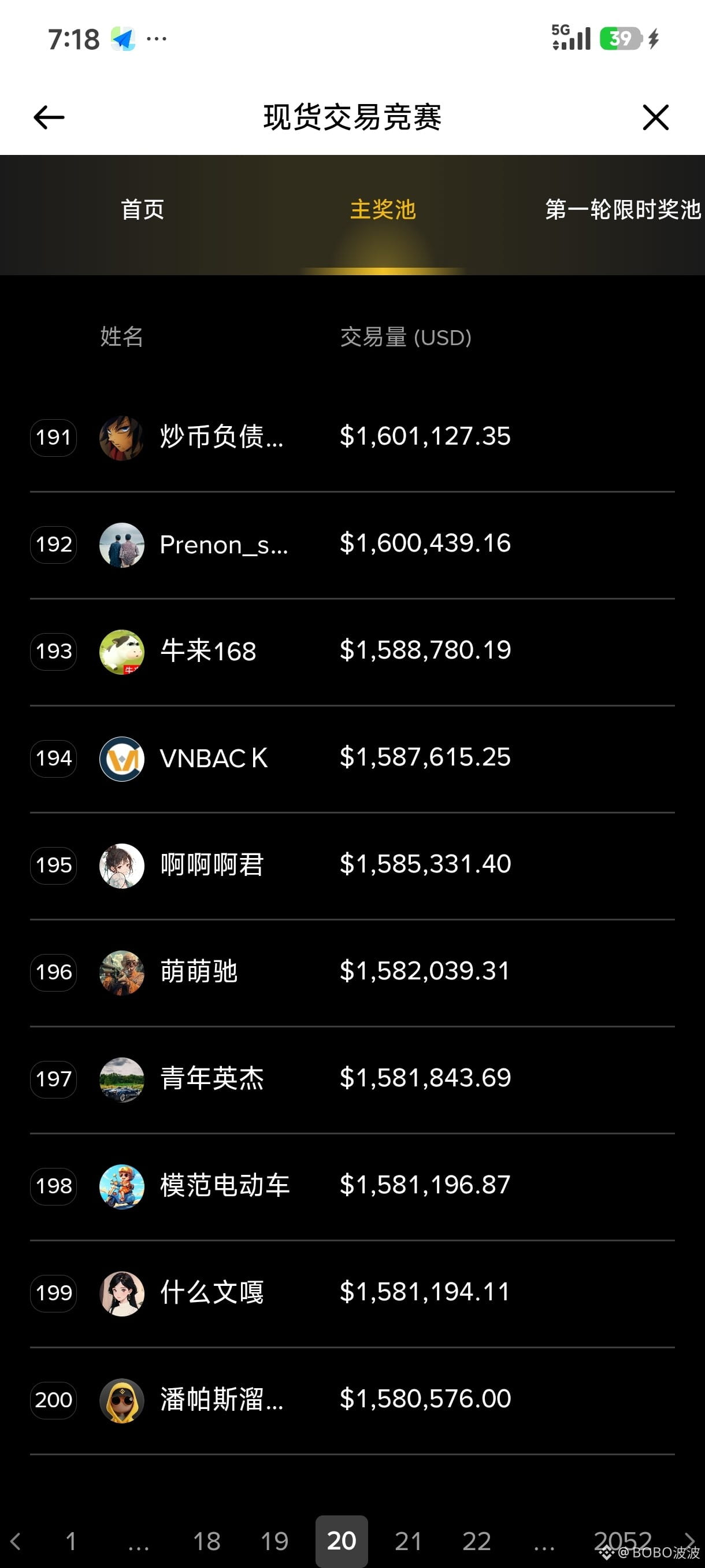
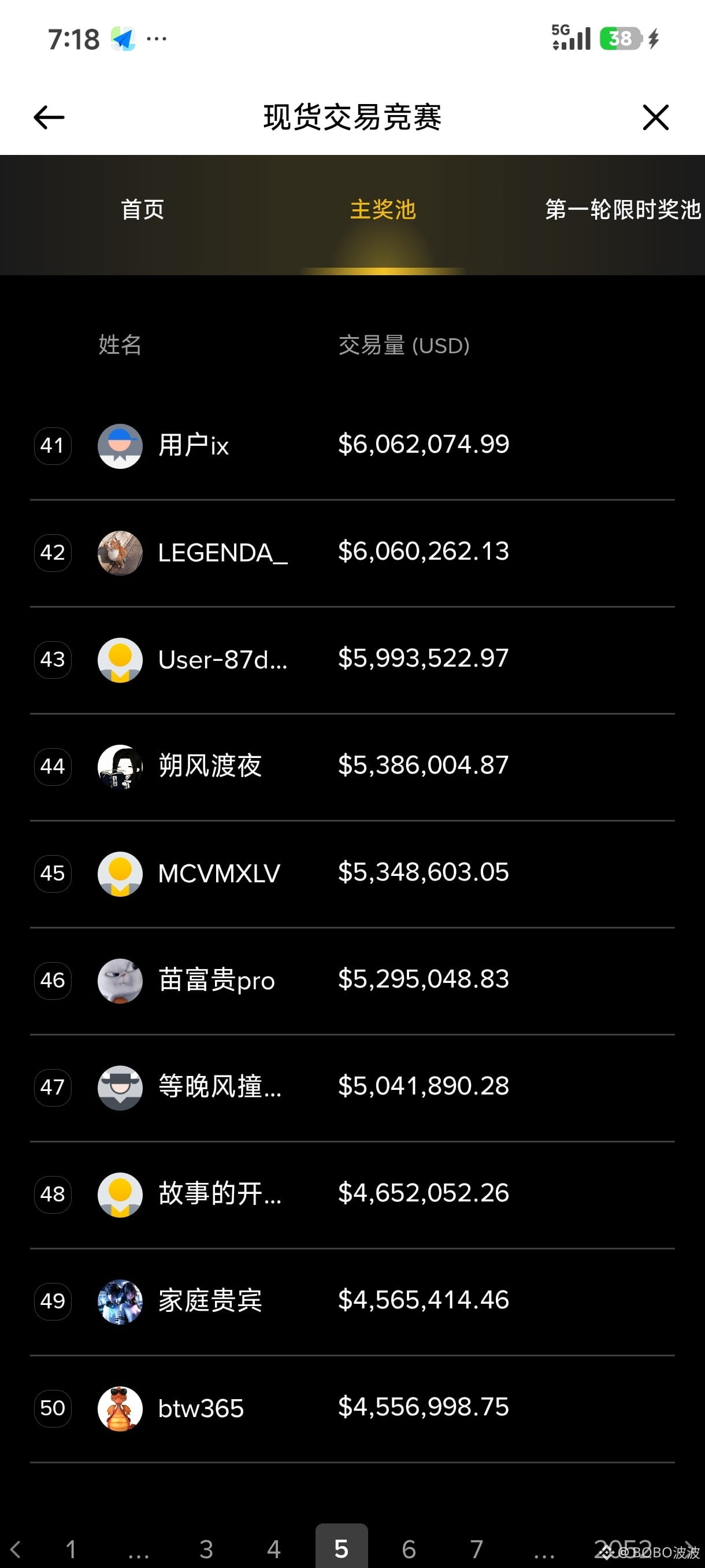
$BTC Ready-Stock Match Battle Report, getting overwhelmed—racing to pile on VIP
Rank 20 prize: 3,333 u, trading volume: 9,086,988
Rank 50 prize: 1,667 u, trading volume: 4,556,999
Rank 200 prize: 533 u, trading volume: 1,580,576
Rank 1,000 prize: 88 u, trading volume: 177,017
After rank 1,001: every 10,000 in trading volume / reward 5.03 u
Trading volume needed to reach the cap: 119,330
$BTC Ready-Stock Match Battle Report, getting overwhelmed—racing to pile on VIP
Rank 20 prize: 3,333 u, trading volume: 9,086,988
Rank 50 prize: 1,667 u, trading volume: 4,556,999
Rank 200 prize: 533 u, trading volume: 1,580,576
Rank 1,000 prize: 88 u, trading volume: 177,017
After rank 1,001: every 10,000 in trading volume / reward 5.03 u
Trading volume needed to reach the cap: 119,330
Rank 20 prize: 3,333 u, trading volume: 9,086,988
Rank 50 prize: 1,667 u, trading volume: 4,556,999
Rank 200 prize: 533 u, trading volume: 1,580,576
Rank 1,000 prize: 88 u, trading volume: 177,017
After rank 1,001: every 10,000 in trading volume / reward 5.03 u
Trading volume needed to reach the cap: 119,330
1
2
238
·
--
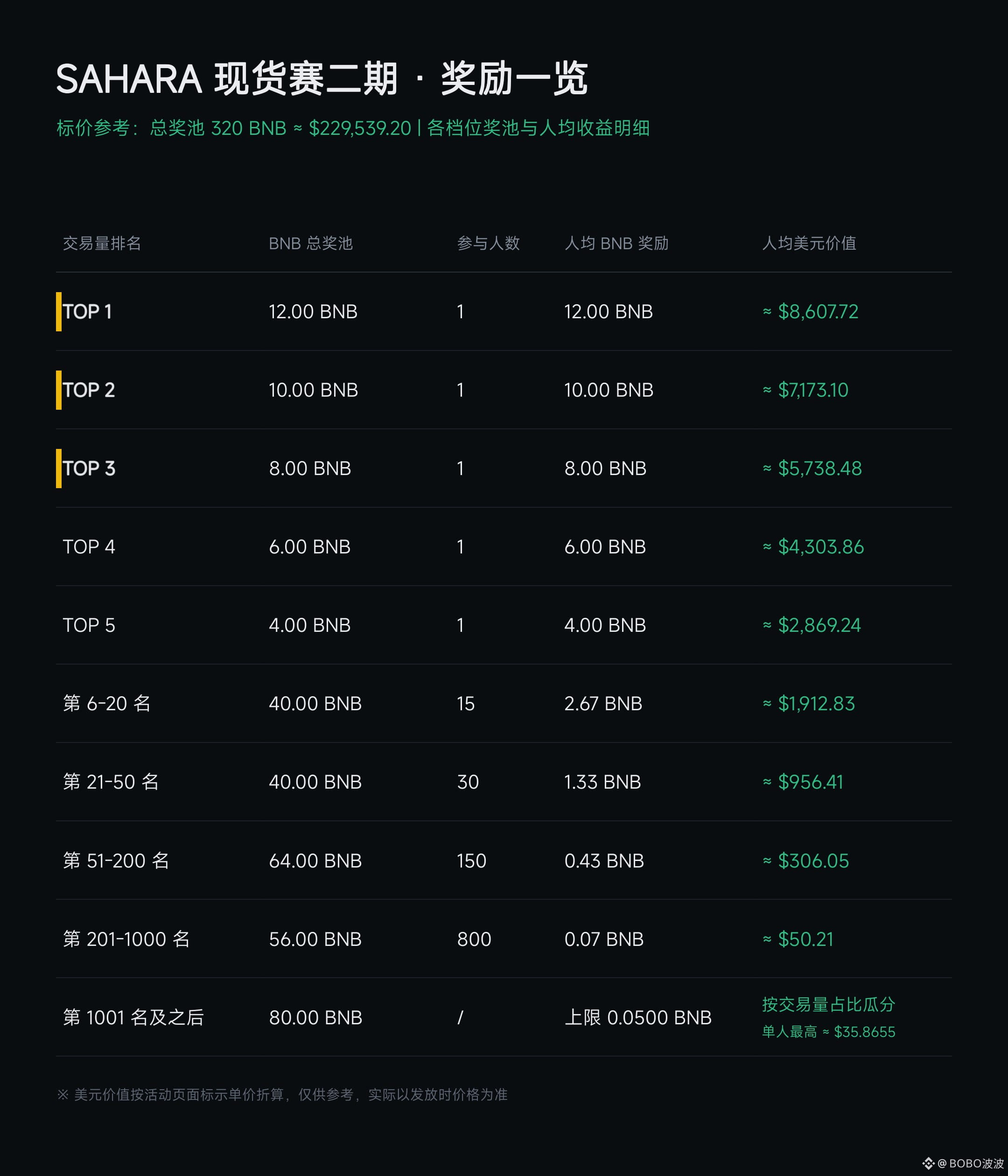
$SAHARA spot trading competition, spread 5.3 ten-thousandths
Spot trading competition, there are three trading pairs, just trade PROM, the spread is a bit smaller; for the other two trading pairs, the spread is very large.
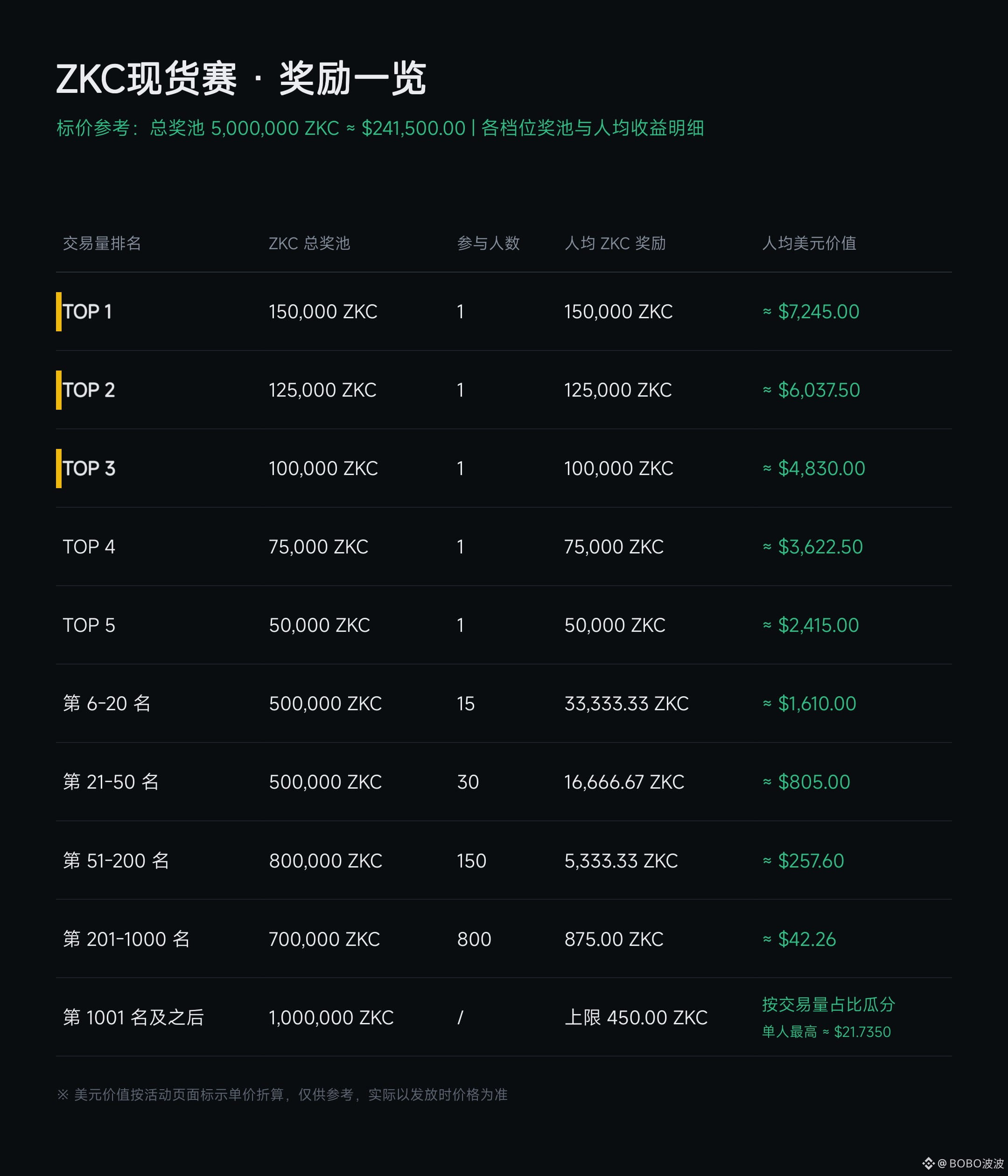
$ZKC spot trading competition, spread 10 ten-thousandths, the profit-making traders are extremely happy
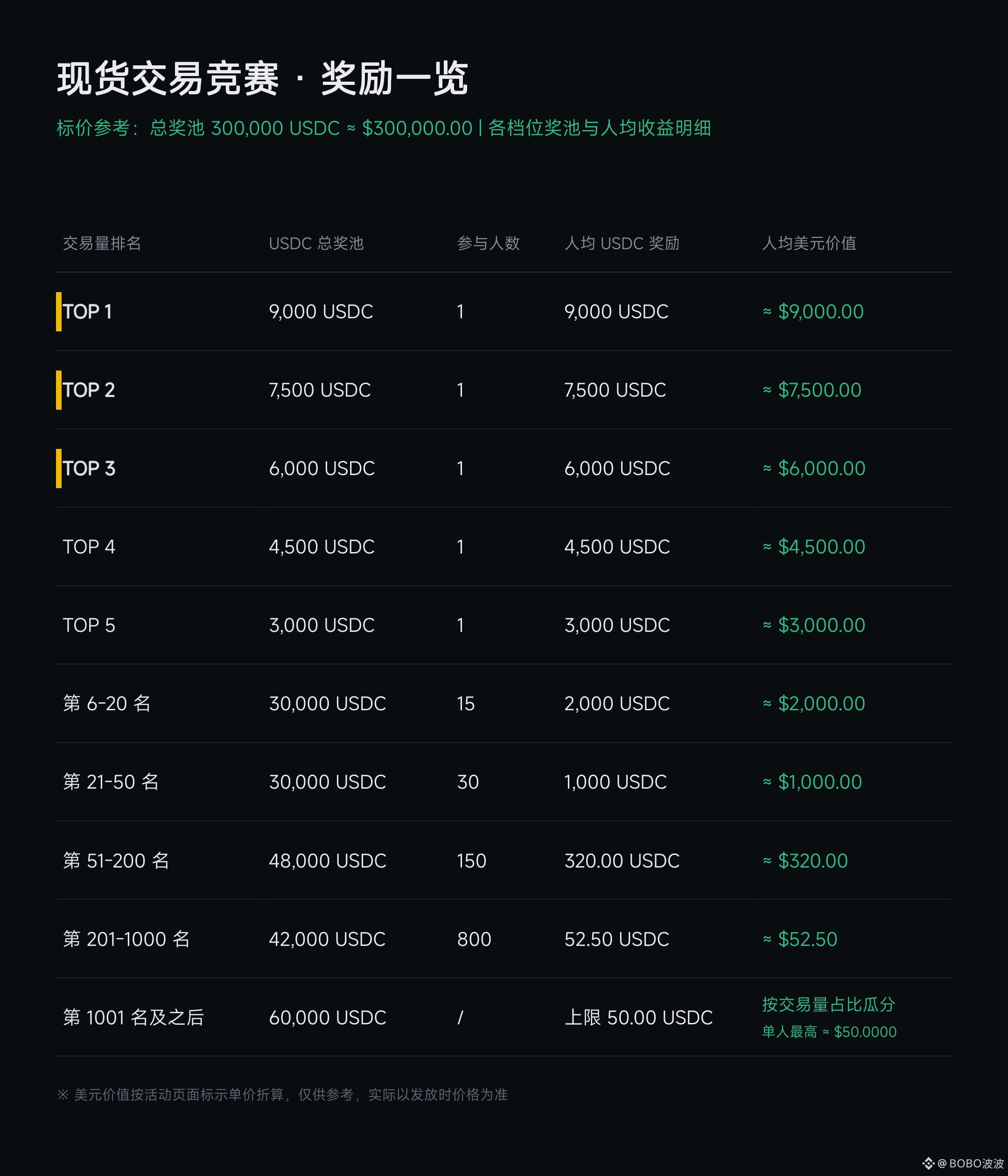
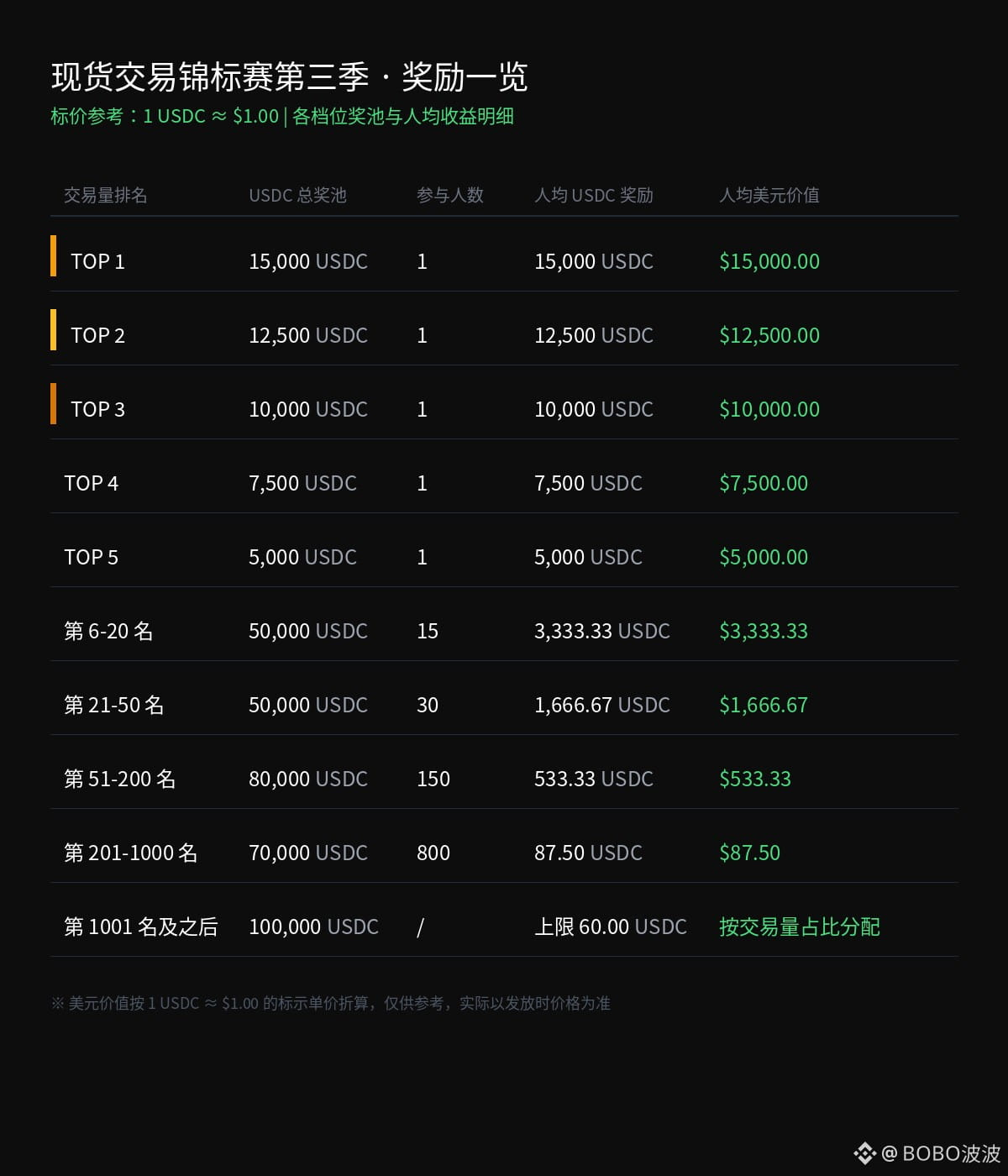
Spot trading championship season 3, just trade $BTC
$SAHARA spot trading competition, spread 5.3 ten-thousandths
Spot trading competition, there are three trading pairs, just trade PROM, the spread is a bit smaller; for the other two trading pairs, the spread is very large.
$ZKC spot trading competition, spread 10 ten-thousandths, the profit-making traders are extremely happy
Spot trading championship season 3, just trade $BTC
Spot trading competition, there are three trading pairs, just trade PROM, the spread is a bit smaller; for the other two trading pairs, the spread is very large.
$ZKC spot trading competition, spread 10 ten-thousandths, the profit-making traders are extremely happy
Spot trading championship season 3, just trade $BTC
2
3
921
·
--
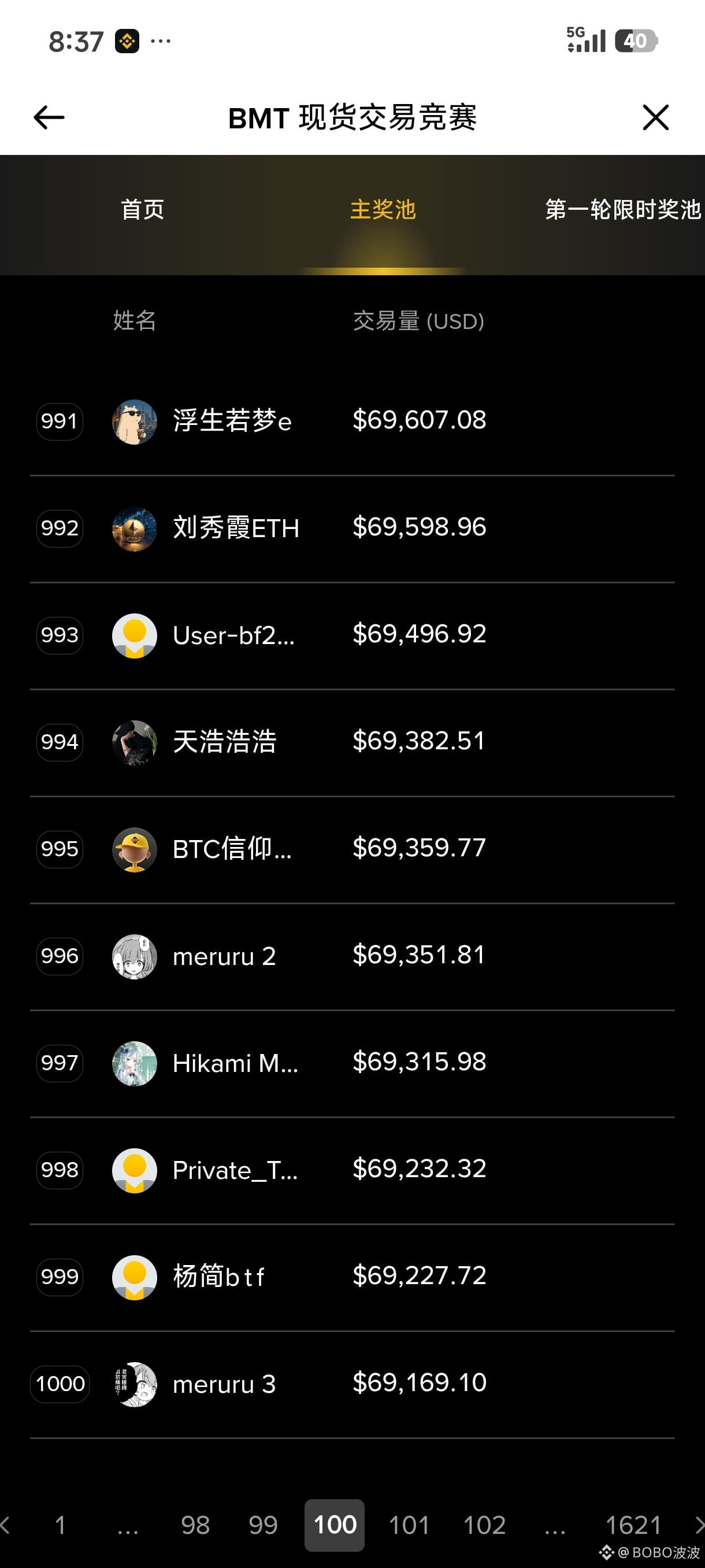
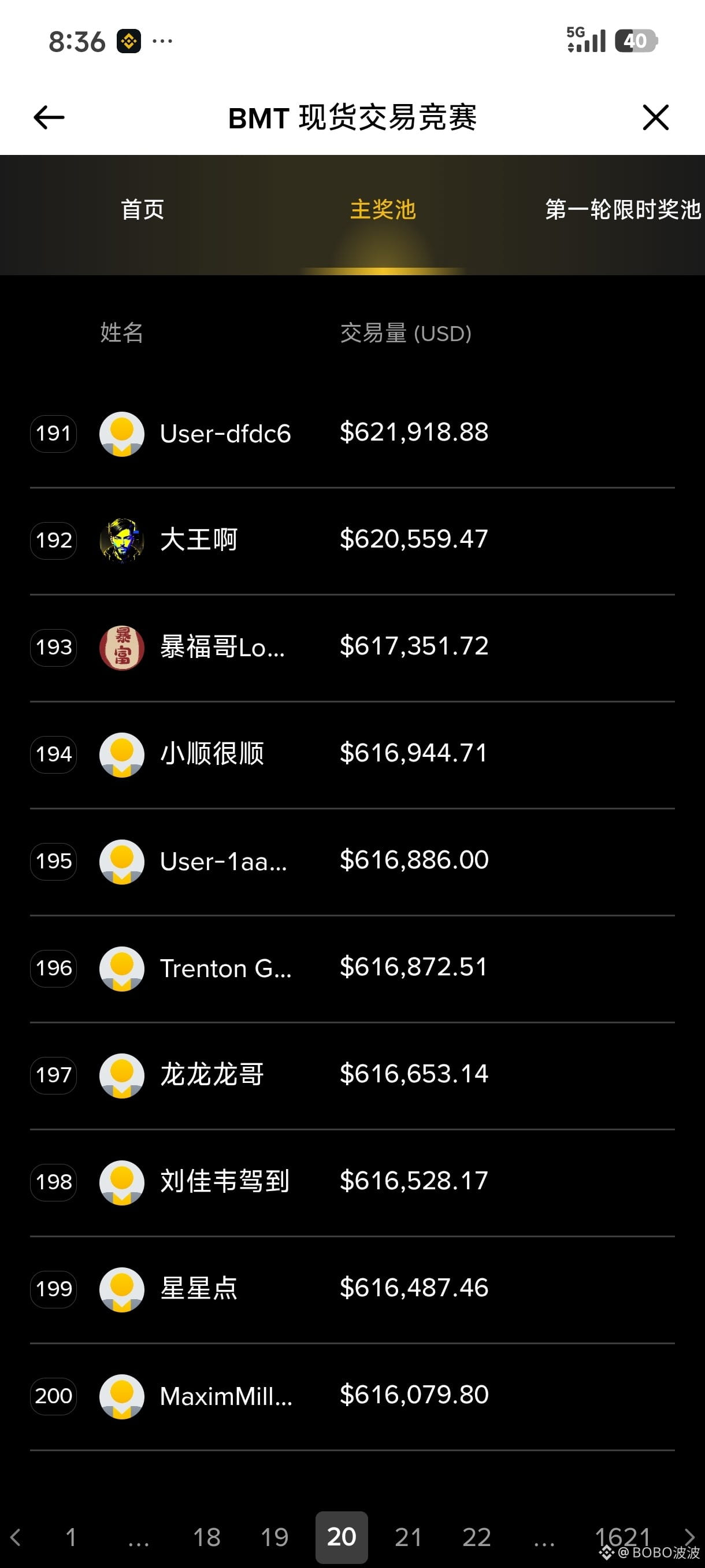
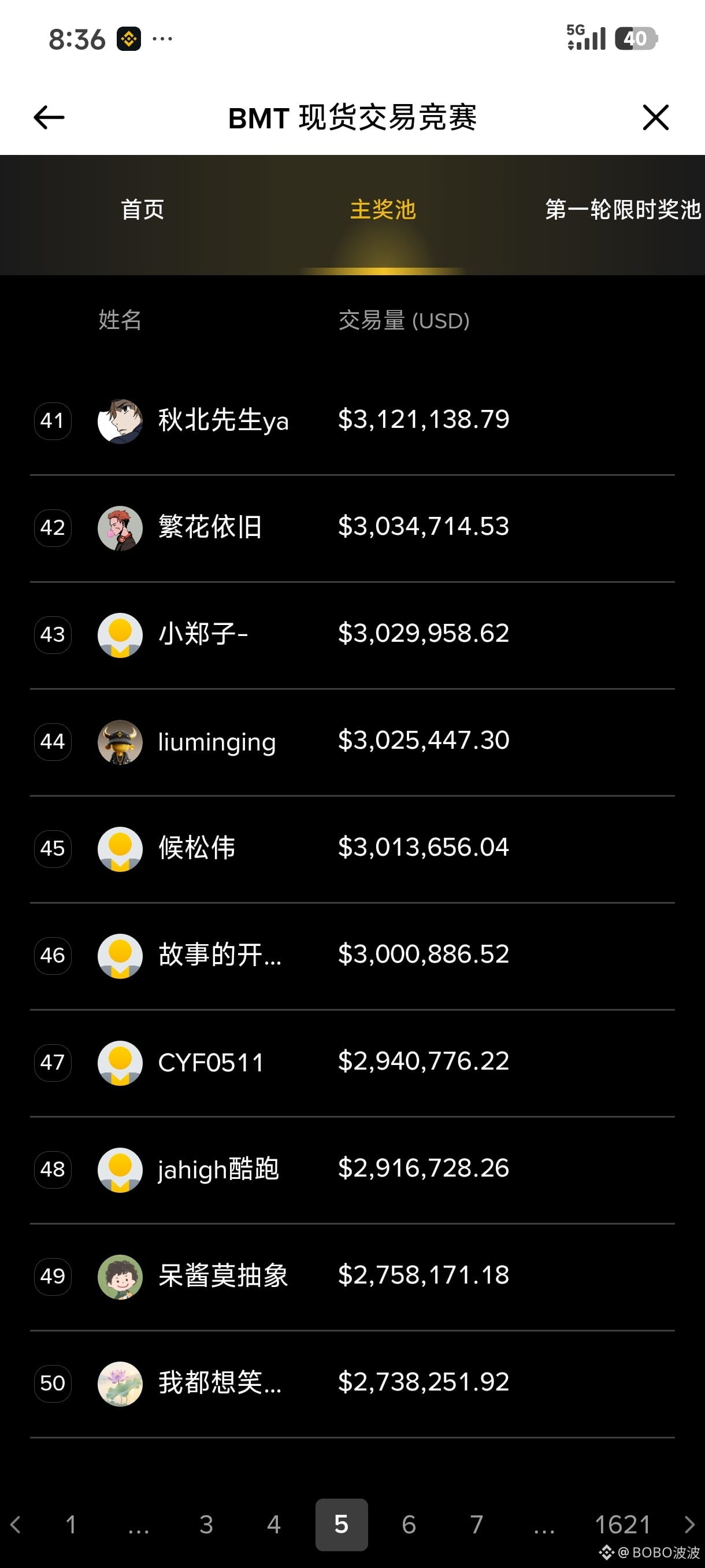
$BMT spot market entry threshold—those first couple hundred draws are already exhausted; even most studios have dropped out. This time it’s actually about splitting the non-carries: the official VIP event and the assist-a-person event will make upcoming competitions increasingly intense in the near term. Better just stay comfortably in the back row.
20th place, reward 1,891 u, trading volume: 4,646,055
50th place reward 945 u, trading volume: 2,738,252
200th place reward 303 u, trading volume: 616,080
1,000th place reward 50 u, trading volume: 68,782
After 1,001st place
Every 10,000 in trading volume / reward 8.01 u
Total trading volume: 70,808,556
Trading volume needed to hit the cap: 53,106
$BMT spot market entry threshold—those first couple hundred draws are already exhausted; even most studios have dropped out. This time it’s actually about splitting the non-carries: the official VIP event and the assist-a-person event will make upcoming competitions increasingly intense in the near term. Better just stay comfortably in the back row.
20th place, reward 1,891 u, trading volume: 4,646,055
50th place reward 945 u, trading volume: 2,738,252
200th place reward 303 u, trading volume: 616,080
1,000th place reward 50 u, trading volume: 68,782
After 1,001st place
Every 10,000 in trading volume / reward 8.01 u
Total trading volume: 70,808,556
Trading volume needed to hit the cap: 53,106
20th place, reward 1,891 u, trading volume: 4,646,055
50th place reward 945 u, trading volume: 2,738,252
200th place reward 303 u, trading volume: 616,080
1,000th place reward 50 u, trading volume: 68,782
After 1,001st place
Every 10,000 in trading volume / reward 8.01 u
Total trading volume: 70,808,556
Trading volume needed to hit the cap: 53,106
1
484
·
--
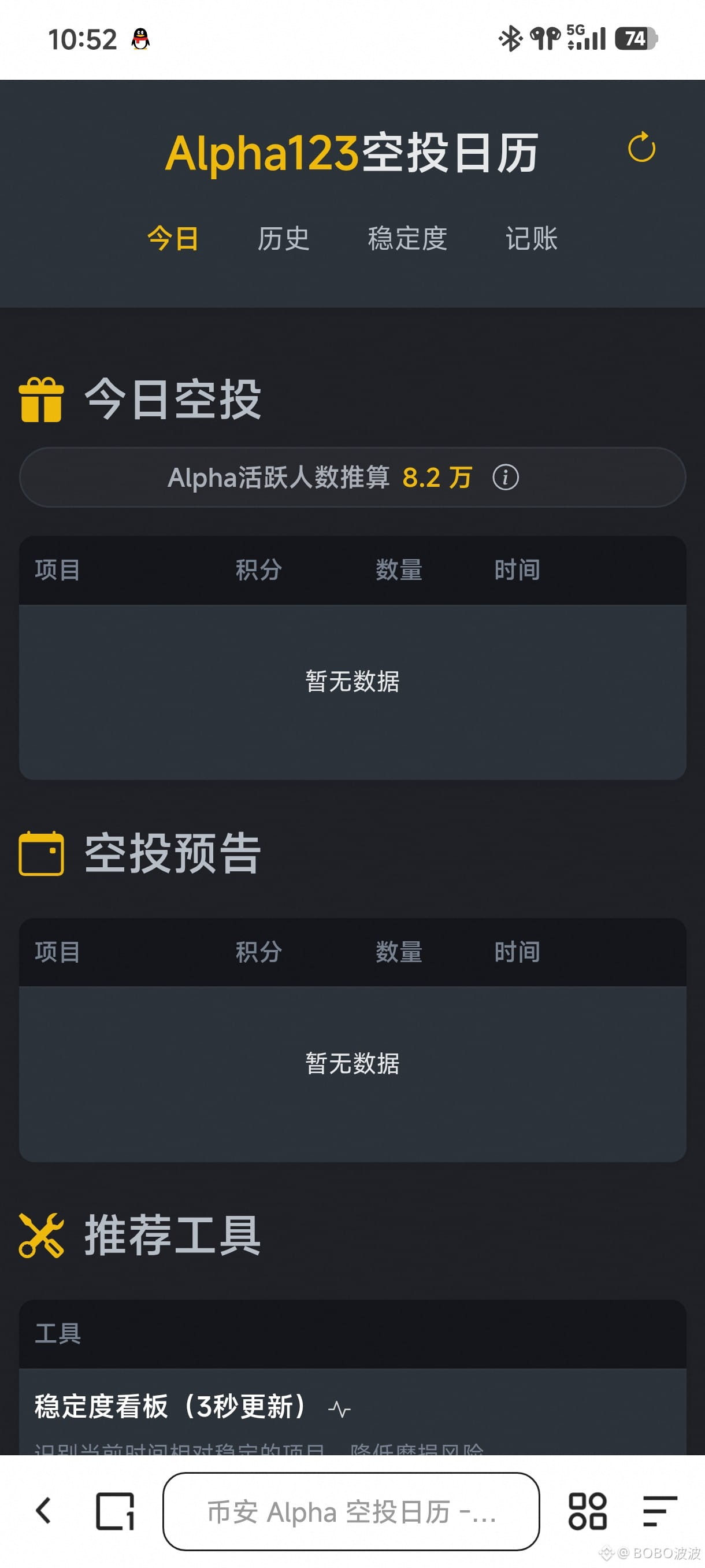
#ALPHA Daily Report, It’s now a given that there will be no air drops on weekends—just rest easy
1️⃣ Points farming tip: $GRVT is no longer eligible for the four-times bonus. Now we recommend farming using $DOS . With a 500U budget, the wear and tear is a bit smaller since the volume isn’t that large right now.
2️⃣ Trading competition: As of now, the entry thresholds for all four competitions are zero. I don’t know whether it’s competitive or not—go based on your situation and decide whether to join.
#ALPHA Daily Report, It’s now a given that there will be no air drops on weekends—just rest easy
1️⃣ Points farming tip: $GRVT is no longer eligible for the four-times bonus. Now we recommend farming using $DOS . With a 500U budget, the wear and tear is a bit smaller since the volume isn’t that large right now.
2️⃣ Trading competition: As of now, the entry thresholds for all four competitions are zero. I don’t know whether it’s competitive or not—go based on your situation and decide whether to join.
1️⃣ Points farming tip: $GRVT is no longer eligible for the four-times bonus. Now we recommend farming using $DOS . With a 500U budget, the wear and tear is a bit smaller since the volume isn’t that large right now.
2️⃣ Trading competition: As of now, the entry thresholds for all four competitions are zero. I don’t know whether it’s competitive or not—go based on your situation and decide whether to join.
1
8
1.6k
·
--
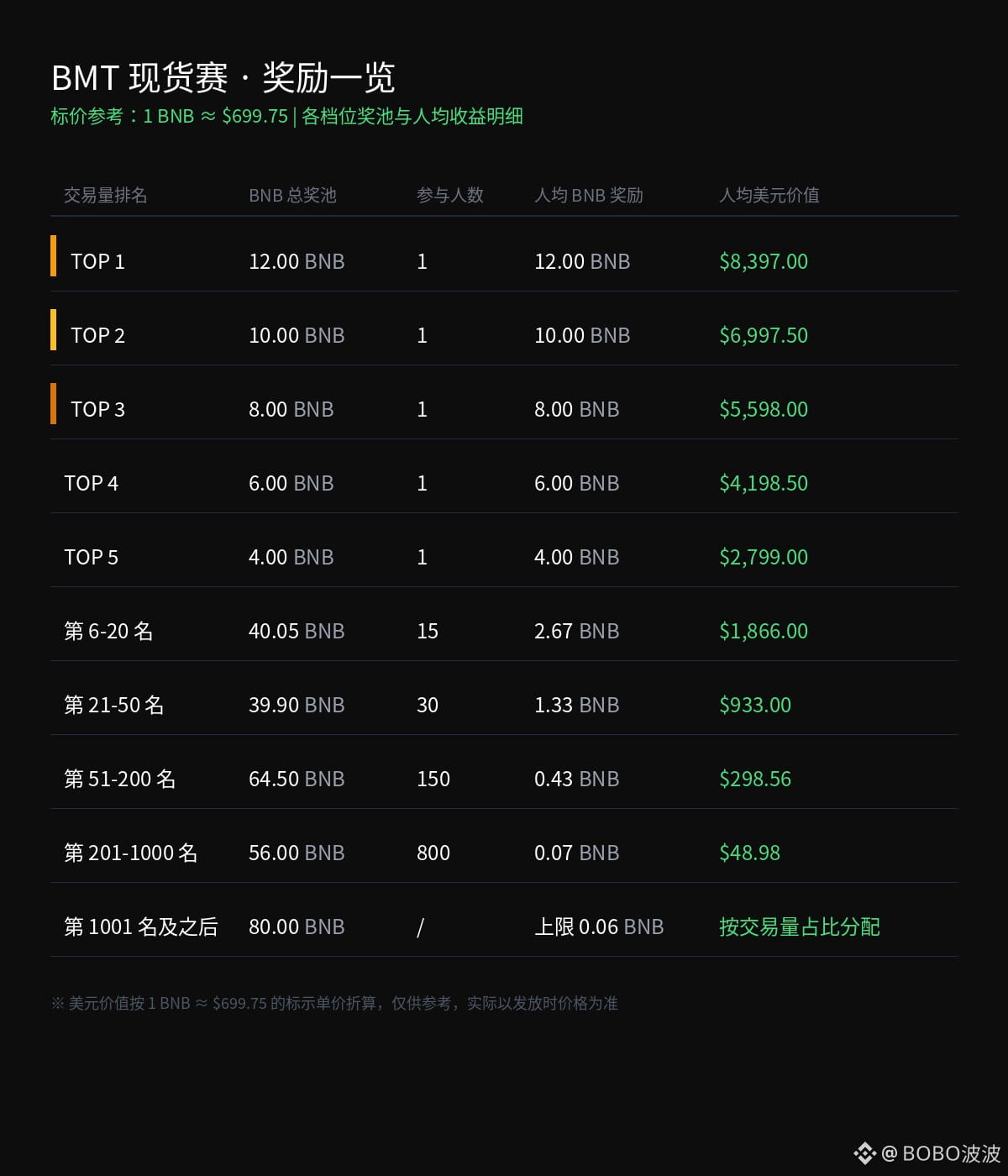
$BMT spot contest profit chart, spread 万2.3
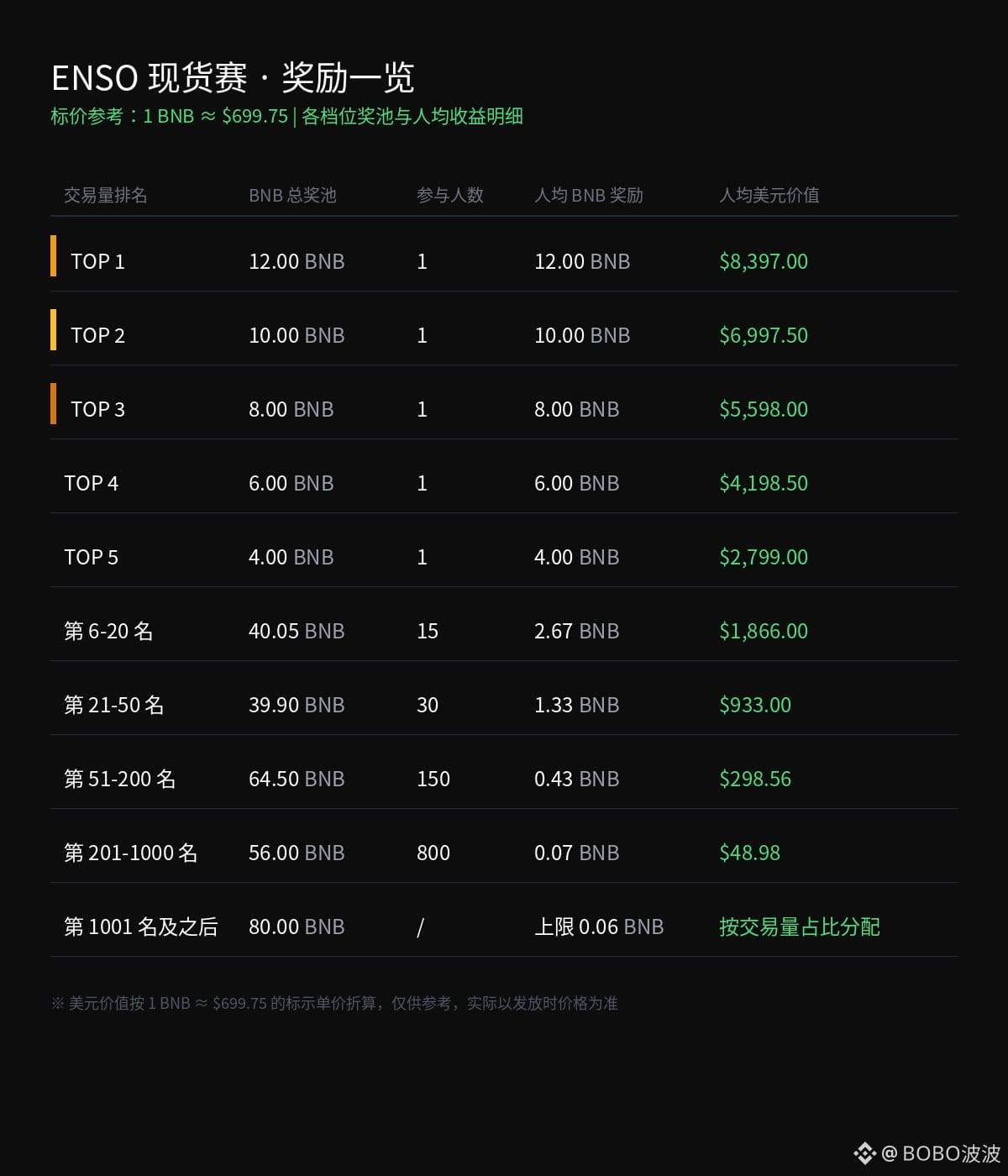
$ENSO spot contest profit chart, spread 万六
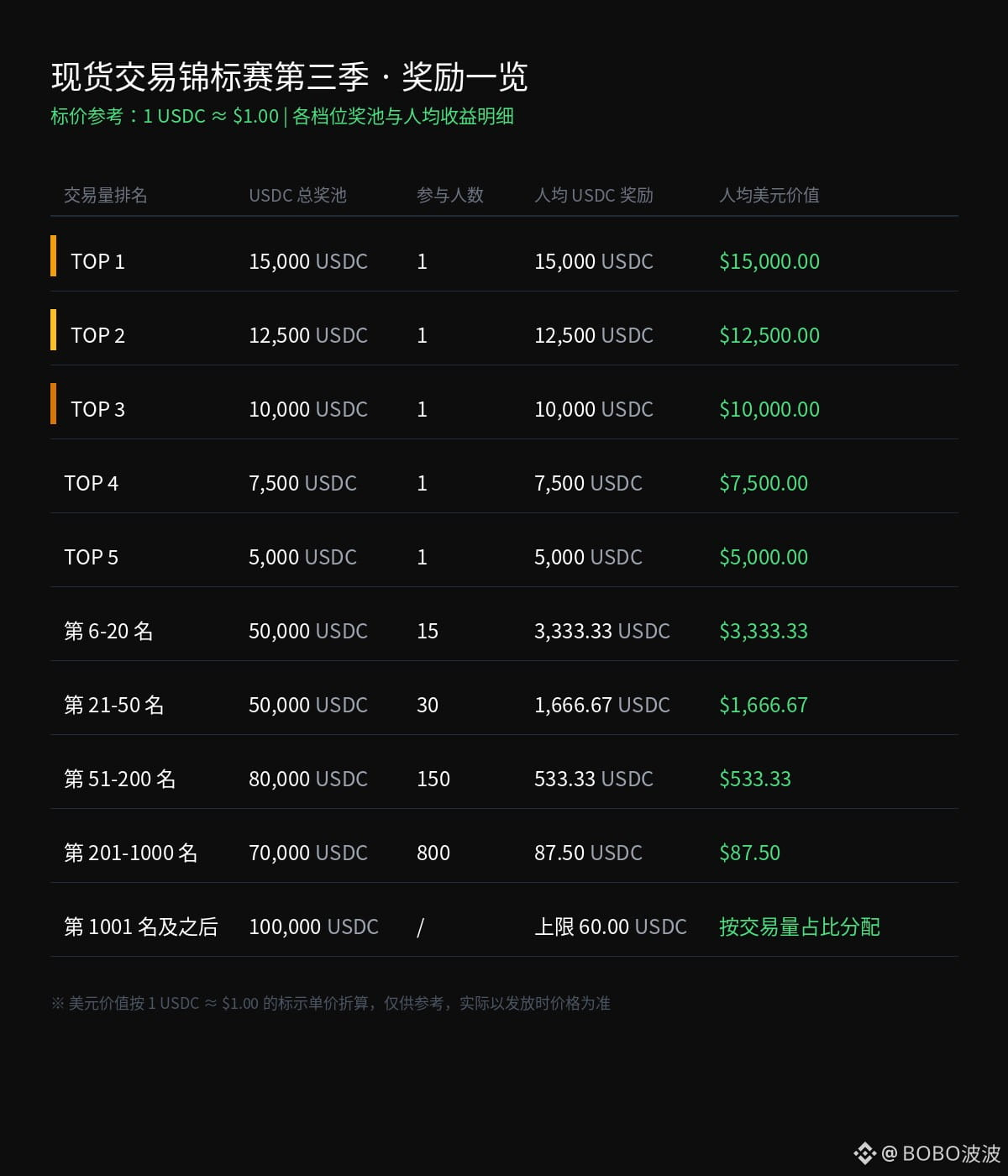
$BTC spot contest profit chart, no spread, VIP拼的比赛
$BMT spot contest profit chart, spread 万2.3
$ENSO spot contest profit chart, spread 万六
$BTC spot contest profit chart, no spread, VIP拼的比赛
$ENSO spot contest profit chart, spread 万六
$BTC spot contest profit chart, no spread, VIP拼的比赛
7
1.4k
·
--
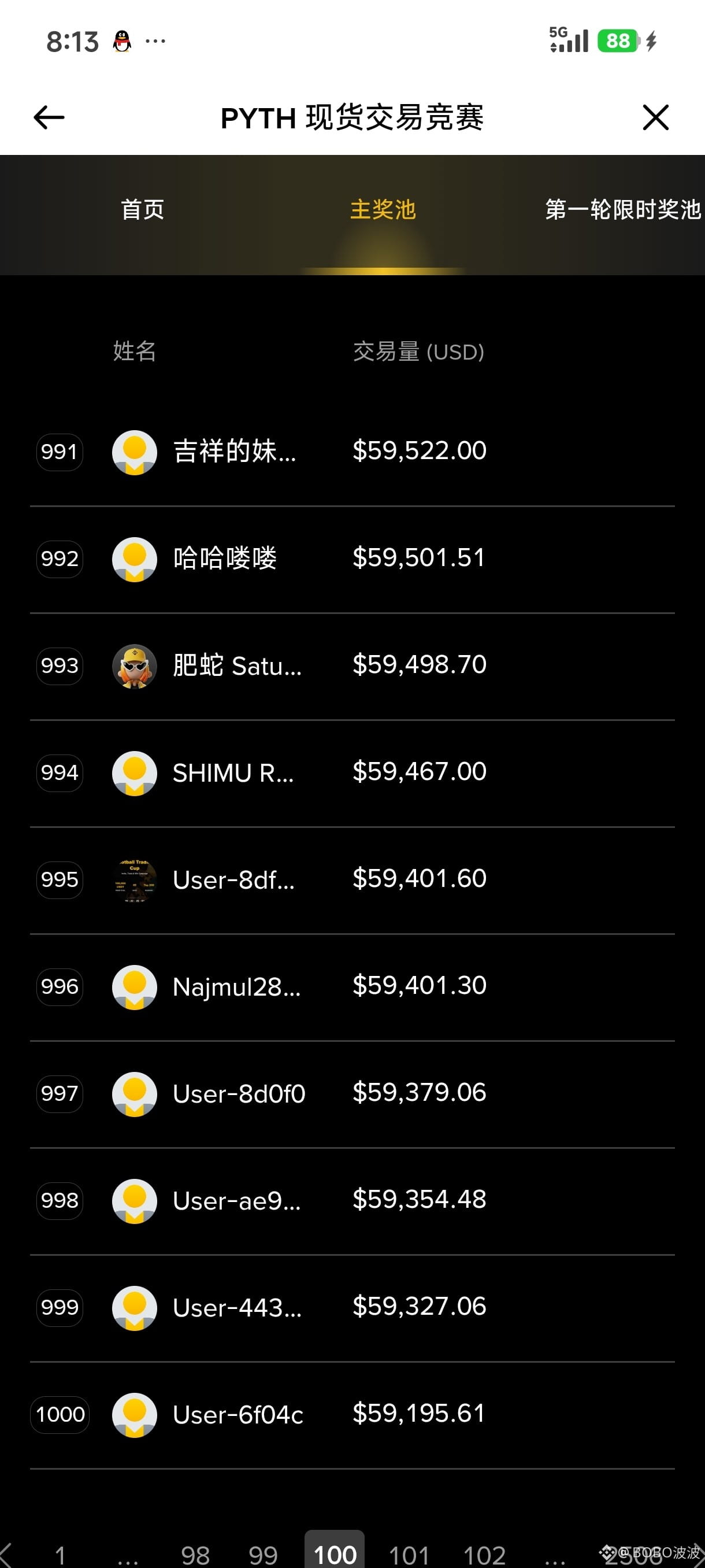
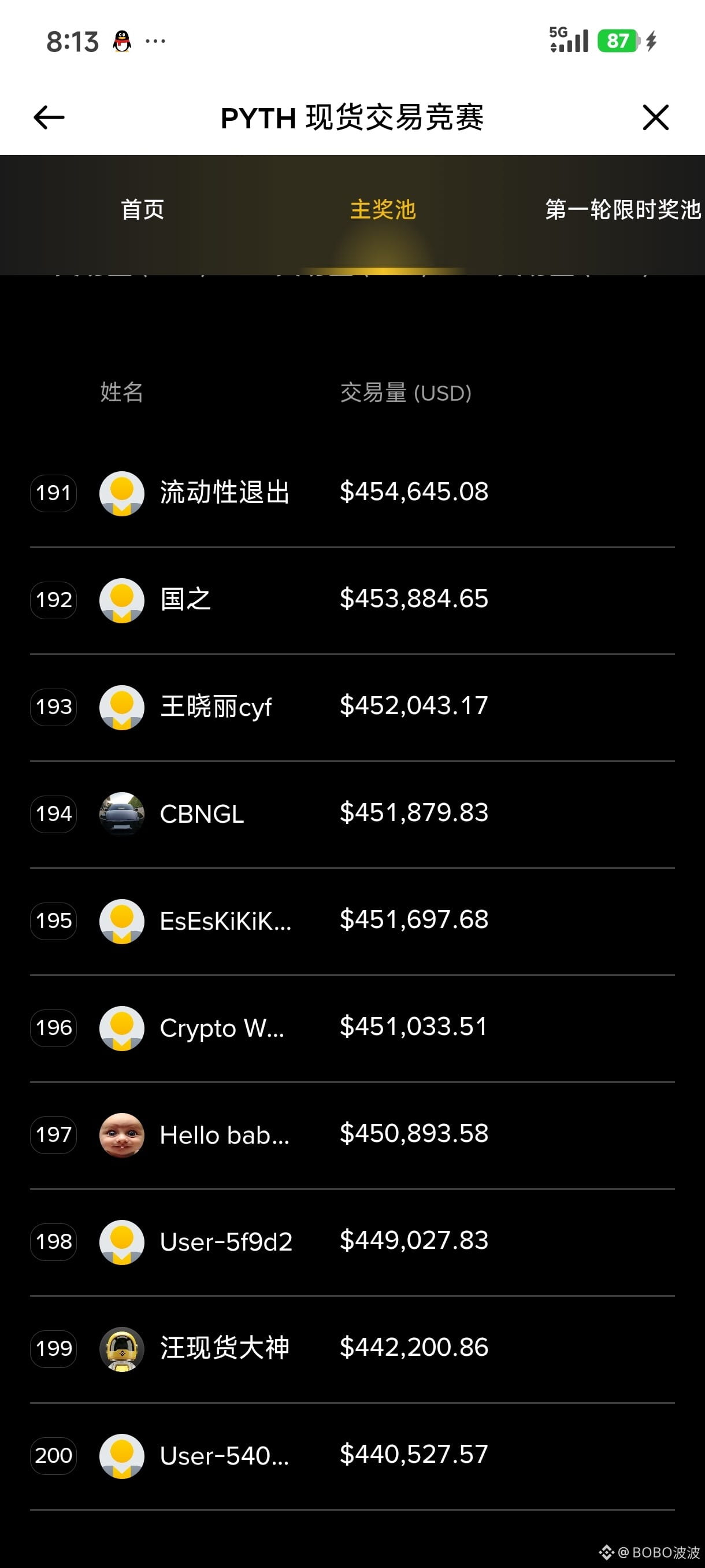
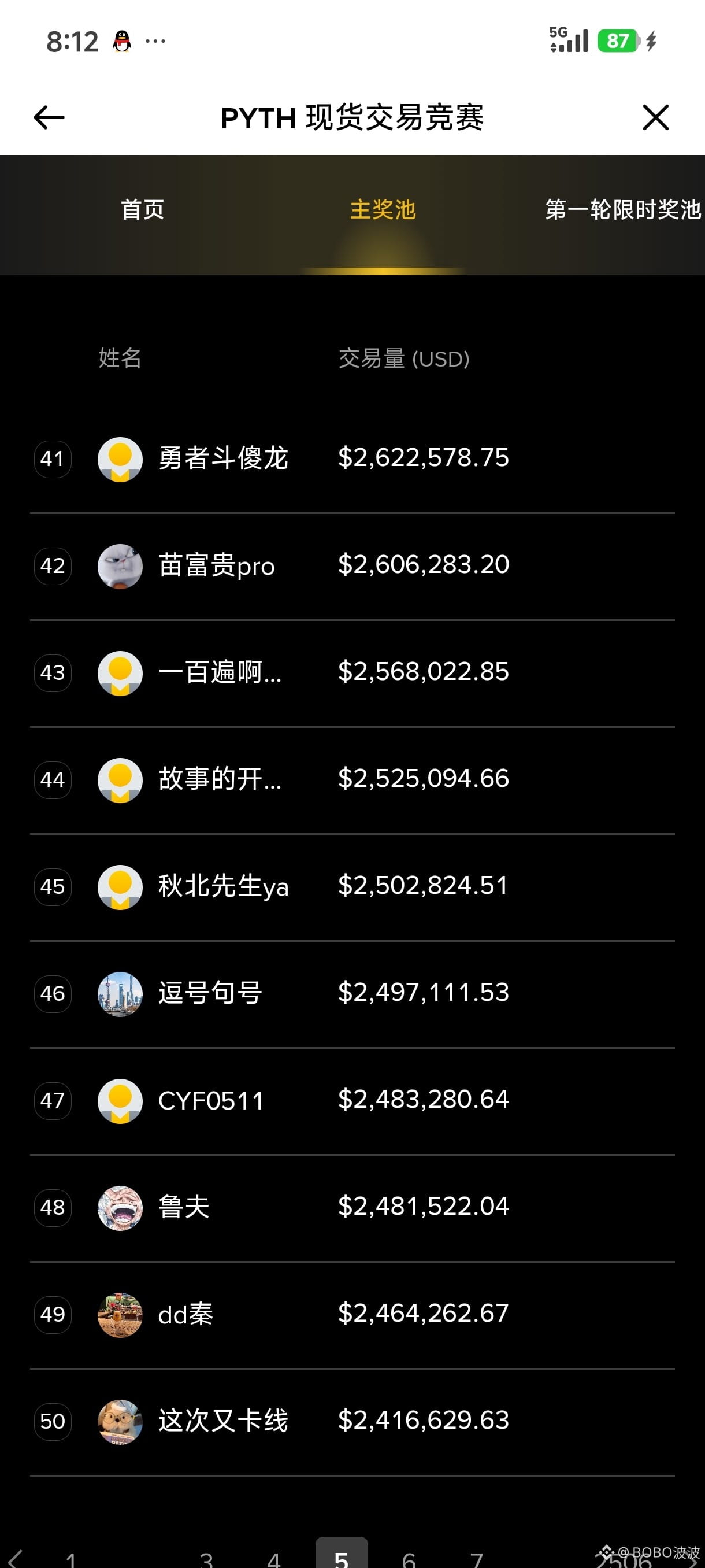
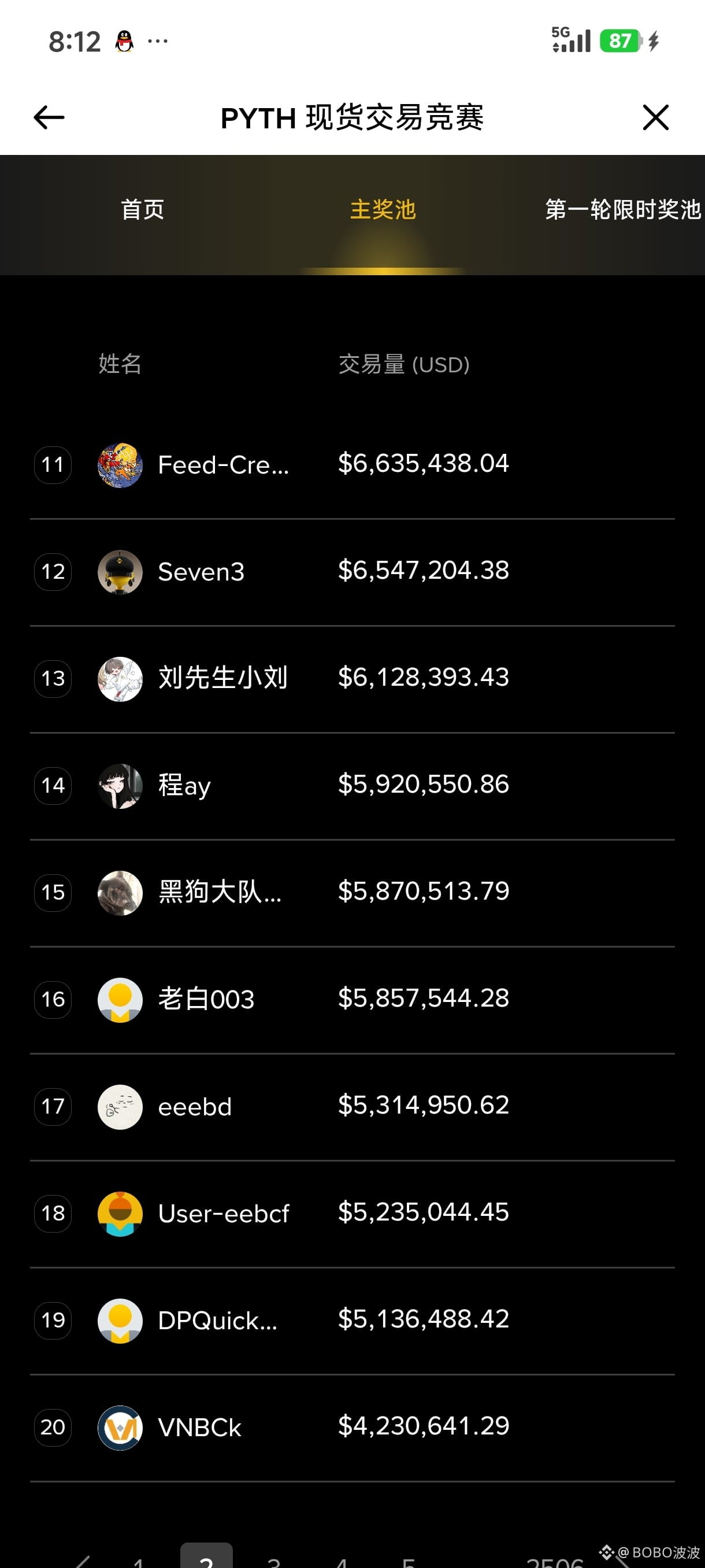
Yesterday’s $RE first 200 spot contest isn’t competitive. Today’s $PYTH first 200 is competitive. Now playing spot contests has become a psychological game. But it’s still the same as yesterday: the top 1,000 get into the top 1,000 as long as you fill the bonus. It’s slightly competitive, but compared to before, it’s much better.
Rankings & leaderboard 🔥
Rank 20: Reward 1,626 u, Trading volume: 4,230,641
Rank 50: Reward 813 u, Trading volume: 2,416,630
Rank 200: Reward 260 u, Trading volume: 440,528
Rank 1,000: Reward 43 u, Trading volume: 59,196
Rank 1,001 and after
For every 10,000 trading volume / Reward 6.35 u
Total trading volume: 76,840,063
Trading volume required to reach the cap: 61,472
#ALPHA $BTC
Yesterday’s $RE first 200 spot contest isn’t competitive. Today’s $PYTH first 200 is competitive. Now playing spot contests has become a psychological game. But it’s still the same as yesterday: the top 1,000 get into the top 1,000 as long as you fill the bonus. It’s slightly competitive, but compared to before, it’s much better.
Rankings & leaderboard 🔥
Rank 20: Reward 1,626 u, Trading volume: 4,230,641
Rank 50: Reward 813 u, Trading volume: 2,416,630
Rank 200: Reward 260 u, Trading volume: 440,528
Rank 1,000: Reward 43 u, Trading volume: 59,196
Rank 1,001 and after
For every 10,000 trading volume / Reward 6.35 u
Total trading volume: 76,840,063
Trading volume required to reach the cap: 61,472
#ALPHA $BTC
Rankings & leaderboard 🔥
Rank 20: Reward 1,626 u, Trading volume: 4,230,641
Rank 50: Reward 813 u, Trading volume: 2,416,630
Rank 200: Reward 260 u, Trading volume: 440,528
Rank 1,000: Reward 43 u, Trading volume: 59,196
Rank 1,001 and after
For every 10,000 trading volume / Reward 6.35 u
Total trading volume: 76,840,063
Trading volume required to reach the cap: 61,472
#ALPHA $BTC
7
867
·
--
When I researched the PoS chain, the things I cared about most were APY and the lock-up period. After studying Dusk’s Succinct Attestation and Proof-of-Blind Bid, I started to focus on a more practical question instead: once $DUSK has entered the Blind Bid state, what exact conditions must a user meet to actually get it back?
I originally thought participating in consensus is simply about staking and delegating. But after reading Dusk’s technical documentation, I realized this is really a state transition. Normally, a user locks #dusk into the Bid Contract, creates a bid containing the committed amount and a secretHash, inserts it into the Merkle Tree, and also includes two critical heights: h{eligibility} (when they can start participating in consensus) and h{expiration} (the expiration height). During the Generation phase, the network privately extracts the Generator via Proof-of-Blind Bid, so the bidder’s identity remains obfuscated. Meanwhile, the Provisioner deterministically gets selected into the committee, and during the Reduction and Agreement phases, it votes on candidate blocks in two rounds to reach statistical finality.
What really concerns me is that submitting a Bid does not mean you can exit at any time. The Bid Contract specifies that before h{expiration} is reached, users cannot initiate F^{WithdrawBid}. Dusk also separates roles: you can be a Generator (competing for the right to produce blocks through Blind Bid), or you can be a Provisioner (locking stake in the Stake Contract to take part in validation). If, as a Provisioner, you double-sign or act maliciously, anyone can call the Stake Contract’s F^{Slash} function to report you, and your stake will be partially slashed. In other words, participating in consensus is not a button—it’s a time window constrained by the protocol’s rules. Your @Dusk_Foundation is not only protecting the network before expiration, but also bearing the risk of penalties.
So in my view, what Dusk truly solves is: in PoS consensus, the transparency of leader election and the MEV problem. The protocol assembles these states using Blind Bid, deterministic committee selection, role separation, and statistical finality. The trade-off is also obvious: users are no longer just “staking DUSK to earn rewards,” but must understand the relationships among Bid, Stake, Generator, Provisioner, and Slashing.
What I will keep watching is not how simple the staking entry is, but whether ordinary users actually understand what they are waiting for when they participate in consensus.
When I researched the PoS chain, the things I cared about most were APY and the lock-up period. After studying Dusk’s Succinct Attestation and Proof-of-Blind Bid, I started to focus on a more practical question instead: once $DUSK has entered the Blind Bid state, what exact conditions must a user meet to actually get it back?
I originally thought participating in consensus is simply about staking and delegating. But after reading Dusk’s technical documentation, I realized this is really a state transition. Normally, a user locks #dusk into the Bid Contract, creates a bid containing the committed amount and a secretHash, inserts it into the Merkle Tree, and also includes two critical heights: h{eligibility} (when they can start participating in consensus) and h{expiration} (the expiration height). During the Generation phase, the network privately extracts the Generator via Proof-of-Blind Bid, so the bidder’s identity remains obfuscated. Meanwhile, the Provisioner deterministically gets selected into the committee, and during the Reduction and Agreement phases, it votes on candidate blocks in two rounds to reach statistical finality.
What really concerns me is that submitting a Bid does not mean you can exit at any time. The Bid Contract specifies that before h{expiration} is reached, users cannot initiate F^{WithdrawBid}. Dusk also separates roles: you can be a Generator (competing for the right to produce blocks through Blind Bid), or you can be a Provisioner (locking stake in the Stake Contract to take part in validation). If, as a Provisioner, you double-sign or act maliciously, anyone can call the Stake Contract’s F^{Slash} function to report you, and your stake will be partially slashed. In other words, participating in consensus is not a button—it’s a time window constrained by the protocol’s rules. Your @Dusk is not only protecting the network before expiration, but also bearing the risk of penalties.
So in my view, what Dusk truly solves is: in PoS consensus, the transparency of leader election and the MEV problem. The protocol assembles these states using Blind Bid, deterministic committee selection, role separation, and statistical finality. The trade-off is also obvious: users are no longer just “staking DUSK to earn rewards,” but must understand the relationships among Bid, Stake, Generator, Provisioner, and Slashing.
What I will keep watching is not how simple the staking entry is, but whether ordinary users actually understand what they are waiting for when they participate in consensus.
I originally thought participating in consensus is simply about staking and delegating. But after reading Dusk’s technical documentation, I realized this is really a state transition. Normally, a user locks #dusk into the Bid Contract, creates a bid containing the committed amount and a secretHash, inserts it into the Merkle Tree, and also includes two critical heights: h{eligibility} (when they can start participating in consensus) and h{expiration} (the expiration height). During the Generation phase, the network privately extracts the Generator via Proof-of-Blind Bid, so the bidder’s identity remains obfuscated. Meanwhile, the Provisioner deterministically gets selected into the committee, and during the Reduction and Agreement phases, it votes on candidate blocks in two rounds to reach statistical finality.
What really concerns me is that submitting a Bid does not mean you can exit at any time. The Bid Contract specifies that before h{expiration} is reached, users cannot initiate F^{WithdrawBid}. Dusk also separates roles: you can be a Generator (competing for the right to produce blocks through Blind Bid), or you can be a Provisioner (locking stake in the Stake Contract to take part in validation). If, as a Provisioner, you double-sign or act maliciously, anyone can call the Stake Contract’s F^{Slash} function to report you, and your stake will be partially slashed. In other words, participating in consensus is not a button—it’s a time window constrained by the protocol’s rules. Your @Dusk is not only protecting the network before expiration, but also bearing the risk of penalties.
So in my view, what Dusk truly solves is: in PoS consensus, the transparency of leader election and the MEV problem. The protocol assembles these states using Blind Bid, deterministic committee selection, role separation, and statistical finality. The trade-off is also obvious: users are no longer just “staking DUSK to earn rewards,” but must understand the relationships among Bid, Stake, Generator, Provisioner, and Slashing.
What I will keep watching is not how simple the staking entry is, but whether ordinary users actually understand what they are waiting for when they participate in consensus.
227
Log in to explore more content
Join global crypto users on Binance Square
⚡️ Get latest and useful information about crypto.
💬 Trusted by the world’s largest crypto exchange.
👍 Discover real insights from verified creators.
Email / Phone number