
汪掌柜
123 Posts

汪掌柜
Report
Block User
每日拆解宏观事件与突发新闻对币圈的影响,用数据说话,不喊单、不荐股,仅分享个人观察
32 Following
41 Followers
34 Liked
Posts
All
Quotes
·
--
The market has been trending upward in August, and Alpha hopes things will go better this month.🚂🐳🤟
As of now, the Babylon protocol has cumulatively locked over 56,000 BTC. Based on the current market price, the total locked value (TVL) has surpassed $5.6 billion, making it the largest native Bitcoin staking protocol by current scale. @babylonlabs_io
If you look at this number alone, it may not be easy to grasp its weight. A more intuitive reference is the circulating supply of wBTC across the entire network—currently about 150,000 BTC. This means that the amount of native BTC locked by a single Babylon protocol has already reached more than one-third of the total wBTC circulation. #baby
This comparison is fairly representative. Over the past few years, wBTC has been one of the primary ways for Bitcoin to enter the DeFi ecosystem. Users need to wrap BTC into ERC-20 assets to participate in applications such as lending, trading, and liquidity mining.🌹
Babylon, on the other hand, offers a native BTC staking solution that requires no cross-chain transfers, no custody, and no wrapping. In a relatively short time, it has attracted such a huge amount of capital to remain locked in the protocol. This suggests that the market’s demand for native Bitcoin yield scenarios is being released quickly, and it also reflects that more and more BTC holders are leaning toward reducing trust costs while keeping their assets’ native characteristics. @babylonlabs_io
However, the rapid growth of TVL does not necessarily mean the protocol’s value has already been fully realized. The locked amount is driven not only by fundamentals such as protocol design, ecosystem partnerships, and technological progress, but it may also be influenced by temporary airdrop incentives, market risk appetite, and capital-competition sentiment. $BABY
Therefore, when assessing Babylon’s long-term development potential, in addition to focusing on TVL, you should also comprehensively observe and validate key indicators such as the degree of decentralization in the validator network, the security mechanisms after BTC staking, the speed of ecosystem application rollouts, whether partner public links are integrated, and the actual sources of yield—rather than making an investment decision based solely on the locked amount.🎉
#baby $BABY
The market has been trending upward in August, and Alpha hopes things will go better this month.🚂🐳🤟
As of now, the Babylon protocol has cumulatively locked over 56,000 BTC. Based on the current market price, the total locked value (TVL) has surpassed $5.6 billion, making it the largest native Bitcoin staking protocol by current scale. @BabylonLabs_io
If you look at this number alone, it may not be easy to grasp its weight. A more intuitive reference is the circulating supply of wBTC across the entire network—currently about 150,000 BTC. This means that the amount of native BTC locked by a single Babylon protocol has already reached more than one-third of the total wBTC circulation. #baby
This comparison is fairly representative. Over the past few years, wBTC has been one of the primary ways for Bitcoin to enter the DeFi ecosystem. Users need to wrap BTC into ERC-20 assets to participate in applications such as lending, trading, and liquidity mining.🌹
Babylon, on the other hand, offers a native BTC staking solution that requires no cross-chain transfers, no custody, and no wrapping. In a relatively short time, it has attracted such a huge amount of capital to remain locked in the protocol. This suggests that the market’s demand for native Bitcoin yield scenarios is being released quickly, and it also reflects that more and more BTC holders are leaning toward reducing trust costs while keeping their assets’ native characteristics. @BabylonLabs_io
However, the rapid growth of TVL does not necessarily mean the protocol’s value has already been fully realized. The locked amount is driven not only by fundamentals such as protocol design, ecosystem partnerships, and technological progress, but it may also be influenced by temporary airdrop incentives, market risk appetite, and capital-competition sentiment. $BABY
Therefore, when assessing Babylon’s long-term development potential, in addition to focusing on TVL, you should also comprehensively observe and validate key indicators such as the degree of decentralization in the validator network, the security mechanisms after BTC staking, the speed of ecosystem application rollouts, whether partner public links are integrated, and the actual sources of yield—rather than making an investment decision based solely on the locked amount.🎉
#baby $BABY
As of now, the Babylon protocol has cumulatively locked over 56,000 BTC. Based on the current market price, the total locked value (TVL) has surpassed $5.6 billion, making it the largest native Bitcoin staking protocol by current scale. @BabylonLabs_io
If you look at this number alone, it may not be easy to grasp its weight. A more intuitive reference is the circulating supply of wBTC across the entire network—currently about 150,000 BTC. This means that the amount of native BTC locked by a single Babylon protocol has already reached more than one-third of the total wBTC circulation. #baby
This comparison is fairly representative. Over the past few years, wBTC has been one of the primary ways for Bitcoin to enter the DeFi ecosystem. Users need to wrap BTC into ERC-20 assets to participate in applications such as lending, trading, and liquidity mining.🌹
Babylon, on the other hand, offers a native BTC staking solution that requires no cross-chain transfers, no custody, and no wrapping. In a relatively short time, it has attracted such a huge amount of capital to remain locked in the protocol. This suggests that the market’s demand for native Bitcoin yield scenarios is being released quickly, and it also reflects that more and more BTC holders are leaning toward reducing trust costs while keeping their assets’ native characteristics. @BabylonLabs_io
However, the rapid growth of TVL does not necessarily mean the protocol’s value has already been fully realized. The locked amount is driven not only by fundamentals such as protocol design, ecosystem partnerships, and technological progress, but it may also be influenced by temporary airdrop incentives, market risk appetite, and capital-competition sentiment. $BABY
Therefore, when assessing Babylon’s long-term development potential, in addition to focusing on TVL, you should also comprehensively observe and validate key indicators such as the degree of decentralization in the validator network, the security mechanisms after BTC staking, the speed of ecosystem application rollouts, whether partner public links are integrated, and the actual sources of yield—rather than making an investment decision based solely on the locked amount.🎉
#baby $BABY

98
·
--
As of now, the amount of BTC locked by the Babylon protocol has exceeded 56,000 BTC. Converted at the current price, the total locked value is over $5.6 billion, making it the largest Bitcoin staking (custody) protocol by scale.
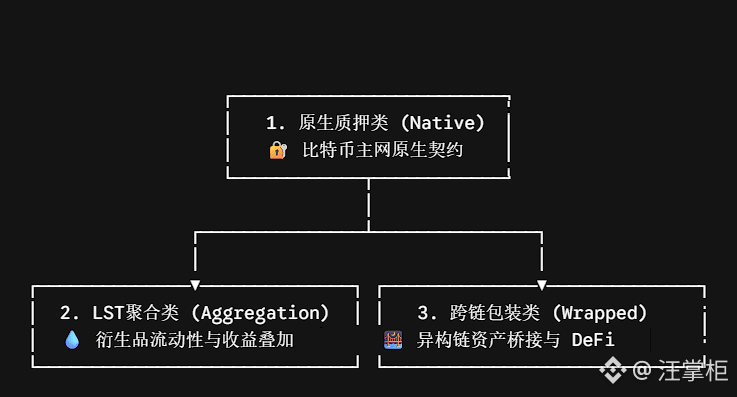
In 2026, the tokenization/financialization of Bitcoin has clearly heated up. Besides Babylon, there are multiple project paths in the market that offer BTC yield. Broadly, they can be grouped into several categories:
🎉 Native staking (e.g., Babylon): BTC always stays on the Bitcoin mainnet. Through cryptographic mechanisms, it provides security to other chains. This approach is the most trust-minimized, but it is relatively limited in functionality—mainly focused on "security as a service". @babylonlabs_io
🌹 LST aggregation: bundles various BTC yield strategies, issuing composable liquid staking tokens/receipts for greater flexibility. However, it typically introduces additional smart-contract and custody-layer risks.
Cross-chain wrapping: the oldest and most widely integrated ecosystem, but it requires trusting the wrapper/custodian. As a result, the degree of decentralization is relatively lower. #baby
Babylon’s differentiated advantage lies in a "first-principles" design—no asset wrapping, only security output. This is also one of the reasons it has maintained a far-leading TVL position in the native BTC staking track. $BABY
That said, it’s also important to note that native staking’s functional boundaries are relatively focused. Whether, in the future, it can expand capital efficiency by integrating with DeFi protocols such as Aave is a key variable in judging its long-term competitiveness.
#baby $BABY
As of now, the amount of BTC locked by the Babylon protocol has exceeded 56,000 BTC. Converted at the current price, the total locked value is over $5.6 billion, making it the largest Bitcoin staking (custody) protocol by scale.
In 2026, the tokenization/financialization of Bitcoin has clearly heated up. Besides Babylon, there are multiple project paths in the market that offer BTC yield. Broadly, they can be grouped into several categories:
🎉 Native staking (e.g., Babylon): BTC always stays on the Bitcoin mainnet. Through cryptographic mechanisms, it provides security to other chains. This approach is the most trust-minimized, but it is relatively limited in functionality—mainly focused on "security as a service". @BabylonLabs_io
🌹 LST aggregation: bundles various BTC yield strategies, issuing composable liquid staking tokens/receipts for greater flexibility. However, it typically introduces additional smart-contract and custody-layer risks.
Cross-chain wrapping: the oldest and most widely integrated ecosystem, but it requires trusting the wrapper/custodian. As a result, the degree of decentralization is relatively lower. #baby
Babylon’s differentiated advantage lies in a "first-principles" design—no asset wrapping, only security output. This is also one of the reasons it has maintained a far-leading TVL position in the native BTC staking track. $BABY
That said, it’s also important to note that native staking’s functional boundaries are relatively focused. Whether, in the future, it can expand capital efficiency by integrating with DeFi protocols such as Aave is a key variable in judging its long-term competitiveness.
#baby $BABY
In 2026, the tokenization/financialization of Bitcoin has clearly heated up. Besides Babylon, there are multiple project paths in the market that offer BTC yield. Broadly, they can be grouped into several categories:
🎉 Native staking (e.g., Babylon): BTC always stays on the Bitcoin mainnet. Through cryptographic mechanisms, it provides security to other chains. This approach is the most trust-minimized, but it is relatively limited in functionality—mainly focused on "security as a service". @BabylonLabs_io
🌹 LST aggregation: bundles various BTC yield strategies, issuing composable liquid staking tokens/receipts for greater flexibility. However, it typically introduces additional smart-contract and custody-layer risks.
Cross-chain wrapping: the oldest and most widely integrated ecosystem, but it requires trusting the wrapper/custodian. As a result, the degree of decentralization is relatively lower. #baby
Babylon’s differentiated advantage lies in a "first-principles" design—no asset wrapping, only security output. This is also one of the reasons it has maintained a far-leading TVL position in the native BTC staking track. $BABY
That said, it’s also important to note that native staking’s functional boundaries are relatively focused. Whether, in the future, it can expand capital efficiency by integrating with DeFi protocols such as Aave is a key variable in judging its long-term competitiveness.
#baby $BABY
1
17
·
--
Many tech enthusiasts often ask: “Since Ethereum can easily do Slashing penalties with smart contracts, but the Bitcoin mainnet doesn’t even have smart contracts—how does Babylon achieve Slashing on the BTC mainnet?” @babylonlabs_io
This is exactly Babylon’s team’s most hardcore, most astonishing technical innovation—truly impressive to both the academic and engineering communities!
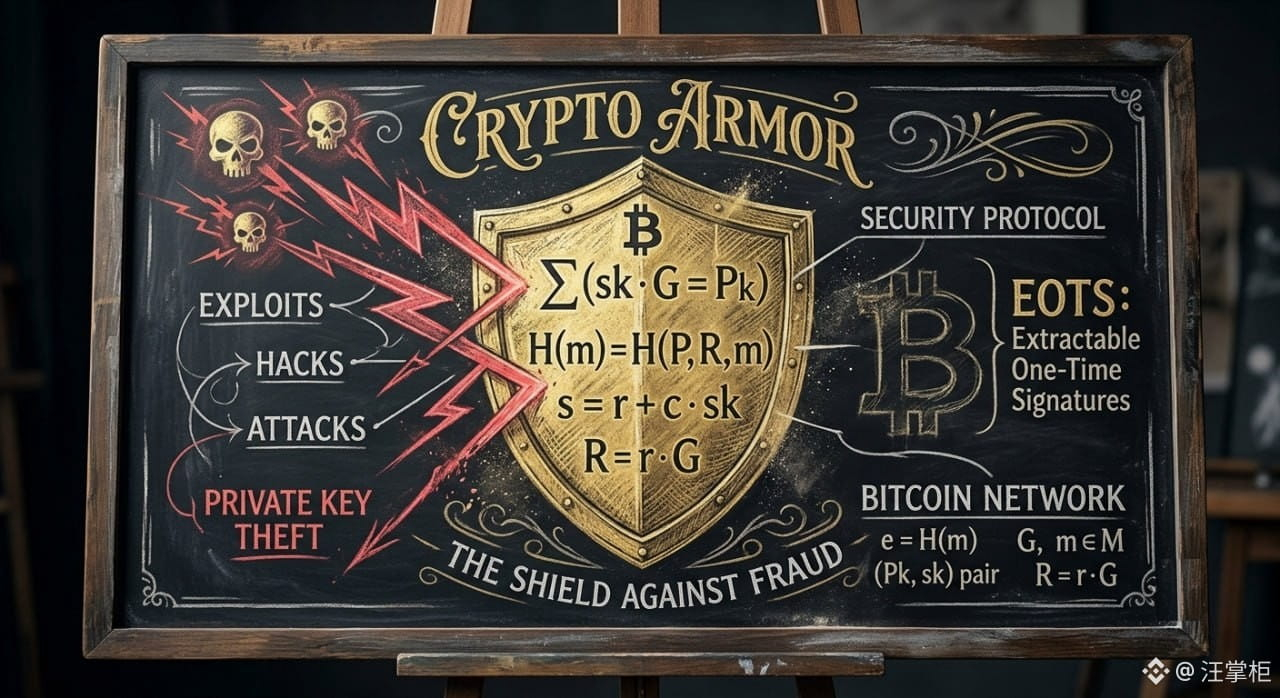
Traditional PoS chains rely on smart contracts to freeze and deduct malicious validators’ staked tokens on-chain. But Babylon ingeniously uses a cryptographic weapon—EOTS (Extractable One-Time Signature, a signature that can be extracted once). #baby
When a validator node is running a third-party PoS chain and submits block signatures, it must use an EOTS signature. If the node remains honest, the system operates normally; once the staking period expires, the BTC will be automatically unlocked and returned to stakers via a timelock. However, if the node attempts to misbehave (for example, signing two different blocks at the same block height for a double-spending attack), the EOTS cryptographic mechanism will instantly expose the node’s BTC private key at the mathematical level! $BABY
Once the private key is exposed, any network observer can use this leaked private key to send the staker’s UTXO funds on the Bitcoin mainnet to a burn address (a black hole address). The entire slashing process is driven purely by Bitcoin’s native scripting language—there is absolutely no need for the Bitcoin mainnet to support complex smart contracts!
This design—“using cryptographic constraints to govern behavior, and native scripts to carry out punishment”—both severely deters malicious actions and 100% protects honest stakers who operate within the rules. Do you think this mechanism, so aesthetically pleasing in its cryptographic elegance, can completely convince institutional whales to enter the market?
#baby $BABY
Many tech enthusiasts often ask: “Since Ethereum can easily do Slashing penalties with smart contracts, but the Bitcoin mainnet doesn’t even have smart contracts—how does Babylon achieve Slashing on the BTC mainnet?” @BabylonLabs_io
This is exactly Babylon’s team’s most hardcore, most astonishing technical innovation—truly impressive to both the academic and engineering communities!
Traditional PoS chains rely on smart contracts to freeze and deduct malicious validators’ staked tokens on-chain. But Babylon ingeniously uses a cryptographic weapon—EOTS (Extractable One-Time Signature, a signature that can be extracted once). #baby
When a validator node is running a third-party PoS chain and submits block signatures, it must use an EOTS signature. If the node remains honest, the system operates normally; once the staking period expires, the BTC will be automatically unlocked and returned to stakers via a timelock. However, if the node attempts to misbehave (for example, signing two different blocks at the same block height for a double-spending attack), the EOTS cryptographic mechanism will instantly expose the node’s BTC private key at the mathematical level! $BABY
Once the private key is exposed, any network observer can use this leaked private key to send the staker’s UTXO funds on the Bitcoin mainnet to a burn address (a black hole address). The entire slashing process is driven purely by Bitcoin’s native scripting language—there is absolutely no need for the Bitcoin mainnet to support complex smart contracts!
This design—“using cryptographic constraints to govern behavior, and native scripts to carry out punishment”—both severely deters malicious actions and 100% protects honest stakers who operate within the rules. Do you think this mechanism, so aesthetically pleasing in its cryptographic elegance, can completely convince institutional whales to enter the market?
#baby $BABY
This is exactly Babylon’s team’s most hardcore, most astonishing technical innovation—truly impressive to both the academic and engineering communities!
Traditional PoS chains rely on smart contracts to freeze and deduct malicious validators’ staked tokens on-chain. But Babylon ingeniously uses a cryptographic weapon—EOTS (Extractable One-Time Signature, a signature that can be extracted once). #baby
When a validator node is running a third-party PoS chain and submits block signatures, it must use an EOTS signature. If the node remains honest, the system operates normally; once the staking period expires, the BTC will be automatically unlocked and returned to stakers via a timelock. However, if the node attempts to misbehave (for example, signing two different blocks at the same block height for a double-spending attack), the EOTS cryptographic mechanism will instantly expose the node’s BTC private key at the mathematical level! $BABY
Once the private key is exposed, any network observer can use this leaked private key to send the staker’s UTXO funds on the Bitcoin mainnet to a burn address (a black hole address). The entire slashing process is driven purely by Bitcoin’s native scripting language—there is absolutely no need for the Bitcoin mainnet to support complex smart contracts!
This design—“using cryptographic constraints to govern behavior, and native scripts to carry out punishment”—both severely deters malicious actions and 100% protects honest stakers who operate within the rules. Do you think this mechanism, so aesthetically pleasing in its cryptographic elegance, can completely convince institutional whales to enter the market?
#baby $BABY
1
118
·
--

Article
Read “Situational Awareness: The Next Ten Years”In July 2026, Leopold Aschenbrenner—the 24-year-old whom Silicon Valley and Wall Street had once hailed as an “AI prophet”—brought a temporary end to the chapter of his myth by suffering a 67% loss in a single month, forcing himself to liquidate roughly $16 billion in public-market holdings.
This genius young man, born in 2001, entered Columbia University at the age of 15 and graduated at 19 as the top student in the entire class, earning three degrees in mathematics, statistics, and economics. He was once a core member of OpenAI’s Superalignment team; after being fired for a security memo, he turned around and founded a hedge fund, growing the managed scale to over $20 billion within two years.
Read “Situational Awareness: The Next Ten Years”
In July 2026, Leopold Aschenbrenner—the 24-year-old whom Silicon Valley and Wall Street had once hailed as an “AI prophet”—brought a temporary end to the chapter of his myth by suffering a 67% loss in a single month, forcing himself to liquidate roughly $16 billion in public-market holdings.
This genius young man, born in 2001, entered Columbia University at the age of 15 and graduated at 19 as the top student in the entire class, earning three degrees in mathematics, statistics, and economics. He was once a core member of OpenAI’s Superalignment team; after being fired for a security memo, he turned around and founded a hedge fund, growing the managed scale to over $20 billion within two years.
This genius young man, born in 2001, entered Columbia University at the age of 15 and graduated at 19 as the top student in the entire class, earning three degrees in mathematics, statistics, and economics. He was once a core member of OpenAI’s Superalignment team; after being fired for a security memo, he turned around and founded a hedge fund, growing the managed scale to over $20 billion within two years.
120
·
--
August 1st Army Day—wishing all the soldier brothers a happy holiday!
Alpha’s new month is here. In July, we didn’t lose money and gained 2U; in August, we’ll give it another try—if it doesn’t work out, we’ll give up in September.
Since BABY launched on the autonomous online platform, it has listed on multiple major exchanges. Binance is one of the important trading and ecosystem-anchoring platforms among them.
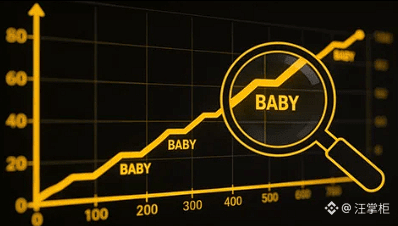
Judging by community activity, Babylon once topped CoinGecko’s hot search list. Within a week, both search volume and social discussion volume increased noticeably. This kind of “hot-search” level attention is often accompanied by an amplified degree of price volatility in a particular phase. #BABY
For users following BABY, besides checking the trading pair’s price and volume, it’s even more worth paying attention to ecosystem-side moves such as activities on Binance Square and the project ranking list—such as this Chinese-language ranking activity. In essence, the project team expands awareness and user participation through content incentives. $BABY
This content + rewards combination is a common promotion path many emerging protocols take after building their core mechanisms, when entering the ecosystem cold-start phase.@babylonlabs_io
View the hype rationally: a short-term surge in search volume and discussion volume doesn’t necessarily mean a fundamental change, but it is indeed one of the reference signals for determining what stage a project’s “attention cycle” is in.
August 1st Army Day—wishing all the soldier brothers a happy holiday!
Alpha’s new month is here. In July, we didn’t lose money and gained 2U; in August, we’ll give it another try—if it doesn’t work out, we’ll give up in September.
Since BABY launched on the autonomous online platform, it has listed on multiple major exchanges. Binance is one of the important trading and ecosystem-anchoring platforms among them.
Judging by community activity, Babylon once topped CoinGecko’s hot search list. Within a week, both search volume and social discussion volume increased noticeably. This kind of “hot-search” level attention is often accompanied by an amplified degree of price volatility in a particular phase. #BABY
For users following BABY, besides checking the trading pair’s price and volume, it’s even more worth paying attention to ecosystem-side moves such as activities on Binance Square and the project ranking list—such as this Chinese-language ranking activity. In essence, the project team expands awareness and user participation through content incentives. $BABY
This content + rewards combination is a common promotion path many emerging protocols take after building their core mechanisms, when entering the ecosystem cold-start phase.@BabylonLabs_io
View the hype rationally: a short-term surge in search volume and discussion volume doesn’t necessarily mean a fundamental change, but it is indeed one of the reference signals for determining what stage a project’s “attention cycle” is in.
Alpha’s new month is here. In July, we didn’t lose money and gained 2U; in August, we’ll give it another try—if it doesn’t work out, we’ll give up in September.
Since BABY launched on the autonomous online platform, it has listed on multiple major exchanges. Binance is one of the important trading and ecosystem-anchoring platforms among them.
Judging by community activity, Babylon once topped CoinGecko’s hot search list. Within a week, both search volume and social discussion volume increased noticeably. This kind of “hot-search” level attention is often accompanied by an amplified degree of price volatility in a particular phase. #BABY
For users following BABY, besides checking the trading pair’s price and volume, it’s even more worth paying attention to ecosystem-side moves such as activities on Binance Square and the project ranking list—such as this Chinese-language ranking activity. In essence, the project team expands awareness and user participation through content incentives. $BABY
This content + rewards combination is a common promotion path many emerging protocols take after building their core mechanisms, when entering the ecosystem cold-start phase.@BabylonLabs_io
View the hype rationally: a short-term surge in search volume and discussion volume doesn’t necessarily mean a fundamental change, but it is indeed one of the reference signals for determining what stage a project’s “attention cycle” is in.
108
·
--
What the master said: Buying isn’t rushed, selling isn’t greedy, stop-loss isn’t delayed, and positions aren’t scattered. Never fully invest all at once—go with the trend.
What the master said: Buying isn’t rushed, selling isn’t greedy, stop-loss isn’t delayed, and positions aren’t scattered. Never fully invest all at once—go with the trend.


五味子
·
--
A bit hopeless, huh—the crypto world isn’t being played anymore.
Everyone’s gone to trade US stocks.
Actually, that makes sense—only the Nasdaq is the world’s biggest reservoir.
These days, a few big “copy-trading” bosses have suddenly appeared on the scene, constantly praising themselves.
It’s got me itching to watch, so I clenched my teeth and, in pain, simulated a follow with 10,000 U.
In life’s losses, you’re either arrogant or lazy.
Whenever someone makes a big show of things, usually there’s no good outcome.
Think back to the so-called great ones—Doctor George, Yü Yu, the liquidation nightmare, Star Chen—who of them made it to the end? They all ended up in failure, sinking into the sea.
You’re all that. You have your 25-year-old Oliver Pot. Is your trading “operational situational awareness fund” really that crazy?
A genius AI madman, running a $45 billion fund—just in less than a month—straight-up got liquidated.
He used 4x leverage, went heavily long on AI hardware (storage, compute chips), while shorting traditional software stocks at the same time.
The AI compute sector kept falling, and the software stocks he shorted went up against the trend—losing on both sides—and the broker kept demanding additional margin.
On July 30, 2026, he was forced to sell his entire publicly held stock portfolio (about $16 billion in positions) at a discount to Castle Fund as a whole.
This round—SNDK, crashing hard—should be the Wall Street big sharks jointly setting him up.
But in this market, there are only big weeds and small weeds.
Whether you have a lot of money or a little isn’t the most important thing, and it has nothing to do with technical ability.
The most badass AI person, Oliver Pot—wouldn’t he use AI to predict?
But still, AI can’t escape human nature.
In the end, trading is a game of human nature.
Recently I saw a passage written by the former Baby that’s incredibly well-known. There are countless trading models, but there are only a few key principles.
Basically, it’s what the master taught: buy without rushing, sell without greed, cut losses without dragging, don’t spread across too many instruments—never be fully loaded. Trade with the trend.
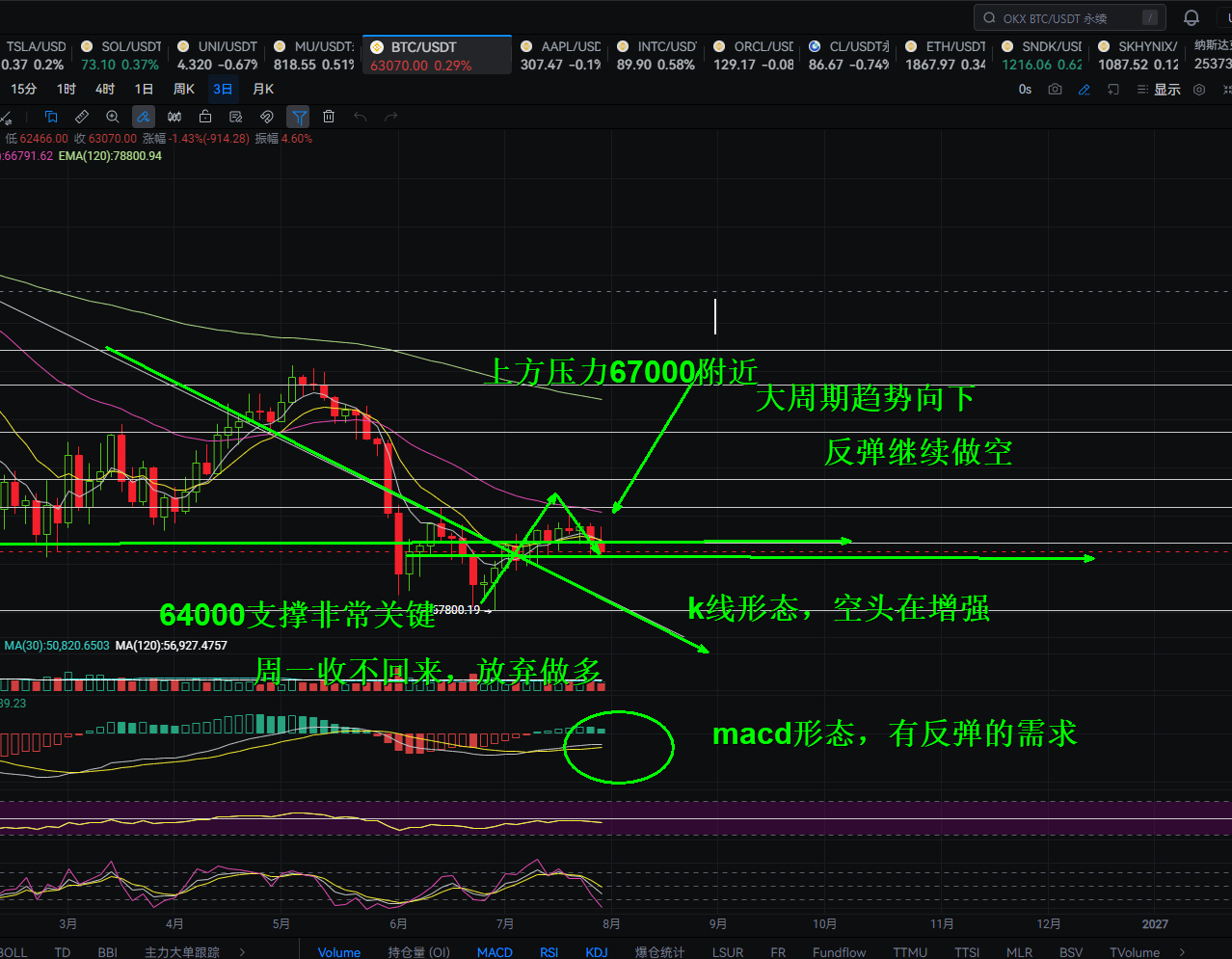
Right now, based on the daily chart structure: when BTC breaks below 64,000, it’s actually not good. But it’s still within the box/range around 62,000, trading sideways.
As long as it doesn’t break down effectively, there’s a chance to rebound.
You can go long on the pullback—just set your stop loss properly.
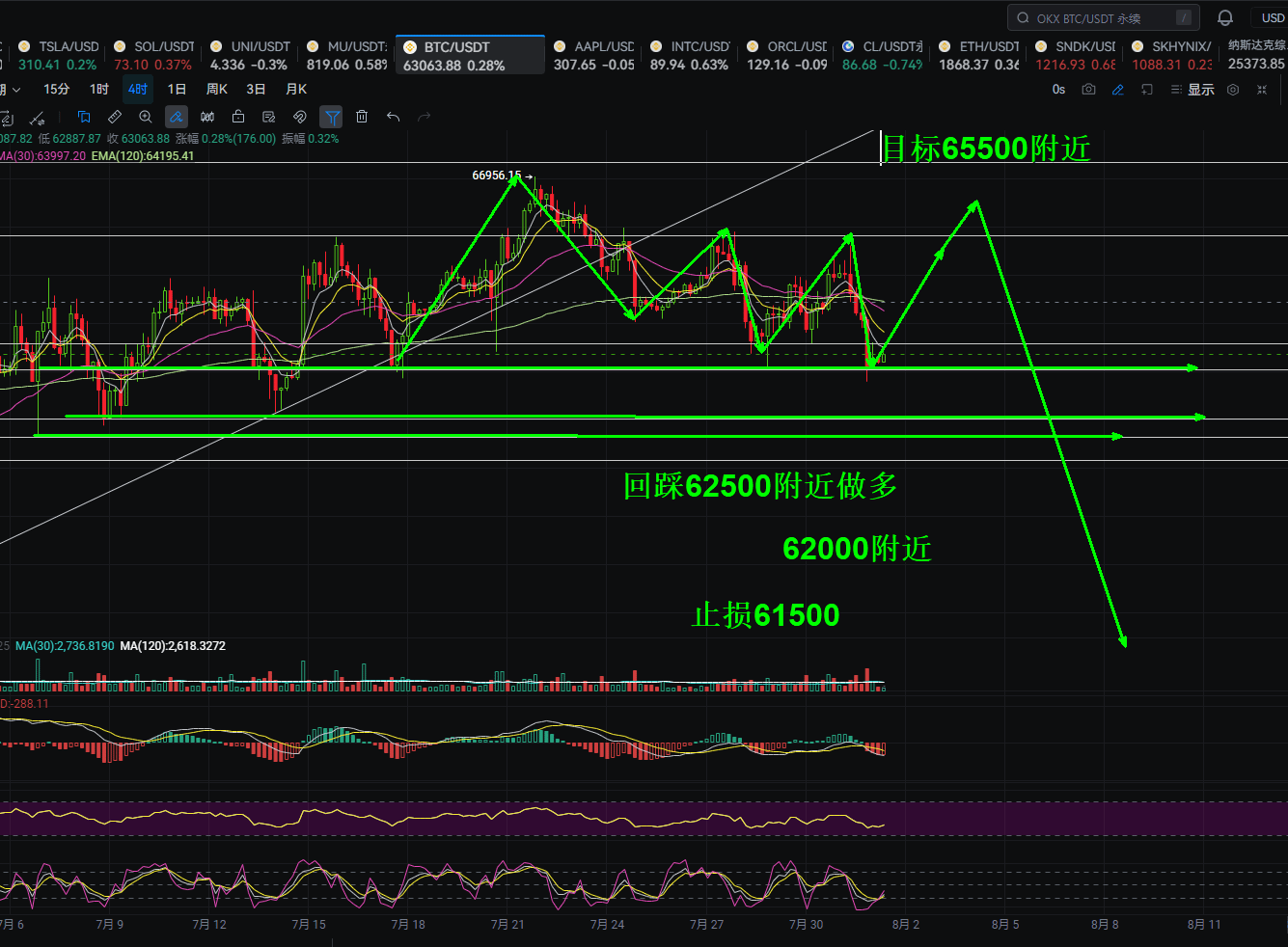
On the 4-hour timeframe: go long on the pullback at 62,500, add more at 62,000, stop loss at 61,500, and target around 65,500.
On the 3-day chart structure: a bearish setup, with the larger-cycle trend moving downward. If it rebounds, keep shorting. If next week it can’t reclaim 64,000, then give up on going long.
After all these years, I think the former Baby’s cognition has always been ahead of the curve.
No wonder back then I went all-in, without hesitation, to be a simp.
Life—everything in life—is experience and reincarnation. $BTC
Everyone’s gone to trade US stocks.
Actually, that makes sense—only the Nasdaq is the world’s biggest reservoir.
These days, a few big “copy-trading” bosses have suddenly appeared on the scene, constantly praising themselves.
It’s got me itching to watch, so I clenched my teeth and, in pain, simulated a follow with 10,000 U.
In life’s losses, you’re either arrogant or lazy.
Whenever someone makes a big show of things, usually there’s no good outcome.
Think back to the so-called great ones—Doctor George, Yü Yu, the liquidation nightmare, Star Chen—who of them made it to the end? They all ended up in failure, sinking into the sea.
You’re all that. You have your 25-year-old Oliver Pot. Is your trading “operational situational awareness fund” really that crazy?
A genius AI madman, running a $45 billion fund—just in less than a month—straight-up got liquidated.
He used 4x leverage, went heavily long on AI hardware (storage, compute chips), while shorting traditional software stocks at the same time.
The AI compute sector kept falling, and the software stocks he shorted went up against the trend—losing on both sides—and the broker kept demanding additional margin.
On July 30, 2026, he was forced to sell his entire publicly held stock portfolio (about $16 billion in positions) at a discount to Castle Fund as a whole.
This round—SNDK, crashing hard—should be the Wall Street big sharks jointly setting him up.
But in this market, there are only big weeds and small weeds.
Whether you have a lot of money or a little isn’t the most important thing, and it has nothing to do with technical ability.
The most badass AI person, Oliver Pot—wouldn’t he use AI to predict?
But still, AI can’t escape human nature.
In the end, trading is a game of human nature.
Recently I saw a passage written by the former Baby that’s incredibly well-known. There are countless trading models, but there are only a few key principles.
Basically, it’s what the master taught: buy without rushing, sell without greed, cut losses without dragging, don’t spread across too many instruments—never be fully loaded. Trade with the trend.
Right now, based on the daily chart structure: when BTC breaks below 64,000, it’s actually not good. But it’s still within the box/range around 62,000, trading sideways.
As long as it doesn’t break down effectively, there’s a chance to rebound.
You can go long on the pullback—just set your stop loss properly.
On the 4-hour timeframe: go long on the pullback at 62,500, add more at 62,000, stop loss at 61,500, and target around 65,500.
On the 3-day chart structure: a bearish setup, with the larger-cycle trend moving downward. If it rebounds, keep shorting. If next week it can’t reclaim 64,000, then give up on going long.
After all these years, I think the former Baby’s cognition has always been ahead of the curve.
No wonder back then I went all-in, without hesitation, to be a simp.
Life—everything in life—is experience and reincarnation. $BTC

86
·
--
Alpha’s last day delivered 32U, and by calculating for July, the profit came to 2U.
This is really hard to deal with. I’m planning to go long on BTC. As the global Bitcoin spot ETF market continues to expand, more and more traditional institutional investors are starting to hold direct BTC exposure.@babylonlabs_io
A practical question that comes with this is: for these huge amounts of BTC that are “just sitting there,” is there a way to generate additional returns while staying compliant and keeping risk low? #baby
That’s exactly the scenario Babylon is trying to enter— it doesn’t require institutions to transfer their BTC to a centralized custodian. In theory, it’s easier to match institutional compliance needs of “self-custody of assets, risk under control.”$BABY
If, in the future, more institution-oriented productized offerings (for example, compliant staking services provided by custodians) emerge, native staking protocols like Babylon could become a bridge between “the massive BTC that has accumulated in ETFs” and “on-chain yield opportunities.”@babylonlabs_io
It’s important to emphasize that this is still a judgment at the level of narrative and expectation. There is currently no public data supporting that large-scale institutional capital has participated in staking through Babylon. Actual progress needs to be continuously monitored alongside multiple variables, such as the regulatory stance and the maturity of custody solutions.
#baby $BABY
Alpha’s last day delivered 32U, and by calculating for July, the profit came to 2U.
This is really hard to deal with. I’m planning to go long on BTC. As the global Bitcoin spot ETF market continues to expand, more and more traditional institutional investors are starting to hold direct BTC exposure.@BabylonLabs_io
A practical question that comes with this is: for these huge amounts of BTC that are “just sitting there,” is there a way to generate additional returns while staying compliant and keeping risk low? #baby
That’s exactly the scenario Babylon is trying to enter— it doesn’t require institutions to transfer their BTC to a centralized custodian. In theory, it’s easier to match institutional compliance needs of “self-custody of assets, risk under control.”$BABY
If, in the future, more institution-oriented productized offerings (for example, compliant staking services provided by custodians) emerge, native staking protocols like Babylon could become a bridge between “the massive BTC that has accumulated in ETFs” and “on-chain yield opportunities.”@BabylonLabs_io
It’s important to emphasize that this is still a judgment at the level of narrative and expectation. There is currently no public data supporting that large-scale institutional capital has participated in staking through Babylon. Actual progress needs to be continuously monitored alongside multiple variables, such as the regulatory stance and the maturity of custody solutions.
#baby $BABY
This is really hard to deal with. I’m planning to go long on BTC. As the global Bitcoin spot ETF market continues to expand, more and more traditional institutional investors are starting to hold direct BTC exposure.@BabylonLabs_io
A practical question that comes with this is: for these huge amounts of BTC that are “just sitting there,” is there a way to generate additional returns while staying compliant and keeping risk low? #baby
That’s exactly the scenario Babylon is trying to enter— it doesn’t require institutions to transfer their BTC to a centralized custodian. In theory, it’s easier to match institutional compliance needs of “self-custody of assets, risk under control.”$BABY
If, in the future, more institution-oriented productized offerings (for example, compliant staking services provided by custodians) emerge, native staking protocols like Babylon could become a bridge between “the massive BTC that has accumulated in ETFs” and “on-chain yield opportunities.”@BabylonLabs_io
It’s important to emphasize that this is still a judgment at the level of narrative and expectation. There is currently no public data supporting that large-scale institutional capital has participated in staking through Babylon. Actual progress needs to be continuously monitored alongside multiple variables, such as the regulatory stance and the maturity of custody solutions.
#baby $BABY

130
·
--
In 2026, the BTCFi (Bitcoin financialization) track is heating up noticeably. Besides Babylon, there are multiple project paths in the market that offer BTC yield, which can be roughly divided into a few categories:
First, native staking (e.g., Babylon): BTC always remains on the Bitcoin mainchain, and other chains are given security through cryptographic mechanisms. The main characteristic is the highest level of trustlessness, but the functionality is relatively single-purpose, focusing mainly on "security-as-a-service"@babylonlabs_io
Second, LST aggregation: package multiple BTC yield strategies, issue composable liquid staking tokens, and offer higher flexibility—yet they usually introduce additional smart-contract and custody-layer risks. @babylonlabs_io
Third, cross-chain wrappers (e.g., the traditional wBTC path): the oldest history and the widest ecosystem integration, but it requires trusting the wrapper/custodian, resulting in a relatively lower degree of decentralization. $BABY
Babylon’s differentiated advantage lies in a "first-principles" design—no asset wrapping, only security output. This is also one of the reasons it has been able to keep its TVL far ahead in the native BTC staking track. #baby
However, it’s also important to recognize that the functional boundaries of native staking are relatively focused. Whether it can further expand capital efficiency through DeFi protocol integrations such as Aave is a key variable in judging its long-term competitiveness.
#baby $BABY
In 2026, the BTCFi (Bitcoin financialization) track is heating up noticeably. Besides Babylon, there are multiple project paths in the market that offer BTC yield, which can be roughly divided into a few categories:
First, native staking (e.g., Babylon): BTC always remains on the Bitcoin mainchain, and other chains are given security through cryptographic mechanisms. The main characteristic is the highest level of trustlessness, but the functionality is relatively single-purpose, focusing mainly on "security-as-a-service"@BabylonLabs_io
Second, LST aggregation: package multiple BTC yield strategies, issue composable liquid staking tokens, and offer higher flexibility—yet they usually introduce additional smart-contract and custody-layer risks. @BabylonLabs_io
Third, cross-chain wrappers (e.g., the traditional wBTC path): the oldest history and the widest ecosystem integration, but it requires trusting the wrapper/custodian, resulting in a relatively lower degree of decentralization. $BABY
Babylon’s differentiated advantage lies in a "first-principles" design—no asset wrapping, only security output. This is also one of the reasons it has been able to keep its TVL far ahead in the native BTC staking track. #baby
However, it’s also important to recognize that the functional boundaries of native staking are relatively focused. Whether it can further expand capital efficiency through DeFi protocol integrations such as Aave is a key variable in judging its long-term competitiveness.
#baby $BABY
First, native staking (e.g., Babylon): BTC always remains on the Bitcoin mainchain, and other chains are given security through cryptographic mechanisms. The main characteristic is the highest level of trustlessness, but the functionality is relatively single-purpose, focusing mainly on "security-as-a-service"@BabylonLabs_io
Second, LST aggregation: package multiple BTC yield strategies, issue composable liquid staking tokens, and offer higher flexibility—yet they usually introduce additional smart-contract and custody-layer risks. @BabylonLabs_io
Third, cross-chain wrappers (e.g., the traditional wBTC path): the oldest history and the widest ecosystem integration, but it requires trusting the wrapper/custodian, resulting in a relatively lower degree of decentralization. $BABY
Babylon’s differentiated advantage lies in a "first-principles" design—no asset wrapping, only security output. This is also one of the reasons it has been able to keep its TVL far ahead in the native BTC staking track. #baby
However, it’s also important to recognize that the functional boundaries of native staking are relatively focused. Whether it can further expand capital efficiency through DeFi protocol integrations such as Aave is a key variable in judging its long-term competitiveness.
#baby $BABY

2
116
·
--
Brothers, are you all making money with ALPHA in July? Brothers, say it from the heart—aren’t you just pure working for wages?
BABY has been drifting down all the way after spiking up on its opening these past couple of days. In the group chat, people went from “ecosystem leader” to “cutting the weeds,” and it was only two days apart.
But honestly, even though it’s been falling, I’ve gone through Babylon’s whitepaper again these past two days, and I think this project needs to be looked at long-term.
When everyone brings up BABY, the first reaction is “BTC staking to earn yield.” I think that understanding is a bit shallow. @babylonlabs_io
What Babylon truly wants to do is to turn BTC from an asset that just sits there into one that can work. Right now, the BTC in circulation is close to 20 million, but the proportion actually participating in on-chain finance is pitifully low—most of it is just lying there sleeping.
In the past, when BTC wanted to “do things,” it basically relied on cross-chain wrapping—like converting into WBTC to go onto Ethereum. But after doing that, the most valuable part of BTC—its security—gets diluted. More custodians, more cross-chain bridges, and thus more risk.
Babylon’s approach is the opposite: don’t move BTC itself. Instead, let BTC—through staking—provide security guarantees for other PoS chains. Users get the incentives, and BABY is the coordination and governance token within this mechanism.
The chain looks like this: BTC holders stake to earn yield → PoS chains get stronger security → more of the ecosystem is willing to integrate → BABY and BTC demand move in sync.
Of course, the biggest question right now isn’t whether the technology can run, but how much BTC on the demand side is willing to be locked up long-term. That remains to be proven over time.
Short-term sideways/downward drift is the market; the long-term logic is the narrative—they’re not the same. I think we can let it dip a bit more and add some more to the position.
#baby $BABY
Brothers, are you all making money with ALPHA in July? Brothers, say it from the heart—aren’t you just pure working for wages?
BABY has been drifting down all the way after spiking up on its opening these past couple of days. In the group chat, people went from “ecosystem leader” to “cutting the weeds,” and it was only two days apart.
But honestly, even though it’s been falling, I’ve gone through Babylon’s whitepaper again these past two days, and I think this project needs to be looked at long-term.
When everyone brings up BABY, the first reaction is “BTC staking to earn yield.” I think that understanding is a bit shallow. @BabylonLabs_io
What Babylon truly wants to do is to turn BTC from an asset that just sits there into one that can work. Right now, the BTC in circulation is close to 20 million, but the proportion actually participating in on-chain finance is pitifully low—most of it is just lying there sleeping.
In the past, when BTC wanted to “do things,” it basically relied on cross-chain wrapping—like converting into WBTC to go onto Ethereum. But after doing that, the most valuable part of BTC—its security—gets diluted. More custodians, more cross-chain bridges, and thus more risk.
Babylon’s approach is the opposite: don’t move BTC itself. Instead, let BTC—through staking—provide security guarantees for other PoS chains. Users get the incentives, and BABY is the coordination and governance token within this mechanism.
The chain looks like this: BTC holders stake to earn yield → PoS chains get stronger security → more of the ecosystem is willing to integrate → BABY and BTC demand move in sync.
Of course, the biggest question right now isn’t whether the technology can run, but how much BTC on the demand side is willing to be locked up long-term. That remains to be proven over time.
Short-term sideways/downward drift is the market; the long-term logic is the narrative—they’re not the same. I think we can let it dip a bit more and add some more to the position.
#baby $BABY
BABY has been drifting down all the way after spiking up on its opening these past couple of days. In the group chat, people went from “ecosystem leader” to “cutting the weeds,” and it was only two days apart.
But honestly, even though it’s been falling, I’ve gone through Babylon’s whitepaper again these past two days, and I think this project needs to be looked at long-term.
When everyone brings up BABY, the first reaction is “BTC staking to earn yield.” I think that understanding is a bit shallow. @BabylonLabs_io
What Babylon truly wants to do is to turn BTC from an asset that just sits there into one that can work. Right now, the BTC in circulation is close to 20 million, but the proportion actually participating in on-chain finance is pitifully low—most of it is just lying there sleeping.
In the past, when BTC wanted to “do things,” it basically relied on cross-chain wrapping—like converting into WBTC to go onto Ethereum. But after doing that, the most valuable part of BTC—its security—gets diluted. More custodians, more cross-chain bridges, and thus more risk.
Babylon’s approach is the opposite: don’t move BTC itself. Instead, let BTC—through staking—provide security guarantees for other PoS chains. Users get the incentives, and BABY is the coordination and governance token within this mechanism.
The chain looks like this: BTC holders stake to earn yield → PoS chains get stronger security → more of the ecosystem is willing to integrate → BABY and BTC demand move in sync.
Of course, the biggest question right now isn’t whether the technology can run, but how much BTC on the demand side is willing to be locked up long-term. That remains to be proven over time.
Short-term sideways/downward drift is the market; the long-term logic is the narrative—they’re not the same. I think we can let it dip a bit more and add some more to the position.
#baby $BABY

120
·
--
$ZAMA I need to control my own hands. This person can flip a whole batch away at any moment to push the stock price—there’s nowhere to even cry.
$ZAMA I need to control my own hands. This person can flip a whole batch away at any moment to push the stock price—there’s nowhere to even cry.
103
·
--
These past two days, my ALPHA points integration hasn’t met expectations. 271 points has just been sitting there for half a month because I haven’t been able to get any. I’ve been刷ALPHA (posting ALPHA) and paying the fees—it’s something I truly wouldn’t have dared to imagine this time last year.
Recently I went back through the technical docs from @BabylonLabs_io again, and I found that a lot of people’s understanding is still stuck at the level of “Can BTC earn yield?”
But I think that question is aimed in the wrong direction.
What Babylon is really doing isn’t to find a way for BTC to be a retirement/investment product. It’s answering a deeper, more fundamental question: for an asset like Bitcoin—something you can only hold, but can’t actively participate with—can it be turned into safe capital that can be directly called upon? $BABY
In the past, if $BTC wanted to participate in building security on other chains, it would either be bridged into wBTC, or handed over to a custodian—essentially exchanging trust for functionality. Babylon’s approach is the opposite: it doesn’t move BTC itself. By leveraging Bitcoin’s own scripting capabilities and time-lock mechanism, BTC is “stake-locked in place” within its own network to provide security guarantees for external PoS chains. #baby
Here’s an easy-to-overlook detail: in Babylon, there are actually two parallel security logics. One is maintained by BABY stakers, supporting the operation of Babylon’s own network; the other is provided by BTC stakers, exporting economic security to external PoS chains. The intended beneficiaries are completely different, so you can’t simply mix them up.
If this mechanism really can run at scale, it would mean that new public chains no longer need to burn massive budgets by wildly issuing tokens just to buy security—they can directly borrow BTC’s credibility.
So going back to the original question: how far BABY can go likely won’t depend on short-term token price, but on whether more and more chains are willing to pay for the ability to “borrow BTC’s security.”
#baby $BABY
Personal observation only—does not constitute investment advice.
These past two days, my ALPHA points integration hasn’t met expectations. 271 points has just been sitting there for half a month because I haven’t been able to get any. I’ve been刷ALPHA (posting ALPHA) and paying the fees—it’s something I truly wouldn’t have dared to imagine this time last year.
Recently I went back through the technical docs from @BabylonLabs_io again, and I found that a lot of people’s understanding is still stuck at the level of “Can BTC earn yield?”
But I think that question is aimed in the wrong direction.
What Babylon is really doing isn’t to find a way for BTC to be a retirement/investment product. It’s answering a deeper, more fundamental question: for an asset like Bitcoin—something you can only hold, but can’t actively participate with—can it be turned into safe capital that can be directly called upon? $BABY
In the past, if $BTC wanted to participate in building security on other chains, it would either be bridged into wBTC, or handed over to a custodian—essentially exchanging trust for functionality. Babylon’s approach is the opposite: it doesn’t move BTC itself. By leveraging Bitcoin’s own scripting capabilities and time-lock mechanism, BTC is “stake-locked in place” within its own network to provide security guarantees for external PoS chains. #baby
Here’s an easy-to-overlook detail: in Babylon, there are actually two parallel security logics. One is maintained by BABY stakers, supporting the operation of Babylon’s own network; the other is provided by BTC stakers, exporting economic security to external PoS chains. The intended beneficiaries are completely different, so you can’t simply mix them up.
If this mechanism really can run at scale, it would mean that new public chains no longer need to burn massive budgets by wildly issuing tokens just to buy security—they can directly borrow BTC’s credibility.
So going back to the original question: how far BABY can go likely won’t depend on short-term token price, but on whether more and more chains are willing to pay for the ability to “borrow BTC’s security.”
#baby $BABY
Personal observation only—does not constitute investment advice.
Recently I went back through the technical docs from @BabylonLabs_io again, and I found that a lot of people’s understanding is still stuck at the level of “Can BTC earn yield?”
But I think that question is aimed in the wrong direction.
What Babylon is really doing isn’t to find a way for BTC to be a retirement/investment product. It’s answering a deeper, more fundamental question: for an asset like Bitcoin—something you can only hold, but can’t actively participate with—can it be turned into safe capital that can be directly called upon? $BABY
In the past, if $BTC wanted to participate in building security on other chains, it would either be bridged into wBTC, or handed over to a custodian—essentially exchanging trust for functionality. Babylon’s approach is the opposite: it doesn’t move BTC itself. By leveraging Bitcoin’s own scripting capabilities and time-lock mechanism, BTC is “stake-locked in place” within its own network to provide security guarantees for external PoS chains. #baby
Here’s an easy-to-overlook detail: in Babylon, there are actually two parallel security logics. One is maintained by BABY stakers, supporting the operation of Babylon’s own network; the other is provided by BTC stakers, exporting economic security to external PoS chains. The intended beneficiaries are completely different, so you can’t simply mix them up.
If this mechanism really can run at scale, it would mean that new public chains no longer need to burn massive budgets by wildly issuing tokens just to buy security—they can directly borrow BTC’s credibility.
So going back to the original question: how far BABY can go likely won’t depend on short-term token price, but on whether more and more chains are willing to pay for the ability to “borrow BTC’s security.”
#baby $BABY
Personal observation only—does not constitute investment advice.

1
114
·
--
Yesterday I predicted BTC would fall, and I got it right.
In this period, Bitcoin lacks trading volume; prices have been choppy and range-bound at high levels. The decline yesterday didn’t show any obvious signs of heavy selling—it looked like a normal correction after profit-taking.
In the near term, there hasn’t been any major news or information. The clear bill market has largely digested it. As for the situation with the U.S. regarding Iran, it hasn’t yet produced results, so it likely won’t end in the short term.
We’ll need to watch how things unfold next. I think the outlook is continued small-scale, repetitive choppy fluctuations.
Yesterday I predicted BTC would fall, and I got it right.
In this period, Bitcoin lacks trading volume; prices have been choppy and range-bound at high levels. The decline yesterday didn’t show any obvious signs of heavy selling—it looked like a normal correction after profit-taking.
In the near term, there hasn’t been any major news or information. The clear bill market has largely digested it. As for the situation with the U.S. regarding Iran, it hasn’t yet produced results, so it likely won’t end in the short term.
We’ll need to watch how things unfold next. I think the outlook is continued small-scale, repetitive choppy fluctuations.
In this period, Bitcoin lacks trading volume; prices have been choppy and range-bound at high levels. The decline yesterday didn’t show any obvious signs of heavy selling—it looked like a normal correction after profit-taking.
In the near term, there hasn’t been any major news or information. The clear bill market has largely digested it. As for the situation with the U.S. regarding Iran, it hasn’t yet produced results, so it likely won’t end in the short term.
We’ll need to watch how things unfold next. I think the outlook is continued small-scale, repetitive choppy fluctuations.

236
·
--
1. U.S.-Iran Situation — Ceasefire Fluctuates; Talks Continue
On Sunday (July 26), the United States paused military actions against Iran for the second day. Tehran said it has also ceased hostilities in tandem. Trump once announced that the ceasefire had ended; perhaps not everyone realized that it was the U.S. that had gone to strike Iran again at the outset. The interests have not been achieved yet, so it won’t end in the short term.
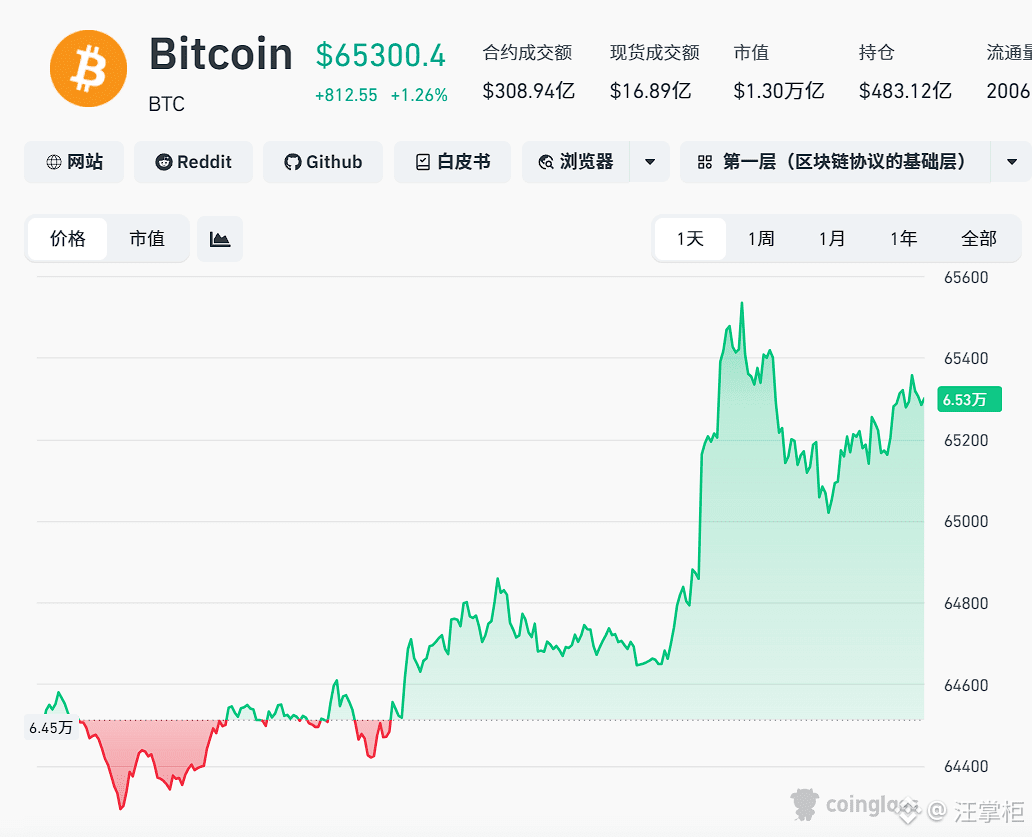
2. BTC Reclaims $65,000: Bitcoin rose slightly by about 1.05% on 7/27, once again touching above $65,000.
3. BTC Trading Volume Declines:
Over the past 24 hours: $14.4 billion (7/26 yesterday). Trading volume fell by half compared with last week’s $30 billion.
4. BTC 4-hour net inflow: -18.55 million; 12-hour net inflow: -25.91 million;
The market has no volume again. Breakouts are false breakouts. I opened a short position with 1,000 U, and I’ll watch it for 15 days.
Once the market picks up volume, it will be dumped immediately.
1. U.S.-Iran Situation — Ceasefire Fluctuates; Talks Continue
On Sunday (July 26), the United States paused military actions against Iran for the second day. Tehran said it has also ceased hostilities in tandem. Trump once announced that the ceasefire had ended; perhaps not everyone realized that it was the U.S. that had gone to strike Iran again at the outset. The interests have not been achieved yet, so it won’t end in the short term.
2. BTC Reclaims $65,000: Bitcoin rose slightly by about 1.05% on 7/27, once again touching above $65,000.
3. BTC Trading Volume Declines:
Over the past 24 hours: $14.4 billion (7/26 yesterday). Trading volume fell by half compared with last week’s $30 billion.
4. BTC 4-hour net inflow: -18.55 million; 12-hour net inflow: -25.91 million;
The market has no volume again. Breakouts are false breakouts. I opened a short position with 1,000 U, and I’ll watch it for 15 days.
Once the market picks up volume, it will be dumped immediately.
On Sunday (July 26), the United States paused military actions against Iran for the second day. Tehran said it has also ceased hostilities in tandem. Trump once announced that the ceasefire had ended; perhaps not everyone realized that it was the U.S. that had gone to strike Iran again at the outset. The interests have not been achieved yet, so it won’t end in the short term.
2. BTC Reclaims $65,000: Bitcoin rose slightly by about 1.05% on 7/27, once again touching above $65,000.
3. BTC Trading Volume Declines:
Over the past 24 hours: $14.4 billion (7/26 yesterday). Trading volume fell by half compared with last week’s $30 billion.
4. BTC 4-hour net inflow: -18.55 million; 12-hour net inflow: -25.91 million;
The market has no volume again. Breakouts are false breakouts. I opened a short position with 1,000 U, and I’ll watch it for 15 days.
Once the market picks up volume, it will be dumped immediately.
151
·
--
【Babylon Genesis】
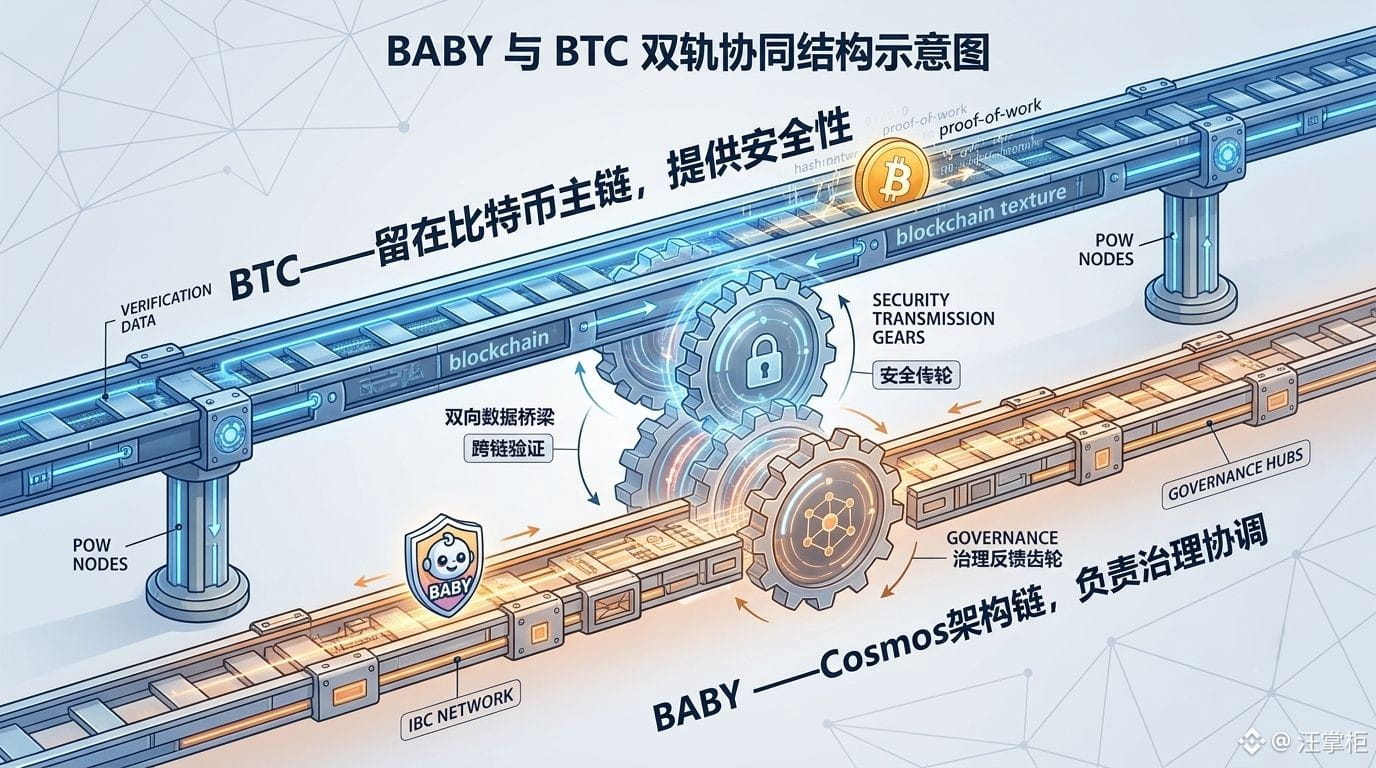
It is a dedicated chain built on Cosmos SDK within Babylon’s architecture—serving as the “control plane” of the entire Bitcoin staking system.
😍 Control the entire Bitcoin staking system.
🤩 Coordinate staking, validators, and the reward mechanism.
🥳 BTC stays on the Bitcoin main chain end-to-end, making it safer.
【BABY 】
It is the native token of the Babylon Genesis chain. Its primary uses include:
👍 Validators must stake BABY to help secure the network.
🌹 BABY holders can participate in protocol governance voting.
🎉 A portion of the protocol transaction fees will be allocated to BABY stakers.
BABY launched in January 2026 together with the Babylon Genesis mainnet. Users who participated in BTC staking during the early Cap-1 to Cap-3 phases received an airdrop allocation.
Understanding this dual-asset structure—BTC responsible for security, BABY responsible for governance and coordination—is essential to accurately determine where BABY’s real value comes from and to spot potential investment opportunities earlier.
【Babylon Genesis】
It is a dedicated chain built on Cosmos SDK within Babylon’s architecture—serving as the “control plane” of the entire Bitcoin staking system.
😍 Control the entire Bitcoin staking system.
🤩 Coordinate staking, validators, and the reward mechanism.
🥳 BTC stays on the Bitcoin main chain end-to-end, making it safer.
【BABY 】
It is the native token of the Babylon Genesis chain. Its primary uses include:
👍 Validators must stake BABY to help secure the network.
🌹 BABY holders can participate in protocol governance voting.
🎉 A portion of the protocol transaction fees will be allocated to BABY stakers.
BABY launched in January 2026 together with the Babylon Genesis mainnet. Users who participated in BTC staking during the early Cap-1 to Cap-3 phases received an airdrop allocation.
Understanding this dual-asset structure—BTC responsible for security, BABY responsible for governance and coordination—is essential to accurately determine where BABY’s real value comes from and to spot potential investment opportunities earlier.
It is a dedicated chain built on Cosmos SDK within Babylon’s architecture—serving as the “control plane” of the entire Bitcoin staking system.
😍 Control the entire Bitcoin staking system.
🤩 Coordinate staking, validators, and the reward mechanism.
🥳 BTC stays on the Bitcoin main chain end-to-end, making it safer.
【BABY 】
It is the native token of the Babylon Genesis chain. Its primary uses include:
👍 Validators must stake BABY to help secure the network.
🌹 BABY holders can participate in protocol governance voting.
🎉 A portion of the protocol transaction fees will be allocated to BABY stakers.
BABY launched in January 2026 together with the Babylon Genesis mainnet. Users who participated in BTC staking during the early Cap-1 to Cap-3 phases received an airdrop allocation.
Understanding this dual-asset structure—BTC responsible for security, BABY responsible for governance and coordination—is essential to accurately determine where BABY’s real value comes from and to spot potential investment opportunities earlier.
91
·
--

Article
Babylon locks assets on the blockchain with Bitcoin—security firstToday I’ll introduce something incredibly powerful.
The Babylon project @babylonlabs_io , it can lend Bitcoin’s security capabilities to other blockchains. How does it borrow? Mainly through two approaches.
Lesson 1: Special Signatures.
Those nodes that help confirm the blocks need to use a special method when signing. If the same node signs two different things at the same height, others can directly compute its private key from those two signatures. Once the private key is exposed, its funds will be penalized. #baby This way, anyone who wants to do evil has to pay money to make up for it.
Babylon locks assets on the blockchain with Bitcoin—security first
Today I’ll introduce something incredibly powerful.
The Babylon project @BabylonLabs_io , it can lend Bitcoin’s security capabilities to other blockchains. How does it borrow? Mainly through two approaches.
Lesson 1: Special Signatures.
Those nodes that help confirm the blocks need to use a special method when signing. If the same node signs two different things at the same height, others can directly compute its private key from those two signatures. Once the private key is exposed, its funds will be penalized. #baby This way, anyone who wants to do evil has to pay money to make up for it.
The Babylon project @BabylonLabs_io , it can lend Bitcoin’s security capabilities to other blockchains. How does it borrow? Mainly through two approaches.
Lesson 1: Special Signatures.
Those nodes that help confirm the blocks need to use a special method when signing. If the same node signs two different things at the same height, others can directly compute its private key from those two signatures. Once the private key is exposed, its funds will be penalized. #baby This way, anyone who wants to do evil has to pay money to make up for it.
127
·
--
When looking through the technical documentation of @babylonlabs_io , the official definition of the term “translation” is that, in essence, a protocol is doing translation: translating what happens in DeFi smart contracts into something the Bitcoin chain can understand and react to.
I read the @BabylonLabs_io whitepaper and thought, if Babylon is going to record PoS blocks onto the Bitcoin chain, why not just write them in one by one?
Why do we need to build another technology on top of that?
Confirmations on the Bitcoin chain are slow, and block space is expensive. With all my questions, I read the whitepaper—then suddenly I realized I had completely underestimated the scale of the problem. Slowly, I understood: what Babylon is truly solving is “how to let thousands of chains share Bitcoin security at low cost.”
.
In the end, I think this is an opportunity, and I bought 300u.
#baby $BABY @babylonlabs_io
When looking through the technical documentation of @BabylonLabs_io , the official definition of the term “translation” is that, in essence, a protocol is doing translation: translating what happens in DeFi smart contracts into something the Bitcoin chain can understand and react to.
I read the @BabylonLabs_io whitepaper and thought, if Babylon is going to record PoS blocks onto the Bitcoin chain, why not just write them in one by one?
Why do we need to build another technology on top of that?
Confirmations on the Bitcoin chain are slow, and block space is expensive. With all my questions, I read the whitepaper—then suddenly I realized I had completely underestimated the scale of the problem. Slowly, I understood: what Babylon is truly solving is “how to let thousands of chains share Bitcoin security at low cost.”
.
In the end, I think this is an opportunity, and I bought 300u.
#baby $BABY @BabylonLabs_io
I read the @BabylonLabs_io whitepaper and thought, if Babylon is going to record PoS blocks onto the Bitcoin chain, why not just write them in one by one?
Why do we need to build another technology on top of that?
Confirmations on the Bitcoin chain are slow, and block space is expensive. With all my questions, I read the whitepaper—then suddenly I realized I had completely underestimated the scale of the problem. Slowly, I understood: what Babylon is truly solving is “how to let thousands of chains share Bitcoin security at low cost.”
.
In the end, I think this is an opportunity, and I bought 300u.
#baby $BABY @BabylonLabs_io

1
119
·
--
Who can verify?
Who can verify?

鸟哥 Bluebird Labs
·
--
Found a seriously awesome money wallet address—bought a big golden dog $ASTEROID on the ETH chain for $576, achieving a 2025x return and raking in $1.17M (about RMB 8.392 million)!
Follow the expert to find golden dogs 👀; his wallet address:
https://web3.binance.com/zh-CN/portfolio/eth/0x97060ace26a732a255d7fca4658837be047ccf07
Follow the expert to find golden dogs 👀; his wallet address:
https://web3.binance.com/zh-CN/portfolio/eth/0x97060ace26a732a255d7fca4658837be047ccf07
11
·
--
After staying in the crypto space for a long time, there’s a type of project you should pay attention to: one where insiders have an especially high share of the tokens, and the unlocking schedule is particularly long.
【$BABY is one such case】
The team, advisors, and early investors combined hold about 66% of the total supply. The unlock plan won’t be fully released until 2028–2029.
【#BABY , broken down specifically】
The team portion releases linearly over 3 years after a one-year cliff. Early investors unlock in batches over 36 months, with a small amount of tokens unlocked into circulation every month.
This kind of structure isn’t the violent type of sell pressure like “a one-time large unlock followed by a mass dumping.” It’s more like a steady trickle—small dilution happening in the background every day.
【@babylonlabs_io , for veteran ‘old bagholders’】
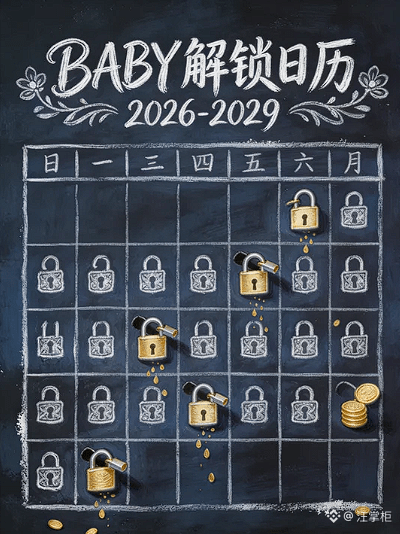
In the short term, these tokens can be traded based on sentiment. But before holding long-term, you must treat this “unlock calendar” like a real calendar and monitor it year-round. Before and around each major unlock node, reduce your position appropriately—this is the most basic risk-control move. Don’t wait until you’ve been hit before remembering to check the table.
After staying in the crypto space for a long time, there’s a type of project you should pay attention to: one where insiders have an especially high share of the tokens, and the unlocking schedule is particularly long.
【$BABY is one such case】
The team, advisors, and early investors combined hold about 66% of the total supply. The unlock plan won’t be fully released until 2028–2029.
【#BABY , broken down specifically】
The team portion releases linearly over 3 years after a one-year cliff. Early investors unlock in batches over 36 months, with a small amount of tokens unlocked into circulation every month.
This kind of structure isn’t the violent type of sell pressure like “a one-time large unlock followed by a mass dumping.” It’s more like a steady trickle—small dilution happening in the background every day.
【@BabylonLabs_io , for veteran ‘old bagholders’】
In the short term, these tokens can be traded based on sentiment. But before holding long-term, you must treat this “unlock calendar” like a real calendar and monitor it year-round. Before and around each major unlock node, reduce your position appropriately—this is the most basic risk-control move. Don’t wait until you’ve been hit before remembering to check the table.
【$BABY is one such case】
The team, advisors, and early investors combined hold about 66% of the total supply. The unlock plan won’t be fully released until 2028–2029.
【#BABY , broken down specifically】
The team portion releases linearly over 3 years after a one-year cliff. Early investors unlock in batches over 36 months, with a small amount of tokens unlocked into circulation every month.
This kind of structure isn’t the violent type of sell pressure like “a one-time large unlock followed by a mass dumping.” It’s more like a steady trickle—small dilution happening in the background every day.
【@BabylonLabs_io , for veteran ‘old bagholders’】
In the short term, these tokens can be traded based on sentiment. But before holding long-term, you must treat this “unlock calendar” like a real calendar and monitor it year-round. Before and around each major unlock node, reduce your position appropriately—this is the most basic risk-control move. Don’t wait until you’ve been hit before remembering to check the table.

106
·
--
Article
TRUMP team tokens unlocked and transferred out? But the contract data makes it hard to understand1️⃣ Bill progress: The August window will most likely be missed
U.S. Senate Majority Leader Thune said to reporters yesterday that the Crypto Market Structure Bill (the CLARITY Act) is not expected to be completed in the Senate before Congress adjourns for the August recess. The industry had originally hoped to push it forward by August 7, but that window is basically gone now.
2️⃣ The bottleneck isn’t in stablecoins, but in the “ethics clause”
The controversial focus is Democrats’ demand to add restrictive provisions to prevent Trump from profiting from it, and to guard against “regulators acting as insiders.”
3️⃣ Coincidental timing: The TRUMP team’s address unlock for withdrawal
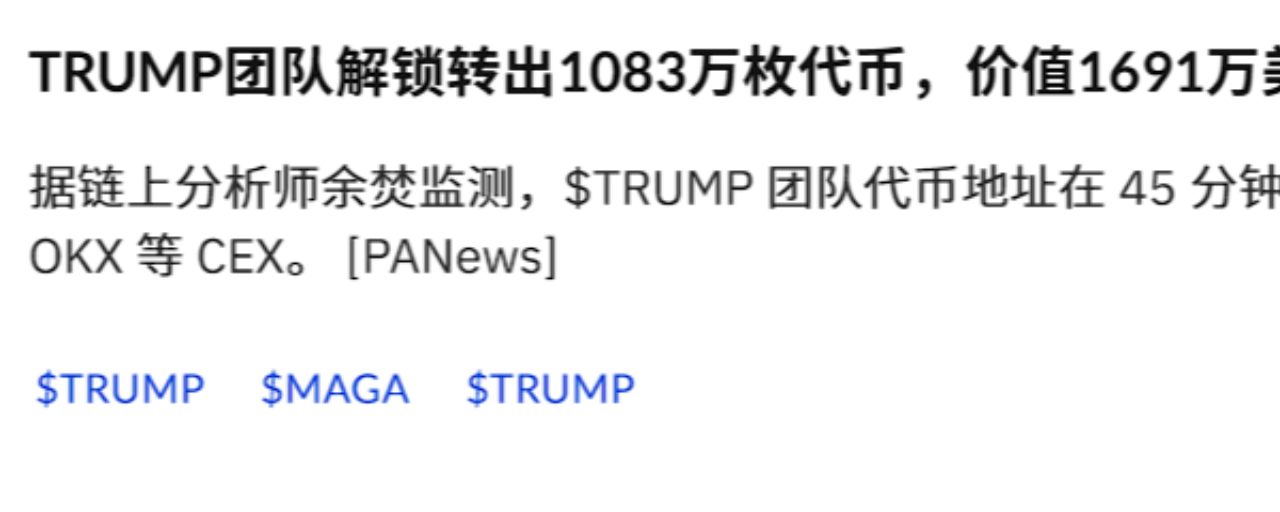
On July 25, according to on-chain analyst Yu Jin monitoring, the $TRUMP team token address unlocked and transferred out 10.837 million tokens, worth about $16.91 million, accounting for 1.6% of the circulating supply. It is expected that the tokens will later flow into centralized exchanges such as OKX.
TRUMP team tokens unlocked and transferred out? But the contract data makes it hard to understand
1️⃣ Bill progress: The August window will most likely be missed
U.S. Senate Majority Leader Thune said to reporters yesterday that the Crypto Market Structure Bill (the CLARITY Act) is not expected to be completed in the Senate before Congress adjourns for the August recess. The industry had originally hoped to push it forward by August 7, but that window is basically gone now.
2️⃣ The bottleneck isn’t in stablecoins, but in the “ethics clause”
The controversial focus is Democrats’ demand to add restrictive provisions to prevent Trump from profiting from it, and to guard against “regulators acting as insiders.”
3️⃣ Coincidental timing: The TRUMP team’s address unlock for withdrawal
On July 25, according to on-chain analyst Yu Jin monitoring, the $TRUMP team token address unlocked and transferred out 10.837 million tokens, worth about $16.91 million, accounting for 1.6% of the circulating supply. It is expected that the tokens will later flow into centralized exchanges such as OKX.
U.S. Senate Majority Leader Thune said to reporters yesterday that the Crypto Market Structure Bill (the CLARITY Act) is not expected to be completed in the Senate before Congress adjourns for the August recess. The industry had originally hoped to push it forward by August 7, but that window is basically gone now.
2️⃣ The bottleneck isn’t in stablecoins, but in the “ethics clause”
The controversial focus is Democrats’ demand to add restrictive provisions to prevent Trump from profiting from it, and to guard against “regulators acting as insiders.”
3️⃣ Coincidental timing: The TRUMP team’s address unlock for withdrawal
On July 25, according to on-chain analyst Yu Jin monitoring, the $TRUMP team token address unlocked and transferred out 10.837 million tokens, worth about $16.91 million, accounting for 1.6% of the circulating supply. It is expected that the tokens will later flow into centralized exchanges such as OKX.
176
·
--
Old investors watch the token; the first thing is never to look at the candlestick chart—it’s to look at the supply schedule.
$BABY The current total supply has already exceeded 10 billion coins, but because of annual inflation (currently about 8%, and the community has proposals to reduce it to 5.5%), the theoretical upper limit is “infinite.” This is completely different from Bitcoin’s hard deflation logic with a fixed cap of 21 million. Newcomers can easily get confused at this step.
The current circulating supply is roughly just over 4 billion coins, accounting for under 40%. That means less than half of the tokens are circulating in the market. The remaining more than 60%—@babylonlabs_io —are still held by the team, early investors, ecosystem funds, and advisors, and they are gradually being released according to plan.
In the past few years, I’ve seen too many projects where the market cap looks great at first, but after a round of unlocks, it gets cut in half, then cut in half again. The reason is simply that they didn’t figure out in advance “how much is still not yet released.”
So don’t rush in just because the current price seems cheap. Pull up the unlock calendar first, take a look, and have a clear idea before deciding how to position your holdings. That’s the basic skill of old investors.
#baby
Personal observations only; not investment advice.
Old investors watch the token; the first thing is never to look at the candlestick chart—it’s to look at the supply schedule.
$BABY The current total supply has already exceeded 10 billion coins, but because of annual inflation (currently about 8%, and the community has proposals to reduce it to 5.5%), the theoretical upper limit is “infinite.” This is completely different from Bitcoin’s hard deflation logic with a fixed cap of 21 million. Newcomers can easily get confused at this step.
The current circulating supply is roughly just over 4 billion coins, accounting for under 40%. That means less than half of the tokens are circulating in the market. The remaining more than 60%—@BabylonLabs_io —are still held by the team, early investors, ecosystem funds, and advisors, and they are gradually being released according to plan.
In the past few years, I’ve seen too many projects where the market cap looks great at first, but after a round of unlocks, it gets cut in half, then cut in half again. The reason is simply that they didn’t figure out in advance “how much is still not yet released.”
So don’t rush in just because the current price seems cheap. Pull up the unlock calendar first, take a look, and have a clear idea before deciding how to position your holdings. That’s the basic skill of old investors.
#baby
Personal observations only; not investment advice.
$BABY The current total supply has already exceeded 10 billion coins, but because of annual inflation (currently about 8%, and the community has proposals to reduce it to 5.5%), the theoretical upper limit is “infinite.” This is completely different from Bitcoin’s hard deflation logic with a fixed cap of 21 million. Newcomers can easily get confused at this step.
The current circulating supply is roughly just over 4 billion coins, accounting for under 40%. That means less than half of the tokens are circulating in the market. The remaining more than 60%—@BabylonLabs_io —are still held by the team, early investors, ecosystem funds, and advisors, and they are gradually being released according to plan.
In the past few years, I’ve seen too many projects where the market cap looks great at first, but after a round of unlocks, it gets cut in half, then cut in half again. The reason is simply that they didn’t figure out in advance “how much is still not yet released.”
So don’t rush in just because the current price seems cheap. Pull up the unlock calendar first, take a look, and have a clear idea before deciding how to position your holdings. That’s the basic skill of old investors.
#baby
Personal observations only; not investment advice.
124
Log in to explore more content
Join global crypto users on Binance Square
⚡️ Get latest and useful information about crypto.
💬 Trusted by the world’s largest crypto exchange.
👍 Discover real insights from verified creators.
Email / Phone number
Trending Topics
AIStocksWhatNext
862,013 views
6,529 Discussing
Share & Win Traffic Reward in our Trending Hashtag Campaign
✨Topic: What Other Investment Opportunities Remain as AI Stocks Keep Rising?
👉How to Join:
Publish a short post or article with hashtag #AIStocksWhatNext
Share whether you’re bullish or bearish, and post your AI stock holdings or trade — using the trade widget may improve your eligibility.
You can also strengthen your post by sharing data or charts, and avoiding AI-generated images.
✍️Create content based on the below angles:
- Nvidia says chip sales will double next year, and top AI companies keep hitting record revenue, the compute spend behind it is just as staggering. Is AI demand really taking off? And how long can it last? AI stocks are up across the board. Is this a real breakout, or just a short-term bounce?
- Industry leaders are calling to slow down AI development, while Trump plans to build an “AI Force”, claiming AI could account for 25% of U.S. GDP in the future. Whose side are you on? Will state-level backing be a long-term win for AI stocks?
- Are you buying AI stocks? Share your AI-related trade/holdings with our trade sharing widget.
⏰Campaign Period:
- 2026-09-22 7:00 - 2026-09-24 4:00 UTC
🎁Reward:
- Qualified posts that comply with the above guidelines and contain more than 100 words will be reviewed and may receive a random traffic boost of 500 to 3,000 views. You will receive a notification from your feed secretary if your post is selected.
- Get a chance to have your article featured on Binance Square Official
Need ideas for your post? Visit the topic page #AIStocksWhatNext or the Square Guide on How to Post for Better Reach.
Binance Square Official
·578 Likes
·1.7M views
BitcoinRejectedAt$87,300Twice
0 views
0 Discussing
BCHJumps28%OnCMEFuturesListing
8,818 views
461 Discussing