

E I R S A B A L
11.3k Posts

E I R S A B A L
Report
Block User
BLADE 777
12 Following
21.4K+ Followers
14.2K+ Liked
Posts
All
Quotes
Live
·
--
Bullish
$MEGA is moving!
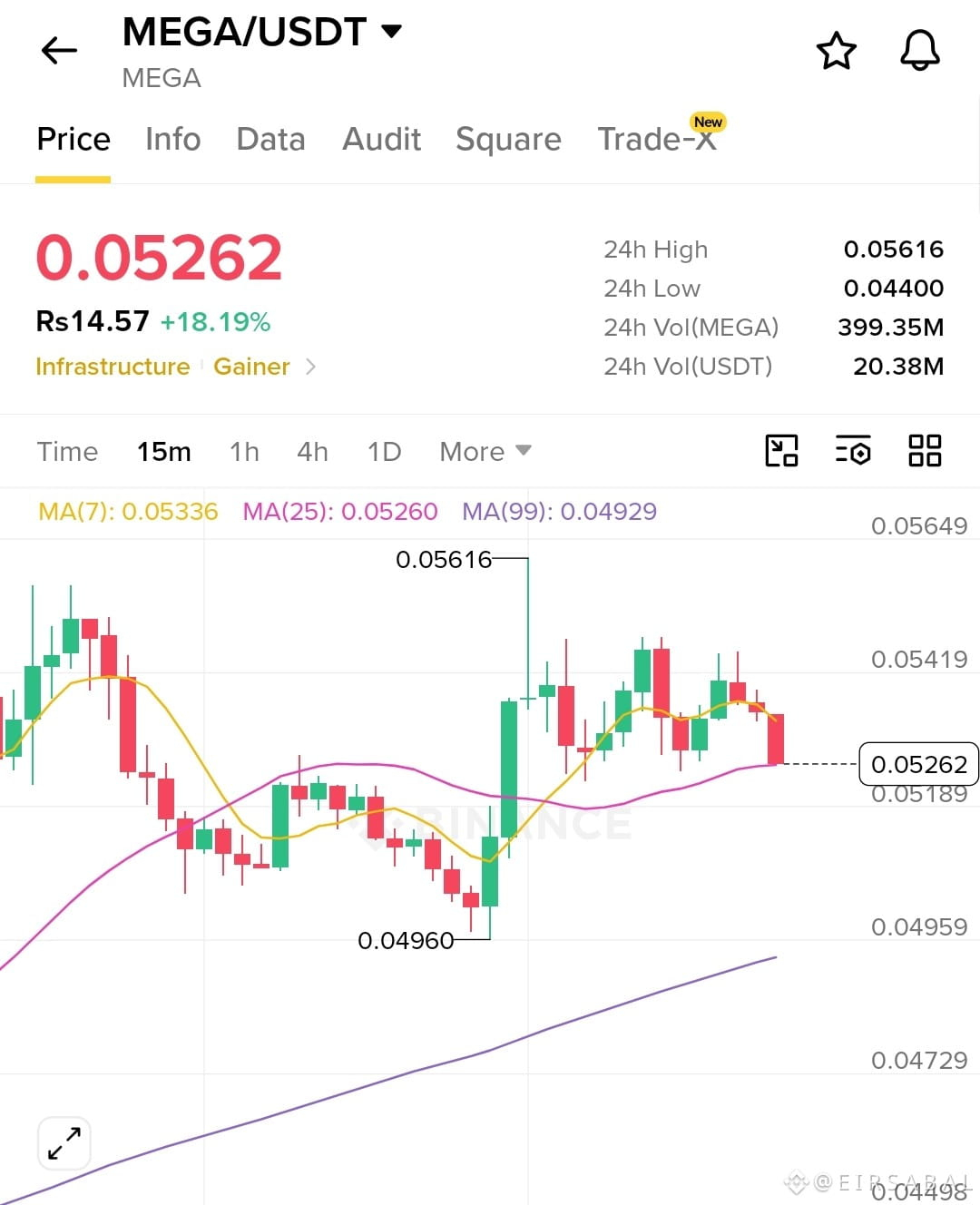
$MEGA is trading at $0.05262, up +18.19% in 24H, with a $0.05616 high and $0.04400 low. 24H volume is strong at 399.35M / $20.38M USDT.
Price is holding above the MA(25) at $0.05260 and well above the MA(99) at $0.04929, keeping the short-term structure interesting. A breakout above $0.05616 could bring fresh momentum, while $0.05189–$0.05260 is the key area to watch.
Momentum is heating up — let’s go and trade now $MEGA
{spot}(MEGAUSDT)
#EthereumFoundationLaunchesZkAPIOnMainnet
#EvernorthPlansNasdaqListingOct8
#AnthropicTargetsIPOAsSoonAsMidNovember
#US10YearYieldNears5.3%
#DollarIndexHitsHighestSinceMay2025
$MEGA is moving!
$MEGA is trading at $0.05262, up +18.19% in 24H, with a $0.05616 high and $0.04400 low. 24H volume is strong at 399.35M / $20.38M USDT.
Price is holding above the MA(25) at $0.05260 and well above the MA(99) at $0.04929, keeping the short-term structure interesting. A breakout above $0.05616 could bring fresh momentum, while $0.05189–$0.05260 is the key area to watch.
Momentum is heating up — let’s go and trade now $MEGA
#EthereumFoundationLaunchesZkAPIOnMainnet
#EvernorthPlansNasdaqListingOct8
#AnthropicTargetsIPOAsSoonAsMidNovember
#US10YearYieldNears5.3%
#DollarIndexHitsHighestSinceMay2025
$MEGA is trading at $0.05262, up +18.19% in 24H, with a $0.05616 high and $0.04400 low. 24H volume is strong at 399.35M / $20.38M USDT.
Price is holding above the MA(25) at $0.05260 and well above the MA(99) at $0.04929, keeping the short-term structure interesting. A breakout above $0.05616 could bring fresh momentum, while $0.05189–$0.05260 is the key area to watch.
Momentum is heating up — let’s go and trade now $MEGA
#EthereumFoundationLaunchesZkAPIOnMainnet
#EvernorthPlansNasdaqListingOct8
#AnthropicTargetsIPOAsSoonAsMidNovember
#US10YearYieldNears5.3%
#DollarIndexHitsHighestSinceMay2025
142
·
--
Bullish
GTC vs SCR: Momentum Battle
GTC (Gitcoin) is showing the stronger move in the snapshot at $0.15519, up 64.14%. That puts GTC clearly ahead on short-term price momentum, with buyers pushing the token sharply higher.
SCR (Scroll) is also moving strongly at $0.03641, up 45.58%. Its gain is substantial, but it trails GTC by roughly 18.6 percentage points in this snapshot. Current market data also shows GTC with stronger recent price performance, while SCR remains active with meaningful trading volume.
Two different performances, one competition: GTC is leading the percentage move, while SCR is still delivering a major rally.
Which one are you backing: GTC or SCR?
$GTC
{spot}(GTCUSDT)
$SCR
{spot}(SCRUSDT)
GTC vs SCR: Momentum Battle
GTC (Gitcoin) is showing the stronger move in the snapshot at $0.15519, up 64.14%. That puts GTC clearly ahead on short-term price momentum, with buyers pushing the token sharply higher.
SCR (Scroll) is also moving strongly at $0.03641, up 45.58%. Its gain is substantial, but it trails GTC by roughly 18.6 percentage points in this snapshot. Current market data also shows GTC with stronger recent price performance, while SCR remains active with meaningful trading volume.
Two different performances, one competition: GTC is leading the percentage move, while SCR is still delivering a major rally.
Which one are you backing: GTC or SCR?
$GTC
$SCR
GTC (Gitcoin) is showing the stronger move in the snapshot at $0.15519, up 64.14%. That puts GTC clearly ahead on short-term price momentum, with buyers pushing the token sharply higher.
SCR (Scroll) is also moving strongly at $0.03641, up 45.58%. Its gain is substantial, but it trails GTC by roughly 18.6 percentage points in this snapshot. Current market data also shows GTC with stronger recent price performance, while SCR remains active with meaningful trading volume.
Two different performances, one competition: GTC is leading the percentage move, while SCR is still delivering a major rally.
Which one are you backing: GTC or SCR?
$GTC
$SCR
Which coin pumps more today?
11%
GTC
33%
SCR
56%
9 votes • Voting closed
485
·
--
Bullish
CT vs AGT — which momentum are you backing?
CT (Concrete) is trading at $0.4024, up a massive 265.21%. The move shows explosive momentum, with CT dramatically outperforming the field shown in the image.
AGT (Alaya Governance Token) is at $0.025318, gaining 42.47%. AGT is also pushing higher, but its move is much more measured compared with CT. Recent market data also shows strong trading activity around AGT.
Two different momentum profiles: CT bringing the explosive move, AGT showing a strong but more moderate rally.
Which one are you backing: CT or AGT?
$CT
{alpha}(560x0a092e544da31150b439a1aaa1a3a2214a867f46)
$AGT
{future}(AGTUSDT)
CT vs AGT — which momentum are you backing?
CT (Concrete) is trading at $0.4024, up a massive 265.21%. The move shows explosive momentum, with CT dramatically outperforming the field shown in the image.
AGT (Alaya Governance Token) is at $0.025318, gaining 42.47%. AGT is also pushing higher, but its move is much more measured compared with CT. Recent market data also shows strong trading activity around AGT.
Two different momentum profiles: CT bringing the explosive move, AGT showing a strong but more moderate rally.
Which one are you backing: CT or AGT?
$CT
$AGT
CT (Concrete) is trading at $0.4024, up a massive 265.21%. The move shows explosive momentum, with CT dramatically outperforming the field shown in the image.
AGT (Alaya Governance Token) is at $0.025318, gaining 42.47%. AGT is also pushing higher, but its move is much more measured compared with CT. Recent market data also shows strong trading activity around AGT.
Two different momentum profiles: CT bringing the explosive move, AGT showing a strong but more moderate rally.
Which one are you backing: CT or AGT?
$CT
$AGT
Biggest Pump
13%
Which coin pumps more today?
2%
CT
70%
AGT
15%
40 votes • Voting closed
1
1.3k
·
--
Bullish
MOVR vs ARK — two coins, two impressive moves, one clear question.
MOVR is trading at 1.640, showing a massive +60.31% gain. It is leading this matchup with a powerful upside move and standout momentum.
ARK is at 0.3795, up +54.71%, also delivering a major rally and keeping the competition extremely close.
Both are showing strong performance, but MOVR currently has the larger percentage gain. The real question is whether ARK can close the gap or MOVR can extend its lead.
Which one are you backing: MOVR or ARK?
$MOVR
{spot}(MOVRUSDT)
$ARK
{spot}(ARKUSDT)
MOVR vs ARK — two coins, two impressive moves, one clear question.
MOVR is trading at 1.640, showing a massive +60.31% gain. It is leading this matchup with a powerful upside move and standout momentum.
ARK is at 0.3795, up +54.71%, also delivering a major rally and keeping the competition extremely close.
Both are showing strong performance, but MOVR currently has the larger percentage gain. The real question is whether ARK can close the gap or MOVR can extend its lead.
Which one are you backing: MOVR or ARK?
$MOVR
$ARK
MOVR is trading at 1.640, showing a massive +60.31% gain. It is leading this matchup with a powerful upside move and standout momentum.
ARK is at 0.3795, up +54.71%, also delivering a major rally and keeping the competition extremely close.
Both are showing strong performance, but MOVR currently has the larger percentage gain. The real question is whether ARK can close the gap or MOVR can extend its lead.
Which one are you backing: MOVR or ARK?
$MOVR
$ARK
Biggest Pump Today
0%
MOVR
67%
ARK
33%
15 votes • Voting closed
642
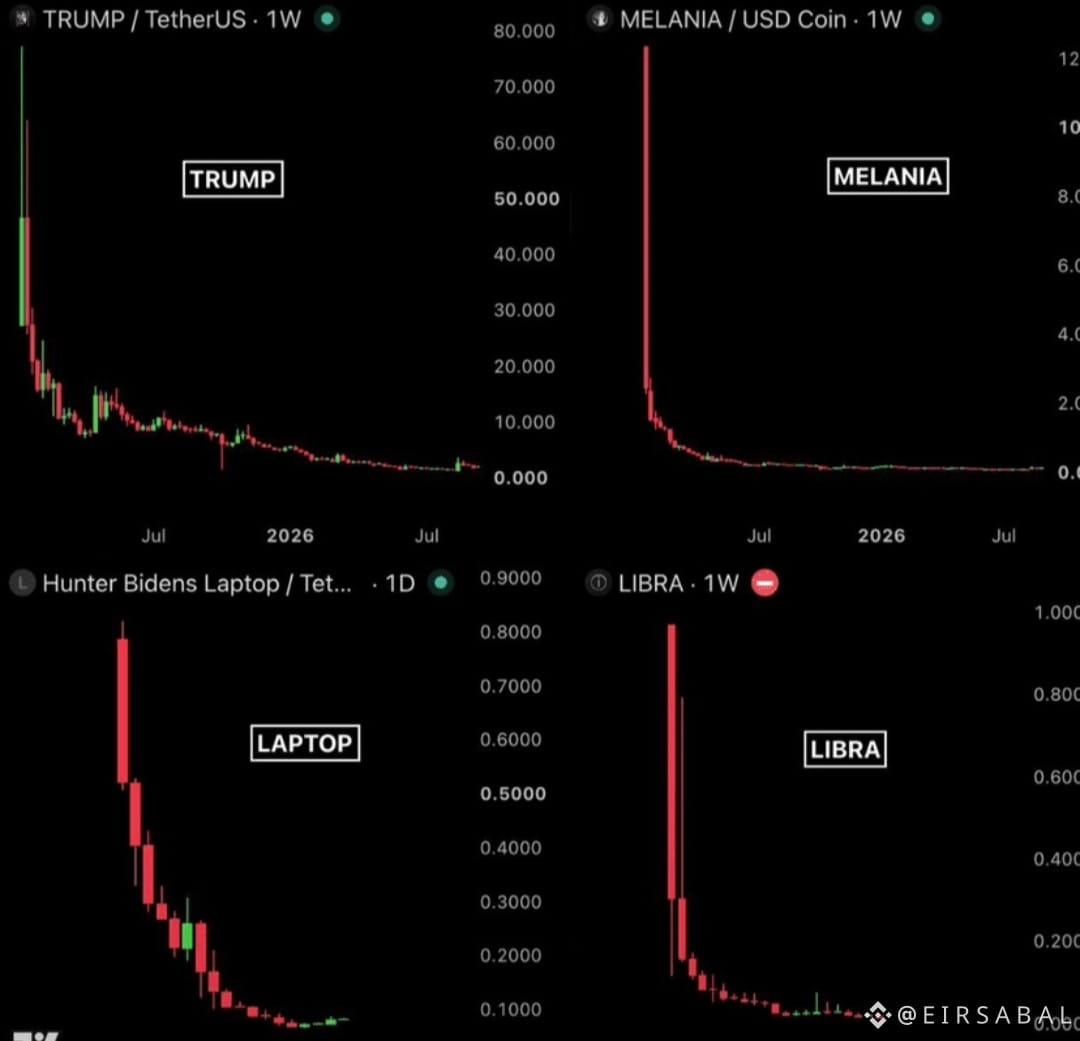
🚨 BREAKING: California Governor Gavin Newsom has signed AB 2409, banning public officials and employees from issuing memecoins.
The law also restricts certain politician-linked memecoins from being offered to California residents starting January 1, 2027.
California is putting a major new line between public office and political crypto.
🚨 BREAKING: California Governor Gavin Newsom has signed AB 2409, banning public officials and employees from issuing memecoins.
The law also restricts certain politician-linked memecoins from being offered to California residents starting January 1, 2027.
California is putting a major new line between public office and political crypto.
The law also restricts certain politician-linked memecoins from being offered to California residents starting January 1, 2027.
California is putting a major new line between public office and political crypto.

1
101
·
--
Bullish
RHEA vs IRYS — two strong movers, but very different levels of momentum right now.
RHEA Finance (RHEA) is trading at $0.1536, up 62.04%, putting it clearly ahead on today’s percentage move. The chart shows a sharp momentum burst, with RHEA making a much stronger percentage advance than IRYS.
Irys (IRYS) is trading at $0.02008, up 20.56%. That is still a solid move, but its gain is considerably smaller than RHEA’s in this snapshot.
The battle comes down to momentum: RHEA is showing the larger move, while IRYS is also participating with a notable gain. Which one are you backing today — RHEA or IRYS?
$RHEA
{alpha}(560x4c067de26475e1cefee8b8d1f6e2266b33a2372e)
$IRYS
{future}(IRYSUSDT)
RHEA vs IRYS — two strong movers, but very different levels of momentum right now.
RHEA Finance (RHEA) is trading at $0.1536, up 62.04%, putting it clearly ahead on today’s percentage move. The chart shows a sharp momentum burst, with RHEA making a much stronger percentage advance than IRYS.
Irys (IRYS) is trading at $0.02008, up 20.56%. That is still a solid move, but its gain is considerably smaller than RHEA’s in this snapshot.
The battle comes down to momentum: RHEA is showing the larger move, while IRYS is also participating with a notable gain. Which one are you backing today — RHEA or IRYS?
$RHEA
$IRYS
RHEA Finance (RHEA) is trading at $0.1536, up 62.04%, putting it clearly ahead on today’s percentage move. The chart shows a sharp momentum burst, with RHEA making a much stronger percentage advance than IRYS.
Irys (IRYS) is trading at $0.02008, up 20.56%. That is still a solid move, but its gain is considerably smaller than RHEA’s in this snapshot.
The battle comes down to momentum: RHEA is showing the larger move, while IRYS is also participating with a notable gain. Which one are you backing today — RHEA or IRYS?
$RHEA
$IRYS
Which pumps more today?
4%
RHEA
59%
IRYS
37%
27 votes • Voting closed
1
1.9k
·
--
Bullish
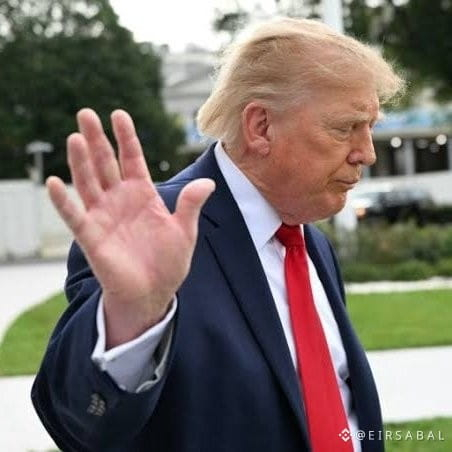
🚨 JUST IN: 🇺🇸🇮🇷 President Trump says he rejected Iran’s proposal to reopen the Strait of Hormuz and end the fighting.
Trump says Tehran wants a deal because they have no money coming in.
The Strait of Hormuz remains a major focus for global energy markets. 🌍⚡
Market watchers are now focused on what comes next. 📈
🚨 JUST IN: 🇺🇸🇮🇷 President Trump says he rejected Iran’s proposal to reopen the Strait of Hormuz and end the fighting.
Trump says Tehran wants a deal because they have no money coming in.
The Strait of Hormuz remains a major focus for global energy markets. 🌍⚡
Market watchers are now focused on what comes next. 📈
Trump says Tehran wants a deal because they have no money coming in.
The Strait of Hormuz remains a major focus for global energy markets. 🌍⚡
Market watchers are now focused on what comes next. 📈

1
198
·
--
Bullish
QNT vs GLMR — two strong movers, one matchup.
QNT is trading at $159.70, up 52.94%, showing powerful upside momentum and a clear lead in percentage gains from the snapshot.
GLMR is trading at $0.009846, up 48.06%, also delivering a major move and keeping the competition close. Both are showing strong momentum, but the performance gap puts QNT slightly ahead on the numbers shown in the image.
The real question now is whether QNT can maintain its lead or GLMR can close the gap with another push.
Which one are you backing: QNT or GLMR?
$QNT
{spot}(QNTUSDT)
$GLMR
{spot}(GLMRUSDT)
QNT vs GLMR — two strong movers, one matchup.
QNT is trading at $159.70, up 52.94%, showing powerful upside momentum and a clear lead in percentage gains from the snapshot.
GLMR is trading at $0.009846, up 48.06%, also delivering a major move and keeping the competition close. Both are showing strong momentum, but the performance gap puts QNT slightly ahead on the numbers shown in the image.
The real question now is whether QNT can maintain its lead or GLMR can close the gap with another push.
Which one are you backing: QNT or GLMR?
$QNT
$GLMR
QNT is trading at $159.70, up 52.94%, showing powerful upside momentum and a clear lead in percentage gains from the snapshot.
GLMR is trading at $0.009846, up 48.06%, also delivering a major move and keeping the competition close. Both are showing strong momentum, but the performance gap puts QNT slightly ahead on the numbers shown in the image.
The real question now is whether QNT can maintain its lead or GLMR can close the gap with another push.
Which one are you backing: QNT or GLMR?
$QNT
$GLMR
Which coin pumps more today?
3%
QNT
35%
GLMR
62%
40 votes • Voting closed
3
1.5k
·
--
Bullish
Quack AI (Q) vs SOON — the momentum battle is heating up.
Quack AI (Q) is trading at $0.043188, up 44.27%, showing slightly stronger upside momentum in the snapshot. SOON is also making a strong move at $0.30015, gaining 41.88%.
Both coins are posting major percentage gains, but Q currently has the edge in this head-to-head on the displayed daily move. SOON is not far behind, keeping the competition close and making both names worth watching for momentum traders.
Two strong performers, one momentum race. Which one are you backing: $Q or $SOON?
$Q
{future}(QUSDT)
$SOON
{future}(SOONUSDT)
Quack AI (Q) vs SOON — the momentum battle is heating up.
Quack AI (Q) is trading at $0.043188, up 44.27%, showing slightly stronger upside momentum in the snapshot. SOON is also making a strong move at $0.30015, gaining 41.88%.
Both coins are posting major percentage gains, but Q currently has the edge in this head-to-head on the displayed daily move. SOON is not far behind, keeping the competition close and making both names worth watching for momentum traders.
Two strong performers, one momentum race. Which one are you backing: $Q or $SOON ?
$Q
$SOON
Quack AI (Q) is trading at $0.043188, up 44.27%, showing slightly stronger upside momentum in the snapshot. SOON is also making a strong move at $0.30015, gaining 41.88%.
Both coins are posting major percentage gains, but Q currently has the edge in this head-to-head on the displayed daily move. SOON is not far behind, keeping the competition close and making both names worth watching for momentum traders.
Two strong performers, one momentum race. Which one are you backing: $Q or $SOON ?
$Q
$SOON
Which coin pumps more today?
12%
Q
44%
SOON
44%
16 votes • Voting closed
3.2k
·
--
Bullish
PHA vs MUBARAK — two strong movers, but with a clear gap in the numbers shown.
PHA is trading at $0.0861, up 73.24%, putting it ahead in the displayed session performance. MUBARAK is at $0.05927, up 37.49%, also showing a substantial move but with a smaller percentage gain.
The momentum picture in the screenshot is therefore different: PHA has delivered the larger percentage move, while MUBARAK is also participating in the upside with a strong double-digit gain. These are the numbers shown in the provided image; live prices can change quickly.
PHA or MUBARAK — which one are you backing?
$PHA
{spot}(PHAUSDT)
$MUBARAK
{spot}(MUBARAKUSDT)
PHA vs MUBARAK — two strong movers, but with a clear gap in the numbers shown.
PHA is trading at $0.0861, up 73.24%, putting it ahead in the displayed session performance. MUBARAK is at $0.05927, up 37.49%, also showing a substantial move but with a smaller percentage gain.
The momentum picture in the screenshot is therefore different: PHA has delivered the larger percentage move, while MUBARAK is also participating in the upside with a strong double-digit gain. These are the numbers shown in the provided image; live prices can change quickly.
PHA or MUBARAK — which one are you backing?
$PHA
$MUBARAK
PHA is trading at $0.0861, up 73.24%, putting it ahead in the displayed session performance. MUBARAK is at $0.05927, up 37.49%, also showing a substantial move but with a smaller percentage gain.
The momentum picture in the screenshot is therefore different: PHA has delivered the larger percentage move, while MUBARAK is also participating in the upside with a strong double-digit gain. These are the numbers shown in the provided image; live prices can change quickly.
PHA or MUBARAK — which one are you backing?
$PHA
$MUBARAK
Which coin pumps more today?
5%
PHA
35%
MUBARAK
60%
20 votes • Voting closed
1.5k
BREW vs GSTOCK — two very different moves on the board.
BREW is trading at $0.013363, showing a massive +126.44% gain. The move stands out immediately, with BREW displaying significantly stronger short-term upside and momentum in the snapshot.
GSTOCK is trading at $0.020858, but is currently down 4.71%. That puts it on the opposite side of the momentum battle, with sellers controlling the move in the provided data.
BREW is showing explosive upside, while GSTOCK is facing short-term pressure. The key question now is whether BREW can maintain its momentum or whether GSTOCK can recover and turn the momentum around.
Which one are you backing: BREW or GSTOCK?
$BREW
{alpha}(560xfa6d9b504848606eb9aec04ccc161d169b3f2159)
$GSTOCK
{alpha}(560xcafdbce93477261db8250e42bdae6e66733f9e20)
BREW vs GSTOCK — two very different moves on the board.
BREW is trading at $0.013363, showing a massive +126.44% gain. The move stands out immediately, with BREW displaying significantly stronger short-term upside and momentum in the snapshot.
GSTOCK is trading at $0.020858, but is currently down 4.71%. That puts it on the opposite side of the momentum battle, with sellers controlling the move in the provided data.
BREW is showing explosive upside, while GSTOCK is facing short-term pressure. The key question now is whether BREW can maintain its momentum or whether GSTOCK can recover and turn the momentum around.
Which one are you backing: BREW or GSTOCK?
$BREW
$GSTOCK
BREW is trading at $0.013363, showing a massive +126.44% gain. The move stands out immediately, with BREW displaying significantly stronger short-term upside and momentum in the snapshot.
GSTOCK is trading at $0.020858, but is currently down 4.71%. That puts it on the opposite side of the momentum battle, with sellers controlling the move in the provided data.
BREW is showing explosive upside, while GSTOCK is facing short-term pressure. The key question now is whether BREW can maintain its momentum or whether GSTOCK can recover and turn the momentum around.
Which one are you backing: BREW or GSTOCK?
$BREW
$GSTOCK
Which coin pumps more today?
3%
BREW
44%
GSTOCK
53%
90 votes • Voting closed
2
2.5k
·
--
Bullish
U.S. Treasury’s $6 billion buyback fell flat—they couldn’t even give away the debt.
The U.S. Treasury announced it would buy back up to $6 billion of its own long-term bonds (20–30 year maturities) on Thursday. But here’s the shocker: Dealers offered $10.47 billion in bonds for sale, yet the Treasury only bought $4.08 billion—rejecting most offers and falling short of its max target .
Why? The Treasury deemed the prices too expensive. Even with yields on the 30-year Treasury hovering near 5.5%—the highest since 2007—they refused to pay up .
This was supposed to be a liquidity support move to cool rising borrowing costs. Instead, it signals the Treasury is struggling to influence the market without overpaying. The $6 billion ceiling was already tripled from the original $2 billion plan, but the actual result was a muted $4.08 billion .
The takeaway: Yields are surging, demand for long bonds is shaky, and the Treasury’s buyback safety valve is working at half capacity. The bond market is signaling stress—and the government’s tools aren’t fully delivering .
$QI
{spot}(QIUSDT)
U.S. Treasury’s $6 billion buyback fell flat—they couldn’t even give away the debt.
The U.S. Treasury announced it would buy back up to $6 billion of its own long-term bonds (20–30 year maturities) on Thursday. But here’s the shocker: Dealers offered $10.47 billion in bonds for sale, yet the Treasury only bought $4.08 billion—rejecting most offers and falling short of its max target .
Why? The Treasury deemed the prices too expensive. Even with yields on the 30-year Treasury hovering near 5.5%—the highest since 2007—they refused to pay up .
This was supposed to be a liquidity support move to cool rising borrowing costs. Instead, it signals the Treasury is struggling to influence the market without overpaying. The $6 billion ceiling was already tripled from the original $2 billion plan, but the actual result was a muted $4.08 billion .
The takeaway: Yields are surging, demand for long bonds is shaky, and the Treasury’s buyback safety valve is working at half capacity. The bond market is signaling stress—and the government’s tools aren’t fully delivering .
$QI
The U.S. Treasury announced it would buy back up to $6 billion of its own long-term bonds (20–30 year maturities) on Thursday. But here’s the shocker: Dealers offered $10.47 billion in bonds for sale, yet the Treasury only bought $4.08 billion—rejecting most offers and falling short of its max target .
Why? The Treasury deemed the prices too expensive. Even with yields on the 30-year Treasury hovering near 5.5%—the highest since 2007—they refused to pay up .
This was supposed to be a liquidity support move to cool rising borrowing costs. Instead, it signals the Treasury is struggling to influence the market without overpaying. The $6 billion ceiling was already tripled from the original $2 billion plan, but the actual result was a muted $4.08 billion .
The takeaway: Yields are surging, demand for long bonds is shaky, and the Treasury’s buyback safety valve is working at half capacity. The bond market is signaling stress—and the government’s tools aren’t fully delivering .
$QI

119
·
--
Bullish
QI vs QNT — Momentum Battle
QI is showing a major move at $0.002790, up 90.57%, putting it firmly in the spotlight with a sharp percentage gain. QNT is also moving strongly, trading at $93.14 and gaining 31.50%.
On the numbers shown in the image, QI has the larger percentage move, while QNT is delivering a substantial gain at a much higher unit price. The two are showing very different price profiles, making this an interesting momentum comparison.
Which one are you backing: QI or QNT?
$QI
{spot}(QIUSDT)
$QNT
{spot}(QNTUSDT)
QI vs QNT — Momentum Battle
QI is showing a major move at $0.002790, up 90.57%, putting it firmly in the spotlight with a sharp percentage gain. QNT is also moving strongly, trading at $93.14 and gaining 31.50%.
On the numbers shown in the image, QI has the larger percentage move, while QNT is delivering a substantial gain at a much higher unit price. The two are showing very different price profiles, making this an interesting momentum comparison.
Which one are you backing: QI or QNT?
$QI
$QNT
QI is showing a major move at $0.002790, up 90.57%, putting it firmly in the spotlight with a sharp percentage gain. QNT is also moving strongly, trading at $93.14 and gaining 31.50%.
On the numbers shown in the image, QI has the larger percentage move, while QNT is delivering a substantial gain at a much higher unit price. The two are showing very different price profiles, making this an interesting momentum comparison.
Which one are you backing: QI or QNT?
$QI
$QNT
Which pumps more today?
0%
QI
71%
QNT
29%
17 votes • Voting closed
1.5k
·
--
Bullish
ALEO vs TAKE — two very different performances on the board today.
ALEO is trading at $0.037216, up an impressive +108.50%. That puts ALEO clearly in the spotlight, with more than a 100% move and strong short-term momentum. The scale of the gain makes it the more explosive performer in this comparison.
TAKE (OVERTAKE) is trading at $0.072886, up +20.00%. While its move is much smaller than ALEO’s, TAKE is still showing solid positive momentum and remains above its starting level for the session.
So the matchup is clear: ALEO is leading on percentage performance, while TAKE is posting a steadier 20% gain. Which one are you backing today: ALEO or TAKE?
$ALEO
{alpha}(560x6cfffa5bfd4277a04d83307feedfe2d18d944dd2)
$TAKE
{future}(TAKEUSDT)
ALEO vs TAKE — two very different performances on the board today.
ALEO is trading at $0.037216, up an impressive +108.50%. That puts ALEO clearly in the spotlight, with more than a 100% move and strong short-term momentum. The scale of the gain makes it the more explosive performer in this comparison.
TAKE (OVERTAKE) is trading at $0.072886, up +20.00%. While its move is much smaller than ALEO’s, TAKE is still showing solid positive momentum and remains above its starting level for the session.
So the matchup is clear: ALEO is leading on percentage performance, while TAKE is posting a steadier 20% gain. Which one are you backing today: ALEO or TAKE?
$ALEO
$TAKE
ALEO is trading at $0.037216, up an impressive +108.50%. That puts ALEO clearly in the spotlight, with more than a 100% move and strong short-term momentum. The scale of the gain makes it the more explosive performer in this comparison.
TAKE (OVERTAKE) is trading at $0.072886, up +20.00%. While its move is much smaller than ALEO’s, TAKE is still showing solid positive momentum and remains above its starting level for the session.
So the matchup is clear: ALEO is leading on percentage performance, while TAKE is posting a steadier 20% gain. Which one are you backing today: ALEO or TAKE?
$ALEO
$TAKE
Which coin pumps more today?
0%
ALEO
44%
TAKE
56%
52 votes • Voting closed
2.6k
·
--
Bullish
MET vs ALLO — which one is leading the momentum race?
MET is trading at $0.4016, up 35.31%, while ALLO is at $0.3387, up 31.89%. Both are showing strong moves, but MET currently has the bigger percentage gain and is leading the short-term performance battle. ALLO is also delivering a major move and remains close behind, making this an interesting head-to-head between two strong performers.
The key question now is whether MET can maintain its lead or ALLO can close the gap as momentum continues.
Which one are you backing: MET or ALLO?
$MET
{spot}(METUSDT)
$ALLO
{spot}(ALLOUSDT)
MET vs ALLO — which one is leading the momentum race?
MET is trading at $0.4016, up 35.31%, while ALLO is at $0.3387, up 31.89%. Both are showing strong moves, but MET currently has the bigger percentage gain and is leading the short-term performance battle. ALLO is also delivering a major move and remains close behind, making this an interesting head-to-head between two strong performers.
The key question now is whether MET can maintain its lead or ALLO can close the gap as momentum continues.
Which one are you backing: MET or ALLO?
$MET
$ALLO
MET is trading at $0.4016, up 35.31%, while ALLO is at $0.3387, up 31.89%. Both are showing strong moves, but MET currently has the bigger percentage gain and is leading the short-term performance battle. ALLO is also delivering a major move and remains close behind, making this an interesting head-to-head between two strong performers.
The key question now is whether MET can maintain its lead or ALLO can close the gap as momentum continues.
Which one are you backing: MET or ALLO?
$MET
$ALLO
Which coin pumps more today?
0%
MET
67%
ALLO
33%
12 votes • Voting closed
453
·
--
Bullish
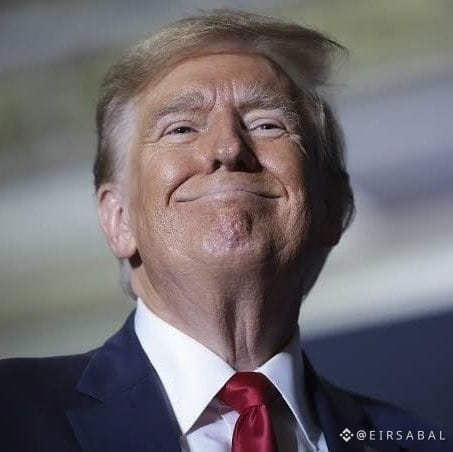
🚨 JUST IN: 🇺🇸🇮🇷 President Trump says the Iran relationship is “developing.” Any progress could have major geopolitical and market implications. 🌍⚡
Stay alert — more updates could move markets fast. 📈$TAKE
{future}(TAKEUSDT)
🚨 JUST IN: 🇺🇸🇮🇷 President Trump says the Iran relationship is “developing.” Any progress could have major geopolitical and market implications. 🌍⚡
Stay alert — more updates could move markets fast. 📈$TAKE
Stay alert — more updates could move markets fast. 📈$TAKE
221
·
--
Bullish
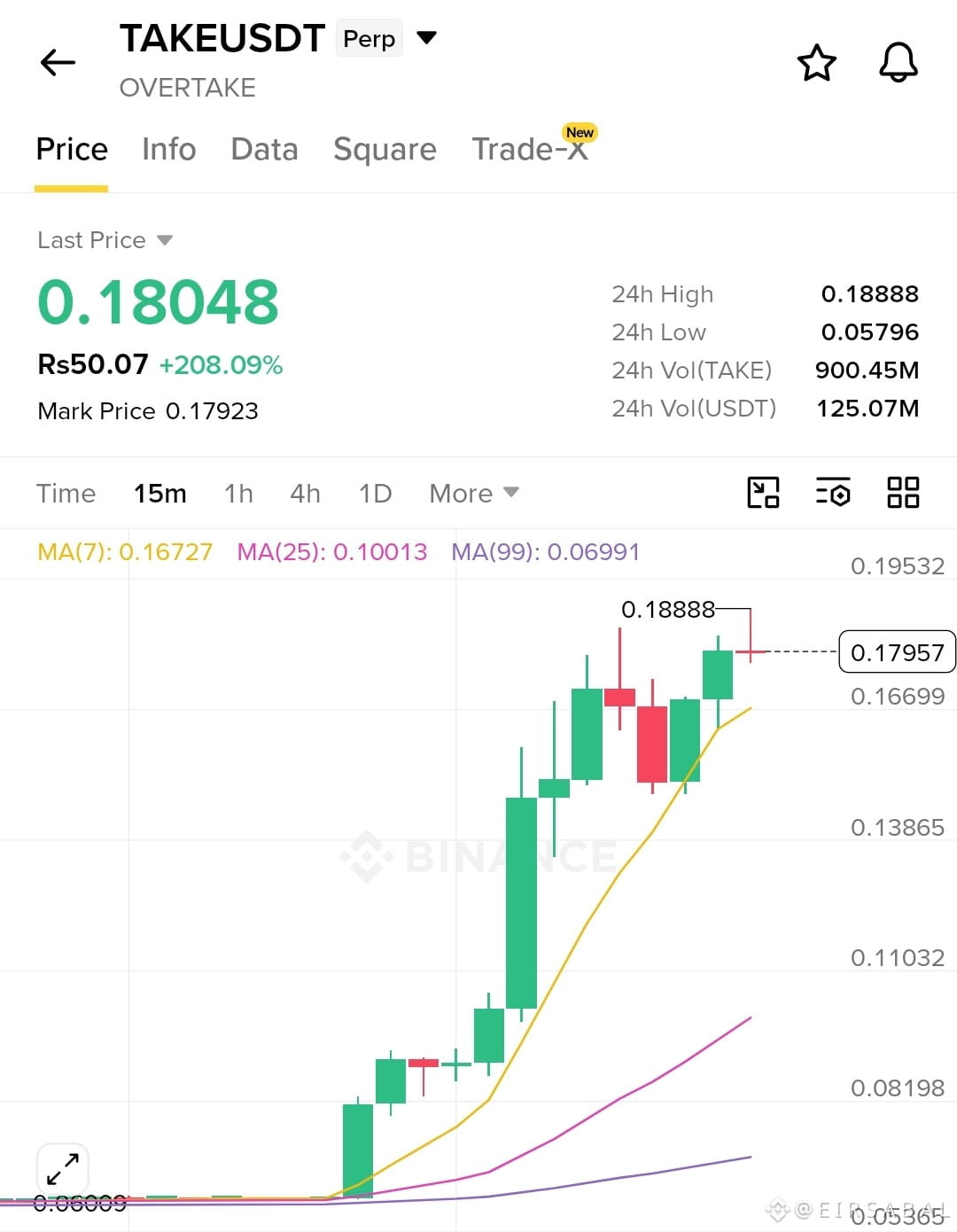
$TAKE is exploding! +208.09% in 24H, now at $0.18048 with $125.07M volume!
24H High: $0.18888
24H Low: $0.05796
Momentum is absolutely wild — watch that $0.18888 resistance!
Let's go and trade now
{future}(TAKEUSDT)
#AIStocksWhatNext
#21SharesLaunchesEuropesFirstZcashETP
#CardanoJoinsX402PaymentStandard
#BNBMarketCapPassesBNYMellon
#DogecoinRises15%
$TAKE is exploding! +208.09% in 24H, now at $0.18048 with $125.07M volume!
24H High: $0.18888
24H Low: $0.05796
Momentum is absolutely wild — watch that $0.18888 resistance!
Let's go and trade now
#AIStocksWhatNext
#21SharesLaunchesEuropesFirstZcashETP
#CardanoJoinsX402PaymentStandard
#BNBMarketCapPassesBNYMellon
#DogecoinRises15%
24H High: $0.18888
24H Low: $0.05796
Momentum is absolutely wild — watch that $0.18888 resistance!
Let's go and trade now
#AIStocksWhatNext
#21SharesLaunchesEuropesFirstZcashETP
#CardanoJoinsX402PaymentStandard
#BNBMarketCapPassesBNYMellon
#DogecoinRises15%
268
·
--
Bullish
TAKE vs WOD — Momentum Competition
TAKE (OVERTAKE) is showing a major move at $0.16606, up 185.98%. The size of the gain puts TAKE firmly in the spotlight, with momentum clearly dominating this comparison.
WOD (World of Dypians) is trading around $0.0067589, up 99.01%. WOD is also posting a powerful move, but its percentage gain is lower than TAKE’s in the supplied snapshot.
Two strong performers, two very different price levels, and both are showing significant upside momentum. The question now is which one has the stronger appeal to traders watching this move.
Which one are you backing — TAKE or WOD?
$TAKE
{future}(TAKEUSDT)
$WOD
{alpha}(560xb994882a1b9bd98a71dd6ea5f61577c42848b0e8)
TAKE vs WOD — Momentum Competition
TAKE (OVERTAKE) is showing a major move at $0.16606, up 185.98%. The size of the gain puts TAKE firmly in the spotlight, with momentum clearly dominating this comparison.
WOD (World of Dypians) is trading around $0.0067589, up 99.01%. WOD is also posting a powerful move, but its percentage gain is lower than TAKE’s in the supplied snapshot.
Two strong performers, two very different price levels, and both are showing significant upside momentum. The question now is which one has the stronger appeal to traders watching this move.
Which one are you backing — TAKE or WOD?
$TAKE
$WOD
TAKE (OVERTAKE) is showing a major move at $0.16606, up 185.98%. The size of the gain puts TAKE firmly in the spotlight, with momentum clearly dominating this comparison.
WOD (World of Dypians) is trading around $0.0067589, up 99.01%. WOD is also posting a powerful move, but its percentage gain is lower than TAKE’s in the supplied snapshot.
Two strong performers, two very different price levels, and both are showing significant upside momentum. The question now is which one has the stronger appeal to traders watching this move.
Which one are you backing — TAKE or WOD?
$TAKE
$WOD
Which coin pumps more today?
13%
TAKE
52%
WOD
35%
31 votes • Voting closed
3.1k
·
--
Bullish
4Stock vs RHEA — both are making a strong move, but the momentum battle is getting interesting.
4Stock ($4STOCK) is trading at $0.01493, up +60.44%. It currently has the larger percentage gain, showing stronger upside momentum in this snapshot.
RHEA Finance (RHEA) is trading at $0.052921, up +52.75%. RHEA is also posting a major move, staying close behind 4Stock in today’s performance.
Both are showing significant strength, but the question is whether 4Stock can maintain its lead or RHEA can close the gap.
Which one are you backing: $4STOCK or $RHEA?
Prices and percentage changes are based on the supplied image snapshot.
$RHEA
{alpha}(560x4c067de26475e1cefee8b8d1f6e2266b33a2372e)
$S
{spot}(SUSDT)
4Stock vs RHEA — both are making a strong move, but the momentum battle is getting interesting.
4Stock ($4STOCK) is trading at $0.01493, up +60.44%. It currently has the larger percentage gain, showing stronger upside momentum in this snapshot.
RHEA Finance (RHEA) is trading at $0.052921, up +52.75%. RHEA is also posting a major move, staying close behind 4Stock in today’s performance.
Both are showing significant strength, but the question is whether 4Stock can maintain its lead or RHEA can close the gap.
Which one are you backing: $4STOCK or $RHEA ?
Prices and percentage changes are based on the supplied image snapshot.
$RHEA
$S
4Stock ($4STOCK) is trading at $0.01493, up +60.44%. It currently has the larger percentage gain, showing stronger upside momentum in this snapshot.
RHEA Finance (RHEA) is trading at $0.052921, up +52.75%. RHEA is also posting a major move, staying close behind 4Stock in today’s performance.
Both are showing significant strength, but the question is whether 4Stock can maintain its lead or RHEA can close the gap.
Which one are you backing: $4STOCK or $RHEA ?
Prices and percentage changes are based on the supplied image snapshot.
$RHEA
$S
Which coin pumps more today?
2%
4STOCK
79%
RHEA
19%
43 votes • Voting closed
6.5k
·
--
Bullish
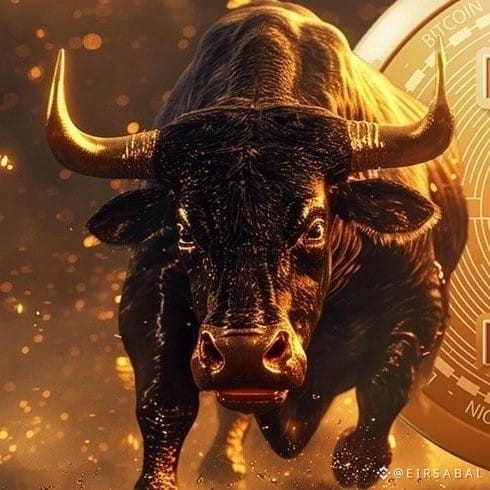
💥 BREAKING: BITCOIN IS PUMPING HARDDDD 👀
Green candles everywhere. Bears liquidated. Chart going vertical. 🚀
THE BIGGEST BULL RUN IN HISTORY IS COMING. 🌕
$1,000,000 PER BITCOIN. 🤯
Sidelines pe mat baithe rehna. $BTC kisi ka wait nahi karta. ⏳
{spot}(BTCUSDT)
💥 BREAKING: BITCOIN IS PUMPING HARDDDD 👀
Green candles everywhere. Bears liquidated. Chart going vertical. 🚀
THE BIGGEST BULL RUN IN HISTORY IS COMING. 🌕
$1,000,000 PER BITCOIN. 🤯
Sidelines pe mat baithe rehna. $BTC kisi ka wait nahi karta. ⏳
Green candles everywhere. Bears liquidated. Chart going vertical. 🚀
THE BIGGEST BULL RUN IN HISTORY IS COMING. 🌕
$1,000,000 PER BITCOIN. 🤯
Sidelines pe mat baithe rehna. $BTC kisi ka wait nahi karta. ⏳
1
739
Log in to explore more content
Join global crypto users on Binance Square
⚡️ Get latest and useful information about crypto.
💬 Trusted by the world’s largest crypto exchange.
👍 Discover real insights from verified creators.
Email / Phone number